
Overview – developed by Nippon Ichi Software and published by NIS America, Monster Menu: The Scavenger’s Cookbook is a roguelike dungeon crawling RPG with a heavy focus on strategy and survival. Trapped in a dungeon, you must survive by collecting resources, fighting monsters and even cooking them if you want to escape. This title is available on Nintendo Switch and the PlayStation family of systems, with a link to each version of the game at the bottom of this review.
Disclaimer: before I get into the review, I would like to thank NIS America for providing the copy of Monster Menu that was provided for this piece. The provision of this software has not influenced the contents of this review, all thoughts and opinions contained within are my own.
Now with the introductions out of the way, let’s get into the review, starting off with the story. Please note, all story details are taken from the official Monster Menu website. Also I will be focusing on the core aspects of the gameplay experience, as to prevent spoiling any of the surprises that Monster Menu has in store for players.
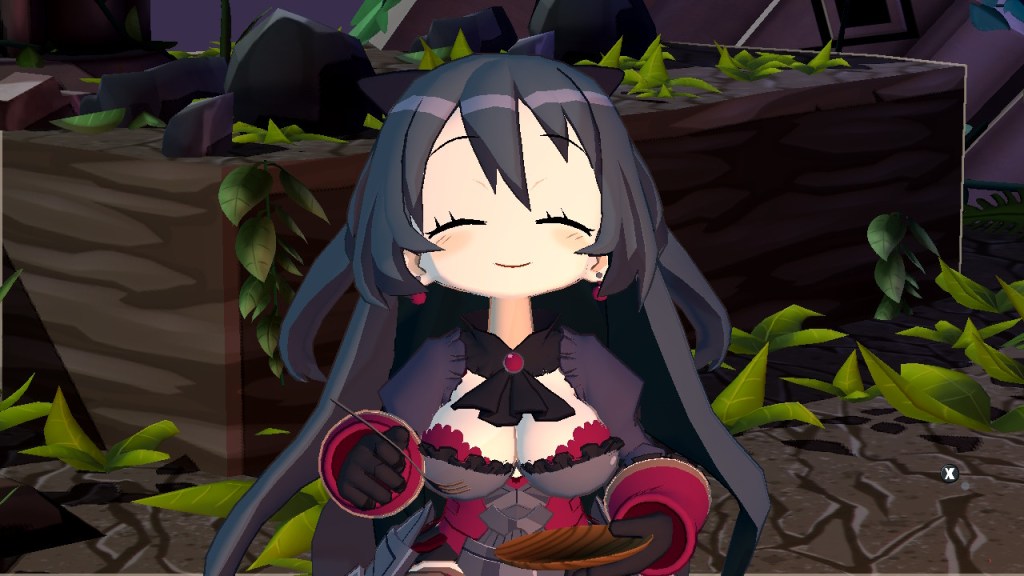
Story – A group of adventurers enter a dungeon rumoured to be for rookies, only to find themselves lost. Three days pass as they wander aimlessly, inching closer to starvation and dehydration. Eventually, they stumble across the corpse of a giant monster. Though it doesn’t look edible, their hunger is unbearable. The adventurers take a bite out of the corpse’s rotting leg, filling their mouths with an unimaginable flavour.
Their consciousness fades and they awaken in an abandoned camp, having dodged death, they recommence their expedition to find a way out of the dungeon. Out of food and out of water, the adventurers must eat all varieties of food, from the tasty to the nasty, as they seek to find a way back to the surface and out of the Sealed Lands.
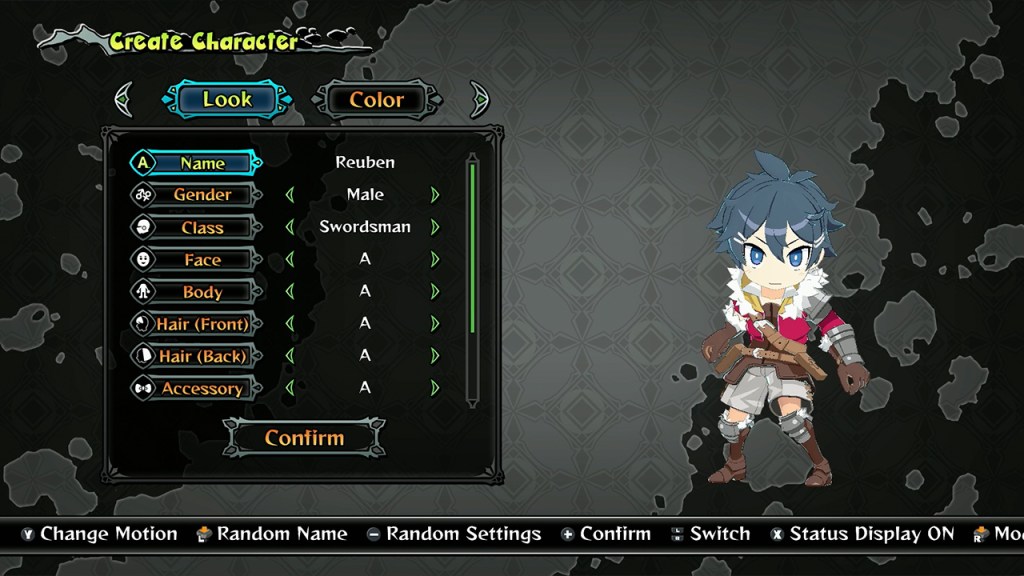
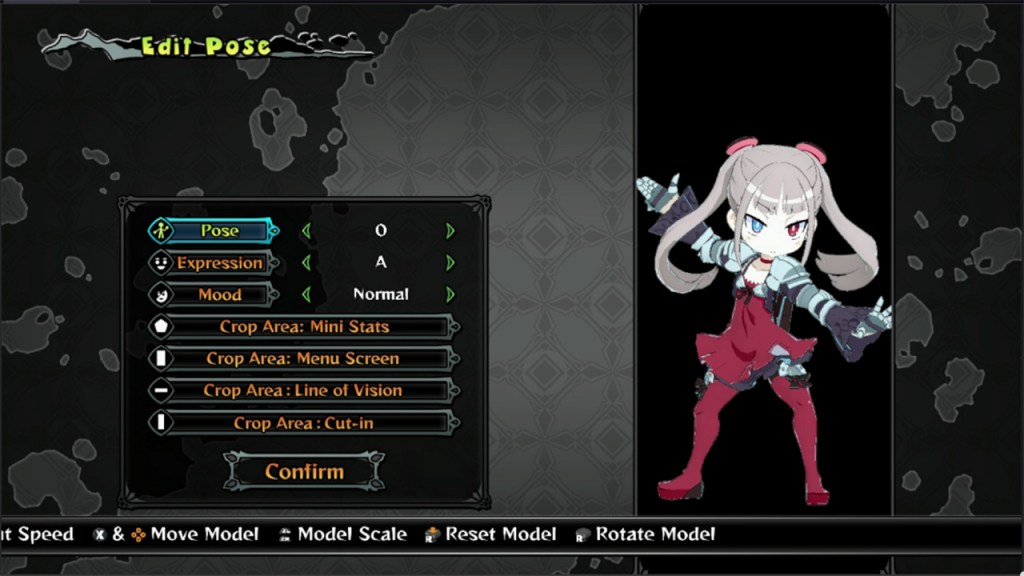
Gameplay – Monster Menu is a survival RPG, where the player must travel through the dungeon known as the Sealed Lands, fighting monsters and collecting loot in order to survive. When starting off the player will be alone, creating their character from one of 8 different presets, with the ability to modify their class, name, appearance and more. Once created, the player will be taken through a tutorial section to get them used to the systems of the game.
After completing the tutorial, the player will be able create additional characters to join their party. The total party size that can be created is four, but if players want a greater challenge, they can create fewer. When building a party, it is important to find a good balance using the different character classes to build the most synergistic team possible. This is due to each of the classes having their own strengths and weaknesses that need to be taken into consideration.
Each of the different character classes have unique stats, skills and special abilities that make them stand out from each other. For example, the sword wielder excels with melee combat using blades, the Chef has skills related to cooking and the mage is able to use magic in battle. Knowing which class works best for the player is the key to success in the dungeon, as the various skill sets improve in different ways over time.
The Sealed Lands themselves are made up of different locations, all connected together as the player delves deeper and deeper into the dungeon. Made up of different floors, the dungeon has terrain that thee player can explore, with the ability to jump over obstacles and move up and down ledges. Each floor has an exit, which will lead the player to either the next level of the dungeon or give them the option to go to the camp (discussed further below).
While inside the dungeon on an expedition, the player is able to roam freely through the different floors, collecting resources/loot and encountering enemies. The items that can be collected include ingredients for cooking and crafting, as well as new weapons and gear to strengthen the party of adventurers. The player does have a limit to the amount of items that they can carry, making it important to monitor their inventory throughout the game.
Players must also keep their eye on the level of hydration and calories that they have, with negative effects occurring the lower these levels go down. These values can be replenished by consuming food during each expedition, with different items affecting the recovery of the player. Food can be collected and consumed within the dungeon, but there are special dishes that can be cooked when at the base camp (which will be discussed later).
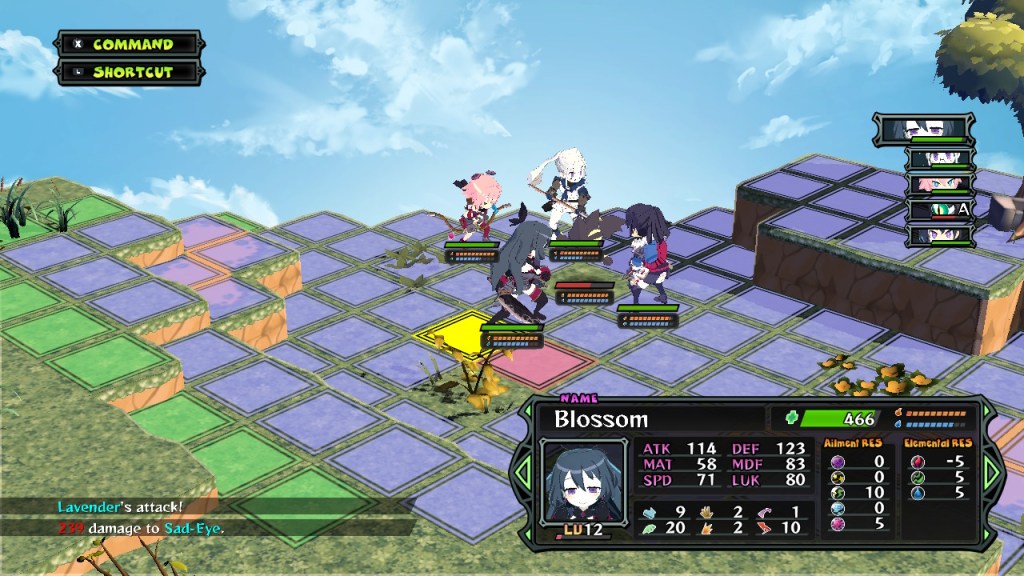
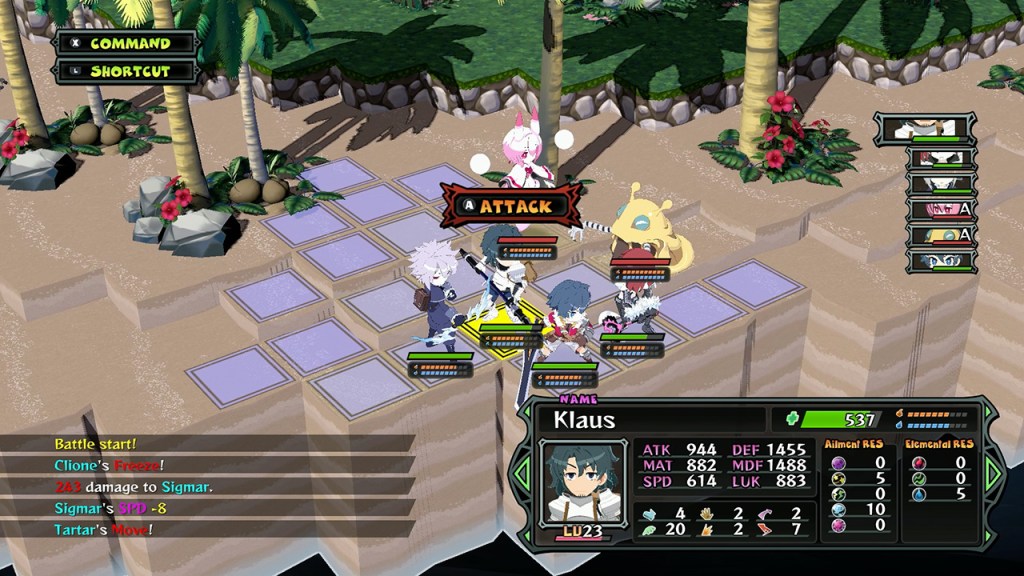
As there are enemies roaming the dungeon, there is a high chance that combat will occur during an expedition. This will occur when the player makes contact with one or more enemies as they are moving through the floor they are currently on. When combat begins, the player will engage in turn based battles with the enemies on a turn based grid, with the turn order determined by various hidden factors.
During the turn for each party member, they can freely move around the field up to a preset distance with several actions that the player can select from. Here is a quick breakdown of each of the options that the player characters have access to during battle.
- Attack – the active player can use a physical attack against their target, dealing direct damage to them. There is also the chance for other members of the party to attack while in range of the target enemy.
- Skill – there are many skills that can be used in battle, with physical weapon skills for weapons and magic attacks for spell casters. Each of these skills can use up the precious resources of water and calories for that character.
- Devour – the active character is able to consume the corpses of fallen enemies and allies alike on the battlefield. When consuming enemies, the player will gain health and increase their hydration/calories, however if they consume an ally, their experience and stats will be boosted.
- Item – the player is able to use an item to perform a variety of effects, like eating food to recover or even force enemies to eat rotten food and poison them to give them negative effects.
- Defend – the active party member will pass their turn in a defensive stance, reducing the amount of damage that is received when they are attacked again.
- Standby – the player can choose this for the unit to pass their turn, allowing them to wait for the next turn to go.
- Escape – a unit can attempt to escape by moving to a green space away from the enemy. When in this space, the player can try to escape and exit the battle.
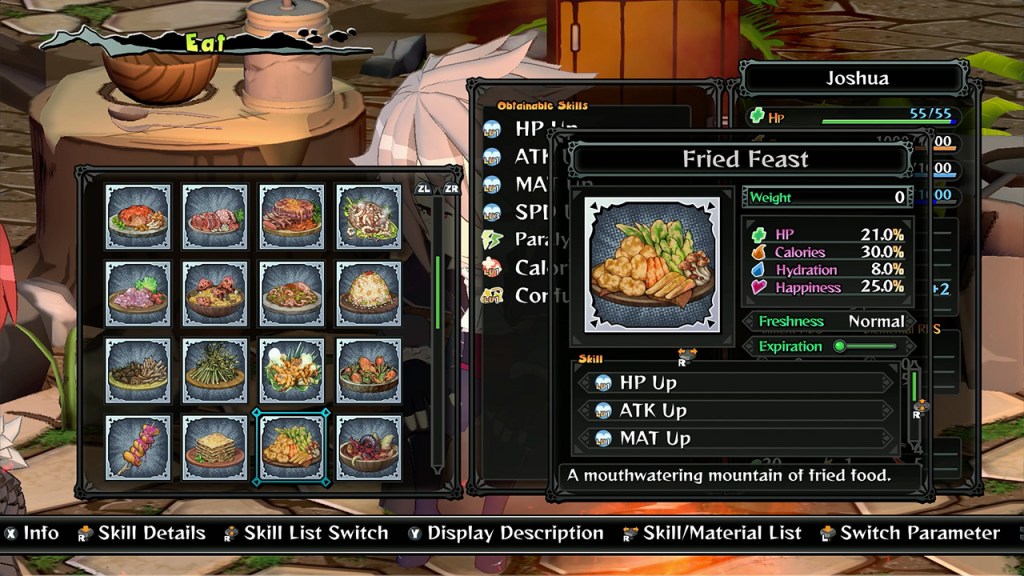
Outside of the escape, the battles can only end one of two ways, either the enemies are defeated or the party is wiped out. When the party is defeated they will be kicked back to the home base, losing all of their levels and the food supplies that they had with them. If the enemies are taken down, the player will gain experience for their party, levelling them up, boosting their stats and allowing them to collect food from the corpses on the ground.
At set points during the game, the player will be given the chance to advance to another environment, but a boss must be defeated to progress. Should the player succeed, they will be able to enter the next environment of the dungeon, while also using this as a starting point for the next expedition into the Sealed Lands. Outside of the dungeons, the player can use the camp to perform various functions.
The camp is the key to survival for the party, due to the ability to use food collected in the dungeon to make meals and the ability to craft items from collected resources. When starting out, the meals that can be made will be limited, but over time new tools can be crafted to make it easier to cook better meals. Here is a breakdown of the different features of the camp that the party can rest at.
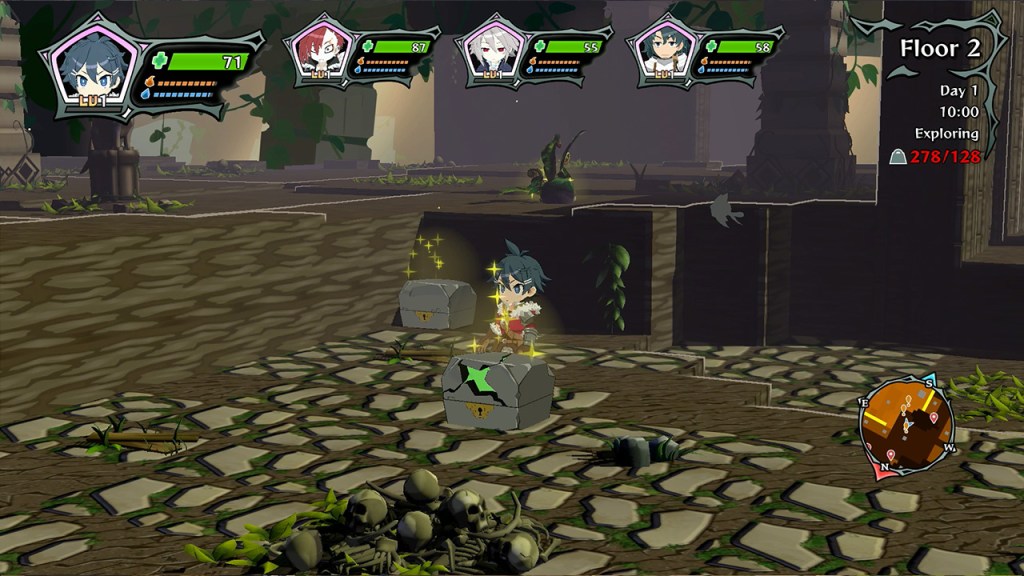
- Rest – this is available during an expedition, where the player can rest up and heal any damage they have taken. However, this uses up the hydration and calorie meter, which will need to be recovered before departing. When resting the player can choose to wait between 8am and 6pm, which is useful as enemies are stronger when night falls.
- Depart/End Rest – leave the camp and return to the dungeon. When departing, the player can select where they start from, depending on the progress that they have made during the course of the game. If the player is simply resting, selecting the End Rest option will resume the expedition on the next floor of the current environment.
- Inventory – here the player is able to go through the items that they have, allowing them to discard items they don’t need and even prepare and eat raw ingredients for a quick pick me up (this can also be done in the dungeon).
- Monster Menu – the key mechanic of this game, the Monster Menu allows the player to cook a variety of meals from various ingredients. The different meals that can be crafted will increase over time, improving as the player unlocks more recipes and improves their tools. The quality of the food and meals will affect the player, giving a range of benefits, but there is also the possibility for negative effects to be applied to the player from eating some foods.
- Craft – using the different items that have been collected in the dungeon, the player can craft new tools, create new resources and even dismantle unwanted items to obtain newer resources.
- Character – the player can equip their party with new equipment, change their weapon and armour to improve their stats, with the chance to give characters new skills to use in battle. This can also be done while inside the dungeon.
- Formation – the player can arrange the party for battle, letting the player choose the position that they will deploy in when combat with an enemy begins.
- Notebook and System – in the notebook, the player can look at information that has been collected, reviewing all of their progress during the quest to escape the Sealed Lands. In the system menu, the player will be able to save, load and change different settings, including a censor to obscure gross imagery.
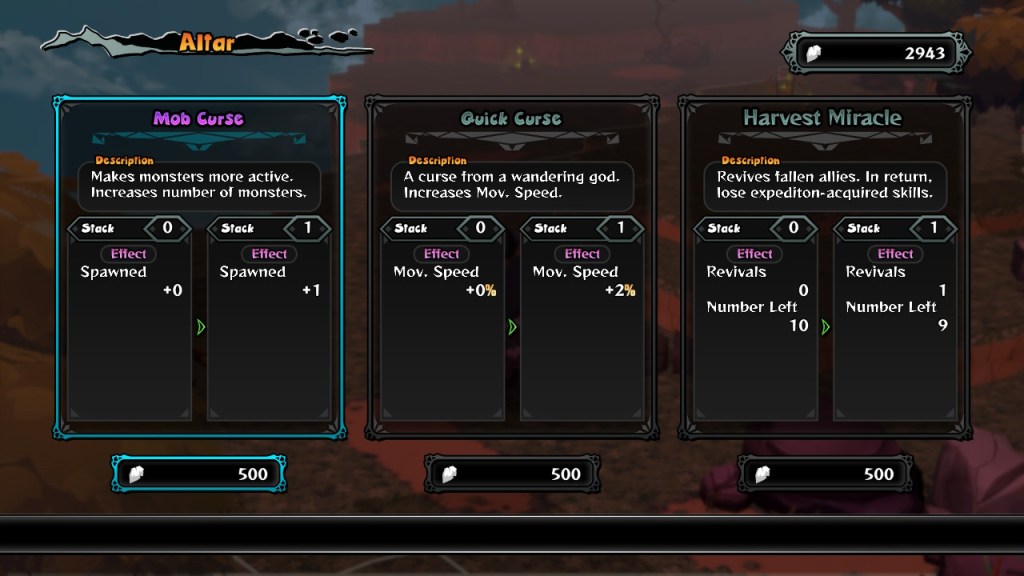
As a rougelike, there are many different things that are randomised when on an expedition, with the possible rewards and items that can be obtained determined by chance. This also extends to the shrines that appear in the dungeons, which can provide different effects from curses that the player can activate. These include boosting the strength of the party, making enemies stronger and even reviving fallen party members during an expedition.
It is important to take great care when inside the dungeons of the Sealed Lands, as defeat can be around the corner at any time. Great care must be taken when fighting some enemies, as there are stronger foes that can spawn in a dungeon, potentially wiping out the party in one shot. This is alongside the dangers of dehydration and starvation, which can end an expedition immediately if the party leader is incapacitated in any way at all.
There is so much more that could be covered when discussing the gameplay of this release. However, I don’t want to spoil any of the secrets and surprises that this title has for players, so with that said, it is time to move onto the other aspects of this release, starting with the controls.
Controls – the controls for this title are rather easy to get to grips with. The movement of the party and camera are controlled by the thumbsticks, with the key function buttons mapped out on the buttons in a comfortable manner. The menus are navigated by the D-pad and shoulders, which makes it easy to toggle the different screens that players need to get through. All of the inputs are comfortable with either pro-controllers or Joy-Cons.

Difficulty – as a roguelike RPG, this can be very difficult due to the random generation of items and resources. However, there are options for players who want to modify the difficulty to better fit their experience and tastes. These range from Easy to Nightmare, with each of the difficulty settings altering the rates that certain values and effects progress. The recommended difficulty is Normal, which is well suited for all players.
Presentation – Monster Menu has a very cutesy look to it, with the player characters having an anime style to them and the monsters looking adorable at times. But there are some rather gross images that can appear, like failed dishes and rotten meats to name a few. The overall presentation visually is solid, but can have some minor issues with framerate, but there is a way to compensate for this. There are settings that can reduce graphical quality for better performance.
The sound for this title has a pleasing feel to it, with fantasy styled compositions that range from soft and mellow to tense and anxiety inducing. All of the music works well, complimenting the action on screen for a cohesive experience. There is also the inclusion of English and Japanese dialogue that is used throughout the game, with a selection of different voices that can be assigned to the characters that the player creates for their party.
Final Thoughts – I have previously played a roguelite title from Nippon Ichi Software, so I had some level of experience with the genre from this dev. With that said, I am happy to say that this is a solid and fun title that has a lot of depth to it. The combat is easy to pick up, with rather simple mechanics that don’t complicate the experience. The shining star of this title is the unique Monster Menu cooking system, which adds a lot of strategy to each expedition to the dungeon.
I had a good time with this release, which was made even better with the ability to experiment and approach different aspects of the game how I wanted to. I am happy to recommend this release to everyone who enjoys roguelike and strategy RPG titles, as there is something for everyone in this package. There are some minor issues with the frame rate when the game is at highest graphical quality, but this isn’t a deal breaker as there are settings to compensate for this.
In the end, I give Monster Menu: The Scavenger’s Cookbook a final score of 5/5. This is a unique entry in the Strategy RPG and roguelike genre, with interesting mechanics based around food and resource management, which gives the extra depth along with the dungeon crawling action. If you want to check this title out for yourself, a link to each version of the game will be below.
Link to Nintendo Switch version (HERE)
Link to PlayStation version (HERE)
 W.Kohaku Media