
Overview – developed by GoolWorks and published by Eastasiasoft, Under the Warehouse is a adventure, with cryptic puzzles and surreal mysteries to uncover. Explore the mysterious warehouse, while searching for a colorful egg that you have been asked to find. This title is available on all console platforms, with a link to each version of the game below.
Disclaimer: before I get into the review, I would like to thank Eastasiasoft for providing the copy of Under the Warehouse that was used for this piece. The provision of this software has not influenced the contents of this review, all thoughts and opinions contained within are my own.
Now with the introductions out of the way, let’s get into the review, starting with the story.

Story – in an unnamed city, deep in the urban sprawl, lies a darkened building of brick and concrete filled with boxes, documents and appliances with enigmatic workers of all sorts. No one seems to question the mysterious, haunting atmosphere of this complex. However, you have been asked by a mysterious caller to go into the complex under the guise of a worker, seeking an egg that is located in the warehouse.
Gameplay – the core gameplay loop is a mix of first person adventure, with point and click puzzle solving. The player is given a core task of finding a colorful egg, but to achieve this objective, there are puzzles and objectives that need to be completed. This is achieved by interacting with the different people that are scattered throughout the warehouse, with most of them giving clues on how to proceed.
The majority of these puzzles can be solved in part out of order, with the ability to collect items that are used to solve later puzzles before others. This can cause difficulty when solving the other puzzles, or when experimenting with items to try and find a solution, made worse by the cryptic nature of the warehouse. Unfortunately, there is no way for players to be able to track their objectives, which can lead to backtracking a lot.

Navigation within the different areas of the warehouse can be difficult, due to poor visibility of the different areas when playing the game on a big screen. It is unknown if this is intentional, as it is not an issue in handheld mode but it can leave doorways and paths obscured from view. The visibility within the warehouse can be a frustration to the player, with a high chance of getting lost while searching for a door or pathway.
General movement and interaction while exploring are rather solid, with quick and responsive movements. Moving around the warehouse is fairly easy, with traditional FPS style movement, a run button and an interaction button. The point and click inventory management system works well, with a cursor that is easy to use when activating items and objects. This makes for an adventure that is relatively easy to start, but challenging to finish.
Due to the cryptic and open-ended nature of this title, there are different ways to approach to objectives of the warehouse. This can lead to one of several endings, making for an adventure that can be replayed several times to seek out the different conclusions. It is entirely possible to discover endings by pure accident, rewarding the player for experimenting on their quest. Upon getting an ending, the player can continue from a save game to get the others.
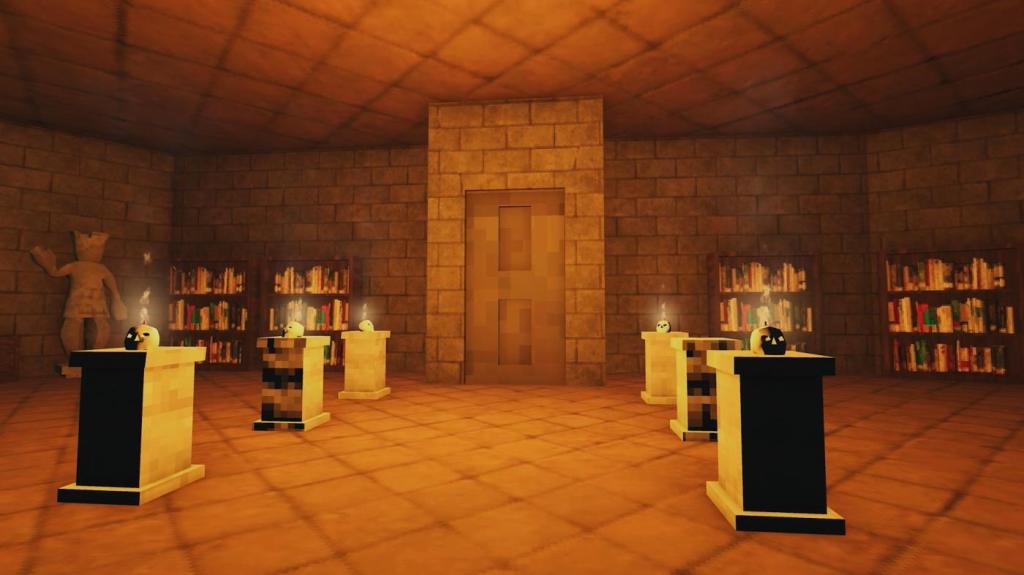
There is a level of surrealism to this title, with characters that don’t make sense or belong, disjointed levels that have abstract designs which will leave the player confused. This works well with the atmosphere that of the game tries to create, with the lighting and sound that compliments the environments to make for a haunting experience.
Now with the gameplay covered, it is time to discuss the other aspects of this title, starting with the controls. There is no real difficulty to this title as the cryptic nature of the puzzles make the game challenging, so I will be skipping that segment.
Controls – the controls for this title is basic and easy to get used to. The character and camera movement works well, using the traditional twinstick system that is used for most first person titles. The inventory management system is simple to use, with a simple cursor that is controlled by the left stick with decent cursor speed. The game is comfortable in both handheld and docked play, working well with all controllers.
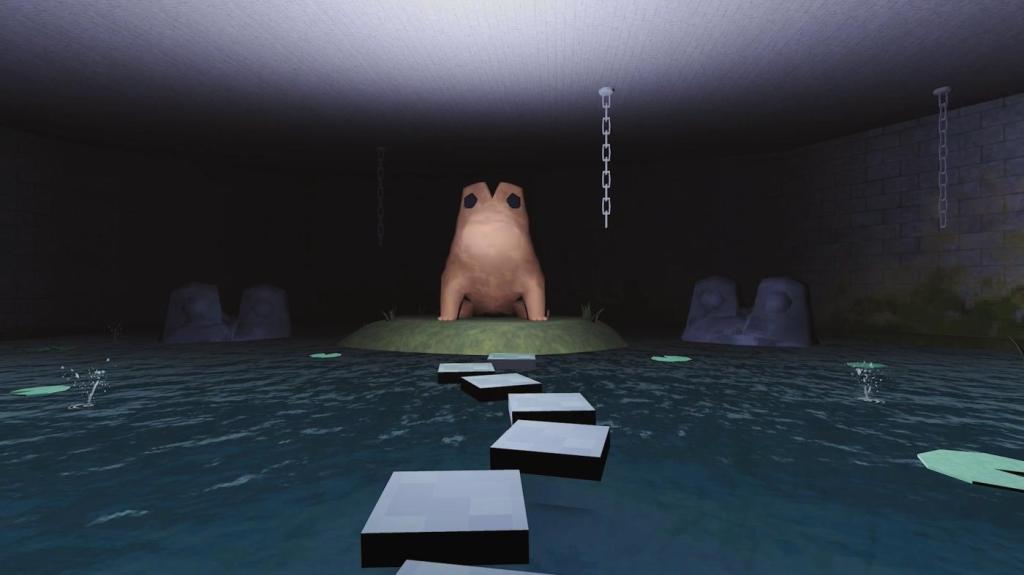
Presentation – Under the Warehouse has a low poly aesthetic, with a retro filter as an optional setting, giving the visuals a look similar to that of a PlayStation 1 title. This works well in the favor of this release, with the retro feel enhancing the atmosphere that the game attempts to evoke. This is enhanced by the soundtrack, which gives an unsettling feeling to the overall experience, with haunting piano and orchestral pieces.
Final Thoughts – this is a surreal adventure, with an atmosphere that can be deeply unsettling at times. This works very efficiently at creating a surreal experience, which can confuse and disorient a player to great effect. I found the whole game to be a challenge that I didn’t necessarily enjoy, but found it satisfying to achieve the endings that I did. The cryptic puzzles and non-linear approach to progression make this the perfect game for fans of this type of game.
In the end, I give Under the Warehouse a final score of 4/5. This is a cryptic and confusing puzzle adventure, with multiple endings to discover, non-linear progression and an unsettling atmosphere, complimented by surreal visuals and haunting music. If you want to check this title out for yourself, a link to each version of the game will be below.
Link to Nintendo Switch version (HERE)
Link to PlayStation version (HERE)
Link to Xbox version (HERE)
 W.Kohaku Media