
Overview – developed by Piko Interactive and published by QUByte Interactive, Beat ‘Em Up Archives (QUByte Clasics) is a compilation of 2 brawlers from the Super Nintendo originally released in the 90s. Battle it out with wave after wave of men in the gritty Iron Commando and cleave your way through fantasy scenes in Legend. This title is available on all Console platforms, with a link to each version of the game available at the bottom of this review.
Disclaimer: before I get into the review, I would like to thank QUByte Interactive for providing the copy of Beat ‘Em Up Archives used for this piece via the Keymailer Service. The provision of this software has not influenced the contents of this review, all thoughts and opinions contained within are my own.
Now with the introductions out of the way, let’s get into the review. As this is a compilation title, I will be discussing the two games with a brief description of the experience, with the overall package discussed after.
Legend – 1994
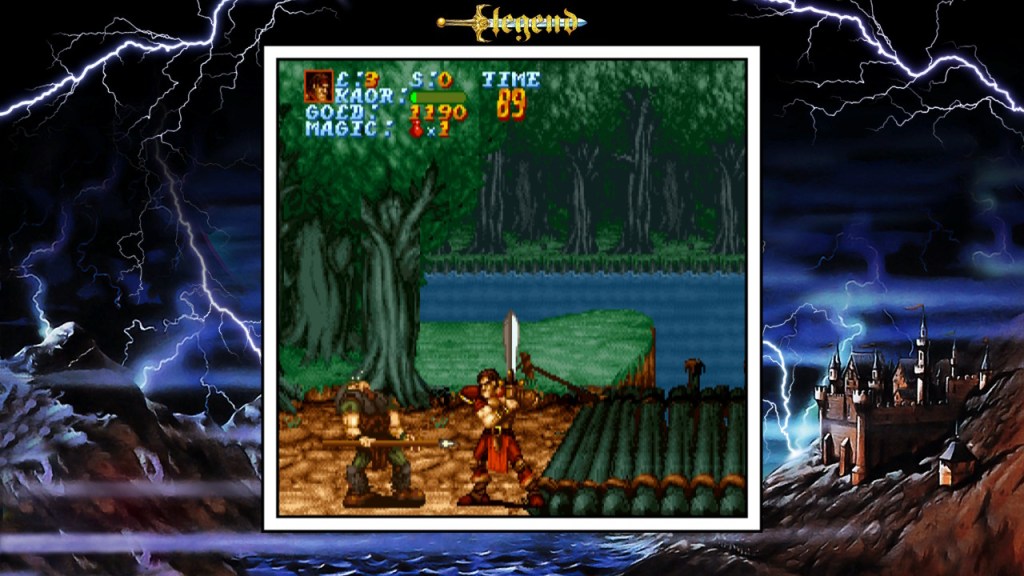
Plot – in the kingdom of Sellech during the middle ages, the son of the king, Clovis, seeks to harness the dark power from the imprisoned soul of Beldor and conquer the world. To prevent this plan from coming to fruition, the knight warriors Kaor and Igor set out on a quest to defeat Clovis. The two warriors battle their way through the kingdom, taking down all that stand in their way to save the land from evil.
Gameplay – Legend is a rather standard brawler, heavily inspired by titles from Capcom and SEGA, most notably the games Knights of the Round and Golden Axe. The player takes control of one of the two knights, armed with a sword, shield and special attacks to battle their way through each of the seven stages. The stages feature mid and end bosses, with story scenes between stages, then the next stage will continue.
All of the enemies will drop loot when defeated, which include health pick-ups, bonus points and magic which adds to their total stock. The combat is a little slow and clunky, with enemies able to interrupt attacks easily as the player characters have a shorter range. The special attacks that the player can use will either use up the magic collected or health, making for a risky yet rewarding trade-off.
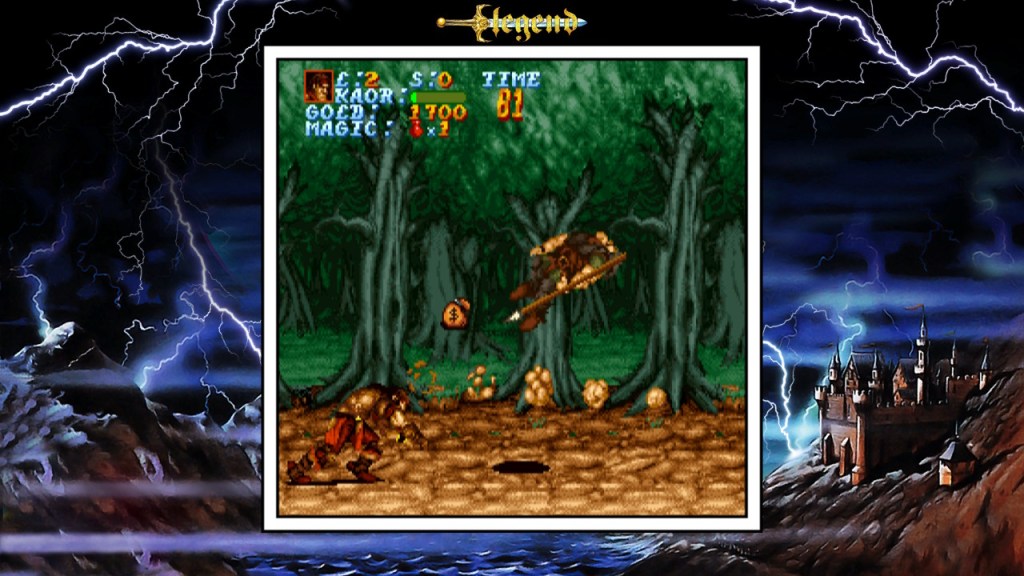
If the player loses all their lives, they will get the chance to continue, but they will be returned to the start of the stage, which can be a significant setback. The stages themselves are fairly long, so being defeated will put the player back a fair amount. In an attempt to counteract this, there is an adjustable difficulty and speed settings available to the player. However, these don’t offset the weaknesses of the core game.
The last element of the game to discuss is the 2 player co-op. this allows 2 people to take on the action together and battle through the armies of evil together. Luckily, there isn’t any friendly fire against a comrade, which is a positive. There is also the option to share lives between players, but this can lead to some unrest as the dead player may steal lives while being reckless. If a player loses all their lives, they will be locked out of play.
Iron Commando – 1995
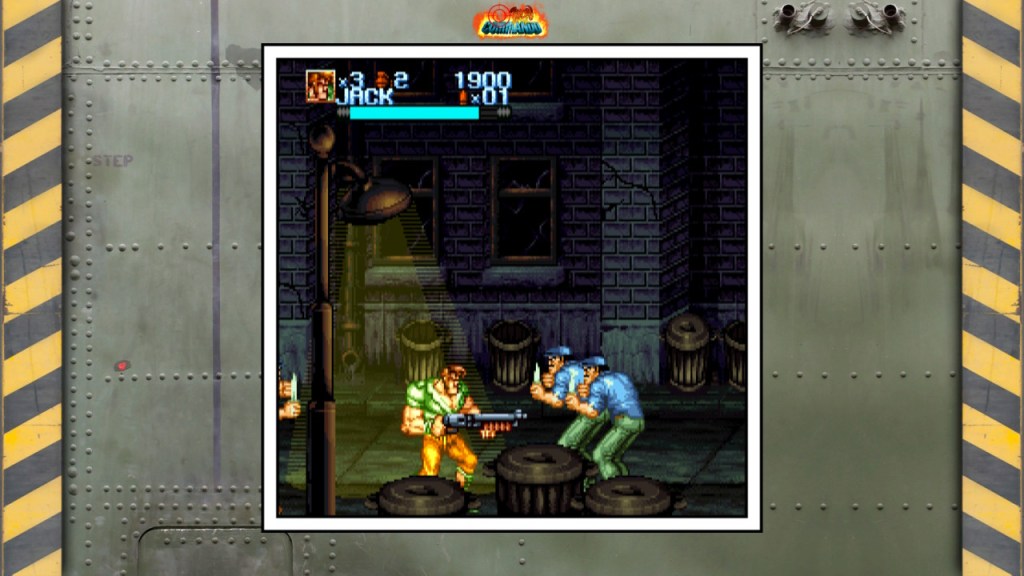
Plot – the Iron Commando Field Team are a crack unit of warriors, sent on a mission to stop the criminal group G.H.O.S.T. from capturing a radioactive meteorite. The team is made up of Jake, a soldier who has a mastery of firearms and Chang Li, a martial arts master with fists deadlier than any weapon. Together, they take on the members of this group in order to stop their evil ambitions.
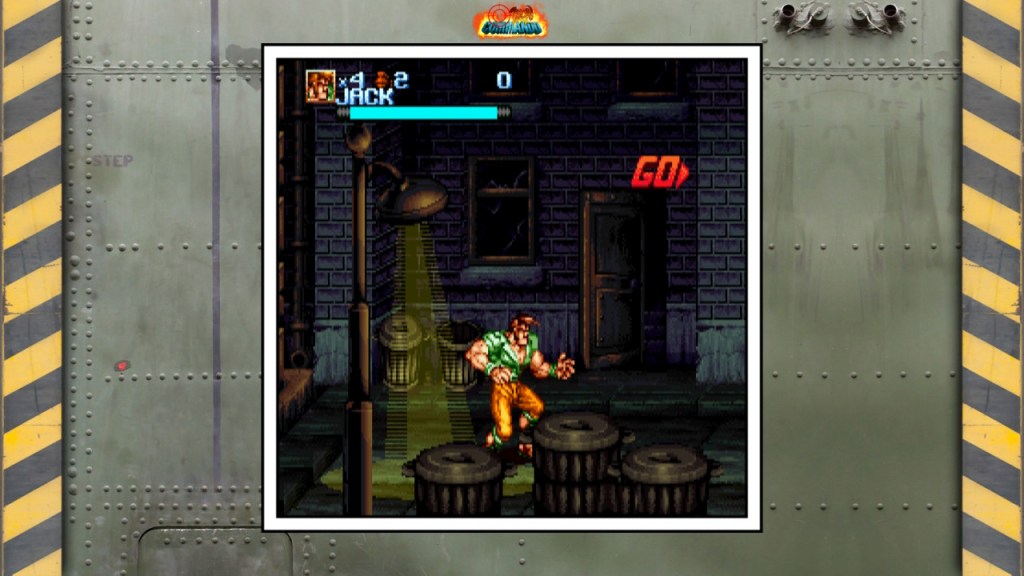
Gameplay – just like Legend, Iron Commando is an arcade style brawler, where the player must travel from one end of the stage to the other while battling enemies. Inspired by titles like Final Fight and Streets of Rage, the foes that the player will encounter are typical street punk types, with the enemies becoming more unique as the game goes on. There are also vehicle stages, where the gameplay takes on a shooter style of play during the game.
As a brawler of the time, the player has the expected features in their move list, with punches grapples and throws. However, what makes this title different is the unusual way that items work. When enemies are defeated, they can drop items, including food, point items and a variety of weapons. To pick these up, the player must use a dedicated button, with the weapons having a limited number of uses before throwing them away.
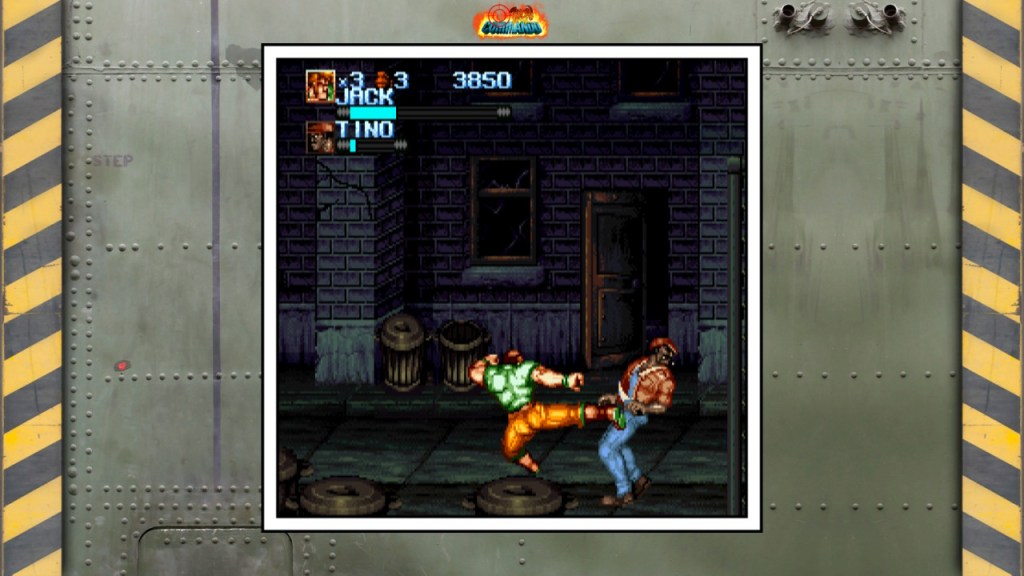
This finite use system is common in most games of the genre, but in Iron Commando, when a weapon is picked up they are very limited in usage and often lack stopping power. Additionally, when the player is too close to an enemy, they will use standard attacks rather than the weapon which makes them redundant at times. There is also a limited special grenade attack, which appears to only be useful for knocking enemies back as it is also rather weak.
Much like the title Legend, the combat in this title sadly lacks refinement, as the player can easily be knocked down repeatedly preventing a chance for counter attack. This is most common when the enemies are armed with a weapon, especially the ones using firearms, as they can interrupt attacks and knock the player down with ease. The movement also feels sluggish in this game, with what feels like a lack of fluidity in movement for the most part.
Just like the other title in this collection, Iron Commando features 2 player co-op multiplayer, with both players working together. There is also a lack of friendly fire, which is a positive as that can be very frustrating when playing a beat ‘em up, due to the swarms of enemies on screen. The same option to share lives is also here, as well as being locked out when all lives have been lost.
Now with the two games covered from a gameplay standpoint, it is time to discuss the other aspects of this release, starting with the controls.
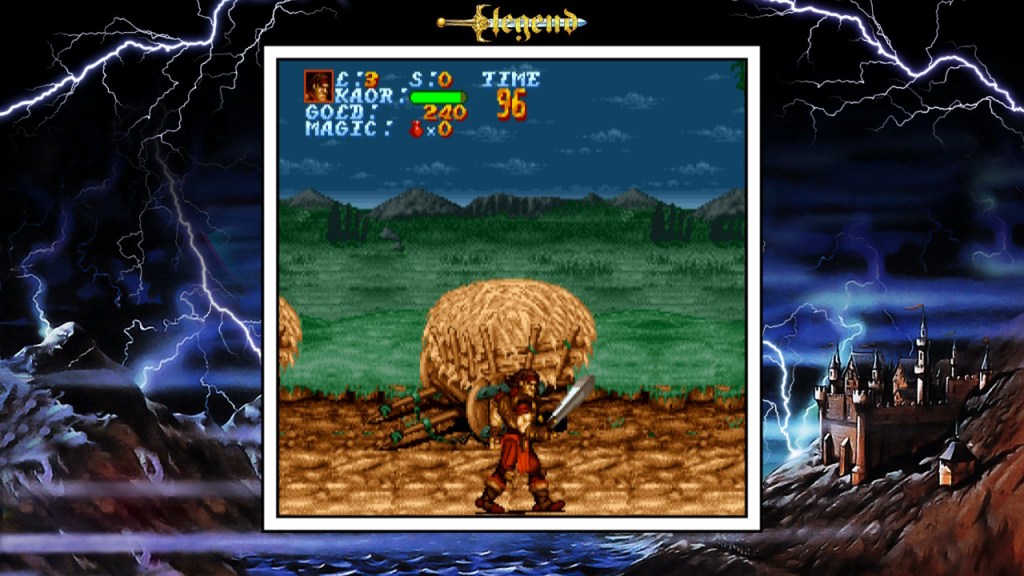
Controls – the controls for both of the games feel sluggish, with button presses feeling like they take longer to process than they normally do. This issue is most noticeable when playing Legend on the standard speed, as it feels like the characters are trying to move through molasses. The controls for the game are the same as their original releases on the SNES, which can be modified but otherwise it works reasonably well.
Difficulty – these games are brutally difficult, which makes their flaws stand out even more. There are issues with the damage balance, which is worse in Iron Commando, as the player can be taken down quickly when being swarmed with enemies needing a lot of hits to beat. The way that both games reset the player back to the start of the stage is frustrating, as it turns the games into a war of attrition as the stages are very long with no checkpoints.
Presentation – for a pack of SNES games, the games both look very good, with some solid sprite work for the time. However, Legend has assets that appear to be “heavily inspired” if not copied from the games that inspired them which is unfortunate. There aren’t issues with frame rate from what I was able to see in either game, but this may not be a universal experience. The sound is clear for the most part, with some decent enough music and sound effects.
Final Thoughts – when I saw this advertised, I was hopeful for a fun and challenging brawling double pack, but I did not have a good time with these games. The difficulty of both games is way too high, the stages are too long and it feels like a chore to play through even at the lower difficulty levels. There is a lot of frustration from this, because they had all of the potential to be good, but sadly they are bogged down by too many enemies and poor design choices.
The worst issues from a gameplay perspective were the unfair enemy patterns and swarming, which is what unfortunately hinders Iron Commando the most. Legend is better but that isn’t much when the game is so very slow, only made more bearable by the inclusion of a turbo mode. It is possible that there is fun to be had here when playing with another, but it doubled the weaknesses of the game during my experience.
I cannot recommend this title to anyone really, as it is a frustrating pack of games that get very repetitive very quickly, with the only saving grace of Iron Commando being the shooting stages. People say that there are many lost games that need to be seen, so that they can be appreciated for what they were, but sadly the titles in this pack don’t fit that bill. Both games were so frustrating to play, that I don’t think I will ever be able to finish them.
In the end, I don’t thing I am able to give a score to Beat ‘Em Up Archives (QUByte Classics). Both of the games are a relic of the past that should have stayed buried, as they attempt to emulate the titles that inspired them, yet sadly failed to be even half as good with the potential they had. If you do want to check these games out for yourself, a link to each version of the game is below.
Link to Nintendo Switch version (HERE)
Link to PlayStation version (HERE)
 W.Kohaku Media