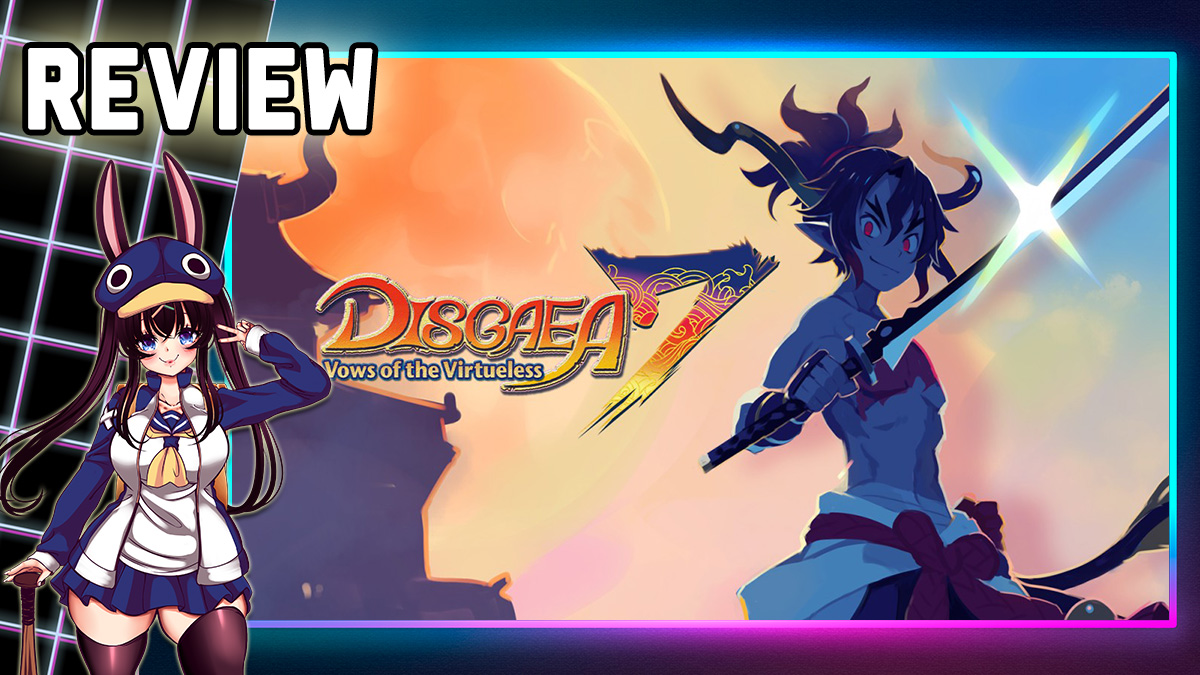
Overview – developed by Nippon Ichi Software and published by NIS America, Disgaea 7: Vows of the Virtueless is the latest entry in the cult SRPG franchise. Explore the Hinomoto Netherworlds with Pirilika and Fuji as they fight demons, make money and do their absolute worst. This title is available on Nintendo Switch, PlayStation and Steam platforms, with a link to each version of the game at the bottom of this review.
Disclaimer: before I get into the review, I would like to thank NIS America for providing the copy of Disagea 7 that was used for this piece. The provision of this software has not influenced the contents of this review, all thoughts and opinions contained within are my own. (images used taken from NIS press site and Nintendo store page)
Now with the introductions out of the way, let’s get into the review, starting off with the story and for the gameplay, I will be covering the key features of the game to prevent spoiling surprises. I have previously covered all of the titles in this series available on Nintendo Switch, which can be found (HERE). If you haven’t read them already, consider checking out the coverage after.

Story – The Netherworlds of Hinomoto, a myriad of locations including a casino city and a world inside a giant sardine. In this land of diverse Netherworlds, there was once a code of honor that the demons followed, the way of Bushido. But this was abandoned after the lands were seized by the evil Demmodore Opener, replaced with the code of Destruction. This led to the noble warriors of Hinomoto being but a distant memory.
However, this story centers around a girl named Pirilika who adores Bushido, wanting to experience the way of Hinomoto herself. But she quickly encounters a boy who hates Bushido and only wants one thing, to make tons of money. Now, these two unlikely allies must join forces, battling the forces of the evil Opener to make their own dreams and each other’s come to fruition.
Gameplay – like the other titles in the Disgaea franchise, this title is a strategy RPG, focusing on turn based battles, colourful characters and ridiculous attack combos. The narrative plays out over the course of several chapters, spanning the different Netherworlds that make up Hinomoto, encountering a cast of unique and eccentric characters along the way. Each of the chapters is made up of battles with boss demons appearing to challenge the player.
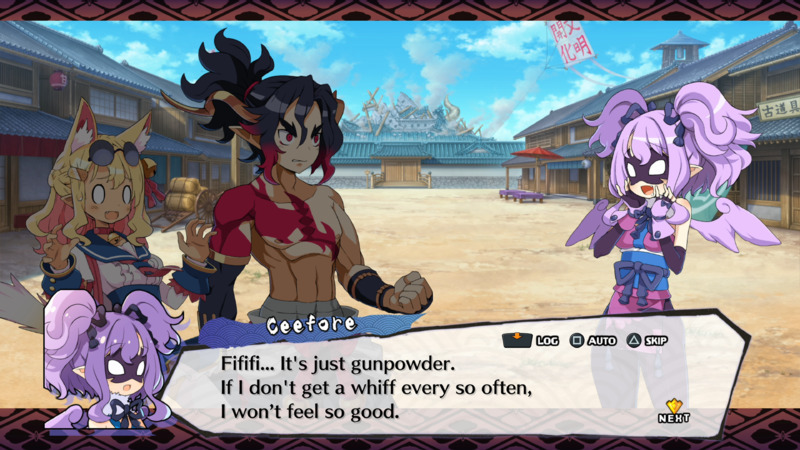
The core of the gameplay experience mostly remains unchanged from the previous entries in the series, so I will be covering the basics in fairly brief detail before discussing the new mechanics. Just like the rest of the mainline games, the focus of this entry (and the rest in the franchise) is to clear each of the maps in turn based battles. To accomplish this, the player can deploy units from the base panel and give them commands during their turn.
During a turn, the standard commands include movement, where the unit can move across the field in a radius based on their movement speed. Once the unit has been positioned, they will be able to make an action from the available choices. The basic actions that can be chosen are attack, which uses the equipped weapon, skill which lets the player use a special ability and lift/throw, where units can pick things and units up then launch them.
The player units can also select items to use instantly and defend to reduce damage, preparing for the next turn. All of the units can make perform two actions in a turn, with movement and an active skill, unless an effect prevents them from doing so. When actions have been set for a unit, the player can choose to execute that units actions or set additional units to make their own moves. If multiple actions are queued up, a combo will occur doing more damage.

After all units have made their move, the player can choose to end the turn which will set off all actions that have yet to be executed. Once the player turn is over, any neutral units on the field will make their moves, attacking the player or enemy based on their aggression and position. Then once all other units have had their turn, the enemy will make their turn and often target the player units to attempt to eliminate them from the field.
As the player defeats enemy units, their own will level up, increasing their skills and mastery with their class, which will unlock new classes and abilities in battle. There is also the chance to obtain items during battles, by opening chests, defeating enemies or stealing them. When a stage has been cleared, the player will earn rewards based on their performance, with missions that can provide money, experience and more if they are completed.
The isometric viewpoint is also retained, which gives the game that strategy war game feel, where the player is looking at their pieces. The terrain system also returns, with different elevations and layouts that use a mix of high and low ground, making for a tactical challenge during battle. Also returning are Geo Symbols, the multi-coloured pyramids that affect the field of battle, with the potential for explosive chains when destroyed.

The flow of battles is mostly unchanged for this entry, as the core mechanics remain untouched, with the 10 unit limit and escalating challenge of battle. But there are some new battle features with this title, making it stand out on its own merits and spicing the battles up. Here is a rundown of some of the new systems that have been added to battles for this title;
- HELL Mode – a new system where players will build up the Hell gauge for specific named characters during battle. When this meter is full it can be activated and the player unit will gain enhanced abilities unique to them, alongside a special attack that can deal unbelievable amounts of damage. This mode will last for a set amount of turns, but if the ultimate move is used, Hell mode will end instantly.
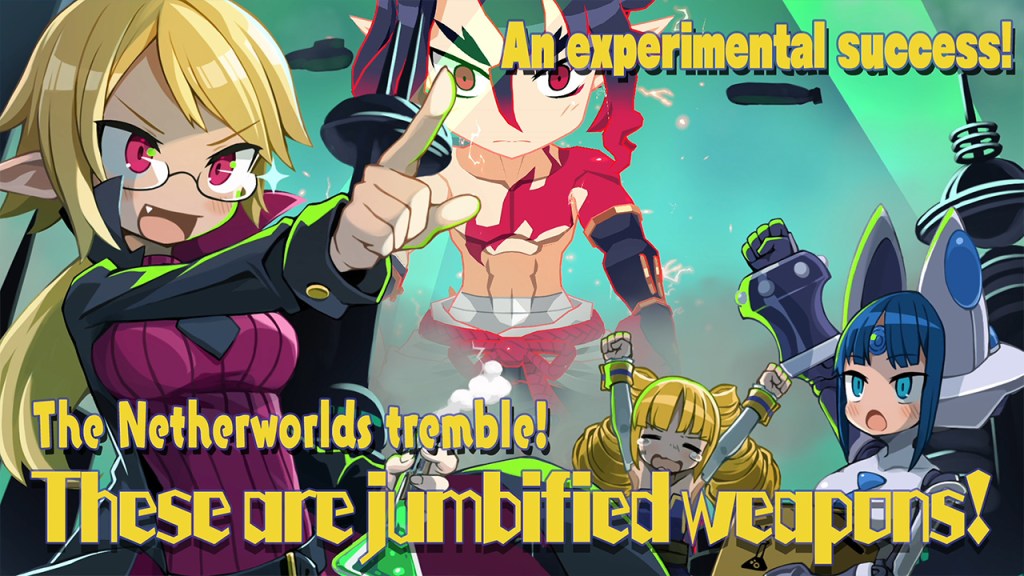
- Jumbification – as the player units take damage, the revenge meter will fill on screen up to a maximum of three levels. When there is a single level of this meter available, the player may use the super special skill called Jumbification. This makes the chosen unit grow into a Kaiju size behemoth on the edge of the field for a limited time. In this form, the character will be able to strike the play field, dealing damage to a wide area, while also being able to attack the enemy directly if they Jumbify one of their units.
- Improved Demonic Intelligence – the auto battle system has been improved, with better unit auto paths, auto battles and more. Set up the perfect strategy and just sit back and watch your units fight on their own. But be aware that this uses a special resource that will need to replenish to keep using.
- DEMON SHOGI – the ultimate battle of strategy, tactics and cunning. Use a force of either your own units or those provided to you, with challenging opponents that will push your tactical skills to the limit. This battle style is the first of its kind in the Disgaea universe, adding further depth and complexity to the established game systems.
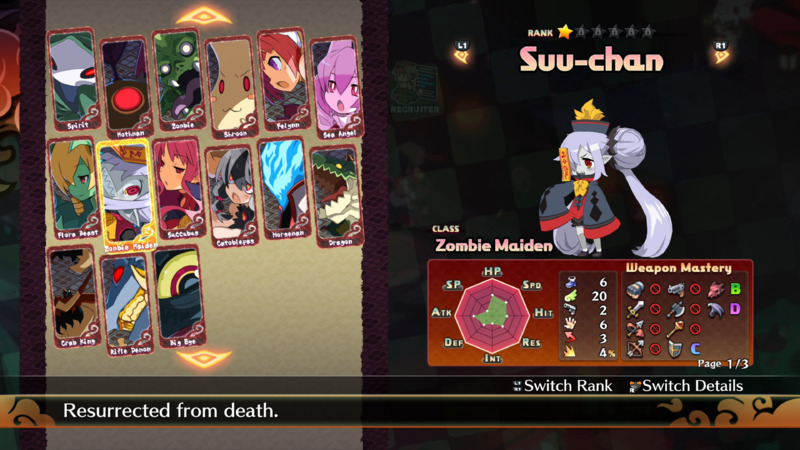
Outside of the battles, the Home Base is back in the form of a Feudal Japan themed Netherworld Ship, with all of the usual features included. While on the Ship, the player can roam freely and interact with the NPC characters that run the different facilities, alongside the ships residents. There is the Rosen Queen shop where new gear can be bought, the skill shop to improve abilities, the scout to recruit new units and quest shop to obtain reward missions.

The juice bar returns and has been updated, with the ability to power up your units using the essence that has been earned during battles. Unlike the previous title, there isn’t a requirement to use HL to upgrade the characters making it a much more streamlined process. The Dark Assembly has been revamped, with the delegates taking the role of Sumo Wrestlers, featuring a battle between Prinnies when voting.
These mechanics are the most refined in the series, with many quality of life improvements added to them and the other systems that I haven’t discussed. However, there are significant changes and revamps to features that make wholly unique to this entry. Here is a breakdown of these new and improved base features;
- Netherworld Hospital – the hospital for this entry has been given a brand new reward system, with the ability to earn special gear via the EVIL GACHA. When healing and reviving allies, the player is able to collect Gacha points that can be used to play the bonus game. Separated into different tiers, the gear that can be earned will increase in power with each tier unlocked, along with special rare items as bonuses.
- Item World – The item world has been completely revamped, with each of the items having a floor limit to them, giving players a target to work towards. This makes it easier to complete a delve into lower level items, as they may only have 10 floors, but the higher value dungeons will extend much further. There is even ITEM REINCARNATION, which lets players experiment with gear to craft special unique items.
- Netherworld Sightseeing – when a Netherworld has been cleared, the player will be able to enter into a zone that lets them free roam through it. This provides players a chance to meet unique characters, potentially recruit special allies and even access special bonus modes that are unique to that Netherworld.
- Online AI Battles – like previous games, the online battles have returned, but this time, there has been a change to the rules. For the first time ever, players can train their units to use the Demonic Intelligence system and prepare a team to do battle on their behalf. The battle rules and locations will change on a regular basis, as each series or “season” will refresh the battlefield and the types of team that can be used.
Finally, I want to cover the DLC that is featured in this title. Much like the other entries in the series, there is additional content packs that can be purchases. They feature guest characters from the previous games, special costumes and bonus weapons that can help new players. These packs are available via individual purchase or as bundles. This content is entirely optional, with little if any effect on the overall experience and narrative if purchased or not.
Now with the gameplay covered, I want to discuss the other aspects of this release, starting with the controls.
Controls – the control method for this release is as intuitive as ever, with easy to use menu navigation, map navigation for units and on screen tooltips for easy reference. There is a nice comfortable feel to the inputs making the most of the controller, with zero issues in terms of input lag during play. All of the controls work well, giving a responsive experience when using either the Joy-cons or pro controller.
Difficulty – the difficulty for this entry is very forgiving during the introductory stretch of the game, with an excellent tutorial that will ease new players in and refresh returning ones. There is a gradual escalation of challenge for the most part, easing the player in before sucker punching them with a boss battle. This is in the spirit of the series, but the difficulty can be eased by using the Cheat Shop to expedite character growth, while grinding earlier stages.
Presentation – visually, Disgaea 7 has continued with the 3D style, using full polygonal models for all of the environmental and character assets, complimented by the distinct anime art. The performance has been optimised well for the Switch, with smooth special attack animations and a solid framerate, especially with Jumbified characters on screen. There are also options for performance and graphics if players want to use them.
The soundtrack for this release is a good as ever, featuring a range of classic Japanese instruments, mixed with heavy guitar and soft synth compositions. This makes for a delightful listening experience throughout the game, enhancing the setting that the narrative unfolds in. The dialogue for this title features both English and Japanese language options, with the English dub featuring the talents of Alejandro Saab (Rhapsody) and Kristen McGuire (Helpful Fox Senko-san).
Final Thoughts – I am a fan of Disgaea and there was a lot of anticipation for this release. The upgrades made to the core systems, the new Gacha reward system and the changes made to the established formula, make for an experience that feels unique. The hiccups with presentation that the previous entry suffered from have been remedied, with a smoother experience that makes the most of the Switch Hardware.
This is an easy recommendation, as I feel everyone who has an interest in SRPG titles can enjoy this, be it a long-time fan of the franchise or an absolute newbie. There is so much content to get sunk into, with bonus side challenges, new gameplay mechanics and a solid online battle mode. This is another fantastic entry in the series, with a narrative that kept me engaged throughout, characters that were very entertaining and that distinct comedic charm that ties it together.
In the end, I give Disgaea 7: Vows of the Virtueless a final score of 5/5. This is the best Disgaea title to date, with a story that is as fun as it is ridiculous, new gameplay systems that refresh the formula and a perfectly optimised visual style that looks gorgeous on the Switch. If you want to check this title out for yourself, a link to each version of the game will be below.
Link to Nintendo Switch version (HERE)
Link to PlayStation version (HERE)
Link to Steam version (HERE)
 W.Kohaku Media
One thought on “Disgaea 7: Vows of the Virtueless – Nintendo Switch Review”