
Overview – developed by Tozai Games in collaboration with Ratalaika Games, with publishing handled by ININ Games, IREM Collection Vol.1 is a collection of three classic games from the legendary developer. Take on the challenges of Image fight, Image Fight II and X Multiply, with quality of life updates and additional features. This release is available on all console platforms, with a link to each version of the game available at the bottom of this review.
Disclaimer: before I get into the review, I would like to thank PR Hound for providing the copy of IREM Collection Vol.1 that was used for this piece. The provision of this software has not influenced the contents of this review, all thoughts and opinions contained within are my own.
Now with the introductions out of the way, let’s get into the review. As this is a compilation release, I will be covering the different titles in the pack, with a description of the game and discussion of different versions (where applicable).
Image Fight – 1988 (Arcade/Famicom/NES/PC Engine)
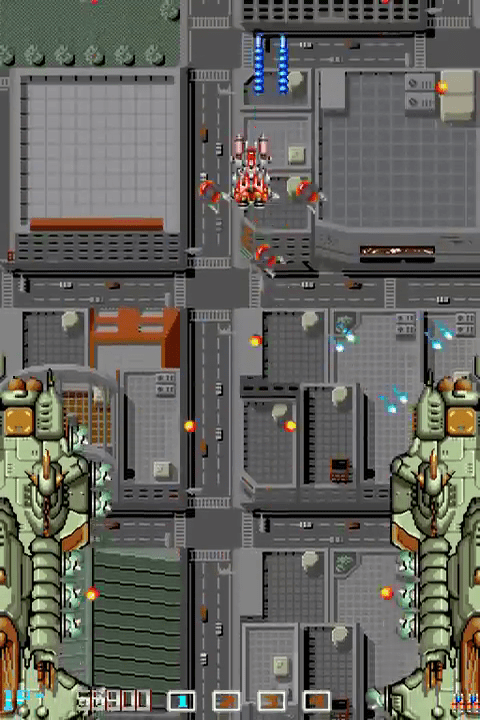
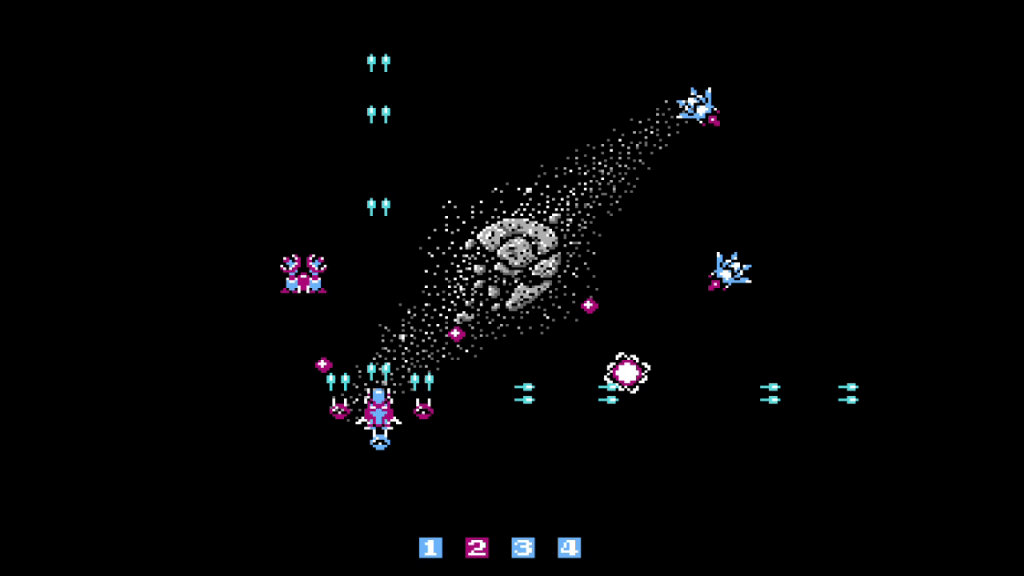
Image Fight is a vertical scrolling shooter, where the player controls a space ship, flying through each stage while shooting down enemies and bosses. The game plays out in two segments, with the first five stages rating the player on how well they do. Based on the performance during these stages, the player will get to progress to the final three or have to take on a penalty stage. This system pushes the player to improve their skills to avoid the penalty stage.
During the game, the player will be able to collect support weapons called Pods, separated into red which will change direction and blue that stay static and shoot up. The player is able to collect up to three of these power-ups, with the ability to throw the pods on the sides upwards, dealing damage to the enemies. These weapons will be lost if the player is defeated by an enemy, needing to be recollected afterwards when lost.
The player can collect special weapons that attach to the front of the player ship, which function as both a power-up and a shield. These will protect the player from taking one hit, being destroyed and letting the player survive a little longer. There is even a speed control system, which allows the ship to be sped up or slowed down. This speed system lets the player to switch things up on the fly, making for an interesting shooting experience.
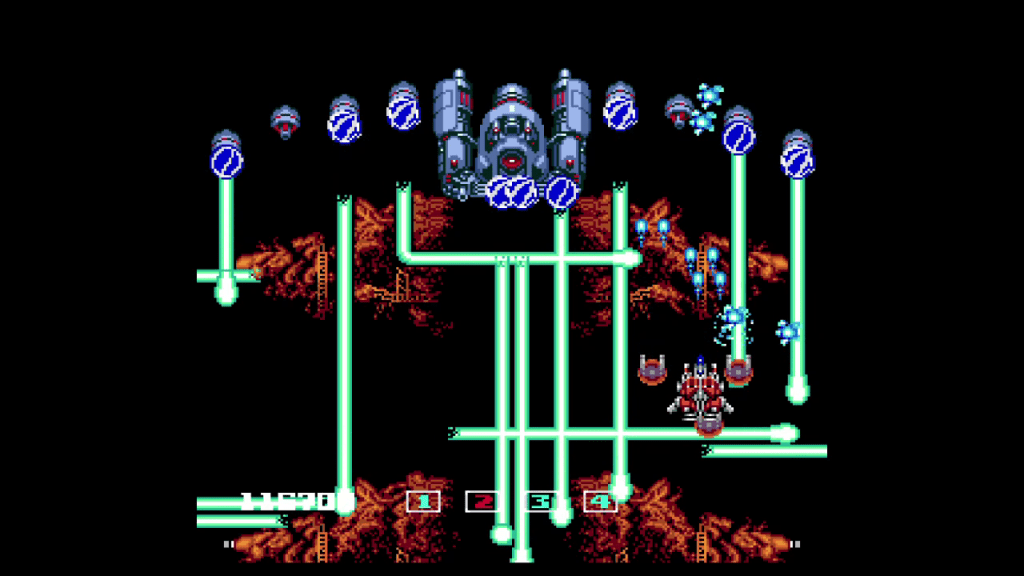
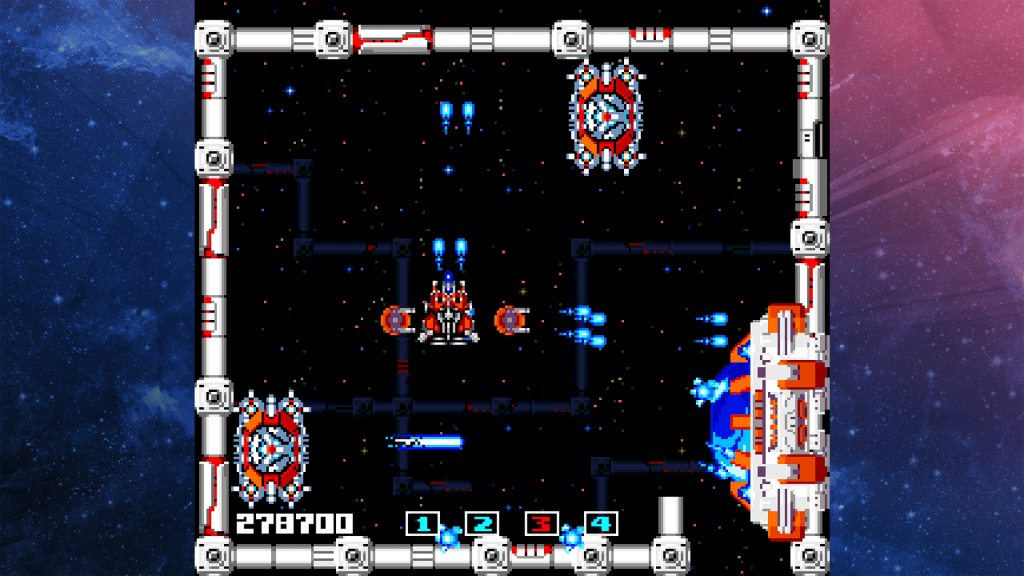
Including in this collection are several versions of Image Fight, with both the Domestic and International versions of the arcade release. These provide the best possible experience for those who want to relive the glory days of the arcades. The home ports of the game for NES/Famicom and PC Engine offer a very different experience. The NES/FC version is rebuilt specifically for the hardware, whereas the PCE version is closer to the arcade but has screen crunch.
Image Fight II: Operation Deepstriker – 1992 (PC Engine Super CD)
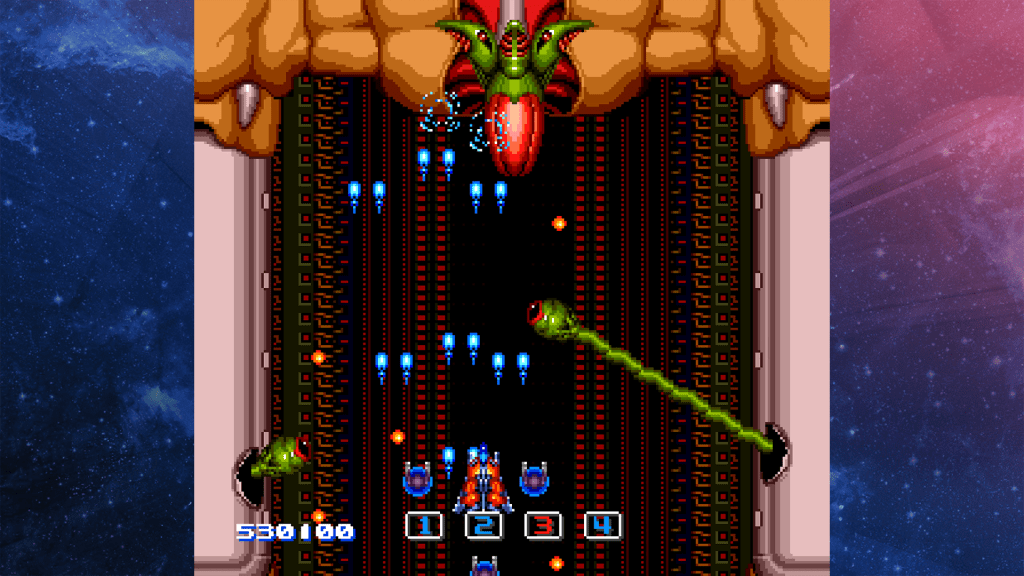
This is a direct sequel to the previous game, which has taken the core of the first game and completely rebuilt it. This title features a story with cinematic scenes, voice-over and updated gameplay mechanics. Just like the first game, there is a split gameplay system where the player will play through a pre-set number of stages, being rated based on performance. The player will then face a penalty stage if based on their percentage after these stages.
The scope of the game has been expanded with this title, adding more stages to the game and taking into account the limitations of the PC Engine hardware. The pod system returns, where players can collect up to three of the support pods in either red or blue. They function identically to the first game, with the player being able to change the directions of the red pods, while also throwing them forward to attack enemies.
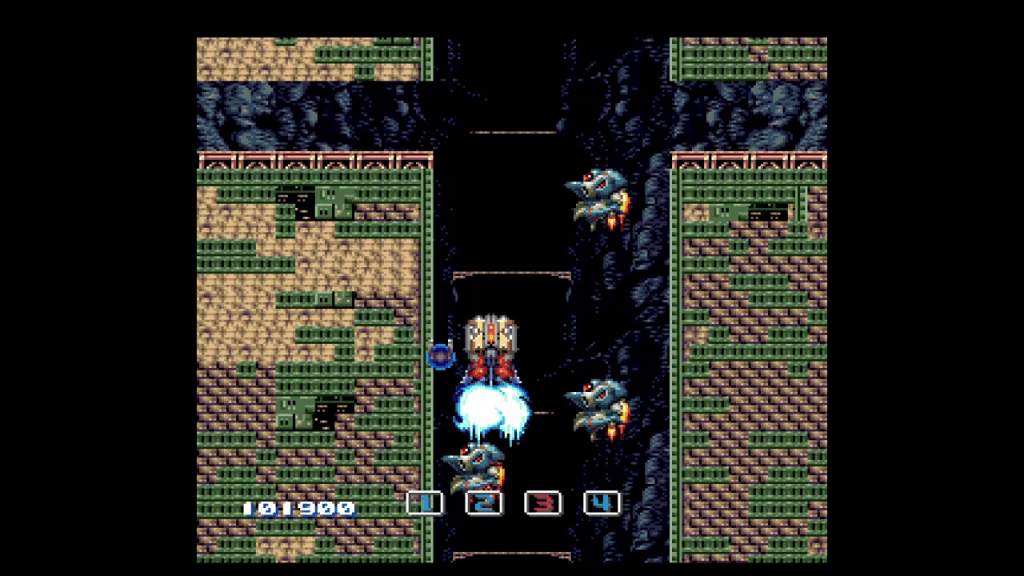
There are new weapons that have been added, refreshing the formula and making this entry of the series more distinct. The new weapons still maintain their shielding capabilities, protecting the player from a hit and prolonging a life. Also returning is the speed system, which lets players speed up and slow down their ship between 4 levels. This title was also exclusive to the Japanese market before this release, making it the first time for the game to come westward.
X Multiply – 1989 (Arcade)
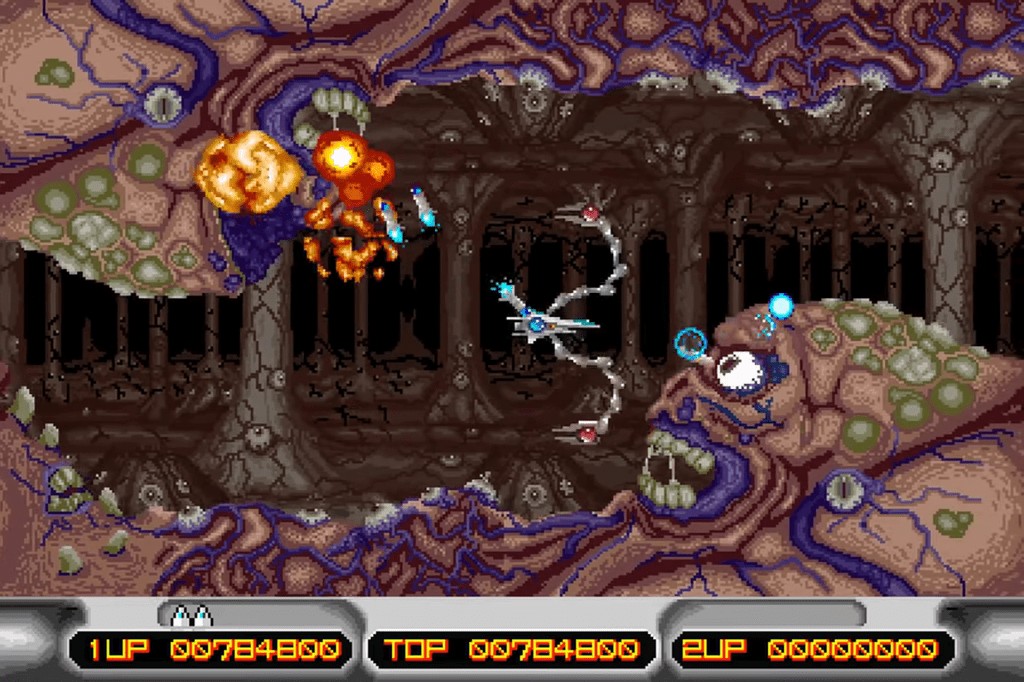
This title is the most different of the three in the package, with the action playing out in a side scrolling fashion, with a vertical segment during the game. The gameplay loop is more of the standard shooter fare, where the player makes their way through the stage and then fights a boss at the end of the stage. The game will also loop upon defeating the final boss, starting again from the beginning and increasing the pressure on the player.
The weapon system is also vastly different to the others, with this release using a tentacle like power up that moves with the ship. There is a special and more flexible control system in this version, where the player can control the shots and tentacles in a twin stick system. These tentacles are invincible and deal damage when contacting enemies, while also being used as points to fire from with the various weapon types.
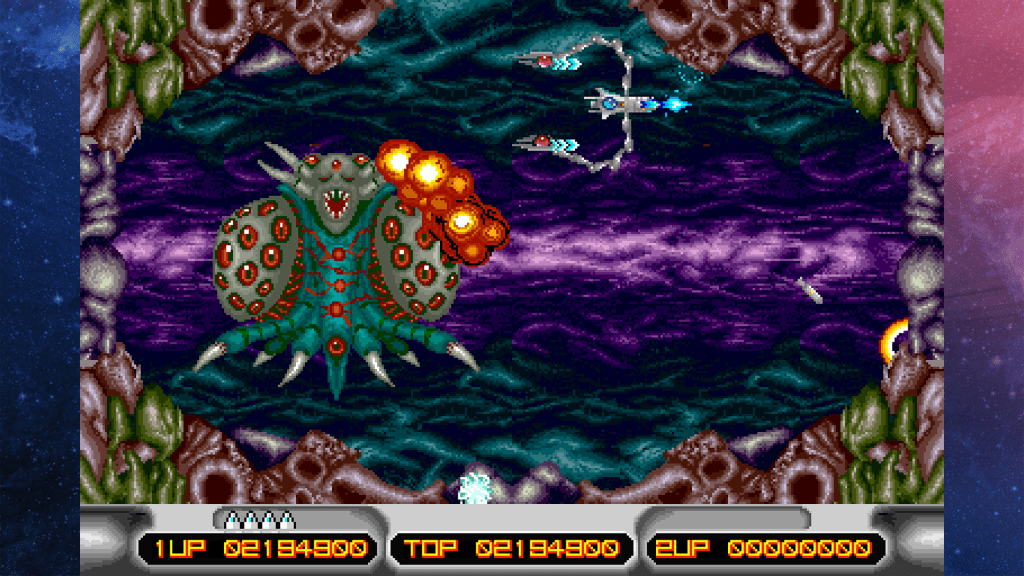
Alongside the tentacle weapons, there are more standardised weapon power-ups that can be collected during play. These include lasers, bombs and missiles, which will increase in power the more power-up icons are collected during play. There is also a speed up and down, which will increase the movement speed of the player ship with a standard S icon, but will slow it down when a reverse S icon is collected.
Now with the core details of each game covered, it is time to discuss the other aspects of this release, starting with the controls.
Controls – the controls for the games and the different versions are implemented well, with the ability to change the layout to fit a range of controller options. There is also the special control system added to X Multiply, giving the game a twin stick system to them. All of the controls are comfortable in handheld and docked play with a range of controllers, however, the best way to experience these games is with an arcade stick.
Difficulty – all of the games in this collection are very difficult, with enemies and attacks that will catch the player off guard. These moments make some of the most intense sections of the game, especially during the boss battles where precision will be key to survival. To alleviate some of the difficulty, there is the option for unlimited lives and invicibility, allowing players to practice the different areas of the games and get used to them.
Presentation – the sound and visuals of these games are emulated very well, with all of the colors and sprite work maintaining their vibrant colors. There is no issue with slowdown or framerate that has been added, as any of the minor issues are in the original titles. There are also video options that give the option to customise the look of the game, with filters and shaders to name a few. The music is as crisp as their original releases, with zero problems during play.
New Features – for this compilation, there are cheats to let players practice, access to dip switches for settings and quality of life improvements. Players will be able to choose from a standard or arcade mode, which give different features depending on the mode. There is also the inclusion of save/load states, where players will be able to jump in and out of the game with ease. There is also challenge mode, where players get 1 credit to try and get on the leaderboards.
Final Thoughts – I have been playing titles by IREM for many years, being an enjoyer of games like R-Type and having played Image Fight on the PC Engine many years ago. I was excited to see classic titles coming to current systems with the new series of collections, which I can say has not disappointed me so far. There is a nice selection of software here, especially with the multiple versions of Image Fight and the first release of Image Fight II in the west.
I very much enjoyed playing through the different versions of the titles in this package, exploring the differences for the software available. The flexibility for the player is a great addition, letting players challenge the game at a pace that works for them. All of the quality of life improvements, inclusion of filters and online leaderboard systems make this an easy recommendation for me. Everyone who enjoys classic arcade titles should check this out.
In the end, I give IREM Collection Vol.1 a final score of 5/5. This is a fantastic collection of games, with new features and quality of life additions that make this the best way to currently enjoy these games without original hardware. The overall value of the package and the content available make me excited to see what is to come in the future. If you want to check this package out for yourself, a link to each version will be below.
Link to Nintendo Switch version (HERE)
Link to PlayStation version (HERE)
Link to Xbox version (HERE)
 W.Kohaku Media
2 thoughts on “IREM Collection Vol.1 – Nintendo Switch Review”