
Overview – developed by GeekOn and published by Midnight Games, Real Estate Simulator is listed as an exhilarating journey to build a real estate empire. Buy and sell properties across three different regions, decorating them with furniture, wallpaper and flooring however you like to before selling it in the main office. This title is available on steam, with a link to the game available at the bottom of this review.
Disclaimer: before I get into the review, I would like to thank Midnight Games for providing the software that was used for this piece, via the keymailer service. The provision of this software has not influenced the contents of this review, all thoughts and opinions contained within are my own.
Now with the introductions out of the way, let’s get into the review. I will be skipping the story as there is zero narrative present for this release, so I will be going straight into the gameplay segment.

Gameplay – this release is a house flipping style sim, where players buy properties, decorate them and then sell them to prospective buyers. At the start the player starts with a level 1 office, where they can buy and sell properties for the most part in a level one region. The player starts off with some seed money and access to the level one region, which is called the slums and it sets the expectation for players on what the game will be like.
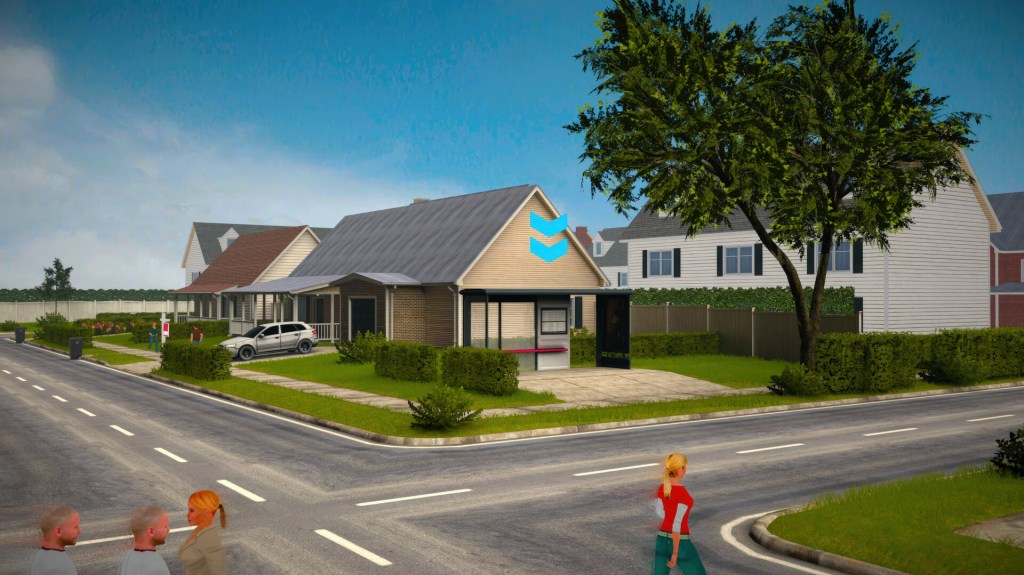
This is a straight clone of the better known game House Flipper, putting the player in a first person perspective with bland assets and repetitive gameplay. Moving around the game world is boring with lifeless NPC characters that populate the areas, walking in repetitive cycles that are out of place. Then there are the barriers that lock off all of the explorable areas, locking the player into a very small play area that feels restrictive.
In the slums the player will find themselves in a sewer drainage canal, where the properties are made up of tents, haulage containers and abandoned school busses. These “properties” can be bought for as low as 600 dollars from what looks like a homeless person, with models that appear to look dirty and disheveled. When a tent has been bought in this digital skid row, players can “improve” the star rating by throwing a sleeping bag on the floor that is bought from the office pc.
When properties have been added to the “portfolio” of the player, they can be put on sale in the office and the glaring issues with this game become even more apparent. When a property is shown on the sale page, there is A.I. generated art, looking nothing like the actual in game assets. Then there are the absurd names and descriptions for properties with titles like “Whispering Pines Pavilion” saying it has “rustic charm and open design, perfect for displaying antique furniture”.
The bizarre choice to make this the level one area is odd, given the negative attitude to those who live in places like skid row. What makes it even more strange are the exaggerated prices for this area, like buying a haulage container for 8,000 dollars and then selling it for 15,000 after throwing a sleeping bag in it. Then you have the sale system, where you have generic A.I. voiced “buyers” who you can try to sell the “houses” to when they walk into the office.
During a work day if you have properties for sale, clients will come into the office and give an idea of what they want. The requests can include a price, location or rating that they are looking for, then you can offer two properties if you have them to try and sell. If the client wants to buy, you will be teleported to the location and then you can try to haggle a price with them. You have three attempts to make a deal before they leave.

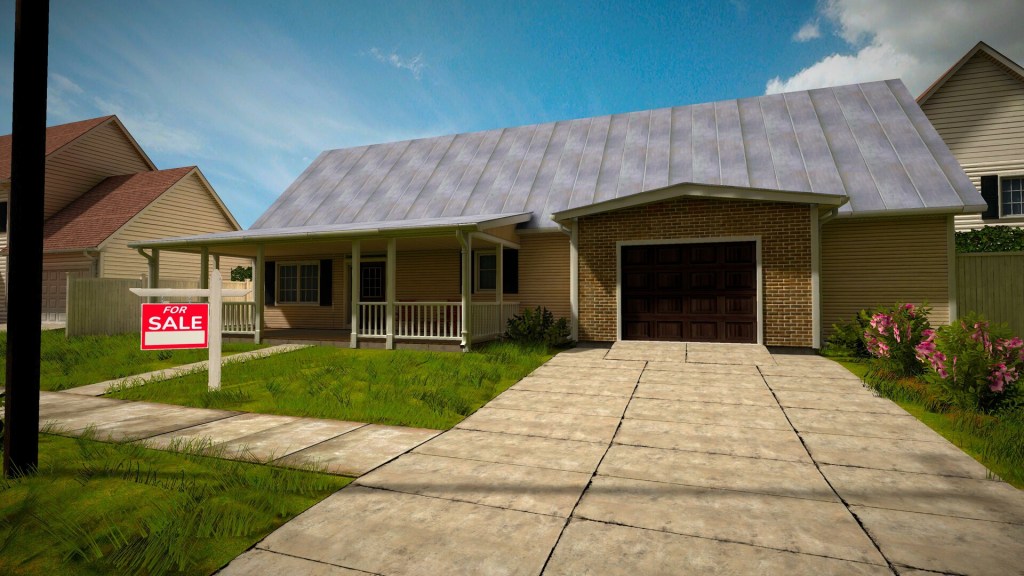
When enough property has been bought and sold, the player will level up and unlock the suburbs as a potential market. Increasing the real estate level, the player will be able to buy more items from the furniture store. This will be very useful as the new items can be used to decorate the actual houses on sale, but this doesn’t give the game much more depth. In the suburb region, the prices jump significantly, ranging from around 40k to over 1 million to buy.
These properties in the suburb are often a basic copy paste, with all layouts being part of a limited set of options. The lower price houses in this area have one floor and the more expensive will have more, then after you buy and sell enough you unlock the level 3 area of the city for even more expensive properties. That’s about it for this game, there is no real reward or jeopardy for this game. The game page lists challenges like market crashes, but that never happened.
To decorate a property in this game, players can just throw furniture around that have been bought and added to the inventory, with no real thought put into it. There is little if any real interaction with the properties throughout the game, especially with the flooring and wallpaper which is just point and click. This adds little if any real depth to the game and feels like filler to keep the player going, with the only impact it has is increasing the star rating of the property.
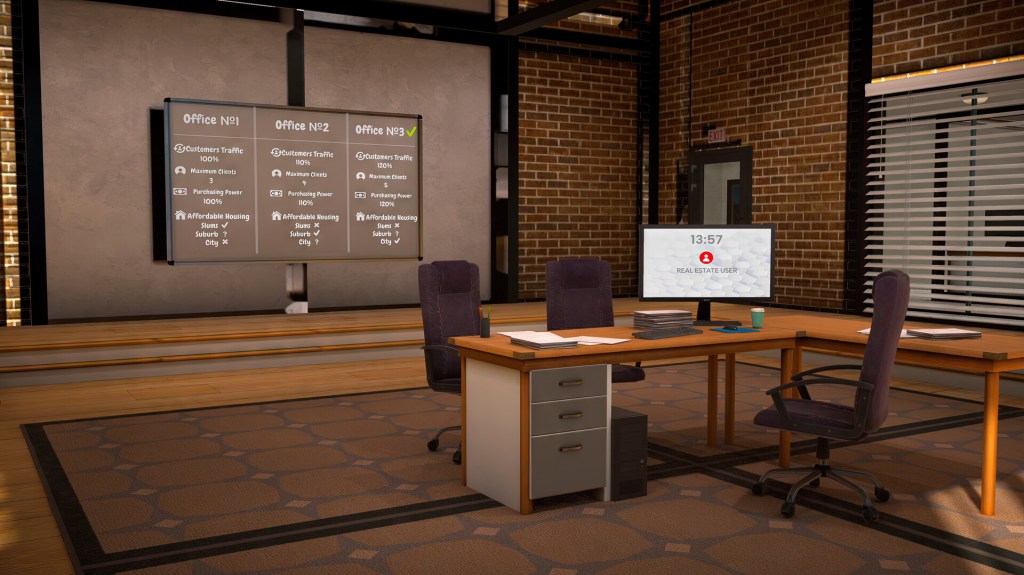
Last to talk about is the office system, with the player starting out at a level 1 office where they can sell houses for the slums and some from the suburb. Then when enough is earned, level 2 and 3 offices can be purchased, increasing the overall sale potential for the suburbs and city regions. The offices look different but they all do the same basic things, just with a different coat of paint and at the end of each day, you sleep on a couch that is just there in a corner.
With the gameplay covered, it is time to move into the other aspects of this game, starting with the controls.
Controls – this game uses the most basic first person controls that you would expect from a game, with mouse and keyboard support. I used mouse and keyboard for the most optimal experience and even then it was unintuitive, boring and just a slog to play. There wasn’t even the option to change key bindings and the only prompts you get are flashed on screen in the tutorial and then they are gone. Not a fun experience to control.
Difficulty – there is zero difficulty in this game, with the only challenge being if you can stay awake long enough to keep playing. The store page for the game says there are VIP clients and market crashes, but that didn’t happen once. The only thing that could be called difficulty is the grind that you need to be able to buy bigger houses, which if anything is more boring than it is challenging given the lack of actual depth to the game.

Presentation – visually this game is as bland and boring as the gameplay experience, with generic assets that feel like they have been bought from an asset store. The areas are limited to explore, with exteriors that don’t match the interiors for the most part. Then we have the use of A.I. assets which just feels lazy, with the lack of art of voiced dialogue preferable to the slop that has been used for this. The music is just as bland, with what sounds like royalty free music being used for the game.
Final Thoughts – I have been aware of Midnight Games and their parent Midnights works for a while and their reputation, but I thought to myself “they can’t be that bad” so I gave Real Estate Simulator a try. Oh boy was I wrong to think how I did, this is the worst game that I have played, possibly ever and I have played some very bad games. There was nothing redeeming for this game, whereas the other bad games I played were fun to some extent.
This game is just a terribly made imitation of the popular house flipper titles, with absolutely none of the charm that those games have. There is no fun, challenge or actual depth to the game aside from the leveling system, which is the most surface level form of progression that could be in a game. I cannot recommend this game to anyone, not even to see how bad it is and it feels like a waste of money when there are much better games out there.
In the end I give Real Estate Simulator a final score of 0/5. This is the single worst game I have ever played during my career reviewing software, there are no redeeming features for this shovelware clone that is riddled with A.I. slop and feels like an attempt to capitalize on the popularity of house flipper games. if you do want to look at this game for yourself, a link to the game will be below, but I wouldnt waste the time.
Link to Steam version (HERE)
 W.Kohaku Media