
Overview – developed by Bacord and published under license by Leoful, Timberdoku is a block puzzle where players must clear the blocks by clearing lines and groups of nine. Take on the endless mode or challenge adventure mode with 80 challenging puzzles to solve. This title is available exclusively for the Nintendo Switch worldwide, with a link to the game at the bottom of this review.
Disclaimer: before I get into the review, I would like to thank Leoful for providing the copy of Timberdoku that was used for this piece. The provision of this software has not influenced the contents of this review, all thoughts and opinions contained within are my own.
Now with the introductions out of the way, let’s get into the review. Please note, there is no story for this release, so I will be skipping that segment and going straight into discussing the gameplay for Timberdoku.
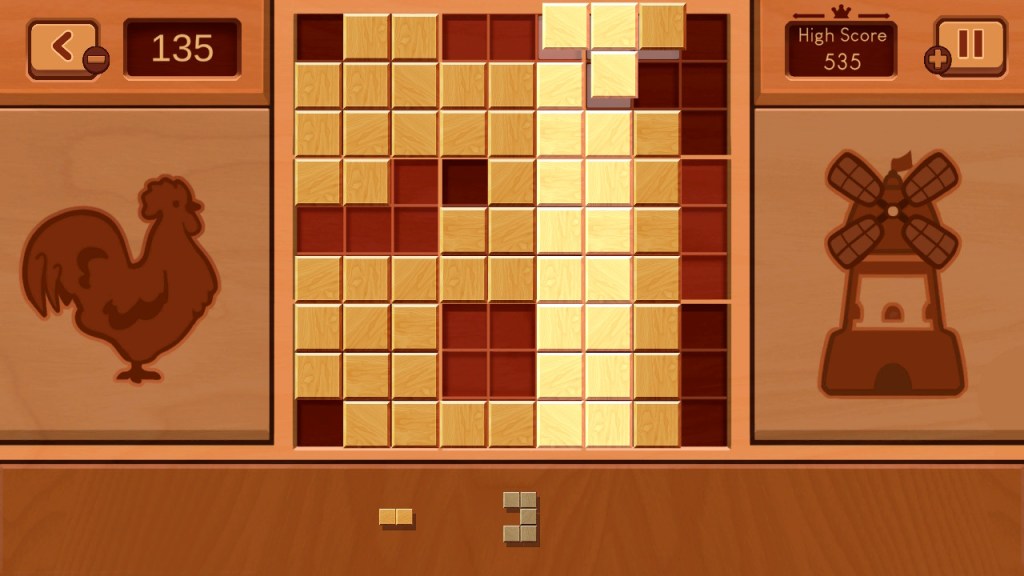
Gameplay – Timberdoku is a puzzle game, taking the concepts of traditional block puzzle games where players must fit pieces together on a grid. In this iteration of the block puzzle, players must slot the randomly provided pieces together, creating lines and 3X3 squares within a set area. When a line or square has been completed, the blocks will be erased, allowing for new pieces to be placed on the board earning points along the way.
Each turn the player will be provided three shapes they can put down, including the traditional L and T shapes that have been used in other puzzle games. However there are unconventional shapes that can appear, like diagonal blocks and C shapes. If the player is unable to place any more shapes, the game will be over and the player will need to start over again. This makes the game very challenging, as there is an element of forward planning to the game.
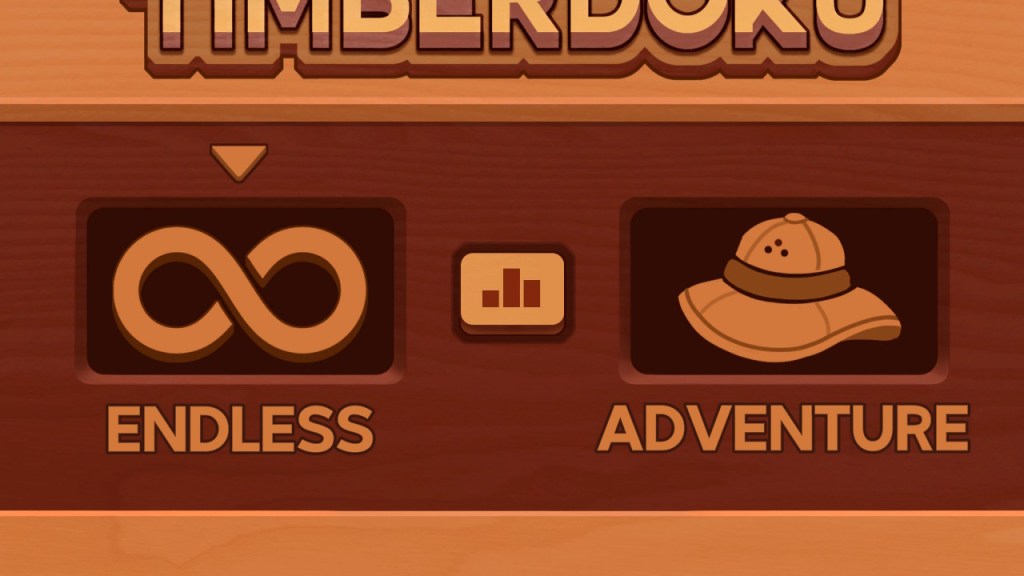
In Timberdoku, there are two gameplay modes that can be challenged. The first is endless, which is a high score mode where players need to get the best possible score they can. The challenge will go for as long as the player is able to place shapes, with the best score that has been reached added to the leaderboards. There are four scoreboards that the game uses, with daily, weekly, monthly and all time rankings, but they are all offline.
Then we have the adventure mode, which is made up of 80 total stages that the player will can challenge. The stages will follow the same style of gameplay as endless mode, but there is a big change to the gameplay formula. Each of the stages will have an objective to complete, from clearing lines/squares to collect gems to hitting a target score. Just make sure not to run out of spaces or the challenge will be failed, with the player needing to start again.
There are two ways to play the game, with touch screen inputs and standard controller support. Both ways to play make the game approachable and intuitive to play, allowing all players to be able to experience and enjoy playing the game. However, there are some areas that could be improved, like a colorblind setting as the game uses a lot of primary colors, which some people may struggle with.
Now with the gameplay covered, it is time to move onto the other aspects of this release, starting with the controls.

Controls – as mentioned above, this game uses both touch screen and traditional button inputs. Both styles of play are responsive and very intuitive, allowing the game to be played comfortably in either handheld or docked play modes. There is no issue in terms of input lag, making for a fun time that can be enjoyed by everyone and is very accessible.
Difficulty – there is little in terms of difficulty with this release, as the challenge comes from the random block shapes that are provided and the skill of the player. All of the adventure stages have the same layout, but one mistake with the placement of a shape can lead to a rapid decline and failure. However, there is no significant punishment for failure, as the player will just need to start over again with no adventure progress lost.
Presentation – there is a very simple and stylised look to the game, using a wood grain/board game look to it as if the player is at a table to play. This gives the game a rustic look to all of the menus and gameplay, with different motifs like windmills, koi fish and more to add to the visual presentation. There is a soft and smooth jazz soundtrack for the game, giving it a relaxed and cosy feel to the experience that makes it a joy to play.

Final Thoughts – I have played variations of this style of game as browser and mobile experiences, which have been fairly limited in their gameplay. So when I was given the opportunity to try this game out, I jumped to play it. I had a lot of fun with this release, finding the cosy atmosphere that it created as one of the most enjoyable aspects of this experience. There is a lot of content in this release, all for a modest and affordable price.
I am very happy to recommend this title to everyone that enjoys puzzle games, or cosy games in general. There are a few areas where I feel the game can be improved, rounding out the experience a little better like colorblind options but they don’t affect the experience without them. The lack of online leaderboards for those who want to challenge others is understandable, but it would be nice to have name entry for local leaderboards.
In the end, I give Timberdoku a final score of 4.5/5. This is a relaxed and cosy title that is challenging yet fun, offering a lot of content at a modest price point. The soundtrack and presentation come together to give the game that warm feeling, like playing a board game or doing a puzzle in front of a fireplace. If you want to check this game out, a link to it will be below.
Link to Nintendo Switch version (HERE)
 W.Kohaku Media