
Overview – developed by Digital Happiness and published by Soft Source Publishing, DreadOut: Remastered Collection is a double pack of two supernatural horror adventures. As Linda, survive the horrors of an abandoned ghost town in DreadOut, then in Keepers of the Dark, Linda is in the Mirror realm, banishing spirits from ghostly domains. This release is available on Nintendo Switch and PlayStation, with a Link to each version of the game at the bottom of this review.
Disclaimer: before I get into the review, I would like to thank Evolve PR for providing the copy of DreadOut Remastered Collection, via the Terminals service. The provision of this software has not influenced the contents of this review, all thoughts and opinions contained within are my own.
Now with the introductions out of the way, let’s get into the review. As this is a compilation title, I will be discussing the two games as their own sections, then the package as a whole. Both games share many of the mechanics and there is a lot of crossover between the games, so there will be some details that are repeated.
DreadOut

Story – Linda is a high school student that is on a field trip with a group of her peers and teacher, when they find themselves in an unknown area. Venturing further, they discover an abandoned ghost town, which appears to be lost to time. However, this seemingly peaceful place is not what it seems, with what started as exploration turns into a nightmare. Now Linda must find a way to survive the horrors that she has found herself caught up in.
Gameplay – DreadOut is a third person exploration horror, where the objective is to solve puzzles and escape the nightmare that the protagonist is trapped in. The game takes place over multiple story acts, with objectives for each chapter that must be cleared to progress. There is an opening chapter, which serves as both a prologue and tutorial, guiding the player through the basics of how to survive the supernatural events around her.
During the course of the game, the player will need to explore the different areas, uncovering items and clues on how to escape. To aid the player in their exploration, Linda has the power of Blue Vignette and her camera. This power allows her to find points of interest, hidden items and aid in puzzle solving, by showing a blue glow around the edge of the screen. The use of Blue Vignette is important, as key items can be very hard to locate.

The range of the blue effect is fairly wide, intensifying when closer to the target. The items that can be found include keys, clues and survival items. Players can also locate hidden pathways, gates and other points of interest. This can be accomplished by using the camera, which can pierce the veil and show the spirit world. However, the Blue Vignette is not the only power that Linda can use, as she has a secondary ability to help her survive.
During her trials in the spirit world, Linda has the secondary ability of Red Vignette, which is to alert her to the presence of malevolent spirits. These spirits come in two forms, one is intangible which cannot be seen by the naked eye, with the other being more powerful that they can manifest themselves. Not all sprits are evil, but many of the phantoms that will be encountered harm linda, dealing either physical or mental damage her.
Linda is not defenceless against the spirits, as she can use her camera to fight back. When she is looking through the camera at a ghost, she can take photos of a spirit. These photos will damage the ghost and can even banish the ghost entirely. The spirits will often have a weak point, which will vary based on the spirit encountered. With some only taking damage if this point is hit, being defeated after successfully targeting that point.

Then there are the boss battles, which need to be overcome to progress the story. These battles will trap the player in an arena with the spirit, with the only way to escape being to defeat them. When fighting a powerful spirit, they can have multiple phases, with other enemies or hazards appearing between them. The more powerful phantoms can quickly overwhelm Linda, killing her with ease due to unfortunately slow time it takes to bring up the camera.
If Linda is killed at any time, she will find herself in Limbo, a place between the world of the living and dead. In front of her is a light, guiding her spirit back to her mortal form. If the player chooses to run to this light, they will return to before they were killed, allowing another chance at escape. This is very important when battling the most dangerous of spectres, as some trial and error is required to defeat them and make it out alive.
Thankfully, death is not a significant setback to progress in this adventure, as the game will save progress and give checkpoints when something happens. This includes collecting items, entering areas and defeating spirits. Players can check their objectives, details on spirits and more in the log book. There is also an inventory, where collected items can be viewed, giving players information about what they have at a quick glance.

Last to discuss are the cutscenes, which will be triggered when an objective is cleared. Some of these will be interactive and be impacted by player choice, giving different outcomes each time. Then there are the more traditional cinematic moments, where Linda will be in an area and must follow a set path. During all of these events, more depth is added to the narrative, making them essential to understanding what is happening to Linda and the others.
DreadOut: Keepers of the Dark
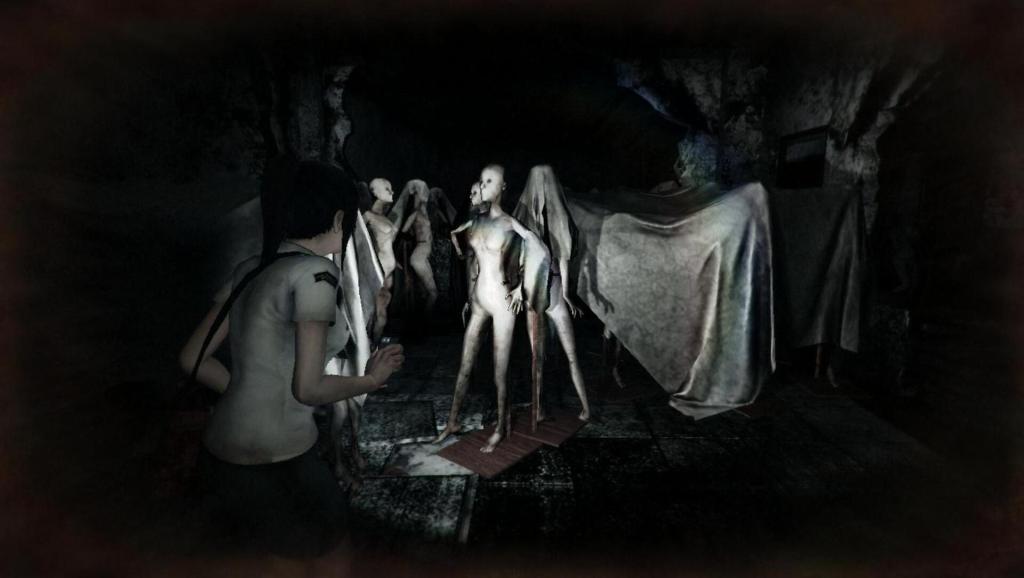
Story – in this sequel story following the events of the ghost town, Linda finds herself in the mirror realm. This unusual place acts as a portal to 8 different worlds, where ghosts from folklore roam in a state of limbo. Linda must navigate these different realms, putting these spirits to rest as she tries to escape this domain. But it will be a challenge, as the ghostly apparitions in these realms will do everything to prevent her survival.
Gameplay – as a follow up on the events of DreadOut, there are a lot of mechanics that cross over to this adventure. The Blue Vignette for exploration return, alongside the Red Vignette and camera mechanics for battling ghosts. But there is a big change for this chapter of the DreadOut story, as the progression has changed from linear to a selectable stage system. Here in the Mirror Realm, the player must tackle 8 different haunted worlds.
Starting from the main hub of the Mirror World, there are 8 doors to select with two candles in each. These candles refer to the spirits and objectives that must be completed. But there are some challenges that span across multiple locations, before being resolved in their designated setting. Many of the locations featured within these ghastly domains are from the previous instalment, but have become further twisted and warped by the apparitions.

The main form of progression for this adventure is through Spirit Banishment, giving the experience a boss rush type of feeling. Within the different zones, the individual progression of objectives may vary. This can consist of simply locating the spirit, engaging it in battle and then banishing it from the domain. However, some of the spirits will have objectives that are spread across that zone, or cover multiple locations within the mirror realms.
Just like the first chapter in the DreadOut story, the player progress will saved at regular checkpoints during play. This is most important during boss battles, where the player will often have progress saved between phases of battle. If Linda is killed during a battle, she will be sent to limbo, where she must walk into the light to return to her physical form. After returning, the player may resume their battle with the spirit to exorcise them.
There are two ways to leave the domains of the mirror realm, with the first being to defeat the spirit contained within. Then there is the mirror gate, which can be used to quickly escape back to the hub world. When leaving this way, the items that have been collected will remain, but progress with boss fights will be lost. Speaking of items, there are many collectibles to collect with this adventure, with some that are in pieces spread across the realms.
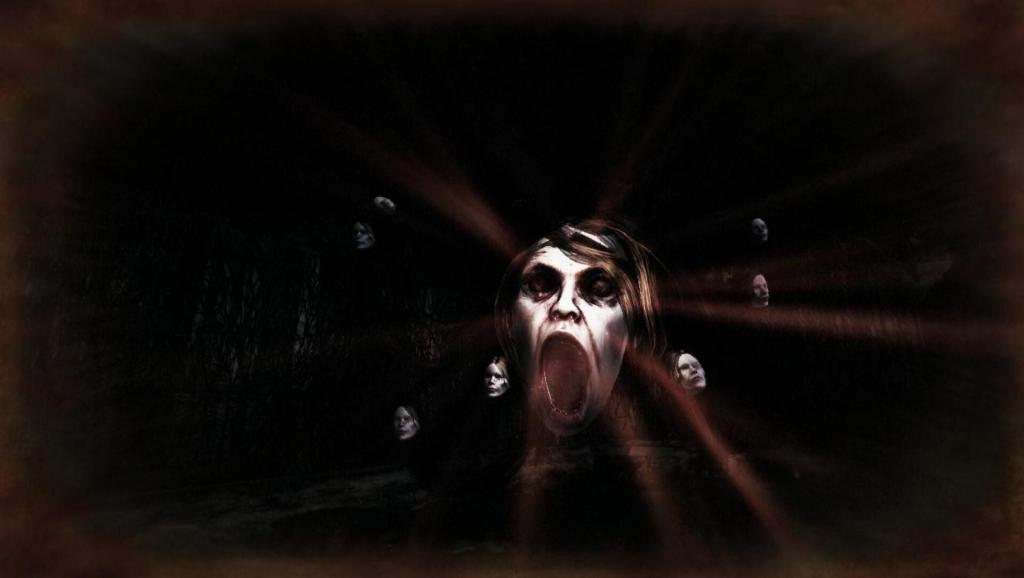
When exploring, items will be scattered across the domains, with documents that provide information and lore about the phantoms. The items required to trigger some bosses will also be hidden in the stage, which need to be collected first. There will also be entities that offer items in exchange for completing tasks, like the spirit of a young girl who wants to play Hide and Seek. These ghosts won’t Kill Linda, but they may cause her some harm.
Due to the non-linear aspects of this release, the narrative strands that are picked up may be jumbled, which are found in the in-game journal. The journal and inventory are where the player will be able to track objectives, items collected and more. There is even a ghost section, like the previous game, where the details and lore around the spirits encountered will be added. These features can help those who are struggling with objectives.
Last to mention again is the narrative sections of the game, which are different from the companion game. There is still the presence of cutscenes, which trigger when specific objectives are completed and tell the greater narrative. Then we have the lone keeper of the Mirror Realm, a janitor who can be spoken to in the main hub. They will give some story details about the spirits, alongside hints on the greater story as a whole as it unfolds.
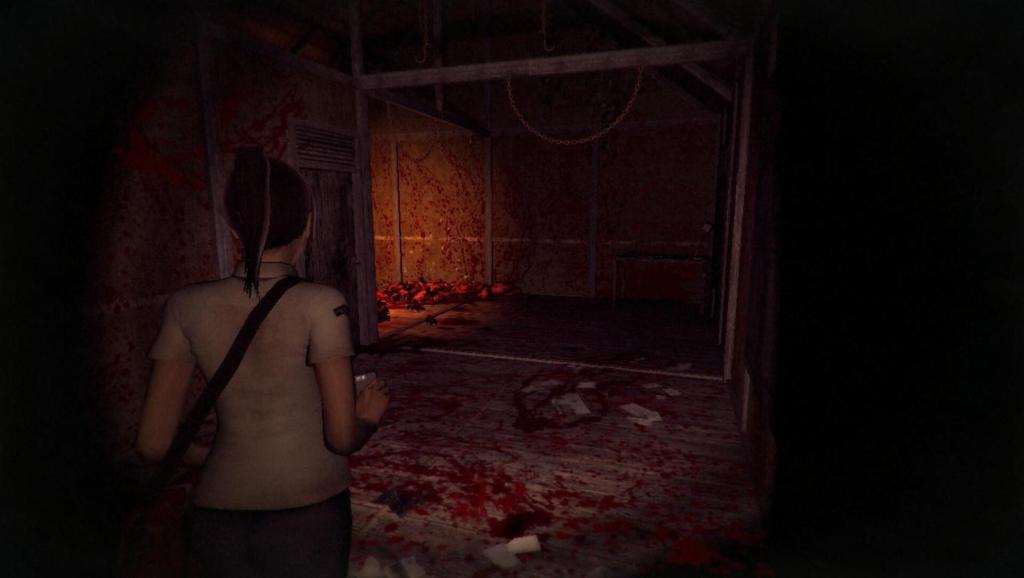
Now with the gameplay for both titles covered, it is time to discuss the other aspects of this release, starting with the package as a whole.
General Package – as this is a double pack of games, there is a menu that players can select the adventure they want to challenge when booting the game up. The two titles have their own individual menus, settings and more. There is also multiple save files for each game. It is important to note, there is no crossover data between games, even though the Keepers of the dark content was released as a DLC first.
Controls – there is a hybrid control method with this release, as the game uses a duel camera perspective of third and first person. This works well, offering players an experience that is fairly unique in the horror genre. In general, the controls work pretty well, even if there is one minor hiccup. It feels like there is a delay with the camera up button, which can be a little off, but all of the inputs aside from the camera are comfortable in handheld and docked play.
Difficulty – the challenge for this release is a little hard to describe, as the main difficulty present is from the cryptic nature of some puzzles. Then there are the ghost battles, which can spike in difficulty with the ghosts, as well as those that have distinct weak points. This is most present during the boss battles in the first game, alongside some of the more elusive phantoms in the second. But with some patience, the challenges in both games can be overcome.
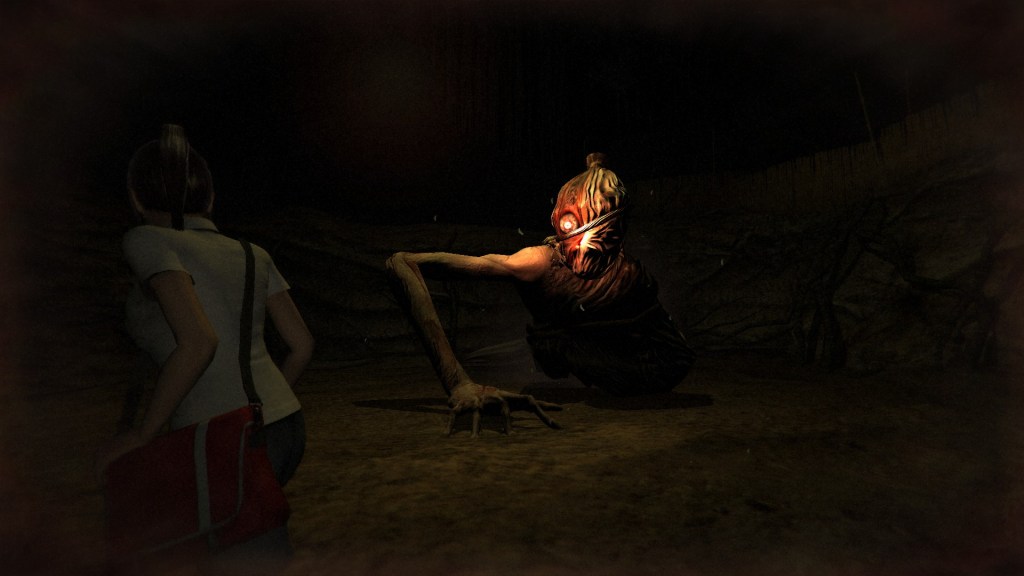
Presentation – from a visual perspective, the game looks good on the Nintendo Switch. There are texture and graphical compromises, but the horrors of the phantoms and atmosphere is preserved. The game performs well, with a smooth play experience, but there is some texture load delay. When playing in handheld, it appears that there is a reduced resolution, which doesn’t seem to occur when playing the game on the big screen.
The sound for both titles effectively builds the atmosphere, with a haunting use of environmental sounds and music that add tension. Then there are the ghost sounds, which alert the player to the presence of a spectre, with moans and cries that can be accompanied by a jump scare. All of these elements work well to create a tense experience. There is also an English voice over, which is performed well and doesn’t feel out of place.
Final Thoughts – I am a horror enjoyer, having played many titles in the genre, including those with similar mechanics to this, like Fatal Frame. Going into this, I was expecting a simple ghost story with some jump scares, but there was a lot more depth under the surface. I very much enjoyed the two different experiences that this package offers, with two distinct gameplay styles. This allows the two horror adventures to stand on their own merit.
The two stories aren’t the longest, with about 8-10 hours of gameplay across the two titles. This doesn’t impact the quality of the gameplay, as there is a lot of content on offer in a rather modest package. It does have some flaws, like the cryptic puzzles and hard to find items, but they don’t hurt the overall experience for players. If you are a horror fan, or looking for something creepy to dip your toes into, then this release is for you.
In the end, I give DreadOut: Remastered Collection a final score of 4/5. This is a challenging and solid horror double pack, offering players an atmospheric experience, which uses Indonesian folklore and mythology to good effect. The combined package isn’t the longest, but there is plenty of content to enjoy at a solid price point. If you want to check this release out for yourself, a link to each version of the game will be below.
Link to Nintendo Switch version (HERE)
Link to PlayStation version (HERE)
 W.Kohaku Media