
Hello there! I am back again with another entry in my feature covering games that are no longer available. This time for Lost Gems, I want to share one of my favourite game releases for the Super Nintendo (SNES), SimCity, which was a launch title for the System in Europe and North America. During a time when console simulation games were uncommon, Nintendo partnered with Maxis to create one of the best city management Sim games.
Disclaimer: While the game discussed here is no longer officially sold, there are ways to obtain the game. This can either be through the second hand market, or through unofficial digital roms/rips. I do not condone or promote piracy, so there won’t be any links to roms or rips of the game being discussed.
So with the introductions out of the way, let’s get started. I will be starting with the general game experience, then giving my personal thoughts on the title.
About the game

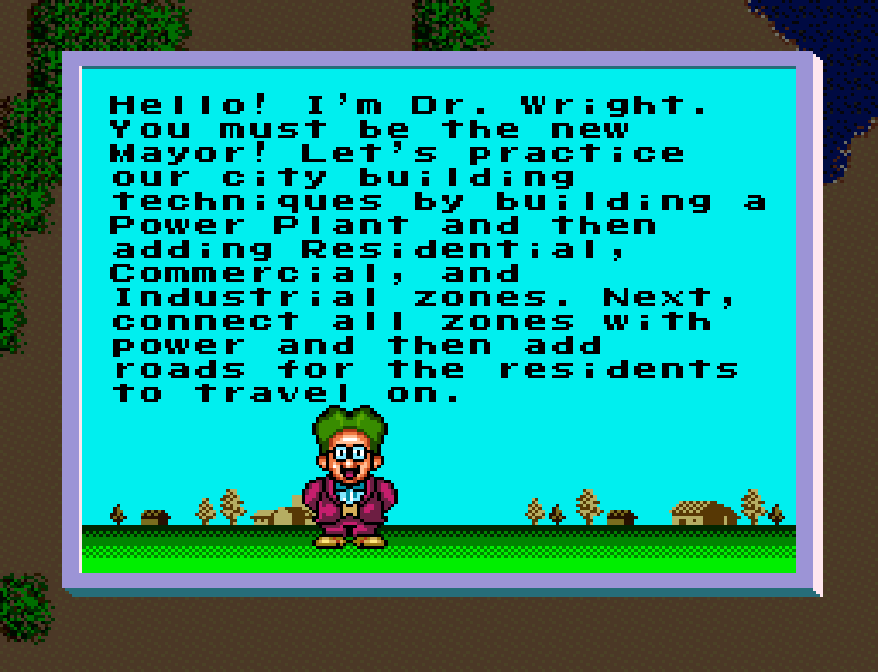
SimCity is the premier city building and management simulator, where players can construct their own city to build a bustling population. Starting off with a blank slate, the objective is to build Commercial, Industrial and Residential zones to grow the city. When starting the game for the first on SNES, the player is given three options to choose from, Practice, New City and Scenario. If a city is already in progress, players can choose to load an existing city.
In the Practice mode, the player will be given all of the tools to build a city up to a target population, using a preset map for this mode. All while learning the ins and outs of managing their city. The scenario option gives players a selection of prebuilt cities, with objectives and challenges to complete. These include an earthquake in San Francisco and monster attack in Tokyo, making them distinct from each other.
The main attraction for this game is the new city mode, where players can build up their own township from the ground up. When creating a new city, the player will need to select the land that they want to build on. There are a total of 1000 possible maps that can be used, giving an incredible amount of replay value. After the map is chosen, players must name the city and select a budget, with Easy at 20K, Medium at 10K and Hard at 5K.
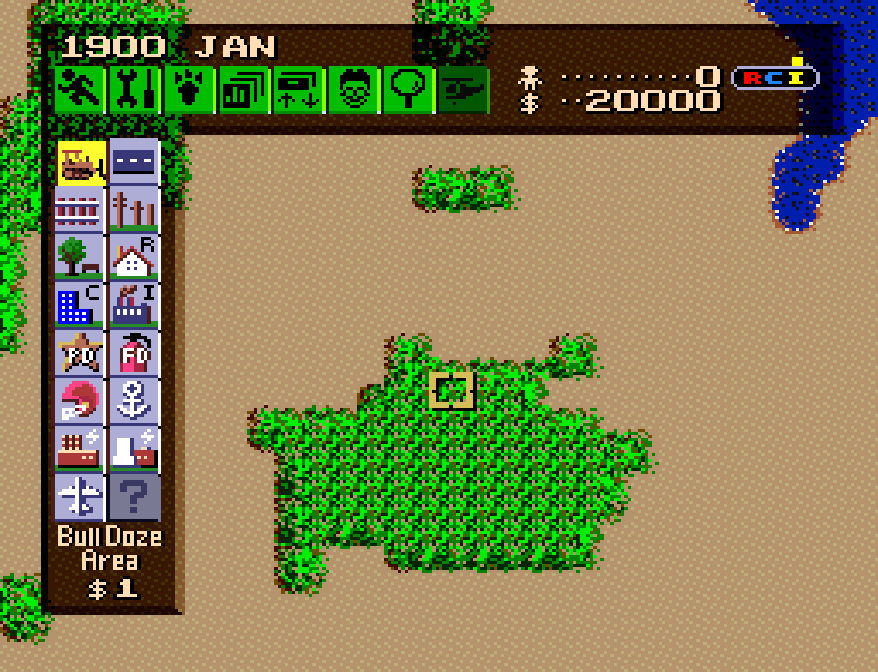

When the player starts a new city, they have a blank canvas on which to build their civilization. The progression of the game is split into stages, with the first stage being a village. It is advised to start off by building a power source, with the choice between Nuclear and Coal. Then the player can start to build Residential, Commercial and Industrial zones to meet the demand for each, with power lines connecting them to the station.
To encourage the growth for different zones, the player will need to build roads and rail lines, connecting the different areas together. As the different areas are connected, the areas will grow and the population will increase. When the population reaches set milestones, the stage will increase, starting off at a village and increasing all the way to Megalopolis. As the stages advance, the music that plays will also change.
The main zones that players can build aren’t the only things players can build. There are police and fire stations, which protect the surrounding areas, Parks that add greenery and even stadiums for the residents. Players can even earn special items, including the Mayor’s House, Theme Parks and Casinos when special criteria are met. These rewards increase the options for a new mayor, while also providing various benefits.
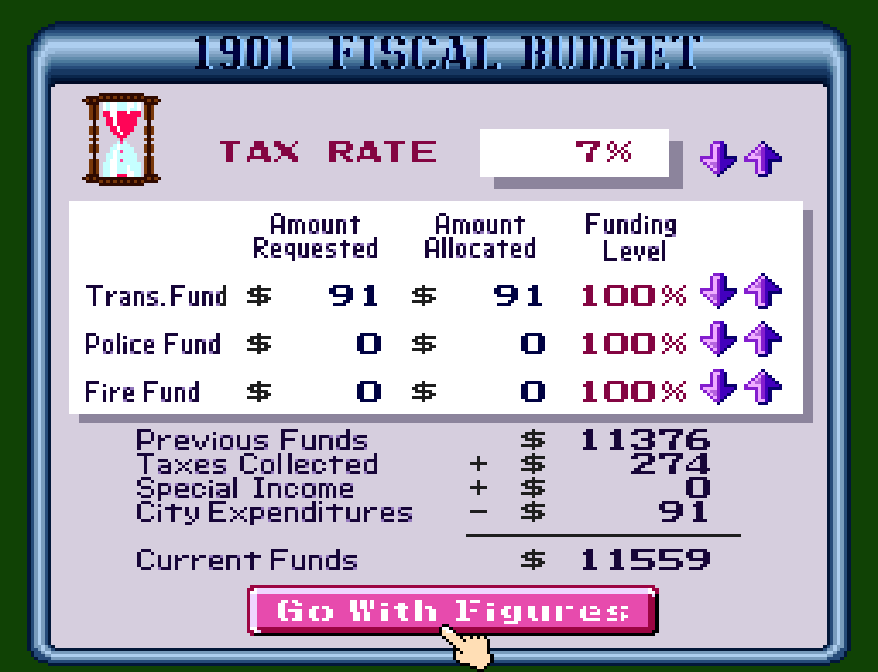
As this is a city management game, the player will need to earn money in order to keep everything running smoothly. At the end of each in game year, taxes will be collected from the population, with money being added to the budget and expenses deducted. Players will also get special expenses from the rewards that have been obtained. The expenses consist of transport for rail/road, fire departments and police forces.
It is very important for the mayor of the city to make sure to keep expenses paid, as the city will fall into disrepair and the growth will suffer. If the expenses cannot be paid, the roads/rail will crumble and crime will increase. The funds will also be needed in the event of a natural disaster, like fires, flood or even Bowser attack. In the event that all funds run out, the player can get take out a loan, but if it cannot be repaid and the city goes bankrupt the game ends.
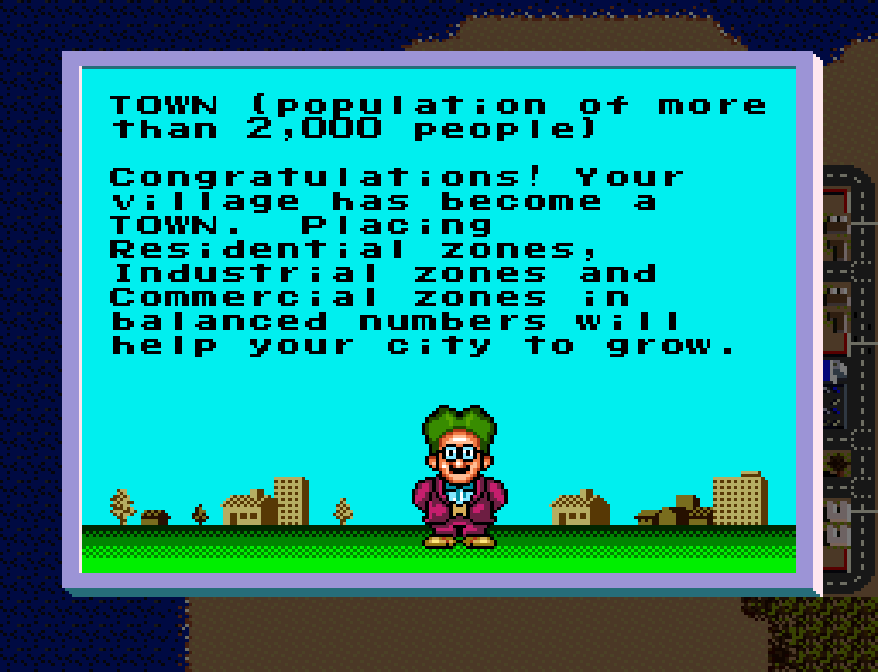
The last thing to discuss is the mascot of SimCity for Super Nintendo, DR. Wright, a personification of the creator of SimCity. DR. Wright will appear throughout the game, giving the player tutorials, important alerts and congratulations when milestones are met. This system adds to the colourful presentation of SimCity. There is even some humor added with DR. Wright reacting to crime, pollution and even natural disasters.
Personal Thoughts


This is another game that is ingrained in me, holding a special place in me for as long as I can remember. While I am not a fan of the city management genre of simulations, I do have an exception for SimCity as it doesn’t have the overly complicated systems later games do. There is also the distinct Nintendo charm that this game has, with the expressive mascot version of DR. Wright, alongside the inclusion of Bowser as a disaster.
The use of DR. Wright gives this version of the game its own unique identity, making it feel like there is an achievable goal, rather than a run of the mill simulation. This is enhanced by the inclusion of the stage system, going from village to town, all the way to Megalopolis as a final step. Then there is the soundtrack, which changes along with the growth of the city, as each stage is passed, the music becomes more grandiose.
Then there are the alerts that pop up, showing the DR. either happy or in distress, with their own distinct music and imagery. All of these elements give the game that Nintendo flavour, making it more than just a simple port of the PC game to a console. The ease of use for everything makes the game very approachable, so players can play without needing the manual. This is refreshing, given the progress the genre has made and how complex it has become.


I find this to be one of those games that needs to be experienced by everyone, as it has everything that would qualify it as a “cozy” game in this age. When the Nintendo Online library services were released, I was hoping that this game would be included, but sadly the omission of this game left me disappointed. It would have been perfect for the Nintendo Switch, given the hybrid nature of the system, allowing players to start their city at home and take it on the go.
Thankfully, it is not an expensive game to pick up on the secondary market, with loose cartridges and even boxed versions of the game at affordable prices. This is a fairly well-known game and I am surprised that it is as affordable as it is, given how the market tends to fluctuate with good games. I would have hope that this game can be made available to players again, but honestly there is probably no chance given how EA treat their old games with partners.
Thank you for taking the time to check this out, if you enjoyed it, please check out the other content that is available on the site, alongside the other instalments of this feature. There will be more features coming soon, so stick around and see what catches your fancy.
 W.Kohaku Media