
Hey there, it is that time of the week again, so I am back with the latest entry in the Lost Gems series of features. In this series, I cover games that are no longer officially available, with this week’s entry being another classic SEGA arcade release that was ported to the Saturn. The full 3D brawler Die Hard Arcade, developed and published by SEGA hit arcades in 96, before making the leap to consoles in 97. So let’s take a look at this explosive beat em’ up.
Disclaimer: while the game discussed here is no longer officially on sale, there are ways to obtain the game. This can be either through the second hand market, or through unofficial digital roms/rips. I do not condone or promote piracy, so there won’t be any links to roms or rips of the game being covered.
Now with the introductions out of the way, let’s get started. I will be discussing the general gameplay experience, then give my personal thoughts on the title.
About the game
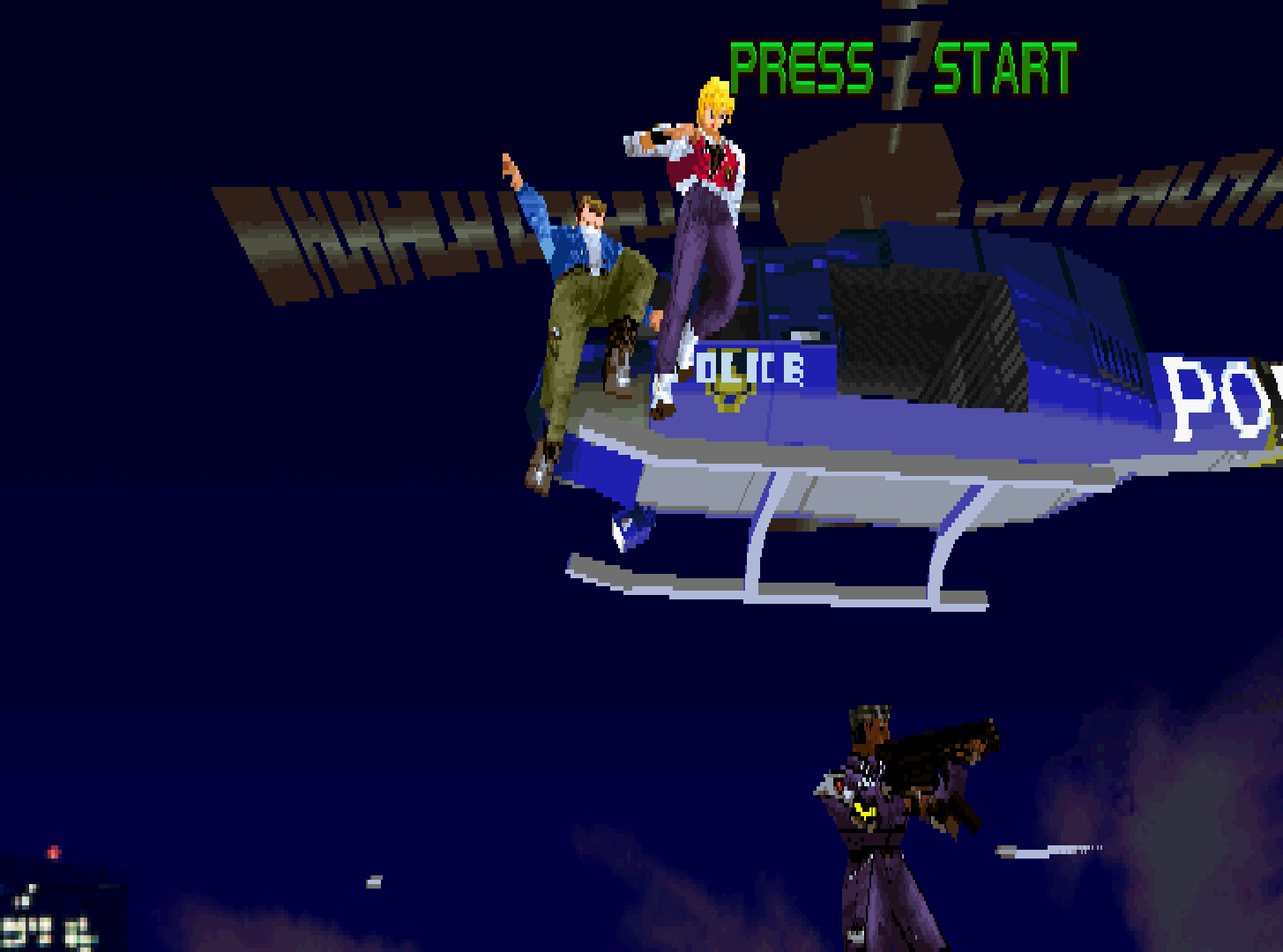

Die Hard Arcade is a 3D brawler, based upon the film series of the same name, where John McClane and Kris Thompsen must stop a terrorist plot. The Nakatomi building has been occupied by a criminal organisation, lead by the notorious White Fang. Wrapped up in this situation is Missie Harrington, daughter of the president of the Nakatomi Corporation. After being ambushed on the roof, McClane and Thompsen must fight their way through the chaos and save the President’s Daughter.
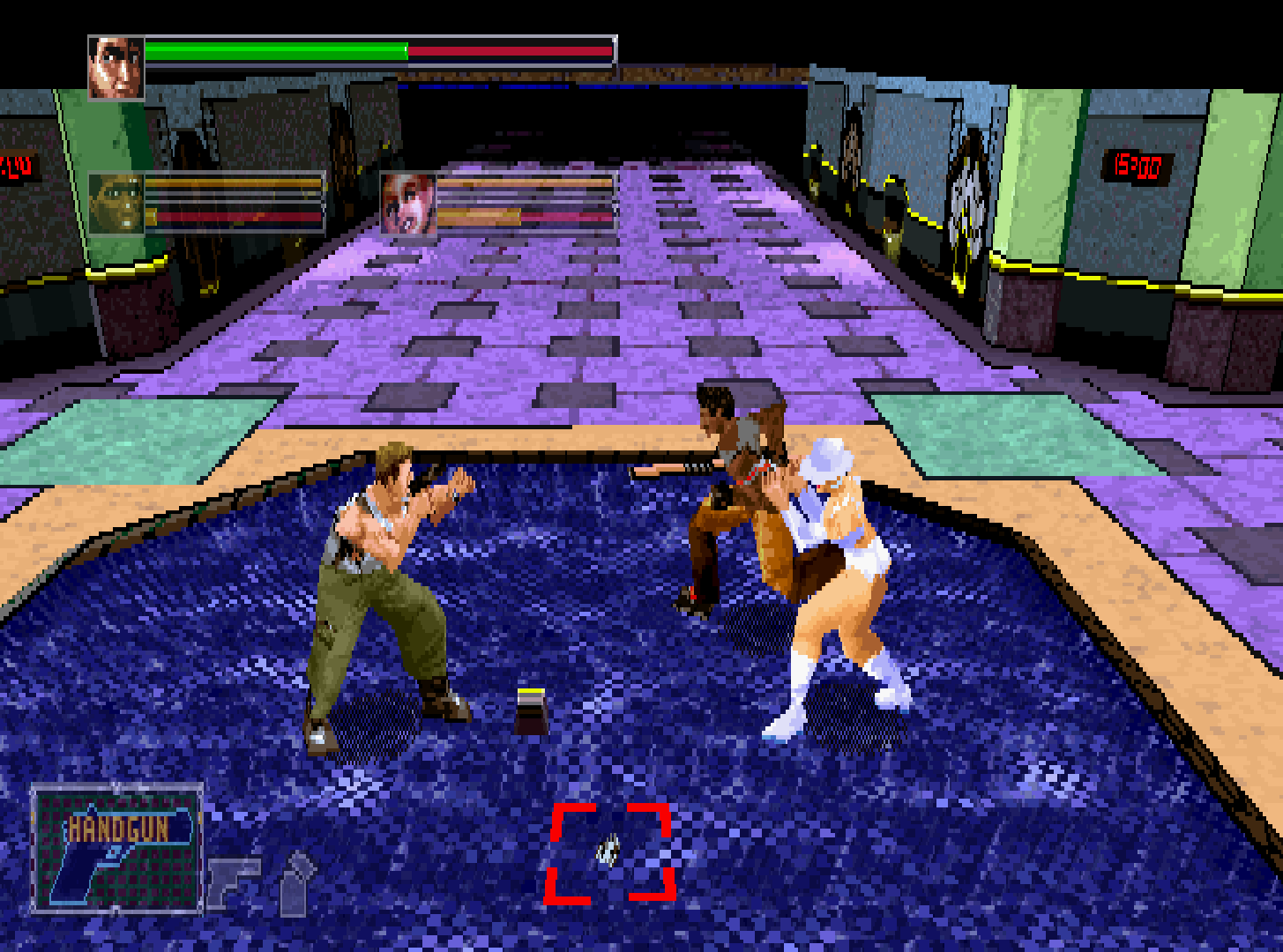
As this is an arcade brawler, the objective of the game is pretty simple, defeat the enemies that appear in each stage before progressing to the next. To take down the members of the criminal gang, the player has access to a fairly robust move list. The basic moves consist of a simple punch combo and kick combo, which are pretty quick and effective. But if the player presses directional buttons or uses the jump button, special attacks can be executed.
These special attacks include uppercuts, low kicks and rapid mix-ups of the two, with a deep move set that is similar to that of SEGA’s fighting game releases. This expansive combat system also expands to the grapple system, where the player can grab an enemy to deal big damage. If the player gets grabbed, it is possible to reverse the hold and deal extra damage by mashing buttons. Then there is the weapon system for this release.

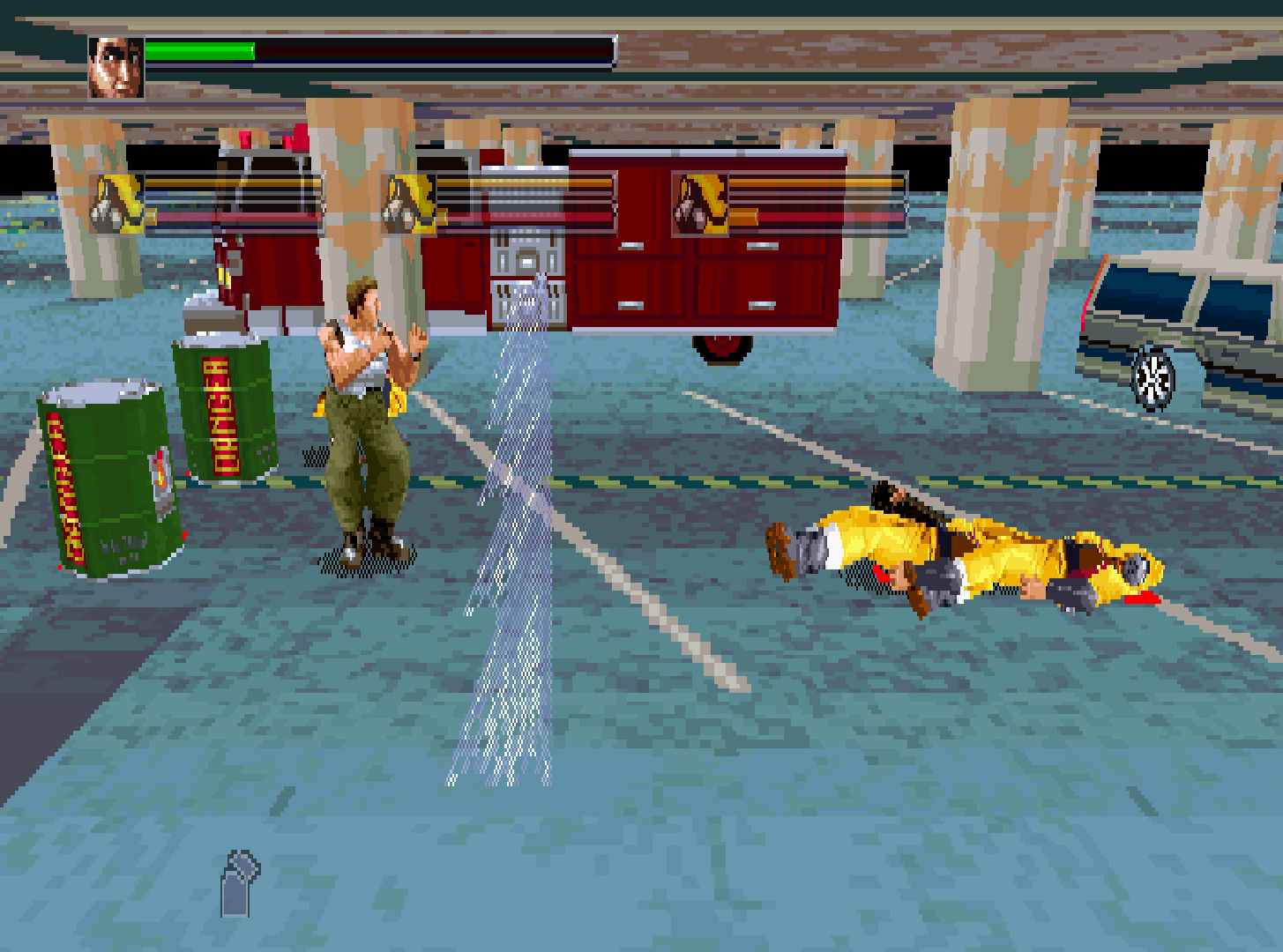
As the player makes their way through the Nakatomi building, there will be several weapons that can be picked up and used. These weapons are separated into ranged, melee and thrown weapons, which will vary throughout the game. The ranged weapons mostly consist of firearms, with the most common being Handguns and Sub Machine guns. All ranged weapons have limited ammo, but the Handgun and Sub Machine gun can be reloaded if ammo is collected.
Then there are the melee weapons, like Axes, brooms and even broken bottles, which can be used for an extended period. These weapons can be extremely useful, especially when there are enemies attacking from the front and back. Last are the thrown weapons, which give this game a more ridiculous slapstick style of play. The player is able to pick up things like chairs, Televisions and even a grandfather clock, launching them at enemies for hilarious results.
The most important items that can be found during the game are Life Up items, which can spawn randomly by breaking objects or defeating enemies. When these are picked up, an amount of life will be added with no real upper limit to the amount of health that can be gained. One special way to gain life will be to arrest enemies, which can be done by grabbing them while holding a gun, making some battles quicker and easier.
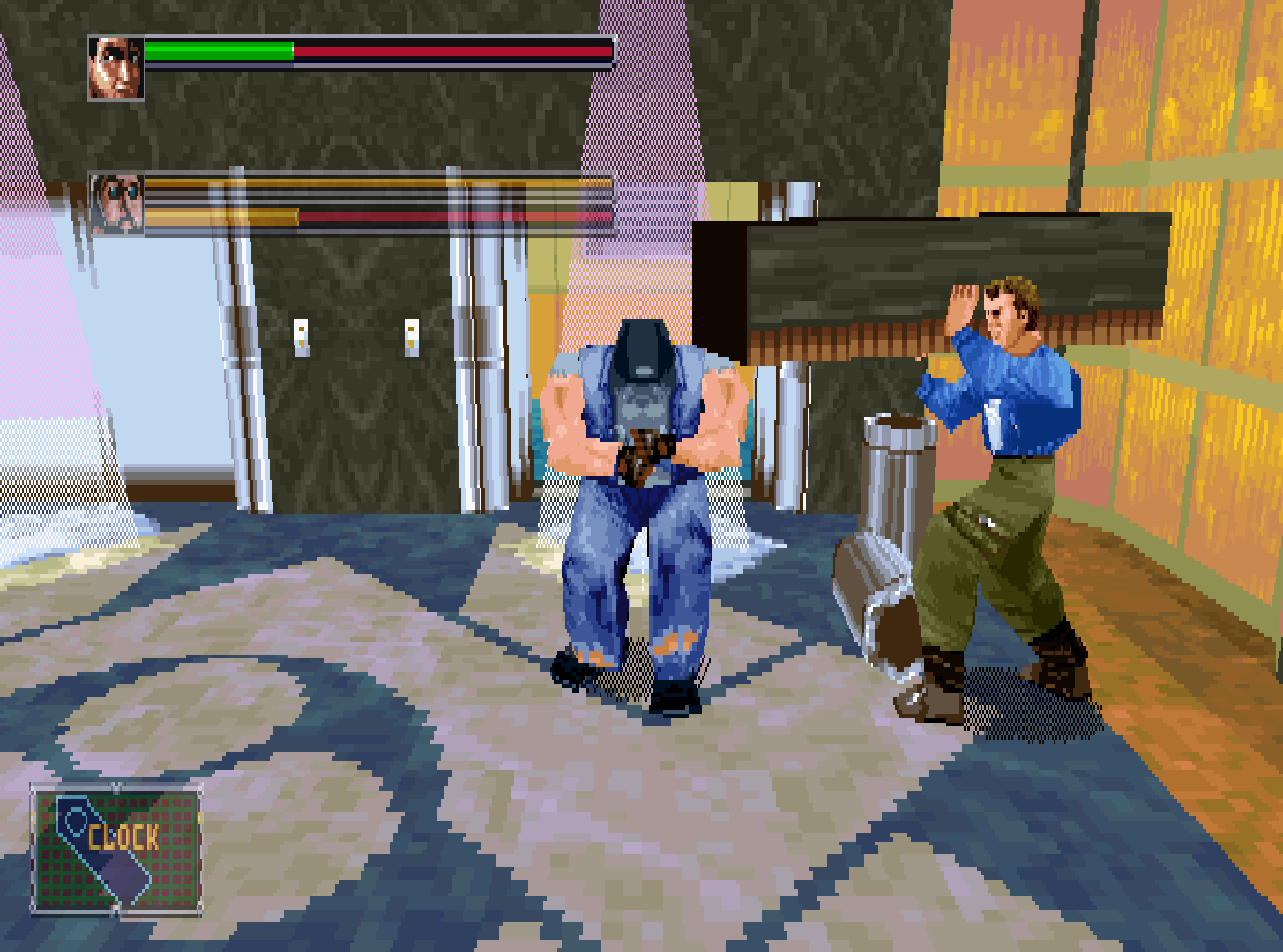
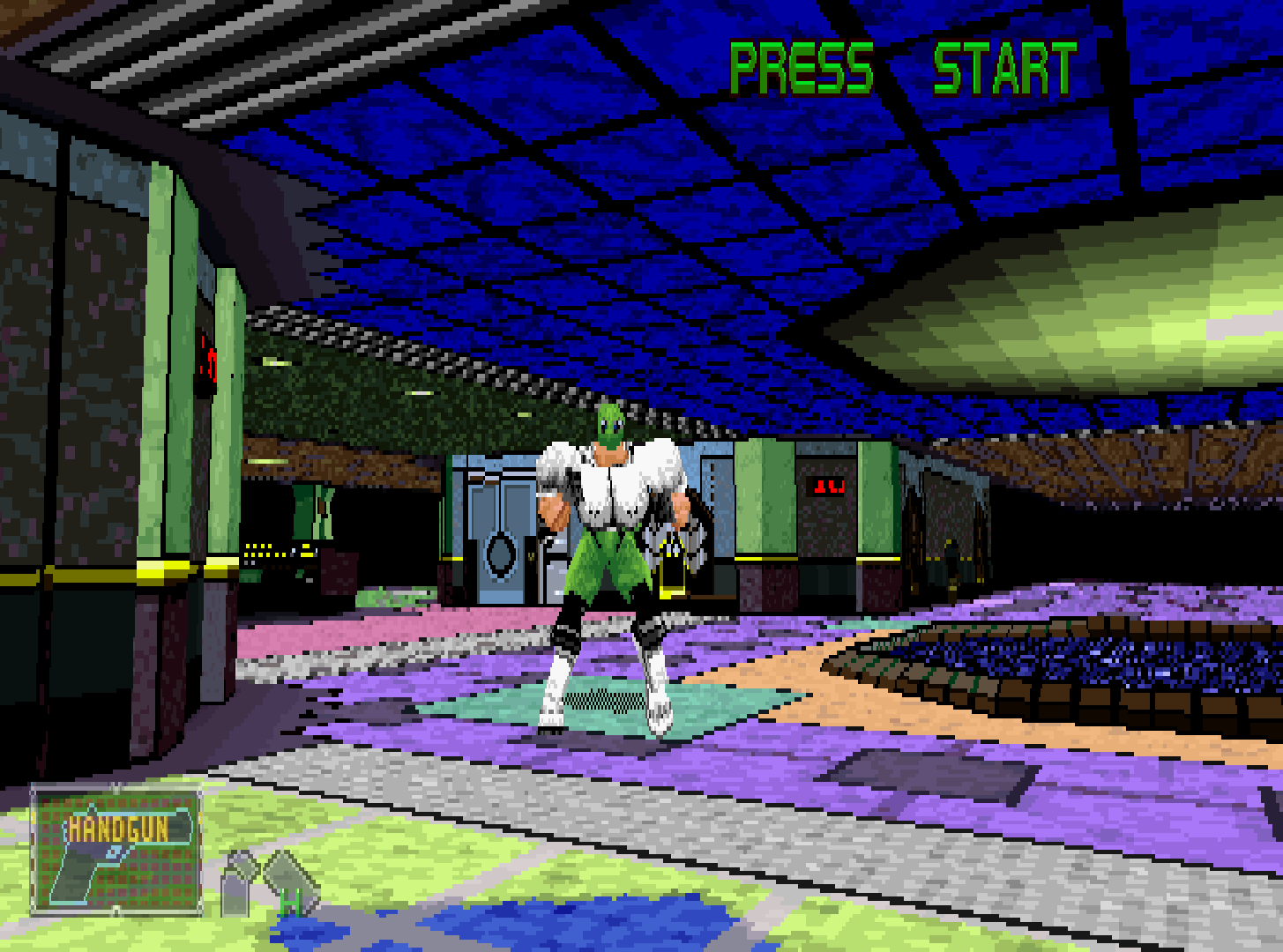
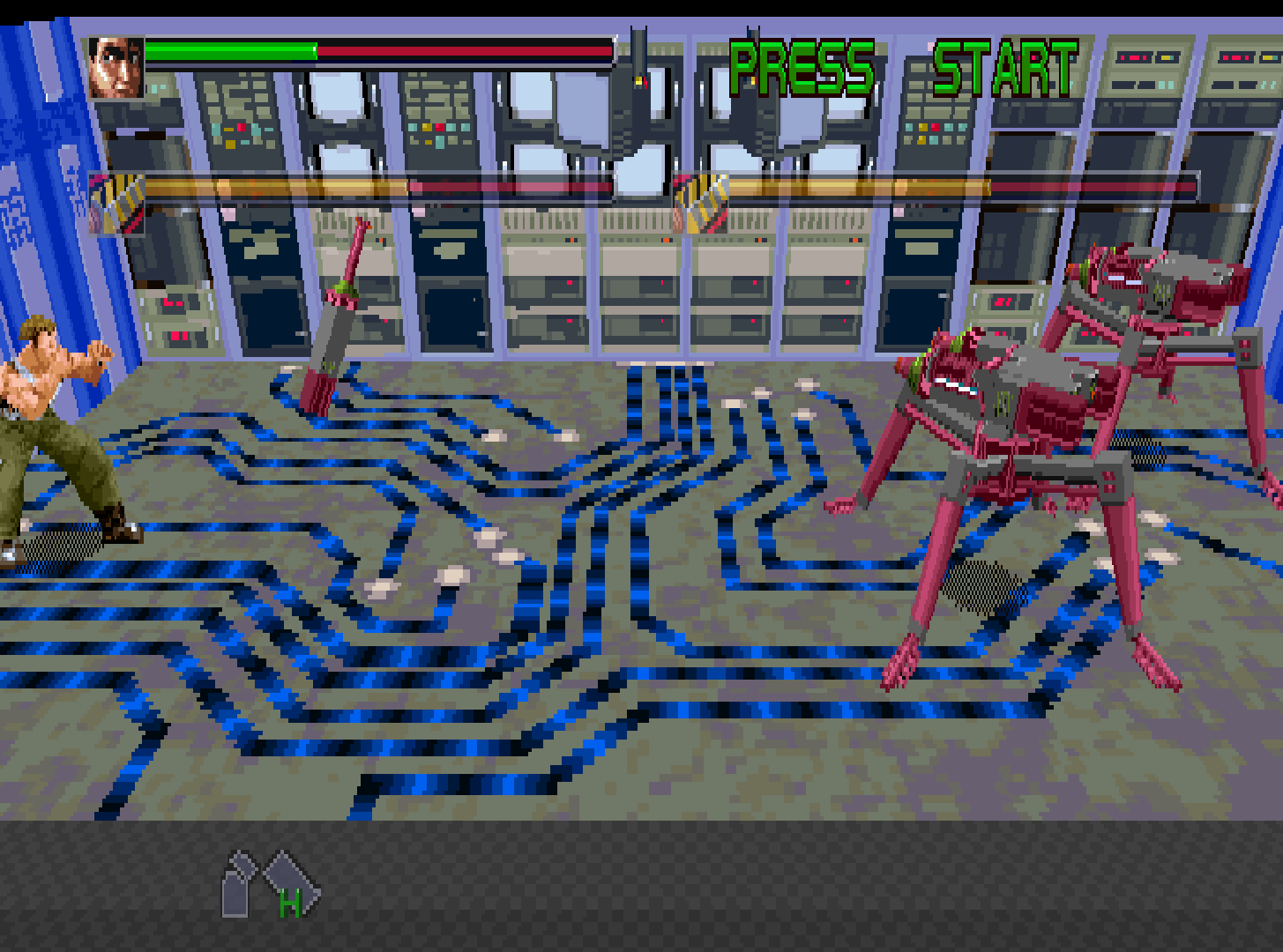
During a stage, the enemies that appear will vary from scene to scene, with the traditional bad guys in late 80s henchmen attire. The leather jackets, denim jeans and garish colors of street wear. But then there are the more unusual and downright strange foes that appear, like firemen, men in karate outfits and even dudes in their underwear. The most absurd of these enemies by far are the robots, which can fire lasers and attack by spinning their legs.
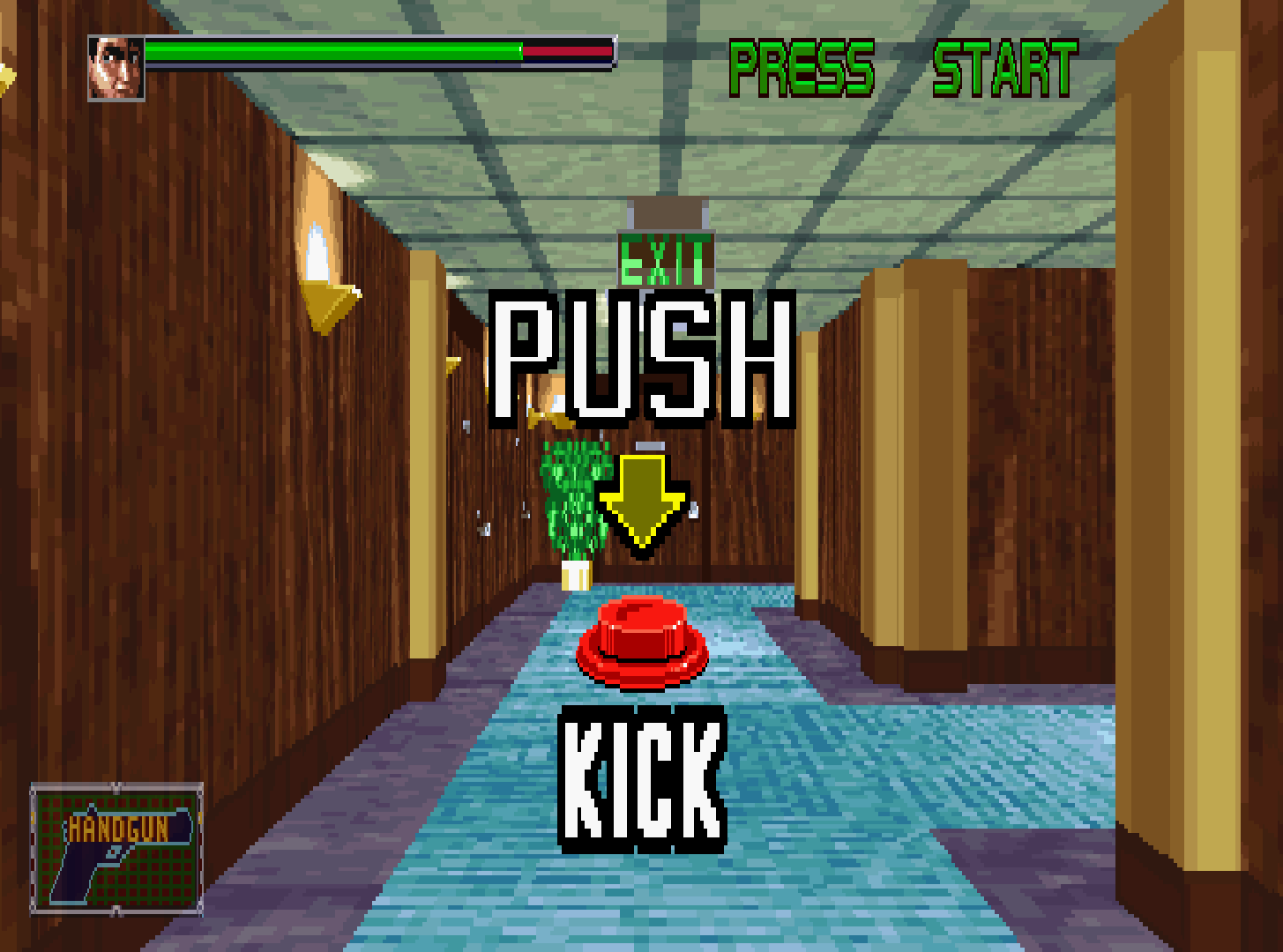
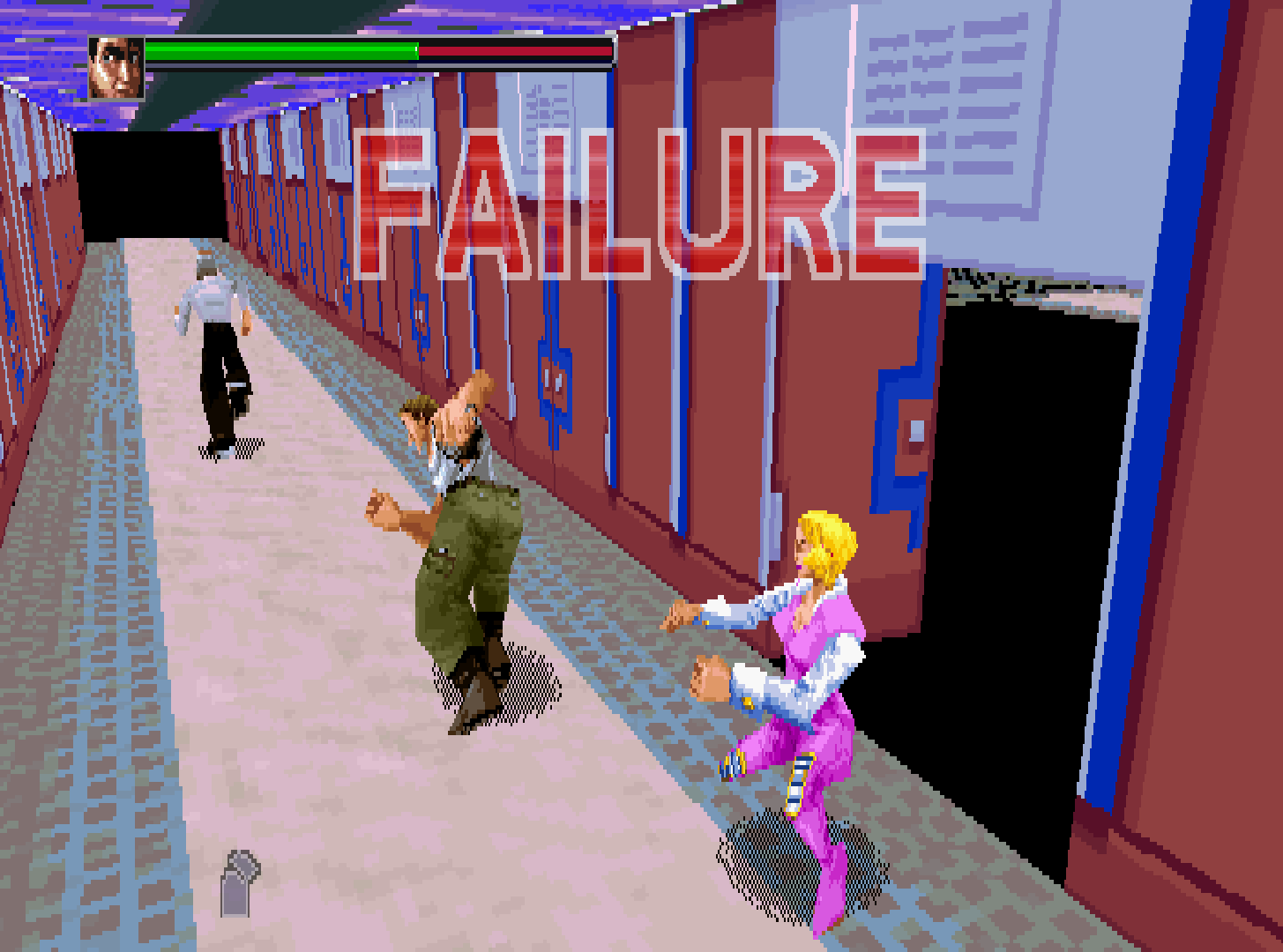
When a scene is cleared, the player will move onto the next as a mini cinematic plays out. During some of these will have special events that occur, where the player must hit the corresponding button within a hidden time limit. These include enemies appearing or an attack like a rocket launcher. If the player is successful, they will be rewarded with a life boost, but failure will lead to damage or an additional enemy encounter.
Then we get to the boss fights, which occur at the end of each main stage. All of these enemies are fairly powerful, having health bars that will need serious damage to take them down. The first time the players encounter the robots is as the stage 2 boss, where two of them appear and attack. It is important to make maximum use of the items around, if any to take down the bosses as they can deal some big damage pretty quickly.
Once the boss for the stage has been defeated, the player will move onto the next location, with story scenes that play out between stages. There will be a timer showing the current playtime, showing a wireframe map of the Nakatomi building. In the event that the player is defeated, they will drop a Handgun and a credit will need to be used to continue. If the player runs out of credits, the game will be over and they will be sent to the menu.
At the start of the game, the player will only have 4 credits for the entire game. This limitation is very challenging, but there is a way to get around it. On the main menu, the player can access DEEP SCAN, an old SEGA arcade game about dropping charges onto submarines. In this bonus mode, additional credits can be earned at set score milestones. There is one life for this challenge, but DEEP SCAN can be repeated to earn as many credits as possible.
Personal Thoughts
I discovered Die Hard Arcade through the SEGA FLASH Demo Vol 4, where I played the first stage of the game over and over. The action was something entirely new to me, with the full 3D models blowing me away. This was a huge shift from the games I was used to, with the Capcom brawlers and games like Streets of Rage. One of the things that really got me invested was the deep combo system, as there was a level of experimentation with attacks.
After that I got my hands on a copy of the full game release, which was incredibly challenging as I was unaware of DEEP SCAN for the longest time (I didn’t read manuals as a kid). I would spend hours looping up to the secod boss, because I just could not beat the robots. As a port of an existing arcade game, SEGA did a great job bringing the game back to the home. Like their other Saturn releases of Daytona USA, SEGA Rally Championship and Virtua Fighter 2.
This may have one of the earliest examples of a “Quick Time Event” in a game, as there are the scene transition encounters. This extra little wrinkle really adds to the depth of the game, with the combat encounters having the chance to increase the length of the game. If you succeed at them, the extra encounter is bypassed speeding up the game. But if you want to make the game last longer, you can intentionally fail and increase the total playtime.
Then we come to the cutscenes and cinematics, which have that late 80s action move feel to them. This really elevates the experience, as the voice work in these and the game itself have that cheese factor, which was the style at the time. All of the over the top voice work, alongside the slapstick levels of silliness to the combat really knock the experience up a notch. Then there are the liberties that were taken with the license.
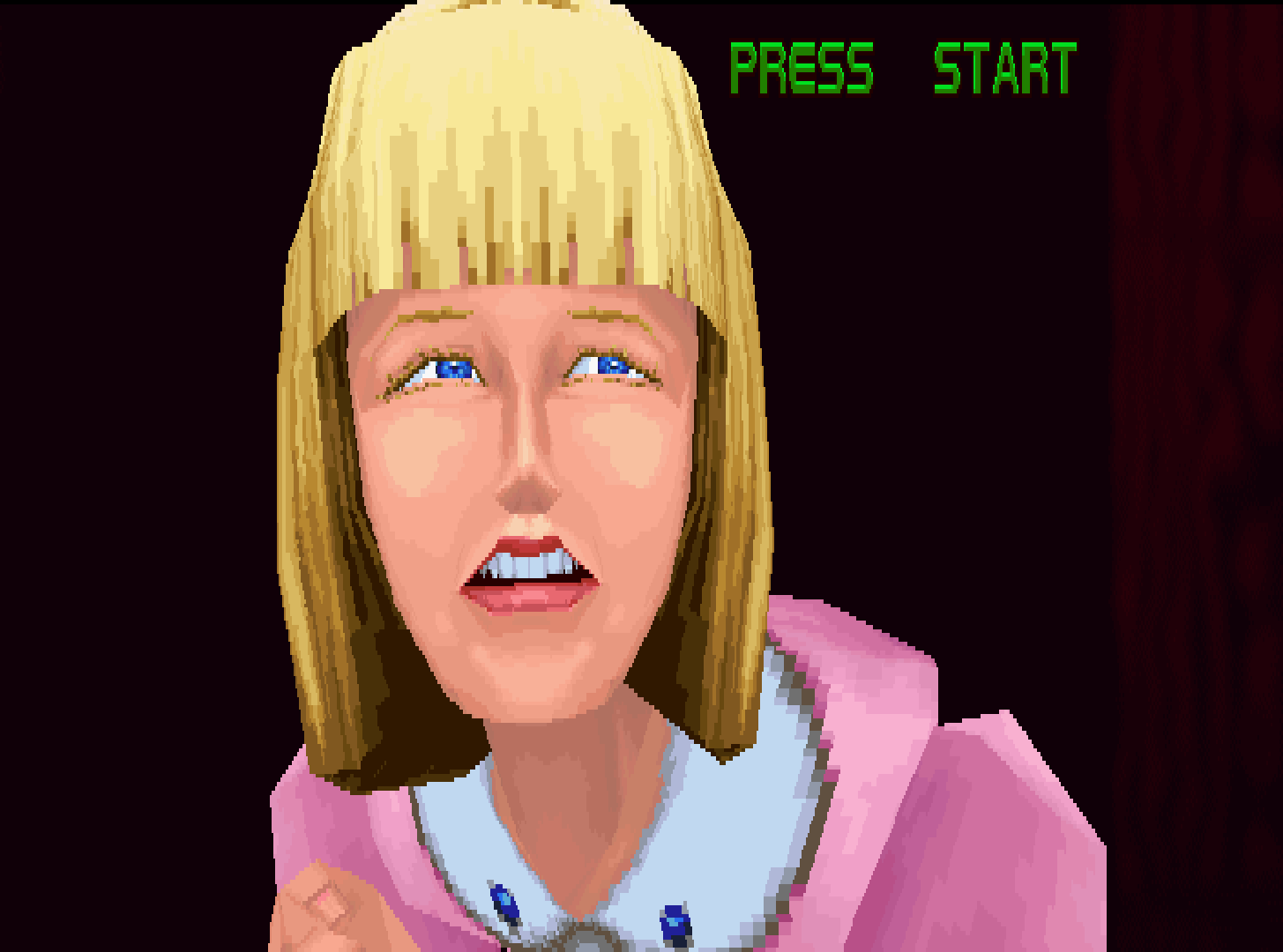
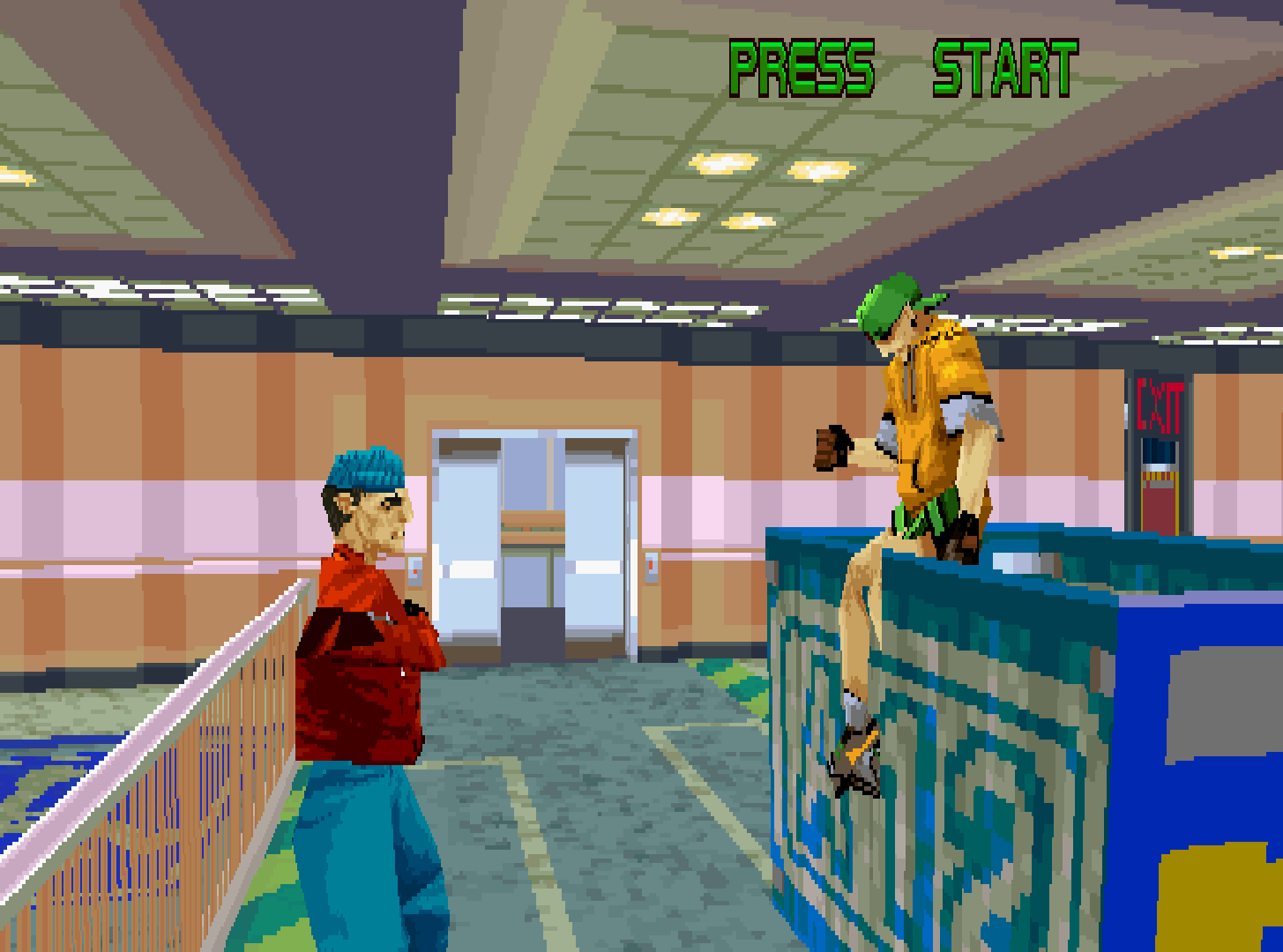
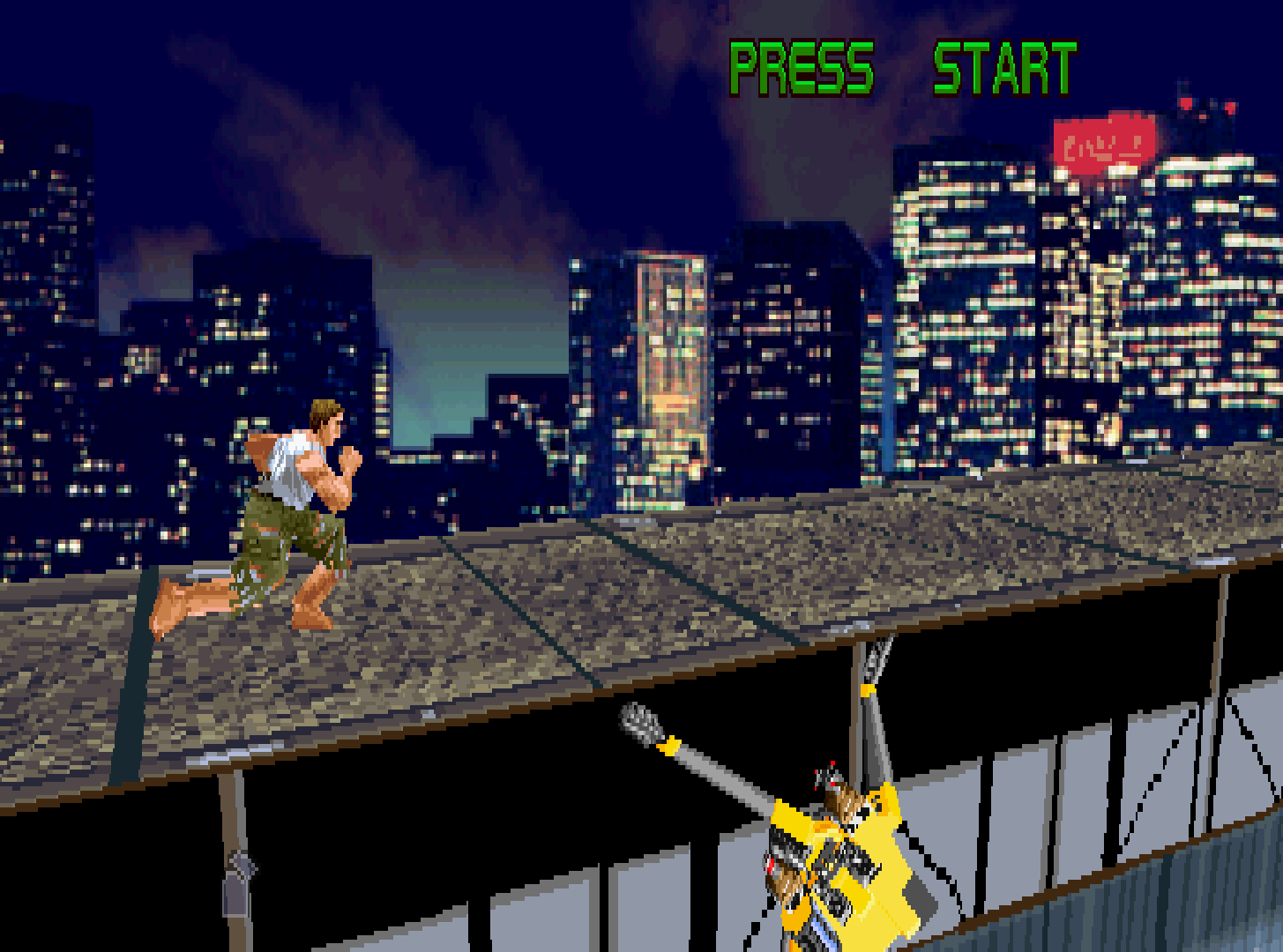
To make this more of an engaging and entertaining game, SEGA really took the concept of Die Hard and ran with it. I really like the addition of the laser blasting robots, as well as the the football player in a weird mask and the hulking fire fighter as bosses. SEGA even added environmental hazards to some areas, with a fire truck that uses a water canon and a radio antenna that travels across the roof. All of these combine to make possibly the best 3D brawler of the time.
Due to this game being an arcade port, the general length of the game isn’t that long, being able to clear it in about 30 minutes. But that does make the game easily replayable, along with the option to impose personal challenges, like only having 4 credits and failing all of the encounter events. This can also be played 2 player, with the option of friendly fire on or off, just be prepared for a Double Dragon style showdown at the end.

Due to the game having a license attached to it, there has not been an official western re-release of the game, but there was a remake for the PS2 in Japan. If SEGA were to try and bring the game back, they would simply need to adjust it to change the name of the game, or negotiate with FOX for the License. Due to these factors, it is unlikely that there will be a re-release, but there is always the possibility with something like SEGA AGES.
Unfortunately, the game is a little expensive for the English language version, but the Japanese version of Dynamite DEKA, is much more attainable. This is perfect for those who want to check this game out, as it plays just the same with all the same action and voice dialogue. The only mentions of the Die Hard license are through the manual, making the Japanese release a little generic, but just as engaging and enjoyable.
If you have enjoyed this feature, then please stick around and see what else catches your eye. I cover a wide range of games in reviews, get special previews and put out regular features. I have Lost Gems, Retro Revival where I discuss re-releases and the occasional Gaming Oddities piece, where I cover weird and wacky titles. So stay a while and have a look around.
 W.Kohaku Media