
Hello, it is that time again where I share another instance of Lost Gems with you, covering games that have been forgotten, abandoned or removed from distribution. This week is going to be a little different, as I am going to be covering a game that has been re-released, but was heavily altered when this happened. So with that said, it is time to look at the original Guardian Heroes, Developed by Treasure and published on the SEGA Saturn in 1996.
Disclaimer: while the game discussed here is no longer officially on sale, there are ways to obtain the game. This can be either through the second hand market, or through unofficial digital roms/rips. I do not condone or promote piracy, so there won’t be any links to roms or rips of the game being covered.
Now with the introductions out of the way, let’s get started. I will be discussing the general gameplay experience, then give my personal thoughts on the title. Please note, Guardian Heroes was remade/remastered and can be obtained on Xbox platforms. However, there were changes to the game and the script itself, making it a very different experience from the original.
About the game
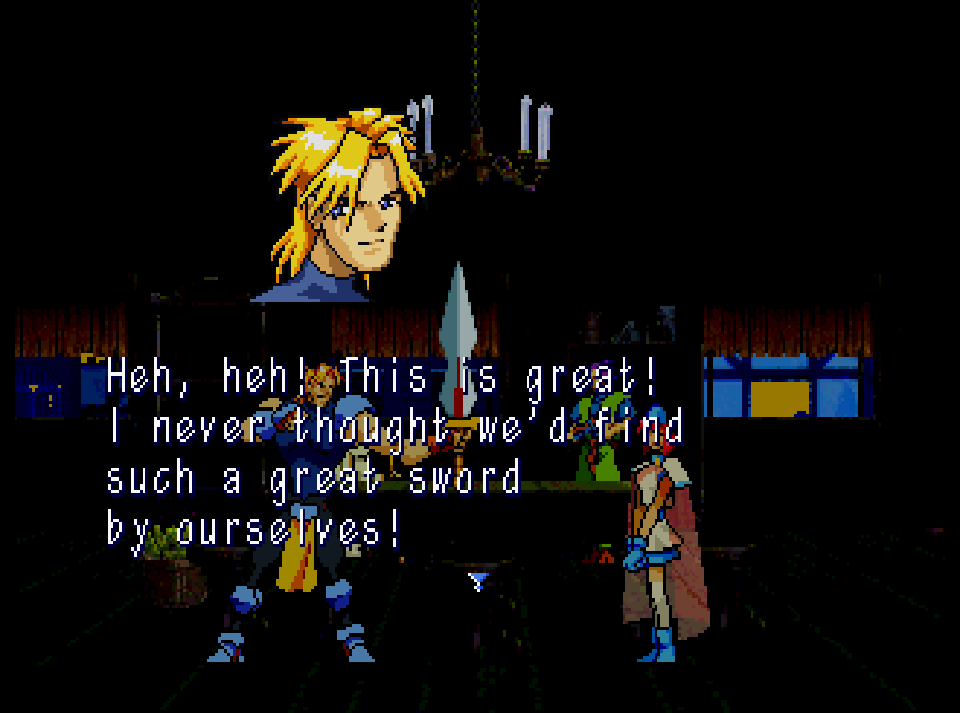
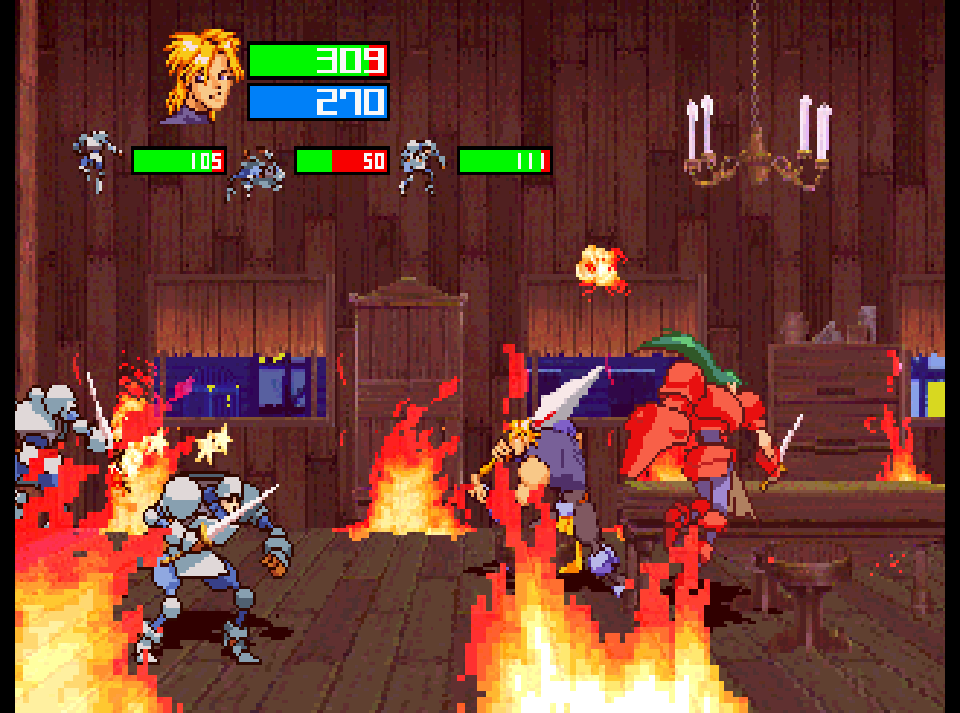
Guardian Heroes is a hack and slash brawler, set in a fantasy world of sword and sorcery. In this adventure, a group of adventurers encounter a mysterious sword, which may be the legendary sword they were searching for. While trying to relax for the night, they are interrupted by Serena, a royal knight who warns them that soldiers are coming to take the sword. During the commotion, their accommodation is set on fire and they flee.
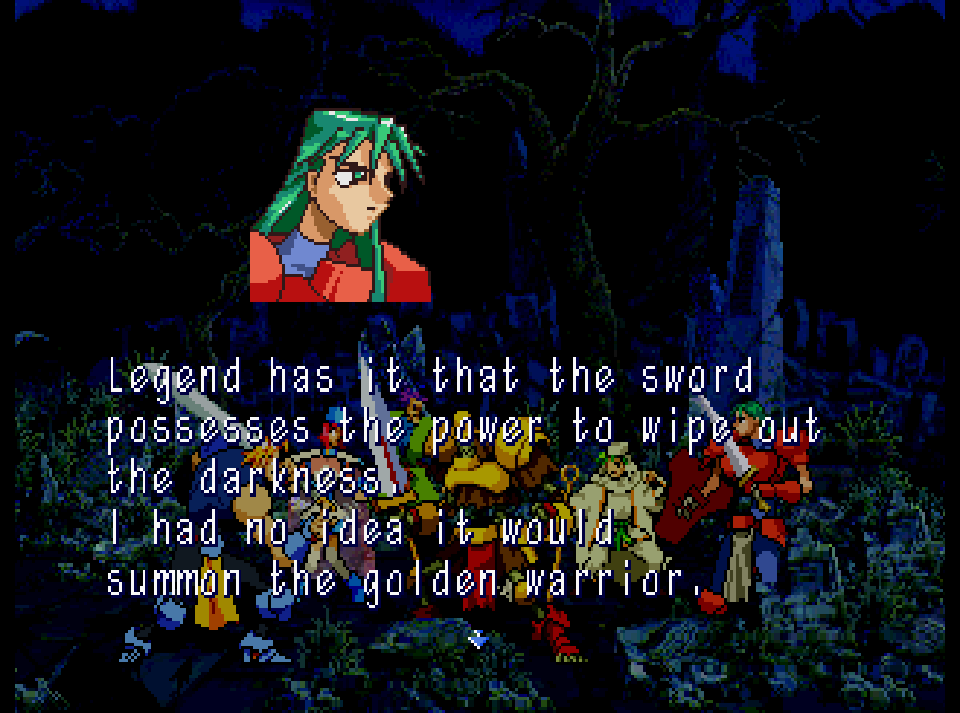
After rendezvousing at a nearby graveyard, they are attacked by a mechanical soldier, leading to a desperate battle that seems to have no hope. Suddenly the legendary sword is struck by lightning, which results in the original owner rising from a nearby grave. This legendary warrior destroys the robotic foe with ease. The undead knight is a hero of legend, who’s resurrection has set in motion a series of events that will change their world forever.
There is a single player and co-op option, which is set at the beginning of the game, allowing for two players to work together through the adventure. The playable characters have their own strengths and weaknesses, which can make the experience significantly different with each play through. The characters in this game are based on classic fantasy archetypes, alongside high fantasy elements like robots and mechanical soldiers.


There are five playable heroes in this game, with four of them available from the start. The four core playable characters are Han, a former member of the Royal Knights who wields a sword. Next is Randy, a sorcerer who can use elemental magic, accompanied by a rabbit familiar. Ginjiro is a ninja with fast attacks and powerful thunder ninjutsu, with Nicole being the optimistic cleric that supports the team, using her magic to heal and defend.
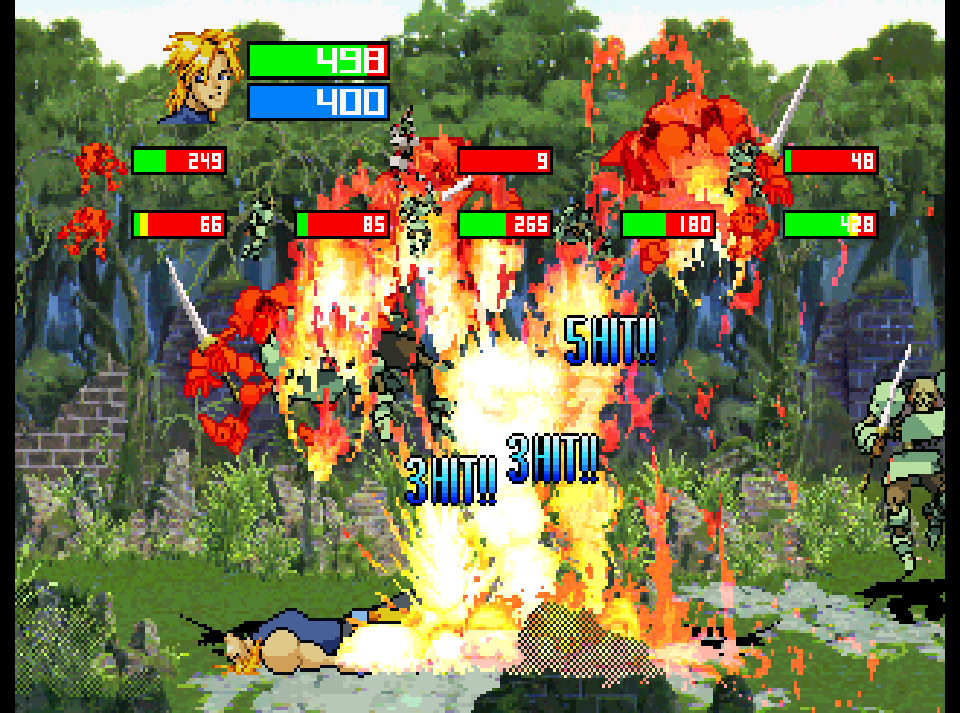
The fifth character is Serena, who can be used after clearing the game for the first time. Serena is a powerful melee character that uses a sword and has several magical attacks. All of the characters have a light attack, heavy attack, magic and special moves, which can be used through fighting game style inputs. This is possible due to the Layer system, where there are three planes of movement, with a foreground, back ground and center layer.
This multi-plane layer system makes Guardian Heroes unique within the brawler genre, as there is a feeling of depth due to the position of the camera. With the layer system, there are no issues with lining up attacks, which is a common hindrance that brawlers can have. As this common complaint is remedied here, the action feels reactive and engaging. It is possible to get surrounded, so characters can guard attacks, as well as be able to use break attacks to get free.
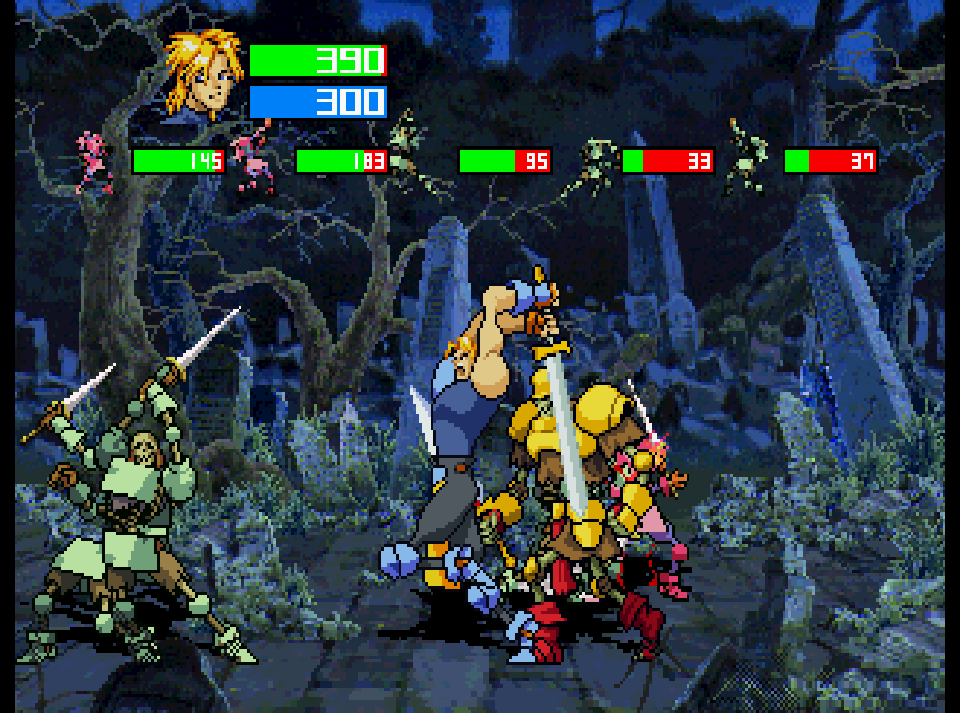
A good way to deal with some enemies is to use magic. Depending on the character used, players can utilise a range of magical powers. These require Mental Power (shortened to MP) to be used, with powerful spells requiring more MP to cast them. But some care must be taken, as the player will be mentally drained for a moment, leaving them open to attack. To replenish MP, the player must land physical attacks on enemies.
The most unique element is the Golden Warrior, an undead hero that wields the legendary sword. He is an NPC companion that will follow the players throughout the game, acting as an extra party member. While the Golden Warrior cannot be controlled, players can issue commands that he will obey. There are offensive and defensive options, but the most useful is “Berserk” which will cause the Warrior to go on a rampage, using powerful magic powers to wipe out all threats.
Now this is not only a regular brawler, but also an Action RPG with a levelling system. As the player battles enemies, they will gain experience points and level up when milestones are met. The level increase doesn’t immediately affect the player, as each earned level gives the player stat points. When a stage is cleared, the player will go to the level up screen, where six attributes can be increased, including strength, health and magical power.


Next is the progression of the game itself, which has a branching path system. Throughout the story, there will be multiple choices to make. Each of these decisions affect the current run, with different stages, enemies and even bosses appearing. There are 5 distinct endings, but the path to reach them will be varied, encountering more powerful creatures and even hellish monsters. The branching paths add a lot of replay value, with 30 total stages to see.
The enemies that have been defeated will be added to Versus Mode. This is a battle mode where players can fight it out, in fights to the death or timed point based battles. This can have up to six players battling it out, capable through the use of a Saturn multi-tap. But this can also be played with CPU bots, offering multiple settings that can make these opponents more challenging. It is even possible to make all fighters CPU and watch them fight.
There are three difficulty settings, with effects tied to them. The standard difficulty is Normal, which gives 9 credits and is the recommended way to play. Then there is the Easy setting, which weakens the enemies and damage taken while increasing the number of credits to 99. Last is Hard, which is significantly more challenging, with only 3 credits to beat the game. Some rewards will be given if the player can get certain endings on Hard mode.

Personal thoughts
I have very fond memories of playing Guardian Heroes as a kid, spending many hours exploring the different paths and trying to unlock all the characters. This game is pretty special, as it is my earliest memory of an Action RPG, as I wasn’t one to have patience with turn based offerings at the time. The gameplay experience has that distinct treasure flavour, present in games like Gunstar Heroes and Mischief Makers, which I also played a lot growing up.
The mix of action brawling, fighting game commands, gorgeous and branching paths really make it stand out, as this is not something that was common at the time. The style of play has been recreated over the years, with Phantom Breaker Battle Grounds and Code of Princess. Code of Princess was made with involvement by the director/character designer and lead programmer, making it feel like a spiritual successor to Guardian Heroes.
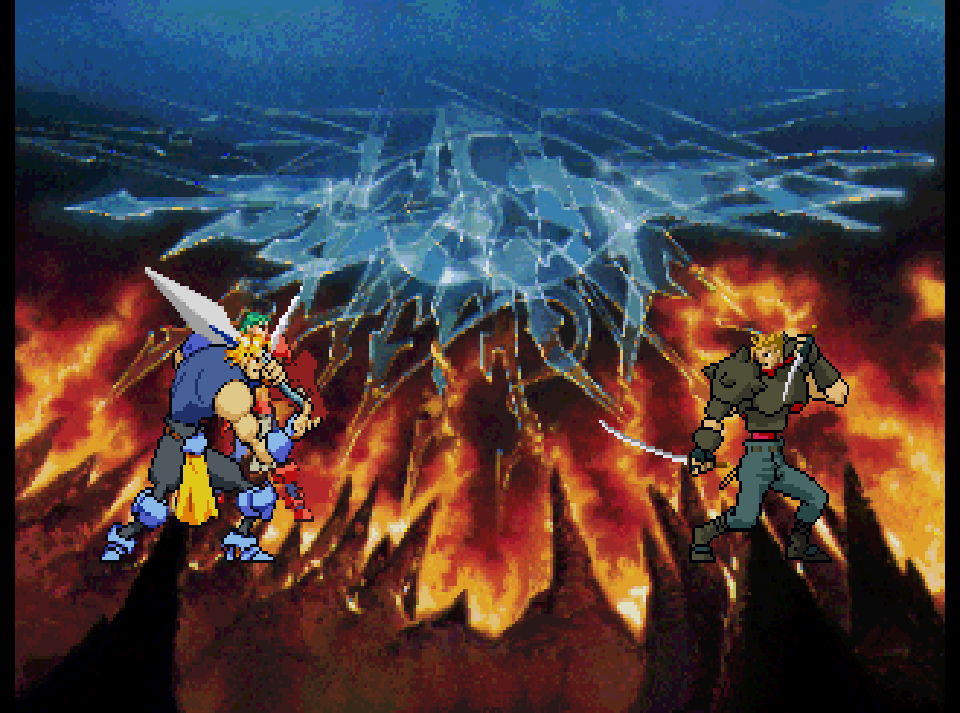

There are some minor flaws to the game, with some minor slowdown that occurs when there are a lot of effects on screen. But this is due to the hardware limitations of the time, but these instances of lag are few and far between. In motion the game is a lot of fun, with plenty of action and a satisfying single player/co-op experience. The multiple endings that can be achieved, alongside the fairly large number of stages make this highly replayable.
It is perfect for a co-op game night, or just to play alone and try to see all the different paths, alongside secret challenges. But the fun doesn’t stop with the story mode, as the battle mode takes that chaos and knocks it up a notch. There is a total of 45 characters, with some of them being included as joke characters more than anything. The number of possible combinations is near endless, offering a chaotic time for any number of players.
From a visual perspective this game has not aged a day, with the spritework, animations and general flow of the game being as smooth as silk. Treasure use all of their experience with 2D art and really made the most of it, as the SEGA Saturn was a real powerhouse when it comes to 2D rendering. Then there is the soundtrack, which really gave it a distinct and unique identity, with heavy guitar riffs, Jazzy saxophone and imposing synth tracks.


Guardian Heroes was originally released in 1996, getting some critical praise but was fairly overlooked. 15 years later, there was a remake/remaster for the Xbox 360, which significantly changed aspects of the experience. These changes involve alterations to the controls, mechanics and most significantly the story, which was rewritten, altering the story in various points. Due to this, the experience doesn’t feel the same in the “updated” version.
I would love to see this game in its original form again, as the remake just doesn’t feel the same. Sadly, Guardian Heroes doesn’t get any attention from Treasure or SEGA, with the developer focusing on ports of games like Radiant Silvergun and Ikaruga. The price is on the upper end for this release, so the remake may be the best alternative at this point. The 30th anniversary for guardian heroes happens next year, so there may still be some hope.
If you have enjoyed this feature, then please stick around and see what else catches your eye. I cover a wide range of games in reviews, get special previews and put out regular features. I have Lost Gems, Retro Revival where I discuss re-releases and the occasional Gaming Oddities piece, where I cover weird and wacky titles. So stay a while and have a look around.
 W.Kohaku Media