
Hey there, it is time for a special entry in Gaming Oddities, the relatively rare feature where I discuss the weird and wacky releases in gaming. In this feature I cover some of the more unusual games, with some of them being downright ridiculous. This time I will be covering a strange case of taking a popular game, making it something surreal. Let’s take a look at Typing of the Dead, a modified version of the classic SEGA light gun game by SmileBit for Windows, released in 2000.
Disclaimer: While the game here is no longer officially on sale, there are ways to obtain the game. This can be either through the second hand market, or though unofficial digital roms/rips. I do not condone or promote piracy, so there won’t be any links to roms or rips of the game being covered.
Now with the introductions out of the way, let’s get started. I will be discussing the general gameplay experience, then give my personal thoughts on the title.
About the game
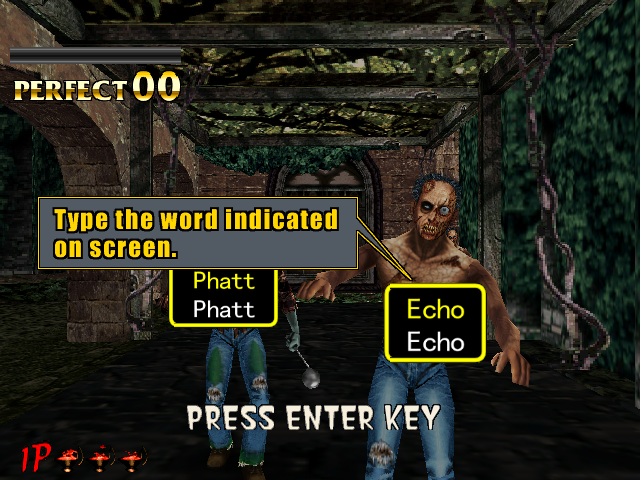
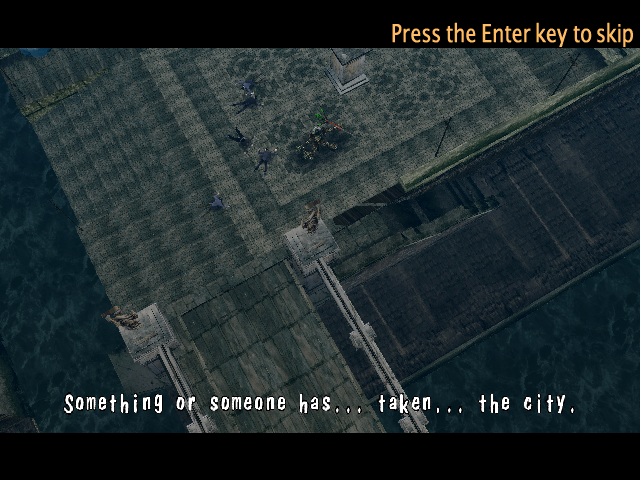
Typing of the Dead is an edutainment game, taking the classic zombie shooter and modifying it, replacing the shooting accuracy for typing proficiency. The story of Typing of the Dead follows the same events of the game used as the foundation. In the year 2000, 2 years after the incident at the Curien Mansion, an outbreak of creatures has occurred in Venice. AMS Agents James and Gary have been dispatched to restore the peace.
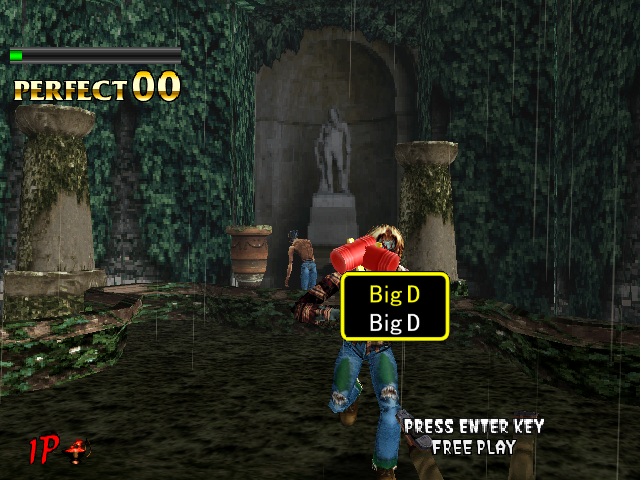
Using many of the elements of the original game, Typing of the Dead has been modified in a very unique way. Instead of shooting the zombies, the players must type out words that appear on the screen, with successful input killing the monster. To make this style of play work in a thematic sense, all of the AMS agents will have Dreamcast backpacks on. These super powered systems are a deadly weapon, activated by typing on the keyboard in front of them.
The complexity of these words will vary, with single words or short phrases to get into the action. But the further the player gets, the more complicated and challenging they become, with longer sentences appearing. But there will be times where the player needs to think quickly, as the people of Venice still need to be saved from the creatures. Typing the words that pop up when a civilian appears, can lead to a branching paths, as well at other points.
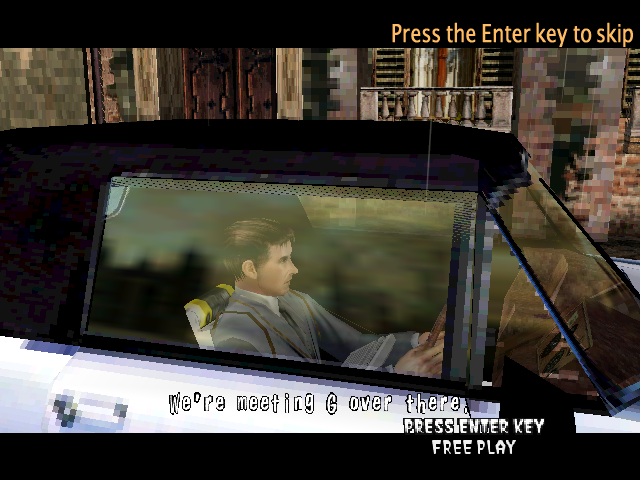
There will also be enemies that can throw weapons, with a typing prompt to deflect them. This adds elements of decision making to the flow of gameplay, as the enemies that throw objects, will sometimes leave after attacking. Due to this, players may need to decide if it is worth trying to defeat the enemy, or just hit the projectiles. There will also be multiple enemies on screen at once, requiring quick choices to be made.
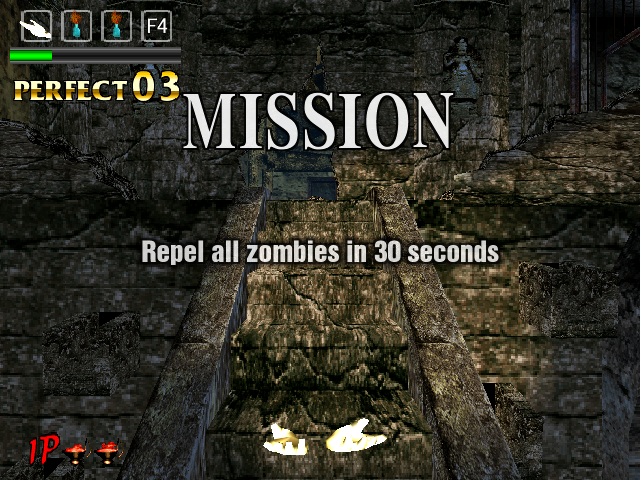
At set points during the course of the game, the player will be challenged to complete special missions, like killing a set of number of zombies in a time limit. Completion of these missions will provide rewards, like extra lives and bonus points. Then there will be boxes that can be destroyed, holding special items that will affect the gameplay. These include weakening zombies, altering the look of things and many more.
If the player is unable to quickly type the required words or phrases, the will attack the player, taking a life away from them. The player has limited lives, leading to a continue needing to be used when all of them have been lost. But there is the ability to set the game to free play (via a password or unlock), allowing for the player to push through the game. At the start of the game, it is relatively easy to get to the first boss, but then the difficulty ramps up.
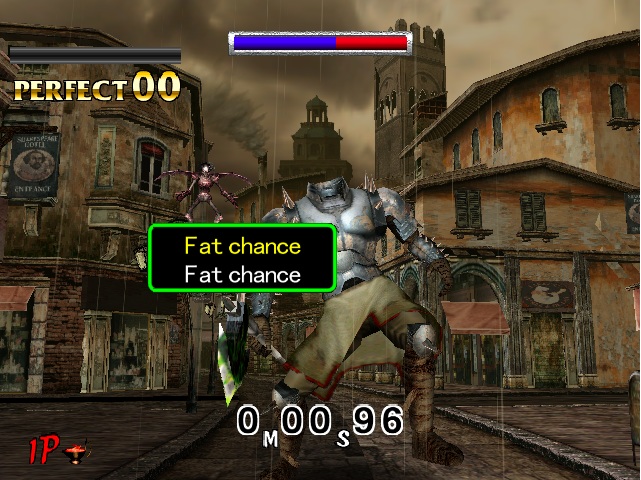
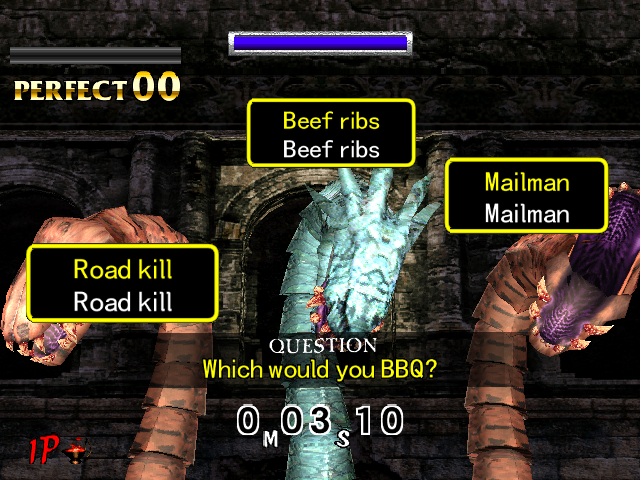
In the Boss battles, the player will fight the same bosses of the original game in a modified form. There will be additional mission elements, like only typing when the weakpoint is open, or entering extended sentences before an attack lands. There will even be quiz questions in boss battles, requiring the player to select an option from the on screen menu. Depending on some of the choices made, the ending that they player will receive may change.
The main game modes are Arcade Mode and Original Mode, where the player plays through the main stages of the game. In arcade mode, the player can select story mode or training mode, with the story playing out the same as the shooter. But the player can pick the stage they start at, with a level select. There is also a training mode, with a time limit attached to it, letting players practice their skills until the timer expires.
Then there is the original mode, where players can select a variety of enhancements to help during play. With these special effects, the gameplay will change and make it more unique with each run through the game. There will also be special unlocks and features for players to experiment with. In both modes, when a stage is cleared, the player will receive a ranking for that stage, letting them see how well they performed and entering their name on the rankings.
Alongside the standard gameplay modes, there are special modes that can be accessed, with some of them hidden behind unlocks. There is drill mode, where special mini games can be worked through, training to improve various skills. Each of the skills have three challenges tied to them, with a progress tracking system to check improvement. Once all of the exercises have been cleared, the player will be able to take a final exam.
Then we have the boss mode, where the player can challenge the bosses of the game, learning how to beat them in time attack challenges. The player has limited lives to get through these battles, making them more challenging. The final boss, the Emperor as well as other special challenges are initially locked, needing to clear all of the previous challenges to access them. There is a ranking system for all of these boss battles.
The last thing to discuss is the VS CPU mode, where players can take on AI controlled opponents. Playing through a single chapter of the game, the one with the highest score at the end is determined the winner. Each of the challengers in this mode have different typing skills, affecting the challenge of the stage for the player. Some of the opponents will be locked, needing to meet special conditions to unlock.
For those who wanted to play across the internet with others, there was a network mode, where players from across the globe can take on the challenges together. Sadly this is all but useless now, as the service was discontinued. However, with a little finagling it can be possible to play the game multiplayer. This can be by jumping through some hoops with emulation of the dreamcast, or through the original arcade version.
Personal thoughts
When I was a kid, I played a lot of House of the Dead 2, both on the Dreamcast and in Arcades whenever I saw them while on holiday. Due to this I gained a deep appreciation for the game, making one of my personal favorites that I still revisit to this day. Years after the first game came out, I first tried to play Typing of the Dead, having discovered it while looking for a way to play the original on PC, unaware that it had a Dreamcast release.
I first played the PC version with a copy I got from a friend, which I have backed up, duplicated and put on every PC I have owned since. I also managed to pick up an original Dreamcast Keyboard and a copy of the game, when they were more affordable. There is a unique charm that this game holds, taking a horror focused game and making it surreal. The axe wielding zombies use spatulas and squeaky hammers, alongside various comedic elements that have been added.
This is a pretty challenging game in general, as it relies on the physical capabilities of typing quickly and accurately. While I may be able to type at a competent speed in general, there is an anxiety and panic that follows this, leading to sloppy inputs and missed keys. This is most prevelant when trying to type the long strings of words, or anything that requires special keys. I have yet to be able to get to the end of the game without needing free play.
As a teaching tool, it is a fun way to practice typing and learning how to touch type. The extra modes away from the main Arcade/Original modes, provide excellent tools to learn and improve skills. There is even a system that tracks the weakest keys when a training drill is over, offering a chance to try again with words that address weaknesses. My favourite mode is the VS CPU, which is a fun challenge to try and test skills after drills.
Sadly this version of typing of the dead has been mostly forgotten, with only hardcore fans and speedrunners still playing the game. It is sadly no longer available on any platform, being replaced with Typing of the Dead: Overkill. However, it is passed around different circles and can be picked up for Dreamcast, Japanese exclusive PS2 and on PC. But the prices fluctuate quite often, leading to it being less than desirable to new players.
While most games that fall into the edutainment genre are not great, I feel this is different, as it already has a solid game behind it. I enjoy this game, which makes it easy to recommend. It takes a great game, which was already cheesy with the wooden dialogue and voice acting, while adding a level of surrealism and humor. If you can find a way to pick this game up, then it is well worth the time and effort to get it going, but it does need a little work on windows 10/11.
If you have enjoyed this special feature, then please stick around and see what else catches your eye. I cover a wide range of games in reviews, get special previews and put out regular features. Alongside this rare special feature, there is the Lost Gems series where I often forgotten games, Retro Revival discussing re-releases on modern platforms. So stay a while and take a look around.
 W.Kohaku Media