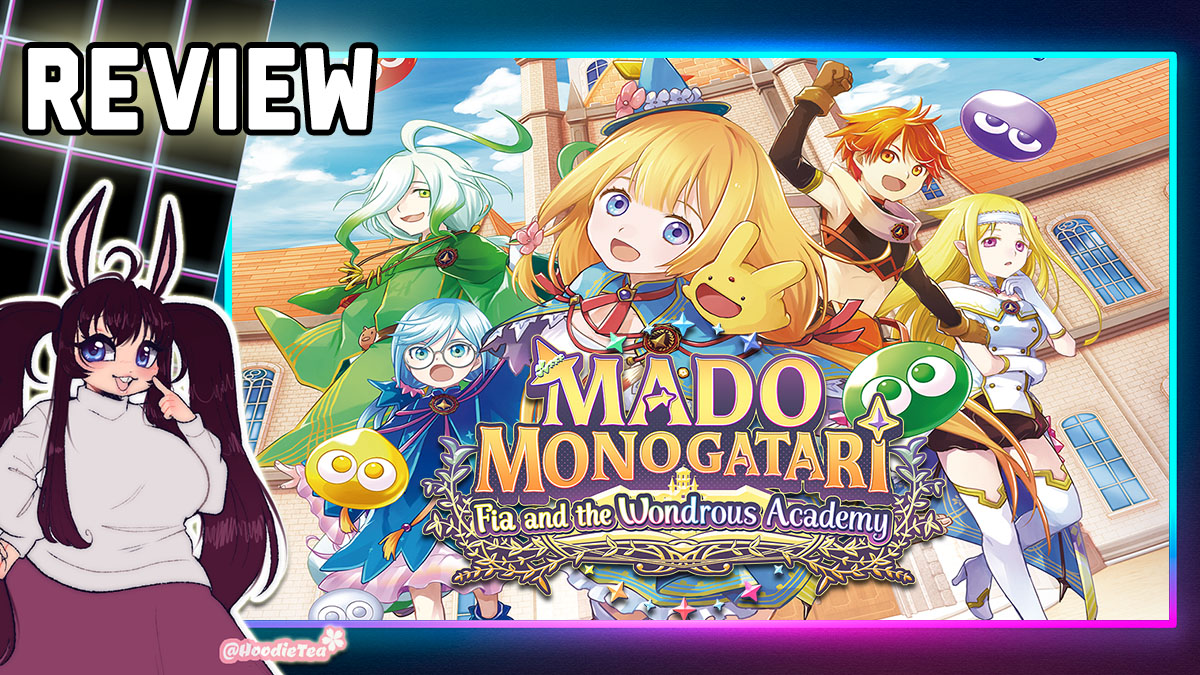
Overview – developed by Idea factory, Compile Heart and STING, with Publishing handled by Idea Factory International, the legendary Mado Monogatari dungeon crawling RPG series is back. The young aspiring mage Fia sets off on an adventure at the Ancient Magic Academy, with her goal to be the next Great Mage. This title is available on PlayStation 4/5 and Nintendo Switch, with links to each version of the game at the bottom of this review.
Disclaimer: before I get into the review, I would like to thank Idea Factory International for providing Mado Mongatari: Fia and the Wondrous Academy for this piece, via the Keymailer service. The provision of this software has not influenced the contents of this review, all thoughts and opinions contained within are my own.
Now with the introductions out of the way, let’s get into the review, starting with the story. I will be covering the core gameplay mechanics of this game, as to prevent spoiling any of the surprises and secrets that the adventure holds. I will also be referring to the game as simply Mado Monogatari, for the sake of brevity.

Story – The Ancient Magic Academy, a school that formally teaches the Magic Artes and nurtures the ambitions of student. Fia, a young girl who aspires to be a Great Mage, leaves her hometown and arrives at the Wondrous Academy to study Magic Artes like grandmother. Surrounded by strict yet humorous professors, alongside chaotic and delightful classmates, Fia will learn Magic Artes, attend classes and grow in order to become a Great Mage.
Gameplay – Mado Monogatari is a mix of dungeon crawling RPG and school adventure, where the player takes the role of Fia, a young girl who aspires to be the next Great Mage. The gameplay is split into two gameplay segments, dungeon exploration and life at the academy. In order to progress the game, the player will need to attend classes and complete assignments. While attending classes, Fia will learn various skills and Magic Artes.
Before the game starts proper, the player will select a role, which will affect the general statistics and proficiency for Fia. The classes are based on traditional RPG archetypes, with the power focused Magic Knight, magic focused Wizard and support focused Witch Thief. There is also the Hermit Hunter, which is a balanced in both combat and magic. The player is able to switch their role, allowing for experimentation during the adventure.
During the early stages of the game, the player will have assignments that will teach the player the basics of the game. These include introductions to the combat system, levelling and general dungeon exploration. Assignments will be separated into required and optional, the required classes will push the narrative forward. There will also be additional objectives that aren’t tied to assignments, like locating and speaking to characters.
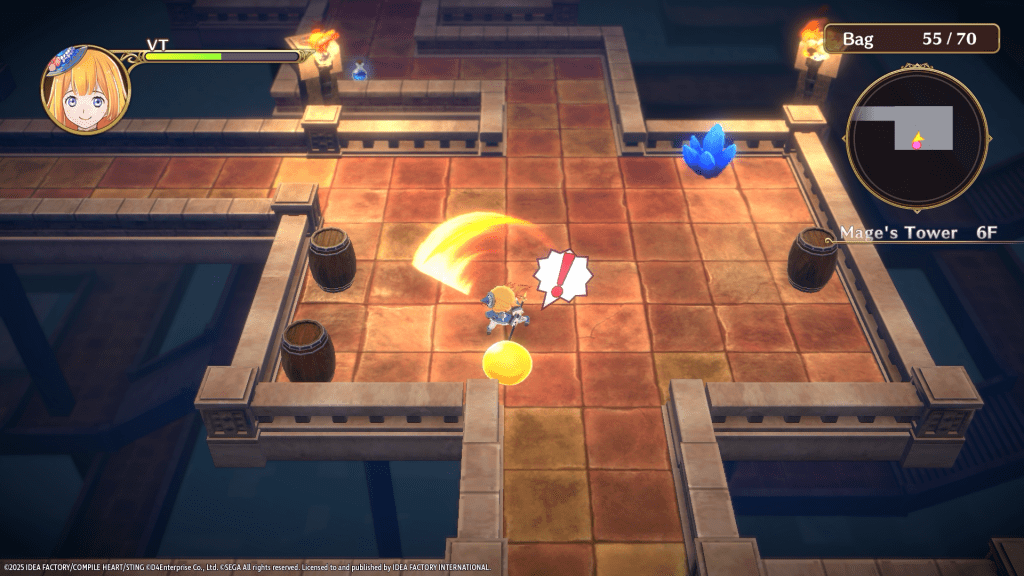
When taking on an assignment, the player will often need to enter a dungeon to complete it. This is where the dungeon crawling gameplay comes into play. In the areas surrounding the Academy, there are dungeons that the player will be able to explore. This starts out as with the Mage’s Tower, which is where the player learns the basics of dungeon crawling. The floors of the dungeons are randomised, giving the player a new experience each time.
Alongside the dungeon excursion assignments, there will be additional objectives for the classes to be completed. Some of them will be answering questions, some will be combat exercises and others will be only narrative sections. Once an assignment has been completed, the player will be able to turn it in to the homeroom teacher Rivan. It is recommended for players to complete the side assignments before the main quests.

During the exploration of a dungeon, the player will control Fia directly, guiding her around the floor of the current location. She will be accompanied by a party, consisting of up to 5 characters, with 3 active including Fia and two reserves. The party will expand as the player gets further into the game, with characters changing as the narrative develops. Active and reserve characters can be switched freely, inside and out of the dungeons.
Dungeon exploration can be a tiring endeavour, which is where VT comes into play. VT also known as Vitality, is the energy that the player needs to travel the dungeon and protect themselves. This is gradually depleted by entering combat, moving between floors or by hitting the dangerous traps that can appear. If the green VT bar runs out, the player will start taking damage on a red bar, if both of them run out the expedition will be a failure.
When exploring, there will be destructible objects on the floors of the dungeon. These consist of boxes, barrels and environmental elements like crystals and grass. The player can break these items by attacking them with their weapon, yielding items, resources and recovery items. Recover items can restore lost Health, magic power used for spells and VT. The other way to restore VT is to consume Curry, which can be a reward or even crafted.
Once the assignment has been completed in the dungeon, the player will be able to leave immediately. Upon departing from the dungeon, the number of defeated enemies will be recorded, the items that have been found and the max floor reached. The highest number for each of these will be recorded as a high score. The scores recorded will be tied to each of the many dungeons, giving players targets to try and beat when exploring.
As the player wanders the labyrinths, there will be enemies that appear consisting of various monsters. The most common of these are the Puyo Slimes, the recognisable multi-color slime creatures that had their own series spin off from Mado Monogatari. The player will see the enemies on the dungeon field, randomly placed in the different rooms and areas of the floor. There are two ways that enemies can be engaged in battle.
If the player runs into an enemy, or if they strike first a battle will begin. This is where the real meat of the game takes place. When in combat, there is a mix of real time and turn based battle mechanics. The player will directly control Fia and the active party will move around autonomously, making decisions based on orders they have been given. To take down enemies, the player will be able to employ basic attacks and special skills.

At the top of the screen, there will be timeline that shows all of the active combatants in battle. The icons for the characters and enemies will move along the line, stopping when they reach the end of the timeline. When this happens, all combatants will be able to unleash skills, magic attacks and use items, resetting them to the other end of the timeline. Fia can use her weapon for a standard attack, but this will slow down her icon delaying access to skills.
As the player and party use their skills, Elemental Orbs will be dropped based on the attack used. Up to five of these different orbs can be collected, appearing in the bottom right corner of the screen. These elemental orbs serve two purposes, by collecting four or more of the same type, the player will enter a fever state for a limited time. In this special state, the player will be do increased damage with the attribute that activated fever.
The most important use for the orbs is to activate the Great Magic Artes, a selection of powerful magical powers that can be unleashed upon enemies. These special skills can be used any time the player has the correct orbs to use it, immediately activating the powerful attack. All enemies in the battle will take significant damage, which can be very useful in a pinch. Different skills require specific elements, so some experimentation is needed.
In battle, there will be status effects that can occur, including sleep and poison that deal damage over time. These are dangerous as they can cause Fia or a party member to be severely hurt, potentially leading to disaster. If a party member is defeated, they will be unable to continue unless they are revived or the dungeon is left. In the event that Fia is taken down, the exploration will end, going back to the Academy at the cost of 50% of money.
When a battle is over, the player will gain experience, money and even items based on the challenge of the enemies. The experience earned will be provided to all party members that aren’t incapacitated, levelling up the characters when set milestones are met. As characters level up, they will get stronger, increasing their skills, abilities and unlocking new upgrades. When Fia levels up, she will also gain LP points, which are used to progress her skills.
For Fia to increase her skills and abilities, the Grimoire she carries needs to be imbued with power. Inside the Grimoire, there are powers that need to be unlocked by paying LP earned during play. To be able to learn the new skills and features, the player will need to complete classes and meet the requirements in the Grimoire. By learning the skills in the large nodes, the player will gain credits and when enough are earned, a promotion exam can be challenged.

The promotion exam will increase the classification of Fia as a Mage, starting at Apprentice and increasing to Bachelor Mage, Beginner Mage and further. If the player can pass the exam, they will unlock the next section of the Grioire, with improved skills and powers that can be unlocked. By progressing the Grimoire and the skills inside it, there will be new mechanics and features that players can unlock inside and out of the Academy.
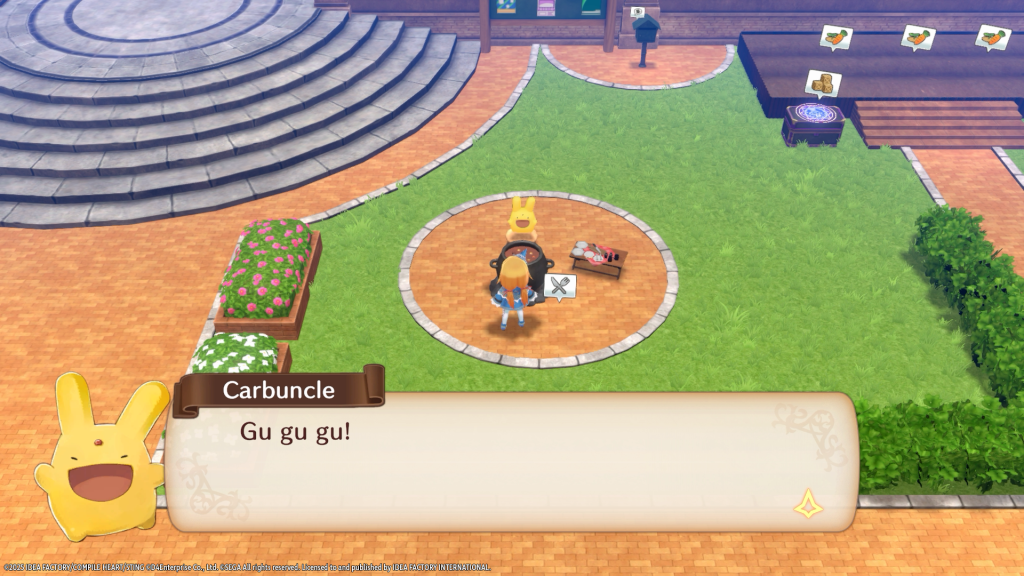
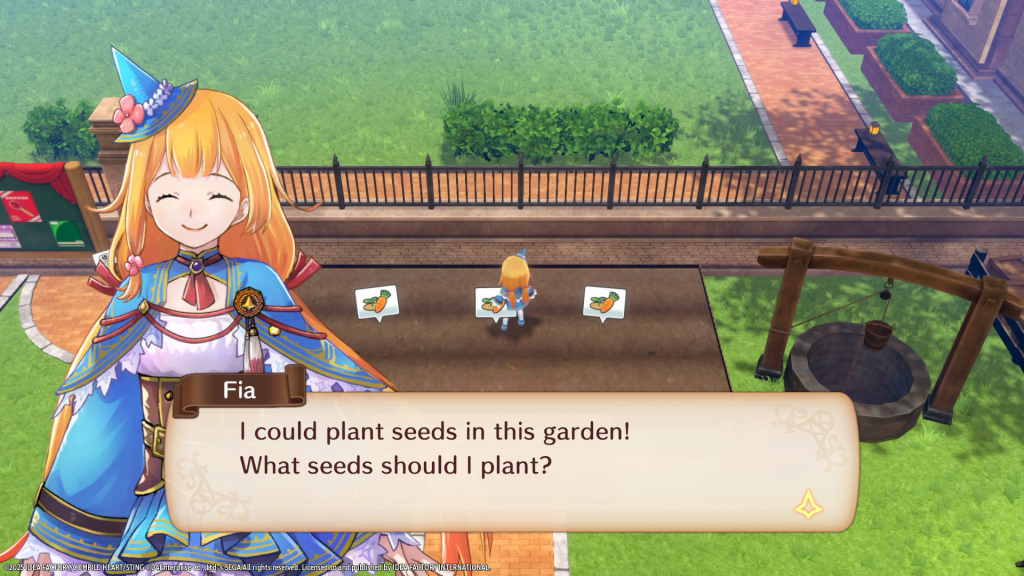
While at the school grounds, there will be the ability to farm and cultivate foods. These are fruits on trees that need to be fertilized, seeds that need to be planted and a pool for catching fish. By collecting these food resources, the player will be able to cook various curries. These curries have different recipes and ingredients, which are obtained through play. By consuming these curries, special effects can be imbued into the player.
There will also be planting areas, trees and cooking stations within the dungeons. The cultivation areas are connected within the dungeons, with progress being carried over. All cultivation will occur during dungeon excursions, with plants growing at the academy while exploring and fighting monsters. Inside the school grounds, the player will be able to plant and cook with items from storage, but not while in dungeons.

The player can also visit the shop, where they can buy and sell items, store items and even synthesize new items by combining materials collected. This feature lets player create new items and make the most of their supply, create new items to sell for money and strengthen the party. Equipment that has been collected and crafted can be equipped to the party, strengthening them for the adventures that they face together.
In the Library, there will be a mail box that Fia can use to receive letters from different characters, containing items and humorous dialogue. There is also a special Help Wanted Box, which will provide players with requests from the academy, as well as the area around it. The special requests are an extra side quests, which players can take on for additional rewards, bonuses and more. Once a request is complete, take it back to the Box to get the reward.
The last thing to discuss is the special events. During the course of the adventure, there will be a school festival, where the characters will dress in cute and silly costumes. Then there are the other events, like the fishing contest and the cooking competition. These special events can be a nice break, adding a little bit of levity to the more dramatic moments of the adventure. There are also special interactions with characters that players can discover.

Now with the gameplay covered, it is time to discuss the other aspects of this release, starting with the controls.
Controls – Mado Monogatari has a control system that feels a little awkward, especially when getting started with the game. Fia and the camera are controlled with the thumbsticks, while the inputs for actions are shown on the bottom of the screen. It is comfortable to play, with easy to navigate menu systems, as well as shortcuts for skills and effects. It takes a little while to adapt to combat inputs, but after some practice it all falls into place.
Difficulty – there are three difficulty settings for this release, offering an Easy, Normal and Hard option for players. The Easy setting is designed for newer players, with a relaxed challenge. Then there is Normal, which is the recommended and balanced setting, with Hard being the toughest challenge, pushing the limits of the player. In general, these are balanced and offer an experience for everyone to play and enjoy.
Presentation – from a visual perspective, Mado Monogatari is a vibrant and pleasing game, with a colorful world and characters that feel vibrant. The Live2D character portraits for scene dialogue are beautiful, giving the characters expressive and lively appearances. This is accompanied by cute Chibi style models, which are animated extremely well. There are also full screen CG arts, which appear during events in the narrative, enhancing the moments they are used.

The environments are distinct from each other and have a good amount of variety to them, with great use of color and music to build the desired atmosphere. Then we get to the sound, which further adds to the whole charm of the experience. The soundtrack is excellent, with an opening theme that sets up the whimsical and fun adventure. All of the dialogue is in Japanese, with character voices that fit each of the roles very well.
Final Thoughts – I had been aware of the adventures of Mado Monogatari, but under the name of Sorcery Saga. But I had never been able to play them before, until this point as my first experience. That being said, I had a wonderful time with this game, as it is a fun and challenging RPG adventure. The characters, story and world of Mado Monogatari have a charm that is carried throughout, which kept me invested for my entire time with the game.
There were some minor hiccups, with the slightly awkward controls in combat, but these didn’t sour my experience. It does take a little time to get used to the game, but it is worth it as there is a lot of fun and depth in the gameplay. This is a unique adventure, with progression that makes it stand out from others in the genre. I can happily recommend this game, if you are a fan of the series, or if you just enjoy dungeon crawlers, then this is for you.
In the end, I give Mado Monogatari: Fia and the Wondrous Academy a final score of 4.75/5. This is a charming and whimsical RPG adventure, with characters, gameplay and a world that is tremendous fun. All wrapped in a colorful and vibrant presentation, music and distinct style that makes it feel unique. if you want to check this game out for yourself, a link to each version of the game will be below.
Link to Nintendo Switch version (HERE)
Link to PlayStation version (HERE)
 W.Kohaku Media
One thought on “Mado Monogatari: Fia and the Wondrous Academy – Nintendo Switch Review”