
Hello, after a brief break Lost Gems is back, the series where I cover classic games that are no longer available in an official capacity. This week kicks off Halloween month for the feature, where I will be covering a pair of classic rail shooter from SEGA, originally released for the arcades and then ported to the Nintendo Wii. So it is time to take a look at the House of the Dead 2&3 Return, the light gun double pack that was released worldwide in 2008.
Disclaimer: while the game discussed here is no longer officially on sale, there are ways to obtain the game. This can be either through the second hand market or through unofficial digital roms/rips. I do not condone or promote piracy, so there won’t be any links to roms or rips of the game being covered.
So with the introductions out of the way, let’s get started. I will be discussing the general game experience, then give my personal thoughts on the title.
About the Game


House of the Dead 2&3 Return is a special double pack of games, offering players the ability to play the two classic light gun shooters. The games are played using the Wii Remote, or if they have it the Zapper attachment, which allows for the Nunchuk to be used. This is the way to work around the inability to use traditional Light Gun peripherals, due to modern flat screen televisions being incompatible with the controllers.
The player will be able to access both of the games, directly from the main menu, with the ability to play the home versions of House of the Dead 2 and 3. House of the Dead 2 takes place 2 years after the events of the first game, with an incident occurring in Venice Italy. During this incident, AMS agents James Taylor and Gary Stewart are deployed. On their mission, the AMS agents encounter deadly creatures and uncover the truth of the outbreak.
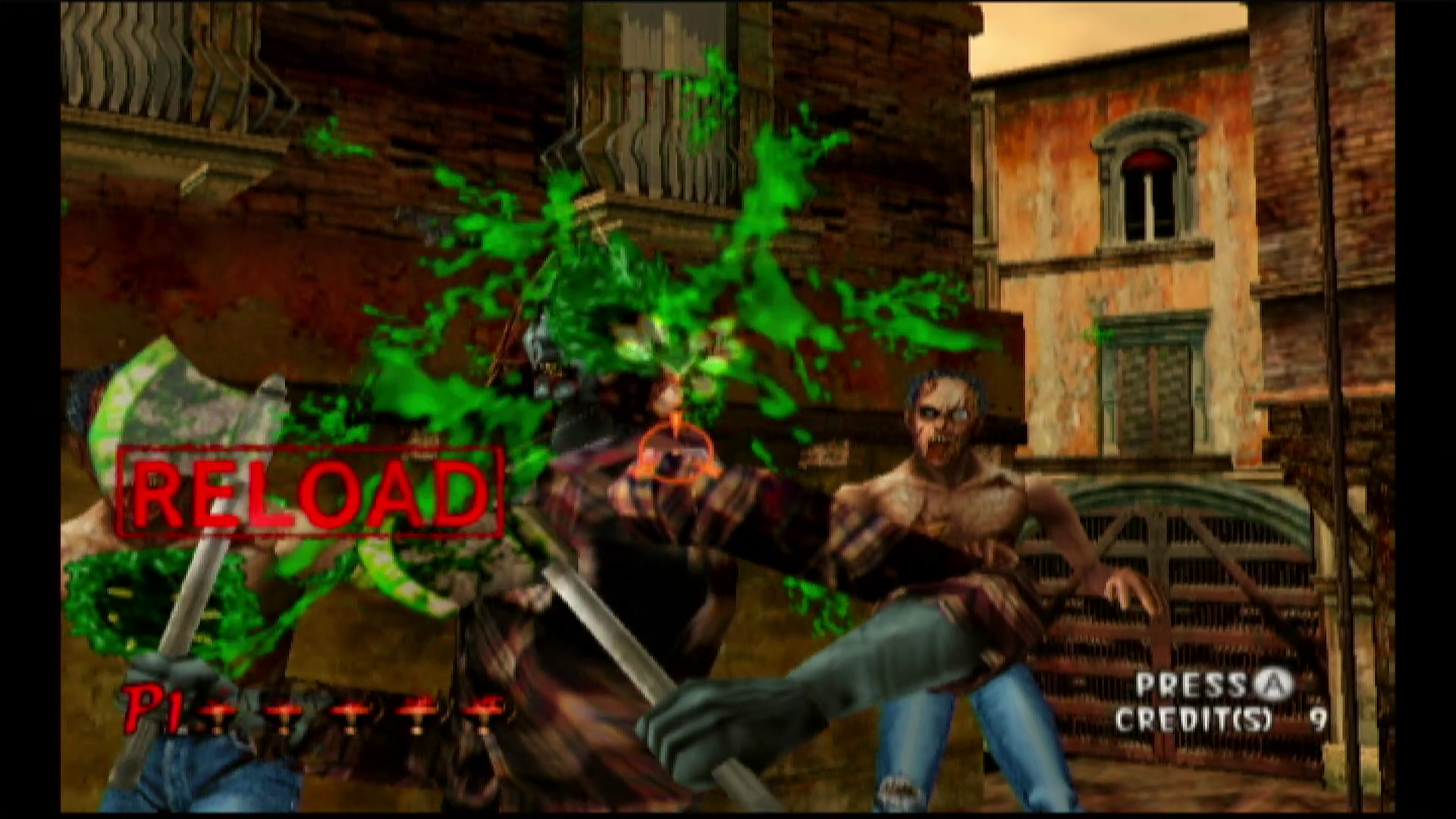
In this title, players can take on the Arcade mode, where the player works through six stages as they would in the arcades. The standard gameplay involves the player blasting away waves of enemies, while moving through the stage. During play, the players have 6 shots in their gun, moving the crosshair off screen to reload. When shooting enemies, if enough damage is dealt the creature will die, with a universal weak point of the head for all zombies.


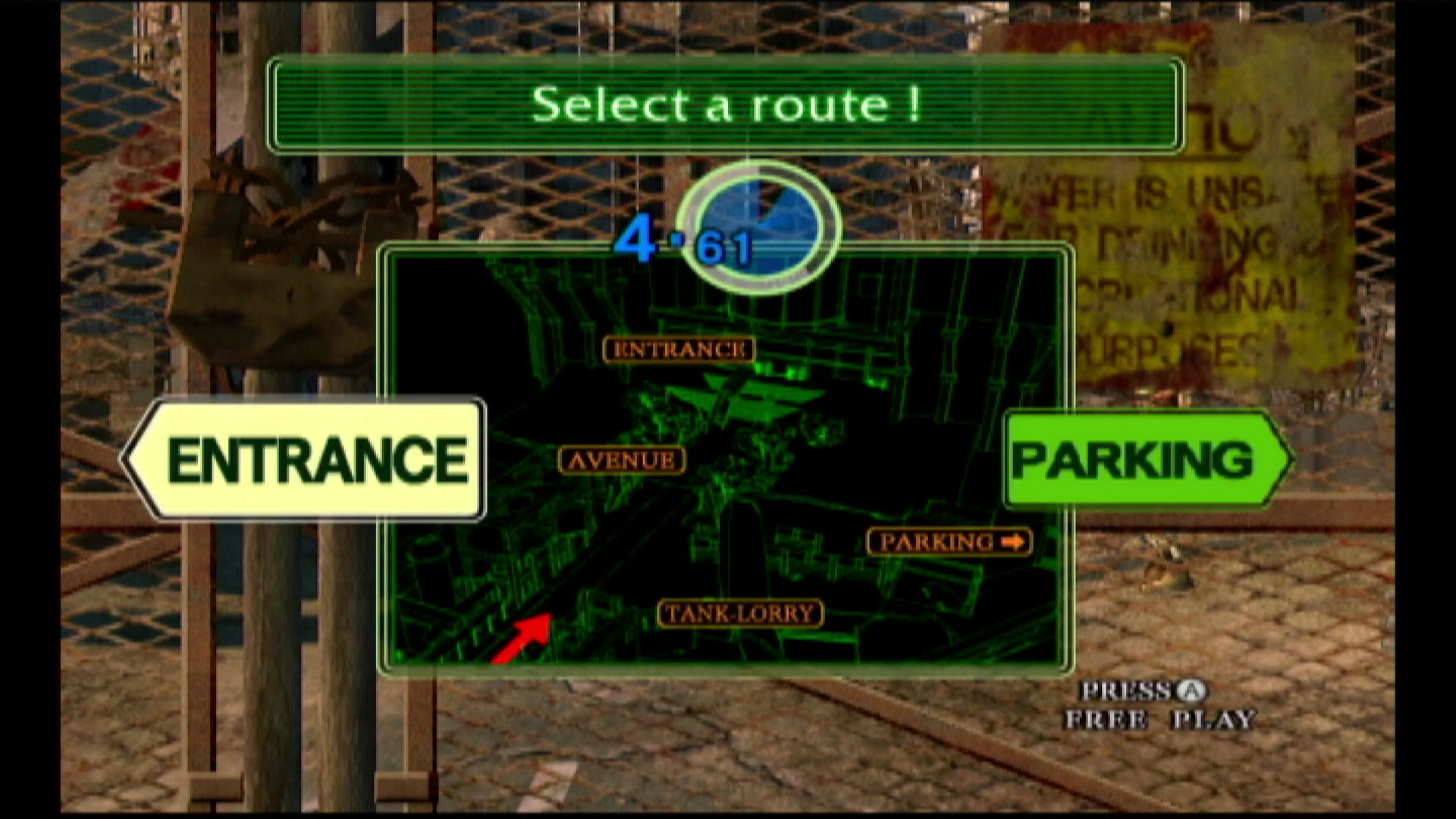
During the stages, there will be civilians that need to be rescued by the AMS agents. By shooting the zombies that are attacking them, players can rescue the people under attack from the undead. Some of the rescues as well as specific set pieces will lead to alternate paths, leading to different encounters and locations in the stages. At the end of each stage, the player will encounter a challenging and deadly boss monster.
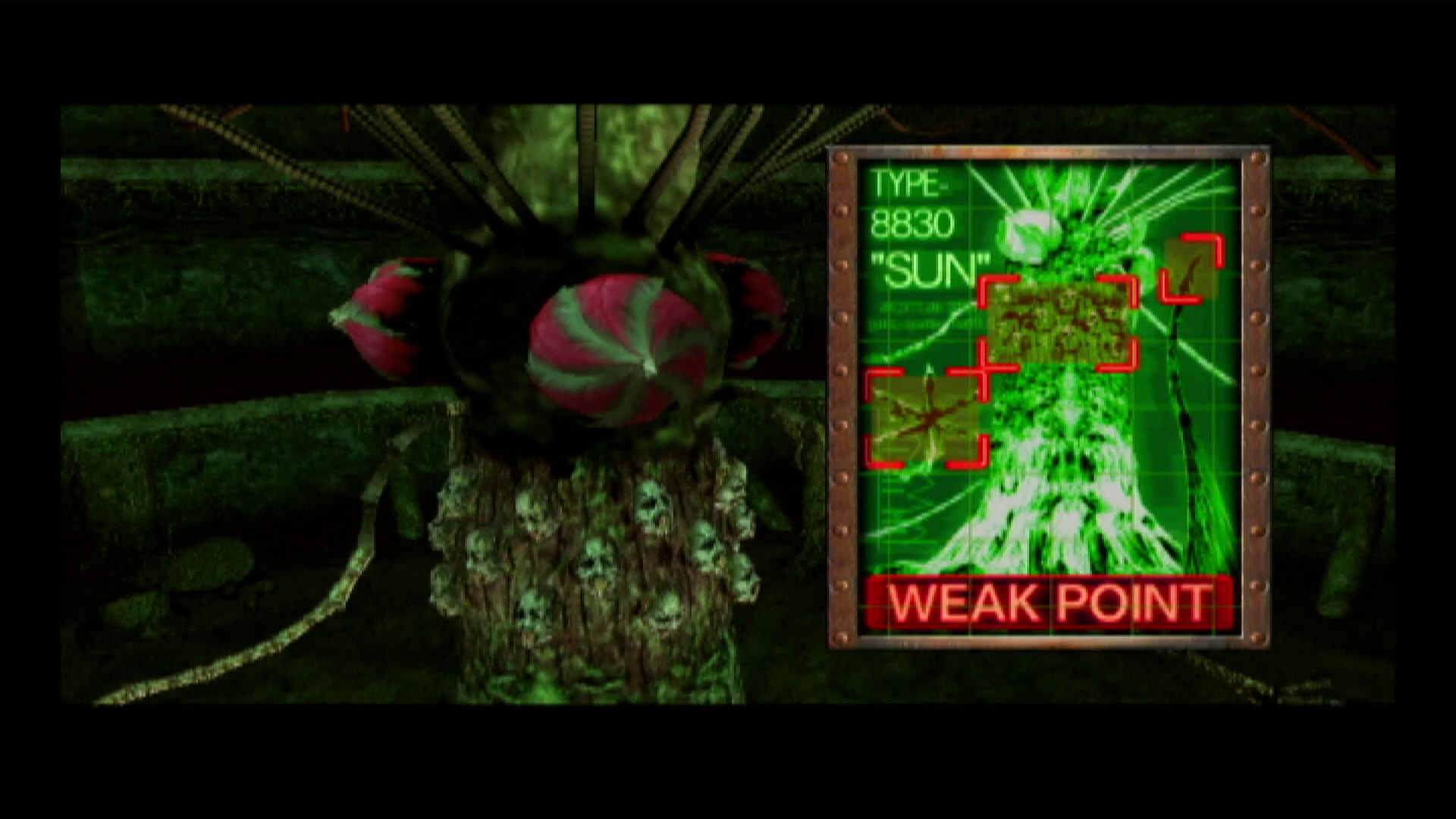
In each of the boss battles, the player will need to shoot the weak point that is shown on screen. Doing so will cause the boss to take damage, interrupt attacks and prevent them from hurting the player. These battles have their own phases, attack patterns and unique gimmicks, making them a challenge for players to defeat. When the boss is defeated, the results screen for the stage appears and if enough survivors have been saved, bonus lives are awarded.
The player can have up to 5 lives, which are lost when damage is taken by an attack or the player shoots a civilian by mistake. If all lives are lost, a credit is needed to continue playing. If the player runs out of credits, the game will be over and they will see the route they had taken before death. The number of credits, lives and difficulty of the game can be adjusted in the settings. Blood color can also be adjusted, with the option for red or green.
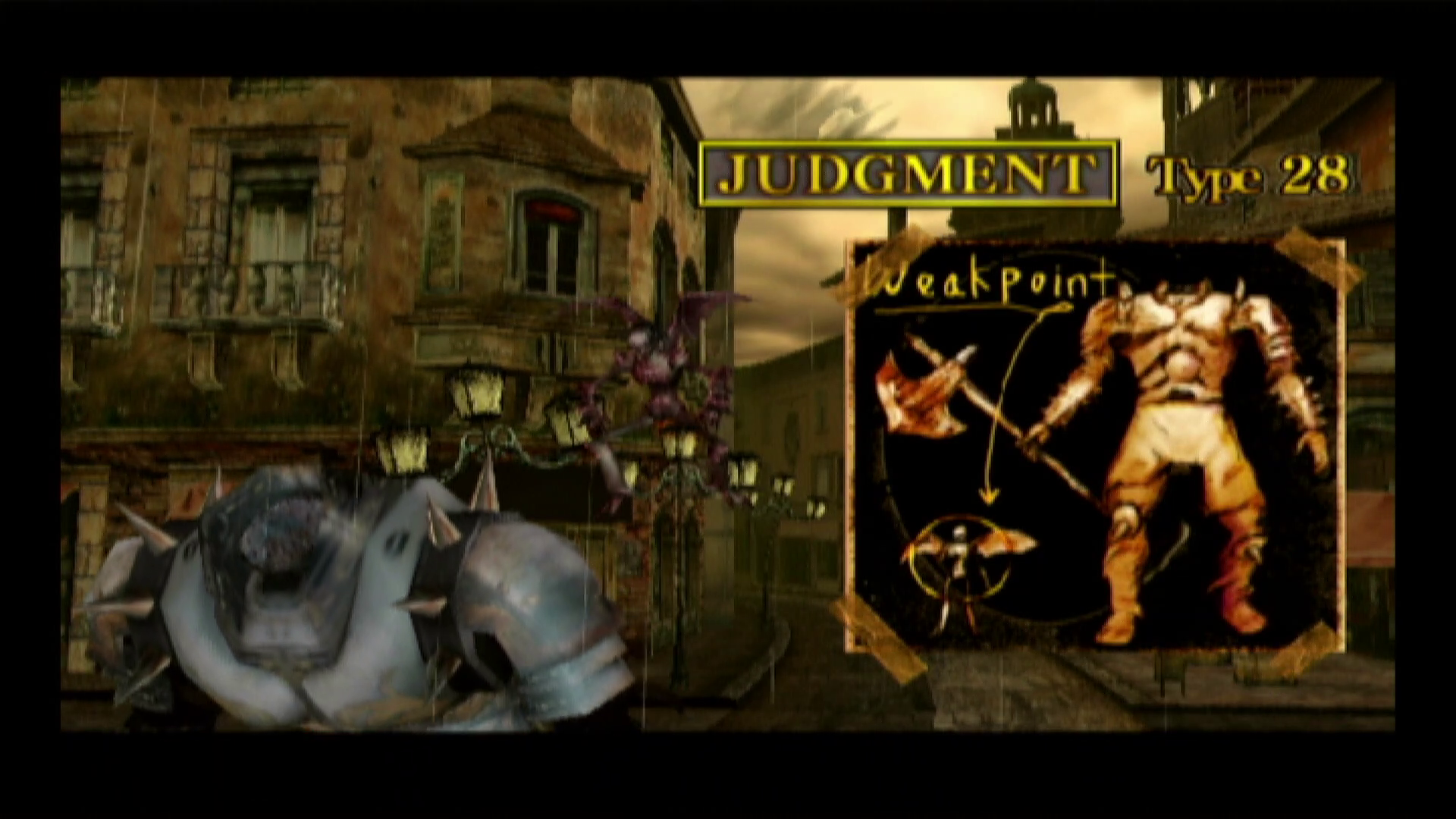
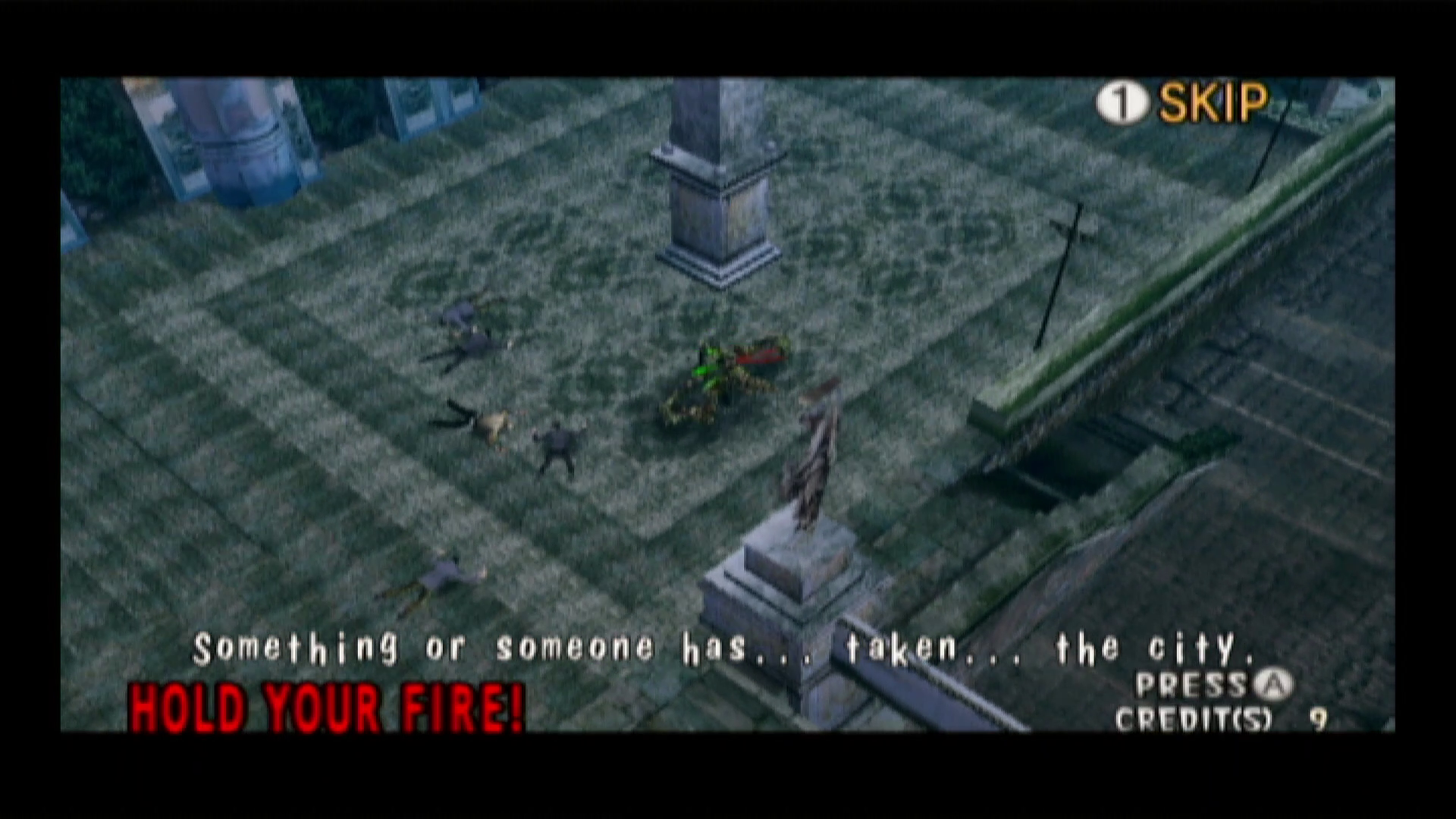
Away from the Arcade mode, there is the Original Mode, a special version of the main game, where power-ups can be collected and used. These include bullet damage increases, extra lives, extra credits and unusual items like fishing lures and even UFOs. These items are collected by shooting the environment, saving civilians and in a mini game when starting the game for the first time. Up to 2 items can be taken into play in solo, or 1 item each in co-op.
Then we have the Training Mode, which is a special mini game challenge mode, where players take on 10 challenges with multiple difficulty settings. These challenges include saving all of the civilians, taking down a series of zombies with limited shots and beating the first boss with rapid fire only. Last is Boss Mode, where players can try to beat each of the bosses from the game as fast as possible, with the fastest time for each level being added to the rankings.
Moving on, we have House of the Dead 3, which takes place in 2019, 21 years after the 1998 Curien Mansion incident. In a now ruined world, the events of the zombie outbreaks have caused civilization to collapse. AMS secret agents raid the EFI facility, related to the Curien group but contact is lost. Two weeks later, Lisa, the Daughter of Thomas Rogan, accompanied by his former partner G go to the facility to find out what happened to her father.

Like the previous entry, the main game mode for this release is Arcade mode, where the player must battle the hordes of the undead. This time, the player is armed with a shotgun that holds 6 shots and has a slower reload animation. To make up for this, the blast radius of the weapon is larger, being able to hit multiple enemies at once. Knocking a zombie down, allows the player to hit them again to deal additional damage to kill them faster.
There are 6 stages like the previous game, however, this one has a unique gimmick to how the stages are approached. The first and second stage, follow the traditional linear gameplay loop, playing out in sequence with the second stage having a branching path at the beginning. After clearing these two stages, the player will use the elevator to select which stage they challenge next. This system allows players to approach the game differently each time.
In this title, there are no civilians being attacked, but there are still rescue events. This time the player will need to save their partner, who is in danger from the zombies. If the player is able to save the partner, they will gain an extra life. Thankfully, failure only results in no bonus being awarded. These rescue events occur frequently during the game, with the person in danger changing depending on the number of players actively in use.


Boss battles have also changed during this release, with their appearance tied to the stage itself. For some of the stages, the boss will appear during the stage itself, chasing the player throughout the stage. There is also a boss that appears around half way through the stage, appearing at the center of the location. The other bosses appear at the end of the stage, being used as the climax for their section of the game. This makes each stage feel distinct and unique.
The way that bosses take damage is also changed, with the battle broken up into phases. Each time the boss attacks the player, a second meter will appear below their life meter. This is the break gauge, which will interrupt the boss attack when it is depleted. To empty the meter, the player needs to hit the designated weak point as quickly as possible. Each time it is emptied, the boss will be interrupted and take damage.
After defeating the boss and getting to the end of the stage, the player will get the results screen for the chapter. Based on the performance of the player, their score and the time they clear the stage, a letter ranking will be awarded. If the player gets a ranking of B-E, there will be no bonus awarded, but if the player gets an A rank an extra life is earned, with 2 being awarded for an S rank. These rankings encourage replaying the game, to get the fabled SS ranking.

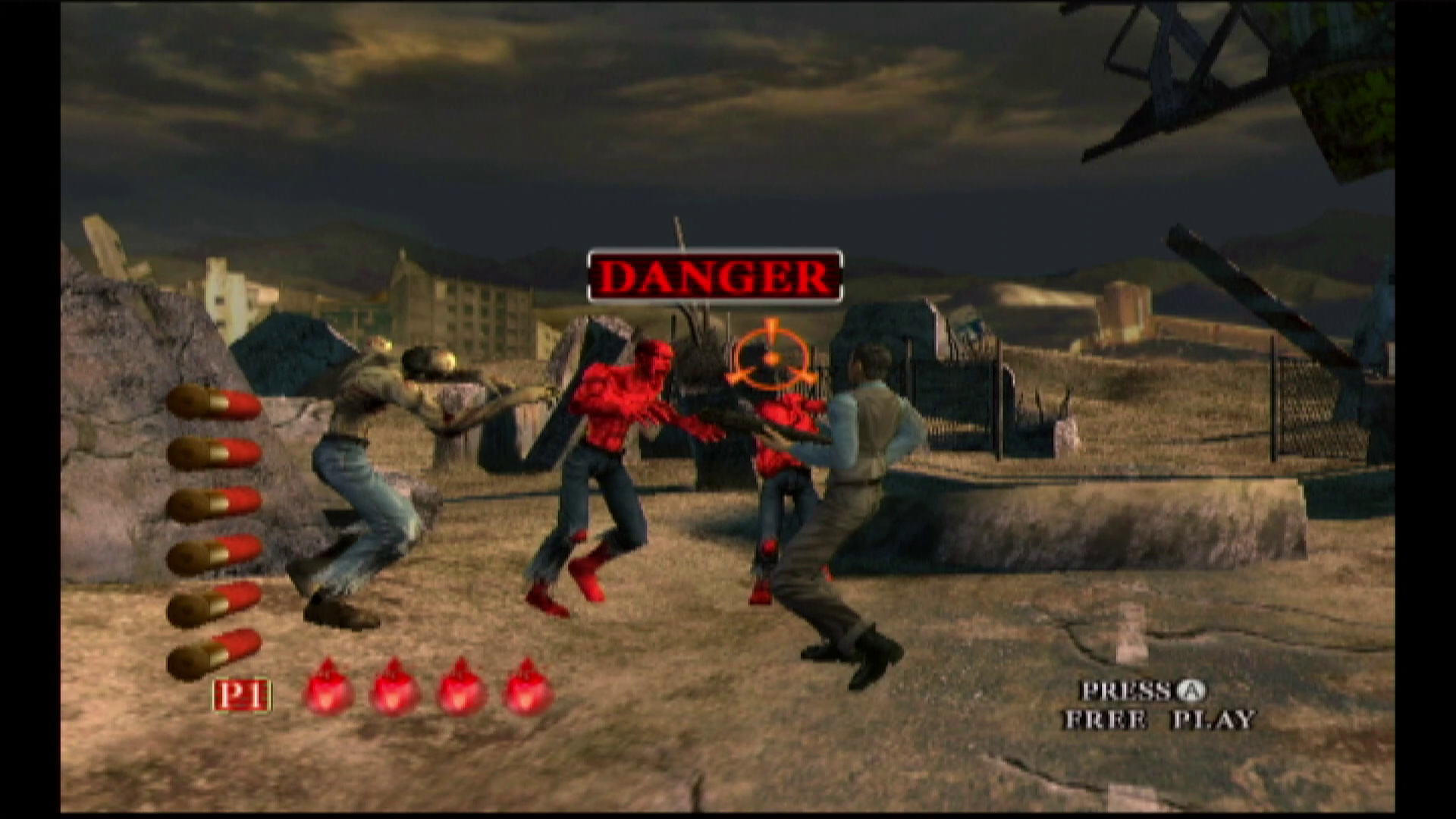
Just like the companion game, this title allows players to modify the number of lives and credits, alongside the blood color and level of gore on screen. The maximum starting lives that players can set in this game is 5, but if the player can collect extra lives during play, the in game cap is 9. Unlike the previous title, players have the ability to unlock freeplay in this release, with the maximum number of credits with the chance to fail being 9.
In addition to the Arcade mode in House of the Dead 3, players can also challenge two extra single player modes. The first is Time Attack, which replaces the lives and credits for the game with a timer in the middle of the screen. This will count down over time, with players earning time by quickly killing the creatures, gaining more time based on their performance. Damage taken will give time penalties, taking away a fair chunk of remaining time.
The last mode is Extreme Mode, which ramps up the challenge further. All of the enemies are stronger and the blast radius is reduced, but to give players a fighting chance a melee attack is introduced. By using the melee button, the player can clear the screen of attacks, dodge boss strikes and hit multiple enemies at close range. This however uses up the players ammo, requiring the gun to reload after each use, making it a risk/reward mechanic.

There are video tutorials included for the games in this pack, which will show the player the basics of how to play. These will explain the mechanics of the game, allowing players to get a quick refresher on the mechanics, as well as teaching new players the game. They aren’t the best, but are good enough for the basics of play, as the original arcade attract screens appear to have been removed. But the original opening movies are still retained for both games.
Personal thoughts
I grew up playing the House of the Dead series, with the first game on the SEGA Saturn, the second on Dreamcast and the third on the original Xbox. There are many happy memories that I have tied to this series, from playing it with my dad and getting my first ever arcade clear. I have a deep love for this series, especially the second game which is my favourite. The story, characters and voice work are all that classic B-Movie cheese that makes it so endearing.


The series was released during a golden age for light gun games, where every home had a TV that could support the guns. But sadly that time passed, as televisions became more advanced, with flat screen displays the age of the lightgun faded away. However, with the Nintendo Wii and their use of IR sensor technology, the genre got to shine once again as players could use Wii remotes in place of guns. So there was a brief resurgence for the genre in the home.
I am a big fan of light gun games, which made House of the Dead 2&3 Return an instant sell for me, especially since it has my favourite game in it. The gameplay is almost perfect, with a couple of unfortunate hiccups when it comes to slowdown. However, this doesn’t affect the gameplay too bad, as they are few and far between and don’t occur during boss fights. These are really good ports, which are the best way to play the game without dedicated hardware.
There is a tremendous amount of content for players, with the arcade modes, the extra challenge modes and 2 player co-op in both games. I have returned to these games repeatedly over the years, putting a lot of time into them across various platforms. My love with the games has led to memorising the scripts, learning the secrets and beating all of the challenges. I have even been able to one credit clear House of the Dead 2, which I’m pretty proud of.

The Wii Zapper and various gun peripherals are available, which gives a fairly authentic experience. The most comfortable is the Zapper, which allows for twin grip when playing for extra stability and control, while also being the best for other shooters. The game can be played with the Wii remote by itself, but it doesn’t feel the same as you need that shape to feel right. You can pick up new Zapper and gun shells online for pretty low prices.
House of the Dead has a cult fanbase, with fans wanting these games to be as widely available as possible. There have been some ports of games on other platforms, like standalone versions of House of the Dead 3 and 4 for the PlayStation 3. There is also House of the Dead Overkill, alongside remakes of the first two games, which receive mixed reviews from fans. The recent remakes especially are unfortunately poor in my personal opinion.
These games were released during a special time, where the series really found its identity as a cheesy gory horror themed shooter. House of the Dead 2 was the breakout hit for the franchise, being bundled with the Dreamcast light gun. The wonky voice acting, unintentionally hilarious script and over the top action really made it stand out. I even set the blood to green every time I play, as that was the only setting that was available for the Dreamcast version.

This game is easily attainable on the secondary market, being widely available across both physical and virtual marketplaces. I picked the game up myself from a local store, with the disc in fairly good condition for right money. If you don’t have access to a Nintendo Wii or a Wii U, you can run the game via emulation, with mouse control or aftermarket lightguns like the Aimtrak. You can also connect Wii remotes via Bluetooth, with USB IR sensors.
I would like to see these versions of the game come back to modern platforms, as they are the best games in the genre, but it appears that this is not possible. The remakes do exist, but they don’t feel anything like the games they are based on. There is something special about the originals, with the charm and distinct wonk of the dodgy b-movie voice acting. That cheesy feel isn’t there in remakes, as they are from a point in time that has long passed.
If you have enjoyed this feature, then please stick around and see what else catches your eye. I cover a wide range of games in reviews, get special previews and put out regular features. I have Lost Gems, Retro Revival where I discuss re-releases and the occasional Gaming Oddities piece, where I cover weird and wacky titles. So stay a while and have a look around.
 W.Kohaku Media