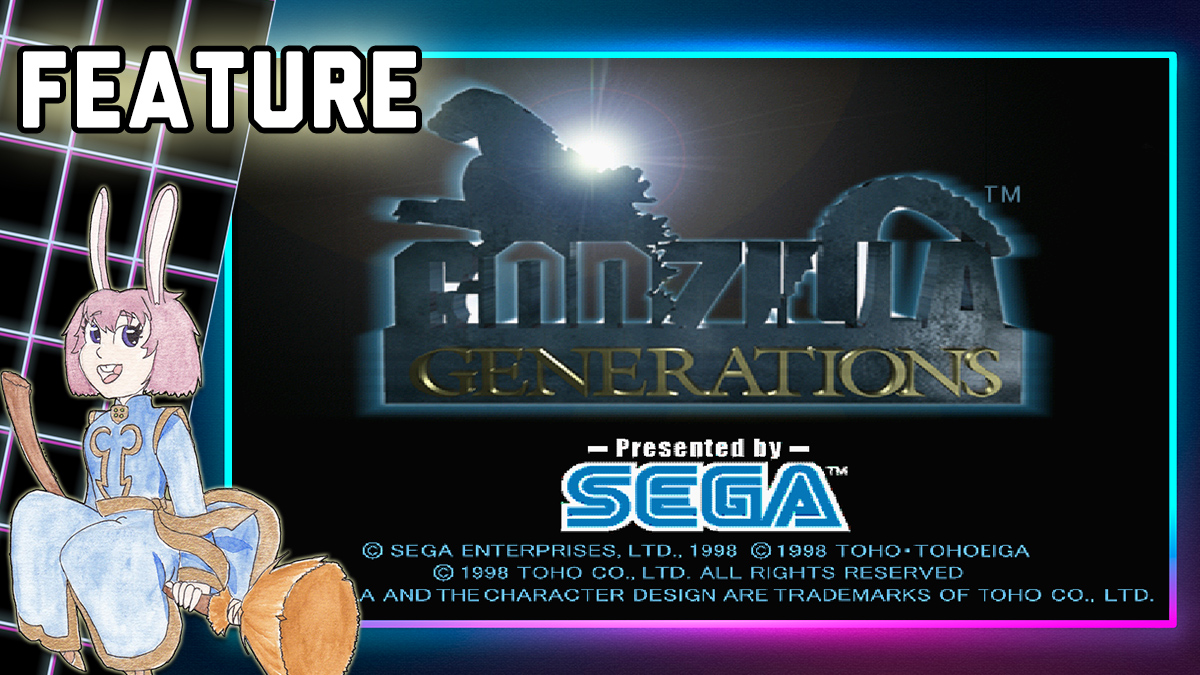
Hello and welcome to a special instalment in Lost Gems, the series where I cover games that have been forgotten, abandoned or just removed from sale. We will be celebrating Godzilla Day, the anniversary that occurred earlier this week, by covering the Japanese exclusive release that was a launch title for the Dreamcast. So it is time for us to take a look at Godzilla Generations, from General Entertainment and SEGA released in 1998.
Disclaimer: while the game being discussed here is no longer officially on sale, there are still ways to obtain the title. This can be either through the secondary market, or via unofficial digital roms/rips of the game. I do not condone or promote piracy, so there won’t be any links to roms or rips of the game being covered.
So with the introductions out of the way, let’s get started. I will be discussing the general game experience, then give my personal thoughts on the title.
About the game


Godzilla Generations is an action game where players control the titular Kaiju, where they must rampage through various locations across Japan. There are two main game modes, Normal Game and Time Attack Game, with the Normal Game being where the real meat of the experience takes place. In this mode, the player can select one of several versions of Godzilla, with Heisei Godzilla and Mecha Godzilla at the start of the game.
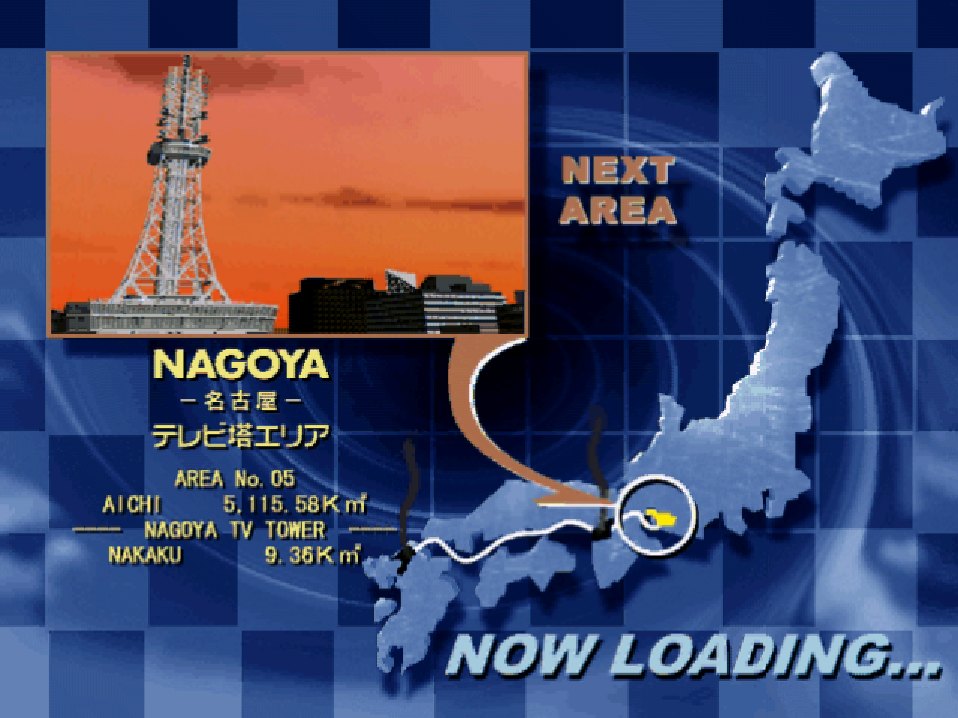
After selecting their Kaiju, the player will immediately go into laying waste to the cities of Japan. The player starts off in Fukuoka, moving through Osaka, Nagoya, Yokohama and then ending the rampage in Tokyo. Each of the regions have two stages, with the exception of Tokyo which has three stages as the finale of the game. As the player moves to each stage, they will see the path of destruction, showing the name and location on the map of Japan.
Inside the stage themselves, the player will gain control of Godzilla with a single goal, destroy as much of the scenery on the map as possible. In the upper right of the screen, a map of the stage will be visible with the targets as grey icons. But it also shows the Earth Defense Force, displayed as pink icons for ground forces and blue for air units. As the Kaiju destroys the buildings, infrastructure and scenery, they will disappear from the map.

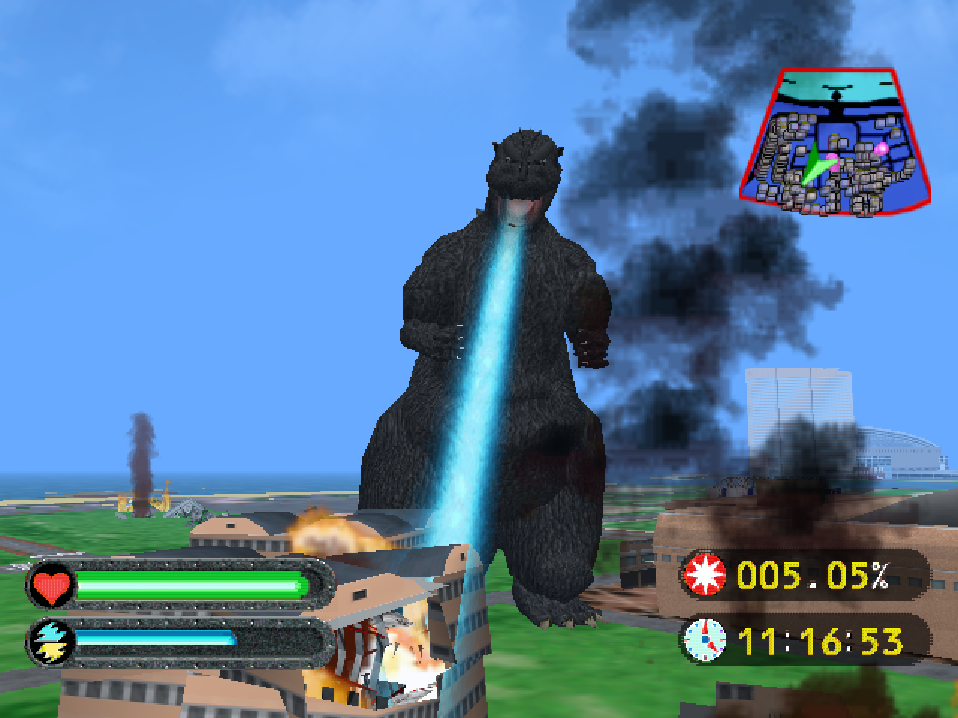
The main way to cause mass destruction is to simply walk through them, causing the smaller structures and greenery to be immediately destroyed. However, the larger buildings and multi part structures, like skyscrapers and a baseball stadium will require more damage. There are a couple of options that players can utilise to maximise the devastation, with the main one being Godzilla’s tail. By simply turning in a circle, significant damage can be done.
Alongside the simple tail drag, the player will be able to use a selection of special attacks. For Godzilla, they can perform a powerful tail swing going to one side, causing more damage than just turning. But that isn’t all, as the player can unleash the iconic Atomic Breath. By pressing the charge button, a meter will fill up to use the Blue Atomic Breath for a limited time. There is also the Red Atomic Breath, which is charged by destroying the environment.
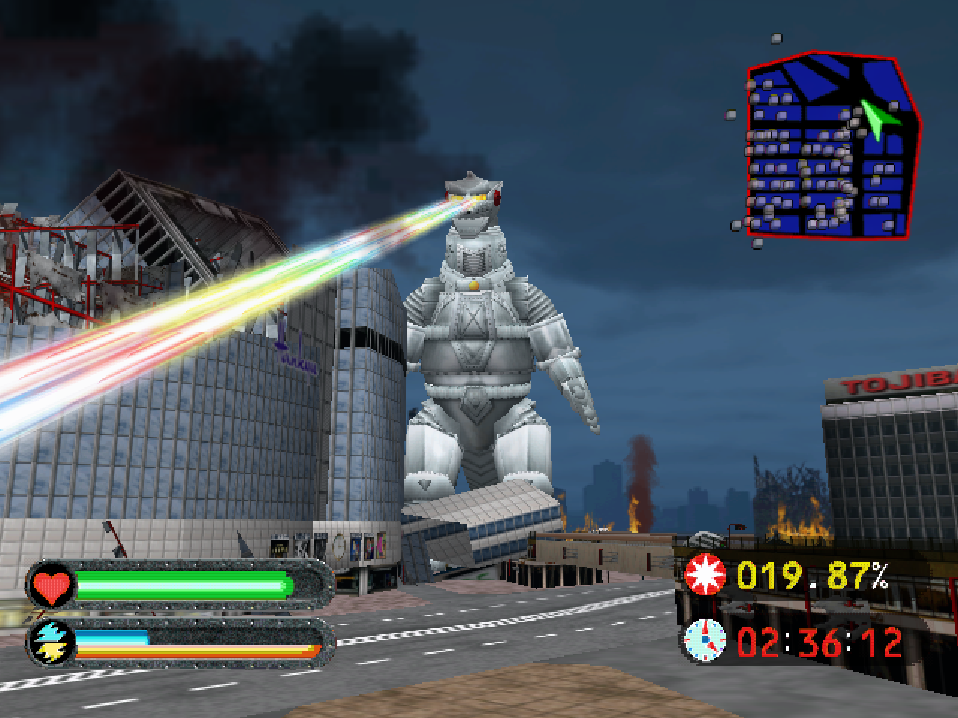
Mecha Godzilla has the same basic skills to generally destroy the environment, with the ability to walk into buildings and use the tail. However, Mecha Godzilla is outfitted with special unique attacks, with missiles and powerful lasers. The missiles can be used freely, replacing the tail swipe, firing to the left or right. The Laser needs to be charged before use, like atomic breath and when the special bar is full, an ultimate missile laser barrage can be used.


All of the playable Kaiju have the ability to block attacks, which will reduce the damage that is taken from the Earth Defense Force. This is important during stages, as the military units will deal significant damage to the player. The enemy units will use anti-Kaiju missiles and lasers, attacking whenever the player gets too close. If too much damage is taken, the player can use the roar, which will let out the iconic Godzilla cry to restore lost health.
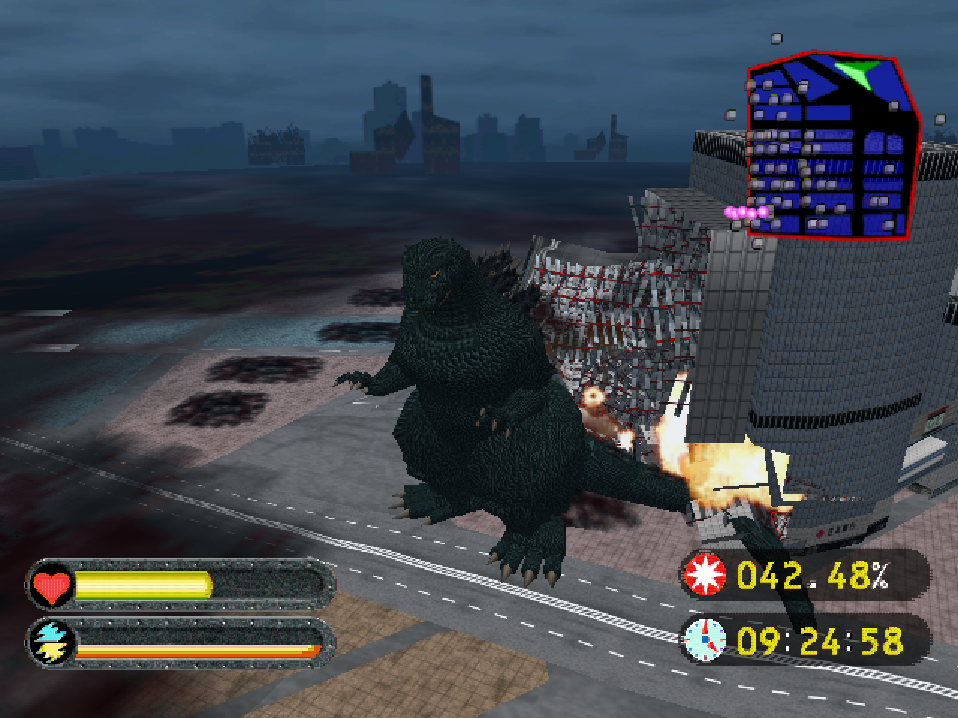
When areas of the stage are destroyed, a destruction percentage in the bottom right of the screen will rise, with the goal to be destroying as much as possible. There will also be a timer, showing how long the player has to cause destruction. On the other side of the screen, there will be two meters that players must keep an eye on. The upper meter is health, starting as green then gradually turning red as damage is taken from buildings and attacks.
When the player has destroyed enough of the current location, they will be able to end the stage. This can be done in one of two ways, by allowing the time limit to expire or by leaving the area. By wandering out of the boundary of the stage, a timer will count down and a fog will envelop the stage. Upon ending the stage, the player will be rated based on their performance, with letter grades for speed, damage, speed and more before getting a final ranking.


After clearing the stage, the player will be able to progress to the next stage, retry the current stage for a better ranking or go to the main menu to save. If the player goes to the main menu to save, when they return they will need to replay the stage that it was saved from. When all of the stages have been cleared, the player will unlock an additional Godzilla variation, as well as a special unique character that will surprise players.
Additional playable characters are not the only thing that players can unlock, as they can also unlock items in the Theatre for players to view. From the start of the game, the player will be able to view a selection of trailers from the Theatre menu. But as the player clears each stage, there will be additional trailers unlocked. These include trailers for films like Godzilla vs. Mothra, Son of Godzilla and Godzilla vs. Gaigan to name a few.
The Time Attack Game allows players to challenge the cleared stages, while under a time limit to get the best destruction score possible. This additional gameplay mode can be a good option for hot seat multiplayer, passing a controller around to see who can get the best score. There will also be a leaderboard, where players can enter their name at the end of a stage. The inclusion of this further adds to the replay value of the game.

The last thing to discuss is the VMS game mode, which was developed to make the most of the special memory cards for the Dreamcast. By plugging a Visual Memory Unit (VMU) into the controller, the player will be able load one of many Chibi Kaiju onto the memory unit. This works as a virtual pet, allowing the player to raise a Kaiju, taking care of them and training them to make them stronger. It is reminiscent of the classic Tamagochi toys.
By raising and training the cute monsters, they will be able to battle other players through direct connection between two VMU systems. By battling with other players, they will add details to the memory unit, which can be transferred to the game itself. The monsters raised on the VMS system will be playable in the special Coliseum mode, which allows multiple players to participate in battle with each other and against the Kaijus.
This special mode requires players to have their own VMU with batteries in them, as the monster character needs to trained away from the system. If the battery within the VMU dies, the data will be retained until they are replaced, so players won’t lose their data in the event of battery failure. This additional mode is quite special, as it was possibly the earliest example of external add-ons being used to unlock content, further deepening the experience.

Personal thoughts
As a kid I was a big fan of Godzilla, watching the films on VHS with the cheesy dubbing which I thought was so cool. Then my dad brought home an imported Dreamcast in 1998, with a copy of Godzilla Generations following soon after. Seeing this game blew me away as it was such a huge graphical leap at the time, as the Dreamcast was the first system of the sixth generation to be released. I immediately became a fan of this game.
The leap in the graphical power then made the gameplay much more engaging, as in the past the games were limited in what they could do. As they were limited to isometric perspectives, side scrolling action and fighting games. With the release of Godzilla Generations, players were able to experience a fully cinematic city destroying experience. The dynamic camera angles really added to the experience, making it more impactful when causing mass destruction.

Godzilla Generations is very accurate to the classic films where the atomic lizard would go on a rampage, moving through the cities at a rather slow pace. This gained negative criticism at the time from journalists, as the slow gameplay was called boring and dull, among other criticisms. However, I feel that these criticisms were misplaced, as the speed of the game makes it feel like you are playing one of the films. This is what the game excels at so well.
This game also serves as a museum of classic Godzilla, with the included film trailers and inclusion of the much maligned American Godzilla, called Godzilla USA in game. This celebrates the history of Godzilla, giving players an experience that has the heart of what made Godzilla so cool when we were kids. The game has a relatively niche fanbase, which have an appreciation for the game, but sadly the negativity around the game is more prevalent.
While I would love to see this game come back, that is likely not going to be possible, but it would be nice to have another game in the franchise with the same style of play. The closest we had was the PS3/PS4 release, but it was sadly short lived quickly disappearing from store shelves. A year after the release of Godzilla Generations, a sequel was released called Godzilla Generations: Maximum Impact, but it was more focused on the monster battles and on-rails action.


For those who want to pick this game up, due to the negative reception and reputation that the game has, the prices for the game are relatively low. Even as a Japanese exclusive, the game is very attainable in a complete form, with many copies of the game available through the secondary market. There are also Godzilla branded VMU systems, but these can be significantly more expensive depending on the condition, as well as having complete packaging or not.
There have been many Godzilla games that have come and gone, with all of them having a relatively short shelf life, due to their use of licensing for the series. So that doesn’t give me much hope that this game, as well as the many others out there will see a re-release at any point in the future. This is due to the complicated situation with licensing, as well as companies that sadly don’t exist anymore, with General Entertainment going bankrupt in 2011.
If you have enjoyed this feature, then please stick around and see what else catches your eye. I cover a wide range of games in reviews, get special previews and put out regular features. I have Lost Gems, Retro Revival where I discuss re-releases and the occasional Gaming Oddities piece, where I cover weird and wacky titles. So stay a while and have a look around.
 W.Kohaku Media