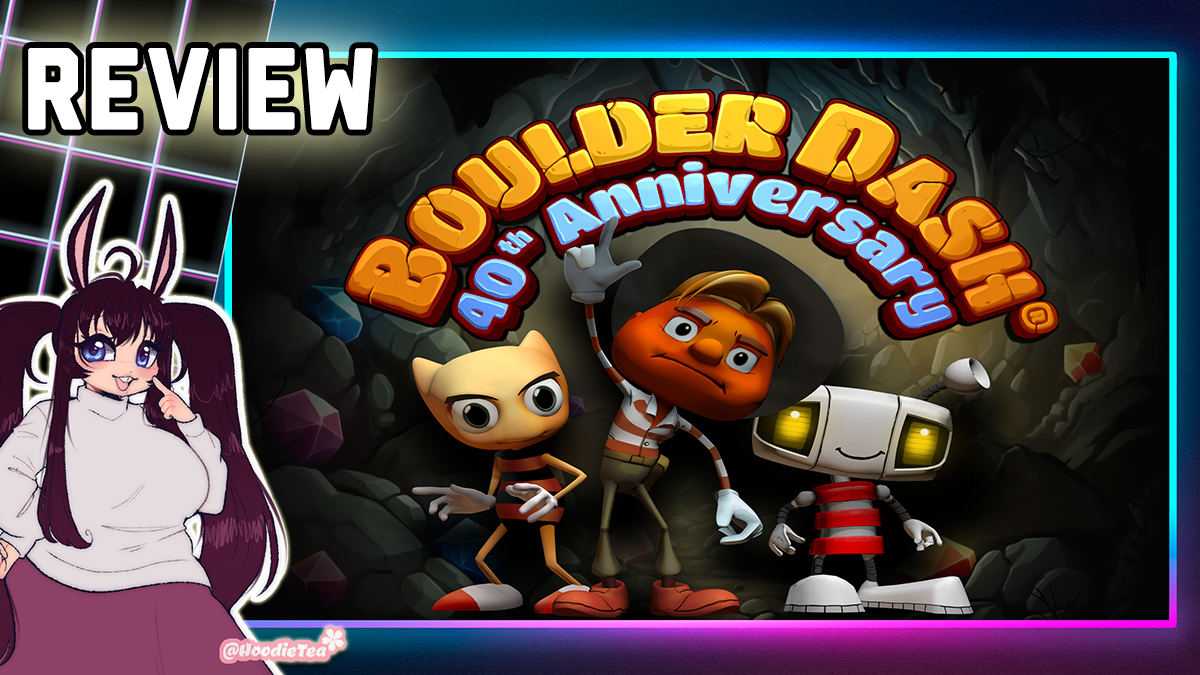
Overview – developed and published by BBG Entertainment, Boulder Dash 40th Anniversary is a special celebratory release of the classic puzzle game, about grabbing gems in dangerous caves. Take on a selection of brand new stages, while also having the option to experience new ports of the classic games that established the series. This title is available on PlayStation, Nintendo Switch, Xbox and Steam, with a link to each version at the bottom of this review.
Disclaimer: before I get into the review, I would like to thank PR Hound fpr providing the copy of Boulder Dash 40th Anniversary that was used for this piece. The provision of this software has not influenced the contents of this review, all thoughts and opinions contained within are my own.
Now with the introductions out of the way, let’s get into the review. There is no real plotline to this release, so I will be going directly into covering the gameplay experience. I will be referring to the release as simply Boulder Dash for the sake of brevity.
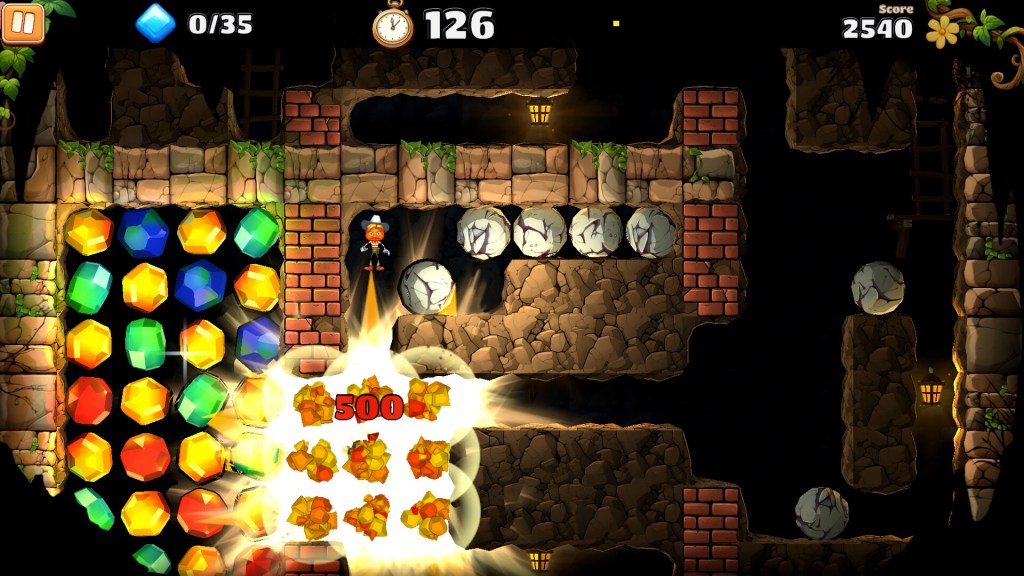
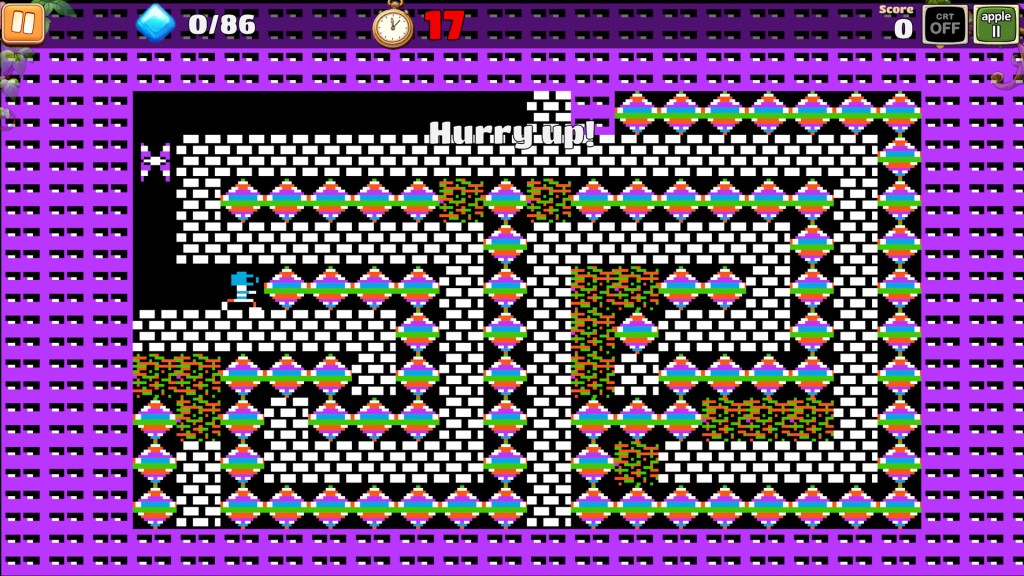
Gameplay – Boulder Dash is a puzzle game, where players need to collect Gems to be able to clear the stage. To do this, the player digs through the ground on the stage, dropping Gems and boulders while avoiding being crushed. The player can move through the ground in four directions, going up, down, left and right as they dig through the ground. If the player is able to collect enough Gems, the exit will open and the can be cleared.
As the player moves through the stages, there will be various dangers within each of the stages. These include the boulders that will fall and crush the player, but there will also be enemies that will appear in stages. These include the butterflies and fireflies, which will move around the stage and kill the player if contact is made. The enemies can be used to the advantage of the player, as they can be used to destroy walls by dropping boulders on them.
If the player drops a boulder on a butterfly, they will explode and turn into Gems, allowing the player to reach the target for the stage. There will also be gimmicks, like the Amoeba, which will expand through the stage, turning into either boulders or Gems when they can’t grow anymore. Then there are the hidden mechanics, like the magic wall, which will turn boulders into Gems when falling and passing through it. Boulders can also be pushed if there is a gap next to them.
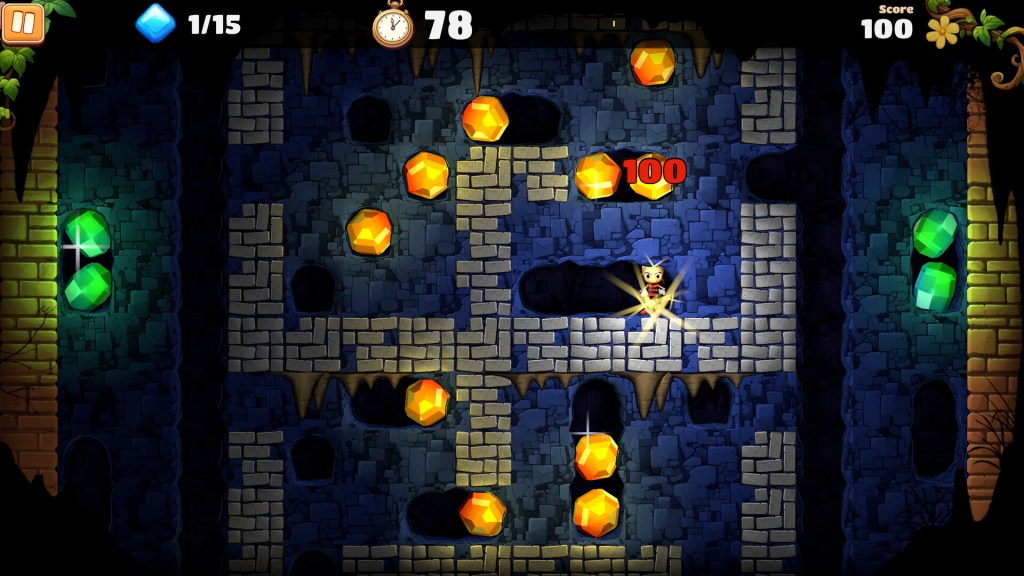
As this is a puzzle game, there is a lot of strategy that is needed to figure out the right way to approach things. This can also be pretty cryptic, as the game doesn’t tell players the path they need to take, leading to players having to figure things out for themselves. This can lead to repeated deaths and fail states, including getting trapped or having boulders block Gems, preventing them from being picked up having to restart the stage.
Once the stage is cleared, the player will be given a rating from one to three stars, based on the score earned in the stage. The main meat of the experience is the 12 special worlds, made up of brand new content for players to dive into. These worlds consist of 20 stages each, with 6 of them being created in house, alongside 6 collaboration worlds. Each world is unlocked from the start, having three stages to play, opening more as they are cleared.
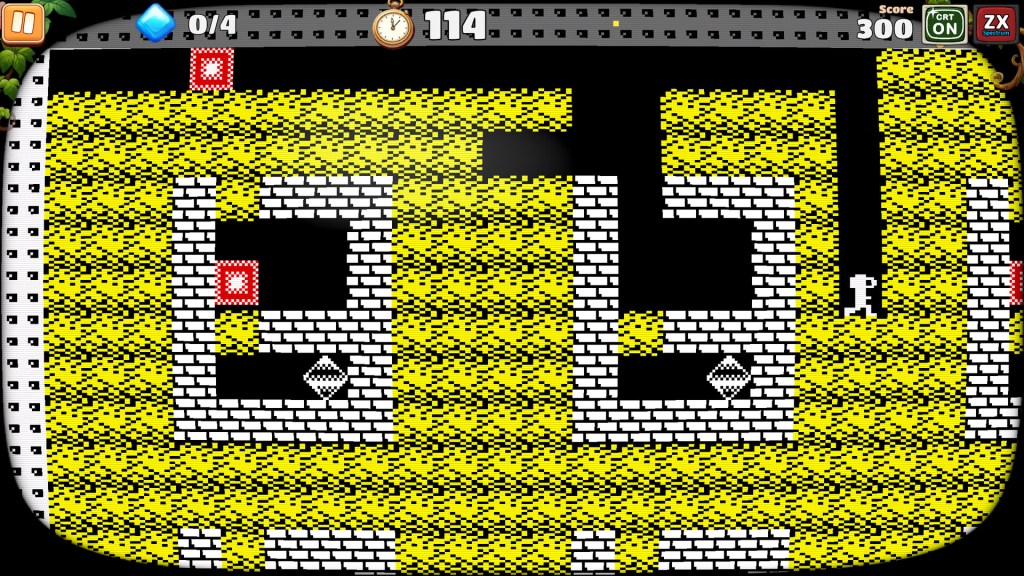
Then there are the four classic worlds that have been added to the game, with 20 stages from Boulder Dash 1-4, utilizing the classic graphics from the time. There are options for Atari, Commodore 64, ZX Spectrum and Apple II styles of graphics, which can be set in the options menu before playing. These bonus stages will be very challenging, as some of them have a trial and error approach to them, where players will need to figure out the puzzles.
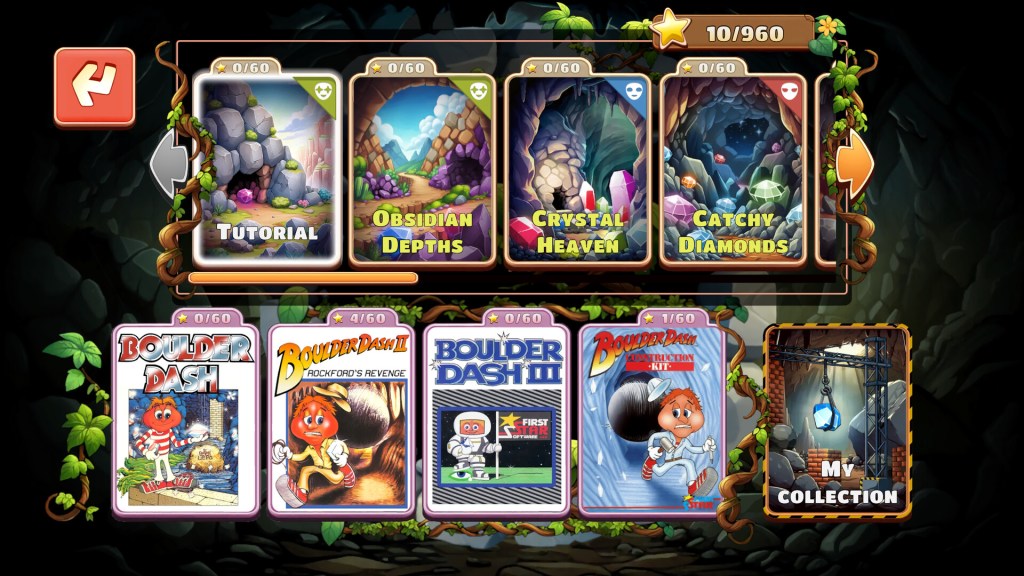
The included stages are not the only ones that players are able to play, as there is a construction kit for players to make their own stages. This feature allows players to share their creations with players around the world, offering the possibility for endless content opportunities. The star system is also applied here, offering additional replay value. The community and main game stages have a simple ranking system, with the highest score being listed as the world record.
As this is a special anniversary release, there is special content that has been added. There are six characters that have been included, with characters that are based on concepts, box art and in game sprites. There is also a history section, which covers some of the details behind the creation of Boulder Dash, the impact of it and some of the different releases. They also direct players to view a video on the series, created by DJ Slope of Slope’s Game Room.
Now with the gameplay covered, it is time to discuss the other aspects of this release, starting with the controls.
Controls – there is a pretty simple to use control system, using both keyboard and controller inputs for the gameplay. To play the game, the player only needs to use four buttons to move, with a button to interact in the four different directions. The keyboard inputs work well, but for a more classic feel to the gameplay, Steam Input can be used to play with different controllers. Inputs can also be reassigned, letting players change them based on preference.
Difficulty – this game can be quite challenging, due to the cryptic nature of some stages. Thankfully, there is a pretty in depth tutorial for the first world, which explains the game mechanics to players. Due to the trial and error nature of the puzzles, the player will probably die a few times when trying to figure out what to do. This can be frustrating to some, but there are infinite retries, so players can continue to try until they figure it out.
Presentation – from a visual perspective, this game looks pretty good, with a distinct style to it that gives it some personality. There is some good use of color and lighting for the game, which further adds some charm to the game. The classic stages utilize the classic sprite work from the originals, with some having support for the classic systems listed further up. For sound, there is some decent music, which plays over all stages with bright and up beat melodies.
Final Thoughts – I have played Boulder Dash in different forms over the years, like the Commodore and Game Boy, having some fun with them. So when this was offered, I was happy to give it a try and I was pleasantly surprised. The new content is a lot of fun, although it is a tough if not tougher than the originals. Then there are the classic stages, which have been implemented well offering a time capsule of the past, which is a wonderful touch.
Now I have to say that this game won’t be for everyone, as it is one of those games that can really frustrate. This is due to the way that players must figure things out, without any hints or support for the solutions. Unfortunately, this will be the tipping point for many players on if they want to pick it up. However, for those who are looking for a challenging and strategic puzzle game, then I can happily recommend this game to play.
In the end, I give Boulder Dash 40th Anniversary a final score of 4/5. This is a good celebration of the Boulder Dash series, offering players a new experience, while also showcasing the content that made it so popular when it first emerged in gaming. If you want to check out this release for yourself, a link to each version will be below.
Link to Steam Version (HERE)
Link to PlayStation version (HERE)
Link to Nintendo Switch version (HERE)
Link to Xbox version (HERE)
 W.Kohaku Media