
Overview – developed by Happymeal and Undercoders with publishing handled by Shinyuden, Retro Revengers is a 2D pixel platformer inspired by the classics of old. Embark on an adventure through a variety of stages, with a diverse range of environmental elements and gimmicks. This title is available on Nintendo Switch and Steam, with a link to each version of the game available at the bottom of this review.
Disclaimer: before I get into the review, I would like to thank Shinyuden for providing the copy of Retro Revengers that was used for this piece, via the Keymailer Service. The provision of this software has not influenced the contents of this review, all thoughts and opinions contained within are my own.
Now with the introductions out of the way, let’s get into the review, starting with the story for Retro Revengers.
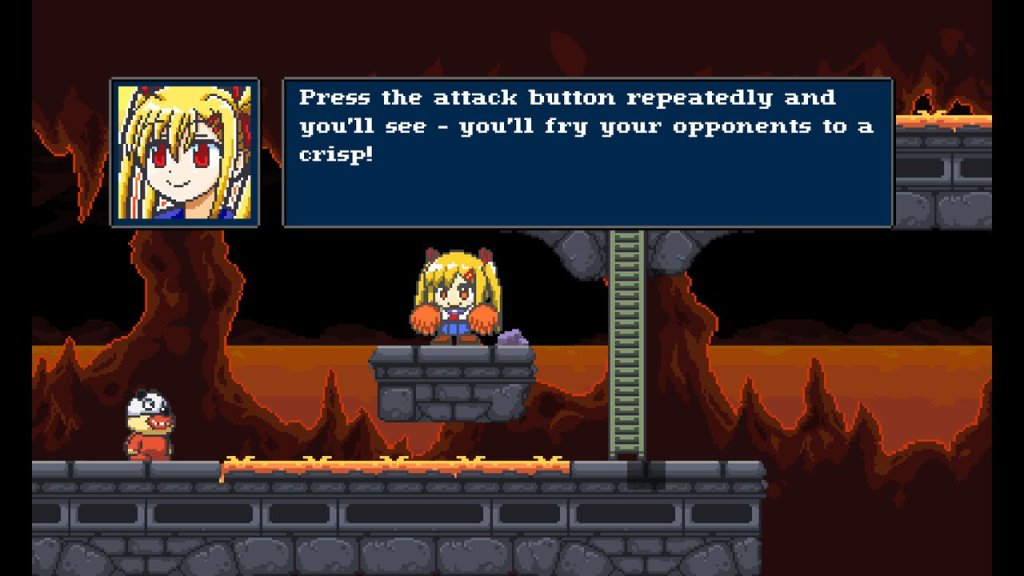
Story – in the outer reaches of central Japan lies Ludens Castle, a strange place where five friends called the Retro Revengers call home. One day while playing retro games, they get transported into a strange land, where they encounter a threat not just to their games but their world itself. upon meeting the Retro Goddess, the friends are given special powers which they will need to take down the Demon Lord of Triple-A and their minions.
Gameplay – Retro Revengers is a pixel platformer, where the objective of each stage is to reach the boss at the end and defeat them. To accomplish this, the player must use the special skills of each of the 5 characters to traverse the stage hazards, battle enemies and traverse the deadly pitfalls of each stage. The core of the game is made up of 5 stages, which the player will need to play through twice to reach the final boss, with the second run being much harder.
The way this title stands out on its own is the way that the stages function. In each of the stages, the player must use the unique skills of each character to overcome the stage gimmicks. Each of the characters have a standard attack and a charge ability, which will unleash a powerful special attack (this is upgraded during the second playthrough). The different characters also have a unique jump, changing up the platforming between each stage.

When the player reaches the end of a stage, they will be faced with a challenging boss that will use gimmicks and hazards to their advantage. These bosses can be very tough, with attacks that can wipe the player out if they aren’t careful. Thankfully, there is a Mega Man style checkpoint system, where a stage transition will signal a checkpoint to continue from. When the boss is defeated, a chest full of coins will be dropped as a reward.
Speaking of coins, these will be dropped by defeating bosses and randomly from enemies. These coins are very important as they are used to continue, due to the limited lives available during play. Each continue costs 100 coins, with the player starting the game with 1000, meaning there are 10 continues for players to use right off the bat. As well as the coins, there are chests that contain bonuses and meat that replenish lost health to find.
Between stages, there will be a cutscene where the player encounters a special NPC character, who will explain the special attack for the active character. This is because the player must use a set character for the first run of the main stages, with the ability to switch between them on the second, harder playthrough. But it is managable for the most part, as all of the characters have their own health bar, but a life will be lost if one character is defeated.
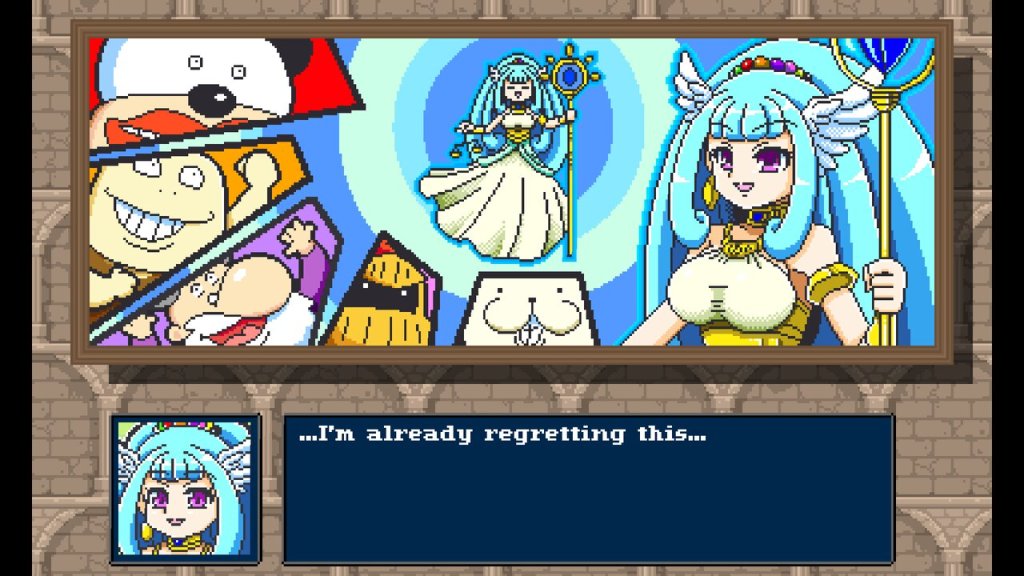
Once all of the stages have been cleared, there is a final battle against the big bad boss, which takes the form of a Boss Rush. This is the toughest and most frustrating part of the game, as the player must defeat all of the previous bosses and the multi-phase final boss with one set of lives, but there are checkpoints between battles. All of this must be done within a time limit, which is very tight and if the player runs out of time they will need to start the battle again.
There are also many secrets for players to discover in this adventure, alongside an optional speedrun mode. This is where players can replay the game to get to the end as fast as possible, with a stage timer and an overall gameplay timer. This promotes multiple playthroughs of the game, as players aim for the best possible time on the local leaderboards with the potential for an online community to grow in the future.
Now with the gameplay covered, it is time to cover the other aspects of this release, starting with the controls.
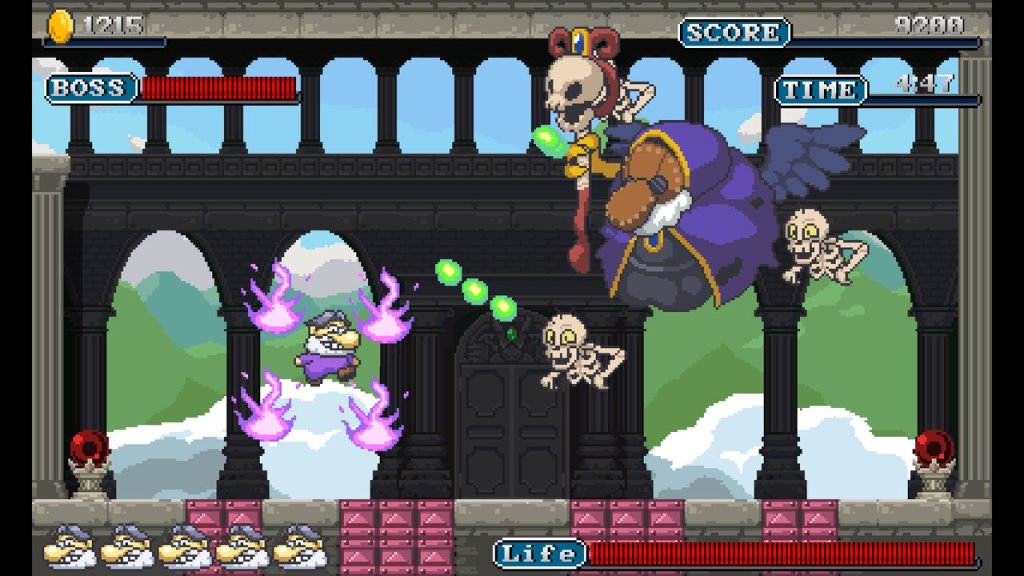
Controls – the controls for this title are very simple, with only four buttons being used for the main game mechanics. The jump and attacks are performed by pressing the face buttons, with character shifting being controlled by the L and R buttons. The inputs for the controls work very well, with comfortable inputs and no lag during intense sequences. The preferable way to play this title is with a classic style controller with a good D-Pad like a SNES style pad.
Difficulty – this title has a steep difficulty curve inspired by classics of the past, with multiple difficulty options that can make the game brutally challenging, which was the style of the time. The different difficulty settings adjust the amount of health players have, the damage that is dealt by attacks and the number of lives as standard. The recommended difficulty to play is normal, but it does have an easy setting for those who may struggle.
Presentation – the overall style of the game is that of an 8/16-bit platformer, with bold sprite work, vibrant colors and some rather bizarre enemy designs. The cutscenes and artwork for transitions looks very good, evoking a sense of familiarity with the way that the game world and its characters are presented. The music for this game is composed by Manami Matsumae, the original composer for the classic Mega Man titles, which further adds to the retro aesthetic on show.
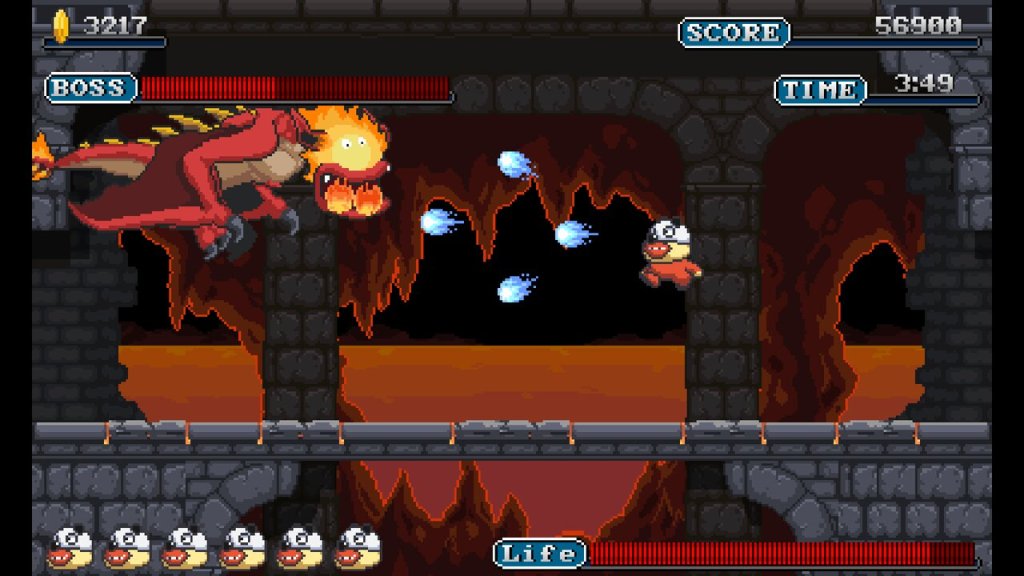
Final Thoughts – This title is quite a mixed bag for me, while I do appreciate the efforts that the player went to create an old-school style game, I had a lot of frustration with the difficulty curve. There were segments that felt unfair at times, with stage hazards that were difficult to time correctly with the different characters. The bosses were the most difficult part, as there were elements that made it overly challenging, which became frustrating in the end.
I will admit, I had such a tough time with the final boss rush of the game, given the limited lives and the final multi-phase boss fight made more difficult due to the time limit. It got to the point where I had to lower the difficulty down to easy in order to see the ending, but I will try again in the future to beat the standard difficulty. I can recommend this game to fans of brutal action titles, or those who enjoy colourful platformers, but be aware it is very tough.
In the end, I give Retro Revengers a final score of 3.5/5. This is fun but brutally difficult action platformer, with a cast of weird and wacky character, references to the classics of old (and some modern games) and a nice variety of (potentially frustrating) bosses to battle. If you want to check this title out for yourself, a link to each version of the game will be below.
Link to Nintendo Switch version (HERE)
Link to Steam version (HERE)
 W.Kohaku Media