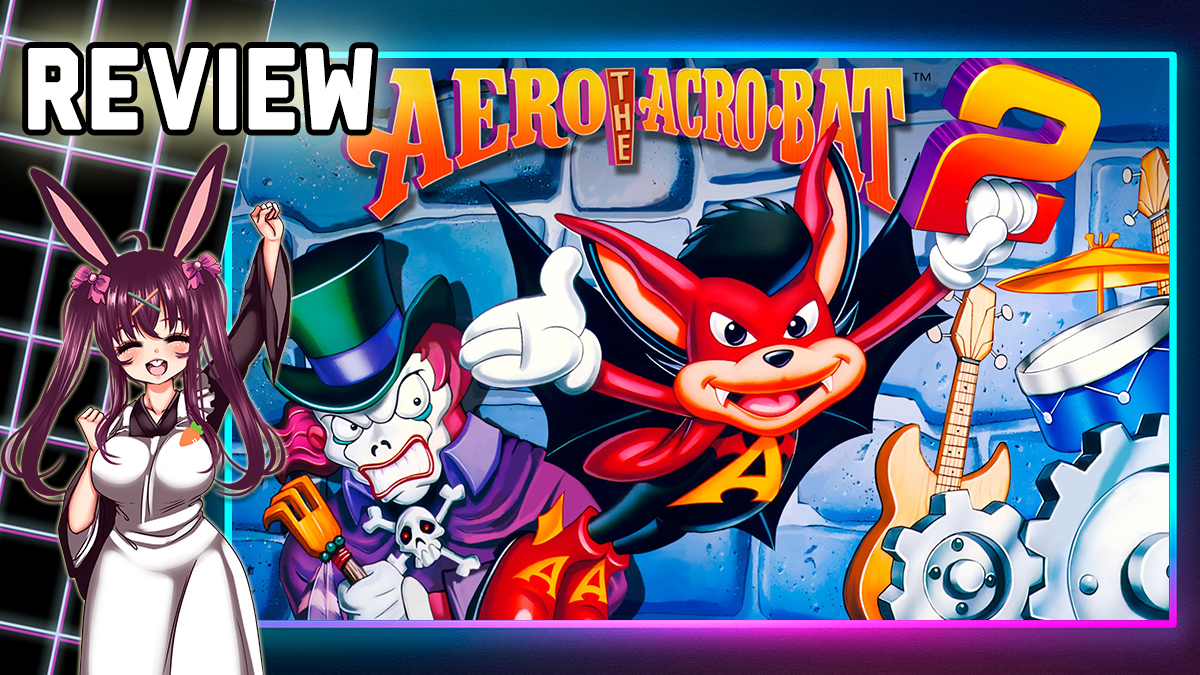
Overview – originally released by Sunsoft (developed by Iguana Entertainment), brought to modern platforms by Shinyuden and Ratalaika Games, Aero the Acro-Bat 2 continues the adventure where the first left off. After the battle with Edgar Ektor, Aero is transported to a unknown world, encountering mysterious figures and new dangers that he must overcome. This release is available on all console platforms, with a link to each version of the game at the bottom of this review.
Disclaimer: before I get into the review, I would like to thank PR Hound for providing the copy of Aero the Acro-Bat 2 that was used for this piece. The provision of this software has not influenced the contents of this review, all thoughts and opinions contained within are my own.
Now with the introductions out of the way, let’s get into the review, starting with the story. Please be aware that the version of the game in this release is from the Super Nintendo. If you have previously played the Genesis/Mega Drive version, it may be different from the version used here. I have also previously covered the first game in the series, which you can find (HERE).
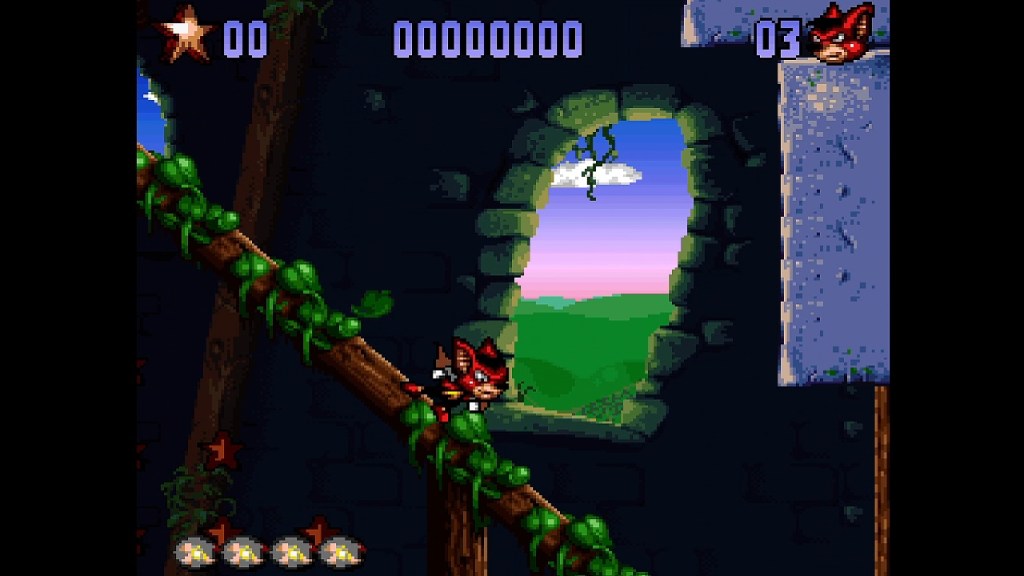
Story – after the battle with Edgar Ektor, Aero knocked the villain from the bridge, believing he was defeated once and for all. However, Edgar managed to escape with help from Zero the Kamikaze Squirrel. Meanwhile, Aero found a magical box that transported him to a unknown world where he encountered Batasha, a mysterious Eastern European bat. After begging him for help, Aero accepted and embarked on a whole new adventure.
Gameplay – the game loop for this sequel is mostly the same from the first title, with some notable exceptions for this adventure. Unlike the last game, this adventure follows the more traditional platformer rules. The stages are larger than the previous game, with the main objective being to get to the goal. This is in stark contrast to the previous title, where players needed to complete an objective before the stage could be cleared.
The game is split into 8 worlds, with several stages for each of the different zones. These stages are filled with traps and hazards, including spikes and stage elements that can instantly kill Aero. To accomplish this task, the player has access to the drill jump from the previous game. This allows Aero to fly up or down in a diagonal angle, letting players attack enemies. New to this entry is a drill jump that goes straight down, functioning like a stomp to defeat enemies.

Also like the last game, there are special challenge areas that can be found. These give the player a challenge to reach the end of a stage, allowing bonuses and extra lives to be collected. These bonuses can also be found in the stages themselves, consisting of food items, extra lives and energy pick-ups, letting players take more damage. The star attacks also return, with more stars scattered through the stages, letting players use them freely.
Players can also find four letters during a stage, spelling out AERO when all of them are collected. If a stage is cleared with all of the letters, the player will be rewarded with a special stage. This special stage consists of a cup-switching mini game, which can reward players with bonus points and even an extra life. There are also bonus stages that can be accessed by finding a special item, which will appear in specific acts of a set number of zones.
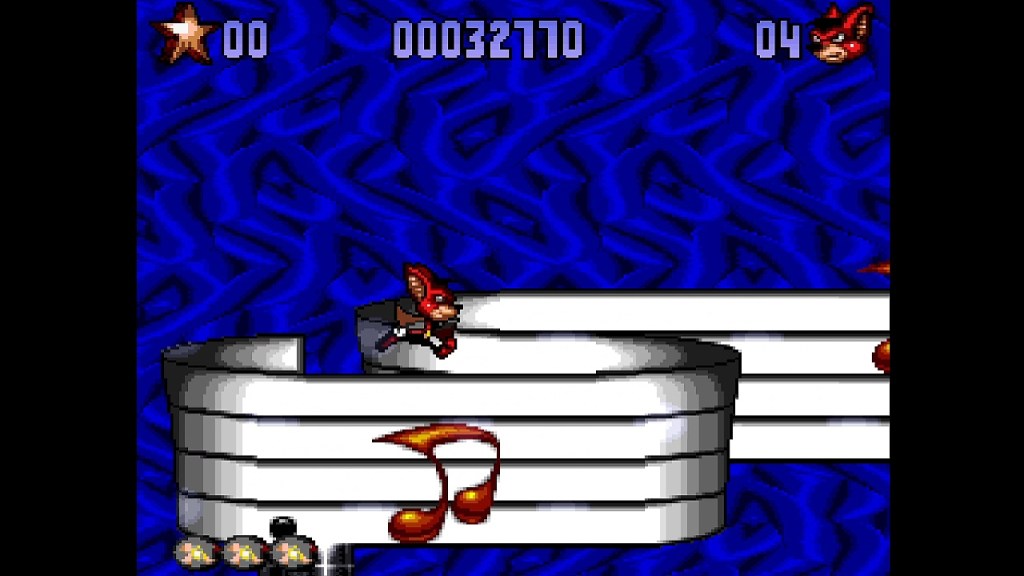
The platforming acts aren’t the only stages that players will come across during the adventure. The auto scrolling stages make their return, challenging players to survive the hazards coming at them thick and fast. These stages are the toughest part of the game, which may remind players of things like the Donkey Kong Country minecart stages. However, there is a chance for players to rack up points, gain extra lives and even access special stages.

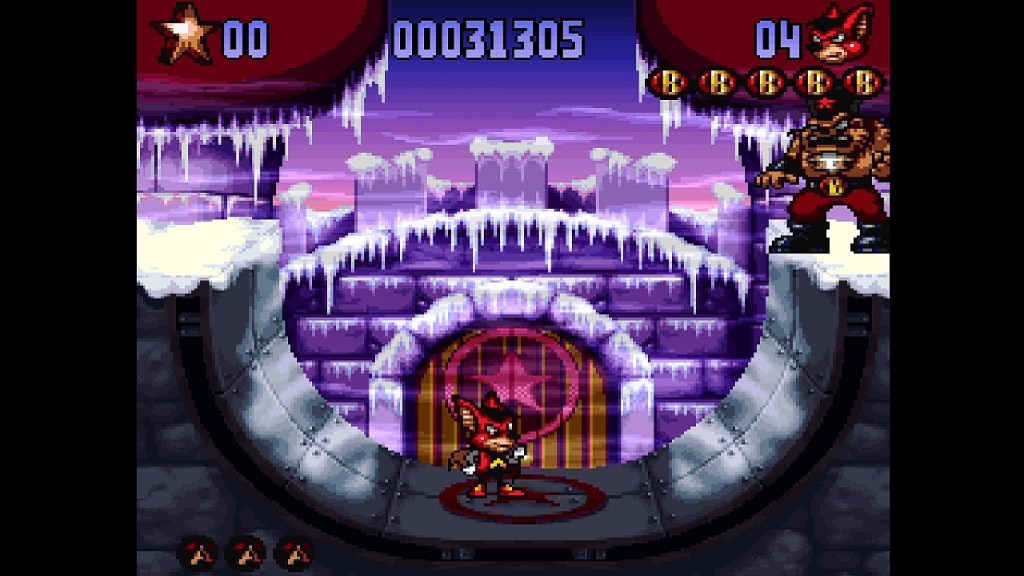
To wrap up the gameplay itself, are the boss acts. At set points during the game, players will encounter challenging multi-phase boss battles. These battles will test the skills of the player, as they are fast paced and if players don’t exercise caution, they will be defeated quickly. Bosses take a lot of hits, so they can feel like a war of attrition. When the player clears a world, an image password will appear, letting players continue from a game over.
Since this is an emulated port, there are several additions that have been made to the game. The biggest one is the Extras menu, where players have access to a treasure trove of content. These bonuses include scans of the original manual and a jukebox, allowing players to listen and view at their own leisure. There is also the inclusion of cheats, save states and a rewind feature, giving all players a chance to enjoy the game the way they want.
Now with the gameplay covered, it is time to move onto the other aspects of this release, starting with the controls.
Controls – as this is originally an SNES game, the controls for this release are relatively light, with all of the key inputs being tied to the face buttons. The movement is controlled by thumbstick and D-Pad, giving players a reactive feel to the game, given the rather slippy momentum of Aero. The game works quite well regardless of the controller used, but I would recommend using a controller with a solid D-Pad, as it provides the best experience.
Difficulty – as this is an older game, the level of difficulty is higher, which was the style of the time. When playing without any modifications, the game has limited continues which will send the player back to the start of the game, with the only way to get back is passwords. For those who want a less punishing experience, there are options for invincibility, infinite lives and more. These cheats and the save states and rewind feature make it approachable by all.
Presentation – as a 16-bit title, Aero 2 uses a lot of hand drawn sprites and art, making full use of the hardware, with a good use of color and vibrancy. The sound is clear and has been emulated well, giving an experience that is as close to original hardware as possible. This is augmented by a selection of filters and screen options that try to emulate older screens, along with the emulation feature of removing sprite limits to prevent flickering.
Final Thoughts – I very much enjoyed the emulated port of the first Aero the Acro-Bat, so it was easy for me to dive on into this. The difficulty is relatively close to the first, but feels much smoother with the removal of objectives. I had not played this release, so I was excited to try my hand at this sequel. I can happily say I was not disappointed with my experience. It was very difficult, but it was a lot less punishing than the first entry.
If you are a fan of classic games, have nostalgia for the original releases or were pulled into the series for the first time by Aero 1, then this is for you. The price point is good, especially for the additional content and to be able to play this game without needing to pay out for original hardware. I can recommend this with no issue, as I also look forward to the other titles in the series coming in the following months, with the GBA remake of Aero 1 and Zero the Kamikaze Squirrel.
In the end, I give Aero the Acro-Bat 2 a final score of 4/5. This is a well emulated release and a solid sequel that took all of the positives of the previous game, while omitting some of the less than stellar aspects. It is a very tough game, but the quality of life features, make it approachable by all. If you want to check this title out for yourself, a link to each version of the game will be below.
Link to Nintendo Switch version (HERE)
Link to PlayStation version (HERE)
Link to Xbox version (HERE)
 W.Kohaku Media