
Overview – originally developed by Taito and published by ININ Games, Taito Milestones Volume 3 brings 10 more classic titles to modern platforms, powered by Hamster’s Arcade Archives tech. Take another leap back into the past and experience these classic arcade titles, including Bubble Bobble and Rastan Saga in this latest collection. This release is available exclusively for the Nintendo Switch, with a link to the game at the bottom of this review.
Disclaimer: before I get into the review, I would like to thank PR Hound for providing the copy of Taito Milestones Vol 3 that was used for this piece. The provision of this software has not influenced the contents of this review, all thoughts and opinions contained within are my own.
Now with the introductions out of the way, let’s get into the review. As this is a compilation of arcade games, I will be covering each title with a brief summary of the story and gameplay. Some titles are grouped together as they are a part of a series. I have also covered the other Taito Milestones releases, which you can find (HERE).
Bubble Bobble – 1986

In the original bubble blowing platform adventure, the Bubble Dragons Bub and Bob set off on a journey to the “Cave of Monsters”. They set out on this journey to save their girlfriends from the evil wizard Drunk, as well as the ghostly monster Baron Von Blubba. This adventure is a single screen platformer, with a heavy emphasis on co-operation. Two players can work together to make their way through 100 stages, defeating monsters and collecting treasures.
The game loop is simple, at the start of a stage, Bub (and Bob in 2 player) will drop from the top of the screen, alongside the enemies for the stage. The main way to defeat the enemies is to trap them by blowing bubbles, then popping them by jumping into them. But if the monsters make contact with the player or hit them with an attack, they will immediately die. When all monsters are popped, the player will move onto the next stage.
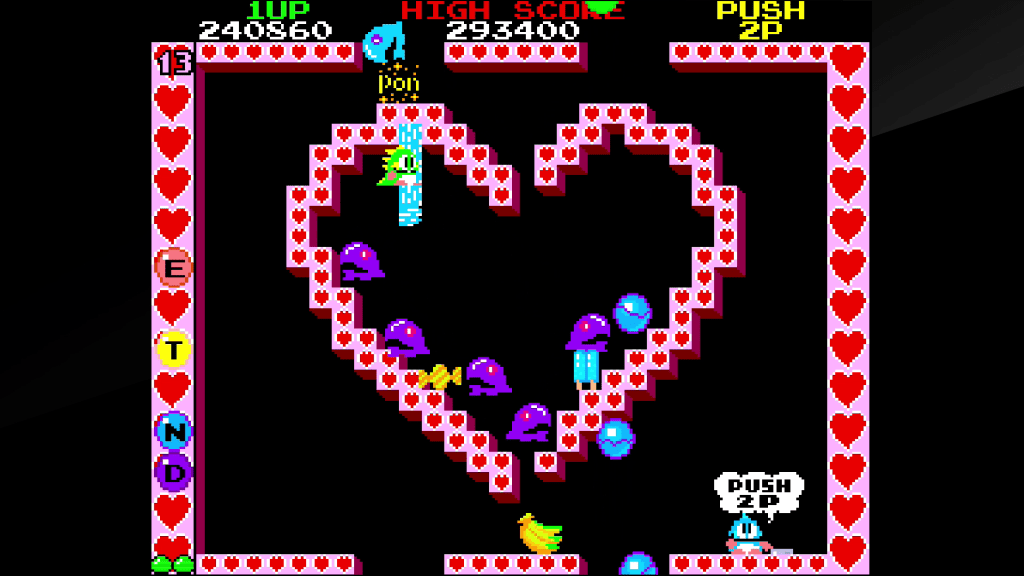
When monsters are popped, they will be turned into food to collect for big points. During play, the player will be able to collect special items that appear, these include candy that enhances blown bubbles, power-ups and secret bonus items. These pick-ups are random, making them special when they appear. Players can also pop special bubbles that spell EXTEND, which will give them a 1 up, a special cutscene and move onto the next stage.
Players do need to make haste, as there is a time limit to bubbles and the stage itself. When bubbles with enemies in them expire they get faster and angry. If the stage time limit runs out, the invincible Baron Von Blubba will appear and kill the player. This game has many secrets to uncover, giving this game a lot of replay value, including the famous “True Ending” where players need to clear the game with two players to see it.
Rainbow Islands: The Story of Bubble Bobble 2 – 1987
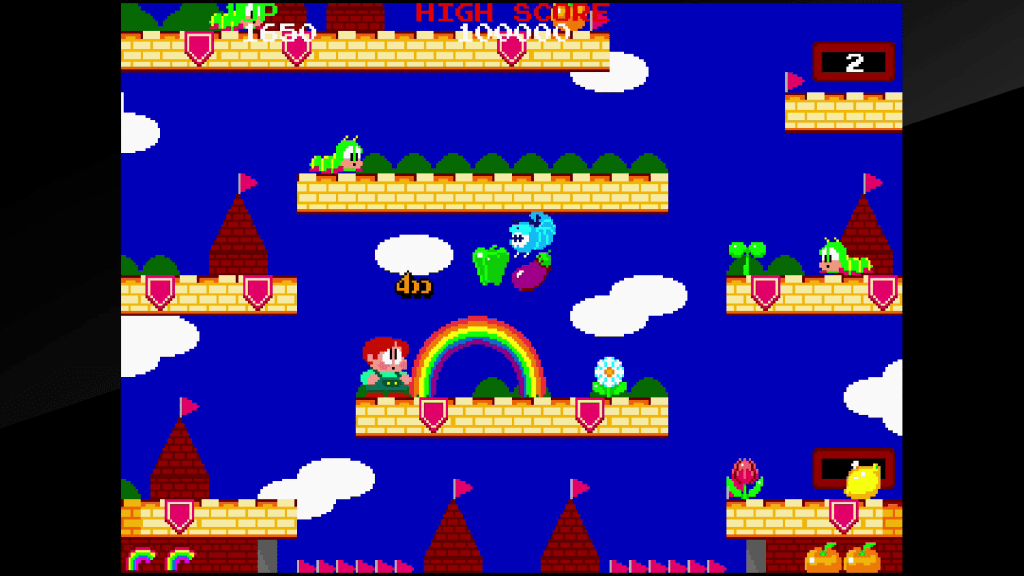
In this sequel to the original Bubble Bobble, the Bubble Dragons have been turned back into humans, allowing Bubby and Bobby to go on a new adventure. This time, Bubby and Bobby set out on an adventure to rescue the Rainbow Islands, which are under threat by the “Dark Shadow”. This new adventure features a series of island worlds, made up of four stages with a boss at the end. Each island has a unique theme, with Insects, Toys and Monsters to name a few.
Unlike the previous entry in the series, Rainbow Islands has the player climbing up a vertically scrolling stage, avoiding enemies and collecting treasures. During the course of a stage, the player needs to jump and use rainbow magic to reach the different platforms. Bubby and Bobby can cast rainbows to reveal treasure and trap enemies. The player can walk over rainbows, but if they jump on them, they will collapse, killing enemies and collecting treasures below.

When the player reaches the top of the stage, a big chest will drop containing treasures as a reward. But treasures aren’t the only things that can be collected, there are power-ups as magic bags to increase rainbow power, as well as shoes to speed the player up. These upgrades will last for as long as the player is alive, resetting to default upon death. Players must be careful, as there is a time limit, causing water to rise if the player takes too long.
Just like its predecessor, there are secrets and multiple endings to discover in this game. Like the extend system of Bubble Bobble, the player will be able to collect rainbow gems, which can appear by defeating enemies. Players can use rainbows to crush foes, or special stars that appear in the stages to try and make gems appear. These gems will give a one up if all 7 are collected, while also playing a role in reaching the true ending of the game.
Cadash – 1989
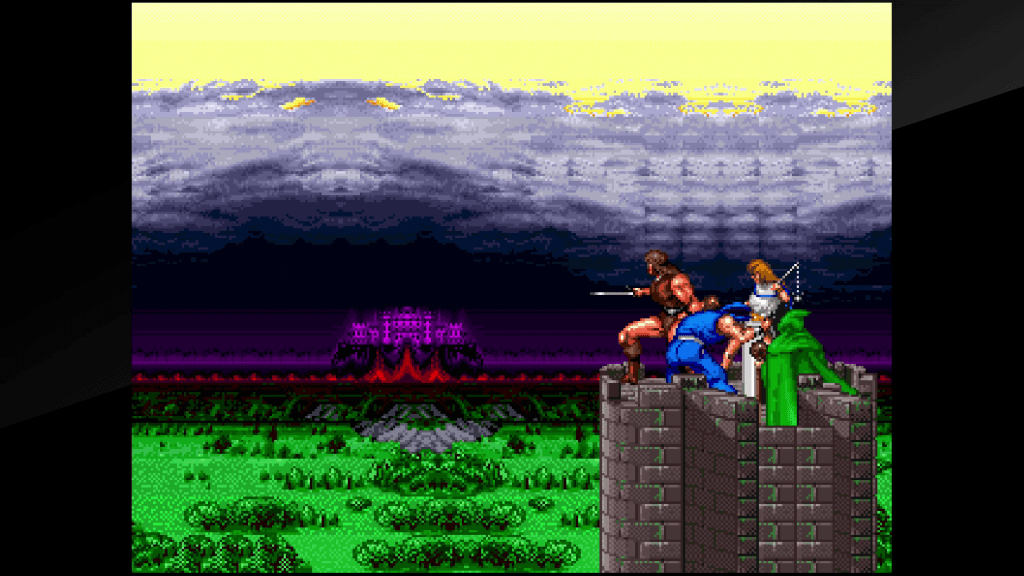
The Princess Sarasa, who is the symbol of peace and prosperity for the land of Deezar, has been kidnapped. The beasts of the underground kingdom, ruled by the evil Baarogue, are responsible for this crime and plan to perform a ritual, using the princess for their evil scheme. The king has offered his kingdom to the one who saves the Princess. This title is a side-scrolling platform RPG, where two players can go on an adventure to save the princess.
When starting the game, the player is able to select one of four characters, with classes based on classic archetypes. These are the Fighter, Mage, Priestess and Ninja, each having their own unique weapons, skills and abilities. After selecting the character, the player makes their way through each of the various stages, fighting monsters, collecting treasures/items and gathering information. Players can collect gold and experience from defeating monsters.
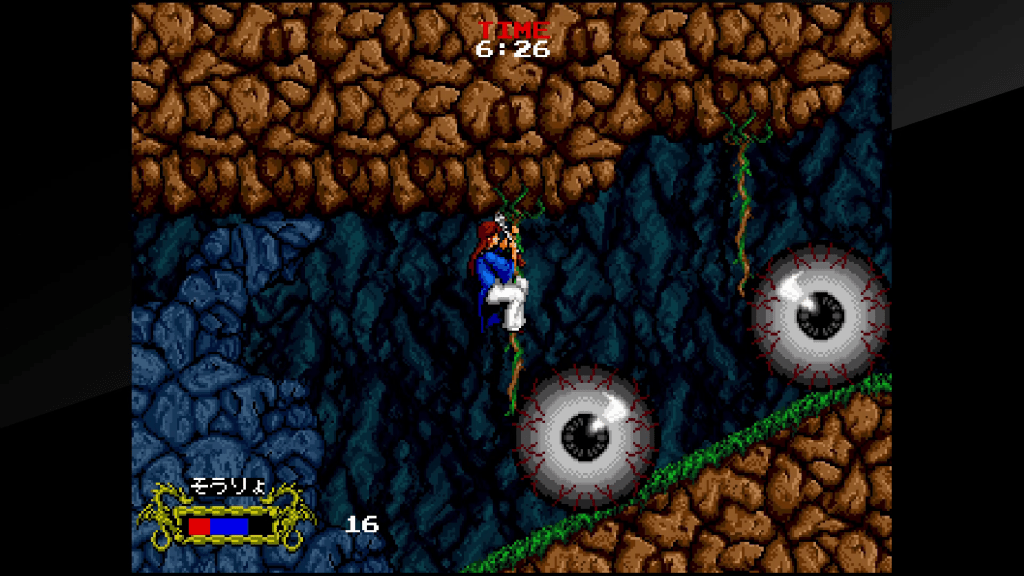
The stages in the game consist of areas for players to explore, with areas consisting of battle zones and towns. While players are in the villages, they will be able to rest at Inns and buy equipment at shops that they find. The gear that players unlock will increase in power the further the player progresses, offering stronger weapons and armor to purchase. Players can also find and buy healing items, which will extend the life of the player after taking damage.
There is a timer that appears on screen and ticks down, giving the game a sense of urgency, pushing players forward to the next area. The time will increase when clearing a stage, dying or by purchasing/collecting bonuses. If the player waits too long and leaves the timer to run down, a monster will appear and kill them instantly, pushing them to continue. As long as the player continues to add credits, they will be able to keep playing.
Runark (AKA Growl) – 1990
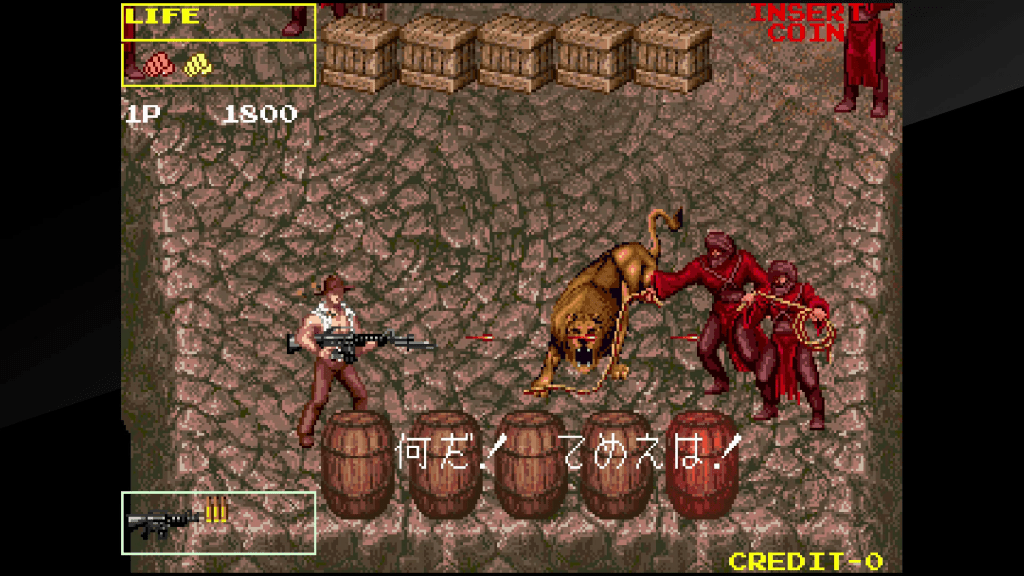
In the 20th century, evil poachers have been pushing wildlife to the brink of extinction, capturing them and hunting them for sport. To put an end to this evil, four forest rangers set out to defeat the poachers and save the animals. This title is a side scrolling brawler, where the objective is simple, beat down all the enemies on screen in close quarters combat. This title can be played in either 2 or 4 player mode, with the playable characters having unique stats to them.
In both 2 and 4 player mode, players can select their character freely, allowing them to select the hero they want to use. After this, the game starts proper and gets right into the action, using a simple two button set-up for attack and jump. There is a generalised move set for all playable characters, where they can punch, kick and perform special finishing moves. If the player presses both buttons, they will perform a special attack.
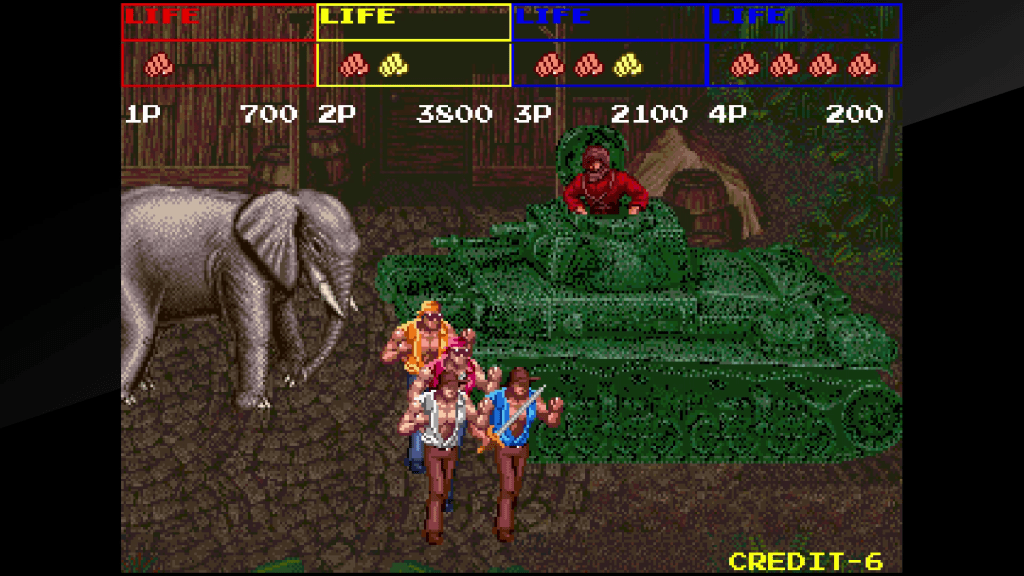
Weapons can be collected during the different stages, with melee and ranged weapons that can be found, including a whip, revolver and even grenades. These weapons are limited in use, but can devastate enemy numbers and players can even throw objects at enemies. There are 7 stages and a bonus game to play through, with wave after wave of foes to defeat. Players can also find animals to help them out, like deer and an elephant.
Thunder Fox – 1990
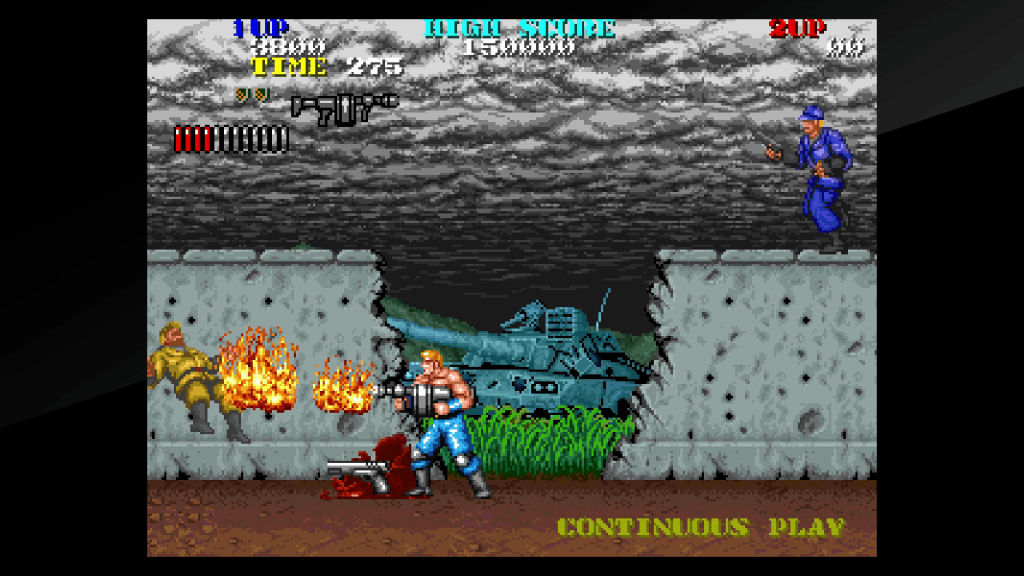
A run and gun style action game, where the Thunder Fox anti-terrorism team embark on a mission, with their objective to take the organisation that took over the world. This title is a relatively simple action title, where players move across that stage and take down enemies with a knife. They move across the screen, focusing on close quarters combat during the bulk of the action. Players can collect guns and grenades, which can be used for a limited time.
The stages are split into segments, with the run and gun style of action being the focus. Players will encounter dangerous bosses during stages, which are preceeded by a warning before they appear. While the bulk of the game is mostly the same, there are special sections that use an auto scrolling shooter style of play. These are brief and only make up a small part of the game, being little more than a distraction from the side scrolling brawling.
Rastan Saga – 1987
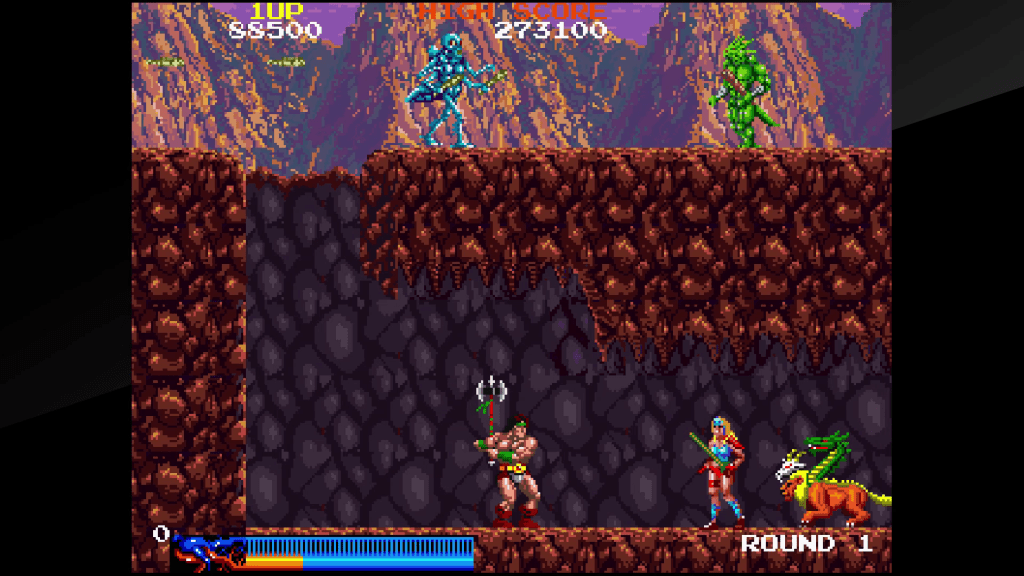
Rastan the barbarian bandit embarks on a journey to protect the Kingdom of Ceim, in exchange for riches and the glory that will be earned as a reward. This is a side scrolling hack and slash style action game, made up of a series of rounds that are split into individual areas. The player makes their way through the different areas, fighting monsters, collecting treasures and obtaining more powerful, yet temporary weapons, including an axe and flame sword.
Rastan is armed with a sword, which can be swung in four directions, left, right, up and down, but the player needs to jump before they strike downwards. Enemies in this game are dangerous, capable of taking down the hero in a few strikes. The player has a health meter that will be drained by taking damage, but can be refilled by collecting potions. More powerful items can be collected, but these will last only until the player dies.
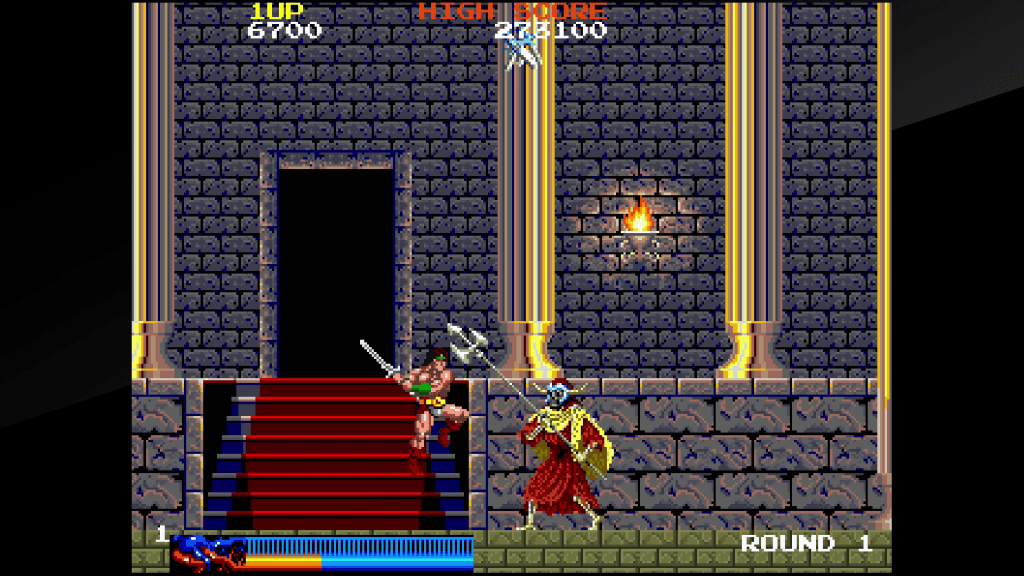
If all of the player health is reduced, Rastan will die and the player continues from a checkpoint. Enemies aren’t the only threat to the player, as there are poisons that will drain the vitality of the hero, alongside pitfalls and traps that can instantly kill. When the player runs out of lives, they will be able to continue by using a credit. At the end of each round, the player will encounter the boss of the stage before moving on.
Rastan Saga II – 1988

This is the next episode of the Rastan Saga story, telling the tale of how Rastan got his name. The hero travels through the region of Rastania, fighting monster and battling the threats to the holy land. Like the previous game this is a hack and slash adventure, where the player controls the hero Rastan. Following on from its predecessor, this game also features the multi directional attack, where Rastan can strike foes from different directions.
Over the course of the games rounds, the player will pass through two different areas, an outdoor and indoor area where the boss is located. The two button input system is also carried over, with the player able to jump and attack. The weapon system also returns, but with some changes. The player can collect new weapons, lasting for the stage or death of the player. These weapons now include claws that are faster and more powerful.
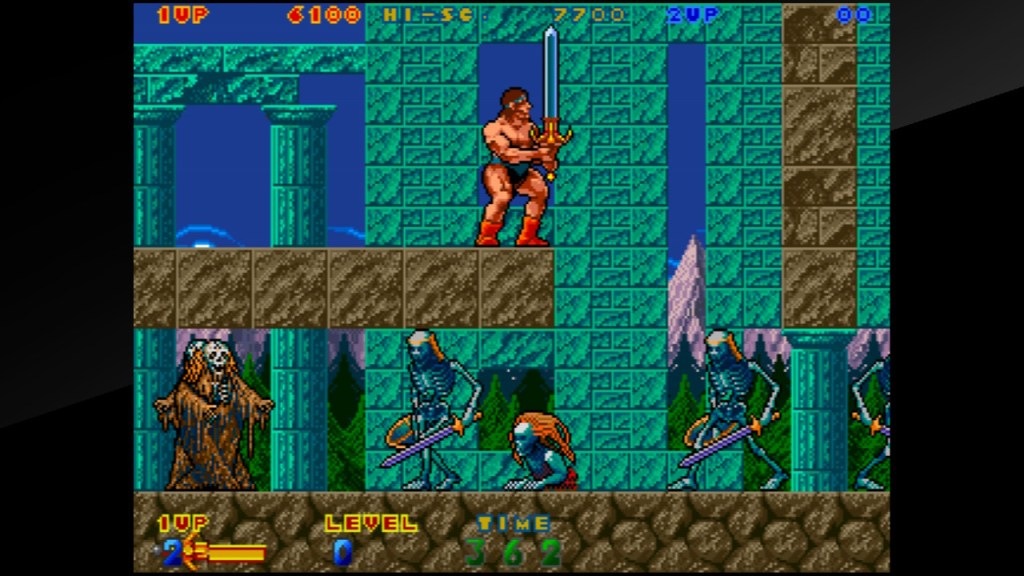
Unlike the previous game, this title features two player simultaneous play, allowing both players to work together. This can make for a more competitive game experience, as items and power ups that are collected are applied to only one player. By implementing this feature, players will often battle it out for the upgrades, power-ups and health recovery. When a player dies, they will immediately respawn which occurs in both single player and co-op play.
Warrior Blade: Rastan Saga III – 1991
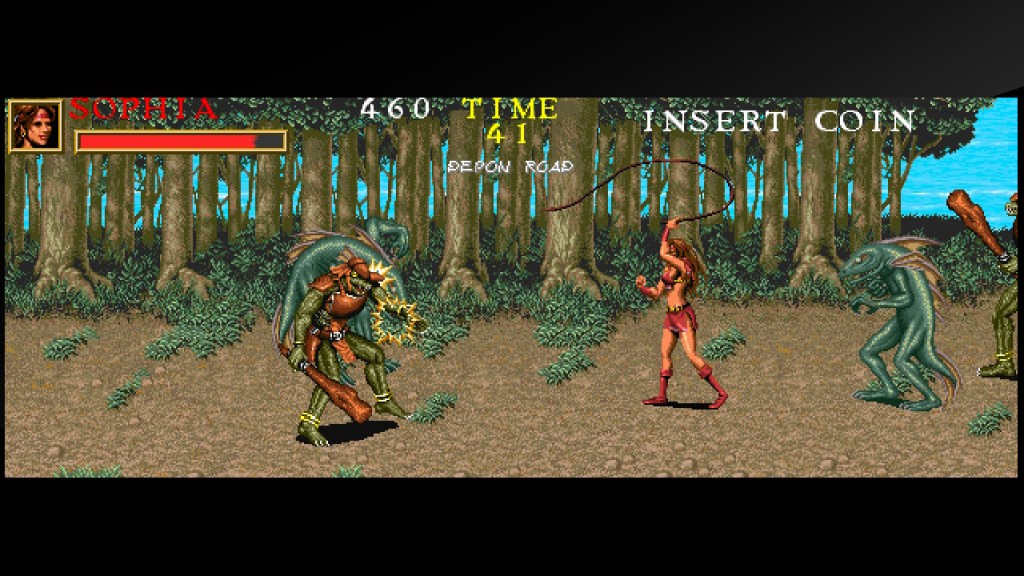
In the third chapter of the Rastan story, the hero Rastan and two comrades set off on a quest for untold riches. However, the kingdom of Depon has endless dangers that need to be overcome. This title is vastly different from the other Rastan Saga games, as this is a side scrolling brawler that utilizes the Dual Screen system. Players can select one of three characters, made up of Rastan, Sophia and Dewey, who each have their own strengths and weaknesses.
As a side scrolling brawler, the player makes their way through each stage, slaying enemies with their weapons and collecting treasures. The action works like a traditional side scroller, where the player will battle wave after wave of enemies, attacking from both sides. During action, the move set for the characters consists of a standard attack, jump and special attack. Items can be found, powering up the characters with fireballs, lighting and more.
During a stage, the player will collect treasures on the ground, which are counted at the end of a stage and provide a special bonus. There is also some platforming and special sequences, where characters must interact with the game world. This entry features a special progression system, where the player can select the world they want to challenge next. When the chosen area is cleared, they can move to the next, leading to the final stage after clearing them all.
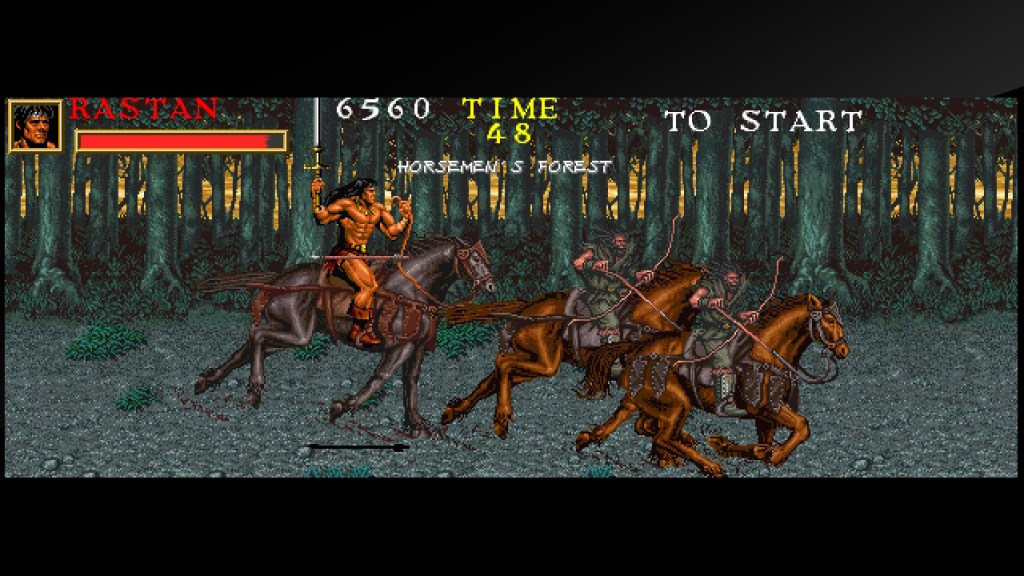
Another aspect that is unique to this entry are the mount stages. These levels are special as they have the players using mounts for the stage, allowing players to traverse the stage. During these segments the player will move around the screen in auto scrolling action. Enemies that appear in these stages will disappear if they aren’t defeated, making them more like bonus stages. There are also automated segments in usual stages, but they are different.
Champion Wrestler – 1989
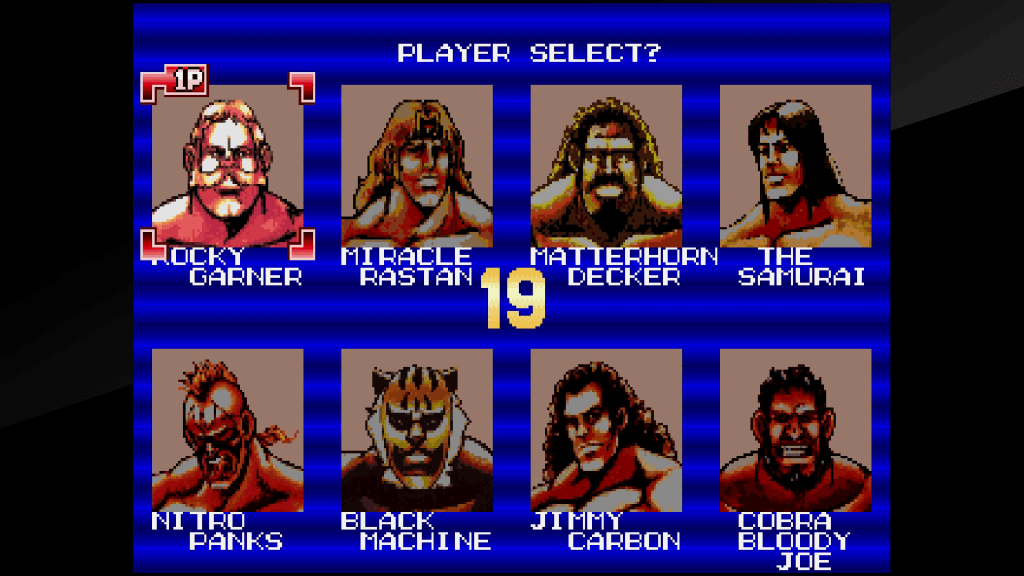
Take to the ring in the Taito Pro Wrestling League, as one of 8 wrestlers take on the rest of the roster, fighting it out in one-on-one or tag team battles. This is a pretty standard arcade wrestling game, where the objective is to beat the rest of the wrestlers to be the champion. This title has 8 playable wrestlers, with inspiration taken from stars of the time, alongside the hero of Rastan Saga. There is single player, Versus and a co-op tag team game modes.
Each of the wrestlers have their own unique move set, with slams, aerial strikes and submission holds in their arsenal. When the player selects their wrestler, they will enter the league at the bottom of the rankings. To progress, the player must defeat all the other wrestlers. These matches occur in a standard ring for most of them, but there will be two cage matches. The difference between the two is wrestlers hit the cage when thrown at the ropes.
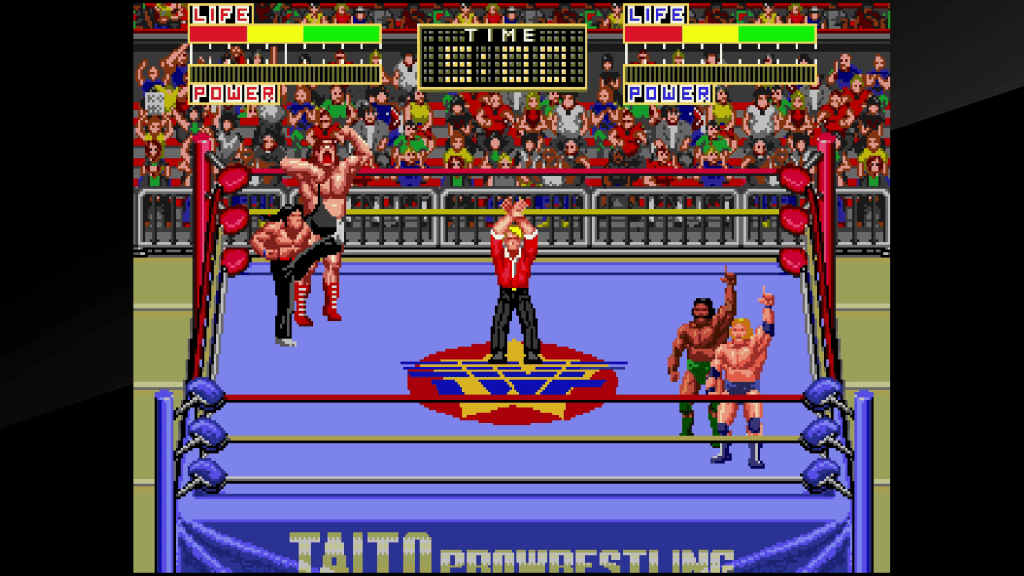
There are three ways to win a match in this game. The main two are by pinning your opponent or making them submit, which is more effective after dealing enough damage to them. Then there is the ring out option, where the player keeps the opponent out of the ring for the count of 20. But this is risky as it can lead to a draw, which can also occur if the on screen timer runs out. When the match is over, an animation will play for the winner and loser.
If the player reaches match 7 they will fight the champion. In this match, the player will not be able to continue if they are defeated. If the player defeats the champion, they will go onto the final match which is the title defense. Upon clearing this match, the player will get the end credits for the game. The multiplayer tag team mode plays out in the same way, with the cage matches, title challenge and final championship defence to end it.
Dead Connection – 1992

In the 1950s, in a big city somewhere in the United States of America, a crime family has taken over the city and four detectives set out to take them down. At the beginning of the game, the player chooses their detective and can start the game in single player, or take on the mob in co-op with a friend. There are four detectives to select from on the main screen, when the character has been selected, the game will start.
The game is split into rounds where the player must take down a set number of enemies, with the round target appearing at the start of the round. The action itself is unique, with a single screen where the player will move around and fight enemies. These stages are one big backdrop, where enemies will spawn in from all across the stage to attack the player. The detectives have a standard pistol with infinite ammo, as well as a close up melee attack.
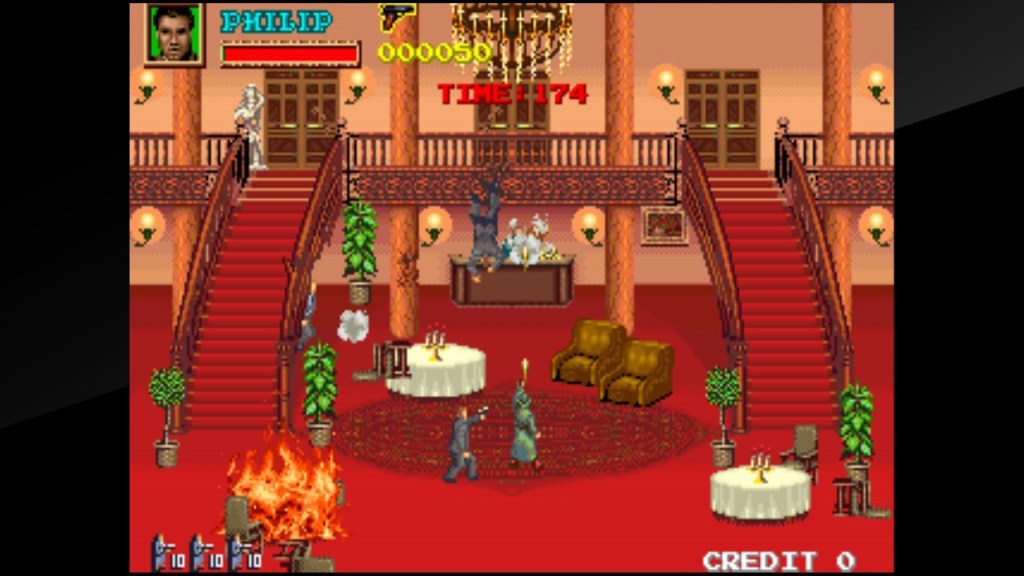
The detectives can also use a dodge roll, allowing them to avoid taking damage from enemy strikes. This can also be used to activate stage elements, jumping rails and activating switches. When the bad guys have been reduced to only three, the boss for the stage and their henchmen will appear. These last three bad guys are tough, with the capability to easily kill the player. When the boss is defeated, a scene will play out between stages.
As the mobsters are taken down, they will drop weapons and items to pick up. The player can pick up a Tommy Gun and a Shotgun, which have limited ammunition but deal heavy damage to enemies. Items that can be collected are split into healing items like hotdogs, and bonus point items like counterfeit bills, bags and evidence envelopes. These items will only last a short time, so it is important to pick them up as fast as possible.
Now with the gameplay covered, it is time to cover the overall package and quality on offer here.
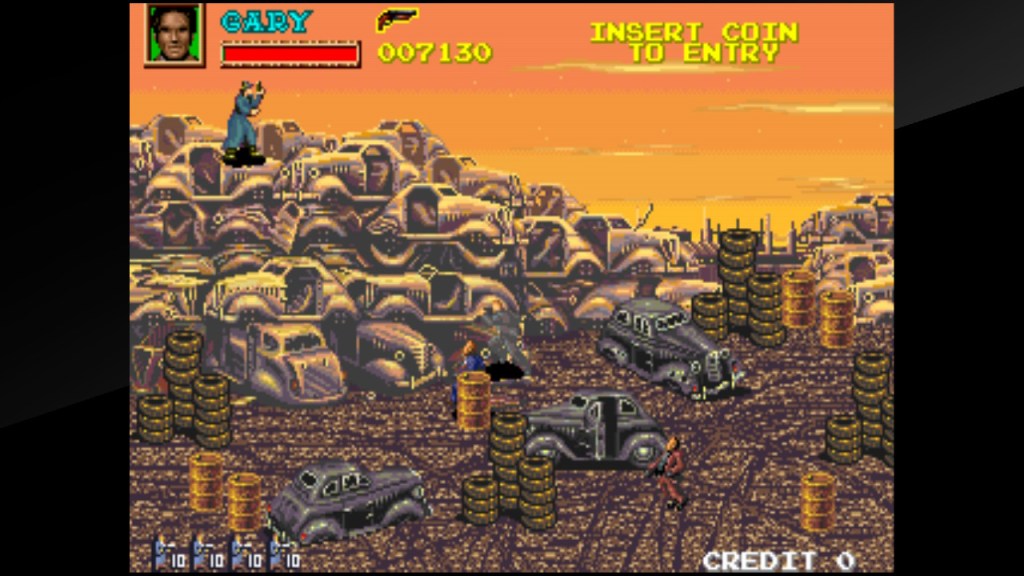
Overall Package – this is a rather solid collection of games, with a good variety of action titles for players to enjoy, capped off with Bubble Bobble and Rainbow Islands. The co-op titles are a lot of fun, especially with another player. Then there are the action platformers, which are a little bit of a mixed bag. Rastan Saga and Thunder Fox are solid games, but sadly Cadash and Rastan Saga II are a little less polished, needing a little more time in the oven.
As this is powered by the Arcade Archives hardware from Hamster, the emulation is on point providing a good experience from start to finish. The ability to modify all the dip switches is fantastic, allowing players to modify the experience. Then there is the adjustable control options, which lets players set the controls however they want, making for an accessible system. This lets players activate turbo fire, granting rapid fire inputs.
There is also a suite of quality of life changes, alongside screen and sound settings for players to modify. Players can also modify the look of the twin screen display for Warrior Blade, giving options designed to look like older arcade machines. Players can also use the manuals included, giving information for each game that players can reference. Last is the global rankings, where the highest score earned during play will be put on the leaderboards.

Final Thoughts – I enjoyed the previous Taito Milestones collections, which had a good selection of games in their own right. However, this is the best collection that has been released to date, offering players quite possibly the biggest hits from the Taito Library. I am a big fan of Bubble Bobble and Rainbow Islands, so their inclusion makes this a big win for me. The addition of the good Rastan games, Runark and Dead Connection were a bonus.
There were some hiccups with this release, like the sadly mediocre Cadash and Rastan Saga II, alongside the inclusion of the wrong version of Dead Connection. This is because the Japanese version of the game was included, rather than the English translated version. In general, this is a good collection that is a lot of fun, especially the co-op titles with a friend. I also enjoyed Champion Wrestler more than I thought I would.
I have no issue with recommending this volume of the Taito Milestones series, as they are all part of the rich history of games that Taito have created. There are still many games that could be released in more collections, like Don Doko Don, Typhoon Gal and even Arkanoid. So there is still plenty to find in this collection, we may even see Puzzle Bobble from the Neo Geo being added to one of these collections, but that’s just being hopeful.
In the end, I give Taito Milestones Volume 3 a final score of 4.5/5. This is currently the best collection of Taito games to be released under the Milestones label to date, with the biggest hits of Bubble Bobble, Rainbow Islands and Warrior Blade, with the other games being mostly good, with a few less than stellar inclusions. If you want to check this collection out for yourself, a link to the game digitally and physically will be below.
Link to Nintendo Switch digital version (HERE)
Link to Physical version (HERE)
 W.Kohaku Media