
Overview – developed and published by Giants Software, with a special physical release from Strictly Limited Games, Farming Simulator 16-Bit Edition takes the agricultural phenomenon and enhances it with Blast Processing! Grow the crops, harvest them and sell them to keep your farm profitable, building up your farming empire. This game is available on PC and as a special physical cartridge for SEGA Mega Drive/Genesis, with a link to each version of the game at the bottom of this review.
Disclaimer: before I get into the review, I would like to thank Giants Software and Strictly Limited for providing the copy of Farming Simulator 16-Bit Edition that was used for this piece. The provision of this software has not influenced the contents of this review, all thoughts and opinions contained within are my own.
Now with the introductions out of the way, let’s get into the review. There is no real story to this release, so I will be going straight into discussing the gameplay experience. I will be referring to the game under the shortened name Farming Sim 16-Bit for the sake of brevity.


Gameplay – Farming Sim 16-Bit is a demake of the popular agricultural simulator, developed for the SEGA Mega Drive/Genesis. This title offers players a nostalgic isometric recreation of the source game, where the objective is pretty simple. For this release, the main gameplay loop is to cultivate the set areas of land, sow the crops, wait for them to grow and harvest them. Once they have been collected, drop them at a sale point to generate revenue.
Before starting the game, the player can select a difficulty in the settings. This will affect the starting capital for the player, alongside the returns from crops. The funding amounts that players can start with are 100,000 at Easy, 50,000 on Normal and 5,000 on Hard. This is a good system for players, as it can provide an easy going experience, nice and balanced progression or a strategic challenge. These options are nicely balanced offering something for everyone.
To complete this task, the player has access to four pieces of equipment. The first is the cultivator, which is used to make the land suitable for the planting of crops. Then there is the Seeder, which spreads the grain seeds across the freshly prepared soil. Once they have grown, the harvester and cutter are deployed, cutting and collecting the fresh crops. These can then be taken off to be sold with the tractor trailer, or the harvester itself.

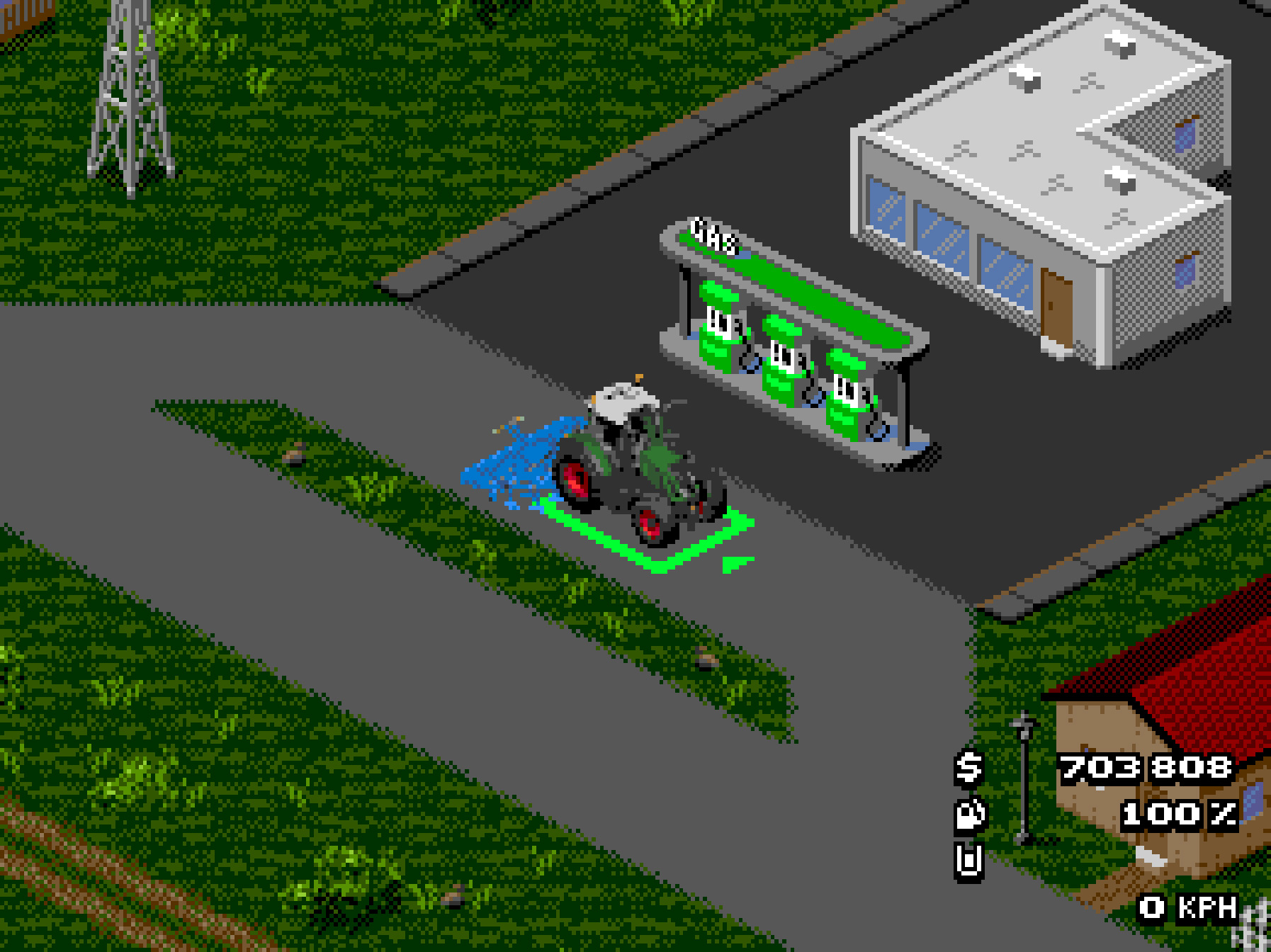
Once all of these steps have been completed, the player must start over from the beginning. This loop is relatively simple and has a relaxing feel to it, but does have the possibility of becoming tedious to some. There is little in terms of real jeopardy that players will face, but that doesn’t mean there isn’t any challenge to the game. In this release, there is some resource management that needs to be done, allowing for smooth operation of the farmland.
All of the vehicles require gas to operate their machinery, this is shown as a percentage on the bottom right corner. If this runs out, the tools will stop working and the vehicle used will be severely reduced in speed. To refill the tank, the player will need to make their way to the gas station, filling up the equipment. But this costs money and will eat away at the players funds, so effective fuel management is needed to maintain steady profits.
The Seeder has a secondary resource that needs to be monitored when in use. This is the seeds themselves, as there is a limited number that the player can carry at any time. The supply of seeds is shown below the fuel as a decreasing percentage, which must be replenished at the seed shop. Like the fuel, this will also impact the wallet of the player, slowing down progress. Both of these systems can have an impact on the challenge of the game.
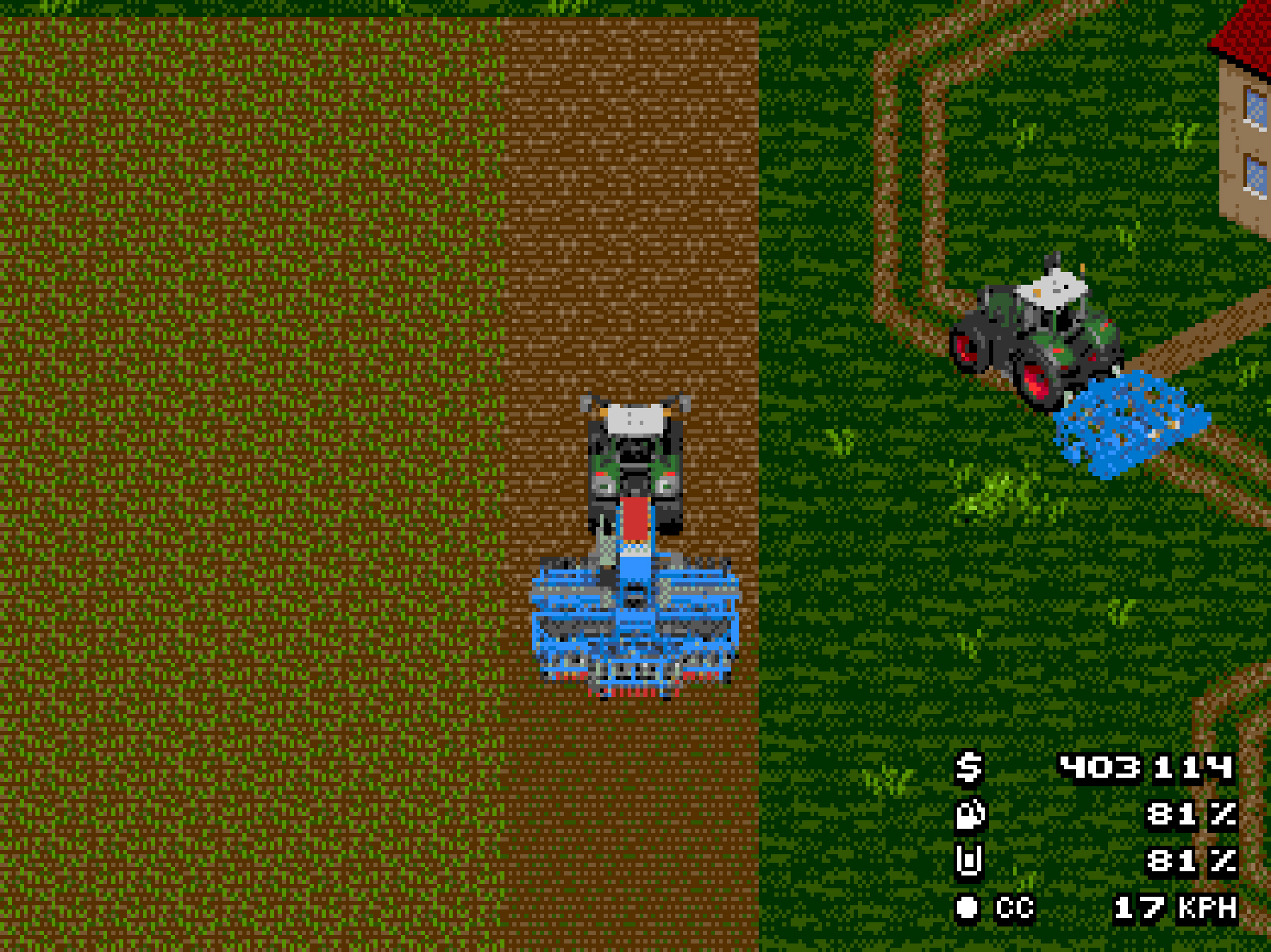

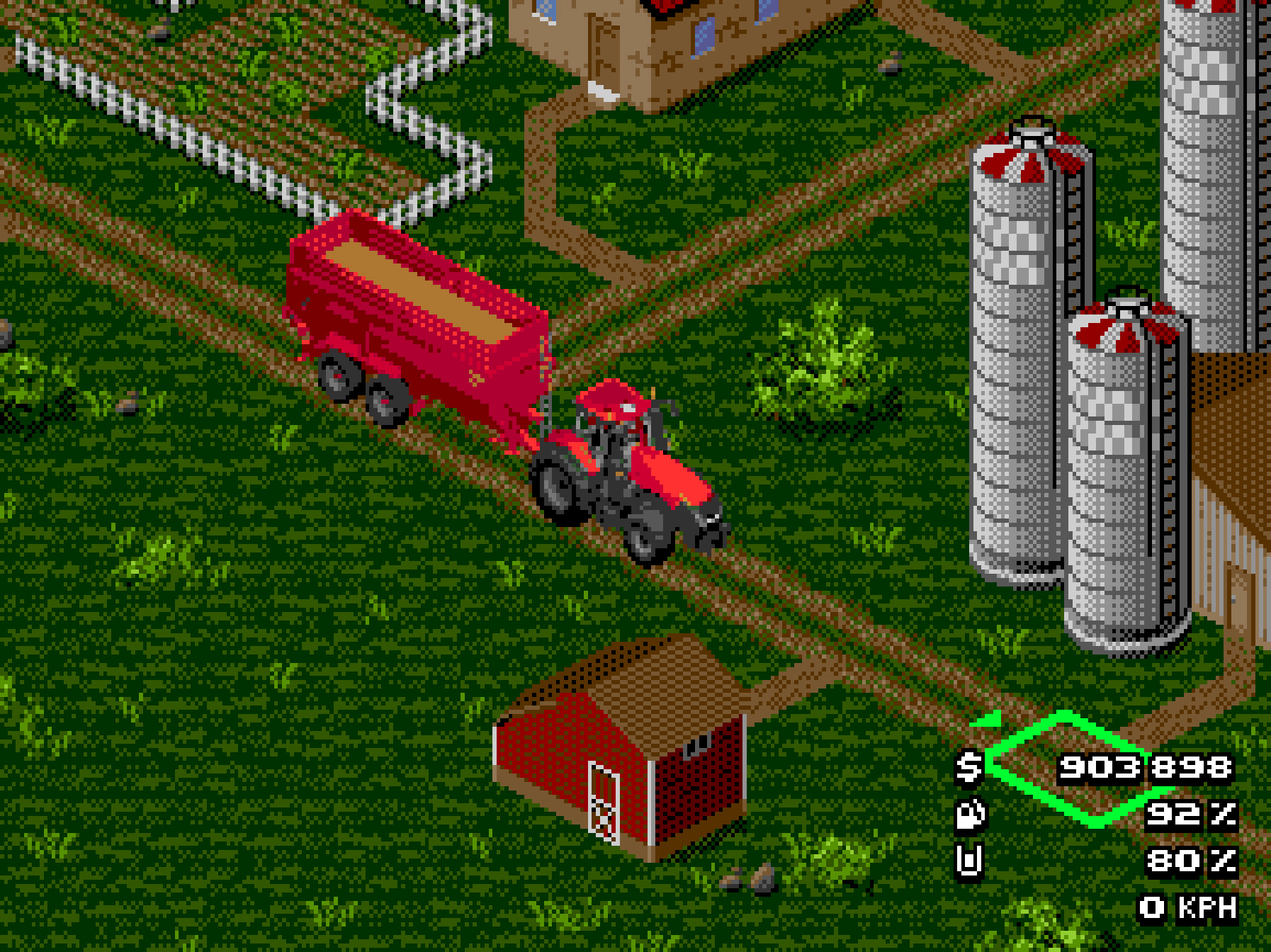
When the harvest is being collected, both the harvester and the trailer have a capacity limit, only being able to carry a set amount. This is shown below the fuel like the other resources. As the tractor and trailer are faster than the harvester, it is recommended to use both of them together for rapid collection and sale. As the harvested crops are taken to the shop for sale, the money pool will increase, allowing for continued operation of the farm.
As the player continues to progress through the game, sowing and reaping, players will need to start improving their equipment. This is where the shop comes into play, allowing the player to buy new machines to enhance their capabilities. The different machines will have different capabilities, like fuel capacity, storage space and top speed. Upgrading these machines is important, as it can really speed up the farming process.
These upgrades are not cheap though, as the top of the line machinery can be a few hundred thousand dollars to purchase. So it may take a few cycles to reach the pinnacle of farming equipment. Any of the equipment that is purchased will be added to the garage, or deployed directly to the fields if there is space. Any of the equipment that isn’t needed can be stored, or sold to recoup some of the expenses from the new purchase.
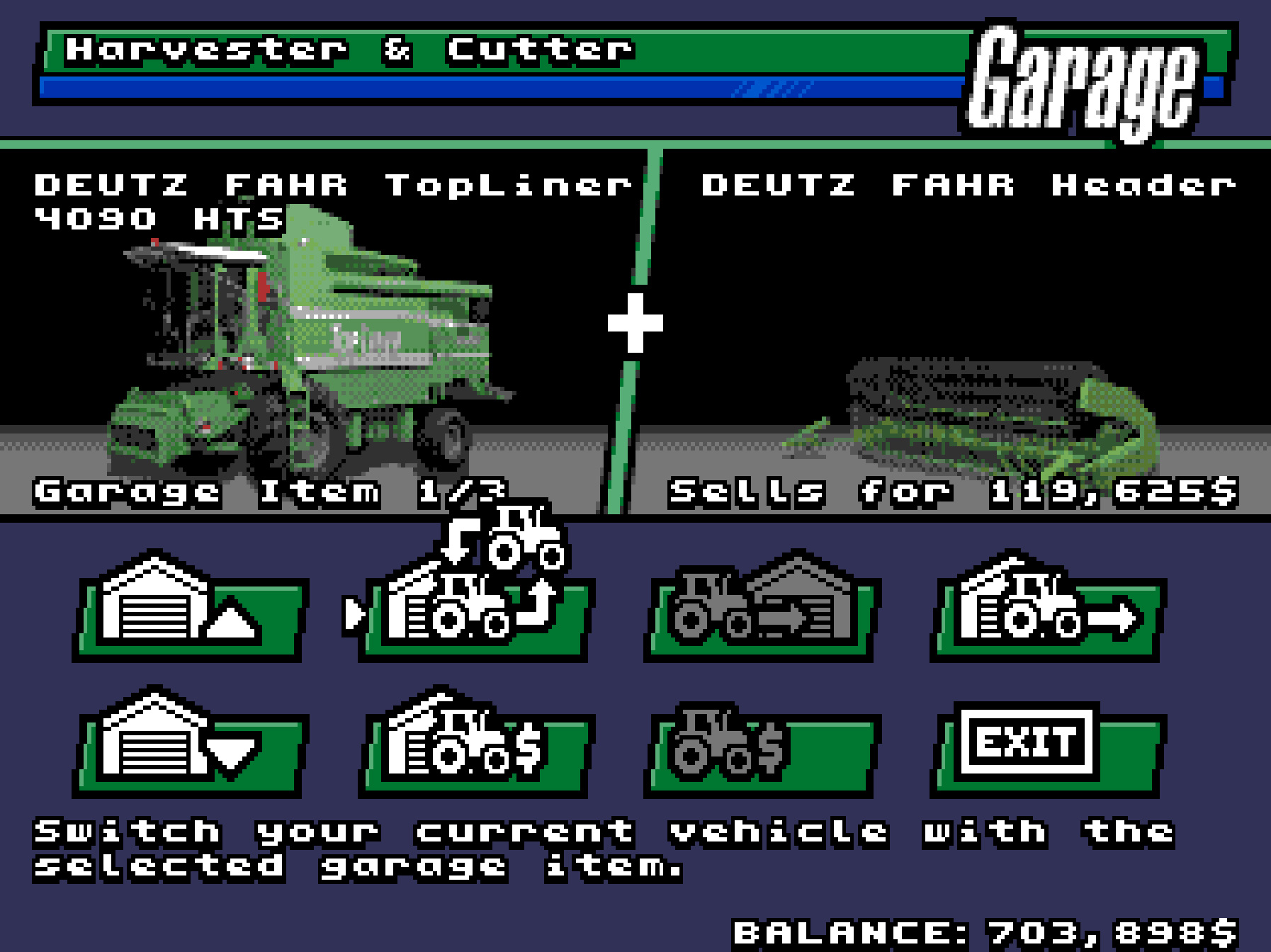
When the player has earned enough, they will be able to purchase new land to work. These farms offer more land to cultivate, providing the player with additional sources of revenue. When additional maps are unlocked, they can work the fields alongside the others, as crops will grow even when not working those maps. The player will be able to move equipment between farms, using the garage to transport machinery between locations.
Now with the gameplay covered, it is time to discuss the other aspects of this release, starting with the controls.
Controls – as Farming Sim 16-Bit is made for SEGA Mega Drive/Genesis, the game is designed to use a three button controller. In this system, the player moves their vehicle with the D-Pad, with up/down for accelerate and revers, alongside left and right for turning. Then there are the function buttons, with A being used to activate tools, B sets the vehicle to cruise control (locking current speed) and C switches vehicles. This tends to work pretty well.


Difficulty – as mentioned in the gameplay section, there are three difficulty settings to choose from. These options will affect the way that the player is able to progress, either speeding up or slowing down the progress of the game. This makes Farming Sim 16-Bit a relatively stress free experience, as there is no real failure state. Due to the sandbox nature of the game, the player will be able to come up with their own goals, like obtaining all maps and top level equipment.
Presentation – as this is a 16-bit game, the spritework and visuals are authentic to the time period, fully utilizing the capabilities of the SEGA hardware. The maps and rendered sprites for vehicles look great, showing a lot of detail even though they are static in movement. This further enhances the nostalgic feel. Then there is the sound, which is my only issue with the game. During play, there can only be sound effects or music, which can make it feel incomplete.
Final Thoughts – I had not played much of the other Farming Simulator games, with only a little bit here and there. But when this was announced and I was given a chance to play it, I jumped onto it as it is an interesting little oddity. When I got the package for the PC, I gave it a shot and it was an interesting experience. But I had no luck connecting a controller, so I had to use the default Keyboard setting, which was pretty awkward.
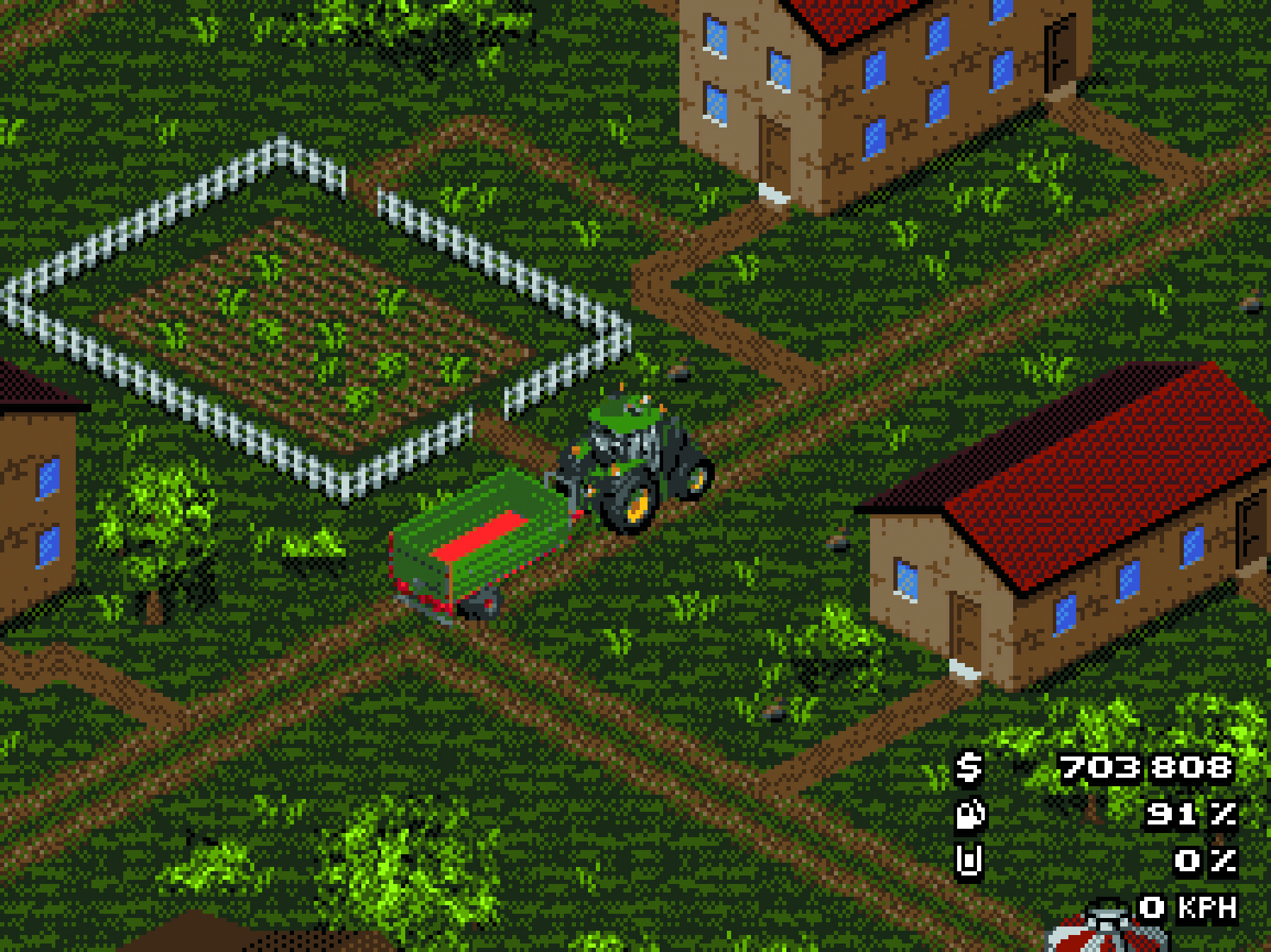
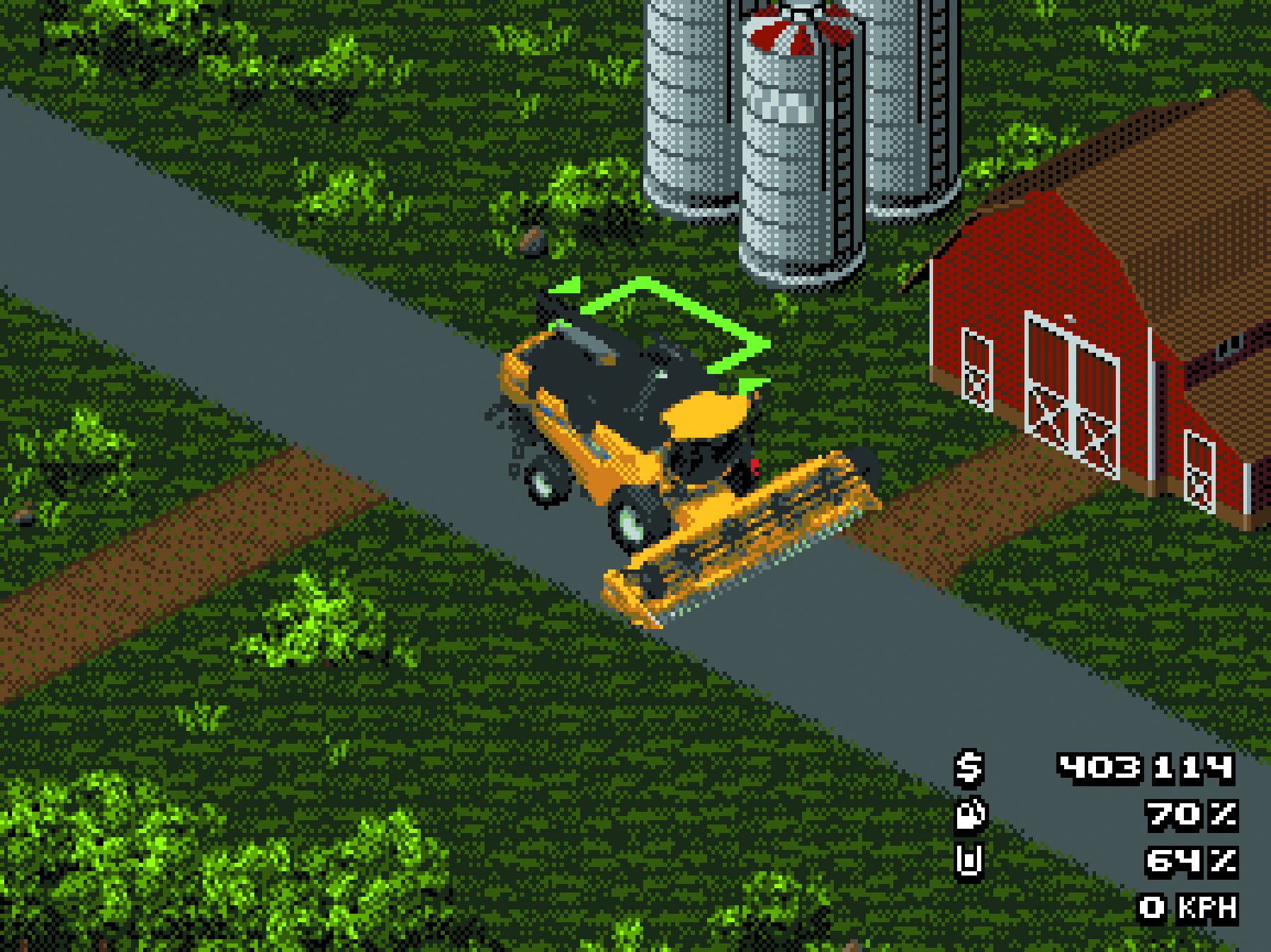
After this minor struggle, I used RetroArch to play the Farming Sim 16-Bit for the rest of the time for this review. This is due to the PC package having a rom provided, as the launcher uses the BlastEM emulator. With this rom, I was able to play the game with a comfortable controller, making it more enjoyable. The inclusion of this rom also makes it possible to play the game via flashcart, or on handhelds like the Retroid Pocket, allowing for play on the go.
This is a very good demake of a rather complex game, providing a new and interesting gameplay experience. I had a lot of fun with it and the limitations enhanced it, further adding to the nostalgic feel of the game. I do feel that this is something that everyone can enjoy, regardless of the experience that players have. So it is an easy recommendation, either through the emulated PC version or via the dedicated cartridge.
In the end, I give Farming Simulator 16-Bit Edition a final score of 4.75/5. This is a solid and enjoyable sandbox demake, providing a relaxed gameplay experience that may be lacking in challenge, but is definitely not lacking in satisfaction. If you want to check this game out for yourself, a link to the PC digital version as well as the special physical release are below.
Link to Digital version (HERE)
Link to Special Physical version (HERE)
 W.Kohaku Media