
Hello there and welcome to the latest instalment of Lost Gems, discussing games that have been mostly lost to time, falling into obscurity and largely being forgotten. After a short break, I am back with a very unusual game that was only spoken of in niche circles, with the only way to get it was to import it or know a guy who can make you a copy. It is time to look at Mad Panic Coaster, a rollercoaster survival game for PlayStation from 1997 by HAKUHODO Inc.
Disclaimer: While the game discussed here is no longer officially on sale, there are still ways to obtain it. This can be through the second hand market, or through unofficial digital roms/rips. I do not condone or promote piracy, so there won’t be any links to roms or rips of the game being covered.
So with the introductions out of the way, let’s get started. I will be discussing the general game experience, then providing my own personal thoughts on the title.
About the game

Mad Panic Coaster is an experimental “non-stop action game” focusing on the titular rollercoaster, an intense high speed terror machine created by a mad scientist. Now a young couple must try to survive the Mad Panic Coaster, fighting monsters and dodging traps on this horror ride from hell. Take on 15 adrenaline pumping and hair-raising tracks, split between 5 settings as Bakuyan and Kyako try to survive the creation of mad scientist Dr. Jones.
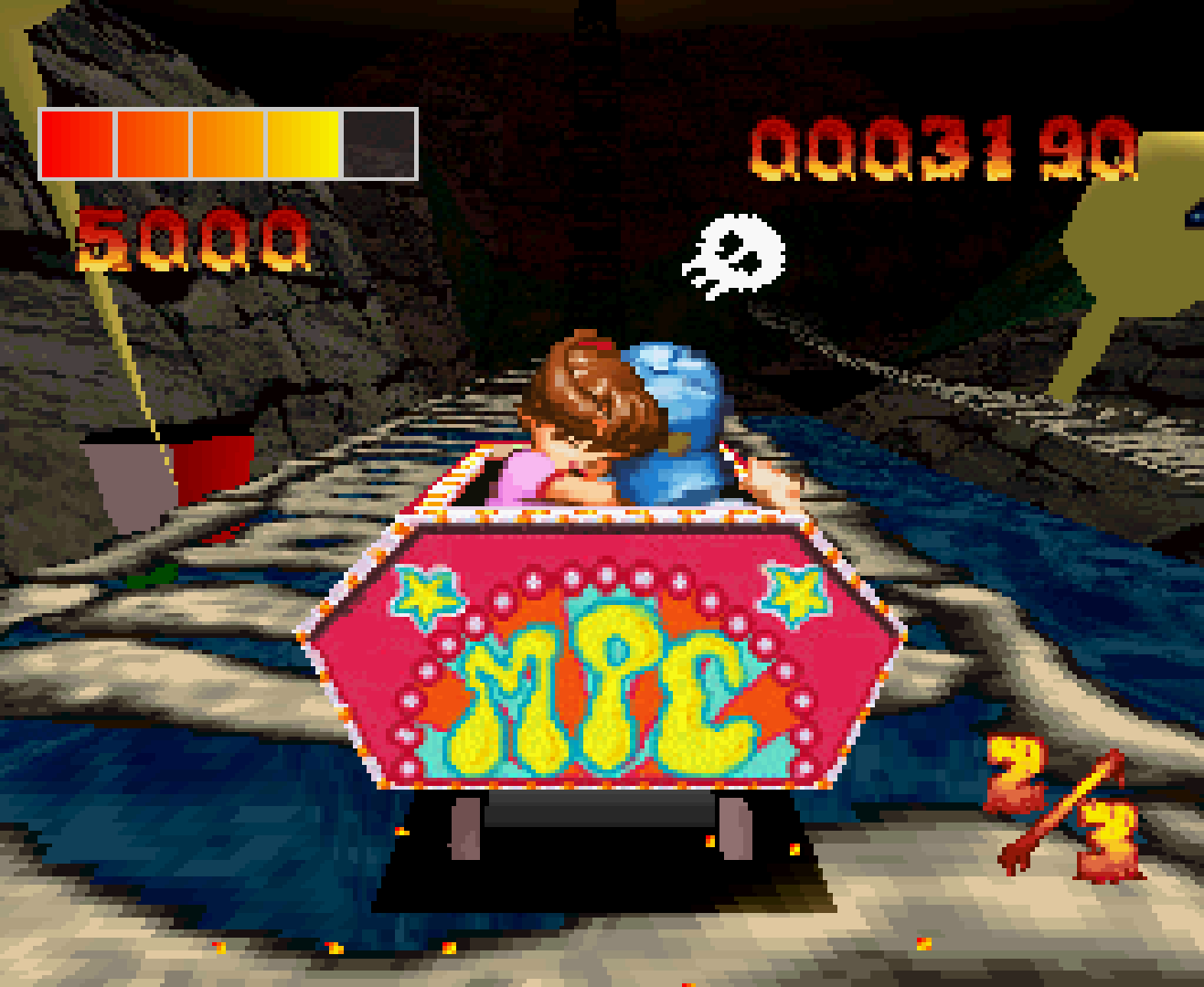
This is a rather simple game to pick up, as there is only one core mechanic to all of the stages, stay on the track and survive. Each of the 15 tracks follow the same gameplay loop, where the player needs to stay on the track for 3 laps, making sure to avoid traps and dodge the hazards. To help with this, the player can speed up, slow down and jump their coaster cart. They can also throw bombs to fight back against the monsters on the track.
The hazards and dangers on the track will be themed to the current stage/world, with stages from Mad Island having theme park elements and Mad Ocean having monster fish. These give the stage more flavour, keeping them unique and keeping the action exciting during play. There will be monsters on the tracks, swinging axes and even gaps in the track that need to be jumped over. This makes for a challenging and reactive experience that is very tough.


The final stage of each setting will have the player challenging the usually three laps, but once the third lap is open, the player will be forced to switch the track they are on. When this happens, the player will encounter a boss monster, who can devastate the player with screen filling attacks. These powerful monsters can be overcome in two ways, through attacking them or by surviving three more laps. This makes the end of world encounters much more interesting.
During a stage, the player has a set amount of life to survive the ride, with relatively moderate amounts lost when being hit by traps or monster attacks. However, the speed of the cart and hazards can push the player off the track, causing significant damage to the duo. When life is lost, skulls will be revealed and if the player hits a big jump, they may just drop for a bonus. On the track, there will be gems that can restore some life, but these appear only once.
If the player can survive the stage, they will get the lucky rainbow before transitioning to the score display. Here the player will be awarded bonuses based on their performance, which is added to their total. This game has a heavy emphasis on earing points, with the defeat of enemies, not taking damage and other elements contributing to a high score. If the player loses all their life and gets a game over, their score will be registered on the rankings if it is high enough.

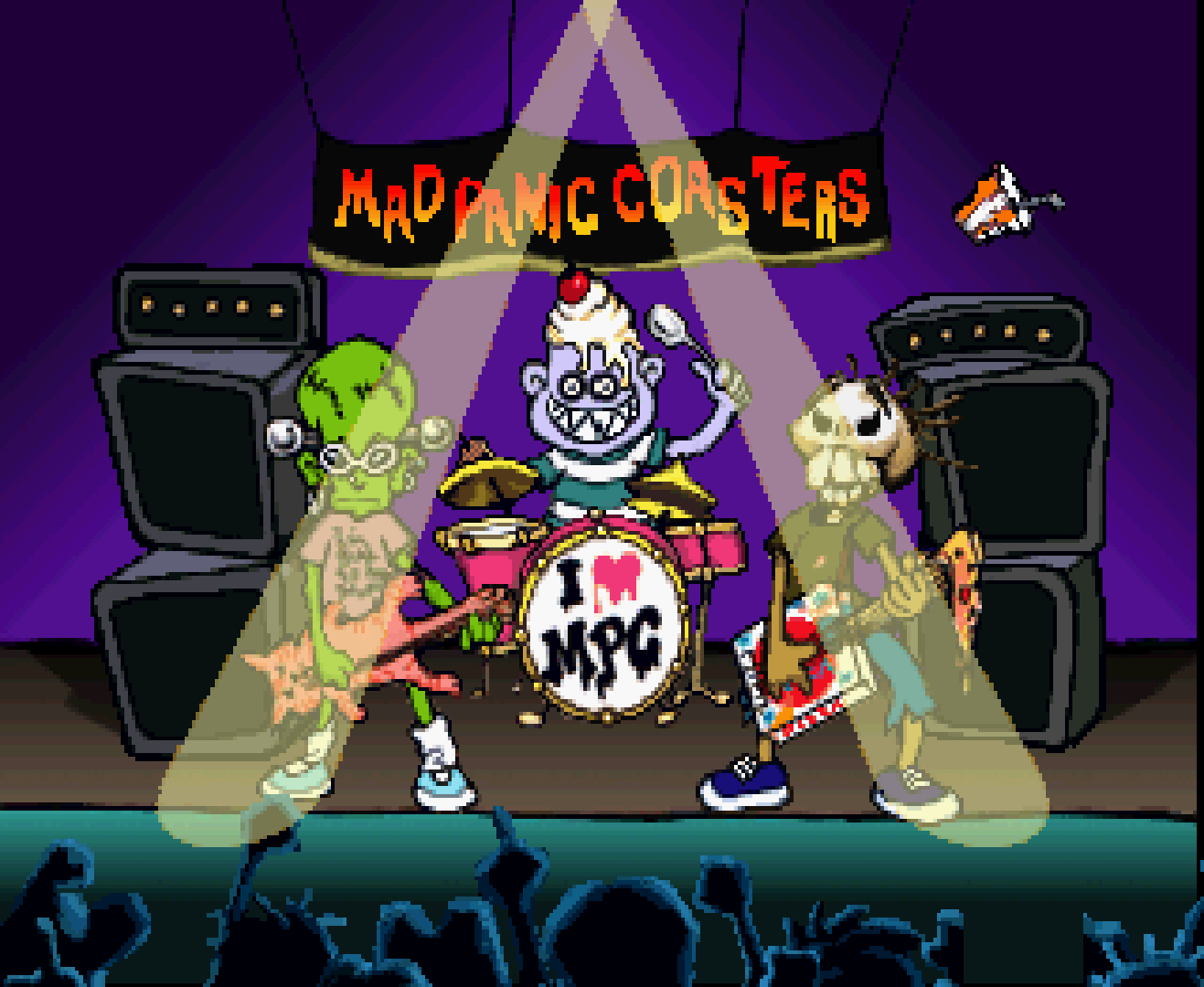
This game has a very unique and distinct style to it, with a mix of horror and comedy to it in parts. There is a combination of 3D rendered polygons and 2D sprites, which allow for vibrant, expressive characters and monsters that add to the experience. Then there is the music, which really knocks the game up a notch, featuring heavy and frantic tracks, with a mix of sounds like ska and punk. There is even an opening animation of a monster band rocking out to start the game.
There are some hiccups with the game, with some awkward controls at times, which can be a bit of a stumbling block when getting used to the game. Additionally, there is no way to view controls or change settings, as there is no options menu. Players can access the sound garage, where all of the rocking tunes can be enjoyed freely. Scores and progress can be saved to come back to the game later, using a memory card to record progress during their time playing.
Personal thoughts
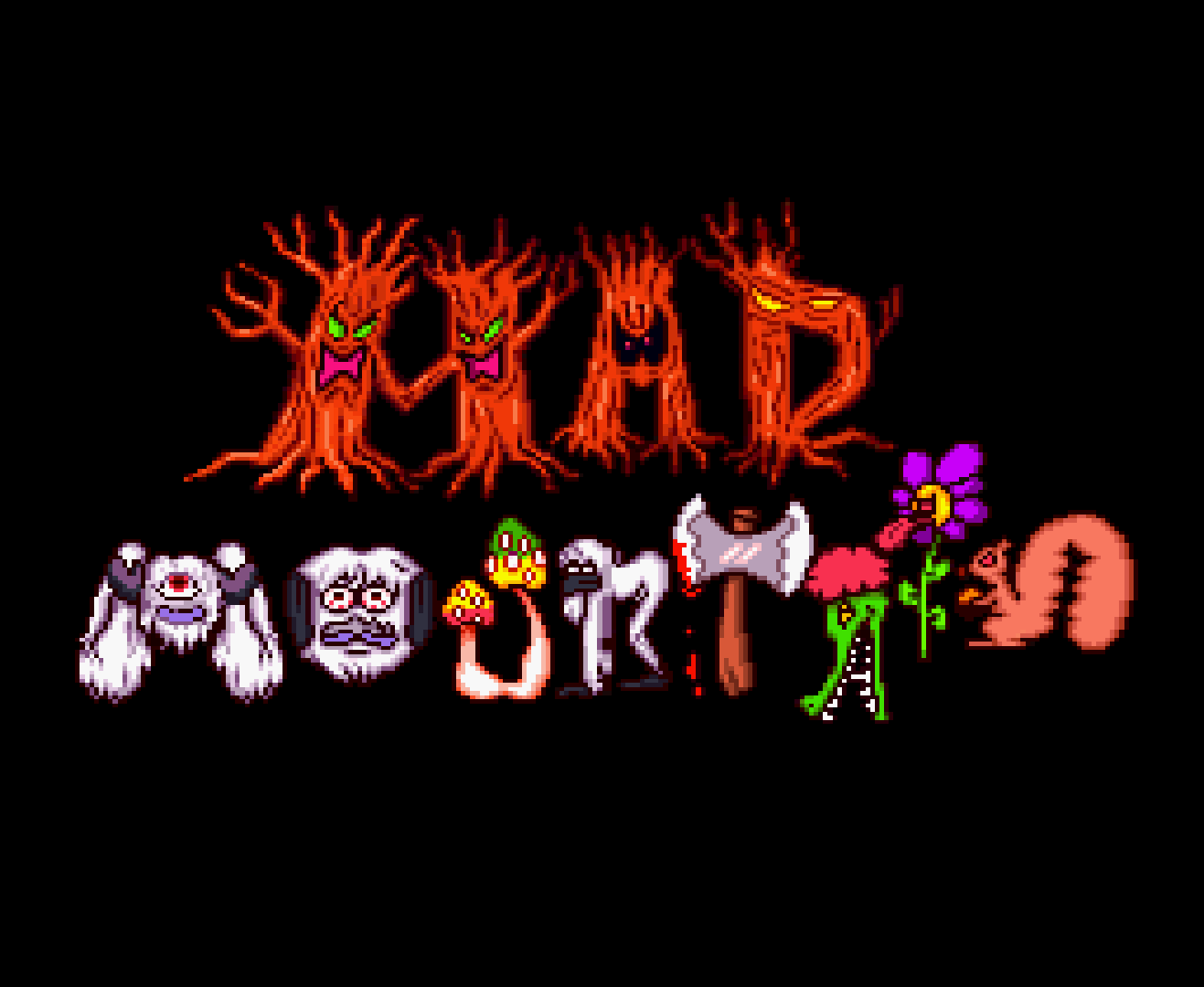
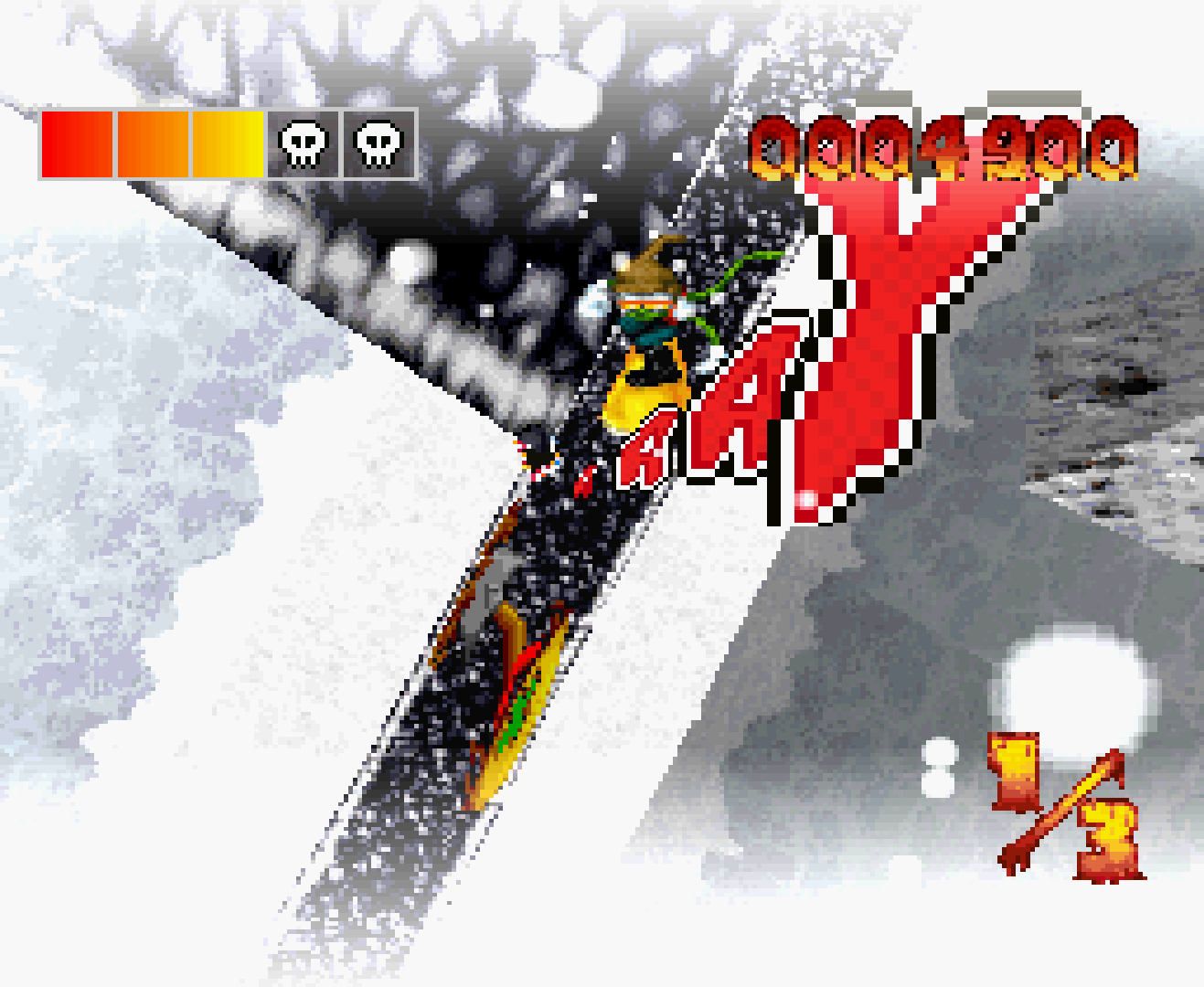
I first experienced this obscure game all the way back the late 90s, after my dad brought it back from a local game shop that handled imports. During my first time seeing the game, I had no idea what I was looking at, but I was completely spellbound by the absolute madness that was on screen. There is this weird mix of niche Japanese humor and over the top horror, with the zombies, monsters and distorted creatures that appear during play.
This is a really tough game, and I will confess I have tried many times, but have never beaten the game. I have gotten as far as the fourth world Mad City, although I have still not been able to get any further. But that is from no lack of trying, as I pick return to this game pretty regularly, even having my own copy backed up to play on a Retroid Pocket. It is possibly one of the toughest games I have covered in this series, as the difficulty will spike quite often.
I have a deep fondness for this release, as it is from a time where game developers had no restrictions, creating surreal and ridiculous games. There is this rough charm that the game has, with all of the crazy visuals, distinct music and the very concept of the game itself. It is like someone saw the mine cart stages in other games and thought, “what if this was a rollercoaster with monsters everywhere”. The sheer absurdity of the game is what makes it so special.


Sadly the company that released this game has faded away, with no word of who owns the game or property, so the game is officially lost to time. This means there may never be a re-release or remaster of this game. Due to the game never officially leaving Japan, the cost to own this game has risen dramatically, making it extremely expensive to own. This means, that many players will need to seek alternative means to play this game, officially or otherwise.
In the years after Mad Panic Coaster was released, there was little fanfare around this game. But in recent years, there has been a resurgence in attention for this title, with a dedicated community growing around it. There is even a group of players that speedrun this game, with an appearance at the 2024 Games Done Quick event. This newfound appreciation for the game is fantastic to see, as it is a very unique game that arose during the golden age of home console gaming.
If you have enjoyed this feature, then please stick around and see what else catches your eye. I cover a wide range of games in reviews, get special previews and put out regular features. I have Lost Gems, Retro Revival where I discuss re-releases and Gaming Oddities, where I cover weird and wacky titles. So stay a while and have a look around.
 W.Kohaku Media