
Hey there, it is time again for another entry in the Lost Gems feature, discussing games that have been abandoned and forgotten by time. This week, I am going to be covering a legendary crossover fighting game, which occurred three years before Nintendo released theirs. So let us take a look at Fighters Megamix, a crossover fighter from SEGA AM2 for the Saturn, released in 1996 featuring characters from Virtua Fighter, Fighting Vipers and more.
Disclaimer: while the game discussed here is no longer officially on sale, there are still ways to obtain it. This can either be through the second hand market, or through unofficial digital roms/rips. I do not condone or promote piracy, so there won’t be any links to roms or rips of the game being covered.
So with the introductions out of the way, let’s get started. I will be discussing the general game experience, then providing my own personal thoughts on the title.

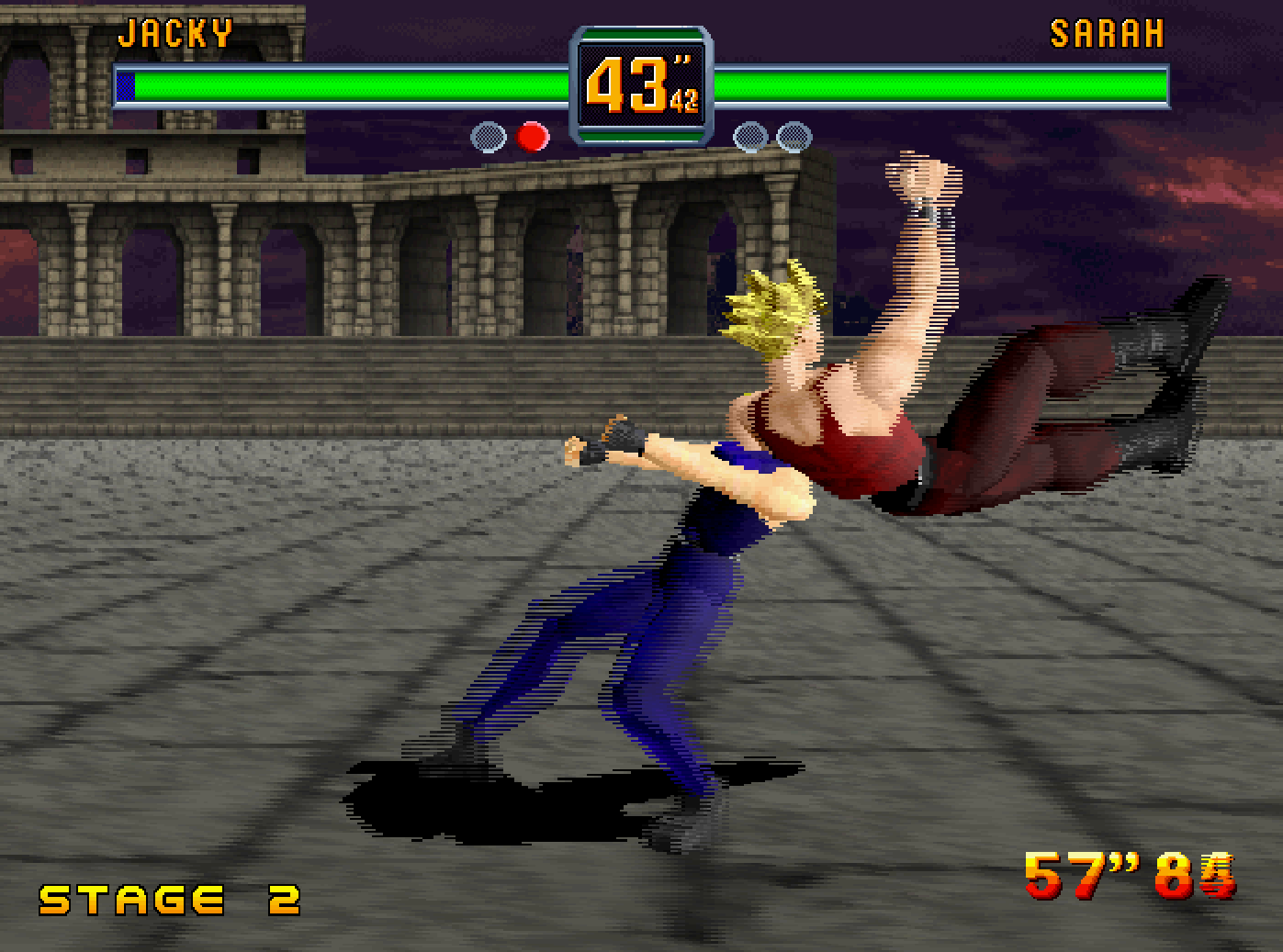
About the game
Following the success of Virtua Fighter and Fighting Vipers, SEGA were pushing forward with Virtua Fighter 3, their latest 3D fighting game. This title was planned for the SEGA Saturn, so SEGA AM2 developed Fighters Megamix, a crossover to promote their latest game. This title features the characters of Fighting Vipers and Virtua Fighter 2, alongside various guests from other AM2 games. The roster of this game was the largest at the time with 32 playable characters.
As this is a crossover fighter, there are two distinct styles that are present based on Fighting Vipers and Virtua Fighter 3, which was in arcades at the time. The game style is split between the characters, with characters in the roster being either Virtua style or Vipers style. For characters in Virtua style, they are generally lighter with reduced power, whereas the Vipers style has characters being heavier and stronger.
The combat system is pretty simple to use, consisting of a relatively easy to use 3 button input layout. These inputs are punch, kick and guard, which can be used in a variety of ways to create varied combo attacks. These buttons can also be used simultaneously for special power strikes, as well as throws that can deal big damage. When it comes to moves sets, the Virtua fighters are generally martial arts focused, with Vipers having varied fighting styles.
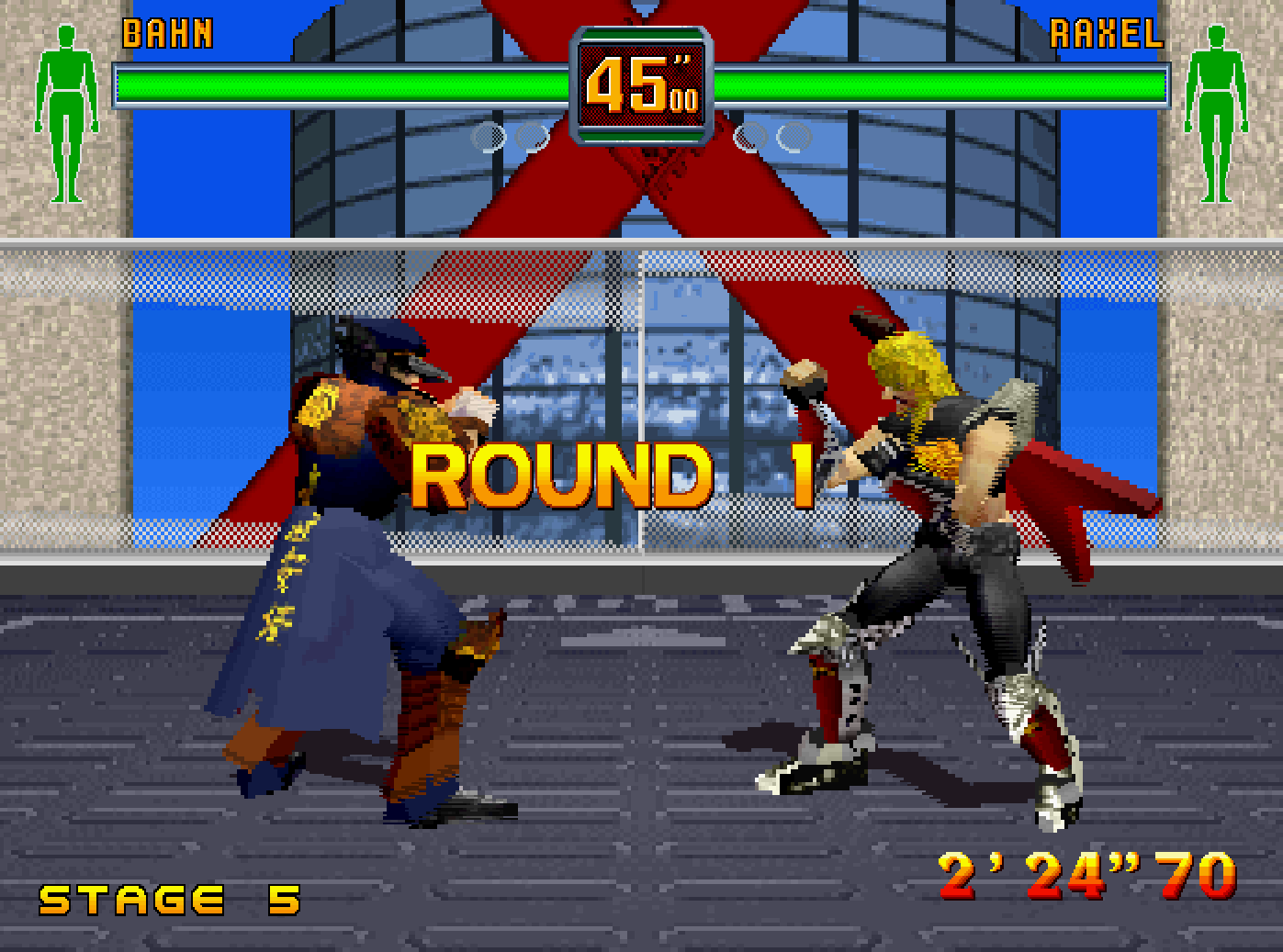

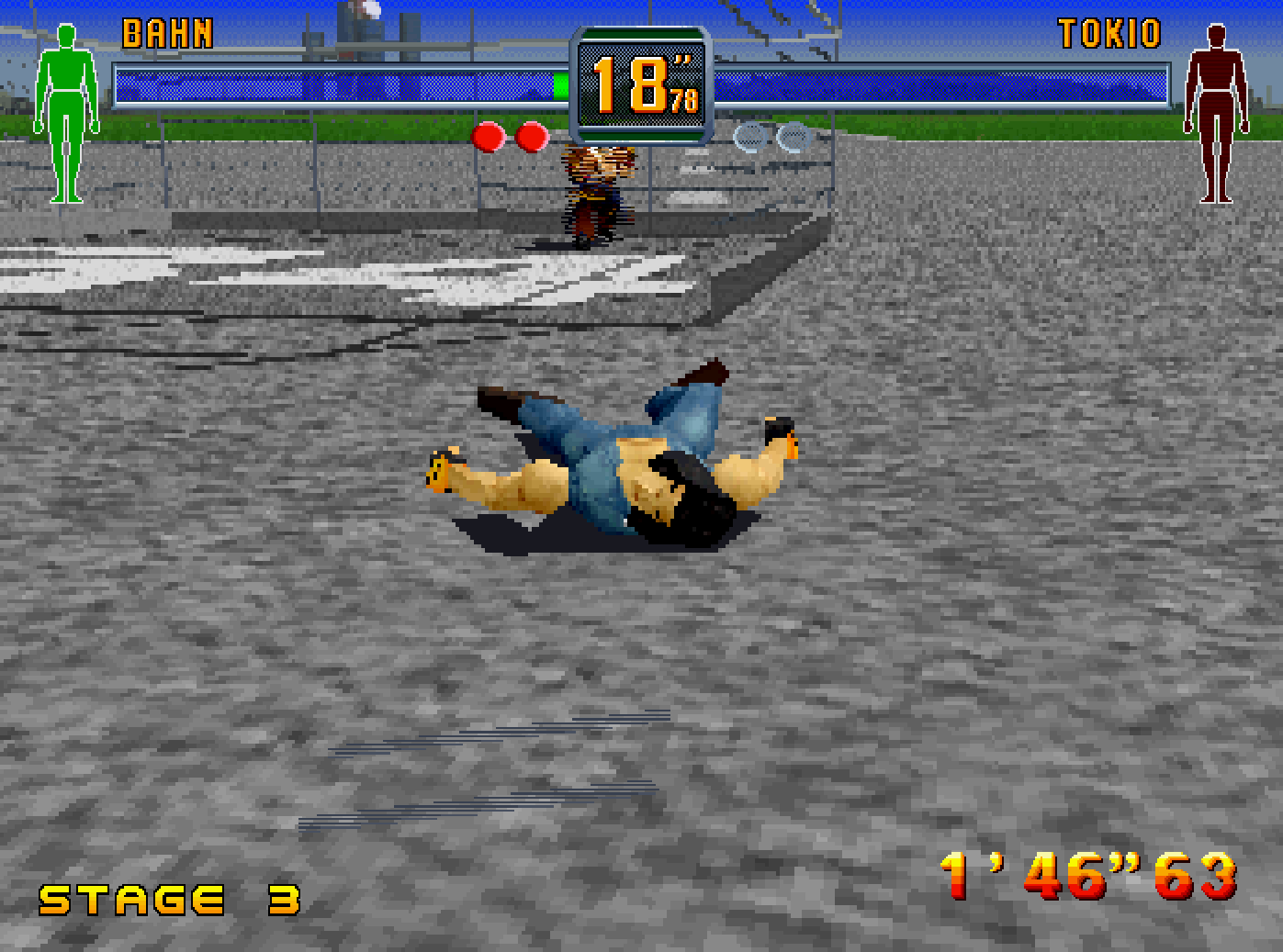
When using a Vipers style character, they will have armor that can be damaged, shown on screen as a segmented body. These start off solid green, with the top or bottom half flashing when enough damage is taken. If a power strike indicated by a flash of white lands, the weakened armor will shatter, increasing the damage that can be taken. If the player is defeated with power strike, there is a chance that any remaining armor will be destroyed.
This system also applies to the way that stages are used in the game. The Virtua stages are open flat stages, with near endless space to move within. Then there are the Vipers stages, which are closed arenas where fighters can be struck against walls for extra damage. These stages are themed to their characters, with a few exceptions, like the wrestler Wolf Harwkfield having a walled arena, even though he is a Virtua Fighter character.
There is another element of the gameplay that is tied to the arena stages. Just like Fighting Vipers, the fighters can be launched out of the walled arenas. This can be done through a power strike, which will send the character flying either through the wall, or bouncing off and being launched into the horizon. But that isn’t the only way to knock enemies out of an arena, as they can be knocked over the wall or even land on the edge, but this is pretty rare.

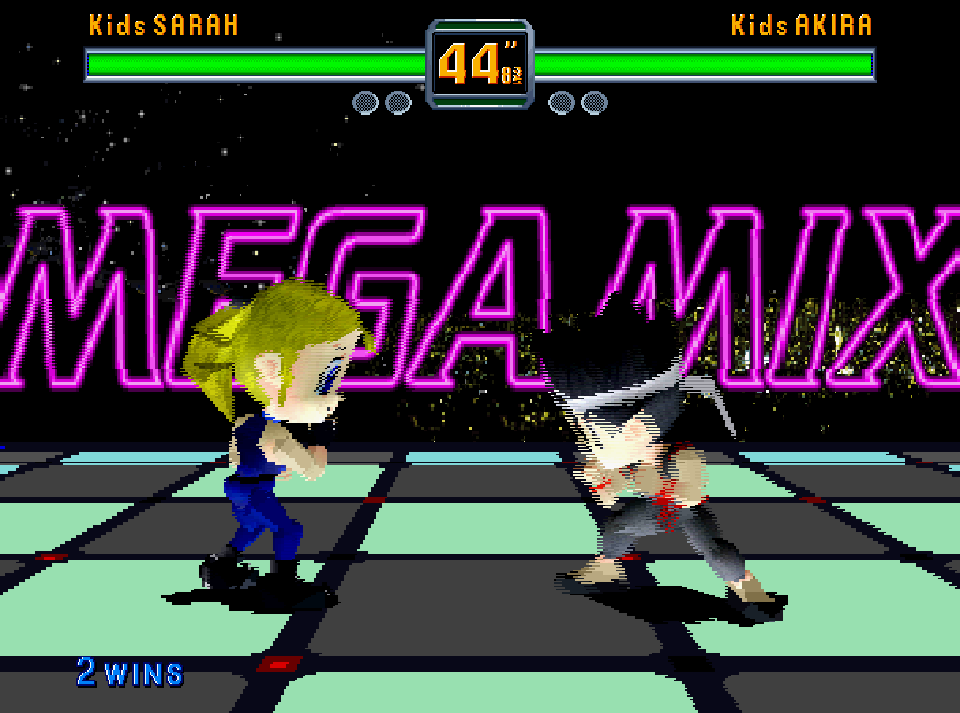
There is a default general gameplay setting for the fighting, with the option for Virtua Fighter and Fighting Vipers which can be chosen in the settings. These settings affect the general flow of gameplay, with the default being set as Fighting Vipers. This mode allows more powerful knockback from strikes, alongside air recovery. The Virtua Fighter setting gives all characters more height to jumps, as well as other minor gameplay tweaks.
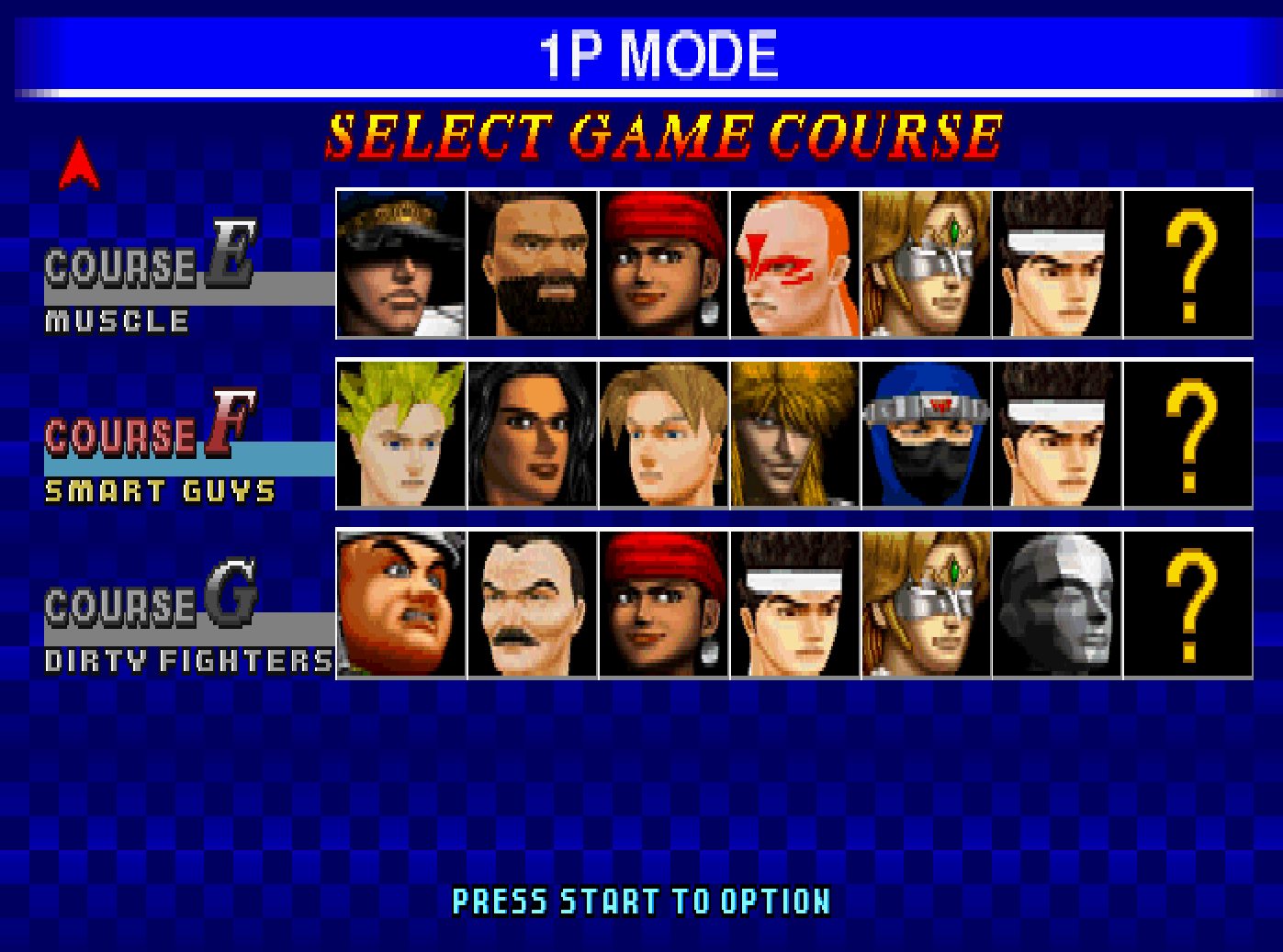
Moving onto game modes, there are several options for players to select from. The main one is 1P Mode, which is this games arcade mode. In this mode, players select their fighter and then select a route called a Course. Each route consists of 6 regular stages and a final boss stage, which is against a locked fighter. This is how the hidden fighters are unlocked, as each cleared route adds them to the roster. There are four courses to start, 5 more to unlock.
As the player clears the routes, the roster will fill out with more characters. These consist of the many guests from various games developed by SEGA and AM2. There is Bark and Bean from Sonic the Fighters, Janet from Virtua Cop 2 and the kids versions of Akira/Sarah from the Virtua Fighter Kids spin-off. The most interesting are Siba, a cancelled character from the original Virtua Fighter and Hornet, the car from Daytona USA.

When a Course is cleared, the credits will play out showing the finishing blow for each stage. This uses the game engine to replay the end of each fight as the credits show. There will also be special images, with fully rendered CG arts tied to the Course that has been cleared. This is in place of the traditional style of endings for a character, with unique end themes for each route cleared. The CG images are added to a special gallery that can be viewed later.
After the credits have rolled, the player will be able to enter their name onto the rankings. There is a time record for each of the Courses to beat, with the best time added to the records. During the name entry for 1P Mode and the Survival Mode (discussed below), the end theme for Outrun plays out, further adding to the crossover experience. 1P Mode and Survival records can be viewed on the main menu, showing the time and character used for each record.
All of the unlockable characters can be used in the 1P Mode, but they will also be available for the other gameplay modes. These extra modes are Versus, Team Battle, Survival and Training mode. In Versus and Team Battle, players can battle humans or CPU opponents. Versus is the standard 1-on-1 battle, with Team being a battle with teams of up to eight characters. In both of these modes, the player can select the stage type they want, alongside other options.


Then we have the Survival mode, which is fairly different compared to most games that have this as a feature. It follows the standard mechanics, where players must defeat as many opponents as possible with a limited amount of health. But there is a big change, as there is a time limit to get as many wins as possible. There are three options with 3, 7 or 15 minutes as the time limit. The most wins are recorded for players to try to beat.
The last mode to cover is Training, where players can take on the challenge of performing all of a fighters move list. The player can practice all of the modes, letting them practice all of the inputs against the training dummy. All of the moves for the character will have any requirements to use them, like downed enemy, behind enemy and more. This training mode was very advanced for the time, as it tracked the cleared moves and showed the damage moves dealt.
Personal Thoughts
I grew up with Virtua Fighter, Fighting Vipers and many of the AM2 games, like Virtua Cop and Daytona USA. So Fighters Megamix holds a special place in my heart, as there are so many games that are featured and referenced within this. The inclusion of Rent-a-Hero, Bark/Bean from Sonic the Fighters and Hornet made this so cool when I was a kid. In the following years, I have gained an even greater appreciation for this release.


This was one of the biggest crossover releases where multiple franchises appear, with the only game I know of before it being The King of Fighters from SNK. This was years before Nintendo released their Super Smash Bros game, which makes it that much more important. The inclusion of the entire Virtua Fighter and Fighting Vipers roster was already good to start, but the special guest characters really knock it up a notch.
I have enjoyed this game since it was released, regularly starting it from scratch and playing through all of the Courses. I also enjoy being able to play the versus modes against the CPU, coming up with ridiculous face-offs, like the Janet from Virtua Cop fighting a Child version of Sarah. But one of my favourite things about the game is the replay value it offers, with the Training challenge, Survival Modes and 1P Mode time trials.
Fighters Megamix was quite a special title, with a fantastic amount of depth and content available. This makes it both surprising and disappointing that SEGA didn’t release another crossover, especially as they have multiple franchises to pull from. It would have been interesting to see the cast of Virtua Fighters and Fighting Vipers, clashing with those of Last Bronx and Streets of Rage. But SEGA have limited their fighting output to Virtua Fighter.

For those who are looking for a solid fighting game, then this is a good choice, especially for those who are looking for something to add to game night. The large roster makes for a lot of interesting match-ups, with both the Versus and Team Battle modes. This title doesn’t seem to have that much popularity, leading to it being largely forgotten. However, this works in favour of players as the price for both English and Japanese versions is fairly affordable.
Like with other Saturn games, I would love to see this game come back in some form, especially as there is an emulator for the system out there. Sadly, SEGA appears to have no interest in releasing this, or any of the other major games on the system. This is unfortunate, as Fighters Megamix is an important piece of history that should be experienced. Maybe SEGA will release this and other Saturn titles in the future, but I don’t see that happening any time soon.
If you have enjoyed this feature, then please stick around and see what else catches your eye. I cover a variety of games in reviews, provide special previews where possible and have regular features. There is Lost Gems, Retro Revival covering re-releases of classics and the occasional Gaming Oddities feature, where I cover the weird and wacky titles out there. So stay a while and take a look around.
 W.Kohaku Media