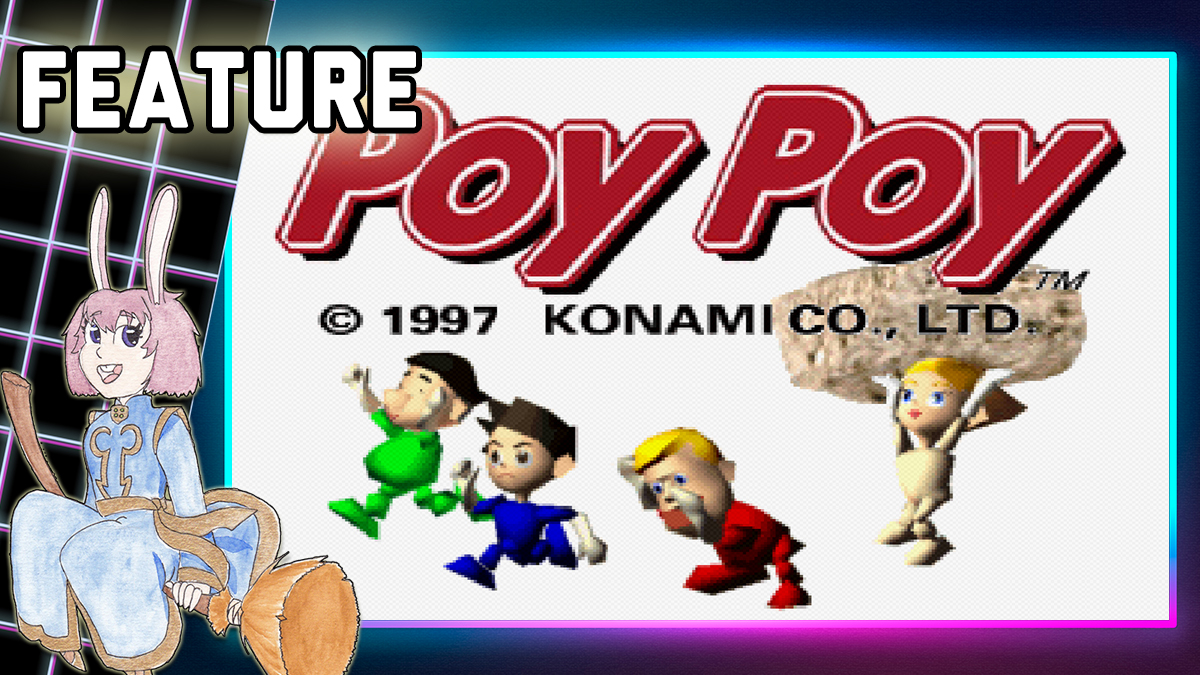
Hello and welcome to the latest entry in Lost Gems, the special feature series where I cover classic titles that have been forgotten, ignored or abandoned. This week, I will be covering one of the more experimental games for the PlayStation. The chaotic and frantic party action game Poy Poy, developed and published by Konami in 97/98. So let’s take a look at this weird and wacky multiplayer action game.
Disclaimer: while the game discussed here is no longer officially on sale, there are ways to obtain the game, this can be either through the second hand market, or through unofficial digital roms/rips. I do not condone or promote piracy, so there won’t be any links to roms or rips of the game being covered.
So with the introductions out of the way, let’s get started. I will be discussing the general gameplay experience, then give my personal thoughts on the title.
About the game
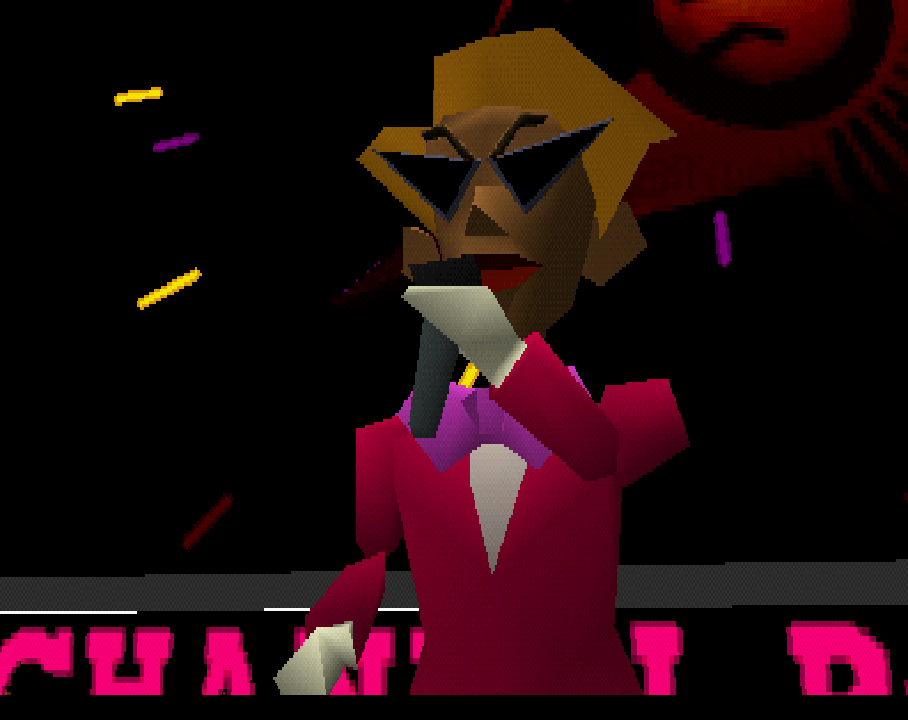
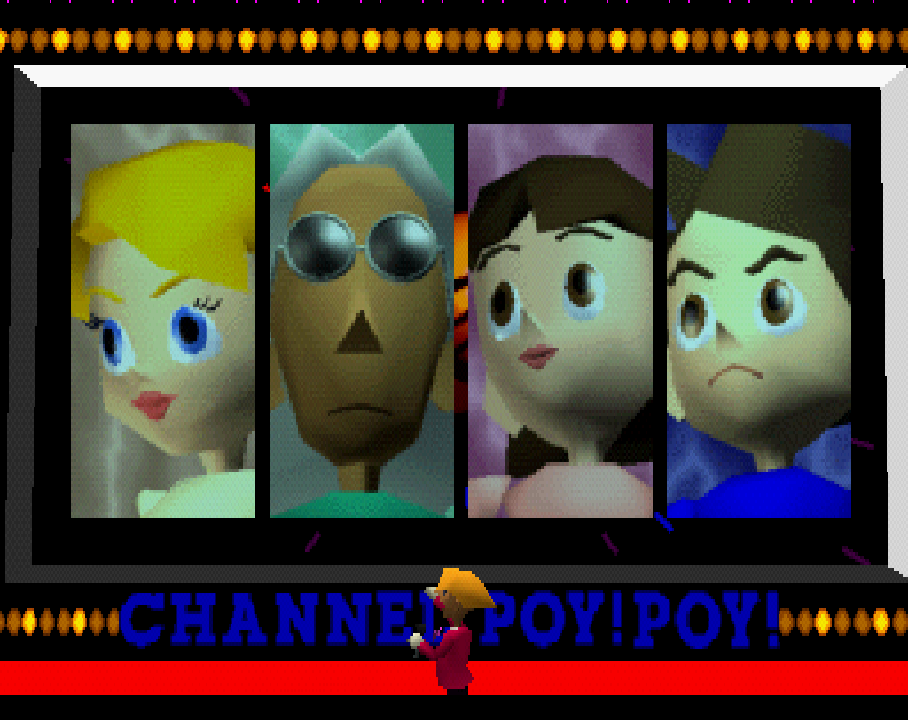
Poy Poy is a multiplayer action battle game, where four players battle it out in frantic prop based combat. Across the nation, Channel Poy Poy broadcasts the chaos of these battles, with the contestants fighting in the PoyPoy Cup. This tournament is contested over multiple stages, where the objective is to score the most points at the end of each round. At the end of the tournament, player who wins the final round will earn one million dollars.
This game consists of two game modes, with the main one being the PoyPoy Cup. In this mode the player goes through the PoyPoy Tournament, where the objective is to score the most points in each stage. The stages are broken down into three rounds, where the four players will battle it out. During a round, the players must throw props like rocks and logs, alongside bombs and even each other to try and knock them out.
All of the battles are chaotic 4 player brawls, where there will be items, weapon props and even environmental hazards. The characters that can be used each have their own unique strengths and weaknesses, which will affect their combat ability. The character can also employ a special ability called Psycho Power, which is tied to gloves that will allow the use of special abilities. There are many gloves that can be used in the battles.
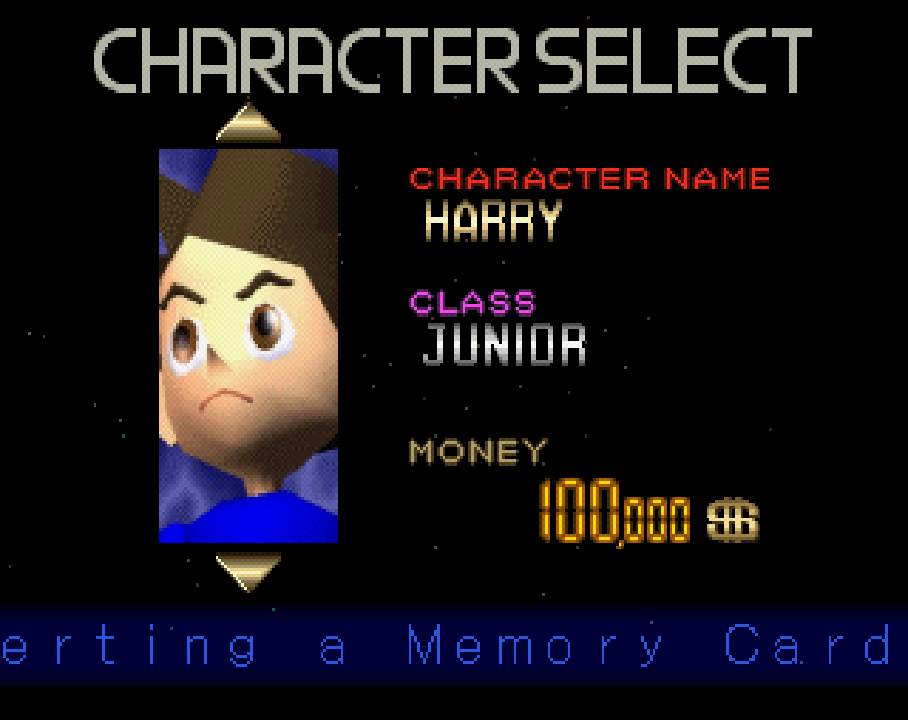

At the start of a tournament, the player can purchase a glove to use, starting off with 100,000 dollars to buy a glove. If the player wishes to save their money, they will be able to use the glove they start off with. As the player goes through each stage, they will accumulate money that can be used to buy more powerful gloves. There are multiple levels for each glove, with some of them being more suited to the strengths and weaknesses of characters.
Before the player can start the tournament, they must select the tournament they want to join. There are three different ratings to challenge, split into Junior, Senior and Master, denoting how tough they will be. After selecting the challenge rating, the player will then get into the tournament, selecting the first stage from the random roulette. There are six stages, with each one being removed from the random pool after being selected.
Inside the PoyPoy Cup mode, the player must get first place in each stage. To secure the top spot in each of the stages, the player must accumulate points, which are awarded based on player performance. At the end of the third round, if the player has managed to attain first place, they will progress to the next stage. But if the player is unable to secure the top spot, they will get a game over and need to continue, using up the limited credits.
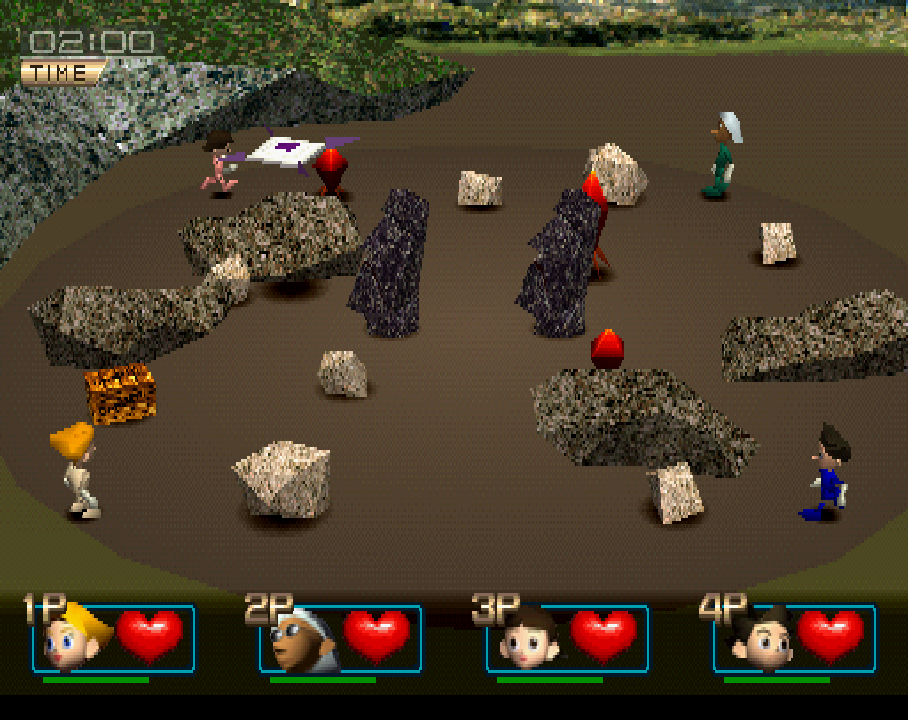
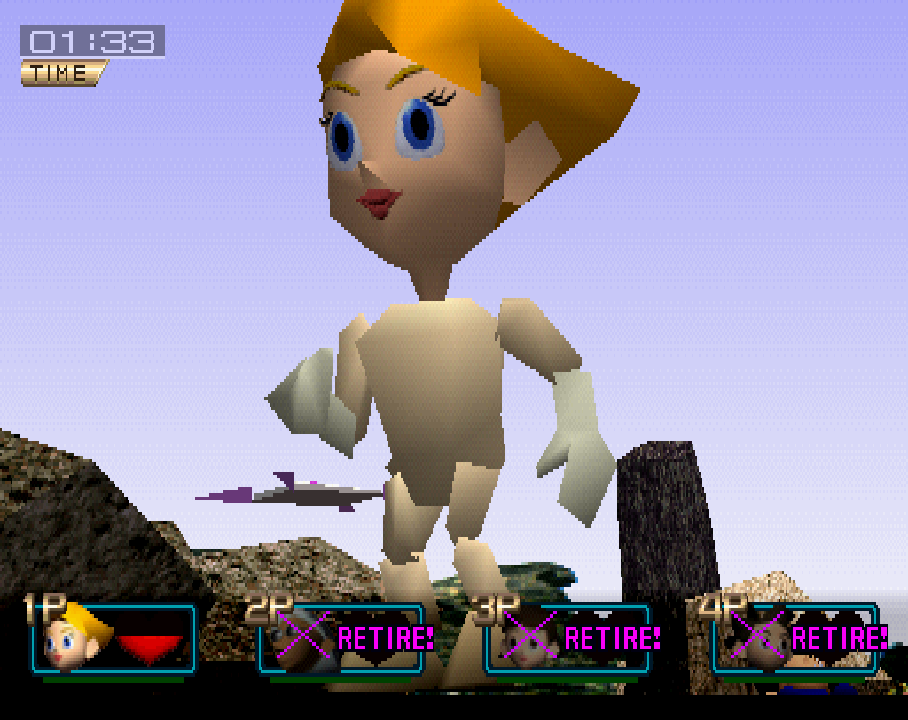
Between stages in Junior Cup, the fourth place CPU will be eliminated and replaced with a new opponent. These opponents will increase in difficulty, with the same challenge ratings used by the cup. In Senior and Master Cup, the third and fourth place will be replaced, mixing the challenge up even more. If the player can fulfil special requirements in the Master Cup, they will be able to challenge a secret opponent and a final locked tournament.
At the end of the PoyPoy cup, a victory screen will show the final winner of the Million Dollar tournament. There is a screen for each character, although there is little is any difference between the victory screens. Once the Junior cup has been cleared, there will be additional characters unlocked to play in the game modes. This gives the game a lot of replay value, with secrets and special bonuses to unlock during the course of the game.
Secondary to the PoyPoy Cup, there is the Exhibition mode. This allows up to four players to battle it out, with the ability to use a multi-tap to connect four controllers. The Exhibition mode is useful as both a practice mode, as well as a great way to enjoy some chaotic action with other players. The battles can be modified to change the number of rounds, the stage that is played on and there will be a selection of gloves to select.
Personal thoughts


Poy Poy is one of those weird and wacky games, coming out during the experimental era of 3D gaming, where companies would take chanes on new concepts. Poy Poy is one of those games that really took the concept of new and unusual and ran with it. This led to something that stood out among the other offerings in the multiplayer space. This was one of those games that I saw as a kid, having no idea what was going on but I had a lot of fun playing.
It is one of those games that makes the most of the hardware limits, creating a colourful and charming experience. The gameplay is simple yet it is both challenging and fun, offering a chaotic and frantic multiplayer party battler. But deeper below the surface is a challenging and highly replayable experience, with plenty of content to unlock. All of these elements come together, with that distinct Japanese style of the time.
I have a lot of love for how silly this game is, as it is one of those weird games that stuck with me, making it a go to for play with friend groups. There is a so much chaos that can be caused with a few friends, especially when they are relatively new to it. The first time you pick this up, it will take a little time to get used to but after a while everything just clicks. All of the mechanics can be picked up without needing to be explained too much.


Back in the day, there were many games that took established mechanics in a new direction, with mixed results. However, this game seems to have been relatively successful, leading to a sequel being released the year after. Sadly, these two games were the only games developed by Konami in this series, which could have been pretty big in later years. The potential was there for something crazy fun, especially as gaming tech evolved.
The game did get a re-release on the PlayStation Portable and Vita, with the ability to play the game digitally. Sadly this was the only release of the game after the original, with no additional ports in the future. Thankfully this hasn’t affected the game on the secondary market, making the game more attainable for those who want to check the game out. You may even be able to pick up a PlayStation handheld with the game loaded on it.
If you have enjoyed this feature, then please stick around and see what else catches your eye. I cover a wide range of games in reviews, get special previews and put out regular features. I have Lost Gems, Retro Revival where I discuss re-releases and the occasional Gaming Oddities piece, where I cover weird and wacky titles. So stay a while and have a look around.
 W.Kohaku Media