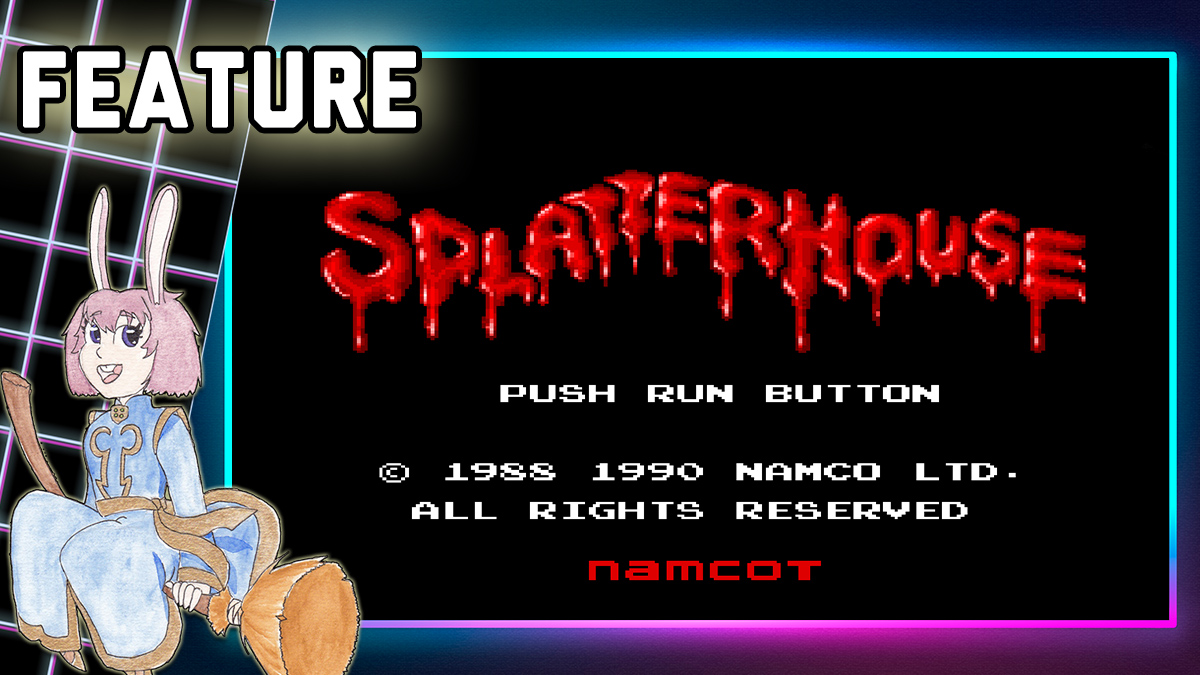
Hello and welcome to Lost Gems, the series where I cover classic games that are no longer available in an official capacity. Continuing with the special Halloween month, I will be discussing the home version of a legendary horror action game from the arcade, developed by Namco in 1988. So let us take a look at Splatterhouse, which was ported to various platforms over the years, with the most recognisable being the PC-Engine/TurboGrafx-16 release in 1990.
Disclaimer: while the version of the game discussed here may no longer be officially on sale, there are ways to obtain the game. This can be either through the second hand market, or via digital roms/rips. I do not condone or promote piracy, so there won’t be any links to roms or rips of the game being covered.
So with the introductions out of the way, let’s get started. I will be discussing the general game experience, then give my personal thoughts on the release.
About the game
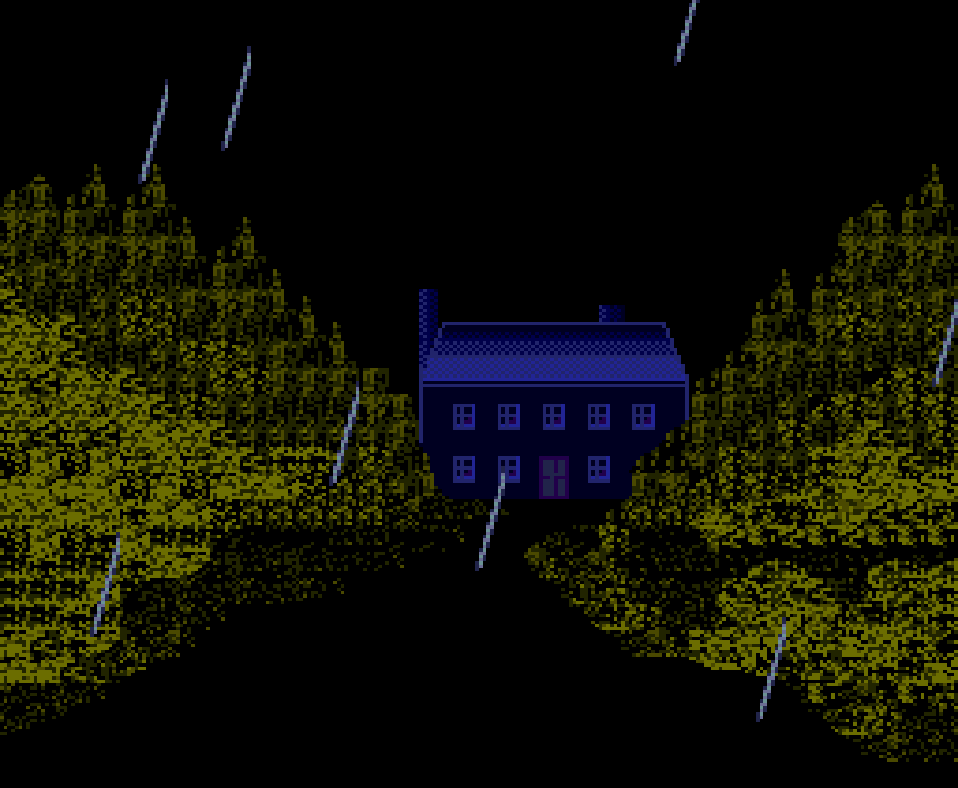
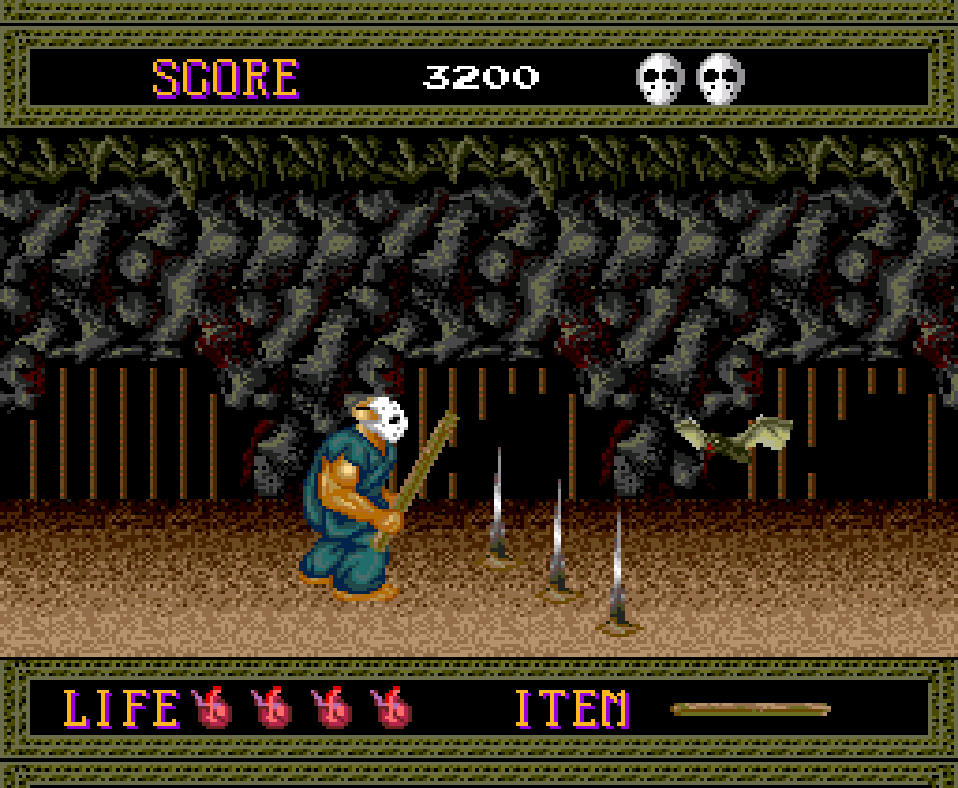
Splatterhouse is a side scrolling horror brawler, with platforming elements. The player controls Rick, a parapsychology student with his girlfriend Jennifer, when a storm breaks out causing them to seek shelter. They enter the West Mansion, when suddenly the couple are attacked by monsters. Jennifer is kidnapped and Rick is gravely wounded, the Terror Mask locates and attaches to the fallen Rick, empowering him to rampage through the Splatterhouse.
In this action brawler, the player must make their way through seven stages, set within the West Mansion and the grounds surrounding it. The player makes their way through the house of horrors, with terrifying monsters attacking Rick as he makes his way through each of the locations. The mansion is filled with monsters, which the player must use punches and kicks to kill them, leaving piles of corpses in his wake.
The monsters that the player will encounter are horrific abominations, with the Deadmen, zombie like creatures which roam the mansion being the most common. Then there are the more unique enemies, like the Jokers, which are female ghosts that drop skulls, and Master Dead, who can reanimate corpses endlessly. Rick will also face more supernatural threats, like Poltergeists which will possess chairs to attack him.

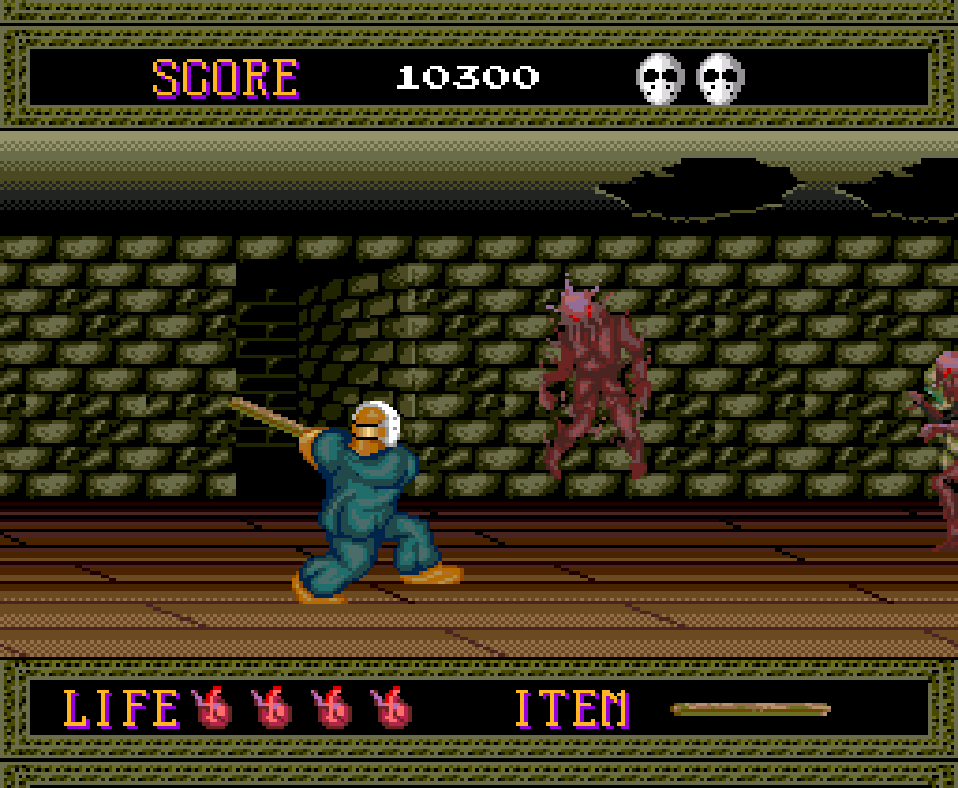
To help deal with some of the threats of the Mansion, there will be weapons in some areas that Rick can pick up and use against the monsters. These include the 2X4, which will send Deadmen and sludge monsters splattering against the walls. The player can also pick up throwable items, like wrenches, stones and even spears, which can olny be used once. In the third stage Rick can get the shotgun, which is the most powerful weapon in the game.
While traversing the stages, the main threat will be the monsters that attack directly, but there will also be additional environmental hazards to deal with. In some of the rooms, there will be zombies that can vomit toxic material at Rick, harming him if contact is made. The player can also encounter spikes, spinning blades and disembodied hands, which will pose a great risk to Rick, quickly killing him if players are careless with movements.
Each of the stages has Rick moving from left to right, with some of the stages having auto scrolling segments. There is also the capacity for branching paths, depending on decisions made by the player, as well as traps that they can be caught in. These alternate routes can lead to water ways, more dangerous encounters and even rooms filled with rotting remains. This adds more replay value to the horror, with multiple routes to explore.
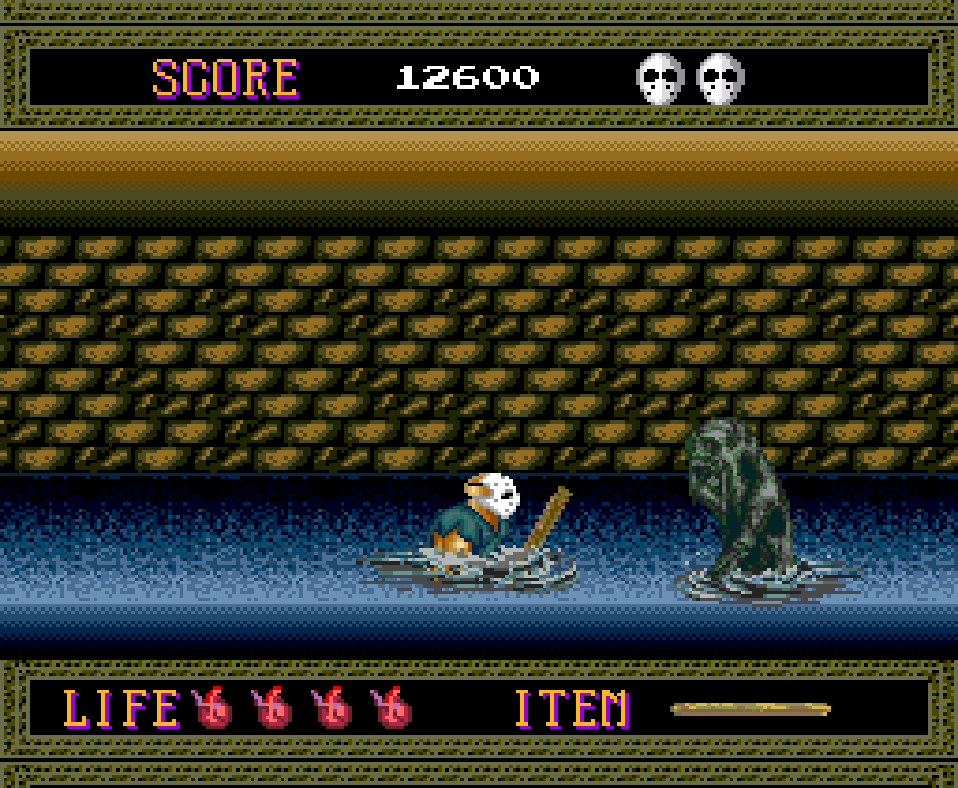
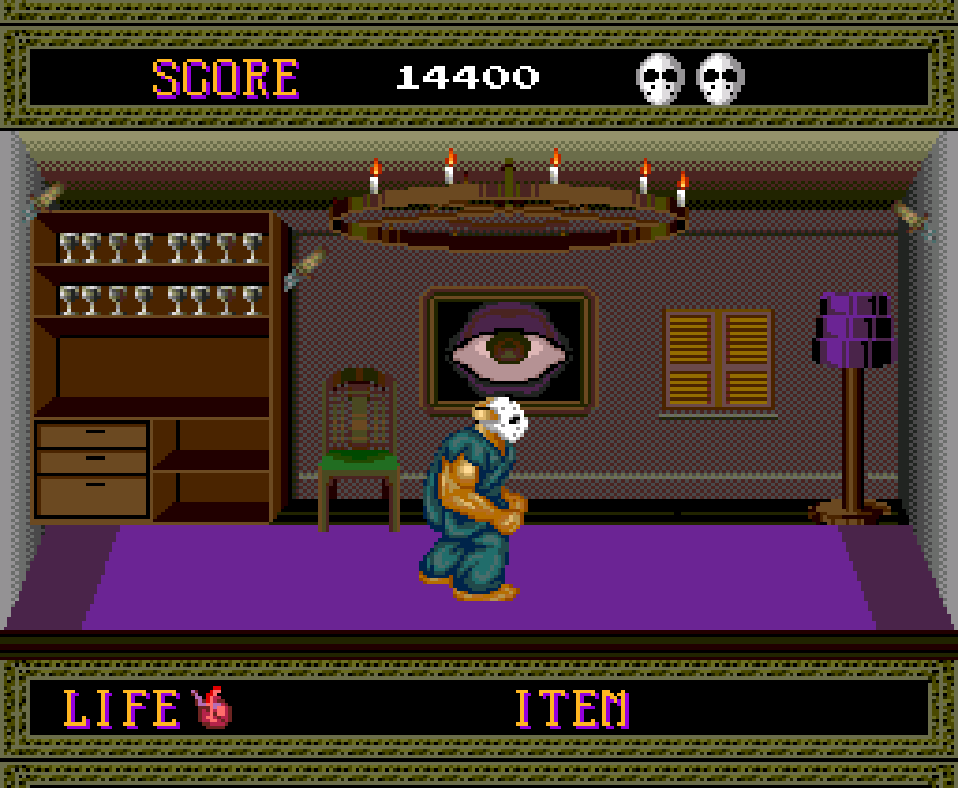
At the end of each stage, the player will encounter challenging boss monsters. These can be as simple as being attacked by Body Eaters, worm like monsters with large jaws that will try to bite Rick. But as the player makes there way deeper into the Splatterhouse, the creatures become more monstrous and deadly. The most infamous of these is the Biggy Man, a hooded figure with dual chainsaws coming out of bloody arm stumps.
Rick has three lives and five hit points with each life, which are lost whenever the player takes damage from enemies or hazards. There is no way to increase the health during a stage, so the player must make it to the goal, taking as little damage as possible. If Rick dies, he will be returned to the last checkpoint reached, but if all lives are lost a credit must be used, starting at the beginning of the stage. When a stage is cleared, some health will be recovered.
In this release, there are some special codes that players can use, accessing unique features for this release. The first is HARD mode, which will increase the difficulty of the game, making it significantly harder for players. Then there is level select, which lets players jump to any stage in the game, this can be very useful as there are limited credits in this version. Last is the sound test, which lets players listen to all of the music from the game.
Personal Thoughts

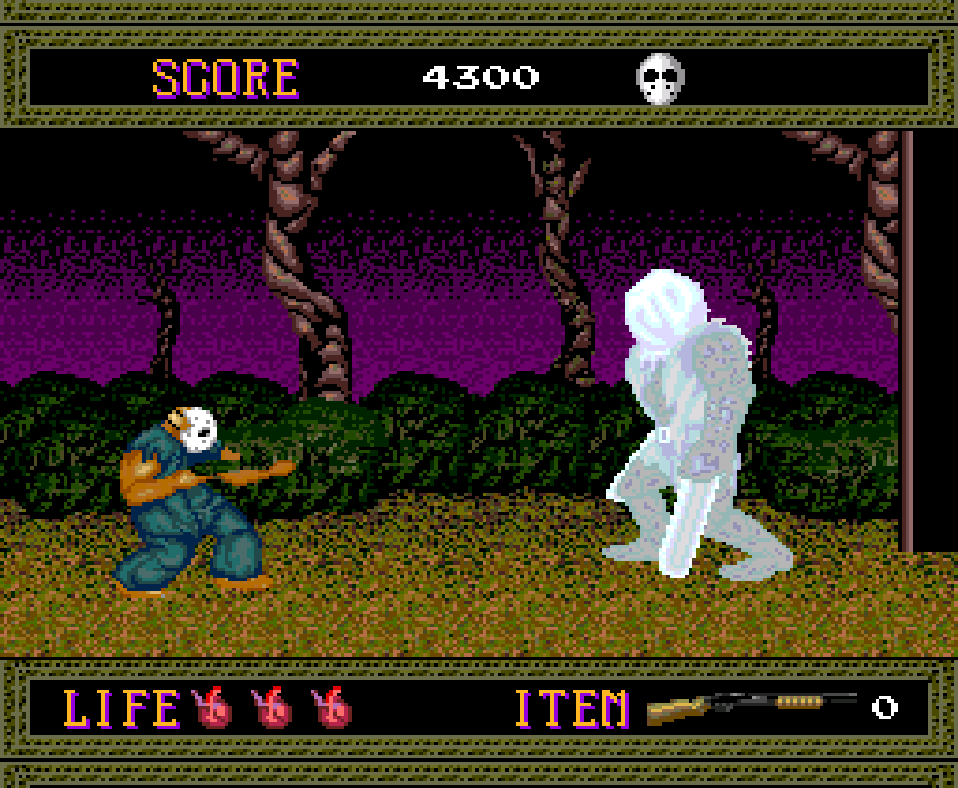
I first saw Splatterhouse through the Arcade version, being played through an early version of MAME in the 90s. I immediately fell in love with the franchise, as I thought it was the coolest thing ever, with the horror elements and gore. Which then lead to seeking out the Mega Drive sequels, Splatterhouse Part 2 and Part 3, which were equally gory and violent as the first. Long after this, I got my hands on the PC-Engine version of the game.
This became a firm favourite, as it was one of those games that was as close to the arcade version as possible, even though it had its limitations. There are details missing from this game, with reduced foreground effects, gore and other elements that are sadly not present. But the experience remains the same, with the same satisfying and at times terror inducing sequences still present. This version also feels harder than the arcade, likely due to the limited credits.
All of the stages are included, with all of the branching paths, traps and almost all of the weapons from the arcade mode. This port is impressive, given the tech limitations of the PC-Engine, all of the boss fights play out as they would in the arcade. The sprites are large and detailed, being carried over to the home quite well. Some of them were omitted due to space constraints, but all of the ones that were retained look amazing.

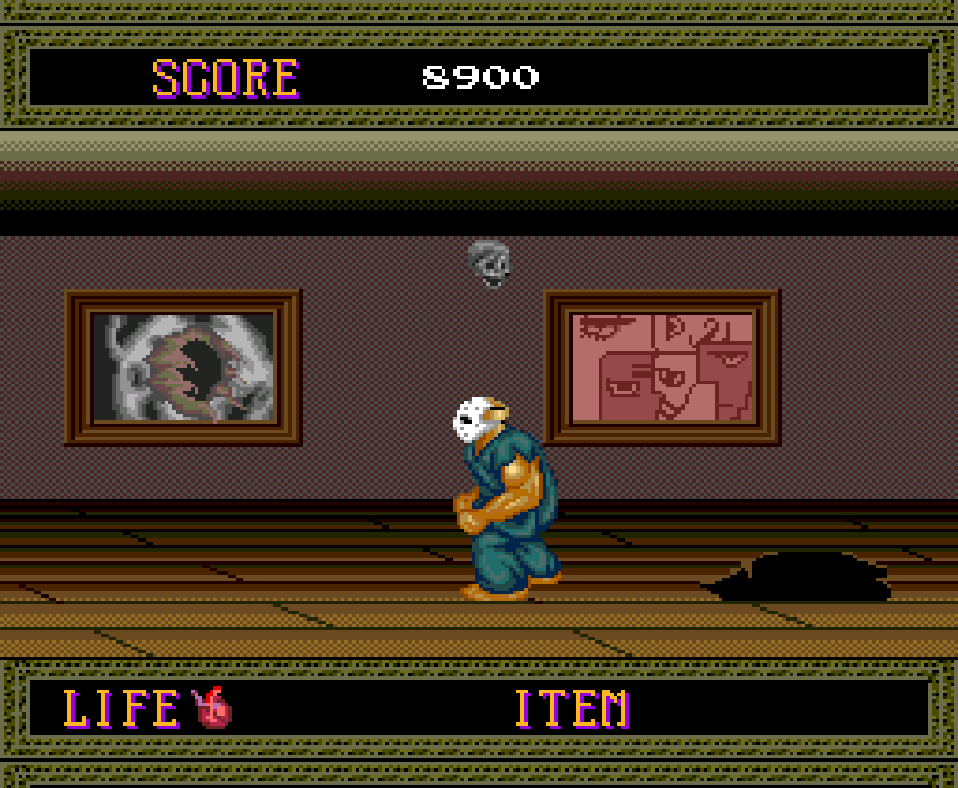
There were some changes made when the game was released on the TurboGrafx-16, due to the potential for legal issues, as well as complaints over religious iconography. An instance of possible satanic imagery, with a boss being an inverted cross was replaced with a severed head. A burial cross was replaced with a tombstone, and the Terror Mask itself was changed as the original design looked like a Hockey Mask, being changed to a more generic red mask.
Splatterhouse faded into obscurity for the longest time, with Splatterhouse Part 3 being the last in the series to get a wide spread release. That was until the Japanese exclusive windows port in 2004, then PC-Engine/TG-16 release to the virtual console in 2007. Following this resurgence of attention, the series was resurrected in 2010, with a brand new game, which included all previous games as a bonus. Sadly, this was the end for the franchise.
The original Arcade version has had several releases since the reboot, which included a release as part of the Namco Museum release for Nintendo Switch. The game was also released through the Arcade Archives label, via Hamster Corp on Nintendo Switch and PlayStation. In the years since the Virtual Console, Splatterhouse for the PC-Engine/TG-16 received one final release to date, being included on the Mini versions of the system in 2020.


This game has gained a cult following, with the arcade version being the one that most players know. However, there is still a demand for this game, leading to prices for the game to fluctuate, becoming more expensive on the secondary market. There are alternatives like the Everdrive, or reproductions, which are more cost effective. The most widely accessible way to play the game, is via the Arcade Ports for the PS4 and Switch.
I have a deep love for the Splatterhouse series, having owned the different games in many forms over the years. The latest being the Arcade Archives version, but there is a special place in my heart for the PC-Engine release, which was how I played the game for so many years. It is a piece of gaming history that needs to be seen, showing that while the system may have been “inferior” to its competitors, it was still capable of greatness.
If you have enjoyed this feature, then please stick around and see what else catches your eye. I cover a wide range of games in reviews, get special previews and put out regular features. I have Lost Gems, Retro Revival where I discuss re-releases and the occasional Gaming Oddities piece, where I cover weird and wacky titles. So stay a while and have a look around.


One thought on “Lost Gems – Splatterhouse (PC-Engine/TurboGrafx-16)”