Hello and welcome to another instalment of Lost Gems, the series where I discuss classic games that have been abandoned, forgotten or removed from distribution. This week I will be covering one of the earlier releases in the Mega Drive/Genesis Library, originally released for home computers in 1988 before being ported in 1990. So let’s take a look at ZOOM!, an arcade puzzle game developed by Discovery Software and ported by SEGA.
Disclaimer: While the discussed here is no longer officially on sale, there are ways to obtain the game. This can be either through the second hand market, or via unofficial digital roms/rips. I do not condone or promote Piracy, so there won’t be any links to roms or rips of the game being covered.
So with the introductions out of the way, let’s get started. I will be discussing the general game experience, then give my personal thoughts on the title.
About the game
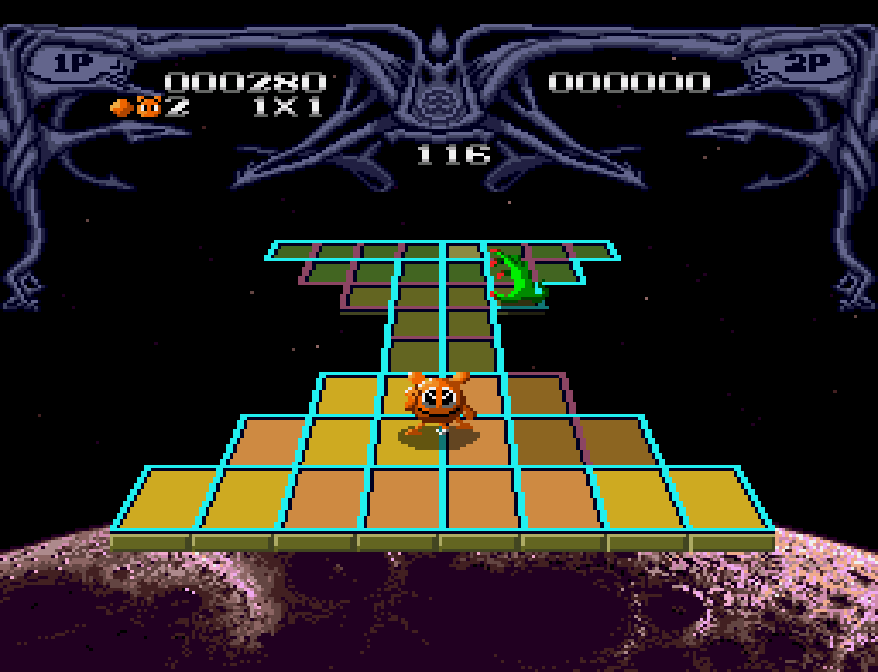
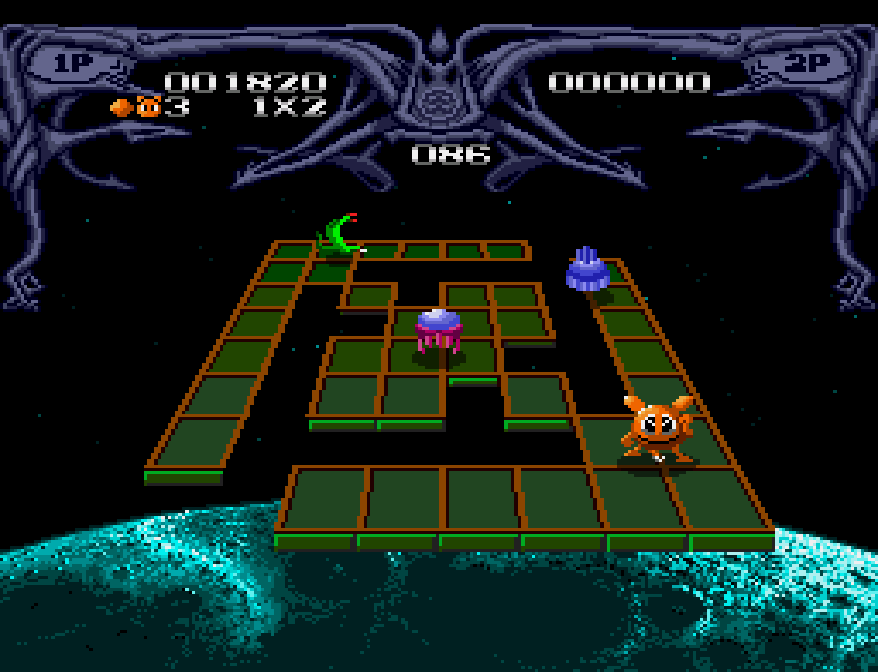
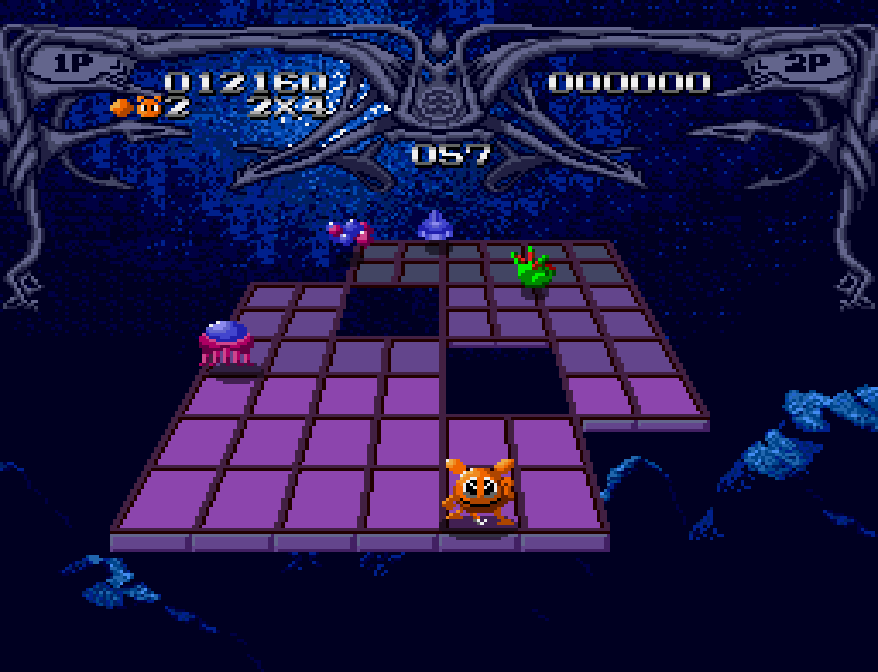
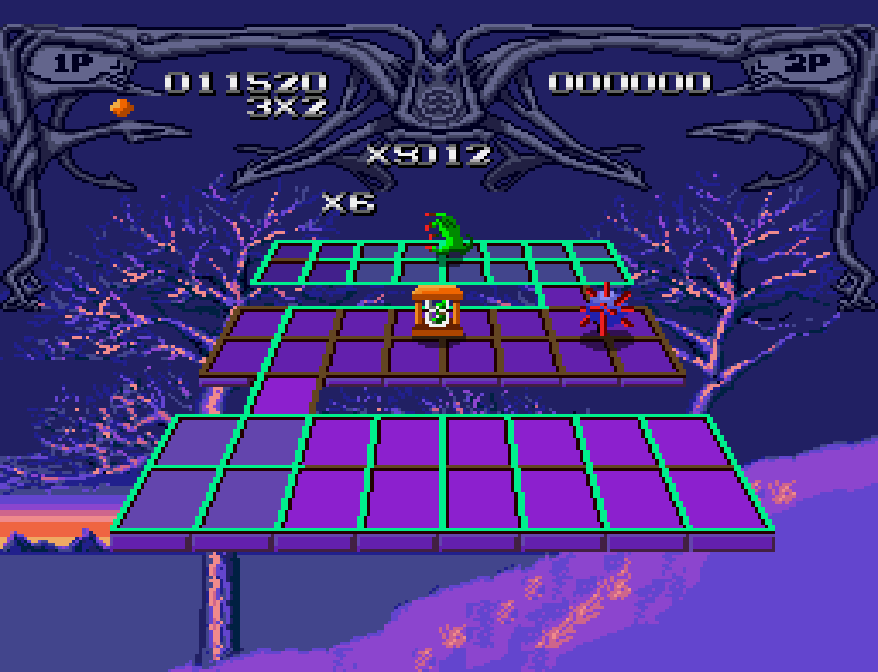
Zoom is a grid based puzzle game, where players control Mr Smart, who is on an adventure to save the world. The Space Phantoms have captured Earth, setting up force fields around the planet. Now Mr Smart must skate across these fields to destroy them and save the planet, while out running and outsmarting the space Phantoms that are chasing him. But be careful, because any contact with the wiggly Phantoms will stop Mr Smart in his tracks.
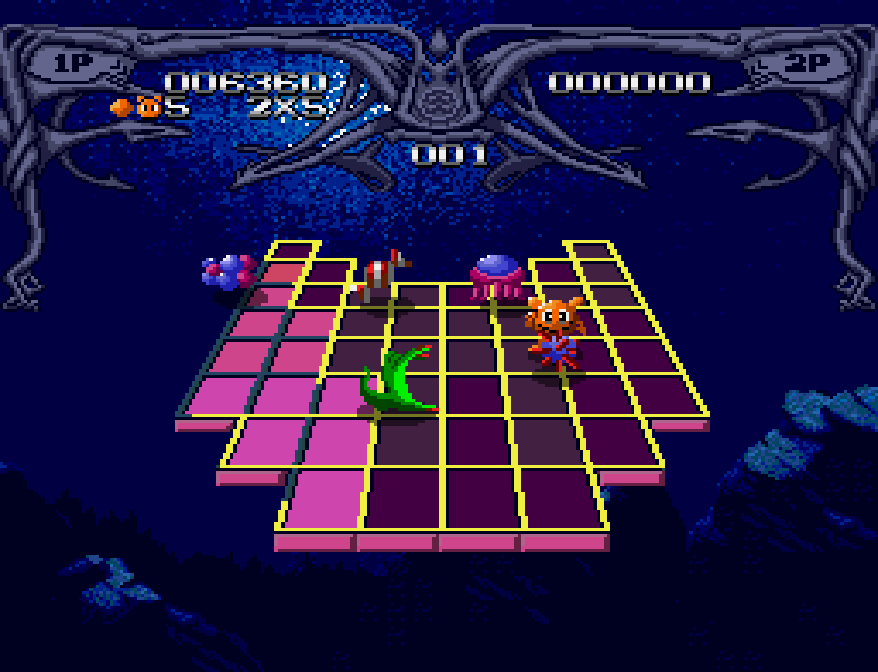
The objective for this game is very simple, the player must move across the grid based fields, tracing the lines on the field. The grids are set up into squares, which will glow when all four sides of the square are covered. By tracing all of the lines and making the whole grid glow, the field will be cleared and the player will move onto the next. The game is made up of 36 fields, separated into 6 stages for players to challenge during the course of the game.
As the player moves across the fields, there will be Space Phantoms that appear to stop the player. There will be Rowdy Fingers, a disembodied hand that will chase the player endlessly, trying to kill them. But players will also encounter the Spiler, that clears lines away, the Charm that slows Mr Smart down and more that will get in the way. These enemies will appear at the start of the stage, with contact against all but Charm killing the player.
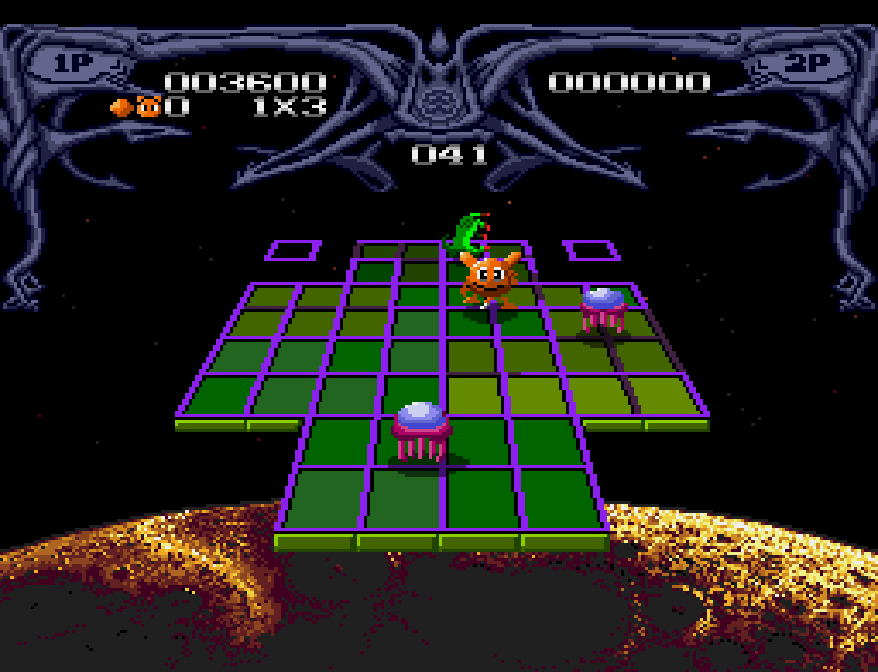
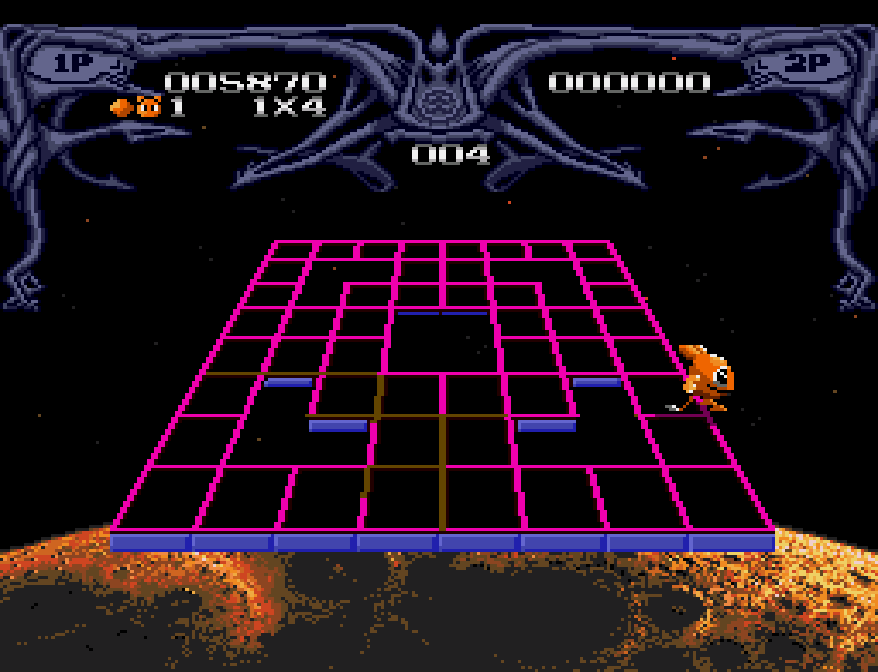
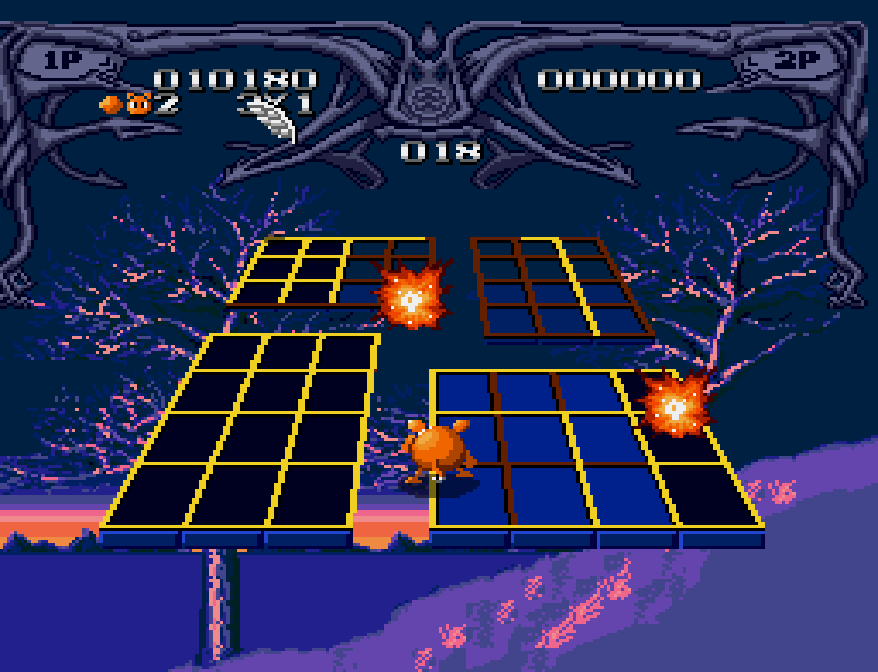
To avoid the Space Phantoms that the player has two options available to them, with the first being the jump, which will allow Mr Smart the ability to dodge enemies. This skill will let the player jump to different parts of the field, as some of them will have gaps and breaks in the grid. Then there are the rubber ball attacks, which will be thrown backwards and knock the Phantoms back a little. These are limited so it is important to use them wisely.
During each of the fields, there will be items called Goodies that players can collect. These appear rather frequently, with Candy that give points, Mushrooms that recover from Charm and the Banana that slows down Phantoms. But there are more powerful items to get, the Hour Glass freezes time, the Sun will give invincibility and the Star provides a random Goodie. The most powerful item is the Wing, which will clear the stage, but they are very rare to see.
Each of the fields have a time limit, which will vary from screen to screen. The timer adds some pressure to the stages, as clearing the field before the timer expires provides a score bonus. But if the time does expire, there will be an increased number of Phantoms, with several spawning onto the field. Thankfully, to compensate for this, there will sometimes be increased numbers of Goodies appearing, giving players a chance to finish the level.
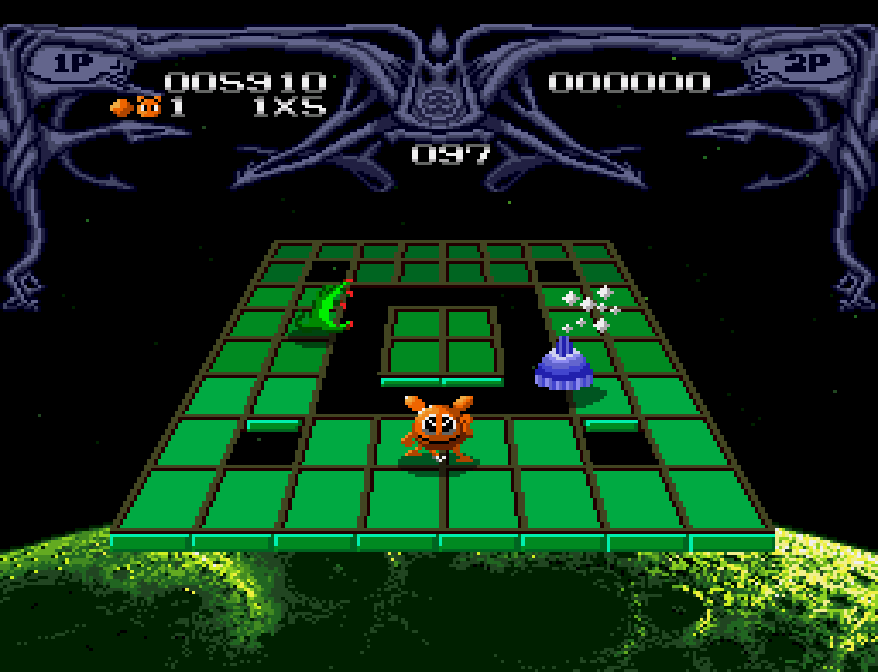
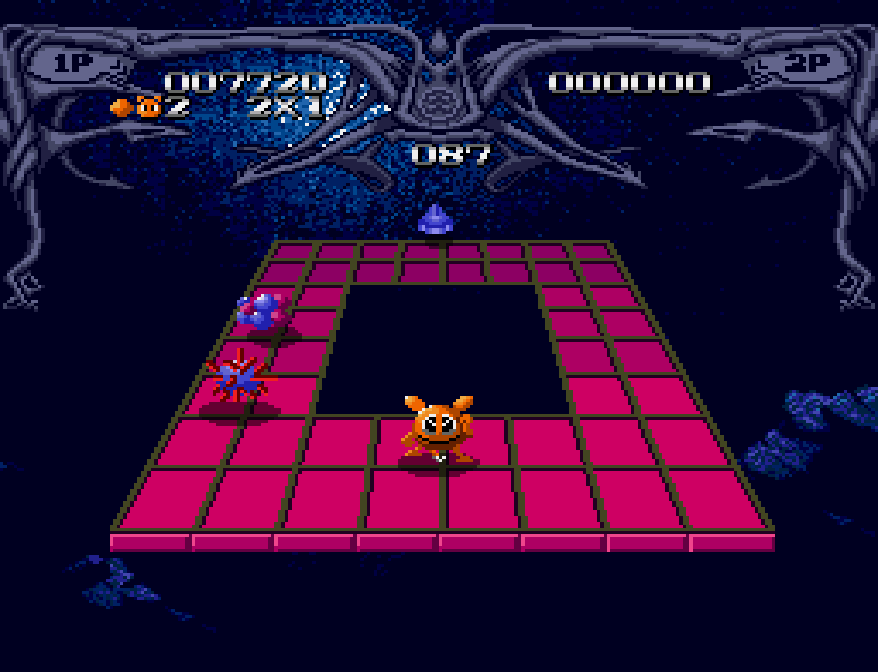
As this is an early arcade style game, the focus is on earning points to set a high score. So there are special score bonuses that can be earned during play. The most basic is to make one box flash, earning 10 points, but if a pair is lit 40 points will be scored. If the player is able to chain box flashes, they will get a multiplier for the number of boxes in the combo. This applies to both single and pairs being lit up, offering the chance for big scores.
The score and combos are important to making it through the stages, as players will earn additional live based on point milestones and hidden combo bonuses. If the player does lose a life from being caught by a Phantom, they will revive on the field to try and finish the stage. The player will start with four lives, with bonus lives keeping the game going. If all lives are lost and a game over occurs, the player can continue from the start of the stage they reached.
There are four game modes for this title, with the 1 player mode being the main focus of the game. Then there are the multiplayer modes that can be enjoyed with a friend or family member. There are three multiplayer modes, with alternating play, where players share a single control pad or a pad each. Players can also enjoy simultaneous competitive play, with players working together in the main game and for scores in the competition mode.
Personal thoughts
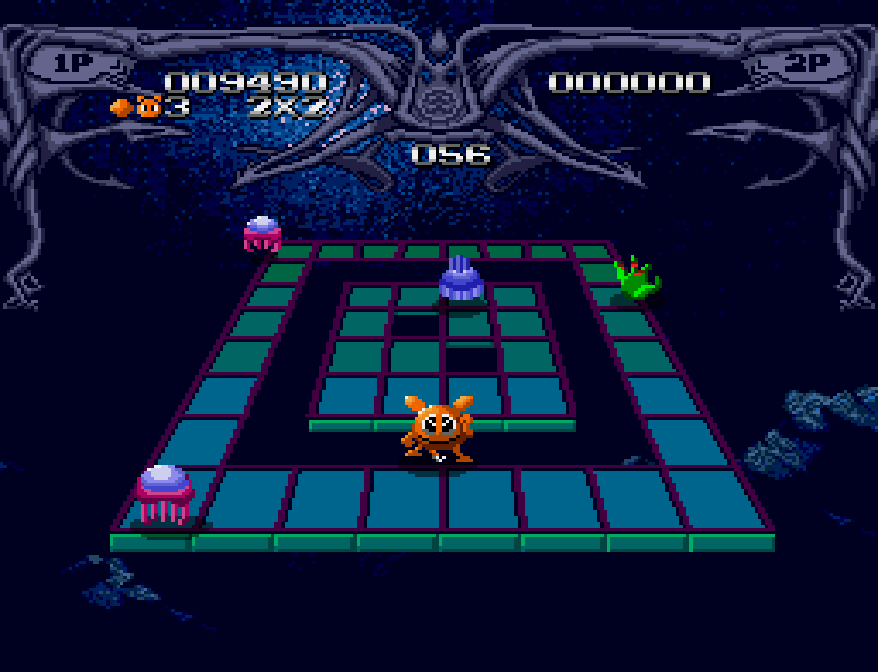
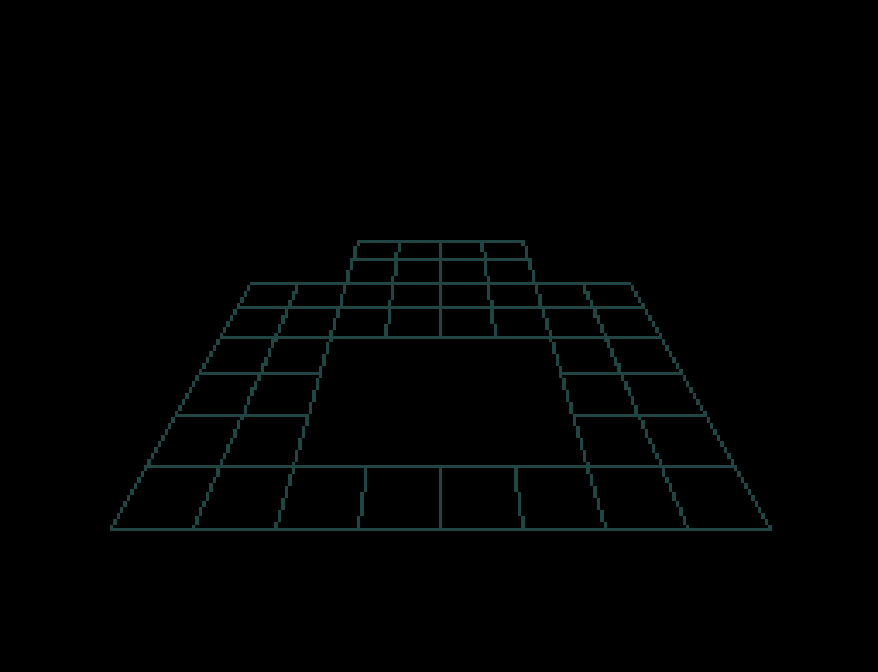
ZOOM! Is one of those unique games that was released during the early years of 16 bit graphics, offering a rather unique game experience. There is a pseudo 3D style to the game, with the grid fields rotating in and out of the screen during level transitions. It also uses a perspective that attempts to emulate 3D depth, with sprite scaling when the player/enemies move around the stage, zooming in and out depending on the position.
I have fond memories of this game, remembering it as a kid and playing a lot, but not being too good at it. I had owned personal copies of it with a loose cartridge that was lost, but I had managed to obtain the Japanese version complete in box. I returned to the game over the years, getting better at it, but I have yet to clear it without relying on the use of save states. This is due to it being a pretty long game, with no passwords or save batteries.
This game has plenty of content in it and I have a lot of fun with it, but sadly the audience and critics of the time didn’t enjoy it as much. There was a lot of negative response to the game, with critics comparing it to games from earlier systems, which I feel is undeserved. It may lack some of the bells and whistles that other games had, but it has a lot of content and an enjoyable challenge. Everyone can pick the game up, which is what makes it a good, fun time.
Unfortunately, while the game may be easy to pick up, there are some minor hiccups with the movements which can lead to some frustrations. It is possible to miss turns and get caught by enemies, which is similar to console versions of Pac-Man, where movement can be sloppy. But after a little while, it is easy to adapt to these little flaws. If you are going to play the game with third party controllers, you may have a better experience during play.
The original version of the game on home computers came out two years ago, and you can see the difference. While the grid based stages are still present, with the Pseudo 3D look and perspective, the sprite work and audio is relatively simple. The SEGA port improves on all aspects of the release, offering a more vibrant and charming experience. The sound does get a little repetitive, with the voice sample of “come on boy” being the only voice line.
It seems there is a lack of popularity for this release, which is reflected in the cost of the game on the secondary market. The price for the Pal and Japanese Mega Drive release, as well as the NTSC Genesis versions are low, making it easy to pick up for those interested in the game. The game has also been lost to time, with no ports or re-releases of the game since the Mega Drive/Genesis release, even lacking a Virtual Console release.
I have a lot of love for this game, as it is one of those unique and fun titles from the 16-bit console boom. There is a charm to the game, with the catchy melodies for the game, easy to pick up gameplay and plenty of content. It is unfortunate that there appears to be no information on the developer, meaning it is possible that there may never be a new version of the game. But it may be picked up by someone and get a new chance at life.
If you have enjoyed this feature, then please stick around and see what else catches your eye. I cover a wide range of games in reviews, get special previews and put out regular features. I have Lost Gems, Retro Revival where I discuss re-releases and the occasional Gaming Oddities piece, where I cover weird and wacky titles. So stay a while and have a look around.
 W.Kohaku Media