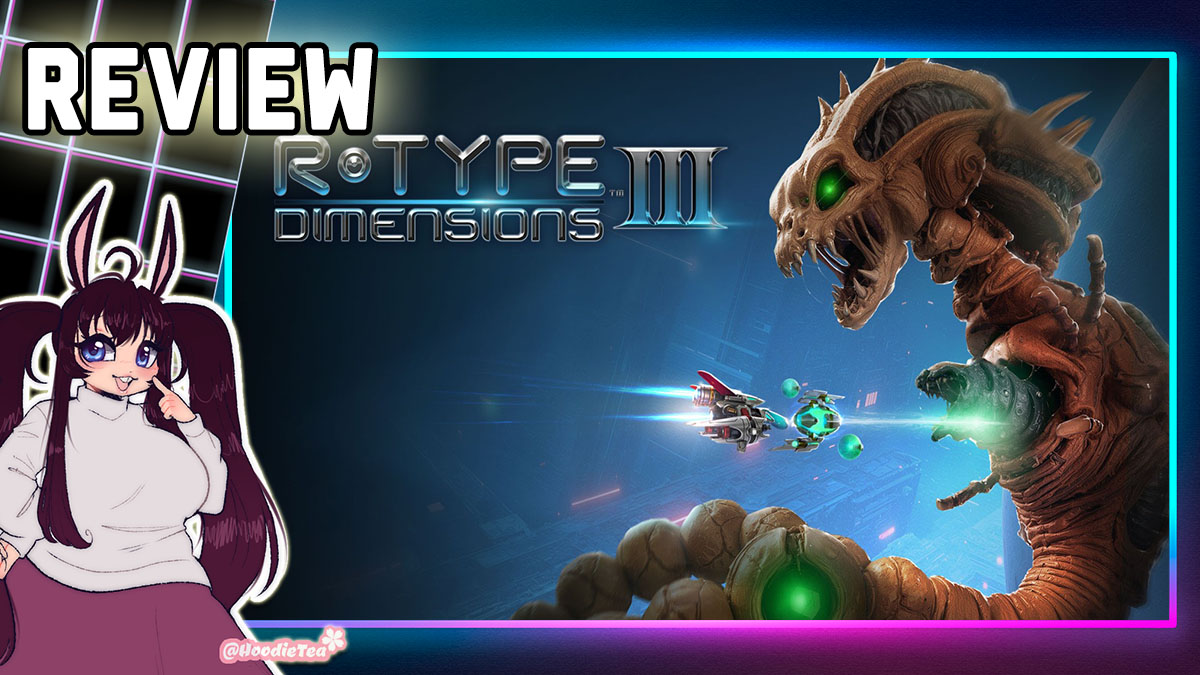
Overview – developed by KRITZELKRATZ 3000 and published by Tozai games/ININ Games, R-Type Dimensions III is a full remake of the classic Shooter for the SNES/Super Famicom from IREM. As the pilot of the R-90, embark on a mission into enemy territory, fighting the Bydo Empire that threatens humanity with destruction. This title is available for Xbox, PlayStation 5, Nintendo Switch, Switch 2 and Steam, with a link to each version of the game at the bottom of this review.
Disclaimer: before I get into the review, I would like to thank PR Hound for providing the copy of R-Type Dimensions III that was used for this piece. The provision of this software has not influenced the contents of this review, all thoughts and opinions contained within are my own.
Now with the introductions out of the way, let’s get into the review, starting with the story. I will be using details of the official manual and the store pages for the story. I have covered other recent R-Type titles, which you can find (HERE).
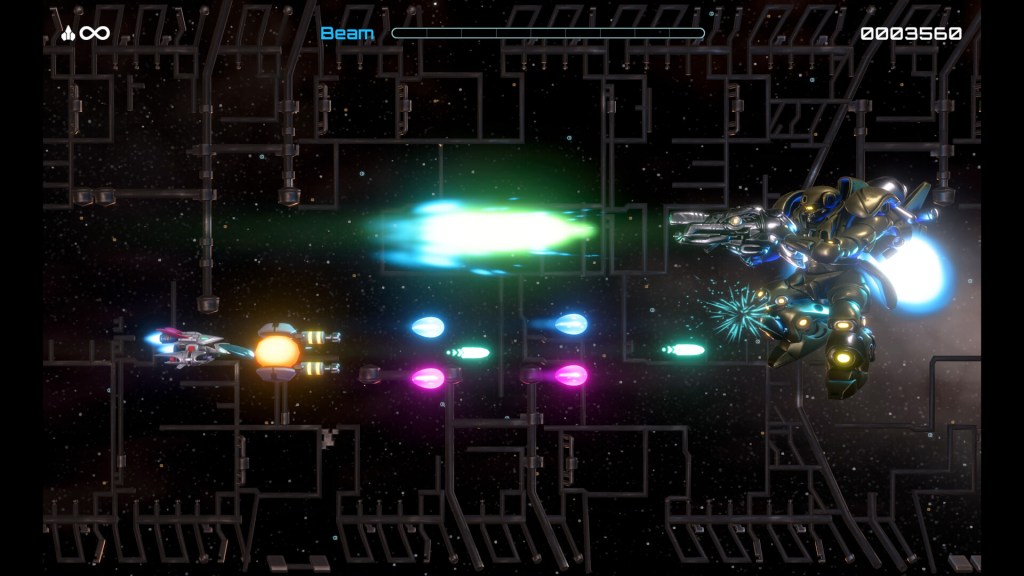
Story – in a distant future, the BYDO Empire has been a threat to Humanity, engaging in war with Earth and beaten back each time. These bio-mechanical creatures have appeared once more, close to the Earth and threatening humanity with extinction. Earth deploys the R-90 Ragnarok, the latest R-Type craft, on a mission to destroy the remnants of the empire. As Captain of the R-90, warp between dimensions to battle the BYDO and eliminate them to save the Earth.
Gameplay – R-Type Dimensions III is a side scrolling shooter, taking place across six distinct stages, where the player must battle the forces of the BYDO. The stages follow the traditional shooter system, where the screen will scroll as the player battles enemies, blasting them with their standard weaponry. However, there is also a Beam that can be charged for a huge single blast, or the Hyper beam which will provide greatly enhanced power for a limited time.
While battling the forces of the BYDO, the player will be able to shoot down upgrade capsules, which will drop power-ups for the player to collect. The most important is the Force power-up, which is a satellite that will attach to the ship, or move around the screen when detached. There are three types of force that can be used, with the choice of force being made at the start of the game. The different types of force are as follows;
- Round Force – this is the most basic of the Force satellites that can be used, when attached the Force will unleash powerful Laser attacks. These consist of the circular Chain Laser, Mirror Laser that bounces off surfaces and Sweep Laser that runs across surfaces. When detatched, the Force fires in several directions.
- Shadow Force – this force is focused on destroying as many enemies as possible at once. The attached attacks consist of Reverse lasers that fire in front and behind of the ship, the Shadow Lasers that summons a support ship and Strafe Laser that flows along the terrain. The detached attack is a simple spread shot, attacking in multiple directions.
- Cyclone Force – This advanced force specialises in defense, but is just as adept at damaging enemy forces. The three laser types are the Pierce Laser that moves through objects, the Wave Laser that expands upon contact and the Capsule Laser, which deploys static satellites that attack enemies. The detatched function for this Force produces a laser, which will block enemy attacks.
When the player collects their first power-up, they will have only one attack, but as more of the upgrades are picked up, the power will increase to a limit. But that isn’t the only one that can be collected, there are the speed units, which will upgrade the speed the ship can move. Then there are the Missile units which give the R-90 the ability to fire missiles. The last power-up is the Pit Unit, which add support satellites that can help protect the ship.
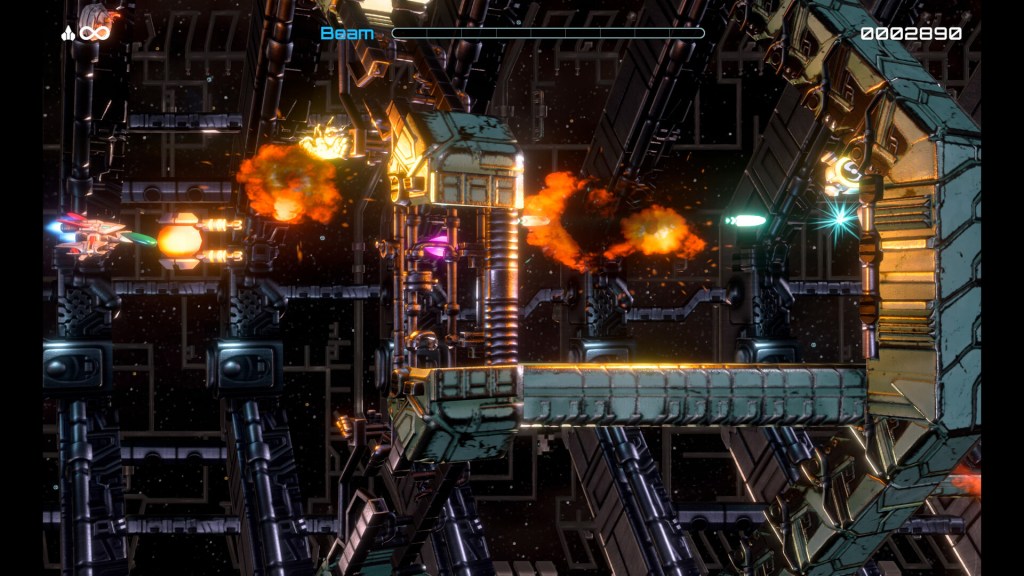
In the stages, players will also need to avoid the hazards of the stages, including the tight passages of a space station, the tunnels of the acid cave and deadly industrial zones. To survive the different dangers of these environments, players must take great care, as any contact with the enemy, hazards or shots will destroy the player ship. When this happens, they will be sent back to a pre-set checkpoint when playing in Original Mode, losing all power-ups.
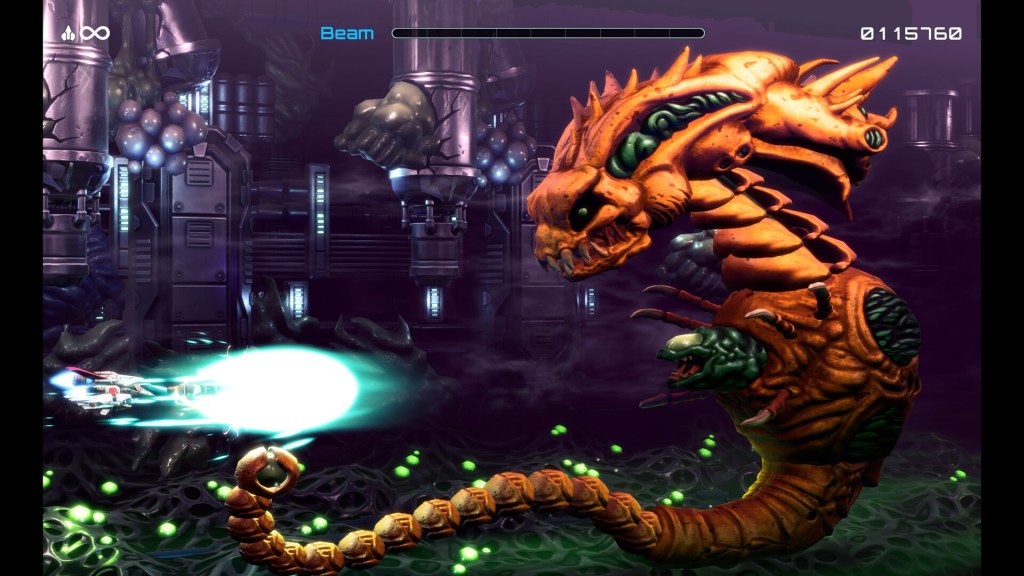
At the end of each stage, the player will encounter powerful bosses with unique gimmicks to them. This is where the challenge really jumps in difficulty, as one of the bosses has a wall in front of them, needing to be hit with charged beams to damage them. There is also a crab-like machine that will be behind the player, needing to be shot or hit by the Force to damage it. This is combined with deadly attack patterns and on screen hazards.
There is also the boss rush Phantom Cell, which appears late into the game, which takes the form of bosses from R-Type 1&2. During battle with the Phantom Cell, by dealing enough damage to the creature, it will switch between 4 different forms. This includes the iconic Dobkeratops, the H.R. Giger inspired creation that has appeared in most of the games in the series. This is the longest boss battle, appearing before the final stretch of the game.
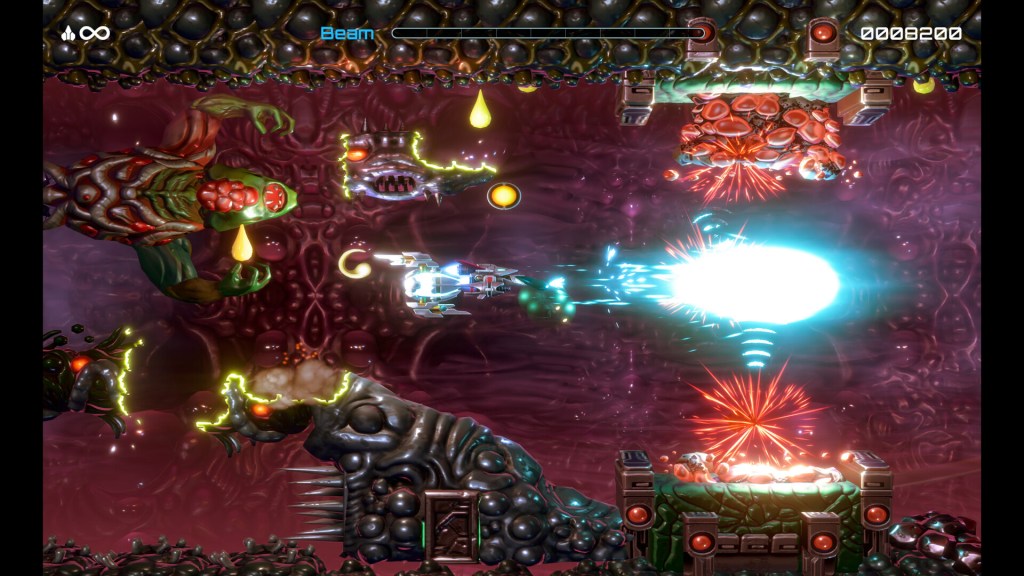
As each stage is cleared, there are seamless transitions between stages via blackout screen. If the player started the game on normal mode, clearing the game will cause it to start again in Advanced mode. This second loop is significantly harder, with tougher bosses and enemy attacks. Clearing this loop is the only way to get the ending screen. If the game is started on Advanced mode, there is no second loop, with the game ending when the final boss is destroyed.
For this game, there are two game modes that players can challenge. The first is Original, which is the intended way to play the game, with limited lives per continue and reverting to checkpoints on death. This is a rather brutal and challenging game, where player skill will be pushed to the limits, with any death leading to progress being lost. To make it through these challenges, players will need to have a lot of patience to learn each of the patterns and stages.
Luckily, there is a second mode that is more accessible for players. This is the Infinite Mode, where players will have an unlimited number of lives to make it through the game. There is also a change in how death works, as each death will have the player immediately respawn, without going back to a checkpoint. The player will also respawn with the Force, which will be needed to battle some of the bosses, making it possible to clear the game.
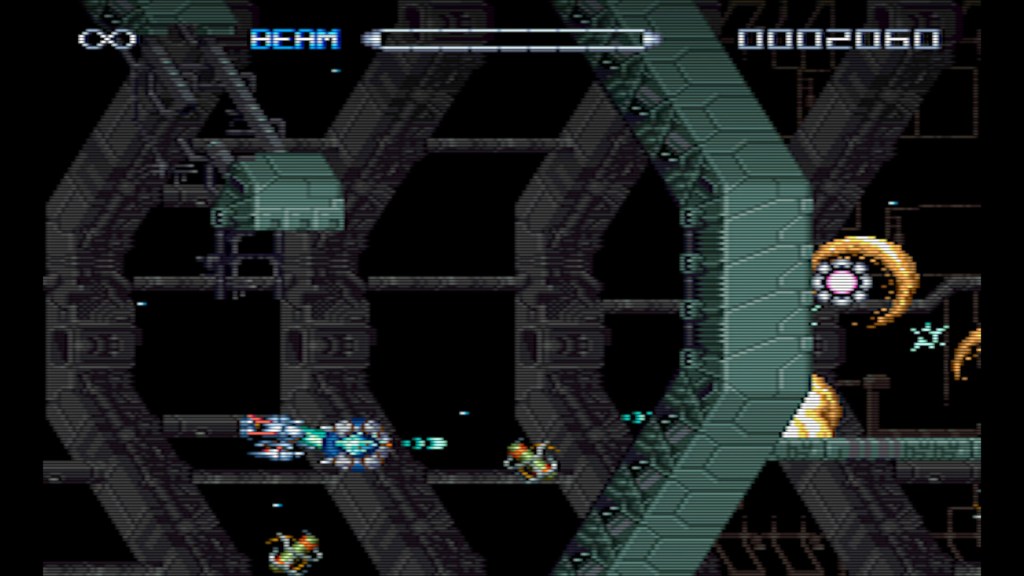
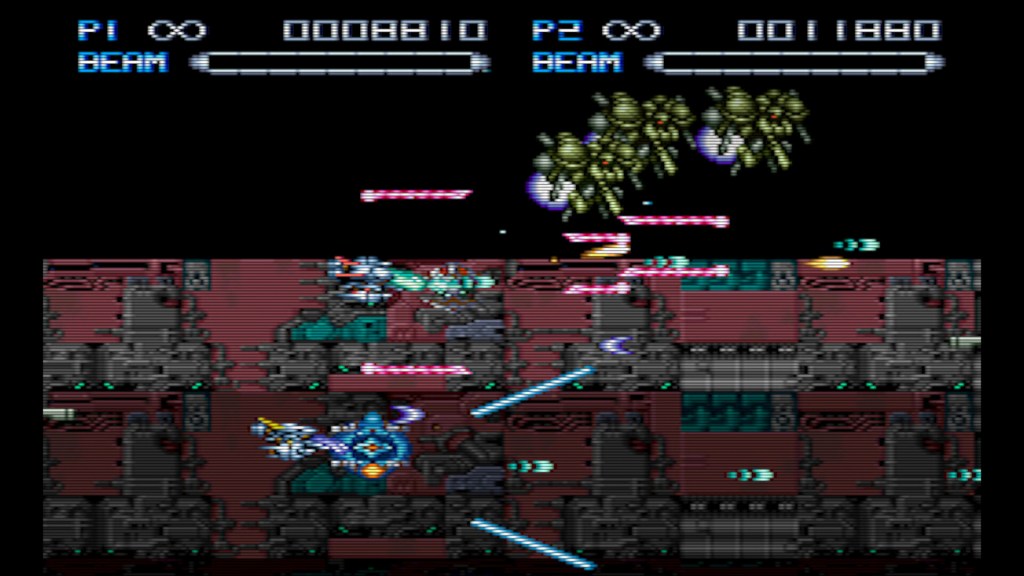
There are also new features that have been added to the game aside from the Infinite mode, with enhanced resolution, brand new 3D visuals and a special camera perspective. There is the ability to switch between visuals freely, going between the original SNES sprites and the new 3D models during play. There is also a stage select, with stages unlocked by beating them in either mode, allowing players to resume the game between play sessions.
Alongside the single player mode, there is a co-op mode where two players can work together to take down the BYDO menace. This game mode functions as a mix of the Original and Infinite modes, with the ability to respawn immediately but there are limited lives. In the event both players run out of lives, they will be sent back to the last checkpoint reached upon continuing. This makes the challenge more approachable in original mode with a companion.
If the players choose the Infinite mode, this is even easier to play through, as the two players together will be able to wipe out all enemies quickly. The removal of the limited lives will also make it much easier for a co-op run, allowing both players to get through the game. It is important to know that there are leaderboards for scores and achievements/trophies to unlock, but they are locked out in Infinite modes for both single and co-op play.
Now with the gameplay covered, it is time to discuss the other aspects of this release, starting with the controls.
Controls – this game uses a method similar to the original release, using four buttons for the main features. The shooting and Force control are on the face, the beam switch is on the shoulders and oddly the camera/sprite shift buttons are spread on the controller. In general the feel of the game is positive, with responsive controls and on all systems. This is important as there is a lot of precision that is needed to get through the hazards of the stages.
Difficulty – this is possibly one of the hardest non-bullet hell shooters that I have played, with a difficulty level that is brutal to play. This is likely due to it being a SNES game, which were notorious for being punishing to make the game last as long as possible. I found the Original mode so difficult, I was unable to get past the third stage. However, thanks to the Infinite Mode, I was able to experience the whole gameplay experience.
Presentation – there is a bit of a strange thing that happens with the game visually, as some of the environments don’t seem to translate to 3D the best. The original SNES sprites are just bursting with color, with the backgrounds being clean and vibrant. However, some of the background assets in 3D look a little too dark, losing some of the clarity and details that were present. This is just a minor hiccup in the overall experience.
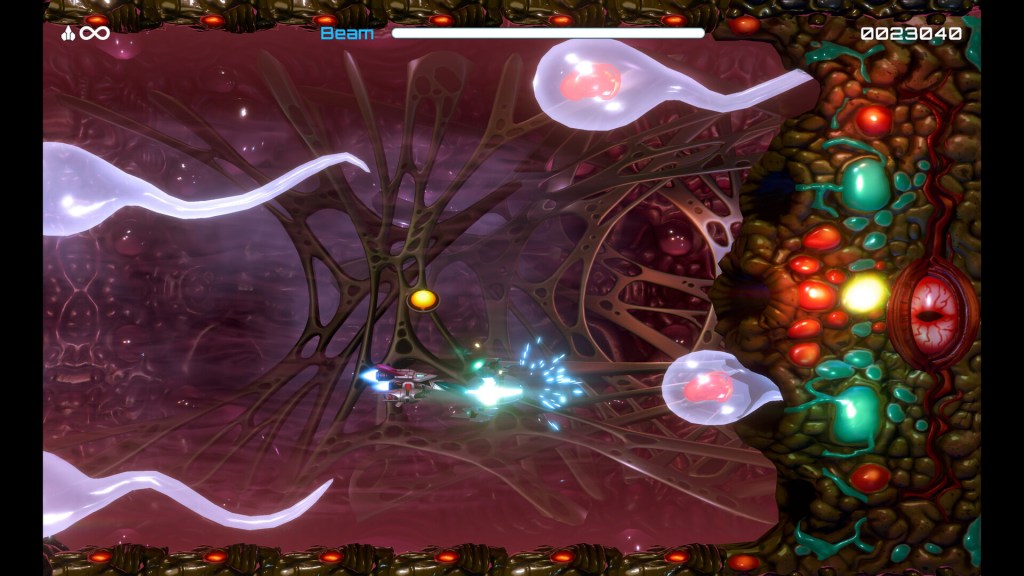
With this release, there is a CRT filter that can be toggled for the SNES graphics, making it look as close to the original as possible. This is a nice choice and does look pretty good. There is also an angled camera perspective for the 3D camera, called the Crazy camera and adds an extra dimension as a fun bonus. For the music, there is the original Chiptune sound, alongside a brand new orchestration of the full soundtrack, sadly it doesn’t seem to loop correctly.
Final Thoughts – I have a lot of love for the R-Type series, even though I am not the best at it, but I still like to give it a good try. I had played the original game that this is based on, way back on the Super Nintendo, but I never got too far into it. So it was pretty nice to be able to return to the game, give it another try and see what happens. I did have a pretty positive experience with it, finally being able to experience the whole game, even if it wasn’t the intended way.
There is a brutal challenge on offer that those with masochistic tendencies would enjoy, as it requires timing, precision movement and a lot of pattern memorisation. But for those who just want to experience the battles through space, there is the option for it, either alone or with a companion. It is a little rough around the edges, but offers a very good way to experience a classic on modern platforms. So I am happy to recommend picking this game up.
In the end, I give R-Type Dimensions III a final Score of 4.5/5. This is an excellent revival of one of the most challenging SHMUPS on the Super Nintendo, with some decent enhanced visual options, as a solid recreation of the original, while also offering an accessible experience that everyone can enjoy. If you want to check this game for yourself, a link to each version will be below.
Link to Steam version (HERE)
Link to Nintendo Switch version (HERE)/Switch 2 (HERE)
Link to PlayStation 5 version (HERE)
Link to Xbox version (HERE)

