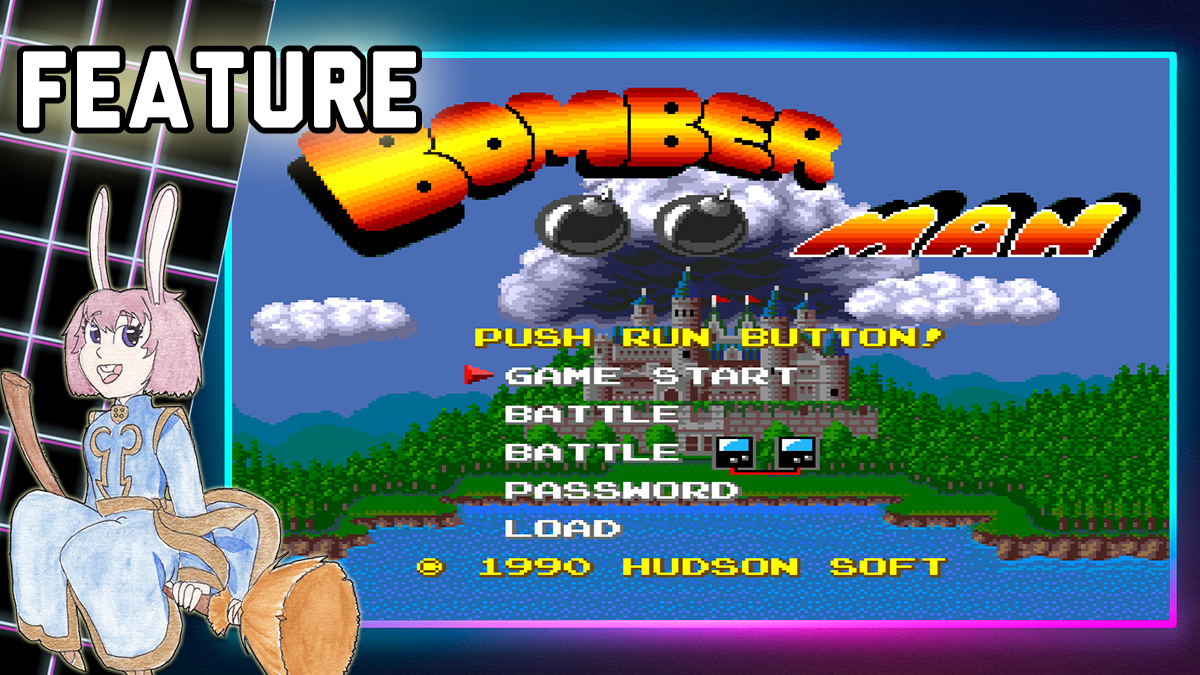
Hello there and welcome to Lost Gems, the series where I highlight games that have been lost, forgotten or simply pulled from distribution. This time I will be revisiting the PC-Engine again, checking out the first game in the Bomberman series to be released on the system, which took the core set in the Famicom games and expanded on them. So let’s take a look at Bomberman, developed and published by Hudson Soft for the Pc-Engine/TG-16 in 1990 and 1991.
Disclaimer: while the title discussed here is no longer officially on sale, there are still ways to obtain the game. this can be via the secondary market, or via unofficial digital roms/rips. I do not condone or promote piracy, so there won’t be any links to roms or rips of the game being covered.
Now with the introductions out of the way, let’s get started. I will be discussing the general game experience, then give my personal thoughts on the title.
About the game
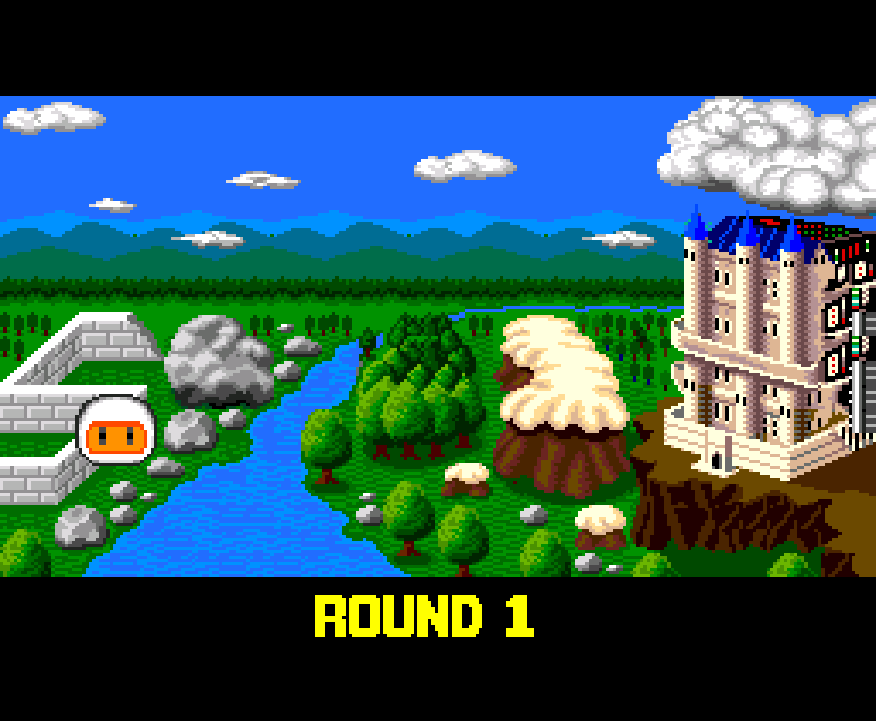
In the future, Dr. Mitsumori creates the Black Bomberman, a second unit based upon the original Bomberman. However, due to an error, Black Bomberman goes berserk and kidnaps the scientist’s daughter Lisa, taking her to a mechanical Castle. After seeing these events unfold, Bomberman sets out on a quest to defeat Black Bomberman, his army of monsters and save Lisa. The main story plays out in single player action, across 8 rounds set in different locations.
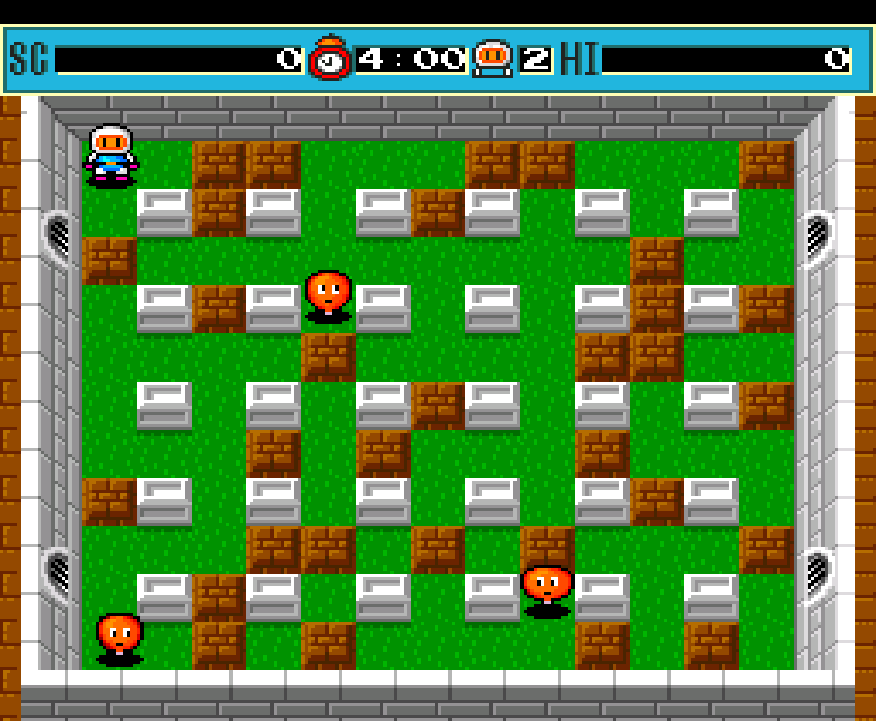
The objective and gameplay for the single player mode is functionally identical to the Famicom original. In each of the stages, the player must drop bombs to destroy soft blocks and kill enemies, with the goal to defeat all of the monsters and uncover the exit gate. Just like the original game, the stages are vast and made up of wide scrolling fields. But unlike the Famicom title, this version of the game features vertical scrolling, which expands the gameplay.
As the blocks are destroyed the paths of the stage expand, but they can also reveal power-ups for the player to collect and enhance their power. The items that can be found in blocks consist of additional Bombs, fire power increases and general support items. Support items include the detonation switch, wall pass that lets Bomberman cross soft blocks and the Fire Suit, which prevents fire from harming Bomberman. Support items last until death.
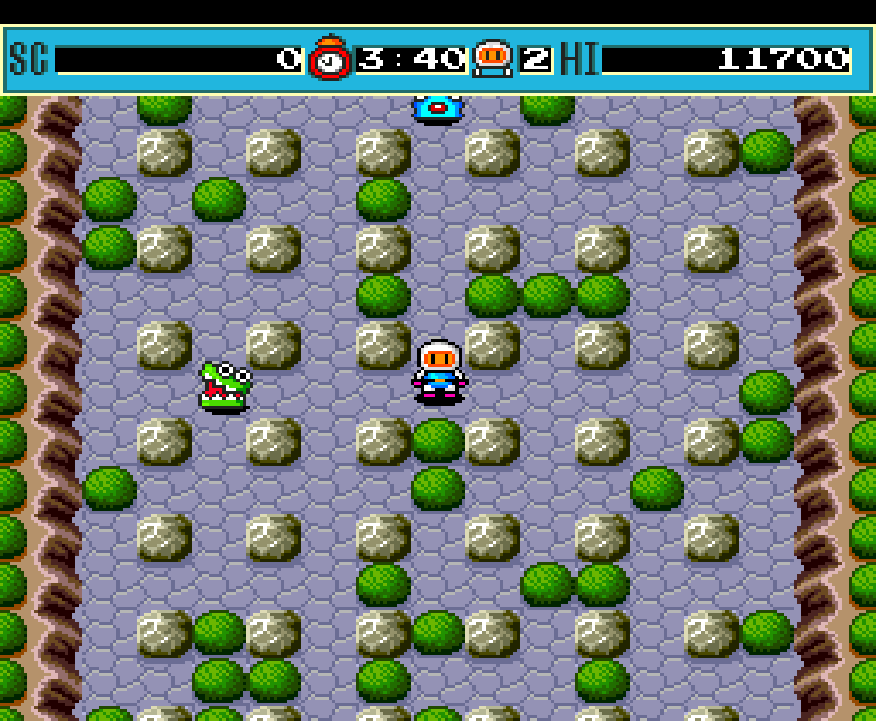
Once all of the enemies have been defeated, the player will be able to use the exit to end the stage and progress. However, if the player doesn’t reach the exit within the time limit, a chaser enemy will appear and kill Bomberman. At any point during a stage, if Bomberman is killed, they will be sent back to the start of the stage. If all lives are lost, the player will get a game over, with the option to continue, get a password and even save the game with the memory add on.
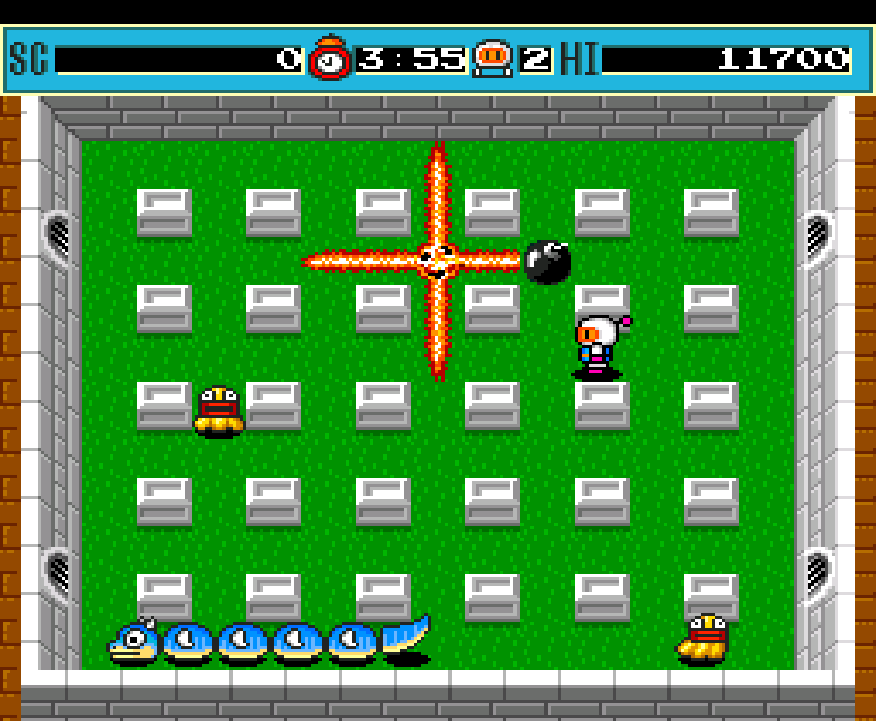
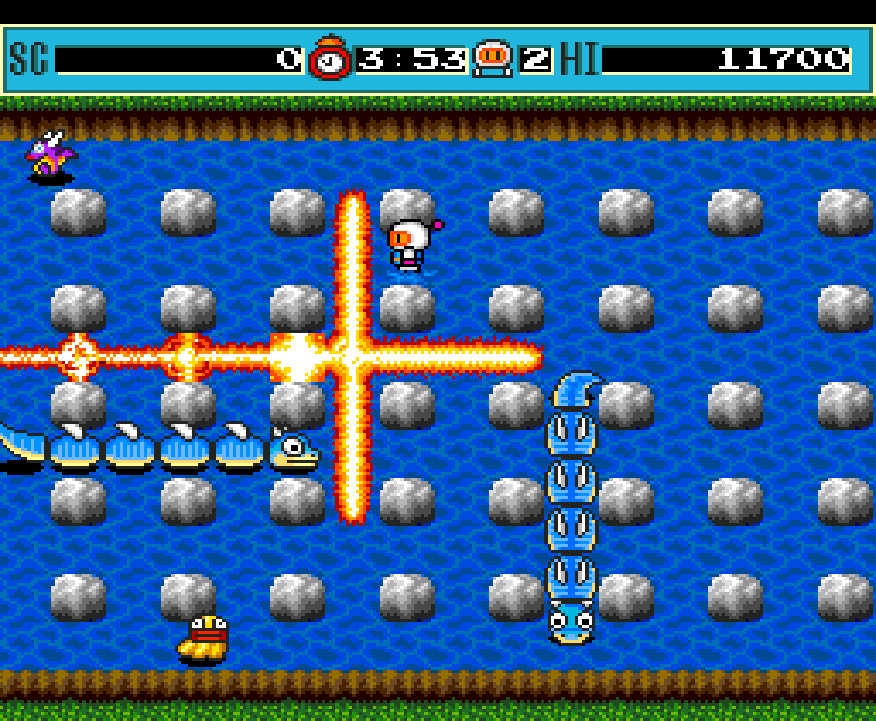
When the player reaches the last stage of a round, Bomberman will encounter a powerful boss. These boss battles take place in a closed off arena, with the boss having multiple hit points before they are defeated and the exit appears. Boss monsters include a Dragon, a monster that is surrounded by others as shields and Cyclops monsters. In the final confrontation, Bomberman will face the Black Bomberman in deadly combat, saving Lisa if he is defeated.
Alongside the single player campaign, there is also the option for 5 player multiplayer battles. This mode mostly follows the traditional style of play, with the players facing off in the classic Grey and Green arena. Players can set the number of wins needed to secure victory, as well as the number of players that face off in the battle. There is no COM support for battles, meaning all players must be humans to take part in battle mode.
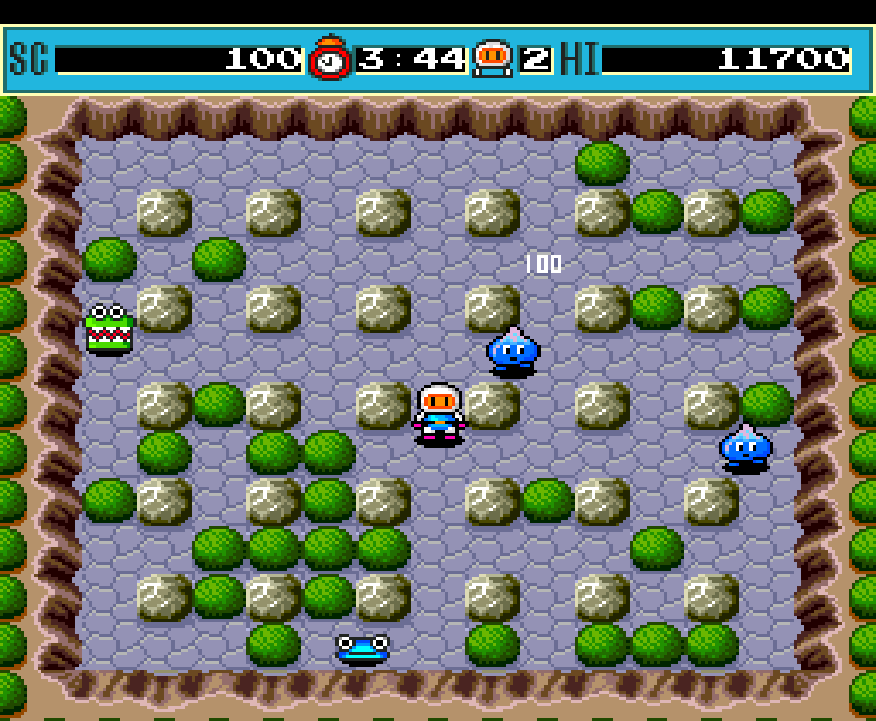
There are two modes that can be played, the Normal battle, where the rules are simple, get bombs and fire pick-ups to defeat the other players. Then we have Skull Mode, where the skull icons can appear and curse the players who make contact with them. But the biggest difference in this version is the inclusion of Monsters in battle mode. If there are less than 5 players, monsters will be added to battles to make the battles more chaotic, but spoils the fun a little.
The last thing to mention is the link mode battle, which was included to work with the PC-Engine GT/TurboExpress handheld system. This allowed players to take their games on the go, with the PC-Engine version of Bomberman supporting link play. While this was only included in the Japanese version of the game, it allowed for a players to challenge eachother while on the go, like their Competitors, the Game Gear and Game Boy.
Personal Thoughts
I have been fairly open about my love for the Bomberman series, having created several features on it already (found HERE), with more planned for the future. This one being is game I experienced later than the others, even though it is the first to be released for the PC-Engine. I remember playing it through the Magic Engine emulator on Windows 2000, but it was limited as the emulator was a premium release, so I was limited to only 5 minutes of play.
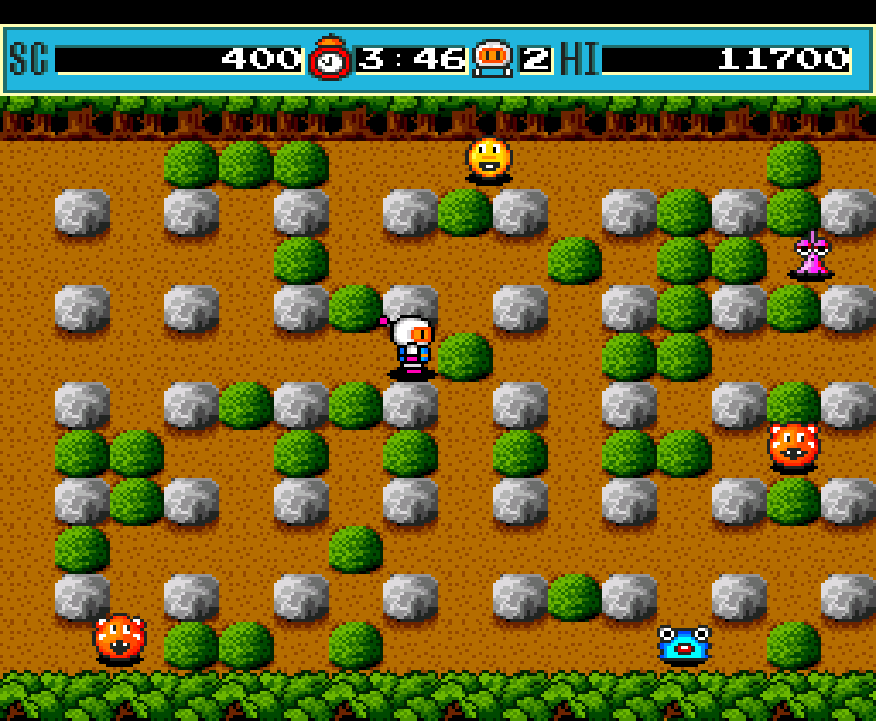
But as time passed, there were more options available so I was able to play more of the game, and I gained a great appreciation for this version of the game. While my personal favourite in the PC-Engine releases is Bomberman ’94, I have a great appreciation for this release, as there is a good depth of content and fun to be had. Even though it is rather limited in the variety of single player content, it has the longest campaign with 64 stages to play.
The simplicity of the game makes it easy to pick up, as it offers a challenge that everyone can get into. But the basic nature of the gameplay could be tedious for some, as it can become repetitive the longer it is played. The later games on the system expand all of the core mechanics, with new gimmicks and boss battles. But this is an important piece of the Bomberman lineage, as it took the original Famicom game and significantly upgraded it.
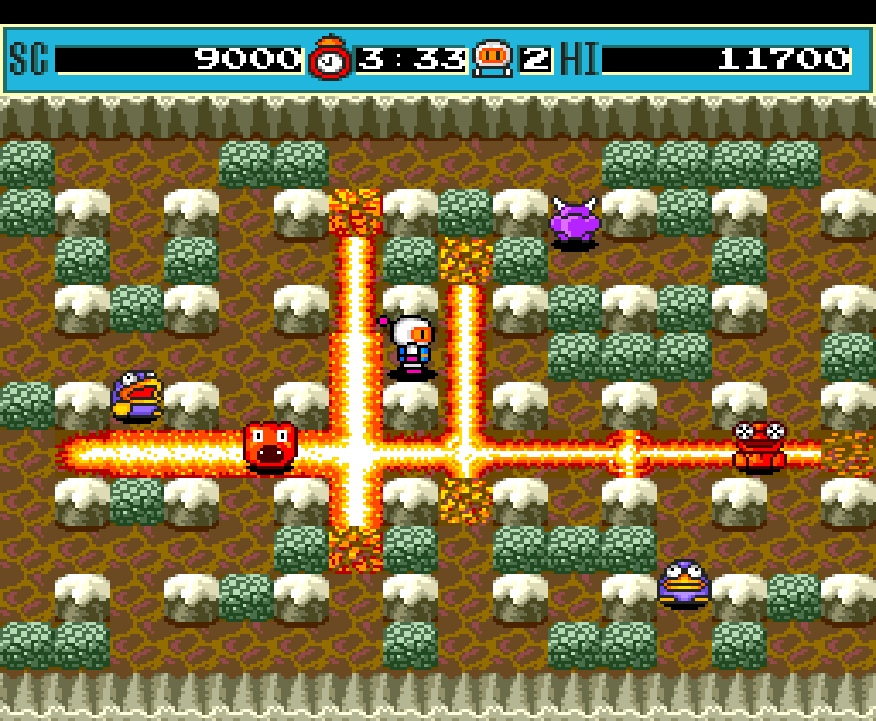
This version of the game is essentially a remake of the first, taking the basic gameplay loop and expanding it significantly. Instead of the basic Green and Grey dungeons for the whole game, there are new themes and color palettes for each round. The sound is also expanded, with new music which changes between rounds. Then we have the boss battles to cap off each round, with all of these elements setting the standard for the series going forward.
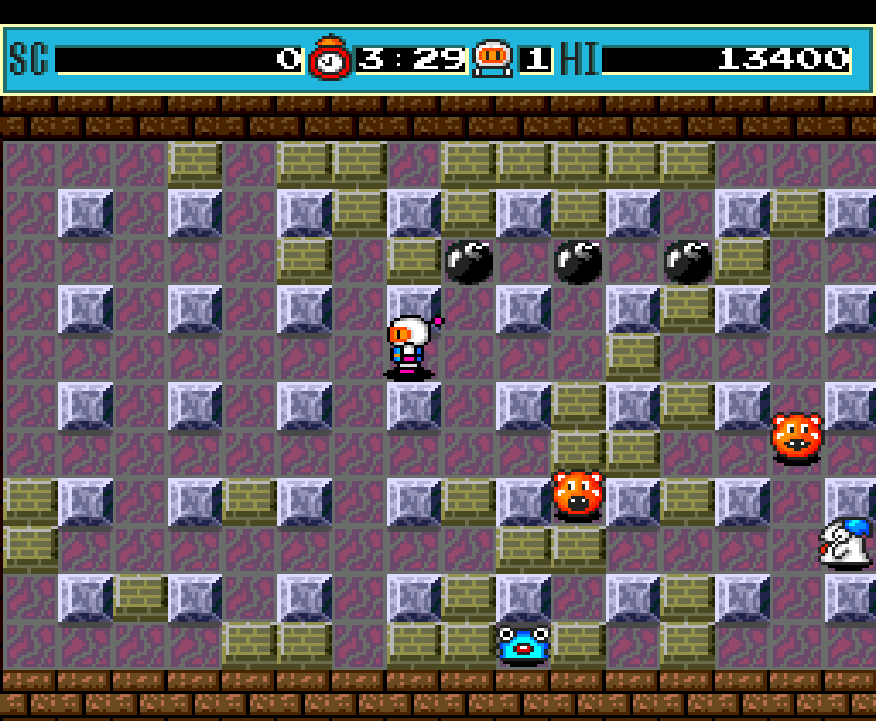
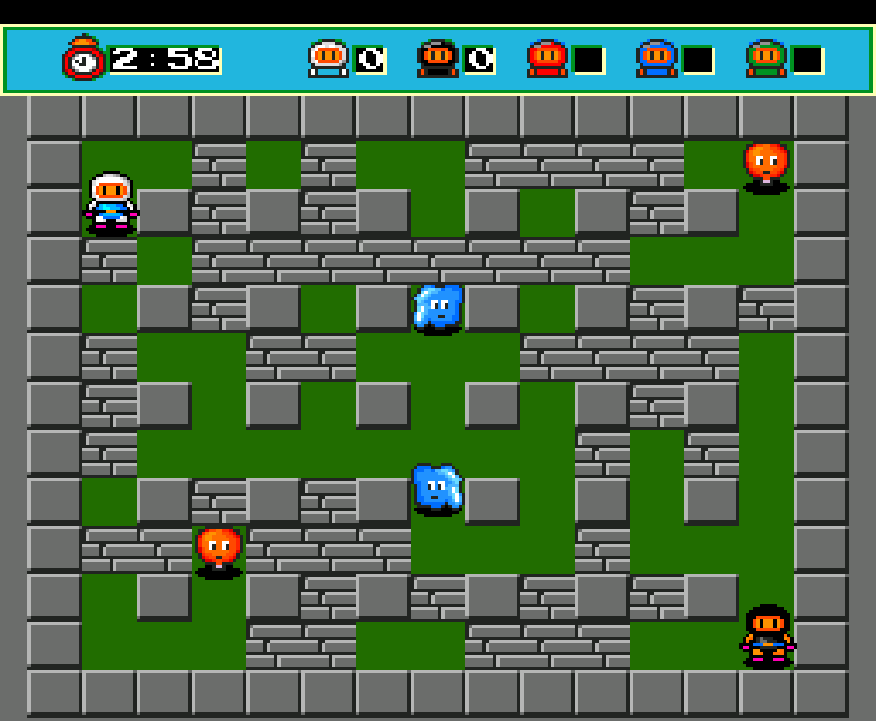
Also introduced in this game is the battle mode, which is limited but established what would become the core multiplayer experience. There is only one stage, limited power-ups and the odd inclusion of monsters in battles, but it does offer the same level of chaotic fun that the series is known for. If you can get a multi-tap, enough controllers and a group of players, this can be a fun time at game nights, but it could also cause a lot of yelling and cushion throwing.
Bomberman was produced in rather high numbers for the PC-Engine, making it rather accessible on the secondary market. But if you are looking for the Turbografx-16 version, it is going to be much more expensive to get your hands on. This game also got ported to the Sharp X68000, Amiga, Atari ST and MS-DOS, either as Bomberman or DynaBlaster. However, these vary in quality and price, with the Atari ST port being the worst and the Sharp X68000 port being the best.
Bomberman is a series that has received some love recently, with the Super Bomberman Collection, but aside from that and the mini system including ’93 and ‘94, the franchise has been dormant. The PC-Engine has three games that could be ported up, but unfortunately Konami seems to care very little for the older games. The lack of perceived care is very disappointing, as there is plenty of software in their vault, but they just choose to do nothing with it.
If you have enjoyed this feature, then please stick around and see what else catches your eye. I cover a wide range of games in reviews, get special previews and put out regular features. I have Lost Gems, Retro Revival where I discuss re-releases and the occasional Gaming Oddities piece, where I cover weird and wacky titles. So stay a while and have a look around.

