#Drive Rally – PC Review

Overview – developed and published by Pixel Perfect Dude, #Drive Rally is an arcade style rally racing experience inspired by the golden age of easy to pick up racing games. Take on challenging rally tracks across 4 different locations, offering an experience that invokes nostalgia of the classics without feeling gratuitous. This title is available exclusively on PC for now, with console version coming in the future. A link to each store for the game will be at the bottom of this review.

Disclaimer: before I get into the review, I would like to thank Evolve PR for providing the copy of #Drive Rally that was used for this piece. The provision of this software has not influenced the contents of this review, all thoughts and opinions contained within are my own.

Now with the introductions out of the way, let’s get into the review. There is no real storyline for this game, so I will be skipping that section of the review and go straight into discussing the gameplay. Please Note, this title is an Early Access release, so the game may change over time and may have content changed after this is published.

Gameplay – #Drive Rally is an arcade style rally racing game, with a feeling that it was inspired by Classics like SEGA Rally and Colin McRae, with a bit of a chunky Cel Shaded look to it. When starting the game, the player has two modes to select from, Championships and Quick Race. The first mode to talk about is Championships, which is the main mode that players will get the most out of. This mode is split into four regions with their own co-driver and set cars.

The four regions are based on real world locations, each with a co-driver that fits the theme of the setting quite well. To highlight a couple of them, there is the European rally in a dense forest, with a co-driver that sounds like a parody of Arnold Schwarzenegger. Then there is the North American dessert rally, called by a rough and ready cowboy. These combinations of driver and location works very well, giving each of the different rally locations a distinct feel.

When challenging a rally, there are three cars that are tied to each of the championships. These vehicles are inspired by real world cars, like the Toyota Celica and the Lancia Delta. The cars have three different class variants, with the power increasing with each class of car. The championship is split into sets of races, with a different car for each set. After clearing all races of one class, the class will increase, offering faster and more powerful variants of cars.

All of the races use a time trial system, where the player must make it from the start to the goal as fast as possible. As players make their way through a race, their co-driver will call out pace notes and make comments on their progress. If the player is slow or makes a mistake, the driver will react negatively, but if they are doing well a positive response will be heard. At the end of the race, the player will earn money based on their placement, as well as rewards for completion.

Each of the courses will vary in length, with some being somewhat short and clearable in about a minute and a half. However, there are some that are much longer, taking several minutes to be able to reach the goal. Speed is not the only thing that the players will need to get a good time, as the player will need to be able to control their vehicles with precision. If drivers are sloppy on the track, they will end up losing a lot of time and suffer penalties.

As a guide for drivers of the track layout, there are barriers and fencing that will show the boundaries of the track. If the players hit these barriers, they will take a penalty if they are destructible, but if they are static the player will lose all momentum. It is also possible for the cars to easily go off road due to careless driving, which can lead to a reset back to the track. Players can also manually reset their car to the track, but if the car is reset at all, a 3 second penalty is applied.

At the end of a set of races, the player will get a final time and placement on the leaderboard, comprised of the total time for all races. There is only one downside to this mode of play, which is the races cannot be replayed once they are cleared. But there is a way that players can try their hand at a previous track, attempting to get a better time. This is the Quick Race mode, which lets players challenge any of the tracks that they wish.

In the Quick Race mode, the player is able to select any vehicle they wish, allowing for cars that aren’t part of a championship being eligible. In this mode, all of the cars that have been unlocked in championship mode can be selected. However, if the player wants to skip the unlocking through championships, they can use in game money to unlock cars. Players can also customize the cars with different parts, making the cars look a little different.

While playing in both Championships and Quick Race, the best time that the player sets will be added to the leaderboard. There are two types of leaderboard, a local and online ranking. The rankings are also separated into class with a leaderboard for each vehicle class, players can view the rankings at any time through the quick race menus. The player can also view the global leaderboards after a race in either mode, seeing the rankings in real time.

Last to discuss is the overall experience. During play the cars handle well, with solid vehicle physics and a good sense of speed. All of the cars also feel unique with the option of automatic or manual shift, adding to the overall quality of race experience. Some of the cars do take a little time to get used to, as some of them will be a little harder to handle at high speed. The camera is either behind the car or cockpit view, which works but a first person view outside the car would have been nice.

The ability to select any car and track in the Quick Race mode gives the game more depth, increasing the replay value that is on offer for players. There are 12 vehicles, with three variants of each making for 36 possible choices, combined with 96 tracks as standard. There is also a reverse version of each and every track, increasing the choices to a whopping 192. All of these elements combined make for a racer that handles well, with a good sense of speed and momentum throughout.

Now with the gameplay covered, it is time to move onto the other aspects of this release, starting with the controls.

Controls – as this is on the PC, there is the option for controller or keyboard inputs, with the possibility of steering wheel control (I was not able to test this). The controller is laid out well, allowing play on both desktop and more portable systems like the Steam Deck. The keyboard inputs work very well, using both WASD and directional buttons for vehicle control, which is my preferred way to play. The only thing missing with controller play was feedback, but this doesn’t hurt the game.

Difficulty – there is a fair level of difficulty to this game, with the challenge coming from the tracks and way that cars handle. During my time with the game, I found that some regions were more challenging than others. This was most prevalent during the Scandinavian Rally, as there are heavy snow drifts that can cause the car to tip over from careless driving. The S.E Asia and Desert tracks were much more forgiving, given the tracks were more open.

Presentation – the visual style has a chunky and vibrant look to it reminiscent of Cel Shading, giving the game that arcade feel during play. The environments and cars look very good, with nothing to complain about aside from some pop in at lower visual settings, but it doesn’t hurt the game. Everything runs at a solid pace with zero lag. The sound is good, with the co-drivers voices and vehicle effects working well. There is a lack of music aside from the menus, which is authentic to the style.

Final Thoughts – When starting #Drive Rally, I went into it expecting a fast paced arcade style racer, which was delivered in spades. The momentum and speed is there, with a satisfying game feel when blasting down a straight at 100 miles an hour. Then there is the feel of the cars in action, which solidified the overall quality of the racing for me. I also enjoyed the Co-Drivers, which were entertaining during races and added some personality to the experience.

This is the complete package for those looking for a new racing title, as it has so much content and depth of play on offer. The staggering amount of track variants is something I did not expect, and while there are only 4 environments to race, the experience never gets dull. Everything feels right and works very well, making this an easy recommendation for players who love racing games. This is an early access title so there may be more on the horizon, we just have to wait and see.

In the end, I give #Drive Rally a final score of 4/5. This is a solid and challenging rally title, with all of the momentum and control needed for a satisfying race experience, combined with an arcade style to the visuals and humorous Co-Driver interactions. If you want to check this game out for yourself, a link to each storefront for the game will be below.

Link to Steam version (HERE)

Link to G.O.G version (HERE)

Link to Epic version (HERE)

Nuclear Lizard Island Rampage – Steam Review

Overview – developed and published by Andrew Connelly under the Intimidation Crab brand, Nuclear Lizard Island Rampage is a first person Kaiju destruction adventure. As the big bad Nuclear Lizard, take on the evil company that has been destroying the beauty of your islands, destroying their buildings, bases and eating their workers caught in the destruction. This title is exclusively available on PC through the Steam service, with a link to the game at the bottom of this review.

Disclaimer: before I get into the review, I would like to thank Intimidation Crab for providing the copy of Nuclear Lizard Island Rampage that was used for this piece. The provision of this software has not influenced the contents of this review, all thoughts and opinions contained within are my own. Please note, images used are from the official steam page and may not match the final product.

Now with the introductions out of the way, let’s get into the review. There is no detailed story to the game, so I will be skipping this segment and go straight into the gameplay, with some plot details mixed into the breakdown.

Gameplay – This title is a first person destruction adventure, with the player taking control of the titular Nuclear Lizard. As the force of nature, you have discovered that the islands you call home have been industrialised.  Enraged by this, the Kaiju will go on a rampage across the islands, destroying all they have built. The goal of this adventure is to wipe out the unwelcomed presence on the islands, destroying everything and squashing or eating the personnel.

At the start of the game, the island is rather small, with a few buildings and people on the island. Emerging from the ocean, the player will be able to start the rampage immediately. The Kaiju has a few simple to use abilities to help destroy the interlopers. The main one is the punch, which will deal damage to the structures, vehicles and crush the people wandering around. Then there is the grab, which will let players pick up objects and people.

When picking up items, like explosive barrels, boxes and more, the player can throw them at structures and military vehicles. The damage that is caused by the object used varies, with items like barrels doing more damage, compared to boxes and broken vehicles. Players can also pick up the workers and wandering sheep on the island, which can be thrown to turn them into a red mist. But they can also be eaten will be very useful during each of the islands.

As the Kaiju is on its rampage, the defense force of the islands will try to take the Nuclear Lizard. There will be soldiers with guns, mounted cannons and military vehicles that will attack when the player gets near them. The attacks will do various amounts of damage, with the smaller weapons taking a little away but cannons will take away a lot. To recover lost health, the Kaiju can eat the people and sheep that are picked up, recovering lost health to keep them alive.

All of the islands have a main objective and a side objective, with the primary mission needing to be completed to progress. The big objective is to destroy all of the buildings on each island, with the target number in the top left corner of the screen. On the opposite side of the screen is the workers eaten counter, which will start off low and increase as each target is met. When the main challenge is cleared, the player will be able to go to the next island.

Between islands, the player will be able to increase their abilities using upgrade points. These points are earned by completing the goals for eating the workers, with each goal achieved providing a point. The areas that can be included are health, damage, speed and health recovery. As the player makes their way through the chain of islands, the dangers will increase. These include bigger military vehicles, electrified fences and even bun boats.

The further the player gets, the more challenging the different areas will become. The Scale of the islands will also increase. They start off small with a single island per stage, becoming larger and more complex with some of them consisting of multiple islands. There is a total of 9 areas for players to cause chaos on, with may make the game feel rather short, but there is a lot of replay potential. It needs some polish, but there is plenty of fun to be had.

Now with the gameplay covered, it is time to move onto the other aspects of this release, starting with the controls.

Controls – as this title is in a first person perspective, this game uses the standard FPS controls with mouse and keyboard support. The general movement and action is solid, flowing well while rampaging through the islands and destroying structures. All of the inputs are reactive, with no issues with lag or input delay when using the standard controls. There are optional controller inputs, but sadly their use cause some unintended side effects at this moment.

Difficulty – when starting the game, there is little in terms of difficulty as the first island eases the player into the chaos. However, as the player gets further into the game, the challenge will increase as the opposition forces on the islands increase. This is where the upgrade system will come in handy, as making sure to get enough points early can ease the some challenges. If the player does struggle on some stages, they can replay earlier stages to earn additional upgrade points.

Presentation – there is a low poly style to this game, with the vibrant color of the environments giving a retro feel to the overall experience. The game also features a pretty good physics engine, which is used for the destruction of buildings and vehicles. The sound for this release has a minimalist feel to it, working well in tandem with the graphical presentation. All of these elements come together perfectly creating an experience that feels like it is straight from the PlayStation era. (Update – The music has been fixed with a fast paced soundtrack)

Final Thoughts – when the developer for this reached out to me, I was excited to jump into it and cause some chaos. After getting to grips with the first version of the game, I was happy with the overall experience. But during my time with it, many improvements have been made, adding new features and mechanics. The changes made with each new update improved the game further, introducing additional features and refining the gameplay.

There are some minor flaws to the experience that need to be ironed out, but this is a fun and chaotic time for a low cost of admission. I am more than happy to recommend this release, as it is perfect for those looking for a chaotic and destructive time. The overall experience has a look and feel right out of the 90s, with low poly visuals that would have been right at home on the original PlayStation. A little refinement and this will be perfect Kaiju destruction title.

In the end, I give Nuclear Lizard Island Adventure a final score of 4/5. This is a fun Kaiju action title, with a fun gameplay loop, chaotic destruction mechanics and a retro visual style that gives the game a classic feel, it is easy to pick up but can be hard to put down. If you want to check this title out for yourself, a link to the game will be below.

Link to Steam version (HERE)

Pocket Bravery – Steam Review

Overview – developed by Statera Studio and published by PQube in collaboration with Pixel Heart, Pocket Bravery is a traditional 2D fighter with a look inspired by Neo Geo Pocket games. Take the battle across the world and online with cast of vibrant characters, flashy special moves and a bunch of extra content to unlock. This title is available on Steam, with console versions that are coming in the future, a link to the game will be at the bottom of this review.

Disclaimer: before I get into the review, I would like to thank PQube for providing the copy of Pocket Bravery that was used for this piece, via the Keymailer service. The provision of this software has not influenced the contents of this review, all thoughts and opinions contained within are my own.

Now with the introductions out of the way, let’s get into the review, starting with the outline of the plot. I will also be covering the core aspects of the game, as there are secrets and content unlocks that players should experience for themselves. Please be aware, there is DLC for this game that is available, with new characters, stages and music available now and in the future, but this coverage will be talking specifically about the base game experience.

Story – across the world, people are manifesting strange and mysterious powers, trying to find the cause of this phenomenon. While this is happening, a terrorist group called “The Pack” have been stealing artifacts and relics across the globe. Nuno Alves, a former member of The Pack is thrown in captivity, where he meets Lobo, who helps Nuno awaken his power. Working together, they escape and put a plan in place to get revenge against Hector, the leader of The Pack.

Gameplay – This title is a retro styled 2D fighting game, using a sprite style inspired by games like The King of Fighters and Fatal Fury for the Neo Geo Pocket. There is a simple to pick up game system, using a four button system for punches and kicks, using a light and heavy variation of each. Regular matches for the game have a 2 out of 3 round format, pitting two players in a head to head battle. At the start of the game, there are 10 playable characters, with 3 to be unlocked.

Each of the playable characters has command inputs, allowing for power moves to be used during fights. Then there are the super moves, which are the most powerful attacks in a characters arsenal. To use these moves, players must use one of two meters that are on screen. These are the super meter, which will allow players to use a super special attack when the meter is filled during battle. Then we have the Element meter, which is the unique mechanic for this title.

During battles, when the player deals and takes damage, the Element meter will fill up on screen. When it reaches half full, then players can deploy two special moves. The first is the Element strike, where standard power moves can be enhanced for more damage. Then there is the breaker, which can push an opponent away while blocking attacks. If it is full, the breaker can interrupt combo attacks, or the player can use their ultimate attack, a cinematic FINAL MOVE.

All of the combat mechanics are balanced for the most part, but there are some minor issues during the moment to moment combat. It is possible for characters to be pinned in the corner, stuck in a block state by the opponent throwing out repeated strikes. The reach of strikes is shorter than one may expect, which may take players a moment to get used to the flow of battle. For newer players, there is the option for simplified inputs, allowing moves to be used with single buttons.

Moving onto the game modes, there is a lot of content in this release for players to really sink their teeth into. First is the Story Mode, which lets the players go on an adventure as the protagonist Nuno, on a journey to battle Hector in a quest for revenge. This plays out through multiple chapters, playing out in a fairly linear style.  In each chapter players will encounter and often battle characters from the roster, alongside special multi-opponent fights and challenge stages.

This mode also acts as an in depth tutorial, teaching players all of the ins and outs of the game mechanics. These little tutorials are masked as the challenge stages, where actions need to be performed and repeated in order to progress. The main storyline for this title is called Nuno’s Path, but there are optional diverging paths, which can be fun. But story mode has one major bug, the game can freeze during challenge stages, which is extremely frustrating as it requires a full restart.

After story mode, there are the traditional game modes for players to test their skills in. First is the arcade mode, where players will challenge 8 opponents with the final being a battle against the final boss. All of the characters having a unique ending for defeating the final boss, which is added to the gallery, alongside other images and sound. Then there is multiplayer, where battles with another person or a CPU can be fought on the same system locally.

There is also an online mode, where players can battle others in their region and across the world. The options for this mode are casual, ranked and lobby matches. Casual fights just throw two players together for a quick battle, with ranked matches that reward or deduct points based on performance. Players can increase their rank by winning enough matches. Last are the lobby matches, where players can create custom groups or join others.

All of the online modes have rollback netcode, allowing players to get as smooth an experience as possible when fighting players in different parts of the world. For those who don’t want to just sit around and wait, it is possible to enter training mode while matchmaking. This allows players to practice their moves, making sure they are prepared for the fight. But this has to be activated from the network menu, as there is another training mode option.

This is on the main menu, where players can join and spend all the time they want practicing. There is a suite of options, modifiers and settings that players can use to polish their skills in battle. for those who are newer to fighting games, there is a tutorial mode, that allows playuers to learn all of the mechanics and terms of the game. To round out the learning features is the combo maker, where custom combos can be tested, with the option for combo trails for each character.

In this release, players can enjoy bonus single player challenges. These are survival, where players can fight sets of opponents with a single health bar. At the end of each set, the difficulty increases and a new set is generated. At the end of each fight, players are granted some health regeneration. There is also Time Attack, which is a run of 8 battles, one credit and orbs that will affect the battle. Combo trials can also be found in the extra menu, which are taken from combo maker.

As the player clears story mode, arcade and challenges, battle points are earned and added to the player total. With these points, new content can be unlocked in the Shop, containing a variety of bonus content for players to earn during play. These bonuses include new stages, game modes and even extra colors based on other fighting game characters. This gives the game extra replay value, providing a nice bonus for playing through the game solo.

Now with the gameplay covered, it is time to cover the other aspects of this release starting with the controls.

Controls – Pocket Bravery uses the tried and true control system used by many classic fighters, with the four attack buttons and dual presses for special mechanics. There are also built in hotkeys and a simplified control scheme, perfect for newer players. They work very well and are responsive throughout, however, it is recommended to use a controller or arcade stick for the best experience. It is possible to play the game with a keyboard, but it is not advised.

Difficulty – this can be a pretty tough fighting game, as it has that classic difficulty that is often attributed to SNK fighters like Fatal Fury. There are multiple difficulty settings, but I would advise starting on a lower setting when getting used to the fighting. This is because the range of the characters can feel a little stubby. The Story mode is a tough challenge, but it can be done in less than 6 hours which is a fair amount of time.

Presentation – from a visual standpoint, this is a pretty good looking game with many of the inspirations on full show. The colors pop wonderfully, with the vibrant sprites, stages and visual effects, with the game looking really smooth in motion. The cutscene images are equally pleasing, but sadly lack voice over which does dull the impact a little. The sound is pretty good in general, with a solid soundtrack and voices used for the characters which work very well.

Final Thoughts – I was aware of Pocket Bravery while it was being developed, but never really dove into it. But the opportunity to get hands-on arose and I took it with gusto. My first feelings were a little mixed though, as the stubby nature of the Pocket style sprites was a little jarring. My first few attempts to get to grips with the game didn’t work out too. This was due in part to having played the games that it is based on, and the expectations that came with it.

However, after a while everything fell into place and just clicked, with the way that characters moved and attacks worked. This changed my whole outlook on it, leading to a rather enjoyable experience. It does have its flaws, like the bug that kept forcing a hard restart and some slight issues with balance. But overall, it is something fighting fans can easily enjoy, especially with references to Capcom, SNK and much more hidden within (keep an eye out for Terry, Mai, Andy and Mary).

In the end, I give Pocket Bravery a final score of 3.75/5. This is a solid and well put together indie fighter, with the passion for the classics that inspired it fully on show, the cast of characters may seem shallow, but the depth and variety of play styles, modes and bonuses more than makes up for it. if you want to check this title out for yourself, a link to the game will be below.

Link to Steam version (HERE)

Neptunia Virtual Stars – PlayStation 4 Review

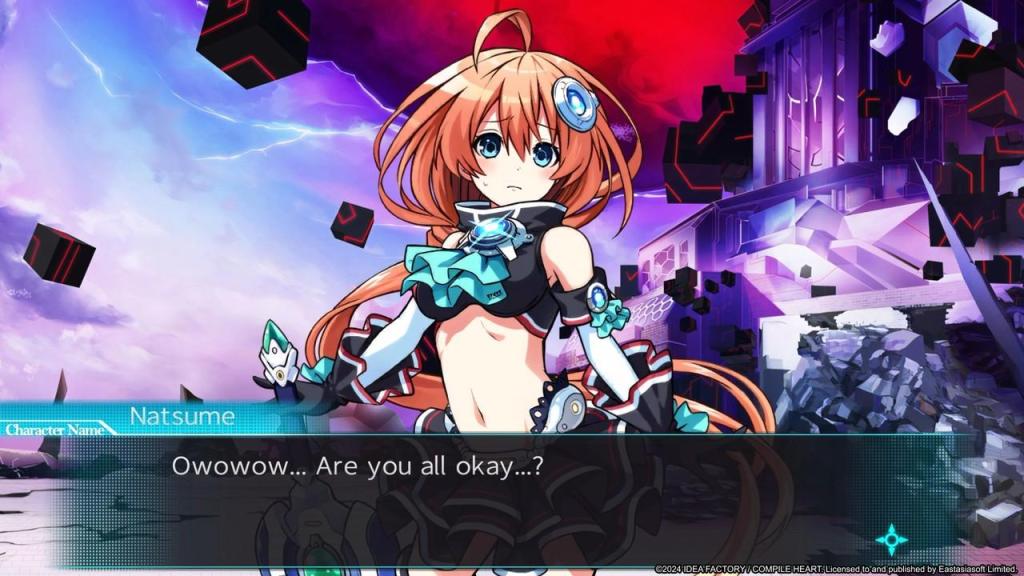
Overview – developed by Idea Factory and Compile Heart, with publishing by Idea Factory International, Neptunia Virtual Stars is an action RPG where the goddesses of Gamindustri enter the digital world or Virtualand. The four CPU goddesses cross over with Vtubers in this third person adventure, set in a world where content brings life to the world itself. This title is available on PlayStation and Steam, with a link to each version of the game at the bottom of this review.

Disclaimer: before I get into the review, I would like to thank Idea Factory International for providing the copy of Neptunia Virtual Stars that was used for this piece, via the Keymailer Service. The provision of this software has not influenced the contents of this review, all thoughts and opinions contained within are my own.

Now with the introductions out of the way, let’s get into the review, starting with the story. Please note, I will only be covering the core gameplay mechanics of the game, as there are many different elements of the game that I want players to experience firsthand. I have previously covered other titles in the Neptunia series, which you can find (HERE)

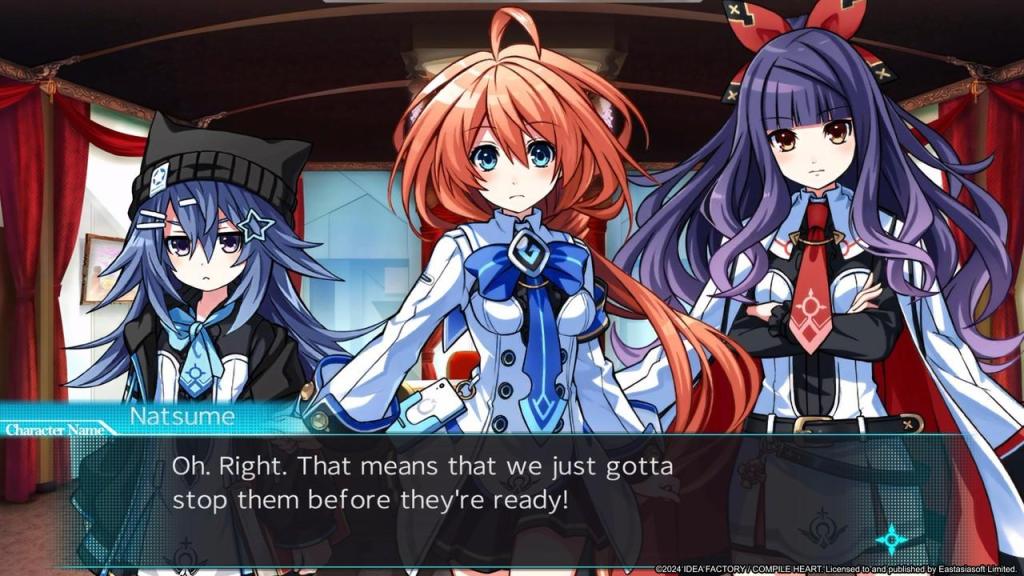
Story – Virtualand, a digital world that exists among the networks of various dimensions. In this world, the planet Emote is facing extinction, invaded by a malevolent force known as Antis. To save her world, the Digital Goddess of Emote, Faria, sends a distress signal to other worlds, searching for a savior. The call is answered by the rising Vtubers Me and You of Mewtral, along with the Goddesses of Gamindustri. Can Mewtral and the Goddesses stop the Antis and save Emote from Destruction?

Gameplay – Neptunia Virtual Stars is a third person Action RPG, with a focus on dungeon crawling and fast paced combat. The story plays out over the course of several chapters, which are pushed forward by completing the objectives for that chapter. During the course of the game, players will spend the majority of their time in the different Dungeon locations of the Planet Emote. Here they will explore the vibrant areas while engaging in battle with dangerous foes.

While players make their way through the different locations, various enemies will spawn in and attack the player. These enemy spawns can also affect the area that the foes can appear, trapping the player in a closed arena with the only way out being victory or death. To overcome the foes that are encountered, there are two distinct play styles that can employed in battle with the Antis. These styles offer different battle mechanics, with some skills shared between them.

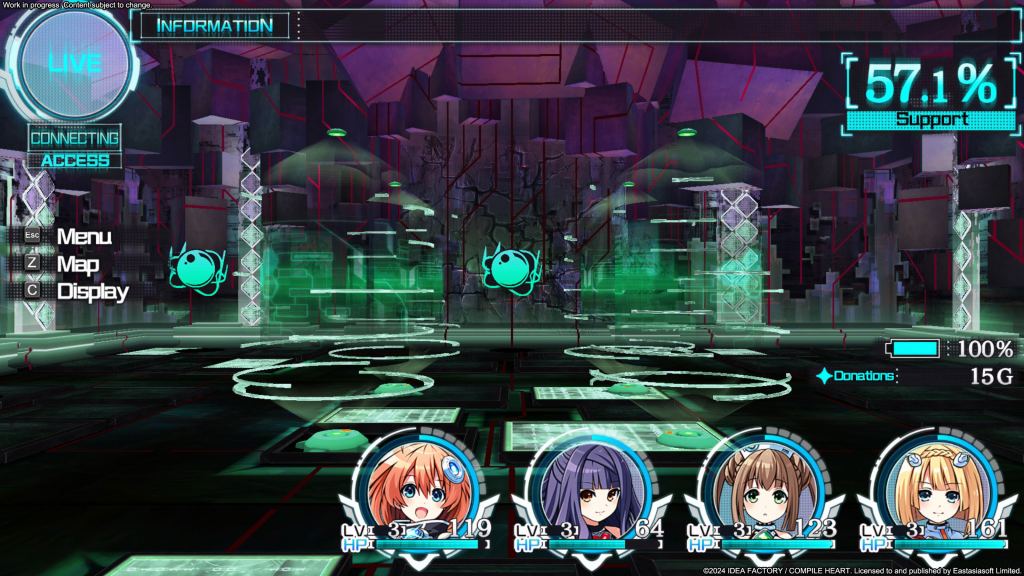
To cover the shared abilities, all characters have the ability to use V-Skills that can deal massive damage to enemies. These abilities use MP which is shown on screen building up over time. If players do not have any MP they will be unable to use V-Skills, but there is a skill that can be used at all times. The Heart Tune ability is a very special power, which lets players recover lost health and MP. This can be used at any time, and will be very useful when low on healing items.

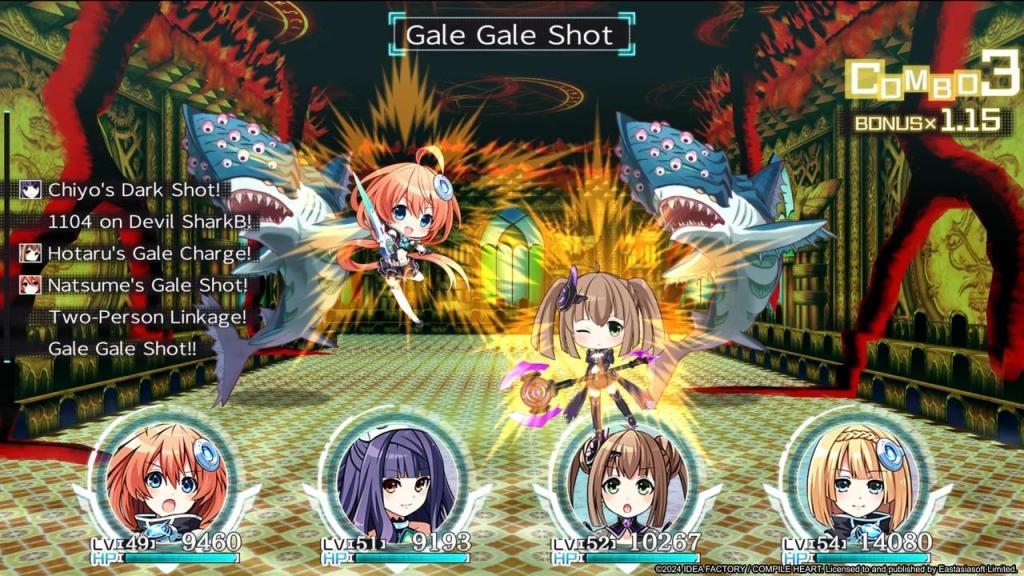
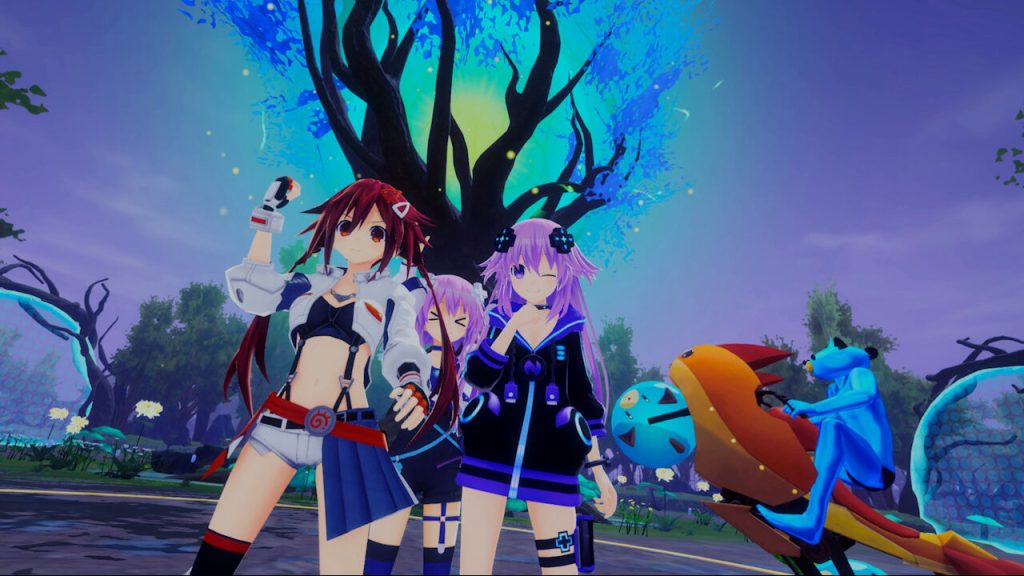
When playing as the Goddesses, the gameplay uses a third person shooter style, with the four Goddesses having a unique weapon. The protagonist Neptune uses an assault style attack, which is fast with a lower damage output. Then there is Noire, who uses a slashing style weapon that can stun enemies quickly. Vert uses a burst style attack, which hits multiple times and Blanc has a charge attack, which can deal massive damage if fully charged up.

The Goddesses can also use Boost, which will allow them to move swiftly across the battlefield. This is very useful when dodging enemy attacks, the boost will last for a limited time with a stylish maneuver when it expires. Then there is the Tokimeki Flash, which is a powerful status that is activated when the purification gauge is filled on screen. This deals massive damage to the enemy, while reducing the enemy strength and capability to fight for a short time.

When playing as the Goddesses, they can be switched freely, giving players the option to switch weapon types on the fly to deal with a variety of enemy types. Some care must be taken when using the Goddesses, as they all share the same health bar, meaning if all HP is lost they will be unable to act unless they are revived as a team. The Goddesses start off with 10 HP, but this can be increased to a maximum of 30 via equipped effects (explained further below).

The other style of play is the Vtuber Idols, where the players as MEWTRAL (with another duo that appears during the story) can engage in tense hack and slash action. When using the Goddesses, only one will be active at any time, whereas the Vtuber team are both active at the same time. The active Idol can be switched, with the other giving some support during action. They have their own health bars, so if one is taken down, the other can keep going.

The duo MEWTRAL are made up of Me, who wields a keyboard sword for up close melee attacks that can deal some big damage quickly. Then there is her companion You, who is armed with a harp bow, letting her attack enemies from a distance and support her partner Me. The two action styles have areas that they excel in, but they are vulnerable if they are overwhelmed. This can happen to the CPU character, so it is advised to keep an eye on them during the action.

The two of them have access to a dodge skill called Step Charm, which grants infinite MP for a time which can be key to success when using the Vtuber Idol Duo. They also have Execution Finisher, which can be triggered by defeating enemies with skills, giving a stylish ending to the target. When successfully pulling off an Execution Finisher, the player will gain enhanced health regeneration or MP limit for a limited time. Use both these skills to maximize damage to enemies.

As the player defeats enemies, they will earn experience points which will increase the level of the Goddesses and V-Idols. As they gain levels, the base stats will gain some boosts and strengthen the overall capabilities of the characters. Defeated Antis will also provide items, resources and most importantly Emotion Spheres, which are the currency for this title. The total number of collected spheres are shown on screen, building during play.

Players can also find chests and breakable boxes scattered through dungeons. The boxes will often contain Emote Spheres, along with the occasional items. Then there are the chests, which will have an image on them that scrolls through the item types, that the player can stop on the one they want. There are also save points, which heal the player and let them save the game. If the player is defeated, they lose half their Emote Spheres and be kicked out of the dungeon.

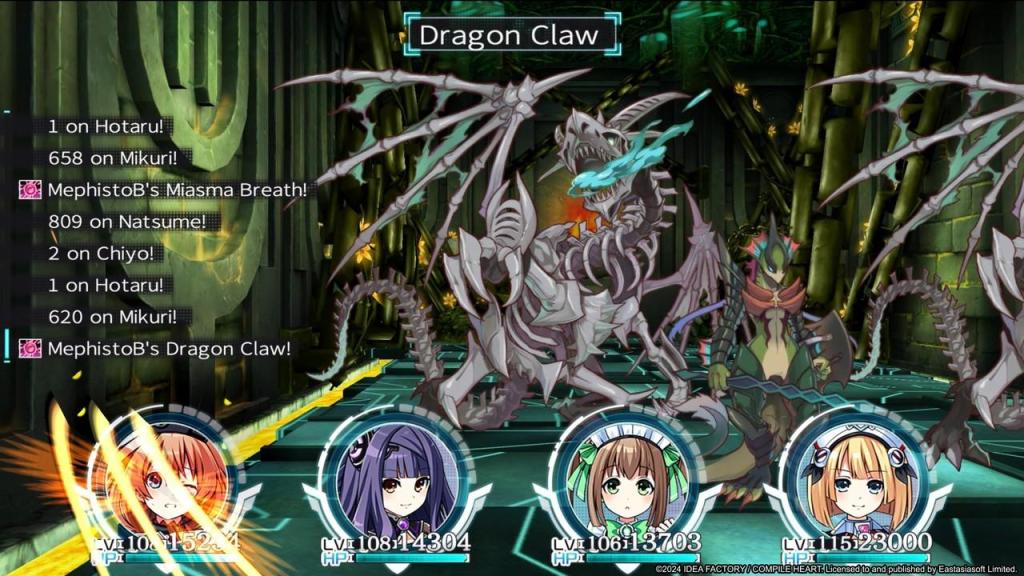
Then we come to the Emotion Gauge, a special meter in the shape of a heart that beats on screen, building up as enemies defeat Antis. It is used the two Emotion Arts, with the first being the Vtuber Guest system. During the game, players will encounter Antis that hold special cubes containing Vtubers captured by the invading force. When they have been rescued, the player will be able to call on them for support by using up a portion of the Emotion Gauge.

The type of support provided varies based on the Vtuber rescued, with some offering offensive support and others giving more restorative and defensive support. When calling on a Vtuber, they will be chosen at random from the pool of rescued Vtubers. Then we have Emotional Overdrive, an ultimate attack where all enemies can be assaulted by the Goddesses or V-Idols. During Overdrive, a special roulette can occur, giving players special items while Overdrive is active.

On the Subject of Vtuber Cubes, they act as equipment for the playable characters as well as supports. Each of the Goddesses and V-Idols can have up to 5 Cubes equipped, with each of them offering different stat changes. These include altering the attack, defense and maximum HP of the characters. There is no limit to the number of duplicate Cubes that can be collected, as there are more powerful variations can be found when playing, adding depth to the cube system.

At set points during the dungeons, players will encounter powerful boss enemies that must be defeated to progress. These bosses use the MV Battle System, which use special songs by the V-Idol saviors to influence the course of battle. The songs are also tied to a tug of war system, with the player entering a special state called Resonance Mode. In this state, if the player fulfills a certain condition, they can activate Finish Drive, an ultimate attack that deals massive damage to the Boss.

Outside of the dungeons, the players can access two base areas that they will be able to move around between excursions. The first area is The Cloud, a special management facility where the Digital Goddess Faira resides. In this area, the player can deposit Emote Spheres, check all of their collected items, Vtuber items and CG scenes from the story. The cloud is an important area, as it will allow players to visit new areas, which will then be added to the warp gate.

Last we have NeoTube Plaza, a colorful hub that contains various facilities that can be used when visiting this place. While in the Plaza, Emote Spheres can be used to unlock facilities and improve them by speaking to Nol, a giant cat that is MEWTRAL’s number one fan. The facilities that can be accessed are item shops, where supplies and accessories can be bought, as well as an option to strengthen Vtuber Cubes. There is even a community board, where side quests can be found.

Inside the Plaza are the BeatTik Studio and Video Battler. BeatTik allows the player to create cute dance videos, all through the power of a rhythm action mini game. Dress up the Goddesses and V-Idols with accessories collected during the adventure, maximize the Kawaii points and tap along to the beat of the song. Build up the ranking and unlock new stages to perform on, adding more variety to the dance videos that are made in the studio.

The videos that are made can be used in the Video Battler, where they can be turned into Items and Rad Colle Cards. These are added to the collection, with over 300 of them to collect and add to the collection, with ratings from N all the way to SSR. To create BeatTik videos and items from them, the player needs two resources from the dungeons. These are Live Crystals for recording and Video Stones for item generation, with each video creating one unique item.

Now with the gameplay covered, it is time to move onto the other aspects of this release, starting with the controls.

Controls – The movement for characters and the camera uses the traditional twin stick style, with all of the action inputs on the face buttons. In V-Idol mode, the player can lock on to enemies and in Goddess mode, the player can focus aim and strafe/shoot with the triggers. The special skills and character switches use the shoulder buttons, combined with the face buttons for easy hot keys. There are also hot keys for the D-Pad and touch pad, with all controls being easy to pick up and play.

Difficulty – this is a challenging title to start, as the player is relatively under powered and it can be even tougher when using MEWTRAL as the CPU partner can be swarmed easily. However, as the player obtains more powerful Vtuber cubes, levels up and strengthens their Idols the difficulty will balance out. The most challenging parts of the game are the boss battles, which can be even tougher if going in unprepared. Thankfully, the punishment for death isn’t severe.

Presentation – the overall style for Virtual Stars is something pretty special. At first glance, the game looks like your typical Neptunia adventure, with the gorgeous CG art and vibrant models. However, when MEWTRAL are introduced, things change as they are visually different from the rest of the characters.  Then we get the guest Vtubers, who appear in loading screens introducing themselves, to the side when rescued, acting as supports and to cheer the player on.

This difference in looks for the Vtubers and Goddesses may feel odd, but it works well, showing that they are from different worlds. The story scenes are Pre-LIVE 2D, so they don’t look as animated as newer titles, but I think it works better this way. The music is excellent as always, especially the special Idol songs featured in battle and as the theme for the intro. The Voices are Japanese only, as it features real Vtubers, alongside the returning Neptunia cast who are fantastic as always.

Final Thoughts – The premise of Neptunia and Vtubers crossing over is what sold me on this game, as the series often takes inspiration from what is happening at the time. This direction was something I enjoyed, as I knew some of the guests featured. I was fully engrossed in the story, being pulled into every twist of the narrative, wanting to find out what happened with each turn. The inclusion of art from previous games like Mary Skelter 2 was also a very nice touch.

The action is fast paced, frantic and a hell of a lot of fun, with the addition of music as a key element of boss battles elevating it further. There is one weakness to the experience, as the V-Idol hack and slash combat is a little weak compared to the shooting. This doesn’t ruin the game, but the CPU controlled partner can cause some frustrations in tense moments. That being said, I am more than happy to recommend this to everyone, especially those who are fans of action RPG titles.

In the end, I give Neptunia Virtual Stars a final score of 4.5/5. This is another excellent action RPG, capitalizing on the popularity of Vtubers and Virtual Idols at the time, delivering an engrossing story, endearing characters and a solid third person hack n’ slash/shooter experience. if you want to check this title out for yourself, a link to each version of the game will be below.

Link to PlayStation version (HERE)

Link to Steam version (HERE)

Revive of the Moon – Nintendo Switch Review

Overview – developed by YMCAT in collaboration with publisher Regista, Revive of the Moon is an action horror title taking place in a Japan hit by a cataclysmic event where zombies roam the streets. As Mitsuki, a high school girl who gets caught up in an unprecedented disaster, make your way through the streets as you try to survive. This version of the game is available exclusively for the Nintendo Switch, with the link to the game at the bottom of this review.

Disclaimer: before I get into the review, I would like to thank Regista for providing the copy of Revive of the Moon that was used for this piece. The provision of this software has not influenced the contents of this review, all thoughts and opinions contained within are my own.

Now with the introductions out of the way, let’s get into the review, starting with the story. Please note, I have previously covered the steam version of Revive of the Moon, which you can find the coverage of (HERE). The main body of the coverage for this release will be fairly similar to the previous coverage, but there will be differences in the opinions contained in the later segments.

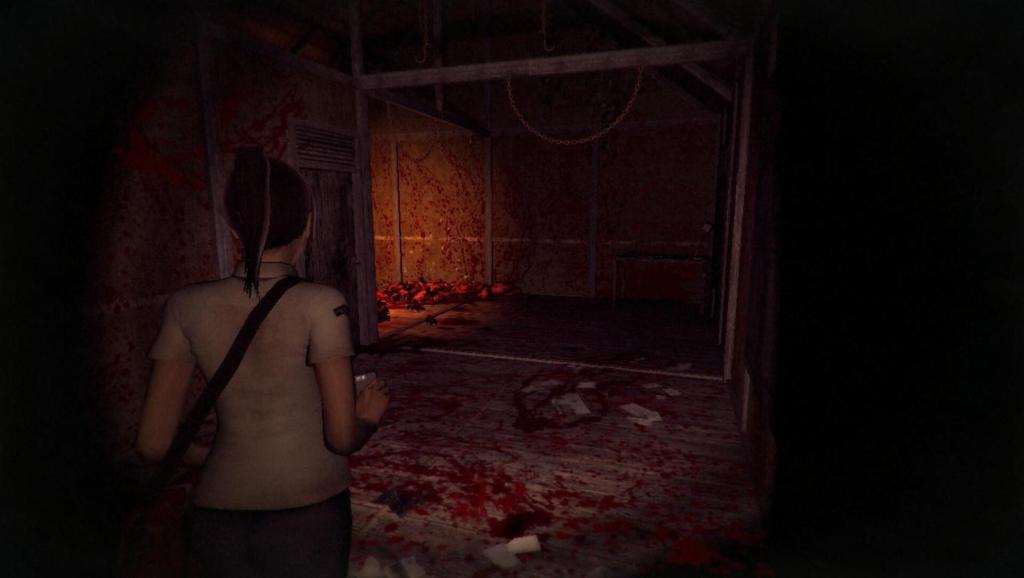
Story – during a typical day in Japan, Mitsuki, a high school student is travelling by train when a sudden catastrophic event occurs with a derailment and many dead. During this disaster, Mitsuki finds herself surrounded by monsters, quickly swarming her and her brother, taking his life in the process. After being rescued by her classmate, Mitsuki arms herself with a sword and while resistant, she easily slays the monsters. In this moment, Mitsuki’s destiny was set in motion.

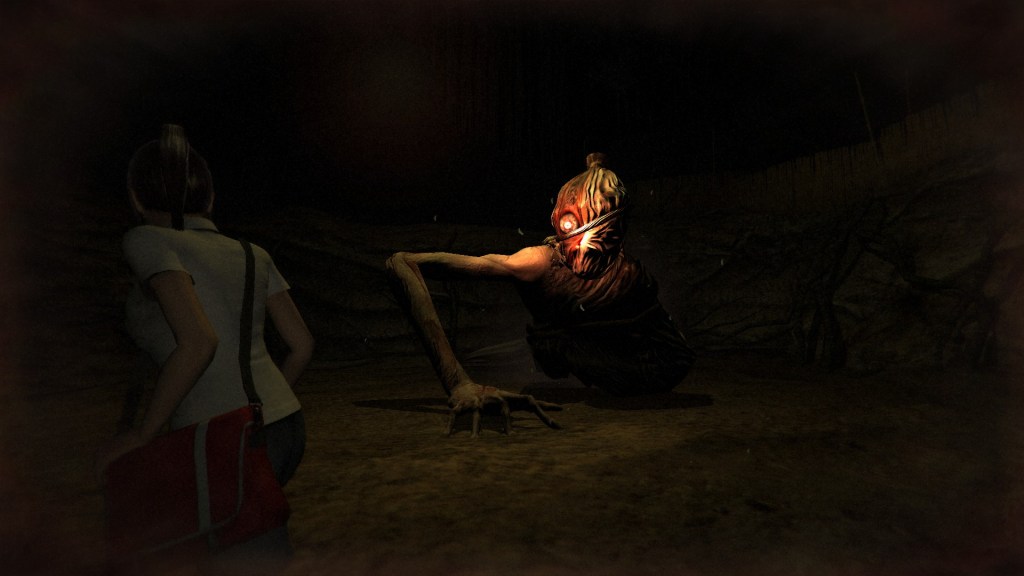
Gameplay – Revive of the Moon is a 3D horror action adventure, where the player must make their way from Tokyo to MT. Fuji, making their way through the different areas in each zone. In each area, the player will fight off the hordes of “Crimsonbies” that are encountered along the way. The story mode consists of multiple zones that progress across various locations, with objectives that must be completed in order to get further.

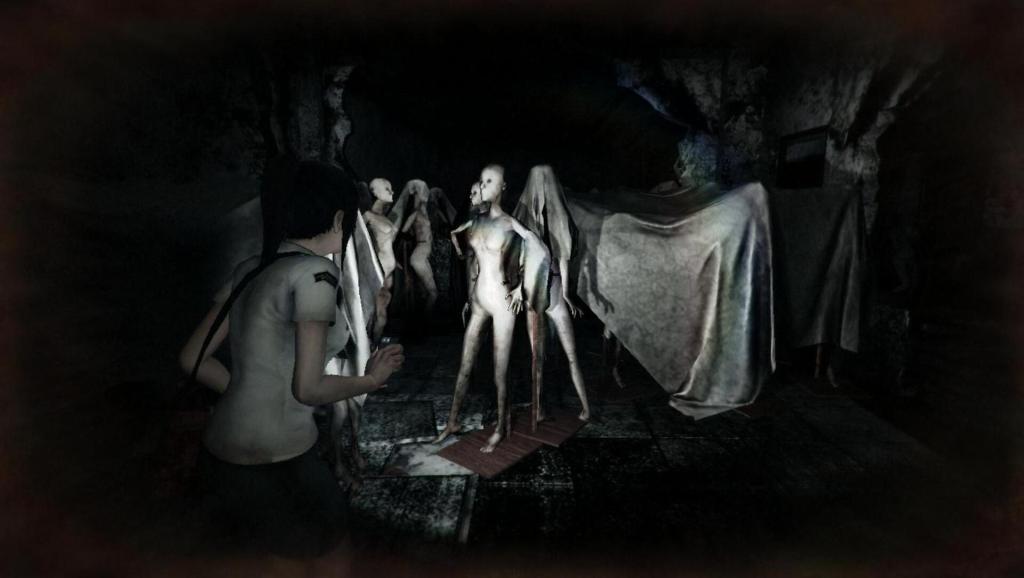
The player has access to two characters during the course of the adventure. Mitsuki, the main character uses a sword, allowing her to slash through the waves of undead with the ability to perform flaming combo attacks. Mitsuki has limited stamina, stopping her from attacking when out of energy. Then there is Tsubame, a high school teacher who is skilled with firearms. She uses a shotgun when she first appears, with each of her attacks using up her limited ammo.

The two characters have their own strengths and weaknesses during battle with the Crimsonbies. Mitsuki can attack quickly and take out multiple enemies that surround her, cutting down all of the enemies with ease. Tsubame can take down foes from a distance, using her weapon to pick off enemies and detonate explosive materials. The firearms that Tsubame uses must be aimed manually, with some aim assist to help. If ammo runs out, more of it must be scavenged.

There are shared skills for the two players, with both of them having the ability to run, sneak and use the dodge roll, which gives limited vulnerability. There are three viewpoints that can be used, with a far and close third person perspective and a first person viewpoint. These different perspectives can provide a distinct horror experience for players. The first person viewpoint can be very useful when using Tsubame, as it can aid in sniping enemies from afar.

To make it through the nightmare, players can use various items to keep them alive and restore any damage that is taken. These consist of HP recovery items, which will recover small, medium and full health for the player. When health is full, the extra health items will be carried and only used when health falls below set levels. There are also Dango dumplings that can be found, which will permanently increase the maximum health for the player during the adventure.

Throughout the adventure, players will collect experience points for defeating Crimsonbies. This EXP will fill an on screen meter, increasing the player level when it is filled and giving an upgrade point for each level. The accumulated points can be used to improve three stats, which are speed for faster movement and attacks, durability to take more damage and attack to deal more damage. The three different stats have a maximum upgrade level of 10.

Over the course of the game, the player will have dangerous encounters with the undead. These will consist of taking out a set number of enemies or reaching a target location alive. During these segments, the player will be locked in an area, where they won’t be able to progress unless the objective is cleared. One of the most interesting objectives is the first person survival, where the player will be forced into to take out enemies before they are swarmed.

During the game, story scenes will play out and push the plot forward, giving players more detail about the events that are unfolding. The big story scenes are also tied to the boss battles, where the player will encounter powerful foes that will easily lead to death. These boss fights are tough and can only be fought as Mitsuki, pushing the player into close quarters combat. The boss battles are challenging, with deadly attacks that can easily wipe the player out if they are careless.

The final thing to mention is the bonus content included in Revive of the Moon. Separate from the story mode, there is an endless survival mode, where the player must survive for as long as possible. This mode can be good to practice combat, with the player starting off at level one, with the challenge increasing as the undead horde are cut down. There are also plans for a Time attack mode to be added to the game in a future update.

Now with the gameplay covered, it is time to discuss the other aspects of this release, starting with the controls.

Controls – this title plays comfortably on the Nintendo switch, with the inputs feeling natural with a Nintendo controller. The combat inputs are reactive with Mitsuki, while the shooting mechanics are a little stiff for Tsubame, but the first person view helps. All of the controls work very well in both handheld and docked mode, offering players a comfortable way to enjoy the game anywhere. The travel on the Joy-Con stick is a little short, but it doesn’t impact the experience.

Difficulty – this is a challenging but fairly balanced title, but there is always the chance for players to be swarmed and quickly killed. There are some objectives that can lead to instant failure, along with hazards that can lead to repetitive deaths. This can be frustrating, which can be a little worse with some of the enemies, as their attacks can feel cheap. Thankfully, the stages have plenty of checkpoints and save points, but death will result in a loss of stored healing items.

Presentation – there is a cute style to the game, with a super deformed style to the characters and monsters, which is in stark contrast to the 2D art scenes and portraits. There is some slowdown in handheld mode, but by adjusting the graphics slider, it is improved at the cost of a little fuzz. The docked system has less of an issue at default visual settings. The score is pretty good, featuring music that builds the atmosphere of the game, with Japanese voice over that is pretty solid.

Final Thoughts – I enjoy action and horror, which this title combines with the Japanese style perfectly, in the same vein as Onechanbara and Fatal Frame. The moment to moment action works very well, but does have a few hiccups with the handheld performance. But it is a comfortable way to play the game, the aiming with guns is a little off, but it doesn’t sour the experience. There are minor translation and text errors, but they are being worked on with patches.

The slowdown can be a frustration, but can be remedied at the cost of a little visual fidelity. This is a fair tradeoff as the overall quality of play makes up for it, with the solid action and the engaging story. Compared to the PC version, this is as good if not better and an excellent way to experience Revive of the Moon. I can easily recommend this game, as it is a solid action horror title with plenty of content at a good price point, and more coming in the future.

In the end, I give the Switch version of Revive of the Moon a final score of 3.75/5. This is a solid and enjoyable action horror adventure, with an engaging narrative, well-paced combat and a narrative that is engaging throughout. There are some minor hiccups, but they do not impact the overall gameplay experience and is perfect to play at home or on the go. If you want to check this title out for yourself, a link to the game will be below.

Link to Nintendo Switch version (HERE)

Kiki – A Vibrant 3D Platformer – PlayStation 4 Review

Overview – NipoBox and published by Eastasiasoft, Kiki – A Vibrant 3D Platformer is a first person platformer, where players must run and jump through 60 stages in a 3D obstacle course style. The stages are split into 6 different worlds, with the challenges increasing in difficulty. This title is available on all available console platforms, with a link to each version of the game at the bottom of this review.

Disclaimer: before I get into the review, I would like to thank Eastasiasoft for providing the copy of Kiki – A Vibrant 3D Platformer that was used for this piece. The provision of this software has not influenced the contents of this review, all thoughts and opinions contained within are my own.

Now with the introductions out of the way, let’s get into the review. There is no plot or story for this game, so I will be skipping that segment and going straight into discussing the gameplay. I will be referring to the game as simply Kiki for the sake of brevity.

Gameplay – Kiki is a first person platformer, where the objective of each stage is to reach the end goal. To do this, players must run and jump across gaps, over hazards, past saws and more to get to the end of the stage. As the player makes their way through the game stages will be broken up into batches of 10 stages, splitting the game into 6 worlds. The difficulty for these stages will increase as the player reaches each new world, introducing new obstacles and mechanics.

At the start of the game the objective is simple, just get to the end and avoid falling off the stage or hitting a hazard. The further the player gets the more hazards and challenges will be introduced, including moving platforms and key gates. To open a key gate, the player will need to pick up a key and take it to the lock that matches the color. When all gates are open, the player will be able to reach the goal gate. But that isn’t all that can be done.

In each stage, there are stars and a trophy that can be collected. The number of stars varies with each world, with the collection of stars being optional for the player. There is also a time trial element to the game too, with the player trying to set the best possible time in each stage. This should be where the game comes into its own, but there are several issues with this release. These problems get in the way of this being perfect for speedrunners.

The first issue that occurs is the platforming itself, as Kiki uses a first person perspective, the player needs to be looking down a little at all times. This is because it is very difficult to judge when to jump to cross gaps, which can often cause players to fall to their deaths. The jumping also feels delayed, with moments inputs can be missed. Then there are the hazards, which can hit the player from the side, as well as issues with depth perception that make it worse.

The problems with the platforming itself are made worse by the lack of a checkpoint system, as any failure sets the player back to the start. This then results in all progress being lost, which is extremely frustrating as some of the stages can take as long as 5 minutes to clear. Unfortunately, as there are no checkpoints, any gates that have been opened with keys will be relocked setting players back further. When this happens, really kills any momentum.

Because there are locked gates and the stages are fairly large, the player must do a lot of back tracking, further slowing the player down. This will make some of the larger and longer stages feel repetitive, which makes the overall game feel boring. There is a lack of real speed and momentum during play, as there is no way to sprint or go faster with a single speed of movement. All of these elements come together to create something that is not very enjoyable to play.

Now with the gameplay covered, it is time to cover the other elements of this release, starting with the controls.

Controls – as mentioned in the gameplay section, the platforming is rough with inputs that feel delayed, which leads to buttons being missed. There is an awkward feel to the movement with the twin sticks, which use the traditional FPS style of character control. The look sensitivity when starting the game, is super low which makes it feel sluggish and unresponsive, but it can be increased. The lack of momentum is made worse by the lack of feedback, as there is no response from the game when playing.

Difficulty – there is an awkward balance of difficulty to this game, with the way that I played were laid out. Some of them were overly difficult and cluttered with hazards, which led to repeated restarts and a lot of frustration. The issues with platforming, inputs and overall lack of momentum make it feel harder than it should be. It feels like the game attempted to make super meat boy in first person, without giving it the balance of its inspiration.

Presentation – from a visual perspective Kiki looks fairly good, with a good use of color and environments that have a spacey look to them. But there are some issues with overall visual performance, which negatively impact the game. The field of view appears to fluctuate when looking up and down, which can be disorienting and there are some issues with frame rate on cluttered stages. The sound is decent, but the music doesn’t seem to fit the game environments.

Final Thoughts – this has been a first for me, when I saw Kiki I was interested as I have seen other first person action platformers that were solid and fun. However, this was not that, as there are numerous issues I had during play, with the biggest one being the overall feel of the game itself. It became frustrating and boring to the point that I gave up, rather than struggling to reach the end of the game. I got about half way through the game before I threw in the towel.

This is not a fun game, I don’t even think it is a good game and it may be the worst that I played this year. There are so many issues, like the input delay, problems with visibility and the overly cluttered mess for each of the stages. This is a budget game and it really feels like it, as there is little in terms of depth or any real momentum. There was a lot of potential here, with the chance for it to be much better if there was a checkpoint system or even a sprint button.

In the end, I don’t think I can even score Kiki – A Vibrant 3D Platformer. This is not a fun game, there is no real momentum or feedback to the action, made worse by the frustrations of the inconsistent jumping, which make it fall short of any potential for it to be a good time. This was the first time I have ever given up halfway through a game, not wanting to push through to the end. If you do want to take a look for yourself, a link to each version of the game will be below.

Link to PlayStation 4 version (HERE)

Link to Nintendo Switch version (HERE)

Link to Xbox version (HERE)

Revive of the Moon – Steam Review

Overview – developed by YMCAT in collaboration with publisher Regista, Revive of the Moon is an action horror title taking place in a Japan hit by a cataclysmic event where zombies roam the streets. As Mitsuki, a high school girl who gets caught up in an unprecedented disaster, make your way through the streets as you try to survive. This title is available on Steam with a Nintendo Switch version coming soon, a link to the game will be at the bottom of this review.

Disclaimer: before I get into the review, I would like to thank Regista for providing the copy of Revive of the Moon that was used for this piece. The provision of this software has not influenced the contents of this review, all thoughts and opinions contained within are my own.

Now with the introductions out of the way, let’s get into the review, starting with the story. Please note, I will only be discussing the core mechanics of the game, as I don’t want to spoil any of the surprises that this game has in store for players. Update – The Nintendo Switch version is available NOW. I have published a review of that version which you can find (HERE)

Story – during a typical day in Japan, Mitsuki, a high school student is travelling by train when a sudden catastrophic event occurs with a derailment and many dead. During this disaster, Mitsuki finds herself surrounded by monsters, quickly swarming her and her brother, taking his life in the process. After being rescued by her classmate, Mitsuki arms herself with a sword and while resistant, she easily slays the monsters. In this moment, Mitsuki’s destiny was set in motion.

Gameplay – Revive of the Moon is a 3d action horror title, where the player must make their way to the end of each stage, fighting off the “Crimsonbies” that roam each area. The game is made up of multiple stages, progressing in a linear manner where the player must complete objectives to push forward. During the course of the game, the player has access to two distinct characters, who have unique attacks that make them stand out from each other.

Mitsuki, the main protagonist wields a sword, which can slice through enemies with flames covering her blade with each swing. But it is ill-advised to recklessly swing the sword and try to attack, as she has limited stamina which recovers automatically when not attacking. Mitsuki can chain multiple attacks together in a combo, dealing damage to enemies that surround her, as well as perform dash attacks that let her leap into the air as she strikes.

Then we have Tsubame, a teacher at the high school who is a licensed hunter and a firearms enthusiast. She is armed with a shotgun when she joins the team, allowing players to attack enemies from a distance. However, to be able to use her weapon, players have to aim the weapon before they can fire at the Crimsonbies. This can be awkward, but there is a little bit of auto aim to assist. But don’t go firing off carelessly, as ammo is limited and it must be scavenged.

Both of the playable characters have shared abilities, with the capability to run, sneak and use a dodge roll that provides limited invulnerability. There is also a three view system that players can use, allowing them to change the camera that is used by the players. These views are far, close and first person, letting players experience the horrors in three distinct ways. It is even possible to play the entire game from a first person viewpoint.

To survive the zombies, players must do their best to take out enemies while not taking damage, but it is almost impossible not to be harmed. But thankfully, there are items that can help keep players alive through the game. Players can find HP recovery items that provide a small, medium or full amount of healing to keep the characters alive as health is shared. These can be stacked up when at full health, being used when the player loses a set amount of HP.

Then there are the upgrades that can be collected, with special Dango dumplings that increase the maximum health of the player. But these aren’t the only way to improve the chances of survival. As players slay the Crimsonbies they encounter, experience will be added to the onscreen meter, leveling up when it is filled. Each time the player levels up, they can improve one of three stats, which are speed, durability and attack with one upgrade point per level.

While making their way through the horrors of the catastrophe, the player will be given a few different objectives that will need to be cleared to progress. These challenges are as simple as reaching a set point, or eliminating a set number of enemies before being able to progress. There are more complex missions that appear, with some having the potential for automatic failure, resetting the player to the start of the zone and some only allow 1 character to be used.

At set points during the story, the player will encounter powerful bosses that will quickly decimate the player if they are not careful. During these battles, the player can only use Mitsuki, which locks the player into close quarters combat as being able to use the firearm may trivialize the battle. This works well as the story ties into this restriction, building an engaging and enjoyable battle. Do not take bosses lightly, as they can easily kill the player early on.

As players make their way through the game story scenes will play out, pushing the narrative forward as each of the chapters progresses. These scenes work well, but do have some minor issues as there are typos, as well some spelling and grammar mistakes that can make it a little confusing to follow at moments. However, they do not impact the overall experience of the game, as the story can quickly and easily be picked back up as you get further.

Last to discuss is the extra content that is featured in this release. Outside the main story, there is an endless mode that allows players to test their skills by killing as many enemies as possible. This will go on as long as players can survive, with the challenge starting off at level one and then going up as the Crimsonbies are slain. There is additional content that is planned for this release in future updates, so I look forward to that in the future.

Now with the gameplay covered, it is time to move onto the other aspects of this release, starting with the controls.

Controls – from a control perspective, this game works pretty well as the inputs that are used work well and are reactive, especially when playing with Mitsuki. The controls with Tsubame are a little awkward at times, but both of them work well when using a controller. There is also the ability to use mouse and keyboard, which functions well, but it is recommended to use a controller. Just be aware that the game uses Nintendo inputs, so they may not match what you expect.

Difficulty – there is a fair amount of difficulty to the game, with the chance of enemies swarming the player and killing them with ease. There are also the fail states and hazards, which can lead to repeated deaths and frustrations. The worst part of the game is the way that some of the ways that enemies function, which can feel a little cheap at times. Luckily, the stages aren’t so long that you lose a lot of time upon failure, but if you get a fail state, you will lose all stored items.

Presentation – there is a cutesy style to the game that may seem to clash with the setting, but it works well with the overall experience. There is a lot of action and the Chibi style makes it work, as it makes it feel different to others in the genre. The art is good too with anime style portraits and cut-in art. The sound is good, with music that matches scenes well and builds the atmosphere effectively, there is also solid voice work in Japanese, but some of it sounds a little off.

Final Thoughts – I very much enjoy Japanese action horror titles, like Fatal Frame and more specifically Onechanbara, which is another zombie action title. The gameplay is fun and the story was engaging for the entire time I played it, I was fully into it and finished the game in a single sitting. Going back to it to find all of the secrets, hidden details and trying to clear it completely in first person mode. There is a lot on offer with this game, but it does have its own flaws.

The aim mechanics for the firearm with Tsubame are a little awkward, but can be adapted to. Then there are the minor issues with the dialogue, with some minor translation issues but they don’t impact the overall experience. I can easily recommend this to everyone who likes action horror, as it is a good time with a narrative that is well put together. The price is pretty low for the content on offer, with additional updates that are planned for the future.

In the end, I give Revive of the Moon a final score of 3.5/5. This is a good, solid action horror title, offering players a narrative that is engaging and gameplay that does have some minor hiccups, but is polished to a pretty high degree for the low asking price. If you want to check this title out for yourself, a link to the game will be below.

Link to Steam version (HERE)

Peglin – Nintendo Switch Review

Overview – developed by Red Nexus Games and published by Blitworks Games, Peglin is a Peggle inspired Roguelike adventure, about a little goblin on a big adventure. As the brave Peglin, go on an adventure through three locations to stop the dragons that have been harassing their village. This version of the game is available for the Nintendo Switch as a timed console exclusive, with a link to the game at the bottom of the review.

Disclaimer: before I get into the review, I would like to thank the rep from Blitworks Games who provided the copy of Peglin used for this piece. The provision of this software has not influenced the contents of this review, all thoughts and opinions contained within are my own.

Now with the introductions out of the way, let’s get into the review, starting with the story. Please be aware, I will only be covering the core aspects of the gameplay, as there as some secrets and surprises within the game that I don’t want to spoil.

Story – in the forest, a tribe of Peglins have been trying to live in peace, but things have not been easy for them. A group of dragons have been harassing the village, stealing their gold and generally being mean to them. The village has had enough, with one brave Peglin setting out on an adventure through the woods, a fortress and the dragon’s lair. Take back the gold that is yours as you go on your quest to stop the dragons from bothering your village.

Gameplay – Peglin is a Roguelike RPG adventure, where the player takes the role of the titular Peglin on a quest to reach the dragon’s lair. The player must make their way through three zones, which consist of multiple branching paths. The paths contain a variety of stages to challenge, that all converge at the boss of the zone. But this is not your average RPG, as this title uses a unique gameplay loop for the action elements, making the gameplay special.

This title uses a gameplay system that is inspired by the classic puzzler Peggle, mixed with pachinko style mechanics. The objective of each action stage is to defeat the enemies, which is done by aiming and firing orbs on the peg board. These orbs will deal damage to the enemy for each peg that they hit, building up as they head for the bottom of the screen. When the orb reaches the bottom, the brave Peglin launches their attack.

In this turn based system the Peglin has an orb deck, with each orb is counted as a turn, they can be discarded a limited number of times per stage. Each run starts with three normal pegball orbs and a dagger orb, which deal minimal damage to start. Between moves, the enemies on screen will take their action, moving closer if they use melee attacks or striking from a distance if they have ranged abilities. When all orbs are used, the deck must be reloaded.

During the reload, the Peglin is unable to attack and must skip a turn. This gives the enemies a chance to do more damage to the player, which is where ranged foes are at their most dangerous. Thankfully, there are special pegs on the board that can ease this trouble. These pegs consist of the Crit Peg, which deals big damage to enemies, the Refresh that restores all cleared pegs and the Bomb. The bomb needs to be hit twice, but will damage all enemies when successfully set off.

When all of the enemies have been defeated, the player will clear the stage and have the chance to buy new orbs, upgrade existing orbs and regain a lost portion of health. To buy orbs, players will need to use gold, which can be collected from hitting gold pegs. These will be added to the total that will be carried by the Peglin for the run. There is no upper limit to the number of orbs that can be collected, giving players a lot of options when building their deck up.

When players have made their purchases or not if they want to save their coins, they will be able to try and choose the next stage they want to go to. There will be two options for the player, but selecting the path is mostly down to chance. This is because the player will need to shoot for their path, with the possibility of clearing up left over pegs and claiming gold. There is also a fire hole that can be hit, which will lead to the player taking damage and having to shoot again.

There is some strategy here with the branching paths, as players can view a map of the zone, allowing them to plan out where they want to try and go. This is important, as there are more than just the action stages in a zone. There are also mystery floors, which can give great rewards or terrible dangers. Then there are the sub-boss floors, containing powerful enemies. Last are the treasure and shops, where orbs and powerful relics can be obtained.

Speaking of relics, these are powerful items that can drastically change the way that stages work. The effects that can occur include changes to peg behaviors, additional critical and refresh pegs and more. But some care must be taken when selecting relics, as they have the potential to give negative effects, like self-damage, reduced damage and more. The relics are often obtained by treasure chests, but they can be found in mystery rooms with some coming at a terrible cost.

At the end of each zone, the player will encounter a big boss that will challenge all of the skills and abilities they have built up. These battles are the most challenging part of each run, as the bosses can deal massive damage and will constantly summon additional enemies to attack. Each of the bosses has their own unique gimmicks, which make them stand out. After these boss fights, the player can get special items and big money rewards.

As a Roguelike, there are a lot of random elements to the game, which can lead to success or failure. This is also affected by the choices of the player, with some choices leading to a potentially easy run or a rough trail ahead. In each run, players have a single life to get to the end of a run, with death leading to having to start over from the beginning. The inclusion of this system can lead to some frustrations, but it is rather accessible and well-rounded for all players.

At the end of a run, either through completion or death the player will get a summary of their performance. All of the items collected will be added to the custom mode, where players can have a tailored experience, but be aware that unlocks will be disabled. Speaking of unlocks, there are many secrets to discover and bonuses to obtain, including new characters and even gameplay features (but I won’t spoil that surprise for you).

Now with the gameplay covered it is time to move onto the other aspects of this release, starting with the controls.

Controls – Peglin uses a nice and simple control system, with the thumbstick for fast movement and the D-Pad for precision aiming of the Orb launcher. The orbs are launched and discarded with the face buttons, as well as the back triggers for the map and details page. These controls are comfortable when playing the game both docked and handheld. There is also optional touch controls, giving a level of accessibility for players or all capabilities.

Difficulty – as this is a Roguelike game, there is a fair amount of chance to the way that the game plays out. There are some battles against sub bosses are tough, with some of the mystery spots giving severely negative results. That being said, the challenge of the game isn’t that high and all players have a chance to get through. It is possible to get to the end of the game with ease, but some caution must be taken as careless play can lead to a run ending quickly.

Presentation – the visual look that the game uses fits perfectly, with colorful sprite work and environments that add to the cozy, cutesy charm of the overall experience. Everything from a visual perspective works well, with nothing that clashes or looks out of place making it all feel cohesive. The sound further brings the overall presentation together, with a soundtrack filled with catchy melodies that stuck with me after I was finished.

Final Thoughts – I saw this game in the Nintendo indie World presentation, with the colorful world and unique gameplay catching my attention. So when I was given the opportunity to cover the game, I jumped at the chance as Peglin is one of special little titles. When I started playing, I was expecting something simple that had some random elements to it. However, the more I played, I found there was so much more depth to the experience, without being overly complex.

This may not be the toughest Roguelike out there, but it has the challenge and gameplay to keep players engaged and coming back for more. It can also be a good introduction to both the Roguelike and turn based RPG genres, as it is easy to pick up and play, but tough to put down. That makes this a very easy recommendation for everyone, as the core of the game is fun and challenging, with a system and controls that is accessible to all.   

In the end, I give Peglin a final score of 5/5. This is a Roguelike that is fun and engaging, while being accessible to all players, with a gameplay loop that makes the game stand out from the rest. The game is challenging but not punishing, with a cutesy charm that compliments the overall experience. if you want to check this game out for yourself, a link to the game will be below.

Link to Nintendo Switch version (HERE)

The Meating – Nintendo Switch Review

Overview – developed and published by Mega Cat Studios in collaboration with 8-Bit Legit, The Meating is an 8bit platformer about a ghost minotaur that is on a quest to reclaim their body. After getting Catfished by a butcher, Kon the minotaur was slain, but Gyros, the Greek god of meat gave him an opportunity to get his body back. This title is available digitally for Nintendo Switch, as well as physically for NES and Game Boy Advance, with a link to each version at the bottom of this review.

Disclaimer: before I get into the review, I would like to thank the rep at Mega Cat Studios for providing the copy of The Meating that was used for this piece. The provision of this software has not influenced the contents of this review, all thoughts and opinions contained within are my own.

Now with the introductions out of the way, let’s get into the review, starting with the story. Please be aware, I will be covering the core details of the gameplay, as I don’t want to spoil any of the surprises that this experience has for players.

Story – Kon, a Minotaur that won his freedom in a battle against Matador El Culo Rojo, has found his life post freedom is lonely and solitary. Against all hope, he comes across a match on the Swapmeat service, a dating site for bovines. But this was not what it seemed, as his date was a catfish and he was met by the local butcher. After meeting an unfortunate fate, Kon encountered Gyros, the Greek god of Meat, who granted him a chance to reclaim his parts and get his life back together.

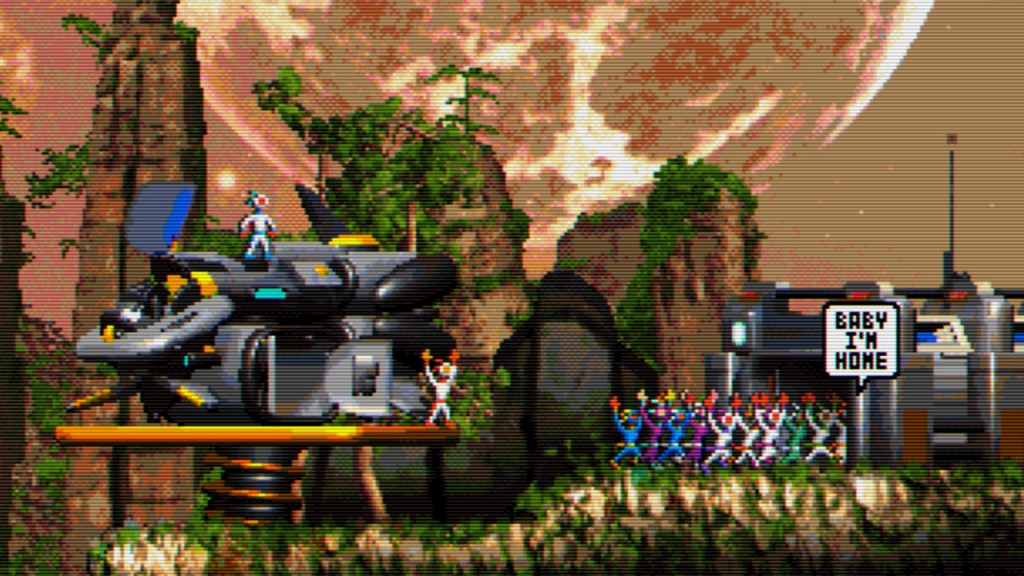
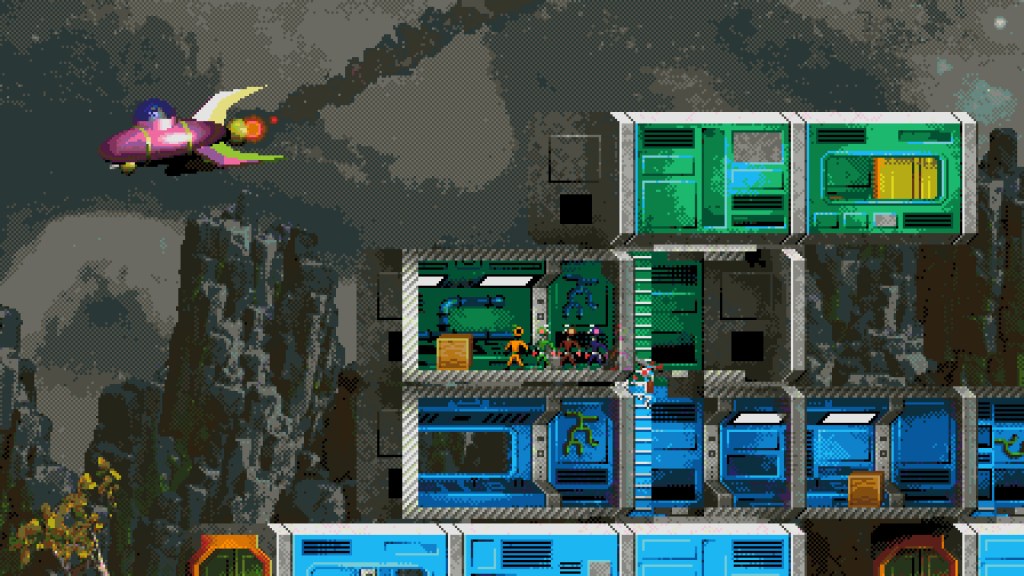
Gameplay – The Meating is a puzzle based platformer, where the goal of the game is to clear stages by collecting a key and reaching the exit. The player will need to move their way through a variety of traps, hazards and enemies in each stage. Within each stage, the player will need to get past many foes, like skeletons and headless chickens that will try to stop Kon on his quest. These foes will deal damage to the Kon, taking a life if his health is depleted.

To navigate the stages, which are split into single screen rooms, Kon has a rather simple moveset when starting the game. At the start, the player can move left and right, jump, charge attack to destroy blocks and tap it to headbutt enemies. There is also a special fly skill that will let the player hover and cross gaps, but this comes at the cost of ghost energy. When all of the ghost energy is used up, this power cannot be used again without dying or picking up a special item.

As the player makes their way through the game, they will be granted new ghost powers, which are activated by pressing up and B. These powers include telekinesis to move blocks and a shifting, where they can shift through blocks that block the way. The ghost abilities use the same energy as the hover, adding to the puzzle mechanics which can lead to no win situations. Making every use of ghost powers a tactical decision, as it may lead to a restart.

If players get themselves in a situation where they are unable to progress, there is the ability to restart a stage at the cost of a life. This gives players an out if they are stuck or run out of energy, which can lessen the stresses of the rather high difficulty of the game. If all lives are lost, the player will get a game over and an 8 character password to continue. It is recommended to write these down or take a screenshot, as there is no save feature for this game.

The stages for this title are split into 6 worlds, with a set of stages and a boss battle at the end of each of them, shown by a butchers meat chart. Each of the boss battles will rely on the skills of the player, as well as use of the ghost powers that have been obtained. These elements add to the high skill ceiling of the game, which makes for a very hard challenge as Kon will die after a few hits. But thankfully, this doesn’t harm the experience too much.

Now with the gameplay covered, it is time to cover the other aspects of this release, starting with the controls.
Controls – as this is an NES game, there are limited inputs, relying on the A, B, Start and Select buttons for all of the main inputs. This works well for the most part, but can be a little cumbersome during play as the ghost powers must be manually selected with the Select button. Unfortunately, this makes it feel slow at times, especially with the need to press up and B to activate powers. Otherwise, this feels comfortable to play both handheld and docked.

Difficulty – The Meating is a very challenging game, with a difficulty curve that starts off easy enough with the first few stages. But as players get further in, the challenge will ramp up significantly, with some easier stages that appear later on. This level of difficulty is most notable during the boss battles, where players can get killed very quickly. To make the game a little more approachable, there are two difficulty options, Veal and Raw, which affect the damage that players take.

Presentation – visually, the game looks very good given the limitations of the NES, with a good use of color and nice looking sprite work. The stages and backgrounds also look nice, alongside cutscenes that are implemented well. The only issues visually are the red flashes during stage transitions, which can be a little off-putting and some sprite flickering during play. Then we have music, which is pleasing to hear as it makes full use of the NES soundchip and adds to the experience.

Final Thoughts – When Mega Cat reached out to me to cover this, I was not sure what to expect but I jumped into it happily. My first impression was that this is just another platformer. However, the further I got into the game, the more I could see that this was anything but that. The gameplay hook of using ghost powers makes this stand out, giving it a unique gameplay loop that can distinguish it from others in the genre. But that does come with its own flaws.

The overall experience is solid, with a fun gameplay loop that can easily pull the player in. But therein lies the troubles I faced with the game. The ghost powers could be improved a little, as the way they are used and selected can lead to soft locks, or even death which is frustrating. That being said though, the game is well designed and fun to play. This makes it an easy recommendation, as it is perfect for those who want to scratch that 8-Bit platformer itch.

In the end, I give The Meating a final score of 3.5/5. This is a solid puzzle platformer with a unique hook that can easily pull players in, a solid gameplay loop and plenty of content for a low asking price. It does have some flaws, but they don’t overly impact the experience as a whole. If you want to check this title out for yourself, a link to each version of the game will be below.

Link to Nintendo Switch version (HERE)

Link to NES version (HERE)

Link to Game Boy Advance version (HERE)
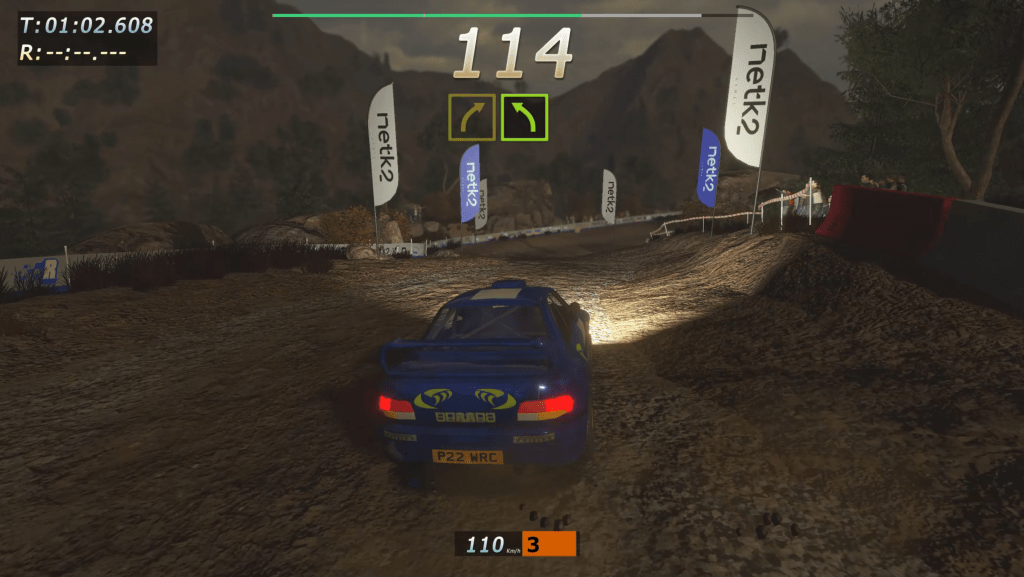
SUNSOFT is Back! Retro Game Selection – Nintendo Switch Review

Overview – developed by SUNSOFT and published by Red Art Games, SUNSOFT is BACK! Retro Game Collection is a special release of three Famicom games that are in English for the first time. Experience the 53 Stations of the Tokaido, The Wing of Madoola and Ripple Island, which have been officially translated for the first time ever! This release is available on Nintendo Switch, PlayStation 5 and Xbox Series, with a link to each version of the game at the bottom of this review.

Disclaimer: before I get into the review, I would like to thank Red Art Games for providing the copy of SUNSOFT is Back! Retro Game Selection used for this piece, via the Keymailer service. The provision of this software has not influenced the contents of this review, all thoughts and opinions contained within are my own.

Now with the introductions out of the way, let’s get into the review. As this is a collection of classic games, I will be covering the details of each game in this bundle, then move onto the overall package. I will be referring to the game as SUNSOFT is Back for the sake of brevity. Please note, story details have been taken directly from the games.

Firework Thrower Kantaro’s 53 Stations of the Tokaido – 1986

Your Fiancée Momoko-Chan is waiting for you in Edo. Begin your journey across the 53 stations of the Tokaido to reach her. But Wait! Gozaemon, a rival merchant, asked his goons to stop you and steal your firework crafting techniques. Use your blasting weapon to make your way to your date! Make your way through 21 stages of challenging action on your way to Momoko.

This is a traditional side scrolling platformer, where the player controls Kentaro and they must make their way through 21 stages. In each stage enemies will appear to halt progress, including thugs that jump around and a ronin that will deflect grenades with his sword. Kentaro can throw fireworks or drop them on the ground to defend himself. The thrown explosives go in an arc, often flying over enemies and the dropped explosives go off after a short time.

When throwing bombs, there is a chance for items to be uncovered which can power up Kentaro. These are usually coins, which can be used for a few purposes, like paying to get through checkpoints. However, the biggest use for the coins is to open up the secret warp, which can allow players to jump 3 or 6 stages. This can be useful as there are no continues for this game, with a game over starting the player from the beginning again.

The Wing of Madoola – 1986

A dark time lurks. Daltos, a vicious fiend from a rival clan, is using The Wing of Madoola’s power to summon an army of monsters and plans to conquer the land. Lucia, It is your duty, as the last magic wielder of your clan to take back the powerful artifact and seal it again. As Lucia make your way through 16 challenging stages in this action RPG, battling monsters to stop Daltos and save your beloved Prince.

Lucia, a fierce warrior who can wield magical power, sets off on a journey to retrieve the Wing of Madoola. This powerful relic is possessed by the evil king Daltos, who also has imprisoned Lucia’s beloved Prince. In order to stop the evil king, Lucia travels across varied lands, caves and labyrinths to retrieve the Wing of Madoola. This action RPG adventure is made up of 16 stages, where the player as Lucia, must fight monsters and collect the orbs to reach the next stage.

The stages are a mix of linear and non-linear stages, with the later stages becoming more labyrinthine in nature. As players make their way through each stage enemies will appear, spawning endlessly and attacking the player. These enemies can be fought off with Lucia’s sword, but there are magic power-ups that can be obtained. In each stage, doors will appear that can transport the player to relic rooms, where magic attacks, upgrades and even healing springs can be found.

The relics that can be found include a fire sword, magic bomb and boots that will increase Lucia’s movements speed. Magic will use up MP, which appears as a number at the bottom of the screen. Relic rooms aren’t the only areas that players can find behind doors. Some of the doors will send the player to different areas of a stage. Every stage has a boss room, where Lucia will be locked in a deadly battle, with victory being rewarded with an orb to get to the next level.

It is entirely possible to miss relic rooms, due to the labyrinthine nature of later stages. This adds to the high difficulty present, made more challenging by the endlessly respawning enemies that can swarm the player with ease. Sometimes, these enemies will drop items that increase the maximum health and magic. There is also a continue option, that allows players to select a stage by pressing Select then Start. The bosses from cleared stages and collected relics do not respawn.

Ripple Island – 1988

On the Ripple Island, humans and animals lived together in peace. However, one day terrible things happened changing everything. Now, the king of Ripple Island is counting on your bravery to find a way to save his daughter, kidnapped by the Emperor Groaker, who plans to conquer the kingdom. As Kyle, explore and interact with the environment and its peculiar inhabitants to find a path to free Ripple Island and get the reward the king promised.

This title is a Point and Click adventure, where the player explores the different areas of the island, interacting with the inhabitants. As Kyle, the player can perform actions like, Look, Talk, Interact and more. The actions like look will provide environmental details, whereas Talk will allow Kyle to interact with the different residents of the island. Players can also find different items, like fruit on bushes that can be picked up and given to people.

The game itself plays out through linear area progression, with multiple objectives that need to be completed in order to progress. These objectives involve talking to the different residents, interacting with objects and moving around the current area. The movement system is very simple, with the player being able to move in four directions. The available directions will be shown on screen, with arrows pointing up, down, left or right.

These puzzles are often relatively simple, providing the player an experience that isn’t overly complex or overwhelming. There is also a lack of a significant fail state for the majority of the adventure. There are instances of decisions leading to a bad ending that can occur during the adventure, but these are few and far between. This makes for a relatively relaxed adventure, that isn’t overly complex or cryptic, allowing players to lose themselves in the experience.

Now with the games covered, I want to discuss the other aspects of this package, starting with the overall improvements and quality of life changes.

Improvements – as these titles are being emulated, there have been additions made to give the best possible experience. These are official English translations for the first time ever, along with save states to freeze the game at any time and a rewind feature. There is even a gallery of art for each game. Unfortunately, there is one area that this collection falters. Manual scans are present, but are only in Japanese, meaning players miss out on the secrets and tidbits hidden within.

Difficulty – both The 53 Stations of the Tokaido and The Wing of Madoola, are challenging if not punishing games that have a very high skill ceiling. However, the use of save states, rewind and for the case of Madoola, continues, make them less unforgiving than their original versions. There is a lack of Continues with 53 Stations, which is a significant roadblock for players. Ripple Island is the easiest game in terms of challenge, as it has little in terms of fail states during play.

Controls – the controls have been emulated well, with smooth and reactive inputs. Players may find the action titles more slippery and cumbersome, but that was how they originally were, so it is not a fault of this release. There is a controller diagram that can be brought up during play, refreshing players on the inputs. The menu inputs show up at the bottom of the screen, which occurs during the title screens. Overall, the games are comfortable to play with any control set up.

Presentation – the sound and visuals for all three titles have been brought over well, with clean sprite work and color that is as close to original as possible. The music is crisp and clean, with no distortion or issues in terms of quality. Additionally, there is a CRT filter and multiple color options, to give the games a look similar to a variety of older screens like the Game Boy. These filters are alongside several aspect ratios and border wallpapers, featuring art from the three games.

Final Thoughts – I have been a longtime fan of SUNSOFT, with games like Hebereke and the Super Famicom version of Lemmings bearing their name. I was also aware of 53 Stations of the Tokaido and The Wing of Madoola, thanks to the Japanese gaming variety show GameCenter CX. That made it easy for me to jump onto this collection, as I enjoy challenging retro titles, but I was not ready for what was in store for me. 53 Stations in particular was a rather treacherous experience.

If you are a fan of older action and adventure games, this collection is for you, these titles are hidden gems with the best of the three being The Wing of Madoola. All three games are challenging but fun to play, with a hope that more of the Japanese exclusive titles in the Sunsoft library can come to the west in the future. There is a lot of content on offer in a rather modest package, with some areas that could be improved, but otherwise a very good selection.

In the end, I give SUNSOFT is Back! Retro Game Selection a final score of 4/5. This is a very solid collection, offering players three classic titles in English for the first time ever, with quality of life additions to make these challenges more approachable for a new audience. If you want to check out this collection for yourself, a link to each version of the game will be below.

Link to Nintendo Switch version (HERE)

Link to PlayStation version (HERE)

Link to Xbox version (HERE)