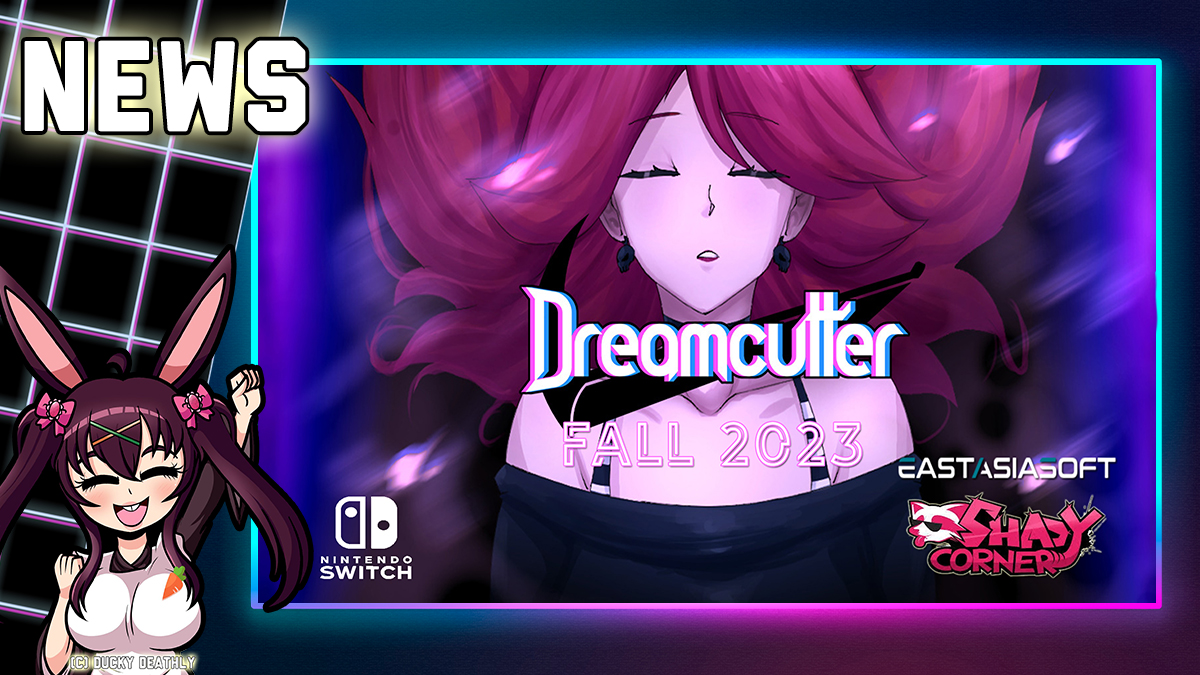
Hello! I have some exciting news to share from our friends at Shady Corner Games and Eastasiasoft, regarding the upcoming release of a new action title coming to the Nintendo Switch. Announced in the recent Fall 2023 showcase, Eastasiasoft announced that the action platformer Dreamcutter, developed by shady Corner Games and Ten Pennyfingers will be hitting the eShop this Autumn.
Check out the press release below to learn more about this raunchy release. I have previously reviewed the title on steam, which you can find (HERE), but please be aware that there will be some modifications made to the switch version. This is due to the original title containing explicit sexual content.
We at Shady Corner Games are pleased to announce that the raunchy action platformer Dreamcutter, will be making the leap to Nintendo Switch. This has been made possible through our partnership with Eastasiasoft, who have been responsible for putting Marble Maid and Slime Girl Smoothies on the system. We are pleased to be able to give players the opportunity to play this title on a new platform.
Dreamcutter was previously released on Steam, which you can find a demo for the game to try out (HERE){18+ warning}
Mature Content Advisory: Please be aware that Dreamcutter is intended for adults only, with the potential for players to be exposed to the following;
Risqué outfits, sexual language, adult situations and nudity.
Sexually charged scenes of an explicit nature, featuring the characters of the game.
Sexual scenes between characters of the same sex, depicting actions of a consensual nature.
All characters in Dreamcutter are aged 18 or higher.
About the Game
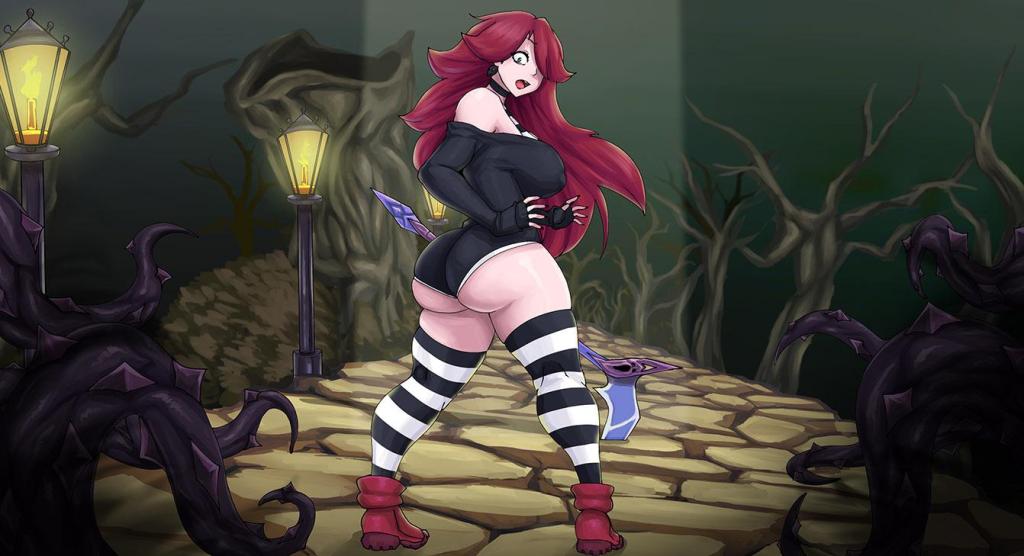
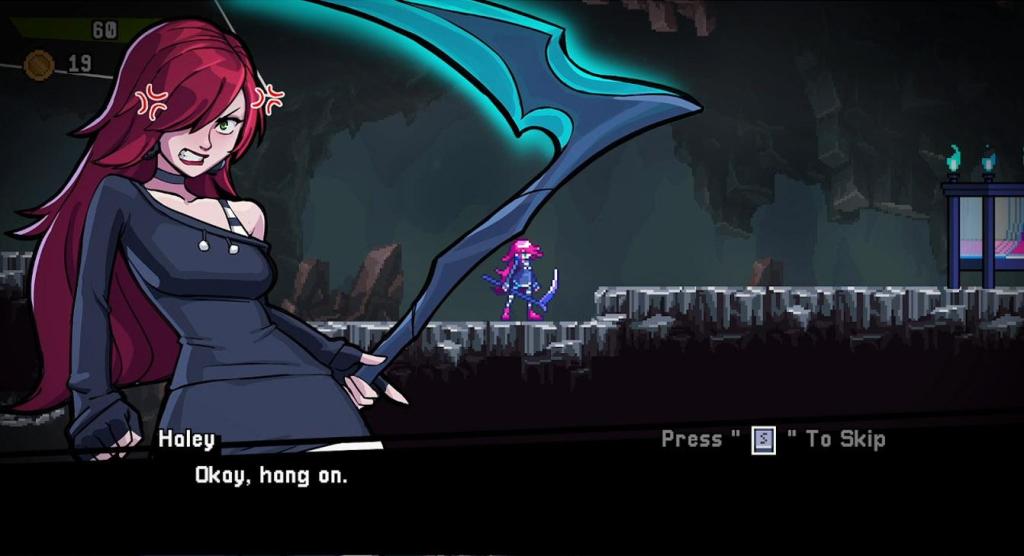
Haley is a student who has been struggling to sleep, suffering from nightmares that have been getting increasingly vivid. Due to this, Haley falls asleep during class and finds herself trapped in the nightmare world, unable to escape from the terror she finds herself in. As she tries to find a way out Haley discovers the Dreamcutter, a mysterious scythe with an unknown motive promises alluring rewards and a chance at escape from the nightmares.
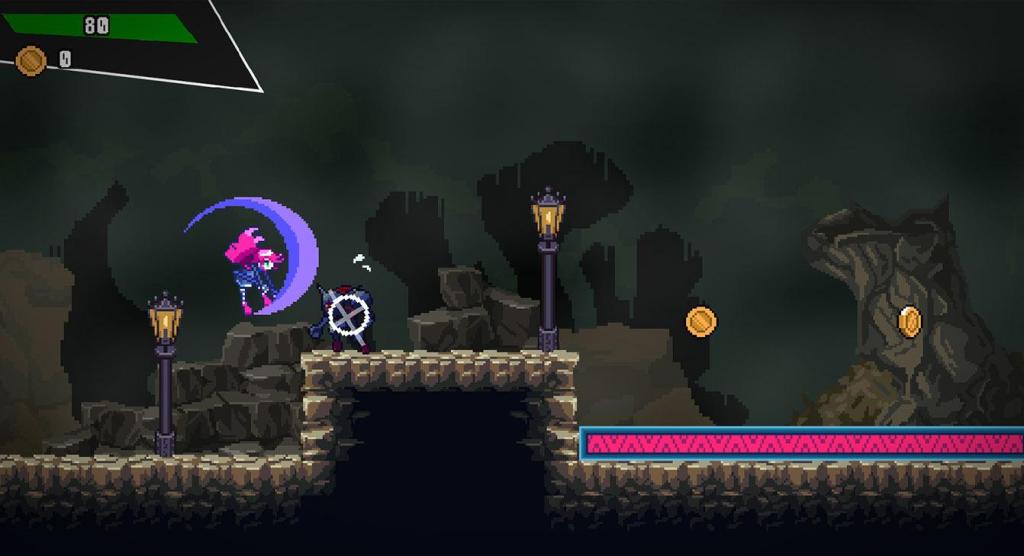
With the Dreamcutter in her hands, Haley sets out on an adventure to navigate the darkest parts of her subconscious. To escape from the darkness, Haley must hack and slash her way through the different mindscapes she encounters in this side scrolling action platformer. Use the Dreamcutter to rack up combos, reach higher platforms by using the scythe as a tool and cut down the monsters that dwell in Haley’s dreams.
There are visual novel CG scenes that tell the narrative of Dreamcutter, featuring macabre themes, sassy character dialogue and unhinged scripture from the dark recesses of the internet. These visual novel segments are accompanied by the steamy romance scenes, featuring intimate moments between Haley and other characters while in the dreamscape. Take back your mind and body, escape the nightmares and wield the Dreamcutter!
Features
Take on intense side scrolling action, with challenging platforming, hack and slash combat and tough boss battles.
An in-depth combo system, with rewards for mastery of the mechanics when used in battle.
Fast paced action, with an arcade mode and timer system to facilitate speedrunning/time attack style competition.
Flexible upgrade system, allowing players to make Haley stronger and adjust the challenge based on decisions made.
Raunchy intimacy scenes in the narrative, alongside bonus rewards that can be unlocked by completing missions.
A rocking electro soundtrack that compliments the visuals and action.
The unhinged and ancient Scriptures of the time cube.
Special voice work from Voice Actress HaruLunaVO (Twitter){18+ warning}
To learn more about Dreamcutter and our other titles, you can check out the official Shady Corner Games Twitter (HERE){ 18+ warning}. If you want to keep up with our official publishing partner Eastasiasoft, you can find them on Twitter (HERE)
Overview – developed by Nippon Ichi Software and published by NIS America, Rhapsody: Marl Kingdom Chronicles is a double pack of two RPG titles from the NIS vault. Experience the story of Rhapsody II & III on modern consoles, with full English voiced dialogue and official translations in the west for the first time ever. This release is available on the Nintendo Switch, PlayStation 5 and Steam (sold individually) with a link to each version at the bottom of this review.
Disclaimer: before I get into the review, I would like to thank NIS America for providing the copy of Rhapsody: Marl Kingdom Chronicles that was used for this piece. The provision of this software has not influenced the contents of this review, all thoughts and opinions contained within are my own.
Now with the introductions out of the way, let’s get into the review. As this is a compilation title, I will be discussing the two games in their own sections, with a brief plot summary and then the core of the gameplay for each title. The other elements will be discussed together, covering the package as a whole.
Rhapsody II: Ballad of the Little Princess
Story – taking place many years after Rhapsody: A Musical Adventure, Cornet has now married her prince and together they rule the Marl Kingdom. They have a daughter named Kururu, who sets out on an adventure to find her own prince, accompanied by her best friend Crea. During Kururu’s quest for true love, there is a dark battle brewing between two witch families, which has the potential for catastrophe for the princess.
Gameplay – this entry is a traditional JRPG where the player roams the Marl Kingdom, interacting with NPC characters, battling enemies completing quests. The game is broken up into chapters, called ACTs that feature character dialogue scenes, pushing the narrative forward, as well as musical numbers between different characters. Each of the chapters has a main objective that needs to be completed in order to progress to the next.
The player controls the Princess Kururu, moving her through the kingdom and interacting with characters while investigating the different areas of the kingdom. When exploring the lands of Marl, the player can uncover important areas ahead of time, giving a semi-open feel to the kingdoms. There are goddess statues that can be used to heal the player party. There is also a set of merchants that the player can use to buy/sell equipment.
During the course of the game, other characters will join the princess in her quest, aiding her during the adventure. These team members will also assist Kururu in battle, using their skills in combat against the foes that appear. The player can assign equipment for the party increasing their stats in battle, along with some being able to use puppets to provide them with combat support (discussed below). The party characters will follow Kururu around on her quest.
Speaking of battles, throughout the adventure there are battles that will occur randomly and at set points in the narrative. The combat for this title follows a rather traditional RPG approach, using turn based actions for the party characters. During these battles, the player has several options for what they want to do for their turn. The pre turn actions are Fight which lets the player make manual actions, Auto to skip deciding and Escape to try and flee.
When the player selects the Fight option, the player can select from the following options for their turn allowing them to assign actions for all party members. The order of battle is usually the player party, then the enemies, but there are factors that can affect this. Here is a list of options party members can use in battle;
Attack – use a physical attack to deal damage to the target enemy, the damage is based on the equipment that they are holding.
Defend – brace yourself for incoming attack, trying to reduce damage taken.
Items – use an item in battle, including healing items and special damage items.
Specials – use a characters special skills, using health as a resource to perform these abilities.
Puppets – use the skills of the puppets equipped to the party member, with different magical spells for each puppet. These skills use Intonium (the money in this game) and will add musical notes to the music meter, leveling it up when enough are earned.
Rewards – use the music note levels to perform special attacks, with the stronger spells needing more musical points to be used. There is also a chance to recruit enemies defeated with rewards.
When a battle is completed, the player will receive rewards based on the strength of the enemies. The rewards that players can receive are Experience points to level up, the currency Intonium and special items. When characters and puppets level up, their stats increase and at different milestones, they will gain new skills for battles. If the party is defeated, the player will be sent back to the main menu, needing to continue from the last save.
Now with the first title covered, it is onto the next title in this double pack.
Rhapsody III: Memories of Marl Kingdom
Story – Memories of Marl Kingdom is an anthology, telling stories outside of the main narratives from the first two Rhapsody titles. These stories feature different characters of the first two Rhapsody games, with each of the adventures showing the path that the different characters will travel for those they love. These tales span the past, present and future of the Marl Kingdom, presenting the events that transpire outside of what we already know.
Gameplay – This title is very similar on a base level to Rhapsody II, but with some rather significant differences that allow it to stand out on its own. As this is an anthology title, the stories are told disconnected from each other, like episodes of a TV drama or Anime. This makes for an experience that capitalizes on the storybook feel of the world that the series takes place in. However, this is still a JRPG at its core and doesn’t forget it.
With each of the episodes, the player will control the main protagonist of that tale, using them to navigate the different environments and locations that are contained within. Each of the plotlines will have a fairly clear objective to achieve, but the steps needed to get to that point may not be easy. There is some puzzle solving, along with scripted and random battles that the players will encounter, oh and more musical scenes too.
Just like the previous entry, the battles that the player will encounter follow traditional turn based combat rules. However, there is a difference to these battles that spices the action up, making it more interesting compared to others in the genre. Instead of a standard party of heroes and adventurers, there are squads that consist of a leader and up to three supporters/partners. This adds more of a strategic edge to the combat and allows for some creative flexibility.
When a combat encounter occurs, the player has several options that they can select from. These action options are the same as Rhapsody II, with Attack, Defend, Special, etc. However, what makes this combat system different from the previous entry is the way that the squads work in battle. During the players turn, the player can choose an action for either the leader or a squad member, with the units that have unassigned characters making independent actions.
During battles the player uses SP instead of Intonium in this entry, giving the special skills a rather limited amount of usage which makes it more tactical. There is also the chance for chests to drop during a battle, giving the chance to earn some bonus rewards during combat. These chests need to be broken open in order to obtain the rewards inside, if the battle is ended before this, the reward is lost. This adds a risk/reward element to some battles.
When the battle is ended, the player will earn experience points to level their character up and Intonium to purchase items from the various shops. All characters active in the party will gain the same amount of points, allowing units to level up at a balanced pace. When a unit levels up, their stats will be increased as well as obtaining new skills that can be used in battle. There is even the chance to gain new party members in stages or by defeating them with Rewards.
There is a maximum of 16 units that can be built up and assigned as leaders/partners, but there are some restrictions that are tied to building squads. There are 4 different character types that can be recruited to the party, these are Puppeteer, Human, Monster and Puppet. The only unit type that cannot be put in a leader position is Puppets as they can only be used as a partner. There are also special combos that can be made with leaders and partners.
The monsters that have been recruited by the player serve many purposes, not just as a member of the party in battle. There are goddess statues scattered throughout the lands, healing the party, letting players summon monsters recruited and using them to perform miracles. When the monsters are used for miracles, they are removed from the roster but will either fill the reward meter or give XP to the other members of the party.
All characters can be equipped with items to make them stronger in battle, this also extends to the partner units that players can equip. The equipment that is added to the party is rather generalized, allowing them to be used by all members. There are also changes to the stats of a leader depending on the partners they have, modulating their stats either positively or negatively depending on their affinity to the leader.
Last to discuss is the unique progression of the individual stories. When a chapter is cleared, there will be a unique credits screen, which makes the experience feel like a collection of mini games. The player can then save the clear data for that stage, allowing them to try them again at a higher difficulty increasing the challenge significantly. This is due to resetting the story characters to their locations, but equipment is retained and monsters can be summoned.
Now with the gameplay for both titles covered, I will be moving onto discussing the other parts of the package as a whole, starting with the controls.
Controls – the controls for both titles are functionally identical to each other, with thumbstick/D-pad control for the movement of characters. The core functions are tied to the face buttons, with all battle inputs and menu navigation attached to the D-pad. The player can also speed up the dialogue and musical scenes by holding down the Y button, which can speed up repeat runs. All of the controls are comfortable regardless of the controller used.
Difficulty – as these are JRPGs there is a fairly moderate difficulty curve that will occur, with the monsters getting stronger as the narratives progress. The toughest parts of the game are the boss battles, but the challenge can be eased by grinding a little. There is the ability to save freely in both titles, which lessens the pain of getting a game over. The challenge increases further in Rhapsody III if the player replays the cleared storylines, but this is optional.
Presentation – the visual style for this collection has the signature Nippon Ichi look, with cute anime style sprite work and art that is consistent throughout both titles. The environments featured in Rhapsody II uses pre-rendered pixel backdrops that are mostly flat, whereas Rhapsody III uses Polygons for all of areas the player can roam. The visuals are a snapshot of the time they were made, with enhancement filters that can smooth the visuals and a CRT filter.
The sound for this title has a fantastical and whimsical feel to it, with bright melodies and brooding compositions depending on the area they are in. Then we have the musicals, with Japanese vocals and subtitles providing lyrics for both languages. These scenes make for a unique experience that adds to the fun of the adventures. These titles also have English dialogue for the first time ever, featuring the talents of Kayli Mills (Mary Skelter), Emi Lo (Higurashi) and Dawn M. Bennet (My Hero Academia).
Final Thoughts – last year I had the pleasure of playing Rhapsody: A Musical Adventure as part of NIS Classics Vol 3, with the positive experience making me excited when Marl Kingdom Chronicles was announced. This excitement was not misplaced as both of the games maintained the charm, whimsy and challenge of the first, while also expanding on the narrative of the trilogy. There is a tremendous amount of depth to this collection, while still being an approachable experience.
This is an excellent double pack that has a lot of content to offer players both old and new, with stories that are rather straight forward, but are told in a way that is engaging throughout. I am very happy to recommend this release to fans of the first game, as well as those who enjoy the library from Nippon Ichi, as it is one of the best titles to come from the vault. The overall package is a joy to play and I am so happy that these titles have finally come to the west.
In the end, I give Rhapsody: Marl Kingdom Chronicles a final score of 5/5. This double pack offers a magical experience for all players, with stories, characters and musical set pieces that breathe life into the world of Rhapsody. This release finally brings the full trilogy to the west and deserves to be in the library of any Nippon Ichi fan. If you want to check it out for yourself, a link to each version of the game is below.
Overview – originally developed and published by WayForward, with porting handled by Limited Run Games, Xtreme Sports is an action sport RPG, where players enter the tournament on Xtreme Island. Participate in 5 different extreme sports and challenge the other competitors on the island, earning medals and interacting with the different characters. This title is exclusively on Nintendo Switch, with a link to the game at the bottom of this review.
Disclaimer: before I get into the review, I would like to thank wayForward for providing the copy of Xtreme Sports used for this piece. The provision of this software has not influenced the contents of this review, all thoughts and opinions contained within are my own.
Now with the introductions out of the way, let’s get into the review, starting off with the story.
Story – in a remote location, there is an island where a special tournament is being held. The sponsors are Xtreme Cola Company who has invited competitors from across the globe to take part. While hanging out together, Fin and Guppi see the competition promoted on a TV, together they decide to enter the tournament with the goal of winning the prize money. However, there is another group heading to the island with the goal of winning the tournament.
Gameplay – Xtreme Sports is a sports adventure, with a gameplay style similar to that of the sports RPG titles from Camelot. After the introduction, the player can select between Guppi and Fin before they are taken to the island, where they can sign up and select their name. Before jumping into the tournament proper, players must make their way through the tutorials, where the player can learn all of the different controls and mechanics.
There are five total sports for the player to take on, with each of the sports having their own unique gameplay mechanics. Here is a quick breakdown (with additional details for general mechanics after) for each of the events that take place on Xtreme Sports Island;
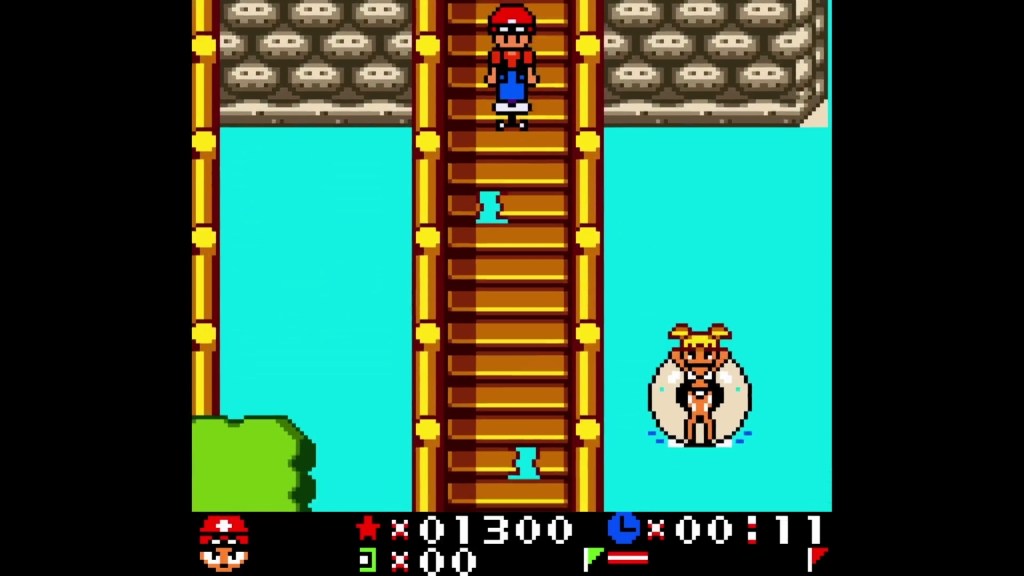
Skateboarding – ride your board across the stage, hitting ramps and performing tricks to get the highest score possible, all while trying to reach the goal as fast as possible.
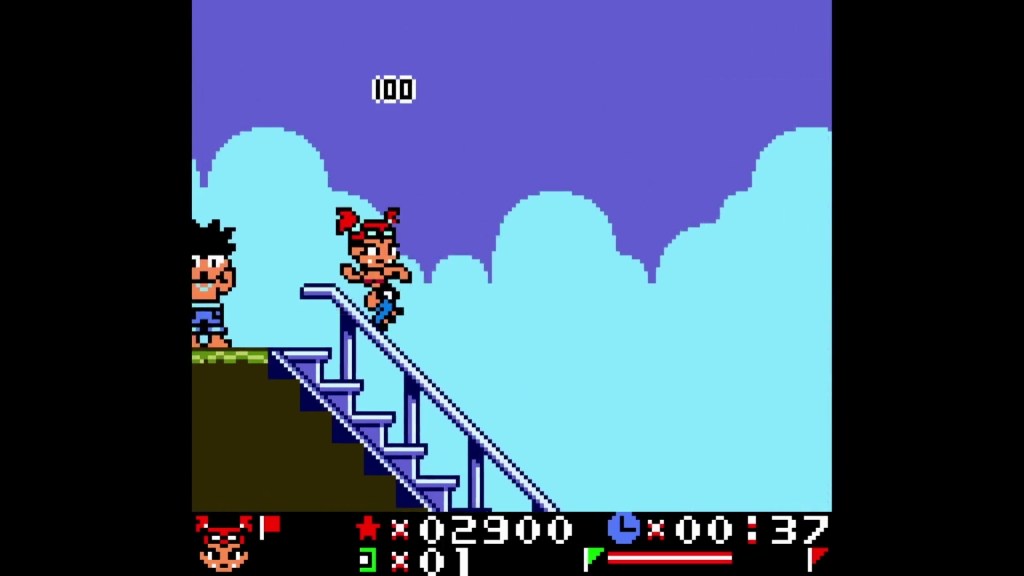
Inline Skating – race to the finish, dodging obstacles and grinding rails as you try to set the best time you can.
Street Luge – ride the streets on a longboard, avoiding the obstacles that are in the way, while speeding down and jumping ramps.
Surfing – ride the waves while collecting points, doing tricks and avoiding the sharks, all while trying not to wipe out.
Skyboarding – take a dive from a plane and collecting arrows to build up a combo meter, performing aerial tricks and avoiding hazards.
All of the events have their own targets for the player to meet. These include collecting flags, hitting a target score and beating the target time. There will also be Twitchy Shakes, a special power-up that will give the player a boost depending on the event that they are taking on. The events are accessed by challenging the other competitors on the island, each with their own target scores/times. If the player succeeds at beating or matching the target, they are awarded a medal.
As the player makes their way through the game, they will unlock new areas that were previously locked if they earn enough medals. This gives the player access to more challenging stages for the player to take on, with the events increasing in difficulty as the map expands further. There will also be a mysterious group who act as the villains of the tournament, who are the strongest competitors on the island and give the biggest challenge.
During the adventure, the player will also gain clues about the motives of the gang, which will help to solve the mysteries tied to them and why they are in the tournament. Away from the adventure, there is a practice mode that players can freely play through the events, with 15 total challenges over 3 difficulty levels. This gives players the ability to learn all of the ins and outs of each event, practicing the different sports and honing their skills.
Finally, there are quality of life improvements for this release. As this is an emulated port of a Game Boy Color game, there have been some features added to this title via the Carbon Engine. As this is an old cartridge game, there is only one save, but to make up for this the player has access to save states which increases the possible saves to 4. There are also visual filters, adjustable screen displays and a gallery of special images for the game/cart.
Now with the gameplay covered, it is time to cover the other aspects of this release, starting with the controls.
Controls – as an old Game Boy Color title, there is a limited number of buttons in use, with the face buttons and plus/minus being used for in game actions. The main menu is accessed by pressing the back triggers and the D-pad/thumbstick can be used interchangeably. These inputs can be a little stiff, which can be a slight frustration, however the most comfortable being those shaped like Nintendo NES and Super NES pads.
Difficulty – there is a rather moderate difficulty curve for the most part, but there are difficulty spikes when the player challenges the villain gang. This can be frustrating for players, as these high difficulty challenges can feel like they are sudden. The addition of save states can make the very tough stages a little easier to deal with, letting players to quickly get back to the start of a stage after a mistake is made. The practice mode can help players who are struggling too.
Presentation – the visuals have that distinct WayForward style to them, with the sprite work going on to build the foundation for Shantae. There is little in terms of lag aside from mild stiffness in controls, and the game runs at a fantastic pace with solid emulation via the Carbon Engine. The sound is bright and has excellent chiptune compositions, which made full use of the Game Boy sound chip, which has translated well to the Nintendo Switch.
Final Thoughts – I didn’t know this game existed until I saw the announcement from WayForward alongside the Shantae GBC port. When I finally got my hands on this title I can honestly say it was a fun experience, even though the difficulty at times did feel like a mixed bag. The spikes in difficulty when it comes to the bad guy challenges did get a little frustrating at times, but don’t spoil the overall experience as there is a fairly open progression system.
I can recommend this title to everyone who is a fan of the classic WayForward/action sport titles, as it has that distinct charm they are known for, with a lot of depth to the overall experience. The game isn’t for everyone, as it can feel primitive to those who had not played titles like this on the Game Boy Color. However, this is a time capsule of the late 90’s early 2000’s extreme sports scene, which will likely be a big hit of nostalgia for those who grew up in that period, like it was for me.
In the end, I give Xtreme Sports a final score of 4/5. This is a fun action sports title with a lot of depth due to the RPG style of gameplay, the gameplay is fun and the challenge can be tough, but the overall experience is solid and a real blast from the past that is a hell of a lot of fun to play. If you want to check this title out for yourself, a link to the game will be below.
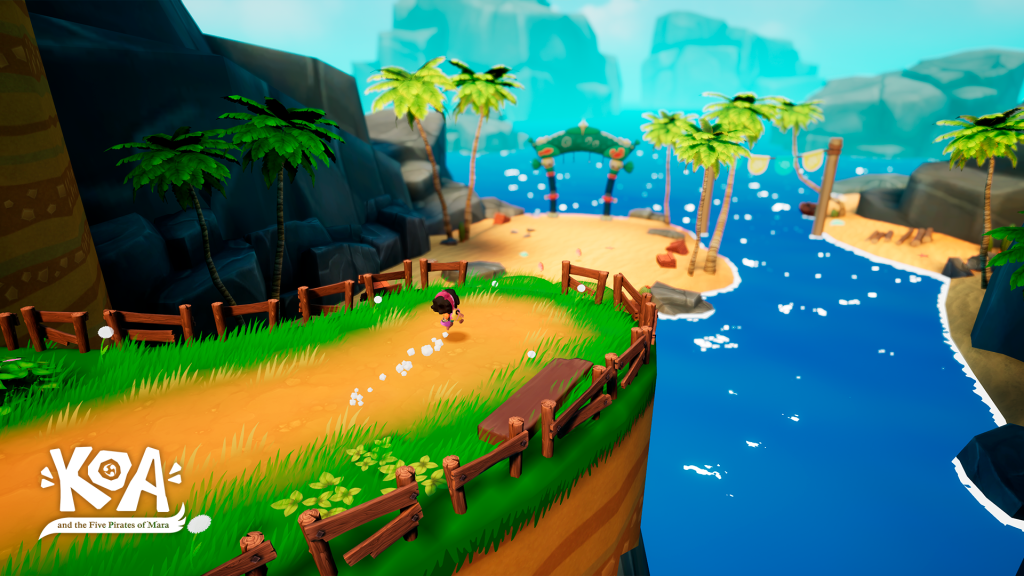
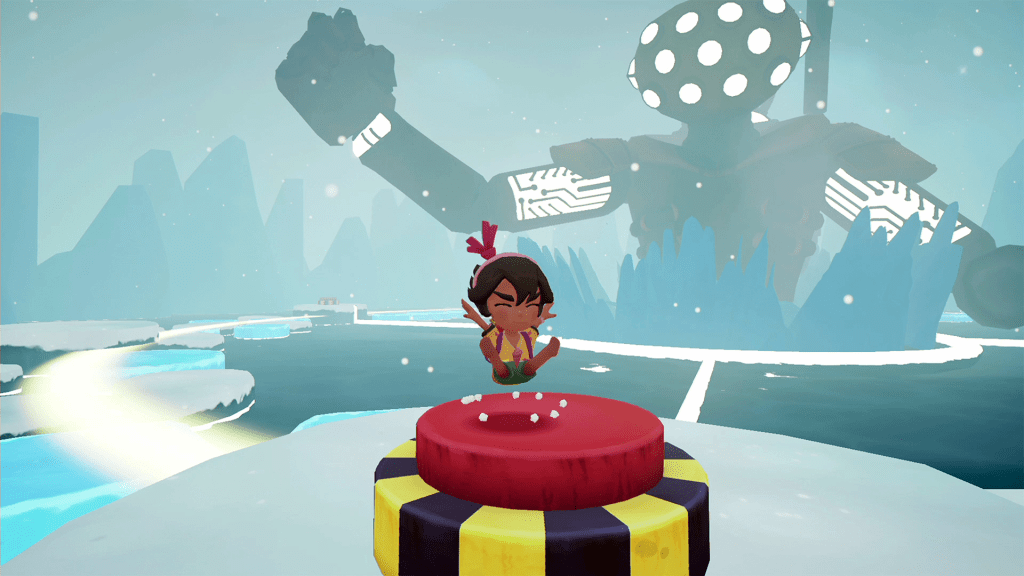
Overview – developed by Chibig, Talpa Games and Undercoders, with publishing handled by Chibig, Koa and the Five Pirates of Mara is a 3D platform adventure taking place in the islands of Mara. As the brave Koa accompanied by her best friend Napopo, travel the islands on a quest to recover stolen pirate loot. This title is available on all platforms, with a link to each version of the game at the bottom of this review.
Disclaimer: before I get into the review, I would like to thank Chibig for providing the copy of Koa and the Five Pirates of Mara that was used for this piece, via the Keymailer service. The provision of this software has not influenced the contents of this review, all thoughts and opinions contained within are my own.
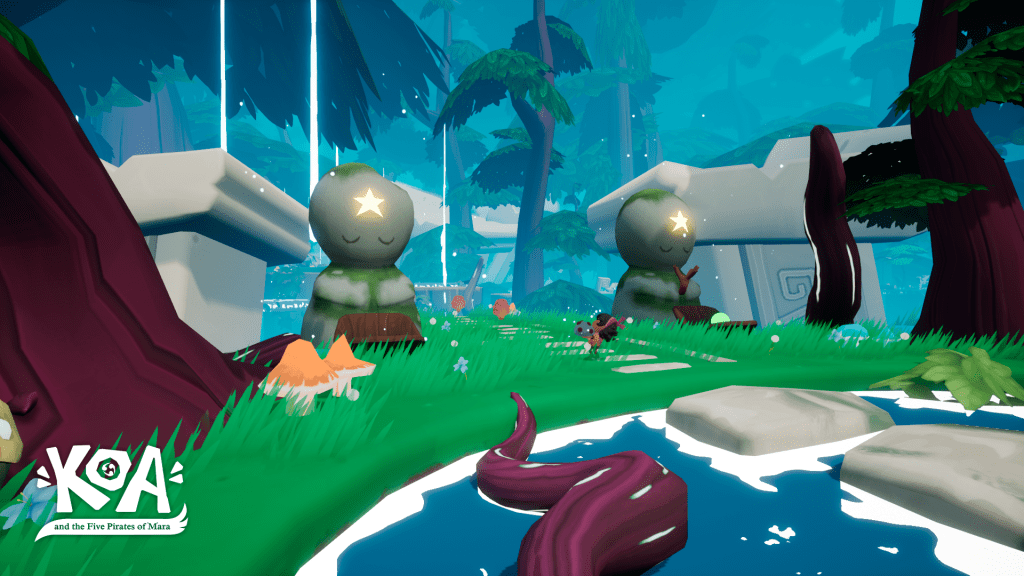
Now with the introductions out of the way, let’s get into the review, starting off with the story. Please note, all images featured are provided by the publisher via press kit.
Story – Koa and her best friend Napopo live in the islands of Mara, an archipelago made up of vibrant lands and locations. One day while visiting Qälis, Koa discovers that pirates have ransacked the island and set up a series of trials across Mara. Now Koa and Napopo set out on an adventure to recover the stolen loot, traversing the islands of Mara and taking on the pirate trials. Can Koa succeed and clear each of the pirate trials that are ahead of her.
Gameplay – Koa and the Five Pirates of Mara is an 3D platform adventure, where the player must traverse the hazards and obstacles of each stage to reach the goal. The game is separated into 8 main zones, the home base town and sub stages that are scattered through the Sea of Mara. Players will start their adventure in the home base of Qälis, where they will be able to speak to the residents after playing through a simple tutorial.
After going through the opening segment, the player is able to set out on their adventure departing into the Sea of Mara. At the start of the game, the overworld map will only have the first zone and a sub-stage unlocked, which the player must sail to in their boat. While sailing through the waters of Mara, the player will encounter barrels, whales and whirlpools. When reaching one of the other islands, the player can depart and take on their challenges.
The main zones are often made up of multiple stages, with a boss stage at the end. The main stages and sub-stages have a simple goal to them, reach the end of the stage as quickly as possible. There are also shells to be collected, alongside special objects that players can find hidden throughout stages for players to find. To make it through each of the levels, the player will need to use their platforming skills to overcome the hazards of the stages.
As Koa, the player has access to a simple move set, being able to run, jump, stomp and throw objects. The different abilities that Koa has in her arsenal can be used to solve simple puzzles, including hitting switches, collecting hidden keys and breaking barriers. While making their way through the stages, there are many dangers and hazards that can harm Koa on her quest, leading to death if damaged 3 times.
The dangers that are present in the stages include water and lava that will knock the player into the air, swinging logs and canons that fire projectiles. All of these hazards can damage Koa, or possibly kill her instantly if the player falls into a pitfall. When the player is knocked out, they will be sent back to either the start of the stage or to the last checkpoint reached. This doesn’t affect some progress, like keys collected or switches hit.
After the player clears a stage, the shells and special items collected will be added to the player total, along with the time taken to clear the stage recorded. The completion time of a stage will also tie into a ranking system, where the player can earn medals based on performance. The three medals that players can obtain are gold, silver and bronze, each with a target time to clear the stage under to earn them.
The time system promotes repeated play of the different stages, so players can improve their times and earn the medals. There is even a leaderboard system where the best times are ranked, allowing players to challenge players around the world for the top spot. Also included in this title is a speedrun timer, which will let players test their skills as they attempt to clear the game as fast as possible. This adds a lot of replay value to the overall experience.
When all of the main stages have been cleared, the player will be able to open up the boss stage, which will reward the player with a map piece if they succeed. After clearing a boss and obtaining the map piece, the player must return to the home town Qalis to visit Saimi who will open the next area of the overworld. The more clouds that are cleared, the more places for players to explore will appear in Mara.
Outside of the main stages and the normal sub-stages, there are special challenges and levels that can affect the progression of the game. These include the pirate races, where the player will race against the wannabe pirates led by Mayo and special underwater stages where Koa must swim to the goal. The pirate races will reward the player with small map pieces, allowing the player to open up special areas in addition to the main zones.
The last thing to talk about is the rewards system for this release. During the course of the game, the player will pick up shells, along with fabric, recyclable items and more. These items unlock new things for the player to buy in the different store, which includes clothing for Koa and upgrades to her boat. These extra rewards provide extra replay value, for players who want to explore every inch of the map and zones to discover all of the secrets that they hold.
Now with the gameplay covered, it is time to move onto the other aspects of this release, starting with the controls.
Controls – the controls for this release are simple enough to get to grips with, having a layout that is reminiscent of classics in the 3D platform genre. The jump, run, throw and stomp buttons are laid out in a comfortable manner on controllers, but can be cumbersome on a keyboard. The steam software allows multiple controller types to be used, but to have the correct pop ups on screen the player needs to set controls from keys to controller.
Difficulty – generally, there is a moderate difficulty to this title, with the challenge escalating gradually as the player gets further into the adventure. This may be too difficult for some players, so there is a relaxed mode, which gives more checkpoints and eases the challenge. This is helpful but can be annoying as the game will try to change to this after several failures. The biggest challenge is the medal time trials, as they require almost perfect precision to complete.
Presentation – the visual style for this game is very cute and cartoony, with Koa and Napopo being front and center, surrounded by a diverse cast of supporting characters. There is a lot of vibrancy to the world of Mara, which works well with the different characters that are encountered that bring life to the setting. The soundtrack is wonderful to listen to, with a tropical feel to it that makes the overall presentation a treat to experience.
Final Thoughts – I had a great time with Koa and the Five Pirates of Mara, the platforming is a lot of fun, the level layouts can become very challenging, especially with the speedrun aspects. The setting and characters have a lot of vibrancy to them, with the narrative scenes featuring Napopo being rather adorable. The variety of the sub stages, mini games and the cosmetic rewards adds a lot of depth to the title, keeping the experience fresh throughout.
I am very happy to recommend this title to everyone, it is quite possibly one of the best 3D platform titles to be released by an independent developer/publisher. This is one of the few kickstarter successes that I have seen and played, which makes this a special title as the chances to cover these are few and far between. I may even pick up one of the other versions of the game, as there is even a physical release for the switch on the way.
In the end, I give Koa and the Five Pirates of Mara a final score of 5/5. This is one of if not the best 3D platform adventure to come out recently, the characters and world is vibrant, the platforming is fun and there is a tremendous amount of replay value for those who gotta go fast. If you want to check this title out for yourself, a link to each version of the game will be below.
Overview – developed and published by Poncle, Vampire Survivors is a retro styled time survival action title where players fight wave after wave of monsters. Fight off the hordes of hell with a cast of horror styled heroes, armed with a variety of weapons and secrets to unlock. This title is available on PC, Nintendo Switch, Xbox and Mobile platforms, with a link to each version of the game at the bottom of this review.
Disclaimer: before I get into the review, I would like to thank Future Friends for providing the copy of Vampire Survivors that was used for this piece. The provision of this software has not influenced the contents of this review, all thoughts and opinions contained within are my own.
Now with the introductions out of the way, let’s get into the review. I will be skipping the story segment as there is a hidden narrative that is sprinkled through the game, so I will be going straight into the gameplay, covering the core aspects that make up the base version of this game. There is DLC available for this release, however that has not been used for this review.
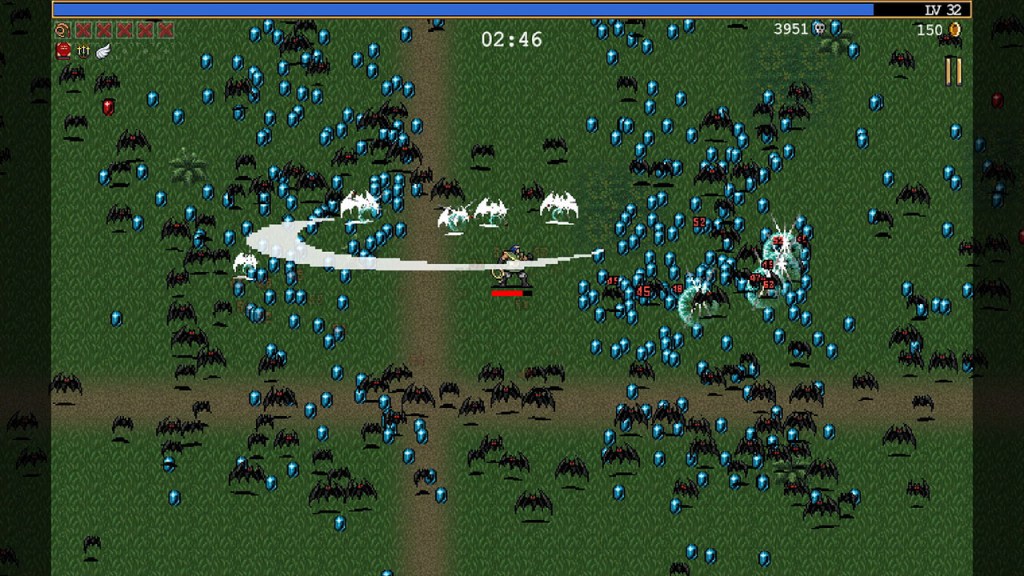
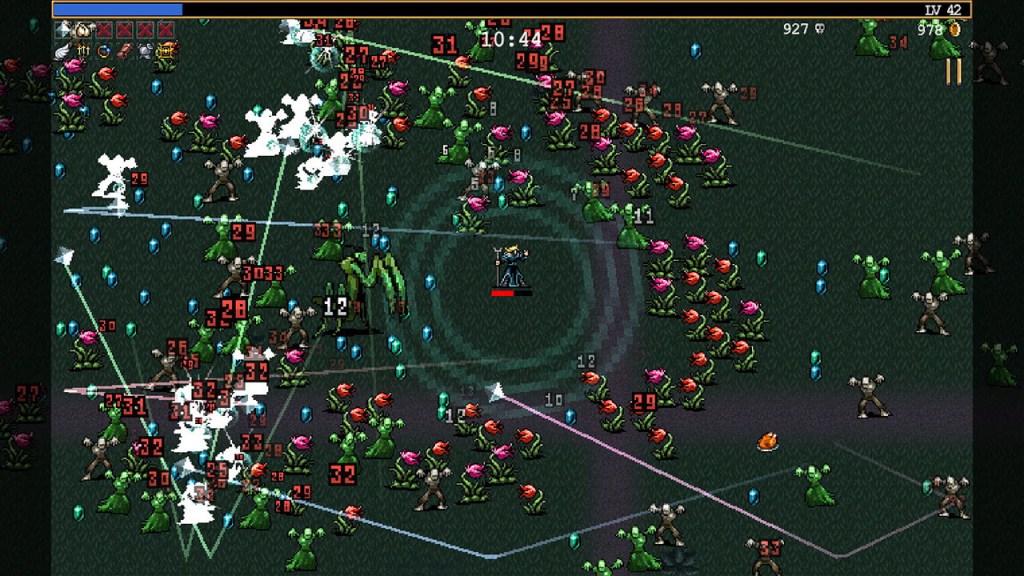
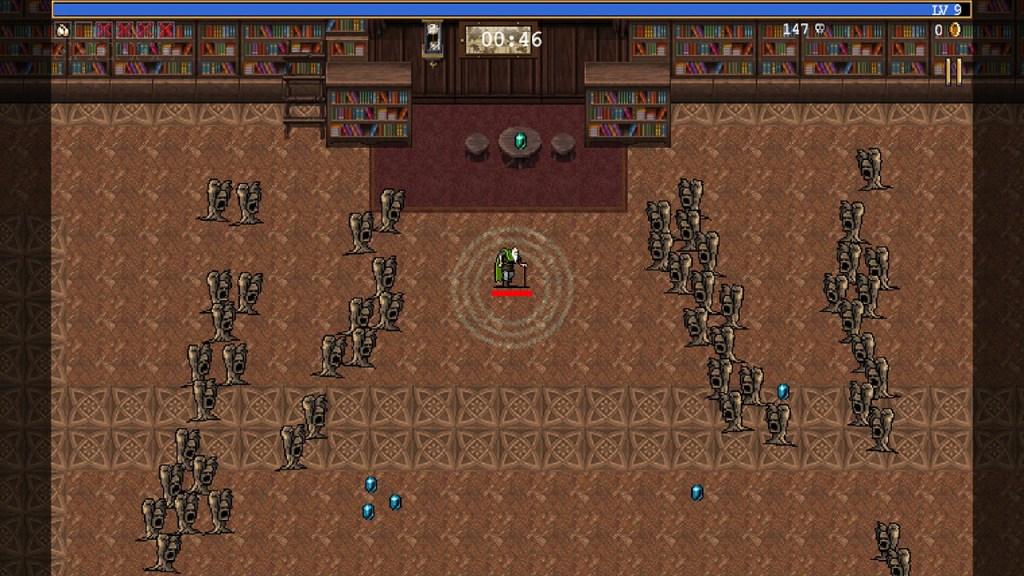
Gameplay – Vampire Survivors is a timed survival action title, using classic horror tropes and characters inspired by older titles in the genre. The core objective of the game is simple, to survive in the vast open levels until the time limit, by battling wave after wave of monsters. To achieve this, the player must collect experience points from defeated enemies, leveling them up and giving them access to new weapons and support items.
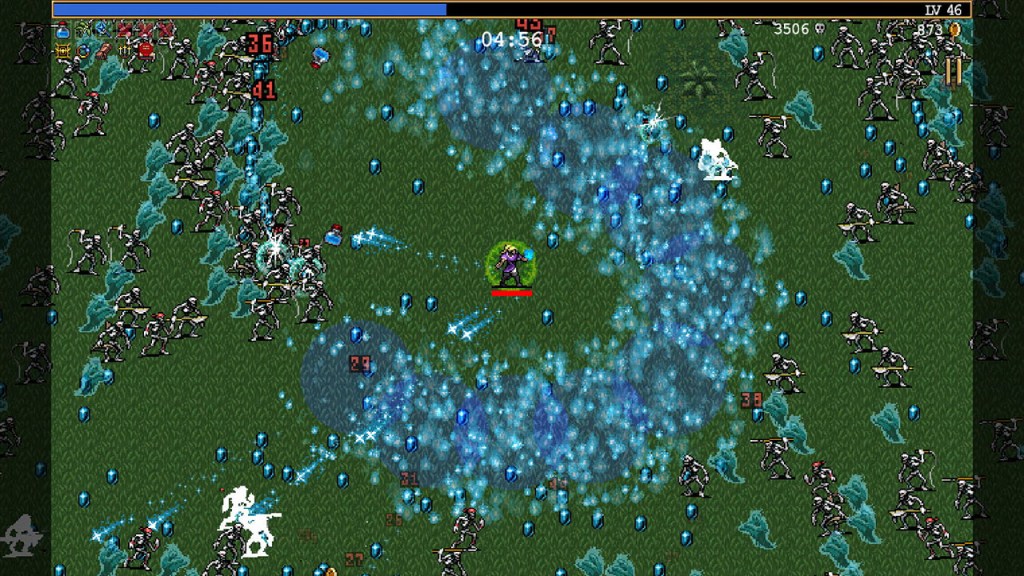
When in the stages, the player only controls the movement of their character. All of the attacks are automated, with the frequency and power of attacks based on different factors. There are several types of weapon attacks, including area of effect, directional attacks and randomized projectiles. The different attacks have their own unique behaviors, with a lot of experimentation required to figure out which weapon fits a play style, as all weapons work differently.
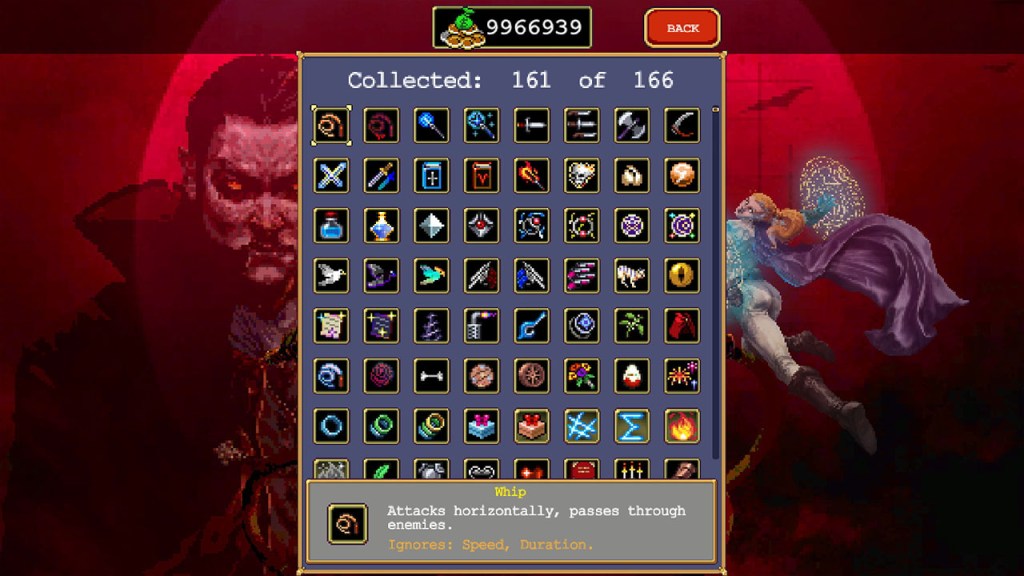
Before starting a stage, the player must select one of the playable characters, each with their own unique starting weapon and unique special skills. At the beginning of the game, there is only one playable character, but as the player makes their way through the game, they will be able to unlock new characters. There are many different requirements, hidden or otherwise that players will need to perform to make these characters available.
However, simply completing the character unlock objectives won’t make them usable immediately. The characters once added to the roster, need to be purchased by the player using gold that is collected during play. There are several ways to collect coins, the main way is to destroy light sources on the field, which can drop coins, but there will also be chests that can appear. These chests will provide large amounts of gold, as well as weapon/support upgrades.
Speaking of upgrades, each time the player levels up, they will be able to select one of three items (four depending on luck) to add to their arsenal. The player can hold a total of 6 weapons, which can be leveled up to give them more power and even special effects. The player can also grab up to 6 support items while leveling, but there may also be special items scattered through the stages, bypassing the limit. The support items can also be powered up when leveling.
New weapons will be unlocked during the course of the players experience, adding more depth to the action. There is an evolution system tied to the weapons, which is based upon combining specific weapons and/or support items. To evolve a weapon, the player needs to have them fully leveled up, as well as holding the corresponding item if a support item is required. The weapon can then appear as a reward in a chest, unleashing an all-powerful attack.
As the player makes their way through the game, they will unlock new stages, which can contain special items called “relics” which add permanent effects. These relics give players more utility and can help the player in their journey, like a map that shows item locations and a deck of tarot cards that give special effects. There are also special stages that can be unlocked, with different special mechanics that can give the player more variety to their gameplay.
As a timed survival title, there is a time limit for each of the stages that the player takes on. As the time passes, the enemies will get stronger and appear in larger numbers. There are even boss monsters that can appear, with each of them tied to their specific stage with their style tied to it. These boss monsters are much stronger than the other enemies with a sprite size to match. There are even “mini-boss” monsters that will appear, which are responsible for dropping chests.
If the player can reach the end of the time limit, leveling their abilities and collecting weapons, they will be rewarded with a swift and brutal demise from Death itself. Once a stage is cleared, or the run ends via player death or quitting, all accumulated gold will be added to the player inventory and achievements granted. These rewards are added to the collection, as well as unlocking more content for players to enjoy.
The accumulated gold that players have can be used to make new characters playable, with different amounts needed depending on the strength of the character. The gold can also be used to purchase permanent upgrades for the character, adding extra damage, health and more. These upgrades can be refunded freely, allowing players to take a different approach to the challenge. This system gives flexibility to the challenge, changing the difficulty based on choices made.
There are multiple secrets hidden in this release for players to discover, with special modes to discover that will change the way that stages work. There are hidden codes, called spells that can be found in the game which can unlock characters ahead of time, add items and bypass progress barriers. There are also hidden codes for players to do silly things with the game, like spinning the UI and spawning ridiculous amounts of corn after being put in a stage.
The last thing to discuss for this release is the multiplayer systems for this release. Included in this title is 4 player simultaneous co-op, allowing players to take on the monsters together on the same system. When playing multiplayer, the players all share the same screen needing to move together to scroll the screen. There are also special items exclusive to the multiplayer mode, which are to compensate for limited weapon and support slots for characters.
Now with the gameplay covered, it is time to discuss the other aspects of this release, starting with the controls.
Controls – there is an incredibly simple control system for this release, with the player only needing to use a thumbstick and the A/B buttons on a controller. This makes for a very easy to pick up and play experience, with no complex button inputs to learn or functions to memorize. This makes it pretty easy for 2 player co-op out of the box with the single Joy-Con support. There is also touch screen controls for players who want to enjoy the game in handheld mode.
Difficulty – this is an easy enough game to start, with players being gently introduced to the gameplay systems. This is by throwing small numbers of enemies at the player, quick leveling and a simple pool of weapons/items to select from. However, as the player makes their way through a stage and the game as a whole, the enemies get stronger and can wipe the player out in seconds. This makes for a very challenging experience, but a rewarding one that isn’t overly frustrating.
Presentation – from a visual standpoint this game has a very retro look to it, with graphics and sprite work that is similar to that of the Mega Drive (Genesis). This look is complimented by the character and monster designs, inspired by the likes of Castlevania and classic horror media. The sound for this title has a mix of styles to it, with music that includes classic electro/Chiptune tracks, heavy rock riffs and for those of the most refined musical tastes Kazoo centric music.
Final Thoughts – I had seen the boom of this title during the past few years, but never got around to trying it on PC platforms. But when it was announced to be coming to the Nintendo Switch, I had to jump at the opportunity to try out this phenomenon. I have to say that I was pleasantly surprised by the depth and complexity of this title, with all of the secrets and hidden details scattered throughout. This made for a fun and exciting experience.
I am more than happy to recommend this title to everyone, as it has so much content in it at an incredibly low price of entry. The art style has a classic look to it, with the inspirations on show throughout and music to back it up. This game certainly lives up to the tag line of “be the bullet hell” with the hordes of monsters, unique weapons and additional anarchy that the multiplayer system adds to the game. The only downside is the amount of time that can be lost to this game.
In the end, I give Vampire Survivors a final score of 5/5. This is an exciting and frantic gothic horror action title, with a diverse cast of characters to unlock, secrets to discover, chaotic multiplayer mayhem and some rather silly touches that entertain. If you want to check this title out for yourself, as well as the DLC, a link to the game pages will be below, the game can also be found on mobile app stores for free (with ads).
Overview – developed and published by ChiliDog Interactive, Demonic Supremacy is an old school style shooter, with monstrous enemies, devastating weapons and intense action. As a demi-demon, battle your way through the demonic hordes, gunning down all in your path as you fight to the lord of Hell itself. This title is available on all platforms, with a link to each version of the game at the bottom of this review.
Disclaimer: before I get into the review, I would like to thank ChiliDog Interactive for providing the copy of Demonic Supremacy use for this piece, via the Keymailer service. The provision of this software has not influenced the contents of this review, all thoughts and opinions contained within are my own.
Now with the introductions out of the way, let’s get into the review. For the story segment I will be using the plot that has been provided by the developer on the official steam page.
Story – Once in a while, every 3481 years to be exact, the infernal tower appears on the surface of the planet. When this happens, the Chosen One is picked and granted the powers of a Demi-Demon to slay all evil opposition. Once again, this time has come. You have been chosen to crush your way through the tower, floor by floor, monster by monster, to stop the bloodthirsty hellspawn and personally meet the Lord of Hell itself.
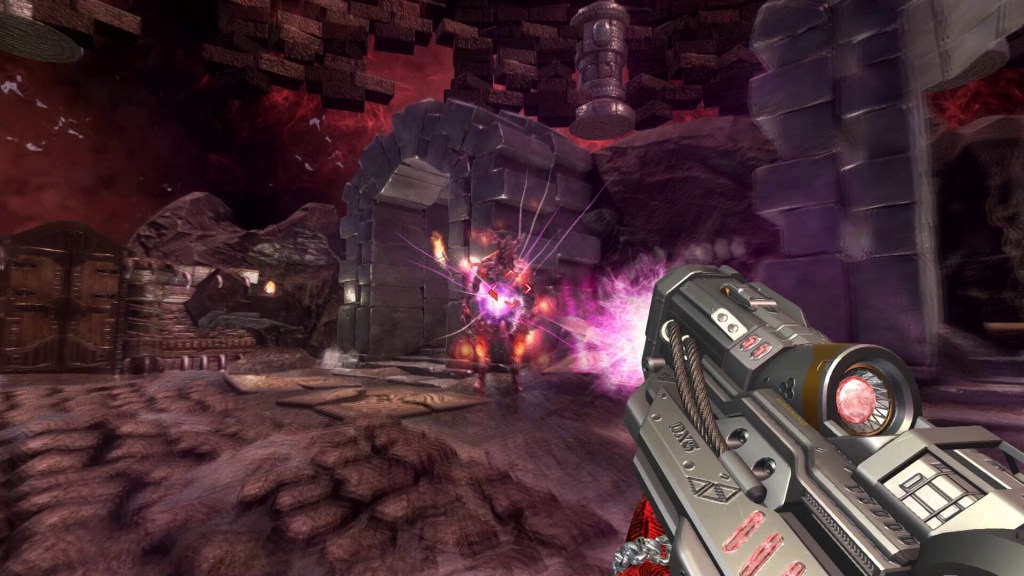
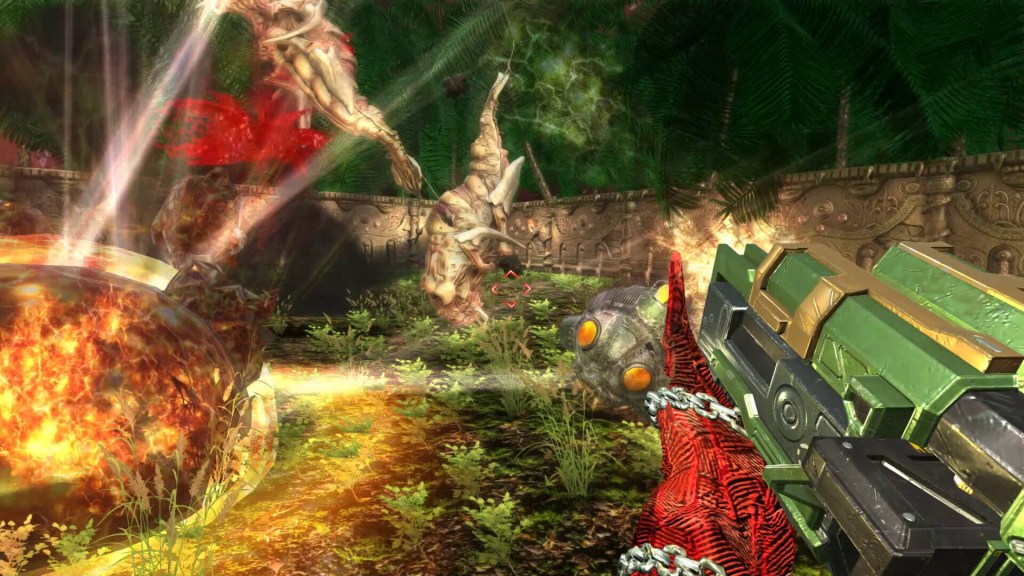
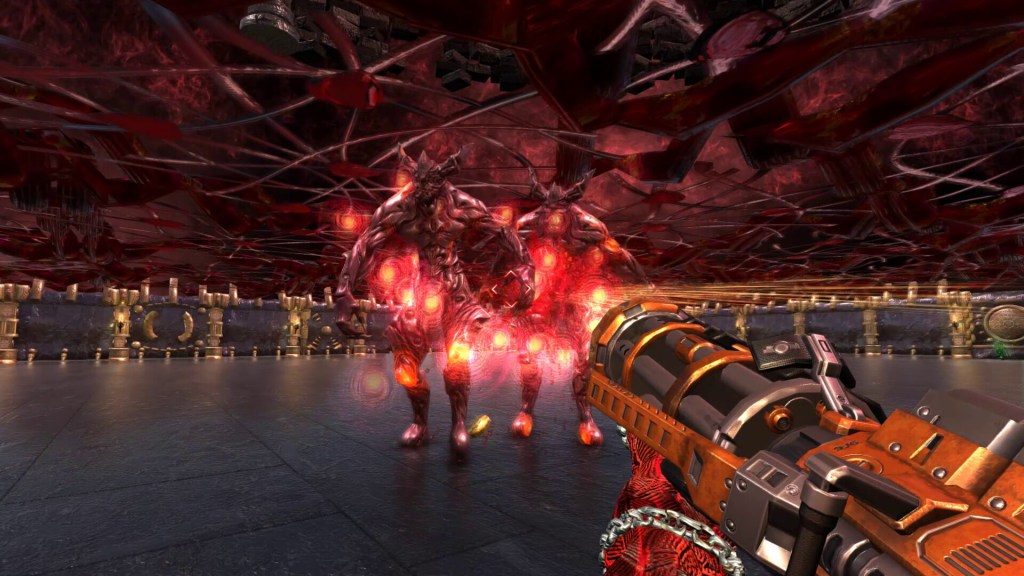
Gameplay – Demonic Supremacy is a 90’s style first person shooter, where players must battle demons in a variety of arenas, armed with an arsenal of devastating weapons. The objective of each stage is to eliminate all enemies that appear, with each of the layers of the tower featuring a different set of enemies. To accomplish this, the player must move around the different locations, dodging enemy attacks and blasting them away.
The arsenal of weaponry that players can use includes a shotgun, minigun and a grenade launcher. All but the shotgun have a limited amount of ammunition in each stage, with the stage itself dictating the load out that is assigned. This makes for a challenging experience as players must adapt on the fly, making sure to pick the right weapon for the job. When a power weapon is given to the player for a stage, there will also be ammo that can be collected in the stages.
Alongside the variety of weapons, the player has access to special skills that can be used in battle. These skills are the dodge, which can be used to avoid attacks, the demonic voice which can stun enemies and the Dominator that can kill all enemies is range. These skills are incredibly useful, however, they have limitations in their use. The dodge/sprint uses a stamina meter, with the demonic voice having a cooldown and the dominator needs to be charged by killing enemies.
In the various levels, there will be the chance for power-ups and chests to be placed in the arenas. These items are set to the stage, which will often factor into the strategy deployed by the player. The pick-ups that can be found include healing items, boosts to skills and gold coins, adding some variety to the action. There will also be coins dropped by some enemies when defeated, which the player can pick up if they want to risk it for their total.
The gold coins are very important, as they are tied to a power-up system that can be used before starting a stage. Before jumping into the action, players can enter the in game shop, allowing them to buy various boosters that will help fight the hordes of hell. The power-ups that can be unlocked include bonus ammo for the power weapons, boosting the power of the demonic voice and even survive death itself. These power-ups are temporary, only active during the stage.
The arena battles against the demonic hordes aren’t the only battles that players will encounter in this game. At preset points during the 50 levels of the tower, the player will encounter large scale boss battles, where the player is pitted in a bloody battle with a demon boss. These stages can be the most challenging of them all, as there is a limited amount of ammo that can be collected. If the player runs out of power ammo, they will be stuck with the basic shotgun.
The last thing to talk about is the unique challenges that stages offer. As mentioned when discussing weapons, there is a preset load out that players are able to use. However, there are also challenges related to the amount of health that players have in a battle. There are even stages that have only one hit before the player will die, which can be incredibly difficult for players who are unprepared. This makes the shop a vital key to survival and success.
Now with the gameplay covered, it is time to discuss the other aspects of this release, starting with the controls.
Controls – as this is an old school style shooter, there is a simple to pick-up control system, using the keyboard for movement and the mouse for look/aim. This gives the game a very 90s feel with only a few buttons for essential functions, which enhances the fast paced action on offer. There is also controller support for those who prefer to use twin sticks, which are comfortable to use and are implemented well.
Difficulty – this is a very challenging game, with some pretty brutal stages that will push players past the point of frustration. This may be a negative for some players, but it is perfect for those who enjoy the type of shooter from the 90s. For those who have a tough time with the harder stages, the effective use of the power-ups from the shop can make it easier for players to get through these stages. This can give a feeling of the game length being artificially extended through extreme difficulty though.
Presentation – as a throwback to the classic shooters of the past, there is a visual style that is inspired by titles like Doom and Quake, with modern modeling styles. The environments have an aesthetically pleasing look to them, making the hellscape seem vibrant. The sound is very good for this release, with a heavy metal soundtrack that works really well with the action on screen. There is even a Metallica sound alike which will play at random and is pretty good.
Final Thoughts – I am a fan of the older shooters, having played titles in the Quake and Unreal Tournament series for many years. That being said, this did manage to evoke a feeling of familiarity with the intense action gameplay, but there was some frustration to be had. The stages can feel too difficult for the sake of it, which can lead to repeated attempts to try and get through, making the stages feel like a slog at times.
However, I do feel that I can recommend Demonic Supremacy, as there is fun to be had with this title and there is a lot of content on offer. This is the perfect challenge for those who want a brutally difficult and satisfying shooter. There is a fairly low price point for this release, which is another bonus for this title, giving players a low barrier of entry for a fun, if sadly flawed shooter.
In the end, I give Demonic Supremacy a final score of 3.5/5. This is a brutally difficult shooter, which can push players to their limits, with intense, blood soaked action that can be a lot of fun to play but has the potential to frustrate just as much. If you want to check this title out for yourself, a link to the game will be blow.
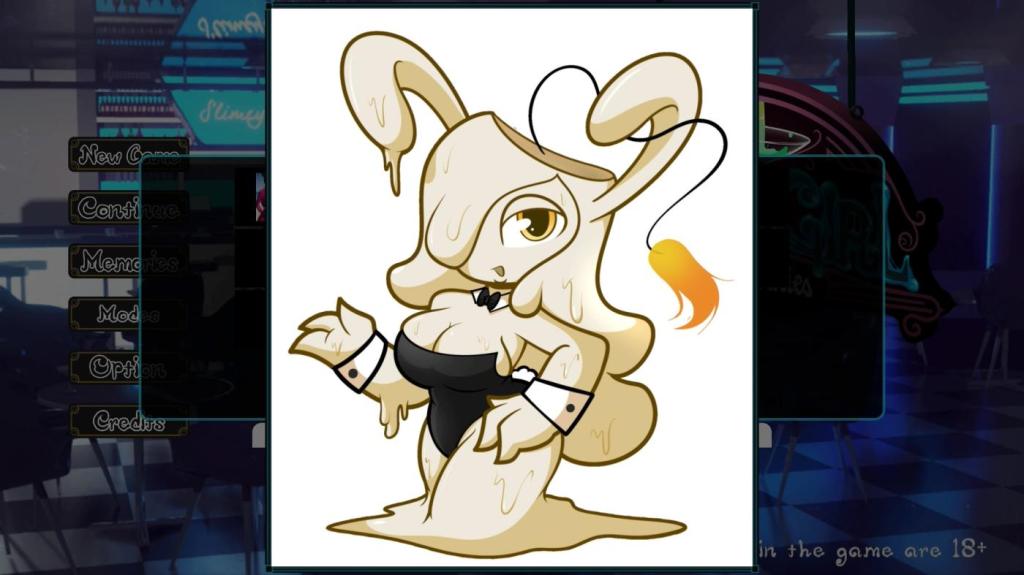
Hello! I have some exciting coverage to share today. The first DLC character for the adult puzzler, Slime Girl Smoothies, titled “Milkshakes with Lemon” is out now! This extra character comes with unique gameplay mechanics, music track and is fully voiced. This is the first of three DLC characters with two more to be announced and released in the future.
Disclaimer: I want to thank Shady Corner Games for allowing me to get hands-on with this content. the provision of this additional content has not influenced the contents of this coverage, all thoughts and opinions are my own. I have previously covered Slime Girl Smoothies for Steam (HERE) and the Nintendo Switch (HERE).
Mature Content Disclaimer: this DLC and the title that it is intended for is rated as Adults Only, with strong language, explicit sexual content and nudity. If this content offends you or you are under the age of 18, please check out some of the other works that I have done on the site.
Now with the introductions out of the way, let’s talk about this new piece of content.
As a refresher, Slime Girl Smoothies is a puzzle title where players must mix fruits together on a grid to make drinks, accompanied by a slime girl bartended for 4 shifts. Each of the drinks has a recipe with specific flavor point numbers that need to be hit, the player has a set number of turns to hit these numbers or if they exceed 100 points they will fail that drink. If more than one drink is failed, the shift will be a failure and the player will lose.
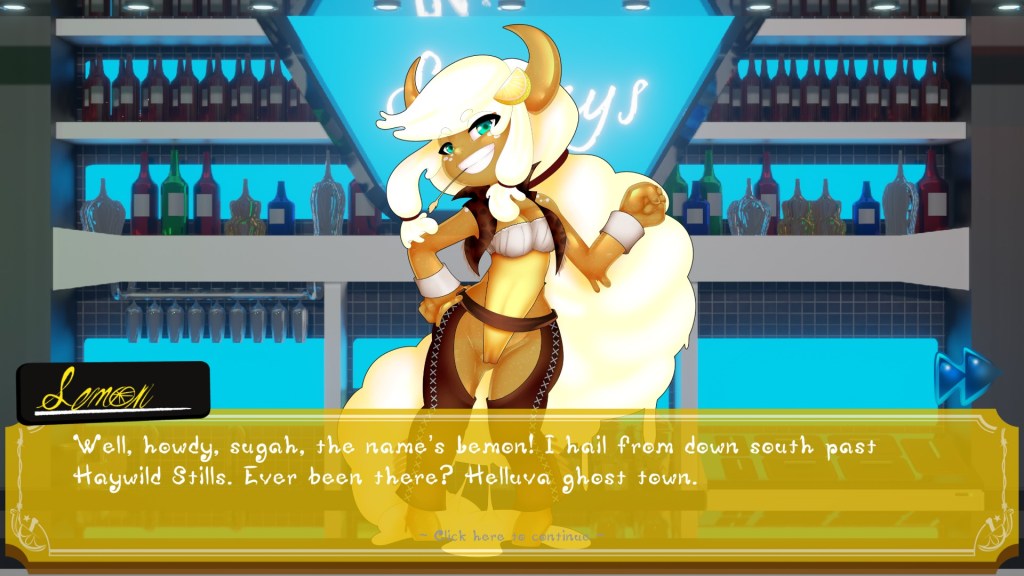
From the outset, this looks like a simple enough addition with a new character from a distant land. However, looks can be deceiving as this is a challenging expansion to the established formula. The bartender Lemon introduces a new mechanic that completely changes the way players must approach the puzzles. This is simply called spoiling, as the drinks are made with milk, they will lose freshness over time leading to flavor points being dropped.
This new mechanic is also augmented by a flavor boost, which will provide more points to players depending on different factors. The boost to flavor points must also be taken into account as well as the spoiling, since there is a chance a flavor will go past 100 and fail the drink. This adds to the challenge and complexity of the shifts, as it is possible for points to fall even after reaching the required level, so players must keep an eye on the flavor wheel.
The new addition to the bar staff also comes with a set of 4 shifts for the player to challenge, each with their own fully voiced dialogue from the talented VA Pixie Willow (Twitter/X). There is also the inclusion of special intimacy scenes that can be unlocked for players to enjoy, unlocked during the course of that route. Alongside the extra artwork, shifts and dialogue, Lemon has her own unique music which is a mix between a Wild West trail theme and a dance anthem.
Personal Thoughts – during my time with this DLC, I had a lot of fun playing through the extra content, which gave me a very good reason to return to the game yet again. The new mechanics are very fun and challenging, adding further depth and complexity to the established formula. The sound for the game is excellently mixed, with the voice work and music complimenting each other, along with the artwork that has been created for Lemon.
I am happy to recommend this bonus content for players who have enjoyed the base game. The newest hire for Slimey’s Bar is a real hoot to play with, as they bring their own unique flavors to the menu. This makes me very excited to see what is next for this title and who will join the team in the future. If you want to check this out and get the DLC yourself, a link to the official steam page can be found (HERE).
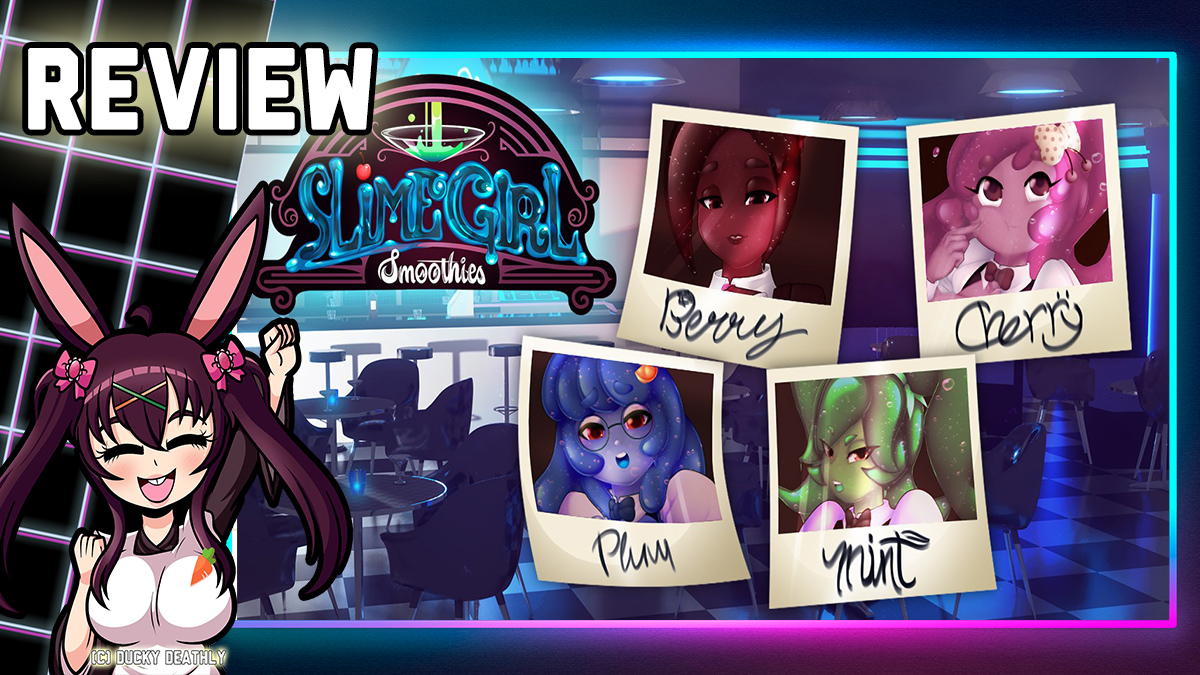
Overview – developed by Shady Corner Games, ported by Bromio and published by Eastasiasoft, Slime Girl Smoothies is an adult puzzle title, where the objective is to make drinks by mixing ingredients from a recipe. Work your way through each set of shifts and get to know the girls working at Slimey’s Bar. This title is also on PC, however, this version of the game is exclusively for Nintendo Switch, with a link to the game available at the bottom of this review.
Disclaimer: before I get into the review, I would like to thank Eastasiasoft for providing the copy of Slime Girl Smoothies that was used for this piece. For complete transparency, I was involved in the very late stages of development for the PC release of Slime Girl Smoothies as a bug tester (my name is in the credits for this). However, my involvement in this capacity has not influenced the contents of this coverage, all thoughts and opinions are my own.
Mature Content Disclaimer: this title is intended for adults only. This is due to the inclusion of nudity, strong sexual content, strong language and fetish imagery. If you are under the age of 18 or find any of the content described here offensive, please take a look at the other content on this site.
Now with the introductions out of the way, let’s get into the review, starting off with the story of Slime Girl Smoothies. Please note, I have previously covered the PC release of this title, which you will be able to find (HERE).
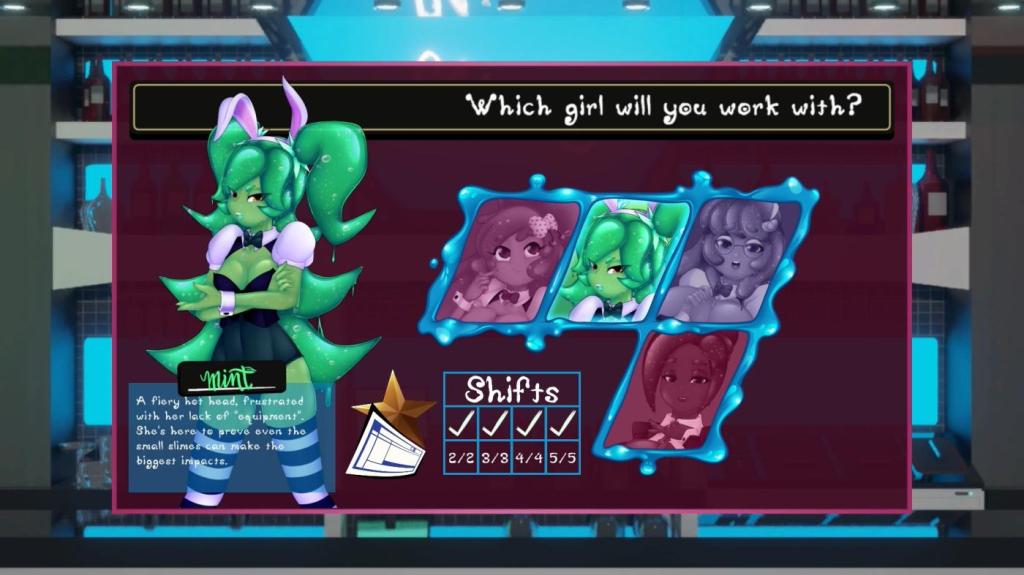
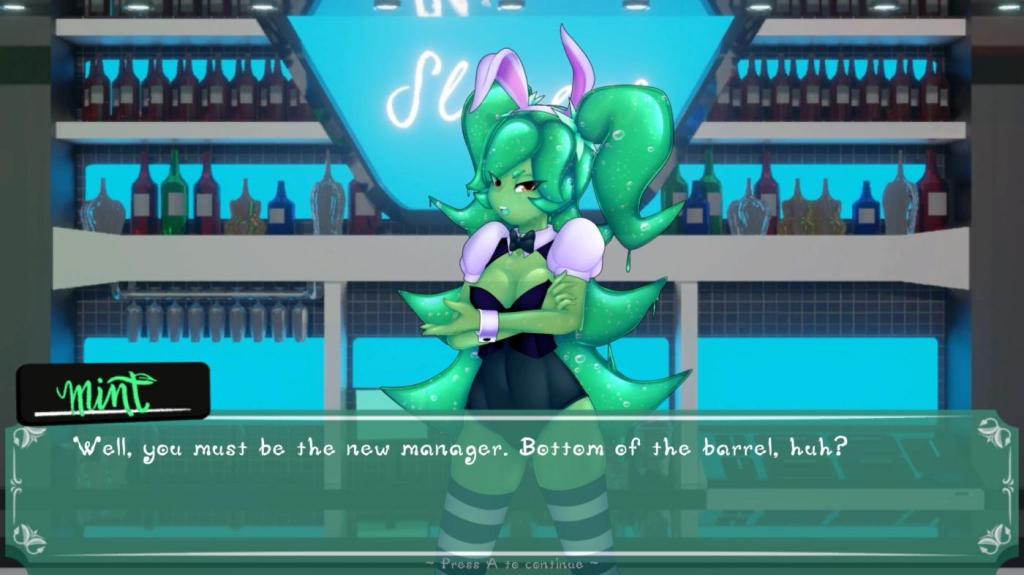
Story – in the city, there is an underground bar, known for its unique manner of serving guests. This bar is called Slimey’s and it is operated by a group of Slime girls who use their assets to mix drinks. You have applied to be the floor manager, with a work trial where you will get some hands-on training with the staff. During your time there you will get to know Berry and her daughter Cherry as well as their co-workers Mint and Plum, and maybe more.
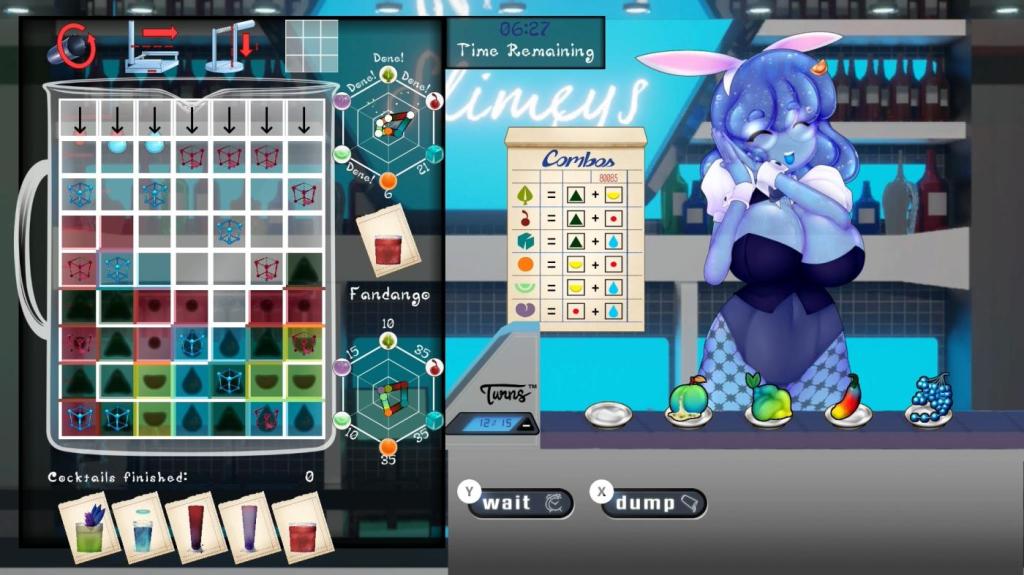
Gameplay – Slime Girl Smoothies is a unique take on the matching puzzle formula, where players must combine different fruits together, using their unique flavours to make the requested drink. To achieve this, the player place the fruits into an 8×7 mixing grid, where their colours will combine add points to the recipe wheel. Each fruit will have its own shape and colours, filling up the grid when they are dropped in from the top.
To create each of the drinks, the player must combine the different fruits to reach the designated flavour profile. The fruits will fill open spaces where they can, going from the bottom up. When fruits are placed, the fresh (brighter) ones will grant more flavour points when placed next to unused blocks, but used (darkened) ones will give less. As the game progresses, tools will be unlocked that will give players more options for fruit placement.
Each of the shifts have a set number of drinks to complete, varying in complexity of required flavour profiles. When trying to complete a drink, if the player creates the wrong flavour profile, exceeds 100 points in a flavour or has no space left, the drink will be failed. There are a limited number of turns that the player has to complete a drink, making each drop matter. Players can only fail one drink per shift, any more will lead to failing the shift and disappointing the girl.
The mechanics are relatively easy to pick up, with the first set of shifts acting as an in-depth tutorial, easing the player into the puzzle experience. This will include on screen tips to give players advice on how to get the most out of each fruit, including how to use the cutting and rotating tools. There is even a chart on screen that will show the different flavour profiles that each color combo can make, this is next to the recipe guide.
Each of the girls that the player will work with have their own unique gimmick, with Cherry easing the player into the game as the lead for the tutorial. However, the other shifts will introduce the special “flavour cells”, which will either increase or decrease the points gained in those spaces. These mechanics will push the player to think more strategically about their fruit placement, to efficiently use the limited space available.
Between shifts, the girls will talk to the player in a manner similar to that of a Dating Sim, with special CG images that will appear at set points during each of the storylines. The special CG images show the girls involved in a variety of “sticky situations”, with all of the unlocked images accessible via the gallery in the main menu. There are also special challenge modes that can be unlocked, letting players put their skills to the test.
Now with the gameplay covered, it is time to move onto the other aspects of this release, starting with the controls.
Controls – as a console port, there have been changes made to facilitate the use of a standard controller. The D-pad/left stick controls the fruit/action selection, the A button completes actions and the B button cancels them. The other functions for waiting a turn, dumping a drink and cutting/rotating fruits use the rest of the buttons very effectively, allowing for a simple to pick up experience no matter how it is played.
Difficulty – this is a fun and challenging puzzle title, with a relatively balanced difficulty curve. There are times where the challenge will spike, as there are some very challenging recipes that need to be made. This gives a level of strategy to the difficulty, as players decide if they want to hit the big or small number first, or just see what happens. But as the player progresses, the difficult drinks will be easier to complete.
Presentation – the overall visual style of the game is very pleasing to the eye, with over 100 frames of animation for the girls, with beautiful and expressive character arts for each of the girls at Slimey’s. The fruits that are featured are all humorous and rather lewd, with adult designs for them, like a ball gag, shibari ropes and condoms to name but a few. The art for the reward images just rides the edge of AO, with adjustments made that keep the titillation intact.
The sound for this release is excellent, with a soundtrack composed by the talented AlterEgo, who has excellently crafted all of the musical tracks for this release. The scenes between shifts are all fully voiced by a cast of talented independent voice actresses, who skilfully bring all of their characters to life and their unique personalities show through. All of the visual and sound elements for this release come together perfectly, creating a satisfying experience for the player.
Final Thoughts – while I have already played and reviewed the PC version of this release, I was very eager to get my hands on this version of the game. This is because I wanted to see how well the gameplay and experience could translate to a home console. That being said, this is an excellent port and the adjustments that have been made don’t compromise the original vision that the developer had. I very much enjoyed my time with this release.
I am happy to recommend this to everyone that enjoys a saucy puzzle, as the gameplay is challenging, the artwork is titillating and the story has depth to it that players can enjoy. This title is different from the majority of the mature offerings for the switch, as the focus is on the gameplay and not just sexual content. There have been some minor porting hiccups, but they don’t impact the overall gameplay experience and patches are on the way.
In the end, I am unable to give Slime Girl Smoothies a score, as I was involved in the testing for the PC release. However, I will say that the overall experience is something that we rarely see in the adult gaming space, especially when we talk about the console offerings specifically. The story is well written, the characters have depth and it is all brought together by the fantastic voice cast. If you want to check it out for yourself, a link to the game is below.
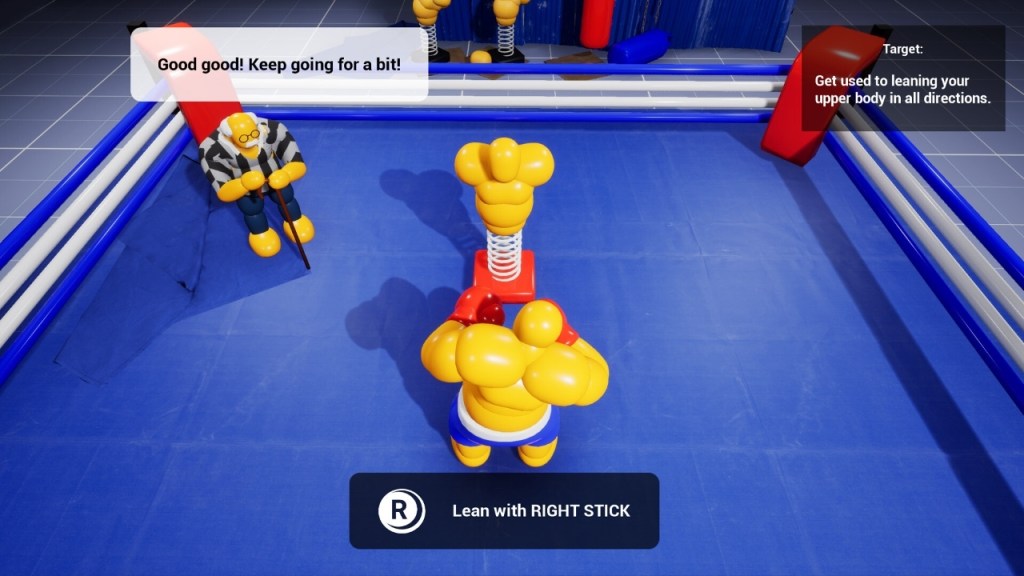
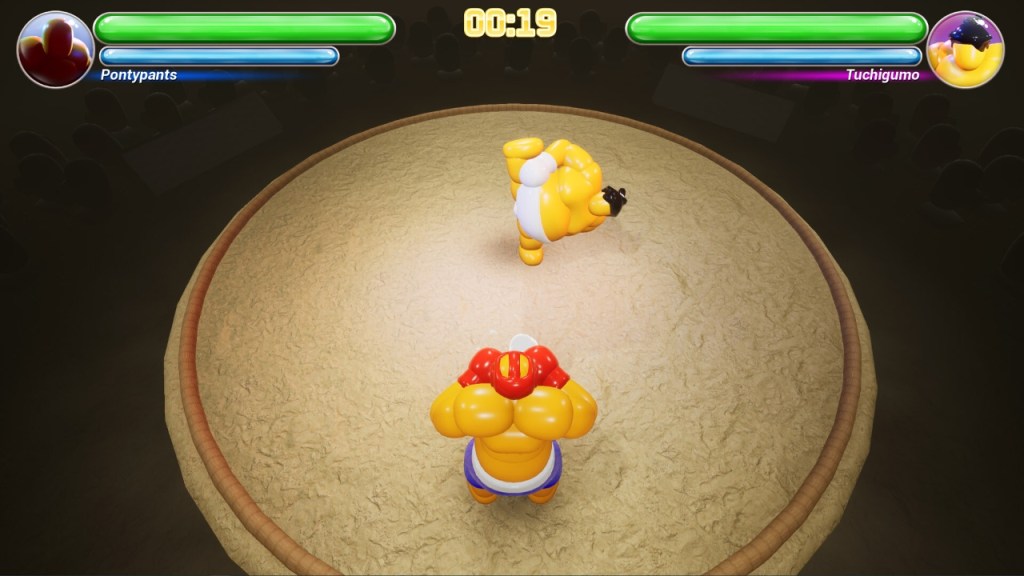
Overview – developed by Ponty Pants and No Gravity Development with publishing handled by No Gravity Games, Punch A Bunch is a physics based boxing title, where there is a focus on timing over button mashing. Take on three championships, with a range of weird and wacky fighters as you aim to be the number one fighter in the world. This version of the game is exclusively available for the Nintendo Switch, with a link to the game at the bottom of this review.
Disclaimer: before I get into the review, I would like to thank No Gravity Games for providing the copy of Punch A Bunch that was used for this piece via the Keymailer service. The provision of this software has not influenced the contents of this review, all thoughts and opinions contained within are my own.
Now with the introductions out of the way, let’s get into the review. There is no real plotline for this title, so I will be going straight into covering the gameplay of Punch A Bunch.
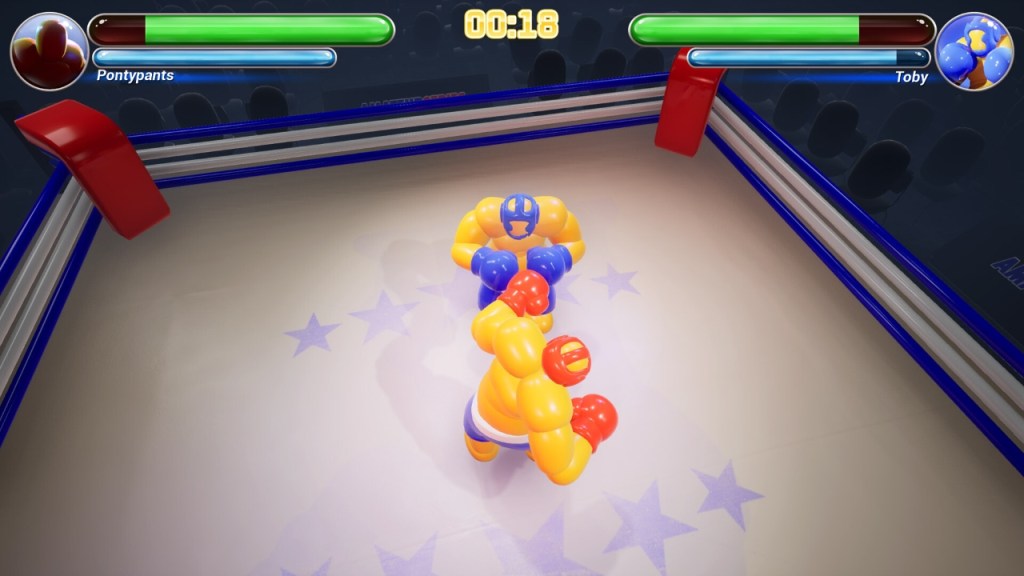
Gameplay – Punch A Bunch is a physics based boxing title, where the player must engage in boxing battles with a range of unique opponents. Take on three championships ranking from Amateur to Pro, with opponents that will push your abilities to the limit. Each of the championships is split into 5 battles, against increasingly tough opponents. The objective of each fight is to knock the opponent out by depleting their health, duking it out in physics based brawls.
In a fight the player has access to a relatively basic, with the ability to punch high, punch low, block and dash which is all the player can really do. This is achieved in two ways, the first is the main attraction of the game, using the twin stick controls that is the main focus of this game. The player can move around with the left and position their body with the right. This combines with the punch button that will throw a strike in the direction of the player body.
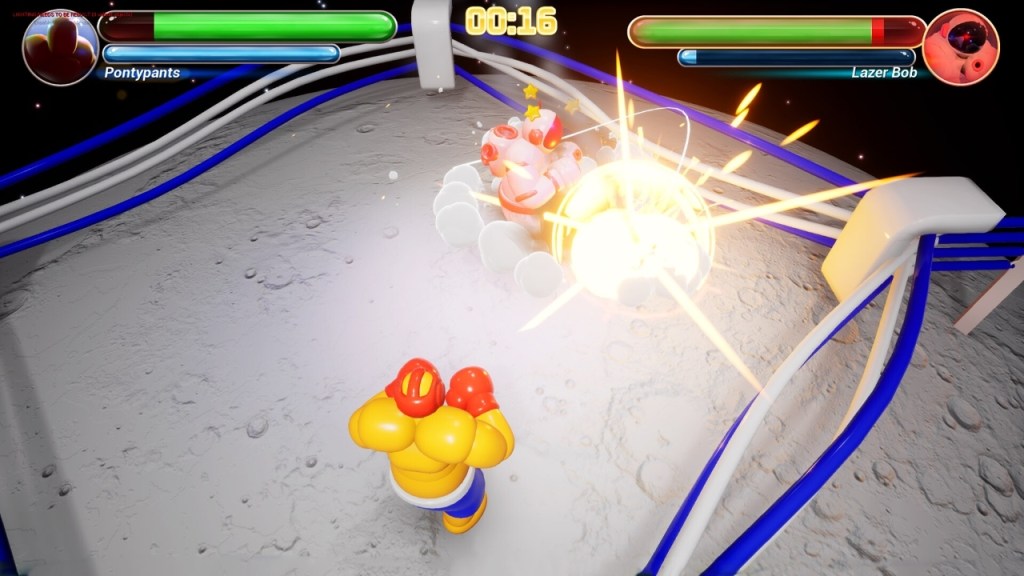
This system makes full use of the physics system that the game uses, with the player and opponent wobbling about as they throw punches. However, this comes with its own flaws, as the physics system can make it very difficult for players to throw strikes at their opponents. This is made more difficult by the fact that the enemy AI can easily hit the player, especially when a strike is missed or doesn’t connect properly.
To try and make it easier for players to strike hard with their attacks, there is a system called punch assist, where players are able to press buttons for dedicated attacks. This does make it easier to throw out specific strikes, but can leave the player unable to block effectively. There are also additional mechanics including bash, which is meant to disrupt the opponent and adrenaline that powers the player up, but these don’t seem to have any effect.
There is an unfortunate balance to the gameplay with this game, as there is also a stamina system that can make the battles much harder. When taking shots or being blocked, the stamina meter will deplete, which will tire out the boxer and leave them open to being stunned. While this does affect both fighters, the player is more likely to be stunned by the lightning reactions of the AI, leaving them open to taking massive damage.
This isn’t the only issue that this release suffers from sadly, as the majority of the AI fighters have special attacks that will deal massive damage if they land. These attacks can also be unblockable, which will lead to massive damage if the player gets hit by them. This makes the game less of a reactive fighting title and more of an exercise in pattern recognition. Due to this, there is a very high skill ceiling to the combat which could be off-putting to some.
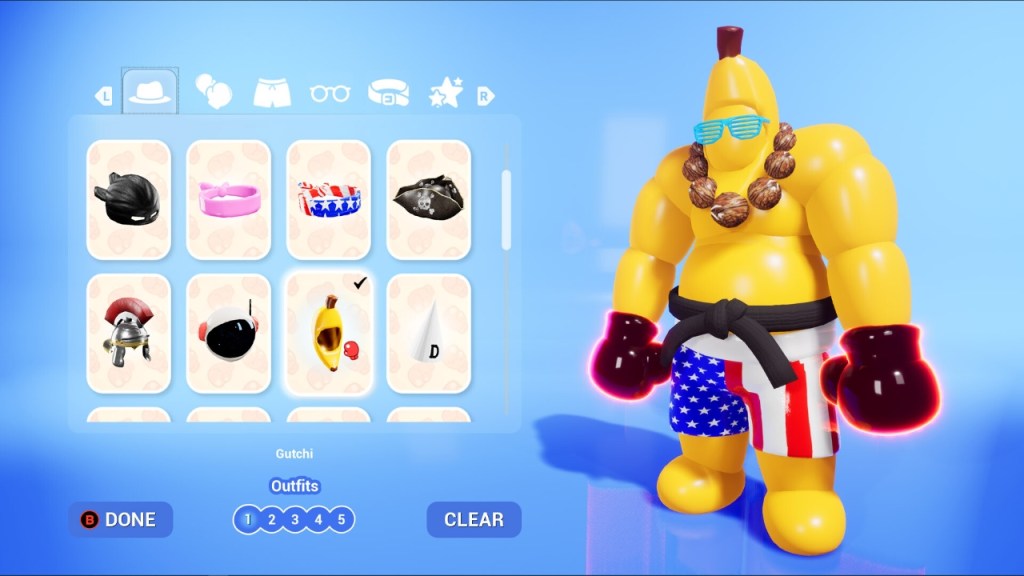
When the player defeats an opponent, they can earn rewards based on their performance. These are cosmetic items that they can put on their fighter, allowing them to customise the appearance with a range of outfit parts. These reward challenges include beating the opponent in a set amount of time, not taking damage in a fight and more. When a championship is cleared, fights can be replayed to set new times and clear objectives.
The last thing to discuss is the multiplayer in this release. There is a local multiplayer battle system for this release, where two players can battle it out in split screen battles. There is little in terms of customisation of the arena where battles take place, but if there is more than one save active, the player can use the customised fighter for that profile. The local battles can be replayed endlessly, while providing a simple and fun time.
Now with the gameplay covered, it is time to cover the other aspects of this release, starting with the controls.
Controls – this title has a complicated control method, with the use of twin stick controls and the physics system to get the most out of each strike. This can make for an awkward experience if players have difficulty getting to grips with the timings. There is a simplified punch system for players who may struggle with this, but it does have its own issues. These inputs work pretty well with all standard controllers.
Difficulty – there is quite the steep difficulty curve with this title, as there is a need to really master the gameplay mechanics of the game. There is a tutorial that will teach the player how to fight, which is effective in teaching the basics. However, the fights themselves are much more complex, with the AI opponents having pinpoint accuracy and special attacks that can wipe a player out in seconds. This can really kill the flow for players, making it a war of attrition to replay stages.
Presentation – the visual style for this game is very simple, with the characters made up of blobs and simple outfit parts/arenas. This makes for an easy to silly experience watching the different boxers wobbling about when trying to hit them, which works in the games favour with the solid colors and streamlined visuals. The sound for this release works well with the visuals, with a solid soundtrack and decent sound effects that fit the overall presentation.
Final Thoughts – when first starting this title, I was expecting something in the vein of Punch-Out, with a cast of wacky fighters to take on. However, the further I got into this, the more that it feels like a test of patience as I had to learn how to avoid the different special attacks. This can cause a lot of frustration when getting to the later battles, as the special attacks can deal massive amounts of damage and in some cases be an instant defeat.
I am unsure about recommending this title, as it can be a very frustrating experience with the controls and sudden difficulty spikes that can occur. It can be a lot of fun and has a level of satisfaction to it when beating the championships, but the need to keep replaying earlier fights to get further may put people off. The inclusion of multiplayer and unlockable rewards does help the game, but sadly the other difficulties I had soured my experience.
In the end, I give Punch A Bunch a final score of 3/5. This is a silly physics based brawler that can be a lot of fun, but sadly is weighed down difficult to use controls and difficulty spikes that can be a frustration that sours the overall experience. If you want to check this game out for yourself, there will be a link to the game below.
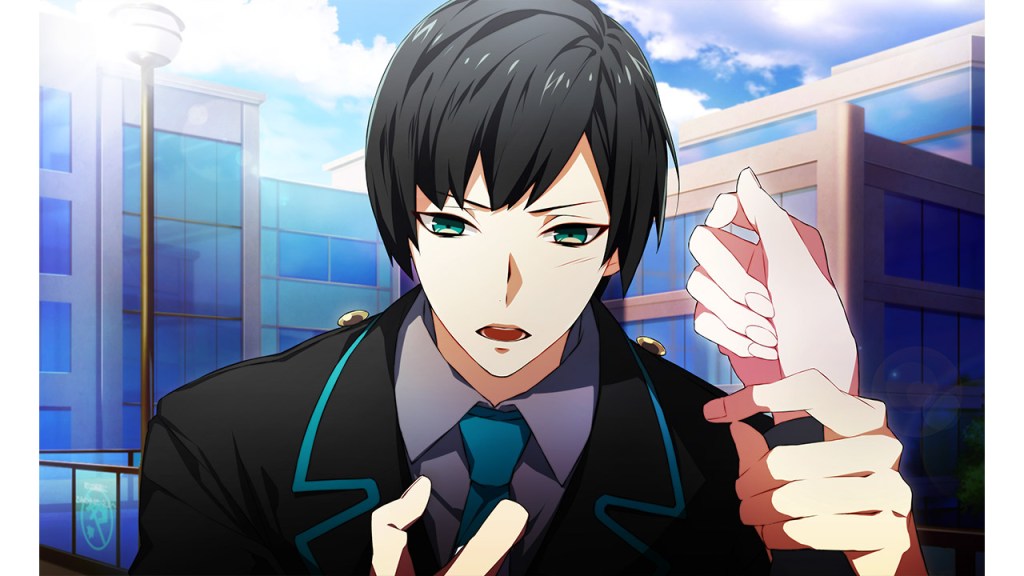
Overview – developed by Idea Factory and published by Idea Factory International, Charade Maniacs is an Otome visual novel focused on a mysterious stream called The Other World. As the Protagonist Sena, unravel the mysteries of the stream while also performing in forced drama episodes for a mysterious Director. This title is available exclusively for the Nintendo Switch, with a link to the game available at the bottom of this review.
Disclaimer: before I get into the review, I would like to thank Idea Factory International for providing the copy of Charade Maniacs used for this piece via the Keymailer service. The provision of this software has not influenced the contents of this review, all thoughts and opinions contained within are my own.
Now with the introductions out of the way, let’s get into the review, starting off with the base plot of Charade Maniacs.
Story – in the near future, the world has advanced to the point where all information is controlled, but there are rumours of mysterious streams called The Other World. On the last day of school, Hiyori Sena, a sophomore in highschool who was living a peaceful life, was walking home with her childhood friend when a mysterious figure appeared before them. The two of them were abducted and awoke in a strange place with two moons in the sky.
These two are not alone, as there are others who have been pulled into this unusual situation. In their confusion, the mysterious figure that took them speaks. “Welcome to Arcadia, where your wildest dreams will come true if you perform for us”. In order to find a way home, this group is now forced to work together and perform in an assortment of drama scenes. What mysteries are going to be discovered and what is really going on in this “Other World”?
Gameplay – Charade Maniacs is an Otome visual novel, where the player takes on the role of the protagonist Hiyori Sena (which players can change their first name, but if left default the name Hiyori will be spoken). During the course of the narrative, the player will interact with the different characters as the story progresses. The story is broken down into chapters, with CG scenes for the events that occur during the game.
Throughout the story, the player will be able to make decisions and investigate the surroundings of the Other World. These choices that the player makes, will lead to the player encountering the other characters in different situations, which have the potential to altering their relationships. Depending on what options are chosen, the story to branch off and for the narrative route for the story to change leading to one of several possible endings.
The player can freely save and reload throughout the game, which can give the player the ability to experiment with different options and decisions. There are multiple save slots for players to use, as well as a quick save/load option to quickly jump to a previous point in the narrative. This can help the player when they want to explore all of the possible endings that this title has, letting players quickly change their mind on a decision they made.
At points throughout the story, Dramas occur which put different characters into dramatic scenes. During these Dramas the cast members will be acting according to a script, which means characters may be different to their usual selves. This can show a different side of the characters, as a mean character may be kind while acting and vice versa. These scenes can give a deeper insight to the cast members and give clues to some of the mysteries.
In the main menu, there is a feature where players can look at the different collected information, including CG events, character details and even a glossary for in story terms. Finally, there is a special feature called the Flow Chart, which will allow the player to see the different narrative branches and even let the player pick a point to jump to. This is combined with a system where the options players have already chosen will be highlighted in blue.
Now with the core gameplay covered, it is time to discuss the other aspects of this release, starting with the controls. There is no difficulty to this title as it is a visual novel, so I will be omitting that segment for this review.
Controls – there is a simple enough control system for this release, with all of the options available to the player with all of the features laid out well on the controller. There is also the option to play the game with touch controls, giving this visual novel a more relaxed feel when playing the game in handheld. This makes the experience feel more like an interactive story rather than a game, which can increase the story engagement for players.
Presentation – since this is a visual novel there is gorgeous artwork that has been implemented for the character portraits and the backgrounds. There is a wide range of character emotions that have been implemented, alongside the special event scenes that add further depth to the narrative. There is full voice acting for all of the key characters with the player being silent, this works well alongside the soundtrack which enhances the overall experience.
Final Thoughts – I’m not usually one for the Otome visual novel, as I am not the target audience for them. However, the unique premise of this title intrigued me and the narrative really pulled me in, making me want to keep going and see all of the different outcomes for the storyline. The characters have a good amount of depth to each of them, with the dramatic scenes providing the player with the ability to see the different sides of the characters.
There is a lot of content here for players to enjoy, with the multiple endings and narrative routes that can be explored. I am happy to recommend this title to those who enjoy the Otome genre and suspenseful visual novels in general, as the story is well written and engaging. This is another excellent VN from Idea Factory, with the only issues being occasional typos/confusing grammar and some repetition to reach different routes, but these are minor inconveniences.
In the end, I give Charade Maniacs a final score of 4.5/5. This is an engaging visual novel, filled with drama and suspense, that has a rather unique premise players can get invested in with the different characters and plotlines to explore. If you want to check this title out for yourself, a link to the game will be below.




















 W.Kohaku Media