
Hey there, I am back again with the next instalment for Lost Gems, which continues the special Halloween month, finishing a series I started earlier in the month. This week, I will be covering the sequels to the original Splatterhouse, which were developed by Now Production under the Namco banner. So let us take a look at Splatterhouse Part 2&3, which were released exclusively for the SEGA Mega Drive/Genesis in 1992 and 1993.
Disclaimer: While the games discussed here are no longer officially on sale, there are ways to obtain them. This can be either through the second hand market, or via unofficial digital roms/rips. I do not condone or promote piracy, so there won’t be any links to roms or rips of the games being covered.
So with the introductions out of the way, let’s get started. I will be discussing the general game experience for each title, then give my personal thoughts on them as a whole. As mentioned during the introduction, I have already released a feature on Splatterhouse for the PC-Engine/TG-16, which you can find (HERE).
About the game


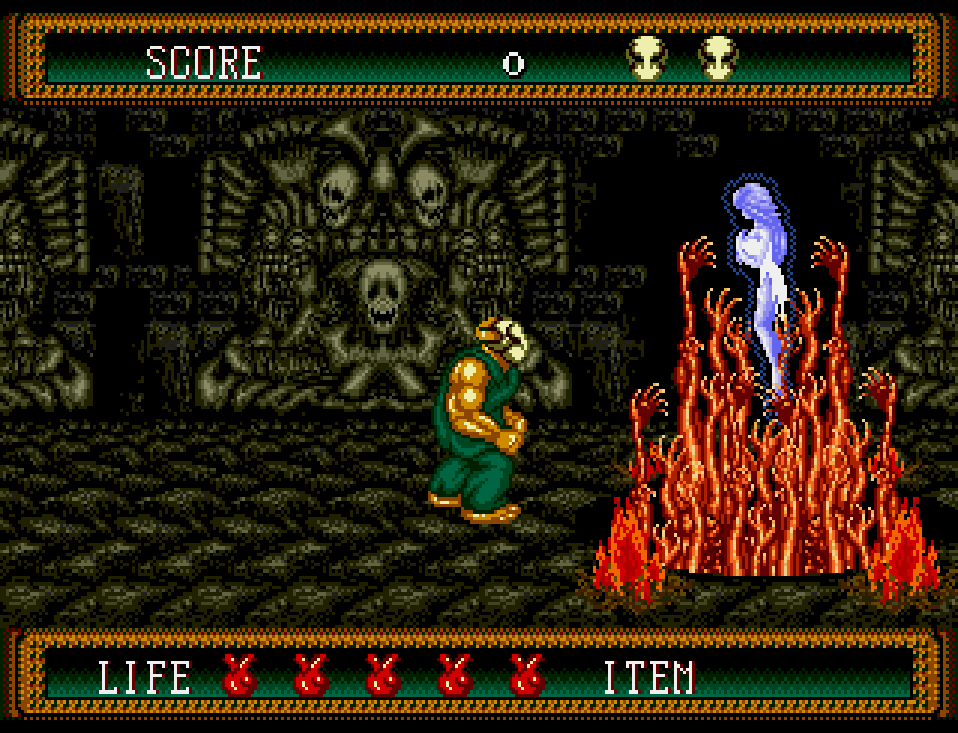
Splatterhouse 2 (known as Splatterhouse Part 2 in Japan), is the first full sequel to the horror platform action game. Taking place three months after the tragedy of the West Mansion, with rick being haunted by guilt his inability to save Jennifer. However, the Terror Mask contacts him via psychic link, telling him that he can save her. But her must return to remains of the West Mansion, only then can he find the hidden house and secret to saving Jennifer.
The gameplay is very similar to the first, with the player taking control of Rick as he goes on a bloody Rampage through 8 stages, using the same attacks as the first game. On this journey, Rick will travel through the burned ruins of the West Mansion, through the wilderness and the Shin Splatterhouse, all to save Jennifer from the land of the dead. To achieve this goal, the player can use the same punches and kicks as the first game to splatter monsters.
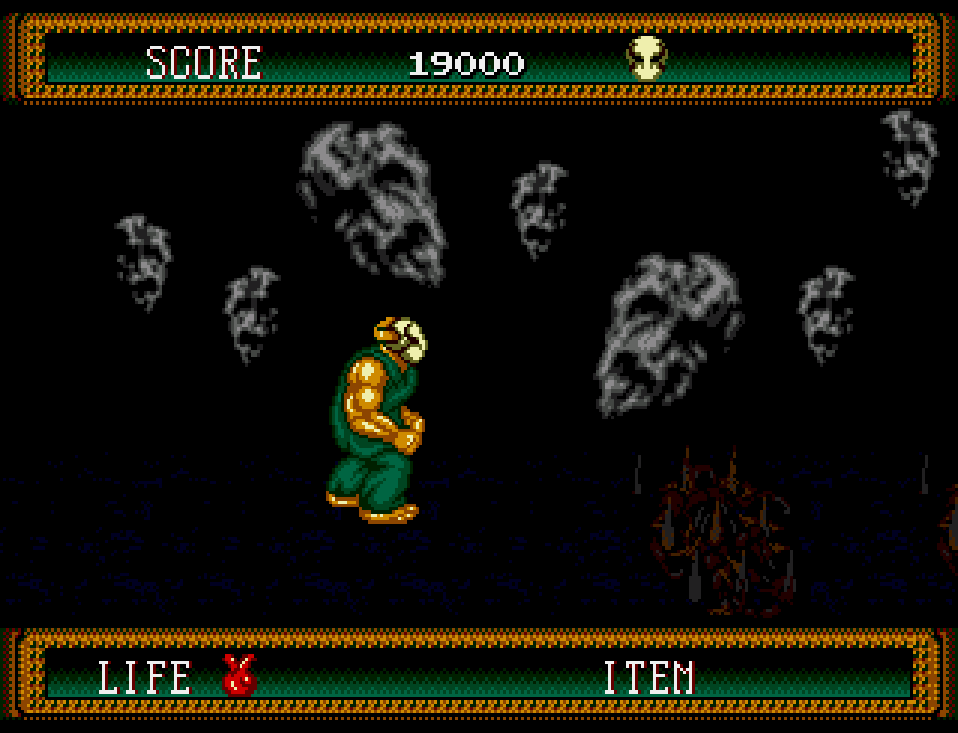
Like the previous game, there will be a range of horrifying monsters to battle, in the first stage, familiar enemies like the Body Eaters and Deadmen appear. However, once this has passed, the monsters change, introducing monsters like the Screaming Mimi, regenerating zombies and more. The hazards have also increased, while the familiar spikes are there, players must now contend with razor fish, spirits that reverse controls and more.

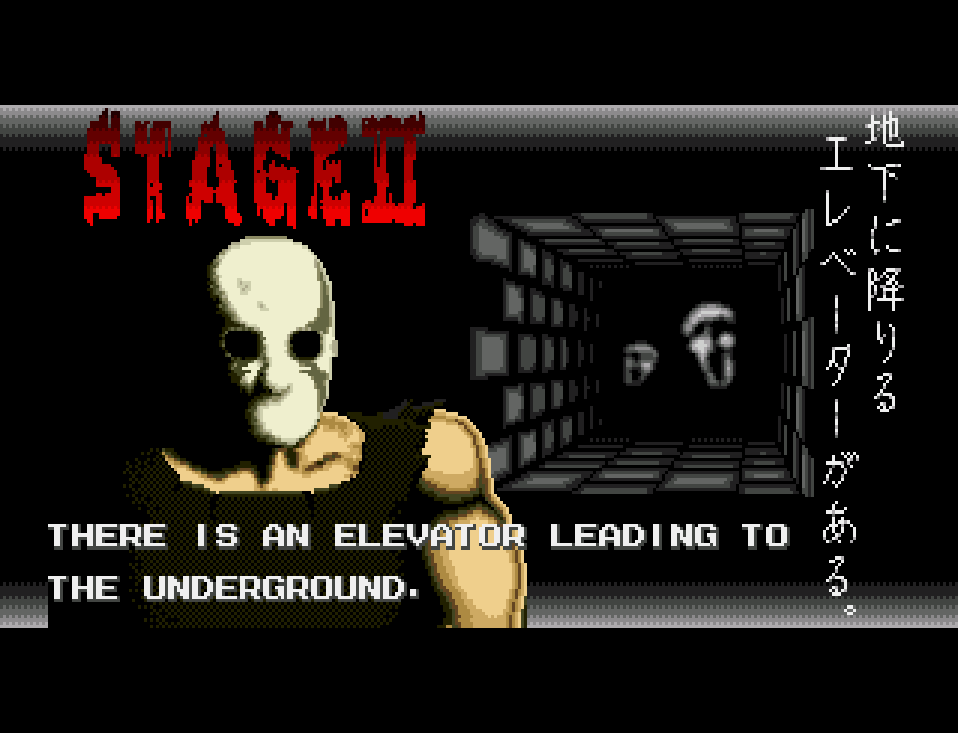
The weapon system returns from the previous game, with an iron pipe and bone, which can be used to battle abominations faced. Then there are the more unique weaponry, like explosive vials that will destroy slime monsters, as well as spikes from a persuing monster. These are used for a set piece chase, where the player must throw them back at the leviathan, hitting the creature in the eye to deal damage to it and cease the pursuit.
At the end of each stage, Rick will face a horrific monster, which have are even more grotesque than the inhabitants of the first game. These bosses include Bellyache, a giant monster that must be hit in the stomach, causing his swollen belly to explode when he is defeated. Then are the more unique encounters, like the psychic BloodBall. This monster controls a chainsaw and sheers, as well blood puppets, which need to be dispatched before killing the psychic beast.
Between each of the stages, the player will see some story details, pushing the narrative forward with each new story detail added. These scenes set up the next stage in a good way, which is an significant improvement over the previous game. Added to this release are passwords, allowing players to resume their game, as well as selectable difficulty settings. The passwords are omitted from the Japanese release, with a code to select levels in its place.

Moving onto the third game, Splatterhouse 3 (Splatterhouse Part 3 in Japan), takes place 5 years after the events of the second game, with Rick and Jennifer now married with a son. Living peacefully in a sleepy town, their serenity is shattered when the Evil One, released during the events of Splatterhouse 2 invades Rick’s home. The Terror Mask meets Rick at his home, with the two working together to save Rick’s family and defeat the Evil One.
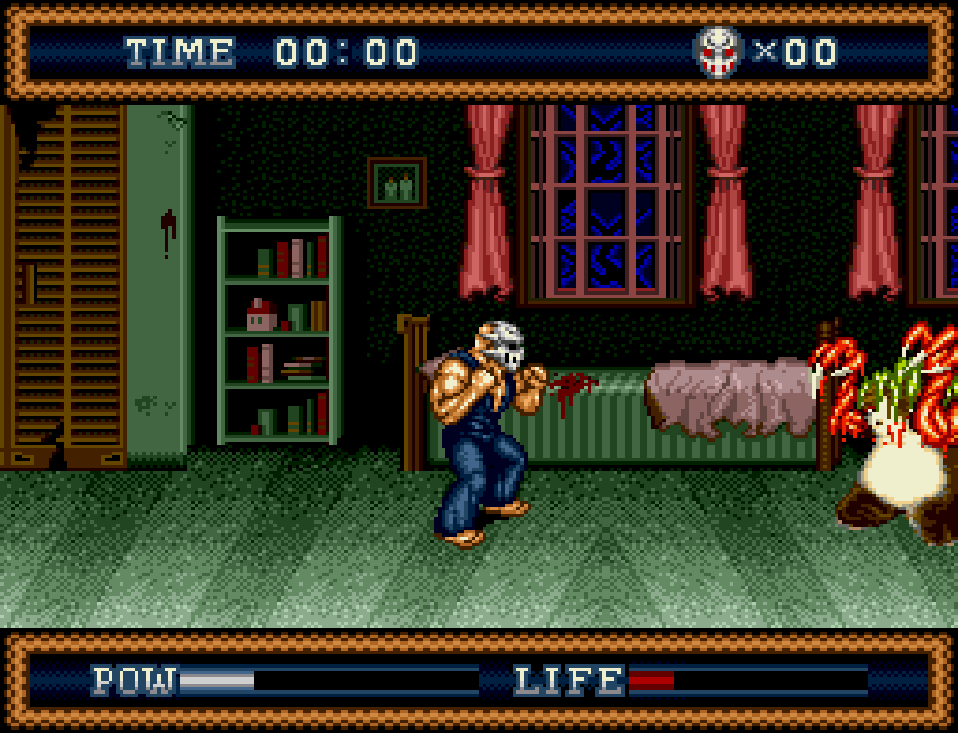
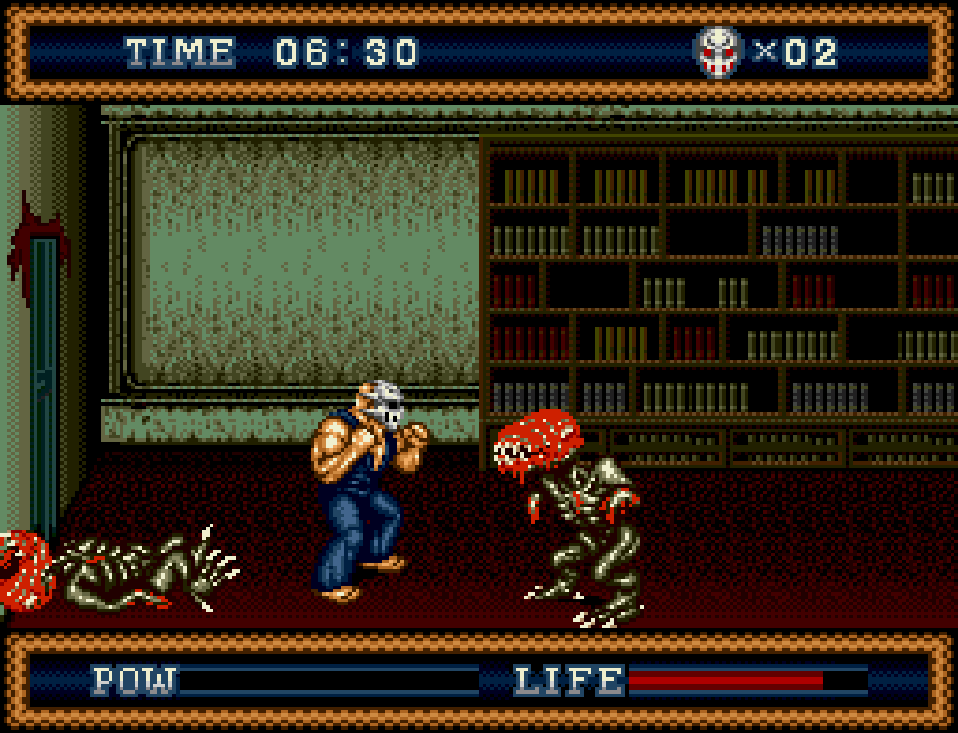
Splatterhouse 3 is a significant departure for the series, changing from a relatively simple side scrolling action game, to a full roaming beat ‘em up. This change to the gameplay formula also introduces non-linear exploration, as the player must guide Rick through Six stages, exploring rooms of the home. While travelling through the house, the player must beat down the enemies that appear in each room, only being able to progress when all are dead.
When battling the minions of the Evil One, Rick will be able to string multiple attacks together in a combo, knocking the enemy down at the end. These combo attacks are quick and deal a balanced amount of damage, but that isn’t all that Rick can do. In combat, Rick has a spin kick that will damage all enemies around him, alongside grapple attacks including a repeated headbutt grapple. This is a major change from the previous combat system.


As rick damages the monsters, they will show physical wounding on their sprites, occurring when close to death. When they have been defeated, they will dissolve into a pile of slime. In the majority of battles, defeating all enemies on screen will often lead to new combatants entering the fray. When this happens, they will quickly try to attack Rick and swarm him if the player is not prepared. After all monsters are dead, the player will be able to check the map.
When viewing the map, the player will see the target room they must reach, showing all of the possible paths that players can take through the floor. The rooms all vary in size, with some of them being single screens or a scrolling room, whereas others will be significantly larger, scrolling multiple times before reaching the end. The player may also encounter special rooms, like the painting rooms, featuring images like the titan Saturn Devouring His Son.
During the carnage of battle, players can collect orbs that appear on the floor, filling up a power bar on screen. This power bar allows Rick to fully utilise the power of the Terror Mask. When activated, Rick will transform into a hulking monstrous form, known as Mutant Rick as his flesh fuses with the mask. The power will drain over time, reverting rick to normal when it runs out. This form will also end when the room is cleared, or rick is killed, emptying the bar.
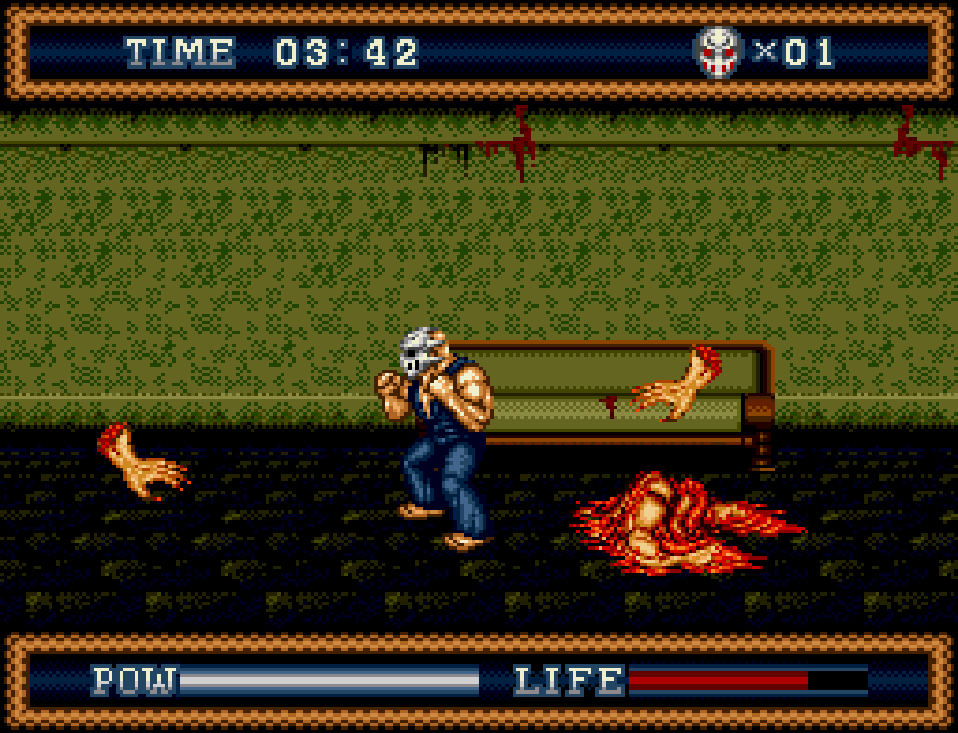

Rick will have limited lives during the game, losing one when he is defeated by an enemy and being immediately revived. Healing items in this game is scarce, shown as beating hearts that appear in faraway rooms, or by defeating specific enemies, recovering a moderate amount of health. Rick can also use weapons that appear in rooms, including bats, cleavers and even cinderblocks. If they are dropped, ghosts will appear and take them to a special room.
Just like the other games, a monstrous boss will be waiting for the player at the end of each stage, located within the target room. Each of the bosses poses a significant challenge for the player, with monsters attacking Rick with devastating attacks. These beasts include the Giant Boreworm, which spawns body eaters, a possessed Teddy Bear that becomes a monster and the Evil One itself. The battles are deadly and if the player is careless, can lead to Rick’s demise.
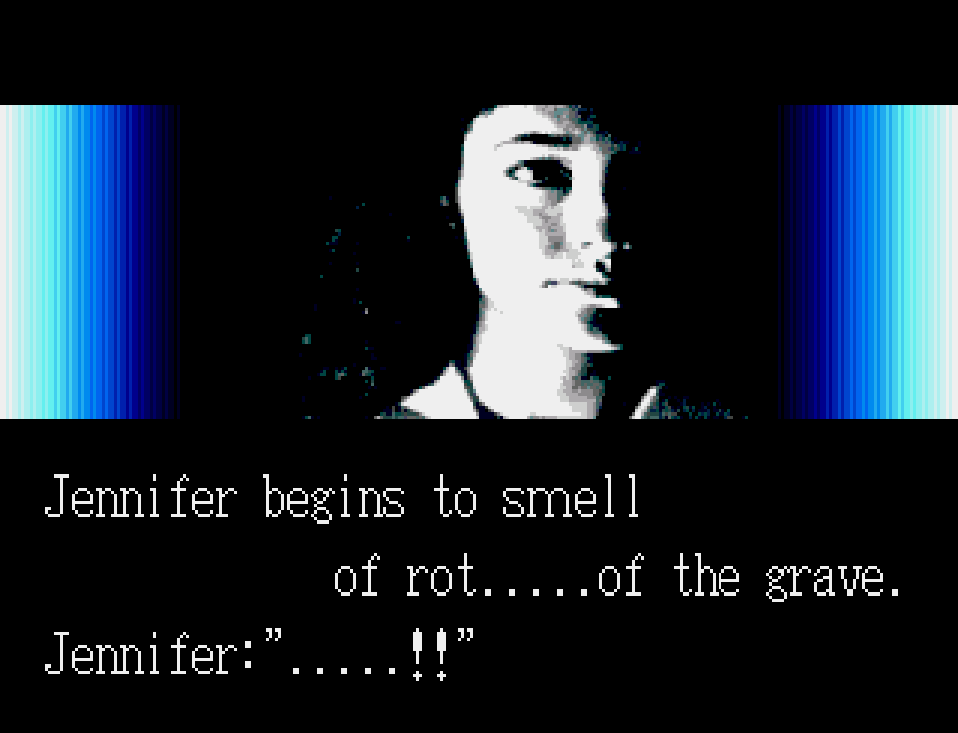
The bosses aren’t the only dangers that Rick faces on his quest to save his family, as there are events that will occur during the stages. Shown as still cutscenes during the stages, these will associated with the timer for the stage. As the clock ticks down, the danger increases, with the horror building with each event that occurs. These events are also tied to the way the game plays out, with four possible endings, based on the performance of the player.


If the player is fast enough within the stage, they will be able to save Jennifer and the son David, but if they fail to get to the goal and destroy the monster, they will die. This will lead to different scenes that can occur, changing the narrative that the player will experience. There is a true good ending, where everyone is saved, but three bad endings, where one or both of Rick’s family are killed. These further build the tension, as the failures are punishing for the player.
All of the cutscenes for this game use digitised images, mixing real human actors and some sprite work, which adds to the experience of the game. These are done well in a style that uses limited color to great effect, which builds on the atmosphere to tell the narrative. While this is a rather simple way to tell stories, it further pushes the horror of the narrative, as some of the images are designed to disturb, sadden and disgust the player.
The player will start the game with three lives, which can be replenished by finding one-ups that are scattered across the house. They can also be found in special stages, which are accessed when special conditions are met during play. If the players runs out of lives, they can retry from the start of the stage they died, with a fresh set of lives. If the player wishes to try again at another time, they can use the password provided on the continue screen.

Personal Thoughts
I experienced Splatterhouse 2 and 3 after being exposed to the first, finding roms of them after the Mega Drive system had long since been discontinued. It was not until much later, did I own a copy of Splatterhouse 2, picking it up for a fairly low price from a local game store. Sadly I wasn’t able to get a copy of Splatterhouse 3, as it was not released for the PAL region, only being in Japan and North America, so I relied on roms and bootlegs.
I do have a lot of fond memories of the games, as they further built my love for horror, becoming staples of the Halloween period for gaming. I am not the best at these games, as I heavily rely on passwords to get through them, having them scribbled in old notebooks. But with enough determination, I have been able to beat both of these games. My favourite out of the two is Splatterhouse 3, as I find it to be more suspenseful in tone.
There is a lot of stress that these games can put the player under, further building on the horror of the experience. This occurs most in 2 when it comes to battles against bosses, as they can be very challenging, with some using attacks that swarm the player. When it comes to the third game, the horror and dread comes from the time limit, and the punishments that come with it. That anxiety of trying to get to the goal in time really elevates the horror.

These games are well made, but do have a difficulty that will feel brutal. The main challenge for 2 comes with the lack of health that can be recovered in stages, making every hit hurt that much more. For the third game, it is the time and the combat that make it difficult, as enemies will become stronger and more deadly as the game progresses. The boss encounters are the toughest, as they deal significantly more damage and can overwhelm the player.
The visuals are grotesque, really pushing the limits of what was acceptable on the 16bit system, with the horrific monsters and gore being front and center. Both games have their own distinct feel, working well with the limited 3 button controls of the Mega Drive, feeling responsive and snappy during play. I do wish that they had ported the first game over with the sequels, as it would have allowed for players to enjoy the complete story in one place.
Splatterhouse 2 and 3 have had various re-releases over the years, with the second game getting a release on the virtual console, as well as being included on the Mega Drive Mini 2. Both games did get a re-release alongside the first game as bonuses in Splatterhouse 2010, the reboot of the series that was put on Xbox 360 and PS3. However, there were changes made to the third game, replacing the assets for the actors, allegedly due to licensing.
The most recent release of both games together was through the Evercade, being part of the Namco Museum vol 2 cartridge, originally releasing in 2020. This has since gone out of production, only available on the secondary market. I do wish there was more done with these games, as they could easily fit on the Nintendo Switch Online Library. I do wish that Namco would do more with the series in general, as these games hold a dear place in my heart.
The pricing for these games, in their different forms fluctuates, with the 2010 game where they are bonuses being rather expensive. The original cartridge versions of the games also demand quite a hefty price, but can be found at a lower cost, but these may be reproduction or bootleg cartridges. Then we get to the evercade release, which also fluctuates in price across the board, with sealed prices being significantly higher than the open box cost.
I have a deep appreciation for Splatterhouse as a series, as they were some of my earliest introductions to horror gaming. With the monsters and gore that were prevalent throughout, both scaring me and enrapturing me as a child. Namco do acknowledge the series at times, with their most recent game Shadow Labyrinth referencing it with one of their bosses. Sadly given the poor performance of the reboot, I don’t think a new game is on the horizon.
If you have enjoyed this feature, then please stick around and see what else catches your eye. I cover a wide range of games in reviews, get special previews and put out regular features. I have Lost Gems, Retro Revival where I discuss re-releases and the occasional Gaming Oddities piece, where I cover weird and wacky titles. So stay a while and have a look around.
 W.Kohaku Media