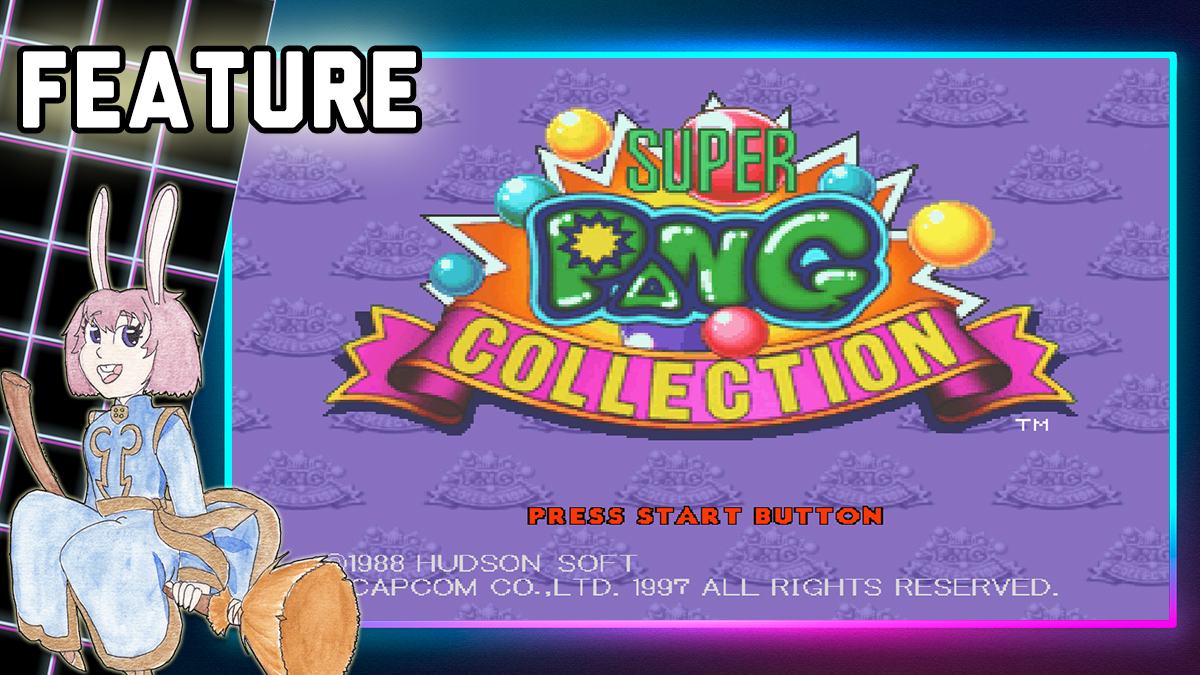
Hello and welcome to the latest instalment of Lost Gems, the series where I cover games that are abandoned, removed from distribution or simply forgotten. This week I will be covering a collection of games about busting balloons, travelling the world and stealing masterpieces of art. So let’s dive into Super Pang Collection/Buster Bros Collection for the PlayStation, developed by Mitchell Corporation and published by Capcom in 97/98.
Disclaimer: While the title discussed here is no longer officially on sale, there are ways to obtain the game. This can either be through the second hand market, or via unofficial digital roms/rips. I do not condone or promote piracy, so there won’t be any links to roms or rips of the game being covered.
Now with the introductions out of the way, let’s get started. I will be discussing general game experience, then give my personal thoughts on the title.
About the game
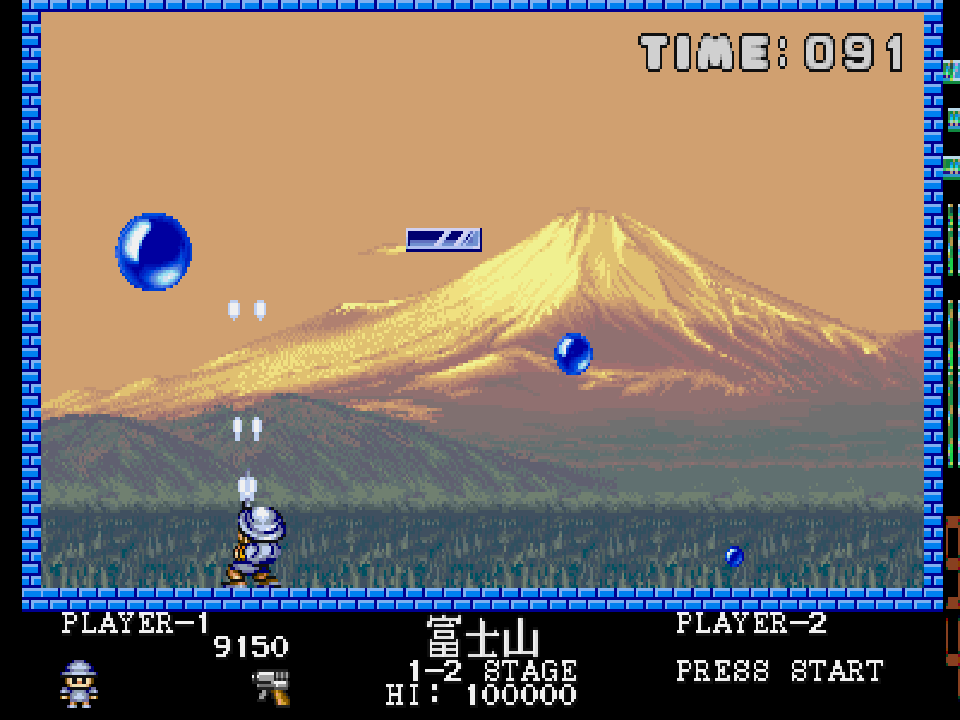
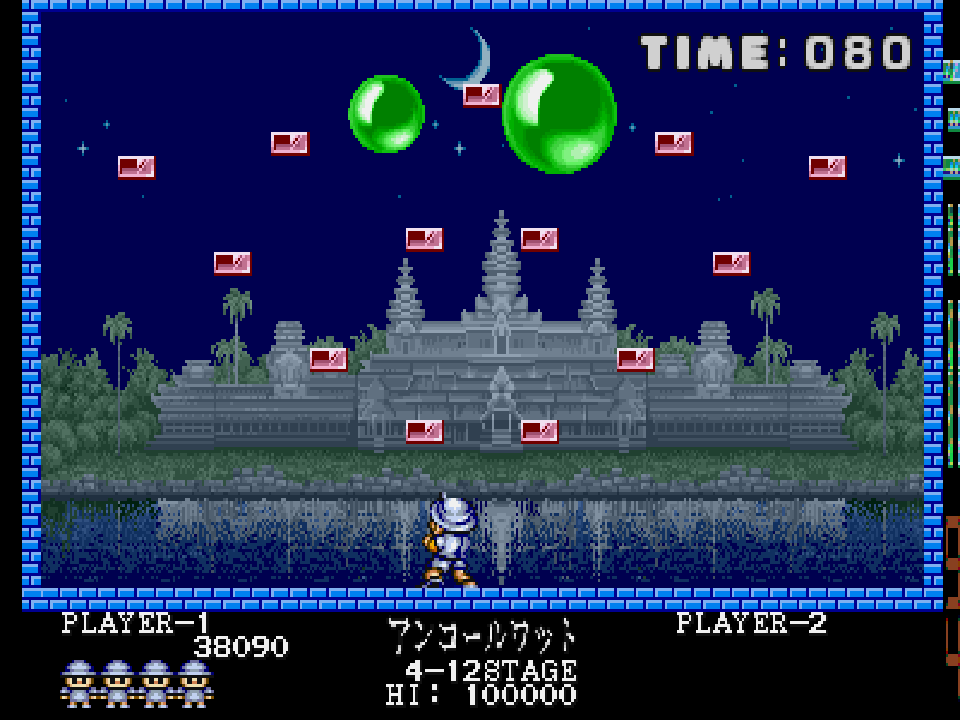
Super Pang Collection, also known as Buster Brothers Collection in North America, is a collection of three arcade bubble busting games. The titles included in this release consist of Pang/Pomping World (Buster Bros), Super Pang (Super Buster Bros) and Pang 3, all in one pack together. Each of the games is available immediately, allowing players to play any of the games they want in any order. After selecting the game, players can access settings before jumping in.
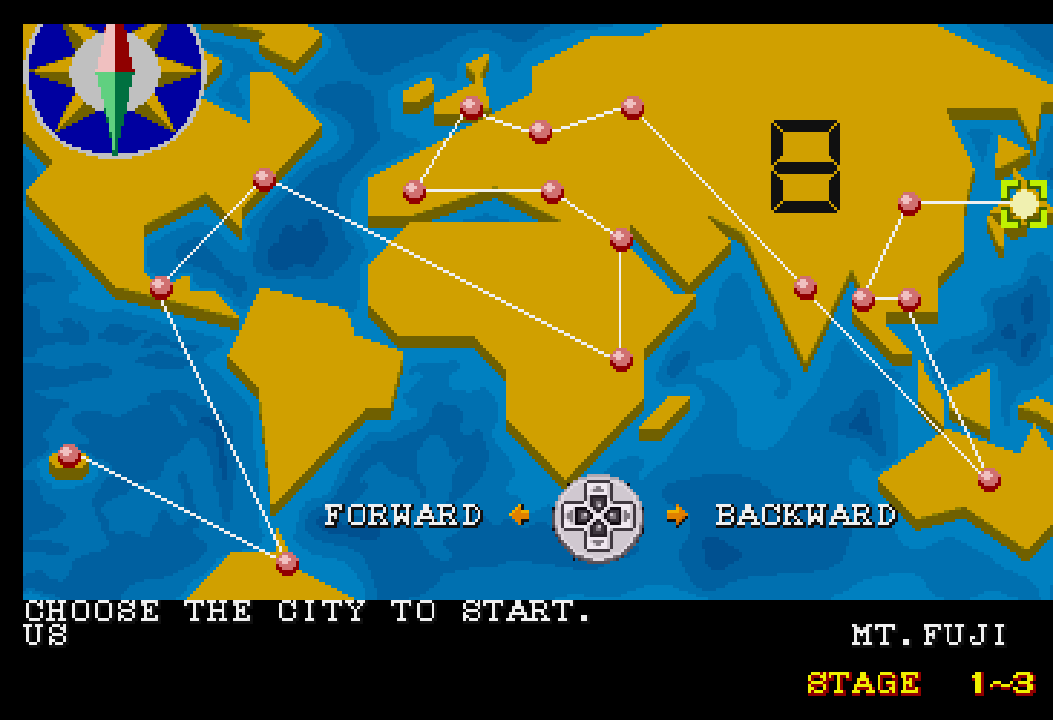
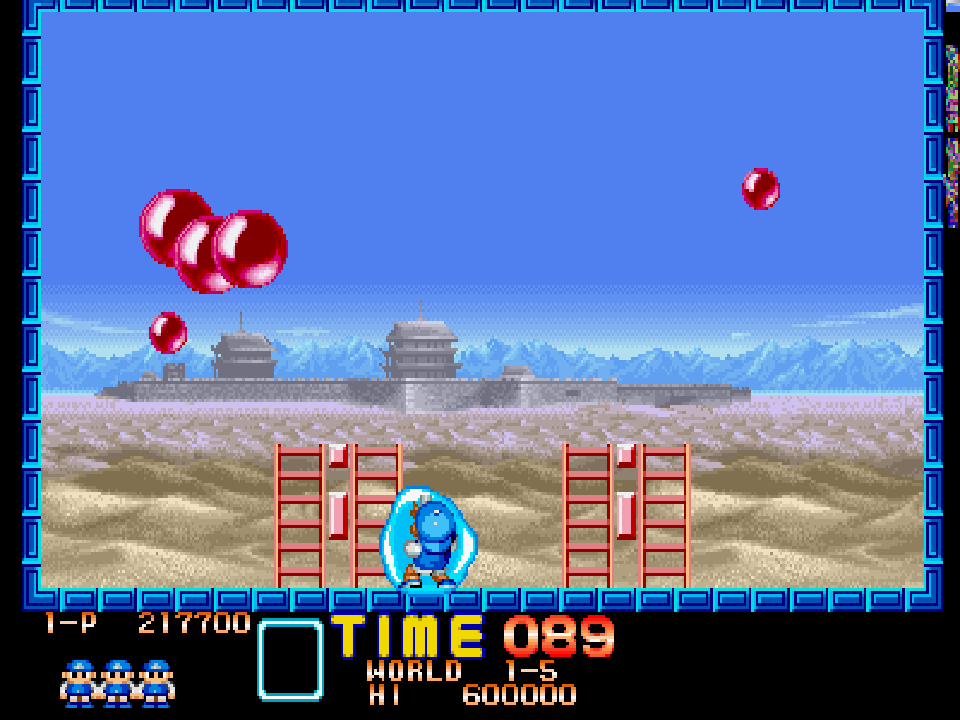
The first game Pomping world/Pang, was the first game in the series, released in 1989. The basic plot of the game is that Bubbles/Balloons have appeared around the world, being a nuisance to the people and locations. To stop the invasion of these balls, two daring heroes that set out on a quest around the world to destroy the bouncing menace. The adventure starts in Mount Fuji, then spreads across locations including the Taj Mahal, Paris and more.
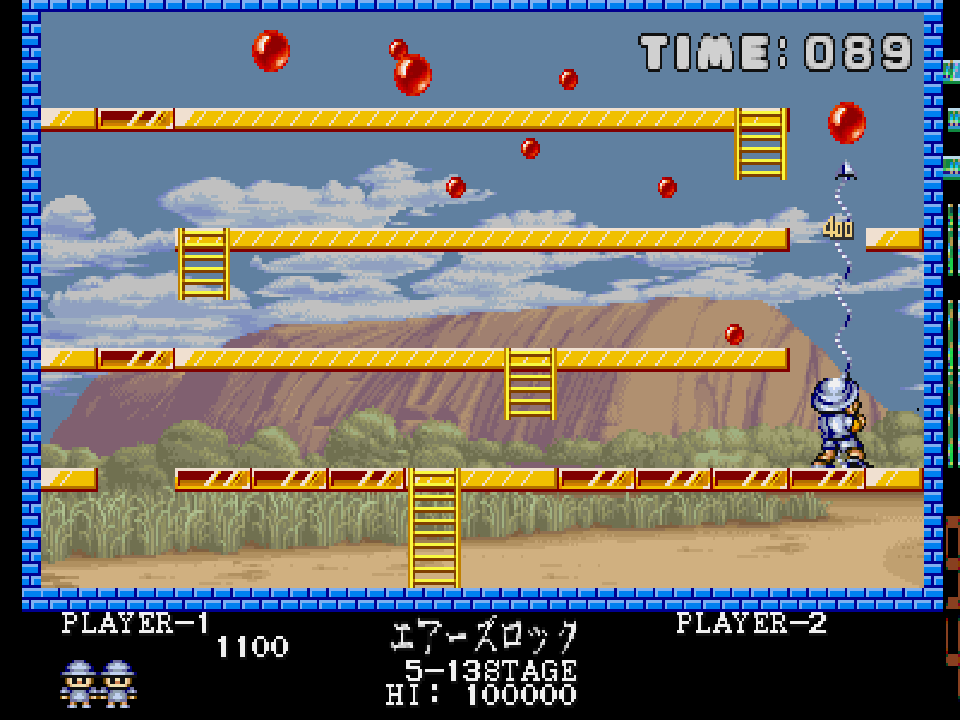
During the globetrotting adventure, the player will need to destroy the bubbles as they bounce around the screen. The player is armed with a harpoon gun, shooting directly up and stopping when it hits a balloon or the ceiling. There are several sizes of balls, which will divide if they are larger, or disappear entirely if they are the smallest size. When all of the bubbles are destroyed, the player will clear the stage and move onto the next.
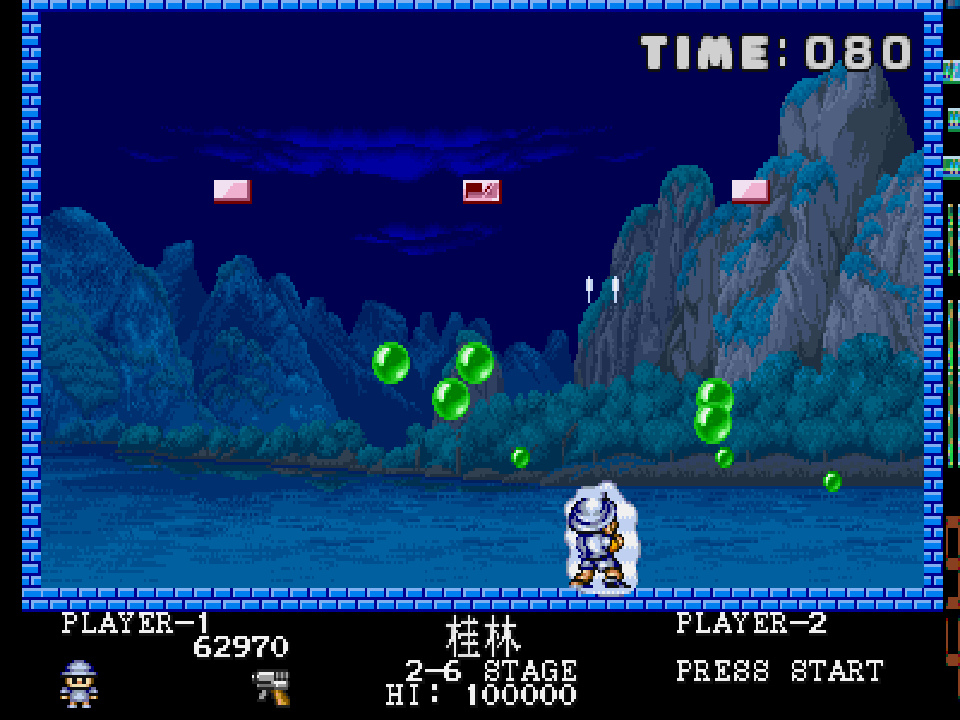
By destroying the bouncing balls, there is the chance that items can drop from them. There are two different types of items, split between weapon and support items. The weapons consist of the Double Wire, which allows two harpoons to be shot, and the Power Wire grappling hook, which sticks to the top of the screen until hit or disappears. Last is the Vulcan Missile, which is a high powered gun that allows players to blast rapid shots to eliminate bubbles.
Then there are the support items, which have varying effects that can be used for the stage. There is the shield, which allows a single hit to be absorbed, the hourglass that slows bubbles down and the clock, which freezes time for a moment. The last item is the most dangerous of the support items, and it is a bundle of dynamite. This will cause all of the balloons to pop down to their smallest size, adding some additional risk to the current stage.
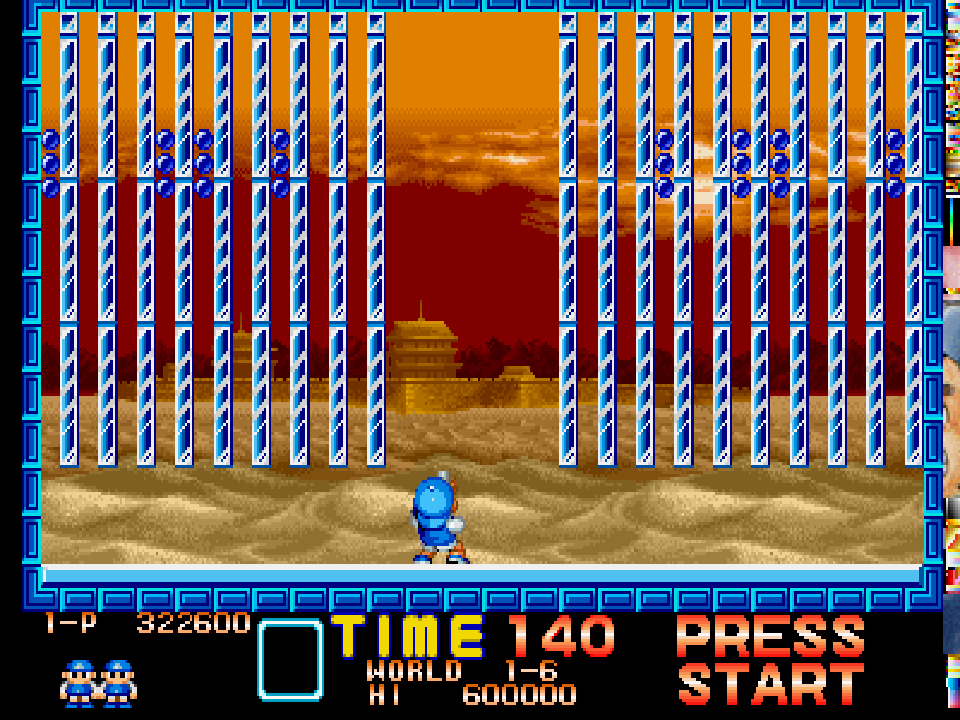
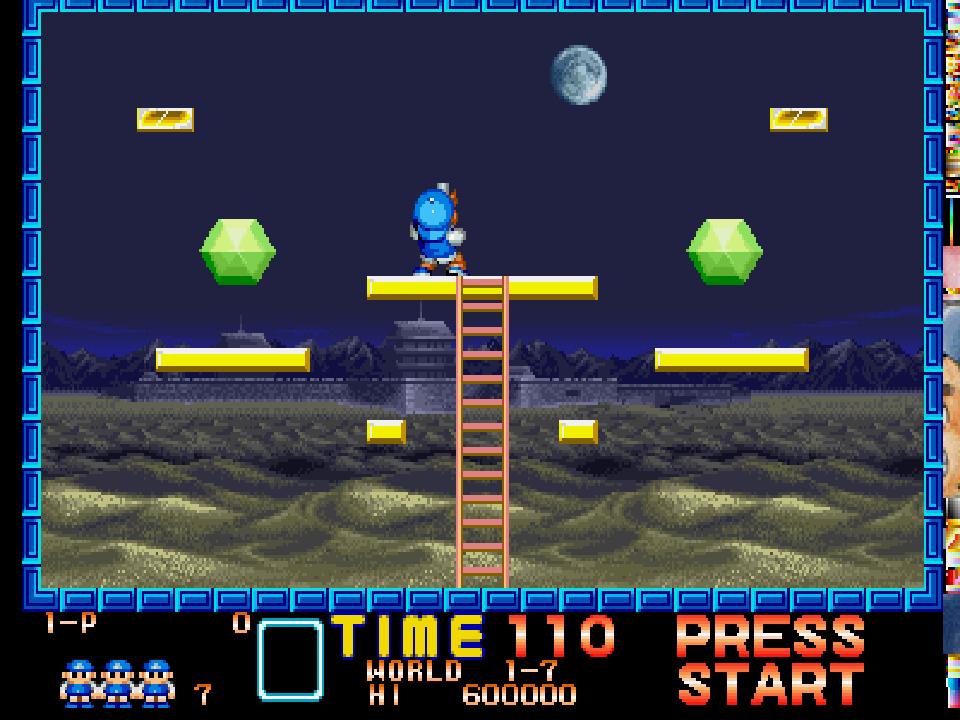
As the player makes their way through the game, the stages will become more challenging, with blocks and walls that the balloons will bounce off. There will also be ladders and platforms that add a puzzle like element to the gameplay. If the bubbles make contact with the player, they will die and start the stage over, if all lives are lost they need to use a credit to continue. Alongside bubbles, there are monsters that will appear and stun the player if contact is made.
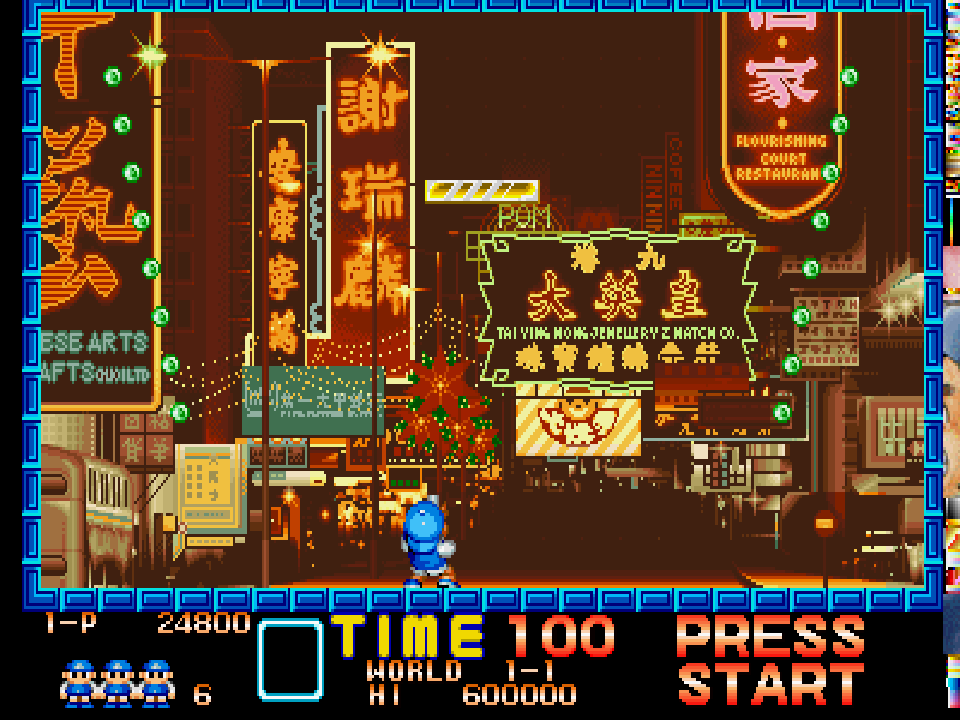
For the adventure, there are 50 stages and 17 locations, with images of the setting in the background. As the player clears each area, they will move through to the next location. There is also a day/night transition system, where the images used for the location will go from day to night, with a setting sun in-between. This gives the world more of a lively feel, with the different transitions making it feel like time is passing.
The second game in this collection is Super Pang, which came out in 1990 and takes the formula established in the first game and refines it greatly. This version of the game follows the same style of gameplay as the first, with the World Tour mode, where players travel the world to stop the bubble menace again. Just like the first game, there are real world locations that are displayed as images in the background of the stages.
There are only 40 stages in this release, with the starting in Hong Kong, then moving through the Silk Road, Istanbul, Venice and more during the adventure. The time transitions still occur here, with most stages after the first having a day, evening and night time variant to them. For this release, the core of the gameplay remains mostly unchanged, with the Bubbles returning. There are also monsters that appear, including flying creatures and dragons.
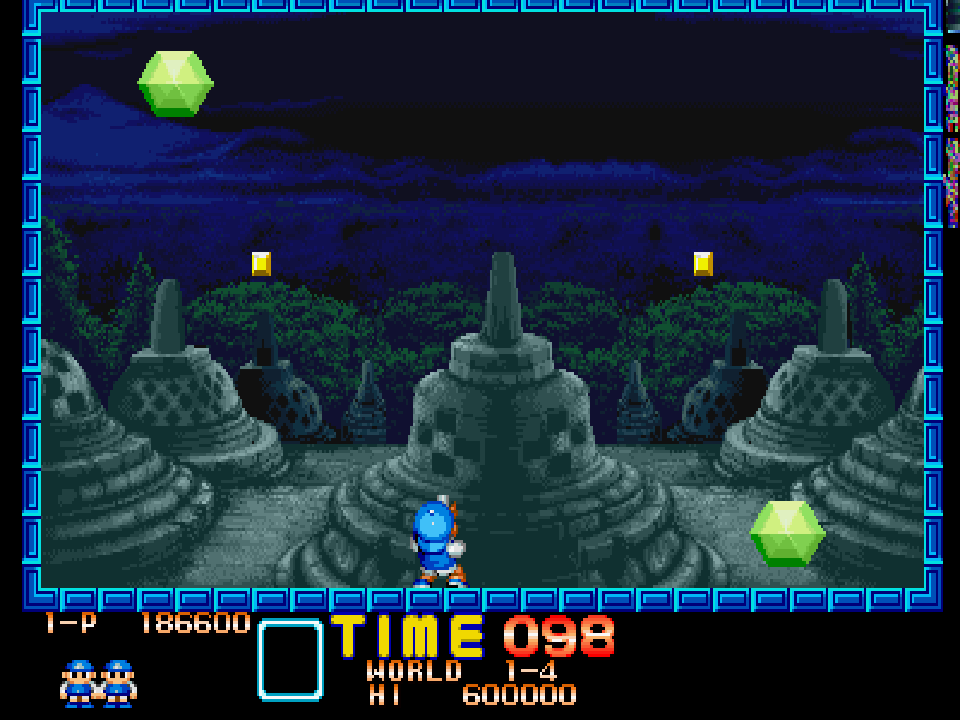
However, there is a new threat to the player, with hexagon balls that bounce off all four walls, moving in a way that is different from the regular bouncing bubbles. The item system returns with this release too, offering the same weapons as the previous game, with double harpoons, power hooks and the Vulcan gun. Support items also make their return, with the shield, hourglass, clock and dynamite, alongside foods that give a bonus.
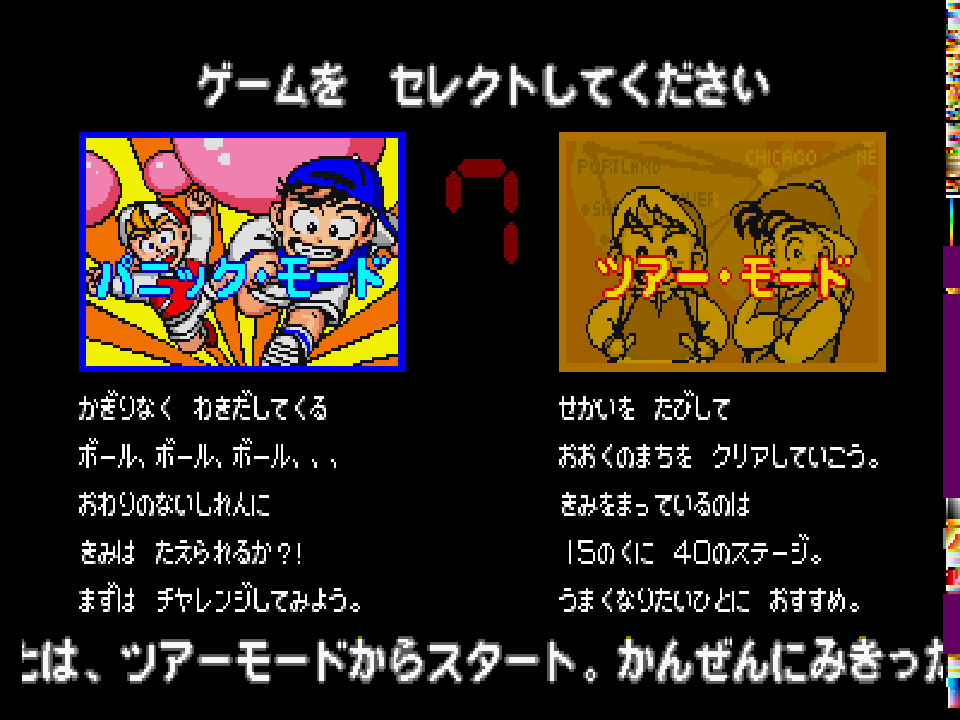
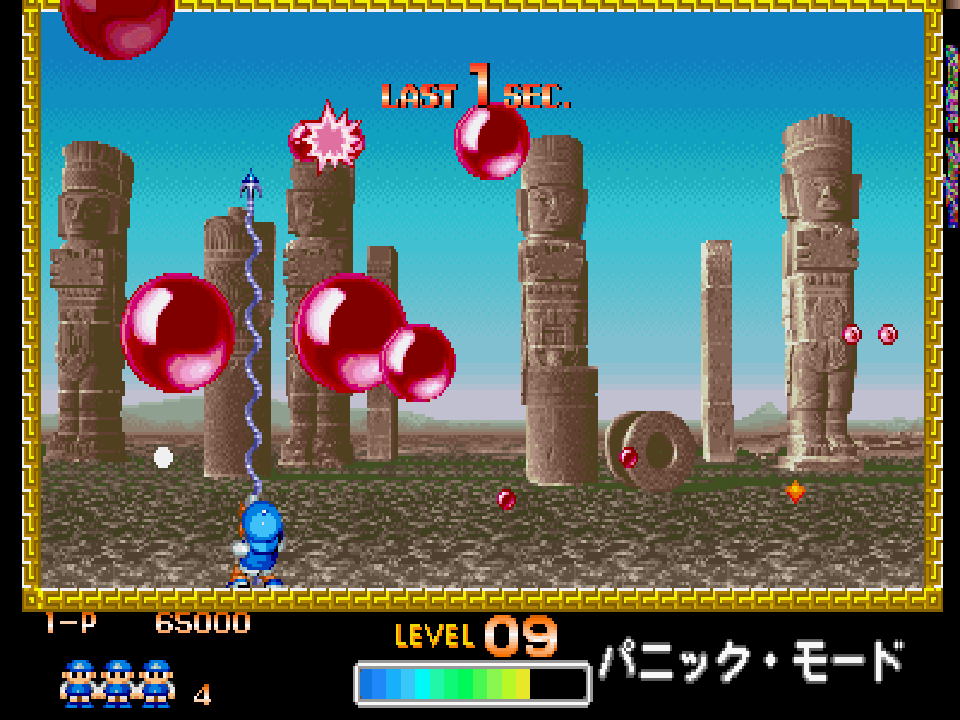
For those who are looking for a greater challenge, there is the Panic Mode as a secondary mode. This functions differently from the World Tour, as it is a single screen with bubbles and hexagons gradually dropping from the top of the screen. The player starts with the double harpoon weapon, with no additional pick-ups available. As the player pops the bubbles, a meter fills up on screen, increasing the level each time it is filled to the top.
When the level increases, there will be an increase in the speed and number of bubbles that appear, with varying sizes of ball that will drop from the top. At set points, the background for the stage will also change, with an island, castle and more as the locations for panic mode. During Panic Mode play, there will be small flashing bubbles, which will stop time for a couple of seconds, giving players a small window to pop as many balls as they can.
There is also a special bubble that has two different functions. This is the special bubble, which will appear randomly during play. Each of these bubbles start off as green clock bubbles, which will freeze time for 9 seconds, giving players a good chance to clear the screen. If the clock bubble hits the ground, it will change and become a star bubble, which will clear the screen when popped. Each time the bubble hits the ground it will change types.
In both Panic Mode and World Tour, if the player makes contact with a ball, they will be defeated and lose a life. In Panic Mode, the screen will be cleared and the player will continue at the level they reached. The world Tour Mode functions the same as the previous game, where the stage will start from the beginning if players are defeated. In the event players run out of lives, they will need to use a continue to get back into the action.
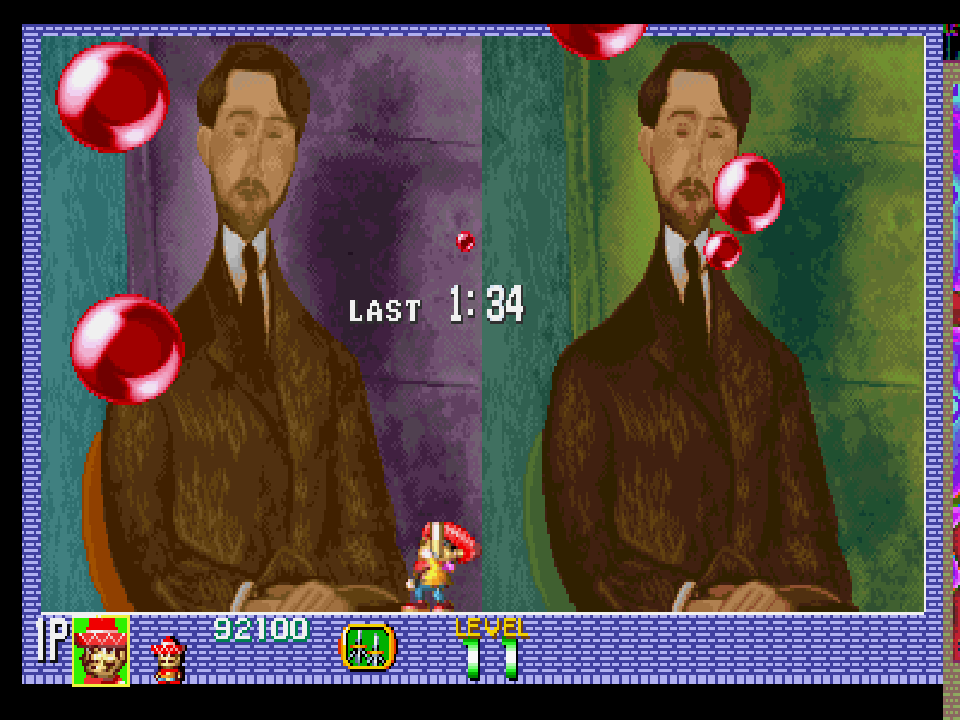
The last game to discuss is Pang 3, which is the most unique of the trilogy, taking place within an art gallery where a band of misfits are trapped. There are three game modes this time, with the Beginner mode, where players challenge 10 stages that are designed to teach the player the game. Then there is the Normal mode, where the player must collect famous art works, as well as Panic mode, where players take on a never ending stream of bubbles.
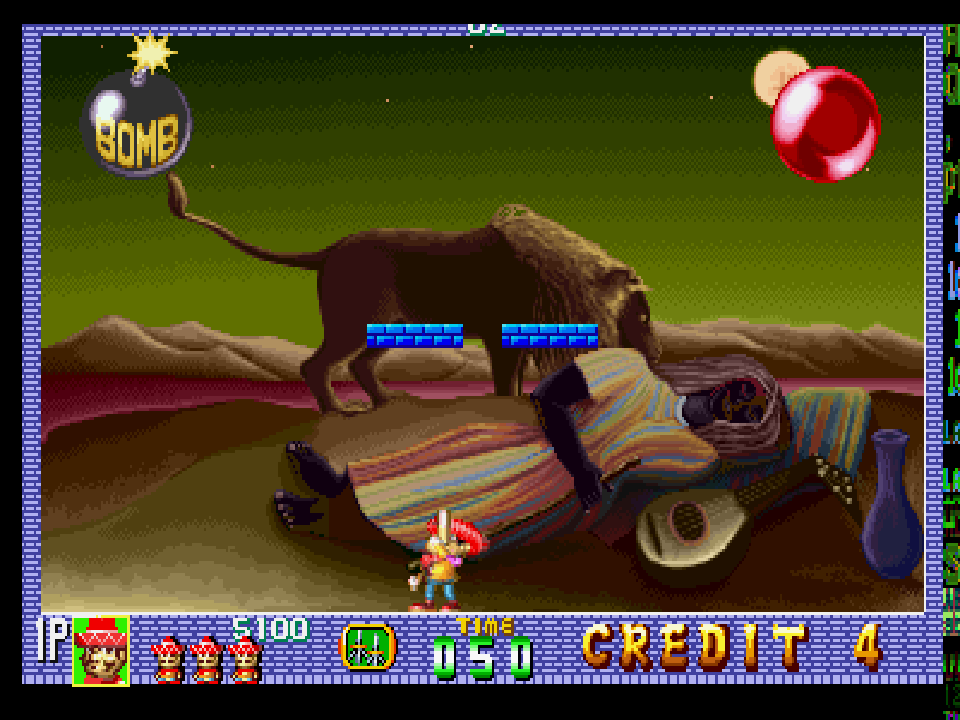
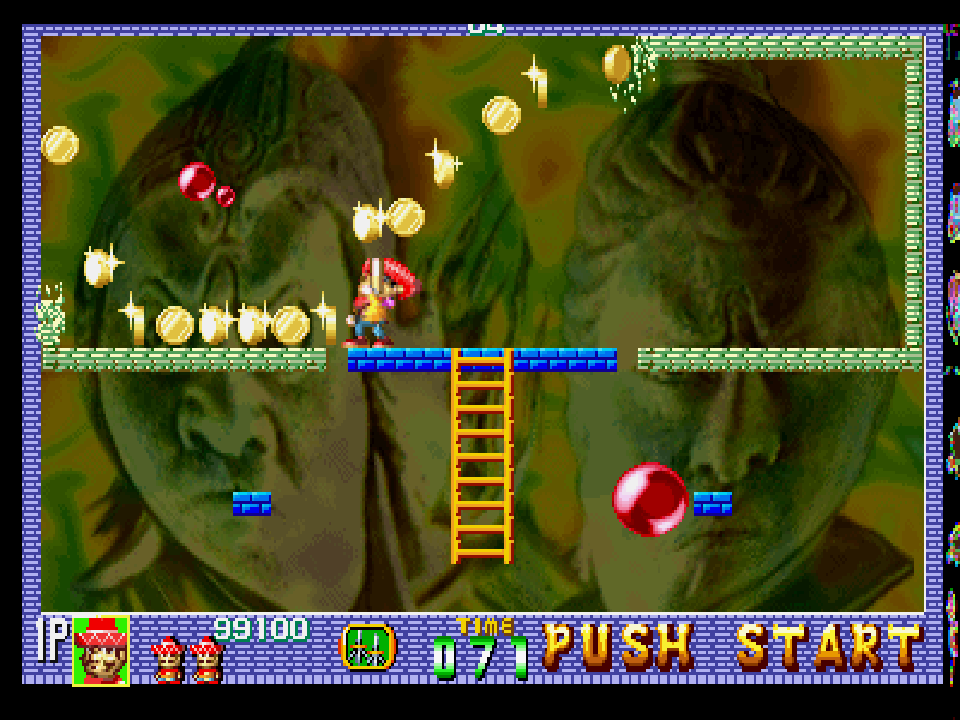
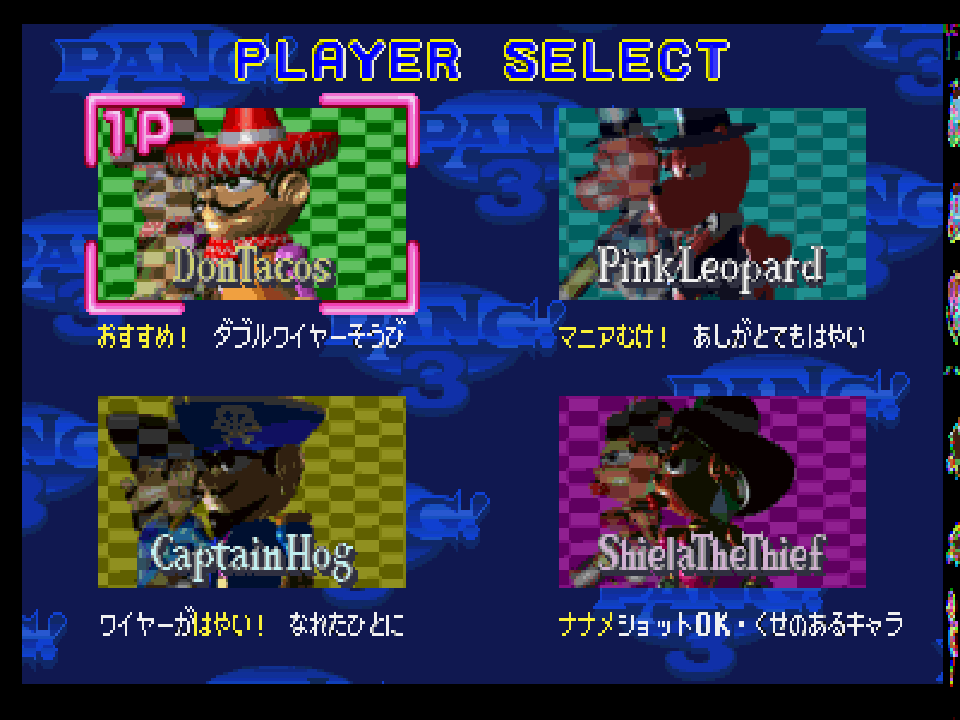
When the player starts the game, they will be able to pick one of the three modes. The Beginner mode has only one character that can use, with Don Pacos, who is armed with a double harpoon shot. In the other modes, players get to select their character, with the addition of Captain Hog, who uses a double grapple shot and Shiela the Thief who shoots at a 45 degree angle. Last is Pink Leopold, who has single shot harpoons, but he is immune to monsters.
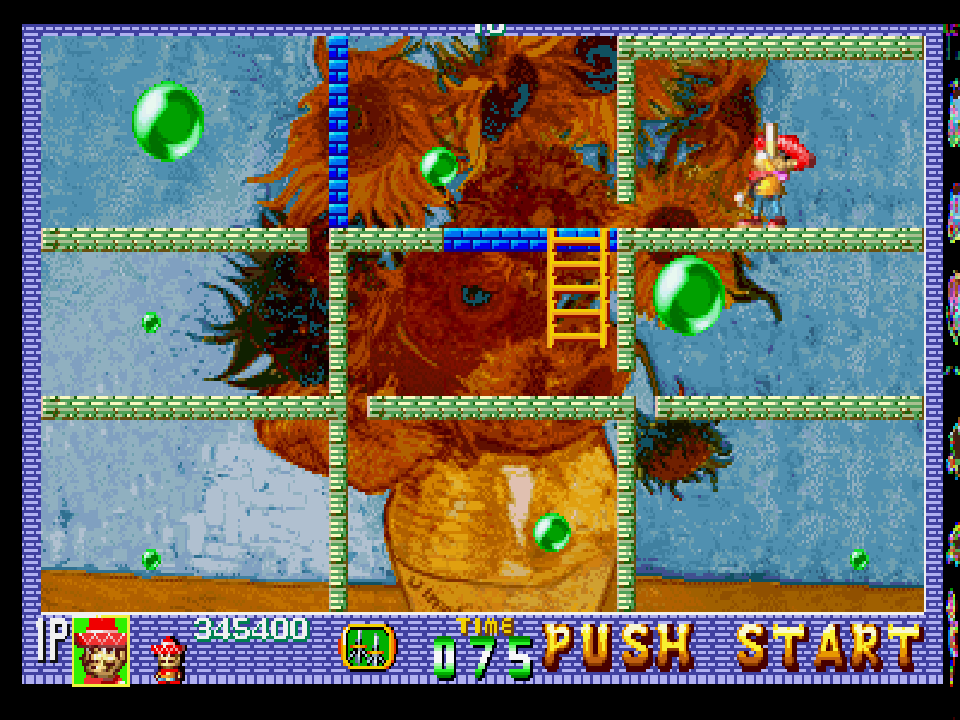
During the Standard mode, the player can challenge a total of 50 stages, broken up into sets of 3 after the first two stages are cleared. Each of the stages follows the standard gameplay formula, where players must pop all of the bubbles, while avoiding being hit by them. As the player pops the bubbles, there will be the chance of items dropping from them. All of the support items return, but the hourglass is changed, adding time to the stage clock.
The weapon pick-ups also return from previous games, with the double shot and grapple shot staying the same. However, this time the Vulcan weapon has changed, as it is now a limited time blaster with a large spread shot. When the blaster is picked up, players have 5 seconds to get as much as they can from the weapon. This can make it very effective for clearing out the balloons as fast as possible, leading to quick stage clears.
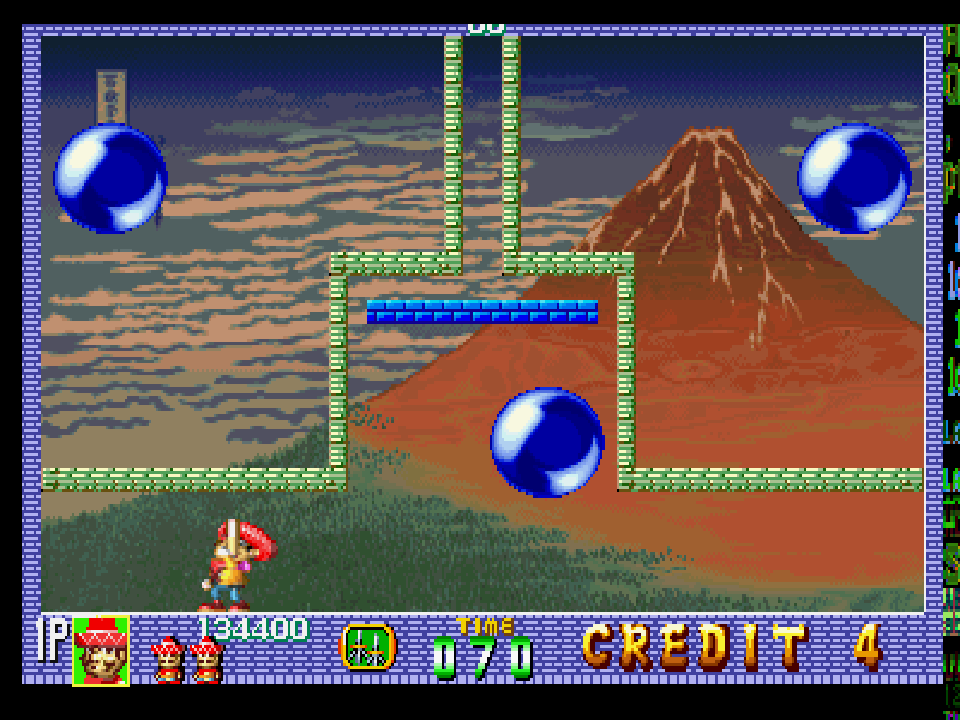
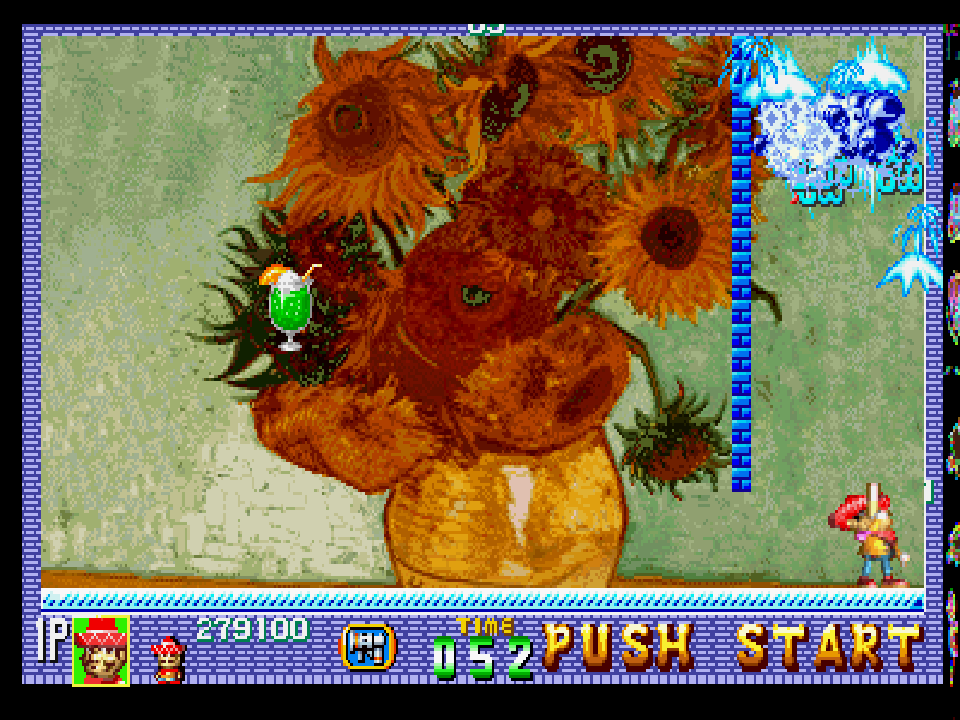
There are new gimmicks in the stages for this release, with the introduction of Bomb Bubbles, which explode outwards to the left and right when popped. These can clear away the bubbles quickly, leading to big scores and fast stage completions. Then there are the dissolving platforms, where sections of the stage crumble when shot, alongside teleport spots that transport the player to different areas of the stage. These add more to the puzzle aspect of gameplay.
There is a major difference with the way this game progresses. This is the gallery select feature, where players will be presented with the choice of which stage set they want to play. At set points during the game, players will see the gallery and be able to jump ahead if they want to. All of the images for cleared stages, as well as skipped stages are added to the gallery between sets. When the game is cleared, the gallery will be shown off completely.
The final part of Pang 3 to cover is Panic mode, which functions the same as the previous game. The player needs to keep shooting the Balloons that keep falling down, with the player needing to get rid of them as fast as possible. Some of the smallest bubbles will flash, freezing the bubbles for a couple seconds before resuming. The bombs also appear and star bubbles, which will clear away all balloons on screen, with a clear announcement ever 10 stages.
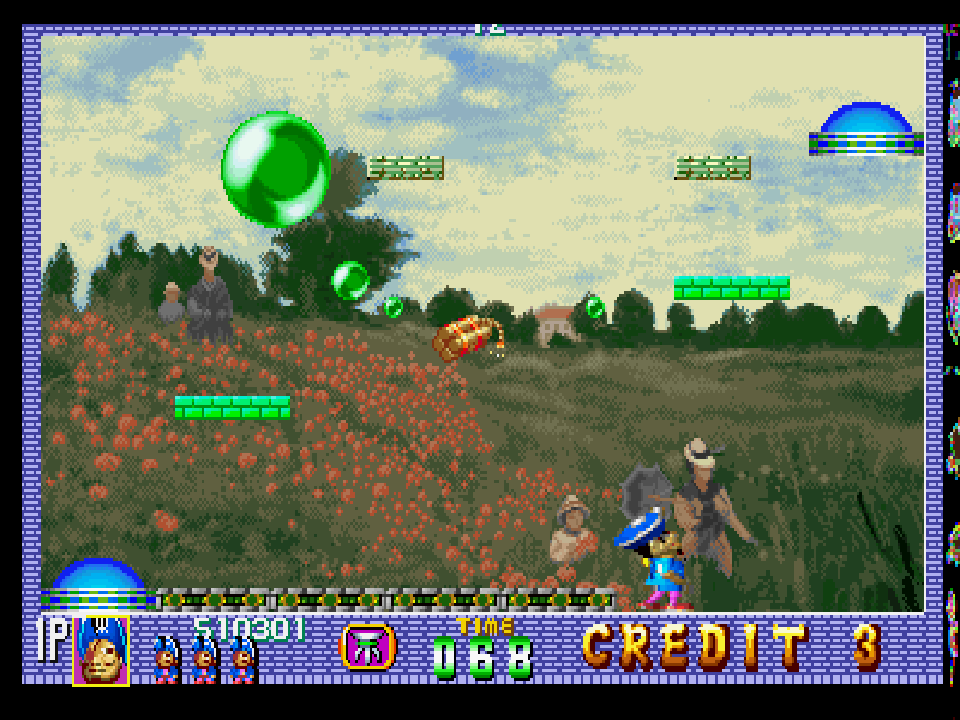
All three of these games have settings that can be adjusted, changing the difficulty, credits and lives on offer. This allows for the player to modify the challenge at least a little bit. There is also the option for two player action in all three games, being selectable from the main screen before starting. But it is possible for players to jump right into the action, using a credit to join at any time, except for the Panic Mode which needs to be started in co-op from the main menu.
Personal Thoughts
I enjoy the pang series, having memories of playing Super Pang in an arcade with my dad when I was a kid. But I was never able to get past the first stage, as I was just not very good at the game. But the game stuck with me, so I played the Super Nintendo version and whenever I got the chance, played the games as arcade machines. Like playing Pang 3 after a doctor’s appointment in a small corner shop when I was about 12, getting about half way through the game.
So there is a lot of positive memories for me when it comes to the series, so when this was brought home one day in the late 90s, it became one of my favorites to play on PlayStation. I was still pretty bad at the games, and I still am to be honest, but I have a lot of fun playing them, to the point I will return to them frequently. They are also a lot of fun to play with friends and family, offering a challenge that can cause a lot of chaos during game nights.
This compilation features enhanced audio, which sounds clean and crisp using Red Book audio for the music. These enhancements make the game feel fresh and modern for the time, although it can have some looping issues at times. This is especially prevelant when emulating the game, as it can stutter and make a mess of the sound. But there are ways to fix this when playing the game on PC using the official discs.
As a package, there is a lot of content on offer for players, with the three games to choose from, as well as the different game modes in the different titles. Each of the game provides something different and unique, with the simplicity of Pomping World/Pang, the refinement of Super Pang and the colorful chaos of Pang 3. My personal favourite in this collection is Pang 3, as it has the most variety on offer, especially with the three playable characters.
The Super Pang Collection has only been released once, having released on the PlayStation in global territories before eventually being forgotten. Due to this it has become somewhat of a rarity with the cost of the game rising, making it on the more expensive end. But it can be found for reasonable prices, through online market places and retaillers that sell second hand games. Just be aware, the PAL version of this release has some weird overscan issues.
I have a lot of love for the Pang Series, as it is one of those distinct games that has been cloned several times. Yet most of the imitations don’t feel the same, so it would be nice to see this game being re-released. But sadly, Mitchell Corporation that owns these games is defunct, with the rights being held by Capcom who don’t seem to do much with the series. There is however, Pang Adventures, which was released on modern platforms.
If you have enjoyed this feature, then please stick around and see what else catches your eye. I cover a wide range of games in reviews, get special previews and put out regular features. I have Lost Gems, Retro Revival where I discuss re-releases and the occasional Gaming Oddities piece, where I cover weird and wacky titles. So stay a while and have a look around.

