Re-Loaded – Steam Review

Overview – originally developed by Gremlin Interactive and brought to Steam by FunBox Media, Re-Loaded is a top-down shooter, taking place in a futuristic sci-fi universe. Take control of one of 6 blood thirsty maniacs as they hunt down the man that framed them, travelling worlds to destroy him once and for all. This version of the game is available exclusively for the steam platform, with a link to the game at the bottom of this review.

Disclaimer: before I get into the review, I would like to thank FunBox Media for providing the copy of Re-Loaded that was used for this piece via the Keymailer service. The provision of this software has not influenced the contents of this review, all thoughts and opinions contained within are my own.

Now with the introductions out of the way, let’s get into the review, starting with the story for Re-Loaded.

Story – after the events of Loaded, the villain F.U.B. had his body destroyed, but he managed to escape as a brain in an escape pod. The pod has landed on the desert planet of Kee-Butt-5, where the villain takes over the body of a reclusive artist, setting out on a new evil plan. Now a group of maniacal anti-heroes with a thirst for blood gather, with their goal being to track down the man who framed them, leaving a trail of bodies in their wake.

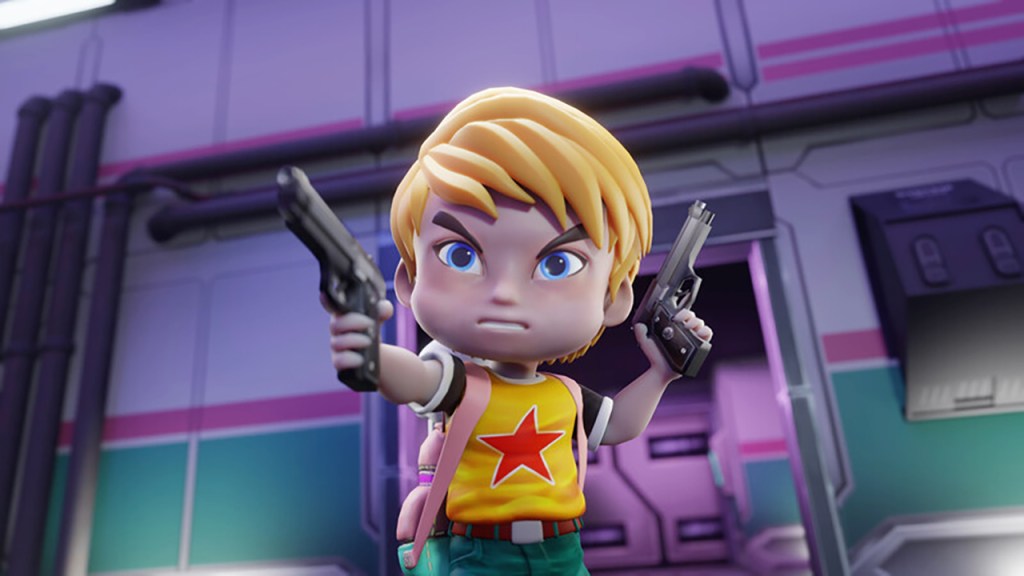
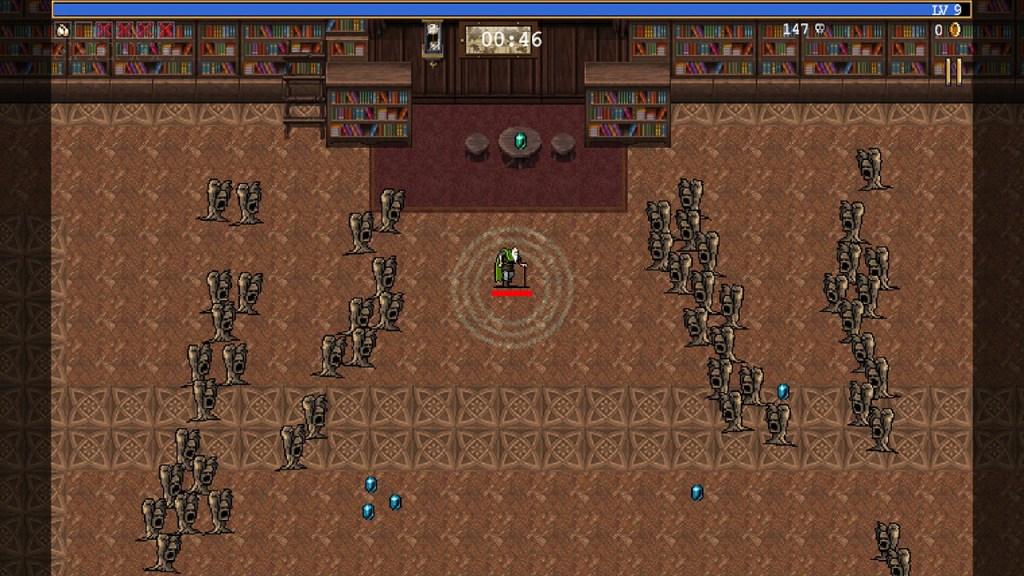
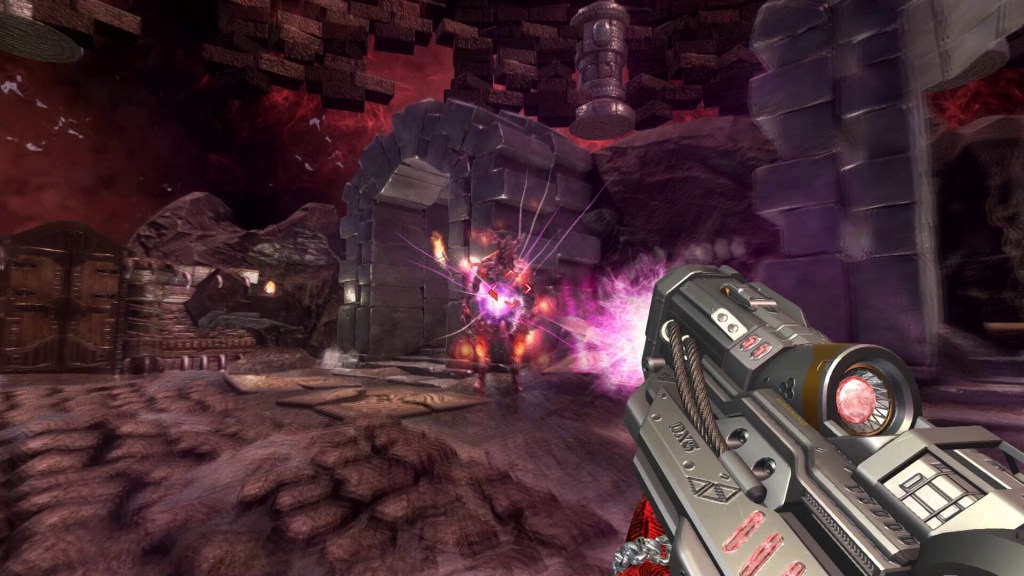
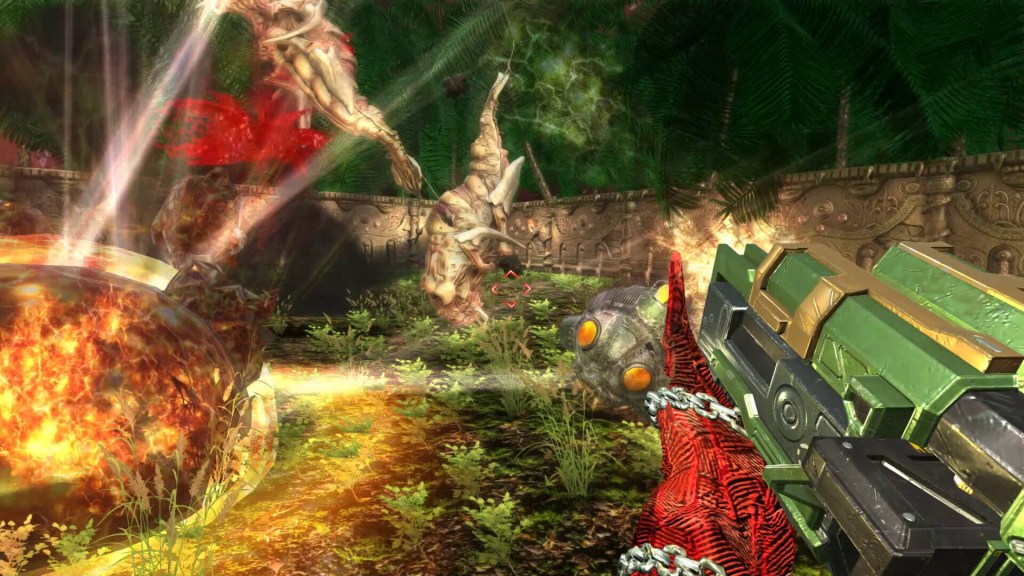
Gameplay – Re-Loaded is a top down shooter, where the player must travel through the different levels of each world, completing tasks and slaughtering all enemies that appear. When starting the game, the player is able to select one of six characters (with a secret 7th character), with each of the characters having their own unique weapons and stats. Upon selecting their character, a cutscene will play out for that character and the game will start.

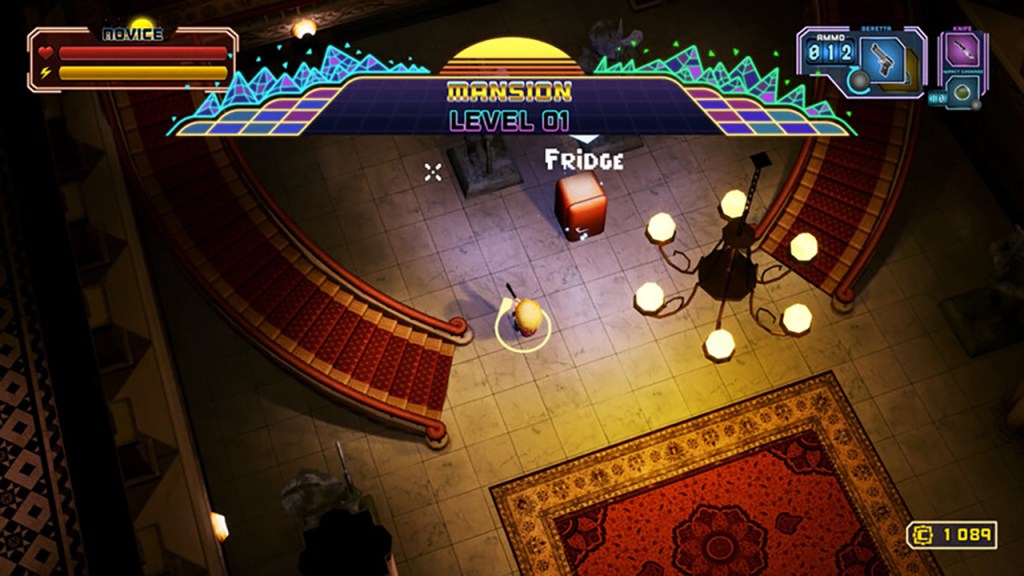
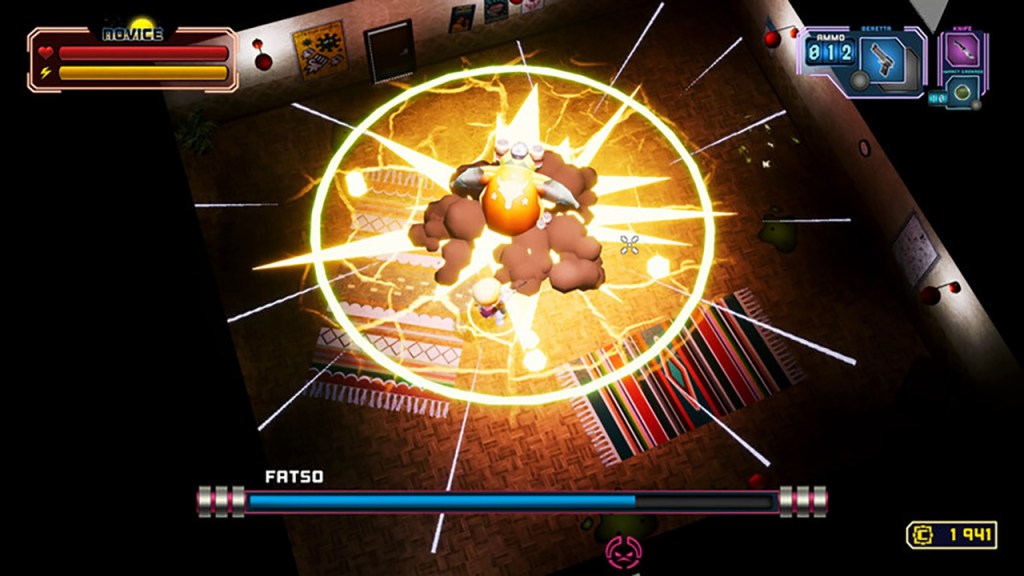
When in the stages of this game, the player will be able to roam through the large maps, shooting down the enemies that appear and leaving bloody smears on the ground. Each of the stages will have an objective to complete, which include collecting specific items, clearing an obstacle to the goal or destroying a set target. When the objective is cleared, the player can move onto the next and continue their bloody campaign.

In the stages, there will often be objects hidden throughout the maps, with power-ups to increase the power of attacks, health ups to heal damage and additional ammunition for weapons. The ammo pick-ups can become very important, as it is possible to for the shot total to hit zero if the player gets trigger happy. When this does happen, the ammo for the player will be refreshed, but this comes at the cost of power-ups that have been collected.

As the game progresses, the environments will get more complex and have the potential to get confusing. This will lead to players getting lost, which can make the game feel like it is dragging at times. This is due to the complexity of later levels and the need to collect card keys, enter buildings and find hidden objects in objects that can be destroyed. To compensate for this, there will be panels in some stages, giving the player hints and a map showing their path.

There is also the ability for two players to take on the challenges of Re-Loaded together, hunting down and slaughtering enemies as a team. The multiplayer options include local and online play, however, the majority of online features appear to be unusable. When playing in co-op mode, the players must move together within a single screen, as there is no split-screen option. There is also the option for friendly fire, which can be turned on in the options.

Now with the gameplay covered, it is time to cover the other aspects of this release, starting with the controls.

Controls – the controls for Re-Loaded are designed for a keyboard, but with the use of DosBox which powers this version of the game, there is support for some controllers. When using an Xbox controller, there was a relatively snappy response, with game playing well and no input lag when playing. Unfortunately, this was the only controller I was able to try out as the Nintendo Switch and PlayStation controllers I have appeared to be incompatible.

Difficulty – there are three difficulty settings for this release, with and easy normal and hard, all depicted by different types of footwear. These difficult options will affect the amount of damage dealt and received during play, which will make for a very challenging experience on the higher levels for those who want to push themselves. In general, there is a balanced difficulty curve to this title that all players can jump into.

Presentation – for the time period this was originally released, the graphical style was rather revolutionary, with complex lighting, textures and the number of effects on screen at once. That being said, this game still holds up as a great experience, only made better by the fact that the limitations of hardware from the 90’s no longer impact it. The game runs very smoothly, with no issues when it comes to lag or frame rate.

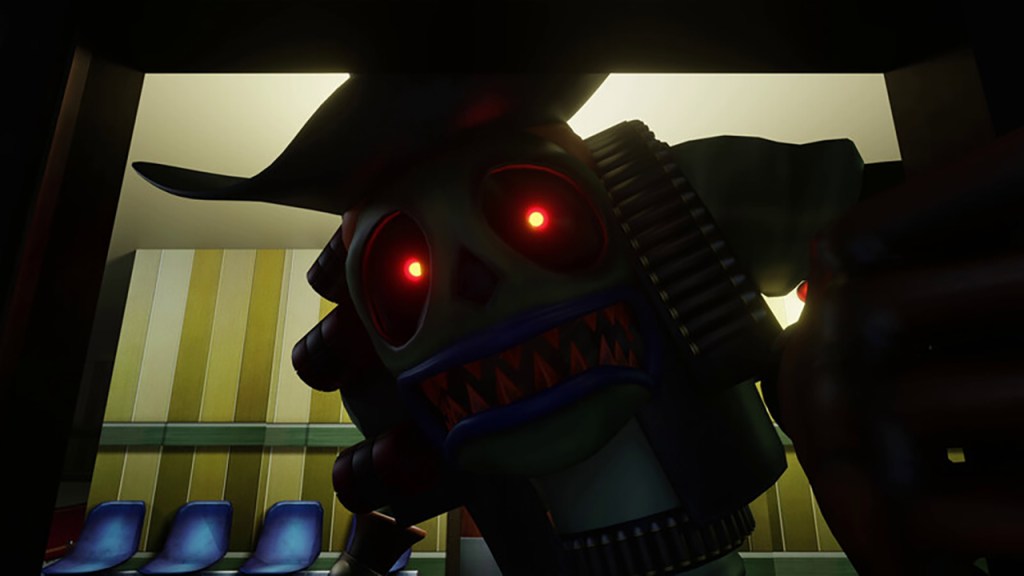
The short CGI cutscenes that are implemented in this title are still pleasing to the eye, even when they are blown up to fit a 1080p screen (even though the resolution says it is in 480). The sound is also pretty solid, with sampled electronic music that has a good amount of clarity to it for this release, with music that fits the stages well. There is an option for CD quality audio, but due to this being run via the DosBox emulator the CD audio simply doesn’t exist for the game.

Final Thoughts – I had played this game on and off through the years, playing the PlayStation version of the game, so this was a no brainer for me to try this version. The game is brought over well, with the DosBox working to perfection to allow players old and new to experience this game. This is a fantastic top down shooter, with buckets of blood and some rather ridiculous characters to accompany it during the carnage.

I can happily recommend this release to everyone who enjoys top down shooters. The gameplay is pretty solid, even though it does have its flaws, with some clumsy gameplay at times and movement that can feel stiff. However, for the age of the game and the price being asked, this is a real bargain and has a lot of content on offer for modest price point. But do be aware of the limitations for the time, as this is a game from 1996 running through DosBox.

In the end, I give the Steam version of Re-Loaded a final score of 3.5/5. This is a classic top-down shooter brought up to modern operating systems through the power of emulation, with buckets of blood, a cast of outlandish characters and pixelated carnage for all to enjoy. If you want to check this version of the game, a link to the store page will be below.

Link to Steam version (HERE)

Feeble Light – Nintendo Switch Review

Overview – developed by Panda Indie Studio and published by Eastasiasoft, Feeble Light is a vibrant bullet hell shooter with a three tone pixel art style, reminiscent of the classic Game Boy style. Blast through 5 randomised stages, with the difficulty increasing with each stage cleared and random power-ups to collect. This title is available on Nintendo Switch, Steam and PlayStation Systems, with a link to each version of the game at the bottom of this review.

Disclaimer: before I get into the review, I would like to thank Eastasiasoft for providing the copy of Feeble Light that was used for this piece. The provision of this title has not influenced the contents of this review, all thoughts an opinions contained within are my own.

Now with the introductions out of the way, let’s get into the review. I will be skipping the story segment as there is little in terms of plot for this release, so I will be going straight into discussing the gameplay for Feeble Light.

Gameplay – Feeble Light is a vertical bullet hell shooter, where the player controls a literal star fighter, battling through the stars against a range of weird and wonderful enemies. The player must dodge, weave and shoot through 5 randomised stages, including an asteroid field and a hazardous series of tunnels. These stages are randomised during each run, with the difficulty increasing as each stage is cleared.

The player has a standard shot weapon that fires directly up, which can be enhanced by collecting power-ups, along with other upgrades like additional lives and support weapons. These items are also randomised, meaning that players will get a different experience with each attempt at the game. There is also a bomb weapon that can be deployed, which needs to be charged up to three times by collecting stars dropped by destroyed enemies.

During the stages, enemies will appear from all directions, along with screen filling hazards like giant fire balls and Asteroids that the player must attempt to avoid. When a hazard appears, the player will be given a warning that there is an enemy/hazard coming, allowing players to move into a better position. There is also a second warning that will appear, this one is more severe as it heralds the arrival of a boss for the player to fight.

In this game there are two different types of bosses that can appear during a run, separated into Sub and main bosses. The sub bosses are randomised, with two sub-types that can appear, the first is a lovecraftian horror that will give a mysterious item when destroyed. Then there is the unstable staretti bosses, which have the chance to drop special items that will help the player in battle, as well as regular character power-ups.

Finally we have the main bosses, with 5 stage specific end of stage battles that will challenge the player, each with their own unique attack patterns and gimmick. They include a giant fire dragon, which will summon smaller fire dragons and a black hole that will try to suck the player into it. Then there is the big bad “FINAL” boss of the game. This eldritch abomination will appear after clearing 4 stages and will unleash the most chaotic patterns of the game.

If the player is able to survive the battle with this boss, then the game will continue, further increasing in difficulty as the game will continue until the player is killed. Upon death, the stage reached will be recorded as the players score, this is unique as it prioritises survival over points. There are also color palettes that can be unlocked after a run, with a range of color schemes for the player to obtain by playing the game, adding more replay value to the experience.

Now with the gameplay covered, it is time to move onto the other aspects of this release, starting with the controls.

Controls – the control system for this title is super simple, with a two button layout that gives an arcade feel to the action on screen. This makes for an easy to learn and hard to master experience, with the fast paced action requiring the player to be precise with their movements. This is made easier by the player slowing down when firing, allowing for better control in game. The game supports a wide range of controllers, so everyone can find the set-up that suits them.

Difficulty – the challenge of this title feels balanced, with the first stage of each run being fairly easy to start, with the game getting increasingly difficult as each stage is cleared. This can make what seems like a manageable challenge become more insane, with bullets filling the screen from all directions at times. The overall difficulty feels balanced, with a feeling of satisfaction present each time a higher score is reached.

Presentation – the visuals for this title are stunning, with vibrant and cute pixel art that is augmented by the Game Boy styled color schemes. There is so much to personality with this game, which is all contained within a vertical layout that feels at home on the switch. The only issue is the lack of TATE vertical mode on the switch for a full screen experience. The sound for this title is gorgeous, with fantastic chiptune music that perfectly fits the gameplay and graphical presentation.

Final Thoughts – this title surprised me when I got to play it, as I was expecting something a little more rigid with this release. The random nature of this release was a surprise and made the experience so much more fun, with a new challenge every time a new run is started. There is a lot of fun to be had with this release, with a satisfying gameplay loop that will keep players coming back for more, while earning new color palettes during play.

I am very happy to recommend this title to fans of the bullet hell genre, as it is intense but not brutally punishing for newer players. I am not the best at these types of shooters, but I could feel my skills improving with each subsequent attempt I made. This title may seem to lack substance, due to the low price that this is on sale for, but the overall quality and depth makes this title a purchase that is well worth every penny spent on it.

In the end, I give Feeble Light a final score of 5/5. This title is one of the best indie bullet hell titles I have recently played using the pixel art style, with the randomised elements of the game providing endless replay value, as no two runs of the game will be the same. If you want to check this title out for yourself, a link to each version of the game will be below.

Link to Nintendo Switch version (HERE)

Link to PlayStation version (HERE)

Link to Steam version (HERE)

Neko Secret Homecoming – Nintendo Switch Review

Overview – developed by Axyos Games and published by Eastasiasoft, Neko Secret Homecoming is the latest title in the Neko series to be released. In this entry, explore Neko Town to gain access to the “Anime Factory” and hack into their mainframe. This title is available exclusively on the Nintendo Switch, with a link to the game available at the bottom of this review.

Disclaimer: before I get into the review, I would like to thank Eastasiasoft for providing the copy of Neko Secret Homecoming that was used for this piece. The provision of this software has not influenced the contents of this review, all thoughts and opinions contained within are my own.

Mature Content Warning: this title is intended for mature audiences, due to the inclusion of sexual themes, sexual imagery and nudity. If you are under the age rating for this release, or find any of the content mentioned offensive, please proceed at your own discretion.

Now with the introductions out of the way, let’s get into the review. There isn’t much of a story for this title, so I will be going straight into discussing the gameplay of Neko Secret Homecoming.

Gameplay – this title is a mash up of two different gameplay styles, with a fairly sizable map that can be explored in a third person perspective, contrasting with the 2D slide puzzles. While in the main town area, the player must explore the different buildings and locations to obtain a passcode to enter the factory area. To access the different areas and obtain the numbers, the player will need to complete mini games.

These mini games are a lock picking mechanic to open doors, which requires players to obtain lock picks to be able to open the doors. The other mini game is safe cracking, where the player needs to rotate the stick to find a three digit combination to open the safe. Both of these mini games are incredibly easy to complete as the controller will vibrate (if it has that feature) when the sweet spots have been reached.

When a safe has been opened, there is a chance for one of 4 digits to be found to unlock the door to the factory. This artificially inflates the time spent to play the game, as players need to hunt for the different key code numbers. However, the code system itself is also easy to manipulate due to its flaws. When entering the code, the correct number will beep, meaning players can just brute force their way into the factory by guessing the code.

When inside the factory, the player will encounter the cat-eared lady, who just sits there and does nothing. The player can then access the features of the factory, most importantly the computer where the slide puzzles are located. Upon interacting with the computer the player can select one of 12 images, separated into two sets of 6 which the player can freely choose from. After selecting an image, the player can then start puzzling.

Each of the puzzles are separated into three levels, with each level having the featured girl appearing in a less clothing. These puzzles are incredibly simple, with the only thing that changes between each of the levels aside from the reduced clothing is the number of pieces on screen. This just drags out the process and makes the puzzles take longer to complete, with the fun wearing off very quickly which makes the experience feel increasingly tedious.

Away from the puzzles, the player can access three other features while inside the factory. There is the dart board, where the player plays a single match of darts against the AI with unwieldy controls that serves little purpose. Then we have the outfit selector, which provides very basic customization options and lets players increase the size of their player. Last we have the bathtub, which has the player sit in a tub of water fully clothed, for no other reason than they can.

Now with the gameplay covered, it is time to discuss the other aspects of this release, starting with the controls.
Controls – in this release, the control method is very basic, with the 3D part using the thumbsticks for movement and camera, along with basic inputs with the face buttons. Then we have the mini game controls, which are simple to the point of redundancy if they can be uncontrollable in the darts game. Finally we have the puzzle controls, which can be played with button controls when in docked mode, but there is touch screen options when in handheld mode.

Difficulty – there is a lack of difficulty in this release, as there is no real jeopardy for the player to face. The exploration of the town is rather boring, feeling empty and vacuous as there is no risk when breaking into the different houses. The puzzles have no real challenge to them, as they are just moving squares around the grid to make a complete image. It may feel challenging when there are more pieces, but it lacks any real depth.

Presentation – visually, this title is a mixed bag when it comes to the design. The main two characters of neko girl and cat girl are nicely detailed, but the rest of the models and characters are just from asset packs. The artwork for the girls is pleasing enough to the eye but doesn’t make up for the rather lazy world building. The music and sound is also very basic, using royalty free music for the soundtrack that adds little if anything to the experience.

Final Thoughts – I wanted to enjoy this game, I really did, but there is just so much wrong with this release. There is a real lack of depth with this title, with the exploration being redundant by the ability to brute force the door and lack of life to the town. The puzzles also lack any real depth to the gameplay, as they get repetitive almost instantly and the only reason to keep playing is to see anime titties, which doesn’t rescue the game.

I am unable to recommend this title to anyone, as there is nothing really there for the player to do once all of the puzzles are cleared. But in all honesty, the puzzles aren’t even worth the time that would be wasted doing them. I feel that this title is priced way too high, offering little in terms of content and replay value, with no reason to return once all of the content is cleared. Maybe on sale, it would be worth a few dollars as an impulse purchase.

In the end, I give Neko Secret Homecoming a final score of 2/5. This had the potential to be much more than it was, but there is a distinct lack of content for players to replay the game, the art for the puzzles is nice enough, but can’t carry what feels like a cash grab made of pre-built assets. If you do want to look at this game for yourself, a link to the game will be below.

Link to Nintendo Switch version (HERE)
Under The Hood – Preview

Hello! Today I have something a little different to share. I have been given a special hands-on preview for the upcoming title Under the Hood, from our friends at Shady Corner Games that I previously shared news of. This will be my thoughts on the game and discussing some of the details for this release, including some details of the gameplay and my experience with the game.

Mature Content Warning: the title being discussed is intended for adults only, with an 18+ rating due to the inclusion of strong language, sexual content, including explicit sexual actions and situations, as well as graphic language describing sex acts. If you are made uncomfortable by the listed content or if you are under the age of 18, this title is not going to be for you, proceed at your own discretion.

So without further ado, it is time to discuss my experience with Under the Hood, the latest title from Shady Corner, coming in the near future to Steam.

Plot – Under the Hood tells the story of a new assistant starting a job at Trish’s Pit’s, a local garage run by Trish and her daughters Silvie and Frankie. As the new hire, the assistant will be tasked with breaking down engines using their trusty wrench and toolbox, all while trying to keep themselves focused on the job at hand. As time passes, situations will arise that will blur the lines of professionalism between the different characters.

Gameplay – this game is a brick breaker style puzzle title, where the objective is to clear each shift by using a wrench to break down the engines that are on screen. To rebound the wrenches, there is a toolbox that can be moved left and right, with the wrenches bouncing off when making contact with it. But be careful as the wrench doesn’t act like a traditional ball, the way that the do in titles like Arkanoid and Breakout.

The systems that this variant of the genre uses are unique and make it a very challenging experience. Traditionally, there would be power-ups that would be dropped from destroying blocks, or enemies would appear as an obstacle, but this title is very different. Instead of power-ups and enemies, this game uses a system of hazards and obstacles, affecting the way that the wrench and even the toolbox will function.

These stage elements include heat pads, which will heat the wrench up and slow the toolbox down when contact is made. Then we have oil slicks which will slow the wrench down and lubricating coolant that speeds it up, making it more challenging to bounce the wrench back. This can be even tougher when the second toolbox is introduced, which will be faster than the standard one and hover above it.

The game itself is broken up into an introductory prologue scene and three chapters, each focusing on a different member of the Trish’s Pit’s team. The chapters are made up of multiple stages, called days with each day having multiple shifts to them. All of the shifts will need to be cleared in order to progress, needing to restart at the first shift if all lives are lost, but that isn’t the only progression system that this title uses.  

Within the stages, there are nuts and bolts that can appear, with the objective being to hit them with a wrench multiple times to add them to the tally at the top of the field. These nuts are used to unlock content in the gallery to view later, but be careful as all shifts must be completed to add the nuts to the bank. If the stage is failed all those nuts will be lost and you will need to start again, which adds a risk/reward feel to the stages.

As this is a title in the Shady Corner universe, there will be plenty of risqué and explicit content that will occur throughout the experience. This happens in Visual Novel/Dating sim style interactions, with a steamy story for each of the girls that will play out. But this isn’t the core focus of the game, as the gameplay is more than capable of standing on its own, with a lot of replay value to unlock the galleries and even special bonus stages for players.

Now let’s talk about the rest of this release and discuss the feel of the game.

Game Feel – this title has a familiar feel to it with the way that the brick break mechanics feel, but that familiarity only extends at the very base level. There is a lot of depth to the title, with a brutal difficulty curve that will really push the player to earn their smut. It does feel like a traditional brick breaker, but those instincts will lead to disaster as the wrench has a unique hit box, making it feel distinct from the others in the genre.

There is a lot of content on offer with some gorgeous character portraits that appear in the stages and VN scenes, along with special arts for the intimacy scenes. These artworks are in different styles from artists that have worked with Shady Corner in the past, which makes each of the different routes feel unique. The music featured fits each of the characters scenes, with tracks that complement the different characters.

The controls for this game work really well, with both keyboard and controller support. My personal preference is to use an Xbox controller, but it works really well with a keyboard. But be aware that since this title has yet to release, there is a lack of controller inputs on screen. However, the controls are fully implemented for supported steam controllers, so this will be addressed upon release of the game.

Final Thoughts – being able to get hands on with this game has been a real treat, as it is one of those genres that rarely gets innovations or new systems added to it. The way that the physics and overall gameplay systems work are very solid and well planned, but they will take a little getting used to and can get really tough in the later stages. However, there is an easy difficulty setting that will increase the starting lives and make it more manageable.

I really enjoyed my time with this game, as there is a lot of content on offer for players to get their teeth into, as well as the replay value on offer with the gallery unlocks. From the outside, this may look like another smut title, but there is a lot of depth to it with the challenging gameplay mechanics. There is more to this than just the tits, which is a hallmark of the Shady Corner brand as they always make compelling games that just so happen to have smut in it.

If you want to check this title out for yourself, you can find the demo for the game (HERE) and you can also wish list Under the Hood, so you can be notified when the game releases. You can also find their official twitter account (HERE) to keep up to date with their new releases and upcoming titles.

Full Quiet – Nintendo Switch Review

Overview – developed by Retrotainment Games and published by 8-Bit Legit, Full Quiet is an open world adventure game, set in a sprawling wilderness where a grizzled survival expert seeks to find his son. Engage in battle with the monsters of the wilds, explore varied areas and solve puzzles to proceed. This title is available for the NES, Nintendo Switch, Steam and Xbox platforms, with a link to each version of the game available at the bottom of this review (including the special physical NES version).

Disclaimer: before I get into the review, I would like to thank 8-Bit Legit for providing the copy of Full Quiet that was used for this piece. The provision of this software has not influenced the contents of this review, all thoughts and opinions contained within are my own.

Now with the introductions out of the way, let’s get into the review. I will be skipping the story segment as I feel this narrative is best experienced first-hand. Please note, when discussing the gameplay, I will only be covering the core aspects of this title, as there is so much in this title to discover and I want to avoid spoilers.

Gameplay – Full Quiet is an adventure title taking place in an 8-Bit open world, where the player must traverse dangerous environments, battling monsters and solving puzzles to progress. When starting the game, the player will be dropped right into the forest, exploring a starting area, where they can get to grips with the mechanics and features of the game. There are simple tutorials to uncover, but for everything else there is an in-depth manual provided in game.

During the opening portion of this title, the player will be able to learn how each of the mechanics will work, with platforming, combat and the different puzzle systems introduced over time. There is also a strong focus on exploration, with hidden objects to find that will aid the player in their mission. In the starting area of the game, the most important and unique mechanics of the game are introduced, the radio and Morse code system.

These are the most important elements of progression in this release, meaning players will need to take note of the different codes and the radio transmissions they receive. At different points during the exploration, ham radios will appear that need to be tuned, which will give the player codes for the relays. But the codes won’t always be in the traditional Morse code format, replacing the letters needed with colors that players need to input.

Throughout the forest there will even be Morse code technology hidden in the environment itself, with rocks that will show a dot or dash when passing. When discovered they are often tied to unlocking something nearby, like a door or item, making it important for players to try to figure out the patterns they have. There will also be power grids that need to be restored, with wire puzzles to solve to get them up and running again.

These wire puzzles can be very challenging, as there is a time limit to them, which will result in the player taking damage if the timer runs out. The player must connect one end of the circuit to the other, with random pieces that will appear, but there will be broken panels and short circuits. The pieces used for the circuit can be rotated, allowing players to adapt quickly to the puzzle, with a special heart panel to heal the player if the circuit goes through them.  

Fixing the different power grids will restore power to other areas, allowing players to interact with other power points and even open up safe havens for the player to rest. The safe houses will be very important, as they are the only place for players to save the game. They also provide a very important function, allowing the player to sleep until the morning. This is important as there is a day/night cycle, where enemies will become stronger at night.

Speaking of enemies, the player will encounter a relatively simple group of monsters during the start of the mission. These will help the player get used to the weapon they have, along with the evasive maneuvers they can use. With the entire opening area functioning as a comprehensive tutorial, players can get themselves a taste of what to expect, because this is just the start. Once the opening area is cleared, the real challenge begins.

Once the player has opened the gate out of the starting area the Plateau, they will experience the true scope of the game. The wilderness the player will encounter consists of a large open world map, where the player will be able to travel between different locations. The map becomes an essential part of the player inventory, alongside the resources that they collect during their adventure. But care must be taken as the capacity that can be carried is limited.

The items that can be collected include fuses for radios, ropes to climb different areas and food/aid items to restore lost health. As the game progresses, the player will be able to expand their inventory, but before that time, it is possible to recollect used ropes and food items will respawn. There is also the capability to refill supplies while in the safe houses, with boxes to resupply from if the right items are in the inventory.

Aside from the standard items in the inventory, there are also additional tools and equipment that can be located as the player explores further. There are tools that can assist the player in their quest, like a grappling hook to climb areas and lures that will draw out some creatures. There is also an arsenal of weapons that can be collected during the mission, including a shotgun that has limited range, but a wide spread to it.

These weapons are more powerful than the starting pistol, but the ammunition that they have is limited to them. This means it can be very important to make every shot count with these weapons, as the weapons are limited in the ammo that they can hold. This adds to the tactical survivalist feel of the game, as players need to decide what weapon to use and where the further they get, as the only known way to resupply is the safe house.

The stronger weapons will come into handy the deeper the player gets, especially when it comes to the more powerful monsters that appear. The deeper the player gets, the stronger the creatures will get, regardless of the time it is and they will pose a true threat to the player. Luckily the monsters will stay defeated for a time, but will respawn. There are even boss monsters that can appear, with the player locked in a desperate struggle for survival against these beasts.

Due to the large scale of the map, with different areas connected together, there will be times where players need to backtrack. This is where the map will come in handy, as the player will see notes for the different points that they can go to. These include flags for Morse code relays and safe houses, allowing players to easily find their way back to where they need to go. However, players must be careful as they can still get lost in the wilds.

There is a non-linear feel to this title, as the player is free to explore the wilderness and move between areas as they open up. This allows players to complete challenges out of sequence, coming back to previous areas when they are stronger or have gained new clues. This also adds to the replay value of the game, as players can approach the challenges differently each time. But the clock must always be kept in mind, as there is something out there, something terrible that comes out at night.

Now with the gameplay covered, it is time to cover the other aspects of this release, starting with the controls.

Controls – while this was initially developed for the NES, with the two button controller in mind, this version of the game fully utilizes all of the buttons on the Switch controller. This provides an intuitive experience that is responsive and enjoyable, regardless of the controller that is used. When playing in either docked or handheld, the game is comfortable to play, with support for a range of controllers including the NES classic from the NSO service.

Difficulty – this title can be very difficult, due to the open ended nature of the game, leading players to get lost within the wilderness and unprepared for the deadly enemies that can appear. This can be made  more challenging due to the cryptic clue systems and circuit puzzles, which can delay returns to safety or even result in death if the circuits are failed. There is also an optional Hard Mode which players can stumble upon by complete accident.

Presentation – as an NES game, the visuals of this title have some excellent sprite work that looks like it was made in the systems prime, while also having a modern look. The backgrounds and visual elements for radio, maps and other aspects of this game are pleasing to the eye. There is sprite flicker, but it doesn’t affect the overall experience. The sound for this title really pushes the NES sound chip to its limit, with a soundtrack and effects that perfectly compliment the mysterious setting of the wilderness.

Final Thoughts – I hadn’t heard of this title until the publisher reached out to me, which surprised me as this title is something different compared to other recent NES homebrew releases. The narrative is solid and really pulled me in, with platforming, combat and exploration that brought everything in this title together. There is a haunting and eerie feel to the world, with the music complimenting the setting of the wilderness that players can get lost in.

The cryptic nature of the puzzles can be a source of frustration, which may be off-putting for players who want a straight forward adventure. However, I really enjoyed having to move between areas, take notes of the different clues and have to figure out what to do with the clues I had. There was a lot of back tracking to restock on ammo, which could be time consuming but got easier over time, as I learned the different routes and the best approach to take.

During my first attempt at this game, I did accidentally enable the Hard mode by experimenting with the Morse code system, because the manual gives players a full Morse code guide. I soon learned from that mistake, but it was humorous to me that I stumbled upon it. I am happy to recommend this title to those who want sink their teeth into a tough, but satisfying adventure that would fit perfectly during the glory days of the NES system.

In the end, I give Full Quiet a final score of 3.75/5 which is a first in the 200+reviews I have done. This is a truly great adventure that fully maximized the limitations of the hardware it was designed for, with a haunting wilderness to explore, monsters to battle and puzzles to solve. However, there are puzzles that can be so cryptic and difficult that it may sour the experience for some players. If you want to check this game out, a link to each version including the physical release will be below.    

Link to Nintendo Switch version (HERE)
Link to Xbox version (HERE)
Link to Steam version (HERE)
Link to NES physical (HERE)

Doodle World Deluxe – Nintendo Switch Review

Overview – developed by Nate Peters and Acutis Games with publishing handled by NAMI TENTOU, Doodle World Deluxe is a double pack of indie titles originally developed for NES and ported to consoles. In Doodle World and Doodle World Redux, the player must save the land from the evil King Eraser. This title is available for Nintendo Switch and PC platforms, with a link to each version of the game at the bottom of this review.

Disclaimer: before I get into the review, I would like to thank publisher NAMI TENTOU for providing the copy of Doodle World Deluxe that was used for this piece via the Keymailer service. The provision of this software has not influenced the contents of this review, all thoughts and opinions contained within are my own.

Now with the introductions out of the way, let’s get into the review. I will be discussing the two titles included in this pack separately, with details for each of the games and their performance, the plot is rather light so I will be skipping this element.

Screenshot

Doodle World

Gameplay – Doodle World is a retro styled platformer set in a hand-drawn world, with the game playing out across the pages of a note book. Taking place over 5 worlds, made up of 3 stages each, the player must traverse each of the stages as they dodge hazards, jump on enemies and collect crayons. When the player collects 100 crayons, they get an extra life, which can be very useful as there are no continues in this game.

In the stages, there are bonus “pages” which will take the player to a single screen stage, where the player must try to collect all of the crayons on screen. There is also a special super crayon, which will make the player invincible for a short time. This invincibility can be very useful as not all enemies can be jumped on, such as the pencil and thumbtack foes that are in the game world. Players must be careful when using this however, as the timer for the crayon is low.

At the end of each stage, the player will encounter a boss that they must battle in order to clear the world. The bosses that appear will each have their own unique attack patterns, with some firing projectiles or charging at the player. Once all of the bosses have been beaten, the player will get an ending congratulating them on their success. If the game is a little tricky, the player will be able to play a special mode called Kids Mode.

Screenshot

This special mode is for players who want to enjoy the game in a more relaxed way, this gives the player extra lives, replacing the enemies with erasers and takes away the pitfalls. However, there is no way to continue after a game over, meaning players will still need to collect crayons to increase their lives. This mode is easier but it can still be difficult due to the performance issues the game faces (explained further below).

Doodle World Redrawn

Gameplay – this is a fully re-imagined version of first game, with all new stage layouts, tougher boss battles and even a new double jump ability. The core mechanics of the game remain mostly unchanged, aside from the new extra jump, which allows the player to reach higher platforms and cover ground faster. The bonus stages return in this title, with new layouts which offer a different experience for this release.

Just like the previous title, the player only has a limited number of lives and no continues. This makes collecting crayons for extra lives, getting the super crayon for invincibility and approaching the hazards with a level of caution. The bosses are more challenging in this release, making them more difficult for the player and allowing Redrawn stand on its own from the other title. This title also includes the Kids Mode feature.

Screenshot

In this title, the Kids Mode returns with easier stage layouts, a lower difficulty level for the bosses and the removal of hazards, just like the first version. However, the story remains the same in regards to the fact there are no continues, meaning that the player will need to focus on collecting crayons for extra lives. This is a little easier as it appears there are more crayons in both games, when using the Kids Mode, but the performance issues persist.

Now with the gameplay covered, it is time to cover the other aspects of this release, starting off with the overall performance of both games.

Performance – this title looks fairly solid, being ported up from an NES. However, there are some rather significant issues in regards to the general performance of the game, which unfortunately ruin the fun and flow of the experience. The first is the collision detection, which can inaccurate at times, leading to the player killing an enemy and dying at the same time. Next is a spawning error, which can place the player over a pit leading to them dying without escape.

There is also an unusual feel to the physics of the game, with noticeable lag when trying to run and jump, which will lead to errors and mistakes being made. This makes the character Doodle feel heavier than it should be, with jumps that don’t always go to full height, even when holding the button down for longer. All together, these issues combine to spoil what had the potential to be a fun and rewarding platform title, with a unique aesthetic.

Screenshot

Controls – the controls are very simple, with two buttons for running and jumping, the thumbstick/D-pad for movement and the two shoulder buttons activate the menu. But unfortunately, as discussed further up, there is lag that occurs quite often, where it feels like the movement of the game is dragging, which can lead to missed inputs. Sadly, the input lagging and difficulties with the controls affect all control methods in game.

Difficulty – this title shouldn’t be very difficult, but due to the issues it faces the game feels poorly balanced. The lack of continues increases this feeling, as the player will be sent back to the start of the game over and over. This may not seem like an issue but it spoils the Kids Mode, putting off the younger target audience from continuing to play. There is a save/load system that can be used, but it feels like a band-aid on a bullet wound.

Presentation – visually, the world presented in this release has a unique look and feel to it, given that it was originally made for the NES. The notebook aesthetic is not something I have seen before and I applaud the game for that. But with all of that shine, there are still some parts that feel unpolished and they cannot be hidden with CRT filters or extra color pallets. The music fits the game well, with a solid soundtrack that has perfectly captured the feel of an 8-bit cartridge game.

Screenshot

Final Thoughts – When I first got my hands on this title, I was impressed with the overall look and feel that the game was presenting. Having something unique that I had never seen before, which can be quite the rarity in the world of indie games, especially when it comes to the homebrew scene. However, as I got stuck into the game, the cracks started to show very quickly, which is unfortunate as this title was promising from the outset.

The game has a few unfortunate flaws, which spoil the overall experience and make for an unpleasant time during play. These are the lag that occurs throughout, the bugs involving the player getting stuck spawning above a pitfall and much more. Sadly all of these issues ruin the potential for the game to be fun, and I am not sure if it is an issue with the port or not. This means that I am not able to recommend this title as a full price purchase, as it is missing the polish needed to be great.

In the end, I give Doodle World Deluxe a final score of 2/5. This title has all the potential to be a fantastic platformer double pack, with a premise that is creative and could have been a smash hit for parents and kids, but sadly the issues it suffers from spoil the experience.  If you do want to check this game out for yourself, a link to each version of the game will be available below.

Link to Nintendo Switch version (HERE)
Link to Steam version (HERE)
Martian Panic – Nintendo Switch Review

Overview – developed by NYX Digital and published by Funbox Media, Martian Panic is an on-rails shooter where the player must battle wave after wave of Martian invaders. Set in a fictionalized 1950’s world, this rail gun shooter will take players all around the world to battle the alien menace. This title is available for Nintendo Switch, Windows PC and PlayStation platforms, with a link to each version of the game at the bottom of this review,

Disclaimer: before I get into the review, I would like to thank Funbox Media for providing the copy of Martian Panic used for this piece via the Keymailer service. The provision of this software has not influenced the contents of this review, all thoughts and opinions contained within are my own.

Now with the introductions out of the way, let’s get into the review. I will be skipping the story segment as there is a humorous storyline that unfolds during the course of the game, so I will be going straight into discussing the gameplay.

Gameplay – Martian Panic is an on-rails shooter, where up to three players are tasked with taking on 8 levels of arcade style shooting action. When starting a new game, the player can select from one of 6 different characters, including a kid obsessed with comic books, a travelling salesman and a high school cheerleader. After selecting their character, the player is able to select the stage they want to challenge and their selected difficulty level.

After all of these elements have been decided on, the player can jump into the action and start blasting the alien invaders. During the stages, the player will be armed with a pistol that can hold a total of 8 shots before needing to be reloaded. With this weapon in hand, the player can blast the alien invaders, racking up big points by building a combo of successful hits. But be careful as the aliens blast back, taking a life with each shot that hits the player.

It is also important to be careful of civilians, as they will be running around and trying to escape from the invaders. If the player is able to successfully rescue these civilians, they will provide rewards, including weapons, point bonuses and even extra lives. However, if the player accidentally hits the innocent people, a life will be lost. It is also possible to find power-ups and other items hidden inside trash bins and other containers, so blast the environment away.

During the course of the game, new enemies will be introduced, which will be stronger than the standard enemies needing multiple hits to take down. There will also be end of stage “boss battles” which will consist of the challenging battles, with a mini cutscene and a big fight to end the level. Once a level has been cleared, the next one will be unlocked for players to take on, introducing a new environment and story to explore.

As a rail gun title, the game uses forced gyro controls for this title when playing in docked or table top, which is the biggest issue with this title. Unfortunately, there is little in terms of refinement when it comes to the implementation of this. The cursor becomes unwieldy and it is not possible to aim the weapons effectively, leading to the cursor swinging from side to side, drifting across the screen and sometimes not responding at all.

There is also an unfortunate lack of polish with the gameplay, which can make it nearly impossible to beat the game on specific challenge levels. This is due to the way that enemies can act off screen, allowing them to hit the player before they are even visible. This significant fault can end a run on the highest difficulty in the blink of an eye, as there is only one credit and limited lives, wich will be lost due to this poor game design.

The last thing to discuss is the online ranking system, which allows players all over the world to compete for the highest score they can get. There is an individual high score leader board for each stage of the game, as well as the three difficulty settings and the number of players in action. There is also a monthly ranking system, allowing players to go for the top spot on a dedicated leaderboard that will refresh, for a new challenge each month.

Now with the gameplay covered, it is time to move onto the other aspects of this release, starting with the controls.

Controls – the controls for this release are the biggest flaw of it, which is an unfortunate thing. The game forces the player to use the gyro controls whenever the system is connected to the TV, or the Joy-Cons are removed. This makes it difficult to play due to the inaccuracies of the gyro technology, as the cursor will become uncooperative with the player. The game can be played with a thumbstick cursor, but only in handheld, which is a poor overall design choice.

Difficulty – there are three difficulty settings for this release, which will affect the way that the game will play out. They are Cadet, which gives maximum lives, makes enemies weaker and provides unlimited credits. Then we have Ranger which only provides 3 credits, fewer lives and enemies are standard power. Finally is Ace, which has only one credit, the fewest lives and the enemies are the stronger, which is almost impossible given the issues that this game has.

Presentation – visually this title looks good for a HD reworking of a Nintendo Wii release. The graphical style works well, with vibrant colors that suit the 1950s setting, but sadly it is marred by slowdown and framerate issues. The cutscenes don’t really add much, but they have a humorous element to them. The sound is a good fit for this title, with some rather solid voice acting that breaks up the action, the music is well composed and is a good accompaniment for this game.

Final Thoughts – when I first saw this title I was excited to play it as I am a fan of on-rail shooters, having played Light gun titles for a large portion of my life. However, that excitement quickly turned to disappointment, as I did not have the amount of fun that I would have hoped with this game. On the surface, the concept is fantastic, with a charming premise of a B-movie shooter that all the family can enjoy. But sadly it doesn’t extend any deeper than that.

The game is riddled with numerous flaws that all combine to make an experience that has the potential to be less fun the more you play. There is slow down that happens throughout, with poor game design choices that negatively impact the gameplay, like enemies attacking off screen. The difficulty spikes due to its flaws make the game almost impossible to play on any level above cadet, as the player will be killed by a combination of unfair enemy placement and poor controls.

I am unable to make a recommendation for this title, aside from a sale purchase or if you can pick up the special physical gun pack (with a code for the game in the box), as that may make it a little more comfortable to play. There was some promise here, as the system it originally released on had a long history of good rail shooters, but sadly this didn’t make the jump very well. It can be fun if you are playing with friends, or if you aren’t taking it seriously, but outside of that it is likely to disappoint.

In the end, I give Martian Panic a final score of 2/5. This is an on-rails shooter that had all the potential to be a home run, but is sadly more of a foul ball, due to the flaws that it suffers from, with poor gyro control being forced on the TV, optimisation issues and unpolished game design. If you do want to check it out for yourself, a link to each version of the game will be below.

Link to Nintendo Switch version (HERE)
Link to PlayStation version (HERE)

Link to Steam version (HERE)

Skautfold: Usurper – Nintendo Switch Review

Overview – developed by Steve Gal and published by Red Art Games, Skautfold: Usurper is a metroidvania style adventure, with eldritch horrors set in an alternative Britannia during the late 1800’s. This title is the sequel to Skautfold: Shrouded in Sanity, taking place a year after the events previous title. This title is available on the Nintendo Switch, Xbox and PlayStation systems, with a link to each version of the game at the bottom of this review.

Disclaimer: before I get into the review, I would like to thank Red Art Games for providing the copy of Skautfold: Usurper used for this piece via the Keymailer service. The provision of this software has not influenced the contents of this review, all thoughts and opinions contained within are my own.

Now with the introductions out of the way, let’s get into the review, starting off with the story of Skautfold: Usurper. When discussing the gameplay, I will be covering the core aspects of the title, as there are many nuances to the experience that must be experienced first-hand.

Story – taking place in an alternative timeline, in 1898 an otherworldly entity called the Citadel has crashed into the city of London, causing panic and releasing a fog of madness. After this event, the Empress Eleanor has assembled her royal forces to enter the Citadel, in hopes of finding a way to rid the city of the terror. Meanwhile, Waltham, the leader of the Veimar has employed his own forces to challenge the Navigator of the Citadel for his own, unknown purposes.

Gameplay – Sakutfold: Usurper is a search action RPG, where the player takes the role of Saragat, a Holy Knight who was revived by Waltham, by fusing his own damaged body with the corpse of the Knight. This has empowered the knight with new abilities, as he is now the only being that stands between the horrors of the citadel and the people of Britannia. This all takes place, while the mysterious Waltham guides the player through the Citadel.

The core objective of this title is to explore the Citadel, made up of a sprawling map that the player can explore, with new areas that will open up during the course of the game. In the different areas, the player will encounter various monsters and eldritch abominations, with the strength of these beasts changing depending on their location. There will also be horrific boss monsters in the Citadel, which will have relics that the player needs to progress.

These relics will provide the player with new abilities, empowering them further to get past the hazards and obstacles they will face. The relics include the ability to stick and jump off walls, break sealed doors and even levitate to fly freely through the Citadel. As this is a Metroidvania style of game, there will be a need to return to different areas, backtracking to get past hazards and uncover treasures that were unobtainable before, which can be eased by warp points and relics.

Alongside the relics that players can obtain is an arsenal of over 90 different weapons, which range from swords and axes to guns, bows and eldritch spells. These weapons can be collected from coffins that are scattered throughout the Citadel, with the ability to equip up to 4 different weapons at once. This allows players to change their strategy on the fly, which is important when fighting strong foes, as some weapons will deal extra damage if the enemy is weak to it.

There is also a companion system, which allows special entities to follow the player and assist them in their adventure. These include a spirit, a reaper and a fox, which will assist in combat to increase the strategic options in battle. This makes for an interesting experience, having to decide which familiar to use at any one time, adding further depth to the overall combat system. The familiars can also be strengthened if requirements are met.   

Speaking of combat, there is a relatively deep combat system which uses a special system called “Guard Points”, which act as both a shield from damage and stamina for attacks. If the player takes damage or uses a weapon, they will lose Guard Points (referred to as GRD in game) at varying levels based on the enemy/weapon. When this meter is depleted, any damage that the player takes will reduce their HP, which will result in death when fully depleted.

During intense battles in this game, the player can use some defensive skills that will be affected by the GRD meter. The first is the dodge roll, which will allow the player to escape an attack, with the ability to gain GRD if the move is timed correctly. Then there is the Shield, which will reflect projectile attacks and potentially damage enemies if reflected with the right timing. These skills can mean the difference between life and death, especially when fighting many enemies at once.

When enemies are killed, they will drop a resource called Vitae (which can also be found in large containers), which is a very special currency that is tied to the progression of the game. The Vitae is used to level the player, by paying a set amount of points while at the navigator throne, either in the main base or one of the seats throughout the Citadel (the throne is also used to save the game). However, Vitae is not the only item needed to make Saragat stronger.

Throughout the construct that is the Citadel are chests, which will contain special stones called Yth. These are finite, with a limited number of them available throughout the entire game, and these are key to being able to strengthen the player. When levelling up, the player must pay an increasing amount of Vitae per level, but only 1 Yth stone, adding a level to one of eight stats to enhance the player and the efficacy of different weapons.

The player can also use vitae to increase their Devotion to eldritch gods, which will enhance the power of some of the spells. There is even the ability to reset the levels that players have chosen for their character, allowing them to take a different approach. However, this comes with a few caveats, as the cost to refund the levels are Vitae for the next level, a single Yth stone and if the player has bought levels in the ELD stat they will not be refunded.

There is a lot to do in this title, with a lot of exploration options and the ability to move around the game in a non-linear fashion. However, it is important to take care when exploring uncharted areas of the Citadel as the threat of death looms around every corner of this labyrinthine construct. If the player is killed, they will be sent back to the last throne they activated, while also losing a percentage of the Vitae that has been accumulated by the player.

Within the confines of the Citadel and the areas that surround it are many secrets to discover, with hidden paths and items, walls that can be destroyed and even optional boss battles. There is much to discover, with hidden interactions, powerful items and so much more. There is even the ability to modify the experience through modifiers, including a speedrun mode, difficulty modifiers and even a permadeath challenge where saves are disabled.

Now with the core gameplay covered, it is time to move onto the other aspects of this release, starting with the controls.

Controls – Skautfold: Usurper has a control layout that is complicated when starting the game, with a lot of inputs that need to be memorized to succeed. But the game does provide some tutorials for players to get adjusted to the gameplay, which does make it easier to adapt to the complex controls. When playing in either handheld or docked modes, the game is comfortable to play, with all of the inputs laid out in a comfortable way, regardless of the controller used.

Difficulty – this title is very challenging in terms of difficulty, as the non-linear nature of the game can lead players into dangerous situations. If the wrong path is chosen, players can enter areas that they are not prepared for, which will lead to a quick, messy demise and a loss of Vitae. It is also important to be aware that boss battles cannot be escaped, with a particular boss being easy to fall into without warning while exploring, and only has one weakness.

Presentation – the visual style for this title is reminiscent of Castlevania Symphony of the Night, with fluid and detailed sprite work, haunting backdrops and unsetttling character portraits. The game performs well, with no slowdown or lag issues during play, especially when fighting the gory and horrific blood soaked bosses. There is a fantastic soundtrack that builds tension and atmosphere within the setting of the Citadel, with music that adds a chilling feel to the world presented.

Final Thoughts – I had not played the previous entry in the Skautfold series, however, I have had a lot of experience with similar titles within the genre. That being said, this title exceeded all of my expectations and makes me want to explore the other games in this series. The narrative was engaging, the atmosphere really pulled me in and the gameplay loop was very challenging, but never frustrating during my time with it.

I have no issue recommending this game to those who are fans of the genre, as this embodies everything that Search Action games are about without being cryptic or confusing. I spent a lot of time with this game, trying (and failing) to beat the final boss, exploring the Citadel for hidden items and grinding out Vitae for upgrades. I am sure that I have only scratched the surface of the game with this review, as there is so much more to it but it would take all day to discuss.

In the end, I give Skautfold: Usurper a final score of 4.5/5. This title is a challenging and often brutal search action title, with horrific bosses in the form of eldritch abominations, haunting environments and intense combat that is wrapped in an intriguing narrative. The only negative is that the difficulty of the game may be off-putting to some. If you want to check this game out for yourself, a link to each version of the game will be below.

Link to Nintendo Switch version (HERE)

Link to PlayStation version (HERE)

Link to Xbox version (HERE)

Under the Hood – Steam Announcement

Hello there! I am pleased to bring you more news from our friends at Shady Corner Games, who have a new title that is due to be published in the near future. This title mixes classic brick breaking puzzle action, dating sim elements and some rather saucy scenes that will get your motor running. to learn more about their new title, check out the details below for Under the Hood.

We at shady corner are pleased to announce that we are gearing up to release another title in the near future. This newest release in the Shady Corner universe is centered on Silvie, the mechanic and face of Shady Lewd Kart, along with her family in a puzzle title filled with lewd brick breaking action. So read on to learn about Under the Hood.

Mature Content Disclaimer: this title is intended for adults only, with an age of 18+ only. If this content is uncomfortable for you, or you are under the age limit outlined above, then this is not for you. This title contains the following content.

  • Risque outfits, sexual comments and language, sexual situations and explicit depictions of sexual material.
  • Nudity including full frontal, partial, suggested and obfuscated nudity (via nightwear)
  • Explicit sexual interactions, where characters engage in oral and penetrative sex acts, as well as those of a fetishistic nature.
  • All characters featured in the game are of the age of 18 or older.

About the Game

In this busty brick breaking puzzler, the player takes the role of an assistant starting a new job at Trish’s Pit’s, a local garage that is run by a hardworking mother and her daughters. The duties for this new hire will involve taking the engines and breaking them down, all while trying to keep themselves from being distracted by their co-workers.

The player must take engines apart in challenging brick breaking action, bouncing their tools off of engine blocks and nuts to clear each of the stages. The player will then interact with the girls in the garage upon clearing their shifts, in a dating sim style similar to that of our other puzzle title Slime Girl Smoothies, along with unlocking special artworks and CG images.

Features of Under the Hood

  • Take on over 30 challenging stages of block busting action.
  • New mechanics that will keep players on their toes, including springs, belts and hazards.
  • Explore the stories of Slivie, Trish and Frankie that occur before the events of Shady Lewd Kart.
  • A collection of CG arts to unlock for those looking for something titillating.
  • Featuring voice work by SilkyMilk and Sarielle in steamy adult scenes.
  • Featuring artwork by the talented Pencilanon, Lynte, SkullZLatte and PixelboyMagazin.
  • Bonus Lock N Lewd content for those who own the Marble Maid game, with special unlocks for players to discover.

Meet the Girls!

  • Trish – the hardworking owner of Trish’s Pit’s and mother of Silvie and Frankie. A mature lady with a seductive gaze, a love of denim overalls and some rather ample assets that make her a favorite for guys who need an “oil change”.
  • Silvie – the elder daughter and the face of Shady Lewd Kart. This girl is a powerhouse in the Go-Kart scene, known for her skills with a wrench and some other more unorthodox “tools” in her box.
  • Frankie – the younger daughter and the tech expert of the garage. The teen may be lacking in some areas that her mother and sister are gifted in, but she makes up for it with her skills with a computer.

Check out the official Shady Corner Twitter (HERE) for more info about this title and to learn more about the other titles we have on the horizon. You can also go to the official steam page for Under the Hood (HERE), where you can wish list it to grab it as soon as we release it.

Ray’z Arcade Chronology – Nintendo Switch Review

Overview – originally developed by Taito and M2, with publishing handled by ININ Games, Ray’z Arcade Chronology is a collection of shooters from the 90s. Play through all three entries of the RAY arcade series, with special enhanced variants of the 3D entries of the series. This release is available on the Nintendo Switch and PlayStation systems, as well as special physical versions from Stritly Limited game (while stocks last) with a link to each version of the game at the bottom of this review.

Disclaimer: before I get into the review, I would like to thank PR Hound for providing the copy of Ray’z Arcade Chronology that was used for this piece. The provision of this software has not influenced the contents of this review, all thoughts and opinions contained within are my own.

Now with the introductions out of the way, let’s get into the review. As this is a compilation title, I will be covering the individual titles in this release, providing some plot details where available and discussing the gameplay systems in release order.

RAYFORCE – 1994

Plot – In a distant future humanity constructs a massive neuro-network supercomputer called Con-Human, with the purpose to maintain the environment of the earth. This is to ensure the continued existence of earth and its inhabitants. However, this system does not last, as the mind of a cloned human becomes linked to Con-Human, leading to it becoming sentient and corrupting its mind. This leads to the machine attempting to exterminate that it was made to protect.

After a prolonged war with humanity, Con-Human was able to wipe out almost the entire population, leading the survivors to flee into space. After defeating the human resistance, Con-Human has altered the very earth itself, transforming it into an extension of his body which it plans to use to eliminate the rest of humanity. To prevent this, the remaining humans go on the offensive, planning to fight the genocidal machine even though it will destroy the earth.

Gameplay – RayForce is a pixel art scrolling vertical shooter consisting of 7 stages for the player to take on, each with a large scale boss battle for the player to take on. The player must shoot down wave after wave of enemies, dodge bullets and collect power ups as they make their way through the stages. The enemies that the player will face will have a range of attack patterns, while appearing in two separate layers of the screen.

The layer system of the game is the key selling point of RayForce, as it utilizes a very special weapon system which revolutionised shooters of the time. Like most vertical shooters, the player is armed with a standard shot that they fire directly up, this can be improved and strengthened by collecting power-ups. However, there is a special weapon that players can use in RayForce, the “LOCK ON LASER” which can target several enemies in the layer below to attack them.

These systems work together to create a system that is challenging, as the player will need to be aware of both levels of the screen. This is due to the way that enemies can move between layers, leading to players needing to quickly change the weapon they are using. The lock-on weapon is also important to getting a high score, as the weapon can target up to 8 enemies (when full levelled up), leading to huge combo scores.

There are local and online leaderboards for this game, where players can test their skills and try to reach the top spot, depending on the conditions set. There is also simultaneous co-op play in this release, where two players can work together to take on the machines and eliminate Con-Human together. When a player runs out of lives, they can jump right back in when continuing. Finally, there is a replay system where players can save a video of their best runs (available in all games).

RAYSTORM – 1996

Plot – in the year 2119, travelling into space has become a reality, with the world working together to expand humanity throughout the solar system. During this expansion, the government of earth establishes the Star Federation, which are responsible for maintaining peace and order in the colonies. However, by 2219, humanity has quickly expanded the colonies all the way to Orion, which has made it difficult for the federation to maintain control.

As the federation lost control, they implemented martial law which oppressed the inhabitants of the colonies, leading to the formation of rebellion. On the planet Secilia, the rebels establish the Secilia Foundation, beginning their fight for freedom. After countless battles, they defeat the Star Federation and Secilia plan to destroy the earth. This leads to a desperate struggle for the survival of the earth, as the R-GRAY ship is launched as part of OPERATION: RAYSTORM.

Gameplay – just like its predecessor, RayStorm is a vertical scrolling shooter where the player will battle against waves of enemies, as well as large scale bosses at the end of each stage. The game is broken up into 7 stages again, with a special 8th stage against the final boss. The majority of the gameplay in this title remains the same, except for a few changes to the core mechanics that make this title unique from the first.

The new systems of this title are the changes to the Lock-on Laser system, which can be used in both layers of the playfield. This allows the player to target enemies below and infront of them, increasing the potential for big combos and approaches to the stage. There is also a new special attack that will deal significant damage to the enemies on screen. This needs to be charged after use, by successfully downing enemies.

There is also a new ship type that the player can do, with a different set of weapons that function differently to the standard set. These are a twin beam that replaces the standard spread shot, alongside a lightning style laser and a special attack that launches a huge explosion at the front of the ship. There is also two control options, offering a simplified way to play and these new systems offer a new approach for players each time they take on this challenge.

Just like the previous entry in the series, this title offers two player co-op gameplay with both players working together, as well as the inclusion of leaderboards that players can submit scores to. What makes this title, as well as its successor RayCrisis different from the RayForce title is the changes to the visuals. This title introduces polygon graphics, which replace the pixel art of the original title as well as a wider screen ratio rather than the narrow screen.

RAYCRISIS – 1998

Plot – as a prequel to RayForce, this is set during the events that led to the rise and rebellion of the Con-Human supercomputer. During the creation of Con-Human, a scientist attempts to bond the mind of a cloned human with the machine, leading to the system gaining sentience. After this, the computer begins its attack on humanity, laying siege to the earth as it attempts to exterminate the imperfect beings that created it.

In an attempt to bring the system back under control, a mecha-neurologist connects to Con-Human and attacks the machine from within using computer viruses. These viruses are called Waveriders, planted directly into the cybernetics link of Con-Human, in the mission Operation RAYCRISIS. This battle with the now sentient machine is the only way to bring it down, stopping the computers destructive plans and attempting to prevent it from causing any more damage.

Gameplay – RayCrisis follows the same core gameplay formula as the previously discussed games, however, this title has mechanics that make it unique from the rest. Introduced I this entry is the codename system, where players are able to enter their initials or a series of 4 characters/numbers to remember their records. This allows for players to experience another new feature to the series, the randomised map set.

When starting a new game for the first time, the player will go through the five stages of the game, battling waves of enemies and bosses. Then at the end of the stages and the battle with the final boss, the player is then given a ranking based on performance, with the details attached to that codename. Upon starting the game again, if the player enters the same code at the start, the player will be given a choice of new stages to play or the previous set.

As well as the new stage system, there is a dynamic difficulty mechanic tied to the Encroachment system, which is affected by the performance of the player. During play, the meter will increase as enemies fly past the player and as time passes, but the player will be able to lower the percentage on screen by quickly dispatching foes. If the meter is lower, enemies will become more aggressive, but if the meter is maxed the player is sent to the final boss.

This ties into the endings of the game, as there is a total of three possible endings that the player may get. There is a standard ending from playing the game normally, a bad ending if the Encroachment meter is maxed out and a secret ending if specific conditions are met. These different endings add to the replay value of this title, pushing players to do their best to try and get the special secret ending in a run.

The weapon systems of this game have been altered too, with a new bomb attack called the Round Driver, as well as the Hyper Laser if one part of the enemy is targeted with all shots. These special weapons give massive point boosts to the player score and can help with lowering the encroachment rate. There is also a special third ship that can be unlocked for players to experiment with, either by meeting special conditions or via a secret code.

And finally, just like the other games, the player is able to put their scores on a worldwide leaderboard, challenging other players scores in an attempt to reach the top spot. This release also pushes the 3D aspects of the game further, with a wider variety of on screen effects and varied locations that can be pulled from. But with all the advancements that the game made, it feels the slowest out of the three titles in this pack.

Now with all of the games discussed, it is time to cover the other aspects of this release, starting with the controls.

Controls – as these are arcade games, the controls for the games are very straight forward, with only two buttons needed for the majority of the games. The inputs for all games are simple with shoot and laser as the default settings, with options to have bombs as inputs in RayCrisis and RayStorm. The menu, credit and start buttons are also mapped to the controller in accessible ways, but players can modify the buttons to fit their controller of choice.

Difficulty – these shooters verge into bullet hell territory, with a lot of enemy shot patterns that can make it very difficult to make it through the game without getting shut down. However, there are difficulty settings in all games for players to tailor the experience to their skill levels, with multiple options to help players make it through. This is likely the best shooting collection for players who want to get into the genre.

Presentation – as a set of arcade titles from the 90s, the visuals may seem primitive to some, but the graphical look to each of the games is still pleasing to the eye. The original graphics of these games still look good, with several options for filters and different aspect ratios, alongside new HD versions of RayStorm and RayCrisis in this pack. There is some slowdown in the 3D games, but this was present in the original versions of those titles, so it isn’t a fault of the system.

The sound design of these games is excellent with sound effects that have a lot of weight and impact to them, accompanied by a soundtrack composed by ZUNTATA, Taito’s in house band. The music that is featured in these releases is the original soundtrack that was included with the arcade versions, alongside a new arranged set of tracks for the games. There is also the inclusion of “arcade ambience” background sound that gives the feeling of playing in an actual arcade.

Final Thoughts – I am a fan of the Ray series of vertical shooters, having played the home versions of RayForce on the Sega Saturn and RayStorm on the PlayStation many years ago. So getting my hands on this collection was a real nostalgia trip, but it was also a new experience since I hadn’t played RayCrisis before. So for me it was a little bit of a mixed bag, as I knew what to expect from the first two but not the third.

I had a great time playing RayForce and RayStorm, but not so much with RayCrisis, as the changes to the gameplay systems, shorter play time and overall feel of the game were different to the others. This was rather jarring as there is no real way to know what to expect with each run of the game, which made it harder to make any real progress in terms of skill compared to the others. But, it will offer a great challenge to those who enjoy the random style of play.

I am happy to recommend this collection to all fans of the series, as it is likely the best way to enjoy the games, outside of owning the actual arcade hardware it was made for. Having the complete trilogy of Ray shooters in a single pack is one thing, but the bonus HD remasters of the 3D games, the arranged soundtrack, online leaderboards and even a replay system makes this the ultimate release for fans. However, I feel the price point is rather high for arcade games.

In the end, I give Ray’z Arcade Chronology a final score of 4/5. This is the definitive collection for fans of the Ray series of vertical shooters, with the original games presented as they were in arcades, with bonus HD titles and new arranged music that makes this an awesome, but pricey package. If you want to check this release out for yourself, each version of the game will be available below.

Link to Nintendo Switch version (HERE)

Link to PlayStation version (HERE)

Link to Physical release (HERE)