Osyaberi! Horijyo! Gekihori! – Nintendo Switch Review

Overview – developed by CLOUDs INC with publishing handled by First Press Games, Osyaberi! Horijyo! Gekihori is a cutesy scrolling shooter with vibrant on screen chaos. Play as Anna Holinski as she blasts her way across the universe, fighting an alien empire to recover stolen precious stones. This title is available exclusively for the Nintendo Switch platform, with a link to the game at the bottom of this review.

Disclaimer: before I get into the review, I would like to thank First Press Games for providing the copy of Osyaberi! Horijyo! Gekihori that was used for this piece. The provision of this software has not influenced the content of this review, all thoughts and opinions contained within are my own.

Now with the introductions out of the way, let’s get into the review, starting with the story.

Story – Anna Holinski is a treasure hunter, drilling around the world to collect gems and precious metals. However, she is awakened to the news that all of the planets minerals have been stolen, with the culprit being invaders from another world. Now with the help of Dr. Chikanomiz and the mysterious alien Meteo, Anna sets off into space to recover the stolen treasure and bring justice to the invaders.

Gameplay – this title is a scrolling shooter, where the player travels through the various worlds, battling enemies and collecting precious ore by mining special areas. The player controls Anna Holinsky, who has set off to space, armed with her special suit, drill and engine to reclaim the stolen minerals. The game is made up of multiple stages, called zones where the player will fight various enemies, while dodging the bullets that they fire.

As the player makes their way through the different worlds and the vacuum of space, their progress will be charted via Phases. During a phase, different patterns of enemies will appear, as well as special terrain that the player must mine through. When enemies are defeated or the ore fields have been mined by the power of Anna’s drill shot, materials will drop that can be collected. These are then added to the cargo for use later.

Alongside the drill shot, Anna has a special force field, which can slow down the bullets that are fired at her. This allows for the player to move through the hail of fire, dodging the projectiles on screen while also potentially changing their path. To help the player avoid taking damage, there is a star on the player model that shows their hit box. These systems make this an accessible gameplay experience, which can ease players into it well.

The different ore materials that can be collected vary in type and include Coal, emeralds and Silver to name a few. There is also a special power-up system, which takes the form of special emeralds that will appear throughout the game. These gems are made up of three colors, with red for the high speed crash barrier, the blue drill laser and the green drill energy. The drill energy pick up is the most important of the gems during play.

As the player makes their way through the stars, there is a fuel meter that will deplete over time, but that isn’t the only way that energy will be lost. When Anna takes damage, she will lose an amount of fuel based on the type of damage taken. If the fuel meter reaches 0%, the player will have one last chance to get back on track, but if they are hit then the game is over. This makes for an interesting experience, replacing lives with a more flexible system.

The other gems are more combat focused, with the red crash barrier charging through the different spaces, burning through space at high speeds. Then the blue drill laser will blast everything on screen, using a focused beam of energy that fires in a straight line. Both of these power-ups only last for a short time, but can be very useful, especially during the more intense sequences, especially during boss encounters that happen regularly.

Throughout the game, there are sub-bosses that will appear, with the player getting 30 seconds to take them down. Based on the performance and time taken to destroy them, the player will get rewards and a ranking. The rewards consist of ore drops that will be added to the cargo, as well as power-up gems. Then we have the end of stage boss battles that occur during each of the worlds, with a warning before they appear.

The player will be warned before they are thrown into the boss battle, with the enemies that the player faces each having their own gimmicks. These bosses have multiple phases and can be very challenging, with large screen filling attacks that can devastate Anna’s fuel reserve. The different bosses are each based on the location that you fight them, with a watermelon cyclops for plant world and a sea angel on water world.

Defeating the bosses will give the player a lot of ore rewards, adding them to the players cargo. Speaking of the cargo, there will be the Manbow shop that will appear during play, which the player can fly into. When in the shop, the player can sell all of their ore for coins, which can be used to buy upgrades. The upgrades include stronger weapons, improved engines and better gem abilities, with upgrades carrying over between playthroughs.

The last thing to discuss is the extra content for this release. Along with the standard game, there are extra modes that can be unlocked, including a hard mode, time attack and more. There is also a special collection mode, where the player can look at the different things that they have encountered, as well as achievements they have unlocked. This adds a lot of extra depth to the experience of the game.

However, there is more than just the standard release. Included in this special release is UMELDA Mode, a special version of the game that continues the story that was established in the main game. This functions in a similar manner to the base game, with extra stages to battle, new secrets to unlock and achievements to obtain. These two story mode campaigns provide the same amount of content as two individual titles, providing significant value to the player.

Now with the gameplay covered, it is time to get onto the other aspects of this release, starting with the controls.

Controls – there is a very simple control method for this release, with Anna controlled by the D-pad/thumbstick and the drill shot firing through the face buttons. The controls have an arcade feel to them, reminiscent of other titles in the genre. The game is very comfortable to play with the action being responsive regardess of the controller used, when in either handheld or docked mode, with an arcade stick for the best experience.

Difficulty – this is a very fun but tough title, with a difficulty curve that is gradual but can be quite rough for newer players to the genre. However, there are ways that an ease the difficulty that can be faced. If the player takes their time and upgrades their abilities enough, the bosses and tough sections can be cleared easier. There is also a checkpoint feature, where players can jump right back into the action after being defeated.

Presentation – the visual style for this tite is very cute, with vibrant colors and adorable characters designs that work very well with the gameplay. The story scenes and worlds are all drawn beautifully, giving the overall package a distinct and charming look. The sound for the title is also a treat, with a soundtrack that fits the fun space adventure feel. There is also very enjoyable voiced dialogue, exclusively in Japanese but there are subtitles in English.

Final Thoughts – I love a good cute em up shooter and this is the textbook definition of the genre, with all of the staples that make for a fun experience. There are also elements that are fairly unique to this title, making it stand out among the other established titles, which is a real treat. I have no issue recommending this title to everyone, as there is so much content included that it felt like I got two games in one pack.

I had a wonderful time playing this game, with the easy to pick up but difficult to put down nature of it being a fast paced score based shooter. I sent hours grinding out to make myself as strong as I could, going through the modes multiple times to get all of the achievements, secrets and even beating the main game in one shot. I am happy to say that this is one of the better modern shooters, with nothing to complain about aside from it being a bit tough for newbies.

In the end, I give Osyaberi! Horijyo! Gekihori a final score of 4.5/5. This is one of the better modern shooters to come to the switch, with fast paced action, secrets to unlock, colourful worlds to experience and entertaining characters to interact with, making for a complete package with tons of content. If you want to pick this title up for yourself, a link to the game will be below.

Link to Nintendo Switch version (HERE)

Mugen Souls Z – Nintendo Switch Review

Overview – developed by the team of Cocone, Idea Factory and Compile Heart, with publishing/porting handled by Eastasiasoft, Mugen Souls Z is the sequel to the universe conquering JRPG. Join up again with Lady Chou-Chou and her Peons as they embark on another adventure, with many twists, turns and new faces along the way. This title is available exclusively for Nintendo Switch, with a link to the game (both physical and digital) at the bottom of this review.

Disclaimer: before I get into the review, I would like to thank Eastasiasoft for providing the copy of Mugen Souls Z that was used for this piece. The provision of this software has not influenced the contents of this review, all thoughts and opinions contained within are my own.

Mature Content Disclaimer: Mugen Souls Z has been rated Mature, this is due to the inclusion of sexual themes, content, partial nudity and interactive intimacy scenes. If the inclusion of this type of content is something that you find offensive, or if you are under the age rating for your region, please proceed at your own discretion.

Now with the introductions out of the way, let’s get into the review, starting off with the story for Mugen Souls Z. I will be covering the core elements of the gameplay to prevent spoiling any surprises that this game has to offer, with a focus on covering the main elements of the experience. Please note, I previously covered the first Mugen Souls which you can find (HERE), there are a lot of shared elements between both titles so some details will carry over.

Story – after the events of the previous game, Lady Chou-Chou, the Undisputed God of the Universe has set her sights on the Twelve zodiac Worlds. During her adventure to conquer these new lands, Chou-Chou and her team encounter Syrma, an ultimate god who carries a mysterious coffin and is accompanied by the hero Nao. After battling with them, Chou-Chou gets carried away and after a series of unfortunate events, she loses her powers.

Reduced to a tiny version of her former self, Chou-Chou must now work together with Syrma, seeking out the other Ultimate Gods to solve the mystery of her lost powers. However, before this occurred, Chou-Chou had left her companions across the twelve worlds, meaning she must locate them during her quest to unite her front. What kind of shenanigans, new friends and enemies will Chou-Chou encounter during her quest.

Gameplay – Mugen Souls Z is an anime styled JRPG, where the player takes the role of Ultimate God Syrma, who is helping the diminutive Chou-Chou regain her power while dealing with amnesia. This adventure takes place over multiple chapters, separated into story scenes, exploration and battle. The core of the gameplay is centred around completing objectives that push the narrative forward, with the majority of them being shown as event markers.

During exploration of the different worlds and within the home base G-Castle, there will be event markers that the player can interact with. When the player activates these markers, the story scenes will play out with some having the potential to alter the story, but they aren’t the only events that can occur. At different points, there will also be tutorials for the player to learn different mechanics gradually, allowing players to advance comfortably.

The story events aren’t the only thing that can be encountered during the adventure. There are scripted battle events, random special battles that can be unlocked and enemies that roam the different landscapes of the 12 worlds. While exploring the world maps, monsters wandering the land will attack the player if they spot them, initiating battle with an advantage on their side. But if the player attacks them first, the player gains an advantage.

When a battle begins, the participants will be put in order to make their move in the turn based battles. This turn order is based on a few different factors, but the key component is the agility (AGI) stat of each combatant. In battles, there is the potential for a variety of effects to alter the way that combat will flow. This is due to the presence of crystals that can cause different effects on the player, including positive or negative status effects.

During each party members turn, the player has the ability to move their unit freely within a set range based on their movement stat. this can put them within range of enemies or even crystals to give them a bonus to attacks, defense and more. When movement has been decided upon, the player can then select an action to perform for their turn. Here is a breakdown of the core actions in battle (with their counterpart name from the first Mugen Souls);

  • Captivate (Moe Kill) – This special skill can only be used by Syrma channelling the power of Lady Chou-Chou. When an enemy or crystal is within range, the player can use Captivate before their main action, performing different Fetish Poses (phrases) that will raise different levels for the target. Depending on the choices made and the form Syrma is in, a positive or negative effect may occur when using Captivate.
  • Form Change – Syrma is able to change her form between multiple personalities, each with their own unique look and color scheme. The looks that can be switched to include a ditzy airhead in an orange dress, a hyper tomboy in puffy shorts and a graceful lady in a kimono style dress. This ability can be freely used outside of battle, but is limited to once per turn during combat.
  • Skills – party members have access to a selection of skills they can use during battle, with the different classes having unique skills in their arsenal. These abilities use up SP, with each character excelling at the skills tied to their class. There is also a super special attack that can be unlocked, but they have their own requirements.
  • Blast Off – when a skill is used, it is possible to activate an ability called Blast Off, which will launch the target in a direction that can be affected by several factors. When used, the target will bounce around the screen and damage anything that makes contact, regardless of if they are friend or foe making for a risky skill to use.
  • Item – the active party member is able to use items during their turn, allowing for a host of benefits to be given to the player and allies. The effects that can be used include healing party members from damage and curing ailments like sleep/poison.
  • Switch – the player is able to switch characters with sub party members, letting the player change up their active members on the fly. This can also be done when a party member is defeated, allowing for a chance to snatch victory from the jaws of defeat.
  • Retreat/Defend – if the player doesn’t wish to engage in battle, they can attempt to escape from that battle by selecting retreat, but failure means a turn will be lost. During a turn, if the player wants to skip a units turn but minimize damage, they can be put into a defensive position and pass.

At the end of a battle, the player will earn rewards based on the performance of their party, alongside the difficulty of the battle that was just cleared. These rewards are made up of experience for levelling up characters, with new skills unlocked at different milestones, currency to use in shops and item rewards. There are many different rewards that can be earned, with some being needed to strengthen the G-Castle and others to obtain equipment.

These are just the core mechanics of battle, but there are many more features that can be used when battling enemies. During battles, there is the chance for a skill called Fever Mode to activate when special conditions are met, along with the new Damage Carnival which can deal ridiculous amounts of damage. There is also the Ultimate Soul (Peon Ball) skill that can Syrma can use when captivating enemies, but there is a chance it can a backfire due to Overload.

While in battle, the Overload meter that will increase based on different actions, like party members getting knocked out and can pose serious risk to the outcome of a battle. If the meter gets too high the chance of overload increases with it, making for a lot of risk VS reward situations. There are a few ways to reduce the overload meter, but the most common are to successfully captivate enemies or to return to the home base.

When not in battle, there are other things that the player can do in each of the worlds, the most common extra activity that is just as important as battling are captivating Planet spots (Master Point). Throughout each of the worlds, the player will encounter different points that they need to captivate in order to gain Planet Energy (Peon Ratio). These points have a few requirements that need to be achieved, with relatively low risk but some can result in battles if the player fails.

If the player is able to captivate enough of the points for each world, they will gain rewards and depending on the point in the story, progress to the next stage. However, not all points can be captured easily, meaning the player may have to return at a later date to unlock them. This is due to several reasons but the main one is Ultimate Fusion, a special mechanic where Syrma unlocks new skills, like swimming or jumping high into the air.

Now the last main element of gameplay to cover is the G-Castle itself. This is where the player will likely spend a significant amount of time between excursions to the different worlds. The castle acts as a home base for the player, allowing them to save freely without needing to use a designated save point, recover downed team members and much more. There are also battles that can occur between G-Castle and enemy craft just like the previous title.

The different facilities of the G-Castle are vital to the success of the player, as they offer the ability to use stores for new and/or improved gear, buy valuable support items and create new party members. At the home base, the player can access the Salon, where new Peon units can be created, upgraded and even fused together, creating a flexible army to command. There is a limited selection of classes and styles to start but more can be unlocked as the game progresses.

It is also important to get the most out of the gear and resources that players have access to, as the equipment given to characters no only makes them hit harder, but can give extra bonuses. Based on the equipment given, the characters will gain more power, extra health and more to strengthen them in a more effective way. This is increased further by the ability to upgrade equipment, boosting the bonuses even more.

And finally we have the Mugen Field, a special dungeon where the player will be thrown into combat over and over again, with enemies increasing in strength each time. This alternate dimension is made up of a number of floors, which consist of battles that occur one after the other. But before the player can delve into the Mugen Field, there are requirements that need to enter one of the three routes, with the challenge of said route being a factor.

These requirements are based on the average level of all of Syrma’s forms, known as the Charm level, with the required level increasing the deeper the player gets. At set points within the Mugen field, there will be rest stops, where the player can heal, save and even battle special enemies. There will also be stores that offer very special items in exchange for points, along with an exit to return to G-Castle allowing the player to continue from that point later.

In order to gain entrance to the Mugen field, the player must offer up points to challenge the dangers of this dimension. The higher the wager the more dangerous the battles that the player will encounter, but the better the yield will be in terms of rewards. This makes the nearly infinite battle rush a valuable resource for players to grind reward. But there is still a risk present, as the player will be kicked out if they are defeated and lose their progress.

There is much more that I could cover in this segment, but there are so many things that should be experienced first-hand. That even includes the more scintillating content, such as the hot spring scenes, which were initially removed from the first release of this game. There is also the addition of every piece of DLC and expansion content included, making for the most definitive release available with all content restored.

Now with the gameplay section covered, I want to move onto the other aspects of this release, starting with the controls.

Controls – this title has a bit of an unusual feel to it, it is very comfortable to play but there are moments where there is a lack of feedback with inputs on screen. This can cause a disconnect between the game and the player, which can feel like there is no control at times. But aside from these moments, the game is otherwise responsive and plays very well regardless of controller used, either in docked or handheld gameplay modes.

Difficulty – there is a good balance to the challenge of Mugen Souls Z, which makes the game approachable and accessible to players of all skill/experience levels. But like the previous title, it is possible for spikes to occur if the player attempts to rush through, or take on challenges they are not ready for. However, if players want to give themselves a head start and smash some heads really quick, then the DLC content will boost players right from the start.

Presentation – visually, this title is very close to the first, with crisp HD models for the characters and vibrant art for the character portraits that are used throughout. The cuteness and bright MOE aesthetic that Idea Factory are known for comes back again in full force, with new character designs that bring a mix of fanservice and sweetness to a new level. This is all complimented by the new world designs, environments and a significant expansion to the cast of characters.

The sound for this release returns with all of the pomp and circumstance that the previous release held, creating a soundtrack that is exciting and vibrant throughout. That distinct mix of musical styles is back again, giving the different worlds a unique feel while making the action tense and exciting. There is also English and Japanese voice work in this title, with the English cast featuring the talents of Richard Epcar (JOJO’s Bizarre Adventure) and Cherami Leigh (Dorohedoro).

Final Thoughts – I very much enjoyed the original Mugen Souls and was very excited to know that the sequel was getting a definitive release. I am happy to say that this excitement was not misplaced, as this title takes all of highs that were established in the previous game and elevates them further. The mechanics have been refined and expanded upon, making the experience much smoother to jump straight into.

One aspect of this release that has received negative attention is how story heavy the experience can be, which I feel works in the favour of Mugen Souls Z. The narrative is engaging and has a lot of entertaining moments to it, which kept me engaged throughout my entire playtime. This made me want to see what was next with each chapter, which is something that a JRPG title should be aim to do with the narrative that it is trying to tell.

I am more than happy to recommend this title to players of the previous entry, as well as those who have never picked up the previous title either. There doesn’t need to be existing knowledge of the previous game to fully enjoy the title, which doesn’t hamper the experience. There is also a massive amount of extra content for players to enjoy, along with the restoration of all excised material in the previous English release, making this the definitive version for JRPG fans.

In the end, I give Mugen Souls Z a final score of 4.5/5. This is an excellent JRPG adventure, with a cast of characters that have that distinct Idea Factory charm, alongside a narrative that was able to keep me invested for the entire time I was playing. There have been enhancements and refinements made to the gameplay experience, which improve the foundation that was established in the first. If you want to check this out yourself, links to the game will be below.

Link to Digital Switch version (HERE)

Link to Digital double pack version (HERE)

Link to Physical release via Play-Asia (HERE)

Link to Physical collector’s edition via Play-Asia (HERE)

(Please Note, Play-Asia links are affiliate links and any purchase made helps to keep the site funded)

Thunder Ray – Nintendo Switch Review

Overview – developed and published by Purple Tree, Thunder Ray is an arcade style boxing title, where the player must fight their way through the strongest fighters in the galaxy. Take on a range of opponents in this sci-fi brawler, with buckets of blood and gore to spill. This title is available on all current platforms, including PlayStation, Xbox and Nintendo Switch, with a link to each version of the game at the bottom of this review.

Disclaimer: before I get into the review, I would like to thank Purple Tree for providing the copy of Thunder Ray used for this piece, via the Keymailer service. The provision of this software has not influenced the contents of this review, all thoughts and opinions contained within are my own.

Now with the introductions out of the way, let’s get into the review, starting with the story for Thunder Ray.

Story – Thunder Ray, the undisputed champion of the world and the most powerful fighter on earth. However, after he is challenged by a man who heard he is retiring, Thunder Ray was kidnapped by the Galactic Boxing Federation. The reason being they want him to participate in the most dangerous fighting tournament in the universe. Thunder accepts this challenge, setting out to be the greatest fighter of all time and space.

Gameplay – the formula for this game takes many cues from the classics of the genre, where the player takes on a variety of opponents in 1on1 battles. The objective of each of the fights is to beat your opponent down and knock them down a set number of times, usually three times. These fighters come from across the galaxy, with combatants that range from humanoids with enhanced power to cyborgs and space wizards.

During each fight, the player has access to a simple move-set that the player will be taught during the tutorial. The moves that can be used when battling opponents are body blows and jabs, each with a left and right side attack. There is also a power up attack where the player can hold a button to use a stronger strike. These strikes can deal more damage, but require expert timing and some strategic planning to pull off.

There is also an ultimate attack that can be used against these otherworldly opponents. On screen there is a bar which will fill up whenever the player lands a strike in the fight, filling it up and increasing the level. There are 3 levels total to this, which are added the further the player gets into their journey. Each level has their own unique attack tied to them, delivering increasingly powerful barrages upon the foe when used.

However, punching isn’t the only thing that players will need to do in order to come out on top. In order to prevent taking damage in battle, the player is able to use a few different defensive options, allowing them to avoid taking hits. The defensive options available to the player are dodging left and right, ducking and blocking. Each of the different movement options will prevent taking a hit, but this is dependent on the attack of the opponent.

The variety of enemies each have a fairly unique fighting style, with some being more traditional boxers, but others have unorthodox attacks. This is where the action gets knocked up a notch, as the non-human combatants will use extremely powerful attacks. As an example, the first galactic opponent is a cyborg that can obliterate the player with devastating punches, but we also have the space witch who can KO the player with magic.

When the player is knocked down, they have to mash the buttons to get up before the 10 count, regaining stamina and allowing them to continue. Like the opponent if the player is downed 3 times they will be knocked out and lose the fight, but there is a difference when it comes to the finishing the opponent. At the end of a fight, the player will need to strike one more time, with some extremely ridiculous and gory finishes available.

Once a fight has been cleared, the player will receive a ranking based on their performance and clear time. This ranking will be influenced based on strikes taken, amount of time taken to clear the defeat the opponent and overall skill. The rankings aren’t recorded, but players can challenge opponents they have beaten again. This can be done to try and get a better ranking, or if the player wants to practice as there are higher difficulty levels available.

Now with the gameplay covered, it is time to move onto the other aspects of this release, starting with the controls.

Controls – as an arcade style fighting title, the control layout is very simple to pick up and the tutorial teaches the player how to fight quite well. Between fights there is an onscreen control map, which allows the player to refresh themselves on the inputs between sessions. The inputs are snappy, reactive and are very comfortable, especially when using an older style controller like a SNES pad or even an arcade stick.

Difficulty – there are three difficulty settings available for this title, they are split into Rookie, Contender and Beast. The difference between each of the difficulty choices is the amount of damage enemies will deal out, with the higher the rating the more devastating their blows. The Rookie ranking is easy enough for all players to get through, but the other ratings are much more challenging and may take a few attempts to clear.

Presentation – visually this game can be described as bizzare, with some surreal designs to the alien battlers and locations the player will fight in. The animation for the fights and art used for the cutscenes is excellent, using smooth HD animations that bring the action to life. There is a solid soundtrack for this release, with music that matches the setting very well, there is also voiced dialogue that is performed very well.

Final Thoughts – this is a very good arcade style boxing game, with the action flowing smoothly and the inputs being reactive. The Punch-Out inspiration is visible throughout, with the unique special moves and creative fighters to battle. This works in the favour of this title, with the unconventional opponents adding to the unique feel of the game. The only issue with these fights is the high difficulty, as it can be a little frustrating in the later fights.

I am happy to recommend this title to all players and fans of arcade style fighters like this, the game is very approachable at the lower difficulty levels. However, there is a potential level of frustration that can occur due to the need to memorise attack patterns. This is a fantastic throwback to the old school arcade style of boxing titles, with creative and surreal opponents to battle, super responsive combat and utterly ridiculous gore when fighters are finished.

In the end, I give Thunder Ray a final score of 4.5/5. This is an excellent arcade style fighter with smooth action, vibrant visuals, unique opponents to fight and buckets of blood to spray across the ring canvas, creating a title that is fresh but feels familiar during play. If you want to check this title out for yourself, a link to each version of the game will be below.

Link to Nintendo Switch version (HERE)

Link to PlayStation version (HERE)
Link to Xbox version (HERE)

Link to Steam version (HERE)
Link to IOS version (HERE)

Zombie Soup – Nintendo Switch Review

Overview – developed by Aeonsparx Interactive and published by Astrolabe Games, Zombie Soup is a twin stick shooter with a top-down/isometric perspective. As the unlikely hero Ricky, battle your way through the zombie hordes that infest a mysterious town, helping the people trapped there. This title is available on Nintendo Switch, PlayStation and PC platforms, with a link to each version of the game at the bottom of this review.

Disclaimer: before I get into the review, I would like to thank Astrolabe Games for providing the copy of Zombie Soup used for this piece, via the Keymailer service. The provision of this software has no influenced the contents of this review, all thoughts an opinions contained within are my own.

Now with the introductions out of the way, let’s get into the review, starting with the story. Please note that I will only be discussing the core features of this title, this is to prevent spoiling the gameplay experience.

Story – while on a graduation trip, Ricky winds up in a mysterious town and encounters a girl named Ashley. After following her to try and learn more about her, he finds himself in an unexpected situation, the town is infested with monsters and zombies. Now he must find a way to rescue the girl, the rest of the survivors and find out the secrets that the talking head MC Skully is hiding during this bizarre adventure.

Gameplay – this title is a twin stick shooter, where the player takes the role of the hero Ricky. As Ricky navigate the various locations of the town, fighting monsters and completing quests. During the opening stretch, the game will teach players all of the basics, with a fairly in-depth tutorial that eases players into the experience. After this, the game will start proper and throw players into the chaos of the zombie outbreak.  

The core of the gameplay loop is broken down into several distinct mechanics. The first is exploration, where the player moves around the different settings of the town, with the first big area being Henry’s bar. This location is the perfect introduction for players to get into the experience, as new elements will be added gradually over time. The town is a dangerous place, with hazards and monsters throughout.

While navigating the bar (and other locations), the player will move between the different zones that are separated into floors. Each floor will often have multiple rooms to explore, with the risk of zombies spawning when they are first entered. However, the zombies aren’t the only thing that poses a risk to the player during their quest. There will also be monsters that can cause negative effects on the player, like slowing and poison.

To battle the hordes of the undead, the player has access to four types of weapon. The first is the primary, this type of weapon has unlimited ammo and is broken into different classes. The player starts with a pistol, with the ability to unlock different classes and upgraded weapons over time. Then there are the special weapons, which are dropped by killing zombies. These range from a nail gun and baseball launcher, to a lightning blaster and flame thrower.

Alongside the ballistic arsenal, there are also complimentary weapons that the player has access to. There are melee weapons that players can use to knock enemies back, with the potential to stun them when charged up. Then we have the grenades, which have a maximum number of 10, but more can be collected. The player can also use a dodge roll to avoid attacks from enemies, but be careful as this and the melee weapon uses stamina.

There will also be hazards that the player will need to navigate, including spikes and pitfalls. These elements introduce puzzle solving mechanics that players will need to overcome. To bypass pitfalls, players will need to move boxes and push them into the holes to cross them. Then there are the spikes, which can be avoided by the player using their dodge roll. All of these hazards pose a deadly risk to the player, so caution must be exercised when exploring.

At set points in the game, the player will encounter boss enemies that will pose a severe risk to the player. These bosses will block the progress of the player, keeping them from moving on until they are defeated. There will be many bosses for the player to fight, with some of them having extremely powerful attacks, which have the potential to wipe out the player. The bosses won’t be the only thing that the player needs to get past to progress though.

Throughout the game, there will be missions that the player will need to complete to make it through the adventure. These missions will range from finding a person, to wiping out waves of enemies that attack. These missions, along with the bosses will unlock doors for the player to get further in their quest to save the girl. There will be a marker on screen, for players to keep track of their objectives in each of the missions.

Scattered throughout the town are collectibles to find, with several in each of the chapters. There will also be challenges for players to take on, with a variety of objectives, like using a specific weapon or kill a set amount of enemies. These missions will provide new weapons for the player to purchase, using credits that have been earned from battling the zombies. Speaking of weapons, there is a system in place to improve firepower.

At set points in the town and buildings, there will be refrigerators that the player can access and have several features to use. These are Save to record progress, travel to warp between fridges, rest to recover lost health and the most important feature, Loadout. By using the loadout feature of the fridges, the player can change their weapons up. The weapons are separated by class, with options for each type, along with special skills that can power up the player.

Now with the gameplay covered, it is time to discuss the other aspects of this release, starting with the controls.

Controls – as this is a top down shooter, there is a twin stick system for moving the player and aiming weapons. This works quite well, but can be a little awkward with the Joy-Cons, due to the reduced travel of the sticks. The weapons and attacks are laid out well, using the triggers/shoulders for attacks effectively. The extra functions tied to the face and D-pad are easy to use, with the overall layout being fairly comfortable to play the game.

Difficulty – this can be quite a tough game, with no options in terms of difficulty adjustment, which can be a frustration at times. This is most prevalent during the big boss battles, as these enemies can wipe the player out in just a few seconds, with some having instant kill attacks. In an attempt to compensate for this, there is a system for auto fire and auto aim, but this sadly doesn’t reduce the brutal difficulty of boss encounters in this release.

Presentation – the visual style of this title has an exaggerated look to it, with the characters having big heads in proportion to a smaller body. This is contrasted by the intentionally ugly monsters and vibrant colors. The cutscenes are well animated and tell the story of the game well, with voiced dialogue that has a bit of a B-Movie feel to it that enhances the game. The music used for the game compliments the visuals and setting well, making for a cohesive overall presentation.

Final Thoughts – I very much enjoy the twin stick shooter genre, which made me excited to get to grips with this title. I can say that I was pleasantly surprised with the overall package, as I very much enjoyed the way that the story plays out and the pacing of the gameplay. There are moments of chaos with enemies swarming the player, which is frantic and a lot of fun to take part in, with the cutscenes giving the game a B-Movie feel to it.

I can recommend this title to players who enjoy tough top down shooters, but I don’t think it will be for everyone due to the punishing difficulty. This game is extremely challenging, with brutally difficult boss battles that can annihilate the player if they are not prepared. There is a level of frustration that can be caused with this level of challenge, as players may want to give up if they constantly get killed.

In the end, I give Zombie Soup a final score of 4/5. This is an entertaining and challenging top down shooter, featuring ludicrous monsters to fight, a variety of crazy weapons to use and a wild story with all the hallmarks of 80s/90s low budget zombie flicks. If you want to check this title out for yourself, a link to each version of the game will be below.

Link to Nintendo Switch version (HERE)

Link to PlayStation version (HERE)

Link to Steam version (HERE)
Link to Epic version (HERE)
Oni Academy – PC Preview

Hello! It is time for another hands-on preview of a game that is currently in development for Steam platforms. I was provided with access to the Alpha build of Oni Academy, an upcoming action adventure title from developer L96 Games and publisher RE:Code. This coverage will discuss the key gameplay mechanics of the game, along with my personal thoughts during my time with this title.

Disclaimer: before I get into the preview, I want to thank RE:Code for providing the key for Oni Academy used for this piece, via the Keymailer service. The provision of this software has not influenced the contents of this coverage, all thoughts and opinions contained within are my own.

Now with the introductions out of the way, let’s get into the preview. I will be covering the current version of the game that I have access to, with all of the gameplay elements I experienced during my time with the Alpha build that was provided.

Premise – Oni Academy is an action adventure, with action RPG style combat, where the player takes the role of an Oni hunter recruit. The Academy is a special place where those who reside there hunt deadly demons, exorcising them from the earth. As the missions get more complex, the demons will get more powerful, making each excursion deadlier than the last. There are also dungeons that can be explored to hunt the supernatural.

Gameplay – this title feels like a mix between action RPG and roguelike, where the objective is to exorcise the demons and spirits that are wandering the different locations. When starting the game, the player can create their own demon hunter, building them from a relatively robust selection of outfits and hairstyles. This is where the character class can be selected too, several options to choose from fitting various archetypes.

The different classes that are available include swordsman, gunslinger and sorcerer, with all of the classes having their own traits that make them distinct. These classes all have their own set of equipment and accessories tied to them, adding some flair to the basic set-ups that can be chosen. When character creation has completed, the game starts proper and the player gets taken to the academy where various NPC characters are located.

While in the academy main hall, there are two noticeboards that can be activated. These noticeboards can be used to begin missions and accept quests, with a time limit tied to each of them made up of a set number of days. When the player selects a mission, they are immediately taken to the site of the exorcism. During an exorcism, the player must explore the environment, taking photos and investigating the different phenomena that occur during the mission.

Once the investigation reaches a set point, the target demon will appear and attack. In order to exorcise the demonic presence, the demon must be stunned by using weapon talismans that the player is equipped with. When enough damage has been dealt to the target, they can be exorcised entirely through use of the binding talisman. Once the mission has been completed, the player will earn rewards and a performance review before returning to the academy.

By clearing missions and increasing the grade for the character, new locations can be unlocked for the player to investigate. These locations will have new enemies to fight and environments to explore. This is augmented by a system of procedurally generation, which gives each of the missions a unique layout. The use of randomly made stages allows for an infinite number of possibilities, adding a tremendous amount of replay value to this experience. 

Aside from the standard missions, there is a dungeon system where players can challenge different special locations, with endless floors that can be explored. During excursions to these dungeons, the player will encounter swarms of demons, hell bent on annihilating the player. There will also be chests that can be found, containing treasures and resources which can be used at the academy. At different points, the player can drop to the next floor.

When moving between floors, the challenge will increase with stronger and stronger enemies appearing to try and kill the player. This is where the majority of quests can be completed, with different quests having special targets that must be taken down at a set point. The player needs to exercise caution however, as it is very easy to get swarmed and taken down by enemies. When this happens in dungeons (and missions) the player will be kicked back to the academy.

The flow of combat itself feels a little odd, as attacks need to be charged and cast in order to use them, which tries to make it strategic, but sadly makes it feel repetitive quickly. There is a lack of variety in the way that attacks feel, which unfortunately harms the experience. While there is some variety in terms for melee and ranged attacks, the uniform nature of how they are performed makes the choice of class more aesthetic than anything.

Aside from the talisman skills and attacks, there are also basic defensive skills that can be employed but currently don’t have the best utility. These are the kick, which can knock back some of the Oni and the dodge roll, which can be useful when being attacked or if the player is swarmed. These do add a little more depth to the overall combat experience, but need to be polished a little more to be effective for intensive use as the stamina cost is way too high at earlier levels.

When the player is in the academy there are new talismans that can be bought from the vendors, with the ability to equip them to add some limited customization to attacks. This is alongside the ability to level up the talismans and make them stronger during play, which reduces their cast time and increases their damage. In terms of versatility, the investigation tools mix up the gameplay loop a little, giving unique tools like the camera and detectors that can be used.

Going back to the rewards system, there is money, experience and items that can be collected. The money is used for purchases, the experience will level the player up, increasing their grade and the items can be used in battle or crafting. When crafting, the player can use resources to power up talismans, strengthening them and increasing their level of power. The crafting requires different amounts of resources depending on the level.

The money earned is used to purchase different items from the various merchants that make the academy their home. These items mostly consist of Talismans and outfit parts, which can be equipped while in the living quarters, letting the player switch their look up on the fly. While players can access Talismans from different classes, how effective they are in combat is affected by the proficiency that is tied to the class of the character.

The last thing to discuss is the leveling system. As the player clears missions and explores the dungeons, they will gain experience, increasing their level grade and provide improvements to abilities, with points to increase health and stamina. The player will also unlock new places to explore, in and out of the academy. The rate of advancement in terms of level is based on the choices made by players, as different missions provide different amounts of experience.

If players want to advance quickly, then the best choice is to pick the tougher missions and quests, which provide the highest amount of experience. However, these challenges have a higher risk for failure, meaning the lower experience missions are preferred for those who want an easier experience. But the offset to the reduced difficulty requires more missions to be cleared, which can make the overall gameplay experience a bit of a grind for easier missions/quests.

Now with the core gameplay experience covered, I want to discuss the overall feel of the experience in terms of controls, difficulty and presentation.

Game Feel – the overall feel of the gameplay is a little mixed, as the general character movement is snappy and responsive, with good movement when using a controller. However, this is in contrast to the rather sluggish combat, which is due to the way that attacks have to charge between attacks. This makes for an awkward gameplay experience during intense combat sequences, which can take a little time to get used to.

The investigation hotkeys when using a controller can be a little clumsy, due to needing to hold a button to bring up a selection wheel first. This isn’t an issue when playing with mouse and keyboard, as there are dedicated hotkeys for these items. There is a nice general feel to the mouse/keyboard controls, which is as comfortable as a controller, but still has that slower feel with combat. Either control method will work, but use will depend on personal preference.

The progression system does have a satisfying feel to it, with the leveling and upgrade mechanics adding a good amount of depth. It can be a bit of a grind during play, but this is mitigated by choosing the challenges that provide better rewards. There is one rather significant issue I faced with the game, which was that the visuals are very dark, making it difficult to see in most areas, but this may be due to the hardware I used.

This low level of vision may be an attempt to build atmosphere within the different spaces, which does work during the investigative phases, but can be a detriment in dungeons. To counteract this, the lantern and flashlight tools do brighten the areas up significantly, but there are still some areas that need polish. Overall, the visual elements and issues didn’t sour my experience, as I had quite a fairly positive time while playing.

The biggest issue with this however, is the severe spikes in difficulty when trying to take on the dungeon quests. As there is no map that can be used due to the procedurally generated zones, it can be very difficult to navigate and get swarmed by enemies. This is made worse by the random nature of enemy spawns, as they can appear out of nowhere in large numbers, wiping the player out in mere seconds. I found this to be frustrating but it can be improved.

Final Thoughts – as a proof of concept, Oni Academy is something that has a lot of potential and promise. It is in a rough shape now, but as it is in alpha with an estimated release date of 2024, I have hope that it can live up to the potential on show. The gameplay loop is different from the norm and has room for improvement and refinement. The combat is a little jarring due to the casting system, which takes some getting used to but can be adjusted to easily.

The investigation and exorcism missions have a tense atmosphere to them, with very good sound design and effects, but they lose a little impact due to visibility. This may be due to the hardware I have, so personal experience may vary. That being said, the way that the missions played out is something new to me, as I have not experienced a title that uses investigative mechanics like this. The overall experience I had was positive, despite my grievances.

There is a solid groundwork here for a good action RPG title, with plans to expand the game into a full multiplayer experience. This has all of the foundations done right, with a lot of content on offer for players, offering endless replay value with a low barrier of entry. The upgrade system and rewards are satisfying to earn, even if there is a bit of a grind to get the resources needed. For the scope that the game is aiming for, there is promise and I look forward to seeing co-op in action.

From a purely mechanical perspective, the experience I had was solid and worked well to give an idea what the future may hold. I feel that the developers have got some good ideas for this project, with a fairly robust character creator, lots of customization options and plenty of classes to pick from. It does have its flaws like the severe difficulty spikes in dungeons, but I honestly feel that this is a title that has the potential to be a great experience for all players.

If you want to keep up with this title, you can find it on Steam (HERE), but be aware that the game is still in active development and is yet to be announced for early access.

Dawn of the Monsters – DLC Coverage

Hello! I have some exciting news regarding the recently released DLC content for Dawn of the Monsters, the Kaiju brawler from 13AM Games and WayForward. This paid for DLC adds a new playable character to the game, alongside a new playable character, skins and more for players to experience. There is also a free content update that will give players even more to enjoy with this release, regardless of owning the DLC or not.

Disclaimer: before I get into the coverage, I would like to thank WayForward for providing the DLC code that was used for this piece. The provision of this content has not influenced the contents of this coverage, all thoughts and opinions included are my own. I previously covered Dawn of the Monsters for Nintendo Switch, which you can find (HERE).

Now with the introductions out of the way, let’s get into the contents of this new expansion to Dawn of the Monsters. Please note, screeshots used are from official press kit so they may not match user experience on different platforms.

As a refresher, Dawn of the Monsters is a side scrolling brawler, where the player controls a Kaiju/giant hero who must battle the monsters that have invaded earth. These monsters are known as Nephilim, capable of mass devastation if they are left unchecked. The organization DAWN, have released their own giant defenders to battle this threat to the world. In this title, the player must battle through various locations and crush the invaders.

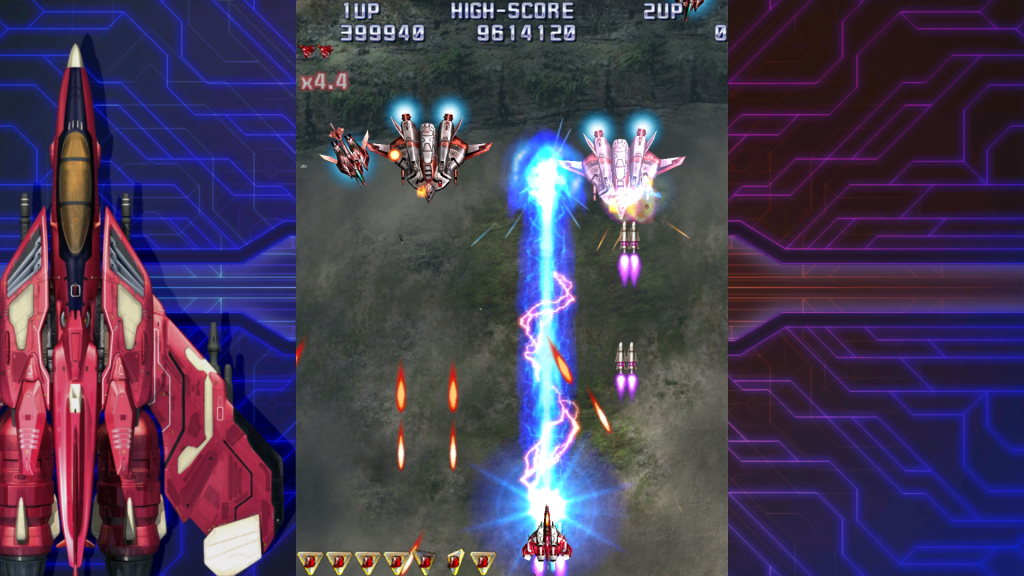
The new content introduces a new playable character, the powerful combination Mech, Meteor Temujin, a towering mecha unit piloted by Team Meteor. This new character has unique mechanics, that are specific to Temujin, who can use special powers to switch between three weapons, a Hammer, Sword and Axe. These mechanics and unique gameplay style refresh the experience, allowing players to play through the game again in a new way.

Alongside the new member of the roster are new skins for existing characters, additional gallery content, special archive files, challenges and achievements to unlock. The biggest addition with this DLC is the Arcade mode, a special gameplay mode which pits the player against 11 challenging stages, which remix the existing stages. These new takes on stages must be cleared in one shot, with the player having limited lives to make it to the end, with the chance to earn extras.

This is a challenging addition to the gameplay formula, which can be made more challenging by the optional settings that are included. When the player starts the Arcade mode, they can choose between two difficulties, standard and nightmare which is brutally difficult. Then we have the power-up system, which is the choice of Classic and Rogue. While playing Classic, the power-ups available between stages are the same each time, in Rogue the boosters are randomized.

When players challenge the arcade mode, they can add their name to an internal leaderboard, challenging themselves solo or with a friend locally to get the best score. This is due to the inclusion of co-op for Arcade mode, where players can take on the Nephilim hordes together. there is a caveat to this though, as the players share a pool of lives, with a life being lost when both are taken down. But if the player has rage (earned by fighting) they can use it revive a downed teammate.

Now the DLC content isn’t the only addition to the game that has hit Dawn of the Monsters. There has been a major free update that gives players something meaty to sink their teeth into, with no extra cost required. In the title update, there is a new game plus system, which gives those who have cleared the game the ability to challenge it again, with increased difficulty while keeping upgrades. There will also be new enemy variants that will appear during a new game plus play through.

Alongside the new game system is the addition of Trials, special challenges for players to take on where they will have their skills tested. There are bonus challenges tied to the trials for players to prove their mastery of the titans. Rounding out the package is an all new voice over in Japanese, for that authentic Kaiju experience that players can switch between during their time playing.

Now with the details of the new content covered, I want to give my personal thoughts on this extra content that has been added.

Personal Thoughts – I very much enjoyed my time with the base version of Dawn of the Monsters, as it was a relatively distinct take on the Kaiju formula. This new paid/free content takes that experience and knocks it up a notch, providing new challenges and a whole new way to play to play the game. The new character is an excellent addition, with the unique weapon system that makes the character distinct from the others on the roster.  

I found that the arcade mode was brutally punishing and after spending days playing it I have only beaten it once, which I think is a positive for this. The difficulty of this new mode will really push players and makes this extra content worth it alone, with the extra character and cosmetics being a bonus. I have absolutely no issue with recommending this extra content to everyone who has enjoyed the standard release of Dawn of the monsters.

Outside of the premium additions, the free update makes the game more robust and provides extra replay value, further bolstering a game that already had a lot of depth to it. I quite enjoyed the new game plus system, as it let me test my skills against the new enemies and the trials were a fun and satisfying addition. All of these features from both the paid and free content drops make this one of the best modern titles in the Kaiju genre.

If you want to check this content out for yourself, you can find a link the paid DLC for each system below, priced at 6.99USD/5.89-6.29GBP/6.99EUR.

Link to Nintendo Switch version (HERE)
Link to PlayStation version (HERE)

Link to Xbox version (HERE)
Link to Steam version (HERE)
Taito Milestones 2 – Nintendo Switch Review

Overview – originally developed by Taito with emulation powered by Hamster through the Arcade Archives engine, Taito Milestones 2 is a collection of 10 more classic Taito titles from the arcade. This collection has been published by ININ Games, with digital and physical editions exclusively for Nintendo Switch (while stocks last). There will be links to all versions of this release available at the bottom of the review.

Disclaimer: before I get into the review, I would like to thank PR Hound for providing the copy of Taito Milestones 2 that was used for this piece. The provision of this software has not influenced the contents of this review, all thoughts and opinions contained within are my own.

Now with the introductions out of the way, let’s get into the review. As this is a collection of games, I will be covering each of the titles with a summary of the game in order of release by year. I have also previously covered the first Taito Milestones release, which you can find (HERE).

Ben Bero Beh – 1984

As the superhero Dami-chan, players must navigate their way through a series of burning apartment buildings, extinguishing the flames to save the hero’s girlfriend Nao-chan. This is an action platformer, where the player must reach the bottom of the stage to save the girl. In order to accomplish this, the player must avoid the many hazards that will fill the stage. These hazards include fire that can be extinguished, falling debris and gas explosions.

This game is very challenging, with random elements that will make it tough to progress through the stages. An example of this is the way that fire behaves, as it can spawn on the edge of a set of stairs, making it very difficult to put out and avoid since the extinguisher can’t be used on stairs. When the stage is cleared, the player will get a bonus based on performance. Great care must be taken however, as there are no continues if the player gets a game over.

The Legend of Kage – 1985

The player takes the role of the ninja named Kage, who is on a quest to save the princess Kirihime, who has been captured by a powerful warlord. Kage must now fight his way through the defenses of the warlord, battling enemy samurai, ninjas and monks in order to reach the princess. To save the princess, the player must make their way through five different locations, taking down all who stand in their way as they make their way to the warlords castle.

This title is a side scrolling action title, where the player moves around the different stages killing enemy ninjas and monks while trying to avoid their attacks. In these stages, the player uses shuriken for ranged attacks and a sword for close combat battles, with the ability to deflect enemy some enemy attacks. Once the objective for the current stage is complete, the player can then move onto the next, repeating endlessly until getting a game over. Players have limited lives and no continues.

Kiki Kaikai – 1986

Sayo-Chan, the shrine maiden was fanning a ceremonial fire, when she was visited by the seven lucky gods. As she was communicating with these deities, a group of yokai appear and kidnap them, taking them away. Now Sayo-Chan is determined to rescue the gods and battle the spirits responsible. In her quest to free the seven gods, the shrine maiden uses her purification rod and talismans to battle the spirits, fighting her way through the mischievous yokai.  

This is a top down, multi directional shooter, where players can fire talismans in 8 different directions and use the rod to bat enemies away. The player must make their way through each stage, which is separated into different zones, fighting the yokai that will appear in all directions. The talismans have a moderate range, but can be powered up by collecting items that are hidden in the stages. The stages are separated into individual zones.

During the course of the game, there are boss areas, where Sayo-Chan must battle against a fairly large enemy spirit. These are very challenging and probably the toughest part of the game, as the boss monsters take a lot of hits before they are defeated. If the player is defeated, they will be sent back to the last checkpoint to continue. There are no continues when getting a game over, but if the last three digits of the players score match the lucky number, the player will get an extra chance.

The NewZealand Story – 1988

In the land of NewZealand, the Kiwis were living peacefully, but one day a leopard seal appeared and kidnapped them with only one of the chicks escaping. The lone escapee Tiki, sets off to rescue his girlfriend Phee Phee and his other chick friends, navigating the different parts of the island on the adventure of a lifetime. Armed with his trusty bow and hot air balloon, Tiki will fight a variety of enemies, including an Ice Whale and a rock octopus.

The gameplay style for this title is that of a side scrolling run ‘n’ gun platformer, with the player taking the role of Tiki, bouncing through the stages and blasting enemies with his bow. The goal of each stage is to get to the end of each stage, shooting enemies, collecting pick-ups and saving the Kiwi from the cage they are in. what makes this game unique is the way exploration works, where flying vehicles allow players to move around the maze like stages with ease.

This is a rather tough title, with boss battles in the fourth stage of each zone where the player is pitted against big bosses. Scattered throughout the stages are letters that spell EXTEND, which will give an extra life when all letters are collected. There are many pitfalls, hazards and enemies that will spawn into the stages, with a hidden timer that will add more pressure. But have no fear as the player can continue infinitely in this title.

Darius II (3 Screen Arcade Version) – 1989

In the distant future, the colonized planet Darius is recovering from an invasion from an alien army, with the help of Proco and Tiat. The inhabitants are now on Olga during the rebuilding process, when suddenly an SOS signal is picked up from earth. In response to this, Proco Jr and Tiat Young are dispatched to investigate this signal. Heading through the solar system in their ships, they encounter alien forces who they must battle as they make their way to the signal.

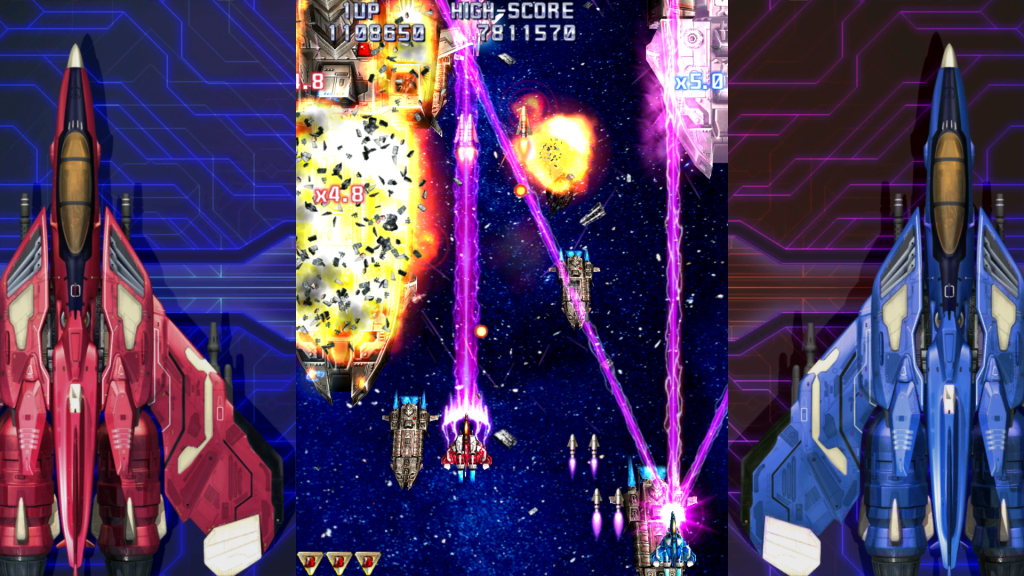
This is a horizontal scrolling shooter, where the player must blast enemies with bombs and lasers, collecting power-ups and fighting the end of stage bosses. During each of the stages, there will be wave after wave of enemies that will appear in the path of the player, along with different environmental hazards that can lead to disaster. At the end of each stage, the player can choose their next destination, allowing for a non-linear approach to progress.

The power-up system featured in this shooter gives the player stronger lasers, more bombs and even shields to prevent damage. These boosters are dropped randomly by enemies, with the increases based upon the color collected. If the player is defeated, the power-ups will be lost with the player needing to continue if all lives are used up. There is also simultaneous multiplayer, allowing players to work together through the game.

Gun Frontier – 1990

In the 22nd century, the planet Gloria has been overtaken by space pirates, who have enslaved the inhabitants for their own nefarious means. Now a group of settlers take to the skies in their ships, with the goal to overthrow the pirates and save their planet. In this space western, the desperado ships take on the wild lizards in battle to save their colonies and the future of the planet. There is simultaneous multiplayer co-op where two players can work together.

This is a vertical scrolling shooter, taking place over 6 stages where players must blast their way through the enemy forces. The player ships are armed with dual machine guns and bombs, which can be powered up by collecting coins and gold bars that appear on the stages. The bombs can be used to clear away enemy fire with the direction based on their on screen position. If the player ship is taken down, the weapons they have will be weakened.

There is a fairly solid challenge present in this title, with the amount of enemies and bullets that can appear on screen. To make the game a little easier to get through, there is a checkpoint system where the player will be sent back a little when defeated. This allows players to collect power-ups and gold to strengthen their ships. The checkpoint isn’t used during boss battles as players will respawn immediately at that point.

Liquid Kids (Mizubaku Adventure) – 1990

Take the role of Hipopo, a hippopotamus who lives in the land of Woody-Lake. One day his girlfriend Tamasun was kidnapped by the Fire Demon, who has brought his forces to the peaceful land. Armed with water bombs, Hipopo sets out on a quest to save his girlfriend and the other hippos, while battling the forces of the Fire Demon. This is an action platformer where players make their way through the stages, soaking the monsters and putting out their flames.

During the stages, the player must platform through the different areas putting out fires, soaking enemies and kicking them across the screen. The weapon that the player can use is the water bombs, which can be thrown in an arc and powered up if the player holds the button down. If multiple enemies are soaked, the player can hit them in a chain, giving bonus points and the chance of spawning different items to collect on screen.

There is a variety of power-ups that can be picked up, including water guns, buckets and lightning bolts, which have affects that help the player. At different points there will be a boss that players must fight, opening up the next area with two doors to select, taking the player to different stages. These doors also appear during regular stages. This can be a tough title, but the player is able to continue endlessly which will let players make it to the end.

Metal Black – 1991

Set in the year 2052, a rogue pilot has taken command of the Black Fly fighter, on a mission to fight an alien race who wishes to destroy humanity. The pilot must battle their way through six locations, fighting the alien beasts that are intent on annihilating humanity. This is a challenging horizontal shooter, where the player battles hordes of alien enemies alone or with a friend. But the player has unlimited continues that they can use for this.

The weapon that the player has in their arsenal is the Energy Disposal Beam, which can unleash devastating blasts when unleashed. To strengthen the beam, the player collects Newalone, made of R/B/Y balls that appear on the screen to be collected. The player can discharge this to deal massive damage to enemies, especially the end of stage bosses. When in battle with the bosses, there can be a clash with beams, causing utter chaos to occur on screen.

Solitary Fighter – 1991

During the 1950’s an underground fighting club arose, where the mafia, criminals and others would face off in combat. This gathered fighters from across the USA to fight for honor and cash in the “Violence Fight”. Solitary Fighter is a 1 on 1 brawler where players duke it out against the computer or other players, using punches, kicks and objects in the stage to deal damage. This is a non-traditional fighter, allowing for vertical movement in some stages.

The matches in this title are best of three, with the winner moving onto the next fight and participating in bonus stages every 2 fights. The move lists for the rather limited roster of 6 players consist of punches, kicks and some special attacks which are achieved by pressing different button combinations. This is one of the tougher games in the collection, as there are issues with depth perception and the overall flow of gameplay is clumsy.

Dinorex – 1992

Set in a world where humans and dinosaurs coexist, young men pit their dinosaurs against eachother in battle, with the winner gaining the title of King Dinorex. The one who is crowned king will be able to marry the queen of Amazonia, strengthening their position of power. This is a one-on-one competitive fighting game, where players must command their dinosaur champion as they engage in intense bloody battles. The first to down their opponent twice is the winner.

There is a playable roster of 7 different dinosaurs for the player to select from. The dinosaurs have simple move sets with high and low attacks, as well as special moves that use simple button inputs and simultaneous button presses to perform. After a set amount of matches, a bonus stage will activate where the player has to attack a city in modern times. The action of the title lacks refinement, which can lead to a frustrating single player experience, but there is also a 2 player battle option.

Now with the games covered, it is time to discuss the other aspects of this collection, starting with the Controls.

Controls – the controls for this title are emulated very well, with good responsive inputs for the majority of the games. Sadly there is some delay and sluggish control in a few games, but this is down to the games themselves. All of the buttons can be remapped to fit whatever controller the player is using, which makes it perfect for those who want to use retro pads and even arcade sticks. The games are all comfortable to play in either docked or handheld mode.

Presentation – the visuals and sound for the games run almost flawlessly through the Arcade Archives engine, which has provided solid fidelity to the original arcade experience. There is crisp pixel work, that can be augmented by the use of filters and there are multiple options for the 3 screen setup used by Darius II. The sound is clear for most titles and comes through nicely, but there are a couple that have a harsh edge to their sound which is how they were originally made.  

Final Thoughts – I am a fan of the classic Taito library, so I was excited to get my hands on this collection of games as there were a few I had not seen before. This collection of games is a bit of a mixed bag, with some very obscure titles that most will not recognize. The standout titles in this collection are Darius II, Kiki KaiKai, The NewZealand Story and Liquid Kids, which showcase the best in sprite work, sound and gameplay that Taito has to offer from that era.

I can recommend this collection to fans of the classic arcade style of game, as the titles are all fairly straight forward with the main goal being to get the highest score possible. Some of the games have significant depth to them, with the branching paths of Darius II and the secrets hidden in NewZealand Story. This collection is perfect for a quiet night in or with friends for a competitive night of high score challenges, even if some of the games are less than stellar.

In the end, I give Taito Milestones 2 a final score of 4/5. This is a very good collection of classic arcade titles from the golden age of arcades, with some smash hits and hidden gems, that is rounded out with a couple of middling titles. If you want to check this title out for yourself, a link to each version of the game will be available below.

Link to Nintendo Switch version (HERE)
Link to Physical store page (HERE)

Dreamcutter – Nintendo Switch Release Announcement

Hello! I have some exciting news to share from our friends at Shady Corner Games and Eastasiasoft, regarding the upcoming release of a new action title coming to the Nintendo Switch. Announced in the recent Fall 2023 showcase, Eastasiasoft announced that the action platformer Dreamcutter, developed by shady Corner Games and Ten Pennyfingers will be hitting the eShop this Autumn.

Check out the press release below to learn more about this raunchy release. I have previously reviewed the title on steam, which you can find (HERE), but please be aware that there will be some modifications made to the switch version. This is due to the original title containing explicit sexual content.

We at Shady Corner Games are pleased to announce that the raunchy action platformer Dreamcutter, will be making the leap to Nintendo Switch. This has been made possible through our partnership with Eastasiasoft, who have been responsible for putting Marble Maid and Slime Girl Smoothies on the system. We are pleased to be able to give players the opportunity to play this title on a new platform.

Dreamcutter was previously released on Steam, which you can find a demo for the game to try out (HERE){18+ warning}

Mature Content Advisory: Please be aware that Dreamcutter is intended for adults only, with the potential for players to be exposed to the following;

  • Risqué outfits, sexual language, adult situations and nudity.
  • Sexually charged scenes of an explicit nature, featuring the characters of the game.
  • Sexual scenes between characters of the same sex, depicting actions of a consensual nature.
  • All characters in Dreamcutter are aged 18 or higher.

About the Game

Haley is a student who has been struggling to sleep, suffering from nightmares that have been getting increasingly vivid. Due to this, Haley falls asleep during class and finds herself trapped in the nightmare world, unable to escape from the terror she finds herself in. As she tries to find a way out Haley discovers the Dreamcutter, a mysterious scythe with an unknown motive promises alluring rewards and a chance at escape from the nightmares.

With the Dreamcutter in her hands, Haley sets out on an adventure to navigate the darkest parts of her subconscious. To escape from the darkness, Haley must hack and slash her way through the different mindscapes she encounters in this side scrolling action platformer. Use the Dreamcutter to rack up combos, reach higher platforms by using the scythe as a tool and cut down the monsters that dwell in Haley’s dreams.

There are visual novel CG scenes that tell the narrative of Dreamcutter, featuring macabre themes, sassy character dialogue and unhinged scripture from the dark recesses of the internet. These visual novel segments are accompanied by the steamy romance scenes, featuring  intimate moments between Haley and other characters while in the dreamscape. Take back your mind and body, escape the nightmares and wield the Dreamcutter!

Features

  • Take on intense side scrolling action, with challenging platforming, hack and slash combat and tough boss battles.
  • An in-depth combo system, with rewards for mastery of the mechanics when used in battle.
  • Fast paced action, with an arcade mode and timer system to facilitate speedrunning/time attack style competition.
  • Flexible upgrade system, allowing players to make Haley stronger and adjust the challenge based on decisions made.
  • Raunchy intimacy scenes in the narrative, alongside bonus rewards that can be unlocked by completing missions.
  • A rocking electro soundtrack that compliments the visuals and action.
  • The unhinged and ancient Scriptures of the time cube.
  • Special voice work from Voice Actress HaruLunaVO (Twitter){18+ warning}

To learn more about Dreamcutter and our other titles, you can check out the official Shady Corner Games Twitter (HERE){ 18+ warning}. If you want to keep up with our official publishing partner Eastasiasoft, you can find them on Twitter (HERE)

Rhapsody: Marl Kingdom Chronicles – Nintendo Switch Review

Overview – developed by Nippon Ichi Software and published by NIS America, Rhapsody: Marl Kingdom Chronicles is a double pack of two RPG titles from the NIS vault. Experience the story of Rhapsody II & III on modern consoles, with full English voiced dialogue and official translations in the west for the first time ever. This release is available on the Nintendo Switch, PlayStation 5 and Steam (sold individually) with a link to each version at the bottom of this review.

Disclaimer: before I get into the review, I would like to thank NIS America for providing the copy of Rhapsody: Marl Kingdom Chronicles that was used for this piece. The provision of this software has not influenced the contents of this review, all thoughts and opinions contained within are my own.

Now with the introductions out of the way, let’s get into the review. As this is a compilation title, I will be discussing the two games in their own sections, with a brief plot summary and then the core of the gameplay for each title. The other elements will be discussed together, covering the package as a whole.

Rhapsody II: Ballad of the Little Princess

Story – taking place many years after Rhapsody: A Musical Adventure, Cornet has now married her prince and together they rule the Marl Kingdom. They have a daughter named Kururu, who sets out on an adventure to find her own prince, accompanied by her best friend Crea. During Kururu’s quest for true love, there is a dark battle brewing between two witch families, which has the potential for catastrophe for the princess.

Gameplay – this entry is a traditional JRPG where the player roams the Marl Kingdom, interacting with NPC characters, battling enemies completing quests. The game is broken up into chapters, called ACTs that feature character dialogue scenes, pushing the narrative forward, as well as musical numbers between different characters. Each of the chapters has a main objective that needs to be completed in order to progress to the next.

The player controls the Princess Kururu, moving her through the kingdom and interacting with characters while investigating the different areas of the kingdom. When exploring the lands of Marl, the player can uncover important areas ahead of time, giving a semi-open feel to the kingdoms. There are goddess statues that can be used to heal the player party. There is also a set of merchants that the player can use to buy/sell equipment.

During the course of the game, other characters will join the princess in her quest, aiding her during the adventure. These team members will also assist Kururu in battle, using their skills in combat against the foes that appear. The player can assign equipment for the party increasing their stats in battle, along with some being able to use puppets to provide them with combat support (discussed below). The party characters will follow Kururu around on her quest.

Speaking of battles, throughout the adventure there are battles that will occur randomly and at set points in the narrative. The combat for this title follows a rather traditional RPG approach, using turn based actions for the party characters. During these battles, the player has several options for what they want to do for their turn. The pre turn actions are Fight which lets the player make manual actions, Auto to skip deciding and Escape to try and flee.

When the player selects the Fight option, the player can select from the following options for their turn allowing them to assign actions for all party members. The order of battle is usually the player party, then the enemies, but there are factors that can affect this. Here is a list of options party members can use in battle;

  • Attack – use a physical attack to deal damage to the target enemy, the damage is based on the equipment that they are holding.
  • Defend – brace yourself for incoming attack, trying to reduce damage taken.
  • Items – use an item in battle, including healing items and special damage items.
  • Specials – use a characters special skills, using health as a resource to perform these abilities.
  • Puppets – use the skills of the puppets equipped to the party member, with different magical spells for each puppet. These skills use Intonium (the money in this game) and will add musical notes to the music meter, leveling it up when enough are earned.
  • Rewards – use the music note levels to perform special attacks, with the stronger spells needing more musical points to be used. There is also a chance to recruit enemies defeated with rewards.

When a battle is completed, the player will receive rewards based on the strength of the enemies. The rewards that players can receive are Experience points to level up, the currency Intonium and special items. When characters and puppets level up, their stats increase and at different milestones, they will gain new skills for battles. If the party is defeated, the player will be sent back to the main menu, needing to continue from the last save.

Now with the first title covered, it is onto the next title in this double pack.

Rhapsody III: Memories of Marl Kingdom

Story – Memories of Marl Kingdom is an anthology, telling stories outside of the main narratives from the first two Rhapsody titles. These stories feature different characters of the first two Rhapsody games, with each of the adventures showing the path that the different characters will travel for those they love. These tales span the past, present and future of the Marl Kingdom, presenting the events that transpire outside of what we already know.

Gameplay – This title is very similar on a base level to Rhapsody II, but with some rather significant differences that allow it to stand out on its own. As this is an anthology title, the stories are told disconnected from each other, like episodes of a TV drama or Anime. This makes for an experience that capitalizes on the storybook feel of the world that the series takes place in. However, this is still a JRPG at its core and doesn’t forget it.

With each of the episodes, the player will control the main protagonist of that tale, using them to navigate the different environments and locations that are contained within. Each of the plotlines will have a fairly clear objective to achieve, but the steps needed to get to that point may not be easy. There is some puzzle solving, along with scripted and random battles that the players will encounter, oh and more musical scenes too.

Just like the previous entry, the battles that the player will encounter follow traditional turn based combat rules. However, there is a difference to these battles that spices the action up, making it more interesting compared to others in the genre. Instead of a standard party of heroes and adventurers, there are squads that consist of a leader and up to three supporters/partners. This adds more of a strategic edge to the combat and allows for some creative flexibility.

When a combat encounter occurs, the player has several options that they can select from. These action options are the same as Rhapsody II, with Attack, Defend, Special, etc. However, what makes this combat system different from the previous entry is the way that the squads work in battle. During the players turn, the player can choose an action for either the leader or a squad member, with the units that have unassigned characters making independent actions.

During battles the player uses SP instead of Intonium in this entry, giving the special skills a rather limited amount of usage which makes it more tactical. There is also the chance for chests to drop during a battle, giving the chance to earn some bonus rewards during combat. These chests need to be broken open in order to obtain the rewards inside, if the battle is ended before this, the reward is lost. This adds a risk/reward element to some battles.

When the battle is ended, the player will earn experience points to level their character up and Intonium to purchase items from the various shops. All characters active in the party will gain the same amount of points, allowing units to level up at a balanced pace. When a unit levels up, their stats will be increased as well as obtaining new skills that can be used in battle. There is even the chance to gain new party members in stages or by defeating them with Rewards.

There is a maximum of 16 units that can be built up and assigned as leaders/partners, but there are some restrictions that are tied to building squads. There are 4 different character types that can be recruited to the party, these are Puppeteer, Human, Monster and Puppet. The only unit type that cannot be put in a leader position is Puppets as they can only be used as a partner. There are also special combos that can be made with leaders and partners.

The monsters that have been recruited by the player serve many purposes, not just as a member of the party in battle. There are goddess statues scattered throughout the lands, healing the party, letting players summon monsters recruited and using them to perform miracles. When the monsters are used for miracles, they are removed from the roster but will either fill the reward meter or give XP to the other members of the party.

All characters can be equipped with items to make them stronger in battle, this also extends to the partner units that players can equip. The equipment that is added to the party is rather generalized, allowing them to be used by all members. There are also changes to the stats of a leader depending on the partners they have, modulating their stats either positively or negatively depending on their affinity to the leader.

Last to discuss is the unique progression of the individual stories. When a chapter is cleared, there will be a unique credits screen, which makes the experience feel like a collection of mini games. The player can then save the clear data for that stage, allowing them to try them again at a higher difficulty increasing the challenge significantly. This is due to resetting the story characters to their locations, but equipment is retained and monsters can be summoned.

Now with the gameplay for both titles covered, I will be moving onto discussing the other parts of the package as a whole, starting with the controls.

Controls – the controls for both titles are functionally identical to each other, with thumbstick/D-pad control for the movement of characters. The core functions are tied to the face buttons, with all battle inputs and menu navigation attached to the D-pad. The player can also speed up the dialogue and musical scenes by holding down the Y button, which can speed up repeat runs. All of the controls are comfortable regardless of the controller used.

Difficulty – as these are JRPGs there is a fairly moderate difficulty curve that will occur, with the monsters getting stronger as the narratives progress. The toughest parts of the game are the boss battles, but the challenge can be eased by grinding a little. There is the ability to save freely in both titles, which lessens the pain of getting a game over. The challenge increases further in Rhapsody III if the player replays the cleared storylines, but this is optional.

Presentation – the visual style for this collection has the signature Nippon Ichi look, with cute anime style sprite work and art that is consistent throughout both titles. The environments featured in Rhapsody II uses pre-rendered pixel backdrops that are mostly flat, whereas Rhapsody III uses Polygons for all of areas the player can roam. The visuals are a snapshot of the time they were made, with enhancement filters that can smooth the visuals and a CRT filter.

The sound for this title has a fantastical and whimsical feel to it, with bright melodies and brooding compositions depending on the area they are in. Then we have the musicals, with Japanese vocals and subtitles providing lyrics for both languages. These scenes make for a unique experience that adds to the fun of the adventures. These titles also have English dialogue for the first time ever, featuring the talents of Kayli Mills (Mary Skelter), Emi Lo (Higurashi) and Dawn M. Bennet (My Hero Academia).

Final Thoughts – last year I had the pleasure of playing Rhapsody: A Musical Adventure as part of NIS Classics Vol 3, with the positive experience making me excited when Marl Kingdom Chronicles was announced. This excitement was not misplaced as both of the games maintained the charm, whimsy and challenge of the first, while also expanding on the narrative of the trilogy. There is a tremendous amount of depth to this collection, while still being an approachable experience.

This is an excellent double pack that has a lot of content to offer players both old and new, with stories that are rather straight forward, but are told in a way that is engaging throughout. I am very happy to recommend this release to fans of the first game, as well as those who enjoy the library from Nippon Ichi, as it is one of the best titles to come from the vault. The overall package is a joy to play and I am so happy that these titles have finally come to the west.

In the end, I give Rhapsody: Marl Kingdom Chronicles a final score of 5/5. This double pack offers a magical experience for all players, with stories, characters and musical set pieces that breathe life into the world of Rhapsody. This release finally brings the full trilogy to the west and deserves to be in the library of any Nippon Ichi fan. If you want to check it out for yourself, a link to each version of the game is below.

Link to Nintendo Switch version (HERE)

Link to PlayStation 5 version (HERE)

Xtreme Sports – Nintendo Switch Review

Overview – originally developed and published by WayForward, with porting handled by Limited Run Games, Xtreme Sports is an action sport RPG, where players enter the tournament on Xtreme Island. Participate in 5 different extreme sports and challenge the other competitors on the island, earning medals and interacting with the different characters. This title is exclusively on Nintendo Switch, with a link to the game at the bottom of this review.

Disclaimer: before I get into the review, I would like to thank wayForward for providing the copy of Xtreme Sports used for this piece. The provision of this software has not influenced the contents of this review, all thoughts and opinions contained within are my own.

Now with the introductions out of the way, let’s get into the review, starting off with the story.

Story – in a remote location, there is an island where a special tournament is being held. The sponsors are Xtreme Cola Company who has invited competitors from across the globe to take part. While hanging out together, Fin and Guppi see the competition promoted on a TV, together they decide to enter the tournament with the goal of winning the prize money. However, there is another group heading to the island with the goal of winning the tournament.

Gameplay – Xtreme Sports is a sports adventure, with a gameplay style similar to that of the sports RPG titles from Camelot. After the introduction, the player can select between Guppi and Fin before they are taken to the island, where they can sign up and select their name. Before jumping into the tournament proper, players must make their way through the tutorials, where the player can learn all of the different controls and mechanics.

There are five total sports for the player to take on, with each of the sports having their own unique gameplay mechanics. Here is a quick breakdown (with additional details for general mechanics after) for each of the events that take place on Xtreme Sports Island;

  • Skateboarding – ride your board across the stage, hitting ramps and performing tricks to get the highest score possible, all while trying to reach the goal as fast as possible.
  • Inline Skating – race to the finish, dodging obstacles and grinding rails as you try to set the best time you can.
  • Street Luge – ride the streets on a longboard, avoiding the obstacles that are in the way, while speeding down and jumping ramps.
  • Surfing – ride the waves while collecting points, doing tricks and avoiding the sharks, all while trying not to wipe out.
  • Skyboarding – take a dive from a plane and collecting arrows to build up a combo meter, performing aerial tricks and avoiding hazards.

All of the events have their own targets for the player to meet. These include collecting flags, hitting a target score and beating the target time. There will also be Twitchy Shakes, a special power-up that will give the player a boost depending on the event that they are taking on. The events are accessed by challenging the other competitors on the island, each with their own target scores/times. If the player succeeds at beating or matching the target, they are awarded a medal.

As the player makes their way through the game, they will unlock new areas that were previously locked if they earn enough medals. This gives the player access to more challenging stages for the player to take on, with the events increasing in difficulty as the map expands further. There will also be a mysterious group who act as the villains of the tournament, who are the strongest competitors on the island and give the biggest challenge.

During the adventure, the player will also gain clues about the motives of the gang, which will help to solve the mysteries tied to them and why they are in the tournament. Away from the adventure, there is a practice mode that players can freely play through the events, with 15 total challenges over 3 difficulty levels. This gives players the ability to learn all of the ins and outs of each event, practicing the different sports and honing their skills.

Finally, there are quality of life improvements for this release. As this is an emulated port of a Game Boy Color game, there have been some features added to this title via the Carbon Engine. As this is an old cartridge game, there is only one save, but to make up for this the player has access to save states which increases the possible saves to 4. There are also visual filters, adjustable screen displays and a gallery of special images for the game/cart.

Now with the gameplay covered, it is time to cover the other aspects of this release, starting with the controls.

Controls – as an old Game Boy Color title, there is a limited number of buttons in use, with the face buttons and plus/minus being used for in game actions. The main menu is accessed by pressing the back triggers and the D-pad/thumbstick can be used interchangeably. These inputs can be a little stiff, which can be a slight frustration, however the most comfortable being those shaped like Nintendo NES and Super NES pads.

Difficulty – there is a rather moderate difficulty curve for the most part, but there are difficulty spikes when the player challenges the villain gang. This can be frustrating for players, as these high difficulty challenges can feel like they are sudden. The addition of save states can make the very tough stages a little easier to deal with, letting players to quickly get back to the start of a stage after a mistake is made. The practice mode can help players who are struggling too.

Presentation – the visuals have that distinct WayForward style to them, with the sprite work going on to build the foundation for Shantae. There is little in terms of lag aside from mild stiffness in controls, and the game runs at a fantastic pace with solid emulation via the Carbon Engine. The sound is bright and has excellent chiptune compositions, which made full use of the Game Boy sound chip, which has translated well to the Nintendo Switch.

Final Thoughts – I didn’t know this game existed until I saw the announcement from WayForward alongside the Shantae GBC port. When I finally got my hands on this title I can honestly say it was a fun experience, even though the difficulty at times did feel like a mixed bag. The spikes in difficulty when it comes to the bad guy challenges did get a little frustrating at times, but don’t spoil the overall experience as there is a fairly open progression system.

I can recommend this title to everyone who is a fan of the classic WayForward/action sport titles, as it has that distinct charm they are known for, with a lot of depth to the overall experience. The game isn’t for everyone, as it can feel primitive to those who had not played titles like this on the Game Boy Color. However, this is a time capsule of the late 90’s early 2000’s extreme sports scene, which will likely be a big hit of nostalgia for those who grew up in that period, like it was for me.

In the end, I give Xtreme Sports a final score of 4/5. This is a fun action sports title with a lot of depth due to the RPG style of gameplay, the gameplay is fun and the challenge can be tough, but the overall experience is solid and a real blast from the past that is a hell of a lot of fun to play. If you want to check this title out for yourself, a link to the game will be below.

Link to Nintendo Switch version (HERE)