Disgaea 4 Complete+ – Nintendo Switch Review

Overview – developed by Nippon Ichi Software and published by NIS America, Disgaea 4 Complete+ is the definitive version of the tactical RPG originally released for the PS Vita and PlayStation 3. This release features updated HD Visuals, refined gameplay and all additional content from the previous iterations. This version of Disgaea 4 is available on PlayStation 4, Nintendo Switch and Steam, links to purchase this game will be at the bottom of this review.

Disclaimer: this is a rewrite of a previously published article, updated to fit the quality and standard of other reviews that are on this site. The previously published version of this article is no longer available, so this is the only version of the review for reading. This release was provided by NIS America for review at the time that the initial coverage was published. The provision of this title has not influenced the contents of this review, all thoughts and opinions contained within are my own.

Now with the introductions out of the way, let’s get into the review, starting with the story.

Story – the vampire Valvatorez, a former tyrant who once terrorized both the Netherworld and the world of humans has become a Prinny instructor in the Netherworld prison of Hades. Here he trains Prinnies, souls of dead humans transformed into demonic penguins in order to atone for their sins and be reincarnated. After the completion of training the latest batch of Prinnies, Valvatorez makes a promise to give each of his trainees a sardine.

However, before he can fulfill his promise, the Prinnies are taken away by a vortex that suddenly opens up. After locating the lost demons, Valvatorez learns that the president of the Netherworld Corrupternment has ordered the mass extermination of the Prinnies. Disgusted by the behavior of the president and infuriated that this will interfere with the promise he made, Valvatorez sets out to stop the plans of the president by reveling against the Corrupternment.

Gameplay – Disgaea 4 Complete+ features all the trademark mechanics that the franchise is known for. The isometric camera angles, 2D anime style sprites, vibrant 3D worlds and chaotic turn based battles return, with new features exclusive to this installment. I have covered the basic mechanics of Disgaea previously with my coverage of Disgaea 1 Complete which can be read (HERE). However, I will still provide a summary of the gameplay below.

The story takes place through several chapters, made up of a series of battle stages each with unique appearance based on that chapter.  During battle the player can deploy up to 10 units from the starting position, with each unit be able to make up to two actions per turn. The actions that can be used each turn include attacks, special skills, movement and item usage.

When actions have been assigned for that turn, the player can execute the current actions to make more moves or end the turn, executing current actions and passing to the enemy. Be aware that if a unit is defeated, the slot that the unit was using is depleted, meaning if all 10 slots are depleted the battle is lost. The player may then retry, return to the home base or go to the main menu.

In battle, the units that are deployed will gain experience by using skills, defeating enemies and completing objectives. After earning enough experience, the unit will level up, gaining new skills/attacks and boosting their stats. Alongside experience is Hell and Mana, two forms of currency that are earned during play, primarily used to purchase new equipment and giving access to various features while in the Netherworld home base.

The home base in this release includes many of the features present in other Disgaea releases, with the Rosen Queen merchant stores, Dimension Gate, and Item World present. Now with the summary covered, I will be discussing some of the new content that is exclusive to this release. Please note, that the features and mechanics I will be discussing here are new additions to this title when compared to both Disgaea 1 Complete and Disgaea 5 complete (which will be covered soon).

New Features;

  • Geo blocks – replacing the pyramids used in Disgaea 1 Complete, the Geo blocks are stackable and can alter not only the effects of the field but the terrain itself, being used as bridges, blocking steps and making up towers, if a matching block is dropped next to existing blocks a chain will occur and blocks will be destroyed.
  • Skill and Evility changes – a new feature in this release, skills are no longer improved by leveling up, instead skills must be improved by paying mana to boost the range and power of each ability. Secondly, the Evility system uses mana to purchase new passive skills that offer improvements for each character. These new systems put an increased focus on earning mana with favored units to strengthen them quickly.
  • Cam-Pain Headquarters – an alteration of the Dark Assembly, given the political themes of the game the player can place units on a map, moving them freely. The dark senate is situated here, allowing the player to create new party members. New structures can also be unlocked and placed on the map giving new skills among other new features available in this mode.
  • Network Features – in the Network mode, players can share characters between netherworlds to either help or hinder others, battle players in challenging battles and join the rankings to earn special rewards.

A disclaimer for users, there are micro transactions implemented in this release but they have no impact on the way the game functions, apart from providing boosts for players who may be struggling to progress.

Now with the gameplay covered, I will be moving onto the other aspects of the game, starting with the difficulty.

Difficulty – the difficulty curve of Disgaea 4 Complete+ feels a little more intense than other releases in the Complete line of remasters. The changes to leveling and skill advancement increase the amount of grinding required, increasing the need to grind earlier stages to boost units in the party. The difficulty increase is most prevalent during the early stages of the game and when creating new party members, requiring heavy grinding to prevent defeat as the story progresses.

Presentation – this release features the same anime style visuals that the franchise is known for, featuring beautiful character portraits and outlandish animated cutscenes for special attacks. The thematic stages are unique with each chapter, keeping the experience fresh throughout. Like usual, the overall visual quality of the presentation is outstanding and of the same high quality that Nippon Ichi Software is known for.

The sound design still has the grand and spooky feel to it that other Disgaea universe titles have. Classic melodies return, with the Rosen Queen Co theme and a retro styled rendition of Laharl’s Hymn. The voice acting for the English language track is of high quality as usual, with reputable voice talent from anime and video games. The cast for this release include Troy Baker (The Last of Us), Patrick Seitz (One Piece) and Kate Higgins (Naruto).

Final Thoughts – overall this is a great game, however there is a couple minor issues. First, the difficulty increase and the need to grind more than other titles can be a source of frustration. The other issue I found were the micro transactions, which are not intrusive but don’t fit the overall gameplay style of Disgaea. These changes can be jarring when first playing the game, but are otherwise a minor inconvenience to the overall experience.

While there are some things the game hasn’t done well at, there are many things that Disgaea 4 Complete+ excels at. The presentation of the story, additional content on offer and the high quality of the HD remaster makes this the definitive iteration of the game. I have no issue recommending this title to fans of the series, as the charming characters and quality of the game in general make this release of Disgaea 4 well worth picking up.

In the end, I give Disgaea 4 Complete+ a final score of 4.5/5. An excellent remaster that has the trademark high quality that Nippon Ichi Software is known for. The characters, story and environments have that signature Disgaea charm, alongside a wealth of additional content that will keep you engaged for a long time. If you want to check this title out for yourself, links to each version of the game will be available below.

Link to Nintendo Switch version (HERE)

Link to PlayStation 4 version (HERE)

Link to Steam version (HERE)

Supermarket Shriek – Nintendo Switch Review

Overview – developed by Billy Goat Entertainment and published by PQube, Supermarket Shriek is a unique puzzle based racing game, featuring a man and a goat who must navigate obstacle courses in various retail environments via the power of screaming. This release is available for Nintendo Switch, PlayStation 4, Xbox One and Windows. Links to purchase the game will be at the bottom of this review.

Disclaimer: before I get into the review, I would like to thank PQube who provided the copy of Supermarket Shriek that was used for this piece. The provision of this title has not influenced the contents of this review, all thoughts and opinions expressed within are my own.

Now with the introductions out of the way, let’s get into the review. I will be omitting the story section as there is little in the way of plot and move directly to the gameplay portion of the release.

Gameplay – Supermarket Shriek is a unique title, with all actions controlled by the screams of the man and goat. In the trolley, the screams of the man will turn left and the goat will turn right, with both screaming at the same time pushing the trolley forward. This unique method of propulsion is the only way to control the trolley, with the triggers and left stick used to control the two characters.

The main game is made up of 32 hazard filled stages to play through, with a variety of objectives to complete, earning up to three stars depending on the result of each stage. Here are some of the objective types that you can find in the game;

  • Obstacle Course – dash through the stage, trying to get to the goal as fast as possible. Dodge swinging pendulum blades, sound activated obstacles and deadly pitfalls to reach the checkout as quickly as you can.
  • Canned Carnage – smash through stacks of canned beans, collect time ups and avoid obstacles to earn the most points you can. A time bonus is applied at the end of the stage depending on the performance of the player at the end of the stage.
  • Shopping List – run around the store, collecting items on a shopping list as quickly as you can before heading to the goal. Navigate the dangers that surround you, avoiding harm as you head to try to get in and out with the goods as fast as possible.

The game is made up of streets with each one containing a set number of stars to earn in the stages, with a preset number required to access the final store of each zone. The stars also unlock cosmetic items that the player can use to dress up the characters, adding more reasons to clear each stage as quickly as possible to get the maximum number of stars.

To get used to the way that the characters function with the screams, the game provides a tutorial to practice maneuvering the trolley through each of the twists and turns of each level ahead. The variety of locations, traps and hazards is refreshing as new obstacles are introduced gradually, building up the challenge gradually during the course of the game.

This release also features parodies and references to stores, video games and even a tribute to a deceased television personality. The introduction stage is called Winton’s General Store, a reference to the late Dale Winton, the host for the UK version of the game show Supermarket Sweep during its initial run in the 90’s. The game also features secret stages based on other video games, including a parody of the special stage from Sonic 2 and a Micro Machines style race.

The gameplay is frantic, fun and very engaging, with a lot of content on offer. There is also a co-op mode for two players using a single Joy-Con per player and a party mode that can accommodate up to eight players simultaneously. I was able to play some of the co-op mode and can say it is both frustrating and fun, with chaos ensuing while trying to get around corners and even going in a straight line. Unfortunately, I was unable to try the party mode and so I will be unable to discuss that here.

With the gameplay covered, I will be moving onto the other aspects of the game, starting with the controls.

Controls – the controls are simple and work well, using only the triggers and left thumbstick to control the trolley if steering assist is active. Playing with both a pro controller and Joy-Cons is comfortable, with responsive controls that work very well. The single Joy-Con set up works just as well, with the ability to control the characters relying on the skills of the player.

Difficulty – there is a moderate curve to the challenge of Supermarket Shriek, gradually increasing with difficulty over time. The core aspect of the game that influences the level of difficulty on offer is the star system, as the stricter time limits and scores required to earn the full three stars can be very tough to reach without practice. However, the game can get even harder if playing with another person, as the ability to communicate between each other will have a knock on effect on the difficulty level.

Presentation – the visual style for this release is quite pleasing, with rendered models and creative environments for each stage used. The character models, shop fronts and locations are humorous, with the screaming models that appear on the HUD reacting when colliding with obstacles and walls. There are also humorous fail state animations, with the shopping trolley exploding and censor blurs appearing if the characters fall into a grinder, which is funny as there is zero blood in this game.

The sound is done very well, featuring catchy melodies and cheerful music that fits well with the stages that the player encounters, giving an exciting and upbeat pace to each challenge presented. The only issue I have with the sound design is the screaming itself, with the constant loud noises becoming grating over time. The overall performance is satisfactory, however, there were instances of graphical bugs causing full visual blackouts with only the HUD being visible, requiring a full software restart to fix.

Final Thoughts – overall Supermarket Shriek is an entertaining and fun experience. The unique control method implemented was a lot of fun to use and while it may be difficult to control with triggers at times, this is eased with the thumbstick assist system. The stages have a lot of diversity to them with thematic designs for each location, ranging from the simple supermarket, to a dim neon soaked arcade and water filled fishmongers.

I will state that the game may be a little rage inducing, but I can happily recommend Supermarket Shriek as it is a fun game at a modest price. The content on offer and diversity of objectives provide many hours of entertainment, both in single player and the multiplayer modes. The only issues I found while playing were the graphical bug that required a full restart, and the screams becoming a minor irritation over time. The graphical issues that I experienced were a frustration, but hopefully they are not a common occurrence and can be fixed in the future.

In the end, I give Supermarket Shriek a final score of 3.5/5. The unique gameplay style, diversity of objectives on offer and the humorous references/parodies featured all come together to create an entertaining experience that can be enjoyed by everyone. If you want to check this game out for yourself, links to the game on all platforms will be available below.

Link to Nintendo Switch version (HERE)

Link to PlayStation 4 version (HERE)

Link to Xbox One version (HERE)
Link to Steam version (HERE)

Clea – Nintendo Switch Announcement

Hello, I have an announcement from our friends at PR Hound, Sekai Games and InverMouse for you to check out.

Publisher, Sekai Games, and developer, InvertMouse, are excited to announce the forthcoming release of the thrilling skill-based survival horror adventure Clea. Coming to Nintendo Switch™  and releasing this week on October 30th players can experience a thrilling Halloween ghoulish fest with console exclusive featured costumes of characters from games published by Sekai Games, soon to be revealed!

After experimenting on the Chaos Servants, Clea’s parents have let the monsters loose in the Whitlock Mansion. Trapped inside by her family, Clea must find her way out and escape with her little brother in tow. This Halloween help Clea solve puzzles and avoid the Chaos Servants in this exciting paper theater game!

In Clea, players follow the young woman and her brother as they attempt to escape a house filled with beings that mean them harm. Players must stay alert, listening and wondering where these creatures could be. Survive the horrors of Whitlock Mansion by solving puzzles, hiding, collecting and using objects to safely get through the sinister mansion and escape.

Outwit the Chaos Servants who are on the hunt. Listen for their footsteps, peek around doors, and stay far, far away from impending dangers. Hunt down key items and solve the puzzles designed to lock you from the outside world and unveil the family history, and possibly discover their bloodline is filled with dark memories. Obtain memory orbs and uncover your family secrets through bonus chapters.

Clea features:

  • Jump-scare free horror game, requiring you to be on your wits and listen to your surroundings.
  • 2D gameplay with beautiful HD paper doll style graphics
  • Fully voiced in English with Xanthe Huynh (Sword Art Online, K-On), Anairis Quinones (RWBY) among others.
  • Local leaderboards to compete against your friends who can uncover the mystery fastest.
  • Brand new title theme from video game music great Dale North.
  • No pre-scripted scares, promise. Your skills and actions will determine Clea’s fate.

Clea will be released on the Nintendo eShop on October 30th 2020, the game is rated ESRB Teen and PEGI 12 for Violence and Blood. This title will be available as a digital only release priced at $14.99/£13.49/€14,99. A link to the games official eShop page will be below the trailer.

Link to Nintendo eShop (HERE)

Undead Darlings ~no cure for love~ – Nintendo Switch Review

Overview – developed by Mr. Tired Media and Published by Sekai Project, Undead Darlings ~no cure for love~ is a dungeon crawling RPG featuring visual novels sequences. Experience a different take on a zombie apocalypse as you explore a new world, joined by a group of cute girls that have more to them than meets the eye. This release is available for Nintendo Switch, PlayStation 4 and Steam service, links to the game will be available at the bottom of this review.

Disclaimer: before I get into the review, I would like to thank PR Hound for providing the copy of Undead Darlings ~no cure for love~ used for this piece. The provision of this title has not influenced the contents of this review, all thoughts and opinions expressed within are my own. Please note that I will be omitting some details when discussing details as I don’t want to spoil the surprises that this titles offers.

Now with the introductions out of the way, let’s get into the review, starting with the story.

Story – Undead Darlings takes place in a world ravaged by a zombie apocalypse, where a virus has caused the majority of the population to be turned into shambling corpses. Waking up from a drug induced coma, Reginald “Reggie” P. Happenstahnce is told by his childhood friend Pearl that society has crumbled, a virus turning almost everyone into zombies while he was asleep. This includes Pearl herself.

However, she has held onto her humanity, informing him that along with the other half-zombies they may encounter, she may be undead but her heart is still human. After telling Reggie everything that has happened and that there may be a cure, they encounter another survivor, a man named Buck that has been looting the abandoned homes nearby. Now Reggie, Pearl and Buck are on a quest to find the cure for the virus, befriending the other half-zombie girls they meet on their journey.

Gameplay – Undead Darlings is a mix of dungeon crawling RPG gameplay and visual novel storytelling, with the narrative separated into several chapters. During each chapter the player is presented with choices that will influence the way that the narrative plays out, potentially changing the ending that the player will see. This game features multiple endings and special event scenes to unlock, giving players a reason to play through the game again to explore each possibility on offer.

Away from the story segments is the dungeon exploration, with several distinct areas featuring multiple floors, puzzles to solve and monsters to battle. The dungeons themselves are made up of a grid based map, with hidden pathways, locked doors/gates and special triggers throughout. On the main screen, the player has access to a map that shows all the layout of the floor as each step is made and the markers for triggers.

Here is a summary of some of the markers that will be encountered during play;

  • Encounter Cupcake – these adorable undead cupcakes contain monsters that the player must battle when contact is made. The cupcakes are separated into three categories, which are green for regular encounters, purple for challenging encounters and pink for boss battles.
  •  Loot Chest – these markers surrounded by pink hearts contain loot that the player can collect, items inside the chest include weapons, armor and more. But be aware of the current inventory as items will need to be dropped if loot is picked up and all slots are full.
  • Event Marker – these exclamation marks will initiate character dialogue when touched, with new details and possible dialogue choices that may influence the way that the narrative progresses.

The green encounter cupcakes and loot chest markers will respawn each time the dungeon is entered or a floor is changed, allowing for easy grinding of loot and experience for quick leveling. When encountering enemies, either randomly or through the predetermined markers a turn based battle will occur, pitting the party of half-zombie girls against a variety of enemies.

Combat is made up of turn-based battles, with the order of combat determined by the agility of the combatants. Each part member can use five commands, attack for weapon strikes, skill for special attacks, defend to lessen damage, item for consumable/recovery items and run to escape combat. Be aware that not all combat encounters can be escaped, so preparation before taking on tougher enemies can be key to survival

An important resource to keep an eye on is durability points, called DP in game menus. When the player attacks a monster with their equipped item or uses a specific skill the weapons DP is reduced, with the weapon breaking at the end of combat if all DP points are depleted turning it into scrap. A second resource that is just as important is skill points, also called SP. The skills that characters use consume SP, reducing their total with each use.

At the end of combat, the party is rewarded with experience points, leveling the active girls that participated in that battle. As each girl levels up, new skills, abilities and stat boosts are applied as that character grows. The amount of experience earned depends on a few different factors, the strength of an enemy and total number of enemies in the battle, with boss battles providing the highest rewards for the party.

The last part of the gameplay I want to discuss is the inventory/party management system. Outside the dungeon, the player can speak to buck, who offers a variety of options for the player to engage with. The player can alter the party order, switching girls in and out to change the strategies that can be used in combat. Buck also functions as both a bank to store items and a blacksmith, using scrap that is collected from broken weapons and dismantling equipment to strengthen weapons/provide player upgrades.

Now with the gameplay covered, I will be moving onto the other aspects of the game, starting with the controls.

Controls – the control system for this release is simple yet effective. The left side of the controller and shoulder buttons are used for menu/dungeon navigation, with the face buttons for actions and to control various aspects of the heads-up display. The game plays comfortably with both a pro controller and the Joy-Cons, with zero issues when it comes to inputs during any part of the experience.

Difficulty – the difficulty of Undead Darlings can be modified to fit the play style and skill level of the player, with five settings that will alter the overall challenge presented. Death can also be a minor inconvenience, as being the player can simply retry that battle at the cost of carried items. The items lost can easily be recovered due to the abundance of loot in each dungeon, and the ability to save/load freely reduces this penalty further.

Presentation – Undead Darlings has a delightfully creepy aesthetic, with a mix of anime styled art for the girls and creepy illustrative work for the monsters, meshing perfectly with the rendered environments. The character designs for the girls are pleasing, with cute designs that fit many of the traditional character archetypes. These designs include a tomboy with twin tails, a gothic tsundere that holds a ying/yang teddy bear and a snobbish private school student in her fancy uniform.

The music is catchy and fits the themes presented during gameplay. From the tense electro beats, heavy guitars and pounding drums during combat, to the atmospheric and sometimes calming compositions featured during exploration and story sequences. This release also features an English voice cast, featuring the outstanding talents of Lily Pichu (Twitch streamer/YouTube), Laura Post (Persona 5, Little Witch Academia) and Erica Mendez (Kill La Kill, Code Vein).

Final Thoughts – I was pleasantly surprised with Undead Darlings, I spent several hours playing this game and enjoyed every minute. The characters are aesthetically pleasing, the monsters both comical and horrific, and the designs for the dungeon environments have a satisfyingly spooky atmosphere to them. This is a fun dungeon crawler, with a well written and engaging story that offers a range of possibilities for narrative progression.

I can happily recommend this release to fans of both visual novels and dungeon crawling RPG titles. Mr. Tired Media has created an entertaining and humorous experience, filled with references to pop culture and movies including a joke based on an iconic scene from the terrifically bad movie The Room. The overall package is a delight to play, offering depth in both story-telling and gameplay, and I applaud the hard work of the developers who created this wonderful title.

In the end, I give Undead Darlings ~no cure for love~ a score of 5/5. This is an entertaining and engaging visual novel/RPG hybrid, perfect for fans of either genre, offering depth in both gameplay and storytelling, with a cast of cute half-zombie girls that bring life to a world ravaged by a viral apocalypse. If you want to check this game out for yourself, links will be below.

Link to Nintendo Switch version (HERE)

Link to PlayStation 4 version (HERE)

Link to Steam version (HERE)

Shantae: Risky’s Revenge – Directors Cut -Nintendo Switch Review

Overview – developed and published by WayForward, Shantae: Risky’s Revenge – Directors Cut is an enhanced version of the classic Nintendo DSi Metroidvania title. This updated release features challenging platforming, large scale boss battles and a new Magic Mode. Shantae: Risky’s Revenge – Directors Cut is available on Nintendo Switch, PlayStation 4, Xbox One and Microsoft Windows. Links to each version will be available at the bottom of this review.

Disclaimer: before I get into the review, I want to thank WayForward for providing the copy of Shantae: Risky’s Revenge – Directors Cut that was used for this piece. the provision of this title has not influenced the contents of this review, all thoughts and opinions expressed within are my own.

Now with the introductions out of the way, let’s get into the review, starting with the story.

Story – taking place after the events of the first game (Shantae for Game Boy Color), Shantae the Half-Genie and her friends attend the annual Relic Hunters Expo. During the event, Shantae watches as her Uncle Mimic reveals his latest find, a lamp encased in stone. Shortly after the lamp is freed from the stone, the Pirate Risky Boots crashes the party and steals the lamp, knocking Shantae out during the ruckus she makes her escape.

After waking up, Shantae is blamed for the theft by the Mayor and fires her as the Guardian of Scuttle Town. Despite no longer being a Guardian Genies, Shantae takes it upon herself to stop Risky Boots from fulfilling her ambitions. Learning that the lamp is magical from her Uncle, Shantae sets out on a quest to collect three magic seals that are hidden in Sequin Land. With the help of her friends and her own magical abilities, Shantae must find the seals, stop Risky Boots and save her home town.

Gameplay – the gameplay for Risky’s Revenge follows the traditional Metroidvania style with an interconnected map, puzzles to solve and secrets to uncover. As Shantae, you travel across Sequin Land, battling dangerous monsters, exploring perilous dungeons and completing quests as you try to stop Risky Boots. Exploration is encouraged throughout the map as there are many treasures to discover, rewarding players for returning to previously discovered areas as the story progresses.

The player has access to a limited move set at the beginning of the game, with Shantae being able to climb, jump and use her hair as a whip. As the game progresses, the player is able to purchase spells/items using gems collected from defeating enemies and given by NPC characters. Shantae can also find special Dance Magic, allowing her to transform into animals to aid exploration and puzzle solving during the adventure.

The world can be separated into three zone types that function independently from each other. Here is a brief summary of each type of zone that Shantae will encounter;

  • Scuttle Town – this is the home town for Shantae, where she can buy items, talk with friends and get clues on where to go next. Be sure to revisit the town often as restocking items is essential to succeeding in the quest ahead.
  • Overworld – this is where the majority of gameplay takes place, with enemies spawning almost endlessly when moving between each screen. While moving around each area, use special direction markers to jump into the background and foreground, allowing further exploration of each zone (the jump markers are also in the town). There is also a warp system within the overworld, allowing for quick movement between locations.
  • Dungeons and Caves – when inside the dungeons each area is self-contained, with puzzles, secret passages and many treasures to obtain. While inside these zones, pots will be placed around the areas, containing gems, health ups and magic potions to collect.

While travelling through Sequin Land, many enemies will block your path trying to stop you from achieving your goal, so make sure to save often during exploration to prevent losing progress. Each area has monsters that are native to that location, with some that cross over depending on the situation. There will also be stronger versions of some enemies, signaled by a change in color pallet, this is a good way to indicate that the threat is intensified.

There is a minor issue with the way that enemies function however. Monsters will respawn almost endlessly in some places, this can overwhelm the player and cause death quickly if they are low on health. This is made slightly worse during the early parts of the game as attack speed can be slow, although the issue with attack speed can be alleviated by purchasing special upgrades from the shop.

At specific points the player will encounter large scale boss battles, these include a large pirate ship that fires cannonballs and a big squid that summons baby squids to fall on Shantae. These battles add to the variety of the gameplay, giving depth to the overall experience on offer from Risky’s Revenge. Just make sure to pick up lots of health and magic potions from the town shop, because if you are defeated during a battle with an enemy or boss, you are sent back to the previous save point.

Hidden throughout the game world are caves that the player can explore, functioning similar to the games dungeons with puzzles to solve and treasures to obtain. The treasure that can be found include Magic Jam, a special collectable that can be used for upgrades and heart holders that increase Shantae’s health. The hidden treasures, collectible items and cave puzzles provide a reason for players to return to areas that have been explored previously, giving more for the player to do outside of the main story content.

The last thing I want to talk about is the special Magic Mode. Upon clearing the game, a new mode will be made available to play through the story again, adding an additional challenge to the game by reducing the amount of magic used for spells at the cost of defensive power. This special mode adds more replay value to the overall experience, giving a reason to come back to the game after clearing it once before.

Now with the gameplay covered while avoiding spoilers, I will be moving onto the other aspects of the game, starting with the controls.

Controls – the control method for Risky’s Revenge is simple and works well in both hand held and docked mode. The inputs are responsive and smooth for the most part, with the only issue being the slightly awkward Dance Magic activation inputs, as they can be inconsistent at times. Other than that, this title performs well, platforming in precise, combat is snappy and there are no issues with input lag in general.

Difficulty – there is a moderate difficulty curve for this release in the main game mode, offering an enjoyable experience for players of all skill levels. To ease the overall challenge if it is too difficult, players are able to grind for gems while close to Scuttle Town, earning enough quickly to stock up on healing items and spells. Magic Mode is tougher than the standard game, reducing the amount of hits the player can take in exchange for more magic to be used.

Presentation – visually, Risky’s Revenge is pleasing to look at, with detailed sprites, vibrant backgrounds and details that scroll with the player’s movements. The animations are fluid and smooth, along with flawless graphical performance during gameplay. The art used for character interactions has that distinct WayForward charm, with unique designs that allow characters to stand out on their own.

The soundtrack is a delight, featuring chip tune styled compositions that have bright Arabian themes, contrasting well with the more brooding and intense sounds. There is a lack of voice acting during the game, however this isn’t an issue as I feel the way that the story is told works very well. The visuals and sound meshing well together to create a fun and engaging experience for all.

Final Thoughts – I really enjoyed my time playing Shantae: Risky’s Revenge. The game was slow to get started as I found the respawning enemies to be an inconvenience, but after this initial frustration the flow of gameplay picked up and everything was smooth sailing. The puzzles are just tough enough to take a few moments to solve, the boss battles are fun and the right level of challenge. The story was engaging and features a cast of vibrant characters that are a delight to encounter.

I can happily recommend this game to anyone, the game isn’t too difficult giving players of all skill levels the opportunity to clear the game. I will say that it may be a little frustrating at times as it can be very easy to get lost, but this isn’t a major issue as there is a map to guide the player. Shantae: Risky’s Revenge is an excellent title from WayForward, a fantastic title truly deserving of another chance to be seen by a brand new audience, especially for such a low price.

In the end, I give Shantae: Risky’s Revenge – Directors Cut, a score of 4.5/5. This is a delightful Metroidvania style release that anyone can pick up and enjoy, with a wonderful cast of characters, vibrant locations and lots of fun to be had. The content on offer for the modest price is a bonus, providing hours of fun in a cost effective package. If you want to check this title out for yourself, links to each version will be available below.

Link to Nintendo Switch version (HERE)

Link to PlayStation 4 version (HERE)

Link to Xbox One version (HERE)
Link to Steam version (HERE)

Link to GOG version (HERE)
Prinny 2: Dawn of Operation Panties, Dood! – Nintendo Switch Review.

Overview – developed by Nippon Ichi Software and published by NIS America, Prinny 2: Dawn of Operation Panties, Dood! is the sequel to the brutal action platformer Prinny: Can I Really Be the Hero?. This is a HD remaster of the original PSP release, featuring a brand new story, characters, gameplay mechanics and even more punishing challenges. Prinny 2: Dawn of Operation Panties, Dood! is available exclusively on the Nintendo Switch, links to the game and official website will be available at the bottom of this review.

Disclaimer: before I get into the review, I would like to thank NIS America for providing the copy of Prinny 2: Dawn of Operation Panties, Dood! used for this piece. The provision of this title has not influenced the contents of this review, all thoughts and opinions featured within are my own.

Now with the introductions out of the way, let’s get into the review, starting with the story. Please note, there are many systems and mechanics identical between both Prinny titles, if you haven’t read the review of Prinny: Can I Really Be the Hero?, you can do so (HERE). Also I will be calling the game and its previous installment Prinny 1 and Prinny 2 respectively, I will also be addressing the player character as Hero for brevity.

Story – set some time after the events of Prinny 1, the Demon Lord Etna is still the ruler of the Netherworld while the previous Overlord Laharl works towards reincarnation. One night, Etna discovers that someone had broken into the castle, stealing one of the most precious items in all of the Netherworld, her panties. So enraged by this, the Demon Lord summons her squad of 1000 Prinnies, giving them the Hero Scarf that prevents them from exploding and sending them on a deadly quest to reclaim her stolen panties.

Gameplay – Prinny 2 is fundamentally identical to the previous release, following the same gameplay formula and progression system with a few alterations that allow this title to stand out on its own. Just like Prinny 1, this is a brutally tough side scrolling action platformer, giving the player 1000 Prinnies to traverse stages filled with hazards, demonic enemies and deadly pitfalls.

The Hero can attack, jump and hip pound just like the previous game, with a special optional item that is available to the player after completing the tutorial stage. This item is the Netherworld Radish, a special item that grants auto rapid fire at the cost of reduced attack damage if activated. The special weapon will appear at the beginning of the stage for the player to pick up when active, lasting for the entirety of that stage.

Prinny 2 follows the same non-linear flow as its predecessor made up of a total of 10 stages, the player can choose any order they wish to take on the first six stages of the game, with the other story mode levels following a pre-determined structure. The difficulty altering day and night cycle also returns, with the challenge of stages altering depending on the time left on the countdown.

The checkpoints, boss gates and collectable items return with some new additions exclusive to Prinny 2 Here are some of the new features;

  • Break System – fill up the combo gauge by attacking enemies and collecting items to activate BREAK, increasing attack power and granting temporary access to special attacks. The BREAK mode stays active until the Hero is either damaged or the meter is depleted.
  • Desert Collection – collect sweets during stages, adding them to the counter present at the bottom of the screen while in menus. The collection of sweets does have a purpose, however I will be omitting that detail to prevent spoiling some of the special features.
  • Baby Mode – this is a special difficulty mode for players who may struggle with the challenge present or just want to take it easy. Instead of the scarf as a health marker, the player has diapers in this mode, with other difficulty alterations present to assist the player. Due to this change, the standard difficulty gives two additional hits before death and Baby mode grants three.
  • Action Switches – special switches appear in some stages that the player can hip-pound, activating special actions that include special attacks and item drops that stun enemies.

At the end of each stage, a cutscene plays out before the boss battle setting up the encounter. There are two types of boss battle, regular battles and SUPER DUPER DEMON BATTLES. The core difference between the two is the difficulty, with the Super Duper battles being just that a battle with a super demon of incredible difficulty. Battles with the super demon also include special gimmicks, separating them from the regular bosses making them stand out on their own.

There is however a major flaw with these battles, significant slowdown and frame drops that greatly impact the game. When an attack occurs that has the capability to fill the whole screen, like a beam, fire or explosions, the game can slow down to a crawl making it much tougher to effectively combat enemies. This is made worse when 3D renders and models are used for bosses or background elements.

Outside of the stages, the player has access to a variety of NPC characters to interact with at the castle. Most of these are unlocked by collecting orbs that have been scattered throughout the stages. I will be listing the core functions required to play the game, omitting the more unique NPC characters to prevent spoilers. The core functions are as follows;

  • Save Manager – this Prinny allows you to save the game, the most important NPC to unlock during the game. Make sure to save often as lost data can be a real pain.
  • Professor Lucky and Assistant – give the Assistant lucky dolls that have been found hidden in each stage, earning special rewards as different milestones are met.
  • Runaway Manager – follow the reaper and try to escape the hellish nightmare, abandon the current playthrough And start over with a fresh set of Prinnies, keeping all game unlocks and witness a special ending cutscene.
  • The Castle – interact with Demon Lord Etna in the throne room between stages, check the castle library for details on enemies found in the game and participate in special encounters on the castle balcony.
  • Delivery Samurai – this special character provides the Netherworld Radish special weapon, speak to them in order to toggle between activating the item or choosing to tough it out.

The last thing I want to discuss is the self-referential nature of Prinny 2. Like other Disgaea universe games, this release is filled with easter eggs, self-aware jokes and fourth wall breaking moments. Hidden in plain sight are references to television movies and video games, either in plain sight as easter eggs or as names for characters. The most humorous part of the game is the play on words used for character names, such as the tribal triplets called Chili, Pow and Der.

Now with the gameplay covered, I will be moving onto the other aspects of the game, starting with the controls.

Controls – the control method for Prinny 2 is simple and easy to pick up, with streamlined inputs for each of the character functions and special attacks. The manual rapid fire flaw of Prinny 1 is still present in this game potentially causing discomfort for the player, however this is lessened when using the Netherworld Radish item. The controls for both the Joy-Con and Pro Controller are comfortable, however slow down and frame rate issues during intense moments can cause inputs to be missed.

Difficulty – Prinny 2 takes everything that the previous title provided in terms of challenge and dials it up to 11. There is an increase in one hit death traps, enemies that can become temporarily invincible and boss patterns that can take dozens of lives to figure out. The platforming challenges are much more difficult with more deadly hazards, including a new breakable box object that can be destroyed by the player and will only respawn when off screen.

The time limits return, with fairly relaxed timers for the main part of each stage, however the strict limits of boss battles can increase tension. The need for trial and error also returns as new enemies and obstacles never encountered before will appear, causing many failures when playing at any difficulty, especially the one hit death Hell’s Finest mode. This game is even more brutal than its predecessor, with three difficulty settings, it is possible for anyone to beat the game, but it will take a lot of time and effort.

Presentation – Prinny 2 is a remaster of the original PSP title, featuring enhanced sprites, backgrounds and graphical effects. The overall presentation is clean and aesthetically pleasing, showcasing the beautiful work that Nippon Ichi Software is known for with their titles. The visual performance is very good, with the sole exception being slow down during intense battle scenes. The only blemish on an otherwise perfect HD remaster, although I am unsure if the frame rate issue is due to the software or the limitations of the Nintendo Switch hardware.

The soundtrack is excellent, bringing back the hard rock guitar, heavy bass and Japanese Jazz. The music is a real treat, contrasting well with the visuals to create an engaging experience not just for the eyes, but also for the ears with tracks that are great to listen to away from the game. An option to choose between English and Japanese voice tracks, with a cast of talented voice actors from anime and video games.

Final Thoughts – I had not played the experienced release of Prinny 2 before sitting down to play the remaster. I expected a tough challenge but I had no idea what was in store for me, as the death traps, new enemies and demonic boss battles were unforgiving. But even though I was pushed to the limited and wanted to quit several times, that need to get a little further motivated me. The overall design, gameplay and extra content really pulled me in and I couldn’t stop.

I can happily recommend this release to everyone that has played the game before, or have just decided to pick it up for the first time. The story is entertaining, the gameplay is rewarding and overall experience has that signature NIS charm that all of their in house titles possess. Prinny 2 is hard, really hard and one of, if not the most brutal platform action titles I have played, but It can be beaten. An almost flawless HD remaster, but unfortunately the frame rate issue is a fault that holds the game back from being perfect.

In the end, I give Prinny 2: Dawn of Operation Panties, Dood! a final score of 4/5. An awesome HD remaster of a brutal and punishing side scrolling action platformer. The mix of story and gameplay is engaging, with the signature tongue-in-cheek humor that Nippon Ichi Software excels at tying the package together. If you want to check this game out for yourself, a link to both the game and official website will be below.

Link to Nintendo Switch version (HERE)
Link to Official Site (HERE)

Disgaea 1 Complete – Nintendo Switch Review

Overview – developed by Nippon Ichi Software and published by NIS America, Disgaea 1 Complete is a remaster of the classic PS2 tactical RPG that uses a mixture of slick 2D sprites and 3D models. Featuring strategic turn based combat that takes place on an isometric grid and beautiful anime styled visuals. This title is available on PlayStation 4 and Nintendo Switch. Links to both versions of the game will be at the bottom of this review.

Disclaimer: this is a rewrite of a previously published article, updated to fit the quality and standard of other reviews that are on this site. The previously published version of this article is no longer available, so this is the only version of the review for reading.

Now with the introductions out of the way, let’s get into the review, starting with the story.

Story The Netherworld, a place that damned souls and demons call home. The ruler King Krichevskoy has died, leaving the throne of Overlord vacant causing a power struggle to ensue. The son of the now deceased king, Demon Prince Laharl has been awoken from a deep slumber lasting two years, unaware of his father’s death. Upon learning of the events that occurred during his deep sleep, Laharl along with his loyal vassal Etna set out on a quest to defeat those trying to usurp the throne and claim the title of Overlord for himself.

Gameplay – Disgaea 1 is a turn based, isometric strategy RPG that utilizes systems similar to tabletop RPG and miniature based wargames. The core focus of the game revolves around the combat stages, with the goal of each level being either the elimination of all enemies or reaching a specified point depending on the game mode. The systems implemented in this initial release define the core mechanics that the Disgaea franchise is known for.

On the battlefield, each side takes their turns with the player side deploying units from their party to combat the enemy units on the field. The player can deploy up to ten units per stage, with the ability to switch out units depending on the situation. Each unit has the capability to take two actions, a movement action and an attack, skill, item use and more.

When combat occurs between units, experience is earned in three categories. The experience earned goes into unit level, class level and weapon mastery (however specific unit types don’t gain weapon mastery). As a unit levels up each of the three categories, they get stronger with increased stats, new abilities and additional special skills.

If a player unit falls in battle, that slot is disabled to prevent the ten unit limit from being bypassed. Fallen units can be revived in the netherworld hospital for a fee, allowing them to rejoin the party and continue the quest outside of battle. However, if the player has less than ten members in their party or all deployed characters are defeated totaling ten the game is over.

The stage layouts vary with each mission, some locations feature hazards and a unique object called a Geo Symbol. This is a special object that exists in all Disgaea releases, with many special properties that can change a battle both in the players favor and to their detriment. Each object is color coded, with colored tiles on the grid based field that show the effect when hovered over in the heads-up display.

When a symbol is destroyed, it causes a Geo burst changing tiles to that color if they are different and damaging all objects and entities that occupy those spaces. Other symbols may be destroyed by the burst, causing a chain and setting of an additional burst. The symbols can also be picked up and moved to different spaces, giving the option to set up combos, manipulate the battlefield and get the most out of each effect.

These are just a few details about the core mechanics of the battle system present in Disgaea 1 Complete, with many more details and skills to be discovered. Outside of combat there are other features that make this game (and the franchise as a whole) stand out on its own, here is a brief description of each feature/mode;

  • Dimension Gate – this is where the story missions and other stages are accessed. The story missions are often accompanied by visual novel styled story segments, featuring some voice acting alongside slick anime style visuals. At the end of each mission a ranking is obtained, with each rank providing rewards upon completion.
  • Item World – fundamentally identical to the missions accessed through the Dimension Gate but with a major difference. The Item World is made up of an almost endless set of randomly generated stages, with the level of enemies tied to the level of the item that has been chosen. Each item has different properties and challenging different items provides many benefits, from leveling up party members to strengthening the item itself by unlocking boosts and other bonuses.
  • Dark assembly – a key feature of the franchise, here the player can create new characters for their party, unlock new items for the stores and several other options at the cost of mana accumulated through play. This is achieved by trying to pass bills in the senate, success means that the requested features and upgrades will be unlocked, failure will give the option to persuade by force, and if the attempt to use force succeeds the bills are passed.
  • Home Base – in the Overlord’s castle the player can buy equipment, revive fallen team members and manage the inventory for their party by selecting items and gear to be equipped to units. There is also a records manager, allowing players the ability to view details about the enemies and more. The home base is the hub world for the player, allowing access to the Dimension Gate, Item World and Dark Assembly.

This title like every other release in the franchise features the “new cycle” system. A mechanic where the player is allowed to restart the game with the majority of their progress intact, functioning in a way similar to new game plus in other games. A new cycle playthrough can be accessed by obtaining an ending during the previous run, giving additional replay value to the experience and encouraging further play to discover the different endings available.

Now with the gameplay covered to a level that I feel prevents spoilers for those wanting to experience the game blind, I will be moving onto the other aspects of the game.

Difficulty – Disgaea has a flexible difficulty curve, allowing players to approach the experience in the way that they feel most comfortable. Players can choose to repeat early stages, increasing party levels and the equipment available to lower the challenge of later stages. There is also no level requirement applied to any of the stages, giving the option to deploy under leveled units to quickly boost them but at the risk of defeat.

There is an auto save system implemented between completed stages, a quality of life improvement for this remaster that works as a safety net, reducing the risk of lost progression when defeated in battle. The flexibility that this game offers adds to the depth of gameplay available, giving players of all skill levels the ability to enjoy the game at their own pace.

Controls – the control method is simple yet effective. The menu navigation, character management systems and battle controls are easy to pick up during play. The Joy-Cons and pro controller are both comfortable to use, the buttons in place of a d-pad on the Joy-Con work quite well giving a lot of control over the cursors and menus. Both handheld and docked play is satisfying no matter how the game is played.

Presentation – visually Disgaea 1 Complete is stunning, with beautiful HD anime style art for character portraits, rendered 3D models for the isometric maps and crisp character sprites. The attacks and special cutscenes for skills are beautifully animated, with zero lag or frame drops during the more spectacular attacks. The mix of art styles meshes well together, creating an aesthetically pleasing package that is showcases the quality that Nippon Ichi Software is known for.

The sound design is a real delight, with music that fits the title perfectly both thematically and in execution. The soundtrack is comprised of a variety of music styles, ranging from grand fantasy themed pieces to a simple music box styled melody that develops into a full orchestral composition. The English voice track for this release is excellent, featuring voice actors from anime and video games such as Michelle Ruff (Persona 5), Sandy Fox (Sailor Moon) and Grant George (Kill La Kill) with each actor performing their part very well.

Final Thoughts – I first discovered Disgaea many years ago when it was on the PSP, becoming a fan of the series very quickly and I was excited when a full HD remaster was announced for Nintendo Switch. The quality of this remaster is of the same high standard as other titles in the series on the hybrid system (which I will be publishing reviews of before the end of the month). The gameplay is engaging, the story as satisfying as it was the first time I experienced it and the quality of life improvements along with additional bonus content really elevated this release.

I cannot recommend this version of the Disgaea 1 enough. While some minor things may have been altered to fit alongside the later installments on the Nintendo Switch, this is the definitive version of the game which is perfect for both new and returning fans of the franchise. The overall quality of this release showcases the love that Nippon Ichi Software has for their most popular franchise. Creating an experience that is well worth the hundreds of hours that can be lost battling demons to get to level 9,999.

In the end, I give Disgaea 1 Complete a score of 5/5. Disgaea 1 Complete is the perfect remaster, the definitive version of the game that started the legendary franchise. The gameplay, visual style and additional content are engaging, filled with charm and worth the time investment to fully enjoy.  If you want to check this game out for yourself, links to both version of Disgaea1 Complete will be below.

Link to Nintendo Switch version (HERE)
Link to PlayStation 4 version (HERE)

Prinny: Can I Really Be the Hero? – Nintendo Switch Review

Overview – developed by Nippon Ichi Software and published by NIS America, Prinny: Can I Really Be the Hero? hits the Nintendo Switch with a remaster of the original PSP title. This spin-off to the Disgaea franchise features all the self-aware humor, charm and punishing challenges that the main series is known for while taking the form of a side-scrolling action platformer. This title is available exclusively for the Nintendo Switch, a link to the official site and Nintendo store page will be available at the bottom of this review.

Disclaimer: before I get into the review, I would like to thank NIS America for providing the copy of Prinny: Can I Really Be the Hero? that was used for this piece. The provision of this title has not influenced the contents of this article, all thoughts and opinions expressed within are my own.

Now with the introductions out of the way, let’s get into the review, starting off with the story. I will be calling this release Prinny 1 for brevity and the player character as either Hero or Hero Prinny.

Story – the Demon Lord Etna has discovered that her Ultra Dessert has gone missing, initially blaming her squad of Prinnies for stealing it. After convincing her that they weren’t responsible, she gives her demon servants the task of obtaining another for her. Unfortunately, Prinnies are fragile and explode easily. To compensate for this, Etna provides a scarf for the little demons to wear that prevents them from exploding easily.

However, there is just one scarf so as each Prinny falls, the next must take the lead as the hero. The Prinny squad now has 10 hours to collect ingredients and create a new Ultra Dessert, travelling through the different parts of the Netherworld to complete their quest. With a total of 1000 Prinnies, they may have numbers on their side but the Netherworld is a dangerous place, filled with demons and monsters that will do their worst to make them explode.

Gameplay – Prinny 1 is a side-scrolling action platformer, vastly different from the main releases in the Disgaea franchise. The core premise is to travel from the starting point of each stage to the boss gate, battling enemies, collecting items and avoiding deadly traps. This is an arcade styled title, with a high score system where desserts, enemies and checkpoints provide point rewards. The story mode is made up of 10 stages, with a non-linear flow to the first half of the game as the first six stages are playable in any order, giving the player flexibility in the way they want approach the game.

At the start of the game, there are two options to select, Casual where the player can take three hits before death and Hell’s Finest where one hit equals death. This choice is the only setting for difficulty that players have access to, however, the difficulty selection can be changed during the game if desired.  Both Casual and Hell’s Finest are tough, but with 1000 Prinnies in the squad the player has plenty of chances to succeed at their quest.

The Hero Prinny has a simple move set, consisting of a slash attack that can be performed on the ground and in the air, a hip pound attack that can stun enemies and a spin dash. The moves that the player has access to may appear limited, but fit the game well, providing a sense of fluidity and accessibility to players of all skill levels. In some stages, there are special vehicles that the Hero can operate, allowing players multiple solutions to some of the tougher segments, adding to the free form approach to the game.

The majority of the stages follow the traditional platformer style, with the Hero Prinny moving from the starting point to the end of the stage. There are checkpoints scattered through the stage, activated by using the hip pound. The frequency of checkpoints in a stage varies, with the challenge dictated by the number of stars assigned to the chosen stage. At the end of the stage a boss gate appears, once opened a cutscene plays out and the boss battle for that level begins.

In battle, bosses must be stunned with a hip pound attack, this will weaken the bosses defense and temporarily stun them if their shields has been fully depleted. While stunned, the Hero can attack as many times as the attack button can be hit, but be careful as the bosses may attack at close range upon recovery. Once the boss is defeated, the stage is cleared and the player is given a ranking based on their performance.

Outside of the stages, the player has access to several NPC options at the home base (unlocked by collecting orbs in stages). I will be listing only a few core functions to prevent spoiling some of the surprises this game holds. These core functions are;

  • Save Manager – this Prinny allows you to save the game, the most important NPC to unlock during the game. Make sure to save often as lost data can be a real pain.
  • Professor Lucky – give the Professor the lucky dolls you have found hidden in each stage, with rewards when specific milestones have been reached.
  • Data Manager – check out the collectable items obtained and the details for enemies encountered in the game. Secret details for the Data Manager can also be found during stages and given as rewards.
  • Runaway Manager – this NPC allows the current play through to be abandoned, resetting the game with a fresh set of Prinnies and keeping all game unlocks, along with a special ending.
  • Etna’s Throne Room – interact with the Demon Lord Etna between stages, you may even notice a few Easter eggs hidden in the game.

The last thing I want to discuss is the self-aware nature of the game. During the game, players will find references to movies, TV shows and other Nippon Ichi Software titles. These range from characters that are parodies of pop culture figures, objects hidden in plain sight and 4th wall breaking interactions. These instances of self-aware humor tie the overall experience together, adding the signature charm that titles in the Disgaea universe possess.

Now with the gameplay covered, I will be moving onto the other aspects of the game starting with the controls.

Controls – Prinny 1 has a very simple control method, with easy to pick up inputs for all character functions. There is however a minor flaw, the Hero can attack very quickly but at a cost. To rapid fire a lot of manual button presses are required, which has the potential to cause muscle fatigue and pain for the player. The controls with both the Joy-Cons and pro controller are very comfortable, with no input drops or lag during gameplay.

Difficulty – the challenge of Prinny 1 can be either gradual or punishing, depending on the choices of the player. Stages will get progressively harder as the story continues, denoted by their star level, but smart choices can ease some of the tougher challenges early in the game. The second part of the difficulty I want to talk about is the platforming. Jumping from point to point can be tough as the Hero can miss jumps if timing is off, potentially leading to a sudden death from a pitfall.

The last thing I want to discuss is the punishing nature of the game in general. There is a time limit to all stages and bosses. In the main part of each level, the time limit is fairly lax, however, the bosses can have very strict limits that will lead to failure if the boss isn’t defeated fast enough. There is a lot of trial and error, making the game even tougher in the one hit death Hell’s Finest mode, but with 1000 Prinnies this game can be beaten with enough time and effort put in.

Presentation – this release is a remaster rather than a remake, with visuals and sound cleaned up for the new system. The character sprites, backgrounds and details look crisp and very pleasing to look at, still maintaining the anime style that Nippon Ichi Software is known for with Disgaea and related games. The performance is excellent for 99% of the release, with very occasional frame drops when a lot of visual effects occur simultaneously, but this is a very minor complaint.

The soundtrack is outstanding, featuring tracks that work well and are a treat to listen to outside the game. Prinny 1 features the sounds of screaming hard rock guitars, heavy bass lines and the signature Japanese Jazz sound, mixing well to create an engaging experience that pleases the senses. The game also offers the option for both English and Japanese voice over, with a cast of talented actors from anime and video games fitting each individual role perfectly.

Final Thoughts – I played Prinny 1 back when it was on the PSP many years ago and enjoyed it immensely. When the game was announced for the Nintendo Switch I was excited to be able to play this game again, this time on a big screen. I was not disappointed as this is an excellent HD port of the original release, along with several bonuses including extra DLC content that was made exclusive to download on the PSP.

I cannot recommend this title enough, it is perfect for fans of Disgaea, action platformer titles and those looking for a tough challenge. The gameplay is rewarding, the story is engaging and the experience just drips with personality, with the tongue in cheek humor that titles from NIS are known for. The game is tough but can be beaten, with a level of challenge appropriate for all and many secrets to unlock. Just be careful not to strain yourself when hammering the attack button, because it really hurts in the morning.

In the end, I give Prinny: Can I Really Be the Hero? a final score of 5/5. The quality of gameplay still holds up in this excellent HD remaster, with a tough but beatable challenge that is both fun and frustrating. An excellent game and a perfect fit for the Nintendo switch. if you want to check this title out for yourself, a link to the game and official site will be below.

Link to Nintendo eShop (HERE)

Official Site (HERE)

Umihara Kawase Bazooka! – Nintendo Switch Review

Overview – developed by Success Corporation and Studio Saizensen, with publishing handled by ININ Games, the lure slinging platform action franchise Umihara Kawase returns. This new entry combines the tether platforming system that defined the series, with a new action oriented arcade style, similar to games like Bubble Bobble and Snow Bros. Umihara Kawase Bazooka! is available now for Nintendo Switch, PlayStation 4 (EU and AUS only for console) and Steam (Worldwide). This title will be released in North America on October 30th on console platforms, links to the game and official website will be available at the bottom of this review.

Disclaimer – before I get into the review, I would like to thank PR Hound who provided the copy of Umihara Kawase Bazooka! that was used for this piece. The provision of this title has not influenced the contents of this article, all thoughts and opinions contained within are my own.

Now with the introductions out of the way, let’s get into the review. There is no real story in this release due to the arcade focus so I will be going directly into the gameplay segment.

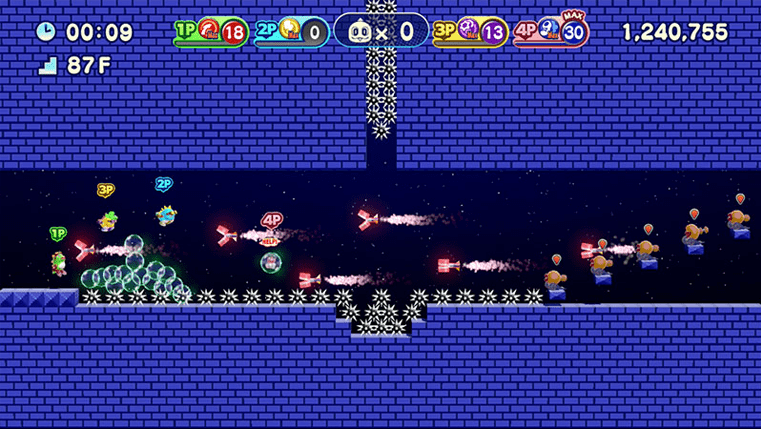
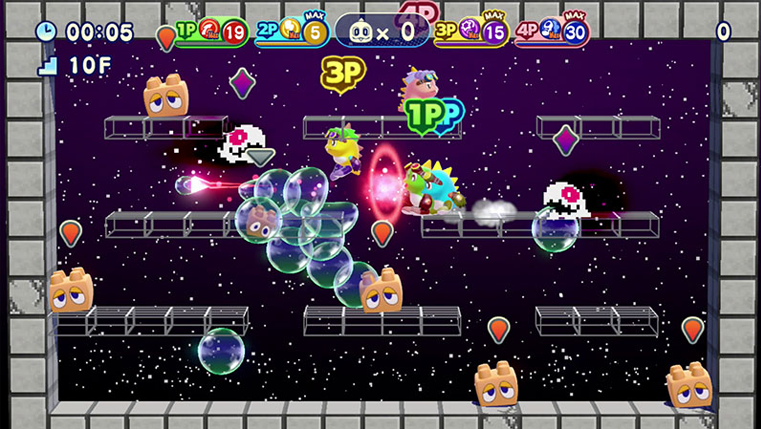
Gameplay – Umihara Kawase Bazooka! is an arcade styled action game, reminiscent of other titles in the genre, with large single screen stages made of platforms, pitfalls and even puzzles to solve. The core focus of the gameplay is to use the lure, snaring enemies, objects and even other players, turning them into bazooka shots and firing them to damage targets for big points.

The lure is the trademark of Umihara Kawase, allowing players to snare and capture the creatures wandering the stages, as well as picking up items that appear during play. Not only is the lure a weapon, but also an important tool for travelling around the stage. By hooking onto the walls and other elements of the stage, players can reach out of the way places and swing from platform to platform.

The game is separated into two modes, challenge and competitive. In challenge mode, take on 40 stages, divided into worlds of 10 stages each, culminating with a boss battle. The objective of each stage is to defeat enemies to earn a set number of coins. The majority of enemies are defeated by hitting them with the lure and turning them into bazooka shots, however, some enemies and the world bosses have more complex conditions to defeat them.

Alongside the coin requirement for each stage is the score system and time limit. During the stages, players will earn points for each enemy eliminated, with bonus points for multiple targets being taken out in a combo. The time limit gives players a preset amount of time to get through each of the challenging stages, with the leftover seconds being added to clock for the next stage.

At the end of a world, the high score and best time is added to the records, this gives players a reason to replay stages in order to improve their scores. However, the completion time is only recorded if the selected world is cleared from the beginning, this means that a game over will render the time up until that point meaningless.

Challenge mode has three settings. Take on all 40 stages alone in single player, work with up to three more players in friend mode (no friendly fire) and battle for the highest score in rival mode (friendly fire is enabled and encouraged). Progression for each world is carried over between the three modes, giving players the opportunity to get help with tough stages or for families that enjoy local multiplayer games.

The second gameplay style is the competitive mode, playable by up to four players online, through local wireless communication and on the same system. Competitive play is split into two game types, the first option is battle royale, pitting players against each other in battle until only one is left standing. The other is star match, where the objective is to hold the most stars before the time limit expires. If the time limit expires and there is no definitive winner, a sudden death round will decide the outcome.

Unfortunately, I was unable to get into an online game while researching the game, but I was able to play a few matches through local multiplayer. The action is frantic and chaotic, with a lot of fun to be had, featuring a total of 17 playable stages there is a lot of variety to the experience.  The last thing I will be discussing is the character roster and ability system.

The playable roster is made up of 22 total characters. The characters featured are from the Umihara Kawase series and Doki Doki Poyatchio by Studio Saizensen, the Cotton Series by Success Corporation and even a guest appearance by the Japanese YouTube personality Dozle. Each of the playable roster members have their own unique abilities, two skills that can be used freely and a special attack that can get the player out of a sticky situation.

The variety on offer with the selection of characters adds depth to the overall experience, giving players options that fit their gameplay style. Each character has their own individual strengths and weaknesses, while some may excel at movement, others focus on attack power, allowing for multiple strategies to be used when taking on tougher stages and bosses throughout the game. Be sure to experiment with different characters to find the best fit for your play style.

Now with the gameplay covered, I will be moving onto the other elements of the game, starting with the controls.

Controls – the control system for Umihara Kawase Bazooka! has three tiers to it of varying difficulty. The easiest setting is beginner, with auto reeling of the lure for climbing and pulling in hooked enemies/objects. The normal setting is semi-pro, the lure is automatically reeled in when attached to a surface, but hooked objects and enemies must be reeled in. The toughest setting to use is technical, with controls functioning in the same way that it has to other Umihara Kawase titles.

In all three modes the left side of the controller handles movement and the lure, the face buttons are for character skills, jumping and lures, with special attacks and bazooka shots handled by the front shoulders. The game handles well in both docked and handheld play. Using the Joy-Cons is comfortable, but the optimal way to play is with a pro controller or third-party pad featuring a good d-pad. Be advised, there is an option to remap controls, so if you have issues they can be remedied.

Difficulty – there is a balanced difficulty curve to this release. The challenge for stages increases gradually, getting progressively harder as new enemies are introduced during the game. With only three lives and limited bonuses during play, clearing each world without getting a game over can be tough. The choice of control style also affects the difficulty of the game, as the technical setting adds more complex mechanics for players to get their heads around.

Presentation – visually, the full 3D style of Umihara Kawase Bazooka is pleasing, with cutesy chibi models for the characters, simple yet effective stage designs and enemies that are easy to recognize. The performance of the game from a visual standpoint is more than satisfying, while playing there was no visual lag, frame rate issues or slowdown. However, some of the details can be small even on the standard Nintendo Switch model, so take that into account if you own a Switch Lite system.  

The soundtrack is made up of energetic, J-pop style tracks, combining electronic sounds and traditional instrumentation to create the dynamic compositions. The sound effects also have a satisfying sound to them, with the pops and explosions working with the game music. There is also a limited use of voice acting, with characters using voice bites and catchphrases during play, which was a delightful touch to the experience.

Final Thoughts – overall, Umihara Kawase Bazooka! is a fun and enjoyable game that diverts from the traditional formula that the franchise is known for. The arcade style meshes well with the tether platformer system, creating a game that is accessible to all players, from beginners to experts, there is a character and setting that fits all experience levels and play styles.

This is a fun title that offers a lot of content in a small package. The challenge and competitive modes provide plenty of gameplay options, from playing alone to playing with friends and family. There is even a leaderboard system where you can see how you match up with players across the world. I can happily recommend this game to everyone, the only issue I found being the possibility of reduced visibility on the Nintendo Switch Lite system.

In the end, I give Umihara Kawase Bazooka! a final score of 4.5/5. A fun and enjoyable arcade styled platform action release, diverting from the traditional gameplay that the series is known for, creating a refreshing experience that is suitable for everyone. If you have interest in checking this game out for yourself, links to the game will be below (please note that the game is not yet released in North America for consoles, links for that version will be added when they become available on October 30th)

Link to Nintendo Switch version (HERE)
Link to PlayStation 4 version (HERE)
Link to Steam version (HERE)
Official Website (HERE)

Moero Crystal H – Nintendo Switch Review

Overview – developed by Idea Factory and Compile Heart, with publishing handled by eastasiasoft, Moero Crystal H is the latest entry in the sexy dungeon crawling franchise getting an updated HD release. Travel through weird and wonderful areas, encountering cute monster girls as you embark on a quest to save the world. This new version is available exclusively on the Nintendo Switch, links to the game and official website will be provided at the bottom of this review.

Disclaimer: before I get into the review, I would like to thank eastasiasoft for providing the copy of Moero Crystal H used for this piece. The provision of this software has not influenced the contents of this review, all thoughts and opinions expressed within are my own. Please note, this is a mature rated release, with sexual themes, sexual content and is not suitable for younger audiences. Reader discretion is advised.

Now with the introductions out of the way, let’s get into the review, starting with the story.

Story – long ago, the goddess of the world created two sacred artifacts, the Panties of Light and the Bra of Darkness, which together brought harmony to the lands and protected the world. However, one day, the Bra was stolen by a thief known as Dark Ottonias, upsetting the balance and causing a rift to open above the land. If the Bra and Panties remain separated, the world will rise and become swallowed by the rift.

Now, Luanna, the guardian of the Great Shrine, Zenox, a boy who was involved by pure chance and Otton, a strange monster that is obsessed with panties, must work together to save the world. Using the Panties of Light to guide them, these three unlikely allies must track down the thief and recover the Bra of Darkness, sealing the dimensional rift and restore harmony to the land.

Gameplay – Moero Crystal H is a dungeon crawling RPG, with the majority of the action taking place in grid based dungeons. Each area has a unique theme, making them stand out from each other, with themes including a world of toys, a casino and a holy shrine. Now I will be talking about aspects of the gameplay with basic details covered in order to prevent spoilers.

Moero Chrystal H uses a system that is unique to the franchise, with the male protagonist Zenox taking a support role, with a roster of monster girls acting as the attackers in turn based combat. The player begins the game with two party members, Zenox and the shrine guardian, monster girl Luanna. During the course of the game, additional party members can be recruited, with some dictated by the story and others appearing during exploration.

Each dungeon is made up of several floors, with long corridors, open spaces and doors, both locked and unlocked. Scattered throughout the floors are items, chests and switches that players can interact with in real time. The items are randomized, with equipment, resources and special items that the player will be able to use with the roster of monster girls in and out of the dungeon.

As players traverse the dungeons, enemies will appear both randomly and at preset points, attacking the player and initiating battle. At the beginning of combat, the turn order for party members and enemies is determined by their agility stats. When the turn for each party member occurs, several options are presented, with distinct options for Zenox and the monster girls. The options in combat are as follows;

Zenox abilities:

  • Store – charge up Desire P, a special resource unique to Zenox that is used to fuel his other abilities. Charge it up, but be careful, if the Desire meter is over charged Zenox will enter calm time, preventing him from making a turn until the penalty meter is depleted.
  • Release – send the stored Desire to a single party member, boosting their stats temporarily depending on the amount of charge that has been store.
  • Insert – alter the order of combat by spending charged Desire. Move a monster girl up or down the turn order, allowing for deeper strategic possibilities.
  • Item – select an item to use from the player inventory, with a variety of items that can mean the difference between life and death.
  • Wait – skip your turn without doing anything.
  • Escape – try to flee the battle, escape isn’t guaranteed so be careful.

Monster girl abilities (be aware I will be omitting some details to prevent spoilers):

  • Attack – use a physical strike to attack an enemy, dealing damage to the target.
  • Skills – use SP points to activate a character skill, with a variety of attacks, support abilities and more. Be careful to manage SP points as they can and will run out often (details on attacks will be mentioned below).
  • Defend – take a defensive stance to try and reduce damage to the defending character between turns.
  • Charm – the monster girl uses her charms to build up the Desire meter for Zenox, allowing for more in depth strategy.

In battle, enemies have weaknesses and resistances, with the classic elemental system of earth, wind, fire and water. Each time a weak point is hit, the enemy takes increased damage and a point is added to an Aura combo, increasing with each successful weak point strike. If another attack is used or an elemental strike fails to hit a weak point the combo will reset. The Aura combo is also tied to special features and rewards at the end of the battle.

When a battle is complete, the player earns rewards based on the challenge and Aura combo earned during the encounter. The rewards that the player earns are gold, experience points and a resource called Rub-P. The player can also earn items and accessories, with the quality of reward again based on the challenge and performance of the party in combat. The experience points earned level up the monster girls in the party, with boosts to the characters stats, additional skills and more unlocked over time.

The next part I want to discuss is the recruitment of additional party members. During both story progression and dungeon exploration, monster girls will appear, engaging the party in battle. In battle, the player can attack the girl directly or destroy her clothing. After dealing enough damage to the girl or destroying all her clothing, a special mini game occurs where the player touches the girl to fill three meters on screen.

If the meters are filled within the time limit, the girl will join the party, if not they will escape from the player but over time they reappear with another chance to recruit them.  When all slots in the party have been filled, the player has the option to send them to the home base or switch an existing party member out. There are five slots in the party in total with a front and rear position, this affects the way combat works, with less physical damage received and dealt by that character if they are on the rear.

Outside of the dungeons, the player has several options in the home menu. The options are a shop, where the player can buy supplies, the soul temple with the ability to upgrade gear and the monster girls, a training mode and the room. When activating the room, the player is able to interact with the monster girls in the available roster, performing various tasks to increase their intimacy level, unlocking special interaction events and more.

Again, this is a mature rated game, containing a lot of sexualized content, including enemies that have features of a sexual nature, characters in their underwear and sexually suggestive imagery/scenes. Some monsters have elements that include breasts, condoms and names that allude to sexual acts. The innuendo and imagery is comedic in nature, however, it may push the boundary of bad taste for some. So with this final disclaimer, please use discretion when deciding to explore this game or not.

There are still many secrets that the game holds. However, I won’t be discussing these elements as I feel that they must be experienced firsthand. Now with the gameplay covered I will be moving onto the other elements of this release, starting with the difficulty.

Difficulty – there are four selectable difficulty options at the start of a new game (these settings can be altered later if required). The difficulty settings are EASY, with reduced rewards and easier battles, NORMAL, the recommended setting and HARD/EXPERT, featuring increased challenge in combat and greater rewards. There is a moderate difficulty curve, which all depends on the amount of time spent grinding experience/gold, with increased levels and resources easing some of the challenge.

Take note, there is a limited number of save points in each dungeon area, with some floors having none at all, so it is important to monitor the status of each monster girl in the party. If all members in the party are incapacitated, either by taking too much damage or status effect the game will be over, so ensure that escape is possible in dire circumstances as defeat can cause significant loss of progress.

Controls – the control method is very simple for this release, the left side of the controller and front shoulder buttons control movement and menu navigation, with the face buttons handling all interactions. Reaction times of the inputs are smooth and are comfortable in both handheld and docked play, using both the attached Joy-Cons and Pro Controllers. A final point to the controls is that some interaction events employ the touch screen when in handheld/tabletop mode. The touch feature is the optimal way to take part in these events as the thumbsticks can be a little unwieldy.

Presentation – the visual style for Moero Crystal H features a dynamic blend of 2D and 3D art. The Dungeons are made of rendered 3D models, with anime styled artwork for all other assets, the monster girls, enemies and backgrounds all look amazing with the new HD presentation for the Nintendo Switch. This aesthetic fits the game perfectly as the story is presented through visual novel segments, alongside full screen art for special events that occur during the game.

The majority of dialogue is voiced with the original Japanese voice over from the initial release, which works perfectly well and each voice actor fits their part perfectly. The music used is a mix of Japanese pop, rock and thematic compositions, with some featuring vocal tracks that don’t intrude or distract from the flow of the game. Overall, a great package in the visual and sound department, featuring the hallmarks of other Compile Heart/Idea Factory titles.

Final Thoughts – I had a great time playing Moero Crystal H, the pacing of the story and flow of gameplay was executed perfectly. The comedic touches of the monsters and fanservice elements were entertaining, without going too far and becoming ridiculous or breaking the flow of the game (however, this may vary from person to person). The gameplay systems are easy to pick up, starting off simple and building in complexity over time, adding depth to the combat and character progression during the experience.

This is another excellent release by the teams at Idea Factory and Compile Heart, improving on the previous entry in the franchise Moero Chronicle H, released last year on the Nintendo Switch (review coming soon). I can happily recommend this title to fans of dungeon crawling JRPG titles and the fanservice focused titles. The amount of content on offer, with the inclusion of all previous DLC in the base game as a bonus makes this well worth the time and effort. The only issues I found were slightly long loading times and minor inconsistencies with the thumbstick controls in touch events.

In the end, I give Moero Crystal H a final score of 4.5/5. An entertaining dungeon crawling JRPG, filled with comedic fanservice elements, an expansive roster of cute monster girls and challenging, turn based combat. Yet another great game by the developers at Idea Factory and Compile Heart, making their catalogue of standout titles on the Nintendo Switch even stronger. If you want to check this title out for yourself, a link to the game and official site will be below.

Link to Nintendo Switch version (HERE)
Link to Official Site (HERE)