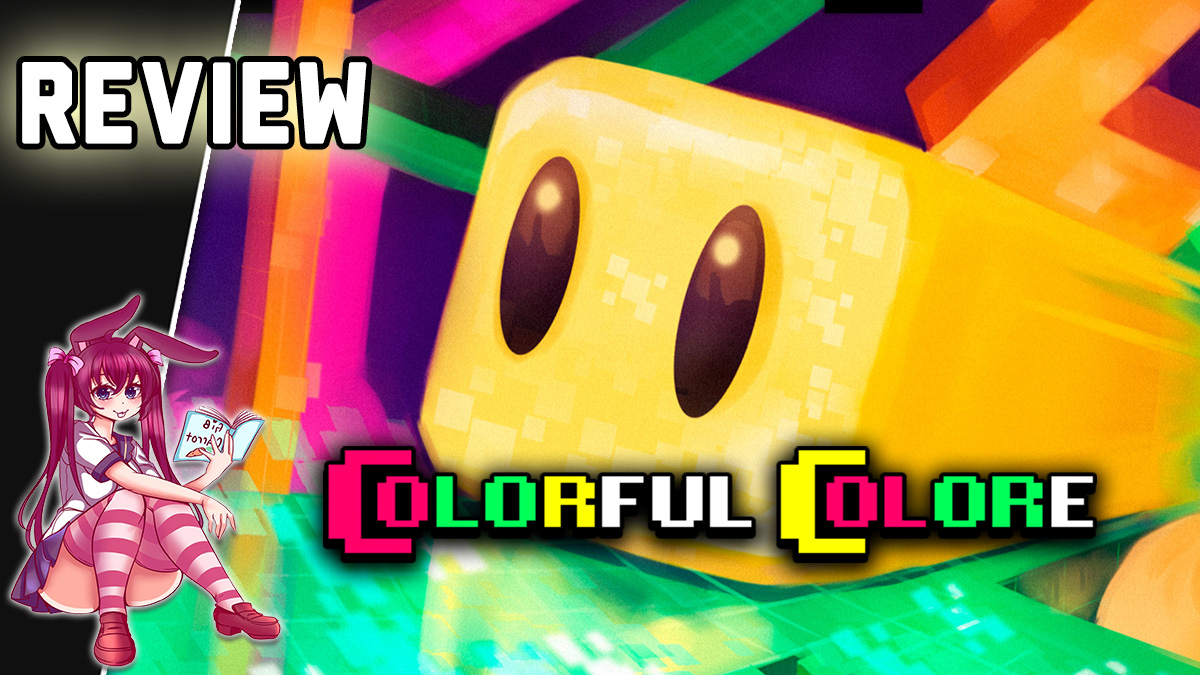
Overview – developed by Gagonfe, Delta and Rhowsl, with porting to the Nintendo Switch handled by Drageus Games. Colorful Colore is a simple yet challenging puzzle title, where the objective of each level is to navigate a color coded maze and reach the goal, with puzzles getting increasingly tricky as the game progresses. This title is available on the Nintendo Switch and Steam service, if you want to check it out for yourself, links to each version of the game will be available at the bottom of this review.
Disclaimer: before I get into the review, I would like to thank Twitter user @markjpwnsfor providing the copy of Colorful Colore used for this review. The provision of this title has not influenced the contents of this review, all thoughts and opinions contained within are my own.
Now with the introductions out of the way, let’s get into the review. Since there is no story for this game, I will be moving directly onto the gameplay section of the review.
Gameplay – Colorful Colore is a color based puzzle title, where the objective of each stage is to reach the goal by moving your block while avoiding areas that don’t match the color of your block. There is a total of 50 stages to take on, with the challenge of the stages increasing as the game progresses. The stages start of simple, teaching the player how the game functions with the color changing mechanics, introducing more complex puzzle set ups as stages are cleared.
The player can move their block in straight lines in one of four directions, stopping only when connecting with another wall. If the player connects with a wall of the same color, the player can move to another space, but if the block connects with a wall that doesn’t match then the player is reset to the starting point. Alongside the simple four direction movement is a color change system that allows the player to switch colors between Pink, Yellow and Green, adding more depth to the puzzle gameplay.
There is a lack of threats to the player in stages, allowing a relaxed pace to be taken during play. This laidback approach gives players the option to learn the solution to each stage and the more challenging mechanics, without the risk of running out of time or getting a game over. While the game may feel short at only 50 stages, this is perfect for those who enjoy speedrunning or just sitting back with a casual puzzle experience for a few minutes at a time.
The overall gameplay experience is fun and enjoyable, offering a challenge that everyone can sit down and enjoy at a very good price point. The only issue that I do have is that the sprites may be a little small for some players when playing in handheld mode, especially with the slightly smaller screen that is found on the Nintendo Switch Lite model. However, this is only a small issue and doesn’t impact the overall quality and performance of the game.
Now with the gameplay covered to a degree that I am happy with, I will be moving onto the other aspects of this release, starting with the controls.
Controls – the control method for Colorful Colore is very simple, using only the D-Pad/left thumbstick to move the block around each maze. During gameplay there is no difficulty with inputs when playing in all system modes, but there is a small issue that can occur if care isn’t taken during the more complex stages. It is possible to miss inputs if you rush when trying to navigate the tougher puzzles in the game, leading to mistakes and potential frustration by losing progress in a hard stage.
Presentation – the visual style for this release has a cutesy charm to it, with the use of neon colors for the maze stages and the player block. These bold colors contrast well with the darker background that is constantly scrolling across the screen, giving the game a calming atmosphere. The soundtrack for Colorful Colore consists of a single music track that is persistent throughout, using a soft and happy chiptune style melody, tying the whole experience together into a delightful and relaxing package.
Final Thoughts – during my time with Colorful Colore, I really enjoyed the color based puzzle mechanics that are employed by this release which felt both fresh and unique during play. This game consists of 50 stages, which is a little short as it can be completed in about a day of consistent play. However, for the very low price that is being asked for this game, I can absolutely recommend purchasing this game to keep yourself engaged during the long winter nights.
In the end, I give Colorful Colore a final score of 4.5/5. This game is a simple yet charming color coded puzzler that is both fun and challenging, with enough depth to the mechanics and gameplay to keep you engaged during play. If you want to check the game out for yourself, links to the game will be available below. (Please Note: Colorful Colore is on sale at the time of publishing)
Overview – developed by Paper Bunker and published by Eastasiasoft, The Pillar: Puzzle Escape is an exploration focused puzzle adventure set in an unknown world. Explore the mysterious islands, scenic landscapes and solve the riddles you encounter as you seek to escape the maze of puzzles that hold you captive. This title is available for the Nintendo Switch, PlayStation 4 and Xbox One, links to each version of the game will be at the bottom of this review.
Disclaimer: before I get into the review, I would like to thank Eastasiasoft for providing the copy of The Pillar: Puzzle Escape that was used for this article. The provision of this software has not influenced the contents of this review, all thoughts and opinions contained within are my own.
Now with the introductions out of the way, let’s get into the review. I will be omitting the story segment from the review as there is little in the way of a narrative that plays out in this title, so I will be moving directly into the gameplay section.
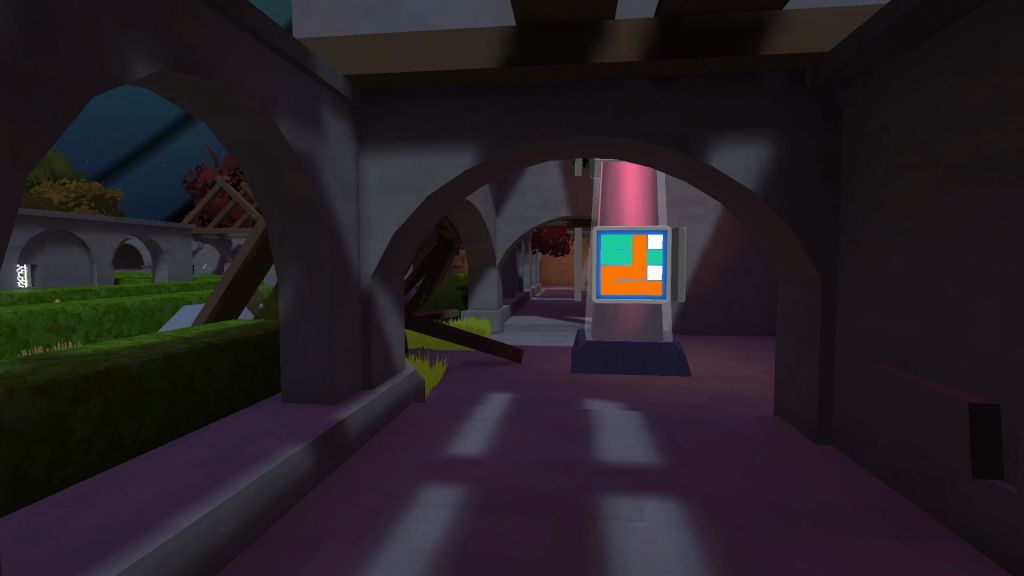
Gameplay – The Pillar is a first person exploration and puzzle solving title, using a style that is reminiscent of other titles in the genre like Myst, but with a streamlined approach. In each stage, the player must solve various puzzle set ups including pattern placement, connecting the ends of two colors without crossing another color and hidden combinations locks. The majority of puzzles have only a single solution to them, however, puzzles that are open to the player can be attempted in any order, giving freedom to approach each stage differently.
Each area that the player encounters has its own progression system. The way to proceed through each zone include activating pressure switches, moving items between areas and pushing door buttons in a specific order. This approach can be a little troublesome as pressure switches and other elements can be hard to see when hidden, causing more time to be spent in each area than is needed. There are also items hidden throughout the areas for the player to collect, adding to a completion counter for that stage.
The puzzles themselves slowly increase in difficulty as new ones are introduced, starting of simple but becoming very challenging quickly taking multiple attempts to complete. The capture feature of the switch can help to ease some of the challenges, allowing players to record patterns and note down the solutions during play. The screen shot button is also useful to prevent back tracking when trying to solve number/symbol combination puzzles.
The overall gameplay of the game has a relaxing feel to it as there is virtually zero punishment for failing the puzzles, there are no enemies in the game and without any threats, the pacing is up to the player. I did have a couple of issues during play which did make it a little frustrating for me to play. The first is the frame drops that occur when there are particle effects on screen, making the game slow down a lot. Second was the inconsistency with item collision, which caused difficulty moving some of the items for puzzles.
There is not much else to discuss without spoiling the rest of the game, so I will be moving onto the other aspects of the game.
Controls – The Pillar has a simple control method, using only a couple of buttons to play through the entire game. The thumbsticks control movement, with the ability to move and look in all directions. The right bumper allows the player to run, while also being used in puzzles with the left bumper. The A button activates items/objects and the B button will go back/cancel actions. The controls in general are comfortable and work well, but do have some inconsistencies in both handheld and docked modes.
Presentation – visually, The Pillar is a pleasing experience with a great use of simplistic shapes/designs for the environments and vibrant colors for the puzzle sections. The only let down with the graphical quality is the framerate issues that occur when there is a lot of effects at once. The sound is pleasing, with gentle music that accompanies the player through the different locations, adding a sense of wonder to the more fantastical locations.
Final Thoughts – overall, I had a pleasant although short time with The Pillar: Puzzle Escape. The game isn’t the longest and can be cleared in a few hours, but with the completion percentages that are tied to each stage giving the player a reason to return to the game. The puzzles are fun with enough diversity to keep me engaged with throughout the experience, which I praise the developers for as it made The Pillar a game that you can sit down with during a cold night and lose yourself in it.
In the end, I give The Pillar: Puzzle Escape a final score of 4/5. The gameplay and puzzles are engaging, the atmosphere is relaxing and the hidden collectable objects reward repeated play of the stages. This game is a delightful experience that can be enjoyed alone or bundled up with your significant other on a cold winter night. If you want to check the game out for yourself, links to each version of the game will be below.
Link to Nintendo Switch version (HERE) – currently discounted at time of publishing
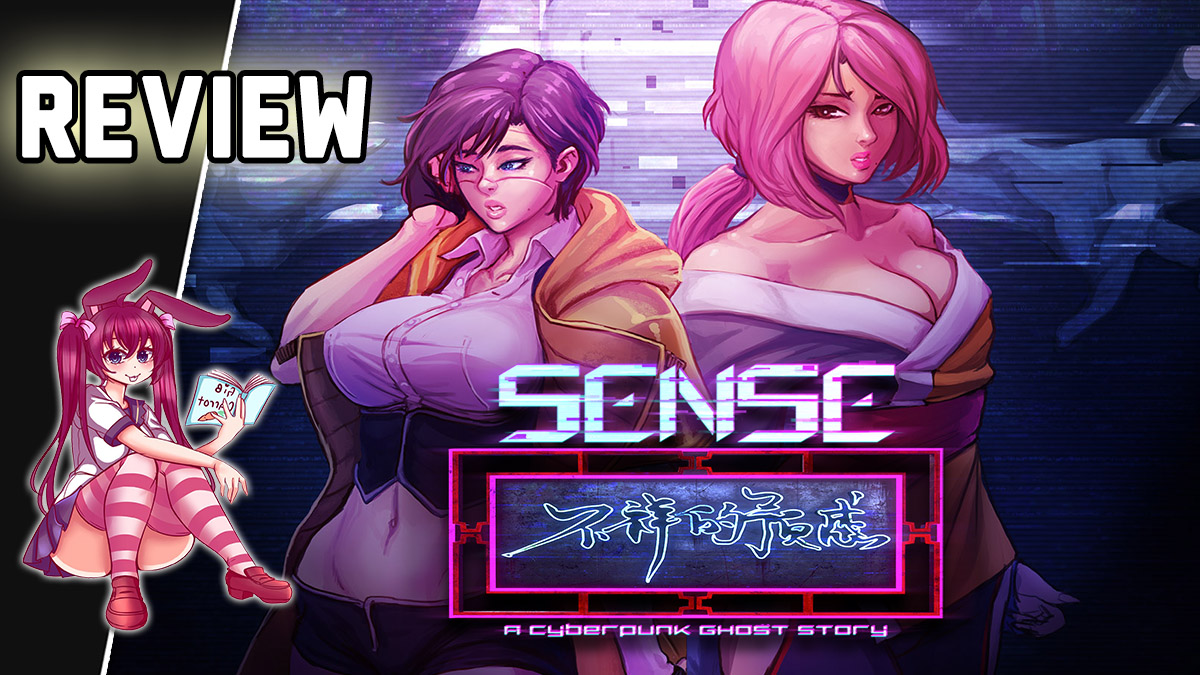
Overview – developed by Suzaku with publishing handled by Eastasiasoft and Top Hat Studios, Sense: A Cyberpunk Ghost Story is a survival horror/adventure set in the neon soaked year of 2083. Take on the role of Mei Lin Mak, a young woman who has been caught up in a century old mystery as she tries to escape the supernatural horror in the ruins of the Chong Sing Apartments. This title is available on the Nintendo Switch and Steam service. Links to both versions of the game will be at the bottom of this review.
Disclaimer: before I get into the review, I would like to thank Eastasiasoft for providing the copy of Sense: A Cyberpunk ghost Story that was used for this article. The provision of this software has not influenced the contents of this review, all thoughts and opinions expressed within are my own.
Mature Content Warning: Sense has been given a rating of Mature in North America and PEGI 18 in Europe, this rating has been given due to some sexualized elements, violent content and disturbing themes. I advise that discretion is taken when reading this review or looking at material from the game if mature themes offends you or you are under the recommended age for this title.
Important Note: I want to highlight that there has been negative reactions to the content of this release, with calls to censor or remove the game from the Nintendo eShop due to the art used for promotion of the game. The publisher Top Hat Studios have refused to change Sense, which has led to vile threats and harassment targeted towards the developers of the game. I want to make it clear that I support Top Hat Studios and Suzaku and condemn the actions of those who have been harassing them.
Now with the introductions out of the way, let’s get into the review. I will be omitting the story section and moving directly into covering gameplay as I feel players must experience this first-hand, however, I will give minor details during other parts of my coverage.
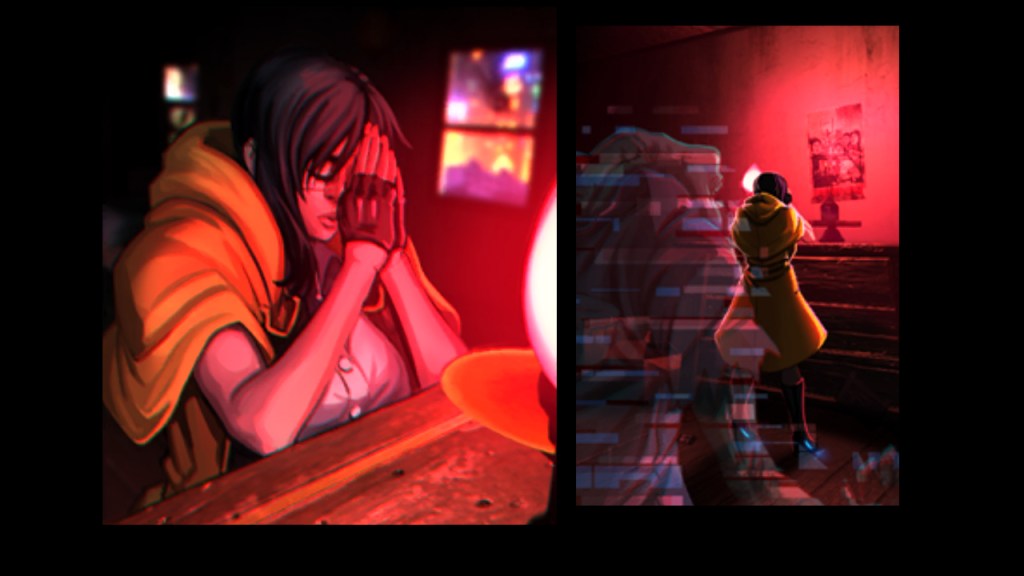
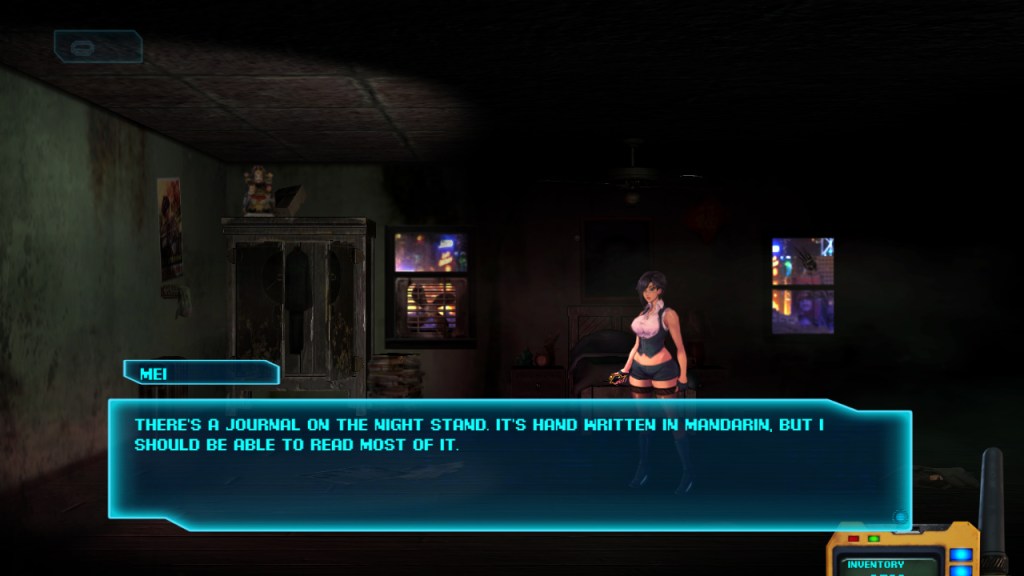
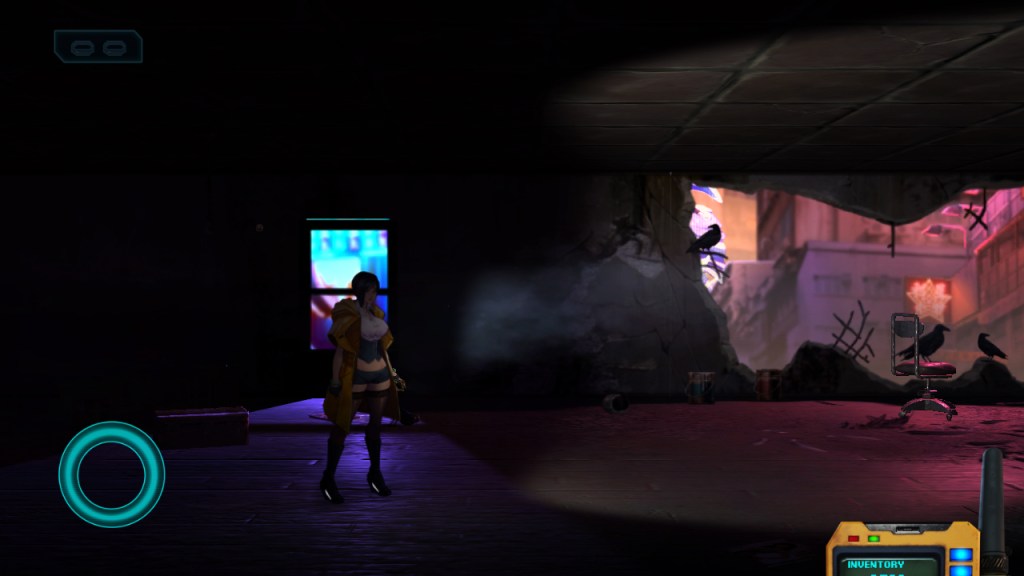
Gameplay – Sense: A Cyberpunk Ghost Story is a suspense filled survival horror/adventure, with gameplay elements that are inspired by titles from the past including Clock Tower and Fatal Frame. As the protagonist Mei Lin Mak, you explore the ruins of the Chong Sing Apartments in the city of Neo Hong Kong, encountering spirits that will try to stop you as you seek to solve the mysteries and escape.
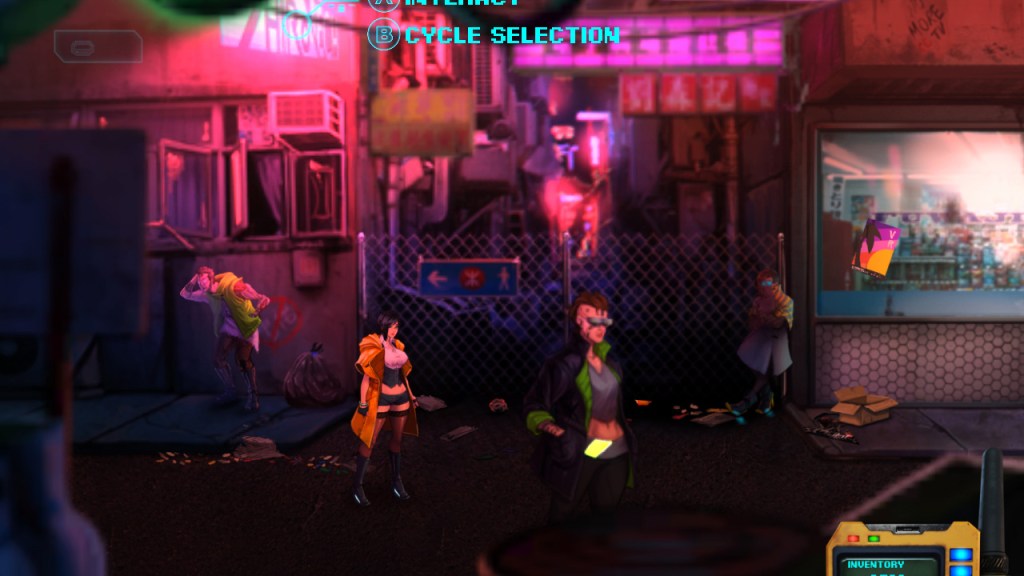
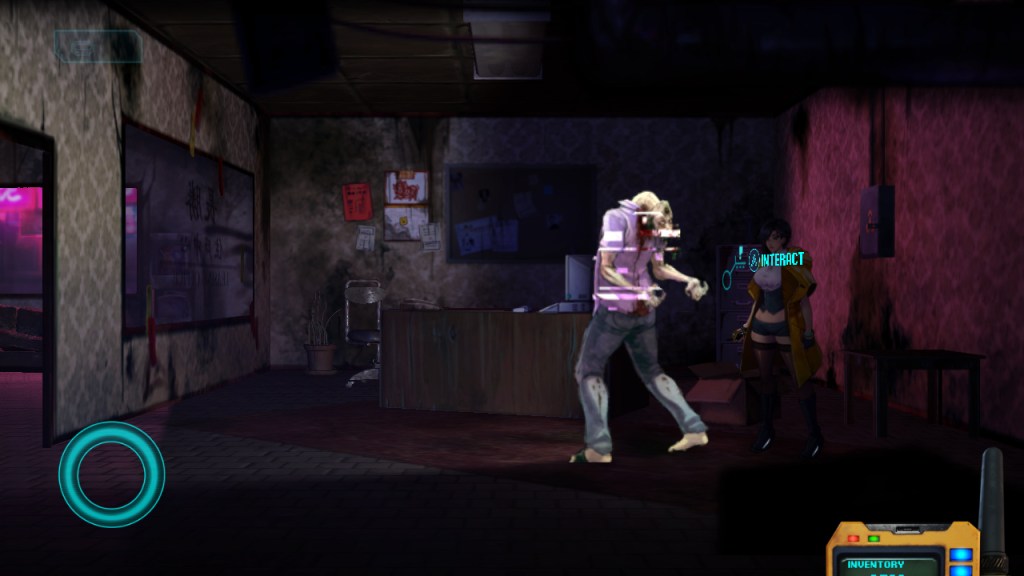
During exploration you will find puzzles that you will need to solve to proceed, these include collecting items and using them to progress through the environment. To interact with the objects and doors in each area, prompts will appear on screen allowing players to pick up and examine items, enter doors and even hide from spirits. During some events in the story quick time events will occur, showing a prompt on screen, success will lead to survival and failure will result in death.
Items and clues that are picked up will be added to the PDA, which functions as the player’s inventory and records all data that has been collected alongside other key items. The PDA can be accessed at any time and is the most important item that the player has available to them, using it as a map and allowing the player to check out the photos that have been taken with Mei’s cybernetic eyes. Photos that have been taken add to the suspense and tension of the experience.
There is a lack of combat in this game which adds to the horror atmosphere that the game attempts to build, this makes the protagonist feel vulnerable as they can only run and hide from the vengeful spirits. When running or hiding from a ghost that is trying to hunt the player, they have limited stamina to get away to safety. The player is able to hide from enemies when running away, taking refuge in rooms that are protected by a seal, activating a quick time event that will grant safety if successful.
If you are unable to escape from the spirits death is highly likely to occur, the only way to survive an attack from a ghost is to be in possession of a Jade Bangle, but these will be destroyed when escaping. When attacked with a bangle in hand, a quick time event will occur similar to taking refuge in safe rooms, with successful inputs allowing escape. Additional bangles can be found during the course of the game, however, they are limited and only two can be carried at once.
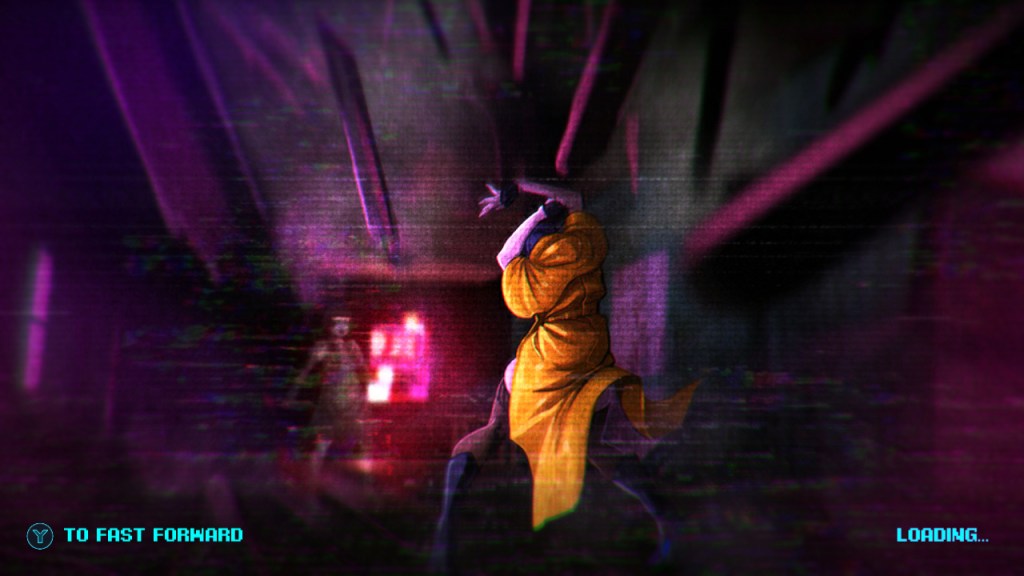
Aside from the apparitions that attack the player, there are also traps and negative actions that can cause player death if mistakes are made. When this happens Mei will be shown in horrific death scenes, with graphic injuries and body horror that is unsettling with the use of static effects to enhance the cyber horror aesthetic that the game is going for.
Death will throw the player back to a previous save point, which is depicted as televisions that use tapes to save progress when exploring the world. The save points require a tape to activate and are finite so managing the activation of save points is important to prevent excessive time loss upon death, but this can be alleviated by using the quicksave feature.
The ghosts that are encountered by the player each have their own stories attached to them, which will unravel over the course of the game. After the player solves the puzzles that they are faced with, they have the chance to put spirits to rest, performing a ritual that is based in Asian folklore and making an offering to exorcise them. Each story section plays out in a manga style panel layout, using art rather than animated cutscenes to portray the events that play out.
The last thing I want to talk about is the way that the game references internet culture and the real world. This includes the use of memes and references to trends that have been prevalent online in recent times. The inclusion of real world references are used in a way that is not intrusive, they do highlight some negative aspects of internet culture (which is very relevant given the outrage caused by the promotional artwork for Sense) and the world as a whole, which I feel have been handled well.
Now with the gameplay aspect covered to a degree that I am happy with, I will be moving onto the other parts of the game, starting with the difficulty.
Difficulty – Sense has a simple difficulty curve, with the puzzles and encounters getting progressively complex as the story progresses. The main challenge to this title is the effective management of resources and planning ahead, if you aren’t careful when exploring thee world you may become lost and need to back track more than necessary. Poor decision making and lack of care during puzzle solving can lead to failure, wasting time and causing frustration.
Controls – this game features a very simple control method, separated into left and right sides of the controller. The left side controls movement of Mei, with the right side being used for actions, interacting with the game world and managing the player’s inventory. The game handles well, aside from a little inconsistency when trying to walk and run with the dash set as a double tap towards a direction. There are no input drops or lag in either docked or handheld play, making for an enjoyable experience.
Presentation – the art style for Sense has a very unique look to it, blending the bright colors of the neon cyberpunk design with traditional Cantonese folklore. There has been extra care taken to ensure that the visuals all fit the theme of the game, with the ruins giving an oppressive atmosphere that contrasts well against the bright colors that can be seen outside. The death scenes and ghosts have a static look to them, giving the impression that the events occurring may or may not be real due to Mei’s cybernetic eyes.
There are some elements of sexuality to the art that can be seen during play, including the use of hologram dancers and advertisements for manga that have exaggerated proportions in the early part of the game. This use of risqué fanservice doesn’t detract from the horror that will unfold later in the game, what it does do however is provide a false sense of safety and subverts expectations that the player may have at the start.
The overall performance of the game from a visual standpoint is refined extremely well, with smooth fluid animations and no issues with framerate or lag during play. The sound is atmospheric and creepy for most of the experience, using subtle atmospheric sounds that give a feeling of unease, where the main thing that can be heard is rustling of paper or footsteps. There is some voice acting that is employed, which I found to be performed well and used just enough to increase the feeling of unease present.
Final Thoughts – I went into this game as a fan of the titles that inspired Sense, expecting something entirely different than what was presented. I was pleasantly surprised by the atmosphere and attention to detail that the developers put in with the use of Asian folklore, which contrasted well with the advanced technology of the future setting. The gameplay is engaging and can create a lot of tension, especially during jump scares and chase sequences where the ghosts hunt down Mei as the player tries to escape.
The use of static and other effects adds an element of techno horror to the overall experience, making the player question the reality they are witnessing. This unease makes the death scenes, ghostly apparitions and echoes of the past that much more impactful in my opinion, showcasing a real love for the subject matter and titles that came before them. The helplessness and vulnerability of Mei as she is lost in the ruins of the Chong Sing Apartments ties the whole experience together for me.
The art and sound design all come together to create an oppressive, dark atmosphere that is a stark contrast to the bright neon lights that are seen during the opening and in the outside world. The overall quality of Sense is outstanding and I applaud the developers for their hard work. Suzaku haa created a title that subverts the expectations of the cyberpunk setting, releasing a game which I have absolutely no problem recommending to anyone interested in the survival horror genre.
In the end, I give Sense: A Cyberpunk Ghost Story a final score of 5/5. This title is an atmospheric and tense survival horror experience, taking everything you think you know about the cyberpunk genre and turning on its head. The gameplay, story and presentation is expertly crafted, showing the love for the setting and influences that the developers have. If you want to check the game out for yourself, you can find links to both versions of the game below.
I have an Announcement from our friends at Super Rare Games, a new physical release is coming to the Nintendo Switch. Read below to find out the details of this upcoming release.
Super Rare Games is starting 2021 with a blast! We’re proud to reveal our partnership with Glass Revolver and Armor Games Studios to release this bullet-hell, boss-rush adventure game in physical form for the first time on the Nintendo Switch.
Only 5,000 copies total will ever be printed, which go on sale January 7th at 6pmGMT (10am PT/1pm ET) for approx £27/£39.50 (excluding tax and shipping). The game will be released in two versions, which will be published in two variants, a standard edition limited to 3,000 copies and a steelbook limited at 2,000 copies.
In typical Super Rare Games tradition, this rare print physical release includes all the content on its cart, a full-colour manual, interior artwork, an exclusive sticker, and three trading cards randomly selected from the five-card set. Steelbook versions come with the standard case included, with both boxes bundled in a sleeve. Fans won’t have long to wait, as Super Rare Games titles ship soon after going on sale.
Here are some details about ITTA.
ITTA is a bullet-hell adventure set in a world filled with monstrous bosses. When Itta wakes up and finds herself surrounded by her dead family, her only guide is a strange spirit that takes the form of the family cat who gifts her a glowing revolver for protection.
Bullet-Hell Chaos – Topple 18 deadly bosses in this simple to pick up but tough to master twin-stick shooter.
Survive, No Matter What – Wield an arsenal of powerful spirit weapons to fight in new ways and change the tides of battle.
Monstrous Challenge – Seek and destroy unsettling and powerful creatures to unlock the mystery of a bizarre, crumbling world and its cryptic inhabitants.
A Girl Displaced – Explore a beautiful and deadly pixel-art world backed by a haunting and eclectic musical score.
Horror and Wonder – Never hit a wall; freely toggle damage multipliers and invincibility, or prove your mettle with the default settings.
Lost and Alone – Largely inspired by Zelda 1 and modern classics like Nuclear Throne and Titan Souls.
You can check out the two versions of ITTA at the Super Rare Games store which goes on sale January 7th (HERE). If you want to learn more about the game you can find more details at their official website (HERE) and the Twitter account for the developer (HERE).
Overview – developed by DEKLAZON and published by Eastasiasoft, Drunken Fist: Totally Accurate Beat em’ Up is a physics based brawler where you try to get home, fighting those who stand in your way. Stumble your way through the city, using a variety of attacks to take down your foes while making sure not to be defeated. This title is available for the Nintendo Switch, PlayStation 4, Xbox One and Steam Service, if you want to check this game out, links to each version will be at the bottom of this review.
Disclaimer: before I get into the review, I would like to thank Eastasiasoft for providing the copy of Drunken Fist used for this piece. The provision of this software has not influenced the contents of this review, all thoughts and opinions contained within are my own. This title is also rated Mature, so discretion is advised.
Now with the introductions out of the way, let’s get into the review. There is little in the way of a conventional plot with this release, so I will be omitting the story segment from this review.
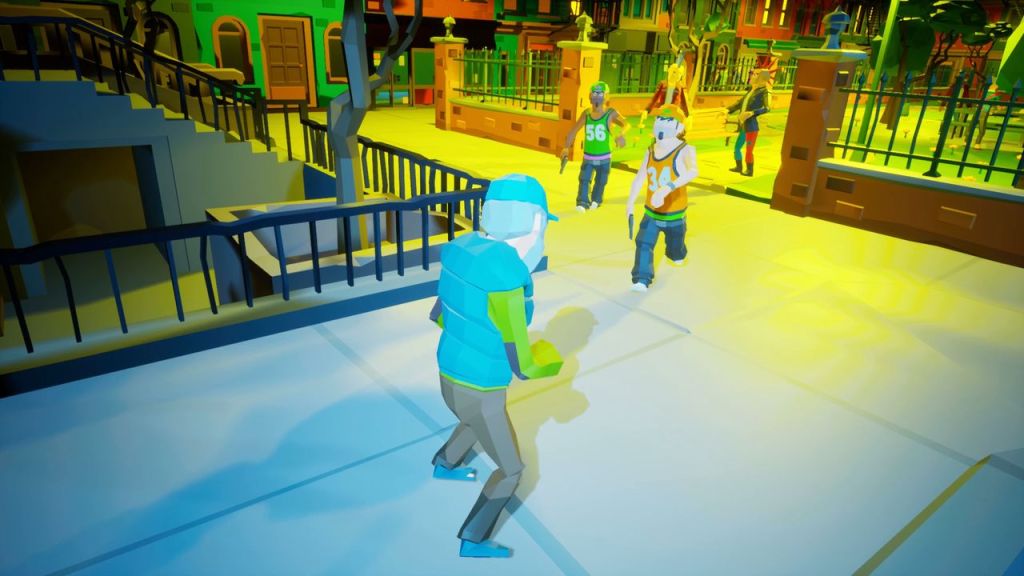
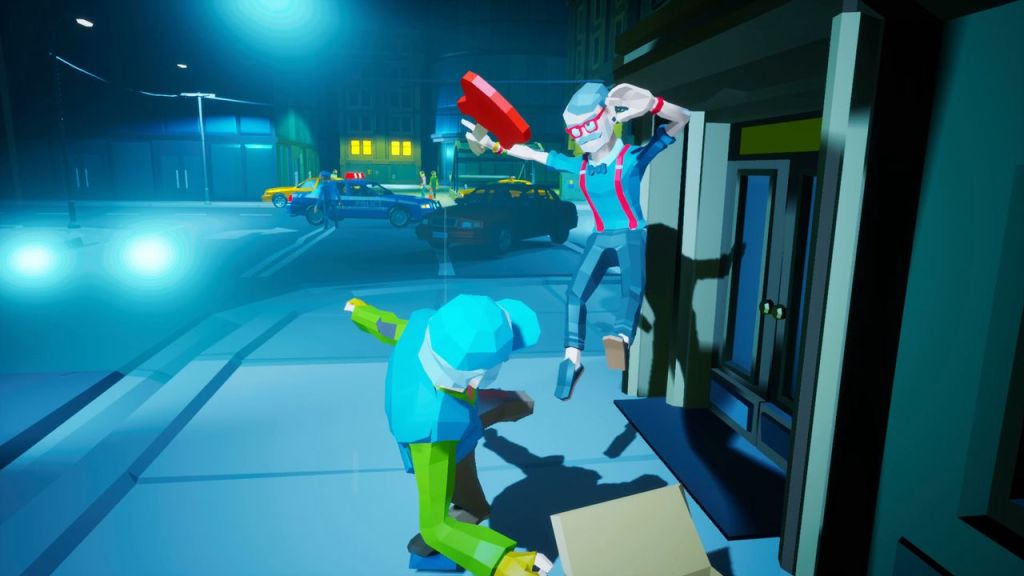
Gameplay – in Drunken Fist you take the role of a man trying to get home after drinking a little too much, but there is a problem, everyone you come into contact with is trying to beat you up. To get home safely, you need to fight off punks, jocks and more to get through each of the stages. To clear each of the stages in the game the player must complete a set of objectives without being defeated, if the player is taken out they must try again from the start of the stage.
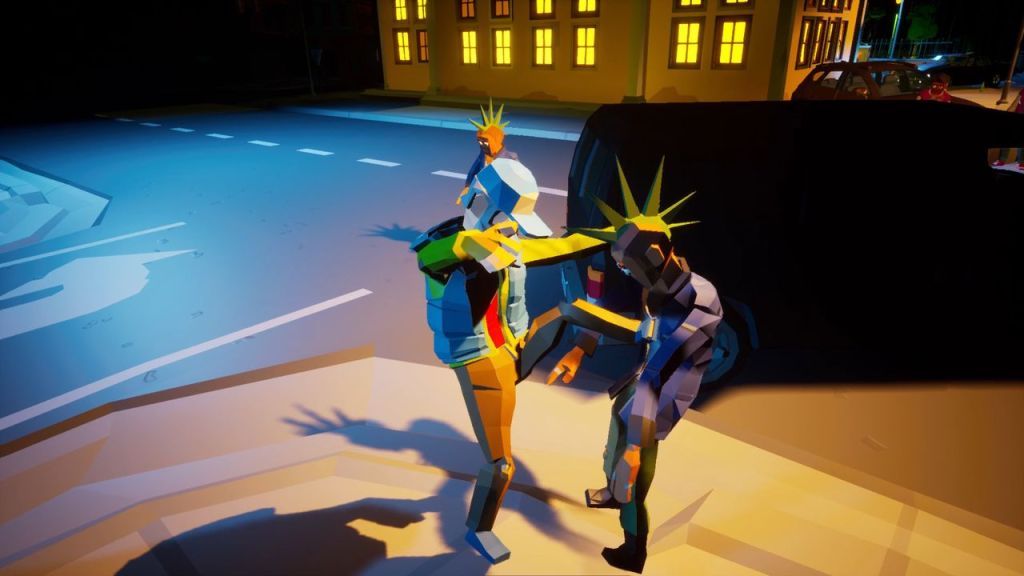
When fighting enemies in the streets each attack uses up a portion of the stamina meter, with different attacks using up varying amounts of energy for each move. There is a standard punch, kick, dodge and sweep available to the player, alongside an expanded move set by pressing the shoulder buttons and triggers. The combat is clumsy and a little messy, with a difficulty to consistently attack enemies due to the use of tank controls which have a very slow almost uncontrollable feeling to them.
The inconsistency of combat and movement is interesting to say the least, as the tank controls and wild flailing of limbs does give the impression of intoxication, but weakens the playability in parts. There is also a momentum system in place for walking/running, with the player’s speed increasing more to the point that the character will fall over taking damage. Momentum and combat flaws add an increased level of challenge that requires caution and with no difficulty setting, be prepared to restart stages often.
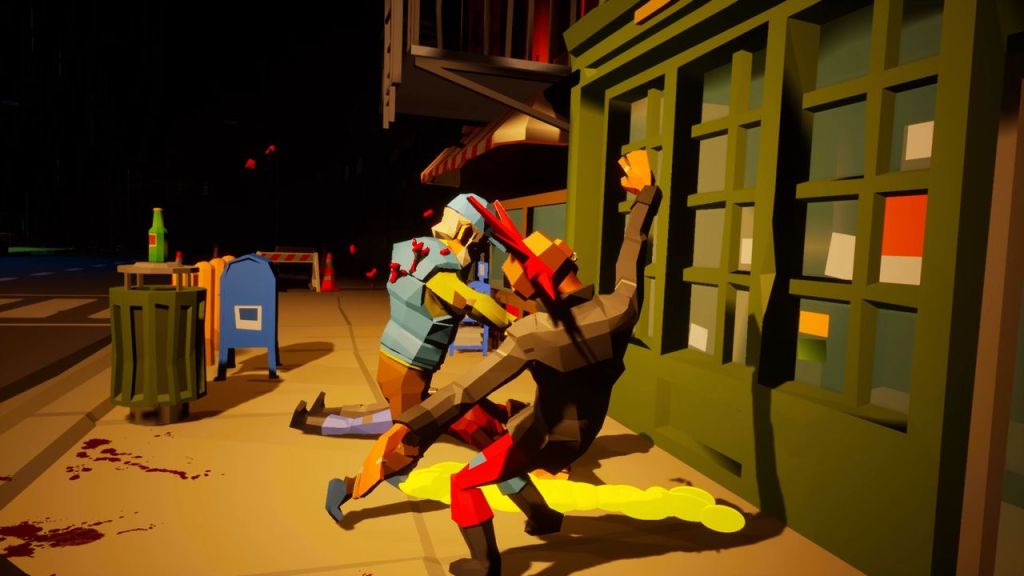
As well as the combat and accidents that can occur, damage can be caused by poor management of “essential needs” which are separated into two categories. The first is the drink meter, which depletes over time and can only be refilled by drinking bottles found during play. The second is the bathroom meter, opposite from the drink meter as it will fill over time and must be depleted through urinating, this will leave an area of yellow blobs in front of the player that can cause fall damage if stepped on.
The only way to recover health is to eat burgers that are found on the street, increasing the health meter on screen when used. The current amount of food and drink that the player has in their inventory will appear on screen and is carried over between stages, the items that they carry will also carry over between restarts making use of food and drink tactical in some instances. Now while this is a unique gimmick and an entertaining one at that, the game does have some major flaws to it.
I do enjoy the combat gimmick for the most part, the action can flow well, with a slapstick style charm to the way that limbs and body parts can get stuck in other objects. However, this is also a point of frustration as some enemies have extremely good accuracy with strikes, causing repeated knock downs as you swing around wildly. There is also the possibility of getting surrounded quickly and due to some unfortunate hit detection, it is entirely possible to miss every attack you make to your enemies.
Now I want to finish here with what are either software bugs or oversights with gameplay. First, when clearing a stage, if the bathroom or drink meter is critical, damage will still be applied during the transition between stages as the main characters dances for an extended period of time. This is a major problem as player death can occur quite easily after, either by weakening the player before fighting new enemies or by outright killing them immediately.
Second is what looks like loading errors during play. Several times during play of Drunken Fist, items and enemies that have been included on the stage objective list have failed to spawn. This occurred several times during an early portion of the game with a required item simply not spawning in the level at all, causing great annoyance as I searched for several minutes to no avail. The failure of items to load in game can cause forced restarts, losing significant progress in that stage and overall weakening the experience.
With the gameplay discussed to a level I am happy with, I will be moving onto the other parts of Drunken Fist, starting with the controls.
Controls – the controls for this release are a little unresponsive and can be difficult to use. The movement uses tank controls, with the player needing to turn before moving in the direction they want to move. The movement is slow and can be lacking in consistency, as there are some problems with input lag which is made worse when trying to move and attack enemies. Unfortunately, the grievances with the controls of Drunken Fist carry over no matter what controller is used.
Presentation – the visual style is silly and has a very goofy look to it. The character models are slightly blocky polygons, the eyes are googly and bodies just flop about when knocked down adding to the comedy of the experience. On the subject of sound, the music, sound effects and minimal voice acting are fine, with generic action, rock and surf style tracks that play in the background. These don’t really add or take anything away from the game, the way that the sound cuts off when knocked down before coming back is a nice touch but doesn’t really do anything.
Final Thoughts – Drunken Fist is an entertaining game, but I feel that the drunken gimmick can get tiring quickly so it is best to play this game in bursts. The controls are a little awkward and the input lag doesn’t help, but it is playable if you take your time when playing. It is tough to recommend this title as the gameplay may be off putting for players, compounded by the flaws of loading errors and the essential needs issue dealing damage between stage transitions.
In the end, I give Drunken Fist a final score of 3/5. Drunken Fist is an entertaining and comedic physics based brawler, but the experience is sadly marred by clumsy movement, lagging inputs and some programming errors. The game is playable and fun in bursts, with a modest price point that can justify picking it up for a couple of hours of entertainment. If you want to check it out for yourself, links to each version will be below.
Overview – developed by Taito and published by ININ Games, Space Invaders Forever is a compilation of three titles offering a mix of gameplay styles that offer something for everyone. The games in the collection are separated into two individual titles on the Nintendo Switch, with Space Invaders Extreme and Gigamax 4 SE included together and Arkanoid VS Space Invaders as a standalone title. There is also a PlayStation 4 release of the collection, containing all three games in a single pack collection. Links to both versions of the collection will be at the bottom of this review.
Disclaimer: before I get before I get into the review, I want to thank PR Hound for providing the software used for this piece. The provision of software has not influenced the contents of this review, all thoughts and opinions contained within are my own.
Now with the introductions out of the way, I will be moving onto discussing the titles featured in this collection. The gameplay for each title will be discussed individually, then the other aspects of the game will be covered as a whole.
Space Invaders Extreme
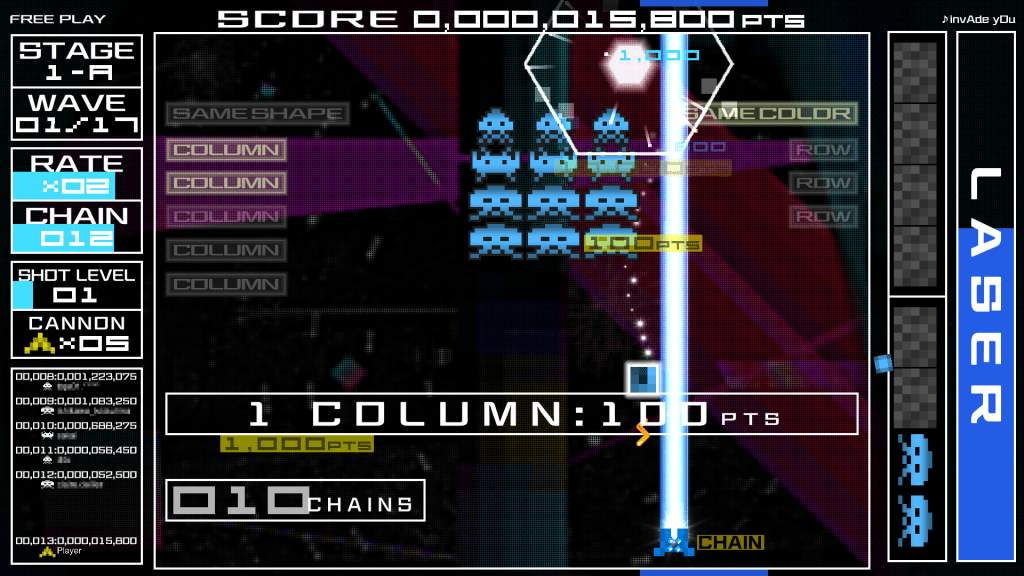
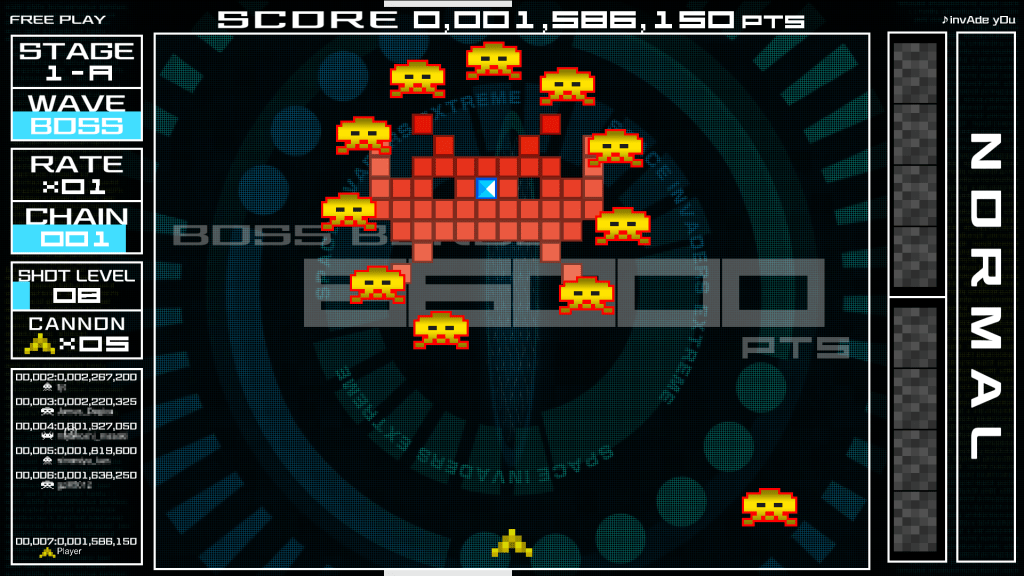
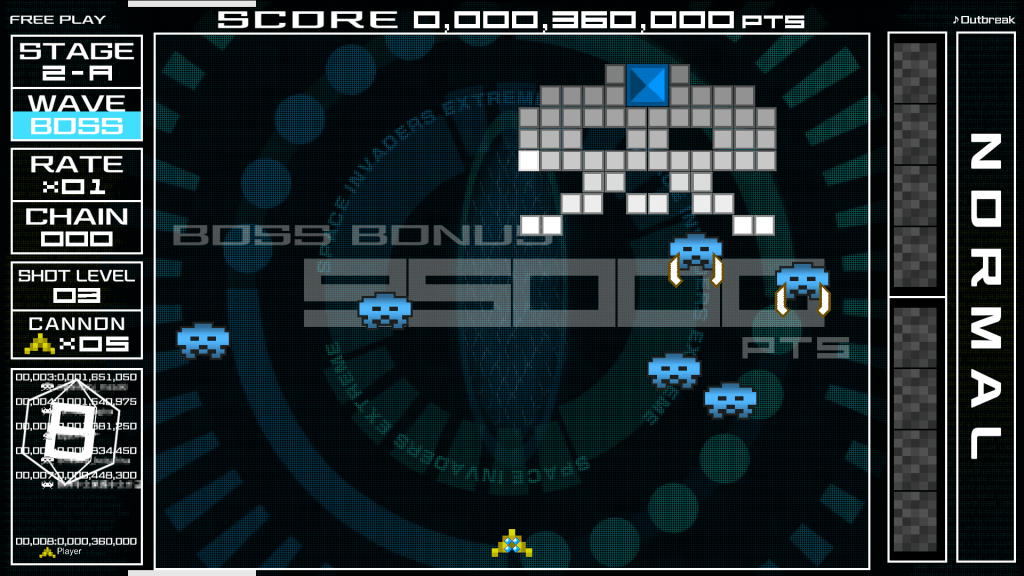
Space Invaders Extreme is a fast and frantic arcade style shooter, mixing elements of wave defense shooters, rhythmic action and tradition stage based progression. Each stage is made up of waves of alien invaders, attacking the player as they try to shoot them down. Defeating four enemies of the same color will drop power-ups for the player to use, including a laser and bomb that will last until the bar on the side of the screen runs out.
At points during the waves of a stage, UFO Invaders will appear at the top of the screen with specific colors activating different bonus stages and features. The features include a bonus roulette that can give the player a temporary boost, increased power for a time or a score jackpot. Another feature is the bonus rounds, special timed challenges that will activate a special fever mode if successfully completed, giving increased power for a time and the chance to earn jackpot bonuses from special UFOs.
During the stages, defeating enemies in specific ways will give the player bonuses, increasing in points until all on screen markers are filled and giving a big bonus. At the end of each stage, a large scale boss will appear and battle the player, increasing in difficulty as the game progresses and providing a bonus for fast completion. In total, there are sixteen stages to play through, with a route system giving the player the option of different stage patterns to play, similar to Taito’s Darius franchise.
Every batch of stages is called a route, designated by a letter and number and as each stage is cleared, they are unlocked in the free mode, allowing players to practice each stage freely. When a route is cleared, or the player gets a game over then they can put their total score on the leaderboard if it is a new high score. However, if the player chooses to restart from a game over, the total score will be reset and the score that has been earned up to then will not be added to the rankings.
Space Invaders Gigamax 4 SE
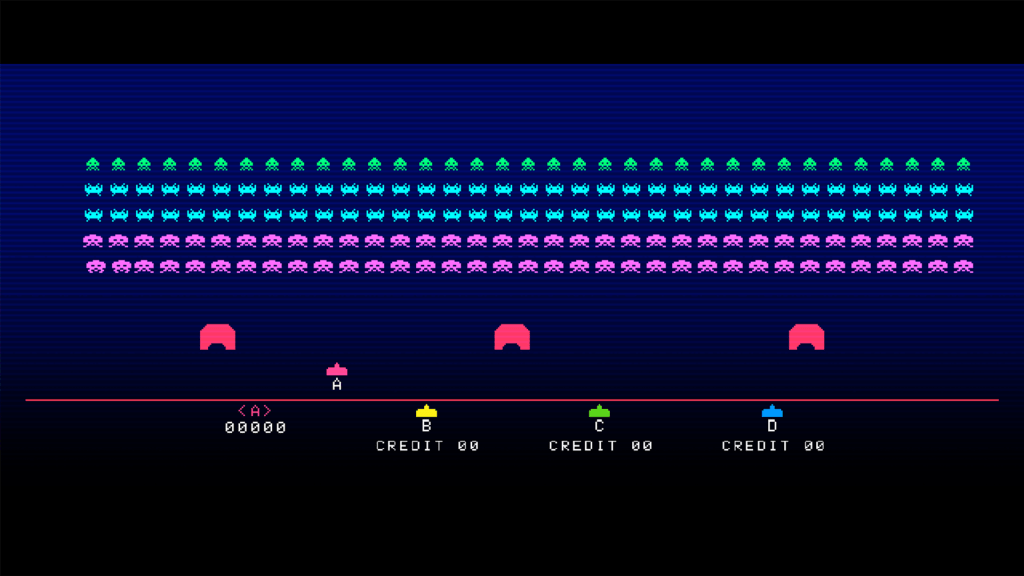
Gigamax 4 SE is a unique multiplayer focused title. A team of up to four players can work together in local co-op, battling invaders in a set of stages that offer traditional Space Invaders gameplay. Alongside new gimmicks, stages and timed boss battles where the player will fight a UFO ship that will attack the player in different ways. This is a relatively short game mode, with only a few stages to play before completion, but the multiplayer aspect and leaderboards make it worthwhile.
Arkanoid VS Space Invaders
This is the standalone title on the collection if played on Nintendo Switch. The reason for this is that Arkanoid VS Space Invaders is a touch screen port of the mobile game of the same name. To play this game, the Nintendo Switch must be held vertically, using either a finger or specialized stylus to control the action. This change to the gameplay system is because instead of shooting the aliens, the player uses a ship called the Arkanoid Vaus ship to rebound enemy attacks.
The objective for each level is to clear the enemies or blocks on screen under a strict time limit, with each stage having a different target set per challenge. The enemies will shoot at the player, using attacks that vary depending on their shape and color, colliding with the attacks will cause them to rebound defeating enemies and destroying blocks that they hit. At the end of a set of levels, a boss appears for the player to battle, clearing this will complete the area.
During the stages, enemies will drop items that can be collected by moving into them, the items include power-ups to activate the special arrow attack that functions like the classic Arkanoid ball. This ball will rebound until the timer runs out or the ball hits the bottom of the screen, the arrow attack also freezes the timer temporarily allowing a last chance to win if the timer is almost up. The player can also pick up time increases, coins and special skill drops to activate player skills.
There is a total of 150 stages to play through, separated into batches that will unlock new characters to use when cleared. The characters are from other Taito titles, including Bubble Bobble, Darius and The NewZealand Story. Each character has their own unique skills and can alter the challenge that the player encounters. Between stages, the player can use items that will give the player a boost for that stage, with the first use being free and every use after costing the player coins.
The last thing I want to talk about is the hard mode, achievements and ranking challenge. When a batch of stages is clear, the player can replay cleared stages to earn gold medals, earning enough of these can unlock new characters. If the player completes specific challenges, they can unlock new characters and rewards as achievements for each challenge cleared. The ranking challenge is a special worldwide game mode for the player to play a timed challenge with the best score being posted to the leaderboard.
Now with the gameplay covered I want to move onto the other aspects of the collection, starting with the controls.
Controls – the control methods for the two individual software packs are distinct from each other. The two game Space Invaders Forever pack is simple and intuitive, using the standard input method of moving left and right and pressing a button to shoot. The standalone Arkanoid VS Space Invaders uses touch screen controls exclusively, with no docked capabilities for gameplay only allowing the game to be played in handheld mode. This is the only major let down for this collection as it detracts from the overall gameplay quality.
Presentation – visually all three games are a hybrid mix of vibrant and sometimes pulsing backdrops (this can affect those who are photosensitive). The backgrounds contrast well with the pixel art designs of the invaders, creating a great juxtaposition of old and new that gives this collection its own personality. Unfortunately, there is a minor issue with the visuals, the size and scale of the Gigamax SE 4 game is so zoomed out that it can make it difficult to see well when the system isn’t docked.
The sound design for all three games is outstanding, with the Taito house band ZUNTATA creating an amazing soundtrack for all three titles. The mix of electro and arcade sound effects works well together, with the beeps matching the beat of each stage theme. There is an element of excitement and nostalgia that the soundtrack evokes, the use of classic sounds and synth/keyboard combine in a way that adds to the experience rather than detract from it.
Final Thoughts – overall I was pleasantly surprised with the content on offer with Space Invaders Forever as a collection. The single player experience of Extreme and Arkanoid VS have a lot of depth to them, featuring gimmicks that rejuvenate the age old formula of the original arcade title. The inclusion of multiplayer with Gigamax was an excellent choice, however the screen size was a point of frustration given the size and scale of the sprites on screen.
The biggest problem with this collection is the inability to play the Arkanoid VS title while the unit is docked. The game is fun but I feel that it can put off players who prefer to play the game docked, it can also be irritating using fingers to play as they can obscure the view so a stylus is preferred. However, I do recommend this collection as it contains enough content to keep players engaged for a substantial time, with leaderboards providing a competitive element that adds to the longevity of this release.
In the end, I give Space Invaders Forever a score of 4/5. This collection is a great celebration of the beloved arcade franchise. Space Invaders Forever offers a enough variety to the gameplay experience to keep players engaged, along with the competitive element that the online leaderboards provide to players who want to test their skills with others around the world. If you want to check this title out for yourself, links to both versions of the game will be below.
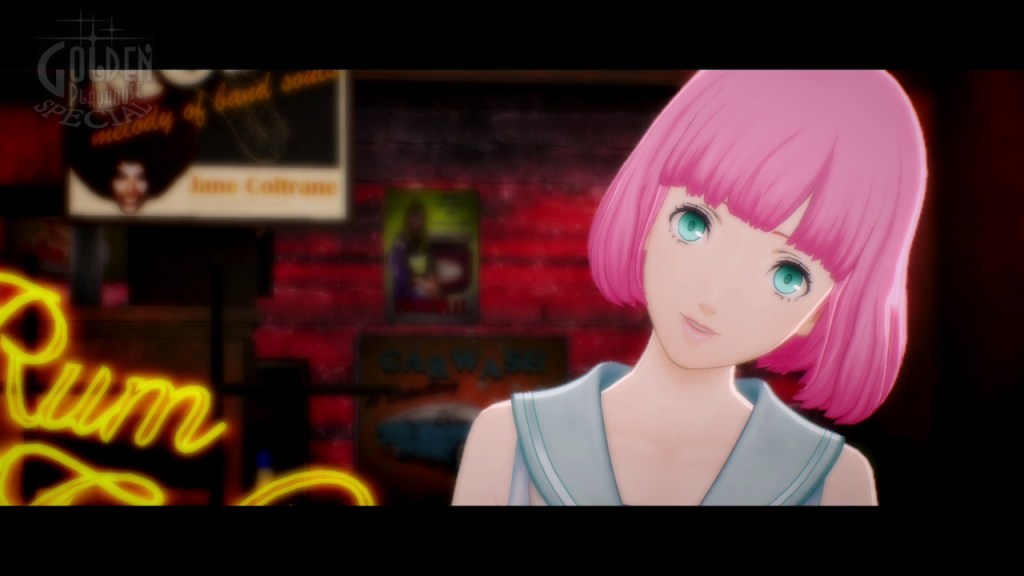
Overview – developed by Atlus and Studio Zero with Publishing handled by SEGA, Catherine Full Body is a remake/enhanced port of the acclaimed adult puzzle adventure that shares the same name. Take on the role of Vincent, a man that is stuck in a difficult situation involving his longtime girlfriend Katherine, a mysterious blonde named Catherine and an amnesiac girl called Rin. This title is available on the Nintendo Switch and PlayStation 4, links to both versions of the game will be available at the bottom of this review.
Disclaimer: this title was purchased with personal funds when released for Nintendo Switch, the game was chosen for review via a community poll with an overwhelming majority of votes in favor of this release. The community backing of this coverage has not influenced the contents of this review, all thoughts and opinions contained within are my own.
Mature Content Warning: this title is rated as Mature, the content within is not suitable for children. This software features strong language, violence, blood and sexual themes/imagery. If you are under the age rating provided for this game or are offended by any of the content featured within, please proceed at your own discretion.
Now with the introductions out of the way, let’s get into the review. I will be skipping the story section for this review, instead of a dedicated segment I feel it would be better to give minor plot details while explaining elements of the gameplay.
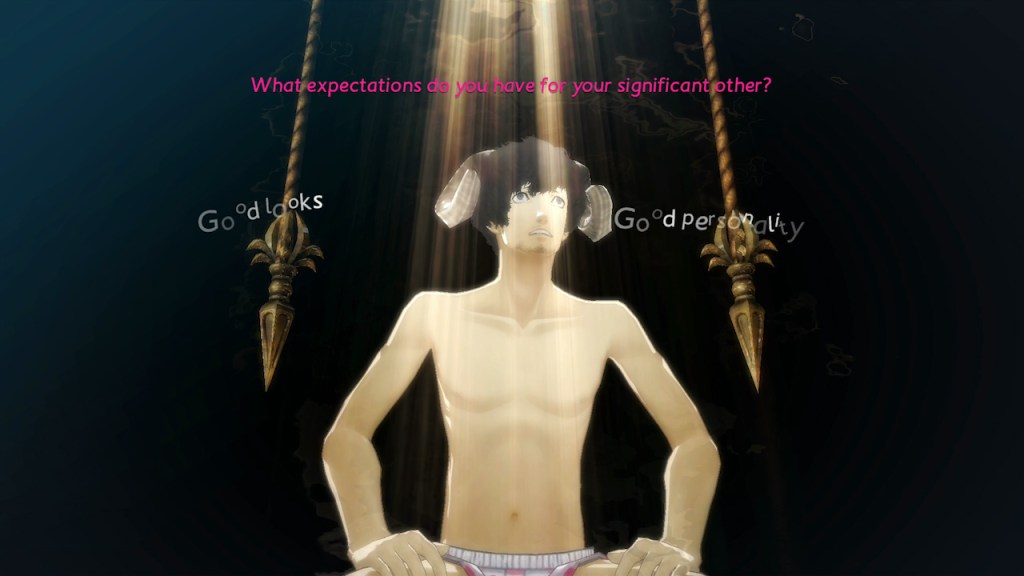
Gameplay – Catherine Full Body is a mixture between a remake and an enhanced port of the PS3/Xbox 360 title Catherine (now called Catherine Classic). The player takes on the role of Vincent, a man that is torn between his long term girlfriend Katherine McBride and the mysterious Catherine who he meets in the Stray Sheep Bar. At night Vincent has terrible nightmares, in these nightmares he must climb towers that crumble beneath him over time.
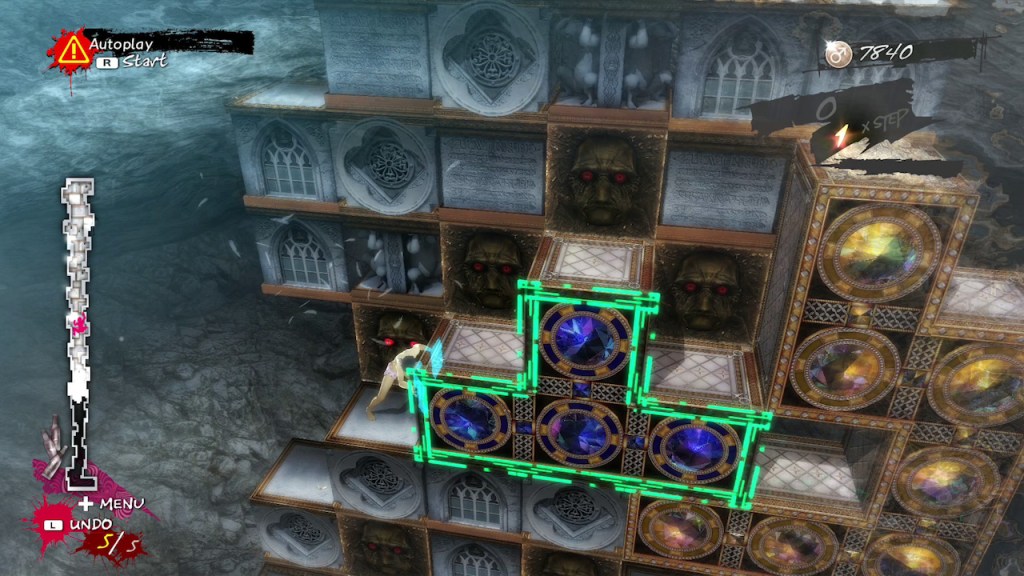
Most of the gameplay takes place in these tower climbing stages. The player must move blocks by pushing and pulling them to get higher, avoiding the many traps and pitfalls that can lead to failure. The goal of each tower stage is to get to the top without dying, increasing in complexity as the game progresses. During climbing Vincent can undo a certain number of moves, allowing for different approaches to be taken but if the player has no undo points left and is killed they get a game over.
Each night is made up of at least one floor, with a boss at the end of the stage and special interaction sections called landings between floors (with a couple exceptions). At points during tower stages in story mode, the player can find items to increase the chances of survival. The items that can be found include pillows, increasing the maximum undo uses and power-ups that can help the player by saving them from death with these special pick-ups.
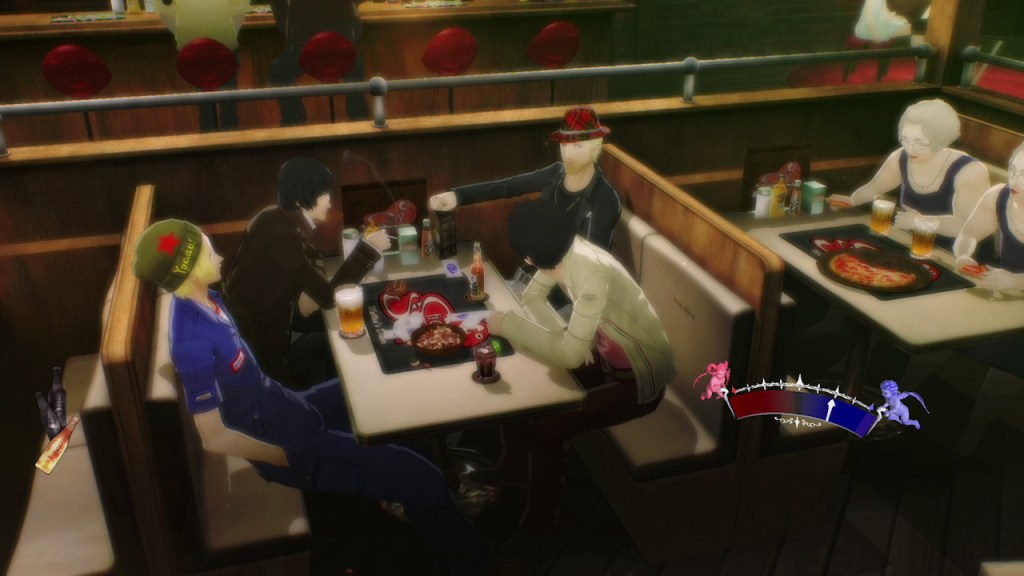
Between the tower nightmare sections, Vincent will interact with various characters in his life at the Stray Sheep Bar, his home and other locations. When interacting with other characters, they will switch between render cinematics, anime styled scenes and prompted dialogue segments. While at the bar, Vincent can freely move around and talk to patrons there, getting additional story details and learning more about the residents of the game world.
Inside the bar, the player will also be able to access a machine for a game called Super Rapunzel. An arcade style block puzzle mini-game featuring 64 stages that give the option to practice different techniques and play styles in a more relaxed and casual manner. There is also a jukebox that functions as a sound test, letting players listen to a selection of music and change the background music that plays while in the Stray Sheep.
There are also special phone events where Vincent will receive text messages and phone calls from different characters. The interactions that the player engages in have the potential to alter the direction of the story, using a meter on screen to show the current alignment that the player is moving towards. With a total of 13 different endings available, there is a lot of replay value and multiple playthroughs are encouraged to explore all the options.
When not playing the story mode, the player can take part in additional gameplay modes either solo or multiplayer. First is Babel, a challenge mode where the player can take on four stages that include progressively difficult gimmicks, this can be played solo or with another in co-op. Second is the Colosseum, a competitive two player battle mode that can be played both locally and online, with a selection of characters and stages to challenge others in best of three contests.
The vast majority of the game is identical to the original release, however there are some significant changes that have a significant impact on the way that the game plays. The changes present include alterations to the story, additional characters, modes and other enhancements.
Here is a brief list of some differences to finish the gameplay section;
Gameplay Modes – players can choose between Classic and Remix when starting a new game. Classic provides players with the option to play the original stages with minor adjustments made. Remix provides a whole new experience, with brand new stages, mechanics and gimmicks to challenge the players.
Super Rapunzel – the original stages are included from the previous game, alongside brand new arranged stages bringing the total number of stages that can be played up to 128.
DLC Additions – there is DLC included with the Switch version of Catherine Full Body (optional Purchase on PS4), these include a character pack for the Babel and Competitive modes, bonus voice over packs and a guest spot for characters from another Atlus release.
Accessibility Changes – a brand new mode called Safety has been added, allowing players who struggle with the climbing stages to get through them easier or skip them entirely. Lives are no unlimited, meaning that game overs are tougher to achieve when playing the game if the player has the ability to undo still.
Network Features – as well as competitive multiplayer options, the game also features worldwide rankings and score keeping for tower stages. When connected to the service, the number of deaths for that stage at that specific time is shown, results from questions are shown and souls can be found, signaling where players had died during stages.
Now that I have covered the gameplay for Catherine Full Body in a way that I am happy with, I will be moving onto the other aspects of the game, starting with the controls.
Controls – the controls for Full Body are simple and effective to a point. Unfortunately there are some minor annoyances with input drops, double inputs and occasional input lag. I don’t have a recent frame of reference as is haven’t played Catherine Classic in several years, so I am unable to tell if this is an existing issue or a failure of Full Body. However, aside from the inconveniences due to the inputs, the controls in general are comfortable when playing with both Joy-Cons and pro controllers.
Difficulty – the overall challenge for this release is fair and balanced, with systems implemented to give the player a fighting chance to succeed at each stage. The changes to the lives system, allowing players to try until they run out of possible moves/undo uses can really help relieve tension during play. The introduction of the Safety mode can lessen the hurdles that players face, with autoplay providing a way to experience the game without the difficulty of climbing stages.
Presentation – the visual style for Catherine Full Body is pleasing, mixing 2D anime style animation and full 3D rendered footage. The characters each have their own unique designs, allowing them to stand out and the bosses are horrifying with imagery that is grotesque in its implementation. The graphical quality is high and really pushes the limits for the Nintendo Switch, while having no impact on the performance of the game, with zero frame drops or lag when playing in handheld or docked modes.
The sound for this release is intense with a sense of grandeur behind it. Musically, the soundtrack uses a mix of classical and original compositions, featuring orchestral, rock and Japanese jazz styles to bring the world to life. Catherine Full Body has both original Japanese and an English voice track with the option to switch between the two. The quality of the English voice cast is outstanding, featuring the vocal talents of Laura Bailey (Soul Eater), Michelle Ruff (Disgaea) and Travis Willingham (One Piece) making the overall experience much more enjoyable.
Final Thoughts – I was very impressed with Catherine Full Body, the additions made to the game make the experience much more enjoyable compared to the original version. The additional characters, rearranged stages and quality of life improvements enhance not just the solo game but the multiplayer aspect of the game too. The only issue that I had was the occasional input drops, which were a nuisance during play but they didn’t impact the experience too much.
I can happily recommend this game to players of the original and those looking to experience the game for the first time. The price point for the package is competitive as both a digital and physical release on the Nintendo Switch, with the amount of content on offer and the portability of the Switch system being good incentives to purchase this version. I am pleased with the quality on offer and the way that this can push the limits of the hardware without any major issues.
In the end, I give Catherine Full Body a final score of 4.5/5. The depth of gameplay, quality of storytelling and the overall enhancements to the original make this the definitive version of Catherine, with Atlus showing once again why they are one of the most popular developers in the industry. If you want to check this game out for yourself, links to game will be below.
Overview – developed by Omega Force and Koei Tecmo with publishing covered by Bandai Namco Entertainment, One Piece: Pirate Warriors 3 Deluxe Edition is an action brawler based upon the popular anime and manga series. This is an enhanced port includes additional content that was released as DLC when the game was initially released on the PlayStation 3, PlayStation 4 and Microsoft Windows. The deluxe edition is available on Nintendo Switch, alongside a special bundle on PlayStation 4 and Steam. Links to each version will be available at the bottom of this review.
Now with the introductions out of the way, let’s get into the review, starting with the story. Please note, I will be calling this game by the abbreviated title of Pirate Warriors 3 for brevity. Also this software was purchased using personal funds, however that will not influence the contents of this review.
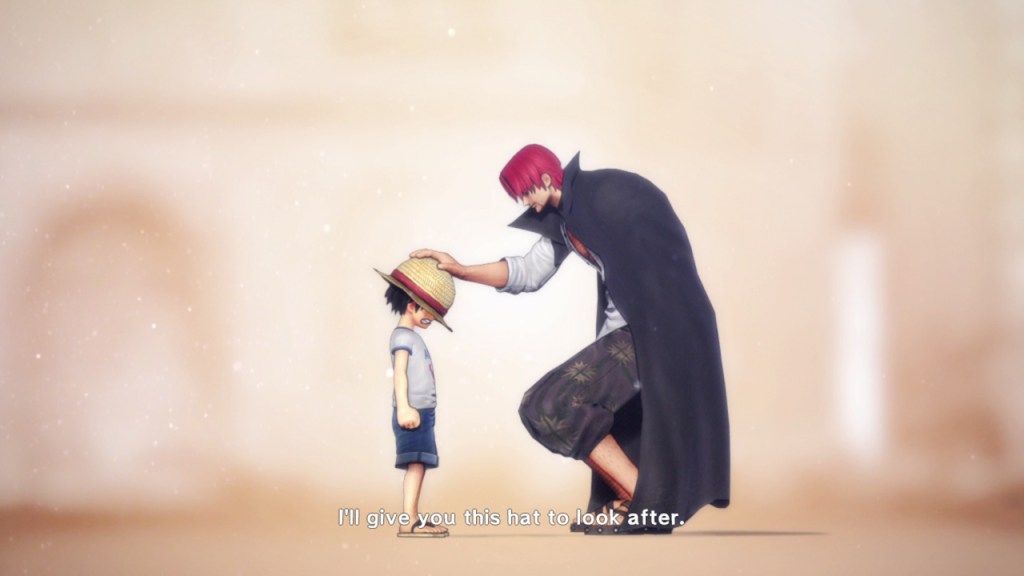
Story – the plot of Pirate Warriors 3 follows the same storyline as the anime/manga for the most part, starting at the Romance Dawn and finishing at Dressrosa with an original ending. The story plays out in animated cutscenes, along with manga styled character interactions that outline the plot for each chapter that is played. I want to point out that the narrative for this release follows the significant story arcs, omitting some of the smaller storylines and filler from the anime.
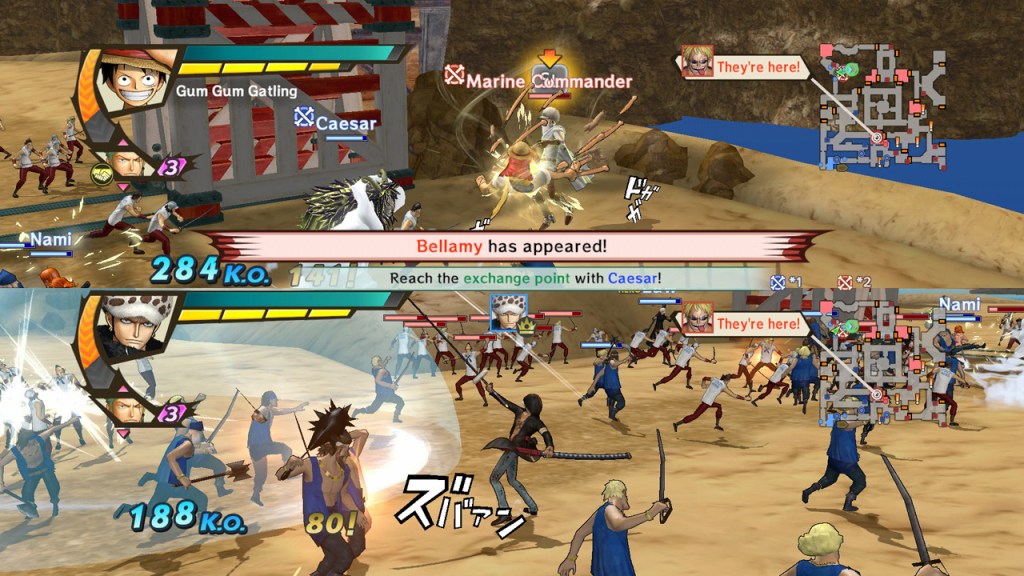
Gameplay – the gameplay of Pirate Warriors 3 follows the hack and slash/musou formula popularized by the series Dynasty Warriors. The core premise of the game is to complete missions, battle waves of enemies and capture territories on the map. The objectives that players must complete include defeating specific targets, protecting specific areas and preventing enemies from reaching designated points on the map.
There are three gameplay modes available to play in this release, they are as follows;
Legend Log – play through the story and relive the events of the anime/manga, building up a crew of pirates and leveling up during the missions. Unlock new characters, stages for Free Log and more during this gameplay mode. This Legend Log along with the other two game modes can be played two player.
Free Log – freely play cleared stages, using characters and costumes that have been unlocked by playing the game. The story of each mission will play out like in the main story mode, however if there are costumes used by the player, humorous instances may occur.
Dream Log – a special challenge mode that is exclusive to this series. Take on unique randomized challenges as you cross a large chain of interconnected islands, battling enemies and unlock character that aren’t available in the Legend Log mode. All missions and objectives are randomized, creating scenarios that are unlikely as the player can be placed with previous enemies on their force.
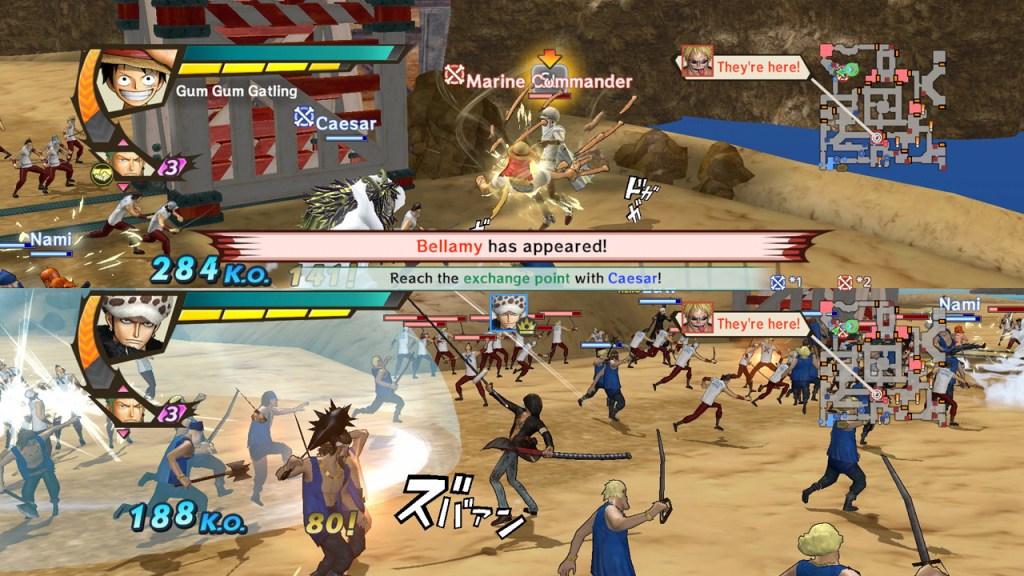
In each stage, the player will fight mobs of enemies with a selection of combo attacks similar to other roaming brawler titles. The basic move set that the player can use are separated into three types, quick attack, charge attack and special attack. The quick and charge attacks can be chained together to create a range of combos, with the potential to wipe out waves of enemies quickly. The special attack uses a meter that charges over time, hitting opposing forces with a powerful strike.
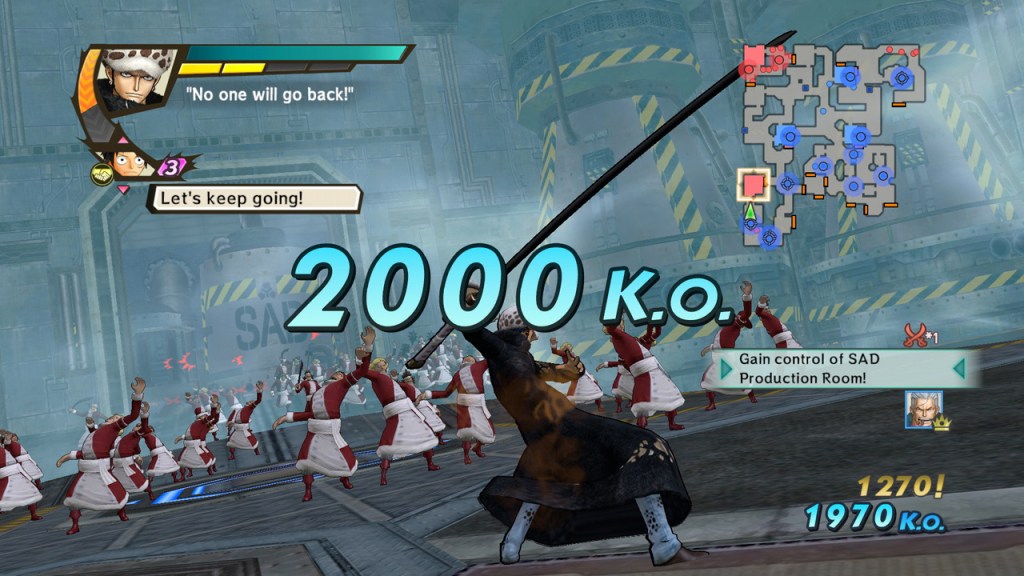
Separate from the standard moves that players can use is the Kizuna system, a partner assist system that has crew/support characters jumping in at the end of a combo to perform an attack. Each support character has two special support attacks that will happen depending on the attack that ends a combo. When enemies are defeated by the Kizuna attacks, a special K.O. marker will appear on screen, adding more with each successful knockout.
The Kizuna gauge will fill up to three levels and have special functions that can be used. I will be talking about the two basic mechanics here. The first is Hero Power, a special status that characters can enter and provide bonuses for a limited time during battle. The second is Kizuna Rush, a powered up stage that characters can enter when the gauge is maxed out, increasing the overall power of the characters and provide access to a special group attack called Special Kizuna Attack.
When enemies are defeated, there are several things that can happen depending on the situation. If the player is within the boundary of enemy territory, eliminating enough enemies will claim that territory and spawn allied forces to help the player. Fallen mobs will also have the potential to drop loot for the player to collect, from recover items and money to special coins that can be used to power up the playable characters.
Upon clearing a stage, the player is ranked on three scores and provided with a final grade at the end. Players are ranked on their total standard knockouts, kizuna knockouts and the clear time, providing a letter grade assigned to each with an overall rank from the average of all three. Additionally, the player is provided with money (called Beli in game), pirate coins for increasing character stats and experience points for leveling the character up.
The last thing I want to talk about is the leveling and upgrade system. Character leveling works in two ways, the player can level up by earning experience by clearing stages and spending Beli to level inactive characters. There is a level cap of 50 that can be reached before needing to break the limit and reach level 100. Level break is generally attained by using rare coins, which are earned by completing special requirements in all game modes and are not consumed unlike bronze coins.
Bronze coins are obtained by defeating specific enemies, playing as specific characters and using support characters effectively. These coins can be spent to power up the base stats for each unlocked character, including attack power, defensive capabilities and unlocking additional special attack bars. The maximum number of a single coin is 99, giving more reason to upgrade characters as often as possible during the course of the game.
Now there are many things that I have omitted from this section. However, I feel that the more complex elements of the game should be seen first-hand to get the most out of the experience. So with all basic mechanics of this title covered, I will be moving onto the other aspects of this release, starting with the difficulty.
Difficulty – Pirate Warriors 3 has a level of challenge that is fair and balanced, made up of three difficulty options that the player can be set freely. The difference between each difficulty setting is balanced well, allowing players to gradually increase the toughness of stages to gain maximum rewards for 100% completion of the game overall. If stages are a little tough solo, co-op play can make harder stages a little easier and help out greatly for those who may struggle.
Controls – the control method for this release is simple and effective. The thumbsticks control movement and camera, the face buttons control attack/defense inputs and the shoulder buttons cover special functions like Kizuna Drive. Inputs and movement are smooth, with no lag or issue when playing with the default Joy-Cons or pro controllers, the game even supports single Joy-Con play for quick multiplayer action on the go.
Presentation – the visual design for Pirate Warriors 3 manages to capture the spirit of the anime, with smooth animations and effects have the right level of exaggeration to them. There is almost zero lag during play, with very occasional frame drops when there is a lot of objects loaded at once. There are some minor blemishes to the visuals due to draw distance, but it doesn’t detract from the overall quality of the game as the fog is a symptom of the hardware limitations of the Nintendo Switch.
The soundtrack for this title is excellent, employing a mix of Japanese jazz/big band style music with rock and keyboards. This combination provides an air of excitement during play, tying the whole experience together. The dialogue is performed well, with high quality voice acting featuring the majority of the original Japanese cast of the show. There is no English voice option, but I don’t feel that this detracts from the experience.
Final Thoughts – over the years I found myself getting tired of the Warriors/Musou style of games. However, One Piece: Pirate Warriors 3 was a refreshing experience, providing a different take on the formula for me. The humor and action of the anime translates well into this style of game, providing satisfaction when wiping out mobs of enemies with the ridiculous attacks. Also, the multiplayer aspect of this game is fun however the only issue is the mini map on screen being a little tough to see.
I recommend picking this game up, the depth of gameplay and the fun that can be had is worth the price. The additional content of over 40 items included with purchase is a bonus, giving more value to the package on offer. If you have a standard Nintendo Switch or handheld only lite model, you will not be disappointed. I applaud Omega Force for the high quality of this release given the limitations of the hardware, resulting in some minor flaws with draw distance, but that doesn’t detract from the overall experience.
In the end, I give One Piece: Pirate Warriors 3 Deluxe Edition a final score of 4.5/5. This title is a frantic action brawler that captures the spirit of the series that it is based on. Featuring a good sized roster of characters, high quality voice acting and gameplay that far exceed the expectations of what you may think that the switch is capable of. If you want to check it out for yourself, links to the game will be below.
Overview – developed by Yeti and Regista with publishing covered by Sekai Games, Root Double -Before Crime * After Days- Xtend Edition is a visual novel where player choice is handled through feeling. Experience the narrative before and after a catastrophic event, with multiple endings to discover and branching paths to explore. This experience is available for Nintendo Switch and Steam Service, if you want to check this out for yourself, links to the game will be available at the bottom of this review.
Disclaimer: before I get into the review, I would like to thank PR Hound for providing the copy of Root Double -Before Crime * After Days- Xtend Edition used for this coverage. The provision of this software has not influenced the contents of this review, all thoughts and opinions contained within are my own.
Now with the introductions out of the way, let’s get into the review, starting with the story. I will be calling this title Root Double for brevity and most story details are taken from the Nintendo eShop to prevent significant spoilers.
Story – The year is 2030. Business is as usual in the isolated research city of Rokumei that is until several explosions suddenly go off in the nuclear research facility known as “LABO.” The city sends in “Sirius,” an elite rescue squad, to deal with the situation. But the situation only gets worse when LABO’s nuclear reactor melts down, with members of Sirius and survivors still trapped inside.
With radiation leaking everywhere and not enough anti-radiation medication to last until lockdown lifts, the survivors of the catastrophe make more grin discoveries in a deathtrap full of fire and radiation. In their struggle for survival, they learn that doubt is their greatest enemy, and trust their greatest asset if they want to make it out of LABO alive.
Gameplay – Root Double follows the traditional visual novel structure for the most part, with the story delivered through dialogue and images for key points of the narrative. In this release, there are two storylines that can be chosen from at the beginning of the game. The two stories have multiple endings to unlock, with additional extras that can be obtained during play.
The story of Root double features two protagonists, with their stories taking place at opposite points of the LABO disaster. The first is Watase Kasasagi, protagonist of Root After and captain of the Sirius rescue squad who is suffering from amnesia in the hours after the incident. Second is Natsuhiko Tenkawa, the lead of Root Before and a student collecting clues in the days before the disaster occurs.
In Root Double, the way the story progresses is with a unique system called the Senses Sympathy System, a feature that alters the direction of the narrative through emotions. Using the SSS mechanic, the player can decide how they feel about the characters (including yourself) by increasing or decreasing a meter attached to their name. shaping the way that events unfold at key points during the experience.
There are three types of SSS events that occur at set points during the game, these moments are called Divergence Points (also known as branches) and can have a major influence on the story. The events are the only way that you can alter your senses, with a symbol called an Enneagram that will appear on screen. However, the symbol won’t last long so time can be a crucial factor at these points.
The three types of Divergence Points are denoted by color and are as follows;
Blue – this is an event where the player may be able to influence that target character, altering the overall impression they have. A blue branch is generally of lower importance and may not impact the narrative to a great extent, however neglecting these branches may cause dire consequences.
Yellow – here the player has a higher chance to influence their target, altering their impression to a greater degree. A yellow branch is more important than a blue branch in general, having a greater impact on the progression of the story. These points signal a big change that doesn’t pose an immediate risk to the player, but can imply a much more dangerous situation is approaching.
Red – this color signifies grave danger and is the most important branch that occurs. If a poor choice is made during these branches, death will occur and cause a game over for the player leading to a bad ending. Pay attention to the other branch colors as they can lead to a red branch and potential death if great care isn’t taken during the story.
The choices taken will influence the ending that they player will achieve, with multiple endings spread across the two storylines the decisions that are made have the potential to lead to different outcomes.
Now I feel that I have covered the gameplay to an extent that prevents spoilers, so I will be moving onto the other aspects of the game, starting with the controls.
Controls – the controls are very simple, using the A button and touch screen to advance the plot. The menus are easy to navigate and the SSS/Enneagram is fairly streamlined, using the left side of the controller to modify the sense meters. The game handles well using both the Joy-Cons and pro controller, but I will say that the best way to enjoy the experience is via touch screen where possible.
Presentation – the visual style of Root Double is stunning, with pleasing character designs and beautiful artwork for key scenes. The overall look and appearance of the experience works well, with character designs and backdrops that effectively pull the player into the story. The text is readable with good clarity in both docked and handheld mode, providing an enjoyable read however you want to experience it.
The soundtrack and overall sound design is immersive, adding to the way that the story plays out. The game features a variety of music tracks that fit the overall tone of each scene, with tense compositions that contrast with the laid back melodies present. The voiced dialogue is entirely in Japanese, with outstanding performances from Megumi Toyoguchi (Kingdom Hearts) and Kei Shindo (My Hero Academia).
Final Thoughts – I have enjoyed visual novels in the past, with each story following the traditional narrative structure where the direction is dictated through simple choices. The experience of Root Double was a refreshing change of pace, giving the feeling that I had more of an impact on the way that the story unfolded. The SSS system is intuitive and has greater immersion than most other VN releases.
The content on offer from this title, along with the quality of the storytelling makes it easy for me to recommend Root Double to fans of the visual novel genre. I found that the story was paced well with a good balance between action and suspense. I have nothing negative to say about the experience from a personal position, however I feel that the slow build of the story may be off-putting for some.
In the end, I give Root Double -Before Crime * After Days- Xtend Edition a final score of 4.5/5. This is a well-crafted story that blends action and suspense in a balanced way, featuring beautiful artwork and a unique branch system that offers more immersive control of the story to the player. If you want to check this title out for yourself, links to the game will be available below.
Overview – developed by Taito and published by ININ Games, Bubble Bobble 4 Friends: The Baron is Back is an expanded version of the previously exclusive Nintendo Switch release. The arcade style platform action title features the iconic bubble dragons Bub and Bob, alongside two new friends for this fun adventure. This title is available as both a standalone release for the Playstation 4, with both a complete edition and a free update for the Nintendo Switch. Links to both versions of the game will be available at the bottom of this review.
Disclaimer: before I get into the review, I would like to thank PR Hound who provided the copy of Bubble Bobble 4 Friends used for this review. The provision of this software has not influenced the contents of this piece, all thoughts and opinions expressed within are my own. Please note that this title was originally covered earlier in the year. However, along with the new content update, the initial work has since been lost prompting this revamped coverage.
Now with the introductions out of the way, let’s get into the review, starting with the story.
Story – one night in a child’s room, the bubble dragon Bub is brought to life by magic along with the magician Bonner (known as Drunk in other regions). The magician is jealous of Bub being the favorite toy of the child, attacking the bubble dragon and challenging him to battle. With the help of his friends, the dragon goes on a magical adventure through the child’s room, battling the minions of the jealous magician during the quest.
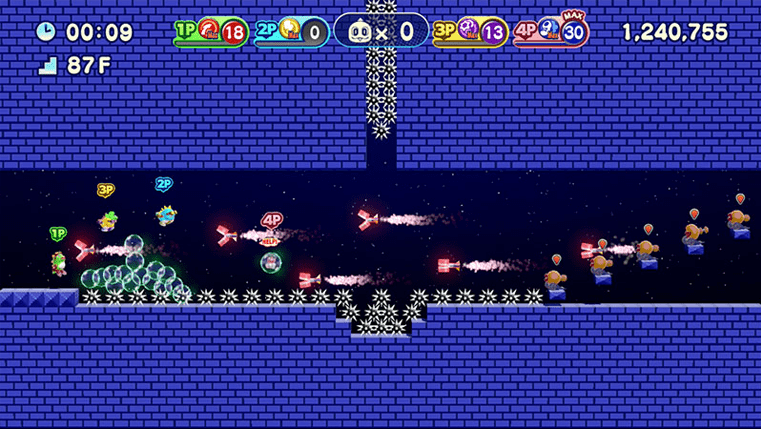
Gameplay – the objective of Bubble Bobble 4 Friends is to clear each of the 50 stages spread out through five worlds, capturing monsters in bubbles and defeating them by popping the bubbles. The worlds are made up of single screen platforming challenges, featuring platforms and obstacles to overcome. Each set of stages has a unique theme, culminating with a large boss battle on the tenth stage of each world.
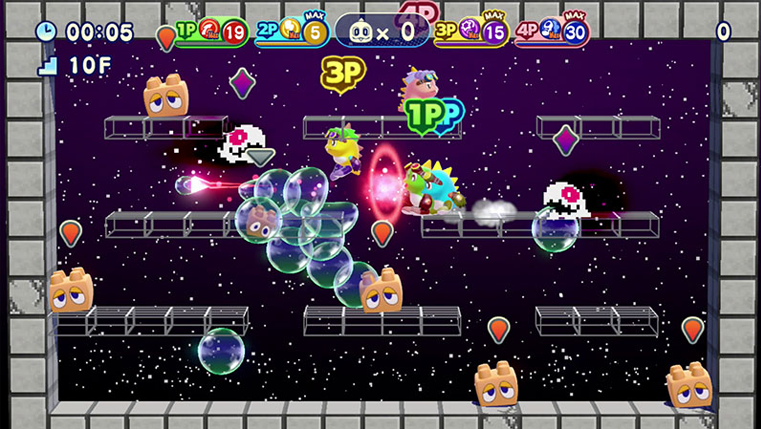
The bubbles are the main way that players can attack enemies, when a monster is trapped in a bubble the player can pop the bubbles by using the spikes on their back or stomping on them. When several enemies are trapped, the bubbles can chain together as they pop boosting the score that is earned. As well as trapping enemies, bubbles can be bounced on allowing access to enemies that are far away. Along with standard attack, there are special bubbles that can be used to defeat enemies.
During each world, the player can collect special letters to spell the word extend. These letters are placed in different points in each world, with successful collection of the letters providing special rewards. When each world is completed the player gains a new power-up, with extend giving that ability an upgrade. The special power-up items have a limited number of uses, recovering a different number of actions when each stage of that world is cleared.
When playing this title in single player or multiplayer, there are some differences in the way that the game will function. The differences between the two styles of play are subtle but effective. The total lives available during each world are limited to four when playing alone, with a total of ten in a pool for two or more players. During solo play, when the player is hit by an enemy or makes contact with a hazard, death is certain. However, in multiplayer the injured player is trapped in a bubble and can be saved by an ally, preventing a life from being lost.
The last thing I want to discuss is the additional play modes that players can access. Here are some details on each of the three extra modes that are available, they are as follows;
Hard Mode – this extra mode is unlocked by completing the story mode, providing an additional fifty stages, more upgrades and an increased level of difficulty. The stages are rearranged to an extent to make them different from the standard stages.
Arcade of Memories – a special treat for the fans of the original. The original arcade title has been included in its entirety, all one hundred stages, infinite credits when playing in two player mode and the ability to toggle scanlines. This is a perfect conversion of the game that started it all and an excellent addition to the overall package.
Arcade of the Future – new to the updated release, the Arcade of the Future (also called BB4F: The Baron is Back) is a special mode that is unlocked by completing the standard story mode. This is mode functions as an endurance/survival mode, with players having a limited number of lives to clear one hundred new stages. There are no continues available, making this is the toughest challenge in the game but there is a practice mode for cleared stages.
All four game modes have global rankings available, bringing the spirit of the arcade to a new generation as players can challenge others from all over the world for a position on the leaderboards. The inclusion of worldwide high score systems gives more replay values to Bubble Bobble 4 Friends, rounding out an excellent experience for all.
Now with the gameplay covered, I will be moving onto the other aspects of the game, starting with the controls.
Controls – Bubble Bobble 4 Friends uses a simple control method, all key functions are attached to the face of the controller, with special skills on the shoulder buttons. The movement is smooth, the jumping is precise and the bubbles/skills are effective. There is zero input lag when playing all gameplay modes, providing a comfortable experience when played with any controller set-up, be it the pro controller, Joy-Cons or additional third party peripherals like the Retro Bit Sega Saturn Controller.
Difficulty – the overall challenge is balanced in all game modes, with a gradual increase in difficulty over the course of the game. This allows players to build their skills over time, with new enemies and hazards being introduced as the player progresses. During the main story mode, hard mode and in the Arcade of Memories (co-op only), the player has access to infinite continues.
There is also the option to continue a stage with invincibility, this will last until that stage is cleared and made available when three game overs have occurred in one stage of story/hard mode. The way that the game balances the challenge across all four difficulty settings provides a level of accessibility that means anyone can enjoy this wonderful game.
Presentation – the visual style of Bubble Bobble 4 Friends is very cutesy and charming. The designs for the bubble dragons and enemies look like toys, fitting the setting of a child’s bedroom. Each world has its own unique theme, with each stage having elements in the background that are appropriate for overall aesthetic that the game presents.
There is also a the use of pixel art in some stages, including sprites of Bub and Bob, alongside rainbows and a message of dedication to the creator of Bubble Bobble, Fukio Mitsuji. The soundtrack is a delight to listen to, with rearrangements of the original Bubble Bobble theme as well as original compositions. The combination of bright chiptune styled sounds along with more conventional electronic beats adds to the experience and ties the whole game together.
Final Thoughts – when I first played this game, I felt that it couldn’t be improved upon. However, the introduction of the Arcade of the Future made the package even better, with an additional one hundred stages to challenge alone or with a friend. The addition of online rankings gives players the incentive to return to the game after completion, adding a competitive element to the experience. The only thing I would say is missing is an online multiplayer component to play with others around the world.
I can recommend this title to everyone, as the overall experience has something for all players to enjoy. The inclusion of the original arcade version of Bubble Bobble was a great choice, as a piece of gaming history I feel should be experienced by players both old and new. The content, gameplay and quality of this release is a testament to the hard work that Taito puts into their games. If you have a PlayStation 4 or Nintendo Switch, go out of your way to play this game.
In the end, I give Bubble Bobble 4 Friends a final score of 5/5. This is an excellent return for one of the most iconic franchises in the history of gaming, providing a fun experience that is suitable for players of all ages and skill levels. The content on offer and the depth of challenge can keep players engaged for hours on end. If you want to check this game out for yourself, links to both versions will be available below.
















 W.Kohaku Media