Cattie – Nintendo Switch Review

Overview – developed by Vergiu Games and published by Eastasiasoft, Cattie is a black and white platform action title featuring an adventures cat on a quest. As the fearless feline, traverse 100 stages, jumping from platform to platform and wall to wall, dodging enemies and hazards along the way to their goal. This title is available on all console platforms, with a link to each version of the game at the bottom of this review.

Disclaimer: before I get into the review, I would like to thank Eastasiasoft for providing the copy of Cattie that was used for this piece. The provision of this software has not influenced the contents of this review, all thoughts and opinions contained within are my own.

Now with the introductions out of the way, let’s get into the review. The game itself is light on plot, so I will be going straight into discussing the gameplay for Cattie.

Gameplay – Cattie is an 8-bit style action platformer, made up of 100 stages for the player to challenge. The first 50 stages send Cattie through a variety of “locations”, where the player must hop from platform to platform, avoiding the hazards and enemies that appear. This is a precision style platformer, so Cattie only has a single hit and will die if contact with a hazard is made. When this happens, the player will be sent to the start of the stage or the last checkpoint reached.

Cattie has a few skills in their bag of tricks, with the ability to jump, hop from wall to wall and swipe at the enemies that appear. This gives the game a fast paced fell to it, with the ability to quickly clear gaps and traps for those who live on the edge. However, if players prefer a more cautious approach, then some careful maneuvering and point to point platforming is possible. There are no lives in this game, so players can approach it in any way they wish.

The stage mechanics will start off simple, with spikes and a few enemies pottering about. But as the player gets deeper into the game, new mechanics, enemies and hazards will make their presence known. This includes enemies that throw projectiles, flying enemies and platforms that will crumble below Cattie’s paws. This feels natural and doesn’t cause a spike in overall challenge, making it easy for players to adapt as they go.

When players pass stage 50, they will enter the second half of the game which flips the script, literally. The other half of the game takes place across mirror stages, where the player must navigate their way from the final stage all the way back to the first. This may appear like a lazy way to extend the length of the game, but it becomes a fresh challenge all its own. This is due to the position of walls, doors and more being changed.

Once the player makes their way back to the point they began in the mirror world, the game is over and the player is returned to the title screen. After stages have been cleared, the player can select them in the level select screen. This makes the game a speedrunning haven, as players can replay the game and clear individual stages or the whole game in a single sitting. The action has a satisfying feel to it, but it is not without flaws.

During play, it is very possible to collide with the edge of a spike and die immediately, with the same happening when trying to kill enemies. This collision inconsistency can be very frustrating, breaking up the flow of gameplay when performing multiple challenging sections. There is also the potential for unnecessary death, which is due to the delay between being able to jump after attacking, causing players to slide off edges and into death traps.

Now with the gameplay covered, it is time to discuss the other aspects of this release, starting with the controls.

Controls – Cattie uses a basic 2 button input system, with the face buttons controlling jump and attack, making for an easy to pick up and play experience. The game plays very well when performing the platforming action, jumping over hazards and from spring to spring. However, there is some minor lag when trying to quickly attack and jump in succession, as there is a delay between the inputs. This appears to be due to the animation needing to complete for swiping.

Difficulty – there is a trial and error element for Cattie, but it doesn’t feel like banging your head against a wall. The escalation of difficulty is gradual and doesn’t spike significantly at any point, which makes the game beatable by players of all skill levels. This allows for players to take their time or rush into danger, giving more flexibility to the challenge. Those who want to really push themselves can attempt to speedrun the game, increasing the challenge under a time limit.

Presentation – the visual style for this release has a very retro feel to it, using an 8-bit style of sprite work in a black and white color palette. This minimalistic look makes the game stand out among others in the indie sphere. The overall atmosphere of the game is tied together by the soundtrack. The spacey soundscape that plays throughout works well in tandem with the background, which consists of stars moving on the black void.

Final Thoughts – I chose to cover this game because the black and white visuals caught my eye, this is because most titles in the genre stick to color. This decision was a good one, as I had a wonderful yet slightly frustrating time with the adventurous feline. The game can be cleared from start to finish in a couple of hours, which I was happy to do several times. It is a simple and fun game, which I can easily recommend to people looking for their next platforming fix.

That’s not to say it isn’t without its flaws though, as there are some issues that sadly hurt an otherwise excellent gameplay experience. The collision detection is the biggest problem, as it can hinder the flow of play, especially when the trying to deal with enemies in tricky locations. This has the chance to cause a lot of frustration to players, which no amount of infinite lives can fix. However, the sound, gameplay loop and overall presentation make up for it to an extent.

In the end, I give Cattie a final score of 3.5/5. This is a good action platformer, with a distinct presentation and gameplay loop that works well to create a fun experience, but it is sadly marred by a few minor inconsistencies when it comes to the finer points of play. If you do want to check it out for yourself, a link to each version of the game will be below.

Link to Nintendo Switch version (HERE)

Link to PlayStation version (HERE)

Link to Xbox version (HERE)

Vividlope – Nintendo Switch Review

Overview – developed and published by independent developer Jaklub, Vividlope is an arcade style puzzle game all about coloring tiles and avoiding enemies. As one of three anthropomorphic and cute characters, go on a wild adventure to clear all the stages and escape the Vividscape. This title is available on Steam and Nintendo Switch, with a link to each version of the game available at the bottom of this review.

Disclaimer: before I get into the review, I would like to thank the representative who provided the copy of Vividlope for this piece, via the Keymailer service. The provision of this software has not influenced the contents of this review, all thoughts and opinions contained within are my own.

Now with the introductions out of the way, let’s get into the review. The story for Vividlope is a mix of surreal comedy and abstract humor, so I will be skipping that segment and going straight into covering the gameplay.

Gameplay – Vividlope is an arcade style puzzle action title, where the objective of each stage is to change the tiles that make up the level to the target color. This is done by simply walking over them, which will change their color when contact is made. Each of the stages has a target percentage to hit, which will vary for each of the stages. This game loop is reminiscent of older games like the arcade game Amidar and the PC-Engine/Game Gear title Skweek, with a look that is straight from the Dreamcast era.

The game itself has two main game modes, with the Story and Endless mode which are selectable from the main menu. Story mode consists of a collection of worlds for players to challenge, each with their own set of stages. At the start of the mode, the player will be shown a story cutscene, being sent to the hub world shortly after. While in the hub world, the player can interact with characters that appear and enter the different worlds called levels.

When the player starts a level, they will be greeted with a surreal cutscene for the character they have chosen. Then players are given a target number of stages to clear before they can progress. There is a non-linear approach to this, letting players chose to challenge stages in any order they want. When enough stages have been cleared, the player can move onto the next level. But if players want to, they can go for maximum completion of the world.

The core gameplay loop is to color the stage by walking over tiles, avoiding hazards, enemies and collecting bonus fruits. As the player makes their way through the stage, enemies and items will spawn into the stage. These enemies will wander around and attempt to attack the player if they notice them, dealing damage if contact is made. There is a chance for time to slow down for a split second, allowing players a brief window to dodge the enemy.

Players aren’t defenseless when they are trying to clear tiles, as they can jump over enemies and hazards, but they can also collect weapons that appear. When these items are collected, players will be given a limited number of uses, giving them more options for fighting enemies and coloring tiles. The items include a hammer and balloons that splash ink when they are used, adding more of a strategic style of play to the game.

As soon as the target percentage is hit, players will enter the bonus phase. During this time, the player can attempt to clear the remaining spaces and reach 100%. During this bonus phase, the player will lose energy if they make contact with spaces that have already been colored, with the bonus ending when it runs out. However, if the player can clear all of the remaining spaces, they will keep all of their remaining energy for a bonus.

After the stage has been cleared, players will earn ranks, with the lowest possible ranking being E and the highest being S+ on the Normal difficulty and V on Hard. There is no failure rating that can be reached with the only way to stall progress being death. This means that players of any skill level have a chance to make it through the story mode. If the player wishes to, they will be able to replay any of the stages, trying to go for the maximum ranking.

Players will also earn gems by clearing stages, which can be used in the shop by talking to the vendor. These items include items that can help the player during stages, including weapons, extra lives and power boosts. Then players are able to get attires, allowing players to change the look of their character, giving them different colors that they can equip. this gives players more flexibility and is a nice touch, letting players earn something for their play.

There are three playable characters in this release, with each of them having their own unique strengths and weaknesses. Here is a brief breakdown of the characters that can be used in Vividlope;

  • Cerise – The cute bunny with the beret is the most balanced of the three characters, offering players a high level of power, while providing the ability to with stand one hit before death. The best character for new players
  • Ecru – The companion of Cerise who wears a paper sailor hat and is more difficult to use. They have the ability to move faster for each uncolored space they touch, but the speed will be lost when touching other spaces and they cannot take a hit like Cerise.
  • Miss Noir – Exclusive to this release, the fire fox Miss Noir who is likely the easiest character for players to use. While she doesn’t have the abilities of the others, Miss Noir has the ability to throw fire at the cost of power and item uses, changing tile color by rolling flames.

Alongside the main story mode is the Endless mode, which pits players into a survival style challenge. Clear as many stages as possible and get the highest score possible, with the best score being added to a local leaderboard. The stages will increase in difficulty the further a player progresses, introducing more challenging enemies, tile patterns and hazards for players to overcome. When all lives have been lost, it is game over and players will need to try again.

There is also an Extras menu where players are able to view gallery content, like backgrounds, tutorials and more. In the Extras menu, players can also find the bestiary which can be used as a practice mode. In the bestiary, the player is invincible and can use the stamp hammer, using it to learn how to deal with enemies and the best way to get around enemies. There are additional secrets that players can unlock, but I will not be revealing them here.

Now with the gameplay covered, it is time to discuss the other aspects of Vividlope, starting with the controls.

Controls – Vividlope is relatively simple in terms of control, with the player being able to move with the thumbstick and D-Pad to move around the stages. The functions and actions are covered by the face and triggers, which feel responsive and reactive, especially during the more challenging moments of play. The game plays comfortably with both Joy-Con and a pro controller, with the best way to play the game is with a controller with a solid D-Pad, for additional precision.

Difficulty – there is an escalating difficulty curve, offering players a challenge that will increase along with their skill level. There are two selectable difficulty options, with players choosing between Normal and Hard. The Normal option is balanced well enough for all players to get to the end of the game, with the Hard option for players who want to put their skills to the test. This release is approachable by all players, regardless of skill level and ability.

Presentation – there is a distinct look to this release, giving Vividlope a spacey and retro feel. The character models, grid layouts and backgrounds all come together to create the desired surreal effect. The performance is flawless, optimized perfectly for the Nintendo Switch, with zero issues in terms of lag when played in docked or handheld mode. The sound further builds the atmosphere, with music and effects that tie the entire experience together. The look of the game also reminded me of games from Sega like Monkey Ball.

Final Thoughts – I decided to apply for this game after seeing a few images, with the overall look being what pulled me in. I will say that I was not disappointed with this decision. Vividlope is a fun and challenging arcade style puzzler, which reminded me of the PC-Engine title Skweek. There is a spacey feel to the overall look of the game, with the different environments and the way the stage floats in the air, adding to the experience and making me think of classic SEGA titles.

I had a great time playing Vividlope, with the challenge being firm but fair and the rating system pushing me to do better. I really enjoyed playing through the stages of story mode as the different characters, then going back to them for the S/S+ rankings on Normal. I even plan to go back to get the V ranks on Hard in the future. I have no issue recommending this game to everyone, there were no issues with my experience. I feel this is a well-polished and fun time for all.

In the end, I give Vividlope a final score of 5/5. This is an excellent retro styled arcade puzzler, offering a tremendous amount of replay value and challenging gameplay, with a unique yet surreal charm that is present through the visuals and cinematic scenes. If you want to check this title out for yourself, a link to each version of the game will be below.

Link to Nintendo Switch version (HERE)

Link to Steam version (HERE)

First Person Stapler – Steam Review

Overview – developed and published by independent creator Andrew Connelly, First Person Stapler is a simple yet charming shooter, where players take the role of a night shift worker in a call center. Armed with your trusty stapler, roam the different areas of the call center, destroying targets, chugging coffee and causing chaos around the office. This version of the game is exclusively for Steam, with a link to the game at the bottom of this review.

Disclaimer: before I get into the review, I would like to thank the Representative who provided the copy of First Person Stapler that was used for this piece, via the Keymailer service. The provision of this software has not influenced the contents of this review, all thoughts and opinions contained within are my own.

Now with the introductions out of the way, let’s get into the review. I will be skipping the story segment as there is little in terms of plot for this release, so with that it is time to jump straight into discussing the gameplay of First Person Stapler.

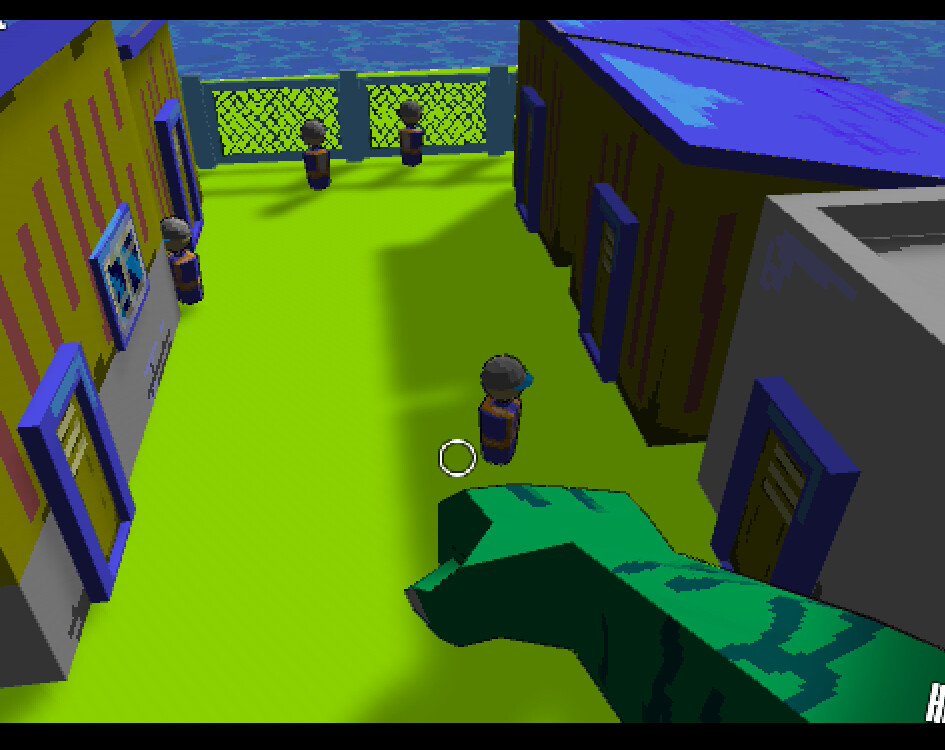
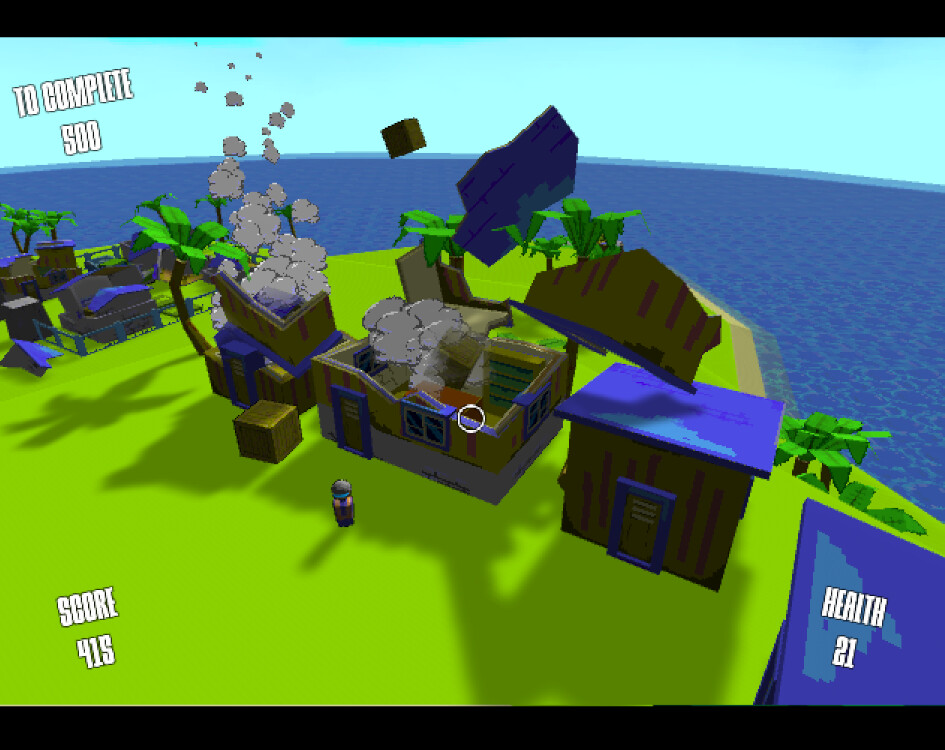
Gameplay – First Person Stapler is a low poly FPS title, where the objective is to destroy targets and reach the goal in the time limit. The game has 8 levels for players to challenge, starting with the tutorial, where all of the ins and outs of the gameplay mechanics are show to players. This is a very simple but challenging shooter experience, with fast paced action and a tight time limit, keeping the pressure on players throughout.

All of the stages start the player off with 30 seconds to get the job done, but this can be extended by shooting clocks on the walls. Each clock will extend the timer by 15 seconds, keeping players in the game a little longer. The targets that need to be shot are scattered throughout the stages, with many of them hid behind pillars, doors and shelves. This adds to the tension of finding them all, increasing the challenge as players search for targets.

When starting a stage, the player only has a basic stapler as their weapon. But the different stages will have upgraded weapons, which can be found in the different rooms of the stage. The first upgrade is the dual staplers, for faster rapid shots and the second is the Pneumatic Stapler, for slower stronger shots. The ammo for staplers is unlimited, letting players shoot freely, alongside a kick that can be used to cause chaos and destroy targets.

To clear the stages, the player needs to get the highest score they can and reach the goal. In the stages, players can find coffee power-ups which increase his speed, allowing him to sprint even faster. This lasts for a limited time with an on screen timer, counting down the seconds before it expires. This speed boost and the upgraded weapons can be very useful, giving players a fighting chance to get the best score and reach the exit door.

When a stage ends, if the player has reached the goal with a high enough score, they will be able to move onto the next stage. Then depending on the performance, they will also be given a star rating out of 3 stars. This gives the relatively short experience a lot of replay value, allowing players to retry each of the stages to get a better score and higher rating. There are only 8 stages, including the tutorial, but there are also bonuses that players can enjoy.

There is one minor issue with this release, which is the scores needed to get to progress as there is no way to know if you have reached the target. This can be pretty stressful, with multiple attempts failing by a few points due to some less than optimal accuracy. It is not a bad thing but a frustrating thing, as repeated failure can put players off from trying to get further into the game. But aside from this minor complaint the gameplay experience is well balanced and enjoyable.

Now with the gameplay covered, it is time to discuss the other aspects of this release, starting with the controls.

Controls – this title is your typical first person shooter experience, using the mouse and keyboard set up for the action. The controls work rather well, with the mouse being used for looking and shooting, along with the standard WASD and shift/space for movement. The movement and action is reactive, with the controls feeling very responsive while moving around the stages and shooting the targets. I am unsure if this game supports controllers as I wasn’t able to test it out.

Difficulty – all of the challenge comes from the time limit, as the pressure of learning the target layouts and managing the timer adds to the difficulty. Once players get used to the target and clock positions, the challenge becomes all about getting the best possible score. The overall challenge adds to the frantic feel of the game, as the fast paced action and timer increases the tension, as players try to get the best accuracy for maximum points.

Presentation – the low poly visuals work well for First Person Stapler, giving it a nostalgic feel as the game looks right out of the late 90s. Everything has a bit of a celshaded look to it, making the visuals pop even more.  There is no issue with performance too, as the game works perfectly and there is no issues in terms of lag. The sound of the game is good but surreal, with unusual and odd music that enhances the chaos of running around rooms with a loaded stapler.

Final Thoughts – I quite enjoy first person shooters, so I was excited to check this out. The action has the chaotic feel to it that is missing from a lot of titles in the genre, with First Person Stapler keeping it nice and simple. There is a lot of fun to have with this release, all for a low entry fee. The game is compact and fun, with lots of enjoyment and replay value. I recommend picking this up if you want a fun and simple FPS, just bear in mind it may take a few attempts to clear.

In the end, I give First Person Stapler a score of 4/5. This is a fun and chaotic first person shooter, with a fun gimmick that makes it different from many of the others out there. The game may be short, but there is plenty of content and replay value in the package, all for a low asking price. If you want to check this steam release, a link to the game will be below.

Link to Steam version (HERE)
Plumbers Don’t Wear Ties: Definitive Edition – PlayStation 4 Review

Overview – remastered and brought to modern platforms by Limited Run Games, Plumbers Don’t Wear Ties: Definitive Edition is a full restoration of the legendary bad game from the 3DO. Enjoy the adult focused “romantic comedy”, which was brought back into the limelight via the power of the internet and the Kusoge (crap game) community. This title is available on all platforms, with a link to each version of the game at the bottom of this review.

Disclaimer: before I get into the review, I would like to thank Limited Run Games for providing the copy of Plumbers Don’t Wear Ties: Definitive Edition that was used for this piece, via the Keymailer service. The provision of this software has not influenced the contents of this review, all thoughts and opinions contained within are my own.

Now with the introductions out of the way, let’s get into the review. This title is not so much of a game, but an interactive story, so I will be combining the story and gameplay segments together. I will also be calling the game P.D.W.T for the sake of brevity. Please note, images used are taken from official sources.

Gameplay – P.D.W.T is an interactive movie, promoted as an FMV (Full Motion Video) game, but the majority of the experience is presented as a slideshow. This new iteration of the game starts with a new intro, featuring actress and Pro Wrestler Jeanne Basone (who plays Jane in the game), along with an optional developer interview discussing the game and its impact. After this, players can Jump straight into the “action” of Plumbers Don’t Wear Ties.

There isn’t a great deal of actual gameplay with this release, as 99% of the “game” is just looking at the images on screen and listening to the actors delivering their lines. The only real interaction with the main part of this release is selecting story options, like choose your own adventure books. After selecting one of the options, the next “scene” will play out, with either a positive or negative outcome depending on the choice.

The basic premise is to make the right decisions presented to the player, so that the two lead characters of John and Jane can end up together. John is being harassed by his mother to marry a nice girl she has chosen, while Jane’s father wants grandchildren from her. There is an attempt to make this challenging by putting lurid and questionable choices in front of the player. The actors deliver hammy dialogue over the still images for the story.

There are a few different branching storylines, with the chance for several dead ends to occur. Some of the decisions will result in commentary from one of the narrators, who will chastise the player for the decision that they have made. If enough poor choices have been made to reach a bad end, the player will be given the option to return to the beginning of the game or make another choice. Choices will also be given an arbitrary score when made.

When the player restarts the game after making it all the way to the end of the story, a chapter select will be unlocked. This allows players to see all of the branches of the story, allowing them to replay the scenes that they want to see. Scenes that have already been viewed, can be skipped and sped up, so players can get to the unseen content faster. The entire story and the additional scenes can be done in less than an hour.

Away from the main game, there is an extensive gallery and set of bonus content on offer. This is made up of all stills from the game, deleted/unused images and bonus video content. The player will unlock the gallery images as they play the game, but the other bonus material needs to be earned in a more interactive way. Once all content has been unlocked, players will be able to freely enjoy over 3 hours of bonus material that has been included.

In order to obtain the bonus content for this, players will need to take on the challenge of Plumb the Depths, a 3D maze in the style of the classic FPS DOOM. In this mode, players must navigate through a dungeon, buying videos and special unlockable censor images. To buy the items, players must use Plumbucks, which are given by just playing the main “game”. The bonus content is added to the dungeon, by clearing each of the scenes in the story.

But this isn’t a simple task, as the player will be chased throughout the maze by Thresher, a character from the story. If the player makes contact with him, they will get a game over and need to start again or go to the main menu. Thresher can be fought off by collecting plungers and shooting him with them, but only three can be carried at a time. These plungers are limited so once they are all gone, all you can do is run.

The bonus video content that can be unlocked includes commentary, discussions and interviews. This makes for an interesting and entertaining look into the past for this game, as those involved discuss the game and what it means. The deleted scenes and image galleries round out the bonus content, allowing users to view the materials used to make the game, there is even a snippet of the original script that can be viewed.

Now with the gameplay covered, it is time to discuss the other aspects of this release, starting with the controls.

Controls – the main body of the game is very limited in control, with the only inputs being to make choices and skip/replay the current scene. Then there is the first person dungeon maze, which uses a very basic twin stick control scheme. This works rather well, as it is essentially a very limited port of the DOOM engine, with all of the standard controls. The menu navigation work well, and in general there are no complaints from a control perspective.

Difficulty – there is nothing in terms of challenge to P.D.W.T, with the only difficulty being if you are able to listen to terrible quality of the sound at times. The only thing that could be seen as a challenge, is finding all of the unlockables in the dungeon without being caught. It is not a long game either, with the potential to get the platinum trophy (or full Gamerscore on XBOX) in a couple of hours just by playing the game.

Presentation – visually, there has been some changes to the way the P.D.W.T looks. There has been the implementation of A.I. upscaling for the images, but the original images can be used instead. The sound is still as low quality as the original, with hammy voice acting and music that has the ability to make your ears bleed. The menus and dungeon have a distinct 90s style to them, which has been implemented well, giving them a nostalgic feel.

Final Thoughts – I have known of this game for a long time, having heard whispers of it being a legendary crap game and the video by James Rolfe (the Angry Video Game Nerd). But I was also aware of the historical impact of the game, as it is one of those titles that would be impossible to make today. So when I was given the chance to cover this I just had to take it. This isn’t a long game, or even a good game, but it is culturally significant.

Plumbers Don’t Wear Ties, is not a masterpiece of game design, but is important to people in the community, so the effort that was put into it and the bonus content is appreciated. The game is so easy, you can “play it” with one hand while multi-tasking. I don’t recommend it for everyone, but if you want to experience a legendary bad game, learn more about the history and impact of P.D.W.T or are a fan of the original, this is for you.

In the end, I can’t give Plumbers Don’t Wear Ties: Definitive Edition a final score, as it isn’t so much a game, but a piece of interactive history. The game itself is still as terrible and lacklustre as it ever was, but the addition of missing images, bonus video content and dungeon mini game, make this a significant release in terms of gaming history and infamy. If you want to check this release a link to each version is below.

Link to PlayStation version (HERE)

Link to Nintendo Switch version (HERE)

Link to Xbox version (HERE)

Link to G.O.G version (HERE)

Aero the Acro-Bat – Nintendo Switch Review

Overview – originally released by Sunsoft (developed by Iguana Entertainment), brought to modern platforms by Shinyuden and Ratalaika Games, Aero the Acro-Bat is a platforming adventure from the 16-bit generation of consoles. As the Circus performer Aero, use your skills to save your companions while battling the minions of Edgar Ektor, a sinister industrialist who has sabotaged the World of Amusement. This title is on all console platforms, with a link to each version at the bottom of this review.

Disclaimer: before I get into to the review, I would like to thank PR Hound for providing the copy of Aero the Acro-Bat that was used for this piece. The provision of this software has not influenced the contents of this review, all thoughts and opinions contained within are my own.

Now with the introductions out of the way, let’s get into the review, starting with the plot. Please be aware that the version of the game used for this release is from the Super Nintendo Entertainment System. If you had played the Genesis/Mega Drive or Game Boy Advance versions it may be different to the version used here.

Story – The World of Amusement Circus and Funpark is a popular attraction, bringing in people far and wide to see their acts. One person who loved this place was Edgar Ektor, who was banned as a kid for a failed prank. 20 years later, Ektor has become a powerful and corrupt industrialist, who has sabotaged the World of Amusement and kidnapped the performers. Aero, the star of the Circus, sets out on a quest to rescue his friends and save the attraction.

Gameplay – on the surface, Aero the Acro-Bat looks like a typical platformer from the time period. However, the action plays out in a way that ignores the traditional platforming mechanics. For each of the stages in this game, the player must complete an objective that is provided at the start of the level. These can be as simple as jumping through a set number of hoops, or more challenging like searching the level for switches to activate.

Each stage has its own objective and time limit to complete it within. If the time limit expires, players aren’t severely punished, with the only negative being the loss of end of stage bonuses. To navigate the different areas and worlds that Aero travels to, players have access to a rather simple move set. This consists of a jump, short hover and spin drill that will send Aero in a diagonal direction. The spin is also the main way of combatting the enemies that appear in stages.

Players can also collect stars during the stages, which Aero can throw to damage enemies from a distance. But these items are limited in each stage, so some care must be taken before using them as they don’t regenerate. Within the stages, there will be hazards and obstacles to overcome, like spikes and harmful floor tiles that will instantly kill Aero if contact is made. However, there are some elements that will help the player, like trampolines, swings and high wires.

There is a heavy emphasis on exploration with this release, with layouts that take advantage of large spaces, hiding many secrets within them. The way that the objectives are set up can lead to players getting easily lost, losing their time bonus and falling victim to the pitfalls. If an objective item is at the opposite end of the stage, it can be a long and dangerous journey to reach it. But there are checkpoints scattered throughout each stage, which can be strategically useful.

Each world is made up of five stages, with a boss battle after clearing stage five. There are also bonus stages that can be accessed by fulfilling a special condition. These bonuses will give players the chance to earn extra points, with the chance to boost the number of lives that Aero has. This is really important, as there are only 3 continues that can be used during the course of the game. Each continue used will start the player at the beginning of the current world they are up to.

Aero the Acro-Bat sadly suffers from the pitfalls of 90s game design, with leaps of faith, awkward hazard placements and instant death traps, which was the style at the time. This makes for a potentially frustrating experience, as the chance to lose all lives deep into a world is always possible. This can be made worse by the auto scrolling stages, which may remind players of the Jet Bike stage in Battletoads or the Minecarts in Donkey Kong Country.

To make some of the challenges more manageable, there have been some additions made to the game. There have been cheats and special features added to this, like the other titles emulated by Ratalaika Games. Included in this release are invincibility and infinite lives cheats, making it a breeze for players who may struggle to get through the game. There is also the inclusion of save/load states, as well as rewind and fast forward, giving more control over the experience.

Last to discuss is the bonus content that has been added to this package. For the first time ever, Aero the Acro-Bat has been translated into Japanese, allowing players to experience this title for the first time. There is also an extensive gallery, containing scans of the manual and box, along with special promotional materials, sketches and even an early draft of the game documents. All of these bonuses give this release more importance, allowing people to enjoy more than just the game.

Now with the gameplay covered, it is time to discuss the other aspects of this release, starting with the controls.

Controls – there is a rather easy to use three button system, which is comfortable to use for the most part. But there are some unfortunate issues with the controls, which can affect the overall gameplay. It feels like there is a minor delay with some of the inputs, which was present in the original game. The game feels a little slippery at times too, which can make some of the difficulties a little worse. But overall it plays well with a variety of controls in handheld and docked modes.

Difficulty – Aero the Acro-Bat is a really tough game, with a lot of challenging sections and objectives that increase the difficulty. The inconsistencies with the collision detection make the game harder, due to the potential to hit instant death traps and be launched into enemies. To make the game a little easier, players can use the various cheats, rewind feature and save/load states to help get through the game. This is a tough game, but after some time it can get much easier.

Presentation – the visuals and sound are emulated really well, with the music and sprite work coming through like it was on original hardware. There are no issues with the performance, with the game performing with zero issues when it comes to added lag that wasn’t in the SNES release. As this is an emulated re-release, there are special filters and visual effects that can be added to the game. Players can change the colors, screen size and more to give a unique appearance to the game.

Final Thoughts – I played Aero the Acro-Bat on the Mega Drive and SNES when I was a kid, with fond memories of the experience. Returning to it after many years was a bit of a trip, as the game was a lot more difficult than I remembered. I still enjoyed my time with it and I am happy to recommend it, as the game can provide an experience that is different from other platformers. The addition of the gallery, cheats, visual filters and quality of life changes makes it approachable by all.

There are some issues with the game, like some inconsistences with the collision, mildly slippery controls and overall difficulty, but it is still a fun and enjoyable experience. This is another title in the Sunsoft publishing library that fell into obscurity, getting another chance to shine. It is a real blast from the past, with a sequel, alternate versions and even a spin off. I look forward to seeing the other titles in the series, with releases for the rest of the games being announced recently.

In the end, I give Aero the Acro-Bat a final score of 4/5. This is a fun and challenging game that turns the traditions of 90s platforming on their head, which is tough but can be beatable with enough patience. The additional quality of life changes, visual effects and bonus gallery content makes this the best way to experience this game. If you want to check this game out for yourself, a link to each version of the game will be below.

Link to Nintendo Switch version (HERE)

Link to PlayStation version (HERE)

Link to Xbox version (HERE)

Hollow Cocoon – Nintendo Switch Review

Overview – developed by NAYUTA and published by Regista, Hollow Cocoon is a first person horror title taking place in a small mountain town in 1980’s Japan, centered around the Miyama family. As Minato Jinba, venture into Ichinose, a village deep in the mountains where his mother was born, uncovering the secrets that have surrounded his family. This version of the game is available exclusively for the Nintendo Switch, with a link to the game at the bottom of this review.

Disclaimer: before I get into the review, I would like to thank Regista for providing the copy of Hollow Cocoon that was used for this piece. The provision of this software has not influenced the contents of this review, all thoughts and opinions contained within are my own.

Content Disclaimer: I would like to make readers aware that Hollow Cocoon features discussion, themes and depictions of suicide, which may be upsetting for some. So if you are uncomfortable with the inclusion of this topic, please feel free to check out the other content that is available on the site and click off this review.

Now with the introductions out of the way, let’s get into the review, starting with the story. I will be focusing on the core aspects of this release, as I don’t want to spoil any of the secrets and surprises that the game has in store for players.

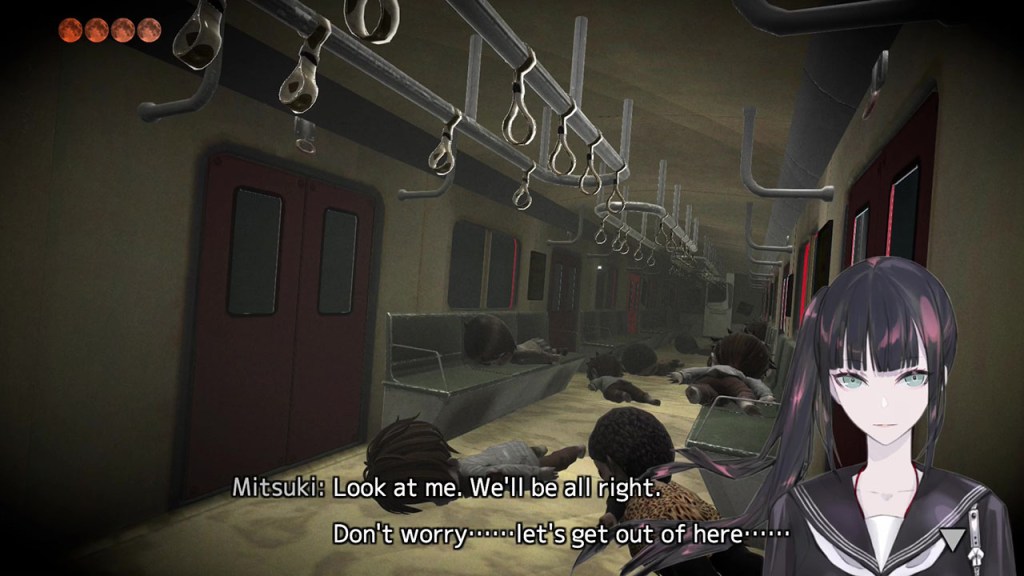
Story – in the 1980s Minato Jinba is a university student, living away from home at a boarding house. Late one night, Minato receives a distressing call from his father, informing him that his maternal grandmother is in critical condition. After this, he embarks on a journey to the village where his mother was born. Minato had not seen his grandmother in many years and harbors resentment towards her, with her refusal to attend her daughter’s funeral deepening these feelings.

As the bus gets closer to its stop, Minato recalls the only conversation he had with his grandmother. “The thing with Silkworms, you know; even if they could leave their cocoons, they have no mouths to eat, and their wings do not fly. People are the reason they suffer this fate.” The sky reddens in the diminishing light, with ominous shadows cast from the surrounding mountains. During the night, Minato finds himself in his grandmother’s house as a terrifying situation unfolds.

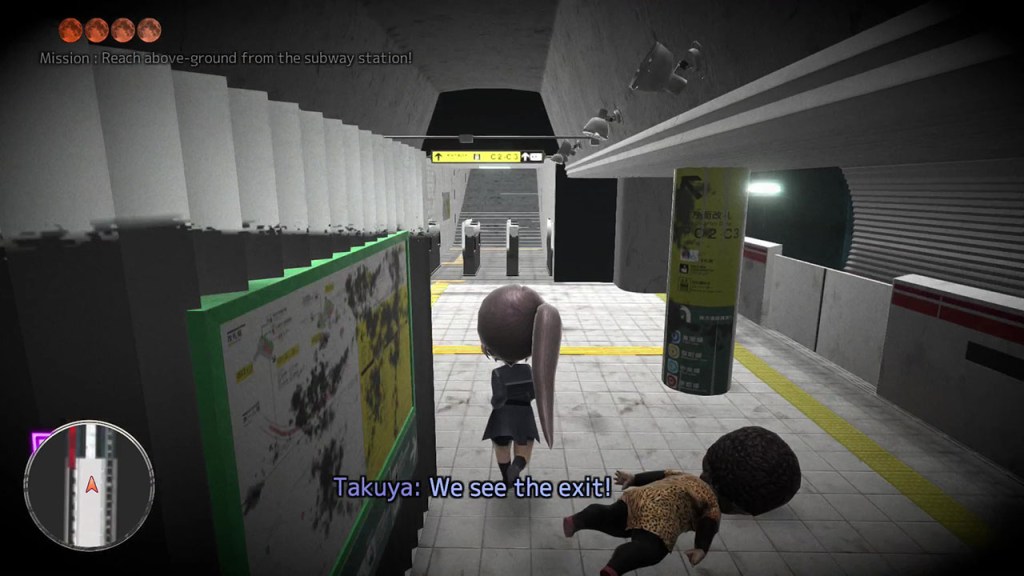
Gameplay – Hollow Cocoon is a first person horror experience, with players taking the role of Minato as he explores the Miyama house and the grounds surrounding it. During the exploration of the Miyama residence, the player will be able to find items as they move between areas. The items that can be discovered include consumable items, files that help give deeper story context and key items that are used to solve puzzles to progress.

The game is split into segments, with the village, Miyama House and mysterious areas that will open up as the story is pushed forward. However, Minato is not alone as he explores the different locations in Ichinose. There is a mysterious creature that will appear at set points, stalking the player and attempting to hunt them down as they roam each area. If the monster sees the player, they will chase them down in an attempt kill them, only stopping if the player escapes.

In order to escape the pursuit of the creature, there are hiding places that can be used to conceal Minato’s presence. But the hiding places come with some risk, as the creature can grab the player from the hiding spot if they see where they are hiding. When this happens, they will grab the player and throw them across the room, harming them in the process. The monster can also hurt Minato by slashing and jumping at him during pursuit.

To aid in the survival of the player, there are healing items that can be found to replenish health and stamina, but they are limited in their supply. Speaking of stamina, the player is able to run which will use stamina up when being chased, but this is limited and when depleted Minato becomes vulnerable. Be wary of running when not being pursued though, as this will alert the creature and increase the chances of discovery, leading to another chase.

But running isn’t the only way to attract attention, simply walking or using the flashlight can alert the monster to their location. This can be reduced by crouching, which will soften footsteps but not entirely as the monster will still be alerted if close by. There are also general spaces that can be used as cover, with screens, general foliage and other structures that can be used. This gives the game a stealth style of play, as it is preferable to stay out of sight and move quietly.

It is also important for players to be aware of their surroundings, as different puzzle elements will be hiding in plain sight. These will show up with an icon that can be interacted with, but some of them will be locked, like doors and boxes without a key item to open them up. Some puzzles will need multiple items in order to solve them, like firewood and a flint and steel. There are puzzles that can feel cryptic, but hints can be found in documents and dialogue from Minato.

In set locations throughout the game, there will be save points that players can use to record their progress. There is a total of four save slots that can be used, recording the total play time, and the time of that particular save. Players can also discover 10 yen game machines, which need coins that can been found during play. These are simple skill games that require the player to flick a coin to a goal slot, providing 3 different reward tickets for each successful attempt.

The winning tickets can be used in the shop, which is unlocked when the player gets an ending at the end of the game. These tickets will be carried over between saves, allowing players to accumulate as many points as possible. The store itself has items that can be used to modify the game, unlocking secrets and allowing for some interesting outcomes to occur. This gives the game extra replay value, which rounds out the whole experience quite nicely.

Now with the gameplay covered, it is time to discuss the other aspects of Hollow Cocoon, starting with the controls.

Controls – as this is a first person experience, Hollow Cocoon uses the traditional twin stick movement system, with all essential functions using the face buttons and D-Pad. The other character actions use the shoulder and trigger buttons, which work well but there is an option to remap all of the inputs if preferred. The game is comfortable to play with both standard controllers and the Joy-Cons, with the game being very comfortable to play in handheld mode.

Difficulty – there is the option for three selectable difficulty options. The Easy setting gives players advantages and makes it a less intense but still unsettling experience, with the Hard difficulty being much more intense and stressful to play. The Normal setting is fairly balanced, with this being the optimal way for most players to experience Hollow Cocoon. Overall there is a level of challenge that is suitable for all players, which is always a good thing to see.

Presentation – visually this game makes a very good use of traditional Japanese styles, giving the experience an unsettling felling to it, reminiscent of horror classics like Ring. The environments and settings build the atmosphere as the game progresses, which is excellent. This title looks good on big and small screens with no issues in terms of performance. The sound further enhances the experience, with beautiful yet haunting music, accompanied by Japanese voiced dialogue.

Final Thoughts – I have played many Japanese horror titles in my time, including those released by Regista and I am a fan of the genre. When this title was offered to me it was an easy decision to accept it, as the story and gameplay style really appealed to me. That being said, I was not disappointed with the experience that I had. The gameplay was challenging and the chase mechanics kept the tension going, keeping me on my toes throughout the experience.

Hollow Cocoon succeeds in all areas, with the setting, environments and story being the things that really stood out to me. This is a very good horror title, using ambient sound and tension to its advantage. There is a feeling of going in circles to solve cryptic puzzles, which some players may find frustrating but I feel it works in favor of Hollow Cocoon. I recommend this to all fans of the Japanese horror, and it is a great starting point for newbies too.

In the end, I give Hollow Cocoon a final score of 4.5/5. This is a tense and unsettling horror title, with a narrative that pulls you in and keeps you engaged, with the twists and turns further building the atmosphere, topped off by anxiety inducing monster encounters. if you want to check this title out for yourself, a link to the game will be at the below.

Link to Nintendo Switch version (HERE)

RPM: Road Punk Mayhem – PlayStation 4 Review

Overview – developed by Panda Indie Studio and published by Eastasiasoft, RPM: Road Punk Mayhem is a cel shaded bullet hell shooter taking place in a post-apocalyptic wasteland. Select one of three drivers of questionable sanity, taking the fight to the enemy forces with armored trucks, jets and massive motorized monsters. This title is available for all console platforms and the Steam service, with a link to each version of the game at the bottom of this review.

Disclaimer: before I get into the review, I would like to thank Eastasiasoft for providing the copy of RPM: Road Punk Mayhem that was used for this piece. The provision of this software has not influenced the contents of this review, all thoughts and opinions contained within are my own.

Now with the introductions out of the way, let’s get into the review. I will be skipping the story as the plot is pretty light, going straight into covering the gameplay for this release. Please note, I will be referring to this title as simply RPM throughout this review for the sake of brevity.

Gameplay – RPM is a vertical bullet hell shooter where three punks have travelled back in time, ready to save the world and hair from the evil Baldy Organization. To achieve this goal, players must make their way through several post-apocalyptic stages, battling the army of this evil group as they mobilize their forces. The player makes their way through preset stages, with waves of enemies that appear and attack the player with a hail of bullets.

At the start of the game, the player selects one of three pilots, each with their own unique weapons as well as their own durability to damage in battle. The weapons are a straight rapid fire shots, medium fire spread shot and slow homing bombs, giving each character a unique play style. While in the stages, the player can mash the fire button to get shots out faster, but if it is held down a constant laser beam will fire. Weapons can also be upgraded with power-ups in the stages.

The weapons and Lasers aren’t the only skill that players have in their arsenal, as there is a special warp and bomb that can be used. As players makes their way through stages a circle expands around them, slowing time down when the warp button is pressed. During this period of slowed time, the player can move through bullets and obstacles as the circle closes around them. When the player makes contact with the circle’s edge or the button is pressed again, warp will end.

This warp feature is on a cooldown before each use, making each usage of the ability a tactical decision. Then there is the bomb attack, which is activated by holding down the warp button, unleashing a blast that damages everything in the blast radius and clears bullets. This needs to be charged before it goes off, at the cost of using up the warp circle. The way this works pushes players to decide between dodging hazards or clearing the bullets, adding further strategy to play.

Throughout the game, players will find items that can be collected, including weapon power-ups (mentioned above), stop watches that restore the warp and fuel tanks for extra health. There is also the chance for bonus points to drop, boosting the score for that run. Speaking of score, destroying enemies will drop golden skulls and add to a multiplier, increasing the points that are earned. This does run out, so chaining enemy destructions is important.

At set points in the stages, a sub boss will appear, these vehicles are bullet sponges that will just absorb hits as they spit out dozens of shots at the player. Then there are the big bosses, each with their own introduction graphics to signal their arrival. These battles are tense and challenging, with hectic bullet patterns and multiple phases that really pressure the player. If the player has a multiplier at this point, it will be locked for the battle, but will be lost if the player dies.

On the subject of death, the fuel tanks will be lost when damage is taken from enemy bullets and environmental hazards. When all tanks are depleted, the screen will change and the sound will become muffled as they are on the edge of death. If one more hit is taken, the player will die and get a game over. But hope is not lost, there are limited credits that can be used to get back into the action, allowing players to keep fighting, but the score is reset to zero.

The last thing to discuss is the simple progression system. Over the course of gameplay and as players improve their skills with each run, they will unlock additional credits to help then get further into each run. Then there are the leaderboards, where players can challenge others and the world as they battle it out for the top spot. The highest score will be added to the rankings, as well as be displayed at the game over screen to motivate players to beat their personal best.

Now with the gameplay covered, it is time to discuss the other aspects of this release, starting with the controls.

Controls – this title feels a little unusual when in motion, with the warp system and the charging up the bomb. There is a slight delay to some of the inputs and this can mess things up, which takes a little getting used to but after a little while it just falls into place. There is a lot of precision with the D-Pad and more flow with the thumbstick, but the optimal way to play games like this is with an arcade stick. Overall the game feels comfortable to play and works very well.

Difficulty – RPM is a brutal experience, with a difficulty curve that spikes almost immediately. There is little in terms of a tutorial and players are left to figure things out. This system can lead to a lot of frustration, as players can feel like they have been thrown in the deep end immediately. Unfortunately there is no way to ease the difficulty, but as players make attempts, they will be awarded additional credits, which can help to make it further on subsequent attempts.

Presentation – there is a very pleasing and stylistic look to RPM, with a bright and vibrant cel shaded presentation, alongside black and white graphic novel splash art. This looks good on all displays, with the ability to use Tate Mode if the player has a compatible screen. The game plays well with zero frame drops or lag during play. The sound for this game has a heavy edge to it, with a soundtrack that has a hard punk/metal feel that completes the look of the game.

Final Thoughts – I am a bullet hell enjoyer who has played many a shooter in the genre, with a soft spot for those that were made by CAVE back in the day. When RPM became available to me, the overall feel had a distinct appeal that made it easy an easy choice to review. I was unsure what to expect when I jumped into RPM, but I was not disappointed. There were some hiccups when trying to learn the different mechanics on the fly, which really knocked the difficulty up a notch.

It wasn’t a terrible experience, but there is a punishing difficulty curve after the first stage, leading to multiple failed runs. But after a few attempts I started making some decent progress. This isn’t the longest game in terms of completion from start to finish, but it can take a while to get to that point, which gives it some replay value. I can easily recommend RPM to fans of the bullet hell shooters, but it may be incredibly hostile to newer players.

In the end, I give RPM: Road Punk Mayhem a final score of 4/5. This is a brutally difficult bullet hell shooter that leverages its unique look, music and gameplay mechanics to make it stand out among the others. If you are a fan this will be right up your alley, but it is not for the faint of heart. If you want to check this title out for yourself, a link to the game will be below.

Link to PlayStation version (HERE)

Link to Nintendo Switch version (HERE)

Link to Xbox version (HERE)

Link to Steam version (HERE)

Over Horizon X Steel Empire – PlayStation 4 Review

Overview – originally developed by HOT-B, brought to modern platforms Under the ININ GEMS label, Over Horizon x Steel Empire is a collection of overlooked side scrolling shooters. In this collection, players take on hordes of enemies in these single player shooters that were released way back in the early 90s, with a remake of Steel Empire in 2004. This pack of games is out on Nintendo Switch and PlayStation, with a link to each version of the game at the bottom of this review.

Disclaimer: before I get into the review, I would like to thank PR Hound for providing the copy of Over Horizon x Steel Empire that was used for this piece. The provision of this software has not influenced the contents of this review, all thought and opinions contained within are my own.

Now with the introductions out of the way, let’s get into the review. I will be discussing each of the games, providing some details about the plot where possible and the gameplay. Then the overall package will be discussed to round out the coverage. There is also a chance to win a code for this game on PlayStation 4 by entering a giveaway that will run until August 1st, a link to the entry form will be below the links to the game.

Over Horizon – 1991 (NES/Famicom)

Over Horizon is a horizontal scrolling shooter that is similar to the popular Gradius and R-Type series, taking place in a Sci-Fi setting. The player controls a space fighter, battling aliens and mechanical foes across a variety of hostile environments with their own gimmicks. These can be as simple as vines that can hide enemies and projectiles, to flooded space ruins with waterfalls that push the player down. This makes the challenge unique and satisfying to beat.

The player ship has the primary functions of shooting forward and backward, allowing for rapid changes in directs for shots. Capsules will appear during the course of a stage, providing power-ups for the player ship when they are shot. There are two distinct types of power-up that can be collected during the game, with the first being special satellites that follow the player ship, with a maximum of two. Then there are the weapons, with three variants that can be increased to level 3.

These improved capabilities last for as long as the player can stay alive, being lost if the player ship is destroyed. If all lives are lost, the player gets sent back to the main menu and they have to start over from the beginning or continue from the stage they died. Players are also able to change the speed of the craft, with three setting available, as well as changing the position of Option satellites. This can be useful for hitting enemies that are close to the floor/ceiling.

At set points in stages, the player will engage in battle with large scale bosses, often being heralded by a warning that appears on screen. During boss battles, enemies will attack the player from all sides, making for a tough and tense battle where defeat can occur at any time. Last to discuss is the edit mode, which allows players to customize their ship. In this menu, the player can alter the power of the weapons, along with the ability to edit the positions of option satellites.

With Over Horizon done, let’s move onto the next game.

Steel Empire – 1992 (Mega Drive/Genesis)

In an Age of Steel, steam powered battleships cruise the skies and armored locomotives carry huge cannons. A military uprising has occurred in the world’s largest city, with the dictator General Styron has taken power by brute force. Most of the world has now been annexed and turned into the Motorhead Empire. But, one place remains free and defiant, the republic of Silverhead, who have deployed their small, yet advanced air force on a mission to take the empire down.

In this title, the player has the ability to select two different ships, with the choice of the “Striker” aircraft that is smaller and faster or a slower, larger “Z-01” Zeppelin airship. The two ships have their own attacks and health, with the Striker being easier to shoot down due to its size, compared to the more durable Z-01. This gives the two aircraft a unique feel to themselves, which will change the way that players can approach the action that unfolds on the missions.

Like Over Horizon, the ships can gain additional power by collecting power-ups that will appear during the different stages. Instead of a weapon change system, there is a leveling system that will increase the power of weapons by collecting EX items. When three have been collected, the power of the guns on the ship will increase. There are screen clearing bombs that can be deployed (and replenished) and even option supports to collect, but these support ships are lost if the player dies.

Unlike Over Horizon, the player ship doesn’t go down in a single hit. There is a vitality meter, which will deplete by taking damage from enemies or by making contact with environmental hazards. When this is empty, a warning will appear on screen, allowing for one final hit before destruction. Thankfully, there are health ups that can be dropped by enemies, getting players back into the action and preventing defeat. If all ships are lost, the player can use a credit to keep going.

At set points in each stage, the player will encounter a sub and main boss. When the mid boss of a stage appears, the player will transition to the next area of the stage. These transitions shift the player to a new environment, introducing new hazards like tunnels and a tight cave passages that can lead to disaster in seconds. The end big boss are a significant challenge, which is where the reverse firing mechanic really comes into its own as the bosses will move around the screen.

Between stages, there are scenes that tell the story of Steel Empire, providing a mission layout and the progression of the narrative. Before starting a stage, the player can also select their aircraft, switching between them as they wish which can be used as a tactical option. As players go through the game and get used to the different stages, switching crafts can increase the challenge or make segments more manageable. The airships can also be switched if the player continues after death.

Now let’s get to the last title in this package.

Steel Empire (Remake) – 2004 (Game Boy Advance)

Long after the original release, HOT-B staff that were part of Starfish inc, created a remake of Steel Empire for the handheld Nintendo system. This game is mostly the same as the original Mega Drive release, but due to the limits of the hardware and the size of the screen, there are some concessions made. This version of Steel Empire follows the same plot of the original, with the same cutscenes and transitions included in the console version.

However, the game has been screen crunched, zooming in and making the playfield smaller while trying to keep pace of the action. The same aircraft are still present, with the Eagle craft and the Zeppelin airship available to select. The front and back shooting is also present, with the leveling system and lightning bombs, but there have been some changes. The Vitality of the ship is increased and the EX requirements have been lowered, allowing leveling to occur faster.

All of the stages and bosses are present, but they have been changed a little to fit the screen and the graphical capabilities of the GBA system. The stages have been flattened in most areas, with some elevation changes taken out. There has also been some sprites redrawn and rescaled, with changes to some of the attacks and patterns. This can make stages a little more challenging in some places, but doesn’t have a significantly negative impact on the overall experience.

The differences with the two versions make them unique from each other, which helps keep the gameplay familiar yet fresh between the two. There are also distinct visual changes that extend further than the sprites/stages, with all of the environments being redrawn entirely. These changes are due to the change in graphical engines for the GBA system, allowing for some areas to be more vibrant and colorful, at the loss of some of the environment layers.

Now with all three games covered, it is time to move onto the other aspects of this collection, starting with the new features.

Additional Features – as this is an emulated collection of titles, new features have been added to improve the quality of life of these old games. Some modifications to the game have been made to remove flicker from the Steel Empire releases, as this can cause photosensitive seizures. There are also cheats that have been added, including invincibility and infinite credits. Players can also use rewind features and save states, giving greater control over their experience.

Controls – as these are retro titles, there are simple inputs that have been adapted for modern controllers. This makes it easy to pick up and play the games, with the inputs being intuitive and responsive during the action. The game is comfortable to play, with the ability to use a varied amount of controller types. The preferred way to play the game is with a D-Pad for precise control. All of the inputs can be remapped by players, allowing them to fit all play styles.

Difficulty – these shooters may appear simple from the outset, but they get increasingly challenging as the player progresses through the games. There is a standard mode and challenge mode in this release, the standard mode allows all of the quality of life changes to be used, like rewind and cheats. Then there is the challenge mode that is as close to the original as possible, with limited credits, trophies and all of the additional features disabled (aside from the screen filters).

Presentation – the games look really good on modern displays, recreating the original look and feel of the games. All of the original sprite work, environments and graphics are clean and crisp, alongside sound emulation that is close to the original hardware as possible. There are also additional visual settings, with the option to change the display colors, screen sizing and more. There is also the ability to apply Scanlines and Filters to emulate classic screen types.

Final Thoughts – I had not heard of these titles before, but I am a fan of scrolling shooters so I was excited to check out this collection of games. When I went into this, I was not sure what to expect from the titles, but I had a good experience and I was happy to be able to experience these hidden games. There was a struggle at the start as I got used to the gameplay, but after a few attempts I got into the flow of the games and it was a lot of fun.

My overall experience with this package is a positive one, discovering some hidden gems that I had not played when they were previously released. I am happy to recommend this collection to everyone who is a fan of shooters, as the titles included are fun and challenging. The experience that this package provides is distinct from most of the shooters that have been released, with the quality of life changes and additional features rounding it out.  

In the end, I give Over Horizon X Steel Empire a final score of 4.5/5. This is an excellent retro collection, providing players with the opportunity to experience some hidden gems in the scrolling shooter genre. There is a lot to enjoy with this collection, with the improvements making it easy to pick up for old and new players alike. If you want to check it out for yourself, a link to each version of the game will be below.

Link to PlayStation version (HERE)

Link to Nintendo Switch version (HERE)

Link to Giveaway form (HERE)

Parkitect: Deluxe Edition – PlayStation 4 Review

Overview – developed by Texel Raptor and published by BlitWorks Games, Parkitect: Deluxe Edition is a special console release of the theme park management sim that was originally released on PC. As the owner and operator of your own establishment, build rides, design the layouts and hire staff so you can thrive in the cutthroat world of theme park management. This release of the game is available on PlayStation and Xbox, with a link to each version at the bottom of this review.

Disclaimer: before I get into the review, I would like to thank BlitWorks Games for providing the copy of Parkitect: Deluxe Edition that was used for this piece, via the Keymailer service. The provision of this software has not influenced the contents of this review, all thoughts and opinions contained within are my own.

Now with the introductions out of the way, let’s get into the review. I will be skipping the story segment as there is little in terms of a plot for this release, going straight into discussing the gameplay and mechanics of Parkitect.

Gameplay – Parkitect is a theme park management simulation in the vein of RollerCoaster Tycoon and other titles in the genre, with the objective being to build a successful attraction. There are two game modes for this release, with a Campaign and Sandbox mode, which players can select from the main menu. The Campaign mode has a total of 37 different stages for players to play through, with all of the scenarios from the base game and the Taste of Adventure expansion.

In the Campaign, players are given a predetermined area, with a fixed starting fund and objectives to complete. The objectives for the different scenario parks are split into main and optional goals. The main goals are the only ones that need to be cleared to progress, with the optional goals for those who want a challenge. The types of goals that players can take include having no loan debt, selling a set a number of tickets and a target for simultaneous park guests.

While building and maintaining the park, time passes on a month by month basis, starting from January of year one. As each month passes, the expenses of the park will be deducted from the funds that the player has remaining. At the start of a campaign scenario and in sandbox mode, the park starts off with an entrance, a small plaza and usually a staff area. It is up to the player to decide what rides, facilities and decorative features are added to the park.

Each of the scenario parks, will have a set of rides and attractions that can be implemented, starting off simple like a Ferris Wheel, Mini Coaster and Carousel. These will be alongside more thrilling rides, larger roller coasters and even water rides. But rides aren’t the only things that need to be built for a profitable park, as there are shops and other facilities that players can build. The options vary from burger and hotdog stands to balloon stalls, ATM machines and even toilets.

But a theme park doesn’t keep itself running by itself, so staff are needed to keep the park running efficiently and most importantly, keeping guests happy. For a sustainable park you will need to employ several different staff, with five different types of staff members that are needed for a park. These are haulers to supply shops, Janitors to clean up messes, Mechanics to fix rides and decorations, security to stop vandals and entertainers to keep guests happy.

The staff will wander the park, fulfilling their roles as they are needed but they can be assigned to specific areas to keep them effective. In order to keep the staff happy and keep the park running, the player will need to provide them with their own facilities. These include staff rooms, depots and training rooms. If the player neglects the needs of their staff, they will become tired and be unable to perform their duties, leading to negative reactions from the guests.

Adding facilities to the park is just the start, as the player needs to add walkways to the park for staff and guests to find their way around. The player is able to lay guest paths all across the park, which the guests will roam during their visit. Then there are the queue lines, which are added to the entrances of rides. Last are the employee paths, which will be used by staff to travel throughout the park to reach the jobs they have to do, keeping them away from the guests.

Next we have decorations, with various options that can be laid down to make the park and attractions look unique. The options that can be used include trees, canopy shelters, screens and even effects. The different decorations will affect the ratings that the guests give the park, improving the overall rating of the park. The guests of the park will react negatively if they see staff areas of the park, so adding furnishings to hide these will also help improve the visitors.

 Now we move onto the coaster builder, which will allows for custom rollercoasters to be built, with each of the coasters having different options. Each of the coasters have limits to their height, and the details that can be added to them. Some coasters can be inverted, have loops and even launch systems to be able to get the coaster going at high speeds. The best way to figure out the coaster that guests enjoy most is through experimentation, building and testing different coaster builds.

There is also a blueprint system included, allowing players to save their favorite creations to be used in ever park. The game even includes pre-made ride templates, with decorations and layouts, with some inspired by real world coasters. This can speed up the building process and save time, so players can start getting their guests spending as fast as possible. The coasters, along with other rides can be modified, changing number of cars and chain lift speed and more.

The height of rides, paths and even the ground itself can be changed, with different elevations and terraforming options available. This system can also be used to make the most of the space available, with the possibility for paths/tracks to go underground and even into bodies of water. This can make it easier for staff to move around the park, with underground paths as shortcuts over long paths around the park. This gives the creative options more flexibility for players.

The creation of rides, decorations and facilities in the park is important, but great care must be taken to make sure that the park is still profitable. As each month passes, the expenses for the active attractions, hired staff and supplies will be deducted from the money that players have. If the revenue coming in is less than the expenses, the park will risk bankruptcy. An onscreen warning of how long there is left to get out of debt, as failure to do so will result in park closure.

This is where the financial system and satisfaction stats of guests will come into play. The player can more often than not alter the costs of the park for guests, with the cost of entry, rides and services (even the toilets) having the ability to charge guests. This can be an easy way to cover the expenses of the park, preventing going into debt and having to close the park. There is also a loan system that can be used, giving emergency funds if the player needs fast money.

However, this isn’t free funding as all of the money from loans needs to be paid back. You can allow the loan to be repaid each month, or pay off lump sums when enough money has been earned. There are a range of loans that can be taken, with a multitude of amounts and payment plans on offer. Loans can be risky as debt will rapidly increase if payment cannot be made, speeding up park closure. There are park goals that require the player to have no loan debt to succeed too.

Last to discuss is the Sandbox mode. Here the player can create the park of their dreams, with the ability to select any of the parks from Campaign that have been completed. There are also preset templates, with Small, Medium and large empty parks, along with themes that can be used as a base. The player is able to turn money, research and goals off, allowing for maximum creativity without restrictions with all of the rides and blueprints available to use.

There is so much more that could be discussed, but those elements are best discovered and experimented with first-hand. So with the gameplay covered, it is time to move onto the other aspects of this release, starting with the controls.

Controls – sadly, the controls are one of the lowlights of this title, as it can be difficult to properly control the camera and use precision to select items. The coaster building controls can be a bit tricky, having to stop building to adjust the camera sometimes. This is one of the issues when trying to translate mouse and keyboard to a controller. Luckily, everything else works fairly well, with a handy controls guide that can be shown by pressing the touch pad.

Difficulty – is a little difficult to describe the difficulty of this game, some of the challenges can be achieved fairly quickly, whereas others require some careful planning and consideration. The biggest challenge can be in learning how best to maximize what is available, making the most of the area and what prices to set. However, if you don’t want to focus on the campaign, there is plenty of fun to be had with Sandbox mode and it can be used a great practice tool.

Presentation – visually this is very similar to the older tycoon games, with old school style to the graphical presentation. This works well in the favor of Parkitect, as it invokes a sense of nostalgia and familiarity with the stylized look. The coasters and rides are nicely detailed, with some real world designs and the use of blueprints with prebuilt decorations. The music and effects for the game are fitting, with a bright and happy soundtrack that works perfectly.

Final Thoughts – I have played some park management sims in the past, with Theme Park being my favorite. So when I got the chance to play this, it was easy to take the offer and my first impressions weren’t the best. The tutorial worked well enough, but the rigidity of it was a little stifling and I had a much better experience by simply experimenting and figuring things out. This is a fairly solid and charming indie park sim, with near infinite gameplay value.

But I will say it isn’t without its faults. The camera can be a little combative at times, there were errors that crashed the game and some mechanics aren’t fully explained in a way that is easily understood. But that being said, it is worth picking up if you are into games like Rollercoaster Tycoon, as there is a lot of opportunities to be creative with the coaster builder. The game is a little bit rough around the edges, but that is one of the common flaws of games that go from PC to console.

In the end, I give Parkitect: Deluxe Edition a final score of 3.5/5. This is a fun and enjoyable Theme Park management simulator, featuring attractions inspired by real world thrill rides, plenty of challenging scenarios and near endless replay value. The game is rough around the edges, but it doesn’t harm the overall gameplay experience. If you want to check this release out for yourself, a link to each version of the game will be below.

Link to PlayStation version (HERE)

Link to Xbox version (HERE)

Princess Maker 2 Regeneration – Nintendo Switch Review

Overview – originally developed by Gainax and brought to modern platforms by BlissBrain and Monkeycraft, Princess Maker 2 Regeneration is a new iteration of the cult childrearing simulation. As the Hero who saved a faraway kingdom, you have been bestowed a daughter from the heavens, tasked with raising her to maturity. This release is available on Nintendo Switch and Steam, with a PlayStation release in august, a link to each version of the game will be at the bottom of this review.

Disclaimer: before I get into the review, I would like to thank PR Hound for providing the copy of Princess Maker 2 Regeneration that was used for this piece. The provision of this software has not influenced the contents of this review, all thoughts and opinions contained within are my own.

Now with the introductions out of the way, let’s get into the review, starting with the story. Please note, I will be only covering the core mechanics of the game and things that may occur in a typical playthrough, as I don’t want to spoil any of the secrets and surprises that this game has to offer players.

Story – long ago, there was a kingdom ruled by a prideful king and his subjects grew arrogant in their prosperity. None worshipped the heavens and indulged themselves in hedonistic desires, invoking the wrath of God and suffered divine punishment at the hands of the Demon Lord. As the Demon Lord lay siege to the kingdom, having catastrophic effects and laying waste to the royal army and palace. All seemed to be lost and the capital was to fall.

However, a wandering swordsman saw this calamity unfolding, throwing himself headlong into battle with the Demon Lord. In the moonlight, the lone wanderer engaging the Demon Lord in a duel, vanquishing them after a hard fought battle. After the battle, the hero is granted residence in the capital, making it his home. Years later, the hero is called outside the palace where he is contacted by one of the gods, who bestow upon him a child of heaven tasked with raising her to maturity.

Gameplay – Princess Maker 2 is a childrearing simulation, where the player must raise their daughter from age 10 to 18, guiding them and making sure they are taken care of.  At the start of the game, players must enter their name, give their daughter a name (her canon name is Olive which I will be using throughout this review), birthdate and a blood type. Other details are asked of the player and when all of these are given, the game begins properly.

The player must care for Olive for 8 years, assisted by their butler Cube, they must plan out the life of Olive on a month by month basis. At the start of each month, there are several options for actions that can be selected before setting the schedule for Olive. Before setting her schedule, Olive can visit the palace, attempting to converse with various inhabitants including the minister and Queen consort. There is also the town where many merchants can be visited.

Olive can also be dressed in several outfits, with different weather situations affecting her, requiring specific clothing to keep her healthy. Adventuring equipment can also be bought and equipped to Olive, allowing her to go out on expeditions outside the Capital. There is also an interaction system, where the player can have one-on-one time with Olive, speaking to her and providing pocket money. This has an effect on the relationship between Olive and the player.

Players can also set a diet that Olive will follow, which can affect her in various ways with 4 options to select from. Last are the status screens, which will show how Olive is doing, highlighting her different statistics and overall growth. It is important to monitor these different aspects, as they can have an impact on the way that she develops. The different stats can also cause positive and negative effects, which can potentially lead to devastating consequences.

When it is time to set the schedule for Olive, there are four options that can be chosen with three activities that can be assigned per month, with each phase taking up 10-11 days. Here is a breakdown of the different activity types that can be assigned per month;

  • Study – Pay gold to send Olive to classes so she can be tutored in various statistics, these will positively impact those surrounding that subject, like artistry, decorum and combat skills. Classes can also affect her reputation within the capital. However, some of the classes may have a negative effect on traits that run counter to the subject. Be aware, if there are insufficient funds for the study, then Olive will be turned away from the classes.
  • Work – Olive can work several part time jobs, allowing her to improve her related skills and earn money as she progresses. These jobs include working in a restaurant, at a nursery and doing house work. Like the Classes, it is possible for jobs to reduce the proficiency in one area while boosting another, along with modifying her reputation.
  • Errantry – send Olive out on expeditions, where she can explore different areas, encounter monsters and find treasure, with a day/night cycle and simple camp system. During these adventures, Olive can be controlled directly, transitioning into a full top down RPG style of gameplay, featuring turn based battles. If Olive is defeated or the end date is met she returns home, keeping all treasure obtained.
  • Time Off – allow Olive to take some time to herself, either going off into town or going on vacation. When going into town, she can be given pocket money to spend, or go out without any. Then there are paid vacations, which can be taken at the mountain or ocean. This time off is important as it is important for managing the stress that Olive will accumulate during the month.

Speaking of stress, Olive will accumulate different amounts of stress based on the job or study she is doing. When stress accumulates, there is the possibility for various negative effects to occur, including sickness and delinquency. If Olive becomes sick, she must rest, see a doctor or visit a sanitorium, as she can become bedridden and eventually result in her premature death. Olive becoming a delinquent can negatively impact her jobs, which will make employers reject her.

Sickness and Delinquency are only a few effects that can occur during the growth of Olive, which can be triggered by changes to her health, statistics and other elements. It is important to monitor the changes in her behavior, as some of the outcomes will drastically alter the route that players may want her to take. Taking care of Olive’s wellbeing is just as important as her training, studies and work, so it is important to speak to her regularly and monitor her status.

During the year, the annual harvest festival will occur, where Olive can participate in four different contests, including a cooking contest and a combat tournament. Three of the competitions are automated, whereas the combat tournament consists of turn based battles against a series of opponents. At the end of each contest, if Olive performs well enough, she will be provided with a cash prize, reputation points and even special reward items if she places first.

As each year passes, Olive will become older, with her depiction changing as she becomes taller and develops. During each year at her birthday, she can be given a gift, which will make her happy and positively affect her relationship with the father. As Olive becomes older it is possible for her to be pursued by various suitors, which can be accepted or rejected. Along with the suitors, there is also the chance for other visitors to appear during the course of Olive’s life.

The last thing to discuss is the ending of Olive’s time with her father. When Olive reaches the age of 18, her final birthday with her father will occur, allowing a final gift to be given. After this, the end of her story will play out where she can get a good, bad or neutral ending. The endings are affected by the choices that are made during her childhood, being affected by her stats and relationships. After the ending plays out, a score will be given based on that ending.

Now with the gameplay covered, it is time to discuss the other aspects of this release, starting with the controls.

Controls – this game has a super simple control system, using two button inputs for the majority of the game, with hand prompts that are always on screen. This makes the game easy to pick up and play, as anyone will be able to enjoy the game regardless of their limitations. It is a lot of fun to play, with the RPG style segments being a real highlight as they are big shift in gameplay style. This game is best enjoyed in handheld on Switch, as it gives the game a warm comfortable feel.

Difficulty – this game is an odd one when it comes to difficulty, as there is a lack of information and tutorials to explain mechanics to the player. The lack of a manual or any how to play information is a bit of a pain, as it meant I was fumbling in the dark trying to figure out what to do a lot of the time. Thankfully, there is the ability to save and load freely, letting players fix mistakes. There are guides and Wikis available, which can be a great resource for players who struggle.

Presentation – visually, the artwork and graphics have been redrawn for modern displays by Takami Akai, who worked on the original princess maker series at Gainax. All of the reworked graphical elements are a treat to behold, maintaining the spirit of the original. There is also brand new art and animation made especially for this release. The sound really ties the whole thing together, with wonderful music and Japanese voiced dialogue that knocks it up a notch.

Final Thoughts – I have been aware of Princess Maker as a series, knowing that the original release of this entry was a real cult favorite. When I received the offer for this release, it was an easy choice to take this title for review. I really dove into this and had a bit of a mixed experience when I started, but after a while and looking at a few resources it all clicked into place. I spent many hours with this release, getting to see several of the endings, but there are many more to discover.

The redrawn artwork and new content from Takami Akai is fitting, as this was made for the 30th anniversary of the original PC-98 release. There were a few minor complaints that I had with this, with a few minor grammar and spelling issues, as well as the lack of tutorial/manual which I find are a negative. However, I am more than happy to give this a recommendation. It is a fun and entertaining time, with plenty of content, lots of secrets to discover and many, many endings to see.

In the end, I give Princess Maker 2 Regeneration a final score of 4/5. This is delightful and engaging experience, that is well deserving of its cult status, with wonderfully designed visuals, a plethora of story twists and endings that kept me coming back for more. If you want to check this release out for yourself, a link to each currently available version will be below. UPDATE: the PS4 version has been released since, however, there is some content censored out in this version.

Link to Nintendo Switch version (HERE)

Link to Steam version (HERE)

Link to PlayStation version (HERE)