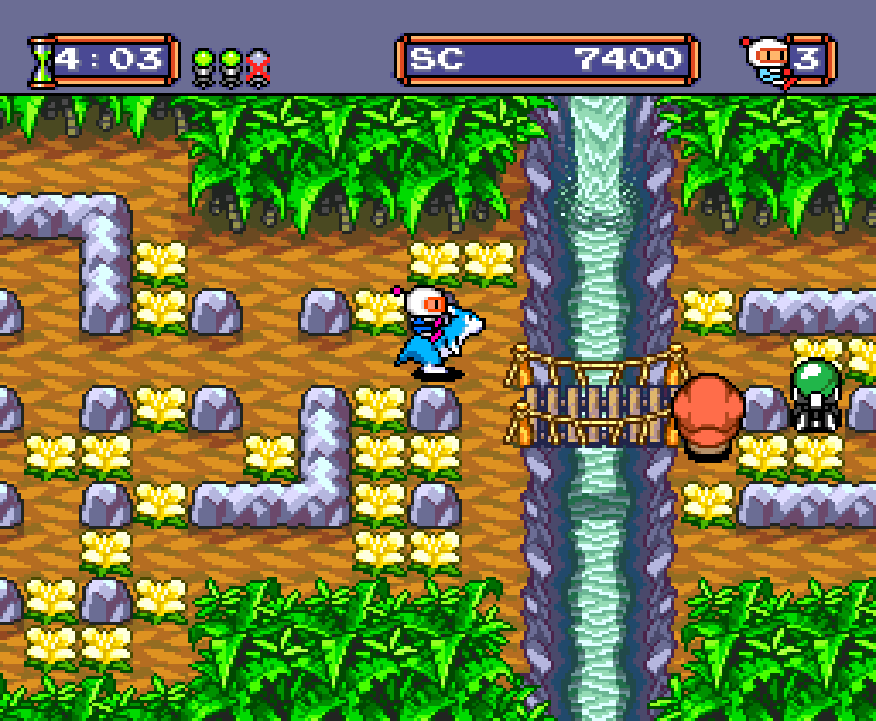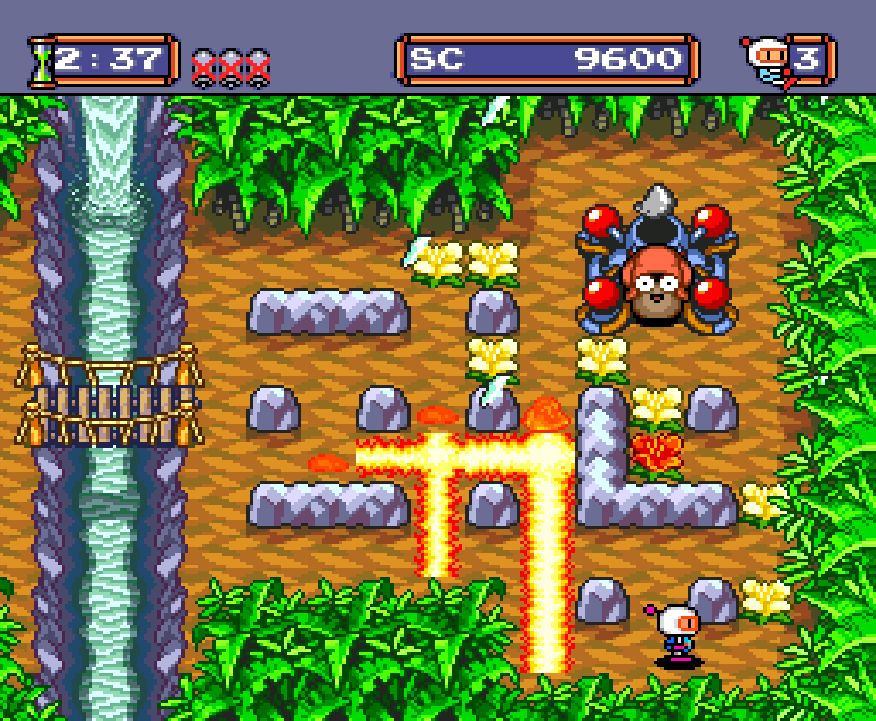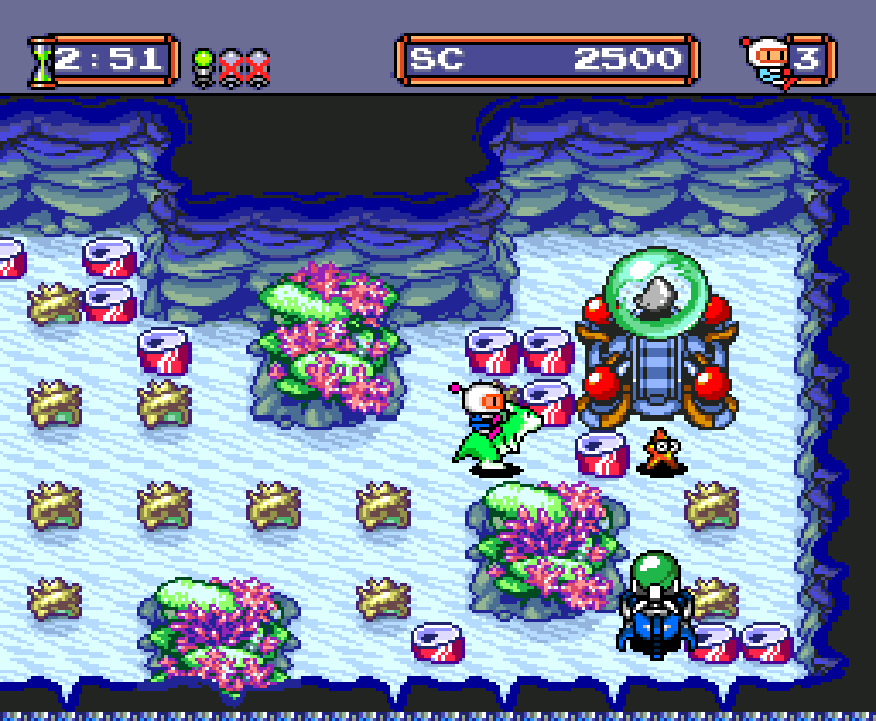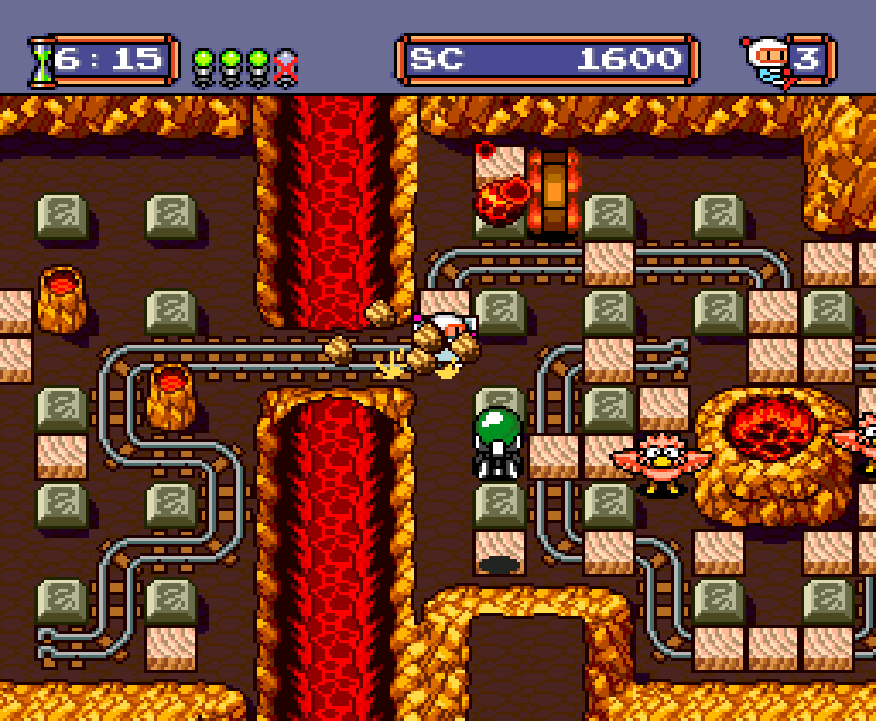
Princess of the Water Lilies – Steam Review

Overview – developed by Whyknot Studio in collaboration with publisher Red Dunes Games, Princess of the Water Lilies is a 2D puzzle platformer, taking place in a magical handcrafted world. As a cat that is adopted and raised by a family of frogs, go on a magical adventure to save your home from a mysterious mechanical menace. This title is available exclusively for the Steam service, with a link to the game at the bottom of this review.

Disclaimer: before I get into the review, I would like to thank PR Hound for providing the copy of Princess of the Water Lilies that was used for this piece. The provision of this software has not influenced the contents of this review, all thoughts and opinions contained within are my own.

Now with the introductions out of the way, let’s get into the review, starting with the story. I will be covering the game in as broad a manner as possible, as I do not want to spoil the surprises of this adventure.

Story – adopted and raised by family of frogs in a tranquil pond, a young and adventurous cat is gifted with a magical collar. This provides her with magical powers, allowing her to give life to the world around her, including causing the Water Lilies to bloom. During this ceremony, mysterious mechanical beasts appear, causing destruction and capturing the inhabitants of the forest. Now the young cat must use her new powers to save her home.

Gameplay – Princess of the Water Lilies is a 2D puzzle platforming adventure, where the player must explore the lands around the home of the frogs. As the cat, players need to traverse the varied landscapes of the world outside their home. To explore the areas, the player will need to run, jump, climb and crawl with golden orbs guiding the way. The world is made up of several different biomes, which includes a verdant forest, underground caverns and the mountains.

While exploring the different biomes, there will be many interactive elements, which will be affected by the power of the magical collar. The collar creates magical purrs, which will cause the flowers to bloom, fungi to come alive and transform the world around them. In some areas, there will be pods that teleport and launch the player in the air. Then there are mushrooms, which can open gates, allow the cat to navigate hazardous areas and jump higher.

Throughout the different areas, the player will need to rescue the captured creatures, trapped in boxes that can be swiped to break, or chained with locks. The player will also need to give items to characters that block the way, requiring puzzles to be solved to reach them. These include snails, which must be given to moles in order to open the area up. The item and objective varies, depending on the area that the player is in.

As the player makes their way through the adventure, they will encounter more challenging and complex puzzles. Which include multi step puzzles, like using the bell magic to stun mechanised creatures, which will try to kill the player to stop them. These mechanical menaces will try to crush, drill and even electrocute the player, with any contact knocking them out. Then there are also deadly spikes, pitfalls and bottomless pits.

During some sections, there will be enemies that will attack when the player is nearby, like spiders on web lines, which will make them charge the player. These enemies will require some good timing and movement to avoid, but if the player does get taken out, they will return to a checkpoint. There are generous auto save points, allowing the player to keep trying after every failure. This is most important during the boss encounters.

The bosses that the player encounters will be challenging, requiring the player to use the gimmicks o the area to succeed. These bosses consist of mechanical monstrosities, where once peaceful creatures have become twisted and try to destroy the world. In order to render these threats harmless, the player will need to use the power of the magic collar to free them. These segments have multiple phases, with each one increasing in danger.

As each of the encounters is passed, the player will be able to access the next area, getting one step closer to unravelling the mystery of these robotic invaders. To reach different areas, there will be some backtracking that is needed, with the player crossing through the moonlit pond. Near this magical area, there is a giant tree which the player can cause to bloom leaves. To do this special blue orbs need to be found, hidden in secret spots throughout the locations.

To help the player in their navigation, there will be travel frogs, which will allow the cat to warp between different points across the world. Near each of the travel points, as well as scattered throughout the areas will be record frogs, which will save the progress of the game. But for those who don’t want to manually save, the game autosaves frequently. There is a journal that players can look at, showing them the completion percentage for each of the zones.

This is not a very long game, but there is enough content and hidden collectables, with many secrets. The amount of hidden items, secrets and surprises for players to locate, adding to the replay value for players. There are three save slots, with an additional autosave slot, allowing up to three different playthroughs of the game. This is great for parents and kids, who want to share the game as well as those who want to try and speedrun.

Now with the gameplay covered, it is time to discuss the other aspects of this release, starting with the controls.

Controls – Princess of the Water Lilies has a very simple control scheme, offering the player an easy to pick up experience. The game also supports a variety of controller options, with all of the general controls being easy to use and fairly intuitive. There is also keyboard support, which work pretty well in general further adding to the playability. For those who are using specialised controllers or peripherals, Steam Input is fully supported for this release.

Difficulty – there is a fairly balanced difficulty curve, with the opening area introducing the player to the mechanics, with little in terms of danger. But as the player delves further into the adventure, the challenge will escalate, with the boss sections being the toughest part of the game. Thankfully, for those who may have a bit of a hard time, the frequent checkpoints, including during the bosses will make it possible for all players to make their way through the game.

Presentation – This is a visually beautiful game, with visuals that look like they have been hand painted, creating a magical world that is reminiscent of theatrical animations. The sprites are detailed well but can appear a little small if this title is played on a system like a Steam Deck. Luckily there is enough detail in the visuals that this should not impact the gameplay. The use of color and light works well, contrasting well between the foreground and background.

There are cinematic scenes that will play during the adventure, signified by black bars that appear when they start. There is no dialogue during these scenes, with the animation being used to imply what is happening. The music for this game is beautifully orchestrated, with music that has elements of whimsy, tension and sadness to them. Throughout the game, the music adds impact to the experience, being able to convey emotion without needing dialogue.

Final thoughts – I enjoy puzzle platform games, so when this appeared on my radar, I was more than happy to jump onto it. I very much enjoyed this experience, with the story being told in a way that is universally understandable, conveying all of the needed details without words. The text that is included is simply to help the player press buttons, which works very well for tutorials. The general feel of the game was smooth too, with no issues in terms of lag or delay.

During the opening section of the game, I did have some troubles getting used to the platforming, with some missed jumps and unintended deaths, especially during the first boss. However, after this things fell into place and the experience was a lot of fun. The only issue I can see is that some players may find the bosses a little too difficult. So with all of that said, I am happy to recommend this to everyone, especially parents and kids to play together.

In the end, I give Princess of the Water Lilies a final score of 5/5. This is a gorgeous puzzle platformer, with an engaging silent story and a world that is vibrant as if it was hand painted, offering a challenging but not punishing platforming adventure. If you want to check this game out for yourself, a link to the game will be below.

Link to Steam version (HERE)   

Neon Inferno – Steam Review

Overview – developed by Zenovia Interactive and published by Retroware, Neon Inferno is a blend of Run n’ Gun action and gallery shooter, taking place in a neon soaked cyberpunk New York. In 2055, NYC is split into territories where battles for domination take place, between several major factions including the Yakuza and NYPD. This title is to be released on all console platforms and Steam, with a link to each version of the game at the bottom of this review.

Disclaimer: before I get into the review, I would like to thank Retroware for providing the copy of Neon Inferno that was used for this piece. The provision of this software has not influenced the contents of this review, all thoughts and opinions contained within are my own.

Now with the introductions out of the way, let’s get into the review, starting with the story. I will be discussing the core gameplay experience, omitting some details as I don’t want to spoil the experience for players, while also being unable to test the co-op gameplay.

Story – in the year 2055, NYC has become a dystopian warzone, with conflicts that are spread across the city. Within the neon soaked cityscape, there is a battle for control between warring factions. The Family, a notorious crime syndicate deploy their two most important assassins, Angelo Morano and Mariana Vitti, as they seek to eliminate their rivals. To dominate the city, the assassins must take on the Yakuza, the NYPD and those who arm them.

Gameplay – Neon Inferno is a mix of Run n’ Gun action and gallery shooter, similar to games like Wild Guns and Contra. There are three main game modes for players to enjoy, with the story mode being where the majority of the action takes place. With six missions for players to challenge, which have three distinct difficulty settings. After selecting the save slot, character and difficulty, the game will start and the player will be thrown right into the action.

The player will play through a tutorial, showing all of the mechanics for gameplay, with the foreground and back ground shooting, melee combat and general movement. Once the tutorial is cleared, the first mission starts. During missions, the player will need to battle their way through the stage, fighting enemies in mostly side scrolling action. As the player makes their way through a stage, they will need to blast their foes away.

When fighting enemies in the foreground, the player will be able to shoot in 8 directions, with the base weapon having an unlimited number of shots that the player can use. There will also be enemies in the background of the stages, which use the background crosshair to shoot, with a standard and fast option. Then there is the melee attack, which uses a green blade to strike enemies and deflect enemy attacks, sending shots back to them.

As the player uses the blade to deflect and block attacks, they will gain adrenaline which can charge up into five levels. This is very important, as the adrenaline is used to activate Bullet Time. By holding down the melee button when successfully deflecting green shots, the player will be able to aim their redirected shots. When using bullet time, the attacks can be aimed in the foreground and even sent into background, dealing increased damage to enemy forces.

During the missions, the player will be able to jump, double jump and crouch to avoid the attacks of the enemy. But the player will also be able to use the dodge roll, which can help the player bypass attacks and some environmental hazards. The dodge will make the player invulnerable for a small amount of time, which is very useful during more hectic sections. It will also be required to climb ropes, hold rails and hang from platforms during the missions.

Each of the missions are made up of several segments, where players will need to keep maintain their focus as there is danger everywhere. Not only will the player need to deal with the standard ground forces, which can be taken out in a single shot, there will also be heavy/armored forces to deal with. These enemies are more robust, requiring a lot of damage to take down. A health bar appears above them when they are damaged.

Then there are the vehicles, which include heavily armored tanks, helicopters and more to deal with. Some of these mechanised forces will drop bombs or fire shots before leaving, making them more of a nuisance rather than a genuine threat. However, when many of them appear, they become deadly to the player. Thankfully, through effective use of the dodge mechanic, it is possible to make it past these enemies with minimal injury to the player.

Within some of the missions, there will be auto scrolling sections with most of them using vehicles, including a motorcycle and a train car. During the bike areas, the player will need to dodge enemy fire, while also moving between lanes to avoid civilians. These sections are intense and challenging, with enemies appearing from all directions to attack the player. Thankfully, there will be warnings to show when hazards are appearing.

At the end of the mission, and during some of them, the player will engage in battle with challenging bosses. During these encounters, a bar will appear on the screen showing their name and total health. The bosses that the player needs to fight include giant military vehicles, a human weapon and even a Yakuza mob boss in an mech suit. Many of the boss fights have multiple phases, with the battle changing upon clearing the first segment.

When the mission is cleared, the player will be taken to a results screen, where they will be given a monetary reward based on their performance. There will be a base amount for the mission, with bonuses and penalties that will be applied. The bonus is usually for the clear time, but the penalties vary, with the most punishing being the collateral damage penalty. If a civilian is killed, either by the player or enemies, heavy penalties will be applied for each death.

There is also a rating system where players will be awarded a star rank, alongside a title depending on their performance. For the Novice and Medium difficulty, the player will only be able to earn a maximum of three stars for a mission. This means the player will need to play through the game on Hard if they want to earn 5 star rankings in story mode. The player will be able to earn up to 5 stars in Arcade mode (discussed further below).

Between missions, the player will be able to visit a shop, where weapon power-ups can be purchased using funds earned from missions. These vary in cost, offering temporary power-ups to weapons and a shield for the mission. Only one can be selected before going into the next step. After visiting the shop, the player will go into the mission briefing, where the Don will give the player their mission, providing details and objective.

During the main body of the game, there is a non-linear approach to the missions, where the player will be able to select the objective they want to take on. Before the player makes their decision, there is an option to get details on the mission. This will provide background on the character, where they need to go and what the target is. It doesn’t appear that the sequence the player chooses has any impact on the game experience.

Throughout the game, there will be cutscenes with interactions between the characters, which help to push the narrative forward. These cinematics are shown in a dynamic way, adding to the experience of the story. There will also be in game scenes, which often occur before a boss battle happens. All of these give the story beats more impact, deepening the story and making the dystopia of the neon soaked NYC feel alive.

Away from the main Story mode, there is Arcade Mode, which offers a brutally tough challenge those who want to push their skills to the limits. In this mode, the player will have one credit to try and get as far as possible. Unlike the story mode, there will be no checkpoints, meaning death will be a significant setback for the player. Then we have the final game mode, which is the mission replay mode, to try and improve rankings.

In the mission replay mode, all of the cleared stages can be challenged again, letting players try to improve their ranking on the missions. When selecting a mission, players can choose to play the entire mission from the start, or a single section of it at the cost of being ranked. After selecting their choice, they will also be able to select the difficulty from the three choices in story and arcade difficulty. This makes mission replay a very valuable practice tool.

Now with the gameplay covered, it is time to discuss the other aspects of this release, starting with the controls.

Controls – Neon Inferno is best played with a controller, but there is the option for keyboard to be used. It is highly recommended to use a controller, as there are several buttons that need to be pressed at the same time. In general the controls are laid out in an easy to use manner, but can feel a little clumsy and awkward when first starting out. For those who need to make adjustments, there is the ability to remap the inputs for the game.

Difficulty – this is a very challenging game, requiring a lot of pattern memorisation, as well as trial and error. This is due to the frequency of enemies, the different types of attacks they use, as well as the very tricky boss fights. Thankfully there are difficulty settings that adjust the gameplay. Novice (easy), has greatly increased health and modified enemies, Medium is balanced for all players and Hard features brutal enemy patterns, with the least health available.

Presentation – Neon Inferno has visuals that are reminiscent of the 32-Bit era of gaming, featuring large bold sprites and vibrant use of color, especially with the different cityscapes. The environments, set pieces and general experience look beautiful, which are further enhanced by the excellent cinematic sprite art. Then we get the sound, which is excellently crafted, adding atmosphere to the action on screen and the dystopia it takes place in.

Final Thoughts – for the longest time, I have been a fan of games like Metal Slug, Contra and Wild Guns, which made Neon Inferno very appealing to me. When I got my hands on the game, I had some teething problems during the early stages, but as I got deeper into the game, everything fell into place. The game mechanics are a lot of fun, with smooth gameplay that is reactive, fast paced and a challenge that is tough but fair.

The story is well written, which is accompanied by imagery that reminds me of titles from the PC-98 system, with the highly detailed cinematic sprite arts. I very much enjoyed the narrative, pacing and flow of the game, especially with the non-linear approach with most of it. There were no issues with the experience, aside from a couple hiccups when learning the controls. I am happy to recommend this game, as it weaves two game styles together seamlessly.

In the end, I give Neon Inferno a final score of 5/5. This is an excellent action shooter, blending the Run n’ Gun and Shooting Gallery styles together perfectly, with the cyberpunk setting, vibrant visuals and atmospheric soundtrack all working in harmony. If you want to check this title out for yourself, a link to each version of the game will be below where possible, as well as link to the official site.  

Link to Steam version (HERE)

Link to Nintendo Switch version (HERE)

Link to PlayStation version (HERE)

Link to Xbox version (HERE)

Link to Official Site (HERE)

Lost Gems – Pac-Land (PC-Engine/TurboGrafx-16)

Hello and welcome to the latest entry in Lost Gems, the special feature series where I cover games that have been lost, forgotten or removed from sale. This week I will be covering the home version of an arcade game, which was as close to arcade perfect compared to other releases at the time. So let us take a look at Namco’s Pac-Land for PC-Engine/TurboGrafx-16, which was published by Namco in Japan in 1989 and NEC in the west in 1990.

Disclaimer: while the version of the game discussed here may no longer be officially on sale, there are ways to obtain the game. This can be either through the secondary market, or via digital roms/rips. I do not condone or promote piracy, so there won’t be any links to roms or rips of the game being covered.

So with the introductions out of the way, let’s get started. I will be discussing the general game experience, then give my personal thoughts on the release. Please Note, while the Arcade version of the game is available through re-releases, this version of the game is different from that release.

About the game

Pac-Land is a rather simple side scrolling platformer, where the player controls Pac-Man, who must go on an adventure to return a lost fairy to Fairyland. The game itself is separated into Trips of four rounds each, where Pac-man must travel through three different areas to reach the door to Fairyland. After returning the fairy home, Pac-Man must make his way back home, being greeted by Ms. Pac-Man and Pac-Baby.

To traverse the stages, the player can run and jump, with the option for button control or lever control for Pac-Man’s movement. When using the default button control, the player will need to tap the buttons to move Pac-Man, with the D-Pad controlling the jump mechanic. If the player selects lever control, the controls will be swapped around which is a more traditional control scheme. After selecting the control the player can select between trips 1-5.

The stages and sections that the player must cross are varied, with the player running through a town, forest and across mountains. The early segments are fairly easy to navigate, with obstacles like falling logs, fire hydrants and tree stumps. There are also launch pads, where players have to mash to cover pools of water. But that’s not all, as ghosts will try to stop Pac-Man, with the iconic spectres using vehicles to try and kill the player.

As the player makes their way through a round, they will be chased down by a purple ghost, which will kill them if they take too long. There will also be a timer on screen, which will count down rapidly during the round. If the timer runs out, the purple ghost will speed up and quickly kill them. In the stages, there will be power pellets, which will make the ghosts vulnerable, so Pac-Man can gobble them up for big points, which can save him when the timer expires.

At the end of the round, the player will reach the church and BREAK TIME sign, which will reward the player with bonus points based on the remaining time. At the end of the third round, Pac-Man will enter the door to Fairyland, where he will meet the Fairy Queen. The ruler of Fairyland will provide Pac-Man with a special pair of winged boots, which provide him with infinite jumps to make it home. If the timer runs out, the winged boots will disappear.

After clearing a trip, the player will start again from home and set out to Fairyland once more. But as the player completes trips, the challenges will increase in difficulty. These include multiple launch pads, where the player will need to chain hover jumps, traversing quicksand and navigate castle ruins. The castle stages are the most challenging of these later rounds, as the player will need to avoid water geysers in the flooded ruins. Then there are the puzzle ruins, where the player needs to unlock doors with keys and find the right path to escape.

As this is an arcade game, there is a heavy focus on scoring points. Throughout the stages, there will be fruits that will provide the players with significant score increases. Then there are the special secret bonuses, which have their own unique effects on the player. There are Galaxian Ships, which will give big score boosts, extra lives and special items by pushing the scenery. These include a helmet to block falling items, invisibility and more.

As the player clears trips, they will see special scenes when the player clears even numbered trips, with Pac-Man enjoying a peaceful tea break or napping, while ghosts spy on him. However, if the player is able to clear all 32 rounds, they will be rewarded with a special end screen, showing all of the characters from the game together. Players will also receive a very special congratulatory bonus, offering 800,000 points per life remaining.

Personal Thoughts

I have memories of seeing the Pac-Land arcade machine while on holiday, struggling to reach the buttons to be able to play. Then seeing the game on the PC-Engine, after my dad imported the system and being enraptured by it. I had played it as a kid, but never got very far with it as I didn’t understand it. But I loved playing it and would try my best every time I got the chance, with the music loop being stuck in my head because of how catchy it is.

I had played several versions of the game, with the early arcade ports from Namco Museum, the severely downgraded Famicom release, as well as the more recent ports. While the arcade version is the version that players will recommend, given the wide availability of it, The PC-Engine/TG-16 version is my preferred choice. The game is as close to arcade perfection for a home console at the time, only being outdone by the Sharp X68000 and PlayStation.

Everything feels right when playing the game, with how responsive the controls are, the vibrancy of the sprite work and the clean crisp audio. I had to use emulators to play it for a long time, before finally getting to own the game through the TurboGrafx-16. After this, I got to put a lot of time into the game uninterrupted, managing to beat all 32 rounds and getting that end screen. I did need to use a lot of continues to do it though.

In the years since this version was released, there hasn’t been a re-release of it on modern platforms, also being omitted from the PC-Engine and TG-16 mini systems. The most recent release of the title was through Pac-Man Museum+ and the Arcade Archives brand, which use edited versions of the game. Replacing Ms. Pac-Man and Baby Pac with new characters, which is speculated to be due to legal issues surrounding the characters.

The game has been referenced in other titles, with stages in Super Smash Bros, Super Mario Maker and other Namco releases. There is a fondness for this game with fans, but there are mixed feelings from the wider audience, due to the unusual control method and difficulty. Yet the game has a gained more of an appreciation as a whole, due to the arcade release being ported to modern platforms, allowing players to experience it with little barrier to entry.

For those who are looking to add the game to their collection, there are many copies of the game available at a reasonable price. The TurboGrafx-16 and PC-Engine versions are available in several forms, with the price sometimes changing depending on how complete it is. Thankfully, there are many copies of the game out there, with many of them being fully complete. So it is very possible to pick it up within your budget.

I have a lot of love for Pac-Land on PC-Engine and TG-16, as it was an early example of arcade perfection that could be attained in the home.  I would love to have this version of the game reach modern platforms, even if it is just through an online library, like the Nintendo Online Classics. Sadly I don’t think this will be possible, as Namco only release the arcade version as it is the original form, while Konami own the rights to the PC-Engine and TurboGrafx-16.

If you have enjoyed this feature, then please stick around and see what else catches your eye. I cover a wide range of games in reviews, get special previews and put out regular features. I have Lost Gems, Retro Revival where I discuss re-releases and the occasional Gaming Oddities piece, where I cover weird and wacky titles. So stay a while and have a look around.
Twilight Parade: Moonlit Mononoke – Review

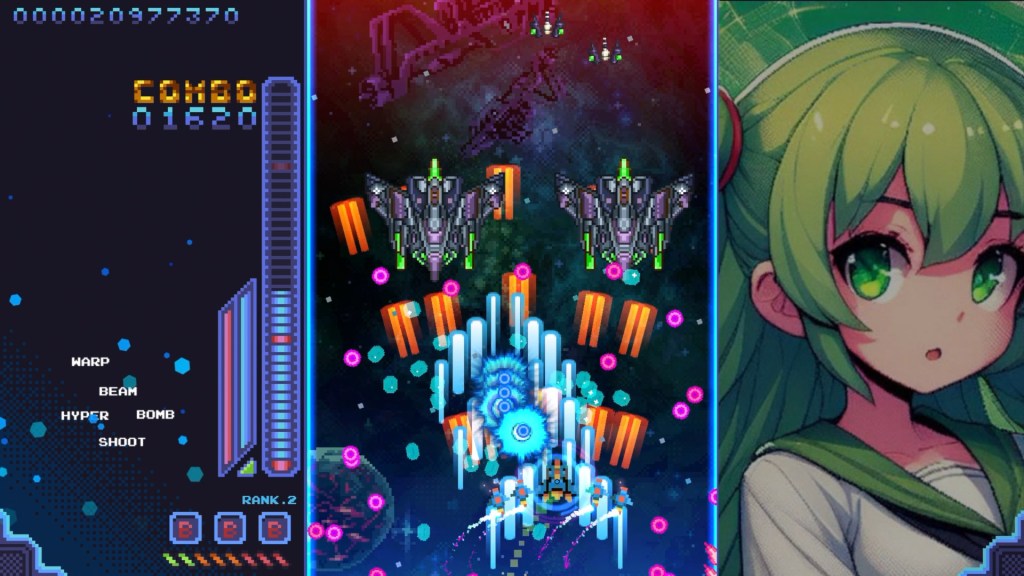
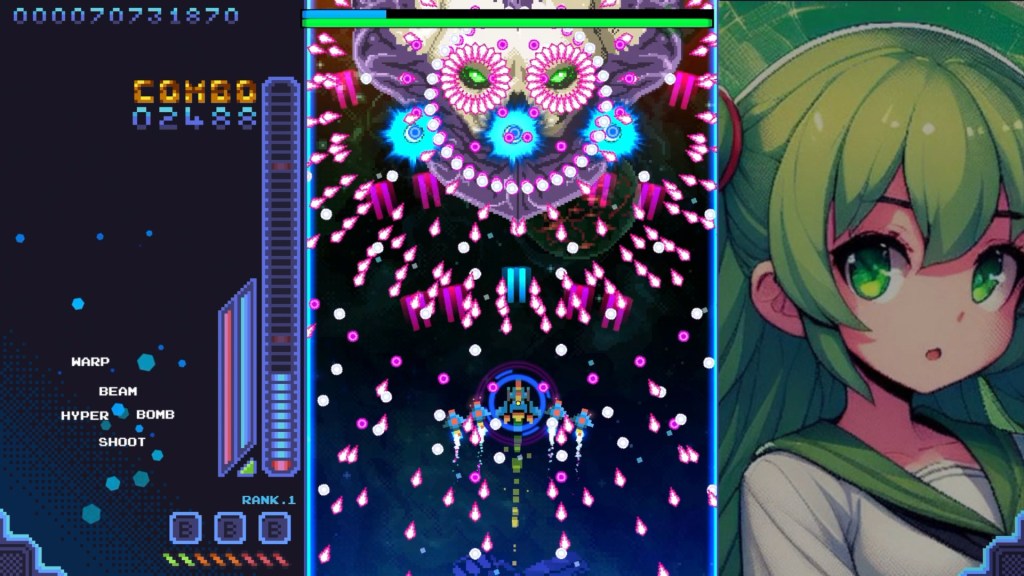
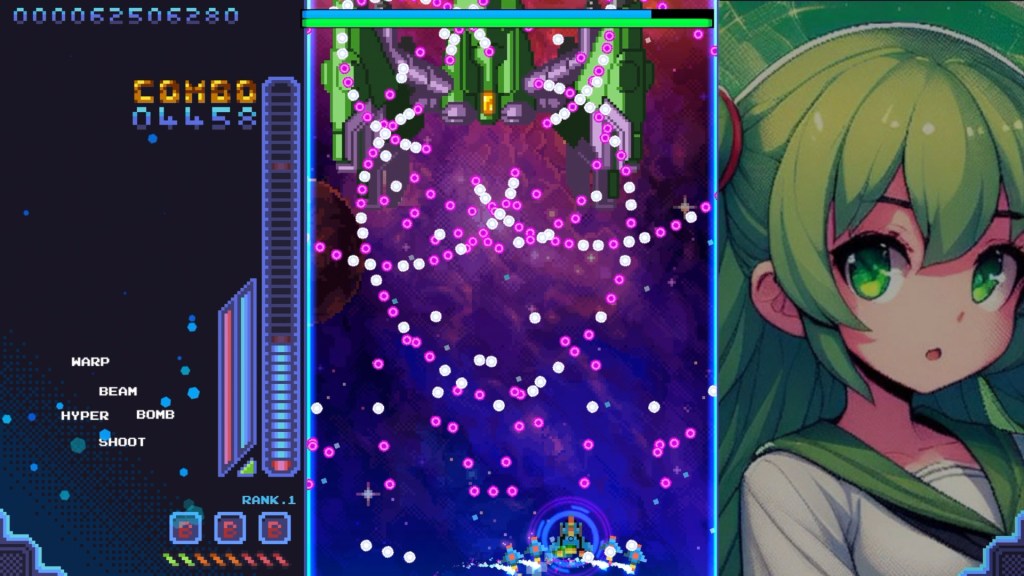
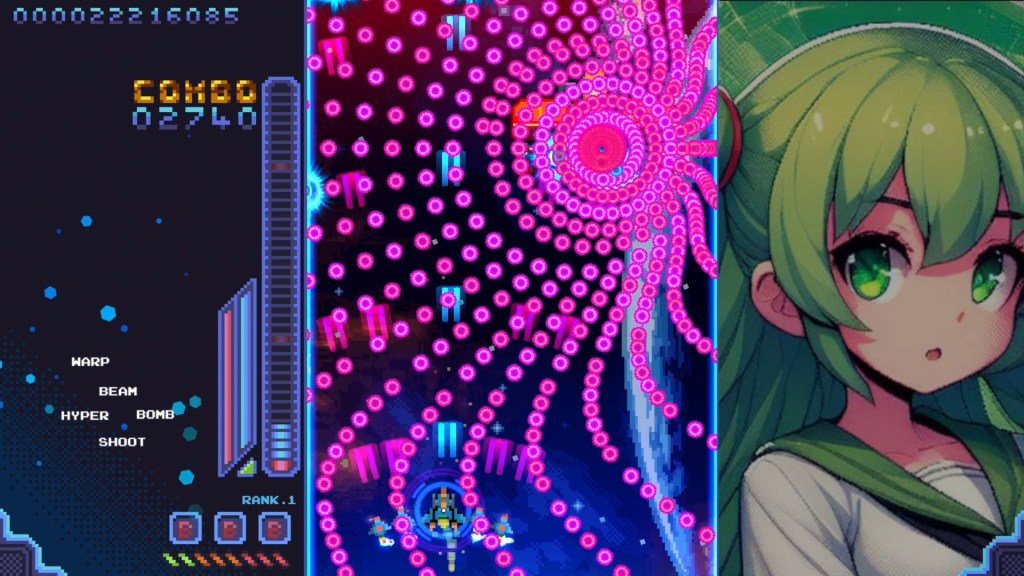
Overview – developed by Super16bits and published by Eastasiasoft, Twilight Parade: Moonlit Mononoke is a side scrolling bullet hell shooter about Yokai causing chaos at the Hyakki Yagyo. As one of four Yokai girls, take to the skies and blast through 5 stages set in Japan, with various spirits to fight and take down. This version of the game is available on all console platforms, with a link to each version at the bottom of this review.

Disclaimer: before I get into the review, I would like to thank Eastasiasoft for providing the copy of Twilight Parade: Moonlit Mononoke used for this piece. The provision of this software has not influenced the contents of this review, all thoughts and opinions contained within are my own.

Now with the introductions out of the way, let’s get into the review, starting off with the story. For the sake of brevity, I will be referring to the game as the shortened name of Twilight Parade throughout the review.

Story – once a year, Yokai take to the streets, celebrating the Hyakki Yagyo festival, the Night Parade of One Hundred Yokai in Japan. However, this year, the Oni Twins have not been invited to the event, as they are too rowdy. To get revenge for being snubbed, they decide to cause chaos at the Night Parade. With the help of their friends Kitsune and Gyokuto, they set out to ruin the party and get payback for being left out.

Gameplay – Twilight Parade is a side scrolling bullet hell shooter, where the player takes on hordes of Yokai across 5 stages. Each of the stages is part of the Hyakki Yagyo, the Night Parade of One Hundred Yokai, with many distinct spirits based inspired by Japanese folklore. The player can select one of four characters for this adventure, with the Oni Twins, Blue and Red, the fox spirit Kitsune and Gyokuto, a rabbit girl who lives on the moon.

Each of the playable characters have two cosmetic variants, a traditional outfit and a swimsuit. These outfits can also affect their form of flight, with the Oni Twins riding a broom in their traditional look, with their swimsuit style replacing the broom with a surf board. Gyokuto the rabbit rides her Mochi Hammer in her standard outfit, which is replaced by a banana in her swimsuit outfit. Kitsune is an outlier, as she rides a pipe in both costumes.

After selecting their character, the player goes straight into the action, with two attacks that the player can use. The first is the standard fire, where the player unleashes a barrage of endless fire upon the enemies. Then there is precision fire, which has the same endless rapid fire as the standard shots, but the player will have their movement slowed for precision movement. Depending on the character, their bullet patterns will change.

The Oni Twins have a Tanuki familiar as an assistant, with Blue Oni’s familair having a circular pattern, that fires shoots in a wave pattern. Then we have the familiar for Red Oni will follow the path she moves, firing in a straight line. Kitsune has twin fox familiars, who circle her as she moves, firing in wave pattern with her. Last is Gyokuto who has a pair of sentient Rabbit Mochi that are positioned above and below her, firing in a straight line.

While the player makes their way through each of the stages, they will fly through the stage from left to right, taking on wave after wave of enemies. These enemies will from the top, bottom and right of the screen, either as stationary or moving targets. Many of the enemies will fire directly at the player, attempting to hit the green Jewel on the player character. If the jewel is hit by a shot or contact is made with the enemy, the player will take damage.

There are two things that can occur if the player takes damage, with the first being a talisman explosion, which will clear the screen of bullets. The player will have three talismans to protect them from damage, which are activated by taking damage, but they can be manually deployed. Once all of the talismans are used, the player will lose a life if damage is taken. If all lives are lost, the player can continue to keep playing infinitely.

As the player fights their way through the stages, they will collect gems from destroying enemies, which adds to the total score. These gems will be pulled to the player automatically when they are dropped. Alongside the gems, the player will be able to collect golden coins, either from destroying enemies or by shooting parts of the stage. The coins are not magnetised to the player, meaning they must be picked up manually or they will be missed.

At the end of each stage, the player will encounter a giant Yokai maiden, who will engage in battle with the player. During these fights, there will be a hail of bullets that fill the screen up, making it difficult to avoid attack. These boss battles are challenging, as the patterns will be complex and fill the screen with projectiles. This is the best place to use talismans if the player has any, as they can give a big score boost, as well as a reprieve from the enemy fire.

If the player is able to defeat the boss without needing to continue, a slot machine will appear for the player to use. This slot machine uses the gold coins that players pick up during the stage, costing five coins each time. When using the slot machine, if the player is able to line up three matching icons, they will gain additional lives for the next stage. In the event that the player needs to continue during the stage, the slot machine can still appear.

The game is relatively brief, with the game ending rather abruptly when the final battle is done. The player will immediately be returned to the main menu, being able to play again from the beginning. Even though the game has a rather short run time, there is some replay value to the game, as is a set of achievements that players can unlock. These include beating the game with specific characters, defeating the bosses and more to challenge.

Now with the gameplay covered, it is time to discuss the other aspects of this release, starting with the controls.

Controls – there is a super simple to use control method for Twilight Parade, where the player controls their selected character with either the D-Pad or the thumbstick. The attacks use the face buttons, with two regular shot buttons and one each for the precision shot/talisman release. It is recommended to use a controller with a responsive D-Pad, or if able use an arcade stick or retro pad, as these will offer a comfortable and precise experience.

Difficulty – there is an escalating difficulty within the main portions of the stages, but there are spikes in difficulty when the player encounters a boss. This can be rather frustrating due to the massive bullet sprays that appear on screen, which are pretty tough to avoid. The penalty for death is punishing, as some players may never see the slot machine after defeating a boss. Thankfully, players can keep improving due to there being no limits on continues.

Presentation – Twilight Parade has a pleasing pixel art visual style, with bold sprite work, vibrant environments and a great use of color. The boss enemies are beautifully detailed, with their significantly increased size and exaggerated assets. There is a lack of cinematics, with the game lacking as much as a game over screen which is disappointing. I liked the sound, with a soundtrack that was exacting and enhanced the action on screen.

Final Thoughts – I do like to sink my teeth into bullet hell games, as they are exciting and can really cause that adrenaline to get pumping. That was true for this to an extent, but sadly the excitement was cut short abruptly with the lack of an ending. I had a lot of fun with the game, as the gameplay experience was challenging, but it did feel unfortunately short. I did enjoy unlocking the different achievements during the course of the game.

There was some disappointment due to there not being an ending, or even a leaderboard for recording scores. If these issues were fixed, then it would have been a near perfect game. It does control well, with a balanced difficulty that only spikes during bosses, so it can be a good first bullet hell for players. So with that being said I am happy to recommend this game to everyone, regardless of if you are a veteran or playing for the first time.

In the end, I give Twilight Parade: Moonlit Mononoke a final score of 4/5. This is a fun and challenging bullet hell shooter, with a virbrant and colorful style, alongside gorgeous sprite work for the characters and bosses. The only issues are a lack of an ending, the short length and no way to record scores during play. If you want to check this title out for yourself, a link to each version will be below.

Link to Nintendo Switch version (HERE)

Link to PlayStation version (HERE)

Link to Xbox version (HERE)

Lost Gems – Godzilla Generations (Dreamcast)

Hello and welcome to a special instalment in Lost Gems, the series where I cover games that have been forgotten, abandoned or just removed from sale. We will be celebrating Godzilla Day, the anniversary that occurred earlier this week, by covering the Japanese exclusive release that was a launch title for the Dreamcast. So it is time for us to take a look at Godzilla Generations, from General Entertainment and SEGA released in 1998.

Disclaimer: while the game being discussed here is no longer officially on sale, there are still ways to obtain the title. This can be either through the secondary market, or via unofficial digital roms/rips of the game. I do not condone or promote piracy, so there won’t be any links to roms or rips of the game being covered.

So with the introductions out of the way, let’s get started. I will be discussing the general game experience, then give my personal thoughts on the title.

About the game

Godzilla Generations is an action game where players control the titular Kaiju, where they must rampage through various locations across Japan. There are two main game modes, Normal Game and Time Attack Game, with the Normal Game being where the real meat of the experience takes place. In this mode, the player can select one of several versions of Godzilla, with Heisei Godzilla and Mecha Godzilla at the start of the game.

After selecting their Kaiju, the player will immediately go into laying waste to the cities of Japan. The player starts off in Fukuoka, moving through Osaka, Nagoya, Yokohama and then ending the rampage in Tokyo. Each of the regions have two stages, with the exception of Tokyo which has three stages as the finale of the game. As the player moves to each stage, they will see the path of destruction, showing the name and location on the map of Japan.

Inside the stage themselves, the player will gain control of Godzilla with a single goal, destroy as much of the scenery on the map as possible. In the upper right of the screen, a map of the stage will be visible with the targets as grey icons. But it also shows the Earth Defense Force, displayed as pink icons for ground forces and blue for air units. As the Kaiju destroys the buildings, infrastructure and scenery, they will disappear from the map.

The main way to cause mass destruction is to simply walk through them, causing the smaller structures and greenery to be immediately destroyed. However, the larger buildings and multi part structures, like skyscrapers and a baseball stadium will require more damage. There are a couple of options that players can utilise to maximise the devastation, with the main one being Godzilla’s tail. By simply turning in a circle, significant damage can be done.

Alongside the simple tail drag, the player will be able to use a selection of special attacks. For Godzilla, they can perform a powerful tail swing going to one side, causing more damage than just turning. But that isn’t all, as the player can unleash the iconic Atomic Breath. By pressing the charge button, a meter will fill up to use the Blue Atomic Breath for a limited time. There is also the Red Atomic Breath, which is charged by destroying the environment.

Mecha Godzilla has the same basic skills to generally destroy the environment, with the ability to walk into buildings and use the tail. However, Mecha Godzilla is outfitted with special unique attacks, with missiles and powerful lasers. The missiles can be used freely, replacing the tail swipe, firing to the left or right. The Laser needs to be charged before use, like atomic breath and when the special bar is full, an ultimate missile laser barrage can be used.

All of the playable Kaiju have the ability to block attacks, which will reduce the damage that is taken from the Earth Defense Force. This is important during stages, as the military units will deal significant damage to the player. The enemy units will use anti-Kaiju missiles and lasers, attacking whenever the player gets too close. If too much damage is taken, the player can use the roar, which will let out the iconic Godzilla cry to restore lost health.

When areas of the stage are destroyed, a destruction percentage in the bottom right of the screen will rise, with the goal to be destroying as much as possible. There will also be a timer, showing how long the player has to cause destruction. On the other side of the screen, there will be two meters that players must keep an eye on. The upper meter is health, starting as green then gradually turning red as damage is taken from buildings and attacks.

When the player has destroyed enough of the current location, they will be able to end the stage. This can be done in one of two ways, by allowing the time limit to expire or by leaving the area. By wandering out of the boundary of the stage, a timer will count down and a fog will envelop the stage. Upon ending the stage, the player will be rated based on their performance, with letter grades for speed, damage, speed and more before getting a final ranking.

After clearing the stage, the player will be able to progress to the next stage, retry the current stage for a better ranking or go to the main menu to save. If the player goes to the main menu to save, when they return they will need to replay the stage that it was saved from. When all of the stages have been cleared, the player will unlock an additional Godzilla variation, as well as a special unique character that will surprise players.

Additional playable characters are not the only thing that players can unlock, as they can also unlock items in the Theatre for players to view. From the start of the game, the player will be able to view a selection of trailers from the Theatre menu. But as the player clears each stage, there will be additional trailers unlocked. These include trailers for films like Godzilla vs. Mothra, Son of Godzilla and Godzilla vs. Gaigan to name a few.

The Time Attack Game allows players to challenge the cleared stages, while under a time limit to get the best destruction score possible. This additional gameplay mode can be a good option for hot seat multiplayer, passing a controller around to see who can get the best score. There will also be a leaderboard, where players can enter their name at the end of a stage. The inclusion of this further adds to the replay value of the game.

The last thing to discuss is the VMS game mode, which was developed to make the most of the special memory cards for the Dreamcast. By plugging a Visual Memory Unit (VMU) into the controller, the player will be able load one of many Chibi Kaiju onto the memory unit. This works as a virtual pet, allowing the player to raise a Kaiju, taking care of them and training them to make them stronger. It is reminiscent of the classic Tamagochi toys.

By raising and training the cute monsters, they will be able to battle other players through direct connection between two VMU systems. By battling with other players, they will add details to the memory unit, which can be transferred to the game itself. The monsters raised on the VMS system will be playable in the special Coliseum mode, which allows multiple players to participate in battle with each other and against the Kaijus.

This special mode requires players to have their own VMU with batteries in them, as the monster character needs to trained away from the system. If the battery within the VMU dies, the data will be retained until they are replaced, so players won’t lose their data in the event of battery failure. This additional mode is quite special, as it was possibly the earliest example of external add-ons being used to unlock content, further deepening the experience.

Personal thoughts

As a kid I was a big fan of Godzilla, watching the films on VHS with the cheesy dubbing which I thought was so cool. Then my dad brought home an imported Dreamcast in 1998, with a copy of Godzilla Generations following soon after. Seeing this game blew me away as it was such a huge graphical leap at the time, as the Dreamcast was the first system of the sixth generation to be released. I immediately became a fan of this game.

The leap in the graphical power then made the gameplay much more engaging, as in the past the games were limited in what they could do. As they were limited to isometric perspectives, side scrolling action and fighting games. With the release of Godzilla Generations, players were able to experience a fully cinematic city destroying experience. The dynamic camera angles really added to the experience, making it more impactful when causing mass destruction.

Godzilla Generations is very accurate to the classic films where the atomic lizard would go on a rampage, moving through the cities at a rather slow pace. This gained negative criticism at the time from journalists, as the slow gameplay was called boring and dull, among other criticisms. However, I feel that these criticisms were misplaced, as the speed of the game makes it feel like you are playing one of the films. This is what the game excels at so well.

This game also serves as a museum of classic Godzilla, with the included film trailers and inclusion of the much maligned American Godzilla, called Godzilla USA in game. This celebrates the history of Godzilla, giving players an experience that has the heart of what made Godzilla so cool when we were kids. The game has a relatively niche fanbase, which have an appreciation for the game, but sadly the negativity around the game is more prevalent.

While I would love to see this game come back, that is likely not going to be possible, but it would be nice to have another game in the franchise with the same style of play. The closest we had was the PS3/PS4 release, but it was sadly short lived quickly disappearing from store shelves. A year after the release of Godzilla Generations, a sequel was released called Godzilla Generations: Maximum Impact, but it was more focused on the monster battles and on-rails action.

For those who want to pick this game up, due to the negative reception and reputation that the game has, the prices for the game are relatively low. Even as a Japanese exclusive, the game is very attainable in a complete form, with many copies of the game available through the secondary market. There are also Godzilla branded VMU systems, but these can be significantly more expensive depending on the condition, as well as having complete packaging or not.

There have been many Godzilla games that have come and gone, with all of them having a relatively short shelf life, due to their use of licensing for the series. So that doesn’t give me much hope that this game, as well as the many others out there will see a re-release at any point in the future. This is due to the complicated situation with licensing, as well as companies that sadly don’t exist anymore, with General Entertainment going bankrupt in 2011.

If you have enjoyed this feature, then please stick around and see what else catches your eye. I cover a wide range of games in reviews, get special previews and put out regular features. I have Lost Gems, Retro Revival where I discuss re-releases and the occasional Gaming Oddities piece, where I cover weird and wacky titles. So stay a while and have a look around.
Lost Gems – ILLBLEED (Dreamcast)

Hello and welcome to the final instalment of Lost Gems, rounding off the special Halloween month. In this series I cover games that are lost, abandoned and no longer available in any official capacity. To end the off the spookiest of all months, I will be discussing a niche horror title that was commercially unsuccessful, but gained a cult following. So it is time to discuss ILLBLEED, released for Dreamcast in 2001 from Crazy Games and Amusement Interface Associate (AIA).

Disclaimer: while the game discussed here is no longer officially on sale, there are ways to obtain the game. This can be either through the secondary market, or via digital roms/rips. I do not condone or promote piracy, so there won’t be any links to roms or rips of the game being covered.

So with the introductions out of the way, let’s get started. I will be discussing the general game experience, then give my personal thoughts on the release. The assets used have been captured from the early stages of the game, as I want people to experience this game for themselves if they seek it out.

About the game

ILLBLEED is a survival horror game, taking place in the Virtual Horror Land called ILLBLEED. The story revolves around Eriko Christy, the head of her high school horror club. After giving a speech where she recalls her traumatic past of her father’s Horror Caravan, which was tested on a young Eriko to see how effective the scares were. Eriko’s mother divorced her father, but Eriko had grown to love horror and wanted to become a child psychologist.

After this, Eriko meets up with her friends, the other members of the horror club, Kevin, Randy and Michel. While talking, Michel reveals tickets to the new horror attraction ILLBLEED, which has a prize of 100 million dollars for anyone who can make it through the park. Eriko is sceptical of this reward, believing it is a hoax or stunt and declines the ticket, with her friends leaving as they want to take on the challenge wanting to win that reward.

Three days pass and Eriko hasn’t had any contact with her friends after they left, getting concerned for their safety, she heads to ILLBLEED to find her missing friends. Reaching the park, Eriko will need to go through each of the attractions if she wants to find her friends. The attractions of ILLBLEED are based on various horror themes, like slasher flicks, B-movie monsters and even twisted parodies of other characters. All while trying to survive the horrors of each stage.

Upon reaching ILLBLEED, the player gains control of Eriko, with the ability to explore the facilities of the park. These include the Mary’s Drug Store, where the player is able to obtain various recovery items, including food, bandages and even Adrenaline shots. Then there is the Photo Shop and Emergency Room. The first allows players to save their progress, with the other allowing the player to perform a variety of operations, which can affect the player.

Then there is the cemetery, which acts as a tutorial and gives the players some starting items. This is a good way to get used to the gameplay mechanics, providing the player easy to understand explanations. Moving into the real meat of the experience is the Attraction Theatre, where a variety of Michael Reynolds horror films are brought to life. The player must challenge each attraction as they open, giving it a linear progression system.

Before entering an attraction, it is advised to go to the shop and buy items, preparing for the horrors of each stage. The player starts off with 3 thousand dollars, which are enough to get by for the first attraction. After preparing, the player can enter the stage, with each one having a unique theme and requirements to them. Before the stage starts, a cinematic will play in the style of old horror movie openings, building the atmosphere and story of the attraction.

After this build finishes playing, the player will be given an objective to clear, alongside a prize with conditions attached to it. These include a target time, amount of health left and heart rate upon clearing the stage. If the player fails to meet any of these challenges, the prize money will be reduced as a penalty. The player can then select a character, with Eriko being the only character at the start, but others can be unlocked under specific conditions.

When the player starts the stage proper, they must make their way through the different areas. The gameplay within the attractions could be described as Survival Horror meets Scare Maze, because the spaces, rooms and hallways contain deadly traps. As the player navigates the attraction, their senses will alert them to areas that may contain traps, with Sight, Hearing and Smell lighting up. The closer to the danger they are, the bigger the signal.

If Eriko is caught in traps, they will be affected in three possible ways. There are injury traps, which will harm Eriko, causing Stamina to be lost and bleeding to occur. This is alongside the fear traps, which will scare Eriko and cause her heart rate to increase. If the player takes too much damage, they will die from strength loss or bleeding out. But if Eriko’s heart rate is too high, she can suffer from Shock Death, killing her suddenly.

In order to avoid the dangers of a stage, the player must locate the Horror Monitor, which is hidden in the starting area of the stage. To help the player locate this key piece of equipment, all four senses will go off including the Sixth Sense. Once the Horror Monitor has been obtained, Eriko will be able to highlight points of interest, showing possible trap positions. Using the Horror Monitor requires Adrenaline, which is a precious limited resource.

If the player marks a trap with the Horror Monitor, it will be disabled and the player will not suffer the negative effects, while also gaining adrenaline. When a trap is successfully rendered inert, often a sound will play without the scare. But in some cases animations will play out, showing the trap failing to harm Eriko. If the player runs out of Adrenaline, they will be unable to use the Horror Monitor, leaving them open to danger.

Moving onto Sixth Sense, this serves a special dual purpose. This alerts the player to two things, the first being items, which can include recovery items, special upgrades and key items. The key Items will provide additional story details for the attraction, fleshing out the narrative further. Then there is the other function for Sixth Sense, which is to alert the player to enemies. If the player encounters an enemy, combat will begin.

There are two ways to survive most battles, with the first being to destroy the enemy, either with a weapon or using Eriko’s bare hands. The other way to get out of a fight is to use the Helipad, which will drop a ladder down for Eriko to climb. This will leave Eriko open to attack, but can be a safer option as Eriko can sidestep to avoid attacks. If the enemy is defeated, they will reward the player with Adrenaline, making the choice to fight a risk versus reward situation.

Enemy spawns as well as Items can be highlighted by the Horror Monitor, showing them on the stage just like the traps. But be warned, that some of these highlighted points of interest may be nothing, leading to adrenaline being wasted. However, if the player does highlight an enemy appearance point, the player will get an advantage in the battle. This can let Eriko go for an easy escape or get a sneak attack on an enemy, making it very useful.

During the exploration of the stage, the player can access a map, which can be seen from the pause menu and by pressing a button. The map screen will show the full layout for the area the player is in, showing a line for some of the distance that Eriko has travelled. In the main menu, players can look at the key items for the objective, recovery items and other assorted items. The player can also see the status of Eriko, with Bleeding, Heart Rate and more.

While exploring, the player will come across Dummyman Photo Booths, which will allow the player to save the game. These can be before key points, making it important to save as frequently as possible. If the player finds these areas, they will often be safe zones, where there are no traps or enemies that appear. The safe zones are the best place to use items, but if needed they can be used when exploring. Just be aware that items can’t be used in battles.

As mentioned further above, there are special items that can be collected. These include the Speed Ladder, which increases the helicopter escape and the Item sensor, which shows items on the Map. The items last for the duration of the stage, being lost when the attraction is cleared. Then we have the Key Items, which must be used to solve puzzles to progress some of the objectives, which will be hinted at in the note items that can be discovered.

Through set points during each attraction, the player will encounter boss monsters, which are terrifying monstrosities that will try to kill Eriko. Some of the monsters will chase Eriko, engaging in a battle if contact is made. During these set piece battles, the boss will not be killable so it is advised to run away, escaping via the Helipad. The set piece battles are incredibly stressful, heightening the tension as they can quickly lead to an unexpected death.

When the final encounter occurs, the player will need to survive the battle and find a way to defeat them. However, there are some final boss encounters that are more than just a battle, like the first boss which goes from a regular battle to a giant monster attack. Once the final conflict with the monster is cleared, the player will be able to escape the attraction. This can be through reaching a gate, or after the monster has been killed.

If the requirements are met for the stage, the player will be awarded with the prize money. After any penalties are applied, the money will be added to the player prize fund. In some of the stages, Eriko will be able to save her friends, but there is a chance they can die if the player fails to meet the hidden condition. If the character is rescued, they will be usable in later stages, but if they die it is possible to bring them back from the dead.

Inside the attractions as well as the main park area, the player can go to the Emergency Room and perform a Resuscitation Operation. This can be very expensive, so it is important to make sure this is the right decision before spending money. If the player has been able to find upgrade items, they can use them to improve different elements of Eriko and her rescued friends. These include Stamina improvements, increased Adrenaline and more.

The costs for the body improvements are costly, but can greatly increase the chances of survival for the players. There are operations that can be accessed within the stages, as there will be Emergency Rooms that can be accessed in safe zones. The recovery operations can restore Eriko’s stats, like Strength, Pulse Rate, Adrenaline and Bleeding. These can be used in dire situations, but will eat into what funding the player has left in their bank.

Once all of the attractions have been cleared, the player will be able to take on the final challenge. If the player is able to survive, the ending will play out, but the horrors are not over. Upon completion of the game, the player will be able to take on the game in New Game Plus, with additional secrets to uncover. This adds additional replay value to the game, as each attempt will have items, trap locations and other elements randomised in the attractions.

Personal Thoughts

I experienced ILLBLEED a very long time ago, through a Japanese import rip of the game on the original Dreamcast, watching my dad and being terrified by the horrors I saw. But it didn’t deter me from wanting to play it myself, because it was such a unique horror game that was much different from the others I had seen. My experiences with horror games were things like Resident Evil, Parasite Eve and Fatal Frame, which are nothing like ILLBLEED.

For years I have had this fixation on the game, going back to it and playing the Japanese version for the longest time, before I found there was an English release. Sadly this was in a time before I was able to make purchases of games and imports, needing to rely on people I know who had copies to supply me with backups. I would spend hours playing the unofficial copies, failing and trying again to make it through the game, learning as much as I could.

It took me many years to get my first game clear done, with a long time after to uncover the rest of the secrets to the game. This is due to the significant difficulty, pressure and tension that the game will put players under during the experience. The scares may seem slightly tame now, but this game was pretty revolutionary for the time, as jumpscares were still relatively new in horror. There are also plenty of moments that will still catch players off guard.

The overarching narrative, alongside the sub-stories for the attraction stages have a cheesy feel to them, with the narrator that adds to the atmosphere. The monster designs have a grotesque and uneasy feel to them, with some being comedic which I am unsure if this is intended. The voice acting is excellent, feeling wooden and awkward at times, which was a staple of the era, further adding to the charm that ILLBLEED possesses.

There are some elements that are a little wonky by modern standards, like awkward movement controls that feel a little stiff and tanky at times. Then there is the combat, which can be a little hit and miss due to the camera, leading to issues lining up attacks. But, these can easily be adapted to during play, becoming less of a hindrance the more experience is gained. It may take a little while, but I feel it is worth it to experience this game.

ILLBLEED is a unique experience, which sadly didn’t have much success, leading to poor sales and relatively middling reviews form the press at the time. There are complaints of controls, repetition and low quality voice acting. But it was also praised for the bizzare nature of the game, the level of violence and the campy qualities of the game. Since the game released in 2001, it has amassed a cult following, with people appreciating how bold and unique ILLBLEED is.

I feel that this game takes the ideas of horror games and turns them on their head, as many games at the time relied on combat to survive. But ILLBLEED is such a different beast, as combat isn’t the only thing affecting the survival of the player. Due to the way that players can die from the scares, via Shock Death and the bleeding reaching a critical point, as well as just losing health. There is essential combat, but it isn’t the main focus for survival.

There is an element of rarity to ILLBLEED, due to the lack of release outside of Japan and North America, leading to the prices to fluctuate over the years. As the game has become more popular with horror circles, the demand has risen causing it to become more expensive. On the secondary market, the North American version demands a higher price, with the Japanese release costing less, but that version will require a translation guide to play.

ILLBLEED is a special game, which takes all of these different elements from horror, with the camp and cheese of the stories as well as the deadly haunted house scares. The exaggerated violence and gore is so over the top, that it is possibly the most violent horror game of its time, only possibly outdone by The House of the Dead. I would love to see an ILLBLEED revival, but with the company that made it now dead, it doesn’t seem like that is going to be possible.

If you have enjoyed this feature, then please stick around and see what else catches your eye. I cover a wide range of games in reviews, get special previews and put out regular features. I have Lost Gems, Retro Revival where I discuss re-releases and the occasional Gaming Oddities piece, where I cover weird and wacky titles. So stay a while and have a look around.
Shooty Shooty Robot Invasion – Steam Review

Overview – developed and published by Bubby Darkstar, Shooty Shooty Robot Invasion is an absurdist first person shooter, set in Amerikaw that is being invaded evil robots. As Shooty, take on the robot horde and save the world from the robot invaders, while interacting with a colorful cast of idiotic NPCs throughout the game. This title is available exclusively for the Steam service, with a link to the game at the bottom of this review.

Disclaimer: before I get into the review, I would like to thank the representative who provided Shooty Shooty Robot Invasion for this piece, via the Keymailer service. The provision of this software has not influenced the contents of this review, all thoughts and opinion contained within are my own.

Now with the introductions out of the way, let’s get into the review, starting with the story. I will be covering the core aspects of the experience, as there are some secrets and special hidden things that I do not wish to spoil. NOTE: there is profanity and sexual humor in this game, please proceed at your own discretion.

Story – in Amerikaw, evil robots have invaded, attacking Califlorida where Shooty lives, who is part of the Force of Robot Killers (F.O.R.K.) who is rudely awoken by her commander. She is then briefed on the situation that is unfolding, before getting thrown into the battle against the robot menace. Now Shooty must get the other members of F.O.R.K. together, beat up the robot menace and save Amerikaw from these idotic robot assholes.

Gameplay – Shooty Shooty Robot Invasion is a colorful first person shooter, where the player can explore six large locations, running around and blasting robots. The player controls Shooty, a member of FORK, who is tasked with stopping the robot invasion, armed with robot hurty only bullets and rage. In each of the levels, Shooty must complete a series of objectives, like helping people, completing tasks and killing lots of robots.

During stages, there will be combat encounters with the evil robots, where the player must take down all the enemies in the area. When these encounters occur, the player will often be trapped in a confined space, battling out in arena combat. Battles can consist of a single group of bots, or multiple waves, only ending when all hostiles have been defeated. Shooty will be armed with a variety of weapons, like revolvers machine guns and even a Katana.

The ammo for the weaponry is infinite, meaning the player doesn’t have to worry about accuracy, letting them just spray bullets everywhere. The player will start most of the stages with one weapon, but it is possible to find additional guns to increase their arsenal. However, there are some sections where Shooty will be unarmed, which can have Shooty exploring and talking to the weird cast of NPCs, or having to fight with her bare hands.

Alongside the combat skills that Shooty possesses, she can also dash to dodge attacks, run to quickly cross areas and jump using parkour skills. While using her movement abilities while running and in the air, Shooty will be able to use an up close and personal attack, striking the foe. Usually this will only be able to hit one enemy, knocking them back, but if they are close to multiple enemies Shooty will be able to strike several of them at once.  

There is a wide variety of enemies to fight, with many of them themed to the areas that Shooty is currently in. Like cowboys, heavy rockers, angels and devils, as well as generic robots that appear frequently in the different stages. Some of the robots will take several hits to kill, others will have barriers and there will be others that are killed with one shot. The attacks will include melee, ranged and area of effect attacks that can really hurt Shooty.

At set points during the course of the game, the player will encounter powerful bosses, who can deal significant damage to Shooty. All of these battles take place in contained arenas, many of the bosses having wide reaching and deadly attacks. Some have area of effect attacks, summon additional foes and even have shields on them. Each of the bosses have multiple phases, often shown by hearts below their health bar, which is at the top of the screen.

While in battles, Shooty can take a fair amount of damage before being defeated. Shown as hearts on the side of the screen, taking damage will cause a heart to lose its color and break if damage is taken again. When all hearts are broken, Shooty will die and they will need to restart from a checkpoint. If a combat wave is completed, or a boss section is cleared, Shooty will regain all of the health she has lost, preparing her for the next battle.

During the stages, the places where Shooty needs to go, as well as the characters she needs to talk to are marked with red exclamations. But be careful, as some of the red quest markers will progress the stage to the next step. For the optional interactions, the player will see grey question marks above NPCs to talk to. The NPC dialogue is optional, providing humor and entertainment, as there are many weird and wacky characters to interact with.

Throughout the game, there will be character interactions, story dialogues and animated cutscenes, which are filled with many a bad word. These further the absurdity of the game experience, with characters that fit a wide range of archetypes. The story is pure madness, with robots to kill, evil conspiracies to uncover and a president that just wants to inspire Amerikaw. These scenes cannot be skipped, which may be off putting for some.

Hidden within each of the stages are secret areas, which will have special requirements to enter. These areas have a whole extra sub narrative to them, which further adds to the value of this experience. This experience is pretty long, offering a lot of content depth and replay value, as it may not be possible to find all of the secrets in a single play of the game. Sadly, there is only one save file for the game, meaning to start again, the save file needs to be wiped.

Now with the gameplay covered, it is time to discuss the other aspects of this release, starting with the controls.

Controls – the controls for this release are pretty well laid out and easy to use, using the traditional mouse and keyboard set up. There are few skills to use, with the movement, combat and the ability to use actions to go interact with the world. Players can also use Controller through a recent update, with mixed support for controllers, but using steam input will streamline the process. All controls are responsive, intuitive and lag free during the action.

Difficulty – there is a rather moderate difficulty curve to Shooty Shooty Robot Invasion, with the first stage working as a good tutorial. However, the further the player gets into the game, the more challenging the game will become, especially during the unarmed sections. Thankfully the tough sections have regular checkpoints, in the event of the player getting killed, leading to little progress lost. This game can be beaten with enough time and persistence.

Presentation – from a visual perspective, this title is gorgeous with hand drawn visuals, which are vibrant and add to the absurdity of the experience. The environmental design has this weird and wacky look to it, with the different themes, like western and heavy rock themed casinos, alongside the insanity of Califlorida. The character designs work extremely well, with all characters having unique traits, which give them a distinct personality.

Then we get to the animated cutscenes, which feature news reports, flashbacks and humourous character interactions, all laden with a lot of profanity. There is a lot of weird humor too, with jokes about weed, relationships and more. The game over screens are also entertaining, with fake newspaper headlines. The sound for the game is solid, with weighty and impactful sound effects, as well as a soundtrack that has feels unique, as well as voices that are just beeps.

Final Thoughts – I very much enjoy both first person shooters and absurd/surreal humor, so Shooty Shooty Robot Invasion was an easy yes when I got the chance to review it. The vibrancy of the world, the insanity of the story and the weirdness of the characters all work together so well. Then there is the action, which is fast paced, frantic and chaotic throughout. This happens most during the boss fights and wave battles, where attacks can occur from all sides.

I very much enjoyed the story of the game, it pulled me in and entertained me, with the dumb jokes, weird humor and cast of characters. The game feels just right, with gunplay that is reactive and responsive, especially in very chaotic situations. Then there is the extra content, which expands the value on offer. The only issue I think people may have is the unskippable cutscenes. This makes it easy to recommend the game to everyone that enjoys FPS games.

In the end, I give Shooty Shooty Robot Invasion a final score of 4.5/5. This absurd and chaotic first person shooter is a hell of a lot of fun, with characters that are ridiculous, surreal humor and profanity throughout. Oh and robots, lots of robots to dismantle and destroy. If you want to check this game out for yourself, a link to the game will be below. The game is currently on sale for a limited time.

Link to Steam version (HERE)

Lost Gems – Splatterhouse Part 2&3 (MegaDrive/Genesis)

Hey there, I am back again with the next instalment for Lost Gems, which continues the special Halloween month, finishing a series I started earlier in the month. This week, I will be covering the sequels to the original Splatterhouse, which were developed by Now Production under the Namco banner. So let us take a look at Splatterhouse Part 2&3, which were released exclusively for the SEGA Mega Drive/Genesis in 1992 and 1993.

Disclaimer: While the games discussed here are no longer officially on sale, there are ways to obtain them. This can be either through the second hand market, or via unofficial digital roms/rips. I do not condone or promote piracy, so there won’t be any links to roms or rips of the games being covered.

So with the introductions out of the way, let’s get started. I will be discussing the general game experience for each title, then give my personal thoughts on them as a whole. As mentioned during the introduction, I have already released a feature on Splatterhouse for the PC-Engine/TG-16, which you can find (HERE).

About the game

Splatterhouse 2 (known as Splatterhouse Part 2 in Japan), is the first full sequel to the horror platform action game. Taking place three months after the tragedy of the West Mansion, with rick being haunted by guilt his inability to save Jennifer. However, the Terror Mask contacts him via psychic link, telling him that he can save her. But her must return to remains of the West Mansion, only then can he find the hidden house and secret to saving Jennifer.

The gameplay is very similar to the first, with the player taking control of Rick as he goes on a bloody Rampage through 8 stages, using the same attacks as the first game. On this journey, Rick will travel through the burned ruins of the West Mansion, through the wilderness and the Shin Splatterhouse, all to save Jennifer from the land of the dead. To achieve this goal, the player can use the same punches and kicks as the first game to splatter monsters.

Like the previous game, there will be a range of horrifying monsters to battle, in the first stage, familiar enemies like the Body Eaters and Deadmen appear. However, once this has passed, the monsters change, introducing monsters like the Screaming Mimi, regenerating zombies and more. The hazards have also increased, while the familiar spikes are there, players must now contend with razor fish, spirits that reverse controls and more.

The weapon system returns from the previous game, with an iron pipe and bone, which can be used to battle abominations faced. Then there are the more unique weaponry, like explosive vials that will destroy slime monsters, as well as spikes from a persuing monster. These are used for a set piece chase, where the player must throw them back at the leviathan, hitting the creature in the eye to deal damage to it and cease the pursuit.

At the end of each stage, Rick will face a horrific monster, which have are even more grotesque than the inhabitants of the first game. These bosses include Bellyache, a giant monster that must be hit in the stomach, causing his swollen belly to explode when he is defeated. Then are the more unique encounters, like the psychic BloodBall. This monster controls a chainsaw and sheers, as well blood puppets, which need to be dispatched before killing the psychic beast.

Between each of the stages, the player will see some story details, pushing the narrative forward with each new story detail added. These scenes set up the next stage in a good way, which is an significant improvement over the previous game. Added to this release are passwords, allowing players to resume their game, as well as selectable difficulty settings. The passwords are omitted from the Japanese release, with a code to select levels in its place.

Moving onto the third game, Splatterhouse 3 (Splatterhouse Part 3 in Japan), takes place 5 years after the events of the second game, with Rick and Jennifer now married with a son. Living peacefully in a sleepy town, their serenity is shattered when the Evil One, released during the events of Splatterhouse 2 invades Rick’s home. The Terror Mask meets Rick at his home, with the two working together to save Rick’s family and defeat the Evil One.

Splatterhouse 3 is a significant departure for the series, changing from a relatively simple side scrolling action game, to a full roaming beat ‘em up. This change to the gameplay formula also introduces non-linear exploration, as the player must guide Rick through Six stages, exploring rooms of the home. While travelling through the house, the player must beat down the enemies that appear in each room, only being able to progress when all are dead.

When battling the minions of the Evil One, Rick will be able to string multiple attacks together in a combo, knocking the enemy down at the end. These combo attacks are quick and deal a balanced amount of damage, but that isn’t all that Rick can do. In combat, Rick has a spin kick that will damage all enemies around him, alongside grapple attacks including a repeated headbutt grapple. This is a major change from the previous combat system.

As rick damages the monsters, they will show physical wounding on their sprites, occurring when close to death. When they have been defeated, they will dissolve into a pile of slime. In the majority of battles, defeating all enemies on screen will often lead to new combatants entering the fray. When this happens, they will quickly try to attack Rick and swarm him if the player is not prepared. After all monsters are dead, the player will be able to check the map.

When viewing the map, the player will see the target room they must reach, showing all of the possible paths that players can take through the floor. The rooms all vary in size, with some of them being single screens or a scrolling room, whereas others will be significantly larger, scrolling multiple times before reaching the end. The player may also encounter special rooms, like the painting rooms, featuring images like the titan Saturn Devouring His Son.

During the carnage of battle, players can collect orbs that appear on the floor, filling up a power bar on screen. This power bar allows Rick to fully utilise the power of the Terror Mask. When activated, Rick will transform into a hulking monstrous form, known as Mutant Rick as his flesh fuses with the mask. The power will drain over time, reverting rick to normal when it runs out. This form will also end when the room is cleared, or rick is killed, emptying the bar.

Rick will have limited lives during the game, losing one when he is defeated by an enemy and being immediately revived. Healing items in this game is scarce, shown as beating hearts that appear in faraway rooms, or by defeating specific enemies, recovering a moderate amount of health. Rick can also use weapons that appear in rooms, including bats, cleavers and even cinderblocks. If they are dropped, ghosts will appear and take them to a special room.

Just like the other games, a monstrous boss will be waiting for the player at the end of each stage, located within the target room. Each of the bosses poses a significant challenge for the player, with monsters attacking Rick with devastating attacks. These beasts include the Giant Boreworm, which spawns body eaters, a possessed Teddy Bear that becomes a monster and the Evil One itself. The battles are deadly and if the player is careless, can lead to Rick’s demise.

The bosses aren’t the only dangers that Rick faces on his quest to save his family, as there are events that will occur during the stages. Shown as still cutscenes during the stages, these will associated with the timer for the stage. As the clock ticks down, the danger increases, with the horror building with each event that occurs. These events are also tied to the way the game plays out, with four possible endings, based on the performance of the player.

If the player is fast enough within the stage, they will be able to save Jennifer and the son David, but if they fail to get to the goal and destroy the monster, they will die. This will lead to different scenes that can occur, changing the narrative that the player will experience. There is a true good ending, where everyone is saved, but three bad endings, where one or both of Rick’s family are killed. These further build the tension, as the failures are punishing for the player.

All of the cutscenes for this game use digitised images, mixing real human actors and some sprite work, which adds to the experience of the game. These are done well in a style that uses limited color to great effect, which builds on the atmosphere to tell the narrative. While this is a rather simple way to tell stories, it further pushes the horror of the narrative, as some of the images are designed to disturb, sadden and disgust the player.

The player will start the game with three lives, which can be replenished by finding one-ups that are scattered across the house. They can also be found in special stages, which are accessed when special conditions are met during play. If the players runs out of lives, they can retry from the start of the stage they died, with a fresh set of lives. If the player wishes to try again at another time, they can use the password provided on the continue screen.

Personal Thoughts

I experienced Splatterhouse 2 and 3 after being exposed to the first, finding roms of them after the Mega Drive system had long since been discontinued. It was not until much later, did I own a copy of Splatterhouse 2, picking it up for a fairly low price from a local game store. Sadly I wasn’t able to get a copy of Splatterhouse 3, as it was not released for the PAL region, only being in Japan and North America, so I relied on roms and bootlegs.

I do have a lot of fond memories of the games, as they further built my love for horror, becoming staples of the Halloween period for gaming. I am not the best at these games, as I heavily rely on passwords to get through them, having them scribbled in old notebooks. But with enough determination, I have been able to beat both of these games. My favourite out of the two is Splatterhouse 3, as I find it to be more suspenseful in tone.

There is a lot of stress that these games can put the player under, further building on the horror of the experience. This occurs most in 2 when it comes to battles against bosses, as they can be very challenging, with some using attacks that swarm the player. When it comes to the third game, the horror and dread comes from the time limit, and the punishments that come with it. That anxiety of trying to get to the goal in time really elevates the horror.

These games are well made, but do have a difficulty that will feel brutal. The main challenge for 2 comes with the lack of health that can be recovered in stages, making every hit hurt that much more. For the third game, it is the time and the combat that make it difficult, as enemies will become stronger and more deadly as the game progresses. The boss encounters are the toughest, as they deal significantly more damage and can overwhelm the player.

The visuals are grotesque, really pushing the limits of what was acceptable on the 16bit system, with the horrific monsters and gore being front and center. Both games have their own distinct feel, working well with the limited 3 button controls of the Mega Drive, feeling responsive and snappy during play. I do wish that they had ported the first game over with the sequels, as it would have allowed for players to enjoy the complete story in one place.

Splatterhouse 2 and 3 have had various re-releases over the years, with the second game getting a release on the virtual console, as well as being included on the Mega Drive Mini 2. Both games did get a re-release alongside the first game as bonuses in Splatterhouse 2010, the reboot of the series that was put on Xbox 360 and PS3. However, there were changes made to the third game, replacing the assets for the actors, allegedly due to licensing.

The most recent release of both games together was through the Evercade, being part of the Namco Museum vol 2 cartridge, originally releasing in 2020. This has since gone out of production, only available on the secondary market. I do wish there was more done with these games, as they could easily fit on the Nintendo Switch Online Library. I do wish that Namco would do more with the series in general, as these games hold a dear place in my heart.

The pricing for these games, in their different forms fluctuates, with the 2010 game where they are bonuses being rather expensive. The original cartridge versions of the games also demand quite a hefty price, but can be found at a lower cost, but these may be reproduction or bootleg cartridges. Then we get to the evercade release, which also fluctuates in price across the board, with sealed prices being significantly higher than the open box cost.

I have a deep appreciation for Splatterhouse as a series, as they were some of my earliest introductions to horror gaming. With the monsters and gore that were prevalent throughout, both scaring me and enrapturing me as a child. Namco do acknowledge the series at times, with their most recent game Shadow Labyrinth referencing it with one of their bosses. Sadly given the poor performance of the reboot, I don’t think a new game is on the horizon.

If you have enjoyed this feature, then please stick around and see what else catches your eye. I cover a wide range of games in reviews, get special previews and put out regular features. I have Lost Gems, Retro Revival where I discuss re-releases and the occasional Gaming Oddities piece, where I cover weird and wacky titles. So stay a while and have a look around.
Ai-deal-Rays – Steam Review

Overview – developed and published by Riez-ON, AI-deal-Rays is a fast paced 3D action game, set in a world of advanced AI androids, where technological advancements have led to AI and humans living together. One night, you meet AI-Deal, a full-intelligence android during an emergency, becoming her owner and entering intense battles. This title is available on steam, with a link to the game at the bottom of this review.

Disclaimer: before I get into the review, I would like to thank Riez-ON for providing the copy of AI-deal-Rays used for this piece, via the Keymailer service. The provision of this software has not influenced the contents of this review, all thoughts and opinions contained within are my own.

Mature Content Advisory: this title is intended for mature audiences, with sexualised content, elements of fanservice and scenes of a sexual nature. There is also an optional “Adult Content Pack” which includes additional sexual content, but this is not included with the base game. If you are uncomfortable with any of the content listed above, or are under the age of 18, then please take a look at the other content on the site instead.

Now with the introductions out of the way, let’s get into the review, starting with the story. Please note, I will be only covering the core of the gameplay, as I do not wish to spoil any of the surprises that this game has for players.

Story – in the year 2200, technology has advanced to the point that AI Androids are now part of human society, with various groups utilizing them for a range of purposes. However, the full intelligence androids known as the “Re;ON Series” have been released, engaging in high intensity battle. One fateful night, you encounter the Re;ON Series TYPE-X2 Ai-deal, becoming her owner and setting in motion a series of events that may change the future forever.

Gameplay – AI-deal-Rays is a full 3D action game, featuring battles against autominous AI androids in fast paced battles. Each of the 10 chapters features dynamic third person battles, in a variety of arenas, like above a high tech cityscape, among the clouds and even in space itself. The player as the owner controls Ai-deal, the experimental Full intelligence android, armed with a variety of weaponry, allowing for close range and distance combat.

During the battle segments, the player can use a streamlined combat system, with two main functions split between offense and defence. The offensive skills that players can use are affected by the range, with long, middle and close, altering the attacks that will be unleashed. When the player is closer to their foe, they will be able to hit hard with rapid melee strikes. But if they are far away, they will use projectiles to hit from a safe distance.

In order to close the gap, the player can engage a dash skill, quickly boosting in when charged and striking their targeted foe. The player will also be able to bombard the enemy with ranged attacks as they charge, giving an opportunity to stun the opponent. When in close to an enemy, the player may be able to activate Cluster Drain, a special technique that drains the health of the foe. This can be very useful, as it will also recover damage taken in battle.

As damage is done and energy is drained, the player will gain special charges, shown below Ai-deal’s energy bar. When these have been filled up, powerful Sonic Burst moves can be deployed, with four of them that can be activated against foes. At long distances, the player can unleash a powerful beam attack, hitting all in the path. However, at closer distances a powerful melee combo can be activated, for devastating damage to the target.

The battles that occur will rarely be single combatant encounters, as additional enemies will appear and try to swarm Ai-deal. To prevent getting overrun, there are two skills that can be employed, the first is the Extermination skill, which attacks all enemies within a set range. The other is the Counter Burst, which has the capability to interrupt enemy attack. All of these skills use up different amounts of Burst charges, adding a little strategy to their use.

Attacking is all that Ai-deal can do, as she has access to the Mirage Line, a special evasive manoeuvre that allows for attacks to be avoided. By using this skill, ranged attacks can be dodged, enemies can be evaded and openings can be found by getting behind attackers. If the player can time the skill right, they will perform Flash Move, allowing them to gained higher evasive skill, closing in faster on their targeted enemy and preventing any damage.

As there will be multiple combatants on the field regularly, the player can use a targeting system, switching between foes. All enemy combatants have a health bar, allowing the player to decide which of their foes poses the greatest threat. This can be very useful when combined with the Extermination Sonic Burst, taking out weakened enemies with ease. The effective use of all offensive and defensive skills is the key to surviving combat encounters.

In each chapter, there is more than just the battles. To drive the story forward, there will be cinematic scenes with dialogue between the owner, Ai-deal and others pushing the story forward. There will also be event scenes, offering the player some breathing room between battles with interactions with Ai-deal and her owner. There are several options during these events, allowing the story to progress, while also offering extra world building details.

When a chapter is completed, there will be an ending scene, showing characters of the game, similar to an ending from an anime series. During these chapter endings, a theme will play and a set of credits will play out. After the ending has played out, the player will be returned to the main menu, where they can access a variety of options. The player can alter the look of Ai-deal, changing her color, parts and even her skin, with a cel-shaded anime style option.

On the main menu, players will also be able to change the attacks that Ai-deal can use, mixing up her tool-kit as new attacks are unlocked as the player progresses. This adds further depth to the combat experience, letting players mix things up. Players will also be able to replay previous events and battles, being able to experience the events again. Last is the Encyclopedia, a special feature that lets players look at all of the Androids in the game upon completion.

Now with the gameplay covered, it is time to discuss the other aspects of this release, starting with the controls.

Controls – Ai-deal-Rays offers both mouse and keyboard as well as controller support, with the streamlined controls working well in both styles. As standard the mouse operates all of the attacks and defense, with keyboard handling the movement. For gamepad users, the controls are laid out in a comfortable and easy to use way. On the pause screen, there is a control layout for easy reference. All inputs can be remapped, but the layout won’t reflect that.

Difficulty – there are two difficulty settings for Ai-deal-Rays, which affect the way that battles play out during the campaign. The recommended option for all players is Normal, which offers a fair and balanced challenge that can be beaten with a little persistence. The other option is Story, which makes battle significantly easier, giving players a more relaxed and less intense experience. Both options offer an experience for players of all skill levels.

Presentation – from a visual standpoint, this game is gorgeous to look at, with all of the female models being quite pleasing to the eye. Then there are the environments, which take a page out of the classic Mecha battle games, with the high-tech cityscapes and mechanical architecture. I especially enjoyed the use of space, with the vast open cosmos and stars in the distance, which added to the spectacle of the battles.

Then there are the chapter endings, which was an interesting stylistic choice, making each “episode” feel complete after it is cleared. The soundtrack of Ai-deal-Rays is varied, with a mix of soft melodies and fast paced electronic compositions, which helped to build the atmosphere of the story and battles. To round it out, there is an unusual use of voice acting, as all of the female characters have voices in Japanese only, yet none of the male characters are voiced.

Final Thoughts – I am an enjoyer of mech style arena battles, with games like Zone of the Enders being a personal favourite. Ai-deal-Rays is reminiscent of this genre, with the anime style and fast paced action. This is combined with the engaging narrative, which managed to pull me in and get me invested, making me want to know what happened next. The entire experience may feel brief, at around 6 hours, but it is engaging for the entire duration.

There were some unfortunate issues with this release, having crashes due to conflicts with other software, but this was remedied quickly at the start of play. The only thing that may put players off is the fanservice and sexual content, with the use of jiggle physics, risqué outfits and sexuality at various points of the game. That aside, I have no issue recommending this game to fans of the arena action genre, as it can really pull you in and want to see what happens next.

In the end, I give Ai-deal-Rays a final score of 4.75/5. This is one of the better games in the 3D action genre I have played, with streamlined controls that enhanced the fast paced action of combat. This is combined with the stunning visuals, music and a narrative that is engaging for the full, if a little brief game length. If you want to check this game out for yourself, a link to the game will be below.

Link to Steam version (HERE)

NOTICE TO UK USERS: If you are from the UK, due to the new regulations that have been implemented, this game will require credit card age verification to view the page and purchase the game. If you are unable to verify, there are workarounds, but I will not be sharing them here for legal reasons.

Retro Revival – Ghouls ‘n Ghosts: Capcom Arcade Stadium/NSO Mega Drive (Various)

Hello and welcome to this special instalment of Retro Revival, the series where I cover classic games that have been given a second chance to reach a new audience. Here I discuss HD remasters, emulated ports and compilations, in part or as a whole. This week as part of Halloween Month, I will be covering Ghouls ‘n Ghosts released in arcades and revived via Capcom Arcade Stadium, as well as the Nintendo Switch Online Mega Drive/Genesis Library.

Disclaimer: the games discussed in this feature have been purchased by me, so the opinions given within are all my own. There has been no sponsorship of the content in this feature, with links to the different versions of the game at the bottom where possible. The Mega Drive/Genesis version is also available via the Nintendo Switch Online Classics library, available through the Nintendo Switch Online Expansion Pass Membership.

So with the introductions out of the way, let’s get started. I will be discussing the general gameplay experience for the Arcade version and Mega Drive release, I will then provide additional background details and personal thoughts.

About the game

Ghouls ‘n Ghosts, also known as Dai Makaimura in Japan, is the second game in the Demon Village series, where players fight monsters as Sir Arthur to save Princess Prin-Prin. Following three years after the events of Ghosts ‘n Goblins, Arthur and Prin-Prin are in love, but Arthur must leave the kingdom on a journey. During his return, the kingdom is under attack from Lucifer (Loki in English SEGA versions), capturing the souls of the people and the princess.

Devastated by the loss of his beloved, Sir Arthur takes up arms once again against the legion of the damned, setting off to Loki’s castle to save his Princess. Like the last game, this title is a side scrolling run and gun platformer, with supernatural and horror elements. The player controls Arthur, the heroic knight who must use his weapons to fight the minions of Lucifer.

Taking place across six stages, the player must run, jump and use his weapon to attack the hordes of evil. The stages are split into three segments, with the action stage split into two halves and the boss battle at the end. As Arthur journeys through the different areas, they must jump across deadly gaps, onto platforms and even over deadly traps. If Arthur takes damage, he will lose his armor, being left in just his underwear, one more hit from death.
To fight the monstrous minions of the demon world, Arthur has a selection of weapons that he can deploy in battle. The starting weapon for Arthur is the Lance, which is the most all round weapon that there is. Arthur can throw the weapon in four different directions, allowing for the player to defend from foes on all sides. If the player presses down on the ground they can crouch attack, if done while jumping they will attack below.

During the stages, enemies holding baskets will appear, dropping them if they are destroyed. These baskets will hold point items, increasing the players score, but they may also contain weapons to pick up. Collecting a new weapon will replace the current one, with some of them being better than others. These include the blue flame, which spreads across the ground, the sword which is melee only and the dagger, which is fast and deadly.
The different weapons that Arthur can collect may make the challenges easier, or harder, depending on the effects that the weapons have. Finding the right weapon is the key to making it through the stages, as some of them will not be able to reach certain foes. There will also be chests that pop up, activated by hitting hidden triggers. Inside the chests, will be various things, including the Magician, a demonic monster that will curse Arthur unless they are defeated.

If the curse hits Arthur, he will be transformed into a more vulnerable state, turning into a duck if he is wearing armor or an old man is he is unprotected.  This will last for a short time, but can end prematurely if the player is hit by an enemy. After opening the first chest, additional chests will contain armor, with silver if Arthur is in his underwear or gold if he has not been hurt. The gold armor is special as it allows for special magic attacks to be used.

If the player breaks two chests, a third and even forth chest can provide players with weapons, increasing the chaos of the action. As carelessly breaking a chest with a weapon in it can replace the one the player wants. In the event that Arthur is killed, the player will be returned to a checkpoint, which can be at the start, the mid point of the stage. Depending on the version, the player may be allowed to respawn at the boss battle for the stage.

At the end of each stage, the player will need to fight a powerful boss, with the flaming Cerberus, cloudy Gassuto  and the lord of flies Beelzebub. Defeating each of the bosses yields a key to the next stage, opening a gate for Arthur to progress, if timed correctly the player can catch the key. After defeating the fifth boss for the first time, the player will get a cutscene and then be sent back to the first stage again, needing to journey back to the final gate.

During the second loop of the game, the stages will be much more challenging, with increased enemy presence, hazards and risks to the player. While traversing through the stage the second time, Arthur will need to collect the power of the goddess, which will power him up with the Psycho Cannon. This is obtained from breaking open a chest while wearing the golden armor, empowering Arthur with the ability to reach Lucifer and destroy him.

Other weapons can be collected during the course of the second loop, but the Psycho Cannon must be equipped by the time the player reaches the Beelzebub. If Arthur doesn’t have the weapon, he will be sent back to the second half of the stage, needing to get the weapon again. Once Beelzebub is defeated with the Psycho Cannon, the player can challenge Lucifer, defeating him will release the souls of the dead and the princess will be revived.

In the Arcade Stadium release, the player will be able to access both the English and Japanese roms for the game, allowing them to play either version. There is full dipswitch access, allowing players to adjust the settings freely to get the experience they want. This allows for changing the number of lives, difficulty and more. The Mega Drive/Genesis version has limited settings, with two different difficulty options to select from, practice and professional.

Personal Thoughts

I played Ghouls ‘n Ghosts as a kid on the Mega Drive as a kid, but not being able to beat it cause of how tough the series is. Over the years, I played different ports of the arcade version, like the Capcom Generations series, as well as the Capcom Classic collection. My favourite way to play the arcade version was via the SEGA Saturn, through Capcom Generation 2, which also included the first and third game, making it the best experience at the time.

As I got older, I played the different releases via emulators and roms, as the releases were few and far between. The release on the PSP was a nice way to enjoy this, as it allowed for handheld and on the go play of the arcade version for the first time. The Mega Drive version was portable, but to do so you needed to own a SEGA Nomad, which were very expensive for the time. The SEGA home version was also released on a plug and play system.

That was how I beat the game for the first time, playing it on a battery powered plug and play, sitting in my room and spending hours just grinding at it to learn all the secrets. Ghouls ‘n Ghosts has always had a soft spot with me, so when SEGA released the Mega Drive/Genesis Mini system, I was excited to see the game included. Then Capcom released the Arcade Stadium series of games, with this one included as part of the line-up.

Nintendo then launched the Mega Drive classics library, as part of the Nintendo Switch online Expansion Pack, which also included this game. With this library being launched, as well as the arcade version being made available, players on all platforms will be able to experience this legendary platformer. The game can be purchased individually for the Capcom Arcade Stadium launcher, or as part of a whole bundle full of games.

With the Arcade Stadium version, there will also be the option for challenges, which lets players challenge others across the world. There are several options for players to challenge, with score and time based challenges to play. Players can also take on special challenges like the turbo challenge, where the entire game is sped up, leading to pure chaos on screen. These are fun bonus options for players to challenge themselves, aiming for the top spot.

The Mega Drive version of the game is extremely close to the arcade original, being reworked internally by SEGA for their system by Sonic Team member Yuji Naka. There are however some concessions that were made for this, reducing some of the background graphics and color. There are also translation mistakes and changes, like Lucifer becoming Loki and St. Michael becoming Valkyr, but this doesn’t impact the gameplay experience.

As an extremely early release on the system, the SEGA version does feel faithful to the original. This makes it a great choice for players who already have access to the Nintendo Switch Library, being able to play the game anywhere. The same can also be said for the Capcom Arcade Stadium collection, which is available on the Nintendo Switch and is also supported on Steam Deck. No matter how you like to play, there is an option for you.

I am lucky enough to be able to have both versions of this game, but the arcade version is often available at a discount, either on its own or in the big bundle. I cannot recommend this game enough, and I am so happy that it is available in a form that is easy to pick up and play. The game is renowned for how difficult it is, with the double completion requirement and challenging bosses. So you will definitely get your money’s worth from this game.

If you have enjoyed this feature, then take a look at the other content available and see what catches your eye. There are reviews, sometimes news and features that cover a variety of games. There is the lost gems series, special Gaming Oddities and more coming in the future. So stick around for a while and check out the other content.

Link to Nintendo Switch Version (HERE)

Link to PlayStation version (HERE)

Link to Xbox version (HERE)

Link to Steam version (HERE)