Disgaea 7: Vows of the Virtueless – Nintendo Switch Review

Overview – developed by Nippon Ichi Software and published by NIS America, Disgaea 7: Vows of the Virtueless is the latest entry in the cult SRPG franchise. Explore the Hinomoto Netherworlds with Pirilika and Fuji as they fight demons, make money and do their absolute worst. This title is available on Nintendo Switch, PlayStation and Steam platforms, with a link to each version of the game at the bottom of this review.

Disclaimer: before I get into the review, I would like to thank NIS America for providing the copy of Disagea 7 that was used for this piece. The provision of this software has not influenced the contents of this review, all thoughts and opinions contained within are my own. (images used taken from NIS press site and Nintendo store page)

Now with the introductions out of the way, let’s get into the review, starting off with the story and for the gameplay, I will be covering the key features of the game to prevent spoiling surprises. I have previously covered all of the titles in this series available on Nintendo Switch, which can be found (HERE). If you haven’t read them already, consider checking out the coverage after.

Story – The Netherworlds of Hinomoto, a myriad of locations including a casino city and a world inside a giant sardine. In this land of diverse Netherworlds, there was once a code of honor that the demons followed, the way of Bushido. But this was abandoned after the lands were seized by the evil Demmodore Opener, replaced with the code of Destruction. This led to the noble warriors of Hinomoto being but a distant memory.

However, this story centers around a girl named Pirilika who adores Bushido, wanting to experience the way of Hinomoto herself. But she quickly encounters a boy who hates Bushido and only wants one thing, to make tons of money. Now, these two unlikely allies must join forces, battling the forces of the evil Opener to make their own dreams and each other’s come to fruition.

Gameplay – like the other titles in the Disgaea franchise, this title is a strategy RPG, focusing on turn based battles, colourful characters and ridiculous attack combos. The narrative plays out over the course of several  chapters, spanning the different Netherworlds that make up Hinomoto, encountering a cast of unique and eccentric characters along the way. Each of the chapters is made up of battles with boss demons appearing to challenge the player.
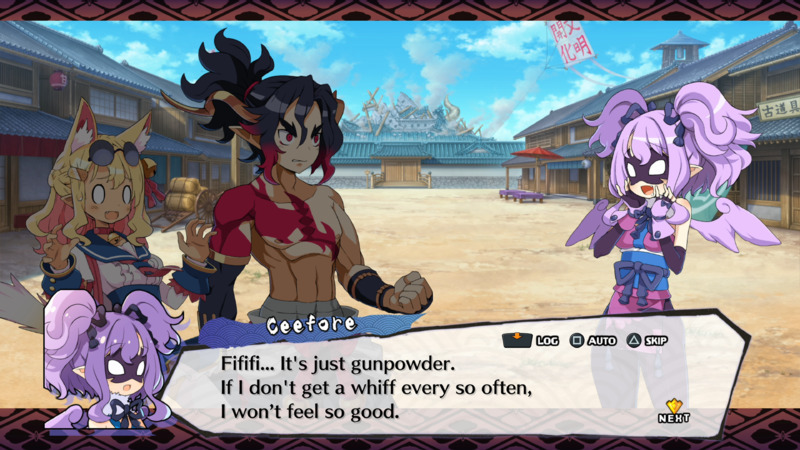
The core of the gameplay experience mostly remains unchanged from the previous entries in the series, so I will be covering the basics in fairly brief detail before discussing the new mechanics. Just like the rest of the mainline games, the focus of this entry (and the rest in the franchise) is to clear each of the maps in turn based battles. To accomplish this, the player can deploy units from the base panel and give them commands during their turn.

During a turn, the standard commands include movement, where the unit can move across the field in a radius based on their movement speed. Once the unit has been positioned, they will be able to make an action from the available choices. The basic actions that can be chosen are attack, which uses the equipped weapon, skill which lets the player use a special ability and lift/throw, where units can pick things and units up then launch them.

The player units can also select items to use instantly and defend to reduce damage, preparing for the next turn. All of the units can make perform two actions in a turn, with movement and an active skill, unless an effect prevents them from doing so. When actions have been set for a unit, the player can choose to execute that units actions or set additional units to make their own moves. If multiple actions are queued up, a combo will occur doing more damage.

After all units have made their move, the player can choose to end the turn which will set off all actions that have yet to be executed. Once the player turn is over, any neutral units on the field will make their moves, attacking the player or enemy based on their aggression and position. Then once all other units have had their turn, the enemy will make their turn and often target the player units to attempt to eliminate them from the field.

As the player defeats enemy units, their own will level up, increasing their skills and mastery with their class, which will unlock new classes and abilities in battle. There is also the chance to obtain items during battles, by opening chests, defeating enemies or stealing them. When a stage has been cleared, the player will earn rewards based on their performance, with missions that can provide money, experience and more if they are completed.

The isometric viewpoint is also retained, which gives the game that strategy war game feel, where the player is looking at their pieces. The terrain system also returns, with different elevations and layouts that use a mix of high and low ground, making for a tactical challenge during battle. Also returning are Geo Symbols, the multi-coloured pyramids that affect the field of battle, with the potential for explosive chains when destroyed.

The flow of battles is mostly unchanged for this entry, as the core mechanics remain untouched, with the 10 unit limit and escalating challenge of battle. But there are some new battle features with this title, making it stand out on its own merits and spicing the battles up. Here is a rundown of some of the new systems that have been added to battles for this title;

  • HELL Mode – a new system where players will build up the Hell gauge for specific named characters during battle. When this meter is full it can be activated and the player unit will gain enhanced abilities unique to them, alongside a special attack that can deal unbelievable amounts of damage. This mode will last for a set amount of turns, but if the ultimate move is used, Hell mode will end instantly.
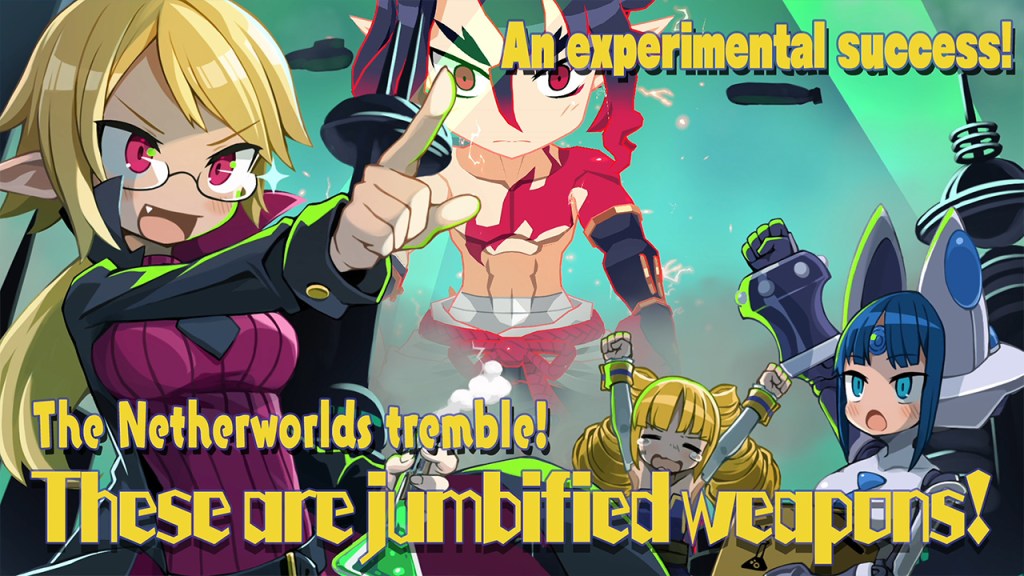
  • Jumbification – as the player units take damage, the revenge meter will fill on screen up to a maximum of three levels. When there is a single level of this meter available, the player may use the super special skill called Jumbification. This makes the chosen unit grow into a Kaiju size behemoth on the edge of the field for a limited time. In this form, the character will be able to strike the play field, dealing damage to a wide area, while also being able to attack the enemy directly if they Jumbify one of their units.
  • Improved Demonic Intelligence – the auto battle system has been improved, with better unit auto paths, auto battles and more. Set up the perfect strategy and just sit back and watch your units fight on their own. But be aware that this uses a special resource that will need to replenish to keep using.
  • DEMON SHOGI – the ultimate battle of strategy, tactics and cunning. Use a force of either your own units or those provided to you, with challenging opponents that will push your tactical skills to the limit. This battle style is the first of its kind in the Disgaea universe, adding further depth and complexity to the established game systems.

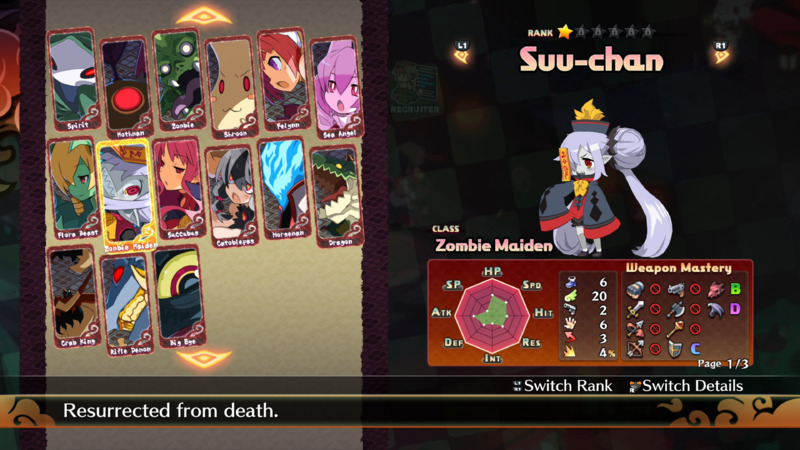
Outside of the battles, the Home Base is back in the form of a Feudal Japan themed Netherworld Ship, with all of the usual features included. While on the Ship, the player can roam freely and interact with the NPC characters that run the different facilities, alongside the ships residents. There is the Rosen Queen shop where new gear can be bought, the skill shop to improve abilities, the scout to recruit new units and quest shop to obtain reward missions.

The juice bar returns and has been updated, with the ability to power up your units using the essence that has been earned during battles. Unlike the previous title, there isn’t a requirement to use HL to upgrade the characters making it a much more streamlined process. The Dark Assembly has been revamped, with the delegates taking the role of Sumo Wrestlers, featuring a battle between Prinnies when voting.

These mechanics are the most refined in the series, with many quality of life improvements added to them and the other systems that I haven’t discussed. However, there are significant changes and revamps to features that make wholly unique to this entry. Here is a breakdown of these new and improved base features;

  • Netherworld Hospital – the hospital for this entry has been given a brand new reward system, with the ability to earn special gear via the EVIL GACHA. When healing and reviving allies, the player is able to collect Gacha points that can be used to play the bonus game. Separated into different tiers, the gear that can be earned will increase in power with each tier unlocked, along with special rare items as bonuses.
  • Item World – The item world has been completely revamped, with each of the items having a floor limit to them, giving players a target to work towards. This makes it easier to complete a delve into lower level items, as they may only have 10 floors, but the higher value dungeons will extend much further. There is even ITEM REINCARNATION, which lets players experiment with gear to craft special unique items.
  • Netherworld Sightseeing – when a Netherworld has been cleared, the player will be able to enter into a zone that lets them free roam through it. This provides players a chance to meet unique characters, potentially recruit special allies and even access special bonus modes that are unique to that Netherworld.
  • Online AI Battles – like previous games, the online battles have returned, but this time, there has been a change to the rules. For the first time ever, players can train their units to use the Demonic Intelligence system and prepare a team to do battle on their behalf. The battle rules and locations will change on a regular basis, as each series or “season” will refresh the battlefield and the types of team that can be used.

Finally, I want to cover the DLC that is featured in this title. Much like the other entries in the series, there is additional content packs that can be purchases. They feature guest characters from the previous games, special costumes and bonus weapons that can help new players. These packs are available via individual purchase or as bundles. This content is entirely optional, with little if any effect on the overall experience and narrative if purchased or not.
Now with the gameplay covered, I want to discuss the other aspects of this release, starting with the controls.

Controls – the control method for this release is as intuitive as ever, with easy to use menu navigation, map navigation for units and on screen tooltips for easy reference. There is a nice comfortable feel to the inputs making the most of the controller, with zero issues in terms of input lag during play. All of the controls work well, giving a responsive experience when using either the Joy-cons or pro controller.

Difficulty – the difficulty for this entry is very forgiving during the introductory stretch of the game, with an excellent tutorial that will ease new players in and refresh returning ones. There is a gradual escalation of challenge for the most part, easing the player in before sucker punching them with a boss battle. This is in the spirit of the series, but the difficulty can be eased by using the Cheat Shop to expedite character growth, while grinding earlier stages.

Presentation – visually, Disgaea 7 has continued with the 3D style, using full polygonal models for all of the environmental and character assets, complimented by the distinct anime art. The performance has been optimised well for the Switch, with smooth special attack animations and a solid framerate, especially with Jumbified characters on screen. There are also options for performance and graphics if players want to use them.
The soundtrack for this release is a good as ever, featuring a range of classic Japanese instruments, mixed with heavy guitar and soft synth compositions. This makes for a delightful listening experience throughout the game, enhancing the setting that the narrative unfolds in. The dialogue for this title features both English and Japanese language options, with the English dub featuring the talents of Alejandro Saab (Rhapsody) and Kristen McGuire (Helpful Fox Senko-san).

Final Thoughts – I am a fan of Disgaea and there was a lot of anticipation for this release. The upgrades made to the core systems, the new Gacha reward system and the changes made to the established formula, make for an experience that feels unique. The hiccups with presentation that the previous entry suffered from have been remedied, with a smoother experience that makes the most of the Switch Hardware.

This is an easy recommendation, as I feel everyone who has an interest in SRPG titles can enjoy this, be it a long-time fan of the franchise or an absolute newbie. There is so much content to get sunk into, with bonus side challenges, new gameplay mechanics and a solid online battle mode. This is another fantastic entry in the series, with a narrative that kept me engaged throughout, characters that were very entertaining and that distinct comedic charm that ties it together.

In the end, I give Disgaea 7: Vows of the Virtueless a final score of 5/5. This is the best Disgaea title to date, with a story that is as fun as it is ridiculous, new gameplay systems that refresh the formula and a perfectly optimised visual style that looks gorgeous on the Switch. If you want to check this title out for yourself, a link to each version of the game will be below.

Link to Nintendo Switch version (HERE)

Link to PlayStation version (HERE)

Link to Steam version (HERE)

Under The Hood – Release Date Announcement

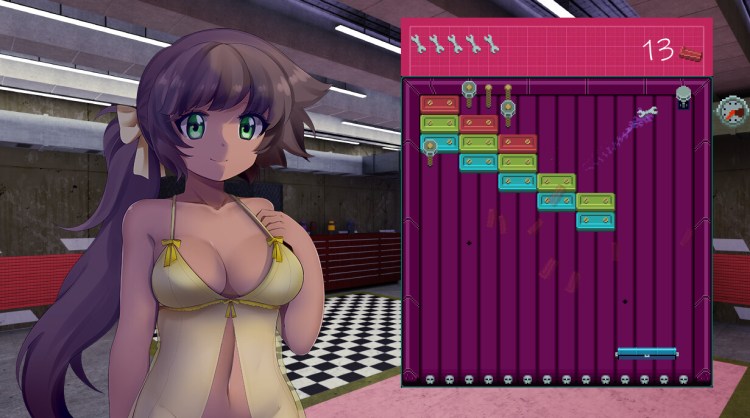
Hello! I have an exciting update regarding a title that I have previously covered, from our friends at Shady Corner Games. Their newest title Under The Hood has been given a release date, with the title coming to the Steam platform on October 30th. This title utilizes classic brick-breaking puzzle style mechanics, dating sim elements and a lot of very, VERY saucy rewards to unlock.

Check out the details below to learn more about Under the Hood, as this is an challenging and entertaining title, which acts as a prequel to Shady Corner’s trademark title Shady Lewd Kart. I have published a preview of the game, which you can find (HERE) with my personal thoughts about this release.

Mature Content Disclaimer: this title is intended for adults only, with an age of 18+ only. If this content is uncomfortable for you, or you are under the age limit outlined above, then this is not for you. This title contains the following content.

  • Risque outfits, sexual comments and language, sexual situations and explicit depictions of sexual material.
  • Nudity including full frontal, partial, suggested and obfuscated nudity (via nightwear)
  • Explicit sexual interactions, where characters engage in oral and penetrative sex acts, as well as those of a fetishistic nature.
  • All characters featured in the game are of the age of 18 or older.

About the Game

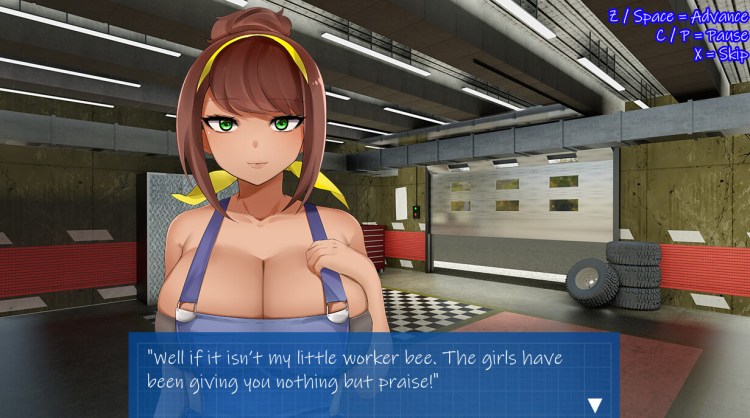
In this busty brick breaking puzzler, the player takes the role of an assistant starting a new job at Trish’s Pit’s, a local garage that is run by a hardworking mother and her daughters. The duties for this new hire will involve taking the engines and breaking them down, all while trying to keep themselves from being distracted by their co-workers.

The player must take engines apart in challenging brick breaking action, bouncing their tools off of engine blocks and nuts to clear each of the stages. The player will then interact with the girls in the garage upon clearing their shifts, in a dating sim style similar to that of our other puzzle title Slime Girl Smoothies, along with unlocking special artworks and CG images.

Features of Under The Hood

  • Take on over 30 challenging stages of block busting action.
  • New mechanics that will keep players on their toes, including springs, belts and hazards.
  • Explore the stories of Slivie, Trish and Frankie that occur before the events of Shady Lewd Kart.
  • A collection of CG arts to unlock for those looking for something titillating.
  • Featuring voice work by SilkyMilk and Sarielle in steamy adult scenes.
  • Featuring artwork by the talented Pencilanon, Lynte, SkullZLatte and PixelboyMagazin.
  • Bonus Lock N Lewd content for those who own the Marble Maid game, with special unlocks for players to discover.

Meet the Girls!

  • Trish – the hardworking owner of Trish’s Pit’s and mother of Silvie and Frankie. A mature lady with a seductive gaze, a love of denim overalls and some rather ample assets that make her a favorite for guys who need an “oil change”. Voice for Trish provided by Sarielle13
  • Silvie – the elder daughter and the face of Shady Lewd Kart. This girl is a powerhouse in the Go-Kart scene, known for her skills with a wrench and some other more unorthodox “tools” in her box. Voice for Silvie provided by SilkyMilkVoices – (TWITTER/X) 18+ warning.
  • Frankie – the younger daughter and the tech expert of the garage. The teen may be lacking in some areas that her mother and sister are gifted in, but she makes up for it with her skills with a computer. Voice for Trish provided by Sarielle13

Check out the official Shady Corner Twitter (HERE) for more info about this title and to learn more about the other titles the studio has on the horizon. You can also go to the official steam page for Under the Hood (HERE), where you can wish list it to grab it as soon as the game drops on October 30th.

Bud Spencer & Terence Hill: Slaps and Beans 2 – Nintendo Switch Review

Overview – developed by Trinity Team and buddy productions, with publishing handled by ININ Games, Slaps and Beans 2 is the follow up to the brawler based on the movies by Bud Spencer and Terence Hill. As the duo of Spencer and Hill, fight your way through a story inspired by their classic movies in frantic brawling action alone or with a friend. This title is available now on all platforms, with a link to each version of the game at the bottom of this review.

Disclaimer: before I get into the review, I would like to thank PR Hound for providing the copy of Slaps and Beans 2 that was used for this piece. The provision of this software has not influenced the contents of this review, all thoughts and opinions contained within are my own.

Now with the introductions out of the way, let’s get into the review. I will be skipping the story segment as the plot uses themes from different movies of Spencer and Hill, telling a new story using the different plots. So to prevent ruining any story surprises, I will be going straight into discussing the gameplay for this release.

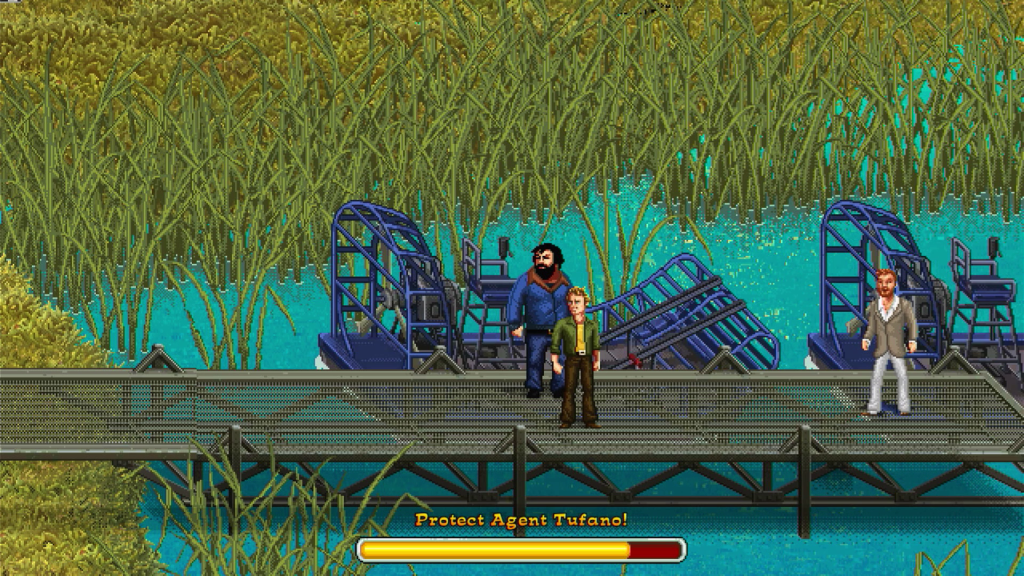
Gameplay – Slaps and Beans 2 is an adventure brawler, with an emphasis on co-op action where the players get to select which of the two 70s action stars they want to play as. If the player wants to play solo, the A.I. will take the role of the other character, controlling them alongside the player. At the start of the game, the player will be able to select between the two action heroes, with both of them having their own unique strengths and weaknesses.

The flow of gameplay follows a very simple formula, with players experiencing a plot that is inspired by the filmography of the titular actors. The game is separated into different stages, taking place in locations across Africa, Florida and more. While travelling through these environments, there will be wave after wave of men for the two heroes to brawl their way through, causing chaos as they slap, bash and stomp all in their way.

During battle with the different enemies that are encountered, the player can use a few different attacks, with moves that are unique to Hill and Spencer. The common inputs included are for light, heavy and special attacks. Terence is faster and Bud a little slower which fits their depictions in films, with combo attacks for co-op chaos. The combat can explode into full anarchy, as the gangsters and enemies will flood the screen during battles.

But physical strikes aren’t the only way to take down the hostile forces, as players can use anything that isn’t tied down to beat down enemies. Items like coconuts, chairs and more can be used as a weapon, with the ability to swing and throw objects at enemies to deal massive damage. Keep in mind though, that different items have their own durability, with some items breaking quickly but there is enough for players to cause maximum damage.

Not only can the player find items to use as weapons, but they can also find food that will replenish their life and beans that will refill the special attack bar. Players can also find power-ups that are specific to either Terence or Bud, giving them increased power, speed and more. These items can be very important as there is a chance for the player to get swarmed, beating them down quickly. But players can be revived if the other is fast enough.

At set points during the game, there will be bosses that appear for players to challenge. These sections have multiple phases, where an objective will need to be completed in order to progress. During these battles, there will be enemies that appear alongside the bosses, making the battles even more frantic. Some of these opponents will try to eliminate the two heroes in unconventional ways, which will keep players on their toes.

Brawling isn’t the only thing that players will experience in this release, as there are puzzles to solve with each of the characters having their own unique skills. At points throughout the game, there will be segments that require platforming and other skills abilities to overcome. These include using Terence to swing across bars to reach a switch, Bud to break reinforced boxes and this is where the ability to switch characters comes into play.

At any point during the game, if playing solo, there is the ability to switch between characters. This allows for players to get creative with their approach to the action, switching between the two heroes freely. There will also be segments where mandatory character abilities are needed, where players must solve puzzles to proceed. This can interrupt the flow of action at times, slowing down the pace of the brawling which can kill the excitement.

The last part of the game to discuss is the mini-games. During the story, there will be moments where the party games will come into play, including card games, an obstacle course race and an eating challenge. These challenges must be cleared to continue, but if playing two player, only one must win to progress. The mini-games can be played with up to 4 players in party mode, where they can enjoyed in either free play or competition mode.

Now with the gameplay covered, it is time to cover the other aspects of this release, starting with the controls.

Controls – the controls for this title are very simple, with the thumbstick/D-pad being used to move the characters and then the face buttons for attacks. The controls are shown when starting the game and picking a character, as well as tutorials during the game and tooltips that appear in loading screens. When playing, all of the inputs work quite well, with no lag in play and the overall feel is comfortable in docked or handheld play.

Difficulty – there is a fairly moderate difficulty curve to this release, with the brawling being quite balanced. But unfortunately there are some spikes in difficulty when it comes to the boss battles, due to the mild incompetence of the A.I. as a partner. However, there is a fairly forgiving checkpoint system when it comes to being defeated during stages, with the player losing some progress but they won’t be setback significantly.

Presentation – there is a very pleasant visual style to this game, reminiscent of the classic brawlers of the late 80s and 90s, featuring smooth animations and fast paced action. The environments have a nice amount of color, with sprite work is very vibrant and easy to see during play. The sound for this game is excellent with music from original movie composer Oliver Onions, alongside dubbing for the characters in English, Italian, German and Spanish.

Final Thoughts – when this sequel was announced, there was some anticipation for me as I had played the previous entry and enjoyed it. The overall feel of the experience is faithful to the comedy, action and feel of the movies, which I have enjoyed several of during my time. The brawling is a lot of fun, with the chaos that can occur when the screen is filled with enemies and items to bash them with. The momentum does take a hit with the puzzle sections sadly.

I can recommend this game to those who enjoy a good brawler and/or are a fan of the movies it is based on then this is for you. There is a lot of fun to be had with this release, wither alone or with a friend, likely speeding up some of the slower segments when playing with a partner. But the overall package is solid, with a lot of love for the two stars and their films, including a jukebox filled with classic songs from their catalogue.

In the end, I give Bud Spencer and Terence Hill: Slaps and Beans 2 a final score of 3.5/5. This is a solid brawler with a good narrative, chaotic action and mini-games to get engaged in, either alone or with a partner. The whole experience is a fitting tribute to the works of Spencer and Hill, with the only downsides being some minor issues with pacing and the A.I. for the CPU partner. If you want to check this title out for yourself, a link to each version of the game is below.

Link to Nintendo Switch version (HERE)

Link to PlayStation version (HERE)

Link to Xbox version (HERE)

Link to Steam version (HERE)

Monster Racing League – Steam Review

Overview – developed and published by Flightless Limited, Monster Racing League is a unique racing title where the cars drive themselves, but the players control boosts and attacks. Take on players all over the world in chaotic multiplayer races, blowing up opponents, collecting points and unlocking new monsters to customise. This title is available exclusively for the Steam platform, with a link to the game available at the bottom of this review.

Disclaimer: before I get into the review, I would like to thank Flightless Limited for providing the copy of Monster Racing League used for this piece, via the Keymailer service. The provision of this software has not influenced the contents of this review, all thoughts and opinions contained within are my own.

Now with the introductions out of the way, let’s get into the review. There is no story to this title, so I will be skipping that segment and moving straight into discussing the gameplay.

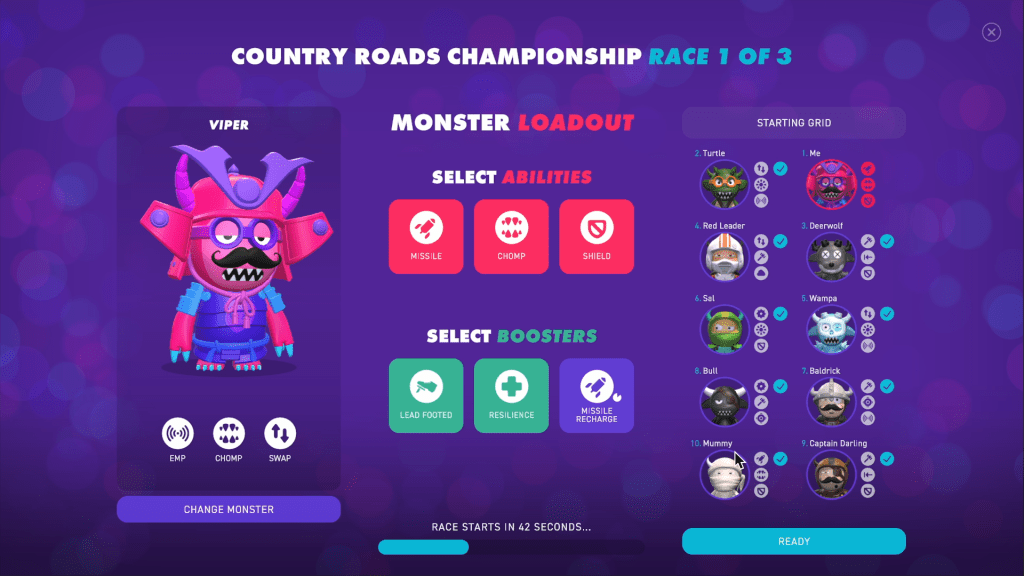
Gameplay – Monster Racing League can be best described as an auto racer with combat. This is due to the unique gameplay mechanics, where the player doesn’t drive the car, but controls the monster driver abilities and speed boosts. The cars will automatically follow a preset track, jostling with other racers and the player is able to use abilities to try and knock them back, blow them up and overtake them. But be careful as the abilities need to be charged up.

Abilities aren’t the only way that players can get ahead in races however, as there is a boost system that lets players charge up Nitro to blast ahead. The nitro starts off full at the start of the race, letting all competitors blast off when the flag is dropped, but this can run out quick. But there are ways to refill this speed boost and take pole position, with extra boost given for hitting opponents with abilities and by hitting boost pads.

Then there are the alternate routes for the tracks. In most of the race courses, the player is able to go off the beaten track, exploring alternate paths that can give them a chance to get ahead. These secondary routes can be pressing the direction they branch off into, turning off and often crashing through a fence or barrier to get to them. This adds a little variety to the racing as players can experiment with the different options in races.

The format for racing is as simple as it gets, just drive from the start to the end and be first. Although the races are randomised, with different lap counts and cups for the player to play through. The tracks are separated into cups, alongside individual tracks that are available in all of the gameplay modes. Speaking of game modes, there are three modes that players are able to play in this release, with online and offline gameplay options.

Here is a quick breakdown of the game modes that players are able to take part when playing Monster Racing League;

  • Online Multiplayer – take on other players in fast paced races to earn points, experience and in game currency. The races, cups and challenges are randomised for each match, with the player who scores the most points being declared the winner.
  • Party Play – form a party with friends and take part in private races, letting the host select the track, laps and more, with reduced reward payouts. There is also the option for the party to challenge other online users, providing full rewards.
  • Practice – play through the different courses and cups, with AI bots that are separated into three difficulty classes. Take the time to practice offline and build up your skills, while also earning reduced rewards.

When a race has been completed, the player will earn in game rewards based on their performance and the mode they are playing. The rewards that players can earn are experience points that level up the race pass, new characters cosmetics and more. Then we have the Knucklebones, the in-game currency that players can earn to buy upgrades, new weapon abilities and more. These upgrades can be mixed and matched between races.

The player is able to change the monster they use between sessions, letting them try out all of the different abilities that they use. This makes for an experience that is ever changing, with players being able to mix up their approach to the races and keep the gameplay fresh over time. There is also a paid premium pass, that provides more content to unlock, alongside paid DLC packs, but these don’t impact the overall gameplay experience.

Last we have the customisation system, where monsters can be personalised, changing their features like their eyes, nose, etc. there is also a costume feature, where players can mix up their looks to add a bit more personality to their racer, using the different parts they unlock and/or buy from the DLC shop. Then there is the color changing options, where players are able to change the palette for their driver and car.

Now, with the gameplay covered, it is time to cover the other aspects of this release, starting with the controls.

Controls – this title is unique in gameplay and unique in terms of controls too. The standard set up for this title uses a keyboard, with the direction keys controlling the nitro, brake and switching paths. Then the abilities that can be used to battle are tied to the number keys, with a cooldown between uses. This is a comfortable layout, which works well and is easy to pick up and play, but there is also partial controller support for those who prefer it.

Difficulty – there is no real difficulty to this game as the majority of the action is player VS player, with the races being fairly short and ending quite quickly. The short burst style of gameplay can feel a little unfair, with a player dropping from first to last in a matter of seconds. However, all players are on an even playing field throughout, as there is a solid balance of gameplay and power-ups, with practice being a path to success.

Presentation – the visual style of Monster Racing League has a very cutesy look to it, with the bobble-headed racers, colourful race tracks and silly physics used for explosions. The game performs very well, with the action going at an excellent pace. There are ocassional slowdowns during play, but these are often due to online connection. The sound for this title is perfect, with solid audio that has a good weight to it and music that fits the visual style.

Final Thoughts – I wasn’t sure what to expect from this, as I have never seen or played a title like this before. I can say with no reservation that this is a great game, the action is fun, the racing is chaotic and there is a good amount of depth to the experience. Everyone can get involved with this, have a fun time and all for the low price of $0. There is an optional premium pass and DLC, offering a lot of extra cosmetics for those who want to pay.

I am very happy to recommend this title to everyone, as it is a fun and addictive title that can be played alone, with friends or against the world. I had a lot of fun with this title and I can’t wait to share it with others, get a group together and blast them away for hours on end. There was one issue that I had with this title, the reliance of online play and a lack of single player experience, as the online play is not for everyone’s taste.

In the end, I give Monster Racing League a final score of 4/5. This is an excellent racing title, with free entry to the game and unique gameplay that can keep players coming back for more, offering a lot of content for free, as well as optional paid cosmetic content. If you want to check the title out for yourself, a link to the game is below.

Link to Steam version (HERE)

Die After Sunset – Nintendo Switch Review

Overview – developed by Playstark and published by PQube, Die After Sunset is an action Rogue-lite shooter, where every attempt at the game is different. The earth has been invaded and the chosen few have been sent back in time, with a goal to save their present. This title is now available on Nintendo Switch, Playstation 5, Xbox Series and Steam, with a link to each version of the game at the bottom of this review.

Disclaimer: before I get into the review, I would like to thank PQube for providing the copy of Die After Sunset that was used for this piece, via the Keymailer service. The provision of this software has not influenced the contents of this review, all thoughts and opinions contained within are my own.

Now with the introductions out of the way, let’s get into the review, starting off with the story of this release. Please note that all images used here are from the official Nintendo eShop page for Die After Sunset, with the trailer being from the official PQube youtube channel.

Story – The year is 2120. An alien race referred to as the ‘Murkors’ have invaded every corner of earth with their unrivalled power and… rubber duck hats. The resistance holds out to prevent the extinction of humanity, but not for long. It’s up to you as a defender of earth to level up and take on the Murkor hordes… before the sun sets.

Gameplay – this title is a third person shooter, where the player must fight the alien invaders, complete objectives and take on other worldly bosses. The player must make their way through several different time periods and locations, fighting the Murkor who have appeared to cause havoc. The player can choose one of three characters (one of them is locked at the start), with their own unique skills, abilities and aesthetics to them.

The three characters have a basic weapon, secondary attack, light skill and defensive ability. The weapons have unlimited ammunition, with the other skills having a cool down that prevents them from being abused. The light skill uses light energy that is collected during each of the levels, which can also be collected by defeating enemies. Light isn’t the only form of energy though, as the player also has a health meter and shield that protects the player.

At the start of a level, the player will be dumped in a random part of the map, with different elements of the area mixed between each run. The alien menace will be roaming the different areas, while also dropping into around the player to attack them as they move around the map. There are chests that are scattered through the levels, containing power-ups that the player can access if the conditions are met.

The power-ups that players can access from these chests are passive abilities, which can improve the stats for the character and give abilities that can be used in battle. However, they are not the only power-ups that players can gain during play. There are objectives that will occur during each level, with a waypoint pointing to them. These missions have different conditions, with up to three stars available depending on the players performance.

When completing a mission, the player will earn a chest that will have gear and upgrades that are based on the stars achieved. If the player is only able to get a single star, they will only get a basic stat upgrade, but two or more will provide special weapons and powerful upgrades. The player will also earn resources and bonus time, which is an important as it ties to the most important part of each level, the boss timer.

In the corner of the screen there is a timer that continually counts down, putting pressure on the player to clear the objectives as quickly as possible. Each objective completed will extend the timer, giving the player a chance to earn more power-ups, upgrades and resources. But when the time hits zero or all objectives are complete, the stage boss will appear. The boss will also have a countdown for the player to locate them, with it escaping if it hits zero.

The boss battles are challenging and will push the player to their limit, depending on the equipment that they have when they reach that point. This adds a real jeopardy to the flow of the game, as the upgrades and weapons earned may be fairly weak, leading to a quick defeat. On the other hand, there is the chance for the character to have all of the most powerful upgrades, allowing them to annihilate to boss with ease.

If the player is successful, they will be given a box of loot as well as bonus resources that can be used in the home menu. But if the player is defeated at any time in the level or the boss escapes, there is a chance that nothing will be salvaged. In the home menu there permanent ability upgrades that the player can unlock, using the resource Mukus. The Mukus can also be used to unlock new items and features that can appear in stages.

Last we have the special challenge system that is featured in this title. There are special secrets and unlocks that are tied to achievements for the player to complete, which include new weapons, alternate abilities and more. These are incredibly tough and require a lot of work to unlock, as there are a lot of hoops that the player will need to jump for these unlocks. This can really slow down the gameplay and make it feel like a chore at times.

Now with the gameplay covered, it is time to move onto the other aspects of this release, starting with the controls.

Controls – as a third person shooting experience, this title uses the traditional control style, with twin stick movement, shooting on the triggers and functions on the face. But sadly it does have some unfortunate hiccups when it comes to the handling, as there can be issues with aiming when using Joy-Con controllers. This is due to the movement range of the stick, which can be mitigated via the settings, but a pro-controller is heavily recommended.

Difficulty – as a rogue-lite, this is a very difficult title which can be brutally punishing to players. Sadly due to the random element of upgrades and enemy placement can make it much harder, with the potential to get items that don’t work well. This can lead to a swift defeat and a loss of all progress, with the Mukus system all feeling like a drag to get the permanent upgrade. The progress reset after every death is also a significant setback for players who struggle too.

Presentation – visually, this is a fairly cute and vibrant title with a nice overall aesthetic to the experience, but it has a lot of flaws which negatively affect the game. Due to the hardware limits of the Switch and possibly poor optimisation, there are stutters, frame drops and pop in that interfere with the action. This can happen a lot and feels like the game could crash at any time. The sound is pretty solid, with some good music and sound effects that work well.

Final Thoughts – I was excited and hopeful when I got my hands on this game, as I felt the mix of roguelite and third person shooter would work well. Unfortunately the experience doesn’t live up to the potential, as the poor optimisation, performance issues and difficulty with controls all hinder the main selling point of the game on Switch, its portability. There is a better experience when the system is docked, but it isn’t a great improvement due to numerous bugs.

I am unable to recommend this version of the game, as there are way too many issues that could make the player frustrated and disappointed. The game is very difficult and can require a lot of quick decisions, but due to frame drops, stutters and poor handheld inputs the difficulty can ramp up a lot. There have been a few updates since the game came out, hopefully with more on the way, but I feel that there is a lot of work needed for this release.

In the end, I give Die After Sunset a final score 2.5/5. This title has all the potential to be great on the Switch, but due to unfortunate optimisation and issues with the overall handling, it sadly misses the mark, taking what could be a compelling experience and making it feel mediocre. If you want to check this title out for yourself, a link to each version of the game will be below.

Link to Nintendo Switch version (HERE)

Link to PlayStation version (HERE)

Link to Xbox version (HERE)

Link to Steam version (HERE)
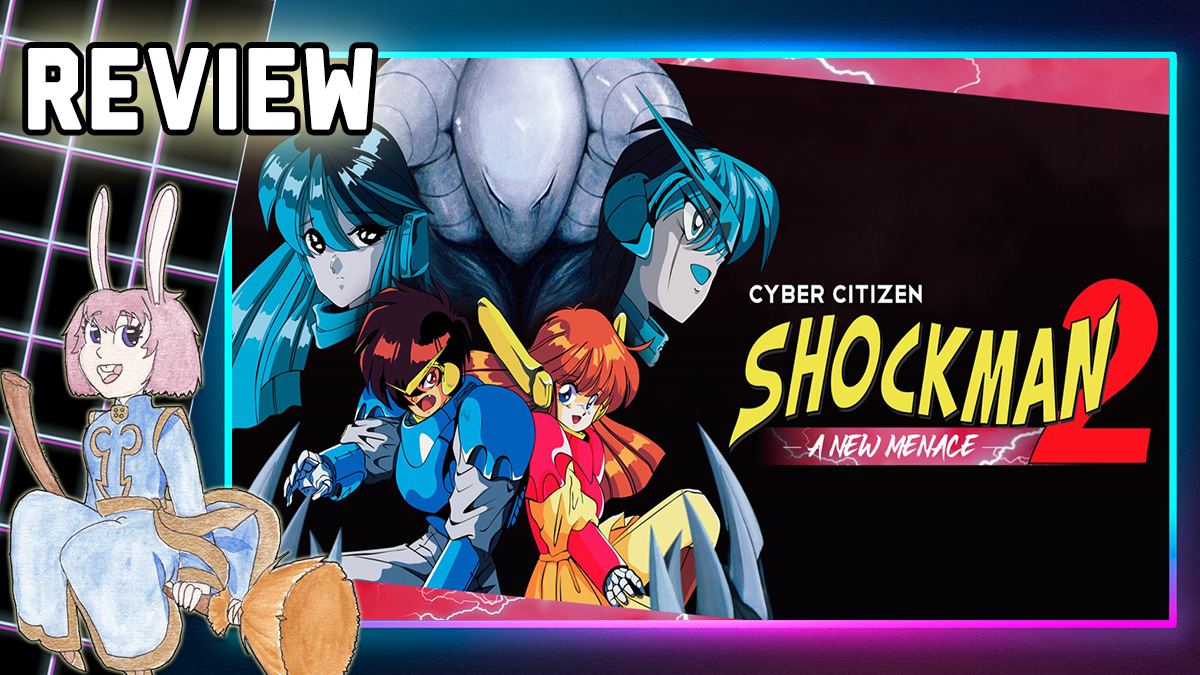
Cyber Citizen Shockman 2 – Nintendo Switch Review

Overview – originally released by Winds and Masaya Games, with porting handed by Shinyuden and Ratalaika Games, Cyber Citizen Shockman 2: A New Menace is a run ‘n gun platformer from the TurboGrafx and PC-Engine. Take on a new threat alone or with a friend in 3 versions of this title from the early 90s. This release is now available for all console platforms, with a link to each version of the game at the bottom of this review.

Disclaimer: before I get into the review, I would like to thank PR Hound for the copy of Cyber Citizen Shockman 2 that was used for this piece. The provision of this software has not influenced the contents of this review, all thoughts and opinions contained within are my own.

Now with the introductions out of the way, let’s get into the review, starting with the story. Please note I previously covered the first game in the Shockman series, which you can find my coverage of it (HERE).

Story – set after the events of the first Shockman adventure, the bionic heroes return to their lives, but suddenly a new threat arrives. An alien empire has arrived with plans to invade the earth and conquer it. During this invasion, the Doc has been kidnapped and two mysterious villains similar to our heroes appear. Now our heroes must save the world again, taking on this new threat as they run, jump, fly and blast their way through the invading alien menace.

Gameplay – unlike the previous entry, this title is a more of a run ‘n gun platformer, where the player must traverse the different stages in a linear pattern. During the course of the game, the player must blast enemies, dodge hazards and take on fearsome bosses. Before starting the game, the player must select their character between Tasuke (Arnold) and Kyapiko (Sonya), there is also the option for single or co-op play.

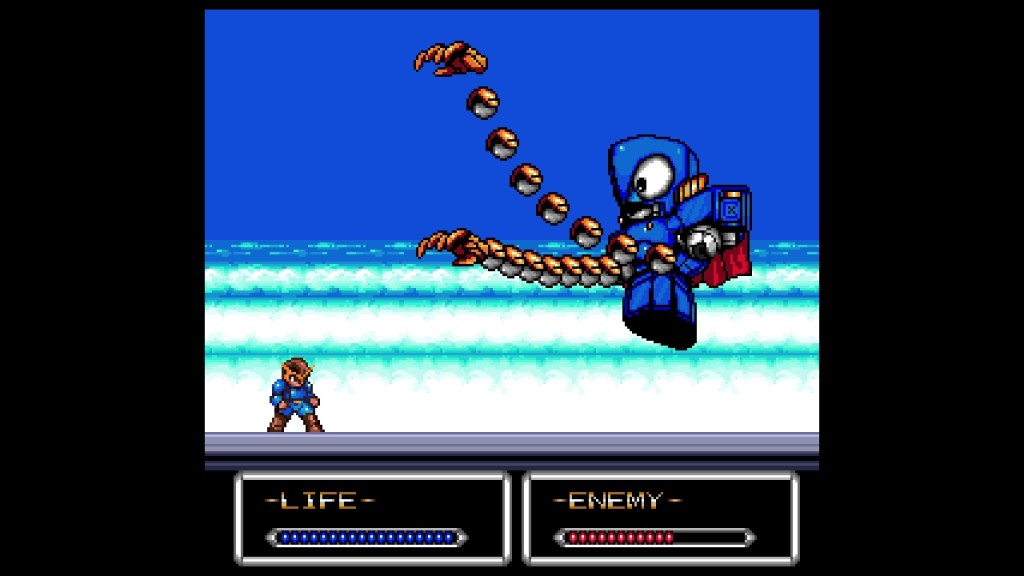
The Shockman heroes are armed with a blaster, this provides a ranged blast but can be charged up to unleash a powerful blast that will devastate enemies. There are no differences between the two characters in terms of gameplay, with the only thing separating them is their look. The core of the gameplay is to make it to the end of each of the stages, defeating the enemies in their way and fighting the boss of each zone.

The majority of the stages use the traditional scrolling platformer style, with players needing to jump between platforms, avoid deadly hazards and fight the alien hordes. However, that isn’t all that this game has to offer. At different points during the course of the adventure, there will be new challenges that the player will face. There are special scrolling shooter stages, where the gameplay will make a drastic turn into the style of games like Gradius.

Then we have the auto scrolling boss battle, where players must jump across rooftops, fighting the alien invader while buildings crumble below them. If the player falls off screen or fails to make the jump between the rooftops, they will rise up to continue. Throughout the game, the player has a health bar that will be depleted every time they take damage. There is knockback in this title, which will cause the player to get thrown back when damaged.

When the player chooses to play alone they will have a dedicated health bar, which can be filled by collecting health ups during stages. However, if the player chooses to play with another, the gameplay shifts dramatically. When playing through the game with a companion, both players share the same health bar, with damage to one being transferred to the other. This can add an element of tension to the gameplay experience and possible frustration.

If all of the health is lost, they will be defeated and must continue from the start of the current stage after being sent to the title screen. This type of penalty makes for a very tough experience, but there are ways to make it a little easier for players who have a rough time. There are quality of life improvements made for this title, consisting of rewind/fast forward, Save/Load states and cheats that can be used to alter the challenge.

In this release, there are three different versions of the game to play, with the original Japanese and English releases from the early 90s, along with a brand new translation for 2023. The original English version of Shockman 2 doesn’t have any ties to the first, as it is the only version released in English. But the new translation will include all of the details from the original Japanese, bridging the gap between the first and second game during the story scenes.

The last thing to discuss is the bonus content featured in this release. There are complete galleries for the manuals and special illustrations for the original release. These galleries are a nice addition as they are a time capsule of the time they came out, providing a nice feeling of nostalgia to be able to look through the manuals of these games.

Now with the gameplay covered, it is time to move onto the other aspects of this release, starting with the controls.

Controls – as a PC-Engine/TurboGrafx game, there is a very simple control layout for the game itself, using only two buttons for attack and jump, which can be changed freely. The overall gameplay feel with the controls is pretty solid, but there can be a smidge of delay during jumps. Aside from the occasional hiccups with the inputs, the overall experience is comfortable with all controllers, but it appears single Joy-Con isn’t supported.

Difficulty – this is a very difficult title, which was the style at the time. Due to this, there is a brutal difficulty curve that will punish players for mistakes being made. This can be remedied by the use of the different quality of life features, like the save states and rewind feature. But to really make the game much easier, there are cheats that give the player invicibility, weakening bosses and selecting the stage that players can start at.

Presentation – visually, this title looks very good for the time it was released, using vibrant colors and character sprites that fit the screen well. The sprite work, backgrounds and sound are all emulated as close to original hardware as possible, which I applaud the emulation team for. There is also the ability to add a range of filters, color change systems and more to make the experience more unique during play.

Final Thoughts – back when I covered the first Shockman release, I was hopeful that the sequels would also be released, which I am happy that the second is now here. The overall experience was fun to play, but brutally difficult which may be off-putting to players, so I am unsure if I can recommend it to everyone. There is a lot of content for the modest price point and if you want a tough challenge, this is definitely for you.

In the end, I give Cyber Citizen Shockman 2 a final score of 4/5. This is a long forgotten run and gun platformer that is brutally difficult, but has a lot of the nostalgic charm at a relatively modest price, with quality of life improvements and visual effects that add to the value. If you want to check this title out for yourself, a link to each version of the game is below.

Link to Nintendo switch version (HERE)

Link to PlayStation version (HERE)

Link to Xbox version (HERE)

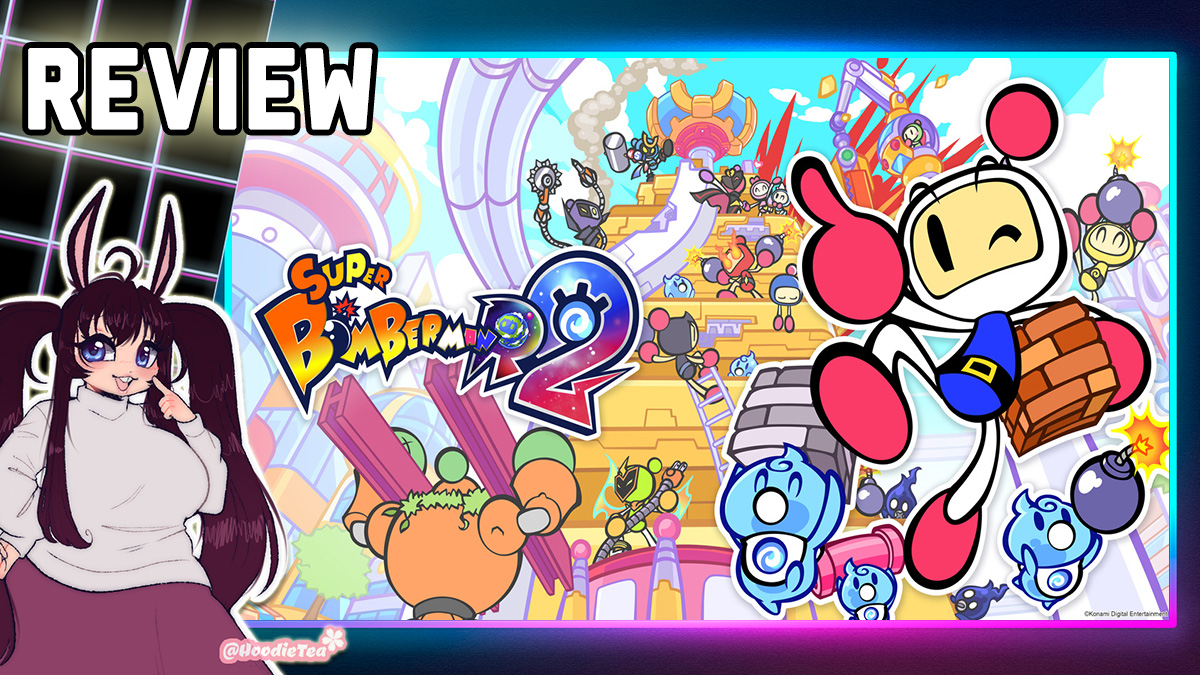
Super Bomberman R2 – Steam Review

Overview – developed and published by Konami in partnership with HexaDrive, Super Bomberman R2 is the latest entry in the legendary explosive franchise. Go on a new adventure with the Bomberman brothers as they try to save the galaxy from a mysterious evil. This title is available on the Nintendo Switch, Xbox, PlayStation and Steam platforms, with a link to each version of the game at the bottom of this review.

Disclaimer: before I get into the review, I would like to thank Konami for providing the copy of Super Bomberman R2 that was used for this piece, via the Keymailer service. The provision of this software has not influenced the contents of this review, all thoughts and opinions contained within are my own.

Now with the introductions out of the way, let’s get into the review, starting with the story.

Story – in space, a mysterious entity known as the Black Moon has been attacking planets across the galaxy, all in search of a material called Ellonite. Hot on their heels are the Bomberman Brothers, a group of 8 robotic heroes who want to restore peace to the universe. During their mission they encounter a mysterious alien race called Ellon, who are tied to mysterious technology. Who are these beings and what connection do they have to the Ellonite?

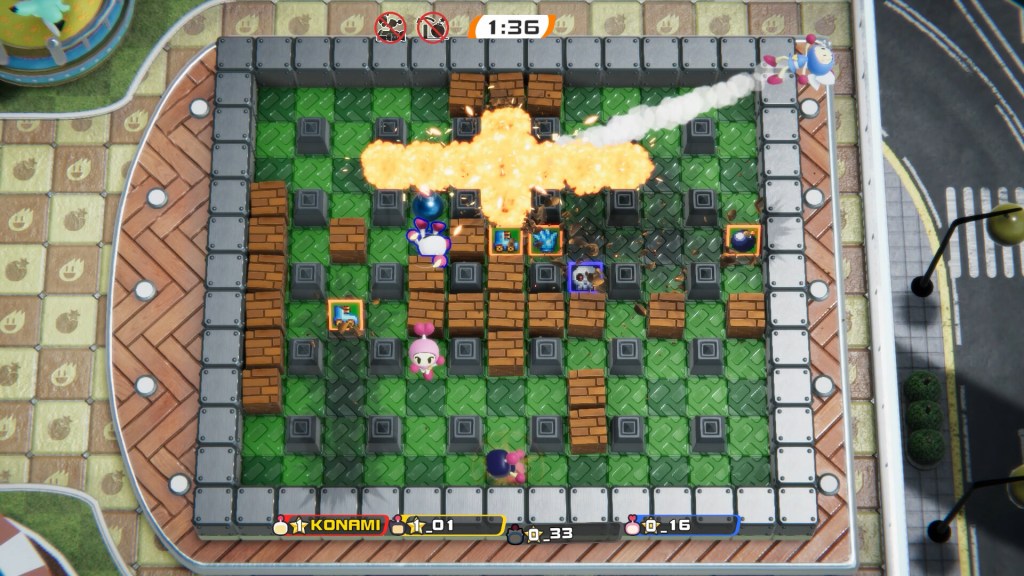
Gameplay – the game is separated into two distinct modes, the multiplayer battle mode and single player story mode. In the single player mode, the player controls White Bomber tasked with exploring several worlds, collecting Ellon and battling the Lugion who have been deployed. The planets are separated into individual zones, with enemies that roam the areas, along with hazards like lasers and bomb canons that will hinder the progress of White.

The single player gameplay loop is similar to an adventure RPG, where the player can explore the worlds, bombing enemies, blocks and hazards. When travelling to a world, a headquarters and base camp will be established. This is the starting point for White to set out from, with the other zones branching off from there. The camp is also where you can access options including hints, exploration and the HQ Buildup level editor (discussed further below).

When on the surface of the planets, White is able to roam the different zones freely, using a way movement in the field. This is quite the contrast to the previous title, which was restricted to a grid based system. However, there are still areas of the different zones that have pillars, blocks and hazards that replicate the grid gameplay. White also has a limited number of lives, with one being lost when contact is made with flames or an enemy.

Players can drop bombs to take out the enemy forces, clear blocks and even destroy traps that are located in the different areas to allow progression. While blowing up enemies and blocks, there is a chance for point drops to spawn. When collected, these are added to White’s EXP meter and will level him up when different milestones are met. Each time the player levels up, they will gain an upgrade to their overall abilities.

At the start of a world, White will have a single bomb, level 2 fire power and level 0 speed, but as levels are gained, each of these skills are improved to a max level of 8. There are also power-ups, which consist of the punch, glove and kick abilities, letting the player do more with the bombs on screen. But the levelling system isn’t the only form of progression that plays a part in this adventure, as there are the Ellons that need to be located.

In each of the main planets, there are 100 Ellon to find. The most common way to uncover these squishy aliens is by blowing up the blocks they are trapped in, which will add them to your total. When an Ellon has been saved, they will follow White around creating a snake like tail behind him, with a maximum of five that can follow at any time. Great care must be taken though, as they can be blown up, which will send them away to the starting area.

The Ellons serve several purposes, as well as being cute, they can open gates to different areas when a set number is met, open up warp gates and unlock special challenges. The gates only need to match or exceed the total Ellon that have been rescued, but the warps and challenges need to have them with you. This makes it important to ensure you have enough Ellon with you, which makes the little reserve at the camp area very useful.

As the player moves between the zones, collects Ellon and levels up, there will be instances where the base is under attack. This introduces the level editor and castle mode to the player. When under attack, the player takes the role of defender, protecting a set of Ellonite crystals from the encroaching Lugion enemies. While in castle mode, the action plays out in a more traditional manner, with a grid system and a timer for the defence.

When the enemy attacks, they will try to obtain keys, which will allow them to capture a crystal when the gate is open for a brief period of time. There is also a special weapon that White can use by collecting points and filling a special meter, this special weapon will fire a beam in a straight line in the direction the player is facing. If the enemy captures all of the crystals before the timer expires, the player will fail the defence.

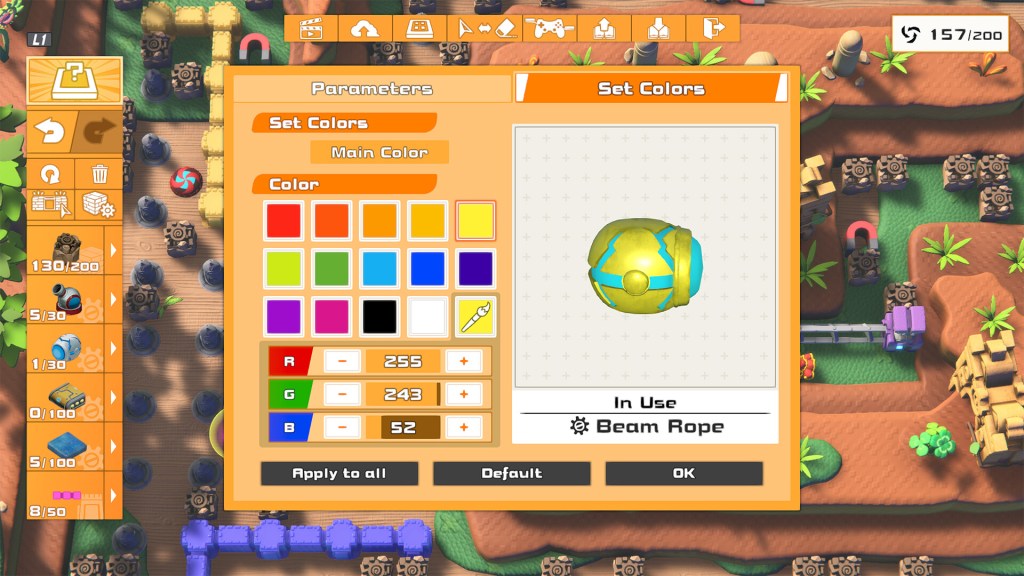
Before the first defence occurs, the player will be able to prepare the HQ, placing blocks, gimmicks and other elements through the Level editor system. The level editor itself is rather simple and works well, but can be a little awkward to get used to when getting used to it. While editing a stage, there is a set number of destructible blocks and gimmick parts that can be placed, which is limited to begin with but can increase when levelling.

The player has a lot of freedom with the creation of base elements, which can lead to some very creative choices to be made. The HQ can also be altered whenever the player returns to base camp, which will also scan the explored zones and mark them as cleared if all Ellon have been found. The map will also show gates that have been located, as well as the enemy base points that the player can attack in castle battles.

When the player locates an enemy fortress, they can attack it with the rest of the Bomberman brothers. This is where the Attack side of castle battles is shown off, as the player must navigate the enemy stronghold, battling with the Lugion, avoiding friendly bombs and collecting keys. When the player has a key, they will be able to collect the enemy crystal, which will score victory but if another Bomber grabs it then the player must try again.

Once all of the enemy bases have been destroyed, the enemy RoboBoss will appear. These battles can be very challenging as the boss can strike across the screen, making it very dangerous for the player. In order to combat this threat, the player must hit the enemy weak point with their flames, putting them into a stunned phase. When this happens a special Ellon canon will appear, where the player must collect Ellons that spawn to power it up to damage the boss.

The speed at which the boss can be defeated is based on the approach the player takes, as a more cautious approach will require more canon attacks. This is due to the both the requirements for the Canon and the limitations of the player, as the 5 Ellon limit applies here making for a risk and reward style of play. These mechanics really mix up the established formula of a single player Bomberman experience, making for a unique and fun adventure.

Now we have to talk about the other elements of the gameplay experience, as we also have Battle mode, the non-story level editor and customisation/shop system. When entering the personalisation menu, the player can access the shop, where new characters, costumes and much more can be purchased. To purchase the items the player needs to use coins that are earned in battles, with the different items varying in cost.

While in the personalisation menu, the player can alter their profile and the characters they play as. In the character settings, the player can use the items that they have purchased in the shop to customise their favourite Bomber, mixing and matching different parts. But not all characters can be modified. In the player settings, the profile that is used for online play can be modified, with different icons, music and mottos to add flair to the profile.

Next is the level editor, where players can use the systems they learned in story mode to create their own stages. Using this mode, players can build levels to play and share online, with the ability to download the stages that other players have made. The maps can be made and shared for use in both on/offline play modes, but be aware that all of the stages made in this mode can only be played in multiplayer castle battles.

Finally we have the battle mode itself, where players can challenge friends online and in the same room. There are three modes that can be played in the battle mode, consisting of Graded, private and offline battle. The graded battles have a ranking mechanic split between the game modes, where players will improve their ranking for the season in each mode. We are currently on season 1 of graded, but no info about season 2 is available.

The active battle mode in ranked play rotates based on time, with modes switching through the day. There are also missions that players can challenge rewarding bonus coins for completion. Then there is private battle, where players can create a room for their friends to jump in and battle from a long distance. The settings for these modes can be set by the room creator, with a code needed for players to be able to jump into the room and participate.

Last we have the offline battle mode, where players can battle it out offline in local battles, duking it out in classic Bomberman fashion. The players are able to battle it out in all of the game modes, with the player able to modify the settings to fit their own unique tastes. Here is a quick breakdown of each of the battle modes that players battle in;

  • Castle – the new battle mode where players battle it out in asymmetrical combat, with the defender selecting the map and layout for the battle. Then the attackers will try their best to claim the treasure chest to win.
  • Standard – the classic battle mode, where players can play with the traditional gameplay mechanics. The Louies, a rideable ally of the Bomberman brothers appears in this mode as an egg and will let the player absorb one hit.
  • Grand Prix – work together in team vs. team battle, blowing your opponents up and collecting crystals with the winner having the most points after two rounds.
  • Battle 64 – battle for the top spot in 64 player battle, with two lives and a gradually shrinking set of arenas. The last player standing will be granted the title of champion of Battle 64.

When battling in the different modes, players will earn coins based on their performance, with more coins depending on the mode. It is entirely possible to earn enough coins for all of the items in the shop by offline battles alone, meaning that the online mode can be entirely optional for players who don’t enjoy this element of gameplay.

Now with the gameplay covered, it is time to move onto the other aspects of this release, starting with the controls.

Controls – the control layout for this release is very easy to pick up, with movement controlled by the D-Pad and thumbstick, along with all of the core battle functions on the face buttons. There is a full tutorial for players to get used to the controls, as well as handy tool tips on screen for players to use as reference. For the PC there is both controller and Keyboard support, with the more convenient way to play being a controller but Keyboard works very well.

Difficulty – there is a very gradual challenge to this release, with the single player difficulty rising at a comfortable rate. This makes for an experience that new players to the franchise can easily jump into, with little in terms of punishment when getting a game over. This is due to the continual record of progress being made, so when the player gets a game over, they are returned to the base camp menu with their progress retained.

Presentation – the visual style for this release is pleasing to the eye, with vibrant environments to explore, large scale bosses to encounter and a lot of explosive effects on screen. The game runs at a very smooth rate, with all of the on screen effects and assets loading in quickly and everything looks fantastic. The sound is something special, with a soundtrack that has that classic Bomberman feel, as well the option for English and Japanese voices for the game and story scenes.

Final Thoughts – like many others, I grew up playing Bomberman on the Super Nintendo, Game Boy and more, which gives the franchise a special place in my heart. So when this game was announced there was a little hype to see what they would do, and I can say I was not disappointed. The new version of the story mode was a lot of fun, albeit a little frustrating at times with the Ellon following along like it was an escort mission and I do miss co-op play.

However, the overall gameplay hits the mark, with the revamped single player adventure that was reminiscent of the older games like Bomberman 64. The battle modes were great to get sunk into, but there may be an imbalance for the newer players when playing online. This may be a little off-putting to players who want to jump online and have fun. Regardless, I am happy to recommend this title to all players, old or new who want a new Bomberman experience.

In the end, I give Super Bomberman R2 a final score of 4/5. This is an excellent Bomberman title, with a new story that captures the spirit of what makes the series great, as well as the huge selection of unlocks, multiplayer features, battle modes and a solid gameplay foundation. If you want to check this title out for yourself, a link to each version of the game will be below.

Link to Steam version (HERE)

Link to Nintendo Switch version (HERE)

Link to PlayStation version (HERE)

Link to Xbox version (HERE)

Please Note: the Steam and Nintendo Switch links will redirect to an affiliate link approved by Konami/Keymailer

Osyaberi! Horijyo! Gekihori! – Nintendo Switch Review

Overview – developed by CLOUDs INC with publishing handled by First Press Games, Osyaberi! Horijyo! Gekihori is a cutesy scrolling shooter with vibrant on screen chaos. Play as Anna Holinski as she blasts her way across the universe, fighting an alien empire to recover stolen precious stones. This title is available exclusively for the Nintendo Switch platform, with a link to the game at the bottom of this review.

Disclaimer: before I get into the review, I would like to thank First Press Games for providing the copy of Osyaberi! Horijyo! Gekihori that was used for this piece. The provision of this software has not influenced the content of this review, all thoughts and opinions contained within are my own.

Now with the introductions out of the way, let’s get into the review, starting with the story.

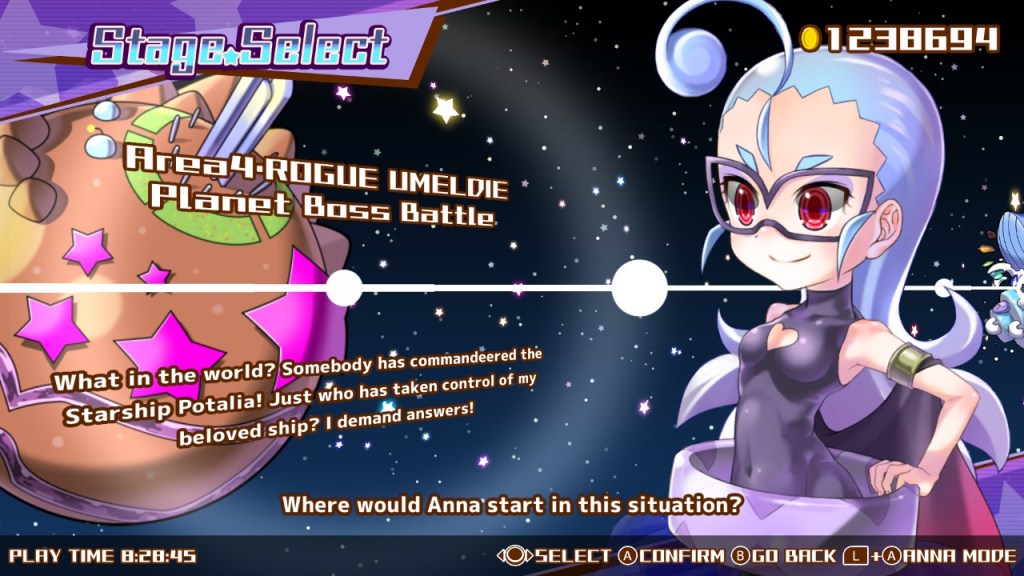
Story – Anna Holinski is a treasure hunter, drilling around the world to collect gems and precious metals. However, she is awakened to the news that all of the planets minerals have been stolen, with the culprit being invaders from another world. Now with the help of Dr. Chikanomiz and the mysterious alien Meteo, Anna sets off into space to recover the stolen treasure and bring justice to the invaders.

Gameplay – this title is a scrolling shooter, where the player travels through the various worlds, battling enemies and collecting precious ore by mining special areas. The player controls Anna Holinsky, who has set off to space, armed with her special suit, drill and engine to reclaim the stolen minerals. The game is made up of multiple stages, called zones where the player will fight various enemies, while dodging the bullets that they fire.

As the player makes their way through the different worlds and the vacuum of space, their progress will be charted via Phases. During a phase, different patterns of enemies will appear, as well as special terrain that the player must mine through. When enemies are defeated or the ore fields have been mined by the power of Anna’s drill shot, materials will drop that can be collected. These are then added to the cargo for use later.

Alongside the drill shot, Anna has a special force field, which can slow down the bullets that are fired at her. This allows for the player to move through the hail of fire, dodging the projectiles on screen while also potentially changing their path. To help the player avoid taking damage, there is a star on the player model that shows their hit box. These systems make this an accessible gameplay experience, which can ease players into it well.

The different ore materials that can be collected vary in type and include Coal, emeralds and Silver to name a few. There is also a special power-up system, which takes the form of special emeralds that will appear throughout the game. These gems are made up of three colors, with red for the high speed crash barrier, the blue drill laser and the green drill energy. The drill energy pick up is the most important of the gems during play.

As the player makes their way through the stars, there is a fuel meter that will deplete over time, but that isn’t the only way that energy will be lost. When Anna takes damage, she will lose an amount of fuel based on the type of damage taken. If the fuel meter reaches 0%, the player will have one last chance to get back on track, but if they are hit then the game is over. This makes for an interesting experience, replacing lives with a more flexible system.

The other gems are more combat focused, with the red crash barrier charging through the different spaces, burning through space at high speeds. Then the blue drill laser will blast everything on screen, using a focused beam of energy that fires in a straight line. Both of these power-ups only last for a short time, but can be very useful, especially during the more intense sequences, especially during boss encounters that happen regularly.

Throughout the game, there are sub-bosses that will appear, with the player getting 30 seconds to take them down. Based on the performance and time taken to destroy them, the player will get rewards and a ranking. The rewards consist of ore drops that will be added to the cargo, as well as power-up gems. Then we have the end of stage boss battles that occur during each of the worlds, with a warning before they appear.

The player will be warned before they are thrown into the boss battle, with the enemies that the player faces each having their own gimmicks. These bosses have multiple phases and can be very challenging, with large screen filling attacks that can devastate Anna’s fuel reserve. The different bosses are each based on the location that you fight them, with a watermelon cyclops for plant world and a sea angel on water world.

Defeating the bosses will give the player a lot of ore rewards, adding them to the players cargo. Speaking of the cargo, there will be the Manbow shop that will appear during play, which the player can fly into. When in the shop, the player can sell all of their ore for coins, which can be used to buy upgrades. The upgrades include stronger weapons, improved engines and better gem abilities, with upgrades carrying over between playthroughs.

The last thing to discuss is the extra content for this release. Along with the standard game, there are extra modes that can be unlocked, including a hard mode, time attack and more. There is also a special collection mode, where the player can look at the different things that they have encountered, as well as achievements they have unlocked. This adds a lot of extra depth to the experience of the game.

However, there is more than just the standard release. Included in this special release is UMELDA Mode, a special version of the game that continues the story that was established in the main game. This functions in a similar manner to the base game, with extra stages to battle, new secrets to unlock and achievements to obtain. These two story mode campaigns provide the same amount of content as two individual titles, providing significant value to the player.

Now with the gameplay covered, it is time to get onto the other aspects of this release, starting with the controls.

Controls – there is a very simple control method for this release, with Anna controlled by the D-pad/thumbstick and the drill shot firing through the face buttons. The controls have an arcade feel to them, reminiscent of other titles in the genre. The game is very comfortable to play with the action being responsive regardess of the controller used, when in either handheld or docked mode, with an arcade stick for the best experience.

Difficulty – this is a very fun but tough title, with a difficulty curve that is gradual but can be quite rough for newer players to the genre. However, there are ways that an ease the difficulty that can be faced. If the player takes their time and upgrades their abilities enough, the bosses and tough sections can be cleared easier. There is also a checkpoint feature, where players can jump right back into the action after being defeated.

Presentation – the visual style for this tite is very cute, with vibrant colors and adorable characters designs that work very well with the gameplay. The story scenes and worlds are all drawn beautifully, giving the overall package a distinct and charming look. The sound for the title is also a treat, with a soundtrack that fits the fun space adventure feel. There is also very enjoyable voiced dialogue, exclusively in Japanese but there are subtitles in English.

Final Thoughts – I love a good cute em up shooter and this is the textbook definition of the genre, with all of the staples that make for a fun experience. There are also elements that are fairly unique to this title, making it stand out among the other established titles, which is a real treat. I have no issue recommending this title to everyone, as there is so much content included that it felt like I got two games in one pack.

I had a wonderful time playing this game, with the easy to pick up but difficult to put down nature of it being a fast paced score based shooter. I sent hours grinding out to make myself as strong as I could, going through the modes multiple times to get all of the achievements, secrets and even beating the main game in one shot. I am happy to say that this is one of the better modern shooters, with nothing to complain about aside from it being a bit tough for newbies.

In the end, I give Osyaberi! Horijyo! Gekihori a final score of 4.5/5. This is one of the better modern shooters to come to the switch, with fast paced action, secrets to unlock, colourful worlds to experience and entertaining characters to interact with, making for a complete package with tons of content. If you want to pick this title up for yourself, a link to the game will be below.

Link to Nintendo Switch version (HERE)

Mugen Souls Z – Nintendo Switch Review

Overview – developed by the team of Cocone, Idea Factory and Compile Heart, with publishing/porting handled by Eastasiasoft, Mugen Souls Z is the sequel to the universe conquering JRPG. Join up again with Lady Chou-Chou and her Peons as they embark on another adventure, with many twists, turns and new faces along the way. This title is available exclusively for Nintendo Switch, with a link to the game (both physical and digital) at the bottom of this review.

Disclaimer: before I get into the review, I would like to thank Eastasiasoft for providing the copy of Mugen Souls Z that was used for this piece. The provision of this software has not influenced the contents of this review, all thoughts and opinions contained within are my own.

Mature Content Disclaimer: Mugen Souls Z has been rated Mature, this is due to the inclusion of sexual themes, content, partial nudity and interactive intimacy scenes. If the inclusion of this type of content is something that you find offensive, or if you are under the age rating for your region, please proceed at your own discretion.

Now with the introductions out of the way, let’s get into the review, starting off with the story for Mugen Souls Z. I will be covering the core elements of the gameplay to prevent spoiling any surprises that this game has to offer, with a focus on covering the main elements of the experience. Please note, I previously covered the first Mugen Souls which you can find (HERE), there are a lot of shared elements between both titles so some details will carry over.

Story – after the events of the previous game, Lady Chou-Chou, the Undisputed God of the Universe has set her sights on the Twelve zodiac Worlds. During her adventure to conquer these new lands, Chou-Chou and her team encounter Syrma, an ultimate god who carries a mysterious coffin and is accompanied by the hero Nao. After battling with them, Chou-Chou gets carried away and after a series of unfortunate events, she loses her powers.

Reduced to a tiny version of her former self, Chou-Chou must now work together with Syrma, seeking out the other Ultimate Gods to solve the mystery of her lost powers. However, before this occurred, Chou-Chou had left her companions across the twelve worlds, meaning she must locate them during her quest to unite her front. What kind of shenanigans, new friends and enemies will Chou-Chou encounter during her quest.

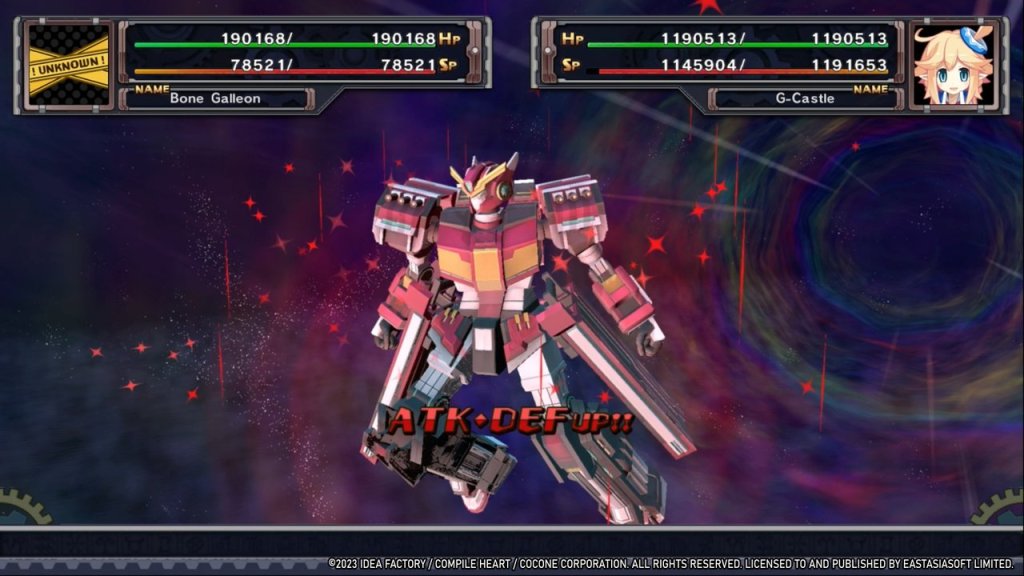
Gameplay – Mugen Souls Z is an anime styled JRPG, where the player takes the role of Ultimate God Syrma, who is helping the diminutive Chou-Chou regain her power while dealing with amnesia. This adventure takes place over multiple chapters, separated into story scenes, exploration and battle. The core of the gameplay is centred around completing objectives that push the narrative forward, with the majority of them being shown as event markers.

During exploration of the different worlds and within the home base G-Castle, there will be event markers that the player can interact with. When the player activates these markers, the story scenes will play out with some having the potential to alter the story, but they aren’t the only events that can occur. At different points, there will also be tutorials for the player to learn different mechanics gradually, allowing players to advance comfortably.

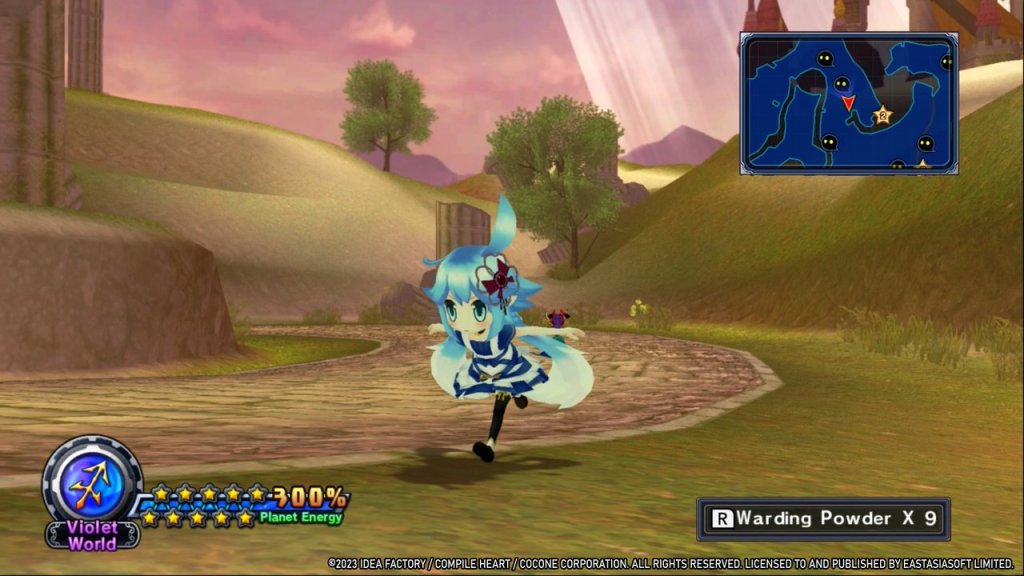
The story events aren’t the only thing that can be encountered during the adventure. There are scripted battle events, random special battles that can be unlocked and enemies that roam the different landscapes of the 12 worlds. While exploring the world maps, monsters wandering the land will attack the player if they spot them, initiating battle with an advantage on their side. But if the player attacks them first, the player gains an advantage.

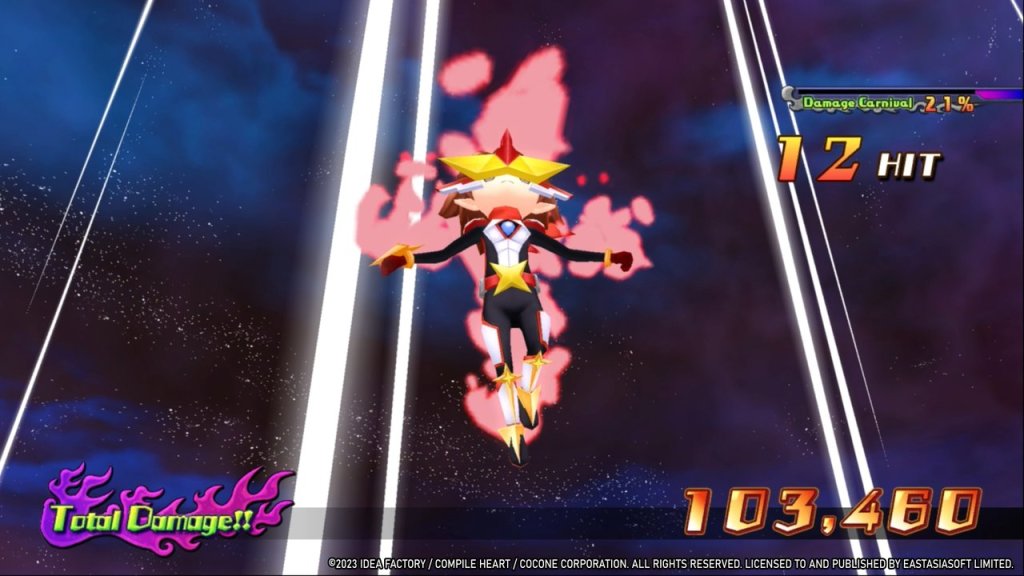
When a battle begins, the participants will be put in order to make their move in the turn based battles. This turn order is based on a few different factors, but the key component is the agility (AGI) stat of each combatant. In battles, there is the potential for a variety of effects to alter the way that combat will flow. This is due to the presence of crystals that can cause different effects on the player, including positive or negative status effects.

During each party members turn, the player has the ability to move their unit freely within a set range based on their movement stat. this can put them within range of enemies or even crystals to give them a bonus to attacks, defense and more. When movement has been decided upon, the player can then select an action to perform for their turn. Here is a breakdown of the core actions in battle (with their counterpart name from the first Mugen Souls);

  • Captivate (Moe Kill) – This special skill can only be used by Syrma channelling the power of Lady Chou-Chou. When an enemy or crystal is within range, the player can use Captivate before their main action, performing different Fetish Poses (phrases) that will raise different levels for the target. Depending on the choices made and the form Syrma is in, a positive or negative effect may occur when using Captivate.
  • Form Change – Syrma is able to change her form between multiple personalities, each with their own unique look and color scheme. The looks that can be switched to include a ditzy airhead in an orange dress, a hyper tomboy in puffy shorts and a graceful lady in a kimono style dress. This ability can be freely used outside of battle, but is limited to once per turn during combat.
  • Skills – party members have access to a selection of skills they can use during battle, with the different classes having unique skills in their arsenal. These abilities use up SP, with each character excelling at the skills tied to their class. There is also a super special attack that can be unlocked, but they have their own requirements.
  • Blast Off – when a skill is used, it is possible to activate an ability called Blast Off, which will launch the target in a direction that can be affected by several factors. When used, the target will bounce around the screen and damage anything that makes contact, regardless of if they are friend or foe making for a risky skill to use.
  • Item – the active party member is able to use items during their turn, allowing for a host of benefits to be given to the player and allies. The effects that can be used include healing party members from damage and curing ailments like sleep/poison.
  • Switch – the player is able to switch characters with sub party members, letting the player change up their active members on the fly. This can also be done when a party member is defeated, allowing for a chance to snatch victory from the jaws of defeat.
  • Retreat/Defend – if the player doesn’t wish to engage in battle, they can attempt to escape from that battle by selecting retreat, but failure means a turn will be lost. During a turn, if the player wants to skip a units turn but minimize damage, they can be put into a defensive position and pass.

At the end of a battle, the player will earn rewards based on the performance of their party, alongside the difficulty of the battle that was just cleared. These rewards are made up of experience for levelling up characters, with new skills unlocked at different milestones, currency to use in shops and item rewards. There are many different rewards that can be earned, with some being needed to strengthen the G-Castle and others to obtain equipment.

These are just the core mechanics of battle, but there are many more features that can be used when battling enemies. During battles, there is the chance for a skill called Fever Mode to activate when special conditions are met, along with the new Damage Carnival which can deal ridiculous amounts of damage. There is also the Ultimate Soul (Peon Ball) skill that can Syrma can use when captivating enemies, but there is a chance it can a backfire due to Overload.

While in battle, the Overload meter that will increase based on different actions, like party members getting knocked out and can pose serious risk to the outcome of a battle. If the meter gets too high the chance of overload increases with it, making for a lot of risk VS reward situations. There are a few ways to reduce the overload meter, but the most common are to successfully captivate enemies or to return to the home base.

When not in battle, there are other things that the player can do in each of the worlds, the most common extra activity that is just as important as battling are captivating Planet spots (Master Point). Throughout each of the worlds, the player will encounter different points that they need to captivate in order to gain Planet Energy (Peon Ratio). These points have a few requirements that need to be achieved, with relatively low risk but some can result in battles if the player fails.

If the player is able to captivate enough of the points for each world, they will gain rewards and depending on the point in the story, progress to the next stage. However, not all points can be captured easily, meaning the player may have to return at a later date to unlock them. This is due to several reasons but the main one is Ultimate Fusion, a special mechanic where Syrma unlocks new skills, like swimming or jumping high into the air.

Now the last main element of gameplay to cover is the G-Castle itself. This is where the player will likely spend a significant amount of time between excursions to the different worlds. The castle acts as a home base for the player, allowing them to save freely without needing to use a designated save point, recover downed team members and much more. There are also battles that can occur between G-Castle and enemy craft just like the previous title.

The different facilities of the G-Castle are vital to the success of the player, as they offer the ability to use stores for new and/or improved gear, buy valuable support items and create new party members. At the home base, the player can access the Salon, where new Peon units can be created, upgraded and even fused together, creating a flexible army to command. There is a limited selection of classes and styles to start but more can be unlocked as the game progresses.

It is also important to get the most out of the gear and resources that players have access to, as the equipment given to characters no only makes them hit harder, but can give extra bonuses. Based on the equipment given, the characters will gain more power, extra health and more to strengthen them in a more effective way. This is increased further by the ability to upgrade equipment, boosting the bonuses even more.

And finally we have the Mugen Field, a special dungeon where the player will be thrown into combat over and over again, with enemies increasing in strength each time. This alternate dimension is made up of a number of floors, which consist of battles that occur one after the other. But before the player can delve into the Mugen Field, there are requirements that need to enter one of the three routes, with the challenge of said route being a factor.

These requirements are based on the average level of all of Syrma’s forms, known as the Charm level, with the required level increasing the deeper the player gets. At set points within the Mugen field, there will be rest stops, where the player can heal, save and even battle special enemies. There will also be stores that offer very special items in exchange for points, along with an exit to return to G-Castle allowing the player to continue from that point later.

In order to gain entrance to the Mugen field, the player must offer up points to challenge the dangers of this dimension. The higher the wager the more dangerous the battles that the player will encounter, but the better the yield will be in terms of rewards. This makes the nearly infinite battle rush a valuable resource for players to grind reward. But there is still a risk present, as the player will be kicked out if they are defeated and lose their progress.

There is much more that I could cover in this segment, but there are so many things that should be experienced first-hand. That even includes the more scintillating content, such as the hot spring scenes, which were initially removed from the first release of this game. There is also the addition of every piece of DLC and expansion content included, making for the most definitive release available with all content restored.

Now with the gameplay section covered, I want to move onto the other aspects of this release, starting with the controls.

Controls – this title has a bit of an unusual feel to it, it is very comfortable to play but there are moments where there is a lack of feedback with inputs on screen. This can cause a disconnect between the game and the player, which can feel like there is no control at times. But aside from these moments, the game is otherwise responsive and plays very well regardless of controller used, either in docked or handheld gameplay modes.

Difficulty – there is a good balance to the challenge of Mugen Souls Z, which makes the game approachable and accessible to players of all skill/experience levels. But like the previous title, it is possible for spikes to occur if the player attempts to rush through, or take on challenges they are not ready for. However, if players want to give themselves a head start and smash some heads really quick, then the DLC content will boost players right from the start.

Presentation – visually, this title is very close to the first, with crisp HD models for the characters and vibrant art for the character portraits that are used throughout. The cuteness and bright MOE aesthetic that Idea Factory are known for comes back again in full force, with new character designs that bring a mix of fanservice and sweetness to a new level. This is all complimented by the new world designs, environments and a significant expansion to the cast of characters.

The sound for this release returns with all of the pomp and circumstance that the previous release held, creating a soundtrack that is exciting and vibrant throughout. That distinct mix of musical styles is back again, giving the different worlds a unique feel while making the action tense and exciting. There is also English and Japanese voice work in this title, with the English cast featuring the talents of Richard Epcar (JOJO’s Bizarre Adventure) and Cherami Leigh (Dorohedoro).

Final Thoughts – I very much enjoyed the original Mugen Souls and was very excited to know that the sequel was getting a definitive release. I am happy to say that this excitement was not misplaced, as this title takes all of highs that were established in the previous game and elevates them further. The mechanics have been refined and expanded upon, making the experience much smoother to jump straight into.

One aspect of this release that has received negative attention is how story heavy the experience can be, which I feel works in the favour of Mugen Souls Z. The narrative is engaging and has a lot of entertaining moments to it, which kept me engaged throughout my entire playtime. This made me want to see what was next with each chapter, which is something that a JRPG title should be aim to do with the narrative that it is trying to tell.

I am more than happy to recommend this title to players of the previous entry, as well as those who have never picked up the previous title either. There doesn’t need to be existing knowledge of the previous game to fully enjoy the title, which doesn’t hamper the experience. There is also a massive amount of extra content for players to enjoy, along with the restoration of all excised material in the previous English release, making this the definitive version for JRPG fans.

In the end, I give Mugen Souls Z a final score of 4.5/5. This is an excellent JRPG adventure, with a cast of characters that have that distinct Idea Factory charm, alongside a narrative that was able to keep me invested for the entire time I was playing. There have been enhancements and refinements made to the gameplay experience, which improve the foundation that was established in the first. If you want to check this out yourself, links to the game will be below.

Link to Digital Switch version (HERE)

Link to Digital double pack version (HERE)

Link to Physical release via Play-Asia (HERE)

Link to Physical collector’s edition via Play-Asia (HERE)

(Please Note, Play-Asia links are affiliate links and any purchase made helps to keep the site funded)

Thunder Ray – Nintendo Switch Review

Overview – developed and published by Purple Tree, Thunder Ray is an arcade style boxing title, where the player must fight their way through the strongest fighters in the galaxy. Take on a range of opponents in this sci-fi brawler, with buckets of blood and gore to spill. This title is available on all current platforms, including PlayStation, Xbox and Nintendo Switch, with a link to each version of the game at the bottom of this review.

Disclaimer: before I get into the review, I would like to thank Purple Tree for providing the copy of Thunder Ray used for this piece, via the Keymailer service. The provision of this software has not influenced the contents of this review, all thoughts and opinions contained within are my own.

Now with the introductions out of the way, let’s get into the review, starting with the story for Thunder Ray.

Story – Thunder Ray, the undisputed champion of the world and the most powerful fighter on earth. However, after he is challenged by a man who heard he is retiring, Thunder Ray was kidnapped by the Galactic Boxing Federation. The reason being they want him to participate in the most dangerous fighting tournament in the universe. Thunder accepts this challenge, setting out to be the greatest fighter of all time and space.

Gameplay – the formula for this game takes many cues from the classics of the genre, where the player takes on a variety of opponents in 1on1 battles. The objective of each of the fights is to beat your opponent down and knock them down a set number of times, usually three times. These fighters come from across the galaxy, with combatants that range from humanoids with enhanced power to cyborgs and space wizards.

During each fight, the player has access to a simple move-set that the player will be taught during the tutorial. The moves that can be used when battling opponents are body blows and jabs, each with a left and right side attack. There is also a power up attack where the player can hold a button to use a stronger strike. These strikes can deal more damage, but require expert timing and some strategic planning to pull off.

There is also an ultimate attack that can be used against these otherworldly opponents. On screen there is a bar which will fill up whenever the player lands a strike in the fight, filling it up and increasing the level. There are 3 levels total to this, which are added the further the player gets into their journey. Each level has their own unique attack tied to them, delivering increasingly powerful barrages upon the foe when used.

However, punching isn’t the only thing that players will need to do in order to come out on top. In order to prevent taking damage in battle, the player is able to use a few different defensive options, allowing them to avoid taking hits. The defensive options available to the player are dodging left and right, ducking and blocking. Each of the different movement options will prevent taking a hit, but this is dependent on the attack of the opponent.

The variety of enemies each have a fairly unique fighting style, with some being more traditional boxers, but others have unorthodox attacks. This is where the action gets knocked up a notch, as the non-human combatants will use extremely powerful attacks. As an example, the first galactic opponent is a cyborg that can obliterate the player with devastating punches, but we also have the space witch who can KO the player with magic.

When the player is knocked down, they have to mash the buttons to get up before the 10 count, regaining stamina and allowing them to continue. Like the opponent if the player is downed 3 times they will be knocked out and lose the fight, but there is a difference when it comes to the finishing the opponent. At the end of a fight, the player will need to strike one more time, with some extremely ridiculous and gory finishes available.

Once a fight has been cleared, the player will receive a ranking based on their performance and clear time. This ranking will be influenced based on strikes taken, amount of time taken to clear the defeat the opponent and overall skill. The rankings aren’t recorded, but players can challenge opponents they have beaten again. This can be done to try and get a better ranking, or if the player wants to practice as there are higher difficulty levels available.

Now with the gameplay covered, it is time to move onto the other aspects of this release, starting with the controls.

Controls – as an arcade style fighting title, the control layout is very simple to pick up and the tutorial teaches the player how to fight quite well. Between fights there is an onscreen control map, which allows the player to refresh themselves on the inputs between sessions. The inputs are snappy, reactive and are very comfortable, especially when using an older style controller like a SNES pad or even an arcade stick.

Difficulty – there are three difficulty settings available for this title, they are split into Rookie, Contender and Beast. The difference between each of the difficulty choices is the amount of damage enemies will deal out, with the higher the rating the more devastating their blows. The Rookie ranking is easy enough for all players to get through, but the other ratings are much more challenging and may take a few attempts to clear.

Presentation – visually this game can be described as bizzare, with some surreal designs to the alien battlers and locations the player will fight in. The animation for the fights and art used for the cutscenes is excellent, using smooth HD animations that bring the action to life. There is a solid soundtrack for this release, with music that matches the setting very well, there is also voiced dialogue that is performed very well.

Final Thoughts – this is a very good arcade style boxing game, with the action flowing smoothly and the inputs being reactive. The Punch-Out inspiration is visible throughout, with the unique special moves and creative fighters to battle. This works in the favour of this title, with the unconventional opponents adding to the unique feel of the game. The only issue with these fights is the high difficulty, as it can be a little frustrating in the later fights.

I am happy to recommend this title to all players and fans of arcade style fighters like this, the game is very approachable at the lower difficulty levels. However, there is a potential level of frustration that can occur due to the need to memorise attack patterns. This is a fantastic throwback to the old school arcade style of boxing titles, with creative and surreal opponents to battle, super responsive combat and utterly ridiculous gore when fighters are finished.

In the end, I give Thunder Ray a final score of 4.5/5. This is an excellent arcade style fighter with smooth action, vibrant visuals, unique opponents to fight and buckets of blood to spray across the ring canvas, creating a title that is fresh but feels familiar during play. If you want to check this title out for yourself, a link to each version of the game will be below.

Link to Nintendo Switch version (HERE)

Link to PlayStation version (HERE)

Link to Xbox version (HERE)

Link to Steam version (HERE)

Link to IOS version (HERE)