Crystar – Nintendo Switch Review

Overview – developed by FuRyu and published by NIS America, Crystar is an action focused JRPG with a striking manga art style. As Rei, travel purgatory and fight the revenants, all to rescue your sister Mirai and revive her. This version of the game is exclusive to the Nintendo Switch, containing all the additional DLC content in the package. A link to this version of the game will be at the bottom of this review.

Declaimer: before I get into the review, I would like to thank NIS America for providing the copy of Crystar that was used for this piece. The provision of this software has not influenced the contents of this review, all thoughts and opinions contained within are my own.

Content Warning: this title features descriptions/depictions of death, neglect and suicide which some may find disturbing. Please proceed with caution and at your own discretion if any of these topics are uncomfortable for you.

Now with the introductions out of the way, let’s get into the review, starting with the story. When discussing the gameplay, I will be only discussing the core elements of the gameplay to prevent spoiling the surprises this game has.

Story – a young girl named Rei is pulled into the afterworld of Purgatory by an unknown force, along with her little sister Mirai. While they try to find a way home, they are attacked by a terrible monster and Rei unlocks a power hidden within her. To protect her sister, Rei fights against the dead souls of Purgatory. However, this power is turned against her and she accidentally kills Mirai, mistaking her for an enemy.

Devastated by this, Rei weeps at what she has done. Sensing an opportunity to benefit themselves, two Demons appear and speak to the traumatized girl. In exchange for the tears of her suffering and hunting down the wandering souls of Purgatory, they will revive Mirai and reunite the two. Taking this offer, Rei signs a contract and becomes an Executor of Purgatory, setting out on a journey that will put her in great danger, all to save her beloved sister.

Gameplay – the gameplay for Crystar is a mix between dungeon crawling JRPG and action brawler, with labyrinthine maps for the player to explore. The core of the gameplay takes place in these dungeons, with the player roaming through the zones of purgatory, moving between floors and battling the denizens of this afterlife. Each mission in the game is designated as an Ordeal, a trial where the objective shrouded in mystery until it is taken on.

To clear these missions, the player has to carve their way through waves of enemies that appear throughout Purgatory, gaining experience for each enemy slain and leveling up at each milestone. Battling enemies within purgatory is fairly simple, with the player having access to a basic move-set in familiar hack and slash style combat. During the course of the game, additional characters will join the player forming a party, which allows switching between units during the battle.

The basic move-set for the characters are as follows;

  • Basic Moves – there are light and heavy attacks that the player can use, hitting enemies with consecutive attacks. The light attacks can be chained into heavy attacks, giving extra flexibility to combos. The player can also jump and perform aerial attacks with either the light or heavy attack. Enemies can be locked onto, showing a health bar and focusing the camera onto that target.
  • Movement – the player will sprint if holding the movement stick in a direction for longer than 2 seconds, allowing them to move faster and dodge enemies. There is also a dash that will send the character in a direction, but it cannot be used quickly as there is a short cool down between dashes.
  • Skills – characters have unique skills that use the SP meter and deal heavy damage to foes. There are 4 skill slots that each character in the party will have access to, with one skill for Rei at the start of the game. As the characters in the party level up, they will gain new skills at preset points and the skills can be freely assigned. SP can be recharged by dealing damage to enemies.
  • Idea – during battle, a tear gauge for the characters in the party will charge from dealing and taking damage (the gauge can also be filled up by depleting the SP gauge). When the meter is full, Idea Release can be activated, giving the player a significant power boost until the meter runs out with a special attack that uses up the meter for massive damage.

While exploring the levels of purgatory, players will encounter a variety of enemies that roam the different locations of the afterworld. First are the Specters which are general enemies that appear throughout the Ordeals, with a different designation for their strength in ascending order. They populate the different layers of the afterworld and are the most common enemies that will appear, they aren’t the most dangerous enemies, but can overwhelm the player in numbers.

There is a second type of enemy that the player will find. These are called Revenants and pose a greater risk to survival in purgatory, they will often resemble general specters when encountering them, but are much stronger. When encountered, a Revenant will have a red halo hovering above their head, allowing them to be seen when in battle and they have unique names too. However, these aren’t the only type of revenants that will be encountered by the player in game.

At specific points during the story, the player will encounter Boss Revenants, which are of even greater strength and can cause significant damage quickly. These bosses are challenging and will push players to do the brink, with a lot of health and attacks that can wipe out a lot of health if unprepared. This is likely the best time to use the accumulated power of the IDEA, releasing it to do as much damage as possible in a short amount of time to wear the enemy down.

When enemies are defeated, loot is dropped that the player is able to collect. These items include essence, which is a currency that can be used to buy items from the Peddler in Purgatory and torments, a special item that is dropped by defeated Revenants that can be purified (discussed further down). As well as the loot from enemies, treasure can be found scattered throughout Purgatory, with consumable items hidden within chests and resources called thoughts hidden in breakable crystals.

There are also story events that will occur throughout the game, usually at the start of an Ordeal, however they can occur at key points to push the narrative forward. These plot points will appear as books, showing the player the memories contained within and provide context for events that happened to that character. These story scenes make for smooth transitions between the afterworld of Purgatory and the real world.

Speaking of the real world, outside of the dungeons of Purgatory, the player is able to purify the torments that are collected during Ordeals and more in Rei’s room. Here are the features that can be accessed while in this location;

  • Ordeal – select a trial to challenge in purgatory, with both main story challenges and optional challenges that can be taken on. All cleared Ordeals can be replayed freely to farm resources and experience.
  • Organize – here the Torments collected can be purified through Rei’s tears, turning them into Sentiments, equipment that strengthen the Executors in the party to boost their stats. Sentiments can be fused with others to create stronger variations of them, as well as made stronger by giving additional bonuses if they have open slots by using resources collected in Purgatory.
  • Phone – contact characters while outside of Purgatory, conversing with them and gaining extra story progress, providing additional context to events that occur.
  • Change Clothes – here the player is able to change the costume that characters wear while in Purgatory, with all the costume DLC that was available for the previous release of this game included from the start.
  • Album – this is a record of events that occur throughout the game, providing a summary of the plot that has occurred so far, battle records that show play time, enemies defeated and more. There are also memoirs of the dead, where the stories of revenants can be viewed to provide optional lore for the player, with a glossary of terms for quick reference too.
  • Music – a simple sound menu where all unlocked music tracks can be listened to freely, with new tracks added throughout the game.
  • Thelema – take a moment to play with Rei’s pet dog Thelema, doing this warms Rei’s heart each time that she spends time with her faithful companion.
  • Save/Load – this is the only place that the game can be saved and loaded manually. While there is an auto save feature that regularly saves the game, the manual save and load system allows players to experiment with different skill and sentiment compositions.

The last thing I want to talk about is the camp menu which can be accessed in both Purgatory and Rei’s room. While in the camp menu, the player is able to view the status of the active party, seeing their level, current HP and total SP points, along with their equipped skills. Players can also use items to recover health, cure status ailments and discard unwanted sentiments when there is a surplus of them, exchanging them for an essence payout.

Sentiments can be equipped here, with three designations for the sentiments and some restrictions on how they can be used. The equipment that can be used by characters is separated into Aggressive Sentiments, Protective Sentiments and Bolstering Sentiments, providing additional bonuses for stats as well as passive bonuses depending on the item equipped. There are class specific sentiments that apply to specific characters, letting the player easily distinguish between them.

Skills can also be modified freely in the camp menus, with the ability to map unlocked skills for each character as the player wishes to. This grants further flexibility to the combat system, by letting players mix and match the skills that they have unlocked to fit their play style. New stronger skills will be unlocked during the course of the game, which means that the weaker skills can be switched out, making space for more abilities to use while retaining their core functions.

Now with the gameplay covered, I will be moving into the other aspects of the game, starting with the controls.
Controls – the controls system for this title uses a basic layout with all main skills on the face buttons, party members tied to the D-pad and special functions on the shoulder buttons/triggers. The camera and movement controls are nice and smooth, with all core inputs working well on both pro controllers and Joy-Cons. However, there are some minor flaws to the control inputs, as they can feel slightly delayed, with attacks occasionally missing inputs, but it doesn’t have a severe impact on the gameplay.

Difficulty – there is a balanced difficulty curve to this release. The leveling system keeps non active party members earning XP while out of combat, while also having a boost system that will provide attack increases when characters are switched out depending on damage taken. The abundance of items, essence and resources to strengthen sentiments makes this game a fair challenge for all, with three difficulty settings that modify the damage taken/dealt in battle.

Presentation – the visual style for this title is pleasing to the eye, with bold 3D models for all characters and environments that are rendered very well, building the world of Crystar. The 3D world contrasts well with the striking manga style art, which is expressive and adds extra weight to emotional scenes with the in game renders in the background. This title does have some graphical downgrades due to the hardware limitations, but this doesn’t impact the gameplay and while some details are omitted it doesn’t detract from the overall quality.

The soundtrack for this title has a lot of variety to it, ranging from melancholic piano and orchestral pieces, to industrial/electronic compositions that give a tense atmosphere to combat in Purgatory. There is also a dual language option for Japanese and English character voice tracks that play throughout the game. The English voice track for this release features talent from anime and video games, including Brianna Knickerbocker (Mary Skelter), Kayli Mills (Re:ZERO) and Xanthe Huynh (Cells at Work!).

Final Thoughts – I had no expectations for this title going in, due to only seeing a few clips of the game from trailers, so I was unprepared for the impact that the narrative had. The story pulled me in and made me feel things, which is always a good sign when playing a narrative driven JRPG with themes of sorrow and loss. The gameplay loop was simple to pick up, with easy to learn mechanics and action that flows very well, but may feel repetitive to some players after a while.

I very much enjoyed the overall experience of this title, with the gameplay, story and presentation working together in a very cohesive way. Unfortunately, there are some minor flaws to the combat, with the occasional missed input and some slowdown during flashy special attacks, but they don’t disrupt the gameplay significantly. However, I was very impressed with the amount of content that is on offer with this title, offering bonus side missions and multiple choices to dialogue during some cutscenes.

In the end, I give Crystar a final score of 4/5. This title is a complete action JRPG package, with an easy to pick up gameplay system, a world that features a cast of unique and interesting characters, coupled with a story that has depth to it around the subjects of death and loss. If you want to check this title out for yourself, a link to the game will be below.

Link to Nintendo Switch version (HERE)

Cotton Fantasy – Release Date Announced

Hello, I have some exciting news regarding the upcoming release of the newest title in the Cotton series from our friends at PR Hound, ININ Games and Strictly Limited/Gamesrocket. For more details about the newest Cotton release, check out the details below.

ININ Games is proud to announce that Cotton Fantasy is launching in one month, on May 20th, for Nintendo Switch and PlayStation 4 (PS4), both digitally and via retailers worldwide, as revealed in a new trailer!

After the critically acclaimed remaster Cotton Reboot! delighted fans in 2021, Cotton Fantasy now marks the full rebirth of the series, with a brand-new entry. Only one more month to go until fans around the world can get their hands on this modern and high-octane “Cute ‘em up” shooter! To play the game on launch, fans can already pre-order from a variety of local retailers for $/€39.99, a full list is available on the ININ Games website.

Eager collectors also have the chance to secure a limited boxed edition from Strictly Limited Games or Gamesrocket. The Limited Edition comes at the same price as the retail edition but with alternative cover artwork and a game manual not included in the retail edition and will start shipping in May. Also available is a highly limited Collector’s Edition with exclusive, magical collectibles, including the official Cotton Nendoroid figure. This edition will start shipping a little later though.

About the game:

Something sinister is in the making – the willows are vanishing from Fairyland and the Fairy Queen entrusts Silk with solving the case. Who could be behind this devious ploy?

For a promised lifetime all-you-can-eat supply of tasty willows, the little witch Nata de Cotton is willing to help her old friend out and embark on another adventure together, to save the Fairyland.

Cotton Fantasy sets the stage for another fantastic adventure, 30 years after the Cotton series initially premiered, with lots of features to offer:

  • HD graphics & brand-new shoot ’em up game mechanics  
  • 6 iconic, playable characters to choose from, each with different mechanics and attacks, even including guest characters like Umihara Kawase (from the equally named series) and Luffee from Doki Doki Poyacchio
  • Easily accessible Shoot ‘em up gameplay, perfect for newcomers, but with enough depth for veterans 
  • 16 colourful and varied scrolling stages to unlock, with vertical, horizontal, and 3D movement 
  • Light-hearted story with fun and charming cutscenes voiced entirely in Japanese (English, French, Italian, German, Spanish subtitles included)  
  • Exhilarating soundtrack featuring iconic remastered tracks from past games 
  • Unlockable content and different characters offer high replayability  
  • Aim for the high score in your nation and globally with the featured ranking boards 

Check out the trailer below for a preview of this upcoming release.

The Caligula Effect 2 – Nintendo Switch Review

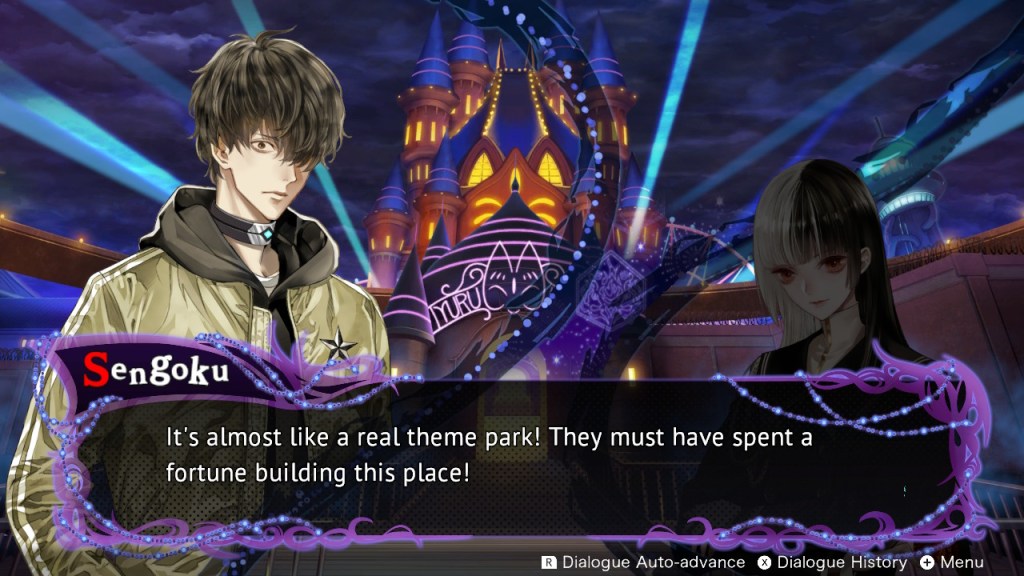
Overview – developed by FuRyu and Historia with publishing handled by NIS America, The Caligula Effect 2 is a JRPG that mixes dungeon style exploration and a hybrid turn/time based combat system. Trapped in a simulated world, the protagonist must work with the Virtuadoll X (pronounced Kyi) to escape back to the real world. This title is available for the PlayStation 4 and Nintendo Switch, with links to each version of the game at the bottom of this review.

Disclaimer: before I get into the review, I would like to thank NIS America for providing the copy of The Caligula Effect 2 that was used for this piece. The provision of this title has not influenced the contents of this review, all thoughts and opinions contained within are my own.

Now with the introductions out of the way, let’s get into the review, starting with the story. I will be covering the core mechanics of the gameplay to prevent spoiling any surprises that the game has, as I feel that some elements of the game must be experienced first-hand.

Story – The mysterious Virtuadoll Regret, has used her songs to pull people into REDO, a simulated world devoid of guilt and created to free the denizens’ of their past mistakes making them forget reality. The Virtuadoll X breaks into this simulation to bring it down, encountering the Protagonist as they realize that the world around them is a lie. During this awakening, X jumps into the body of the protagonist and becomes their soul partner.

The two must now work together to recruit others to their cause, forming the Go-Home Club, a group that seeks to shatter this false reality and return to the real world. However, this will not be an easy task as the Virtuadoll Regret, has a group of followers that seek to stop this attempt to bring down REDO, as well as the soulless inhabitants that wander the simulation. The soul partners, must do all they can to bring REDO down, while learning more about the other Go-Home Club members.

Gameplay – the Caligula Effect 2 is a JRPG, with dungeon styled exploration, sprawling areas to explore and unique hybrid of real time/turn based combat. The game takes place in the simulation of REDO, with the player taking the role of the Protagonist, a second year student from Tatefushi Academy who has an awakening of what is truly going on. Due to this realization that this world isn’t all it appears, the Virtuadoll X chooses the protagonist to help her bring down REDO, taking half their body.

To achieve this goal, the player must travel throughout the world of REDO, exploring different areas and recruiting more people who have had the same realization. The gameplay is split into two different segments, dungeon crawling action and hub-world exploration. When roaming the dungeon zones, the player will encounter enemies that will be wandering around, following simple paths either alone or in groups and charging the player if they are seen.

The player can engage an enemy in two ways, if direct contact is made either from the player running into the enemy or vice versa, combat will just start. However, if the player is able to get behind an enemy and press the action button, an advantage will be given to the player for that battle. The combat uses a system called the “Imaginary Chain” where decisions are made with time paused, but when all current party members have had actions assigned they will occur simultaneously.

The “Imaginary Chain” system uses a timer for all actions, counting down on screen for all actions that have been assigned with the party. When the timer counts down for the assigned actions, that player will be able to a take their turn again, making timing important to maximize damage potential and minimize risks. Each action varies in how long the timer will last, giving a flexibility and tension to combat, as a poorly timed attack could lead to ruin.

The majority of commands use the resource SP to be performed, which will slowly refill over time and completely refill upon completion of the battle, but can be refilled via actions or items (described below). Here are the battle commands that can be used in combat when battling foes;

  • Attack – these are the damage dealing attacks that the party can use to damage enemies, with a percentage meter that will appear during the timing phase showing probability of success. Attacks are broken up into three types, melee, ranged and guard, with special attacks that can counter other attacks and deal additional damage when conditions are met.
  • Support – use support skills that will provide various effects, including healing allies, providing buffs to party members and negative ailments to foes.
  • Action – utility effects that are commonly shared with the party, including defending from attacks, dashing across the battlefield and refilling SP with soul charge.
  • Item – use the items in the party inventory to heal, revive allies and more.
  •  Overdose Skills – during battles, a stress gauge will fill up for the party members, allowing them to use special ultimate abilities called Overdose Skill. These skills have the potential to deal massive damage against enemies and can turn the tide of battle, with each skill unique to the character that wields it.  
  • X Jacking – the Virtuadoll X has the ability to support the party when a voltage meter on screen is full, providing various benefits to the party and lasting until the meter runs out. The voltage meter charges over time during battle and by destroying objects during exploration, allowing for the X Jacking ability to be activated faster (X can also be leveled up by using X points to buy upgrades and special skills through X points earned during play).

When a battle ends, the party will gain experience for defeating the enemies, leveling each party member up when they reach specific milestones. Each time the party members level up, they will gain some increases in stats and new skills/abilities depending on the level that they reach. Allies that have fallen in battle will also gain experience, leveling up even when incapacitated which eases some of the potential headaches that uneven leveling can cause.

Completing battles will provide rewards for the player, including money and items that drop at random. These rewards will vary depending on the level of the enemies defeated and the current zone they are in. The money earned in battles can be used in shops, to purchase supplies and items that have been obtained as rewards can be sold to merchants in stores.

As well as the battles with the enemies encountered in the dungeons, there are items that can be collected by interacting with objects called Rifts and Soul Remnants. The Rifts appear as crystals and must be broken by the player to retrieve the items inside or gain voltage points for X, whereas the Soul Remnants simply need to be activated. However, the Soul Remnants can be in areas that can’t immediately be accessed or hidden out of sight.

The Soul Remnants also contain special items called Stigmas, a form of equipment that can be given to party members and provide different bonuses and passive effects. These passive effects from the Stigma can be learned by the party member that is holding the, becoming a permanent skill boost that can be equipped and unequipped at will. The Stigma system and passive effects are the only form of equipment in the game, with some being character specific and providing only that party member with a bonus.

There are also puzzles that must be completed in some areas in order to progress, ranging from collecting keys to activating switches and more. The puzzle segments, allow different areas to be entered and open up new paths for the player to explore. To help the player with some of the navigation and to help locate Soul Remnants, there is a mini-map that will gradually fill out as the area is traversed, showing the routes that can be taken and where the Remnants are located.

During the dungeon crawling sequences, story scenes will play out with each set making up a story arc or chapter, offering multiple choices for dialogue. These dialogue choices will give different responses and have the potential to impact the final ending of the game, while also being able to uncover some of the secrets of the world of REDO. At the end of each of each arc, the player will encounter a boss battle that works as the climax of that story section before moving onto the next.

Outside of the battle and story focused dungeon crawling elements, the player is able to explore different areas and interact with the residents of the world. By interacting with different NPC characters in free roam environments, the player can get side quests that will provide rewards and boosts for the protagonist, while unlocking the true reality of the quest target. This gives additional depth to the world of REDO, by shining a light on the people that are within this false reality.

There are also interconnected quests and stories that focus not only on the quests giver, but other NPC characters that they may be connected with and even party members. This means that some quests will require others to be completed before that specific one can be done, which does add to the intrigue of some specific character quests, but can become frustrating to backtrack for single quests. But some of the back tracking can be alleviated with the save points that are scattered through the world.

In most areas, there is a save point that the player can use to record their progress. These save points also act as fast travel points and allow the player to move between different areas under certain conditions. This allows for some time to be saved when completing the side quests given by NPC characters. The save points can also be used to travel to the home base for the party and home of X, a train called the X Express.

While the player is on the X Express, they are able to talk to the party members freely and can choose to learn more about them. The personal stories for the party members play out in character episodes, which are unlocked by raising an affinity level with each of them over the course of the game. These stories are optional, but do give more detail on the motivations of the party, adding additional context to dialogue and story scenes.

The X Express is also a mini hub world where the player can move to different areas, shown by a map of the train lines with each location listed on the side. The player is also able to trade with X while on the train, with a service where the player can buy/sell Stigmas, alongside special offers that can be purchased with X points. The train will also change in appearance over time as more party members are recruited, with each new person adding elements of their personalities to the décor of the Express.

Now with the gameplay covered, I will be moving onto the other aspects of the game, starting with the controls.

Controls – the controls for this game are balanced well, with the thumbsticks used for movement and camera controls, as well as all main functions being mapped to the face buttons. The menu navigation and battle commands work well, with all inputs having little in terms of lag and the precision in the Imaginary Chain that is possible with the D-Pad adds to the comfort of the game. This title plays comfortably with the pro Controller and Joy-Cons in both docked/undocked play.

Difficulty – there is a balanced difficulty curve to this release, with mechanics that ease the tension of encountering several enemies one after another. The way that the player health and SP is refreshed after battle makes the higher difficulty levels more manageable, as any allies that are incapacitated are revived at the end of the battle. This means that the battle difficulties easy, normal, hard and extreme adjust the amount of damage that enemies deal/take during combat.

Presentation – this release has a pleasing visual style to it, with character models, environments and story scenes that are designed well, with smooth animations. There are also character portraits and art that have the distinct JRPG look to them. However, there are some minor flaws to the graphical output, with some of the textures having a slightly fuzzy look during cutscenes, but that is likely due to the hardware limitations of the Nintendo Switch system.

The sound for this game is fantastic, with music tracks that have a distinct J-Idol vibe to them, offering unique compositions for each location. During play the music will also shift from instrumental to vocal, seamlessly adding the lyric track to the song when battle commences, then removing it when combat concludes. This gives the music a dynamic edge and enhances the flow of gameplay. There is no English language voice over, however the Japanese voice track is performed well and all voices fit their characters.

Final Thoughts – this was my first time with the Caligula Effect franchise, as I had not played the previous releases in the series, but I can say that the experience I had was pleasant. The combat and dungeon exploration flows well, with the Imaginary Chain system that allows strategy to be implemented to time attacks perfectly for maximum effect. The story has a lot of depth to it and I found myself being pulled in, wanting to learn more about the characters that I encountered in the world.

I can happily recommend this title to JRPG and dungeon crawling fans. The story doesn’t need much if any knowledge of the previous release, which allowed me to follow easily and the combat/party system is robust with a lot of flexibility to it. The game doesn’t feel too punishing either if mistakes are made, as the usual no XP for downed party members is absent, as well as damage being healed after battle. The only minor complaint that I have is that the textures can look blurry in at times but it doesn’t detract from the overall experience too much.

In the end, I give The Caligula Effect 2 a final score of 4.5/5. This JRPG offers a story that is engaging with a lot of depth, characters that have their own charm to them, combat that flows in a unique way and an excellent soundtrack of Virtual Idol songs that enhance the experience. if you want to check this title out for yourself, links to each version of the game are below.

Link to Nintendo Switch version (HERE)
Link to PlayStation 4 version (HERE)

Neptunia x Senran Kagura: Ninja Wars – Nintendo Switch Review

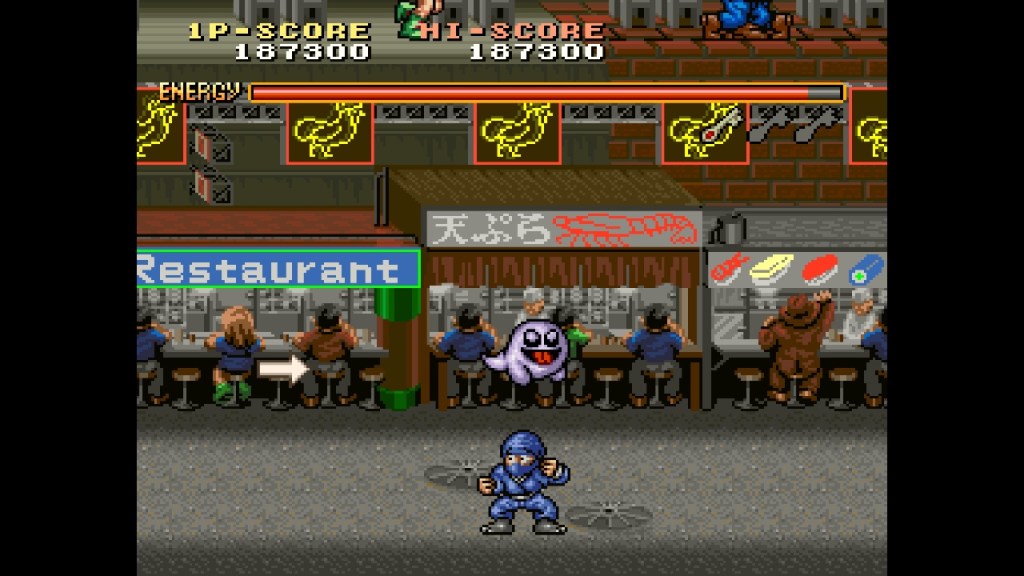
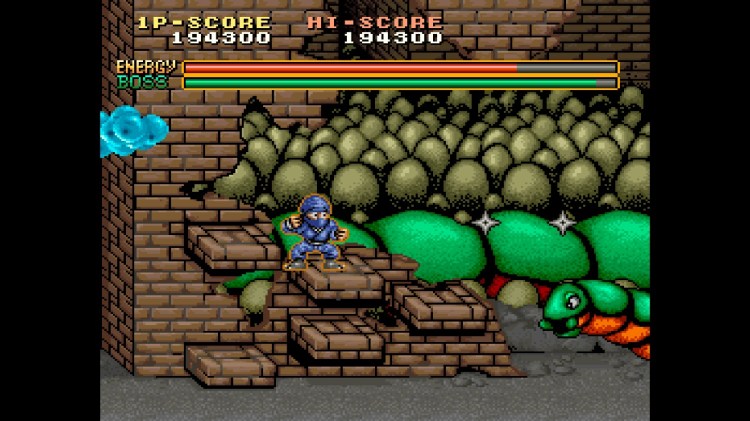
Overview – developed by Compile Heart in collaboration with Tamsoft and published by Idea Factory International, Neptunia x Senran Kagura: Ninja Wars is the action JRPG crossover years in the making. Take on enemy ninja and Yokai in dungeon crawling, hack and slash action, with characters from the Neptunia and Senran Kagura franchises. This version of the game is available for Nintendo Switch, with a link to the game at the bottom of this review (discounted on both the EU and NA eShop services for up to a week post launch).

Disclaimer: before I get into the review, I would like to thank Idea Factory International for providing the copy of Neptunia x Senran Kagura that was used for this piece. The provision of this software has not influenced the contents of this review, all thoughts and opinions contained within are my own.

Now with the introductions out of the way, let’s get into the review, starting off with the story. When discussing the gameplay, I will only be covering the basic mechanics as there are some features that I feel players must experience first-hand.

Story – in the land of Gamninjustri, a struggle has arisen between the Daimyo of the two strongest nations, each of them being home to a major school of martial arts. The Heartland nation has the Compa style, which are Ninja Arts that are based on the Command Technique. Their rivals are the Marveland Nation which uses Honeypa Style, which use Ninja Arts based on the Action Technique. These two nations have been locked in a battle for dominance for a long time.

During one of their battles, an army of mechanical ninja appeared and made their assault. These ninja are part of the Steeme Legion, led by Yoh Gamer, a ninja who is a master of the Headshot style of Ninja Arts. The mysterious ninja made an announcement to all the nations of Gamninjustri, the “Super NINJA War” is about to begin to decide the strongest ninja school in the world.

Gameplay – the core of the gameplay for this title is focused on dungeon crawling, hack and slash combat with objective based missions. To accomplish these tasks, the player deploys teams of two ninja from the available roster to various locations. When the game begins the player will only be able to use two of the four Compa ninja, with additional characters joining the party over the course of the story, up to a total of 10 characters.

While inside the dungeon segments, the player will combat yokai and enemy ninja, using a variety of attacks and skills to deal maximum damage to foes. With experience being gained for each enemy defeated, leveling up that character and increasing their base stats, including attack, defense and total health. all characters that are in the party will gain experience even when they aren’t in battle, so there is no risk in unbalanced leveling with the party.

Each character has their own unique fighting style, with different weapons and special attacks, giving different pairings a unique feel as each character have their own strengths and weaknesses. The types of mechanics that players can use in battle are as follows;

  • Basic Moves – the basic move set for the ninja are made up of normal combo attacks, ninja weapons that consist of shuriken/kunai and jump attacks. Attacking enemies from behind deals additional damage, with a lock-on mechanic which shows the health of the target.
  • Defensive Options – players can dodge enemy attacks, making them invincible for a moment afterwards, with the ability to dash by holding down the dodge button. The dodge and dash use up the stamina meter, which is refilled over time or by attacking enemies. There is also a guard system that can deflect damage from most enemies, with perfectly timed guards reducing damage and filling the stamina gauge.
  • Ninja Arts – by holding down the Ninja Art button, one of four special attacks can be activated, using up stamina in different amounts. When activating the Ninja Arts, a special bar called the Trigger meter will appear. This meter allows up to four special attacks to be chained together, with each successful chain potentially adding new effects to attack.
  • Shinobi Extreme – during battle the EX gauge will fill up, outlining the portrait of their active character with a prompt appearing when the meter is full. When the Shinobi Extreme skill is activated, the active character will unleash an all-powerful attack that deals massive damage to their targets.
  • Fuurinkazan Drive – this ability has four unique skills called Awakenings, with each one having different features in battle, including increasing attack power and defense when fighting enemies. These skills can be used a limited number of times per character, with the number of uses refreshing when the dungeon is completed.
  • Items – in battle players can use items to heal damage, refill stamina and provide various effects. Some of the effects that can be applied include strengthening the active character, reducing the cost of stamina for dashing/dodging and removing negative status ailments from enemies.

While in the dungeon, barriers will appear and prevent the player from progressing. There are two types of barrier, a red barrier that can’t be bypassed and a yellow barrier that can be removed by completing objectives like defeating all enemies. The red barriers will also change depending on the mission, with different areas being opened or closed to fit that challenge. These barriers do restrict some of the exploration possibilities, but do make returning to areas rewarding.

At specific points of each dungeon, a marker will show the destination for an objective within that zone. When reaching the marker, more often than not, a story segment occurs setting up the next sequence, either setting up the next stretch of the mission or even a big boss battle to end the dungeon. The boss battles that occur feature powerful enemies, with a lot of health and a special break meter, which will weaken the boss and stun them temporarily when depleted.

The boss fights can be very challenging, with unstoppable attacks that can’t be guarded against, multiple health bars for boss enemies and extremely powerful attacks. This is where the partner switch mechanic is the most useful, as during combat the player can freely tag their partner character into battle, with extra damage done if switching during a combo. The reserve member can also recover used up stamina, with health regenerating if dropped below 50% when switched out.

It is important to use the partner switch system effectively and tag out often, as once a player character has been defeated they can’t return without using expensive items. If the partner is knocked out, they will also be unable to earn experience from battling enemies, which prevents the character from leveling up until they are revived.

Outside the dungeons, there are several things that the player is able to do in the main home base. These include the ability to talk to various characters from the world of Gamninjustri, take on special missions and organize the party with equipment, items and skills.

Here are the things that you can do while in the main home town;

  • Shinobi Base Functions – here the player can change their formation, setting the lead and partner character for the dungeons. The player is also able to equip characters with new gear, change Spirit Gems, special items and swap their Ninja Arts with new ones that are earned through leveling.  
  • Spirit Gems – during play, special items called Spirit Gems can be bought from the market or earned from defeating enemies. These gems can be added to a board in different patterns, the variety of which increasing over time and specific patterns can provide increased benefits. Spirit Gems can also be combined to create stronger gems, providing increased bonuses.
  • Market Street – in the market, players can buy/sell items which include ninja weapons, consumables and Spirit Gems. There will be new items added to the store over time, increasing in strength and overall effectiveness. A limited number of items can be taken into the dungeons, so excess amounts will be put into storage.
  • NinChat – this is where the player is able to gather information and talk to NPC characters in the game world, gathering information between missions. Certain characters will have events attached to them, which can add extra story details, give shrine requests and even item rewards.
  • Kumotsu Shrine – at the shrine, missions can be taken on sending the player to a specific point directly from the shrine. The challenges vary in difficulty/objective, with rewards that are provided when the mission is cleared. There is also the treasury, which has galleries of story scenes, character information and more.
  • Peaches and Cream Meditation – the player sits cross-legged on a giant peach, trying to stay balanced while filling up a peach meter on screen. Successful completion of this challenge provides rewards that last a preset amount of time, while also giving items that can be used. New levels of challenge will be available over time, with each one costing a fee to challenge. Controls for this can be either gyroscope motion or the triggers depending on the player choice.

The home base is also where the world map is located, showing the different areas that players are able to explore, with a training area and all previously cleared zones available. The player is also able to freely save and load at the home base, with an auto save that prevents a sudden loss of progress during play. While in the base the player can look at records and check tutorials, with various settings that can also be changed, with the ability to set difficulty, change controls and adjust the sound levels.

Now with the gameplay covered, let’s get into the other aspects of the game, starting with the controls.

Controls – the controls for this release are relatively simple to pick up, with all the key functions for basic combat set to the face buttons and triggers. The menus for Fuurinkazan Drive and Ninja Arts are set to the front shoulder buttons, the item menu, partner tag and target switch systems are set to the d-pad. All of the inputs work together well when using either a pro-controller or the Joy-Cons, with smooth movement for characters and camera with the sticks.  

Difficulty – this title offers three difficulty options, with easy, normal and hard being selectable from the options menu. The main difference between each setting is the amount of damage that the player receives and deals to enemies, with other subtle differences that aren’t immediately noticeable. The overall challenge feels balanced, without the feeling that the game is punishing the player, along with points before boss battles where health is replenished and equipment can be altered.

Presentation – visually this title looks very good running on the Nintendo Switch system, with well rendered 3d models and environments that are animated very well. The level of detail is impressive given the limitations of the hardware, with little in terms of lag or slowdown aside from rare instances when a lot of elements are loaded in at once. There is also the fanservice element that both Neptunia and Senran Kagura series are known for, with a “softness” to the movement of the characters.

The game uses traditional 2D anime art for story scenes, character portraits and menus, which have the signature styles of both Tamsoft and Idea Factory. With each character beautifully drawn and given several expressive poses/faces, appearing in the story scenes. There are also CG art scenes that will appear through the story, showing the characters interacting and to set up events, which have the usual high quality that is attributed to the two developers.

The soundtrack for this release has a mix of styles that all work together well. These styles include the usual guitar focused rock based compositions used in Idea Factory releases, combined with traditional Japanese instruments and even orchestral pieces that fit the theme for the game world. There is only a Japanese voice track for this title, featuring the vocal talents of each characters long time VA including Rie Tanaka as Neptune, Hitomi Harada as Asuka (Senran Kagura) and Asami Imai as Noire (Neptunia).

Final Thoughts – as a longtime fan of both the Senran Kagura and Neptunia franchises, this crossover was very exciting when it was announced and I am happy to say it did not disappoint. The action flows at a fast but smooth pace, with enemies that would fit either series well as a standalone title without the other characters. I had a great time playing this game, as the story is cohesive and well written, with the usual self-aware commentary that Neptunia is known for and fanservice that isn’t excessive.

I am very happy to recommend this release to fans of the Neptunia and Senran Kagura franchises, with easy to pick up action and a diverse roster of play styles to select from. The game requires little knowledge of either series to be able to enjoy, so it can be a good first experience for new players, before jumping into the more complex standalone titles. If you like action based JRPG titles with a little humor and some light fanservice, this is for you.

In the end, I give Neptunia x Senran Kagura: Ninja Wars a final Score of 5/5. This action JRPG combines the best elements of both franchises, with an engaging story, the signature humor of the Neptunia series and the action of Senran Kagura to balance it out. I hope we get more games like this in the future and if you want to check it out for yourself, links to the game will be below.

Link to Nintendo Switch version (HERE)

Taito Milestones – Nintendo Switch Review

Overview – originally developed by Taito and powered by Hamster Corporation through their Arcade Archives engine, Taito Milestones is a collection of 10 arcade titles from Taito in the 80’s. This collection has been published by ININ Games, with digital and limited physical versions available from Games Rocket/Strictly Limited Games (while stocks last). You can find links to both the digital and physical versions of the release at the bottom of this review.

Disclaimer: before I get into the review, I would like to thank PR Hound for providing the copy of Taito Milestones that was used for this piece. The provision of this title has not influenced the contents of this review, all thoughts and opinions contained within are my own.

Now with the introductions out of the way, let’s get into the review. Since this is a compilation of games with different gameplay styles and genres, I shall be covering each title with a summary of that game and its gameplay in order of year of release.

Qix – 1981

The player controls a diamond shaped marker that they must use to capture territory on screen, drawing lines from one point to another with fast draw or slow draw. The slow draw lines are orange and worth double points, whereas the fast draw lines are blue and worth only half of the orange. To clear the stage, the player must capture at least 75% of the screen while avoiding the Qix (a colorful figure in random motion) and Sparx (sparks that chase the player) that will kill the player if contact is made.

The gameplay is simple, yet works very well, with only two buttons and the movement required. The difficulty of this game can seem steep when first playing, but will get easier with some practice, along with the option to alter difficulty and number of lives in the settings.

Space Seeker – 1981

The player controls a ship that roams over the planets overworld map, with six enemy forces made up of two distinctive play styles. The first is a side scrolling action mode, where the player ship fires at enemies in the air and drops missiles on those on the ground, ending when the ship reaches the goal or a life is lost. The second is a shooting segment that has a first person perspective, battling a fleet of enemies only proceeding when all enemy ships are defeated or the player is shot down.

This title is distinct in the use of two different modes, however, it is very difficult with the speed of the action and depth perception of the first person mode. The difficulty of Space Seeker is quite high, with the unfortunate problems of depth perception and some twitchy controls. The level of difficulty can be lowered a little through the in game dip switches, but it will take time to adapt.

Alpine Ski – 1982

In this release, the player controls a Downhill Skier, moving left and right to avoid hazards with the ability to increase player speed on the slopes. There are three stages that the player can challenge, with a simple downhill course, a slalom course and a ski jump competition to set the highest score possible. The stages are timed with the timer being extended as scores are met, refreshing the time when it hits zero but a game over will occur if extend scores aren’t met.

While this can be a simple and easy to pick up game with a basic premise, get to the bottom as quickly as possible and avoid the obstacles the time limit is tight. However, the time limit and bonus time settings can be modified to make a little easier to keep playing. The movement does feel unresponsive at times, as the direction has to be held down to move the player, which makes the controls feel lacking in precision.

Front Line – 1982

Playing as a lone soldier, the objective for this title is to proceed through a vertically scrolling stage, battling the enemy forces while trying to reach their fortress. To accomplish this, the player has a gun and grenade that can be used in eight directions, as well as two different types of tank that can be used while progressing up the screen. When the fortress has been reached, a grenade must be thrown into it on foot in order to destroy it and clear that level.

This release uses a twin stick style of play which can be to the detriment of the gameplay experience, due to the difficulty of aiming the weapons effectively for an attack. There is an option to switch from twin stick to a single stick, but it doesn’t make the aiming any easier in battle on foot, but it does make the control of tanks less troublesome. It is a tough game when first starting, but like others it can be fun to practice and keep playing.

Wild Western – 1982

As the sheriff, the player is tasked with protecting a train that is being attacked by bandits while riding his trusty steed. This must be achieved while dodging enemy fire, the obstacles that can get in the way and jumping onto the train to fight off the bandits that manage to climb aboard. If three bandits manage to get aboard the train, then the game will end. There is a bonus stage that occurs between rounds to score bonus points.

Unfortunately this is the weakest title of the collection, as the controls feel uncooperative, the movement feels the stiffest of all and the aiming is very difficult due to the use of the twin stick setup. Much like Front Line, the controls can be altered to be only a single stick for both moving and aiming, this doesn’t really help the experience as it is still difficult to move and aim. All that can really be done to lessen the difficulty is increase the maximum lives as there are no continues in this game.

Chack’n Pop – 1983

The player controls Chack’n, a yellow creature that travels through a series of single screen mazes, walking on the ceiling and climbing steps by stretching his legs. The player can drop bombs to fight the Monstas that hatch from eggs on the ceiling, as well as breaking cages containing hearts to clear the stage by freeing them and reaching the exit. If Chack’n is hit by the smoke of his bombs, an enemy or the timer runs out the player loses a life, when all lives are lost the game is over.

This release can be a little confusing to start as the stretching mechanics are unusual, the way that bombs move is unpredictable and maze navigation can be complex. The difficulty is mostly balanced when the mechanics are adjusted to with a tutorial level at the beginning. This game provides a decent challenge for the player, alongside special bonus objectives to take on. The settings for this game can be adjusted, increasing lives, the frequency of power-ups and scores to reach for extra lives.

Elevator Action – 1983

Assuming the role of the secret Agent Otto, the player uses elevators and stairs travel through a 30 story building, collecting confidential documents and fighting enemy agents. The player has access to the several types of attack, a gun to shoot enemies/light fixtures and a jump kick to attack at close range. To clear each level, the player must collect all of the secret documents and make it to the bottom, failing to do so will return the player to the highest floor with an unclaimed document.

Elevator Action is a very simple platform run and gun, with four directional movement and two button inputs to jump/shoot. There are some minor hiccups with the movement, when pressing down to crouch the player must press up to stand which takes some getting used to. The game does feel slow and difficult to control sometimes, with the way that elevators, stairs and doors function which can take some time to get used to. The ability to alter settings does make the game a little easier.  

The Fairlyland story – 1985

As the witch Ptolemy, the player takes on enemies in single screen platforming action. The objective of each stage is to use magic to turn enemies into cakes, pushing them off platforms to possibly squash other enemies for bonus points or crumble them with additional attacks. Bonuses can be earned from chaining drops, collecting items that appear on screen and extra lives can be earned for specific scores. New enemies will appear over time as the game progresses through a total of 101 stages.

This title has a good feel to it, with responsive platforming making it very easy to pick up and play. There is a gradual difficulty curve to this release, with the complexity and challenge of stages increasing as the round number does. This is one of the few games in the collection that allows continues to be used, letting players try again if they run out of lives, giving everyone a chance to make it to the end.

Halley’s Comet – 1986

Defend the solar system in this vertical shooter, as a brave space fighter, shooting down enemy ships and comets that attack the planets. The player must attack the comets that fly across the screen and enemy ships, as any that get past the player will result in damage to the earth, ending the game if damage percentage reaches 100%. Stages are split into different sections, with mid-boss and boss battles for each area of the solar system, with power-ups that increase the power of the ship.

Halley’s Comet has a very distinct gameplay style to it, with the planet damage mechanic that adds an element of anxiety and stress to the experience. It is a very tough game as there is a maximum of four lives and no continues, the enemy patterns are erratic making learning patterns difficult. The ship also starts off slow, making it difficult to dodge the enemies and projectiles that attack the player, causing a steep initial difficulty spike at the start.

The NinjaWarriors – 1987

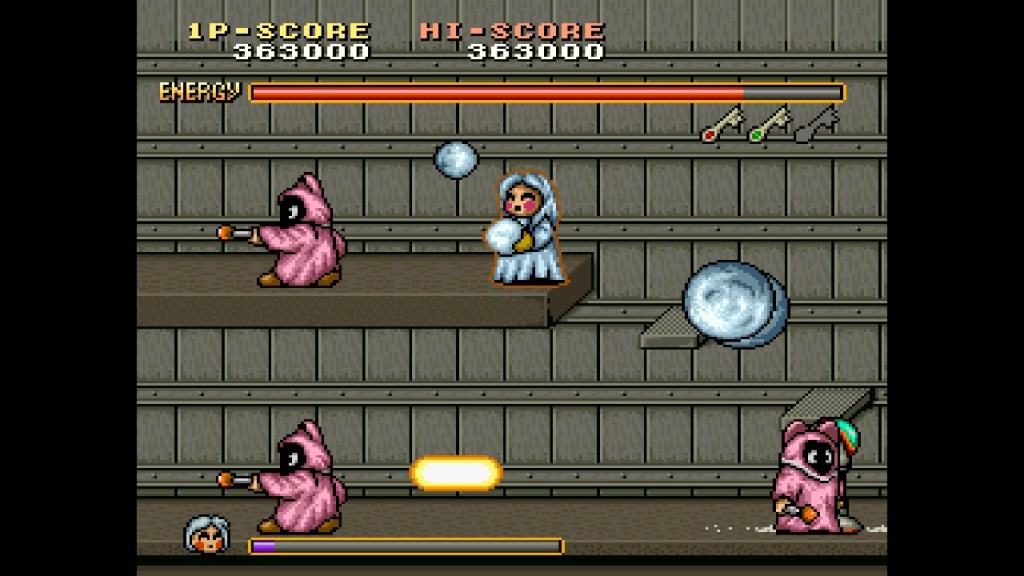
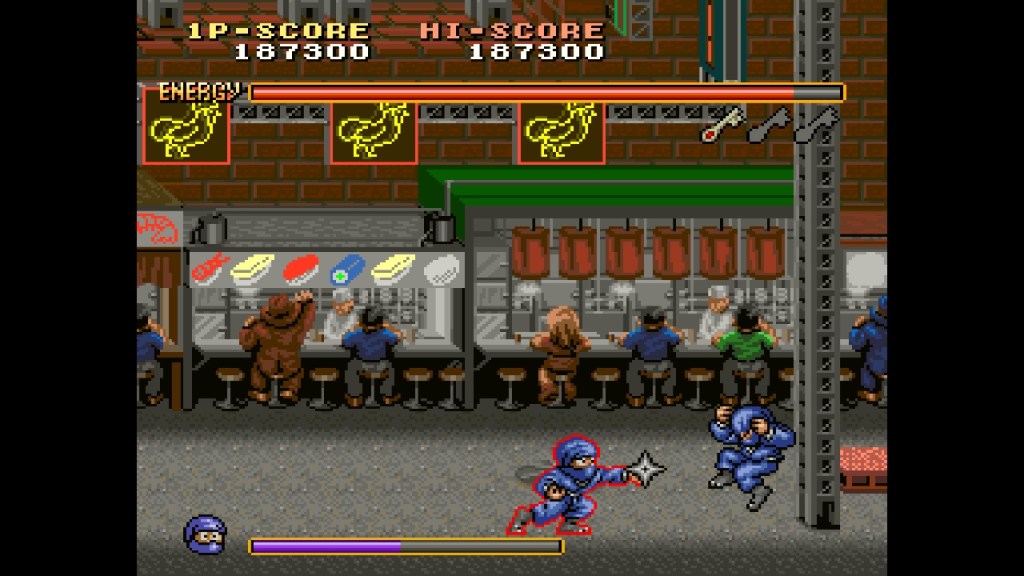
In a dystopian future martial law has been implemented by the president, now the cybernetic ninja warriors must fight back. This title is a side scrolling hack and slash style action game, with simple attacks and shuriken to fight wave after wave of men. The super-wide screen allows large numbers of enemies to spawn, with tense battle sequences against boss enemies, ranging from enemy ninja and samurai to heavy artillery tanks.

This is probably the best title on the collection, with two player co-op action and the three screen super wide display. The action is tense and challenging with the sheer number of enemies that can appear on screen. The collision detection does feel a little off in some places, with the player characters moving slowly across the screen, which can make the time limit feel a restrictive but doesn’t impact the experience. The game can be continued infinitely, letting players keep going to get to the end.

Now with each game in this collection covered, I will be discussing the other aspects of this release, starting with the controls.

Controls – for the most part, the controls for each of the games work well, but unfortunately there are some issues. The two games that use the twin stick style of gameplay don’t work the best, especially with Wild Western as the jump and shooting inputs are only mapped to the face buttons. There is an option to change the control method to work with a single stick, along with the ability to remap controls, but these don’t make the controls any more responsive.

Presentation – the visual and sound emulation for this compilation is fantastic, with a complete 1:1 translation from the original hardware to the Nintendo Switch hardware. This shows with the NinjaWarriors game, which uses a three screen system that has been carried over very well. There is also a selection of settings to alter the look of the display, with scan lines, resizing and even the ability to have the game displayed vertically in classic “Tate” mode.

Final Thoughts – this compilation has a varied selection of titles, with some better than others. The standouts of this pack are The Fairyland Story, Qix and The NinjaWarriors, which is a stark contrast with the weaker titles like Alpine Ski and Wild Western. The quality of the gameplay and replay value with each game in the pack also varies, which can be off-putting to some players as there is little in terms of bonus content aside from leaderboards.

I have some experience with the arcade archives software that powers these games, which made it a little disappointing to see that the bonus game modes were missing. These titles are available as standalone releases, which have High Score and Caravan modes which are unfortunately omitted from this pack, however the quality of life improvements remain. I can recommend this pack to players who want these games all in one place or collect retro compilations, as it offers a lot at a decent price.

In the end, I give Taito Milestones a final score of 4/5. This is a good celebration of the history of Taito, with some standout titles but some unfortunately weak ones in the pack. The use of the arcade archives software emulates the games perfectly and provides quality of life improvements, but unfortunately lacks the additional high score and caravan modes.

Link to Digital version (HERE)

Link to Physical Games Rocket version (HERE)

Link to Physical Strictly Limited version (HERE)
Beat Souls – Nintendo Switch Review

Overview – developed by Zoo Corporation and published by eastasiasoft, Beat Souls is an intense rhythm action title with an anime edge. As the Shrine Maiden Mikoto, battle the Yokai through dance to put them to rest, by dodging hazards and collecting the Beat Souls. This title is available for Nintendo Switch, PlayStation 4/5 and the Xbox family of systems, with links to each version at the bottom of this review.

Disclaimer: before I get into the review, I would like to thank eastasiasoft for providing the copy of Beat Souls that was used for this piece. The provision of this software has not influenced the contents of this review, all thoughts and opinions contained within are my own.

Now with the introductions out of the way, let’s get into the review. I will be skipping the story segment and be moving directly into the gameplay, as there is little in terms of plot to discuss.

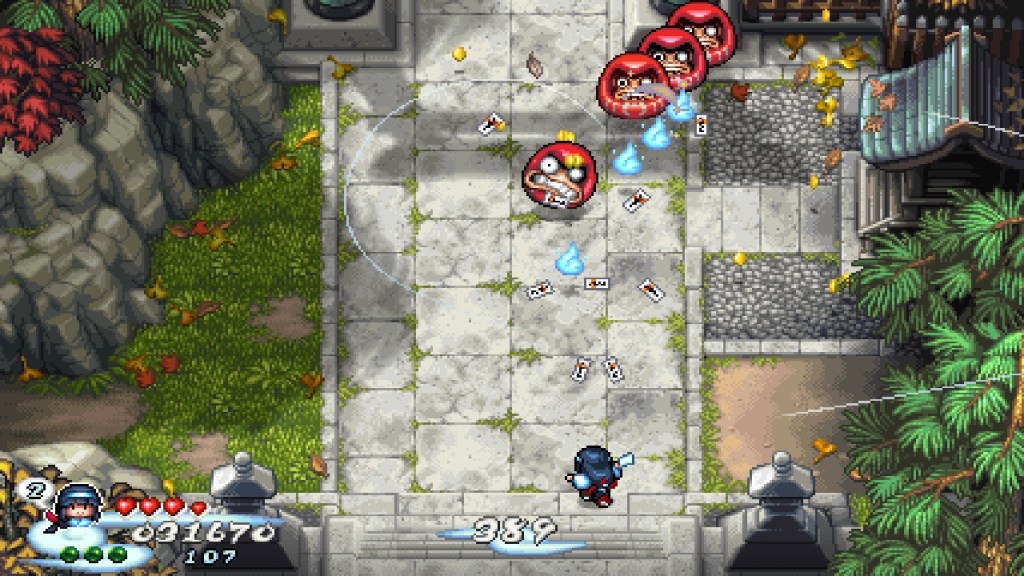
Gameplay – Beat Souls is a fast paced rhythm action title, where the player must dodge hazards and collect the Beat Souls on screen to score points. During each stage, the track scrolls with the hazards and beats running down. The player must move left and right, using her Otomo souls to collect the beats on screen by moving Mikoto or the Otomo themselves. Mikoto has a set number of lives that will be reduced by one if she makes contact with a hazard or beat, ending the stage if she runs out of life.

Collecting the beats will add to a combo meter on screen, with each beat adding up and increasing a ranking meter on screen as well as the score. There is also a fever meter that will fill up with each beat collected, activating a special fever state when the bar is filled to a specific point and a mark on track is crossed. Fever increases the score multiplier and lasts until the end mark is reached, taking damage before fever is activated will reduce the meter, potentially preventing it from activating.

When the stage ends, a ranking based on the performance will be provided, ranging from poor to excellent. Alongside the rankings are two challenges per song, first is the no damage achievement from making it through the stage without losing a life. The second is a full combo achievement, which can be earned by hitting every beat without missing or taking damage for the entire song. These are extra bonus challenges for the play to attempt.

As the player progresses through the game, new songs will be unlocked with one of three characters, each having their own unique look and music style. The songs will vary in speed, with a BPM on screen to give an idea of how fast the song will be. The songs will also have a difficulty attached to them with a second, harder version of each song that is unlocked after completing the first version of the song. This doubles the song variants to play from 45 to a total of 90.

The songs will become more complex and difficult as they progress, with the addition of more complicated patterns and the need to switch between yellow and blue beats. With the tougher challenges for the hard variants of each song that push the player, with each challenge increasing in complexity when it comes to the tougher tracks. The tougher tracks are beatable, but there is a need to practice to perfect each song and clear bonus challenges.

There is a level system also included in this release, with each cleared stage giving experience that levels up the player, unlocking stages in the special hell mode at specific milestones. The infinite mode also has an online ranking where players can challenge others, with the highest score being added to the worldwide rankings. As well as the level system, there is an achievement system where players can unlock new characters, each with their own unique skills that can be used in stages.

The achievements that can be unlocked include collecting beats, clearing songs on hard and reaching specific levels, which don’t add much in terms of gameplay but add value to the player. These extra achievements and the infinite mode add to the replay value, giving players more incentive to continue playing the game after clearing the songs.

Now with the gameplay covered, I will be moving onto the other aspects of this game, starting with the controls.

Controls – the controls for this release are very simple, with the thumbstick and d-pad being used to move the player left and right. The face buttons are used to jump hazards and to switch the color of the Otomo souls, with the shoulder buttons moving the Otomo to the left and right. These controls are comfortable and feel right when played in handheld and/or docked mode. The game also plays well when using a pro controller or Joy-Cons, with zero lag or input issues when playing the game.

Difficulty – there is a gradual difficulty curve with this title, where the songs will have simple patterns that are relatively easy to get full combo scores. The difficulty does increase dramatically over time, making it very tough to score perfect runs of each song, but the characters that can be unlocked and their skills can make it easier. Practice is an important part of the experience, in order to score maximum points in the standard songs and to climb the leaderboards in hell mode.

Presentation – there is a very distinct visual style for this release, with an anime art style that has a neon cyberpunk flair to it. The environments and character designs have a cutesy design to them, with bold elements and thematic designs that fit each character. The soundtrack for this title has a lot of variety to it, with rock styled tracks that contrast well with synth based instrumentals. Some tracks are separated into short and long versions, extending some tracks to add a little variety to some compostions.

Final Thoughts – I had a good time with this release since I enjoy rhythm action titles. This title has its own distinct style to it and makes it a unique experience, with the cute neon anime art style and gameplay mechanics. I can happily recommend it to fans of rhythm action games, as there is a lot of content and challenge on offer for everyone who enjoys the genre. This is a complete package, with the variety of music tracks, achievements and the ranking mode included for worldwide competition.

In the end, I give Beat Souls a final score of 5/5. This title is the complete package for modern rhythm action fans, with a distinct art style, a good variety of music tracks, fun gameplay mechanics and an achievement/ranking system that is rewarding for players to keep playing. If you want to check this title out for yourself, links to each version will be below.

Link to Nintendo Switch version (HERE)
Link to PlayStation version (HERE)
Link to Xbox version (HERE)
Wife Quest – Nintendo Switch Review

Overview – developed by Pippin Games and published by Eastasiasoft, Wife Quest is an action platformer with Metroidvania elements. The heroine Mia must rescue her husband Fernando from the monster girls that have kidnapped him, with some risqué action and fanservice elements. This title is available on all console platforms, with links to each version at the bottom of this review.

Disclaimer: before I get into the review, I would like to thank eastasiasoft for providing the copy of Wife Quest used for this piece. The provision of this software has not influenced the contents of this review, all thoughts and opinions contained within are my own.

Now with the introductions out of the way, let’s get into the review, starting off with the story. For the gameplay section, I will be only covering the core gameplay and will be omitting some details about bonus content, this is to prevent spoiling any of the surprises that the game has.

Story – the former warrior Mia has to go on a quest to rescue her husband Fernando, who has been kidnapped by monster girls who keep trying to seduce him. Travelling the land surrounding her home, Mia must battle the bosses of each area and their minions, punishing them for their sins when she defeats them. Can Mia defeat the monsters girls and reunite with her beloved Fernando?

Gameplay – this title is a side scrolling action platformer with some Metroidvania elements, where the player as Mia, travels the different environments and battles the monster girls that live there. When starting the game, Mia is armed with just a sword to fight with, but she does find a magic shield that will allow her to deflect attacks and prevent damage.

The zones that Mia travels through are separated into different sub-stages, with checkpoints sporadically through them as well as challenging encounters. There are also areas where paths can branch off, adding a simple puzzle element to the exploration where switches must be hit to open gates in different ways. The exploration also has some Metroidvania elements, with new paths being available as new skills are obtained.

Each enemy that the player encounters has their own unique look, attack patterns and some are specific to the region they are in. They can be battled with the sword or by using magic, dealing damage by reflecting attacks or by sending projectiles back at them. When Mia defeats an enemy she can punish them with both hilarious and lewd results, Jumping on them, choking them and hitting them as a few examples.

When an enemy is knocked out, they can drop treasure which includes gold to be used at the shop (discussed further down), hearts to heal the player and gems to refill the magic meter. Alongside the drops from enemies, treasure chests can be found scattered across the lands, with hidden paths and secrets where increased riches can be found.

The secrets that can be found include music tracks, special images for a gallery and hidden power-ups to boost Mia’s strength. When a region is cleared, a checklist will appear showing the performance for that area, showing how many enemies have been defeated, treasure located and more. After the stage has been beaten for the first time, new challenges will be added with rewards for completion, including time challenges that promote speedrunning.

During each of the levels, a boss battle will occur with Mia fighting the Monster Girl leader of that area. Each of the bosses has their own distinct design which thematically fits their area, with challenging platforming and combat that has increasingly difficult patterns. When the boss is defeated, Mia will punish them during a cutscene and obtain a new skill, using magic for each of the abilities which are useful when backtracking for challenges.

Outside the stages, there is a shop that Mia can visit which is operated by the Dwarf Ymir, who provides upgrades to weapons, magic and new outfits that make Mia stronger. Mia can also purchase items that can aid her in battle, which are potions to refill health and magic, heart containers to increase overall hit points and mana crystals to boost total magic. Ymir also has gallery and music tracks available for purchase, adding another reason to replay stages for coins.

There are additional modes that can be unlocked while playing, alongside the content that is unlocked during the course of the game. This adds an incentive to keep playing and trying to clear all the challenges, coupled with the rewards that are provided from the Ymir challenges and hidden pick-ups. The game may feel short to some, but there is a lot to do with challenges, speedrunning/time trials and collectables that are scattered throughout the game world.

Now with the gameplay covered, let’s move onto the other aspects of the game, starting with the controls.

Controls – the controls for Wife Quest are basic at the start, with just movement, attacking with the sword and jumping. However, as new skills become available like the shield, the inputs and controls become more complicated with new prompts that will make it more challenging. But even with the increasing complexity of the controls over time, the game plays comfortably in handheld and docked modes, with either a pro controller or Joy-Cons.

Difficulty – there is a gradual difficulty curve to this title that increases over time, but there are some moments where it can feel like it spikes. This is most present during boss battles, when first learning patterns and trying to avoid getting hit by everything. To offset these challenges, the difficulty can be lessened a little by grinding coins, buying upgrades and collecting potions. There is also a good checkpoint system, which allows players to leave and return to the boss if they need upgrades.

Presentation – the visuals for this release use a vibrant pixel art style to the graphics, with detailed sprites for characters, smooth animations and thematic backgrounds that fit each zone. The cutscenes and character interactions are put forward with dialogue boxes, using expressions that show a range of emotion well. One thing to note is that the majority of enemies are “bouncy” which doesn’t take away from the gameplay, but it may not be to every ones taste.

In the sound departments, the voice work is limited to general sounds including pain and laughter, with some risqué sound bites used at different points, which have a slightly sexual side to them. The soundtrack has a good balance to it, with music that fits each area and encounter, with an excellent fantasy motif throughout, bringing the whole experience together.

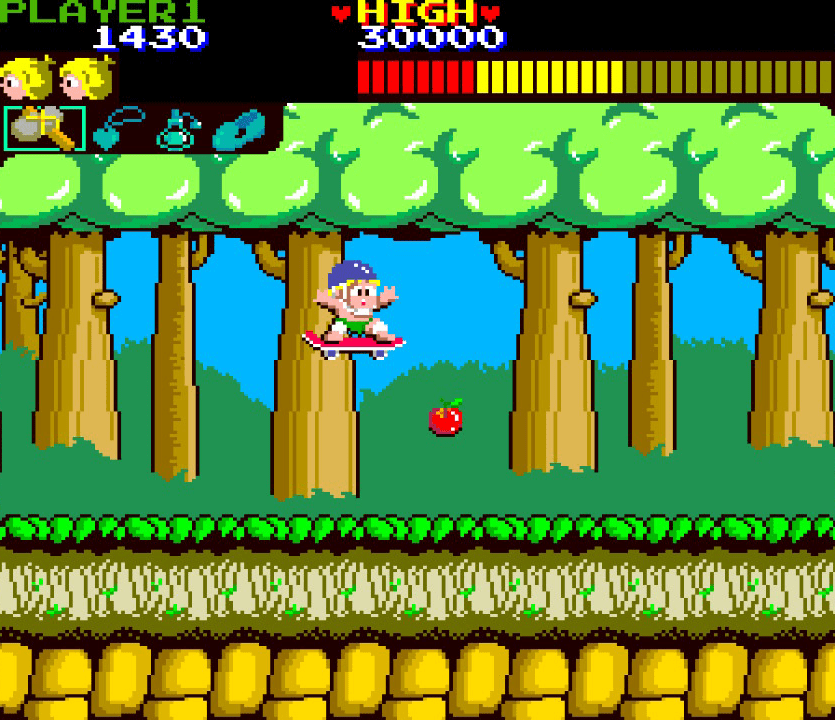
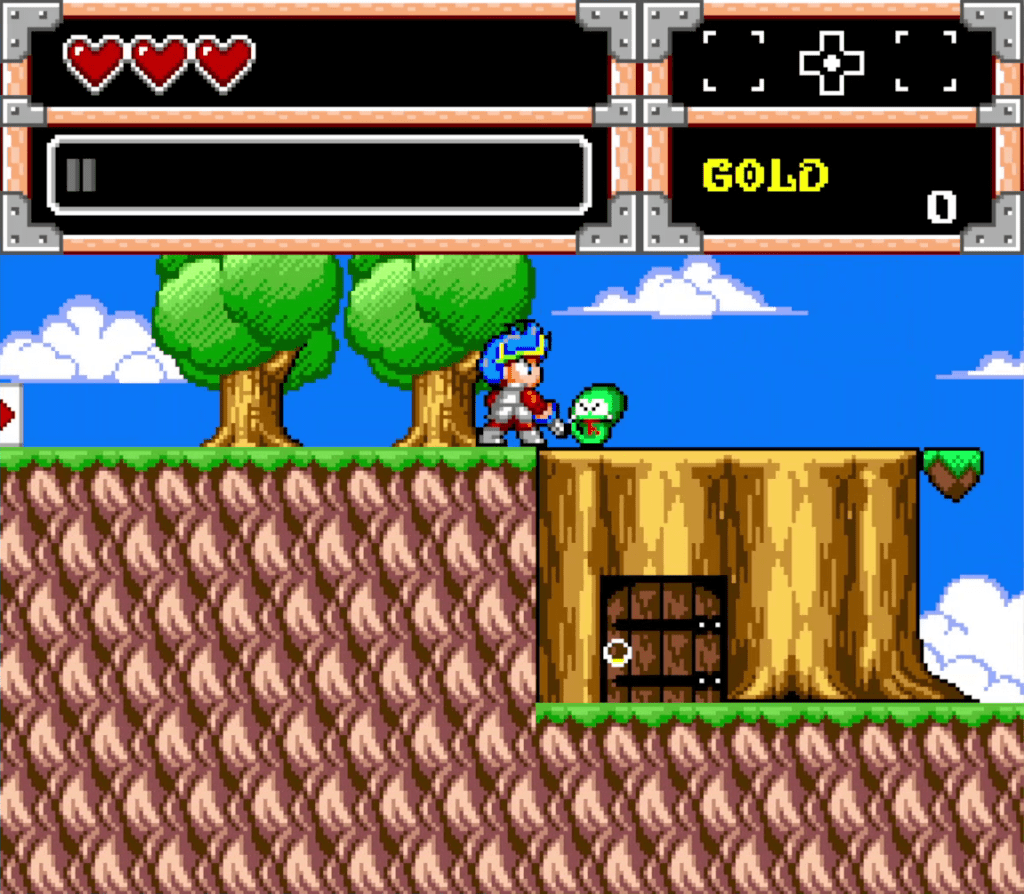
Final Thoughts – I had a fun time playing this title, with the gameplay that has elements of Metroidvania and has an old school vibe to it, having gameplay similar to titles like the WonderBoy games. The role reversal where the heroine saves her husband is a nice change, with the angry wife punishing her enemies being a fun extra layer to the experience. The fanservice elements can be off putting to some, but the humor of it doesn’t detract from the overall product.

I can happily recommend this title to everyone, but I will make it clear that the difficulty spikes that can occur during boss battles are a slight negative with this release. However, the checkpoint system, the ability to grind coins to buy upgrades and recovery items can lessen the difficulty. There are also the secrets to unlock, the extra game modes and challenges that add to the experience further, giving players a lot to do in this game.

In the end, I give Wife Quest a final score of 4/5. This is a very good side scrolling action platformer, with an abundance of bonus content to obtain and unlock, including gallery images, music tracks and extra game modes, creating a rewarding and fun challenge for players. If you want to check this title out for yourself, links to each version of the game will be below.

Link to Nintendo Switch version (HERE)
Link to PlayStation version (HERE)
Link to Xbox version (HERE)

Flat Kingdom: Paper’s Cut Edition – Console Announcement

Hello, I have exciting news regarding an upcoming release from our friends at PR Hound, Fat Panda Games and Ratalaika Games. Check out the details below about the upcoming release of Flat Kingdom: Paper’s Cut Edition that is coming to consoles.

Indie publisher Ratalaika Games, in collaboration with developer Fat Panda Games, is delighted to announce the digital release of Flat Kingdom Paper’s Cut Edition for PlayStation 4, PlayStation 5, Microsoft Xbox One, Xbox Series X/S and Nintendo Switch is set for  1st April 2022 at $7.99/€7.99.

Coming to all consoles, Flat Kingdom Paper’s Cut Edition was previously released on Steam PC a number of years ago, garnering scores of 8s and even higher with a number of top gaming media. Now console gamers can experience the delights of ‘The Flat Kingdom’, a beautiful and peaceful 2D land that is now threatened by an evil thief and becoming a 3D world!

About the Game

Flat Kingdom is best described as an action platformer filled with puzzle-styled combat in which you’ll have to switch shapes in order to gain different abilities to progress.

Akin to rock, paper, scissors style combat, each shape beats the opposite. Sharp triangles can defeat the soft circles, heavy squares beat the fragile triangles and squishy circles can triumph over the slow squares. Both enemies and puzzles can be beaten using the correct shape and strategy, so you’ll have to observe them and come up with the best solution.

Immersive gameplay as you explore different detailed worlds with confrontations against dangerous enemies. Huge bosses are waiting for you, but remember with three shapes you can beat them all!

Backdrop Story

A long time ago, the Flat Kingdom was threatened by the wicked Third dimension. Just when all hope was lost, a wise sorcerer appeared and created six magical jewels, keeping the dimensions stable and restoring the peace. But one day,  the masked thief Hex kidnapped the princess, also taking one of the jewels  with him. That caused the 3D chaos to come back, putting the Kingdom in serious danger again.

When everything seemed to be lost, King Square thought about the only one who could fix this mess. His name was Flat, a little but brave 2D doodle-like creature that had the ability to change shapes at will, that way he can overcome all kinds of obstacles and beat the geometric foes.

Features:

  • Music by composer Manami Matsumae (Mega man, Shovel Knight).
  • Enchanting, endearing and colourful world!
  • Learn about the kingdom and find hidden scrolls
  • Plenty of secret areas and hidden surprises, collect coins to buy extra hearts and become even stronger!
  • Much more…..

Check out the trailer below for more information.

Gal*Gun Double Peace – Nintendo Switch Review

Overview – developed by Inti Creates and published by PQube, Gal*Gun Double Peace is the latest entry in the fanservice rail shooter to hit the Nintendo Switch. Shoot the girls that chase you to declare their love with your Pheromone shot, giving them euphoria to stop them as you seek your true love. With almost all DLC content included this version of Gal*Gun Double Peace is available exclusively for Nintendo Switch, a link to the game will be at the bottom of this review.

Disclaimer: before I get into the review, I would like to thank PQube for providing the copy of Gal*Gun Double Peace that was used for this piece. The provision of this software has not influenced the contents of this review, all thoughts and opinions contained within are my own.

Mature Content Warning: this title is rated mature, this is due to sexual themes, sexualized content and suggestive imagery. If you are under the recommended age limit for this release or if you find any of the content offensive, please proceed at your own discretion.

Now with the introductions out of the way, let’s get into the review, starting with the story. I have also reviewed the other entries in this series, Gal*Gun Returns which can be found (HERE) and Gal*Gun 2 which can be found (HERE). Please check those out too if you haven’t already seen them.

Story – taking place a year after the events of Gal*Gun returns, a rumor known as the “Super Popular Legend” has spread where they say if you see an angel, you will find your true love. Now, a student cupid angel named Ekoro, has to hit a student of the Sakurazaki Academy with an arrow to help them find the love of their life. however, due to an unexpected chain of events, the angel hits her target Houdai Kudoki with 32x the power she was meant to.

The power of the arrows has caused Houdai to become super popular with almost every girl at the academy, to the point that they chase him down to show their love. The only ones who aren’t affected are his childhood friends, Shinobu and Maya, who have not spoken to him in three years. But all of this changes when Houdai is hit with the arrow and learns that he must find his true love by sunset, or else he faces the possibility of life alone if he fails in his mission.

Gameplay – Gal*Gun Double Peace is a rail shooter, where the player must defend himself as wave after wave of girls, using the Pheromone shot to defend themselves. At the start of story mode, the player will go through the prologue setting up the plot for the game, with the main game starting at the end of the first chapter. Before the second chapter can begin, the player must choose a path to take, which will influence the narrative that plays out.

After the player has chosen their path, preset stages will play out with some non-linear options where different general stages can be chosen, linking to the character specific paths. The stages will vary depending on the route, with some also having diverging paths where a direction can be chosen. There are also character specific boss battles and mini-games that can be played, with special mechanics that will be discussed further down.

While moving through each stage of the game, the player will be under constant attack from the girls of the academy. The girls will be persistent in their assault and will attack the player in a few ways, with the most common being to hit the player with a gift/slap or shouting their confessions of love. To prevent the girls from getting in the way of true love, the player must use the power of Pheromone shot to incapacitate the girls with euphoria.

The pheromone shot can be used in two ways, a regular shot that can directly hit the girls all over their bodies, with specific weak (Ecstasy) spots doing more “damage” to incapacitate them faster. The second way to deal with the pursuers is charge shots, where the pheromone shot is powered up and can be used to stun girls for a moment. These two shots can be combined to quickly stop any and all threats very quickly, but there is one last attack that can be used.

The Doki Doki Field is a special attack that can be used when a heart meter in the corner is filled, up to three hearts can built up and a girl can be targeted for each heart available. When a Doki Doki is activated, all girls on screen will be stunned for a time, with a touch marker to select the target. After selecting the target, a mini-game will begin where the girls can be interacted with, allowing the player to rub and poke the girls to fill a meter.

If the mini game succeeds some character attributes will change and a Doki Bomb goes off, defeating all girls on screen, which can be very useful as some girls can be tougher to defeat than others. Due to the interference of a mischievous demon, some girls will have little demons floating around them that reduce damage unless they are knocked out first. These little mischief makers only show up if the sight shows them, the sight also shows special fairies that can be shot for a bonus.

The sight for the pheromone shot also serves a secondary purpose as more than just a way to aim. When zooming in with the sight, the player can examine girls to gain information on them, like measurements, names and even the type of underwear they have. It is also able to see through certain obstacles, like locker doors, tables and pillars, uncovering the girls that hide and even hidden objects that can be shot to collect for side quests.

When the stage is cleared, the score for that stage is added to the total with bonuses provided for the performance of the player. The bonuses are for time taken to clear the stage, the amount of damage taken and the accuracy of shots, with a total of up to 5 stars for each bonus. As the score increases, the ranking will increase at set increments, starting at F and going up as each milestone is reached.

At specific points events will occur where the player will interact with the characters of that route, using dialogue choices, shooting and touch mechanics to complete tasks. These events can affect the outcome of the plot, with the potential to completely change the ending that will happen at the end. The events can be completed with either traditional controls alone, or a combination of button prompts and touch screen interactions (the same can be done in Doki Doki mode).

There are also boss battles, where the player must fight an opponent to deplete their health bar to progress the story. These battles can be really tough as there will be targets that need to be hit quickly, failure to do so will result in taking damage and possible failure. The events also have rankings that will depend on the performance of the player, so it is important to succeed in order to get the best result possible or risk getting a bad end.

Between stages the player is able to save, load and access the store where feathers earned for completing side quests can be spent. The items at the store can alter the character stats, give more health and attack power, boost the power of charge shots and even make changes to all the girls in the game. These purchases only apply to the current story run, as there is no new game plus, but the feathers can be earned easily.

Outside of the story mode, there is a score attack mode which is similar to an arcade mode, where the stages are straightforward without the need to worry about dialogue choices. alongside this is a collection and dress-up mode where character models can be interacted with/looked at, stats can be checked and outfits can be changed. These extra modes work well to keep the game experience fresh, while providing something for players who want to improve scores and unlock everything.

Now with the gameplay covered, it is time to move onto the other aspects of the game, starting with the controls.

Controls – the controls for this title are very simple, you aim with the left stick, shoot with the Y button, zoom with the R-shoulder and use the X button for Doki Doki mode. That is how you play for the majority of the game, however, there are features like Doki Doki where you can use the touch screen when handheld, or the controller when docked. In some instances the touch controls are preferable, they can be faster and put less wear on the controller, but in others the controller method is better.

Difficulty – there are two difficulty settings for this release, beginner and expert. The difference between the two is mostly how much damage is dealt by girls and how many shots it takes to subdue them. In general the difficulty is balanced, with the abundance of items that can be purchased to strengthen the health bar, the pheromone shot and charged power. The upgrades can ease the challenge but the game remains balanced, so the player doesn’t get too strong.

Presentation – the visual style for Double Peace has that distinct anime style to it, with the girls having very cutesy designs, big eyes and expressive faces. The art that appears for the cutscene images is beautiful, with vibrant colors and visually pleasing to see. The performance is perfect for all play styles, with zero frame rate issues or slowdown. The sound for this release is excellent, with a soundtrack that works perfectly with the action on screen and character voices that enhance the story experience.

Final Thoughts – I have been a fan of the Gal*Gun series for a while and I missed out on the chance to play Double Peace when it was on PlayStation, so I jumped at the chance to review this version. The gameplay is almost flawless, with the only minor hiccup I found being a few minor translation errors and the cursor being a little twitchy, but they don’t impact the experience. The volume of extra content to use, the multiple routes and over 70 different girls to encounter gives this a lot of replay value.

I can happily recommend this to fans of Gal*Gun Returns and Gal*Gun 2, as the core gameplay remains the same while having its own unique elements, which make it stand out by itself. Whether you are sat down playing the game at home or while out and about, there is plenty to enjoy with this release. Another great release for the Switch from Inti Creates and PQube, adding to their catalogue of great releases.

In the end, I give Gal*Gun Double Peace a final score of 5/5. This is an excellent rail shooter with a cute Bishoujo flair, with several different routes to explore, characters to interact with and multiple endings to unlock. If you are a fan of the other two Gal*Gun games on the Nintendo Switch, then this is an easy purchase. If you want to check the game out for yourself, a link to the game will be below.

Link to Nintendo Switch version (HERE)

The Cruel King and The Great Hero – Nintendo Switch Review

Overview – developed by Nippon Ichi Software and published by NIS America, The Cruel King and The Great Hero is a turn based JRPG with a charming storybook design. Follow the story of Yuu, a young girl who wishes to become a great hero, supported by the Dragon King who watches over her during her quest. This title is available for Nintendo Switch and PlayStation 4, with links to each version of the game available at the bottom of this review.

Disclaimer: before I get into the review, I would like to thank NIS America for providing the copy of the Cruel King and the Great Hero that was used for this piece. The provision of this software has not influenced the contents of this review, all thoughts and opinions contained within are my own.

Now with the introductions out of the way, let’s get into the review. I will be skipping the story segment as I believe it is best experienced first-hand, so with that being said, I will be moving straight into discussing the gameplay.

Gameplay – the Cruel King and the Great Hero is a JRPG with a unique twist, as the narrative and action is presented in a manner similar to that of a children’s story book. With story scenes being read aloud by a narrator, alongside transitions that feature the turning of pages from a book. The core objectives of this release are to complete quests, battle enemies in turn based battles, explore the world and help its inhabitants with tasks that they have.

At the start of each chapter, the story segment sets up the main objective for Yuu to complete, which includes reaching a specific point on the world map and helping a fox save their family. As the chapter progresses, the main objective may change, along with further story segments to further the narrative and push Yuu further on in her adventure. When all objectives have been cleared, Yuu must return home and end the day, so that next quest may begin.

During the adventure, Yuu must travel through the different regions of the world. Each area that must be explored is split into side scrolling rooms, with paths that can lead in different directions and may contain obstacles, treasure and characters to interact with. To help navigate the different zones, a map will show all explored “rooms” with dotted lines showing the directions that each path will go and icons for different destinations/objectives, but some will be blocked off until a later time.

When exploring the world, Yuu will encounter enemies that will engage her in battle. These battles are mostly random unless dictated by the plot or a secondary objective, with different foes tied to that area appearing to fight the hero in training. When a battle starts, Yuu (and a companion if she has one) will have several options that they can use in battle, here are the choices that can be made each turn;

  • Attack – Yuu swings her sword and strikes the enemy, dealing damage to them for that turn. The amount of damage will vary depending on her equipment (discussed further down).
  • Skill – Yuu can use energy to activate a powerful attack, check the status of her opponents and more. All skills use up energy, which is recovered incrementally at the end of a round.
  • Defend – Yuu will take a defensive position, reducing the damage that she will take from enemies that turn.
  • Item – use an item in the inventory to heal, recover from negative status effects and even deal damage to the enemy with different effects.
  • Escape – Yuu will attempt to escape the battle, with success varying depending on the strength of the enemies. But be aware that not all battles can be escaped from, so it is important to use caution.

When a battle is complete, Yuu will receive rewards for defeating the enemies (unless she escaped). The rewards are experience points that will level her up at specific milestones, shells that are used as currency to buy items and even treasure that will occasionally be dropped by enemies. When Yuu levels up, her stats will increase and new skills can be unlocked to be used in later battles. As she gets stronger, Yuu will also gain the ability to run in different areas, allowing her to avoid combat.

To help Yuu in combat, various pieces of equipment can be collected and purchased from vendors. These include weapons, armor and support items that can be used in and out of combat. The equipment will alter the stats of Yuu and her friends, with strength, defense and speed changing depending on the gear that has been equipped. Selecting the right gear for the task will make battles more comfortable, taking some of the stress away from a potentially dangerous situation.

An important mechanic that can help to optimize combat, while also providing something to do for players that want to learn about their foes is the Monsterdex. This feature is an encyclopedia of each enemy that can be encountered, giving details of their attacks, item drops and more. To fill this out, the player must use Yuu’s special survey skill, which investigates the enemy and adds their details to the book for reference later.

Be aware that it is very important to keep an eye on the stamina level of Yuu and her friends, as defeat will immediately return the player to the title screen. However, there are a couple things that can be done to reduce the losses that can be sustained. There is a very generous save system, with the ability to save freely throughout the game, alongside a quick save option that allows the player to continue immediately from the title screen.

There is also a special item that can be obtained during the game, allowing Yuu to teleport to the monster village immediately, where the merchant can much needed support items. These features won’t make the game easy, but they will lessen the pain that can occur from a game over, so it is important to make good use of them during play.

Away from the main quest lines and plot focused objectives are the side missions, called acts of kindness, these tasks allow Yuu to interact with different side characters. These tasks are optional and act as a little side challenge, providing special rewards for completion that can be used to unlock bonus content. The bonus content provides an extra layer of depth to the gameplay experience, encouraging players to talk to all the different characters.

The last thing to discuss about this title is the badge system, an achievement mechanic that tracks the progress of Yuu and provides simple visual rewards for meeting different requirements. This extra piece of side content doesn’t add anything to the core of the gameplay, but does work as an additional piece that the player can work towards for completion. All of the different mechanics and features work well together, creating a fun and rewarding time.

Now with the gameplay covered, it is time to move onto the other aspects of the game, starting with the controls.

Controls – the controls for this title are tight and responsive, with a simple button inputs and intuitive movement. The menu and battle menus work fantastically, with simple to follow button prompts that show up on screen for players to easily follow. All inputs and button prompts work in both handheld and docked mode, playing very comfortably when using either a pro controller or the attached Joy-Cons on the Switch unit.

Difficulty – there is a steady difficulty curve for this title, with the challenge of the battles gradually increasing over time, but taking a little time to grind experience can make it easier. While the punishment for defeat can be harsh, the quick save feature and generous save/load slots can offset the potential losses that can be sustained. Navigation is also integrated into the difficulty, with the world map that is available is a useful aid in reaching the objective for each chapter.

Presentation – the overall presentation for this release is beautiful, with a hand drawn art style and storybook presentation that adds a whimsical touch to the experience. The character designs, story segments and action scenes are all wonderfully designed, giving more depth to the world that the game presents. There are no issues with frame rate or in game performance, with no frame rate drops during play.

The sound design for this release is fantastic, with a soundtrack that features music that has that signature Nippon Ichi flair, with a mix of fantasy and atmospheric sound that fits each area. This combines with the sound effects for enemy monsters and companions, which are deceptively cute in their presentation while they are meant to be a threat. The main story scenes have a voice over, with narration that sounds like a parent reading a story to their child, which ties the whole product together.

Final Thoughts – upon the reveal of this title, I was intrigued by the art style and narrative presentation as the storybook art style is something that is rarely seen. Upon getting to play the game itself, I was very pleased with the experience of the gameplay and the story, which pulled me in and I had a lot of fun exploring the world and interacting with its inhabitants. There are zero flaws with this release, the time I spent with this game was a real treat and a fresh experience that is worth the time and effort.

I have no problem recommending this game to fans of the JRPG genre and those who never played one before, especially since the soft edge to presentation and mechanics don’t make it feel like a JRPG. I personally feel that this can be a great experience to share with loved ones, especially children and spouses who have an interest in these types of story. I suggest picking this game up wherever possible.

In the end, I give The Cruel King and the Great Hero a final Score of 5/5. This is the latest and greatest JRPG experience from Nippon Ichi Software, the hand drawn storybook presentation, narrative and overall quality of gameplay make this an excellent title that anyone can enjoy alone or with others. if you want to check this title out for yourself, links to the game will be below.

Link to Nintendo Switch version (HERE)

Link to PlayStation version (HERE)