Inertial Drift – Nintendo Switch Review

Overview – developed by Level 91 Entertainment and published by PQube, Inertial Drift is a unique twin stick arcade racing game, with a 90’s retro aesthetic that is bathed in a neon glow. Featuring a variety of cars, tracks and a colorful cast of characters, Inertial Drift, shifts arcade style racers up a gear. This title is available on the Nintendo Switch, PlayStation 4 and PC. Links to each version of the game will be at the bottom of this review (a link to the website will be available as the Xbox version is yet to be released).

Disclaimer: before I get into the review, I would like to thank PQube for providing the copy of Inertial Drift that was used for this piece. The provision of this title has not influenced the contents of this review, all thoughts and opinions expressed within are my own.

Now, with the introductions out of the way, let’s get into the review. I will be omitting the main story segment and going straight to discussing gameplay.

Gameplay – Inertial Drift is an arcade style racing game, with a unique twin stick control mechanic, using the left stick to adjust the turn of the car and the right stick to control the drift. This style of play is both the greatest strength and most significant weakness of Inertial Drift, as the drifting mechanics are the only real way of steering the vehicle when playing this game. The requirement of drifting is pushed harder by the almost useless steering, which has little to no affect when not using the drift stick.

At the start of the game, a tutorial kicks in, giving players all of the information needed to get started. After the tutorial has been completed, the other game modes are made available to the player, these modes are as follows;

  • Story Mode – take on a variety of events as one of the playable characters, going on a road trip across the country and meeting other racers on their travels.
  • Challenges – take on a set of car specific challenges, with each one unlocking a new vehicle for use in other gameplay modes, with a total of 12 vehicles to unlock, spread over three vehicle classes.
  • Arcade – select a track and freely play any of the event types in the game, with both global and friend scoreboards available for players to submit their scores.
  • Grand Prix – select a car and take on a preset selection of challenges, with each car having their own individual event and track selection.
  • Splitscreen – play with friends on the same system, either in tablet mode or docked into the tv.
  • Online – play online with people around the world in each of the different car classes, take on the world and see how you stack up. Matchmaking is organised by chosen car class and the region set by the player.

I want to talk a little about the story mode and the way that it progresses, then I will be moving onto the other parts of the gameplay experience.

In story mode, travel to each of the locations in the game, taking part in events for that track, along with the option to practice and learn the overall layout. Between each event, a story segment will play out, giving the player details of each area and the racers that drive there. Each challenge has three medals to be earned, a gold, silver and bronze for the different placements during the event. When an area has been cleared, you progress to the next, with the option to go back to the previous places to improve overall scores.

Now, I want to talk about the other parts of Inertial Drift. First I have some issues with the way that drifting functions on an individual basis with each car. The cars that the player starts with are separated by difficulty and drifting technique. The easier to handle vehicles use a simple drift which allows the car to handle turns by simply moving the stick left or right. This is a stark contrast to the more difficult technique focused drivers that require a combination of braking, acceleration control and drift timing, making for an almost impossible challenge for more inexperienced players.

Unfortunately, the game fails to provide any indication of how each car handles and uses the drift system, causing the attempts to portray the game as a pick up and play arcade racer to fall flat. This may also lead to accessibility issues and sudden difficulty spikes that can hinder progress, causing some of the more advanced vehicles to be unobtainable to those who are unable to effectively use each drifting technique.

The tracks that are available to play also vary in both challenge and overall quality, as the lighting, layouts and design of the locations fail to invoke the feeling that this is a homage to 90’s arcade racing games. Some of the courses are poorly laid out in places, with turns having little to no real warning of when they are going to appear, this is made worse by the lack of an on screen map and the strange choices for street lighting. Most of the tracks are bathed in an unusual pink neon glow from the street lights on the roads, which can make seeing boundary signs and even walls a challenge at times.

The next part of the gameplay that I want to talk about is the CPU racers and ghost cars. When taking part in an event featuring a ghost or computer rival, the game can suffer from frame drops and slow down, causing issues when attempting to make precision turns and maintaining driving performance. Another minor flaw with racing is the lack of collision between vehicles, with cars simply passing through each other, eliminating any real jeopardy from a head to head contest.

Now, while the game does have some flaws, there are areas that the game excels at. First, the amount of content available in this package is very generous, with 16 cars, 10 tracks (20 when counting the reverse versions) and the ample game modes. The race types have enough variety to them that no two challenges are the same, giving depth to the experience and adding more value to the overall product.

The race types available in this game are;

  • Practice – take your time and learn each racing line for each course, playing without restriction during each practice session.
  • Ghost Battle – challenge preset ghost racers, taking them on in target races. Beat the target time in three laps to clear the challenge against the chosen opponent.
  • Time Attack – race on the chosen course for three laps, trying to set the best time possible. The best time will be added to the global rankings.
  • Race – challenge a racer to a three lap head-to-head race, reach the finish line ahead of your foe and win.
  • Duel – race against an opponent in a battle race, the first driver to pull ahead and cross the line in the lead or score 1000 points will win.
  • Style – drive around the track, performing drift tricks to score big points, the riskier the drift, the bigger the bonus.
  • Endurance – hit top speed and don’t take your foot off the gas pedal, the clock is ticking so travel as far as possible, hitting checkpoints to extend your time.

All race types are playable in the split screen game mode with the exception of the endurance mode. In split screen, players have access to the currently unlocked vehicles and all tracks in the game. During a local multiplayer session, the game uses a horizontal split which works well in both of the console styles for the Switch, giving a good field of view without warping or distorting the camera. Please bear in mind however that this game requires two thumbsticks on each players controller, so single Joy-Con and other controller peripherals will not work.

Unfortunately, I was not able to play the online portion of the game during my time with this title, which may have been due to a lack of population for the game server or the time of day I was attempting to connect. This may be different for other players so have patience if you try to connect to the online servers.

With the gameplay covered, I will be moving onto the other aspects of the game, starting with the difficulty options.

Difficulty – the difficulty curve for Inertial Drift can vary from player to player. From a personal standpoint I found that the simple drifting techniques were much easier to pick up, due to my experience with arcade racing titles. The more challenging drifting styles were much tougher to adapt to, with needing to tap the brakes and accelerator being more difficult as I haven’t played many of the more technical simulator style games.

The second part of the difficulty that I want to discuss is the targets for the events. Some of the races have very tight times to beat, with hot laps on some tracks being under a minute, score requirements in the tens of thousands for style events and CPU racers that drive perfectly around tight corners without any difficulty. These factors combine together to make for a long and hard road ahead of the player, with many of the challenges requiring several attempts and a lot of practice to succeed.

Controls – The pro controller is the most effective way to play the game in docked and tabletop modes, with the larger controller being the more comfortable option over the Joy-Con (if available). When playing in handheld mode, the attached Joy-Con controllers will perform well, although the smaller thumbstick does make the driving feel less precise (if changing from a pro controller). The difference in size between the two control sticks can make the drifting feel jerky and inconsistent, leading to crashes and missed turns during races when switching between handheld and docked/tabletop modes.

Presentation – the visual style for this release is executed well, with a mix of cel shading, neon lights and 2D character designs that work together in harmony for the style that the developers were aiming for. This combination of visual choices feels like this game is the love child of the anime Initial D and the cool neon glow of the 90’s. The sound design and music is cohesive and fits the theme of the game, with the roar of the engine meshing well alongside the heavy beat and electronic soundtrack.

However, while the aesthetics are pleasing and work well, the performance is unfortunately lacking. During play, the game suffers from slowdown, frame drops and full pauses that last for a couple of seconds at a time, which break the flow and cause difficulties during gameplay. The performance flaws may be due to the hardware limitations of the Nintendo Switch, as they are more prevalent when playing the game in handheld mode so bear that in mind if you only have a Switch Lite.

Final Thoughts – overall, Inertial Drift is an aesthetically pleasing and mechanically solid game. Unfortunately, I had a difficult time with the vast differences between drifting techniques, the flaws with track design and the performance issues were a source of frustration. I did enjoy the majority of my playtime, but each time a flaw showed itself, the flow of the game was interrupted putting a damper on the experience.

However, I commend the developers of the game as there is a lot of passion that shows in this release. The game has a unique style, with the twin stick drifting mechanic separating it from other titles, even if the game does rely on this system a little too heavily in my opinion. I can recommend this title to racing fans, the drift gimmick takes some getting used to and the game does have its flaws, but the amount of content and variety of gameplay on offer does compensate for some shortcomings of Inertial Drift.

In the end, I give Inertial Drift a final score of 3.5/5. The drift gimmick is a unique addition to the racing genre alongside a wealth of content for a competitive price. The visual style is a delight and the soundtrack hits all the right beats when tearing around corners at high speed. If you want to check this game out for yourself, links to each version will be linked below.

Link to Nintendo Switch version (HERE)

Link to PlayStation 4 version (HERE)

Link to Steam version (HERE)

Official Inertial Drift website (HERE)

Party Hard 2 – Nintendo Switch Review

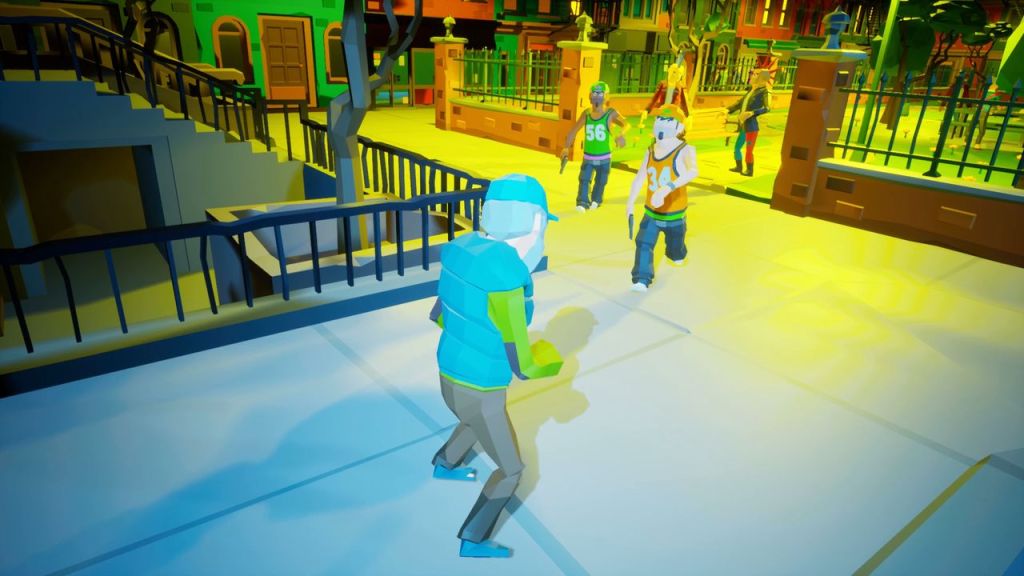
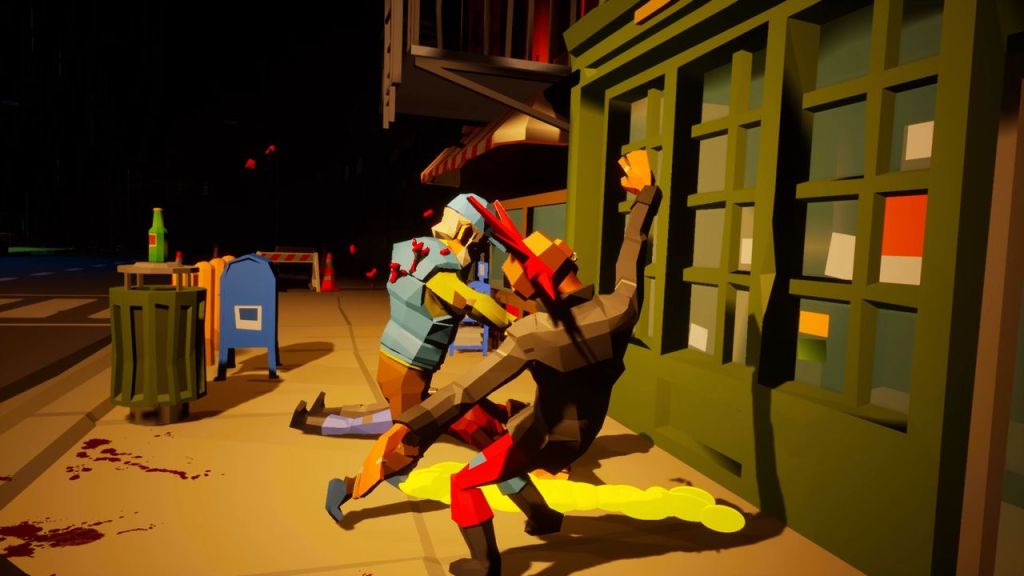
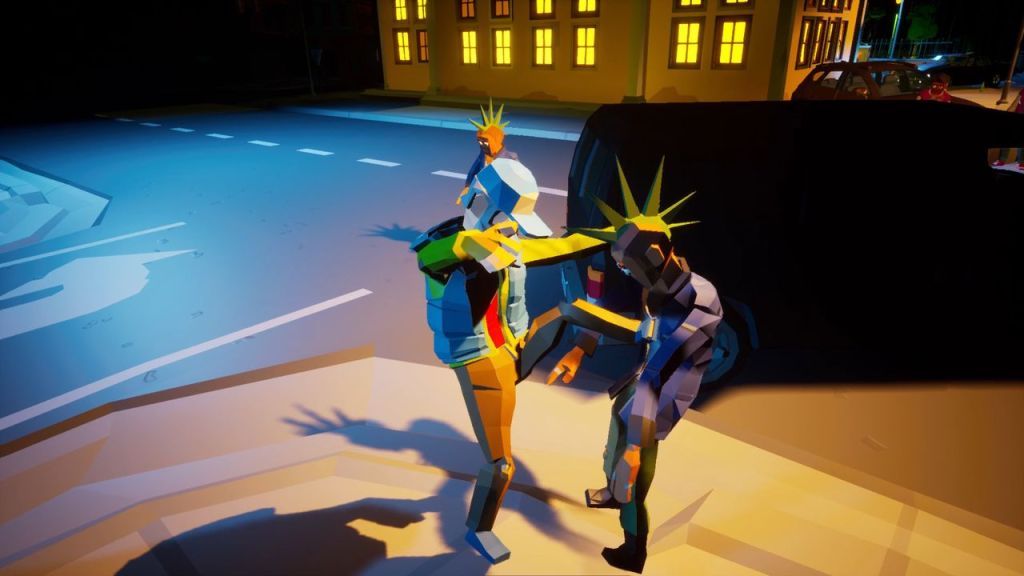
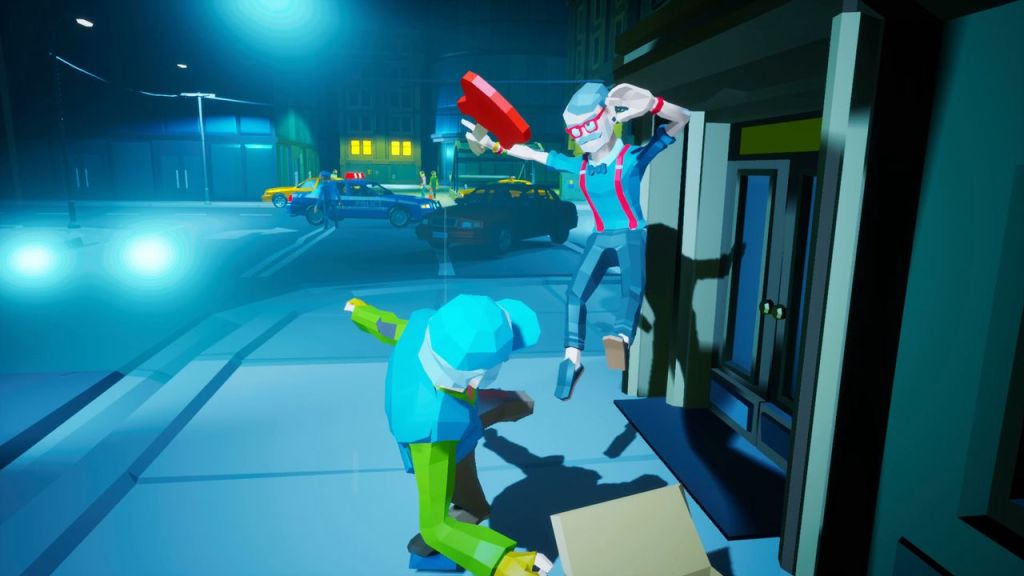
Overview – developed by Pinokl Games and published by tinyBuild, the stealth based murder puzzle Party Hard gets a sequel. Take the role of a masked killer, shutting down shindigs one at a time in Party Hard 2, with new kills, an intriguing storyline and buckets of pixelated blood. This release brings more to the experience while still maintaining the chaotic, violent fun of the original. This title is available for the PlayStation 4, Xbox One, Nintendo Switch and PC, with links to each version of the game available at the bottom of this review.

Disclaimer: before I get into the review, I would like to thank tinyBuild for providing the copy of Party Hard 2 used for this review. The provision of this title has not influenced the contents of this review, all thoughts and opinions contained within are my own. Please note, this content is intended for mature audiences, with violence, blood and sexual themes. Discretion is advised when proceeding with this review and the game in general.

Now with the introductions out of the way, let’s get into the review. I will be skipping discussion of the story as I feel the narrative must be experienced first-hand.

Gameplay – Party Hard 2 brings a mix of stealth, strategy and puzzle solving mechanics. As the masked killer, use ingenuity and cunning to eliminate the targets. However, the police are just a telephone call away, so be careful not to get caught or the killer will be hauled away. This will end the rampage and the party will go out with a whimper rather than a bang.

The game is made up of 16 total stages, each featuring a top down camera perspective at an angle, this allows for quick assessment of each area to plan out how to proceed. Each stage has a preset list of objectives that must be completed to progress, ranging from termination of designated targets, destroying specific items or simply wiping out everyone in sight.

The objectives are separated into four different categories with their own progression bar, each focusing on a different type of play style. Upon completing a stage, the player earns points which are added to the progress meter for each of the four objective types. The missions completed will affect the way that the player progresses, with unlocks at the completion of different milestones for each category.

Alongside the standard goals presented in each stage, are secret objectives that will provide great rewards for the player. These are as simple as killing several people in a combo, using stealth and avoiding capture by the police. There are many secret conditions to maximize the points earned in each mission that you undertake.

The player has the option of selecting two different characters at the beginning of the game, the Party Hard Killer and the Wannabe, with an additional two characters unlocked as the player progresses. The two starting characters have are almost identical, however, the Wannabe has increased stamina and health, while preventing the unlocking of items and achievements. This allows for players to experience the story while taking a casual approach to the game.

Each of the playable characters has a weapon, special skill and unique ability that can aid with solving puzzles. Both the Wannabe and Party Hard Killer have a knife, party vision ability and multi-kill skill, with the unlockable characters having their own unique load out. In game players can pick up items, interact with the environment and combine objects using a crafting system to create a variety of tools.

The most basic interactions are to activate objects to cause chaos, however, if the player wants to be creative then more interactions can be set up to create a chain reaction of death. For example, a shelf can be pushed over to kill a single target, whereas a faulty water cooler can be combined with an explosion, causing targets to panic and run into electrified water. The crafting system is fairly simple also, by mixing a pills and alcohol, the player can stun an enemy and carry them away for an easy kill.

Strategic implementation of character skills, environmental interaction and items is important to succeeding during each stage. The character skills for both starting characters are effective and useful, with a skill called party vision that allows the player to see targets and more alongside an ability called multi-kill. The party vision skill has unlimited usage, but the multi-kill is single use before needing to be recharged, this adds to the level of strategy required in each stage.

But use discretion with your blade, reckless use of the multi-kill and killing in general can be very risky. If a target is killed with witnesses to the slaying or a trap is set off near others, an alarm will go off that may alert police. If the alarm is green with an exclamation mark, then partygoers are simply startled, if a green phone mark appears the risk of being caught by the cops is minimal. Although if the phone marker is red, the police will actively search for the player and arrest them if found.

The police are not the only threat however, as some stages will have guards posted that can stun and even kill the player. These guards are stronger than regular entities and may attack the player on sight, this can slow down progress, interrupting the player as a trap is being set up or a target is being led to their demise. While the majority of guards can be eliminated or bypassed with ease, there are special invincible enemies that spawn, becoming a greater threat to progress.

The last thing I want to talk about is the oddities of Party Hard 2, throughout the game are moments that can be entertaining. These events include a dancing bear being called to a party, an alien invasion and running down others with motorized wheelchairs. These instances can elicit a few chuckles when first achieved but unfortunately can fall a little flat.

Now with the gameplay covered to a degree I am happy with while avoiding spoilers, I will be moving onto the other aspects of the game, starting with the controls.

Controls – the control method for Party Hard 2 is fairly simple. The thumbsticks are used for movement and camera controls, the face buttons and shoulders for functions and D-pad for item management. The movement and interaction inputs are fluid and work very well while using a Pro-Controller, but unfortunately the comfort level isn’t the same when using the Joy-Con controls while handheld or docked. This minor flaw isn’t a deal breaker as it is easy to adapt to the Joy-Cons over time.

Difficulty – The overall challenge and experience that Party Hard 2 presents is engaging and a lot of fun, but can be a cause for frustration. While characters can run, they are very slow, this is a big issue during gameplay as it is difficult to chase down targets and escape from cops who can run quite fast in comparison. This was made worse when using the Joy-Cons, due to the fact I found that my thumb would slip off the thumbstick or I would miss an input to quickly use an item.

The difficulty of the game does spike suddenly if a target can escape or the police are hunting the player, which becomes quite irritating if shortcuts and possible hiding places aren’t close by. This title features two difficulty settings, normal and hard. Having tried both difficulty settings, I was unable to see much difference between the two except for targets and enemies requiring more hits to eliminate.

Presentation – visually, Party Hard 2 utilizes a mix of 2D pixel art and rendered 3D models. This style works well enough, however, it does cause some issues during gameplay. When travelling around each stage, usable items, objects and even people can be obscured from view as the camera is zoomed out. The camera distance renders details hard to see when the switch is docked and even more so when played in handheld mode.

The second aspect of overall presentation for Party Hard 2 that I want to talk about is the story segments. In-between stages are animated transitions, telling the story for this title. Featuring aesthetically pleasing 2D artwork and voice acting that puts the narrative across in a way that is clear and easy to follow. The voice talent play their roles well, with the dialogue feeling natural and cohesive giving the impression that the interactions featured within are organic.

Finally I want to discuss the other sound design choices for this release. The soundtrack contains a diverse arrangement of musical styles, ranging from 80’s styled night club synth, to bass heavy funk and more modern electronica. The compositions featured contrast well with the environments and the minimal use of sound effects, providing a well-rounded experience overall.

Final thoughts – overall, I went into Party Hard 2 with limited experience of the previous release, having only played the first few missions of the original and was pleasantly surprised with what the title had to offer. Unfortunately I was unable to test the co-op gameplay, but I feel that the single player campaign is strong and that this is the biggest selling point for this release. Please note, there is additional downloadable content available to purchase, I was not able to try this out so I am unable to comment.

While I did encounter some minor flaws, with the challenging A.I. for the police/targets and the difficulties of the Joy-Con controls in both system modes. However, these issues weren’t significant enough to sour my enjoyment of the experience. I can happily recommend this game to those who had played the first entry in the game and to entirely new players.

In the end, I give Party Hard 2 a final score of 4/5. This is an enjoyable and challenging murder puzzle, featuring a well-constructed narrative, engaging gameplay and many creative ways to shut down parties in style. If you want to check this title out for yourself, links to each version of the game will be available below.

Link to Nintendo Switch version (HERE)

Link to PlayStation 4 version (HERE)

Link to Xbox One version (HERE)

Link to Steam version (HERE)

Link to GOG version (HERE)

Giraffe and Annika – Nintendo Switch Review

Overview – developed by Atelier Mimina and published by NIS America, Giraffe and Annika is a whimsical adventure, filled with wonder, mystery and a charming cast of characters. Explore the island of Spica, meet the inhabitants of the land and travel through the wondrous environments in this 3D adventure title. This adventure is available on Nintendo Switch, Xbox One, PlayStation 4 and Steam, if you want to check it out for yourself, links to all versions of the game will be at the bottom of this review.

Disclaimer: before I get into the review, I would like to extend my thanks to NIS America for providing the copy of Giraffe and Annika used for this article. The provision of this title has not influenced the contents of this review, all thoughts and opinions contained within are my own.

Now with the introductions out of the way, let’s get into the review, starting with the story.

Story – in Giraffe and Annika, take on the role of the young cat eared girl Annika, who has woken up on the mysterious Island of Spica. With no memory of how she got there, she explores her surroundings and encounters a boy named Giraffe, who says that he knows her and gives Annika the task of locating star fragments that are scattered across the island. What secrets does this island hold? Join Giraffe and Annika on this adventure and find out.

Gameplay – this title is a unique mix of 3D adventure and rhythm action battles. As Annika, you explore the island and traverse mysterious environments that contain many dangers, including perilous traps and spooky ghosts. During exploration, Annika will encounter enemies that seek to halt her progress and cannot be stopped so the only way to keep her safe is to avoid contact with these monsters.

While there is no way to protect the Annika from monsters, there are plenty of recovery points that can help the player to stay alive. The game is also quite generous with checkpoints throughout the adventure, this helps players of all ages to enjoy the experience and progress with little difficulty. Another part of the exploration is the collection mechanics.

Throughout the island, the player will find chests that contain images called Meowsterpieces, art that features cats or those with cat like aspects. Alongside the collectable art, there are many other items to obtain, including keys that open up new paths, new dresses for Annika and much more that the player can pick up on their adventures. The collectable aspect of the game is delightful, adding to the replay value and giving reasons to explore the games world in depth.

The second part of gameplay is the dynamic rhythm action boss battles, with each stage that Annika explores culminating in a musical battle. These battles are relatively simple, with the player moving Annika left and right, hitting the action button to catch notes, holding the button for extended notes and dodging damaging attacks. The rhythm stages are separated into three difficulty settings, providing a level of challenge for everyone.

There is a progression system in this title that gives Annika new skills and abilities as she clears the different areas. The skills that the player unlocks allow Annika to reach new areas and obtain collectables that may have been previously out of reach, adding yet more reasons for players to return to previously cleared areas.

The last thing I want to talk about is the character interactions and story segments. The interactions with characters during the game are separated into three categories;

  • Story – the narrative plays out using both manga style panel art, which uses beautiful illustrated works and animated cutscenes that are rendered using the in game engine.
  • Conversation – the player can talk to various characters that live on the island, who can provide hints, tips and even tutorials on how things work.
  • Request – some characters can give Annika objectives to complete in order to obtain items, cosmetics and more. These little side quests offer a nice distraction from the story and give even more reasons for back tracking and additional exploration of the island.

Now with the gameplay covered with enough detail to avoid spoilers, I will be moving on to the other aspects of the game, starting off with the controls.

Controls – the control method for Giraffe and Annika is fairly simple, with inputs that are easy enough for players of any skill level to pick up. There is however a minor flaw to how the game handles. The movement of Annika feels a little slippery as any direction on the thumbstick can send her running at full speed, which is a little frustrating when trying to perform precise movements and platforming.

Difficulty – there is a fairly low curve to the difficulty of this release, which is good as Giraffe and Annika appears to be targeted towards a family demographic. The regular checkpoints, abundance of recovery points and minimal penalties make this game accessible for players of all ages and skill levels. The main aspect of the difficulty is the rhythm action segments, with three settings of easy, medium and hard that increase the challenge at a rate that gives all players a chance at success. 

Presentation – the visual style for this release is adorable, with cute characters, spooky yet charming ghosts and vibrant artwork for the story segments. The graphical quality of the game is quite nice for the Nintendo Switch, working well in both docked and handheld play, however there is one minor issue. There are occasional frame drops that occur at random points, I am unsure if it is due to the hardware limitations of the machine, but they are an inconvenience when trying to traverse platforms.

The sound design is wonderful and whimsical, with music that fits each setting, ranging from atmospheric and creepy music in underground caves, to calming and gentle soundscapes. There is a lack of voice acting here, but I feel that it doesn’t detract from the overall experience. The way that the sound effects, occasional voice clips and soundtrack contrasts with the visual style gives this release personality and an identity of its own.

Final Thoughts – overall, I had a delightful time playing this game, the minor flaws of control and occasional frame drops were frustrating at times but not a deal breaker for me. There is one thing I wish was different however, and that is the length of the game. I was able to finish the main story of Annika and Giraffe in a few sessions while researching the game for this review.

The other content in the game, with the collectables, Meowsterpiece chests and repeatable rhythm stages did add more reasons to return to the game upon story completion, which made me very happy. I can happily recommend this to everyone, if you are looking for a game to play with kids, want a simple laid back adventure to relax with or just fancy playing as an adorable cat girl, I think this is worth playing by everyone.

In the end, I give Giraffe and Annika a final score of 4/5. A truly wonderful and whimsical adventure full of personality that may not be the longest experience, but what it lacks in length, it certainly made up for it with fun. If you want to check this game out for yourself, links to all versions will be below.

Link to Nintendo Switch version (HERE)

Link to PlayStation 4 version (HERE)

Link to Xbox One version (HERE)

Link to Steam version (HERE)
Nexomon: Extinction – Nintendo Switch Review

Overview – developed by VEWO Interactive and published by PQube, Nexomon: Extinction is a monster catching RPG, set in a vibrant world, filled with cute/creepy monsters, intense battles and challenging quests. This game is available for the Nintendo Switch, PlayStation 4, Xbox One and Windows PC. If you have interest in picking this title up, links to the game on all platforms will be linked at the bottom of this review (where available).

Disclaimer: before I get into the review, I would like to extend my thanks to PQube for providing the copy of Nexomon: Extinction used for this article. The provision of this title has not influenced the contents of this review, all thoughts and opinions expressed within are my own.

Now with the introduction out of the way, let’s get into the review, I will be giving a very brief plot outline as I don’t want to risk spoiling the narrative for players. So with that being said, it’s time to start the review.

Story – in Nexomon: Extinction, take the role of a young person who has been chosen to get their first monster and join the guild of tamers, setting off a chain of events that could change the world forever. As part of the newest batch of Nexomon tamers, do you have what it takes to capture the many beasts of this land, becoming the greatest tamer and saving the world from extinction?

Gameplay – Nexomon: Extinction, follows the traditional JRPG formula that made other games of the genre popular. Featuring a top down viewpoint, a wide variety of story and side quests, intense turn based battles and over three hundred monsters to collect.  Similar to other games of the genre, this title features a large open world for the player to explore, with new paths that open up as the story progresses, bringing new creatures, to capture and tame. But be aware, this title is single player only, with no plans for multiplayer at this point in time.

After the initial story segment, the player gains their first monster and is introduced to the core mechanics of being a Nexomon tamer, with tutorials that teach the basics of battle and catching monsters. The battle is like most RPG titles, with turn based combat in a one-on-one setting, where the player will battle until the energy of their enemy is depleted, they attempt to flee or the monster is captured.

The major difference in the combat that separates this title from games like Pokémon, is the way that attacks work. For each attack, the monster uses a portion of stamina, with stronger attacks using more and weaker attacks using less. This is both a positive and negative for the experience, as the stamina system adds an additional layer of strategy to combat encounters, since players must decide between using a weak attack when low on stamina or risk defeat by trying to recover enough points for a heavy attack.

The second issue I had while playing for this review was the lack of breathing room between turns. In the event that a party member is defeated, another is chosen to fight, after this the enemy will attack immediately, with the potential for the monster to be defeated in a single blow. This means that an entire party of weaker monsters can be decimated by a single opponent, giving almost no chance of escape unless the player is lucky enough to have the enemy miss with an attack.

There are a couple more things I wish to discuss about the combat system before moving on, the tamer battles and elemental attribute system. First are the tamers scattered around the different areas, with markers above their heads to show their status giving the option to avoid battles in order to heal. However, there are some battles dictated by the story, making them unavoidable. Tamer battles function identically to wild battles, with the same issues, which is unfortunate as these problems can cause a lot of frustration.

Last is the attribute system, which functions similar to other JRPG titles, with weaknesses and resistances that can dramatically shift battle. For example, fire is weak to water, water is weak to grass and grass is weak to fire. This adds another element of strategy and gives party balance a lot of importance, as a poorly balanced team can lead to an increased level of difficulty.

Now with the combat covered in a way that I am happy is spoiler free, let’s move on to the capture system and other gameplay mechanics.

In order to capture a Nexomon, the player must use a device called a trap, first weakening the target before trying to catch the monster. When deploying a trap, a percentage will show the probability of a successful capture. This percentage can be increased by damaging the target, giving them food, the type of trap used and more. When the trap is deployed, a series of button prompts will appear on screen, although I am unsure how the button prompts influence the chances of a successful catch.

At the end of an encounter, if the battle against wild/tamed monsters has been won, the player will earn coins and experience points. Experience is awarded to the monsters that were active in that encounter, leveling the monster up, giving new skills and even evolving some at specific levels. Coins are used as the currency for the world, allowing the player to buy recovery items, additional traps and much more, with different prices and items available depending on the area and/or story progression.

Outside of the basic monster catching and battling, the player is also given quests to complete throughout the experience. There are two types of quest that a player must complete, story quests that must be completed to progress the narrative and side quests that are optional. The way that players can see if there is a quest available in that area is by a star mark above an NPC character, these appear throughout the games overworld, allowing objectives to be easily found.

Whenever a quest is completed, the player will be given a reward, with the possible rewards ranging from a bundle of coins, to special Nexomon traps, rare items and much more. The story and side quests are rewarding to complete, with some featuring quirky interactions and self-aware commentary. Some of the objectives will lead to additional quests to complete, with more challenging requests and better rewards offered each time.

The last thing I want to discuss before moving on is the open world style of exploration. The world of Nexomon is made up of several thematic regions, including a beach, a haunted forest and a frozen cave. Each area features monsters and characters that fit that zone, with ghost type monsters in a graveyard and water type monsters in the frozen tundra. These environments have their own charm and personality fleshing the world out.

Now I have covered all parts of the game I feel comfortable doing so while avoiding spoilers, I will be moving onto the other aspects of the game, starting with the controls.

Controls – Nexomon: Extinction has a very simple control method that works well for the most part, with simple inputs to select options and an easy to pick up control method. The only issue I had with the controls in general was the slight delay to overworld movement. As player movement follows an invisible grid, holding the button for too long can cause the player to move too far, walking into encounters. Aside from this mild inconvenience, the controls work well both docked and undocked.

Difficulty – on a personal note, I am unsure how to talk about the difficulty, since the issues and mechanics I mentioned in the gameplay section can make the experience difficult in the early game. The challenge can be lessened depending on the first choice of monster, taking time to grind for experience to level the party and earning coins for recovery items. There are many beginners’ traps in the game, but these challenges can be overcome with enough time and patience.

Presentation – the visual style for Nexomon: Extinction is reminiscent of classic JRPG titles, with a top down viewpoint, chibi style character sprites and anime style portraits during character interactions. The art is fantastic and the best part of the experience is the monster designs, with each Nexomon having a unique look and style. The performance in both docked and handheld play is very good, with smooth animations, clean crisp visuals and vibrant colors.

The soundtrack for this release is filled with thematic compositions that fit each situation, with music that goes from bright and breezy while looking out at a beach, to dark and spooky when surrounded by ghosts. There is an absence of voice acting, with all reactions either displayed via the characters portrait or a bubble over the head. The lack of voice acting isn’t an issue as the game works well with text being the main way to convey the narrative.

Final Thoughts – overall I would say that my time with Nexomon: Extinction was a bit of a mixed bag, I had fun, but the flaws with combat did hinder my enjoyment at times. The worst of which was the full party kills that occurred often during the early sections of the game, which are not fun at all and I feel it could become a major problem for players.

However, I have more positive than negative feelings towards this release, the effort and quality that has been put into this title is worthy of praise. The monsters are creative, the world is vibrant and the self-aware jokes/references were very entertaining. I can recommend this release to fans of classic JRPG titles, Pokémon specifically, but the difference in gameplay style and game mechanics may be a little jarring for some.

In the end, I give Nexomon: Extinction a score of 4/5. A challenging and interesting take on the monster catching RPG genre, with a roster of cute and creepy monsters, that each possess their own unique look and charm that add to the single player experience. If you want to check this game out for yourself, links to each version will be available below.

Link to Nintendo Switch version (HERE)

Link to PlayStation 4 and Xbox One version (HERE) – links out to official website

Link to Steam version (HERE)

Is It Wrong to Try to Pick Up Girls in a Dungeon? Infinite Combate – Nintendo Switch Review

Overview – developed by MAGES and published by PQube, Is It Wrong to Try to Pick Up Girls in a Dungeon? Infinite Combate, is a dungeon crawling action RPG based on the anime series that shares the same name (commonly known as DanMachi). Featuring art and visuals directly taken from the show that it is based on, this title is available on the Nintendo Switch, PlayStation 4 and Steam service. If you want to check this title out for yourself, links to the different versions of the game will be available at the bottom of the review.

Disclaimer: before I get into the review, I would like to thank PQube for providing the copy of the game used for this piece. The provision of this title has not influenced the contents of this review, all thoughts and opinions contained within are my own.

So with the introduction out of the way, let’s jump into the review, Starting off with a brief summary of the plot. Please note, I will be calling this game DanMachi Infinite Combate throughout, this is because this shortened name is the most commonly known title for this franchise

Story – DanMachi takes place in the city of Orario, a city where the gods and goddesses of the world came down to in order to experience the hardships of humans. After limiting their powers, they offer mortals their blessings, giving them the power to fight monsters in a treacherous labyrinth known as the Dungeon. As each adventurer is given a blessing, they become part of the house of that deity, known as a Familia, offering guidance and services to adventurers as they battle monsters, increasing their power and ability level, similar to how traditional RPG games function.

The game follows the story threads featured in the anime series that it is based upon. DanMachi Infinite Combate follows the adventures of Bell Cranel, a young adventurer who is the sole member of the Hestia Familia. Alongside Bell’s story are the exploits of Aiz Wallenstein, a renowned swordswoman of the Loki Familia. Those familiar with the anime will know of the characters and plotlines, however this adaptation will highlight new events that expand on the existing storyline.

Gameplay – DanMachi features a mix of real time dungeon crawling combat, action RPG mechanics and visual novel aspects, creating an interesting and enjoyable experience. The game features two storylines that play out very differently, separated between the viewpoints of Bell Cranel and Aiz Wallenstein, with each character having their own chaptered narrative. Each chapter features a set of story quests that progress that specific branch of the story, alongside smaller quests that allow the player to farm resources that the player can use in the shops and other areas of the game.

Before jumping into a quest, the player has several options to choose from, including interaction options where you can engage with other characters in a variety of different ways. Aside from the character interactions, the player can access several menus, with quest menus, a market and various upgrade options. Before I get into the intricate elements of the menus and features of the game, I will be taking some time to talk about the way that the quests and dungeon exploration functions.

The dungeon itself is made up of numbered floors, containing monsters to fight, treasure to collect and branching paths to explore, all presented through a top-down view point, like similar games of the genre. The layout of floors will change depending on the quest that is being played, with some floors having the same designated number, but containing a different floor plan. When starting the quest, the player will be given an objective to complete, including the player needing to collect specific item drops, reaching a specific floor of the dungeon and eliminating a specific number of foes.

While exploring, battling monsters and collecting loot, resources are picked up from treasure bags and defeated enemies. These resources are;

  • Valis – the currency used to purchase items from the market, new equipment and much more. Valis can be collected from enemy drops or treasure bags, while also being given as quest rewards.
  • Skill Points – these points are earned by defeating the many foes that are encountered in the labyrinth. Use skill points to obtain power-ups and upgrades to improve player stats in the Familia menu under skill sheet.
  • Consumable items – these items recover lost health, magic points and provide others buffs and effects for the player. They are given as quest rewards and by collecting treasure in the dungeon.
  • Drop Items – these items are dropped by enemies upon being defeated. These items can be sold in the market for Valis or used to apply upgrades to the players gear.

Now with the details for resources covered, it’s time to move on to the other aspects of the dungeon and the way quests function.

The movement and combat inside the dungeon all plays out in real time, with the player having access to a quick combo attack, heavy power attack and magic/special abilities. There is also a partner system that allows the player to gain buffs, ability boosts and special support skills. The support partners and player abilities available will vary depending on the story progression and quest being played. This shows with Bell being alone and without magic at the start, whereas Aiz has access to magic, skills and support with her first chapter.

The combat itself works well in this game. However, the melee combat has slight inconsistencies. At the end of a combo or when using a heavy attack, the character Bell is unable to move for a moment when the animation ends, leaving the player open to attacks from all directions. This can be frustrating as a poorly timed attack may lead to death, giving an element of risk to any encounter with an enemy. The only way to compensate for this is effective use of the dodge roll mechanic, although it still has the potential to throw the player into danger.

The smart use of magic, skills and support members can get the player out tough spots. The spells use up MP which is shown below the health bar, the skills and support use their own special meter. The magic bar can be recovered by using items, whereas the individual bars for the special abilities are charged by dealing damage to enemies adding a level of strategy to dungeon combat. Even with the flaws of the melee combat, the magic and skill system can balance out some of the difficulties that players face, making the experience more enjoyable as a whole.

Succeeding at a quest will bag the player the rewards listed in the quest outline, with story quests showing improvements to the players overall stats. All story and side quests can only be completed once, although there are practice quests that can be played as much as the player wishes, but these quests don’t have rewards. The upside to practice quests is that they can be repeated to gain more resources and money for those who wish to grind in RPG games. While you will reap various rewards for completing quests, failure is an entirely different story.

During a quest, there are two ways to suffer a game over while in the dungeon, the first is being defeated by the enemies during combat and the second is running out of time in a quest. Upon defeat, the player will lose all collected items, money and skill points. There is a way to escape the dungeon without being defeated, but it comes at a price. If the player chooses to use the return function, they will be kicked out of the current quest, dropping all collected resources but a portion of skill points are saved.

The last part of the gameplay I want to talk about is the upgrade system, which is used to boost the players overall abilities and equipment. In the Familia menu, the player can use skill points to enhance player stats which include attack power, health and negative effect resistances. In the market the player can improve their equipment, using item drops from monsters to improve the overall quality of the gear, helping the player to gain a better advantage in the dungeon.

Along with improvements that can be made, weapons can be enhanced with attributes applied to them. The attributes include the four elements of Earth, Wind, Fire and Water, with each having their own strengths and weaknesses against each other. Secondly, there is a light and dark attribute that can be applied to weaponry, these two attributes are weak to one and other. The elemental enhancements that can be added to weapons give players a reason to collect weapons, adding different power-ups to each depending on the situation.

Now with the gameplay covered to a point that doesn’t spoil anything, I will be moving onto the other aspects of the game, starting with the difficulty.

Difficulty – DanMachi Infinite Combate has a gradual difficulty curve, getting progressively tougher as the story continues. The monsters get more powerful and will increase in number with some quests, making some of the time limits tougher. The challenge of tough dungeons can be alleviated by grinding skill points and money, allowing the players to purchase better equipment and enhance their weapons/stats much faster.

Controls – the controls for this release are simple and easy to pick up, with the face/shoulder buttons controlling combat and skill functions, the thumbstick controlling character movement and the D-pad for consumable items. All inputs are smooth, with no lag or difficulty of use. The game handles well in both docked and undocked modes, with no change between the Joy-Cons and pro controller, giving a comfortable gameplay experience.

Presentation – the visual style for DanMachi Infinite Combate is aesthetically pleasing, with the charming environments, a cute chibi style for the 3D models and beautiful 2D art that is taken directly from the anime/manga. Unfortunately, while pleasing to the eye, the 3D graphics that are used are a little lackluster compared to other games in the same genre, although this may be due to the hardware limits of the Nintendo Switch system. During my playtime for this review, the performance was smooth and the frame rate was consistent throughout, this was present in both docked and handheld modes.

The soundtrack for this release is delightful, with bright, happy instrumentation in the menus, alongside more intense and excitable compositions while inside the dungeons. These two musical styles contrast well, and the music implemented throughout the story fits each section wonderfully. The voice over for this game is purely Japanese, with the voice cast from the show reprising their roles, adding to the quality of the overall production and a wonderful touch for fans of the series.

Final Thoughts – I had a delightful time playing DanMachi Infinite Combate, the gameplay was engaging and the story compelling. Having watched the anime, it was wonderful to see the events that went on between each episode, pulling me into the experience that much more. The upgrade and progression system is rewarding, with each quest giving a sense of satisfaction upon completion, both in and out of the story mode.

The overall quality of the game is high and I commend the development team at MAGES, who did an excellent job at bringing the world of DanMachi to the Nintendo Switch. However, I did find that there were some minor inconsistencies to the combat with Bell and the slightly dated 3D models. While I personally had no issue with the combat or quality of the graphics, they may be a deal breaker for some, as the risk can outweigh the reward in battle and the visuals may be unappealing to some players.

In the end, I give Is It Wrong to Try to Pick Up Girls in a Dungeon? Infinite Combate a final score of 4/5. The story is crafted wonderfully, expanding the narrative of the anime with additional details that fill some of the gaps between key events. The gameplay has the right level of difficulty to it, with rewarding quests, challenging combat encounters and a variety of upgrades to fit any play style. If you want to check this game out for yourself, links to the different versions of the game will be below.

Link to Nintendo Switch version (HERE)

Link to PlayStation 4 version (HERE)

Link to Steam version (HERE)
Double Kick Heroes – Nintendo Switch Review

Overview – developed by Headbang Club and published by Plug In Digital, Double Kick Heroes is a Heavy Metal rhythm action title, set in a post-apocalyptic world. Riding on the back of a heavily armed car called the Gundillac, open fire on the hordes as the drummer of a metal band. This title will be rocking out on the Nintendo Switch, Xbox One and PC, links to buy the game will be at the bottom of this review.

Disclaimer: before I get into the review, I would like to thank the representative for Hound Picked Games who provided the copy of Double Kick Heroes used for this review. The provision of this title has not influenced the contents of this article, all thoughts and opinions contained within are my own.

So with the introduction out of the way, let’s get into the review, I will be skipping the Story section as I feel it should be experienced firsthand.

Gameplay – Double Kick Heroes is a rhythm action title similar to other music titles on the switch, including Taiko No Tatsujin and Eat Beat Deadspike. As the drummer of the band, use either button controls or motion controls in order to follow along to the beat, scoring points and building up a combo meter. With each successful beat, the Gundillac that the band rides upon will fire its guns, mowing down the hellish hordes that try to reach the band.

Each stage features a kick track that powers the basic weapon, chaining each attack together to gain a combo multiplier. As the game progresses, the player gets new weapons, the weapons have increased damage output which is maintained by not missing a beat. Additionally, a second track will be added to later difficulty settings, granting the player access to a special charged up grenade attack, with a third track added for a devastating sniper strike at the highest difficulty.

During stages, mini boss battles occur, with powerful enemies that must have their energy meter drained before being defeated. Alongside the mini boss enemies, the game features powerful and deadly boss battles, with the monsters chasing the player down, attempting to murder them. If the player takes too many hits in any stage, the Gundillac explodes and the player dies, however, in boss battles the player dies if the track ends without defeating the boss, adding to the risk.

Now, there are a total of four game modes available to play, each with the option of five difficulty settings. The playable modes are as follows;

  • Arcade – play through the soundtrack of 30 rock/metal tracks, ignoring the story if you just want to jump into the action. Perfect for practice and to enjoy the music.
  • Story – play through the plot of the game, learning more about the members of the band and the world around them as they battle the monstrous threats that block the road ahead.
  • Hellgate – play through a selection of guest tracks, with songs from Gojira, Psykup and more. Focus on earning a high score as you enjoy the special inclusions.
  • Fury Road – a score based, challenge mode with a rogue-like twist. Play through an endless gauntlet of songs, earning power-ups, skills and items with each stage completed. There are two settings for this, Daily Fury, with a new challenge for players to take on. The second mode is Endless Fury, play through the endless randomizer, trying to get the best possible score.

All four gameplay modes offer different experiences for players, with the Hellgate and Arcade modes having the option to jump in and out to play any song that has been unlocked.  These casual modes are great for playing songs while taking a break from the story, or just wanting to replay a previously cleared song. The story mode is a mix of Mad Max and a demonic apocalypse, with references and parodies connected to metal bands, movies and popular culture that are a delight to behold.

Fury Road is the last mode and by far the most strangely implemented. The two options of Daily Fury and Endless Fury make sense, as a new challenge each day offers a reason to come back to the game on a regular basis. The issue with the daily challenge however, is the lack of a global leaderboard as each new challenge is the same for all players worldwide. A ranking system could have been used to build a competitive scene for the game, possibly bringing more prominence within the rhythm gaming community.

There is a selection of options available for players to experiment with, this allows for customization of the gameplay experience. The options include difficulty options, audio feedback and gameplay modifiers. The flexibility in the settings menu provides a level of accessibility that some rhythm games lack, giving everyone a chance to enjoy the game, regardless of their skill level and capabilities.

Now, with all the gameplay elements covered without spoiling any key details, I will now be moving onto the other aspects of the game, starting with the difficulty.

Difficulty – the difficulty of this title is separated into 5 categories, with the lowest having a single rhythm track and the highest having three. The settings in-between have at most two beat tracks, which is where the real challenge is. The difficulty builds over time, with faster rhythms and more complex patterns, what does make the higher levels tougher is the combo reset, as setting 3-5 will reset the combo to zero when a note is missed.

The last things I want to mention about the difficulty are the steering and overheat systems, steering can be set to auto or manual with the player having to control the car themselves, making bosses tougher. The overheat system is a punishment for players trying to button mash in order to hit the notes, if buttons are hit without notes in the target zone, a red bar fills which locks out hitting notes during overheat. Overheat can be turned off, eliminating the punishment for those who struggle.

Controls – Double Kick Heroes has two control methods, each with their own positives and negatives. The first method is the button/trigger setting, using Joy-Cons and the Pro-Controller. The standard method is the easiest way to play the game, however, there is occasional input lag which caused the rhythm to be thrown off and causing a life to be lost or in some cases death. The second method is motion controls, which is unfortunately the most flawed area of the game and put a real damper on the experience.

The motion controls are flawed and a real issue. During play with the Joy-Cons, the drumming motion can cause dropped notes, ghost inputs (inputs that occur without moving) and duplicate strikes that will mess up the combos. I tried my best to use this method a few times and really struggled, I used several pairs of Joy-Cons and even tried the four Con setup with even less success. With other titles that employ motion controls well like Gal Metal, this is a real disappointment and makes the game harder.

Presentation – the visual style for this release is simple pixel art, which works well as there can be a lot of sprites on screen at once along with the large boss sprites. The enemy designs are varied and creative, with both the mini boss and main boss enemies being the most creative, including a giant zombie dinosaur, a murder truck and hellish demons. The characters have a lot of charm to them, with a unique look to each of them adding to the experience, along with homages to and parodies of known musicians and pop culture figures, which I appreciated as a fan of Heavy Metal.

Now let’s get into the soundtrack for Double Kick Heroes. This is comprised of a mixture of Heavy Metal genres and styles. The main soundtrack goes from hard rock with electronic samples sprinkled throughout, to full on balls to the wall thrash/death metal. The shift in musical tones caught me of guard during play, but I enjoyed the selection of tracks by the games composers. The guest tracks were a delight too, I had only heard of the band Gojira before playing this game, but after playing more of the bonus songs, I gained an appreciation for bands that I wouldn’t have known of otherwise.

Final Thoughts – I enjoyed most of my time playing Double Kick Heroes, this was due to using a controller mapped to a custom layout. Unfortunately, the motion controls were not enjoyable at all, causing frustration, irritation and it soured the experience to the point I had to stop entirely for a time. The only other issue that I had was the lack of global leaderboards. Personally I feel that the omission of a ranking system is a missed opportunity, which would have given this game a chance to gain a strong presence in the console based rhythm action community.

I can recommend this game to anyone that enjoys rhythm games. The accessibility of the gameplay, the charm of the character designs/references and the soundtrack are all delightful choices. As mentioned above, the only issue that I think could put people off is the flawed motion controls, which is the biggest disappointment. I do hope that more guest songs will be added in the future, as I believe an expansion to the playable songs give this game additional replayability.

In the end, I give Double Kick Heroes a score of 4/5. A solid and challenging rhythm action title, featuring a rocking soundtrack, creative character/enemy designs and a slew of heavy references scattered throughout the experience. If you want to pick up this release, links to purchase the game are below.

Link to Nintendo Switch version (HERE)

Link to Xbox One version (HERE) – Available August 28th

Link to Steam version (HERE)

Link to ITCH version (HERE)

Link to GOG version (HERE)

Megadimension Neptunia VII – Nintendo Switch Review

Overview – developed by Idea Factory and Compile Heart, with publishing handled by Idea Factory International, Megadimension Neptunia VII is a 3D dungeon crawling RPG filled with action, adventure and references to classic video games. This title features beautiful anime artwork, a delightful soundtrack and an all-star cast of voice talent, released previously on PlayStation 4 and the Steam service, Mega Dimension Neptunia VII makes its debut on Nintendo Switch. Links to all versions of the game will be at the bottom of this review.

Disclaimer: before I get into the review, I would like to thank Idea Factory International for providing the copy of Megadimension Neptunia VII that was used for this review. The provision of this title has not influenced the contents of this article, all thoughts and opinions expressed within are my own.

To celebrate the launch of Megadimension Neptunia VII on the Nintendo Switch, a special three week discount of 20% will be active for the Nintendo Switch version, alongside a special physical release through Limited Run Games. So with the introduction out of the way, let’s get into the review, I will be the giving very brief plot details as I feel the story must be experienced firsthand.

Plot – the plot for Megadimension Neptunia VII is focused on the adventures of the two sisters, Neptune, the goddess and protector of Planeptune and her sister Nepgear. After finding a mysterious box, Neptune and Nepgear are pulled into the Zero Dimension, a ruined land under threat from beings known as the Dark CPU. Upon meeting a mysterious girl called Uzume Tennouboshi, a tomboyish young girl who is locked in battle with the Dark CPU, hell-bent on saving her home from destruction.

Gameplay – the majority of gameplay in Megadimension Neptunia VII is split into three sections, dungeon exploration, objective/quest completion and turn based combat. I will be talking briefly about the various aspects of gameplay, this is due to the many complex mechanics that this title features, along with some moments that I don’t wish to spoil. The first thing I want to talk about is dungeon exploration.

Each zone in the game is set in a themed environment, with some containing several routes, alternate paths and hidden objects. Here the player can freely move around the dungeon environments, jumping over obstacles and seeking out treasure. The player has a party made up of between one to four members, with the member chosen as the leader being the one that roams around the dungeon areas.

When exploring the different locations, the player will encounter monsters that wander the tight corridors and open spaces, danger can be avoided or faced head on. If an enemy spots the player, they will charge, if contact with the player is made from behind or during an action, the enemy gets an advantage. If the player presses the attack button and strikes the enemy, the player gets an advantage. If contact is made without attacking, regular combat ensues.

The enemies that reside in each environment can be specific to that area, with space invader style monsters in a ruined city and visual novel styled enemies in a subway/arcade. This variety of enemies keeps the exploration of dungeons fresh and exciting during play. Outside of the dungeons, the player must travel to designated point on an overworld map, with points separating each zone. During travel, there is the possibility of random encounters, which must be cleared or escaped before continuing.

The combat in Megadimension Neptunia VII is turn based, with both characters and enemies taking their respective turns in a predetermined order. During each turn, players have limited movement around the battlefield, have the ability to attack, defend, use skills, items and special transformations (which I will mention later). When attacking and using skills the player has a range marker, showing the enemies that can be attacked, with the possibility to target multiple enemies.

When the player uses a standard attack, they can chain multiple attacks, with the options for standard, rush and power attacks. The basic weapons have the ability to combo three attacks together in battle. When new weapons are obtained, the combo options can change, altering available attacks, number of combo attacks and the basic range of attack. When the player levels up, new attacks can be learned that can be set in a designated combo menu both in and out of dungeons.

The skills that the player can use include attacks, stat boosts and recovery abilities. Each skill uses SP to activate the skill, with varying amounts required to use each ability. Just like the combo attacks, as each party member levels up, new skills are learned at different points, improving the characters repertoire over time. There is a variety of abilities available to the party members, giving flexibility to the possible strategies that players can have access to.

The player party can be customized with a lot of depth, with a mechanic called Lily Ranks. Lily ranks grant characters in the party skills and passive abilities for a coupling with other characters. To couple two characters, one is set as the lead character and the second as the support, these characters can be switched during combat encounters, allowing for characters to jump in and out of combat freely. The last part of the party/combat system I would like to discuss is the Drive Gauge.

The drive gauge serves several purposes, the most common are the Formation Skills and HDD Transformations. Formation skills require the party to maneuver into a position that surrounds the enemy, allowing a strong attack to be used, potentially destroying a shield on the enemy or dealing a heavy blow. Formation skills use the Drive Gauge to execute all skills, with appropriate planning the player can execute several formation skills against challenging foes.

The second most common use of the Drive Gauge is the HDD transformation, allowing the player to transform each party member into a powered up version of their character. Transforming each individual character uses a single charge of the meter, which is charged by dealing successful hits on enemies, with higher combos yielding more charge for the gauge. The transformations and formation skills offer many combat options, giving the core gameplay a lot of depth and flexibility.

When combat encounters are concluded, the players earn experience points and credits with occasional item drops as rewards. Experience points level up the player, giving new skills, powers and more. Credits are used in the in game shops, allowing for players to purchase provisions, weapons and other important tools. The last reward system is the challenge system, operating both in and out of combat, by completing milestones and character specific milestones, stat boosts and bonuses are applied.

Finally, I want to talk about the quests and objectives. The story objectives are made up of event and conversation markers, these markers are scattered throughout the dungeons and on the overworld map. The markers for these points of interest are very useful, providing simple and effective guides for players to find the next objective. Quests are accessed by going to guilds in the game world, offering additional missions and objectives for the player, rounding out the overall experience.

At the most basic core level, Megadimension Neptunia VII is an accessible and fun title. The simplicity of combat, exploration and menu navigation provides an experience that players both old and new can enjoy. Now with the gameplay portion covered spoiler free, I will be moving onto the other aspects of the game, starting with the controls.

Controls – the controls for Megadimension Neptunia VII are simple yet accessible, with the movement and combat controls being responsive and free of input lag. The movement is covered by the thumbstick and the combat menus are operated with the face buttons. The clarity of button prompts is clear, with easy to read inputs in both docked and undocked play, with no issues at all when playing with Joy-Cons or Pro Controllers.

Difficulty – there is a gradual difficulty curve to this release, with the challenge being dependent on the time taken to level up the party. If the party isn’t leveled enough from battling monsters, the boss battles are much more challenging, potentially leading to multiple party wipes. Unfortunately, there are limited resources and save points at the beginning of the game, although there are items that can be obtained to ease this for free as DLC in the digital content store.

Presentation – the overall look and visual presentation for Megadimension Neptunia VII is colorful and vibrant. However, the graphical performance does have some flaws. When playing the game in handheld mode (the docked unit ran smoothly during play), there can be some drops in framerate, although these can be fixed by reducing certain graphical effects. Other than the minor performance issues the 3D models, environments, animated cutscenes and 2D anime style portraits are all aesthetically pleasing, given the hardware constraints of the Nintendo Switch.

The story segments use a visual novel style, with text on screen and art of the characters, this works very well as there is an English dub and native Japanese voiceover for important moments. The English dubbing is well acted, using a cast of new and returning voice actors, maintaining the quality and consistency of the previous releases in the Neptunia franchise. The cast includes Melissa Fahn (Boruto/Naruto), Xander Mobus (Persona 5/Fate) and Laura Post (Brand New Animal), with each VA giving an outstanding performance in my own personal opinion.

The music for Megadimension Neptunia VII has a mix of high intensity electronic/rock music. The heavy sound is contrasted with soft and gentle compositions using a variety of instrumentation, from piano and bright synth, to a music box styled sound that can be very soothing. Some music tracks utilize vocals alongside the melodies to wonderful effect, making the soundtrack a delightful accompaniment to the narrative and action.

Final Thoughts – I had a wonderful time playing Megadimension Neptunia VII for this review, losing many hours in the experience as I got swept up in the twists and turns of the story. The characters, setting and environments pulled me in, with an engaging cast of characters and the references to classic games/consoles brought a smile to my face. The action and narrative is balanced perfectly, with the flow of the gameplay between the two having few drops, however if the player wishes to only focus on the action element, then the story can be skipped.

I would happily recommend this game to both new fans and returning ones. The pacing and flow is suitable for players of any skill level, with the ability to ease the difficulty during the opening part with free DLC bundles of essential items. The additional content that can be downloaded also adds to the value of this bundle, with costume packs, additional characters and special items. The only flaw that may put players off is the minor performance flaws, which aren’t serious issues but can be inconvenient when sudden frame drops occur.

In the end, I give Megadimension Neptune VII a score of 4.5/5. Both the narrative and core gameplay are enjoyable, with the character progression and reward system being very rewarding. This is an excellent release for the Nintendo switch and I hope that more entries in the franchise will appear on the system. If you want to check this title out for yourself, links to all versions of the game will be below.

Link to Nintendo Switch version (HERE)

Link to PlayStation 4 version (HERE)

Link to Steam version (HERE)
Darius Cozmic Collection – Nintendo Switch Double Feature

Overview – developed by M2 and published by ININ Games/Strictly Limited Games, the Darius Cozmic Collection Arcade and Cozmic Collection Console hit the Nintendo Switch and PlayStation 4. These compilations feature a selection of titles from the legendary scrolling shooter franchise. The Arcade version features three games alongside regional variants of two entries, the Console version features four games alongside variants of each release. Links to purchase the game will be at the bottom of this review.

Disclaimer: before I get into the review, I would like to thank the PR representative for ININ Games, who provided both of the Darius Cozmic Collections used for this review. The provision of these titles has not influenced the contents of this article, all thoughts and opinions contained within are my own.

Writer’s Note: this article was written and published previously at my previous outlet, this is being re-published along with the other content I created during my time there in order to maintain a consistent flow of work. Some pieces will be entirely re-written to match the standard I have set for myself over the past two years.

Now, as this is a double feature, I will be covering both compilations in a condensed format, combining some of the usual categories into single segments. So with that being said, let’s get into the first compilation, the Darius Cozmic Collection Arcade.

Darius Cozmic Collection Arcade

The Darius Cozmic Collection Arcade features all three entries in the Darius series released in the arcades, also featured are variants that were released both domestically and internationally. The titles featured, along with trivia provided in the menus are as follows;

  • Darius (Old Version) – A side-scrolling shooter announced in 1986 and released in 1987. Its revolutionary cabinet at the time made quite the impression, combining a three-screen setup with bass speakers embedded inside the bench seat. Likewise, its iconic cast of colorful boss characters based on sea creatures such as the coelacanth and the sperm whale remain popular to this day.
  • Darius (New Version) – In the Old Version of Darius, When the Silver Hawk’s missiles are upgraded to either the laser or wave weapons, each boss’s life increases. However, in this version, the game has been rebalanced such that boss fights are easier when the Silver Hawk has been powered up.
  • Darius (Extra Version) – A version of Darius with greatly altered enemy health and enemy placement. Enhancements were added to make the game easier to play, including making the laser even more powerful in the New Version. However, the difficulty of stages in the latter half of the game has been rebalanced under the assumption that players will arrive at them with the Silver Hawk in an upgraded state.
  • Darius II (Dual-Screen Version) – the second installment of the Darius series. Released in 1989, it was initially available as a two-screen cabinet before a three-screen cabinet was later released, allowing cabinets containing Darius and the Ninja Warriors to be upgraded to it. New to this entry is the ability to change the orientation of the Silver Hawk left or right during boss battles. The ship’s offensive capabilities have also been greatly improved, as have those of the bosses, which additionally sport new attack patterns, as well.
  • Sagaia (Version 1) – A separate version of Darius II released overseas as an upright two-screen cabinet. In order to make gameplay unfold faster in foreign markets, the stages were shortened from the domestic Japanese release and the difficulty level was raised accordingly. Boss health has also been reduced, while some bosses and zone routes have been removed entirely.
  • Sagaia (Version 2) – A separate version of Darius II released overseas as an upright two-screen cabinet. In order to make gameplay unfold faster in foreign markets, the stages were shortened from the domestic Japanese release and the difficulty level was raised accordingly. Boss health has also been reduced, while some bosses and zone routes have been removed entirely. This second version features different zones that the first did not, this title was also hardly available on the market, possibly not even at all.
  • Darius Gaiden – The third entry in the Darius series, appearing in arcades in 1994. Despite that, it was the series’ first foray into single-screen gameplay, allowing it to be installed in standard and subsequently be available to play at a wider variety of locations compared to its predecessors. Its striking visuals caught people’s attention at the time, employing semi-transparent effects and parallax scrolling, as well as the black hole bomb that the Silver Hawk can employ to devastating effect.

With the details of each game in the Arcade collection covered, I want to talk about the gameplay, presentation and give some personal thoughts on it.

Gameplay – each title in the Darius Arcade collection features the same core gameplay mechanics, with side-scrolling shooter action, challenging marine based bosses and lots of bullets. Each title features the trademark non-linear game progression, as each boss is defeated the player can choose their own path through the game. The majority of the titles feature a total of 28 stages, with the exception of Sagaia ver.1 and ver.2, containing a total of 16 stages, with a different selection of playable stages for each variant.

Inside the stages, the player must navigate the hazards of the environment, avoiding enemies that flood the screen and battle the large bosses that fill up the screen with attacks. Each title uses an upgrade system, with the player collecting power-ups to improve weapon fire, bombs and shields that last until the player is hit by enemies or collides with the environment. Being an arcade game, the player has access to unlimited credits, allowing anyone with the patience to continue the chance to clear each game in this collection (with the exception of Darius Old and Darius New versions).

Presentation – the overall presentation of this compilation is very pleasing, with simple menus that are easy to navigate with additional details and trivia below the title screens on the side. There are also enhancements made to each release, with arcade cards, boss health details, route details and more. Additionally, there is a full suite of settings allowing the player to tailor the experience to the way that they want, including adjustable vibration to simulate the arcade experience, screen size for better viewing on smaller screens and customizable controls.

Final Thoughts – I had a lot of fun with this collection of games, there is a lot of content for the price and the challenge alone adds to the value of this package. The enhancements to the experience of each game with the on screen flourishes, the quality of life improvements of training and online leader boards, give these legendary games a new chance to be seen by an audience that may have never had a chance to see them before.

The visuals are striking, the sound crisp and clean, the controls are responsive and the overall quality control of all games in the collection are outstanding. There is however, a significant flaw to the compilation that may be a deal breaker to those using a Nintendo switch lite. The screen for Darius and Darius II may be too small for the handheld system, with the only option to increase visibility being to stretch the image to fill the screen, this negates the flourishes and enhancements introduced, rendering them pointless if the player needs to stretch the screen to see what is happening.

So in the end, I give the Darius Cozmic Collection Arcade a score of 4/5. The overall package is outstanding, with these legendary titles being given a new chance to be appreciated with pixel perfect emulation, leaderboards for arcade style competition and replay sharing. The only issue is the visibility when playing in handheld mode on a regular switch, which could be made worse when playing on the smaller switch lite, preventing players from appreciating the enhancements provided.

If you want to pick up this game, links to both versions are below.

Link to Nintendo Switch version (HERE)

Link to PlayStation 4 version (HERE)

Physical Versions (HERE)

Darius Cozmic Collection Console

The Darius Cozmic Collection Console features a selection of console releases in the Darius franchise, with entries on the Mega Drive, Master System, Super Famicom and PC Engine. The releases featured and the trivia attached to them are as follows;

  • Darius II (Mega Drive) – One of several home conversions released for Darius II. In order to convert what was originally a two-screen arcade game into a single-screen format, all of the character spriteshad to be redrawn to be smaller and the series’ famously wide playfield had to be recreated for the different aspect ratio. Although co-op play was removed from this port and some bosses were switched out, it otherwise admirably maintains the spirit an atmosphere of the original game.
  • Sagaia (SEGA Genesis) – The North American release of the Darius II Mega Drive port. Some of the cheats were disabled in this version.
  • Sagaia (SEGA Master System) – A home conversion of Darius II that was primarily released in Europe and was never sold in Japan. Even in the wake of 16-bit game consoles such as the Mega Drive and Super Famicom, the 8-bit market in Europe remained strong for some time. As a result, games for the SEGA master system such as this continued the be released there for a longer period of time than in its Japanese home territory.
  • Darius Twin (Super Famicom) – The Darius series’ first original entry for home consoles, released in 1991 for the Super Famicom. Although it uses the two-screen Darius II as a base, its design takes advantage of the single-screen format inherent to consumer TVs. Released just four months after the Super Famicom launched in Japan and was becoming a big sensation, in addition to existing fans, it was also played by a wide swath of people who had no experience with the original arcade games.
  • Darius Twin (Super NES) – The localized version of Darius Twin produced for foreign markets. While the original Japanese version unfortunately featured compromised audio quality, resorting to monaural sound due to limited ROM capacity on the cartridge this release upgrades the game to stereo quality, making it the definitive version.
  • Darius Force (Super Famicom) – A home console original entry. Darius force breaks with what had been series tradition up until that point in featuring bosses that go beyond the typical roster of ones based on marine biology, including ones inspired by bacteria, dinosaurs and more, a point the back of the box was keen to point out to players. That experimental spirit extends to the gameplay as well, with players able to pilot one of several ships, each with different capabilities as well as stages whose geography could change, among other things.
  • Super Nova (Super NES) – The localized, international version of Darius Force. Some of the boss names were changed in this release.
  • Darius Alpha (PC Engine) – A game produced in extremely limited numbers that wasn’t made for sale. Instead, it was instead primarily available via a special campaign for purchasers of Darius Plus through which 800 people were able to obtain a copy. It features a boss rush mode that pits players against the 16 bosses from Darius Plus and a four-minute time trial mode.
  • Darius Plus (PC Engine) – A downgraded version of sorts of Super Darius. Whereas that game was previously released for the PC Engine CD-ROM2 and contained 26 bosses, this game was released as a HuCard and featured a more modest 16 bosses.

With the details of each game in the Console collection covered, I want to talk about the gameplay, presentation and give some personal thoughts on it.

Gameplay – much like the arcade releases, the titles in the Darius console collection feature the same side-scrolling shooting action, with non-linear gameplay progression, challenging bosses and a barrage of enemies trying to take the player down. Darius II and Sagaia for the SEGA Mega Drive and Genesis feature the full 28 stages that the arcade version does, with some alterations being that they are home conversions. The Master System, Super Famicom, Super NES and PC Engine titles feature less total stages to play, but have the same quality and challenge that the Mega Drive and Genesis titles have.

The difficulty of the home console releases is much higher, this is due to the limited continues available in each game, with the exception of the Darius Plus, Alpha and Twin having no continues at all. There are settings in most titles that can ease the level of challenge, with difficulty selection and adjustable lives. However, the PC Engine title has no adjustable settings and the only way to succeed will be practice, patience and persistence, with the ability to save during play being a useful tool for progression.

Presentation – the presentation of titles in this collection is a delight to behold, with quality of life improvements to the games and the simplicity of the interface carried over from the arcade collection. Like the arcade version, there are additional gameplay modes and leaderboards available for some of the included titles. The additional gameplay modes include time attack, boss rush and a special mode that was hidden in Darius II. The last thing that makes this compilation so impressive is the inclusion of SUPER GRAFX emulation, reducing the amount of graphical flickering during play.

Final thoughts – the console collection has an excellent variety of titles to play, providing a time capsule for the home consoles that were around during the early 90’s. The only disappointment that was present is the omission of the PC Engine CD-ROM2 version of Super Darius, this may have been due to difficulties with emulation, so it isn’t a deal breaker. I did have a lot of fun playing these games and the score challenges add to the replay value, I spent several hours practicing the 4-Minute Time Attack in Darius Alpha, reaching number 25 on the leader boards with more room for improvement.

The majority of these titles are single player, with the only release having co-op play being Darius Twin. The lack of multiplayer isn’t an issue however, the score based nature of the game promotes pass over multiplayer, where a couple of people can pass a controller or Switch Lite unit and take turns trying to score the most points. The screen visibility is clear in all play styles and the controls are intuitive, allowing quick responsive movement during the tense boss battles and dodging hazards.

In the end, I give Darius Cozmic Collection Console a score of 5/5. An excellent compilation of titles, the emulation of the four different systems is fantastic, and the inclusion of the incredibly rare Darius Alpha is the cherry on top. There are no downsides with the presentation, quality or playability of the games, the only thing that could be classed as a flaw is the extreme difficulty, as having just a single credit before needing to start again can be frustrating.

If you want to pick this title up, links to both versions are below.

Link to Nintendo Switch version (HERE)

Link to PlayStation 4 version (HERE)

Physical versions (HERE)

Overall Conclusion

Having spent a lot of time playing these collections and having some experience in the past playing the Darius games, I can fully recommend both of these compilations. The quality of each game is high and the challenges are rewarding, I was unable to clear any of the console games, but plan to sink more time into the games. The majority of arcade games are easier to clear, with the ability to continue and unlimited credits. If you are looking for a more laid back experience, the arcade collection is the best choice, or if a demanding and challenging experience then the console collection is the way to go.

Please stay tuned as I plan to create more content centered around classic gaming, along with video content planned for the future.

Waifu Uncovered – Nintendo Switch Review

Overview – developed by One-Hand-Free-Studios and published by eastasiasoft, Waifu Uncovered is a single screen, bullet hell style shooter with a twist. Players battle an alien menace that threatens a group of girls, infecting their clothes with the only way to save them being to blow them away. This title is available on the Nintendo Switch and Steam service, if you want to check it out for yourself, a link to the game will be at the bottom of this review.

Disclaimer: before I get into the review, I would like to thank eastasiasoft for providing the copy of Waifu Uncovered that was used for this review. The provision of this title has not influenced the contents of this article, all thoughts and opinions contained within are my own.

Mature Content Warning: this title is rated as mature, the content contained within is not suitable for children. The game contains nudity, sexual themes and strong language. If you are under the age of 17 or do not like the content featured in this title, please skip this review. Reader discretion is advised.

Now with the introduction and content warning covered, let’s get into the review, starting with the story.

Story – aliens have invaded earth and their target is cute girls, infecting their clothes with a deadly virus that puts their lives at risk. You are a ninja with a horse head who has been chosen to go into battle with these aliens, defeating them in battle and saving the girls by destroying their infected clothing. The lives of the maidens are now in your hands, save the girls and the world.

Gameplay – Waifu Uncovered is a single screen, wave based shooter that features bullet hell style challenges. The objective is simple, select a ship, pick a girl and wipe out the enemies to collect falling shuriken, reducing the on-screen counter to clear each wave. Each stage is made up of several waves, each increasing in difficulty as the stage progresses, with the chosen girl losing more clothing with each cleared wave, culminating in a boss battle to clear the level.

The challenge can increase in one of two ways, through natural progression, or player choice. At the start of each stage, before gameplay even begins the player has an option of two girls, on standard and one designated as harder. The harder stages feature more enemies, tougher obstacles and an increased number of bullets on screen.

The game does offset this as with the power up system, however this can be a little shallow as the upgrades appear very frequently, with few of the downgrade items appearing to make the game tougher. There is also a screen clearing kunai bomb, this is very overpowered as two bomb attacks can almost wipe out a boss before the battle even starts.

During play, there is a number of unlockables that can be earned by saving the girls. As stages are cleared, new ships are made available, each with their own strengths and weaknesses. If a certain amount of girls are saved from the aliens something special may occur, but I will leave that as a surprise. The unlockable bonuses offer something for players to work towards, although it does feel a little shallow as all content can be unlocked in an hour.

There are a few issues with this title that can put a dampener on the experience, and while this is a budget title, it may not make it worth purchasing for some. I will start with the first major problem, the performance. The game suffers with terrible slowdown during intense moments of bullet hell chaos, this puts a dampener on the experience, especially when trying to avoid the hail of bullets that will bombard the player, alongside the huge enemies that can be impossible to stop.

The secondary issue I have with the game is its length. Waifu Uncovered features only eight girls, with each girl having their own stage. However, the standard mode uses seven of the girls at a lower difficulty, with an “Arcade” mode that features all eight girls. The simplicity of the stages and the small roster of girls means that the modes can be cleared in as little as 30 minutes, this is unfortunate as once the game modes are cleared there is little else to return for except the online learderboards.

Now I have covered all gameplay elements that I wish to discuss, I want to move onto the other aspects of Waifu Uncovered.

Controls – there is two distinct control methods to this release, for the standard and arcade modes, the game uses a traditional control scheme. Movement is covered by the left side of the controller and attacks are on the face buttons. The second control method is used by a special touch screen mode, where a finger or stylus controls the ship with auto fire and taps to activate bombs. Both methods work well enough, unfortunately, the slowdown affects the touch mode, causing attacks to suddenly stop.

Difficulty – as mentioned in the gameplay section, there are two methods to control the challenge presented in this game. However, I want to take a moment to discuss the difference between the standard and arcade modes. When playing normal mode, a single boss will appear at the end of each stage. This is changed in the arcade mode, with dual bosses appearing further into the game, adding an increased pressure as more enemies can spawn and more bullets will appear onscreen.

Presentation – visually, Waifu Uncovered has a simple yet effective graphical style. There is limited animations for character sprites, which doesn’t hurt the game, but can make some movement look stiff in motion. The girls are all beautifully rendered, with high quality background art for all layers and variants, with strategically placed censors for intimate areas that fit each of the girls themes. The only flaw visually is the slowdown, which is an unfortunate issue that lets this release down.

The sound design, like the visual style is simple, but just as effective. The soundtrack is made up of electronic beats with some catchy melodies mixed into it. Sound effects are unfortunately a little flat and quiet when the music is set to an equal volume, leading to little impact when hit by enemy fire. The voice acting is minimal, with giggles and gasps from the girls as actions are performed, adding a little depth to the gameplay.

Final Thoughts – overall, I did have fun with Waifu Uncovered, but unfortunately there were several issues that caused a break in immersion. The biggest complaint I have is the use of rage comic character, sadly dating the game as soon as it released. The slowdown, poor difficulty balancing and short length of the game made this a fleeting experience. There may be more enjoyment from the two player co-op and leaderboard system, but sadly I didn’t find much point in it.

The charm of the clothing destruction gimmick, along with the novelty of the special touch screen mode wore off quickly. I applaud the hard work that the team at One-Hand-Free-Studios, there is a lot of polish and the game is fun, but there is little to do once all characters and unlockables are obtained. I recommend this to fans of shooters, gimmick titles and lewd/fanservice games. It is a fun game and is value for money even with its flaws.

In the end, I give Waifu Uncovered a score of 3/5. A fun and entertaining game in short bursts, featuring enough fanservice to satisfy those who have an interest in it. As a budget title the content included makes the game worth the price, even if it does have some issues. If you want to pick this title up, links to purchase the game are below.

Link to Nintendo Switch version (HERE)

Link to Steam version (HERE)

Void Terrarium – Nintendo Switch Review

Overview – developed by Nippon Ichi Software and published by NIS America, Voids Terrarium is a mix of rogue-like dungeon crawling RPG, crafting/resource management and emotional storytelling. Set in a dystopian world with a style that mixes beautiful 2D art and striking 3D visuals, providing an experience that stands out on its own. This title is available on PlayStation 4 and Nintendo Switch, if you want to check it out for yourself, links to pick it up will be available at the bottom of this review.

Disclaimer: before I get into the review, I would like to thank NIS America for providing me with the copy of Void Terrarium used for this piece. The provision of this title has not influenced the contents of this review, all thoughts and opinions expressed within are my own.

Now with the introductions out of the way, let’s get into the review, starting with the story. (please note: screenshot assets provided through NIS America) UPDATE: a new version of Void Terrarium has been released for PlayStation 5 with additional content and features, a link to this version of the game has been added below.

Story –in Void Terrarium, civilization has collapsed due to the surface being overrun with toxic fungi, forcing humans to move underground for safety. As time passed, the presence of humanity faded due to a series of unfortunate events, leaving the underground to become a wasteland. Now, a lone robot has awoken, wandering the underground scrapyard, he discovers a young girl named Toriko, alone and sick with mushrooms growing from her body.

The robot looks over the young girl, as he does he feels a strong desire to protect her, unsure of what to do, he hears a voice calling out to him. Going towards the voice, a huge screen is discovered, a computer that can communicate with him, calling temself, factoryAI. After learning that the sickly girl is in danger, the robot and factoryAI join together, setting out on a journey to create a safe place for the young girl, a terrarium in the void.

Gameplay – the gameplay in Void Terrarium is split between two locations, the scrapyard where factoryAI will provide objectives and quests for the player to complete, along with the Wasteland where the adventures take place. Also in the scrapyard is the terrarium, the home of Toriko, where the robot cares for her, crafting items, providing food and taking care of her needs. The scrapyard is the home base, where the player can save, load and prepare for their excursions into the wasteland.

The wasteland is made up of procedurally generated dungeons that have their own unique themes, with each zone made up of floors (called layers) that the player can explore, fight enemies, collect resources and complete objectives. The player roams each layer, with each action made ticking over a global turn counter, which is tied to battle, enemy movement and other aspects of gameplay.

Combat is turn based, when encountering enemies, the player and all foes will attack in turn until either the robot is destroyed or all enemies have fallen. Each enemy defeated grants experience, leveling up the robot as each milestone is hit, when the player levels up, new upgrades are made available. Each upgrade that the player selects will stay last until the end of the current expedition.

At points during the progress of the story, the player will encounter boss battles, taking place in large spaces with the boss attacking the player with projectiles, melee attacks and even summoning new foes. These battles are intense and challenging, so taking the time to prepare beforehand may be the best course of action. There are also dangers areas hidden throughout the wasteland, called monster houses, these zones are filled with riches, but also enemies and hazards.

During exploration, players must track two vital stats, HP (health) and EN (energy), which are important to keep the robot active. If the health of the player is fully depleted, the expedition is over and the robot returns to the scrapyard. Health is depleted in a few ways, including traps, damage and status effects. Health does regenerate over time, however this is dependent on EN, which depletes over time and when actions are performed, with health draining if the EN meter is empty.

There are some features that use up energy at an increased rate, including special skills and the remote care of Toriko through a device called the Pet Nanny. The device allows the player to monitor the young girl during expeditions, tracking her hunger, health and other needs. When Toriko is at risk, the Pet Nanny will alert the player, allowing for them to perform care actions, return to the scrapyard and fulfill her other needs as soon as possible.

While wandering the wastelands, the player can pick up weapons, equipment and support items to be during exploration. However, items cannot be taken back to the scrapyard, at the end of an expedition, the items that the player holds will be converted into materials used for crafting. Food can be collected to feed Toriko during excursions, which can be added to the vault at the end of a run if there is space, if not it will be converted into crafting materials.

I will be giving a few details of the different items, with a brief explanation of their purpose and usage. The details are as follows;

  • Weapons – gain additional attack power, with the possibility of additional bonuses depending on the type of weapon and enemies in the area.
  • Shield – grant defensive bonuses, can add additional buffs depending on the item and location it was collected.
  • Batteries – replenish lost energy, the batteries vary with the amount of energy replenished and some will cause additional effects.
  • Repair – regain lost health, repair items vary in the amount of HP that is restored, with some items having additional effects.
  • Mod – an item that is equipped to grant a passive bonus, can grant great power, but has the potential to cause great risk and penalties.
  •  Food – collect food items that can be used to feed Toriko, if the vault is full, they can be consumed by the robot for a boost in energy.
  • General items – these items include explosives, potions and area effects. These items perform a variety of effects and last a single use, granting temporary effects or damaging enemies when thrown.
  • Special items – these items can be used for crafting, providing specialized materials and learning new recipes to craft.

Each item has a different number of resource points, separated into four categories, as the items are broken down their resource points are added to a meter, adding a point to each meter when filled. Crafting items requires a specific value to create them, using up the accumulated points when creating the items. Each time the player crafts an item for the first time permanent bonuses are applied, these include attack boosts, health bonuses and bonuses to the care of Toriko.

The robot will also have the option of creating ability upgrades and special items, allowing customization options for the later exploration and boss battles deeper into the game. The crafting system is well implemented, but it can take a lot of time to grind the different resources needed for crafting. This is an unfortunate downside to the crafting system, as it can slow down the progression at times due to the amount of resources needed to craft some specific items.

There are stressful moments with crafting which added to the tension. This is due to Toriko developing illness, which run the risk of having her fall into a critical condition. When these incidents occur, factoryAI will provide a crafting recipe to treat her, sending the robot out to collect the ingredients. When returning to the home base, the player must craft the needed items using resources that they have collected during exploration.

The last thing I want to talk about is the terrarium decoration. The majority of items that the robot will craft are decorative, which can be placed inside the terrarium to create a happy place for Toriko to live. The glass dome has four layers of depth to lay items, with the ability to lay items in front and behind of others, this suite gives a wonderful touch of personalization to the experience, adding a moment of relaxation to the more stressful moments of play.

Now with the gameplay covered, I want to move into the other aspects of the game, starting with the controls.

Controls – the control scheme for Void Terrarium is very streamlined and simple to use, with function buttons mapped comfortably on the controller, movement on the left side using the stick or D-pad and precision aim using the right stick. There is a problem however, although I am unsure if it is a flaw or part of the turn based system as occasionally inputs will drop, which can be frustrating as it can interrupt the flow of gameplay and make some attacks hard to avoid.

Difficulty – there is no difficulty selection in this game, making it a very challenging experience as the narrative progresses. The random generation of dungeons means items may be scarce at the start, leading to a quick and sudden end the expedition if unprepared. To offset this challenge, players earn permanent upgrades through the crafting system, improving the robots base stats, granting additional skills and more. These progression mechanics balance the difficulty over time, allowing the robot to withstand the attacks of stronger enemies and successfully battle the bosses.

Presentation – the visuals for Void Terrarium are separated into two distinct styles. The dungeon crawling gameplay uses bold 3D models, with a diverse selection of environments in the wasteland. The 3D models contrast well with the soft, beautifully designed 2D art for the home base and main story. The characters are designed well, with factoryAI expressing emotions with cute facial expressions and tender moments between the robot and Toriko, giving an emotional touch to the game.

The sound is made of only music and sound effects, with gentle orchestral compositions and synth/electronic music that adds to the overall experience. There is an absence of voice acting, with all dialogue made up of text on screen, this doesn’t detract at all from the game and ties things together well. I enjoy the way that the sound and design complement each other, making gameplay flow smoothly throughout.

Final Thoughts – overall, I really enjoyed my time with Void Terrarium, it was a difficult and challenging experience but incredibly rewarding. The difficulty level is brutal and can be a little off-putting to some players, but is alleviated by taking the time to grind resources and supplies. The systems related to caring for Toriko can be very stressful, due to the amount of tension it can cause during exploration, especially with the potential for food items to be scarce.

The resource management and care system may be a deterrent for some, whereas the difficulty of random dungeon generation could be a roadblock for others. However, I can happily recommend this title to those who enjoy action RPGS and rogue-like titles. If you can get past the challenges present, you will find that this is a rewarding and compelling title that can pull you in.

I found the overall experience to be emotionally engaging, leading me to care about the fate of Toriko more as the story progressed. This manifested itself during instances where she required urgent care, causing a feeling of stress and anxiety that I did not expect to have during my time with Void Terrarium.

In the end, I give Void Terrarium a score of 4/5. This title features an engaging and compelling story that pulls you in, with charming characters, well thought out crafting/decoration mechanics and a virtual pet style care system that is stressful yet rewarding during play. The only downside was the toughness of the dungeon crawling, but this can be reduced over time. If you want to check this game out for yourself, links to purchase it are below.

Link to Nintendo Switch version (HERE)

Link to PlayStation 4 version (HERE)

Link to PlayStation 5 version Void Terrarium++ (HERE)