Lost Gems – Bomberman ’93 (PC-Engine)

Hello and welcome back to Lost Gems, the special feature where I cover titles that have been forgotten, left behind or simply removed from distribution. This week I will be covering a classic puzzle action game, developed by HUDSON Soft for the NEC PC-Engine. Bomberman ’93 which first released in 1992, with additional releases over the years. So join me as I take a look at this maze based puzzle action title, which became a cult classic over time.

Disclaimer: while the game discussed here is no longer officially on sale, there are ways to obtain the game. This can be either through the second hand market, or via unofficial digital roms/rips. I do not condone or promote piracy, so there won’t be any links to roms or rips of the game being covered.

So with the introductions out of the way, let’s get started. I will be discussing the general game experience, then give my personal thoughts on the title.

About the game

Bomberman ’93 is a maze based puzzle action game, where the objective is to clear each stage of enemies, then find the exit. In this release, the Black Bomberman has stolen special chips from the pan-galactic bureau’s super computer. Due to this, the super detective White Bomberman has been deployed, looking to recover the chips. To achieve this, Bomberman must explore the planets of the Magellan solar system, then track down the Black Bomberman.

This title has two gameplay modes for players to select from, with the option of Normal Game and Battle Game. The Normal Game is the single player experience, where the player will make their way through 56 levels, split into 7 worlds. Each of the 7 worlds contains 8 stages, with the final stage of each being a boss battle. During the standard levels, the player must navigate the mazes, using bombs to destroy blocks and fight enemies.

All of the stages and the mazes use a grid based tile system, with the four cardinal directions being used by the player and enemies. At the beginning of the game, the player will start off with a single bomb at power level one. The explosion range for the flames starts by expanding a single tile in all directions, destroying the soft blocks and enemies that make contact with the flames. The player will also die if they are making contact with the flames.

During a stage, when destroying blocks, there will be an item that could appear for the stage. These are usually limited to one per stage, with a second item appearing rarely. The items will power up the player, increasing the power level of the bombs, the number of bombs and special upgrades. In the even the player dies, they will keep their bombs and firepower, but the special upgrades like speed increases will be lost.

When the player clears all of the enemies of the stage, they will be able to exit the stage and move onto the next. To get to the exit, the player will need uncover it as it is hidden under a block. If the player has not found the item for the stage, the block hiding the item will flash red. However, the bonus item and exit will not be revealed when enemies are cleared. There is also a time limit for each of the stages, with four minutes to clear the regular stages.

In the event that the time limit expires, any enemies still left over will disappear and be replaced with Pontans, a deadly enemy that will hunt down the player. But this is not the only additional threat that can appear. If the player accidentally bombs an exit or item, there will be a sudden monster spawn, attacking the player and hunting them down. This applies further pressure to the player, which can cause mistakes to be made.

The stages will start off as simple squares, but the further the player gets through the game, the more complex the stages become. These stage layouts will scroll horizontally and vertically, expanding the stages from a single screen to multiple. Special mechanics will appear, like teleportation points and gates, making the stages more complex and challenging. The addition of these mechanics adds more puzzle elements to the stages.

When the 7 standard stages have been cleared, the player will face the boss for the planet. In these battles, the player will need to land multiple hits on the enemy, while avoiding their large scale attacks. There will be special mechanics for each boss, like spawning extra enemies or using unleashing flame attacks. The player will have 9 minutes to clear the battle, if the timer expires, the player will die and the battle will restart.

Between worlds, a special little scene will occur showing Bomberman interacting with the boss of the stage, which have a cutesy charm to them After clearing all of the main worlds, the player will gain access to the final world. However, this can be a long road, with the player having limited continues to get through the game. But there is a password and save system, which will allow players to be able to get further into the game.

Then we have the Battle Game, which is the multiplayer mode where up to 5 players can fight it out. In this multiplayer battle mode, the settings are limited, with the option for up to 5 wins and bots to make the most of the mode. There are 8 stages to select from in this mode, with the classic grey and green arena, alongside multiple gimmick stages. There is a lot of depth to the multiplayer, making it a perfect addition to game nights with friends and family.

Personal Thoughts

I have a lot of love for Bomberman as a series, having played it on the PC-Engine, Super Nintendo and many other platforms. I have many happy memories of playing this series with family, with the battle mode being a common occurrence during family game nights. While I had more experience with Super Bomberman, one of my earliest memories of the series is with this game. Which was due to my father importing the PC-Engine back in the 90s.

There is a lot of fun to be had with this game, as it is one of the better early titles from a single player perspective. I have been playing this game, alongside many others in the series a lot over the years, even having it on the Wii Virtual Console. This is one of those games that is fairly timeless, having aged very well over the past 30 years. Everything looks clean and the sprites are bold, there is also the inclusion of colourful cutscenes in game.

The PC-Engine is a special little system, with the way that the system utilized a mix of 8-Bit CPU and dual 16-Bit graphics, allowing a tremendous amount of colors on screen. This makes the visuals of the game pop, with many games feeling like they did in arcades. The sound is also excellent, with bright music and effects that really stood out for the time. This alongside the high quality library, really pushed this series into cult status with players then and now.

This title was made to push the PC-Engine GT Turbo Express, offering a special mode called Com Link, where the player is able to link systems to play. This was a very special feature, which would have been very cool to experience. There were two versions of Bomberman ’93 that were released back in the day, with a “Special Version” which contained only the multiplayer component. This variant is much more expensive due to the rarity of the game.

Bomberman ’93 was re-released twice, with the first being through the Wii/Wii U Virtual Console. Then in 2020, Konami, who now owns all of the Hudson trademarks and properties announced and released the PC-Engine/Turbografx-16 Mini systems. With the release of these micro consoles, players were once again introduced to this game. However, this system was very quickly discontinued and removed from distribution.

Thankfully, the game is relatively affordable on the secondary market, with the standard version being fairly common. This makes it pretty attainable for those who want to pick it up, but the special multiplayer only version is much more expensive due to rarity. The Mini systems are fairly expensive, but this does contain a significant number of games, as well as becoming increasingly rare due to collectors buying them for resale.

I have a fondness for this game and series in general, with many games released over the years. Sadly, the franchise has hit a bit of a rough patch with Konami at the helm, slowing down the releases from several a year to one every few years. This reduction in titles has given the teams the chance to make games with more depth, but makes the series more forgettable. Especially with the lack of smaller games at reasonable prices to keep interest up.

With the release of the Nintendo Switch Online libraries, it is one of those systems that I am surprised didn’t make the jump. As the Virtual Console was on the previous systems, it would be wonderful to see the classic Bomberman games, especially the early games on the NSO service. But it appears that Konami has no interest, preferring to keep most of their inherited library of games to themselves, or release them as pachinko machines mostly.

If you have enjoyed this feature, then please stick around and see what else catches your eye. I cover a wide range of games in reviews, get special previews and put out regular features. I have Lost Gems, Retro Revival where I discuss re-releases and the occasional Gaming Oddities piece, where I cover weird and wacky titles. So stay a while and have a look around.

MAVRIX by Matt Jones (Early Access) – Steam Review

Overview – developed by Third Kind Games and published by Cascade Interactive, MAVRIX by Matt Jones is an online mountain bike game, where players from aroundthe world can carve lines across an open world. Take on the world across the various trails, riding down mountains, through forests and across constructed bike parks. This title is currently on Steam and Epic games, available as an early access title, with links the each version at the bottom of the review.

Disclaimer: before I get into the content, I would like to thank the rep for Cascade Interactive who provided the copy of MAVRIX by Matt Jones used for this review, via the Keymailer service. The provision of this software has not influenced the contents of this piece, all thoughts and opinions contained within are my own.

Now with the introductions out of the way, let’s get started. As this game is in early access, I will not be doing a traditional review with a score, but I will be approaching it like any other game. There is no real story for this game, so I will be going straight into the gameplay. I will also be referring to the game as simply MAVRIX for the sake of brevity.

Gameplay – MAVRIX is an open world, massive multiplayer mountain biking game, in the vein of games like Riders Republic and others in the extreme sports genre. In this, the player takes the role of a new biker who has entered the MAVRIX MTB park. This verdant playground is filled with dirt paths, constructed ramps and rolling hills to explore. All starting from the central loading point of the players Van, serving as the start point.

From here the player can explore the world of MAVRIX, using a fairly unique control method where the player controls the bike and rider’s body separately. Using a Twin-Stick control system, the player will be able to move the handlebars, while shifting the weight of the rider. These mechanics allow the player to experience an immersive riding experience, while giving greater control over the riding experience at high speeds.

These controls also allow players to be more creative while riding, performing tricks like wheelies and even full flips, using both control sticks to balance movement. Alongside these special dual analogue controls, there are also independent brake levers, using the triggers offering front and back brake control. These controls combine with the physics engine, allowing the bikes to react as realistically as possible while hitting the trails.

There is an emphasis with exploration in this release, which is an unfortunate detriment to the game. As there is a large open area to explore, there will be chairlifts to reach set summit points. These cannot be fast travelled to currently, with the only way to reach them being manually. This also applies to the trails themselves that the players ride, which are hidden throughout the map, shown through signs that can be hard to see while riding.

When a trail is located, the challenge for it will be initiated. To complete the rail, the player must ride along the paths, ramps and jumps to pass each checkpoint. If the player leaves the trail, the will get a failure and need to start again, returning to a checkpoint. The checkpoint reset will also occur if the player wipes out, causing progress to be lost. If the player can successfully clear the trail they are riding, races are unlocked with times going onto the rankings.

The world of MAVRIX is split into multiple sub regions, each with their own unique traits and challenges. They each have their own chairlifts, which are locked by default. To open up a lift, the player will need complete the trails within that region, with the different points requiring their own number of trail clears. This does give the game some progression that can be seen on the map, but there are additional objectives that can be completed.

At the Van, there are challenges that can completed to gain sponsorships, which will provide the player with special unlocks and currency. Speaking of currency, there is a customisation shop, which will allow the player to buy new bike styles, clothing and components using coins. These are earned by completing challenges, trails and more, but there is also the option for in game purchases for game content for those who want to play.

The last thing to discuss is the connectivity. As an online multiplayer game, the game is reliant on servers to play, with the ability to perform dedicated matchmaking, or join a player in game. Due to this, there will be other players in the world, these players are like phantoms, with no interactions or collisions between riders. On the map, the different players will show up as icons, showing where they are riding and they will appear on rankings, but little else currently.

Now with the gameplay covered, it is time to move onto the other aspects of this title, starting with the controls.

Controls – MAVRIX uses a control scheme that is reminiscent of games like Skate, where both Sticks are used for full control of the bike and rider. This is unique as it does make for some interesting physics, but can be a little awkward to get used to. The braking and peddling are on the shoulders/triggers, with the reverse on the face buttons. This does take a little getting used to, but with some patience it can be adapted to and does work well.

Difficulty – there isn’t much in terms of traditional difficulty, with the real challenge being navigating the world, which unfortunately feels empty. There is a distinct lack of markers, with players needing to find the trails themselves. As a side effect of this exploration, there is some frustration when it comes to finding the trails. Sadly this lack of a real challenge can make the game feel boring, so hopefully more will be added later.

Presentation – visually, the game looks decent on medium to high settings, offering some very pleasant vistas and landscapes. All of the assets worked well, although there was the occasional visual bug. There is a first person view, but it is possible to get motion sickness from this. The sound for the game is decent, with solid effects accompanied by three radios, playing a library of licensed music and one with some voice bites added.

Final Thoughts – As MAVRIX is an early access game, it is not the final product so my experience may not match the final vision. I had a relatively fun time with the game, although it does feel sparse and a little lifeless with the open world. There is enough to do for now, but once you find the trails and unlock all the cosmetics, there feels like that’s all of the game. The rankings/time attack for the trails do help, but I feel the game needs more content than there is.

I did enjoy the soundtrack, the physics for flips and the sensation of speed that is present. Riding the open spaces and down the hills in first person was cool, but it was disorienting when doing tricks. In general the experience is pleasant, with some good fun to have, especially with friends riding the trails together. I also very much enjoyed the radios for the game. However, I am unsure if I can recommend this game as it still very much in active development.

In the end, I am unable to give MAVRIX by Matt Jones a score, due to the game still being in early access development. This is a fairly enjoyable and fun game, with a lot of content to discover, but sadly the world itself feels a little barren and lifeless. There is some promise for this title, as it has the potential to be a fantastic and unique mountain biking experience, it just needs more polish. If you want to check it out for yourself, links to the game will be below.

Link to Steam version (HERE)

Link to EPIC version (HERE)

Yosei Wars – Review

Overview – developed by Nekete Games and published by RAWRLAB Games, Yosei Wars is an arcade style platforming game, developed for the Game Boy and brought to console via the GB Wrapper. As the fairy Hanoka, set out on a mission to rescue kidnapped tooth faries, who have been kidnapped by the junk food monsters. This title is available for Steam and Nintendo Switch, with a link to each version at the bottom of this review.

Disclaimer: before I get into the review, I would like to thank RAWRLAB Games for providing the copies of Yosei Wars that was used for this piece. The provision of this software has not influenced the contents of this review, all thoughts and opinions contained within are my own.

Now with the introductions out of the way, let’s get into the review, starting with the story. Please note, as this is a GB Wrapper game, the rom for the game will be included with the Steam version. This can be loaded onto a flash cart or Everdrive, so I will be covering the original hardware as its own segment.

Story – Long ago an alliance was forged, with the Junk Food Monsters and Tooth Fairies coming to an agreement. The Junk Food Monsters would cause teeth to fall out, with the Tooth Fairies collecting them. However, the monsters attacked the Fairies, capturing them all. The Fairies prayed to the god of teeth, but their pleas went unanswered. An explosion sent a shockwave across the land, with the Fairies disappearing. Now Hanoka, the last Fairy sets out to save them all.

Gameplay – Yosei Wars is a platform action game, inspired by games like Snow Bros, Bubble Bobble and Rod Land. The premise of this game is to save the Tooth Faries who have been kidnapped and trapped across 36 stages. In order to save the imprisoned sprites, the player needs to collect all of the teeth scattered across the stage. This may seem like an easy task, but there will be many hazards that will try to stop Hanoka from achieving her goal.

Inside each of the stages, there will be monsters that will wander on the stages, which are various junk foods and utensils. These monsters and enemies will kill Hanoka if contact is made, sending the player back to the start point of the stage. The most common monsters are the ice cream cones, who will walk back and forth on the platform. But there will also be forks that will rush the player, salt shakers that send out deadly clouds and more to contend with.

Alongside the enemies, there will also be spikes that will hurt Hanoka, killing her if any contact is made. To help the player get through the stages, they will be able to jump through specific platforms, use ladders and even use special monsters to cross gaps. But it is important not to dilly dally, as there is a time limit that players will need to be mindful. If the time limit expires, a life will be lost and the timer resets.

When the final tooth of a stage is collected, a special transition occurs. This means that Hanoka has activated her special Tooth Fairy powers, giving her the ability to fight back against the monsters. In Tooth Fairy mode, she will be able to fire special tooth bullets, which will kill enemies and break the fairy cage. If the player makes contact with the freed fairy, they will be added to the total and the stage is cleared, but if Hanoka dies, the fairy will be lost.

After set stage checkpoints, the player will encounter a boss monster. These stages function in a different way to the standard levels, changing the gameplay in an interesting way. At the start of the stage Hanoka has her power, this allows her to fight the boss, damaging them by hitting their weakpoint. These stages are tough, as the boss needs multiple hits to defeat, so the player will have three extra hits before death.

There are a total of 36 levels and 6 Bosses to defeat. Players have 10 lives as standard, with the ability to alter them in the settings. In the event that the player loses all of their lives, they will be prompted to continue. This does come at the cost of points earned during play, however, the default score penalty is set at 0 points. The penalty can also be modified in the settings, adding an extra layer of challenge to the game.

Outside of the main game, there are various extras that are bundled into this release. These include an art gallery, music player and bestiary, allowing players to check out the sights and sounds of the game. Also included are the various prototypes for the game, showing the progress of the game over the years. There is also a special monochrome variant of the game, which emulates the “green and green” look that the original DMG Game Boy had.

Now with the gameplay covered, it is time to discuss the other aspects of this release, starting with the controls.

Controls – there is a very simple and easy to use control system for this release, using only two buttons for all inputs. There is the Jump and Attack button, which are responsive and intuitive. The movement controls work really well, with the option for both D-pad and thumbstick input. All of the inputs work well and are comfortable on Nintendo Switch, various PC compatible controllers and the Steam Deck. This makes it very accessible to all players.

Difficulty – there is not a great amount of difficulty to this game on the standard setting, but for those who are looking for a greater challenge, there are additional settings. The easiest way to alter the game is to modify the difficulty, with Easy, Normal, Hard and Maniac. Then there are the life settings, with as few as 1 and as many as 30. The penalty for death can also be changed, making this a highly modular gameplay experience.

Presentation – this game feels straight out of the mid 90s, with a great use of color, sprite work and effects of the classic Game Boy era. All of the onscreen assets look very good, with no issues with clashing of color and everything is highly visable. The sound is done very well, with chiptune compositions that are bright and boss themes that add tension. Then there is the extra art, icons and screen elements that tie all of the game together.

Original Hardware – as the Steam version of the game has the Rom files included, there is the ability to load them onto a flash cart. All versions of the game can be played on Game Boy Color and Game Boy Advance, with the DMG and prototypes also working on the first model. The game and variants are fully compatible with original Hardware, with no issues or lag. This makes it a great option to take the game on the go, perfect for those without a Switch or Steam Deck.

Final Thoughts – I am fond of the Game Boy homebrew scene, having played some of the smaller games as well as offerings from RAWRLAB, Like Maron’s Day (reviewed HERE). This is a fun and enjoyable platformer, which feel like it would have fit perfectly during the original run of the system. All of the different game elements are crafted well, with responsive and challenging gameplay, that can be enjoyed by everyone.

I spent a fair amount of time playing the main official version of the game, alongside the monochrome and prototypes of the game. There is a lot of bang for your buck with this, as it allows players to experience more than just the main game. It is also an accessible game that players of all skill levels can enjoy. So I am happy to recommend this game, as it is a lot of fun inside of a rather modest and affordable price, especially with the amount of replay value.

In the end, I give Yosei Wars a final score of 5/5. This is an excellent homebrew package, offering a lot of arcade style platforming in a colourful package, alongside the different prototypes and extra content in an affordable package. If you want to check this game out for yourself, a link to each version is below.

Link to Nintendo Switch version (HERE)

Link to Steam version (HERE)

Beat Brush – Preview

Hello, and welcome to a special preview feature, highlighting a newly announced game that is currently in active development. Announced on August 5th 2025, Beat Brush from Kesha Games is coming soon to PC platforms. This title is a unique mix of cosy aesthetics, music and interactive art, where every movement paints sound across vibrant images. So please join me as I share some details of this title, as I was given a special hands-on preview.

Disclaimer: before I get into discussing this content, I want to extend my thanks to Kesha Games for reaching out, providing me with a special preview demo of the game. This title is currently in development, so my experience and the details provided may change.

Now with the introductions out of the way, let’s get into this special preiew, I will be giving some details about the game and then some personal thoughts.

About the game

Beat Brush is a new experimental title in the cosy games genre, mixing music and artistic expression. The premise is simple yet thought provoking, it’s the story of a girl who had it all, and burned out. On the edge of death, she revisits the events of her life as a gallery of living paintings. While exploring the gallery of life, every brushstroke and movement creates sound, giving life to the images that appear on screen.

Across 40 handcrafted events, experience a variety of imagery from pixelated landscapes, tranquil skies with paper planes and Studio Ghibli inspired dreamscapes. Each of these scenes tells a story, with details of the life that the girl lived, accompanied by the sounds of piano, theremin and more. As each movement of the mouse is made, the environment will change with greenery, flowers and paint that changes from level to level.

There will be mechanics that change from stage to stage, with some of them being a little more challenging than others. Is intended to keep the experience feeling exciting, with some elements of traditional games that have been added. Within the experience of Beat Brush, there is no predetermined goal in place, just the journey of the player and their brush. They can add as much or as little sound as they need, letting their feelings guide them.

In this game, there is a score element and rating system present. This will provide replay value for players, as previous scenes can be returned to, allowing players to enjoy the music again. But the true focus is on the journey, with the arcade and puzzle moments being a companion, not an adversary to the player. The themes of burnout, ambition and healing at the forefront, the aim here is to provide a restorative and reflective experience.

Personal Thoughts

Having been allowed a taste of Beat Brush through the special development demo, I can see the promise and intention behind it. The essence of cosy gaming is at the core of this experience, with the goal of providing an interactive meditative space. From what I have been able to play, I believe in the message of Beat Brush, telling a story that is reflective and soothes the soul. The depth and beauty of the game in motion further adds to this.

Having been allowed to get hands-on with an early build, I was able to play but a snippet of the true potential that can be realised. From this I can see the passion and creativity, which this solo developer has poured into this project. You can feel how deeply personal this is to creator, which is relatable with how common it is to feel burnout. It may feel basic and simple, but it is that simplicity that allows the magic of this experience to shine.

I am very hopeful to see more of this game, it is in early development, so things may change over time, with the details here varying from the final product. I will be keeping an eye on this game, seeing how it evolves and grows, looking forward to covering the full experience when it is ready. This is one of those games to watch, it is a little rough around the edges, but I expect them to be rounded off in the comings months.

If you want to learn more about the game, you can find details about Beat Brush on the official website (HERE), alongside the steam page (HERE). They also have social media pages, alongside a youtube page with links to all of them on the Beat Brush website.

Maiden Cops – Console Review

Overview – developed by Pippin Games and published by Eastasiasoft, Maiden Cops is a side scrolling brawler set in Maiden City, a metropolis where monster girls and humans live in harmony. However, the peace is shattered when the Liberators, a criminal syndicate make their move to take over the city, with the Maiden cops deployed to stop them. This title is on all consoles (the Nintendo Switch version is Asian only), with a link to each version at the bottom of this review.

Disclaimer: before I get into the review, I would like to thank Eastasiasoft for providing the versions of Maiden Cops that were used for this piece. The provision of this software has not influenced the contents of this review, all thoughts and opinions contained within are my own. Please note, if you want to play Maiden Cops on Nintendo Switch, you will need an account for either the Japanese or Hong Kong region.

Now with the introductions out of the way, let’s get into the review, starting with the story. I will be covering the core experience of the game, with some of the secrets and special content covered briefly.

Story – In Maiden City, monster girls and humans live in harmony, with the Maiden Cops keeping the peace across the city. On what was meant to be a regular peaceful day, the peace is shattered by the Liberators, an underground crime syndicate who seek to take over the city. An explosion at the Maiden City Prison leads to the criminals getting free. To deal with this incident, the Maiden Cops Nina, Priscilla and Meiga are deployed to take the city back and bring the Liberators down.

Gameplay – Maiden Cops is a side scrolling brawler, with three playable characters to select from, making up the Maiden Cops squad. The cute crime stoppers are Nina Usagi, an agile bunny girl who uses roller blades and acrobatic strikes. Then there is Priscilla Slamander, a lizard girl that uses her tail and claws to deal damage to enemies. To round it out is Meiga Holstaur, the powerhouse of the trio who uses her raw power to use the environment to beat enemies down.

There are two game modes for this game, with Maiden Cops Classic, where two players will be able to go through the game together. There are three credits, with three extra lives per credit to try and clear all of the stages. Then there is Maiden Cops Arcade, where a single player has 5 lives to get as far as they can. When all lives are lost in arcade mode, the game will end and players will be able to sumbit their scores to the leaderboard.

As a brawler, the player moves through each of the areas, fighting waves of enemies that will attempt to take out the crime fighters. The Maiden cops have a pretty easy to use set of moves, featuring a standard combo attack string, the ability to block and grapple attacks. The standard combo for each character allows for big damage to be done. These basic skills are shared across all of the girls, with varied animations tied to the character.

Alongside the core skills of the girls, there is a super move system, offering three powerful attacks to wipe out the criminal horde. These super moves require the player to charge up a meter on screen, which will cause icons to light up next to the character portrait. Each of the three attacks use up the stored energy, dealing massive damage to the enemies struck. The amount of energy used varies, so it is important to decide what move to use in each encounter.

As the players make their way through the battles, there will be items that appear, either dropped by enemies or from breaking objects. Many of the items provide points, like accessories and even the underwear for the girls can be picked up. Then there are the food items, restoring lost health when picked up. Last are the weapons, which can deal heavy damage to enemies, but these have durability and will disappear when used up or thrown.

Each of the stages is made up of multiple segments, with a boss fight at the end of the final segment. These battles can be pretty challenging, as the boss will strike with devastating power. Within these encounters, the player will need to use all their skills to be able to avoid being defeated. The special moves will be most effective to fight these powerful foes, which can be charged up easily, as there will be minions that appear with the boss.

If the player loses all their health, they will lose a life before jumping back into the game. When the player respawns, they will have full energy to use their special moves to get into the action quickly. In the event that all lives are lost in Maiden Cops Classic, a credit can be used. If all credits are used, the player will be able to continue playing, but their score will freeze at that point. This makes it possible to clear the game in a single session, at a cost.

When the stage is cleared, if the player still has their score active, the results screen will appear. In this screen, the player will get bonus points based on various points, like enemies defeated and time between waves. Based on the score gained, players will get a medal based on the score earned, with bronze, silver and gold.  These add a mild competitive element to multiplayer, pushing players to get the better score during 2 player.

Between stages and at points during them, there will be story cutscenes that push the narrative forward. These scenes are comedic and well made, offering players a humorous narrative that brings the world of Maiden Cops to life. The in-stage scenes are lively, with the character sprites showing their unique personalities. Whereas, the scenes that occur between stages are relatively static, with little animation for them.

There is a world map that will show all of the stages that the player can work through. As the player gets further into the game, each of the levels will be unlocked. When the players unlock stages, they will be able to jump to the cleared stages, allowing the player to quickly jump into the stage they stopped. This is good as it allows players to work through the game at their own pace, gaining as many points as possible to add to the total.

At the end of a play through for the game, players are given a results screen showing their performance during play. The score that they end the game with is then added to the bank, which can be used in the Maiden Shop. This is a special menu providing several bonuses for players to unlock, including images, costumes and more. There is also the inclusion of special awards, which are unlocked by fulfilling special requirements.

There is a lot of replay value in this release, as there are special unlocks that will change the way the game plays. Alongside the gallery features, with music and artworks that can be added, players can access a variety of game modifications. These will affect the way that the game plays, making it more chaotic when playing alone or with a partner. It will take a few attempts to unlock everything that game has to offer.

Now with the gameplay covered, it is time to discuss the other aspects of this release, starting with the controls.

Controls – as a brawler, there is a relatively standard control method, giving the game an arcade like feel. This emulates the 6 button setting, commonly used in arcades and by SEGA, which makes it perfect for using third party controllers. With remappable controllers, all players will be able to enjoy the game with their favourite pad. All of the inputs are responsive, reactive and feel great, especially with a Saturn controller or Arcade Stick.

Difficulty – this is a challenging game, but it is not the toughest arcade brawler out there. There are three difficulty settings, which will modulate the challenge on offer. The changes include the amount of super energy generated in battle, the number of credits to use and more. But with the ability to keep playing, the game can be beaten by players of all skill levels. The only flaw is one stage is an auto scroller, which is can feel unfair to some.

Presentation – visually, Maiden Cops is reminiscent of older arcade games, with bold sprites and colourful environments. All of the animations look very smooth, which are lively and have a charm to them. The stills for the load screens are amazing, with some amazing artwork and portraits, showing off the different characters. The sound ties all of the experience together, with a rocking soundtrack that works perfectly with each of the stages, the only thing missing is more voice work.

Final Thoughts – for many years I have been a fan of the arcade brawler, enjoying games like Final Fight, Streets of Rage and the various TMNT games. So when Maiden Cops was announced for console, I was very excited to jump into it. As a brawler it may feel basic, but there is a lot of depth with the combat and gameplay mechanics. There is a satisfying gameplay loop, with characters that have their own unique mechanics, personality and charm.

For players looking for a brawler with some meat on the bone, this has plenty to offer. The bonus content, replay value and general gameplay experience is well worth the price, especially as a budget arcade style brawler. There is a hefty amount of fanservice too, but this doesn’t get in the way of the experience. In general, I am more than happy to recommend this game, as it is perfect for fans of the brawler genre, offering chaotic fun for one player or a pair.

In the end, I give Maiden Cops a final score of 4.75/5. This arcade style brawler has a fun story, cute characters and lots of chaotic combat against monster girls, perfect for at home or on the go. There is lots to sink your teeth into, with plenty of challenges, unlocks and a global leaderboard for each platform to challenge. If you want to check this game out for yourself, a link to each version will be below.

Link to Nintendo Switch version (Japan)/(Hong Kong)

Link to PlayStation version (HERE)

Link to Xbox version (HERE)

Lost Gems – Jet Set Radio (Dreamcast)

Hello and welcome to the final Instalment of Lost Gems for SEGA month, where I discuss games that have been lost, abandoned or simply taken away from distribution. This time to wrap the special celebration month, I will be covering a legendary title from SEGA and Smilebit. Taking heavy inspiration from a variety of 80s and 90s pop culture, with a futuristic twist, hit the streets on magnetic skates in Jet Set Radio for Dreamcast from 2000.

Disclaimer: while the game discussed here is no longer officially on sale, there are ways to obtain the game. This can be through the second hand market, or through unofficial digital roms/rips. I do not condone or promote piracy, so there won’t be any links to roms or rips of the game being covered.

Now with the introductions out of the way, let’s get started. I will be discussing the general gameplay experience, then give my personal thoughts on the title. Please note, a HD remaster of Jet Set Radio was released on Steam and Xbox 360/PS3, but I will be only covering the original console release.

About the game

Jet Set Radio is an adventure game, set in an alternate version of Japan. Across Tokyo-to, street punks have been riding through the streets, using magnetically driven skates and tagging areas with graffiti. These skaters have been nicknamed “Rudies” by the people of Tokyo-to, due to the graffiti tagging and reckless behaviour. The metropolitan government and the Rokkaku group have joined forces, using their resources to try and crackdown on the skaters.

All of these events are relayed through DJ Professor K, the host of Jet Set Radio, a pirate radio station that plays non-stop hardcore music for his listeners. He also covers the ongoing turf wars between the graffiti crews, who each operate in the different zones of Tokyo-to. These gangs are The GGs in Shibuya-cho, the Noise Tanks of Benten-cho and the Poison Jam of Kogane-cho, but there are additional rogue groups and skaters in these territories.

At the start of the game, the player starts with Beat, the leader of the GGs and recruits Gum and Tab to join him. These three skaters, then encounter the Love Shockers, a rouge crew looking to take control of the GGs turf. During their attempt to reclaim the territory, the police lead by Captain Onishima appear, ready to arrest the skaters for their crimes. With this the adventures of the GGs go into overdrive, across the streets of Tokyo-to.

The gameplay loop for this release is separated into missions, where the core objective is to tag all of the areas in a zone. Across the areas of Tokyo-to, there will be rival graffiti tags that have been left behind, which need to be covered within the time limit. Graffiti can be sprayed in two ways, if they are small a single spray with a button press is needed. However, for larger tags, a series of analogue inputs pop up on screen, with success will lead to the area being sprayed.

To be able to spray graffiti, the player needs to collect spray cans which can be collected in two ways. The most common will be by collecting them from the streets, with some of them (alongside graffiti tags) being in hard to reach places. These can be reached by jumping on rails, grinding along them automatically if they land can land on them. The other way to get spray cans is by colliding with rival taggers, causing them to drop cans to pick up.

There are three types of spray cans that can be collected, with yellow ones providing a single graffiti use, Blue that give 5 uses and Recover cans, which restore stamina. The recovery cans are important, as there are several dangers to the skaters and their objectives. As the skaters travel through Tokyo-to, there will be water that they can fall into, cars that can hit them and other environmental hazards. But the most dangerous threat is the Police and Rokkaku group.

In the street stages, as the player covers rival tags, they will be pursued by the police, becoming more aggressive as more turf is captured. The standard police forces will try to chase down the Rudies, jumping onto them and draining their stamina. Alongside the standard police, there is the extremely aggressive Captain Onishima, who will try to blast the player with his revolver. The best way to stay safe is to run if the police turn up.

Then there are the heavies, from both the police and the Rokkaku group, with Attack Helicopters and even assassins will appear, trying the take the player down. Some of the threats can be taken down, tagging them with graffiti to render them harmless. This can be incredibly challenging but satisfying when successful. If the player is defeated, the will get a game over, allowing them to try again or return to the garage to prepare.

There is a second objective to the missions, which are to tag rival gang members. Having to chase them down across the areas and spraying their backs. During these encounters, the rivals need to be tagged multiple times as they try to escape, a counter will appear showing how many times they need to be hit. When all have been taken down, the stage is cleared. With each clear of a stage, the player will receive a rating and score based on their performance.

During the course of the adventure, there will be special Rival Showdown stages that will pop up. These are special battles where a challenge is presented, with the reward for completion being a new member joining the crew. There are several characters that can be recruited, but the player can skip them if they wish to, making them optional. If they are successfully added to the crew, there will be new graffiti added to the garage.

The last set of challenges to discuss are the trials, which are special side missions that will appear during the course of the game. These trials are split into three categories, each providing a different objective to complete. There is the Jet Graffiti, which is a time trial to reach and spray all of the graffiti points within a time limit. Then Jet Technique, where a target score has to be hit, and last is Jet Crash, which is a race against another skater to reach the goal.  

Inside the garage, the player is able to select the stage that they want, listen to music and change the graffiti that is used. Within the graffiti menu, the player is able to select from a variety of tags that have been unlocked, collected or even create their own. To be able to make a variety of different graffiti tags, using preset text and paint tools. The custom tags use up blocks on the VMU with different set amounts for the three sizes of small, Large and X-Large.

There was also a special internet system, which allowed players to access a variety of online services. These included accessing user generated Graffiti, allowing them to upload and download creations that can be used in game. Players could also access the Homepage for Jet set radio, alongside other features that were common with the Dreamcast online service. Sadly, these features have since become defunct, with the creations uploaded now lost.

Personal thoughts

Jet Set Radio is yet another game that I have been a fan of for a long time, having played the game on the original Dreamcast, Xbox 360 and Steam. I have returned to the game multiple times over the years, as it is one of those special games that is timeless. The art style is so distinct, the gameplay fun and the setting is so incredibly out there, which all comes together to make an unforgettable experience. Then there is the unforgettable soundtrack.

The various inspirations that the game is built on work together perfectly, creating something unique that didn’t feel confusing. Then there are the characters themselves, who have been so popular with players and SEGA themselves, that they have been featured in several crossovers. The most notable being the All Star racing games, with the distinct settings, music and lead characters Beat/Gum as playable racers.

I have a wonderful appreciation for this game, the legacy it has left behind and the sequel that was released on the original Xbox, Jet Set Radio Future. The game was also my introduction to in-line skates or rollerblades as they are otherwise called, making me want to learn how to do it. I tried to do it, but ended up giving up in the end, after many scuffs, scrapes and various injuries. But I still have a love for the sport thanks to Jet Set Radio.

There has been an enduring love for this game, leading to HD remasters, on both consoles and PC, but these were removed a couple of years ago. This has led to speculations of another re-release, alongside the announcement of a new game that is coming in the future. It makes me wonder what is going to happen, with some hope that they are going to do it right, as well as wishing the original will be able to return at some point.

Even with the popularity of the game, the original is still somewhat attainable on the secondary market. Both Domestically and internationally, the cost for the game is not as high as it would be expected, especially for a title that has received so much cult fame. It is entirely possible to be able to pick this game up, even on a tight budget, which is pretty rare in today’s climate. I do hope it becomes widely available once more though.

If you have enjoyed this feature, then please stick around and see what else catches your eye. I cover a wide range of games in reviews, get special previews and put out regular features. I have Lost Gems, Retro Revival where I discuss re-releases and the occasional Gaming Oddities piece, where I cover weird and wacky titles. So stay a while and have a look around.
Grapple Dogs: Cosmic Canines – Steam Review

Overview – developed by Medallion Games and published by Super Rare Originals, Grapple Dogs: Cosmic Canines is the follow up to the breakout adventure about a Dog and his grappling hook. As Pablo, go on an interdimensional adventure to save the cosmos, accompanied by Luna, a mysterious pup that has a mastery of weaponry. This title is available on Nintendo Switch, Steam and Xbox Series, with a link to each version of the game at the bottom of this review.

Disclaimer: before I get into the review, I would like to thank Super Rare Originals for providing the copy of Grapple Dogs: Cosmic Canines that was used for this piece, via the Keymailer Service. The provision of this software has not influenced the contents of this review, all thoughts and opinions contained within are my own.

Now with the introductions out of the way, let’s get into the review, starting with the story. I will be covering the game in a general way, as I don’t want to spoil some of the surprises that the game has for players. Please note, I will be calling the game Grapple Dogs for the sake of brevity.

Story – Pablo, the adventurous Grapple Dog sets off on an adventure with his friends, looking for a Cosmic Gateway that came to him in a dream. Upon discovering that it is real, Pablo and his friends are transported to a distant world, meeting the Beyonders who keep balance in the Cosmos. While exploring Vyr appears, invading the dimension to try and take over. During this invasion, Pablo is rescued by Luna, and now the two of them must stop Vyr and save the Cosmos.

Gameplay – Grapple Dogs is a fast paced platforming adventure, where the objective of each stage is to reach the goal and destroy the Goo Generator. Both of the characters share a single unified trait, they are Grapple Dogs, with the ability to use their grappling hook to swing from point to point. The grapple has a momentum system, where swinging and adjusting the length can allow for further leaps. They can also wall jump, allowing them to reach higher points.

The stages for this game have two distinct styles of play, split between Pablo and Luna. As Pablo is an acrobatic pup, he can run, jump and bounce across the various platforms. With each jump, Pablo tucks himself into a ball, which can allow him to slam down and break boxes below him, while also taking out enemies. Pablo can also use a punch, which allows him to dash across the ground, as well as the ability to break boxes in front of him.

Then we have Luna, who is a fearless run and gun warrior. She is tough and armed with a blaster called the Rattler, using it to break barriers, shoot down jars and take out the Goo Goons that appear. The player can control the gun, firing in all directions and there is also an aim assist, letting the player hit enemies in awkward positions. Luna can also dash, allowing her to cover gaps in either a straight line, or diagonally for enhanced manoeuvrability.

The gameplay is split between 6 worlds, each with multiple stages to challenge. There are two types of stages that can be challenged, with Platforming stages and challenge stages. When playing the Platforming stages, there are items hidden throughout them. These consist of three special Gems, as well as a chest with a special item inside. If the player can collect all of the items, they will unlock a special reward, the ability to pet Pablo and Luna during the ranking screen.

Alongside the standard platforming stages there are the special time trial challenges. These put the player on a special time based challenge, with three time limits for a medal. The challenges include destroying targets and racing to the goal, completing these challenges will provide the player with a medal and a Gem. The platforming stages can also have time trial stages, letting them challenge to earn medals for beating the target times.

There are stages that will have special gimmicks tied to them, Pablo can harness the powers of the elements. By picking up special gems, Pablo can interact with stage elements like electricity, allowing him to traverse dangerous environments. Then there is Luna, who can pick up special weapons like the flame thrower, which can burn away tangled thorny vines. These power-ups last for the stage they appear in, only lasting until the player reaches the goal or a set point.

Going back to the Gems, they are critical to the completion of the different worlds. Each of the worlds is made up of gates separated into different sub areas, connected together that Pedro’s friends sail through. The gates that lead to the different areas have Gem requirements, needing to hit the required amount before the player can pass them. By opening all of the gates, the player will be able to access the boss of the world.

Each of the worlds have a boss that either Pablo or Luna will battle, these are challenging encounters that will have multiple phases. During the battles, the Goo commander will have unique mechanics, making full use of the skills that the Grapple Dogs use. By defeating the boss, the player will be gain a piece of the Allkrystal, which will then open up the next area. After collecting all pieces of the Allkrystal, the player will be able to challenge the final boss.

Alongside the collection of Gems, the shards of the Allkrystal and the medals, there will be many fruits throughout the different dimensions. Collecting these fruits will be added to the total carried throughout the game. They do serve an important use, as Pablo’s girlfriend Toni operates a shop, where the player will be able to buy special items. The items are health increases, adding extra hits to Pablo and Luna, as well as special cosmetic items.

The cosmetics are split between Costumes and Grappling hooks. The costumes have designated variants for Pablo and Luna each, with different colors and even special variants that are unlocked later. The grappling hooks can be customised freely, changing them between both Luna and Pablo, with things like fruits, pointers and even emojis. This makes the game a little sillier and adding to the charm of the gameplay.

The last thing to discuss is the bonus content in this adventure. When set requirements are met, a new challenge will appear, containing multiple levels and challenges. These will be tied to the completion of the other worlds, with gates that require all of the Gems from a world to unlock. This set of additional stages enhances the overall value on offer for players, giving them something else to sink their teeth into alongside the main story.

Now with the gameplay covered, it is time to discuss the other aspects of this release, starting with the controls.

Controls – Grapple Dogs uses a relatively traditional control system, where the player controls the pups using the D-Pad or left thumbstick. For both characters, their quick movement skills, general platforming and grappling is handled with the face buttons. The weapons for Luna are controlled by the Right stick, letting the player aim across all 8 directions, shooting with the triggers. Pablo’s special elemental powers use the triggers, allowing for quick easy use.

Difficulty – in general, there is a pretty balanced and fair difficulty curve, with all of the stages being fairly easy to reach the end of. This makes it easy for players to get into the groove, but the real challenge comes from finding the Gems in a stage. Due to Gems being hidden, it can be hard to collect them all, leading to some frustration. But there is no definitive fail state, as death only causes a loss of fruit, and there are accessibility options to help players.

Presentation – this is an adorable game, using cutesy sprite work for the characters, with vibrant and colourful environments that are filled with charm. Everything flows as smooth as silk, with no issues in terms of slowdown or lag. There are cutscenes and interactions that are humorous and further add to the wonder. The sound is excellent, with Jazz Mickle providing the soundtrack, offering many memorable tracks and beats that really bring it all together.

Final Thoughts – sadly I missed out on the first Grapple Dog game, which I thought looked adorable and fun, so I was more than happy to get my hands on this sequel. The world presented is gorgeous and vibrant, offering a modern 2D platformer, with a unique identity, but feels inspired by classics of the genre. I have a great appreciation for unique platformers, both classic and modern, as there are many that feel very samey to most offerings.

There are a couple of very, very minor hiccups with the game, like the hidden items that can be difficult to find, as well as some tricky platforming. But I have to say, this is one of the better indie platforming adventures I have played in recent times. It is one of those games that can be a little frustrating at times, but can be beaten by everyone with a little time. So with that being said, I am happy to recommend this game to everyone looking for a fun platformer.

In the end, I give Grapple Dogs: Cosmic Canines a final score of 4.5/5. This is a very good and fun platforming adventure, with a cute and colourful cast of characters, an engaging play loop and lots of secrets to discover, all wrapped in an amazing soundtrack. This is a great choice for people looking to get into the platformer genre. If you want to check this game out for yourself, a link to each version of the game will be below.

Link to Steam version (HERE)

Link to Nintendo Switch version (HERE)

Link to Xbox series version (HERE)

Gaming Oddities – Typing of the Dead (Windows PC)

Hey there, it is time for a special entry in Gaming Oddities, the relatively rare feature where I discuss the weird and wacky releases in gaming. In this feature I cover some of the more unusual games, with some of them being downright ridiculous. This time I will be covering a strange case of taking a popular game, making it something surreal. Let’s take a look at Typing of the Dead, a modified version of the classic SEGA light gun game by SmileBit for Windows, released in 2000.

Disclaimer: While the game here is no longer officially on sale, there are ways to obtain the game. This can be either through the second hand market, or though unofficial digital roms/rips. I do not condone or promote piracy, so there won’t be any links to roms or rips of the game being covered.

Now with the introductions out of the way, let’s get started. I will be discussing the general gameplay experience, then give my personal thoughts on the title.

About the game

Typing of the Dead is an edutainment game, taking the classic zombie shooter and modifying it, replacing the shooting accuracy for typing proficiency. The story of Typing of the Dead follows the same events of the game used as the foundation. In the year 2000, 2 years after the incident at the Curien Mansion, an outbreak of creatures has occurred in Venice. AMS Agents James and Gary have been dispatched to restore the peace.

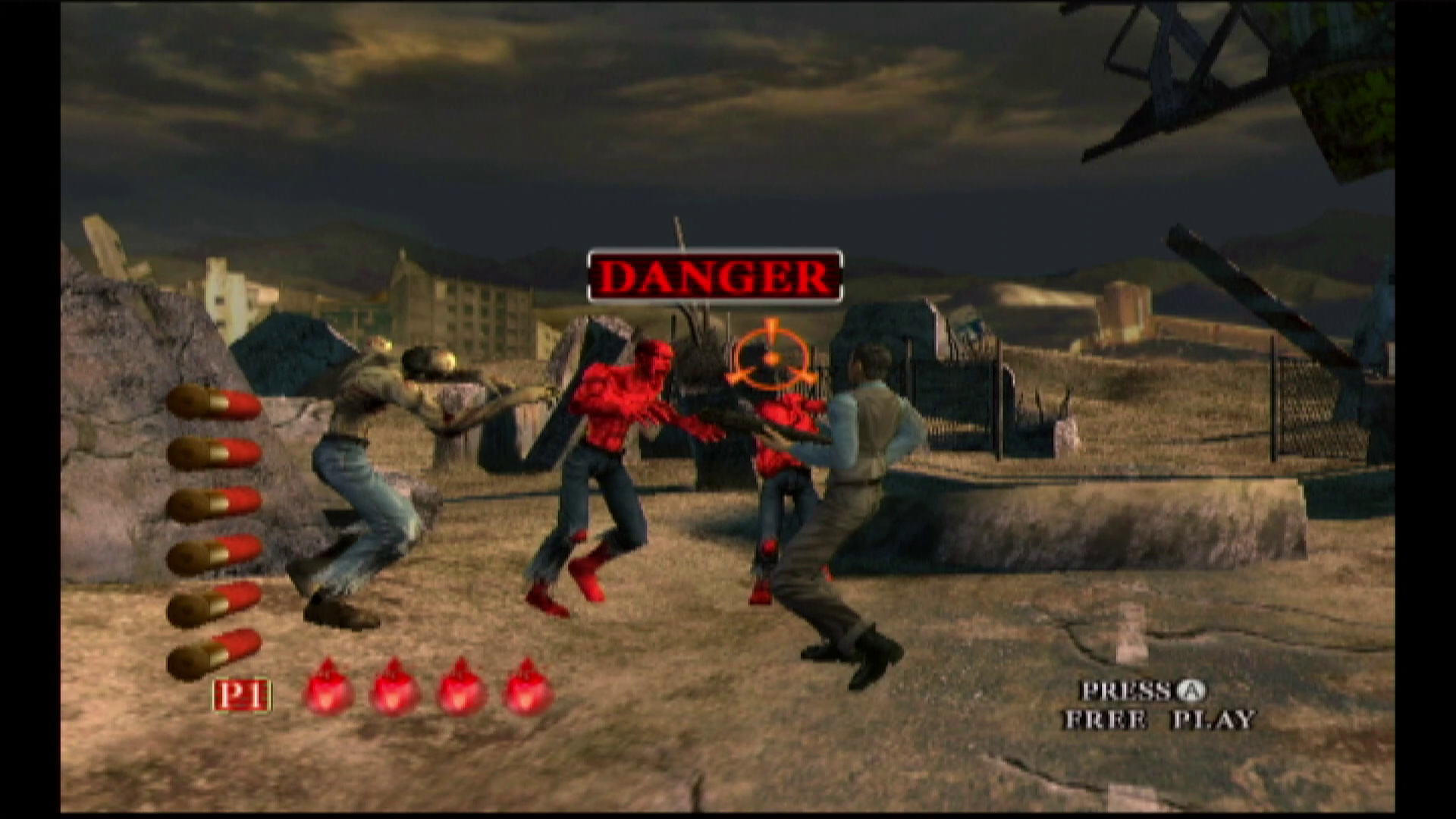
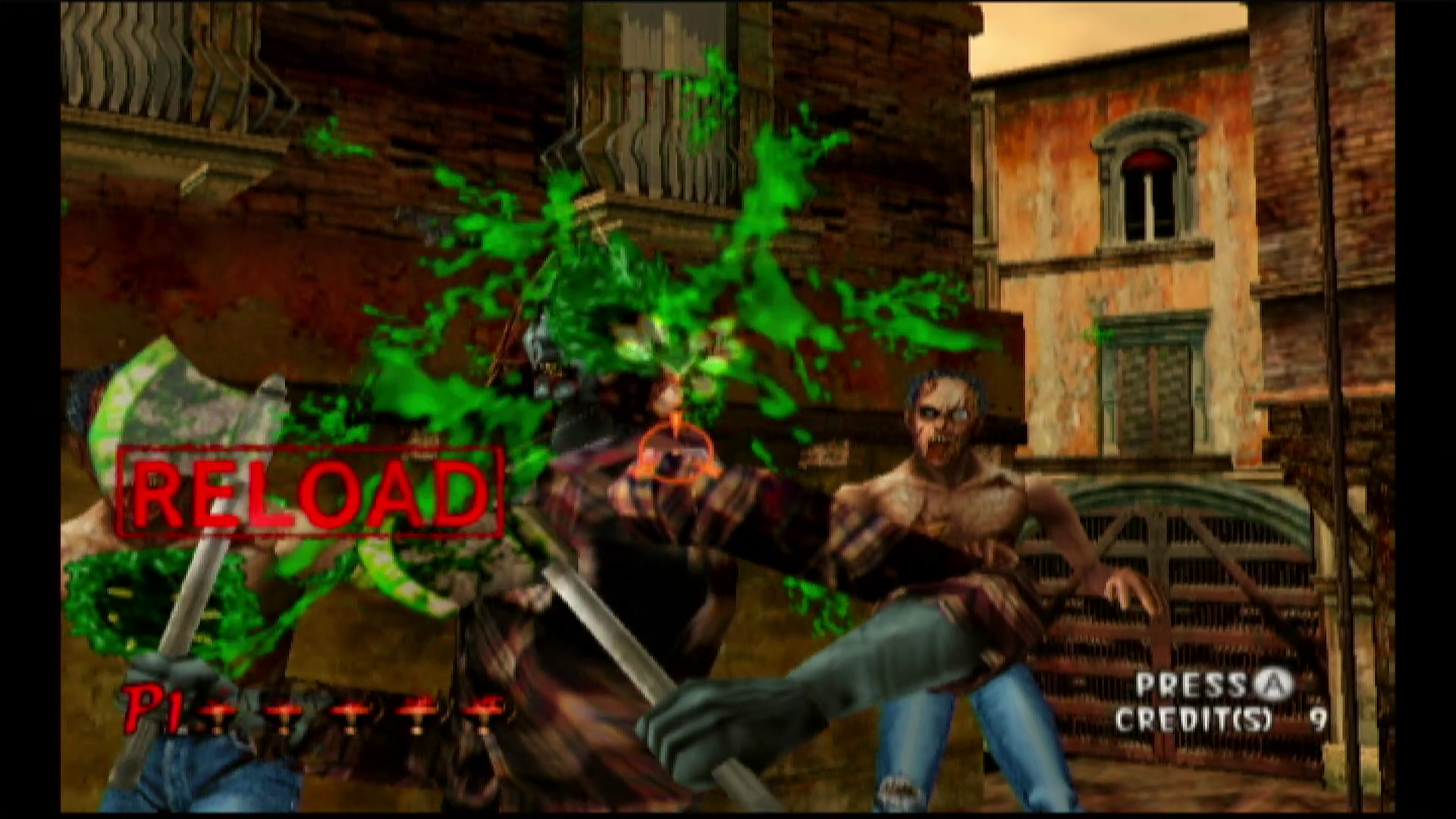
Using many of the elements of the original game, Typing of the Dead has been modified in a very unique way. Instead of shooting the zombies, the players must type out words that appear on the screen, with successful input killing the monster. To make this style of play work in a thematic sense, all of the AMS agents will have Dreamcast backpacks on. These super powered systems are a deadly weapon, activated by typing on the keyboard in front of them.

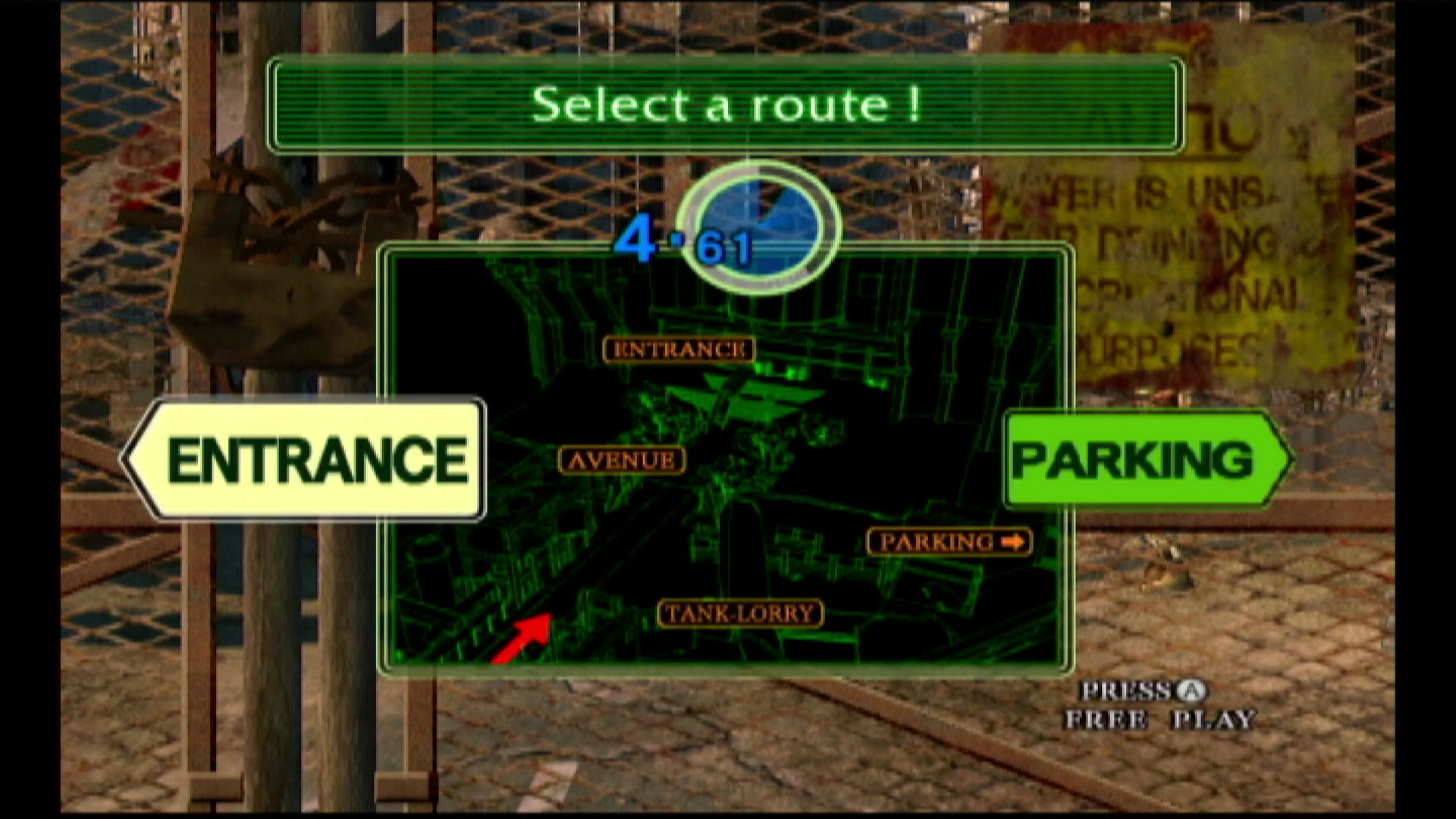
The complexity of these words will vary, with single words or short phrases to get into the action. But the further the player gets, the more complicated and challenging they become, with longer sentences appearing. But there will be times where the player needs to think quickly, as the people of Venice still need to be saved from the creatures. Typing the words that pop up when a civilian appears, can lead to a branching paths, as well at other points.

There will also be enemies that can throw weapons, with a typing prompt to deflect them. This adds elements of decision making to the flow of gameplay, as the enemies that throw objects, will sometimes leave after attacking. Due to this, players may need to decide if it is worth trying to defeat the enemy, or just hit the projectiles. There will also be multiple enemies on screen at once, requiring quick choices to be made.

At set points during the course of the game, the player will be challenged to complete special missions, like killing a set of number of zombies in a time limit. Completion of these missions will provide rewards, like extra lives and bonus points. Then there will be boxes that can be destroyed, holding special items that will affect the gameplay. These include weakening zombies, altering the look of things and many more.

If the player is unable to quickly type the required words or phrases, the will attack the player, taking a life away from them. The player has limited lives, leading to a continue needing to be used when all of them have been lost. But there is the ability to set the game to free play (via a password or unlock), allowing for the player to push through the game. At the start of the game, it is relatively easy to get to the first boss, but then the difficulty ramps up.

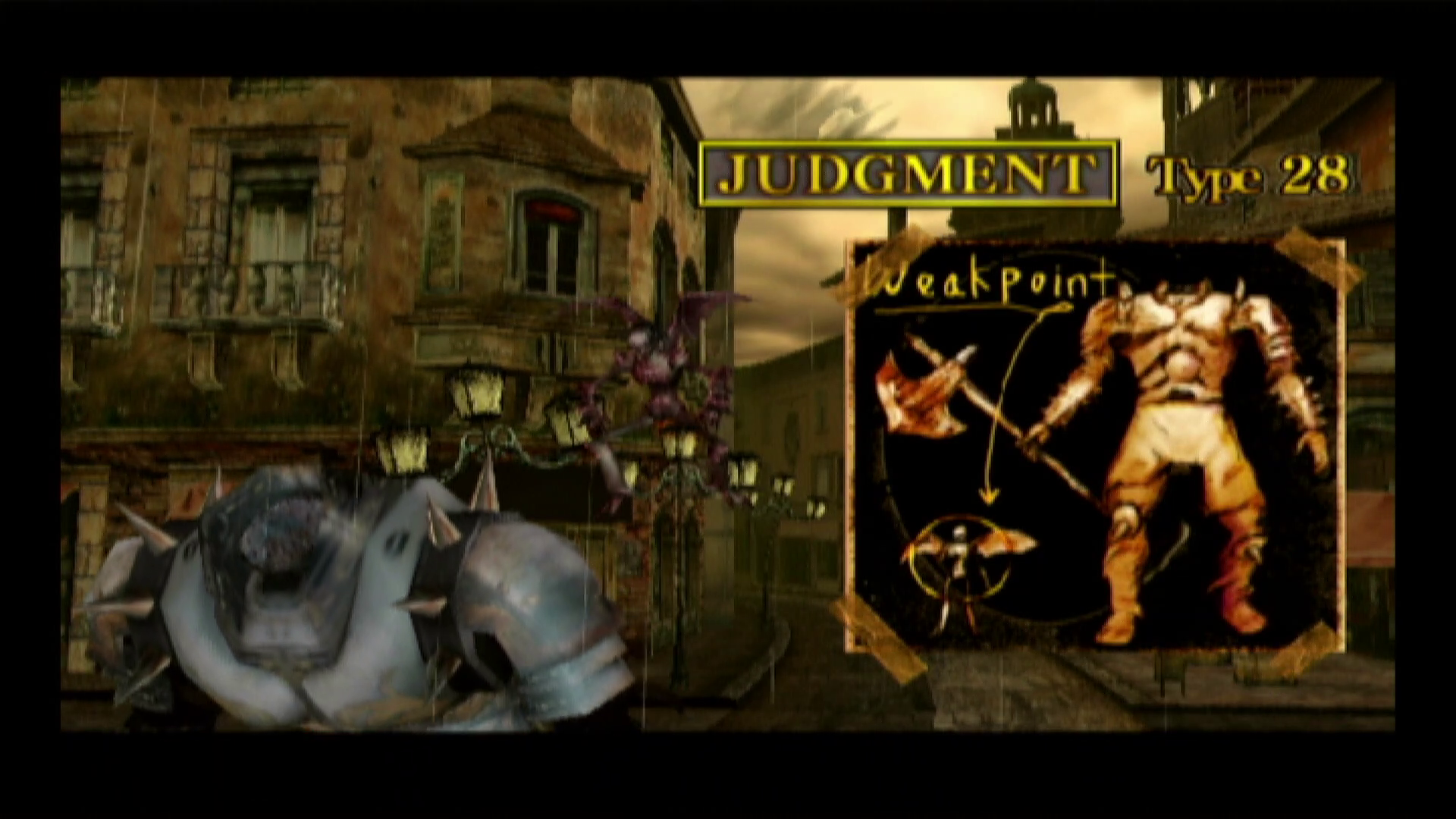
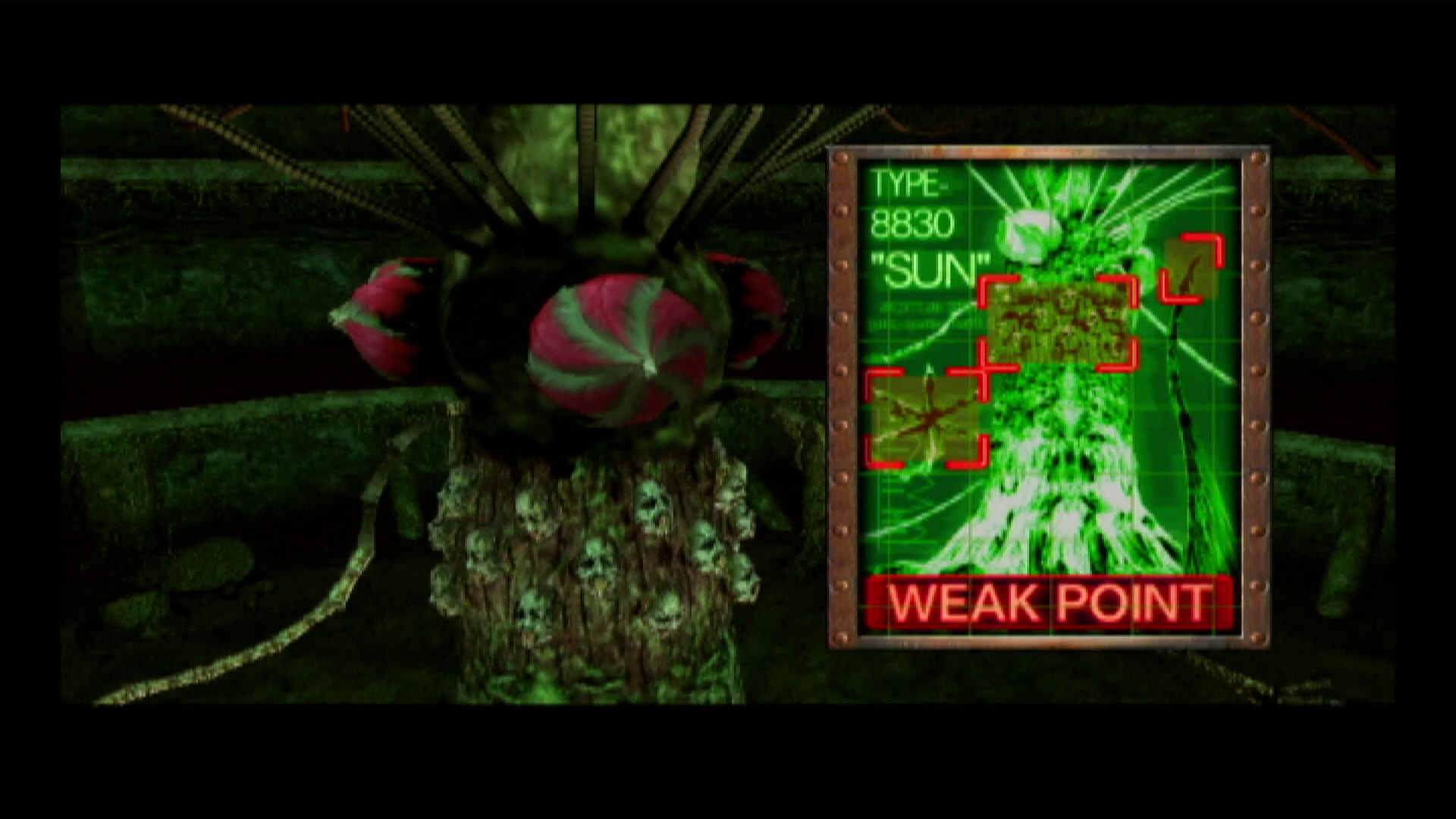
In the Boss battles, the player will fight the same bosses of the original game in a modified form. There will be additional mission elements, like only typing when the weakpoint is open, or entering extended sentences before an attack lands. There will even be quiz questions in boss battles, requiring the player to select an option from the on screen menu. Depending on some of the choices made, the ending that they player will receive may change.

The main game modes are Arcade Mode and Original Mode, where the player plays through the main stages of the game. In arcade mode, the player can select story mode or training mode, with the story playing out the same as the shooter. But the player can pick the stage they start at, with a level select. There is also a training mode, with a time limit attached to it, letting players practice their skills until the timer expires.

Then there is the original mode, where players can select a variety of enhancements to help during play. With these special effects, the gameplay will change and make it more unique with each run through the game. There will also be special unlocks and features for players to experiment with. In both modes, when a stage is cleared, the player will receive a ranking for that stage, letting them see how well they performed and entering their name on the rankings.

Alongside the standard gameplay modes, there are special modes that can be accessed, with some of them hidden behind unlocks. There is drill mode, where special mini games can be worked through, training to improve various skills. Each of the skills have three challenges tied to them, with a progress tracking system to check improvement. Once all of the exercises have been cleared, the player will be able to take a final exam.

Then we have the boss mode, where the player can challenge the bosses of the game, learning how to beat them in time attack challenges. The player has limited lives to get through these battles, making them more challenging. The final boss, the Emperor as well as other special challenges are initially locked, needing to clear all of the previous challenges to access them. There is a ranking system for all of these boss battles.

The last thing to discuss is the VS CPU mode, where players can take on AI controlled opponents. Playing through a single chapter of the game, the one with the highest score at the end is determined the winner. Each of the challengers in this mode have different typing skills, affecting the challenge of the stage for the player. Some of the opponents will be locked, needing to meet special conditions to unlock.

For those who wanted to play across the internet with others, there was a network mode, where players from across the globe can take on the challenges together. Sadly this is all but useless now, as the service was discontinued. However, with a little finagling it can be possible to play the game multiplayer. This can be by jumping through some hoops with emulation of the dreamcast, or through the original arcade version.

Personal thoughts

When I was a kid, I played a lot of House of the Dead 2, both on the Dreamcast and in Arcades whenever I saw them while on holiday. Due to this I gained a deep appreciation for the game, making one of my personal favorites that I still revisit to this day. Years after the first game came out, I first tried to play Typing of the Dead, having discovered it while looking for a way to play the original on PC, unaware that it had a Dreamcast release.

I first played the PC version with a copy I got from a friend, which I have backed up, duplicated and put on every PC I have owned since. I also managed to pick up an original Dreamcast Keyboard and a copy of the game, when they were more affordable. There is a unique charm that this game holds, taking a horror focused game and making it surreal. The axe wielding zombies use spatulas and squeaky hammers, alongside various comedic elements that have been added.

This is a pretty challenging game in general, as it relies on the physical capabilities of typing quickly and accurately. While I may be able to type at a competent speed in general, there is an anxiety and panic that follows this, leading to sloppy inputs and missed keys. This is most prevelant when trying to type the long strings of words, or anything that requires special keys. I have yet to be able to get to the end of the game without needing free play.

As a teaching tool, it is a fun way to practice typing and learning how to touch type. The extra modes away from the main Arcade/Original modes, provide excellent tools to learn and improve skills. There is even a system that tracks the weakest keys when a training drill is over, offering a chance to try again with words that address weaknesses. My favourite mode is the VS CPU, which is a fun challenge to try and test skills after drills.

Sadly this version of typing of the dead has been mostly forgotten, with only hardcore fans and speedrunners still playing the game. It is sadly no longer available on any platform, being replaced with Typing of the Dead: Overkill. However, it is passed around different circles and can be picked up for Dreamcast, Japanese exclusive PS2 and on PC. But the prices fluctuate quite often, leading to it being less than desirable to new players.  

While most games that fall into the edutainment genre are not great, I feel this is different, as it already has a solid game behind it. I enjoy this game, which makes it easy to recommend. It takes a great game, which was already cheesy with the wooden dialogue and voice acting, while adding a level of surrealism and humor. If you can find a way to pick this game up, then it is well worth the time and effort to get it going, but it does need a little work on windows 10/11.

If you have enjoyed this special feature, then please stick around and see what else catches your eye. I cover a wide range of games in reviews, get special previews and put out regular features. Alongside this rare special feature, there is the Lost Gems series where I often forgotten games, Retro Revival discussing re-releases on modern platforms. So stay a while and take a look around.

Tiny Pixels Vol. 2: Stormy Knights – PlayStation 4 Review

Overview – developed and published by Eastasiasoft, Stormy Knights is the second instalment of the Tiny Pixels series, providing fun experiences at a budget friendly price point. In this entry, take the role of a knight on a quest to save the princesses of the realm, battling monsters across different locations. This title is available across all platforms, with a link to all versions of the game at the bottom of this review.

Disclaimer: before I get into the review, I would like to thank Eastasiasoft for providing the copy of Tiny Pixels Vol. 2: Stormy Knights that was used for this piece. The provision of this software has not influenced the contents of this review, all thoughts and opinions contained within are my own.

Now with the introductions out of the way, let’s get into the review. I will be skipping the story as this title is light on plot, so I will be going straight into discussing the gameplay.

Gameplay – stormy Knights is a real time action game, where the objective is to rescue the princess that is being held in each stronghold. As the hero, traverse a goblin fortress, the palace of the lizard queen and the feudal forest, all on a journey to the lair of the timeless one. During this journey battle the minions of each stronghold, fighting to reach the princess and the boss that is holding them. There are four stages in this game to clear.

This release has a pretty simple gameplay loop. As the heroic knight, you must battle enemies in side scrolling one-on-one encounters. This combat has a strategy feel to it, as the player must make tactical decisions, responding to the actions of your foes. The player has access to a limited moveset, which works in favour of the game. At the start there is the sword to fight enemies, the shield to block, a back step dodge and the ability to crouch.

With these moves, the battles have a back and forth strategic feel to them. As the enemies will advance and retreat, avoiding attacks or to get space for a ranged attack. The minions have limited attacks, each with their own unique tells, allowing players to learn their patterns. Some attacks can be blocked, whereas others must be dodged. The blockable attacks have the potential to stun enemies, leaving them open to counter attacks.

After defeating an enemy, the knight will transform into an orb of light, moving to the next section. During this transition, there will be coins hanging down, which can be collected by making contact with them. These are added to the total for the player, coming in handy at the end of a run. When the player reaches the end of the stronghold, they will encounter the boss, who is the strongest enemy of that territory.

In a boss battle, the player will face down a challenging opponent, with increased health and powerful attacks that will decimate the knight if they connect. Each of the boss opponents has three attacks, aside from the final boss of the run, who has even more power. These each have unique triggers, with ranged and up close strikes. Upon defeating each of the first three bosses, the princess will descend and reward the knight with a kiss and more coins.

Upon defeating the final boss, the player will get a completion screen, showing their stats including princesses saved, number of deaths and more. Speaking of deaths, the demise of the knight will more often than not be the reason for a run to end. When this or a completion occurs, the player will be allowed to use the coins collected to purchase skill upgrades. There are three different skill trees that the player will be able to improve.

The three skill trees are split between attack, defense and special. In the attack tree, the player will be able to improve their weapon, with upgraded combos and more damage. The defense tree allows players to improve their health, receive healing from a rescued princess and even give the shield special powers. Then there is the special tree, which unlocks the powerful lighting strike, a limited use power alongside special bonus effects to use in battles.

This set of skill tress will take some time to fully upgrade, so there will be numerous runs that need to be cleared. The most coins are available after defeating a boss, with many coins that can be collected. This can further be augmented by skill power-ups, providing the opportunity of an increase to the coins, with a 50% chance to get 2 and a 25% chance to get 3 coins. This gives some replay value for this release.
Now with the gameplay covered, it is time to discuss the other aspects of this release, starting with the controls.

Controls – There is a relatively simple to pick up input system for this release, with all of the required inputs on the screen. This is pretty handy as it allows players to quickly get into the action, which is good as it allows players to jump in any time and know what to do. However, there are moments where it can feel that the inputs aren’t responding correctly, which can be frustrating. There does feel like there is a delay at times, which may or may not be user error.

Difficulty – in general this may seem like a difficult game, with runs ending fairly quickly when trying to figure things out and learn attacks. But after spending some time to learn each enemy attack, the way bosses work and upgrading the skill trees, the difficulty is eased. The real challenge comes from deciding what skills to get, as some are more beneficial earlier than others. This gives the challenge a bit of a dynamic feel the more it is played.

Presentation – from a visual perspective, there is a lots of retro style to the use of color, pixel art and the way that the stages are designed. All of these elements come together, creating something that evokes nostalgia, while not relying on it. The pixel art is made well, with plenty of detail in the characters and environments. The sound is good too, which further adds to the aesthetic that the game tries to give, with good music and solid sound effects.

Final Thoughts – I enjoyed the first Tiny Pixels game (which can be found HERE), so I was interested in seeing what was next from Eastasiasoft. The gameplay of Stormy Knights is satisfying, offering an interesting and unique challenge. It was a little awkward to get started, but as I learned the timing of enemy attacks, everything slotted into play. There are some minor blemishes, but they do not significantly affect the overall experience.

From a quality perspective, this game is well made and has many elements that give it a unique feel. But it does feel a little too short at times, which is both a blessing and a curse at the same time. While it is good for speed play by having multiple runs done quickly, it may feel a little hollow upon complete victory, especially if it takes a while to get there. But as a pick up and play budget game, I am happy to recommend this to everyone.

In the end, I give Tiny Pixels Vol. 2: Stormy Knights a final score of 4/5. This is an interesting and solid retro style action game, with tactical play and a decent skill tree system, creating something that feels nostalgic but unique. If you want to check this title out for yourself, a link to each version of the game will be below.

Link to PlayStation version (HERE)

Link to Nintendo Switch (HERE)

Link to Xbox version (HERE)

Link to Steam (HERE)

Pain-to-Win – Playtest Preview

Hello again, I have something a little different for today. I was able to get hands on with the playtest for Pain-to-Win, an upcoming ultraviolent 2D top down shooter. Developed and published by the a company using its namesake, take on the horrors of a dystopian prison world, featuring a cast of madmen and psychos. This title is inspired by games from the PSX-era of ultraviolence like LOADED and THRILL KILL, mixed with the gameplay of Hotline Miami.

Disclaimer: before I get into discussing this content, I want to thank Pain-to-Win for providing me with access to the playtest for their game, via the Keymailer service. The provision of this software has not influenced the contents of this piece, all thoughts and opinions contained within are my own.

Now with the introductions out of the way, let’s get started. I will be discussing the general gameplay experience of the playtest, then I will be giving some personal thoughts from my time playing the game. Please note, this game is a work in progress, so the details here may not reflect the final product.

About the game

Pain-to-Win is a top down ultraviolent shooter, taking place in a dystopian prison world, where the psychotic inmates are set loose. The player takes the role of an organ harvesting bounty hunter, who must hunt down the violent degenerates of the Megaprison. There is a varied cast of lunatics, including deranged killer clowns, masked killers and homicidal body-mod fanatics. Each of the characters has their own unique quirks, making them distinct.

This playtest has one character available to use, with a limited set of stages. The objective is to take down a set number of targets, collecting their brains and delivering them to the client. To achieve this the player must work through each level of the Megaprison, which consist of room clusters filled with enemies and loot to collect. The first room that players will experience is the start point, giving players a good chance to prep for the chaos ahead.

Combat is similar to many titles in the twinstick shooter genre, with the player controlling both the player and the weapon individually. When moving through the areas, the player can look around the area and get an idea of what is happening.  The player will be able to collect various weapons, including a range of melee and firearms. There are two slots for weapons, with the capability to dual wield some weapons, giving varied loadout options.

While navigating the areas of each level, the player can carry two weapons. All melee weapons can be used endlessly, whereas the firearms have limited ammo capacity. During the course of a run, ammunition will be scattered through the stages, hidden inside boxes that can be destroyed with melee attacks. If the player runs out of bullets and doesn’t have a melee weapon, they can still fight back using the alt attack to bash enemies with a gun.

Players can also find wrapped gift boxes, containing powerful power-ups, with the most important being the revival items. These special items will give the player more attempts to make it through, functioning as lives for the game. The player will get four lives when starting the game, but it will be up to the whims of the Megaprison if players get more. Other power-ups include more ammo capacity, reduced damage and improved healing.

On the subject of health, the player has a limited number of hits they can take before death. This will vary based on the enemy, weapon and the type of damage taken. If the player is unlucky, they can die instantly from powerful weapons and explosions. So some care must be taken when trying to navigate dangerous areas. The explosive boxes will appear around the levels, being set off when attacked so any stray shots may lead to disaster.  

Health can be replenished by picking up health boxes, with small and large to find. These are shown as medical test tubes for the small ones, as well as first aid kits for the large recoveries. The frequency of health pick-ups will vary, so it is important to pick them up only when needed. But if health is low, grab whatever health is available in the level. The amount of recovery that items provide can be affected by power-ups.

Inside of a level, the most common objective is to wipe out all of the enemies, with numerous dangers lurking around the corners of each room. The psycho inmates of each room are armed with deadly weapons, including powerful firearms and deadly melee weapons. Out of the common enemies that appear, the most dangerous are those who wield Shotguns and the Disc Cutter, portable buzz saw that will kill you in seconds.

The inhabitants of each level will try to hunt the player if they are alerted, chasing them down unless the player escapes. It is possible to get swarmed by some of the weaker close combat enemies, leading to a messy death. To help the player survive, there is a dodge roll that can be used, but be careful not to spam it as there is a chance the player can get themselves cornered. There will also be explosive objects, which will reduce everything to a bloody smear.

At the end of a level, the player will be able to exit through the door to get to the next stage. As the player gets deeper into the twisted labyrinth, they will encounter less hostile NPC characters. This is where coins come in, which are collected by destroying boxes and killing enemies. The coin tokens that are collected can be used to make purchases, as there will be NPC merchants wandering the prison. But not all of them will be in a hospitable mood.

The items offered by NPC merchants can aid the player, with power bonuses, upgrades and even extra revives that can be bought. The player can also reject an offered item, but this may enrage the merchant, causing them to attack the player. There are two ways to get out of the encounter, either by running away or killing them. It is also possible to encounter NPC characters that will give the player special items for free, side missions and more.

At points throughout a run, there will be gates that require key cards to be used. These will send the player to special alternate routes that are shown on the map as their color. The branch paths will also occur at crossroad points, with different NPC interactions that can occur, as well as a unique bounty target. Not all paths require keys, but those that do, may just have some grotesque secrets that are hidden within them, just waiting to be discovered.

The last thing to discuss is the boss fights, where the target is located, the player will be locked in an arena with them. There is only one rule that applies to these showdowns, kill or be killed. These psycho killers are powerful, armed with weapons that will completely devastate the player. Combat here is tense, with ammo that can be collected on the floors. Defeat them for great rewards, or be turned into nothing but a stain on the walls of the prison.

Personal Thoughts

The playtest provided a significant amount of content, with several path branches, character interactions and buckets of gore. I spent a couple of hours playing this, but I feel that I have barely scratched the surface of what there is to offer. The gunplay, action and general experience is a lot of fun, with smooth movements and reactive inputs. Unlike other games that use roguelite elements, it is possible to memorise aspects of the game, which I like.

One of the biggest issues with games that use roguelite elements is the difficulty, where it feels like the game is actively working against the player. Due to this, it can be off-putting to new players, as deaths and failures will feel unfair. But this game doesn’t suffer from that issue, as it is hard as hell, yet feels balanced. It also feels that every failed run can be a learning experience, where new info can be attained after each brutal dismemberment.

I will admit, I did not get to the end of the demo, getting completely destroyed numerous times. I only beat the one boss fight too, which felt like a fluke and sadly got annihilated soon after ending the run. However, even though I am not good at this game, it is something I will happily return to. I really enjoy this throwback to the era of 90s ultraviolence, where companies pushed the envelope to create a bloody and shocking spectacle.

This was a wild time where developers made the most of the limited hardware, employing as many tricks as they could to shock audiences. Sadly this style fell out of favour for a while, until games like Hotline Miami revived the interest in brutal violent top down action. I am grateful that this revival occurred, as I have fond memories of the inspirations that this game is built on. This makes me excited to see what is around the corner for this release.

The art style for the game has that gritty and dark feel to it, present in many of the mature graphic novels that gained notoriety for their brutality. This serves the game well as it emphasises the dark tone that the game wants to present, with the mechanical horror elements. There are cosmic horror influences here too, with details that invoke the feelings of insanity, decay and mental degeneration, further building the apocalyptic atmosphere.

Unfortunately however, there are some minor hiccups that this game suffers from. The controls for movement and aiming are a little awkward, especially at the start when using both controller and mouse/keyboard. It took some getting used to, especially when trying to escape the psycho killers hunting me down. More often than not shots were missed, or I would get stuck on walls, but this may just be user error and take some time to adapt to.

My experience overall was a positive one, there were frustrations when I got bad loot from the secret areas, or got killed by an enemy by getting trapped. Yet every single failure made me want to try again, pushing me to say “I can do this, just one more try” and diving back in. At the end of my time playing, I did not have one successful run, so there may be some things I have missed in this preview, but I can fully endorse this as one to watch.

Pain-to-Win can be wishlisted on steam (HERE), you can also find them on Twitter/X through the link (HERE). This game is currently in active development, so please be aware that images, video and even the content of this preview may not match the final product. Thank you for taking the time to check this out and see what else grabs your fancy.