Shantae Advance: Risky Revolution – Nintendo Switch Review

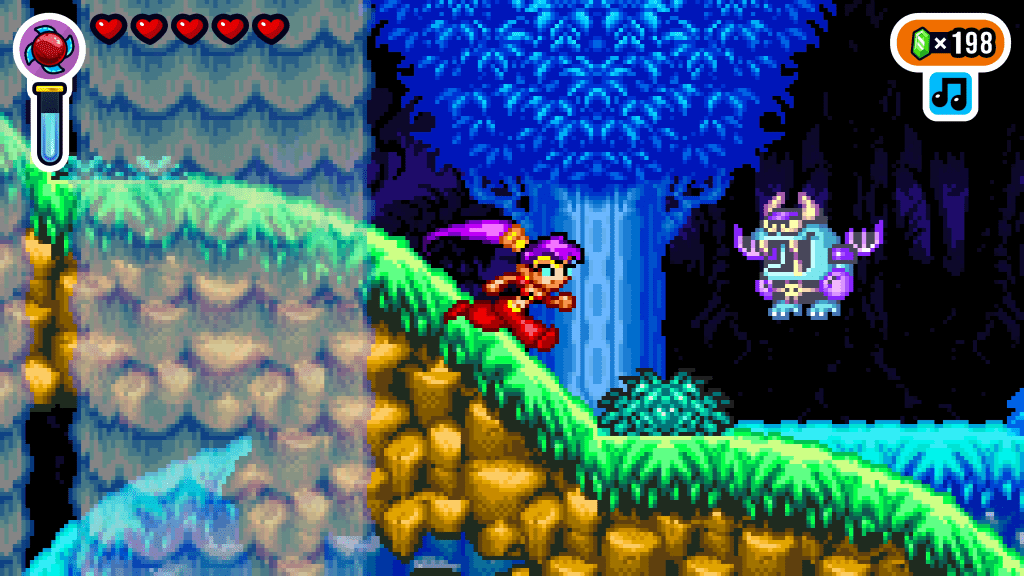
Overview – developed and published by WayForward, in collaboration with Limited Run Games, Shantae Advance: Risky Revolution is the latest entry in the hair whipping, magic dancing adventure series. As the Half-Genie hero Shantae, stop Risky Boots world spinning plan in this once cancelled adventure, originally planned for the Game Boy Advance. This title is available on all current platforms, with a link to each version at the bottom of this review.

Disclaimer: before I get into the review, I would like to thank WayForward for providing the copy of Shantae Advance: Risky Revolution and the Deluxe content that was used for this piece. The provision of this software has not influenced the contents of this review, all thoughts and opinions contained within are my own.

Now with the introductions out of the way, let’s get into the review, starting with the story. I will be covering the core gameplay experience, with minimal spoilers for the experience. I will also be referring to the game as the shortened name of Shantae Advance, for the sake of brevity.

Story – after defeating Risky Boots in the first adventure, Shantae and her friends are constructing new anti-pirate defense for their home. Suddenly, Risky Boots appears and engages in battle with Shantae. During this confrontation, Shantae falls into a subterranean cavern, followed by her friends. They discover that Risky Boots plans to rotate the surface world, allowing her to pillage landlocked areas, so Shantae sets out on a new adventure to stop the Pirate plans.

Gameplay – Shantae Advance is a side scrolling platform adventure, where the player controls the titular Half-Genie guardian of Scuttle Town. The gameplay loop follows a chaptered structure, where the player needs to complete objectives for that section of the narrative. As Shantae, travel Sequin Land to stop Risky Boots, who has used the Tremor Engine to alter the placement of different areas. Now Shantae must return Sequin Land to its original state.

As the world has shifted, the landscape has changed and altered the way that places are reached. In order to travel to the world, the player will need to fly on the back of Hatchet, a bird that has been raised by Shantae’s friend Sky. To be able to reach new areas, the player will need to collect maps obtained during the adventure. When a map has been collected, giving it to Sky will unlock a new area to go to, pushing the adventure forward.

The different areas that can be explored are split into two types, the first is the towns, where NPC characters can be interacted with. By talking to the different characters, players will gain new information and details to help them with their objective. While in the home area of Scuttle Town, the player will be able to access various facilities. These are the shop and bath house, where items can be bought and Shantae can restore her energy.

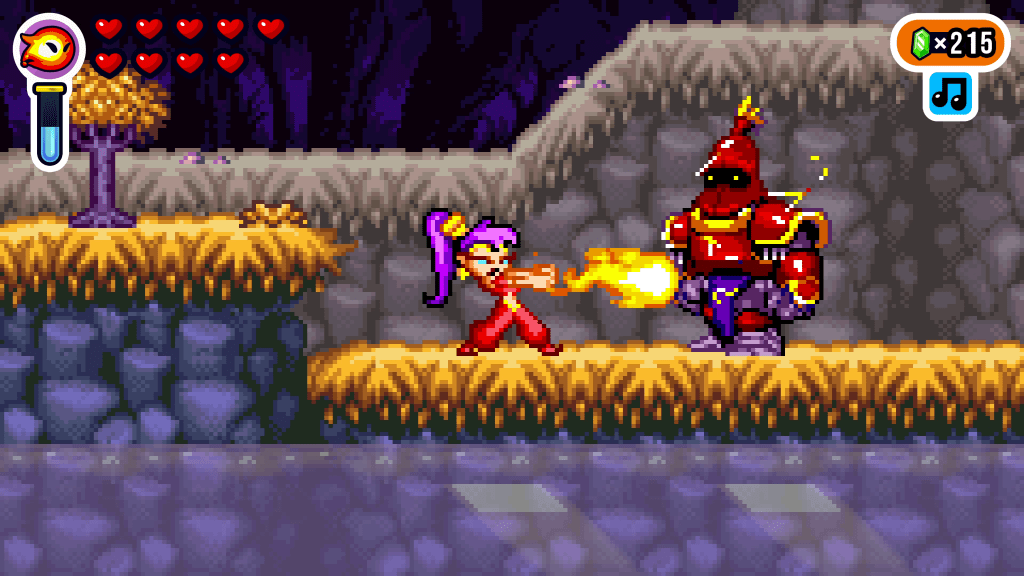
Then we get onto the real meat of the game, which are the action stages. Inside these stages there is a special mechanic that is unique to this adventure, travelling between the foreground and background layers of the area. While exploring the action areas, the player will need to utilise both layers of the stage. there will also be special switches that activate the Tremor Engine, which will shift the stage between normal and swapped states.

When the stage becomes swapped, the player will be able to access some previously unattainable areas. This can make some areas that were previously blocked without powers reachable, these can also be tied to some puzzles and locked gates. It is important to check all of these areas, as there will also be hidden details in the swapped terrain. The different layers will have hazards, obstacles and threats that will hurt Shantae, but there are ways to overcome them.

The most common way that Shantae can defend herself from enemies is her Hair Whip, which is her standard form of attack. Shantae can defeat some enemies in a single strike, whereas others will take multiple hits to defeat. For more challenging enemies, Shantae can use magic spells which are purchased from Rottytops, the zombie shop keeper. There are many magic spells, which require Magic Points (MP) to use so their use can be limited.

From the variety of spells, the player will be able to use lightning, fire and a power ball to damage enemies. Then there are support skills like increased running speed, at the cost of MP, as well as skills like being able to run on air. All of the skills can be switched freely from the sub menu, alongside items like healing potions and MP restoration potions. The spells aren’t the only magic that Shantae can use, as she can also use her dance magic.

As the Half Genie guardian, Shantae can use her belly dancing skills to access magical transformations. By activating her dance magic, the player can transform into several creatures, including a monkey and a crab. While using these transformations, Shantae can get access to areas that may otherwise be inaccessible. To unlock these forms, a special Wish Charm must be used at a magical fountain, which can be found in the dungeons.

Speaking of the dungeons, there will be gates and caves in each of the action areas. The caves will have small puzzles and some will also have special upgrades, increasing Shantae’s health, providing new powers to transformations and more. Each of the caves can be accessed freely, as long as the player can access the entrance, they can get inside. However, the gates will be locked and require puzzles to be solved before they can open up.

When entering a gated dungeon, the player will need to navigate the many rooms of the dungeon. Inside each of the dungeons, the player will encounter puzzle rooms, platforming challenges and dangerous enemies. As the player makes their way through each room, there will be deadly challenges and risks to the player. Thankfully, there will be the Save Sage, a mystical being who can record the progress of the adventure.

These will be important as the dungeons are very challenging, with spikes, pitfalls and even fire breathing statues. If Shantae is killed at any point, she will be reset to the last Save Sage, losing all of her progress after the last save. The game can be saved in dungeons, between areas and in Scuttle Town. The Save Sage will usually appear before tough segments, so it is important to use him whenever he is encountered to prevent loss of progress.

Throughout the dungeons, players can encounter environmental puzzles, which will require the player to use gimmicks to progress. This can include bombs and even carnivorous plants, using them effectively to traverse the puzzles that are tied to them. There will also be moving platforms, which will help the player navigate bottomless pits. Players can also encounter water that Shantae can dive into, but can also use her transformations to explore.  

The dungeons are fairly long with gates that need keys, paths that require specific transformations and puzzles that must be solved to progress. This leads to some backtracking, which can also cross into puzzles in different areas in general. Then there are the key items, which are required for progress. These can apply to the dungeons and outside of them, affecting different areas of the game world, including towns affected by Risky Boots.

As the player defeats enemies and breaks certain objects, they will drop gems, hearts and potion vials. The gems that are dropped are the currency that is used for purchasing items from shops, which are added to the player total. If the player takes damage, picking up hearts that are dropped will restore lost health keeping the player alive. Then there are the potions, which restores a portion of MP that has been used for magic spells.

During key points of the dungeons, the player will encounter powerful foes. These opponents can be deadly, with powerful attacks that will quickly defeat Shantae if the player is careless. The boss fights can also have multiple phases, increasing the difficulty of the encounter for the player. Defeating these Bosses will push the narrative forward, can provide important upgrades as well as items to aid the progress of Shantae on her adventure.

The game itself has two play modes, split between modern and classic. In Classic Mode, the game runs as it would on a Game Boy Advance, presenting the original sprite work, resolution and general UI elements. The modernised Story mode introduces new animations, redrawn HD art and a complete overhaul of the visual elements for the HUD and UI. Both of these version have identical gameplay, so it is down to the personal preference of players.

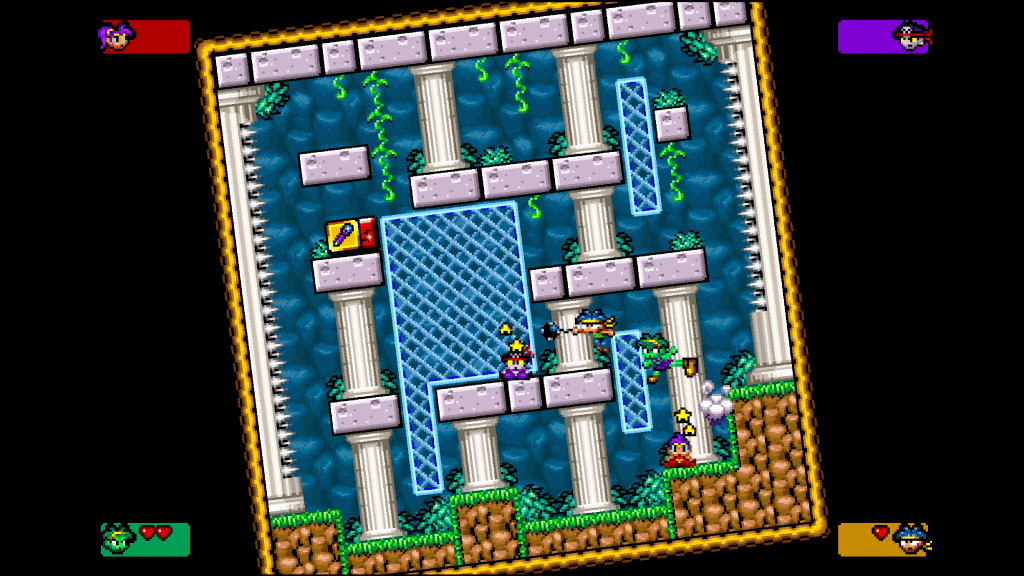
Last to discuss is the Multiplayer mode, which is a fun and chaotic battle mode for between 2-4 players. In this bonus mode, players can battle it out in frantic battles, where players must knock each other out to be the last person standing. Players have access to an attack, jump, power ups and the ability to climb. The stage rotates during the battle, adding to the mayhem that can occur as players attempt to spike their opponents.

Now with the gameplay covered, it is time to cover the other aspects of this release, starting with the controls.

Controls – as this game was originally developed for the Game Boy Advance, there is a rather simple 4 button input system. All of the face buttons are used, with the ability to jump, attack, use magic and activate Shantae’s dance. The magic and dance buttons are also repeated on the shoulders/triggers. The D-pad and thumbstick are for movement, with all of the controls in general being comfortable with all controllers used.

Difficulty – this is a fun and challenging game, with a fairly balanced difficulty curve to the experience. As it is an adventure game, there is some back tracking and exploration that is required. This can lead to getting lost and the potential for death, which can lead to progress being lost. The best way to combat this is to grind out some gems, picking up healing items and saving often. It can also help to take notes inside the dungeons.

Presentation – Visually, Shantae Advance has vibrant sprite work and environments, which makes the game world pop. The animations and HD artworks have that distinct Shantae charm, with elements of fanservice in the design. The special HD art is gorgeous and enhances the experience for the modernised mode. Then we have the sound, which is delightful to hear, with a soundtrack that makes excellent use of the GBA sound engine.

Final Thoughts – I am quite the fan of Shantae, having played the different versions of the game over the years. This title may have been planned 20 years ago, but it feels new, fresh and unique in the series. The special rotation mechanic is fun, giving the experience a whole new dimension. The action is fun, the puzzles were challenging and the narrative was a delight, with the familiar cast as well as new characters with charming quirks.

I did have a couple extremely minor hiccups with the game, with some needed items and secrets being awkward to find. But this didn’t have a negative impact on the experience. I very much enjoyed the special HD updates, with the bonus Deluxe DLC, which provides unique costumes that give the game a little more fanservice. I can happily recommend Shantae Advance, as it is tremendous fun, easy to play and a great adventure for everyone.

In the end, I give Shantae Advance: Risky Revolution a final Score of 5/5. This is an excellent platforming adventure, which uses its special gimmick to maximum efficiency, elevating the experience and making it feel unique. This is combined with HD art and animation that make the characters and world really pop. If you want to check this game out for yourself, links to each version will be below.

Link to Nintendo Switch version (HERE)

Link to PlayStation version (HERE)

Link to Xbox version (HERE)

Link to Steam version (HERE)

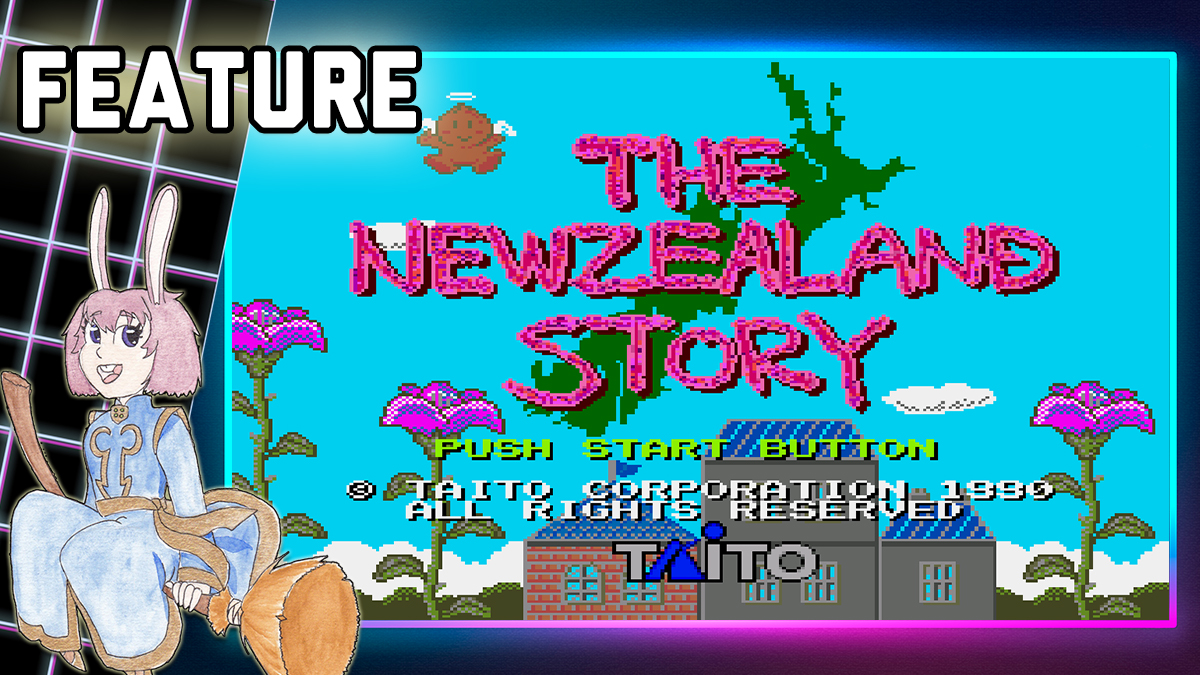
Lost Gems – The NewZealand Story (SEGA Mega Drive)

It is that time of the week again, Lost Gems is here where I cover games that are no longer officially on sale. This week is a special one, where I will be discussing a classic game that received a unique port. The vibrant and challenging platformer, The NewZealand Story, developed by Taito for the SEGA Mega Drive which used an arcade prototype as its base. So let us take a look at this classic that was released exclusively in Japan in 1990.

Disclaimer: while the game discussed here is no longer officially on sale, there are ways to obtain the game. This can be either through the second hand market, or via unofficial digital roms/rips. I do not condone or promote piracy, so there won’t be any links to roms or rips of the game being covered.

So with the introductions out of the way, let’s get started. I will be discussing the general game experience, then give my personal thoughts on the title. Please note, the original arcade version of the game is available on modern platforms, but this version is so vastly different that it counts for this feature.

About the game

The NewZeasland Story, is an arcade run and gun style platformer, where the player takes the role of Tiki, a Kiwi chick who must rescue his friends. They have been kidnapped by a Leopard Seel, who has imprisoned them across the island. Now Tiki must travel across the island and rescue his friends, taking down the evil Seel at the same time. /but there are many threats and dangers that populate the islands, trying to stop Tiki.

The objective of each level is to reach the goal, rescuing the Kiwi chick that has been imprisoned in the stage. Each of the levels is rather large, with maze-like layouts that can be challenging to navigate. These are filled with hazardous spikes, enemies and even water hazards. Due to how expansive the levels are, the player can use a vehicles to travel the stages. These are mostly balloons, which will pop if attacked or make contact with spikes.

 To help the player get past the hordes of enemies that spawn in, Tiki can rapid fire arrows left and right. But that is not the only weapon available to the player. As the player defeats enemies, they may drop special items like the bomb and wand, which will change the weapon that Tiki uses. But there are other items that players will be able to get, including a stop watch that freezes enemies in place. These are rare, but are very useful in stages.

The platforming is a big challenge, which will require players to try and navigate the various dangers. As the spikes cover the walls, there are precision elements to the movement, which can be challenging when trying to avoid enemy attacks. Then there are the water segments, which are very challenging as the player cannot attack while below the surface. Tiki also has a limited supply of air, which will deplete quickly if players are not careful.

If the player explores the stages, they may come across warp zones, which will send them to different areas. These are discovered by shooting the area they are in and making contact with the warp. At set points during the adventure, the player will encounter powerful boss opponents, who will trap Tiki in an enclosed arena. These are very challenging and can take a few attempts to clear, with the boss attacking them with varied patterns.  

Tiki can be killed in a single hit, further increasing the challenge. However, if this does happen the player will immediately respawn where they died, often in a balloon if they are hit in the air. When all lives have been lost, a game over will occur and a credit is needed to continue. These are limited so players may need to restart several times. Players can collect the letters to spell EXTEND in the stages, which will increase the available lives by one.

Personal thoughts

The Mega Drive version of The NewZealand Story, was my first experience with the game, not having played the other ports or original Arcade release. This was due to my father picking up imported games from local game shops. So for many years, I was unaware of how unique this version of the game was. This version was based on an early arcade prototype, with the stage layouts and general experience being different, with significantly altered content.

While the original version of the game and various ports feature 20 stages, this version features a much shorter experience of only 13 stages. There are other alterations made, like the omission of heaven stages, which were secret stages in the arcade version. However, the music for these stages is used as the title screen theme. In general, even though this game is the shortest release, it is possibly the most challenging of all versions.

I have a deep fondness for this game, as it is one of those games that I played a lot as a kid. Sadly, I am not the best at it, so it took me many years and thousands of attempts to get through the game. This was not for lack of trying though, as I find this to be a fun and enjoyable challenge, which sadly never left Japan reducing the spread of the release. The arcade version was released multiple times, with the most recent being through Arcade Archives.

For this release if you want to try and add it to your collection, the game is pretty attainable on the secondary market. The price for just the cartridge is low, but if you want to get your hands on a complete in box, it is higher but not unobtainable. As this is a Japanese exclusive release, the cartridge does have a different shape compared to the PAL Mega Drive or Genesis. So, if players want to play it, they will need a modded or aftermarket system.

This unique version of the game is quite the oddity, with no additional releases in the past 35 years. Although the PC-Engine version was released on Virtual console in 2008, there has not been any other rereleases of the home console ports. It would have been interesting to see this be added to the Nintendo Switch library, even if it is only for the fact it is such an oddity. Sadly, I don’t think that this will ever see a modern port, as the arcade version is out there.

 If you have enjoyed this feature, then please stick around and see what else catches your eye. I cover a wide range of games in reviews, get special previews and put out regular features. I have Lost Gems, Retro Revival where I discuss re-releases and the occasional Gaming Oddities piece, where I cover weird and wacky titles. So stay a while and have a look around.

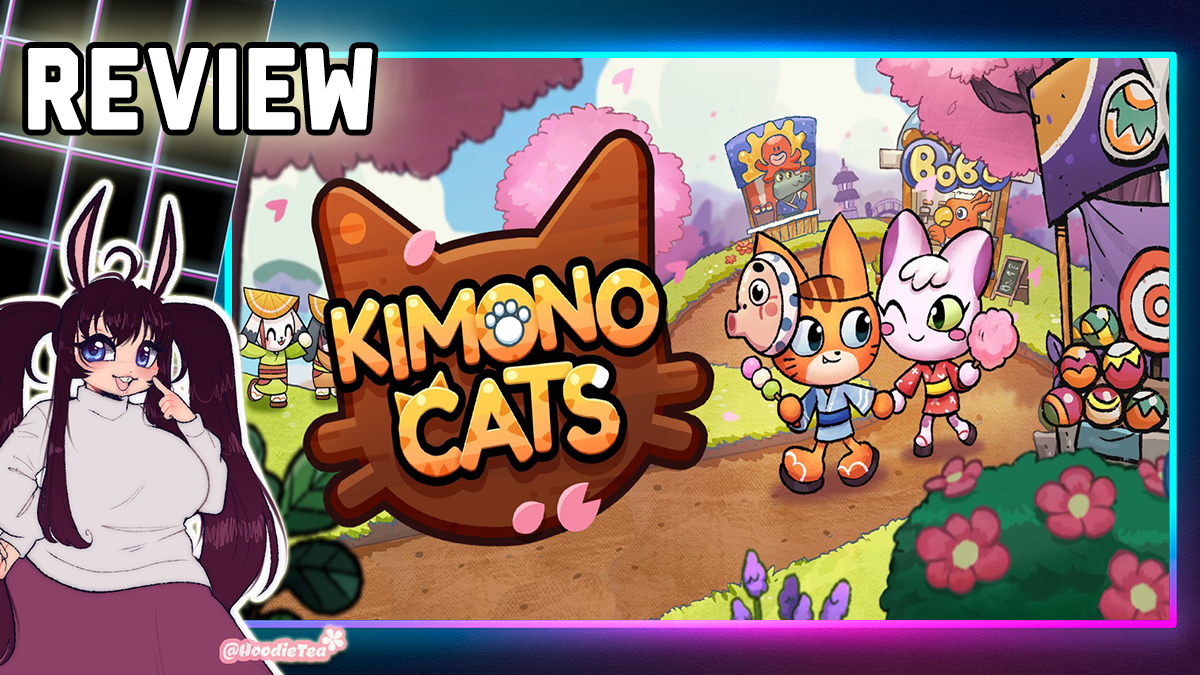
Kimono Cats – Nintendo Switch Review

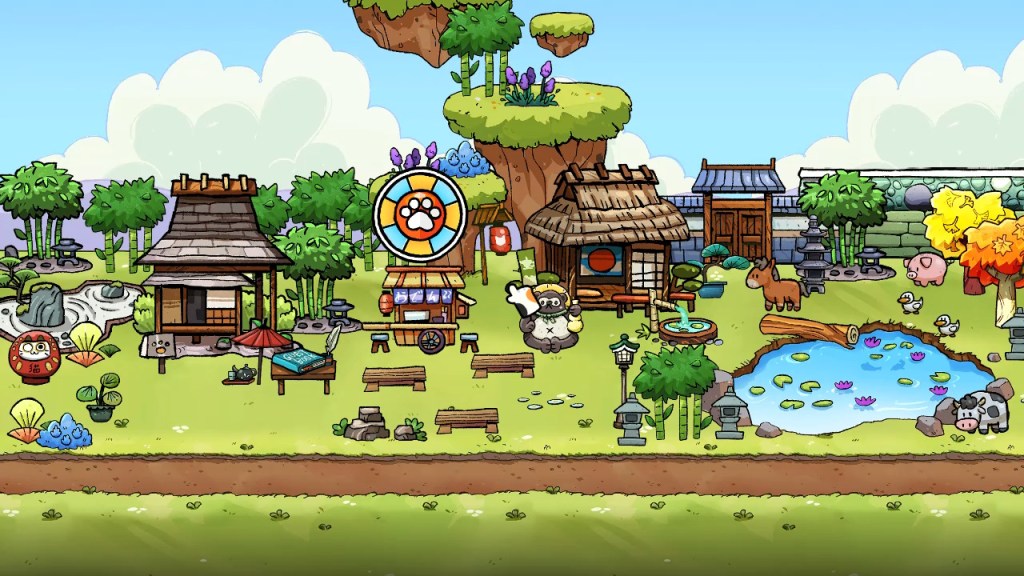
Overview – developed by HumaNature Studios and published by RedDeer.Games, Kimono Cats is a cosy adventure game based in old Japan about a pair of cats, who go on a trip through the festivals of Edo. By throwing darts, collect coins, items and play mini-games to create a vibrant village of your own. This title is available on Steam and Nintendo Switch, with a link to each version of the game at the bottom of this review.

Disclaimer: before I get into the review, I would like to thank Evolve PR for providing the copy of Kimono Cats that was used for this piece, via the Terminals service. The provision of this software has not influenced the contents of this review, all thoughts and opinions contained within are my own.

Now with the introductions out of the way, let’s get into the review. This title is light on plot, so I will be adding what little story there is to the gameplay discussion. I will also be covering the core mechanics of the game, so I can leave some of the surprises for players to find themselves.

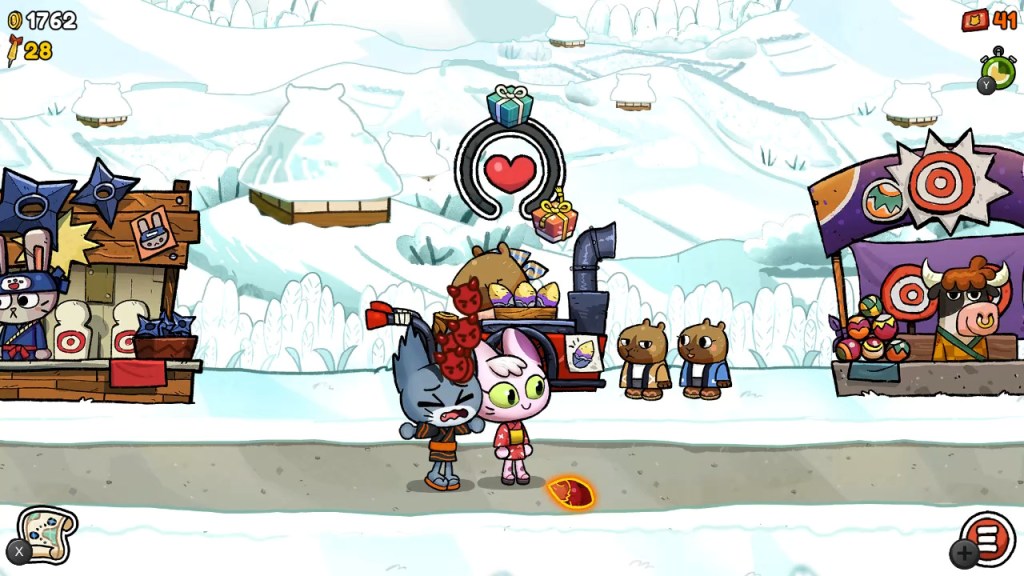
Gameplay – Kimono Cats is a cosy adventure, where the player takes the role of a cat, wanting to take their partner on a romantic trip through the Edo Festivals. The adorable cats adorned in colourful kimonos, set off across the 18 festival roads. On their journey, they will interact with the different festival stalls, performing activities and building affinity between the two. On this long trip through Edo, experience the magic of old Japan.

During the journey through each of the festival stages, there will be bubbles that float across the top of the screen. The player can pop these bubbles using darts, aiming them left and right and releasing them. These bubbles are split into several types, with effects that will affect the relationship between the cat pair. The main types of bubbles are the mini-game and event bubbles, which will appear in abundance on screen.

The mini game bubbles contain a variety of different challenges, including goldfish scooping, ball tosses and even shuriken throwing. By completing the challenges, the player will gain points that are added to the affinity meter. These points are based on the performance of the player, with the best score gaining a bonus of coins. As the player makes it through the different festivals, there will be new challenges and upgrades challenges to play.

Then there are the events, which will are split into good and bad. The positive events will give set amounts of points to the relationship meter, helping to build the affinity faster. Alongside the positives are negatives, which will drain points from the affinity meter. These can stay negative for a time, but if the player is able to hit a special item they will cure negative effects. Last are the special bubbles which cause a variety of effects.

Some of them will alter the atmosphere of the stage, turning it from day to night, or even making it rain. Then there are the randomiser effects, which will speed up the bubble speed, obscure them and perform other effects. Some will provide bonuses like additional coins and darts, as there are a limited number that the player can use. The effective use of bubbles is directly tied to the progression, as the affinity meter has levels tied to them.

When the affinity meter is filled half way, a reward will be provided in a blue box. Then when the meter is fully filled, the player will be rewarded with a red box. The rewards inside the boxes include coins, which will increase the stage meter. If the progression meter is fully filled, the player will be able to move onto the next stage, unlocking a reward at that point. As the player progresses, new challenges, events and features will be added for players to enjoy.

Then there is the village design mode, where players can create their dream village, using the items collected from the festival roads. The various buildings, plants and decorations can be freely placed how the player wants to. This is alongside the ability to expand the village by spending coins, giving players more space for renovations. Items for the village can be bought from the shop, using a gacha style system to randomise the items obtained.

As the player makes their way through the adventure, they will be able to view the items and events that have been collected. The first is the My Sets collection, where the player will be able to view all of the collected village items. When a set is complete, the player will be able to unlock special reward items. Then there is the bubble album, which will show the different bubble events that have been used, with additional bubbles added with each stage clear.

The last element of the gameplay to cover is the social play, where players can interact with kimono cats from across the world. Using the social mechanics, players can trade gifts with each other, send cards and visit friend villages. This cosy system is designed to foster community, allowing players to see the colourful creations. For those who don’t play online games, there are offline villages to visit, with special mechanics in these neighbouring communities.

Now with the gameplay covered, it is time to discuss the other aspects of this release, starting with the controls.

Controls – there is a fairly simple and easy to use control system, offering players an accessible gameplay experience. The majority of the festival gameplay uses a single button, with mini games that require additional inputs having on screen prompts. When navigating the village and other menus, there will be easy to understand tutorials, allowing players to get into the game easily. All controls work well, making it easy to pick up.

Difficulty – there is no real difficulty for this release, with no true failure state for this release. The only real element of challenge is the mini games, or aiming the darts to pop specific bubbles. With enough practice, players will be able to get the timing right for the activities, allowing for faster gains on the affection meter. And, if players run out of darts, they will be able to get more from friends or by performing activities in game.

Presentation – visually, Kimono Cats is an adorable game, with cute characters and beautifully drawn arts inspired by old Japan. The animations for the festivals, alongside the designs of the stalls and village items really build the atmosphere. All of the thematic elements make this a charming adventure, with a whimsical interpretation of the Edo festivals. The music and sound further enhances the atmosphere, tying the whole experience together.

Final Thoughts – I am not usually one for the cosy game genre, as they don’t usually grab my attention. However, I was greatly interested in this game, as I am a fan of games that feature old Japan and the culture. The festival theme was a wonderful choice, as the colourful animals running the stalls, the mini games and general atmosphere is adorable. I especially enjoy the village building, which was calming and a lot of fun.

All of the gameplay elements are well implemented, creating an experience that all player will be able to sink their teeth into. Especially with the gacha system, which makes each experience different. There is also the social element, which makes this perfect for friend groups, visiting villages and sending cards. I have no problem recommending this game to everyone, especially for families where they can link their home villages together.

In the end, I give Kimono Cats a final score of 5/5. This is an adorable and colorful adventure, which takes the festivals of Old Japan and reimagines them in a whimsical way, with lots of content to enjoy and social systems to enjoy with friends/family. If you want to check this game out for yourself, a link to each version of the game will be below.

Link to Nintendo Switch version (HERE)
Link to Steam version (HERE)
Lost Gems – Poy Poy (PlayStation)

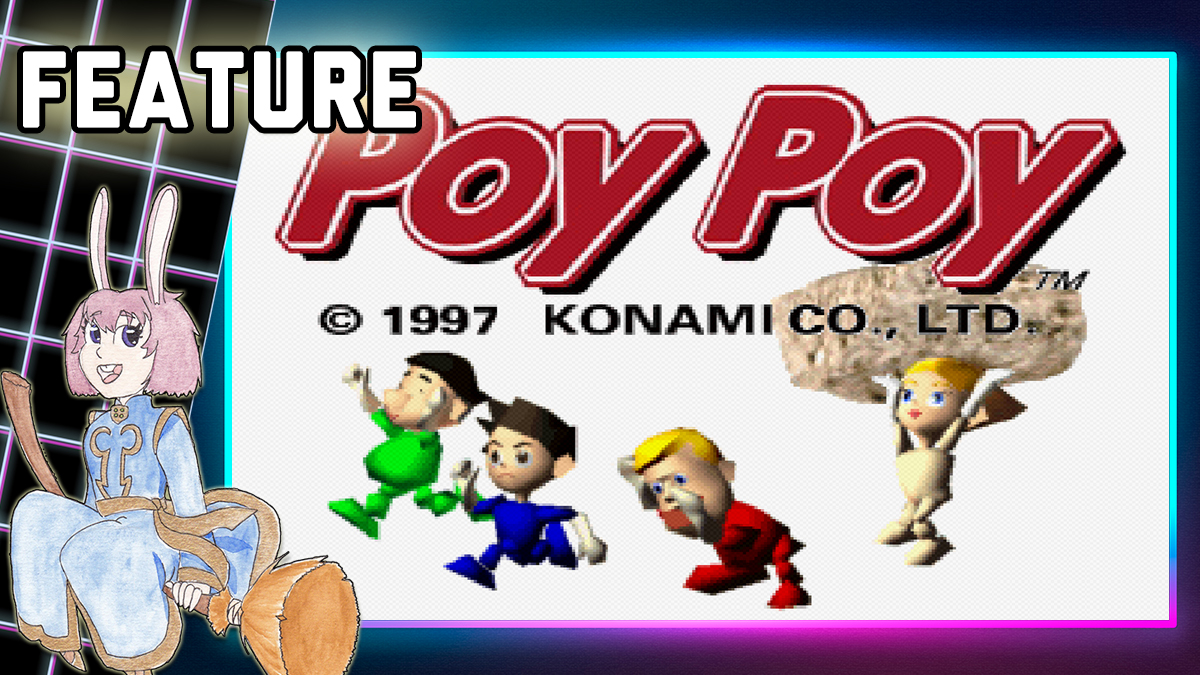
Hello and welcome to the latest entry in Lost Gems, the special feature series where I cover classic titles that have been forgotten, ignored or abandoned. This week, I will be covering one of the more experimental games for the PlayStation. The chaotic and frantic party action game Poy Poy, developed and published by Konami in 97/98. So let’s take a look at this weird and wacky multiplayer action game.

Disclaimer: while the game discussed here is no longer officially on sale, there are ways to obtain the game, this can be either through the second hand market, or through unofficial digital roms/rips. I do not condone or promote piracy, so there won’t be any links to roms or rips of the game being covered.

So with the introductions out of the way, let’s get started. I will be discussing the general gameplay experience, then give my personal thoughts on the title.

About the game

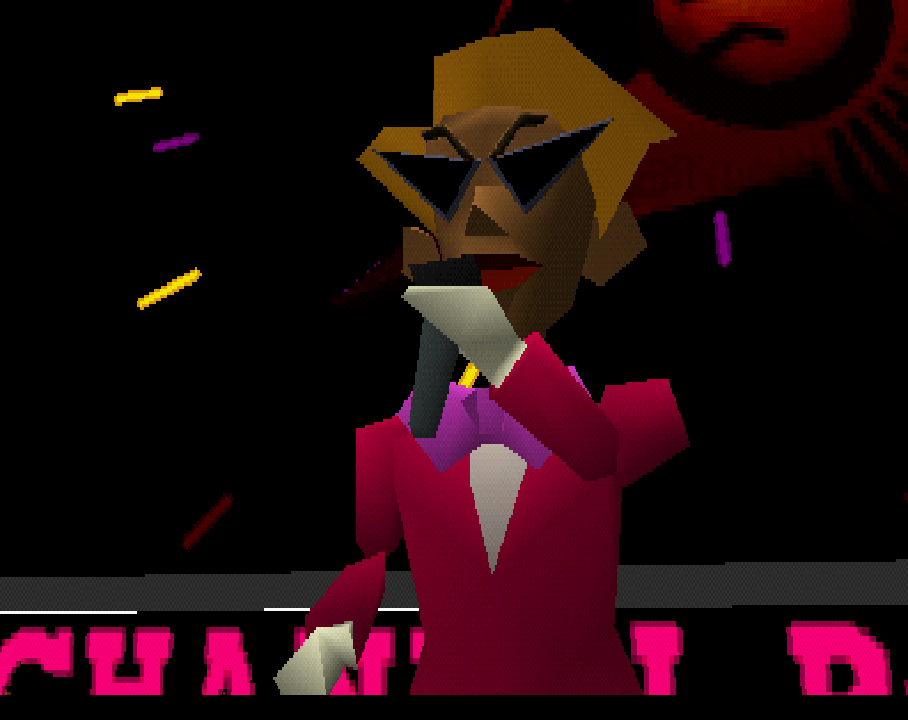
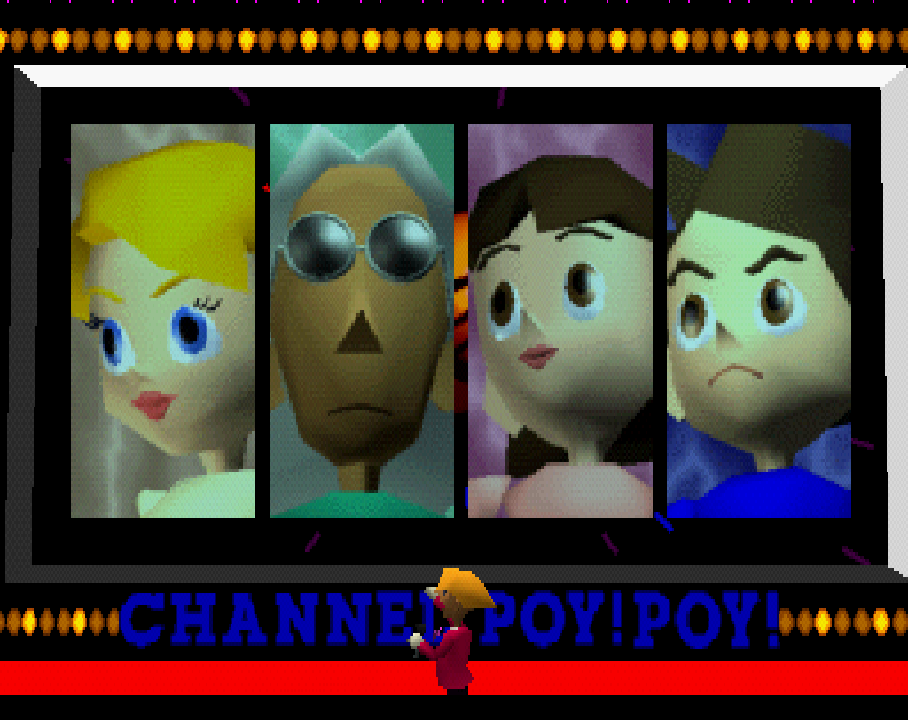
Poy Poy is a multiplayer action battle game, where four players battle it out in frantic prop based combat. Across the nation, Channel Poy Poy broadcasts the chaos of these battles, with the contestants fighting in the PoyPoy Cup. This tournament is contested over multiple stages, where the objective is to score the most points at the end of each round. At the end of the tournament, player who wins the final round will earn one million dollars.

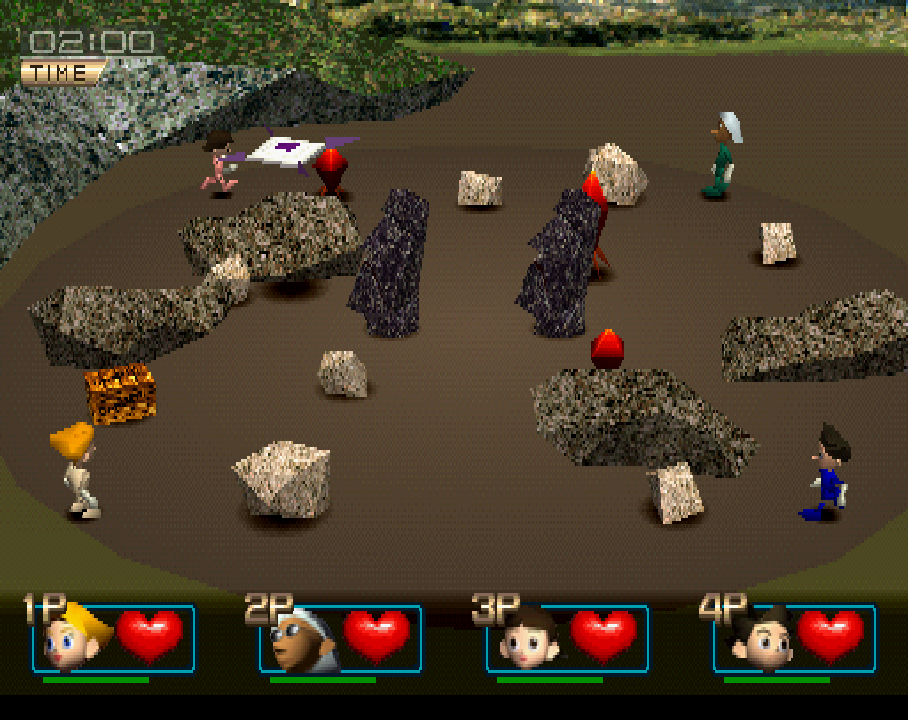
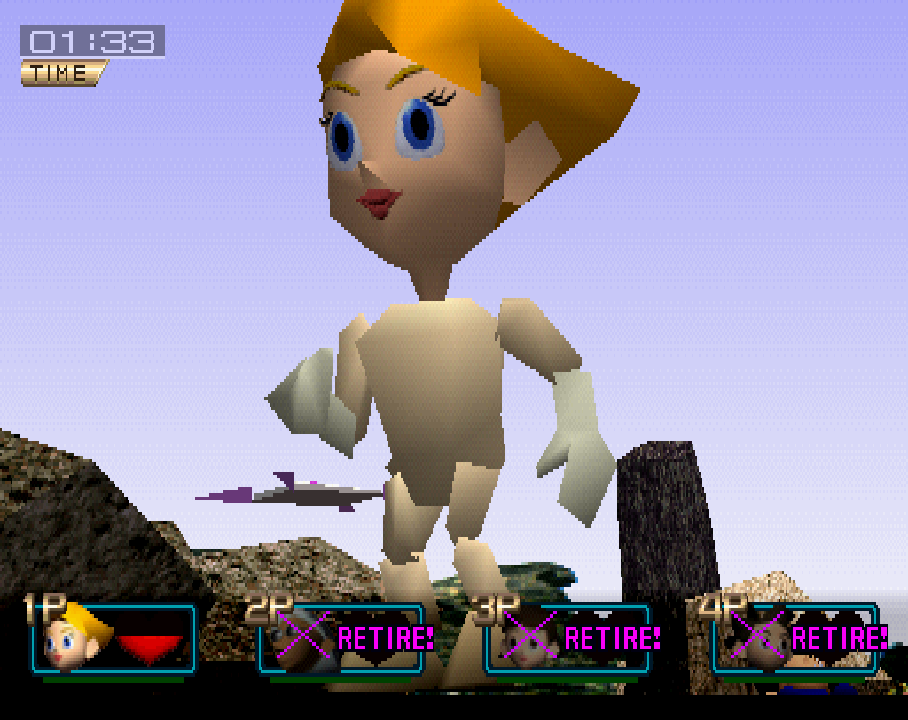
This game consists of two game modes, with the main one being the PoyPoy Cup. In this mode the player goes through the PoyPoy Tournament, where the objective is to score the most points in each stage. The stages are broken down into three rounds, where the four players will battle it out. During a round, the players must throw props like rocks and logs, alongside bombs and even each other to try and knock them out.

All of the battles are chaotic 4 player brawls, where there will be items, weapon props and even environmental hazards. The characters that can be used each have their own unique strengths and weaknesses, which will affect their combat ability. The character can also employ a special ability called Psycho Power, which is tied to gloves that will allow the use of special abilities. There are many gloves that can be used in the battles.

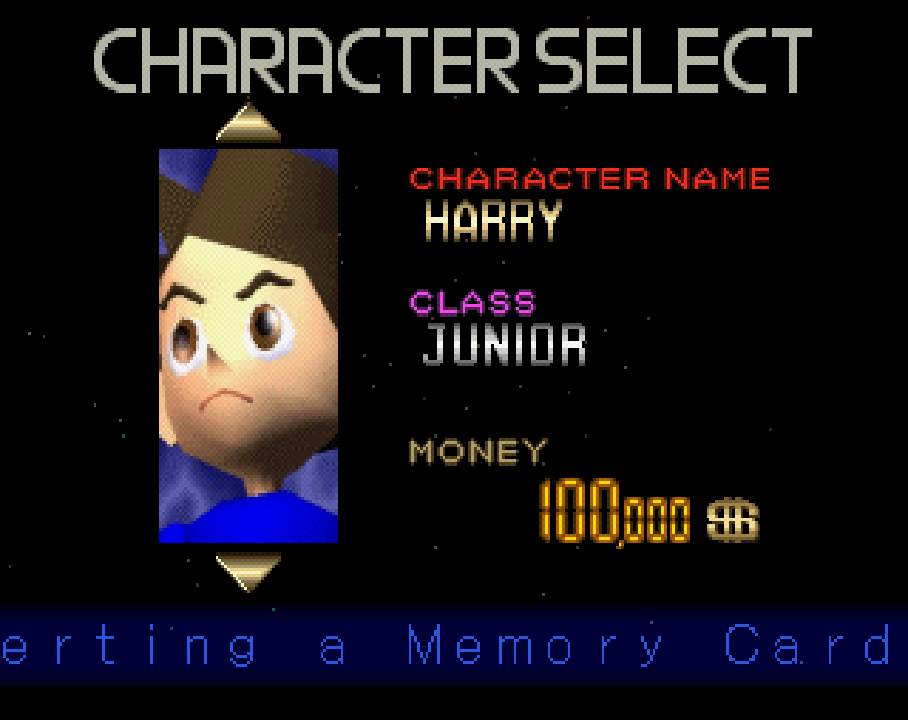
At the start of a tournament, the player can purchase a glove to use, starting off with 100,000 dollars to buy a glove. If the player wishes to save their money, they will be able to use the glove they start off with. As the player goes through each stage, they will accumulate money that can be used to buy more powerful gloves. There are multiple levels for each glove, with some of them being more suited to the strengths and weaknesses of characters.

Before the player can start the tournament, they must select the tournament they want to join. There are three different ratings to challenge, split into Junior, Senior and Master, denoting how tough they will be. After selecting the challenge rating, the player will then get into the tournament, selecting the first stage from the random roulette. There are six stages, with each one being removed from the random pool after being selected.

Inside the PoyPoy Cup mode, the player must get first place in each stage. To secure the top spot in each of the stages, the player must accumulate points, which are awarded based on player performance. At the end of the third round, if the player has managed to attain first place, they will progress to the next stage. But if the player is unable to secure the top spot, they will get a game over and need to continue, using up the limited credits.

Between stages in Junior Cup, the fourth place CPU will be eliminated and replaced with a new opponent. These opponents will increase in difficulty, with the same challenge ratings used by the cup. In Senior and Master Cup, the third and fourth place will be replaced, mixing the challenge up even more. If the player can fulfil special requirements in the Master Cup, they will be able to challenge a secret opponent and a final locked tournament.

At the end of the PoyPoy cup, a victory screen will show the final winner of the Million Dollar tournament. There is a screen for each character, although there is little is any difference between the victory screens. Once the Junior cup has been cleared, there will be additional characters unlocked to play in the game modes. This gives the game a lot of replay value, with secrets and special bonuses to unlock during the course of the game.

Secondary to the PoyPoy Cup, there is the Exhibition mode. This allows up to four players to battle it out, with the ability to use a multi-tap to connect four controllers. The Exhibition mode is useful as both a practice mode, as well as a great way to enjoy some chaotic action with other players. The battles can be modified to change the number of rounds, the stage that is played on and there will be a selection of gloves to select.

Personal thoughts

Poy Poy is one of those weird and wacky games, coming out during the experimental era of 3D gaming, where companies would take chanes on new concepts. Poy Poy is one of those games that really took the concept of new and unusual and ran with it. This led to something that stood out among the other offerings in the multiplayer space. This was one of those games that I saw as a kid, having no idea what was going on but I had a lot of fun playing.

It is one of those games that makes the most of the hardware limits, creating a colourful and charming experience.  The gameplay is simple yet it is both challenging and fun, offering a chaotic and frantic multiplayer party battler. But deeper below the surface is a challenging and highly replayable experience, with plenty of content to unlock. All of these elements come together, with that distinct Japanese style of the time.

I have a lot of love for how silly this game is, as it is one of those weird games that stuck with me, making it a go to for play with friend groups. There is a so much chaos that can be caused with a few friends, especially when they are relatively new to it. The first time you pick this up, it will take a little time to get used to but after a while everything just clicks. All of the mechanics can be picked up without needing to be explained too much.

Back in the day, there were many games that took established mechanics in a new direction, with mixed results. However, this game seems to have been relatively successful, leading to a sequel being released the year after. Sadly, these two games were the only games developed by Konami in this series, which could have been pretty big in later years. The potential was there for something crazy fun, especially as gaming tech evolved.

The game did get a re-release on the PlayStation Portable and Vita, with the ability to play the game digitally. Sadly this was the only release of the game after the original, with no additional ports in the future. Thankfully this hasn’t affected the game on the secondary market, making the game more attainable for those who want to check the game out. You may even be able to pick up a PlayStation handheld with the game loaded on it.

If you have enjoyed this feature, then please stick around and see what else catches your eye. I cover a wide range of games in reviews, get special previews and put out regular features. I have Lost Gems, Retro Revival where I discuss re-releases and the occasional Gaming Oddities piece, where I cover weird and wacky titles. So stay a while and have a look around.

MegaTagmension Blanc + Neptune VS Zombies – Steam Review

Overview – developed by Compile Heart and Tamsoft, with publishing handled by Idea Factory International, MegaTagmension Blanc + Neptune VS Zombies is an action spin off in the Neptunia franchise of RPGS. Set at Gamicademi, the Goddesses of Gamindustri are trying to save their school from closure by making a zombie movie, using zombies that have suddenly appeared at the school. This title is available on Steam, with a link to the game at the bottom of this review.

Disclaimer: before I get into the review, I would like to thank Idea Factory International, for providing the copy of MegaTagmension Blanc + Neptune VS Zombies used for this piece, via the Keymailer service. The provision of this software has not influenced the contents of this review, all thoughts and opinions contained within are my own.

Now with the introductions out of the way, let’s get into the review, starting with the story. I will be referring to the game as the shortened name MegaTag Blanc for the sake of brevity, I will also be covering the core aspects of the gameplay experience.

Story – Gamicademi, a school renowned for educating goddesses in the ways of human life. Unfortunately, despite the accolades of the school, the threat of closure looms over them. In an attempt to stop this, a group of students, led by Blanc and Neptune set out to save the academy. To achieve this, they set out to make a zombie movie, but suddenly real zombies start appearing. But Blanc decides to use this situation to make the best Zombie movie ever.

Gameplay – MegaTagmension Blanc + Neptune VS Zombies is an arena action game, where the objective is to clear the mission for each of the stages. The game is broken down into scenes, where the narrative plays out, telling the story of the CPU goddesses making their movie, while dealing with the zombies. Each scene is broken down into individual cuts, where an objective must be completed within the different area of Gamicademi.

The vast majority of the gameplay experience takes place in these stages, with the player choosing one or two players to deploy into battle. The game starts off with two characters, with Blanc and Neptune as the starting pair, but as the game progresses, more characters will be added to the roster. Each of the characters have their own unique weapons, fighting styles and mechanics that can be used in the battle against the undead.

Inside the battle stages, the player will be able to move around the arena freely, as enemies spawn in to swarm and attack. To defeat the enemies, each character has a light and heavy attack, which can be chained together to create spectacular combos. It is also possible for the player to launch enemies, following up and dealing devastating aerial attacks. The basic strikes are the most common way to defeat enemies, but not the only attacks to use.

Each of the characters has four special attacks, which can be devastating to enemies all around them. These special moves require SP power to be deployed, with a meter next to the character icon onscreen. The meter fills up over time, with the attacks being usable when filled. To use these skills, the player must press guard and a face button, which allows the attacks to be set up and deployed strategically. This adds to the fast paced chaos of battle.

The special attacks are not the flashiest of attacks that each character has in their arsenal. All of the characters have a special EXE Drive attack, which is the ultimate attack for that character. To use this attack, the player will need to charge up the EXE meter, which is above the health bar and is filled by damaging enemies. To deploy this attack, the meter must be at least 30 percent filled, with more damage if there is more energy charged up.

All of the playable characters have a special transformation, which uses the EXE gauge to transform the active character into their special form. In this special form, the character will be more powerful, dealing increased damage to enemies while in this powered up state. The player can return to their standard form at any time, preserving their EXE energy, but if the player unleashes the ultimate EXE Drive, they will transform back immediately.

MegaTag Blanc uses a tag team system, with the ability to switch between characters in battle. This allows for players to mix up their strategy, switching between characters to use their own special skills and traits in combat. There is also a special attack that can be used with both characters, which is called the Lily Special, where both characters unleash their EXE drive attack. This uses 50 percent of the EXE energy, dealing huge damage to enemies.

The tag partner is not the only character that can assist the player, as there are two supporters that can be used during a stage. These characters will provide various buffs, like increased power and defense for a limited time. To use these supporters, they will charge naturally and a prompt will appear on screen to activate them. The player starts with two supporters, but more can be unlocked over the course of the game.

When a stage is cleared, the player will get a ranking for their performance. There are four points that players are rated on, with the most important being the time taken to clear the stage. Then there is a penalty based on failure, the number of items used and the last thing players are judged on is the combos done. Based on hidden factors, the player will be given a rating with the highest being SSS, which is often for a super fast clear.

Players will be rewarded with experience points, money rewards and special items. There will also be special rewards for players to collect, which are dropped from enemies that are defeated in battle. As the player gains experience, they will be able to level up the characters in the tag team. When characters level up, their Lily rank will increase, making the special combo EXE Drive attacks even more powerful during battles.

The items collected serve a variety of purposes, with the most important being the credits, which are used in the in game shop. Here new items can be purchased, like weaponry, accessories and temporary power boosts. Each character has additional weapons that can be purchased, with three of them for the regular characters, and at least one extra for most of the transformations. These weapons will increase the power of the character in battle.

On the main menu, there is a setup menu where players can adjust the characters. Here they can be outfitted with more powerful weapons, apply patches to the weapons and give characters accessories. There is also a special system to increase the stats of characters, though a system called AP, which is earned in battle. Using these points, players will be able to increase character health, power and more with these accumulated points.

There are many secrets that can be discovered during play, with treasures, interactions and special scenes that can appear. As the player makes their way through the game, they will be able to uncover these secrets through choices made. However, to obtain all of the secrets within the game, players will need to play through the game multiple times. There is a gallery where scenes can be viewed and hints for secrets will be given.

The last element to discuss is the co-op mode, which is a special online multiplayer feature, where up to four players can work together to take on special challenges. This mode is separate from the main story of the game, where all level progress and unlocks are carried over. All of the playable characters are available immediately here also, including the transformed versions of characters. This allows characters to use any character they want.

In the multiplayer mode, the player can connect online with other players from across the world. This is achieved by setting up or joining rooms, jumping into play with friends or other players. But for those who don’t want to play with others, the challenges of the co-op mode can be played entirely solo, although it will be challenging. This gives the player even more content to dive into, further expanding the value on offer for players.

Now with the gameplay covered, it is time to discuss the other aspects of this release, starting with the controls.

Controls – this game can be played with a mouse and keyboard or a controller, with the latter being the recommended way to enjoy the game. This is due to the heavy amount of action that occurs on screen, as well as the chaos of the zombie hordes attacking the player. The camera and movement is solid, with responsive inputs for attacks, skills and special moves. All of the inputs are laid out in a way that is comfortable, working well with a variety of input options.

Difficulty – there is a fairly moderate amount of challenge to this release, with the levelling system being tied to how tough the battles are. Each of the stages have a level tied to them, with the difficulty shown as a level tied to the stage. But with a little time spent playing the cleared stages, weaker characters can be powered up quickly for tougher stages. The biggest challenge is to get the triple S ratings in all stages, which can be pretty hard to do.

Presentation – from a visual perspective, the game looks amazing, with the bouncy character models and gorgeous portrait art that Neptunia games are known for. The stages are open and detailed well, working to keep the focus on the action on screen, with 2D art for settings that fits the stages. Everything flows smoothly with no lag or delay. The story scenes are done well, using the visual novel style with the characters being expressive.

The sound for this release is excellent, with a bright and happy intro theme that is fun and energetic, setting the tone well for the adventure. This is accompanied by the opening animation, which adds to the comedic tone the game wants to set. Then there is the main soundtrack, which has some very catchy melodies. All capped off with English and Japanese VO, featuring the regular cast of the Neptunia franchise in their roles.

Final Thoughts – this is an older game but it is an excellent game to add to your library, there is a lot of fun to be had with this release. The action style of gameplay is different, as it is something that is rarely used in the franchise, but works fantastically well. Everything flows well, with the fast paced combat being a real joy to get stuck into. I very much enjoyed this game, with the story, characters and comedic tone of the experience maintaining that distinct charm.  

There is little in terms of downside for this release, although it may feel a little brief to some there is plenty of content on offer. The main story is fun and the co-op mode expands the game further, with special challenges based on days. All of the elements come together well, making this one of those games that players who don’t enjoy RPGs can dive into. So I am happy to recommend this to everyone, even those who aren’t that much into the usual Neptunia fare.

In the end, I give MegaTagmension Blanc + Neptune VS Zombies a final score of 5/5. This is a fun and enjoyable action romp, taking the characters of the different Neptunia dimensions, bringing them together and offering a chaotic game that is a hell of a lot of fun. If you want to check this title out for yourself, a link to the game will be below.

Link to Steam version (HERE)
Lost Gems – Bomberman ’93 (PC-Engine)

Hello and welcome back to Lost Gems, the special feature where I cover titles that have been forgotten, left behind or simply removed from distribution. This week I will be covering a classic puzzle action game, developed by HUDSON Soft for the NEC PC-Engine. Bomberman ’93 which first released in 1992, with additional releases over the years. So join me as I take a look at this maze based puzzle action title, which became a cult classic over time.

Disclaimer: while the game discussed here is no longer officially on sale, there are ways to obtain the game. This can be either through the second hand market, or via unofficial digital roms/rips. I do not condone or promote piracy, so there won’t be any links to roms or rips of the game being covered.

So with the introductions out of the way, let’s get started. I will be discussing the general game experience, then give my personal thoughts on the title.

About the game

Bomberman ’93 is a maze based puzzle action game, where the objective is to clear each stage of enemies, then find the exit. In this release, the Black Bomberman has stolen special chips from the pan-galactic bureau’s super computer. Due to this, the super detective White Bomberman has been deployed, looking to recover the chips. To achieve this, Bomberman must explore the planets of the Magellan solar system, then track down the Black Bomberman.

This title has two gameplay modes for players to select from, with the option of Normal Game and Battle Game. The Normal Game is the single player experience, where the player will make their way through 56 levels, split into 7 worlds. Each of the 7 worlds contains 8 stages, with the final stage of each being a boss battle. During the standard levels, the player must navigate the mazes, using bombs to destroy blocks and fight enemies.

All of the stages and the mazes use a grid based tile system, with the four cardinal directions being used by the player and enemies. At the beginning of the game, the player will start off with a single bomb at power level one. The explosion range for the flames starts by expanding a single tile in all directions, destroying the soft blocks and enemies that make contact with the flames. The player will also die if they are making contact with the flames.

During a stage, when destroying blocks, there will be an item that could appear for the stage. These are usually limited to one per stage, with a second item appearing rarely. The items will power up the player, increasing the power level of the bombs, the number of bombs and special upgrades. In the even the player dies, they will keep their bombs and firepower, but the special upgrades like speed increases will be lost.

When the player clears all of the enemies of the stage, they will be able to exit the stage and move onto the next. To get to the exit, the player will need uncover it as it is hidden under a block. If the player has not found the item for the stage, the block hiding the item will flash red. However, the bonus item and exit will not be revealed when enemies are cleared. There is also a time limit for each of the stages, with four minutes to clear the regular stages.

In the event that the time limit expires, any enemies still left over will disappear and be replaced with Pontans, a deadly enemy that will hunt down the player. But this is not the only additional threat that can appear. If the player accidentally bombs an exit or item, there will be a sudden monster spawn, attacking the player and hunting them down. This applies further pressure to the player, which can cause mistakes to be made.

The stages will start off as simple squares, but the further the player gets through the game, the more complex the stages become. These stage layouts will scroll horizontally and vertically, expanding the stages from a single screen to multiple. Special mechanics will appear, like teleportation points and gates, making the stages more complex and challenging. The addition of these mechanics adds more puzzle elements to the stages.

When the 7 standard stages have been cleared, the player will face the boss for the planet. In these battles, the player will need to land multiple hits on the enemy, while avoiding their large scale attacks. There will be special mechanics for each boss, like spawning extra enemies or using unleashing flame attacks. The player will have 9 minutes to clear the battle, if the timer expires, the player will die and the battle will restart.

Between worlds, a special little scene will occur showing Bomberman interacting with the boss of the stage, which have a cutesy charm to them After clearing all of the main worlds, the player will gain access to the final world. However, this can be a long road, with the player having limited continues to get through the game. But there is a password and save system, which will allow players to be able to get further into the game.

Then we have the Battle Game, which is the multiplayer mode where up to 5 players can fight it out. In this multiplayer battle mode, the settings are limited, with the option for up to 5 wins and bots to make the most of the mode. There are 8 stages to select from in this mode, with the classic grey and green arena, alongside multiple gimmick stages. There is a lot of depth to the multiplayer, making it a perfect addition to game nights with friends and family.

Personal Thoughts

I have a lot of love for Bomberman as a series, having played it on the PC-Engine, Super Nintendo and many other platforms. I have many happy memories of playing this series with family, with the battle mode being a common occurrence during family game nights. While I had more experience with Super Bomberman, one of my earliest memories of the series is with this game. Which was due to my father importing the PC-Engine back in the 90s.

There is a lot of fun to be had with this game, as it is one of the better early titles from a single player perspective. I have been playing this game, alongside many others in the series a lot over the years, even having it on the Wii Virtual Console. This is one of those games that is fairly timeless, having aged very well over the past 30 years. Everything looks clean and the sprites are bold, there is also the inclusion of colourful cutscenes in game.

The PC-Engine is a special little system, with the way that the system utilized a mix of 8-Bit CPU and dual 16-Bit graphics, allowing a tremendous amount of colors on screen. This makes the visuals of the game pop, with many games feeling like they did in arcades. The sound is also excellent, with bright music and effects that really stood out for the time. This alongside the high quality library, really pushed this series into cult status with players then and now.

This title was made to push the PC-Engine GT Turbo Express, offering a special mode called Com Link, where the player is able to link systems to play. This was a very special feature, which would have been very cool to experience. There were two versions of Bomberman ’93 that were released back in the day, with a “Special Version” which contained only the multiplayer component. This variant is much more expensive due to the rarity of the game.

Bomberman ’93 was re-released twice, with the first being through the Wii/Wii U Virtual Console. Then in 2020, Konami, who now owns all of the Hudson trademarks and properties announced and released the PC-Engine/Turbografx-16 Mini systems. With the release of these micro consoles, players were once again introduced to this game. However, this system was very quickly discontinued and removed from distribution.

Thankfully, the game is relatively affordable on the secondary market, with the standard version being fairly common. This makes it pretty attainable for those who want to pick it up, but the special multiplayer only version is much more expensive due to rarity. The Mini systems are fairly expensive, but this does contain a significant number of games, as well as becoming increasingly rare due to collectors buying them for resale.

I have a fondness for this game and series in general, with many games released over the years. Sadly, the franchise has hit a bit of a rough patch with Konami at the helm, slowing down the releases from several a year to one every few years. This reduction in titles has given the teams the chance to make games with more depth, but makes the series more forgettable. Especially with the lack of smaller games at reasonable prices to keep interest up.

With the release of the Nintendo Switch Online libraries, it is one of those systems that I am surprised didn’t make the jump. As the Virtual Console was on the previous systems, it would be wonderful to see the classic Bomberman games, especially the early games on the NSO service. But it appears that Konami has no interest, preferring to keep most of their inherited library of games to themselves, or release them as pachinko machines mostly.

If you have enjoyed this feature, then please stick around and see what else catches your eye. I cover a wide range of games in reviews, get special previews and put out regular features. I have Lost Gems, Retro Revival where I discuss re-releases and the occasional Gaming Oddities piece, where I cover weird and wacky titles. So stay a while and have a look around.

MAVRIX by Matt Jones (Early Access) – Steam Review

Overview – developed by Third Kind Games and published by Cascade Interactive, MAVRIX by Matt Jones is an online mountain bike game, where players from aroundthe world can carve lines across an open world. Take on the world across the various trails, riding down mountains, through forests and across constructed bike parks. This title is currently on Steam and Epic games, available as an early access title, with links the each version at the bottom of the review.

Disclaimer: before I get into the content, I would like to thank the rep for Cascade Interactive who provided the copy of MAVRIX by Matt Jones used for this review, via the Keymailer service. The provision of this software has not influenced the contents of this piece, all thoughts and opinions contained within are my own.

Now with the introductions out of the way, let’s get started. As this game is in early access, I will not be doing a traditional review with a score, but I will be approaching it like any other game. There is no real story for this game, so I will be going straight into the gameplay. I will also be referring to the game as simply MAVRIX for the sake of brevity.

Gameplay – MAVRIX is an open world, massive multiplayer mountain biking game, in the vein of games like Riders Republic and others in the extreme sports genre. In this, the player takes the role of a new biker who has entered the MAVRIX MTB park. This verdant playground is filled with dirt paths, constructed ramps and rolling hills to explore. All starting from the central loading point of the players Van, serving as the start point.

From here the player can explore the world of MAVRIX, using a fairly unique control method where the player controls the bike and rider’s body separately. Using a Twin-Stick control system, the player will be able to move the handlebars, while shifting the weight of the rider. These mechanics allow the player to experience an immersive riding experience, while giving greater control over the riding experience at high speeds.

These controls also allow players to be more creative while riding, performing tricks like wheelies and even full flips, using both control sticks to balance movement. Alongside these special dual analogue controls, there are also independent brake levers, using the triggers offering front and back brake control. These controls combine with the physics engine, allowing the bikes to react as realistically as possible while hitting the trails.

There is an emphasis with exploration in this release, which is an unfortunate detriment to the game. As there is a large open area to explore, there will be chairlifts to reach set summit points. These cannot be fast travelled to currently, with the only way to reach them being manually. This also applies to the trails themselves that the players ride, which are hidden throughout the map, shown through signs that can be hard to see while riding.

When a trail is located, the challenge for it will be initiated. To complete the rail, the player must ride along the paths, ramps and jumps to pass each checkpoint. If the player leaves the trail, the will get a failure and need to start again, returning to a checkpoint. The checkpoint reset will also occur if the player wipes out, causing progress to be lost. If the player can successfully clear the trail they are riding, races are unlocked with times going onto the rankings.

The world of MAVRIX is split into multiple sub regions, each with their own unique traits and challenges. They each have their own chairlifts, which are locked by default. To open up a lift, the player will need complete the trails within that region, with the different points requiring their own number of trail clears. This does give the game some progression that can be seen on the map, but there are additional objectives that can be completed.

At the Van, there are challenges that can completed to gain sponsorships, which will provide the player with special unlocks and currency. Speaking of currency, there is a customisation shop, which will allow the player to buy new bike styles, clothing and components using coins. These are earned by completing challenges, trails and more, but there is also the option for in game purchases for game content for those who want to play.

The last thing to discuss is the connectivity. As an online multiplayer game, the game is reliant on servers to play, with the ability to perform dedicated matchmaking, or join a player in game. Due to this, there will be other players in the world, these players are like phantoms, with no interactions or collisions between riders. On the map, the different players will show up as icons, showing where they are riding and they will appear on rankings, but little else currently.

Now with the gameplay covered, it is time to move onto the other aspects of this title, starting with the controls.

Controls – MAVRIX uses a control scheme that is reminiscent of games like Skate, where both Sticks are used for full control of the bike and rider. This is unique as it does make for some interesting physics, but can be a little awkward to get used to. The braking and peddling are on the shoulders/triggers, with the reverse on the face buttons. This does take a little getting used to, but with some patience it can be adapted to and does work well.

Difficulty – there isn’t much in terms of traditional difficulty, with the real challenge being navigating the world, which unfortunately feels empty. There is a distinct lack of markers, with players needing to find the trails themselves. As a side effect of this exploration, there is some frustration when it comes to finding the trails. Sadly this lack of a real challenge can make the game feel boring, so hopefully more will be added later.

Presentation – visually, the game looks decent on medium to high settings, offering some very pleasant vistas and landscapes. All of the assets worked well, although there was the occasional visual bug. There is a first person view, but it is possible to get motion sickness from this. The sound for the game is decent, with solid effects accompanied by three radios, playing a library of licensed music and one with some voice bites added.

Final Thoughts – As MAVRIX is an early access game, it is not the final product so my experience may not match the final vision. I had a relatively fun time with the game, although it does feel sparse and a little lifeless with the open world. There is enough to do for now, but once you find the trails and unlock all the cosmetics, there feels like that’s all of the game. The rankings/time attack for the trails do help, but I feel the game needs more content than there is.

I did enjoy the soundtrack, the physics for flips and the sensation of speed that is present. Riding the open spaces and down the hills in first person was cool, but it was disorienting when doing tricks. In general the experience is pleasant, with some good fun to have, especially with friends riding the trails together. I also very much enjoyed the radios for the game. However, I am unsure if I can recommend this game as it still very much in active development.

In the end, I am unable to give MAVRIX by Matt Jones a score, due to the game still being in early access development. This is a fairly enjoyable and fun game, with a lot of content to discover, but sadly the world itself feels a little barren and lifeless. There is some promise for this title, as it has the potential to be a fantastic and unique mountain biking experience, it just needs more polish. If you want to check it out for yourself, links to the game will be below.

Link to Steam version (HERE)
Link to EPIC version (HERE)

Yosei Wars – Review

Overview – developed by Nekete Games and published by RAWRLAB Games, Yosei Wars is an arcade style platforming game, developed for the Game Boy and brought to console via the GB Wrapper. As the fairy Hanoka, set out on a mission to rescue kidnapped tooth faries, who have been kidnapped by the junk food monsters. This title is available for Steam and Nintendo Switch, with a link to each version at the bottom of this review.

Disclaimer: before I get into the review, I would like to thank RAWRLAB Games for providing the copies of Yosei Wars that was used for this piece. The provision of this software has not influenced the contents of this review, all thoughts and opinions contained within are my own.

Now with the introductions out of the way, let’s get into the review, starting with the story. Please note, as this is a GB Wrapper game, the rom for the game will be included with the Steam version. This can be loaded onto a flash cart or Everdrive, so I will be covering the original hardware as its own segment.

Story – Long ago an alliance was forged, with the Junk Food Monsters and Tooth Fairies coming to an agreement. The Junk Food Monsters would cause teeth to fall out, with the Tooth Fairies collecting them. However, the monsters attacked the Fairies, capturing them all. The Fairies prayed to the god of teeth, but their pleas went unanswered. An explosion sent a shockwave across the land, with the Fairies disappearing. Now Hanoka, the last Fairy sets out to save them all.

Gameplay – Yosei Wars is a platform action game, inspired by games like Snow Bros, Bubble Bobble and Rod Land. The premise of this game is to save the Tooth Faries who have been kidnapped and trapped across 36 stages. In order to save the imprisoned sprites, the player needs to collect all of the teeth scattered across the stage. This may seem like an easy task, but there will be many hazards that will try to stop Hanoka from achieving her goal.

Inside each of the stages, there will be monsters that will wander on the stages, which are various junk foods and utensils. These monsters and enemies will kill Hanoka if contact is made, sending the player back to the start point of the stage. The most common monsters are the ice cream cones, who will walk back and forth on the platform. But there will also be forks that will rush the player, salt shakers that send out deadly clouds and more to contend with.

Alongside the enemies, there will also be spikes that will hurt Hanoka, killing her if any contact is made. To help the player get through the stages, they will be able to jump through specific platforms, use ladders and even use special monsters to cross gaps. But it is important not to dilly dally, as there is a time limit that players will need to be mindful. If the time limit expires, a life will be lost and the timer resets.

When the final tooth of a stage is collected, a special transition occurs. This means that Hanoka has activated her special Tooth Fairy powers, giving her the ability to fight back against the monsters. In Tooth Fairy mode, she will be able to fire special tooth bullets, which will kill enemies and break the fairy cage. If the player makes contact with the freed fairy, they will be added to the total and the stage is cleared, but if Hanoka dies, the fairy will be lost.

After set stage checkpoints, the player will encounter a boss monster. These stages function in a different way to the standard levels, changing the gameplay in an interesting way. At the start of the stage Hanoka has her power, this allows her to fight the boss, damaging them by hitting their weakpoint. These stages are tough, as the boss needs multiple hits to defeat, so the player will have three extra hits before death.

There are a total of 36 levels and 6 Bosses to defeat. Players have 10 lives as standard, with the ability to alter them in the settings. In the event that the player loses all of their lives, they will be prompted to continue. This does come at the cost of points earned during play, however, the default score penalty is set at 0 points. The penalty can also be modified in the settings, adding an extra layer of challenge to the game.

Outside of the main game, there are various extras that are bundled into this release. These include an art gallery, music player and bestiary, allowing players to check out the sights and sounds of the game. Also included are the various prototypes for the game, showing the progress of the game over the years. There is also a special monochrome variant of the game, which emulates the “green and green” look that the original DMG Game Boy had.

Now with the gameplay covered, it is time to discuss the other aspects of this release, starting with the controls.

Controls – there is a very simple and easy to use control system for this release, using only two buttons for all inputs. There is the Jump and Attack button, which are responsive and intuitive. The movement controls work really well, with the option for both D-pad and thumbstick input. All of the inputs work well and are comfortable on Nintendo Switch, various PC compatible controllers and the Steam Deck. This makes it very accessible to all players.

Difficulty – there is not a great amount of difficulty to this game on the standard setting, but for those who are looking for a greater challenge, there are additional settings. The easiest way to alter the game is to modify the difficulty, with Easy, Normal, Hard and Maniac. Then there are the life settings, with as few as 1 and as many as 30. The penalty for death can also be changed, making this a highly modular gameplay experience.

Presentation – this game feels straight out of the mid 90s, with a great use of color, sprite work and effects of the classic Game Boy era. All of the onscreen assets look very good, with no issues with clashing of color and everything is highly visable. The sound is done very well, with chiptune compositions that are bright and boss themes that add tension. Then there is the extra art, icons and screen elements that tie all of the game together.

Original Hardware – as the Steam version of the game has the Rom files included, there is the ability to load them onto a flash cart. All versions of the game can be played on Game Boy Color and Game Boy Advance, with the DMG and prototypes also working on the first model. The game and variants are fully compatible with original Hardware, with no issues or lag. This makes it a great option to take the game on the go, perfect for those without a Switch or Steam Deck.

Final Thoughts – I am fond of the Game Boy homebrew scene, having played some of the smaller games as well as offerings from RAWRLAB, Like Maron’s Day (reviewed HERE). This is a fun and enjoyable platformer, which feel like it would have fit perfectly during the original run of the system. All of the different game elements are crafted well, with responsive and challenging gameplay, that can be enjoyed by everyone.

I spent a fair amount of time playing the main official version of the game, alongside the monochrome and prototypes of the game. There is a lot of bang for your buck with this, as it allows players to experience more than just the main game. It is also an accessible game that players of all skill levels can enjoy. So I am happy to recommend this game, as it is a lot of fun inside of a rather modest and affordable price, especially with the amount of replay value.

In the end, I give Yosei Wars a final score of 5/5. This is an excellent homebrew package, offering a lot of arcade style platforming in a colourful package, alongside the different prototypes and extra content in an affordable package. If you want to check this game out for yourself, a link to each version is below.

Link to Nintendo Switch version (HERE)

Link to Steam version (HERE)
Beat Brush – Preview

Hello, and welcome to a special preview feature, highlighting a newly announced game that is currently in active development. Announced on August 5th 2025, Beat Brush from Kesha Games is coming soon to PC platforms. This title is a unique mix of cosy aesthetics, music and interactive art, where every movement paints sound across vibrant images. So please join me as I share some details of this title, as I was given a special hands-on preview.

Disclaimer: before I get into discussing this content, I want to extend my thanks to Kesha Games for reaching out, providing me with a special preview demo of the game. This title is currently in development, so my experience and the details provided may change.

Now with the introductions out of the way, let’s get into this special preiew, I will be giving some details about the game and then some personal thoughts.

About the game

Beat Brush is a new experimental title in the cosy games genre, mixing music and artistic expression. The premise is simple yet thought provoking, it’s the story of a girl who had it all, and burned out. On the edge of death, she revisits the events of her life as a gallery of living paintings. While exploring the gallery of life, every brushstroke and movement creates sound, giving life to the images that appear on screen.

Across 40 handcrafted events, experience a variety of imagery from pixelated landscapes, tranquil skies with paper planes and Studio Ghibli inspired dreamscapes. Each of these scenes tells a story, with details of the life that the girl lived, accompanied by the sounds of piano, theremin and more. As each movement of the mouse is made, the environment will change with greenery, flowers and paint that changes from level to level.

There will be mechanics that change from stage to stage, with some of them being a little more challenging than others. Is intended to keep the experience feeling exciting, with some elements of traditional games that have been added. Within the experience of Beat Brush, there is no predetermined goal in place, just the journey of the player and their brush. They can add as much or as little sound as they need, letting their feelings guide them.

In this game, there is a score element and rating system present. This will provide replay value for players, as previous scenes can be returned to, allowing players to enjoy the music again. But the true focus is on the journey, with the arcade and puzzle moments being a companion, not an adversary to the player. The themes of burnout, ambition and healing at the forefront, the aim here is to provide a restorative and reflective experience.

Personal Thoughts

Having been allowed a taste of Beat Brush through the special development demo, I can see the promise and intention behind it. The essence of cosy gaming is at the core of this experience, with the goal of providing an interactive meditative space. From what I have been able to play, I believe in the message of Beat Brush, telling a story that is reflective and soothes the soul. The depth and beauty of the game in motion further adds to this.

Having been allowed to get hands-on with an early build, I was able to play but a snippet of the true potential that can be realised. From this I can see the passion and creativity, which this solo developer has poured into this project. You can feel how deeply personal this is to creator, which is relatable with how common it is to feel burnout. It may feel basic and simple, but it is that simplicity that allows the magic of this experience to shine.

I am very hopeful to see more of this game, it is in early development, so things may change over time, with the details here varying from the final product. I will be keeping an eye on this game, seeing how it evolves and grows, looking forward to covering the full experience when it is ready. This is one of those games to watch, it is a little rough around the edges, but I expect them to be rounded off in the comings months.

If you want to learn more about the game, you can find details about Beat Brush on the official website (HERE), alongside the steam page (HERE). They also have social media pages, alongside a youtube page with links to all of them on the Beat Brush website.

Maiden Cops – Console Review

Overview – developed by Pippin Games and published by Eastasiasoft, Maiden Cops is a side scrolling brawler set in Maiden City, a metropolis where monster girls and humans live in harmony. However, the peace is shattered when the Liberators, a criminal syndicate make their move to take over the city, with the Maiden cops deployed to stop them. This title is on all consoles (the Nintendo Switch version is Asian only), with a link to each version at the bottom of this review.

Disclaimer: before I get into the review, I would like to thank Eastasiasoft for providing the versions of Maiden Cops that were used for this piece. The provision of this software has not influenced the contents of this review, all thoughts and opinions contained within are my own. Please note, if you want to play Maiden Cops on Nintendo Switch, you will need an account for either the Japanese or Hong Kong region.

Now with the introductions out of the way, let’s get into the review, starting with the story. I will be covering the core experience of the game, with some of the secrets and special content covered briefly.

Story – In Maiden City, monster girls and humans live in harmony, with the Maiden Cops keeping the peace across the city. On what was meant to be a regular peaceful day, the peace is shattered by the Liberators, an underground crime syndicate who seek to take over the city. An explosion at the Maiden City Prison leads to the criminals getting free. To deal with this incident, the Maiden Cops Nina, Priscilla and Meiga are deployed to take the city back and bring the Liberators down.

Gameplay – Maiden Cops is a side scrolling brawler, with three playable characters to select from, making up the Maiden Cops squad. The cute crime stoppers are Nina Usagi, an agile bunny girl who uses roller blades and acrobatic strikes. Then there is Priscilla Slamander, a lizard girl that uses her tail and claws to deal damage to enemies. To round it out is Meiga Holstaur, the powerhouse of the trio who uses her raw power to use the environment to beat enemies down.

There are two game modes for this game, with Maiden Cops Classic, where two players will be able to go through the game together. There are three credits, with three extra lives per credit to try and clear all of the stages. Then there is Maiden Cops Arcade, where a single player has 5 lives to get as far as they can. When all lives are lost in arcade mode, the game will end and players will be able to sumbit their scores to the leaderboard.

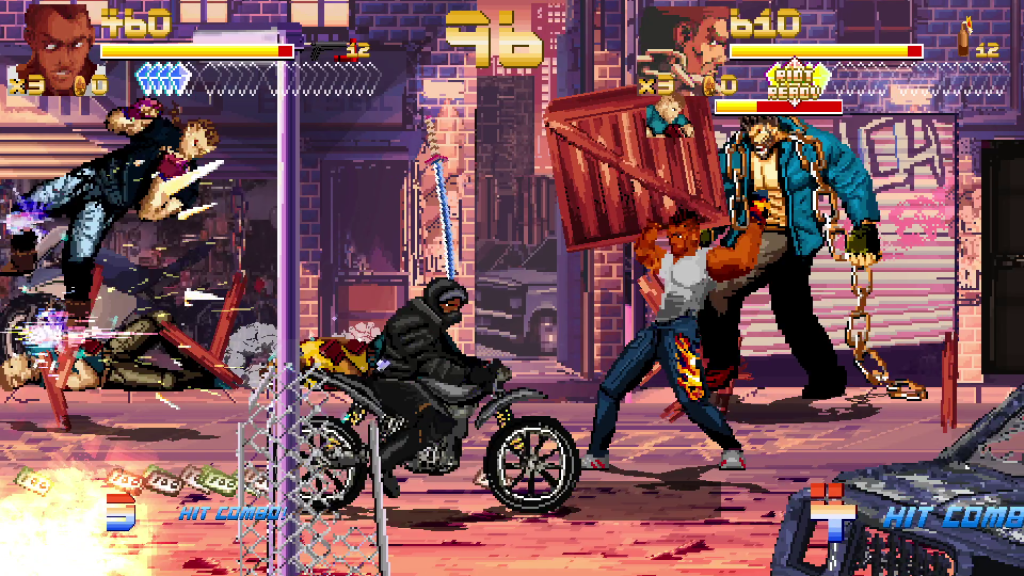
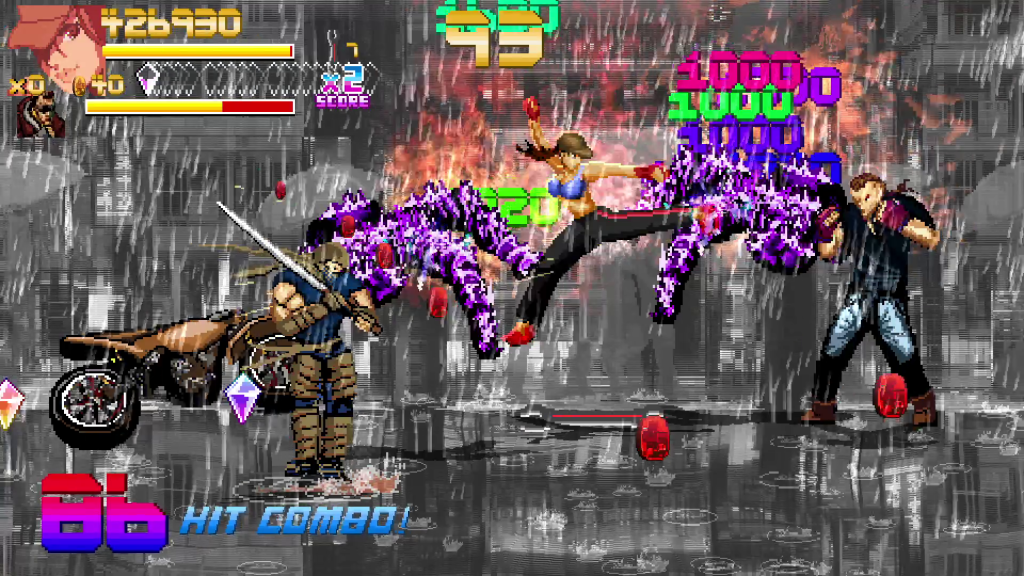
As a brawler, the player moves through each of the areas, fighting waves of enemies that will attempt to take out the crime fighters. The Maiden cops have a pretty easy to use set of moves, featuring a standard combo attack string, the ability to block and grapple attacks. The standard combo for each character allows for big damage to be done. These basic skills are shared across all of the girls, with varied animations tied to the character.

Alongside the core skills of the girls, there is a super move system, offering three powerful attacks to wipe out the criminal horde. These super moves require the player to charge up a meter on screen, which will cause icons to light up next to the character portrait. Each of the three attacks use up the stored energy, dealing massive damage to the enemies struck. The amount of energy used varies, so it is important to decide what move to use in each encounter.

As the players make their way through the battles, there will be items that appear, either dropped by enemies or from breaking objects. Many of the items provide points, like accessories and even the underwear for the girls can be picked up. Then there are the food items, restoring lost health when picked up. Last are the weapons, which can deal heavy damage to enemies, but these have durability and will disappear when used up or thrown.

Each of the stages is made up of multiple segments, with a boss fight at the end of the final segment. These battles can be pretty challenging, as the boss will strike with devastating power. Within these encounters, the player will need to use all their skills to be able to avoid being defeated. The special moves will be most effective to fight these powerful foes, which can be charged up easily, as there will be minions that appear with the boss.

If the player loses all their health, they will lose a life before jumping back into the game. When the player respawns, they will have full energy to use their special moves to get into the action quickly. In the event that all lives are lost in Maiden Cops Classic, a credit can be used. If all credits are used, the player will be able to continue playing, but their score will freeze at that point. This makes it possible to clear the game in a single session, at a cost.

When the stage is cleared, if the player still has their score active, the results screen will appear. In this screen, the player will get bonus points based on various points, like enemies defeated and time between waves. Based on the score gained, players will get a medal based on the score earned, with bronze, silver and gold.  These add a mild competitive element to multiplayer, pushing players to get the better score during 2 player.

Between stages and at points during them, there will be story cutscenes that push the narrative forward. These scenes are comedic and well made, offering players a humorous narrative that brings the world of Maiden Cops to life. The in-stage scenes are lively, with the character sprites showing their unique personalities. Whereas, the scenes that occur between stages are relatively static, with little animation for them.

There is a world map that will show all of the stages that the player can work through. As the player gets further into the game, each of the levels will be unlocked. When the players unlock stages, they will be able to jump to the cleared stages, allowing the player to quickly jump into the stage they stopped. This is good as it allows players to work through the game at their own pace, gaining as many points as possible to add to the total.

At the end of a play through for the game, players are given a results screen showing their performance during play. The score that they end the game with is then added to the bank, which can be used in the Maiden Shop. This is a special menu providing several bonuses for players to unlock, including images, costumes and more. There is also the inclusion of special awards, which are unlocked by fulfilling special requirements.

There is a lot of replay value in this release, as there are special unlocks that will change the way the game plays. Alongside the gallery features, with music and artworks that can be added, players can access a variety of game modifications. These will affect the way that the game plays, making it more chaotic when playing alone or with a partner. It will take a few attempts to unlock everything that game has to offer.

Now with the gameplay covered, it is time to discuss the other aspects of this release, starting with the controls.

Controls – as a brawler, there is a relatively standard control method, giving the game an arcade like feel. This emulates the 6 button setting, commonly used in arcades and by SEGA, which makes it perfect for using third party controllers. With remappable controllers, all players will be able to enjoy the game with their favourite pad. All of the inputs are responsive, reactive and feel great, especially with a Saturn controller or Arcade Stick.

Difficulty – this is a challenging game, but it is not the toughest arcade brawler out there. There are three difficulty settings, which will modulate the challenge on offer. The changes include the amount of super energy generated in battle, the number of credits to use and more. But with the ability to keep playing, the game can be beaten by players of all skill levels. The only flaw is one stage is an auto scroller, which is can feel unfair to some.

Presentation – visually, Maiden Cops is reminiscent of older arcade games, with bold sprites and colourful environments. All of the animations look very smooth, which are lively and have a charm to them. The stills for the load screens are amazing, with some amazing artwork and portraits, showing off the different characters. The sound ties all of the experience together, with a rocking soundtrack that works perfectly with each of the stages, the only thing missing is more voice work.

Final Thoughts – for many years I have been a fan of the arcade brawler, enjoying games like Final Fight, Streets of Rage and the various TMNT games. So when Maiden Cops was announced for console, I was very excited to jump into it. As a brawler it may feel basic, but there is a lot of depth with the combat and gameplay mechanics. There is a satisfying gameplay loop, with characters that have their own unique mechanics, personality and charm.

For players looking for a brawler with some meat on the bone, this has plenty to offer. The bonus content, replay value and general gameplay experience is well worth the price, especially as a budget arcade style brawler. There is a hefty amount of fanservice too, but this doesn’t get in the way of the experience. In general, I am more than happy to recommend this game, as it is perfect for fans of the brawler genre, offering chaotic fun for one player or a pair.

In the end, I give Maiden Cops a final score of 4.75/5. This arcade style brawler has a fun story, cute characters and lots of chaotic combat against monster girls, perfect for at home or on the go. There is lots to sink your teeth into, with plenty of challenges, unlocks and a global leaderboard for each platform to challenge. If you want to check this game out for yourself, a link to each version will be below.

Link to Nintendo Switch version (Japan)/(Hong Kong)

Link to PlayStation version (HERE)

Link to Xbox version (HERE)