Shooty Shooty Robot Invasion – Steam Review

Overview – developed and published by Bubby Darkstar, Shooty Shooty Robot Invasion is an absurdist first person shooter, set in Amerikaw that is being invaded evil robots. As Shooty, take on the robot horde and save the world from the robot invaders, while interacting with a colorful cast of idiotic NPCs throughout the game. This title is available exclusively for the Steam service, with a link to the game at the bottom of this review.

Disclaimer: before I get into the review, I would like to thank the representative who provided Shooty Shooty Robot Invasion for this piece, via the Keymailer service. The provision of this software has not influenced the contents of this review, all thoughts and opinion contained within are my own.

Now with the introductions out of the way, let’s get into the review, starting with the story. I will be covering the core aspects of the experience, as there are some secrets and special hidden things that I do not wish to spoil. NOTE: there is profanity and sexual humor in this game, please proceed at your own discretion.

Story – in Amerikaw, evil robots have invaded, attacking Califlorida where Shooty lives, who is part of the Force of Robot Killers (F.O.R.K.) who is rudely awoken by her commander. She is then briefed on the situation that is unfolding, before getting thrown into the battle against the robot menace. Now Shooty must get the other members of F.O.R.K. together, beat up the robot menace and save Amerikaw from these idotic robot assholes.

Gameplay – Shooty Shooty Robot Invasion is a colorful first person shooter, where the player can explore six large locations, running around and blasting robots. The player controls Shooty, a member of FORK, who is tasked with stopping the robot invasion, armed with robot hurty only bullets and rage. In each of the levels, Shooty must complete a series of objectives, like helping people, completing tasks and killing lots of robots.

During stages, there will be combat encounters with the evil robots, where the player must take down all the enemies in the area. When these encounters occur, the player will often be trapped in a confined space, battling out in arena combat. Battles can consist of a single group of bots, or multiple waves, only ending when all hostiles have been defeated. Shooty will be armed with a variety of weapons, like revolvers machine guns and even a Katana.

The ammo for the weaponry is infinite, meaning the player doesn’t have to worry about accuracy, letting them just spray bullets everywhere. The player will start most of the stages with one weapon, but it is possible to find additional guns to increase their arsenal. However, there are some sections where Shooty will be unarmed, which can have Shooty exploring and talking to the weird cast of NPCs, or having to fight with her bare hands.

Alongside the combat skills that Shooty possesses, she can also dash to dodge attacks, run to quickly cross areas and jump using parkour skills. While using her movement abilities while running and in the air, Shooty will be able to use an up close and personal attack, striking the foe. Usually this will only be able to hit one enemy, knocking them back, but if they are close to multiple enemies Shooty will be able to strike several of them at once.  

There is a wide variety of enemies to fight, with many of them themed to the areas that Shooty is currently in. Like cowboys, heavy rockers, angels and devils, as well as generic robots that appear frequently in the different stages. Some of the robots will take several hits to kill, others will have barriers and there will be others that are killed with one shot. The attacks will include melee, ranged and area of effect attacks that can really hurt Shooty.

At set points during the course of the game, the player will encounter powerful bosses, who can deal significant damage to Shooty. All of these battles take place in contained arenas, many of the bosses having wide reaching and deadly attacks. Some have area of effect attacks, summon additional foes and even have shields on them. Each of the bosses have multiple phases, often shown by hearts below their health bar, which is at the top of the screen.

While in battles, Shooty can take a fair amount of damage before being defeated. Shown as hearts on the side of the screen, taking damage will cause a heart to lose its color and break if damage is taken again. When all hearts are broken, Shooty will die and they will need to restart from a checkpoint. If a combat wave is completed, or a boss section is cleared, Shooty will regain all of the health she has lost, preparing her for the next battle.

During the stages, the places where Shooty needs to go, as well as the characters she needs to talk to are marked with red exclamations. But be careful, as some of the red quest markers will progress the stage to the next step. For the optional interactions, the player will see grey question marks above NPCs to talk to. The NPC dialogue is optional, providing humor and entertainment, as there are many weird and wacky characters to interact with.

Throughout the game, there will be character interactions, story dialogues and animated cutscenes, which are filled with many a bad word. These further the absurdity of the game experience, with characters that fit a wide range of archetypes. The story is pure madness, with robots to kill, evil conspiracies to uncover and a president that just wants to inspire Amerikaw. These scenes cannot be skipped, which may be off putting for some.

Hidden within each of the stages are secret areas, which will have special requirements to enter. These areas have a whole extra sub narrative to them, which further adds to the value of this experience. This experience is pretty long, offering a lot of content depth and replay value, as it may not be possible to find all of the secrets in a single play of the game. Sadly, there is only one save file for the game, meaning to start again, the save file needs to be wiped.

Now with the gameplay covered, it is time to discuss the other aspects of this release, starting with the controls.

Controls – the controls for this release are pretty well laid out and easy to use, using the traditional mouse and keyboard set up. There are few skills to use, with the movement, combat and the ability to use actions to go interact with the world. Players can also use Controller through a recent update, with mixed support for controllers, but using steam input will streamline the process. All controls are responsive, intuitive and lag free during the action.

Difficulty – there is a rather moderate difficulty curve to Shooty Shooty Robot Invasion, with the first stage working as a good tutorial. However, the further the player gets into the game, the more challenging the game will become, especially during the unarmed sections. Thankfully the tough sections have regular checkpoints, in the event of the player getting killed, leading to little progress lost. This game can be beaten with enough time and persistence.

Presentation – from a visual perspective, this title is gorgeous with hand drawn visuals, which are vibrant and add to the absurdity of the experience. The environmental design has this weird and wacky look to it, with the different themes, like western and heavy rock themed casinos, alongside the insanity of Califlorida. The character designs work extremely well, with all characters having unique traits, which give them a distinct personality.

Then we get to the animated cutscenes, which feature news reports, flashbacks and humourous character interactions, all laden with a lot of profanity. There is a lot of weird humor too, with jokes about weed, relationships and more. The game over screens are also entertaining, with fake newspaper headlines. The sound for the game is solid, with weighty and impactful sound effects, as well as a soundtrack that has feels unique, as well as voices that are just beeps.

Final Thoughts – I very much enjoy both first person shooters and absurd/surreal humor, so Shooty Shooty Robot Invasion was an easy yes when I got the chance to review it. The vibrancy of the world, the insanity of the story and the weirdness of the characters all work together so well. Then there is the action, which is fast paced, frantic and chaotic throughout. This happens most during the boss fights and wave battles, where attacks can occur from all sides.

I very much enjoyed the story of the game, it pulled me in and entertained me, with the dumb jokes, weird humor and cast of characters. The game feels just right, with gunplay that is reactive and responsive, especially in very chaotic situations. Then there is the extra content, which expands the value on offer. The only issue I think people may have is the unskippable cutscenes. This makes it easy to recommend the game to everyone that enjoys FPS games.

In the end, I give Shooty Shooty Robot Invasion a final score of 4.5/5. This absurd and chaotic first person shooter is a hell of a lot of fun, with characters that are ridiculous, surreal humor and profanity throughout. Oh and robots, lots of robots to dismantle and destroy. If you want to check this game out for yourself, a link to the game will be below. The game is currently on sale for a limited time.

Link to Steam version (HERE)

Lost Gems – Splatterhouse Part 2&3 (MegaDrive/Genesis)

Hey there, I am back again with the next instalment for Lost Gems, which continues the special Halloween month, finishing a series I started earlier in the month. This week, I will be covering the sequels to the original Splatterhouse, which were developed by Now Production under the Namco banner. So let us take a look at Splatterhouse Part 2&3, which were released exclusively for the SEGA Mega Drive/Genesis in 1992 and 1993.

Disclaimer: While the games discussed here are no longer officially on sale, there are ways to obtain them. This can be either through the second hand market, or via unofficial digital roms/rips. I do not condone or promote piracy, so there won’t be any links to roms or rips of the games being covered.

So with the introductions out of the way, let’s get started. I will be discussing the general game experience for each title, then give my personal thoughts on them as a whole. As mentioned during the introduction, I have already released a feature on Splatterhouse for the PC-Engine/TG-16, which you can find (HERE).

About the game

Splatterhouse 2 (known as Splatterhouse Part 2 in Japan), is the first full sequel to the horror platform action game. Taking place three months after the tragedy of the West Mansion, with rick being haunted by guilt his inability to save Jennifer. However, the Terror Mask contacts him via psychic link, telling him that he can save her. But her must return to remains of the West Mansion, only then can he find the hidden house and secret to saving Jennifer.

The gameplay is very similar to the first, with the player taking control of Rick as he goes on a bloody Rampage through 8 stages, using the same attacks as the first game. On this journey, Rick will travel through the burned ruins of the West Mansion, through the wilderness and the Shin Splatterhouse, all to save Jennifer from the land of the dead. To achieve this goal, the player can use the same punches and kicks as the first game to splatter monsters.

Like the previous game, there will be a range of horrifying monsters to battle, in the first stage, familiar enemies like the Body Eaters and Deadmen appear. However, once this has passed, the monsters change, introducing monsters like the Screaming Mimi, regenerating zombies and more. The hazards have also increased, while the familiar spikes are there, players must now contend with razor fish, spirits that reverse controls and more.

The weapon system returns from the previous game, with an iron pipe and bone, which can be used to battle abominations faced. Then there are the more unique weaponry, like explosive vials that will destroy slime monsters, as well as spikes from a persuing monster. These are used for a set piece chase, where the player must throw them back at the leviathan, hitting the creature in the eye to deal damage to it and cease the pursuit.

At the end of each stage, Rick will face a horrific monster, which have are even more grotesque than the inhabitants of the first game. These bosses include Bellyache, a giant monster that must be hit in the stomach, causing his swollen belly to explode when he is defeated. Then are the more unique encounters, like the psychic BloodBall. This monster controls a chainsaw and sheers, as well blood puppets, which need to be dispatched before killing the psychic beast.

Between each of the stages, the player will see some story details, pushing the narrative forward with each new story detail added. These scenes set up the next stage in a good way, which is an significant improvement over the previous game. Added to this release are passwords, allowing players to resume their game, as well as selectable difficulty settings. The passwords are omitted from the Japanese release, with a code to select levels in its place.

Moving onto the third game, Splatterhouse 3 (Splatterhouse Part 3 in Japan), takes place 5 years after the events of the second game, with Rick and Jennifer now married with a son. Living peacefully in a sleepy town, their serenity is shattered when the Evil One, released during the events of Splatterhouse 2 invades Rick’s home. The Terror Mask meets Rick at his home, with the two working together to save Rick’s family and defeat the Evil One.

Splatterhouse 3 is a significant departure for the series, changing from a relatively simple side scrolling action game, to a full roaming beat ‘em up. This change to the gameplay formula also introduces non-linear exploration, as the player must guide Rick through Six stages, exploring rooms of the home. While travelling through the house, the player must beat down the enemies that appear in each room, only being able to progress when all are dead.

When battling the minions of the Evil One, Rick will be able to string multiple attacks together in a combo, knocking the enemy down at the end. These combo attacks are quick and deal a balanced amount of damage, but that isn’t all that Rick can do. In combat, Rick has a spin kick that will damage all enemies around him, alongside grapple attacks including a repeated headbutt grapple. This is a major change from the previous combat system.

As rick damages the monsters, they will show physical wounding on their sprites, occurring when close to death. When they have been defeated, they will dissolve into a pile of slime. In the majority of battles, defeating all enemies on screen will often lead to new combatants entering the fray. When this happens, they will quickly try to attack Rick and swarm him if the player is not prepared. After all monsters are dead, the player will be able to check the map.

When viewing the map, the player will see the target room they must reach, showing all of the possible paths that players can take through the floor. The rooms all vary in size, with some of them being single screens or a scrolling room, whereas others will be significantly larger, scrolling multiple times before reaching the end. The player may also encounter special rooms, like the painting rooms, featuring images like the titan Saturn Devouring His Son.

During the carnage of battle, players can collect orbs that appear on the floor, filling up a power bar on screen. This power bar allows Rick to fully utilise the power of the Terror Mask. When activated, Rick will transform into a hulking monstrous form, known as Mutant Rick as his flesh fuses with the mask. The power will drain over time, reverting rick to normal when it runs out. This form will also end when the room is cleared, or rick is killed, emptying the bar.

Rick will have limited lives during the game, losing one when he is defeated by an enemy and being immediately revived. Healing items in this game is scarce, shown as beating hearts that appear in faraway rooms, or by defeating specific enemies, recovering a moderate amount of health. Rick can also use weapons that appear in rooms, including bats, cleavers and even cinderblocks. If they are dropped, ghosts will appear and take them to a special room.

Just like the other games, a monstrous boss will be waiting for the player at the end of each stage, located within the target room. Each of the bosses poses a significant challenge for the player, with monsters attacking Rick with devastating attacks. These beasts include the Giant Boreworm, which spawns body eaters, a possessed Teddy Bear that becomes a monster and the Evil One itself. The battles are deadly and if the player is careless, can lead to Rick’s demise.

The bosses aren’t the only dangers that Rick faces on his quest to save his family, as there are events that will occur during the stages. Shown as still cutscenes during the stages, these will associated with the timer for the stage. As the clock ticks down, the danger increases, with the horror building with each event that occurs. These events are also tied to the way the game plays out, with four possible endings, based on the performance of the player.

If the player is fast enough within the stage, they will be able to save Jennifer and the son David, but if they fail to get to the goal and destroy the monster, they will die. This will lead to different scenes that can occur, changing the narrative that the player will experience. There is a true good ending, where everyone is saved, but three bad endings, where one or both of Rick’s family are killed. These further build the tension, as the failures are punishing for the player.

All of the cutscenes for this game use digitised images, mixing real human actors and some sprite work, which adds to the experience of the game. These are done well in a style that uses limited color to great effect, which builds on the atmosphere to tell the narrative. While this is a rather simple way to tell stories, it further pushes the horror of the narrative, as some of the images are designed to disturb, sadden and disgust the player.

The player will start the game with three lives, which can be replenished by finding one-ups that are scattered across the house. They can also be found in special stages, which are accessed when special conditions are met during play. If the players runs out of lives, they can retry from the start of the stage they died, with a fresh set of lives. If the player wishes to try again at another time, they can use the password provided on the continue screen.

Personal Thoughts

I experienced Splatterhouse 2 and 3 after being exposed to the first, finding roms of them after the Mega Drive system had long since been discontinued. It was not until much later, did I own a copy of Splatterhouse 2, picking it up for a fairly low price from a local game store. Sadly I wasn’t able to get a copy of Splatterhouse 3, as it was not released for the PAL region, only being in Japan and North America, so I relied on roms and bootlegs.

I do have a lot of fond memories of the games, as they further built my love for horror, becoming staples of the Halloween period for gaming. I am not the best at these games, as I heavily rely on passwords to get through them, having them scribbled in old notebooks. But with enough determination, I have been able to beat both of these games. My favourite out of the two is Splatterhouse 3, as I find it to be more suspenseful in tone.

There is a lot of stress that these games can put the player under, further building on the horror of the experience. This occurs most in 2 when it comes to battles against bosses, as they can be very challenging, with some using attacks that swarm the player. When it comes to the third game, the horror and dread comes from the time limit, and the punishments that come with it. That anxiety of trying to get to the goal in time really elevates the horror.

These games are well made, but do have a difficulty that will feel brutal. The main challenge for 2 comes with the lack of health that can be recovered in stages, making every hit hurt that much more. For the third game, it is the time and the combat that make it difficult, as enemies will become stronger and more deadly as the game progresses. The boss encounters are the toughest, as they deal significantly more damage and can overwhelm the player.

The visuals are grotesque, really pushing the limits of what was acceptable on the 16bit system, with the horrific monsters and gore being front and center. Both games have their own distinct feel, working well with the limited 3 button controls of the Mega Drive, feeling responsive and snappy during play. I do wish that they had ported the first game over with the sequels, as it would have allowed for players to enjoy the complete story in one place.

Splatterhouse 2 and 3 have had various re-releases over the years, with the second game getting a release on the virtual console, as well as being included on the Mega Drive Mini 2. Both games did get a re-release alongside the first game as bonuses in Splatterhouse 2010, the reboot of the series that was put on Xbox 360 and PS3. However, there were changes made to the third game, replacing the assets for the actors, allegedly due to licensing.

The most recent release of both games together was through the Evercade, being part of the Namco Museum vol 2 cartridge, originally releasing in 2020. This has since gone out of production, only available on the secondary market. I do wish there was more done with these games, as they could easily fit on the Nintendo Switch Online Library. I do wish that Namco would do more with the series in general, as these games hold a dear place in my heart.

The pricing for these games, in their different forms fluctuates, with the 2010 game where they are bonuses being rather expensive. The original cartridge versions of the games also demand quite a hefty price, but can be found at a lower cost, but these may be reproduction or bootleg cartridges. Then we get to the evercade release, which also fluctuates in price across the board, with sealed prices being significantly higher than the open box cost.

I have a deep appreciation for Splatterhouse as a series, as they were some of my earliest introductions to horror gaming. With the monsters and gore that were prevalent throughout, both scaring me and enrapturing me as a child. Namco do acknowledge the series at times, with their most recent game Shadow Labyrinth referencing it with one of their bosses. Sadly given the poor performance of the reboot, I don’t think a new game is on the horizon.

If you have enjoyed this feature, then please stick around and see what else catches your eye. I cover a wide range of games in reviews, get special previews and put out regular features. I have Lost Gems, Retro Revival where I discuss re-releases and the occasional Gaming Oddities piece, where I cover weird and wacky titles. So stay a while and have a look around.

Ai-deal-Rays – Steam Review

Overview – developed and published by Riez-ON, AI-deal-Rays is a fast paced 3D action game, set in a world of advanced AI androids, where technological advancements have led to AI and humans living together. One night, you meet AI-Deal, a full-intelligence android during an emergency, becoming her owner and entering intense battles. This title is available on steam, with a link to the game at the bottom of this review.

Disclaimer: before I get into the review, I would like to thank Riez-ON for providing the copy of AI-deal-Rays used for this piece, via the Keymailer service. The provision of this software has not influenced the contents of this review, all thoughts and opinions contained within are my own.

Mature Content Advisory: this title is intended for mature audiences, with sexualised content, elements of fanservice and scenes of a sexual nature. There is also an optional “Adult Content Pack” which includes additional sexual content, but this is not included with the base game. If you are uncomfortable with any of the content listed above, or are under the age of 18, then please take a look at the other content on the site instead.

Now with the introductions out of the way, let’s get into the review, starting with the story. Please note, I will be only covering the core of the gameplay, as I do not wish to spoil any of the surprises that this game has for players.

Story – in the year 2200, technology has advanced to the point that AI Androids are now part of human society, with various groups utilizing them for a range of purposes. However, the full intelligence androids known as the “Re;ON Series” have been released, engaging in high intensity battle. One fateful night, you encounter the Re;ON Series TYPE-X2 Ai-deal, becoming her owner and setting in motion a series of events that may change the future forever.

Gameplay – AI-deal-Rays is a full 3D action game, featuring battles against autominous AI androids in fast paced battles. Each of the 10 chapters features dynamic third person battles, in a variety of arenas, like above a high tech cityscape, among the clouds and even in space itself. The player as the owner controls Ai-deal, the experimental Full intelligence android, armed with a variety of weaponry, allowing for close range and distance combat.

During the battle segments, the player can use a streamlined combat system, with two main functions split between offense and defence. The offensive skills that players can use are affected by the range, with long, middle and close, altering the attacks that will be unleashed. When the player is closer to their foe, they will be able to hit hard with rapid melee strikes. But if they are far away, they will use projectiles to hit from a safe distance.

In order to close the gap, the player can engage a dash skill, quickly boosting in when charged and striking their targeted foe. The player will also be able to bombard the enemy with ranged attacks as they charge, giving an opportunity to stun the opponent. When in close to an enemy, the player may be able to activate Cluster Drain, a special technique that drains the health of the foe. This can be very useful, as it will also recover damage taken in battle.

As damage is done and energy is drained, the player will gain special charges, shown below Ai-deal’s energy bar. When these have been filled up, powerful Sonic Burst moves can be deployed, with four of them that can be activated against foes. At long distances, the player can unleash a powerful beam attack, hitting all in the path. However, at closer distances a powerful melee combo can be activated, for devastating damage to the target.

The battles that occur will rarely be single combatant encounters, as additional enemies will appear and try to swarm Ai-deal. To prevent getting overrun, there are two skills that can be employed, the first is the Extermination skill, which attacks all enemies within a set range. The other is the Counter Burst, which has the capability to interrupt enemy attack. All of these skills use up different amounts of Burst charges, adding a little strategy to their use.

Attacking is all that Ai-deal can do, as she has access to the Mirage Line, a special evasive manoeuvre that allows for attacks to be avoided. By using this skill, ranged attacks can be dodged, enemies can be evaded and openings can be found by getting behind attackers. If the player can time the skill right, they will perform Flash Move, allowing them to gained higher evasive skill, closing in faster on their targeted enemy and preventing any damage.

As there will be multiple combatants on the field regularly, the player can use a targeting system, switching between foes. All enemy combatants have a health bar, allowing the player to decide which of their foes poses the greatest threat. This can be very useful when combined with the Extermination Sonic Burst, taking out weakened enemies with ease. The effective use of all offensive and defensive skills is the key to surviving combat encounters.

In each chapter, there is more than just the battles. To drive the story forward, there will be cinematic scenes with dialogue between the owner, Ai-deal and others pushing the story forward. There will also be event scenes, offering the player some breathing room between battles with interactions with Ai-deal and her owner. There are several options during these events, allowing the story to progress, while also offering extra world building details.

When a chapter is completed, there will be an ending scene, showing characters of the game, similar to an ending from an anime series. During these chapter endings, a theme will play and a set of credits will play out. After the ending has played out, the player will be returned to the main menu, where they can access a variety of options. The player can alter the look of Ai-deal, changing her color, parts and even her skin, with a cel-shaded anime style option.

On the main menu, players will also be able to change the attacks that Ai-deal can use, mixing up her tool-kit as new attacks are unlocked as the player progresses. This adds further depth to the combat experience, letting players mix things up. Players will also be able to replay previous events and battles, being able to experience the events again. Last is the Encyclopedia, a special feature that lets players look at all of the Androids in the game upon completion.

Now with the gameplay covered, it is time to discuss the other aspects of this release, starting with the controls.

Controls – Ai-deal-Rays offers both mouse and keyboard as well as controller support, with the streamlined controls working well in both styles. As standard the mouse operates all of the attacks and defense, with keyboard handling the movement. For gamepad users, the controls are laid out in a comfortable and easy to use way. On the pause screen, there is a control layout for easy reference. All inputs can be remapped, but the layout won’t reflect that.

Difficulty – there are two difficulty settings for Ai-deal-Rays, which affect the way that battles play out during the campaign. The recommended option for all players is Normal, which offers a fair and balanced challenge that can be beaten with a little persistence. The other option is Story, which makes battle significantly easier, giving players a more relaxed and less intense experience. Both options offer an experience for players of all skill levels.

Presentation – from a visual standpoint, this game is gorgeous to look at, with all of the female models being quite pleasing to the eye. Then there are the environments, which take a page out of the classic Mecha battle games, with the high-tech cityscapes and mechanical architecture. I especially enjoyed the use of space, with the vast open cosmos and stars in the distance, which added to the spectacle of the battles.

Then there are the chapter endings, which was an interesting stylistic choice, making each “episode” feel complete after it is cleared. The soundtrack of Ai-deal-Rays is varied, with a mix of soft melodies and fast paced electronic compositions, which helped to build the atmosphere of the story and battles. To round it out, there is an unusual use of voice acting, as all of the female characters have voices in Japanese only, yet none of the male characters are voiced.

Final Thoughts – I am an enjoyer of mech style arena battles, with games like Zone of the Enders being a personal favourite. Ai-deal-Rays is reminiscent of this genre, with the anime style and fast paced action. This is combined with the engaging narrative, which managed to pull me in and get me invested, making me want to know what happened next. The entire experience may feel brief, at around 6 hours, but it is engaging for the entire duration.

There were some unfortunate issues with this release, having crashes due to conflicts with other software, but this was remedied quickly at the start of play. The only thing that may put players off is the fanservice and sexual content, with the use of jiggle physics, risqué outfits and sexuality at various points of the game. That aside, I have no issue recommending this game to fans of the arena action genre, as it can really pull you in and want to see what happens next.

In the end, I give Ai-deal-Rays a final score of 4.75/5. This is one of the better games in the 3D action genre I have played, with streamlined controls that enhanced the fast paced action of combat. This is combined with the stunning visuals, music and a narrative that is engaging for the full, if a little brief game length. If you want to check this game out for yourself, a link to the game will be below.

Link to Steam version (HERE)
NOTICE TO UK USERS: If you are from the UK, due to the new regulations that have been implemented, this game will require credit card age verification to view the page and purchase the game. If you are unable to verify, there are workarounds, but I will not be sharing them here for legal reasons.

Retro Revival – Ghouls ‘n Ghosts: Capcom Arcade Stadium/NSO Mega Drive (Various)

Hello and welcome to this special instalment of Retro Revival, the series where I cover classic games that have been given a second chance to reach a new audience. Here I discuss HD remasters, emulated ports and compilations, in part or as a whole. This week as part of Halloween Month, I will be covering Ghouls ‘n Ghosts released in arcades and revived via Capcom Arcade Stadium, as well as the Nintendo Switch Online Mega Drive/Genesis Library.

Disclaimer: the games discussed in this feature have been purchased by me, so the opinions given within are all my own. There has been no sponsorship of the content in this feature, with links to the different versions of the game at the bottom where possible. The Mega Drive/Genesis version is also available via the Nintendo Switch Online Classics library, available through the Nintendo Switch Online Expansion Pass Membership.

So with the introductions out of the way, let’s get started. I will be discussing the general gameplay experience for the Arcade version and Mega Drive release, I will then provide additional background details and personal thoughts.

About the game

Ghouls ‘n Ghosts, also known as Dai Makaimura in Japan, is the second game in the Demon Village series, where players fight monsters as Sir Arthur to save Princess Prin-Prin. Following three years after the events of Ghosts ‘n Goblins, Arthur and Prin-Prin are in love, but Arthur must leave the kingdom on a journey. During his return, the kingdom is under attack from Lucifer (Loki in English SEGA versions), capturing the souls of the people and the princess.

Devastated by the loss of his beloved, Sir Arthur takes up arms once again against the legion of the damned, setting off to Loki’s castle to save his Princess. Like the last game, this title is a side scrolling run and gun platformer, with supernatural and horror elements. The player controls Arthur, the heroic knight who must use his weapons to fight the minions of Lucifer.

Taking place across six stages, the player must run, jump and use his weapon to attack the hordes of evil. The stages are split into three segments, with the action stage split into two halves and the boss battle at the end. As Arthur journeys through the different areas, they must jump across deadly gaps, onto platforms and even over deadly traps. If Arthur takes damage, he will lose his armor, being left in just his underwear, one more hit from death.

To fight the monstrous minions of the demon world, Arthur has a selection of weapons that he can deploy in battle. The starting weapon for Arthur is the Lance, which is the most all round weapon that there is. Arthur can throw the weapon in four different directions, allowing for the player to defend from foes on all sides. If the player presses down on the ground they can crouch attack, if done while jumping they will attack below.

During the stages, enemies holding baskets will appear, dropping them if they are destroyed. These baskets will hold point items, increasing the players score, but they may also contain weapons to pick up. Collecting a new weapon will replace the current one, with some of them being better than others. These include the blue flame, which spreads across the ground, the sword which is melee only and the dagger, which is fast and deadly.

The different weapons that Arthur can collect may make the challenges easier, or harder, depending on the effects that the weapons have. Finding the right weapon is the key to making it through the stages, as some of them will not be able to reach certain foes. There will also be chests that pop up, activated by hitting hidden triggers. Inside the chests, will be various things, including the Magician, a demonic monster that will curse Arthur unless they are defeated.

If the curse hits Arthur, he will be transformed into a more vulnerable state, turning into a duck if he is wearing armor or an old man is he is unprotected.  This will last for a short time, but can end prematurely if the player is hit by an enemy. After opening the first chest, additional chests will contain armor, with silver if Arthur is in his underwear or gold if he has not been hurt. The gold armor is special as it allows for special magic attacks to be used.

If the player breaks two chests, a third and even forth chest can provide players with weapons, increasing the chaos of the action. As carelessly breaking a chest with a weapon in it can replace the one the player wants. In the event that Arthur is killed, the player will be returned to a checkpoint, which can be at the start, the mid point of the stage. Depending on the version, the player may be allowed to respawn at the boss battle for the stage.

At the end of each stage, the player will need to fight a powerful boss, with the flaming Cerberus, cloudy Gassuto  and the lord of flies Beelzebub. Defeating each of the bosses yields a key to the next stage, opening a gate for Arthur to progress, if timed correctly the player can catch the key. After defeating the fifth boss for the first time, the player will get a cutscene and then be sent back to the first stage again, needing to journey back to the final gate.

During the second loop of the game, the stages will be much more challenging, with increased enemy presence, hazards and risks to the player. While traversing through the stage the second time, Arthur will need to collect the power of the goddess, which will power him up with the Psycho Cannon. This is obtained from breaking open a chest while wearing the golden armor, empowering Arthur with the ability to reach Lucifer and destroy him.

Other weapons can be collected during the course of the second loop, but the Psycho Cannon must be equipped by the time the player reaches the Beelzebub. If Arthur doesn’t have the weapon, he will be sent back to the second half of the stage, needing to get the weapon again. Once Beelzebub is defeated with the Psycho Cannon, the player can challenge Lucifer, defeating him will release the souls of the dead and the princess will be revived.

In the Arcade Stadium release, the player will be able to access both the English and Japanese roms for the game, allowing them to play either version. There is full dipswitch access, allowing players to adjust the settings freely to get the experience they want. This allows for changing the number of lives, difficulty and more. The Mega Drive/Genesis version has limited settings, with two different difficulty options to select from, practice and professional.

Personal Thoughts

I played Ghouls ‘n Ghosts as a kid on the Mega Drive as a kid, but not being able to beat it cause of how tough the series is. Over the years, I played different ports of the arcade version, like the Capcom Generations series, as well as the Capcom Classic collection. My favourite way to play the arcade version was via the SEGA Saturn, through Capcom Generation 2, which also included the first and third game, making it the best experience at the time.

As I got older, I played the different releases via emulators and roms, as the releases were few and far between. The release on the PSP was a nice way to enjoy this, as it allowed for handheld and on the go play of the arcade version for the first time. The Mega Drive version was portable, but to do so you needed to own a SEGA Nomad, which were very expensive for the time. The SEGA home version was also released on a plug and play system.

That was how I beat the game for the first time, playing it on a battery powered plug and play, sitting in my room and spending hours just grinding at it to learn all the secrets. Ghouls ‘n Ghosts has always had a soft spot with me, so when SEGA released the Mega Drive/Genesis Mini system, I was excited to see the game included. Then Capcom released the Arcade Stadium series of games, with this one included as part of the line-up.

Nintendo then launched the Mega Drive classics library, as part of the Nintendo Switch online Expansion Pack, which also included this game. With this library being launched, as well as the arcade version being made available, players on all platforms will be able to experience this legendary platformer. The game can be purchased individually for the Capcom Arcade Stadium launcher, or as part of a whole bundle full of games.

With the Arcade Stadium version, there will also be the option for challenges, which lets players challenge others across the world. There are several options for players to challenge, with score and time based challenges to play. Players can also take on special challenges like the turbo challenge, where the entire game is sped up, leading to pure chaos on screen. These are fun bonus options for players to challenge themselves, aiming for the top spot.

The Mega Drive version of the game is extremely close to the arcade original, being reworked internally by SEGA for their system by Sonic Team member Yuji Naka. There are however some concessions that were made for this, reducing some of the background graphics and color. There are also translation mistakes and changes, like Lucifer becoming Loki and St. Michael becoming Valkyr, but this doesn’t impact the gameplay experience.

As an extremely early release on the system, the SEGA version does feel faithful to the original. This makes it a great choice for players who already have access to the Nintendo Switch Library, being able to play the game anywhere. The same can also be said for the Capcom Arcade Stadium collection, which is available on the Nintendo Switch and is also supported on Steam Deck. No matter how you like to play, there is an option for you.

I am lucky enough to be able to have both versions of this game, but the arcade version is often available at a discount, either on its own or in the big bundle. I cannot recommend this game enough, and I am so happy that it is available in a form that is easy to pick up and play. The game is renowned for how difficult it is, with the double completion requirement and challenging bosses. So you will definitely get your money’s worth from this game.

If you have enjoyed this feature, then take a look at the other content available and see what catches your eye. There are reviews, sometimes news and features that cover a variety of games. There is the lost gems series, special Gaming Oddities and more coming in the future. So stick around for a while and check out the other content.

Link to Nintendo Switch Version (HERE)

Link to PlayStation version (HERE)

Link to Xbox version (HERE)

Link to Steam version (HERE)
DUCK: Dangerous Ultimate Cartridge Kidnapper – PlayStation Review

Overview – developed by Duck Team and published by Valkyrie Interactive, DUCK: Dangerous Ultimate Cartridge Kidnapper is a microgame collection, with 100 distinct and very short challenges. As a group of ducklings, overcome the curse of the evil spirit D.U.C.K and beat the 100 in 1, or become trapped in the game. This title is available for PlayStation and Nintendo Switch, with a link to each version of the game at the bottom of this review.

Disclaimer: before I get into the review, I would like to thank Valkyrie Interactive for providing the copy of DUCK: Dangerous Ultimate Cartridge Kidnapper used for this piece, via the Keymailer service. The provision of this software has not influenced the contents of this review, all thoughts and opinions contained within are my own.

Now with the introductions out of the way, let’s get into the review, starting with the story. I will be focusing on the single player experience, with some light detail on the multiplayer components of the game. I will be referring to the game as a shortened title of DUCK for the sake of brevity.

Story – while out together, a group of ducklings find a mysterious 100 in 1 game cartridge in a bush, excited by this discovery, they rush to play it and grab their friend to join them. After cleaning the cartridge and putting it in, they are suddenly confronted by D.U.C.K, an evil spirit who has trapped them in their room. The only way to escape is to beat the challenges of the 100 in 1 cartridge, but if they fail, they will become part of the game trapped forever.

Gameplay – DUCK is a microgame challenge collection, similar to the WarioWare series of games, where the player challenges extremely short games across a variety of categories. There are several game modes for this release, with the most important being story mode. In this mode, the player works their way through the 5 main chapters, playing as each of the ducklings. Each chapter has an opening and ending dialogue with D.U.C.K.

Before starting a chapter, the player will need to select the difficulty they want. There are four difficulty settings to choose from. These are split into Easy, Normal, Hard and Original, which will affect the microgames that appear. In the Easy setting, the player will play 10 challenges, normal will have 15, with both Hard and Original having 20 microgame challenges. At the end of a set of stages, the player will challenge the boss stage.

The microgames are inspired by games from a variety of genres, with platforming, shooting, racing and more. These games are inspired by classics from the history of gaming, with references to games like Bomberman, Battle City, Wild Gunman as well as the Game and Watch. There are also many references to popular culture, television and even memes, which both add to the experience, but also make it feel dated at times.

In these challenges, the objective may be as simple as getting to the goal, or dropping boxes so that they line up without falling over. Then there are challenges that require the player to meet conditions, like getting a target score or defeating a set number of enemies. These can also have a time limit tied to them, with players clear an objective or get to a goal in time. But some require the player to meet the target and get to a goal.

The time limits for the stages vary wildly, with some being as short as 20 seconds and others up to 2 minutes, which adds a level of chaotic uncertainty when playing through the challenges. If the player succeeds at the challenge, they will be able to move onto the next microgame. However, in the Easy, Normal and Hard challenges, if the player fails, they have the choice to try again or lose a duck (life). If the player is in Original mode, stages cannot be retried.

When all of the microgames for the chapter are cleared, the boss stage can be challenged. These are significantly longer and more challenging, which really ramp up in difficulty. They are much more complicated, instead of the simple objectives like lining things up or getting to a goal, players will need to do more. Boss stages include a 3D maze, where keys need to be found to escape, or survive waves of alien insects while blasting them.

If the player fails the boss stage, they will be given the opportunity to try again, using up one of their precious lives to try again. However, if the player is playing in a mode other than Original, they will be able to use the lives that they have saved to skip the boss. This will bypass the challenge and allow them to move on, but the cost will vary depending on the difficulty, with 3 needed for Easy, 4 for Normal and 5 for Hard.

In the event the player fails and runs out of lives, they will get a game over and be trapped forever. When all of the character chapters are cleared, the player will enter the final battle with D.U.C.K. where they must play through one last set of stages. This is the ultimate challenge, regardless of the difficulty chosen, any failure will cause a life to be lost. After 5 microgames, the final boss stage occurs, pitting the ducklings against the villainous spirit.

When the final battle is cleared, the epilogue will open up wrapping up the story mode. Previously cleared stages can be retried, as clearing them on set difficulty options will give special ducks. These go from Bronze to Gold, being awarded depending on the level of difficulty cleared. There are also special secrets that can be obtained, which are tied to different mini games, like getting a perfect score on the memory match microgame.

Any of the cleared microgames can be added to the challenge mode, where players can practice games and improve general skills. There will also be the special survival challenge mode, whete players will try to get the highest score possible. Last is the party mode, where players will be able to play together, challenging each other to get the best scores possible. These are played in hotseat mode, so players only need a single controller to play.

Now with the gameplay covered, it is time to discuss the other aspects of DUCK, starting with the controls.

Controls – DUCK takes heavy inspiration from the classics of the 8-bit and arcade era, with a simple 2 button input system that is easy to pick up. Each of the microgames will provide the player with a brief tutorial, telling players what the buttons do before each game starts. This can be very handy, as the buttons and their usage will change from stage to stage, allowing players to be refreshed each time. There are also alternate inputs that can be used.

Difficulty – the difficulty for this game is a little weird, as there are moments where the challenges feel just right, but others that feel unfair in their difficulty. When playing the higher difficulties, the targets for scores and objectives are tighter, making them tougher to beat which can be frustrating given the tight time limits. The hardest challenges are the boss stages, which are much more involved than the regular microgames, increasing the difficulty.

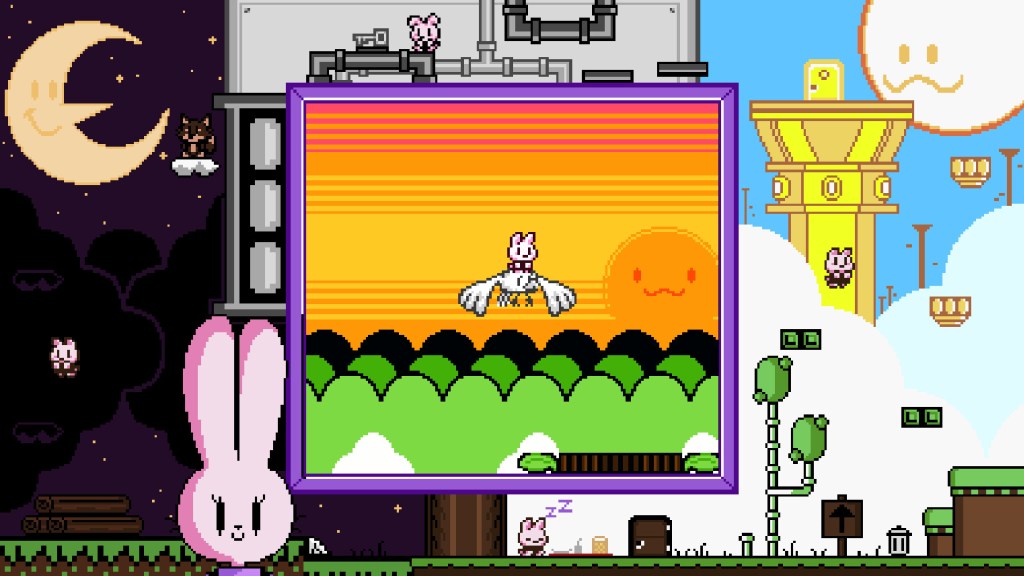
Presentation – visually DUCK is dripping in nostalgia bait, with many of the elements designed to look like classic games from the 80s and 90s. Then there are the elements like games based on internet memes, which are highly detailed in their representations. There is also a lot of 2D artwork in this release, which adds more life to the world. The sound is done well, with digitised voices and music, which add to the retro feel of the game.

Final Thoughts – I am an enjoyer of the WarioWare series of games, with microgames being a fun and satisfying way to enjoy gaming in bursts. So when I got the opportunity to play this, I was excited to play this. But sadly, I had some mixed feelings about the game, as some of the microgames were more enjoyable as others. I did enjoy the gameplay, with many of the references being entertaining, especially the old memes from across the internet.

Sadly there are some issues with the game, with some of the inputs feeling delayed, missing the timing and causing failures during play. There were also some awkward troubles with momentum, where it felt like button presses weren’t being registered. I also found that the boss stages were awkward and drawn out, which made them less fun to play. But in general, as a party game, then this might just be for you and a group of friends.

In the end, I give DUCK: Dangerous Ultimate Cartridge Kidnapper a final score of 3.5/5. This is a fun spin on the microgame style of play, with some entertaining throwbacks to classic games, as well as internet culture, but sadly the general experience was a real mixed bag. If you want to check this game out for yourself, a link the each version of the game will be below.

Link to PlayStation version (HERE)
Link to Nintendo Switch version (HERE)
Lost Gems – Splatterhouse (PC-Engine/TurboGrafx-16)

Hello and welcome to Lost Gems, the series where I cover classic games that are no longer available in an official capacity. Continuing with the special Halloween month, I will be discussing the home version of a legendary horror action game from the arcade, developed by Namco in 1988. So let us take a look at Splatterhouse, which was ported to various platforms over the years, with the most recognisable being the PC-Engine/TurboGrafx-16 release in 1990.

Disclaimer: while the version of the game discussed here may no longer be officially on sale, there are ways to obtain the game. This can be either through the second hand market, or via digital roms/rips. I do not condone or promote piracy, so there won’t be any links to roms or rips of the game being covered.

So with the introductions out of the way, let’s get started. I will be discussing the general game experience, then give my personal thoughts on the release.

About the game

Splatterhouse is a side scrolling horror brawler, with platforming elements. The player controls Rick, a parapsychology student with his girlfriend Jennifer, when a storm breaks out causing them to seek shelter. They enter the West Mansion, when suddenly the couple are attacked by monsters. Jennifer is kidnapped and Rick is gravely wounded, the Terror Mask locates and attaches to the fallen Rick, empowering him to rampage through the Splatterhouse.

In this action brawler, the player must make their way through seven stages, set within the West Mansion and the grounds surrounding it. The player makes their way through the house of horrors, with terrifying monsters attacking Rick as he makes his way through each of the locations. The mansion is filled with monsters, which the player must use punches and kicks to kill them, leaving piles of corpses in his wake.

The monsters that the player will encounter are horrific abominations, with the Deadmen, zombie like creatures which roam the mansion being the most common. Then there are the more unique enemies, like the Jokers, which are female ghosts that drop skulls, and Master Dead, who can reanimate corpses endlessly. Rick will also face more supernatural threats, like Poltergeists which will possess chairs to attack him.

To help deal with some of the threats of the Mansion, there will be weapons in some areas that Rick can pick up and use against the monsters. These include the 2X4, which will send Deadmen and sludge monsters splattering against the walls. The player can also pick up throwable items, like wrenches, stones and even spears, which can olny be used once. In the third stage Rick can get the shotgun, which is the most powerful weapon in the game.

While traversing the stages, the main threat will be the monsters that attack directly, but there will also be additional environmental hazards to deal with. In some of the rooms, there will be zombies that can vomit toxic material at Rick, harming him if contact is made. The player can also encounter spikes, spinning blades and disembodied hands, which will pose a great risk to Rick, quickly killing him if players are careless with movements.

Each of the stages has Rick moving from left to right, with some of the stages having auto scrolling segments. There is also the capacity for branching paths, depending on decisions made by the player, as well as traps that they can be caught in. These alternate routes can lead to water ways, more dangerous encounters and even rooms filled with rotting remains. This adds more replay value to the horror, with multiple routes to explore.

At the end of each stage, the player will encounter challenging boss monsters. These can be as simple as being attacked by Body Eaters, worm like monsters with large jaws that will try to bite Rick. But as the player makes there way deeper into the Splatterhouse, the creatures become more monstrous and deadly. The most infamous of these is the Biggy Man, a hooded figure with dual chainsaws coming out of bloody arm stumps.

Rick has three lives and five hit points with each life, which are lost whenever the player takes damage from enemies or hazards. There is no way to increase the health during a stage, so the player must make it to the goal, taking as little damage as possible. If Rick dies, he will be returned to the last checkpoint reached, but if all lives are lost a credit must be used, starting at the beginning of the stage. When a stage is cleared, some health will be recovered.

In this release, there are some special codes that players can use, accessing unique features for this release. The first is HARD mode, which will increase the difficulty of the game, making it significantly harder for players. Then there is level select, which lets players jump to any stage in the game, this can be very useful as there are limited credits in this version. Last is the sound test, which lets players listen to all of the music from the game.

Personal Thoughts

I first saw Splatterhouse through the Arcade version, being played through an early version of MAME in the 90s. I immediately fell in love with the franchise, as I thought it was the coolest thing ever, with the horror elements and gore. Which then lead to seeking out the Mega Drive sequels, Splatterhouse Part 2 and Part 3, which were equally gory and violent as the first. Long after this, I got my hands on the PC-Engine version of the game.

This became a firm favourite, as it was one of those games that was as close to the arcade version as possible, even though it had its limitations. There are details missing from this game, with reduced foreground effects, gore and other elements that are sadly not present. But the experience remains the same, with the same satisfying and at times terror inducing sequences still present. This version also feels harder than the arcade, likely due to the limited credits.

All of the stages are included, with all of the branching paths, traps and almost all of the weapons from the arcade mode. This port is impressive, given the tech limitations of the PC-Engine, all of the boss fights play out as they would in the arcade. The sprites are large and detailed, being carried over to the home quite well. Some of them were omitted due to space constraints, but all of the ones that were retained look amazing.

There were some changes made when the game was released on the TurboGrafx-16, due to the potential for legal issues, as well as complaints over religious iconography. An instance of possible satanic imagery, with a boss being an inverted cross was replaced with a severed head. A burial cross was replaced with a tombstone, and the Terror Mask itself was changed as the original design looked like a Hockey Mask, being changed to a more generic red mask.

Splatterhouse faded into obscurity for the longest time, with Splatterhouse Part 3 being the last in the series to get a wide spread release. That was until the Japanese exclusive windows port in 2004, then PC-Engine/TG-16 release to the virtual console in 2007. Following this resurgence of attention, the series was resurrected in 2010, with a brand new game, which included all previous games as a bonus. Sadly, this was the end for the franchise.

The original Arcade version has had several releases since the reboot, which included a release as part of the Namco Museum release for Nintendo Switch. The game was also released through the Arcade Archives label, via Hamster Corp on Nintendo Switch and PlayStation. In the years since the Virtual Console, Splatterhouse for the PC-Engine/TG-16 received one final release to date, being included on the Mini versions of the system in 2020.

This game has gained a cult following, with the arcade version being the one that most players know. However, there is still a demand for this game, leading to prices for the game to fluctuate, becoming more expensive on the secondary market. There are alternatives like the Everdrive, or reproductions, which are more cost effective. The most widely accessible way to play the game, is via the Arcade Ports for the PS4 and Switch.

I have a deep love for the Splatterhouse series, having owned the different games in many forms over the years. The latest being the Arcade Archives version, but there is a special place in my heart for the PC-Engine release, which was how I played the game for so many years. It is a piece of gaming history that needs to be seen, showing that while the system may have been “inferior” to its competitors, it was still capable of greatness.

If you have enjoyed this feature, then please stick around and see what else catches your eye. I cover a wide range of games in reviews, get special previews and put out regular features. I have Lost Gems, Retro Revival where I discuss re-releases and the occasional Gaming Oddities piece, where I cover weird and wacky titles. So stay a while and have a look around.

Angry Video Game Nerd 8-Bit – Steam Review

Overview – developed by Programancer and Mega Cat Studios in collaboration with publisher Retroware, The Angry Video Game Nerd 8-Bit is the latest adventure starring the foul mouthed internet game critic. The Nerd has found himself at the center of a threat to gaming himself, now he must face his greatest enemies to save gaming. This title will be available on all platforms, with store links where possible at the bottom of this review.

Disclaimer: before I get into the review, I would like to thank Retroware for providing the copy of The Angry Video Game Nerd 8-Bit that was used for this piece. The provision of this software has not influenced the contents of this review, all thoughts and opinions contained within are my own.

Now with the introductions out of the way, let’s get into the review, starting with the story. I will be referring to the game as the shortened name of AVGN 8-Bit throughout the review, this is for the sake of brevity.

Story – The Nerd is in his basement, frustrated by having to play bad games, he decides to play a good game for once. However, while he is trying to decide what to play, he is interrupted by Super Mecha Death Christ who takes over his NES. This incident infects every console across the globe with a virus, which will destroy gaming forever. Through black magic, the Nerd summons the most evil game ever to exist, which he must use to defeat SMDC2K.

Gameplay – AVGN 8-Bit is a 2D platform run and gun adventure, where the player takes the role of the NERD, on a quest to defeat parodies of some of his greatest foes. In order to save Video Games from SMDC, Six stages must be cleared based on the AVGN universe, with themes that are inspired by various episodes of the web-series. Before challenging the stages, the player is able to select which of the bosses they want to fight from the main screen.

When the player has selected a stage, there will be a short in game cutscene, with the Nerd giving some quips and one liners before going into the action. In the stages themselves, the action itself plays out in traditional run and gun action, with the Nerd armed with his trusty zapper. The player can run, jump, shoot and slide as their core move set, with the blaster having rapid burst fire. All of these skills are needed to make it through each of the stages.

The stages are made up of multiple sections, with enemies, traps and pitfalls that will pose a great danger to the Nerd. Throughout the stages, the player must dodge the different enemies, who will try to kill the Nerd with many different attacks. Some enemies will charge the Nerd and others will use projectiles, making for a range of threats to deal with. If they hit the player, the Nerd will be knocked back and have a very brief moment of invulnerability.

While the player makes their way through the sections, there will be instant death pits, as well as spikes that will immediately kill the Nerd if contact is made. There will also be falling platforms, which will drop a moment after the nerd stands on them. If the Nerd is defeated, the player will be sent back to a checkpoint, with several progress points in each world. But if the player gets a game over, retrying the stage will start them off at the beginning.  

As the player makes their way through each world, they will come across many items and power-ups to collect. These include zapper upgrades, which will strengthen the attack power that the Nerd will be able to use. The zapper attacks will change as their power increases, going from single shot, to triple spread shots, waves and then a combination attack at maximum power. Then there is the helmet, which allows for an even stronger charge attack to be used.

The player will keep the power-ups as long as they don’t take damage, as any damage from any source will reduce the attack power of the zapper. When playing on the Easy and Normal setting, the Nerd will have a moment to reclaim lost power, as they will fall to the ground before fading. However, if difficulty is set to hard, this is not possible. In the event of player death, all upgrades will be lost and the player will need to start from the bottom.

Then we get to the sub weapons, which can be very effective when dealing with some of the more tricky enemies. Throughout the game, the player will be able to pick up special weapons, which will have a limited number of uses. These weapons include the beer bottle, which is thrown in an arc and the F-Bomb, which will clear the entire screen of enemies. The player can also collect Beer, which will heal some of the damage that has been taken from hazards.

Out of all the special weapons, the most powerful of them is the Golden Shit Pickle, which will be available when the player has only one life left. When using this ultimate power, they will gain a boost in power, the Pickle will attack enemies on screen and provide assistance. The Pickle will drop items with health ups, weapon upgrades and even extra lives if the player waits long enough. The Golden Pickle will be active for the current section before leaving.

Some of the stages will have alternate paths, where the Nerd can challenge tougher sections with more hazards and dangers. Then there are the auto-scrolling stages, with one where the nerd must run across rooftops, as well as riding a hover craft and avoiding hazards. Some of the stages have sub bosses, like an evil cartridge that will attack with diarrhea blasts and balls of fire. These are significantly less dangerous than the main bosses though.

At the end of each stage, the player will encounter a powerful and deadly boss, inspired by some of the iconic episodes of AVGN. These include the Devil who possessed a Super Mario Bros 3 cartridge, the plane from Top Gun and a parody of the Japanese drink mascot Pepsiman. To beat most of these bosses, the player must attack a weak spot, which may be a small point, or the entire body of the boss, which keeps boss fights unique.

Throughout the game, the player will get live action cutscenes, which makes the game feel like an interactive Nerd episode. When the six bosses have been defeated, the player will be able to challenge the final stage. The final stage is a true test of skill, as the player must make their way through a gauntlet of hazards, all taken from the different worlds the player has experienced. Upon completion of the game, the final cutscene will play out.

During the gameplay experience, the player will be able to drop out of the game at any time, returning to the main menu. Then the player will be able to continue, start a new game or enter a password. The passwords are given to the player after clearing each of the stages, allowing the player to record their progress across the different difficulty settings. All of the elements feel right, with the experience of a classic platform adventure.

Now with the gameplay covered, it is time to discuss the other aspects of this release, starting with the controls.

Controls – the control system for AVGN 8-Bit feels just right, with three button settings, but the option for the classic 2 button control of the NES. The game supports a wide range of controllers, with no issues when it comes to input lag, missing presses or inputs not working. This also supports keyboard controls, as well as there is the possibility of Steam Deck support. There is a controller option for all players, making it an accessible game.

Difficulty – When playing in Normal or Hard as Balls, the player will die when making contact with spikes or falling in a pit. Whereas, when playing on Chill as Hell, falling in a pit returns the player to the platform the fell from, and spikes don’t cause instant death. Some of the traps and deaths may feel cheap, or unfair, but they can be overcome. The damage taken also changes based on difficulty, which offers a challenge for players of all skill levels.

Presentation – as the name indicates, this is an 8-Bit platformer made for the NES, with sprite work that looks bold and looks good. There is a good use of color, with the environments making full use of the color palettes of the system. The sound is done well, with music that fits each of the stages, alongside punchy sound effects and digitised voice work. Last is the Live Action Cutscenes, which fell just like they would in an episode of the web-series.

Final Thoughts – I have been a fan of the AVGN web series for many years, having watched it since the character was the Angry Nintendo Nerd. So when I was given the chance to play AVGN 8-Bit, I was very excited, as I had played the previous games and had a lot of fun with them. Jumping in, I had a bit of a rough time getting started, but the more I played, the more things fell into place. It took many hours, but I managed to get the game cleared.

There are no significant issues with AVGN 8-Bit, aside from some of the difficult sections feeling a little cheap or unfair. But all of the mechanics are designed to feel like a classic retro game, so it does come with the territory. The multiple difficulty settings do make it accessible to everyone, with some exploitable mechanics that will further ease the difficulty. With all of that being said, I am very happy to recommend this game to everyone, especially fans of the Nerd.

In the end, I give The Angry Video Game Nerd 8-Bit a final score of 4.5/5. This is a tough and challenging action platformer, with fun as hell gameplay, references to legendary episodes and characters, all wrapped in live action cutscenes that make it feel like an interactive Nerd episode. If you want to check this game out for yourself, you can find a link to steam page below, with links to the other versions to be added when made available.

Link to Steam page to Wishlist (HERE)

Link to Official site (HERE)  

Link to Nintendo Switch version (HERE)
Link to PlayStation version (HERE)
Link to Xbox version (HERE)
Lost Gems – House of the Dead 2&3 Return (Nintendo Wii)

Hello, after a brief break Lost Gems is back, the series where I cover classic games that are no longer available in an official capacity. This week kicks off Halloween month for the feature, where I will be covering a pair of classic rail shooter from SEGA, originally released for the arcades and then ported to the Nintendo Wii. So it is time to take a look at the House of the Dead 2&3 Return, the light gun double pack that was released worldwide in 2008.

Disclaimer: while the game discussed here is no longer officially on sale, there are ways to obtain the game. This can be either through the second hand market or through unofficial digital roms/rips. I do not condone or promote piracy, so there won’t be any links to roms or rips of the game being covered.

So with the introductions out of the way, let’s get started. I will be discussing the general game experience, then give my personal thoughts on the title.

About the Game

House of the Dead 2&3 Return is a special double pack of games, offering players the ability to play the two classic light gun shooters. The games are played using the Wii Remote, or if they have it the Zapper attachment, which allows for the Nunchuk to be used. This is the way to work around the inability to use traditional Light Gun peripherals, due to modern flat screen televisions being incompatible with the controllers.

The player will be able to access both of the games, directly from the main menu, with the ability to play the home versions of House of the Dead 2 and 3. House of the Dead 2 takes place 2 years after the events of the first game, with an incident occurring in Venice Italy. During this incident, AMS agents James Taylor and Gary Stewart are deployed. On their mission, the AMS agents encounter deadly creatures and uncover the truth of the outbreak.

In this title, players can take on the Arcade mode, where the player works through six stages as they would in the arcades. The standard gameplay involves the player blasting away waves of enemies, while moving through the stage. During play, the players have 6 shots in their gun, moving the crosshair off screen to reload. When shooting enemies, if enough damage is dealt the creature will die, with a universal weak point of the head for all zombies.

During the stages, there will be civilians that need to be rescued by the AMS agents. By shooting the zombies that are attacking them, players can rescue the people under attack from the undead. Some of the rescues as well as specific set pieces will lead to alternate paths, leading to different encounters and locations in the stages. At the end of each stage, the player will encounter a challenging and deadly boss monster.

In each of the boss battles, the player will need to shoot the weak point that is shown on screen. Doing so will cause the boss to take damage, interrupt attacks and prevent them from hurting the player. These battles have their own phases, attack patterns and unique gimmicks, making them a challenge for players to defeat. When the boss is defeated, the results screen for the stage appears and if enough survivors have been saved, bonus lives are awarded.

The player can have up to 5 lives, which are lost when damage is taken by an attack or the player shoots a civilian by mistake. If all lives are lost, a credit is needed to continue playing. If the player runs out of credits, the game will be over and they will see the route they had taken before death. The number of credits, lives and difficulty of the game can be adjusted in the settings. Blood color can also be adjusted, with the option for red or green.

Away from the Arcade mode, there is the Original Mode, a special version of the main game, where power-ups can be collected and used. These include bullet damage increases, extra lives, extra credits and unusual items like fishing lures and even UFOs. These items are collected by shooting the environment, saving civilians and in a mini game when starting the game for the first time. Up to 2 items can be taken into play in solo, or 1 item each in co-op.

Then we have the Training Mode, which is a special mini game challenge mode, where players take on 10 challenges with multiple difficulty settings. These challenges include saving all of the civilians, taking down a series of zombies with limited shots and beating the first boss with rapid fire only. Last is Boss Mode, where players can try to beat each of the bosses from the game as fast as possible, with the fastest time for each level being added to the rankings.

Moving on, we have House of the Dead 3, which takes place in 2019, 21 years after the 1998 Curien Mansion incident. In a now ruined world, the events of the zombie outbreaks have caused civilization to collapse. AMS secret agents raid the EFI facility, related to the Curien group but contact is lost. Two weeks later, Lisa, the Daughter of Thomas Rogan, accompanied by his former partner G go to the facility to find out what happened to her father.

Like the previous entry, the main game mode for this release is Arcade mode, where the player must battle the hordes of the undead. This time, the player is armed with a shotgun that holds 6 shots and has a slower reload animation. To make up for this, the blast radius of the weapon is larger, being able to hit multiple enemies at once. Knocking a zombie down, allows the player to hit them again to deal additional damage to kill them faster.

There are 6 stages like the previous game, however, this one has a unique gimmick to how the stages are approached. The first and second stage, follow the traditional linear gameplay loop, playing out in sequence with the second stage having a branching path at the beginning. After clearing these two stages, the player will use the elevator to select which stage they challenge next. This system allows players to approach the game differently each time.

In this title, there are no civilians being attacked, but there are still rescue events. This time the player will need to save their partner, who is in danger from the zombies. If the player is able to save the partner, they will gain an extra life. Thankfully, failure only results in no bonus being awarded. These rescue events occur frequently during the game, with the person in danger changing depending on the number of players actively in use.

Boss battles have also changed during this release, with their appearance tied to the stage itself. For some of the stages, the boss will appear during the stage itself, chasing the player throughout the stage. There is also a boss that appears around half way through the stage, appearing at the center of the location. The other bosses appear at the end of the stage, being used as the climax for their section of the game. This makes each stage feel distinct and unique.

The way that bosses take damage is also changed, with the battle broken up into phases. Each time the boss attacks the player, a second meter will appear below their life meter. This is the break gauge, which will interrupt the boss attack when it is depleted. To empty the meter, the player needs to hit the designated weak point as quickly as possible. Each time it is emptied, the boss will be interrupted and take damage.

After defeating the boss and getting to the end of the stage, the player will get the results screen for the chapter. Based on the performance of the player, their score and the time they clear the stage, a letter ranking will be awarded. If the player gets a ranking of B-E, there will be no bonus awarded, but if the player gets an A rank an extra life is earned, with 2 being awarded for an S rank. These rankings encourage replaying the game, to get the fabled SS ranking.

Just like the companion game, this title allows players to modify the number of lives and credits, alongside the blood color and level of gore on screen. The maximum starting lives that players can set in this game is 5, but if the player can collect extra lives during play, the in game cap is 9. Unlike the previous title, players have the ability to unlock freeplay in this release, with the maximum number of credits with the chance to fail being 9.  

In addition to the Arcade mode in House of the Dead 3, players can also challenge two extra single player modes. The first is Time Attack, which replaces the lives and credits for the game with a timer in the middle of the screen. This will count down over time, with players earning time by quickly killing the creatures, gaining more time based on their performance. Damage taken will give time penalties, taking away a fair chunk of remaining time.

The last mode is Extreme Mode, which ramps up the challenge further. All of the enemies are stronger and the blast radius is reduced, but to give players a fighting chance a melee attack is introduced. By using the melee button, the player can clear the screen of attacks, dodge boss strikes and hit multiple enemies at close range. This however uses up the players ammo, requiring the gun to reload after each use, making it a risk/reward mechanic.

There are video tutorials included for the games in this pack, which will show the player the basics of how to play. These will explain the mechanics of the game, allowing players to get a quick refresher on the mechanics, as well as teaching new players the game. They aren’t the best, but are good enough for the basics of play, as the original arcade attract screens appear to have been removed. But the original opening movies are still retained for both games.

Personal thoughts

I grew up playing the House of the Dead series, with the first game on the SEGA Saturn, the second on Dreamcast and the third on the original Xbox. There are many happy memories that I have tied to this series, from playing it with my dad and getting my first ever arcade clear. I have a deep love for this series, especially the second game which is my favourite. The story, characters and voice work are all that classic B-Movie cheese that makes it so endearing.

The series was released during a golden age for light gun games, where every home had a TV that could support the guns. But sadly that time passed, as televisions became more advanced, with flat screen displays the age of the lightgun faded away. However, with the Nintendo Wii and their use of IR sensor technology, the genre got to shine once again as players could use Wii remotes in place of guns. So there was a brief resurgence for the genre in the home.

I am a big fan of light gun games, which made House of the Dead 2&3 Return an instant sell for me, especially since it has my favourite game in it. The gameplay is almost perfect, with a couple of unfortunate hiccups when it comes to slowdown. However, this doesn’t affect the gameplay too bad, as they are few and far between and don’t occur during boss fights. These are really good ports, which are the best way to play the game without dedicated hardware.

There is a tremendous amount of content for players, with the arcade modes, the extra challenge modes and 2 player co-op in both games. I have returned to these games repeatedly over the years, putting a lot of time into them across various platforms. My love with the games has led to memorising the scripts, learning the secrets and beating all of the challenges. I have even been able to one credit clear House of the Dead 2, which I’m pretty proud of.

The Wii Zapper and various gun peripherals are available, which gives a fairly authentic experience. The most comfortable is the Zapper, which allows for twin grip when playing for extra stability and control, while also being the best for other shooters. The game can be played with the Wii remote by itself, but it doesn’t feel the same as you need that shape to feel right. You can pick up new Zapper and gun shells online for pretty low prices.

House of the Dead has a cult fanbase, with fans wanting these games to be as widely available as possible. There have been some ports of games on other platforms, like standalone versions of House of the Dead 3 and 4 for the PlayStation 3. There is also House of the Dead Overkill, alongside remakes of the first two games, which receive mixed reviews from fans. The recent remakes especially are unfortunately poor in my personal opinion.

These games were released during a special time, where the series really found its identity as a cheesy gory horror themed shooter. House of the Dead 2 was the breakout hit for the franchise, being bundled with the Dreamcast light gun. The wonky voice acting, unintentionally hilarious script and over the top action really made it stand out. I even set the blood to green every time I play, as that was the only setting that was available for the Dreamcast version.

This game is easily attainable on the secondary market, being widely available across both physical and virtual marketplaces. I picked the game up myself from a local store, with the disc in fairly good condition for right money. If you don’t have access to a Nintendo Wii or a Wii U, you can run the game via emulation, with mouse control or aftermarket lightguns like the Aimtrak. You can also connect Wii remotes via Bluetooth, with USB IR sensors.

I would like to see these versions of the game come back to modern platforms, as they are the best games in the genre, but it appears that this is not possible. The remakes do exist, but they don’t feel anything like the games they are based on. There is something special about the originals, with the charm and distinct wonk of the dodgy b-movie voice acting. That cheesy feel isn’t there in remakes, as they are from a point in time that has long passed.

If you have enjoyed this feature, then please stick around and see what else catches your eye. I cover a wide range of games in reviews, get special previews and put out regular features. I have Lost Gems, Retro Revival where I discuss re-releases and the occasional Gaming Oddities piece, where I cover weird and wacky titles. So stay a while and have a look around.

King of Ping Pong: MEGAMIX – Review

Overview – developed by Suspicious Jam and published by Eastasiasoft, King of Ping Pong: MEGAMIX is an arcade style table tennis battle game, where players battle it out with an eclectic mix of opponents. Take on the 5 masters in arcade mode, or go for the number one spot in the world through the championship series. This title is available for all console platforms, with a link to each version of the game at the bottom of this review.

Disclaimer: before I get into the review, I would like to thank Eastasiasoft for providing the copy of Kink of Ping Pong: MEGAMIX that was used for this piece. The provision of this software has not influenced the contents of this review, all thoughts and opinions contained within are my own.

Now with the introductions out of the way, let’s get started. There is no real plot for the game, so I will be going straight into discussing the gameplay for this release.

Gameplay – This title is an arcade style boss rush battle game, where the player faces table tennis warriors from across the globe. This is the ultimate table tennis tournament, where battles are fierce and test the boundaries of what the sport really is. The battles mostly follow the traditional rules of table tennis, volley the ball to try and get it past your opponent. But there is a twist, the only way to get the ball past the opponent, is to exhaust their stamina.

These battles consist of multiple rounds, where the player must drain the stamina of their opponent, exhausting them and being able to score. At the table, the player can move between the left, right and center of the table. In these positions, the player can send the ball in the same three directions, sending the ball back to the opponent. Each volley drains the on screen stamina for both players, with well-timed shots increasing the enemy stamina drain.

As the opponent returns the ball, if they are waiting in the position where the ball is sent, they will Punish the player, increasing the damage taken. If the player runs out of stamina, they will be able to continue the rally, but at a significantly reduced speed. This increases the pressure and chances of losing a point, requiring extremely tight timing to survive the round. Thankfully, when the opponent is exhausted, they will be unable to continue.

During the volley of a round, both the player and the opponent will gain power, charging a bar below the stamina. When this meter is filled, the player will be able to unleash a power attack, draining a massive amount of energy from the enemy. However, the opponents have their own powers, which significantly ramp up the challenge in later matches. These include ultra-fast punishes, disappearing balls and even creating multiple ball clones.

When the player scores enough points in a match, the opponent will become enraged, making them stronger and further ramping up the difficulty. This secondary phase of a match can be the most frustrating part of a battle, due to the rapid increase in speed and difficulty. This can lead to being defeated quickly, due to the high speed and increase to the aggression of the opponent. Once five points have been scored the match will be over.

There are two game modes for this release, Arcade and Championship mode. The Arcade mode is the most approachable mode and the only one available when starting, needing to be cleared to unlock the Championship mode. Within the Arcade mode, the player takes on the 5 world table tennis champions, one after another in sequence during the Arcade tournament. If the player fails, they can retry as many times as they like.

When an opponent has been defeated in Arcade mode, the player will be able to retry the battle. This can be done to practice and improve the rankings that have been obtained, with the maximum letter grade being an S rank. When Arcade has been cleared for the first time, the player can challenge the championship mode. In this mode, there are 5 championships of increasing difficulty, where the player has one chance to beat all of the opponents in order.

During the championship mode, the 5 opponents will have all of their power increased, with more brutal punishes, faster returns and higher difficulty. This increased challenge mode will have enhanced special power, rage sooner and stamina works differently between rounds. In this mode the player gets one shot to beat all challengers, if they lose one match, they will get kicked back to the start. This makes it a brutal and unforgiving challenge at the highest level.

Away from the gameplay itself, there are special gallery images and content that can be unlocked, with promotional art, concept images and more. Then there are the paddle unlocks, which will alter the look of the paddle the player uses. There are several designs to be unlocked, including pixel art style, a mirror design and even a solid gold paddle. These give an extra amount of replay value for the general gameplay experience, giving something to earn.

Now with the gameplay covered, it is time to discuss the other aspects of this release, starting with the controls.

Controls – there is a relatively easy to pick up control scheme for this game, with three set swing types and simple movement inputs. There is a pretty easy to understand tutorial that explains the gameplay, with all of the buttons on screen for quick reference. There is one unfortunate flaw with these controls, which is what feels like some input lag during play. It feels like there are inconsistent responses to inputs, with some swings just whiffing entirely.

Difficulty – this game has severe spikes in difficulty, where the gameplay challenge really ramps up, with the speed of the game getting much faster. Towards the end of the arcade mode, the opponents really become punishing, with frantic action and power attacks that leave little time to react. This is significantly more punishing during championship mode, with some brutal spikes. In Arcade mode, there is an assist feature that can help players greatly.

Presentation – visually, the game looks good, with character designs that have their own unique quirks and distinct look. There is a good use of effects on screen, without an over reliance on flash to keep the player engaged. The 2D art also looks pretty good, further adding to the identity of the experience. The sound for the game is decent, with music and effects that fit the game, as well as minimal voice work for the announcer.

Final Thoughts – I usually enjoy these types of game, which made me really want to check the game out, but sadly my excitement was misplaced. During the opening stages of play, the challenge and action was easy to manage, with a few attempts to get past the first two opponents. However, the difficulty spikes, character gimmicks and unfortunate timing issues killed this momentum, leading to a not very fun grind to get through the game.

The issues I faced made it a very frustrating and infuriating experience, which kills any excitement and enjoyment to have with the game. There was a lot of potential for this release, but unfortunately the troubles with gameplay, input lag and general jank put me off from returning to the game. If you are looking for a cheap table tennis battle game, this may be for you, but I am unable to recommend it with my experience.

In the end, I give King of Ping Pong: MEGAMIX a final score of 2.5/5. This is a solid arcade style table tennis battle game, offering a unique experience and gameplay system, but sadly it is marred by timing issues, unbalanced difficulty and lack of true refinement. If you want to check this game out for yourself, a link to each version of the game will be below.

Link to Nintendo Switch version (HERE)
Link to PlayStation version (HERE)
Link to Xbox version (HERE)
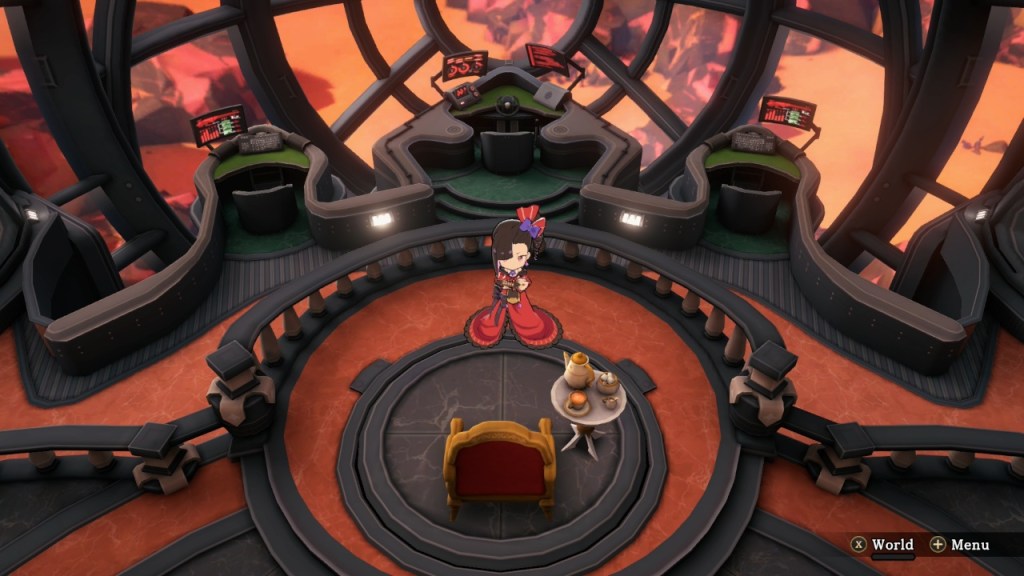
Demon Turf Queens Edition – Steam Review

Overview – developed by Fabraz and published by Playtonic Friends, Demon Turf: Queens Edition is the ultimate version of the 3D platformer with a charming comedic attitude. Play Through three adventures starring Beebz, a demon who wants to claim all of the turf, take down the rulers of the realms and become the Demon Queen. This version of the game is exclusive to the Steam platform, with a link to get it at the bottom of the review.

Disclaimer: before I get into the review, I would like to thank Playtonic Friends for providing the copy of Demon Turf: Queens Edition that was used for this piece, via the Keymailer service. The provision of this software has not influenced the contents of this review, all thoughts and opinions contained within are my own.

Now with the introductions out of the way, let’s get into the review. As this is a collection of games, I will be discussing the general plot, gameplay and experience of each part of the set, then cover the overall package.

Demon Turf

The Demon World is made up of different realms, inhabited by a variety of nasty beasts that are split into gangs, battling for territory and led by their own overlord. However, even these powerful beings are no match for the Demon King. One night, Beebz, a hot headed demon girl has her dreams invaded by the Demon King. After this she vows to take down the Demon King, by defeating each territories leader and claiming their turf, aiming to become the Demon King.

This adventure is a unique platforming adventure, combining flat 2D sprites and vibrant 3D environments. As Beebz, the player is tasked with clearing the stages of the four worlds, called Turfs, split into challenging platform focused stages. The main objective for all levels is to reach the goal, stealing the batter for that stage. In order to make it to the goal, the player needs to avoid deadly traps, enemies and hazards.

While travelling through the area on the way to the goal gate, the player can use a variety of skills. The basic moves include a jump, double jump and a hover spin, which can be combined to create spectacular acrobatic manoeuvres. One of the unique actions that can be performed is the Super Jump, which will launch Beebz forward a significant distance. As the player progresses, they will unlock new moves and skills to their repertoire.

As well as the platforming challenges, there will be additional sub-objectives. These include combat challenges, where enemies have to be defeated by Beebz a projectile power. Then there are race challenges, where set checkpoints much be reached within a time limit, or else they will fail and need to try again. last are the puzzle challenges, where the player needs to perform actions to open gates, which include hitting switches and using weights.

Many of these challenges will require the player to use Beebz demon power, the most basic of these skills are her demon blast projectiles. These are split into light and heavy blasts, with the light shots achieved by tapping the button, whereas the heavy attacks require charging. When holding down the button, the player will be able Beebz will concentrate her power, glowing when fully charged. This will unleash a large hand shaped blast.

In many of the areas, there will be buildings that Beebz can enter, with many of them being needed to get further into the stages. Some of these buildings will have locked doors, needing to be unlocked to progress to the next area. There will also be underwater zones, where Beebz will turn into an octopus. While underwater, Beebz will be able to swim freely and use Rocket Dash, travelling quickly through the water and navigate underwater dangers.

There are many hazards and death traps that will harm Beebz, including spikes, lava and bottomless pits. If Beebz suffers damage, she will be sent back to a checkpoint. In each of the stages, there will be a single designated checkpoint, which will be the starting point of the stage. However, the player will be able to set their own checkpoints by planting flags. These additional flags are limited, so placing them must be strategic and planned.

For those looking to explore and take on the trickier challenges, there will be sweets for players to collect in each stage. These treats are Beebz favourite cake, with three pieces to find in each of the stages. Some of the sweets will be in fairly easy to reach places, whereas others will require the player to go off the beaten path. To help players find the hidden desserts, Beebz has a special power, showing an arrow to the closest piece of cake.

Upon completing the stage, the player will be given a results screen, showing the time taken to beat the stage and a target clear time. If the player is able to beat the target time, they will be awarded a trophy for that stage. The player will also be shown the number of deaths, how many jumps used and the number of enemy knock outs. There are also leaderboards, where players can compete for the best time, adding further replay value to stages.

When all of the batteries for a stage have been collected, the boss stage will open up. These stages will have unique multi-phase challenges, where the player must overcome the unique gimmick for that boss. These stages will also introduce new mechanics, like the grappling hook, which will allow the players to glide through the air and hook objects. With the addition of these new skills, the player will be able to explore stages in more interesting ways.

Upon defeating the boss, the turf will be claimed and transform with fire and brimstone. This gives the player a whole new challenge, with new stages and batteries to claim. With this there is double the action in each of the turfs. The first version of a stage is called the First Trip, the second time through is called the Return Trip. When the Beebz makes a Return Trip, the cake is replaced with lollipops, with 50 of them to collect in these alternate zones.

Outside of the stages the player will be able to explore a mini hub world for each of the turfs, letting players challenge stages in any order they wish. This gives flexibility to the approach that players want to take. The turfs that Beebz must conquer are connected to Forktown, which is Beebz home and the largest of the spaces to explore. Within her home town, there are several facilities and challenges that can be accessed within this area.

While in the town, the player will be able to access the special shops. There are two shops that can be visited, with the first being the color shop, where Beebz can buy hair and outfit colors for Lollipops. Then there are the special mods enhancing Beebz powers, like speed increases, additional double jumps and more. These cost Cake pieces and must be equipped, with different upgrades having different points, so only a few can be equipped at once.

Alongside the shops, there are challenges that players can take on, including special trial stages, a coliseum for combat stages and even a photography challenge. As the player progresses, there will be more challenges, missions and areas to explore within Forktown. There is even an Arcade, where players can find special cartridges, which contain unique challenges inspired by other games. So there is plenty of content to explore away from the main stages.

Demon Turf: Neon Splash

This is a standalone adventure, following on from the events of Demon Turf, Beebz and her friends are pulled into a surreal painted world. Within this colorful world, they are trapped and must find a way to escape this bright neon prison. In this adventure, the player is tasked with clearing 10 stages filled with precise and challenging platforming. As this is a mini sequel to the first adventure, there are adjustments to the general gameplay experience.

Within this adventure, there are no combat challenges, with the focus being purely on platforming and reaching the goal of each stage. In order to clear these challenges, Beebz has a preset move list that can be used. These consist of powers that are carried over from the first game, with the standard jump and double jump, hover glide and the super jump. But she also has a special dash glide and snake boost skill, which are available from the start.

These skills will all be needed, as the player will face tough challenges, hazards and deadly pitfalls across the neon soaked world. The objective for each stage is simple, get to the goal as fast as possible. During the stages, players will need to maintain their momentum, jumping from ledges, moving platforms and more as they try to get to the end. There will be three target times for players to get, with gold, silver and bronze challenge times to meet.

Players will also be able to collect lollipops, which are scattered through each of the stages, adding further depth to the challenges. These Lollipops are important as they are used to purchase mods, with 6 special mods to select from. Unlocking the modifications will give Beebz more skills and options in stages, offering players more ways to play through the stages. These alter Beebz look when equipped, changing her hair and outfit depending on the item.

There are 10 stages in total, offering various challenges. But there are also special bonus stages that can be unlocked, with vinyl records that are hidden in the main stages. When these are collected, players will be able to challenge the Remix stages, which are significantly harder. These will really push the player to the limits of their skills, with even more devilish platforming to challenge. Thankfully, in all stages, players can place checkpoints frequently.  

For those who want to have some fun and experiment between stages, or to refresh themselves on the controls, players will be able to access the playground. A special sandbox world with platforms and features designed to just have fun with, exploring and experimenting with the skill set. This can be very hand for getting back to the game, or to test the limitations and combinations of skills that can be used. So take full advantage of this feature.

Demon Turf Tower

The final part of the Demon Turf trilogy of adventures, with Beebz enjoying a peaceful time at home, when she is suddenly interrupted by the Jester. This menace suddenly steals all of Beebz powers, leaving her unable to use her special abilities. So she sets off to reclaim her powers and defeat the Jester, heading to his tower. On her way, she meets an unusual being who is imprisoned in a well, offering to help Beebz in her quest.

This adventure is unique from the other experiences in the pack, offering a challenge that players must clear in a single run. The objective for this entry is to get to the top of the Jesters tower, climbing the 50 floors of tower. Sadly Beebz has been hexed, leading to her powers being sealed, preventing her from using anything other than her basic jump skills. However, she is able to regain her powers with a little help from the man in the well.

As Beebz reaches milestone heights on her journey, she will be able to obtain new powers. These include her double jump, spin and even a single use checkpoint flag. These new skills will be incredibly important as this tower can be treacherous, with one mistake leading to significant loss of progress. The player has a single life, so if Beebz is killed, she will be returned to the start. Players can also fall, losing a progress as they plummet to the floors below.

There is a loadout system that the game uses, which will allow the player to modify their skills. There are two variants for each skill that can be used, with a heart and spade version of the ability. The two skill variants will have their own unique functions, which change the way that they are used. By effectively planning out the approach to each floor, players will be able to work through the tower. If they die, their progress is recorded in the post run screen.

The player must make it to the top of the tower to succeed, but it will be a tough challenge. Luckily all of the floor layouts are preset, meaning that they can be learned with enough practice and patience. As the player unlocks skills, there will be shortcuts, tricks and more that can be used to reach the top faster. But until that point, there will be many failures, with each one starting right back at the bottom.

For those who have been able to conquer the tower, they will have their times recorded in the global leaderboards. This allows players to challenge others from across the world, letting them compete for the top spot. As new strategies are found, new skills are unlocked and players discover shortcuts, they will be able to shave more and more time off their run. But not everyone may be able to climb to the top of the tower.

Now with the gameplay details covered, it is time to discuss the other aspects of this release, starting with the controls.

Controls – for all of the games in this release, they use twin stick 3D movement, being able to control Beebz and the camera independently. There is a camera input, which will switch between automatic and manual camera movement. The platforming and skills are easy to use, spread between the face buttons and triggers/shoulders. For Demon Turf and Neon Splash, there are move lists that players can use to reference their skills and abilities.   

There will also be prompts on screen for quick reference. Throughout the games, there will be special tutorials that will show the player how to use mechanics. These are very handy, as there are a lot of skills that players need to learn. The recommended way to play the game is with a controller, but it is possible to play through the game using a keyboard. All of the inputs can be remapped to fit each play style and input method of choice.

Difficulty – when it comes to challenge, Demon Turf and Neon Splash are approachable and a lot of fun to play. Offering a balanced and approachable challenge that everyone can play, with stages that may take some time to overcome but don’t feel punishing. This cannot be said about Demon Turf Tower, as the challenge is brutally tough. It is possible that some players may not even be able to beat it, but it is worth a shot to see what happens.

Presentation – all of the games use the same visual style, which is a charming mix of Flat 2D sprites that move within a 3D space. This gives the game a unique appeal, which lets it stand out from the other games in the platforming genre. The different worlds and environments make great use of color, creating a unique identity that is capped off with a great soundtrack. There is also some voice acting, which further builds on the quirky charm of the games.

Final Thoughts – I am a fan of platformers, the 2D, the 3D and all of the weird and wacky combos inbetween, so this was an interesting experience. The games in this pack are fun and distinct experiences, with the large scale adventure of Demon Turf, the simplicity of Neon Splash and the brutal challenge of Tower. There is a lot on offer in this pack of games, with plenty of fun to be had. But it does have a couple of awkward flaws.

Being 3D platformers, there are some issues with depth perception at times, leading to mistakes being made when trying to be precise. Then there is the unfortunate slippy movement, which is most prevalent in Demon Turf Tower, leading to falls and even death. These issues can be adjusted to, but are frustrating at times. These games are fun and well made, with references to other classics, and I can happily recommend this to all platforming fans.

In the end, I give Demon Turf Queens Edition a final score of 4.5/5. This is a solid and fun triple pack of adventures, offering a lot of fun and a brutal challenge for those who seek it. The games in this pack are oozing with charm, and the characters are quirky and entertaining. If you want to check this release out for yourself, a link to it will be available below.

Link to Steam version (HERE)