Hegzis – PlayStation 4 Review

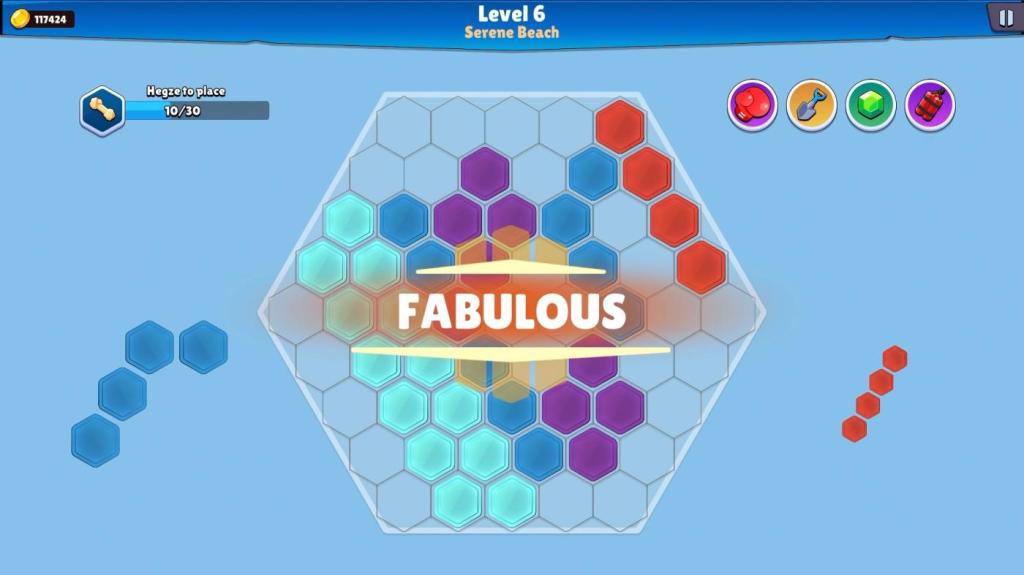
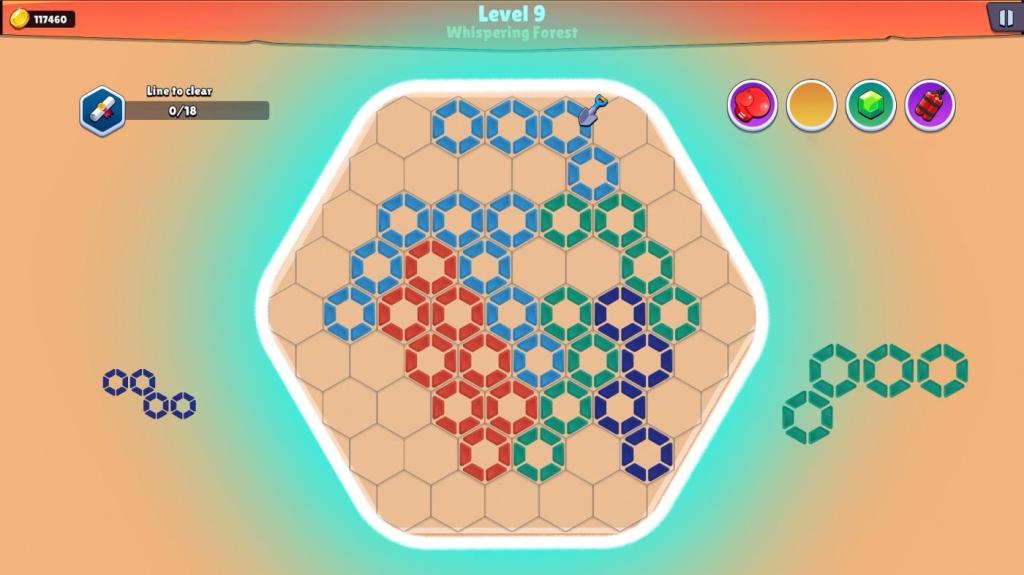
Overview – developed by Clazz Apps with publishing handled by Eastasiasoft, Hegzis is a puzzle game about slotting pieces on a hexagonal map. Complete challenges by making the piece fit, form lines and delete them from the field to score points. This title is available on all console platforms, alongside support for the Steam service. Links to each version of the game will be available at the bottom of this review.

Disclaimer: before I get into the review, I would like to thank Eastasiasoft for providing the copy of Hegzis that was used for this piece. The provision of this software has not influenced the contents of this review, all thoughts and opinions contained within are my own.

Now with the introductions out of the way, let’s get into the review. There is no story for this game, so I will be moving straight into discussing the gameplay systems.

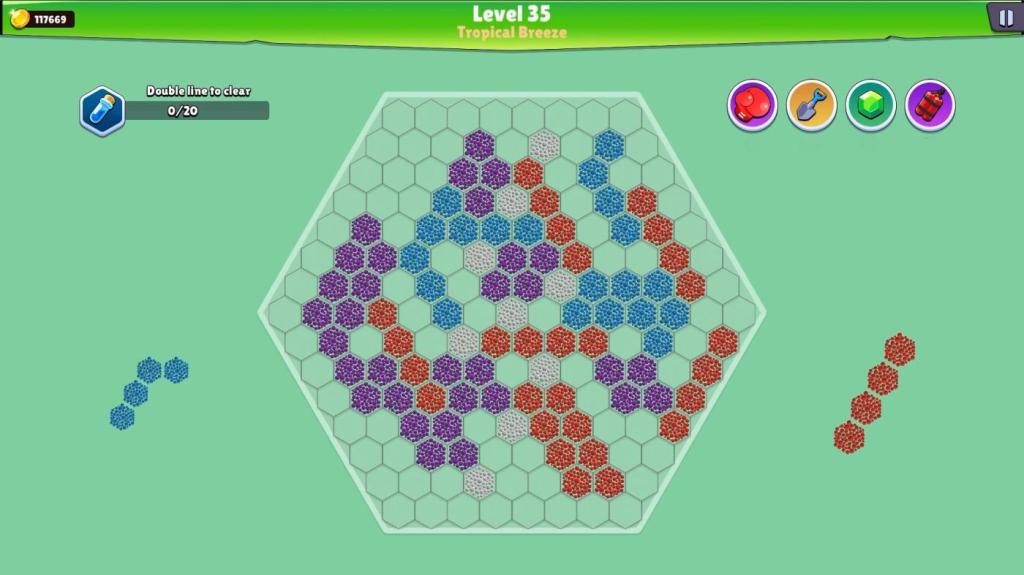
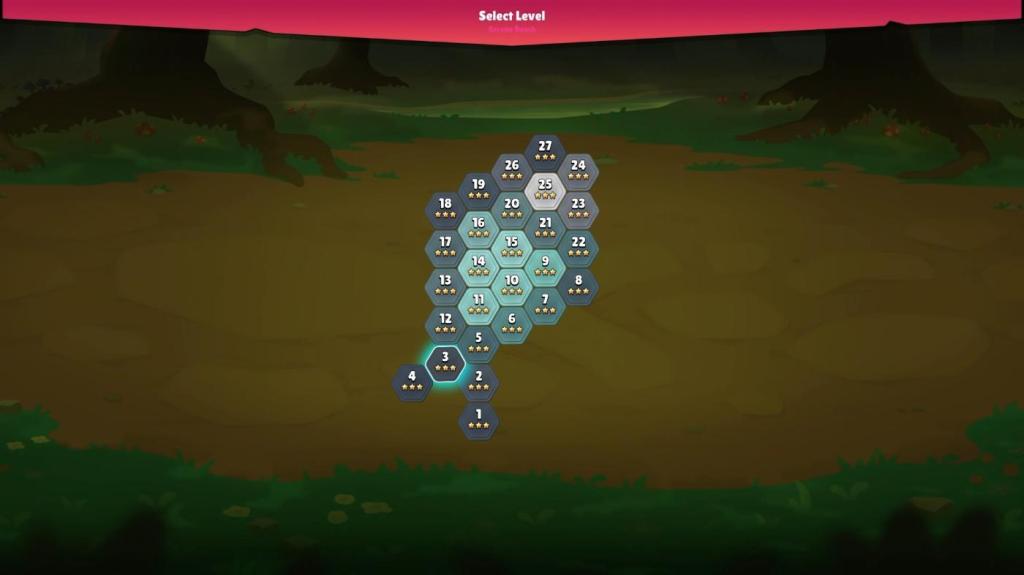
Gameplay – Hegzis is a hex grid puzzle game, where the player must slot together pieces made out of hexagon shapes. These shape arrangement puzzles are split into four worlds, with a selection of stages in all of them. The player can move and rotate the shapes, allowing them to be placed in an optimal position. As the pieces are placed into the grid, portions of them can be erased if the player lines them up, like many other puzzle games.

In the puzzles, the player is given two pieces to choose from, with one on each side. When a piece is used they will be replaced with a new one, which is added from a randomised pool. All of the pieces are made up of four hexes, which can be freely rotated to place them. At the start, there are lines, clusters and L shapes, but the further the player gets, the more variations of pieces appear. But each of them will always consist of 4 hexagons.

During the campaign, the player will be provided a selection of challenges to complete. The most common ones are to get target scores, clear a set number of single lines and simply enough Hexes on the board. Then there are the more complicated ones, like clearing double lines and even triple lines. This adds a layer of strategy to the puzzle gameplay, making it a good brain teasing puzzle, the more complicated it becomes.

This level of difficulty increase isn’t only tied to the objectives, but the grid itself can become more difficult. As the player clears the stages, there will be void blocks added to the grid map, blocking the player from arranging some pieces. These can be removed by clearing a line with them added to it, making them a useful addition to the stages at times. But they can be a hinderance more often than not, due to the random selection of tiles.

When the player clears the stage, they will get rewards based on performance, shown as a star rating from 1 to 3. The rewards consist of coins, gems and new shapes to use in the game. These rewards can feel very surface level, as there is an awkward mobile feel to the game. This is shown with the way that the assets are laid out, as if the game wanted me to use a touch screen to play. Sadly, this makes it feel a little cheap.

If the player is unable to clear the challenge and can’t place a piece, they will get a game over. When this happens, the player needs to use gems that are earned during play in order to continue. Continuing from a game over provides the player with two hex shapes to get back into play, a single and double hexagon. This is a good way to handle continues, reducing the frustrations that come with puzzle games that use randomisation for pieces.

The last thing to discuss is the power-up system. During the stages the player has four different power-ups, which can be very helpful during play. These will allow the player to clear away a bunch of hexes at once, making more challenging puzzles a little easier. It is important not to be overly reliant on these items, as they are limited in use. In order to replenish the special power-up items, the player can purchase them from the in-game shop.

Now with the gameplay covered, it is time to discuss the other aspect of this release, starting with the controls.

Controls – there is an easy to use control system for this release, which makes it easy for players to get into the game pretty easy. The tutorial for the game explains most of the controls pretty easy, but sadly there are some inputs that aren’t explained. The minor hiccups with the controls make it a little frustrating, but in general the inputs work pretty well. It does seem that it would be better suited to a touch screen, as it can be a little clunky.

Difficulty – there is pretty gradual difficulty curve for this game, as the challenge of the stages will increase at a rather gradual rate. The puzzles are fairly approachable in this game, offering an experience that everyone can play. This is good as there are some titles in the genre, which can get overly complex and put players off from playing it any further.

Presentation – I sadly can’t shake the mobile game feel that I get, as the visuals are pretty simple and basic for the majority of the experience. There is a good use of color, which is pretty pleasing to the eye and works well for the game. Everything is pretty easy to see, with bold images and on screen text that are easy to see. The sound has a royalty free vibe, but it is pretty relaxing to listen to, combined with some pretty basic voice over to wrap it all together.

Final Thoughts – I enjoy puzzle games, so I was more than happy to pick this game up. I was hoping for something challenging and I wasn’t disappointed, as it was a pretty solid and enjoyable game. There are some hiccups with it, but the general gameplay was very enjoyable. It may be basic and a little bland from a visual perspective, but there is fun to be had. I am happy to recommend this game to those who love puzzle games, especially those on a budget.

In the end, I give Hegzis a final score of 3.5/5. This is a simple yet enjoyable puzzle game, which offers a fair amount of challenge and depth. While it may lack something in style, it more than makes up for it with substantial gameplay content. If you want to check it out for yourself, a link to each version of the game is below.

Link to PlayStation version (HERE)

Link to Nintendo Switch version (HERE)

Link to Xbox version (HERE)

Link to Steam version (HERE)

Farming Simulator 16-Bit Edition – Review

Overview – developed and published by Giants Software, with a special physical release from Strictly Limited Games, Farming Simulator 16-Bit Edition takes the agricultural phenomenon and enhances it with Blast Processing! Grow the crops, harvest them and sell them to keep your farm profitable, building up your farming empire. This game is available on PC and as a special physical cartridge for SEGA Mega Drive/Genesis, with a link to each version of the game at the bottom of this review.

Disclaimer: before I get into the review, I would like to thank Giants Software and Strictly Limited for providing the copy of Farming Simulator 16-Bit Edition that was used for this piece. The provision of this software has not influenced the contents of this review, all thoughts and opinions contained within are my own.

Now with the introductions out of the way, let’s get into the review. There is no real story to this release, so I will be going straight into discussing the gameplay experience. I will be referring to the game under the shortened name Farming Sim 16-Bit for the sake of brevity.

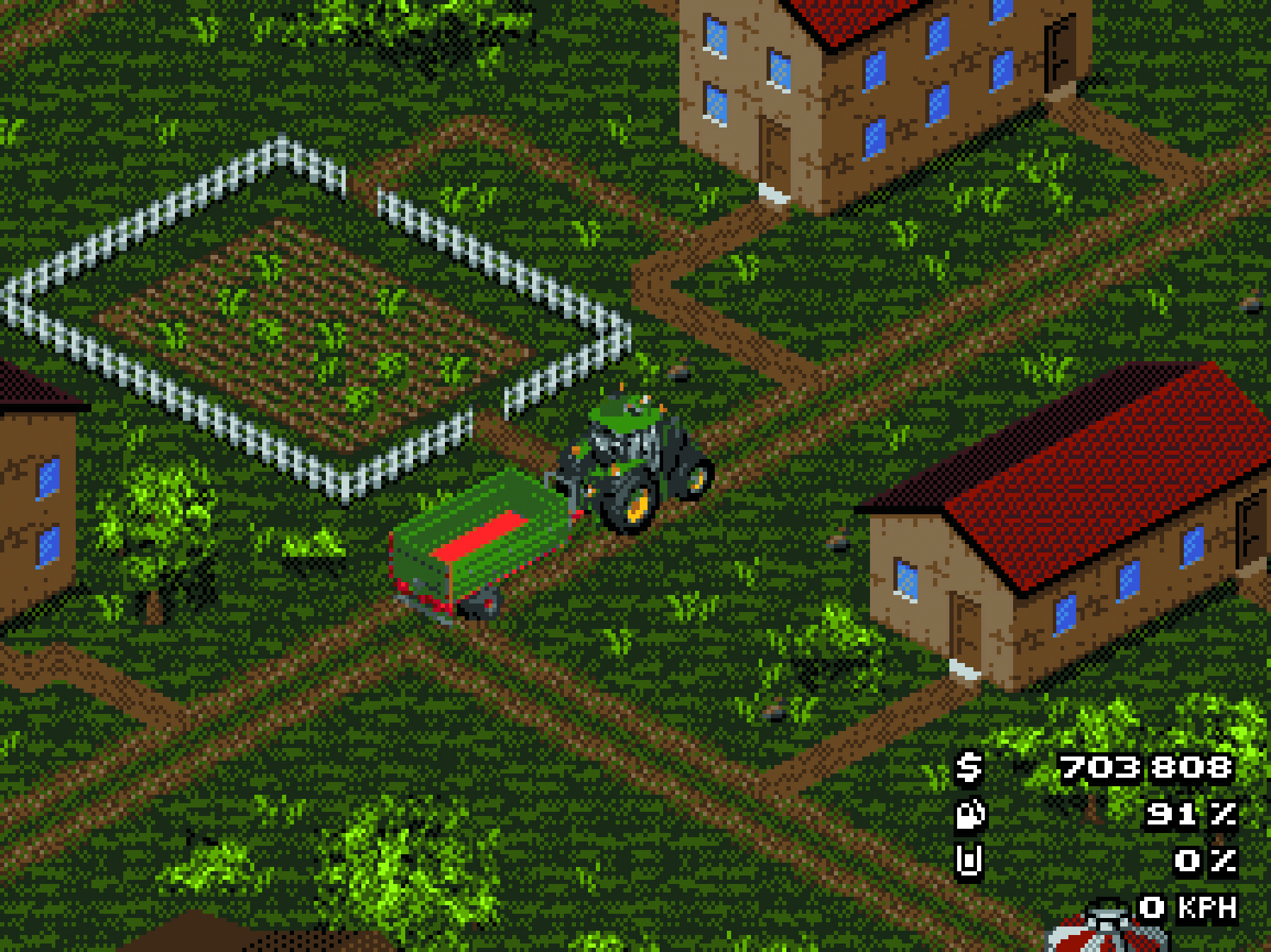
Gameplay – Farming Sim 16-Bit is a demake of the popular agricultural simulator, developed for the SEGA Mega Drive/Genesis. This title offers players a nostalgic isometric recreation of the source game, where the objective is pretty simple. For this release, the main gameplay loop is to cultivate the set areas of land, sow the crops, wait for them to grow and harvest them. Once they have been collected, drop them at a sale point to generate revenue.

Before starting the game, the player can select a difficulty in the settings. This will affect the starting capital for the player, alongside the returns from crops. The funding amounts that players can start with are 100,000 at Easy, 50,000 on Normal and 5,000 on Hard. This is a good system for players, as it can provide an easy going experience, nice and balanced progression or a strategic challenge. These options are nicely balanced offering something for everyone.

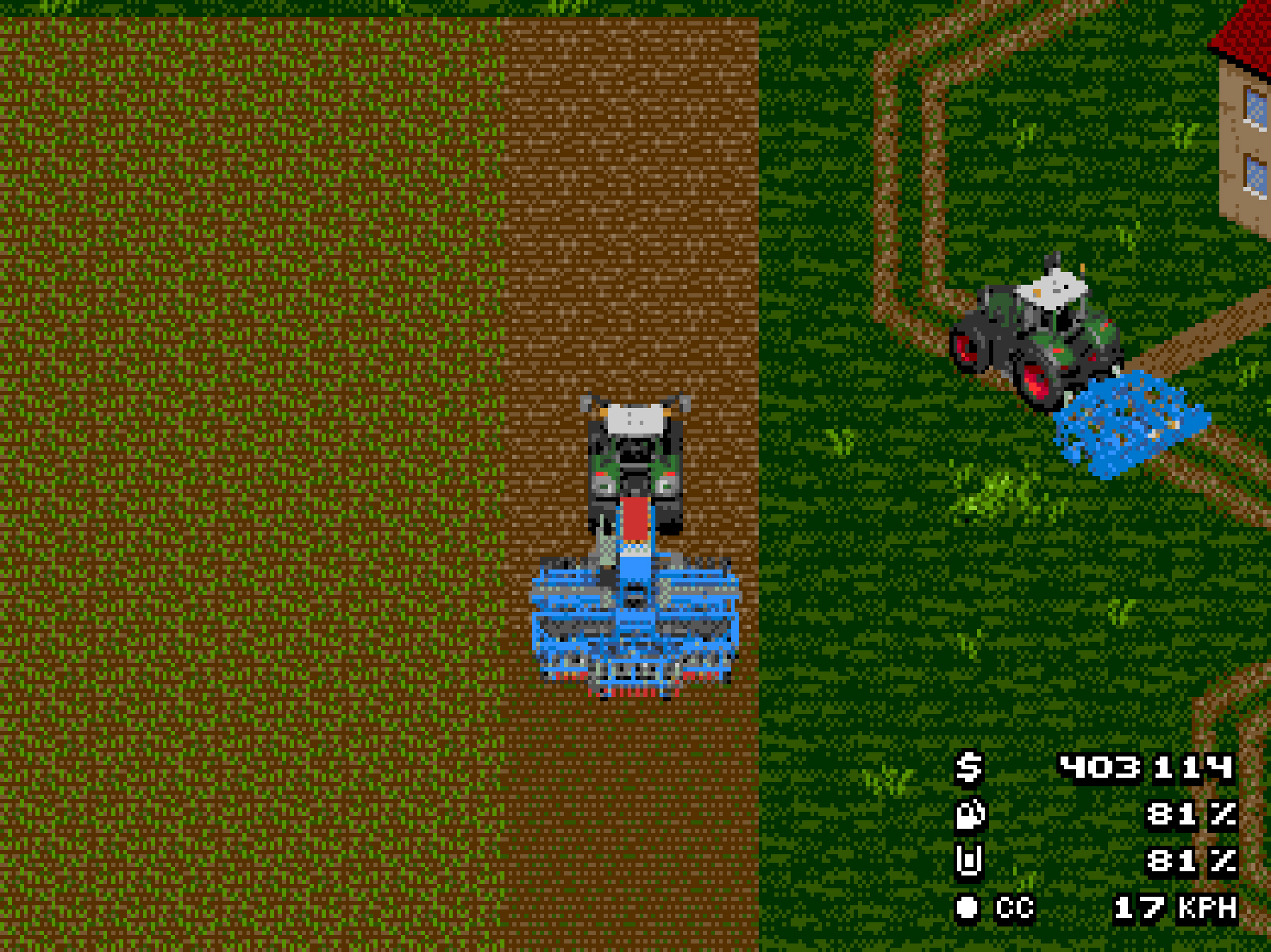
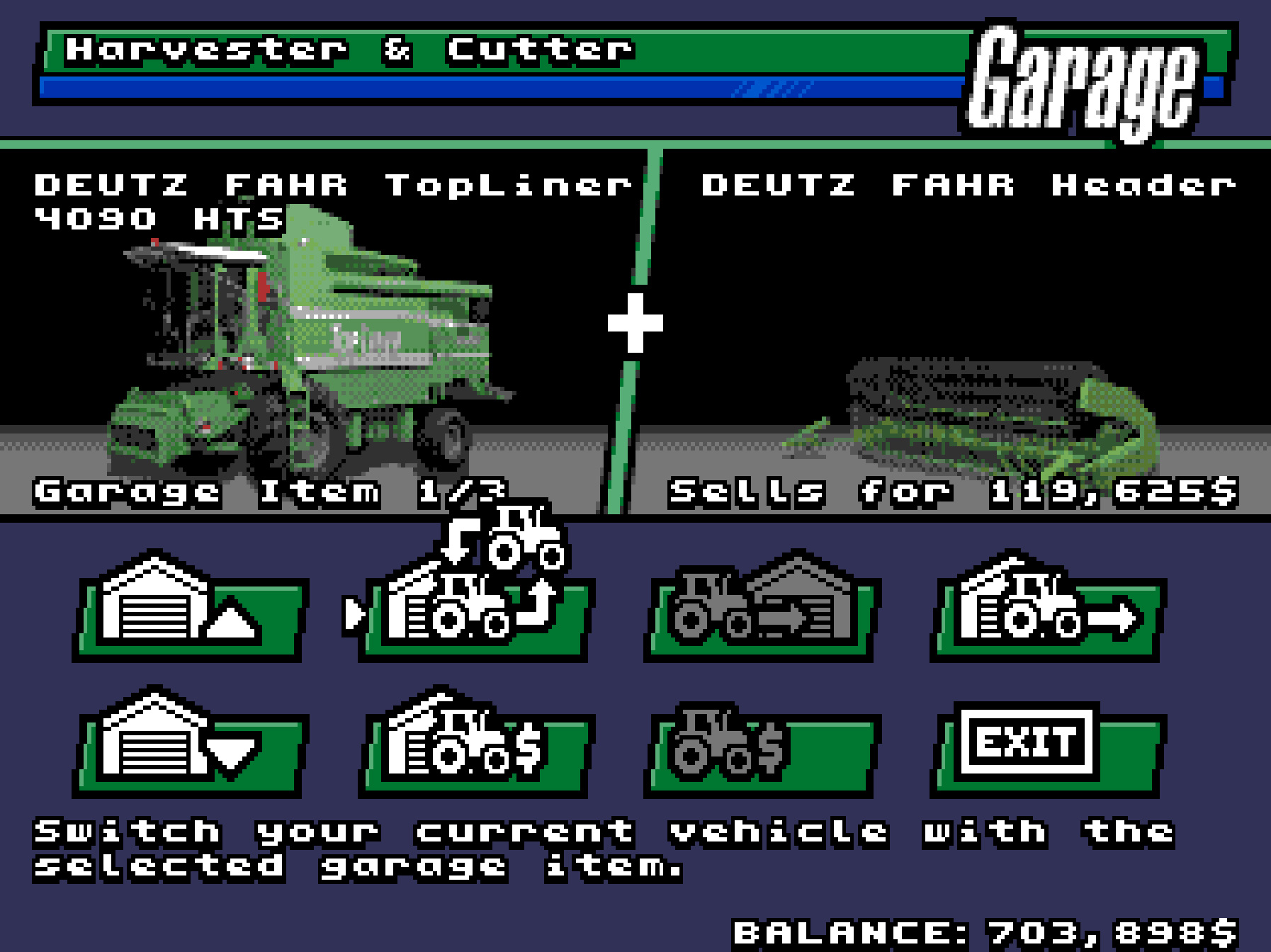
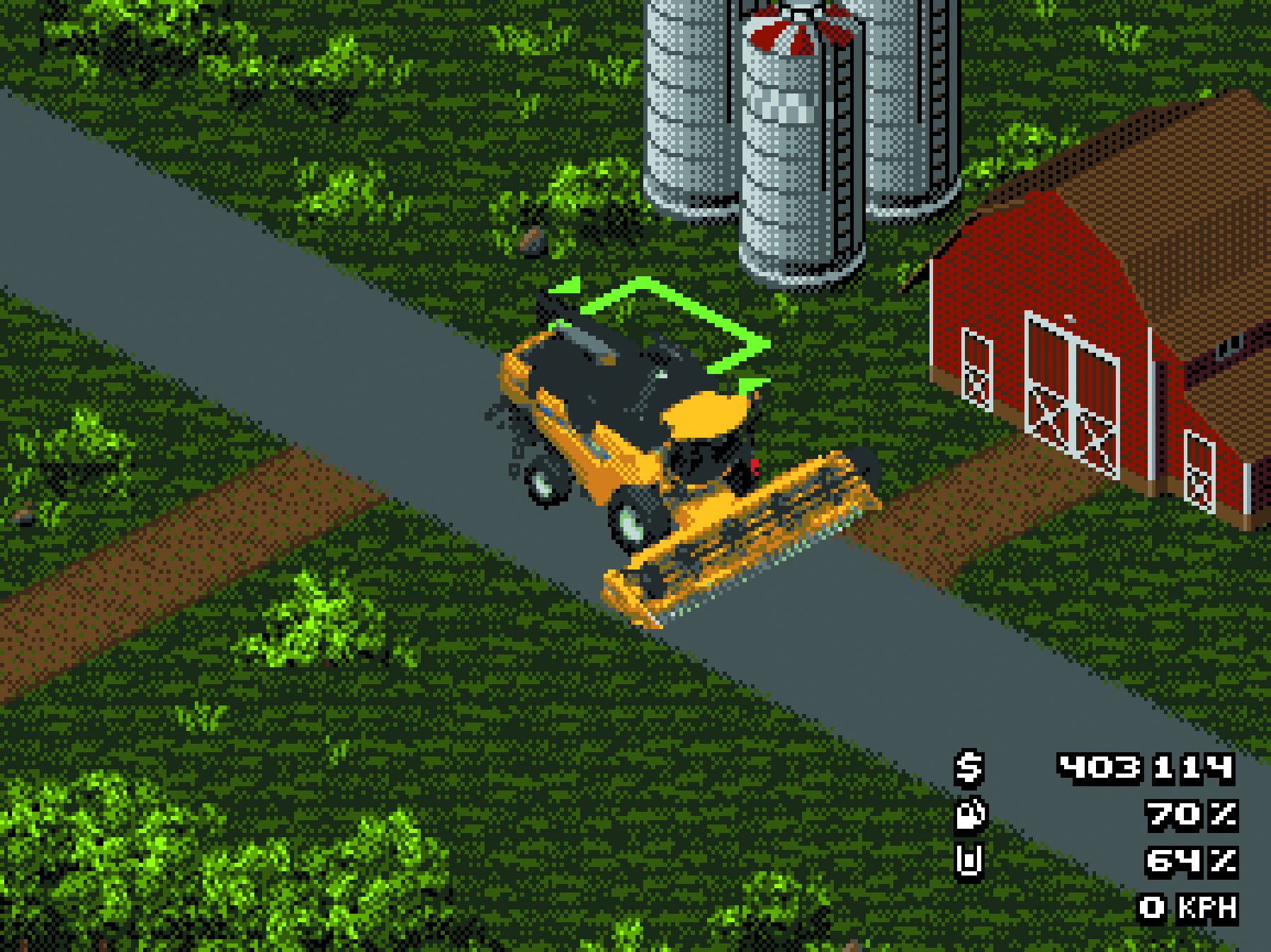
To complete this task, the player has access to four pieces of equipment. The first is the cultivator, which is used to make the land suitable for the planting of crops. Then there is the Seeder, which spreads the grain seeds across the freshly prepared soil. Once they have grown, the harvester and cutter are deployed, cutting and collecting the fresh crops. These can then be taken off to be sold with the tractor trailer, or the harvester itself.

Once all of these steps have been completed, the player must start over from the beginning. This loop is relatively simple and has a relaxing feel to it, but does have the possibility of becoming tedious to some. There is little in terms of real jeopardy that players will face, but that doesn’t mean there isn’t any challenge to the game. In this release, there is some resource management that needs to be done, allowing for smooth operation of the farmland.

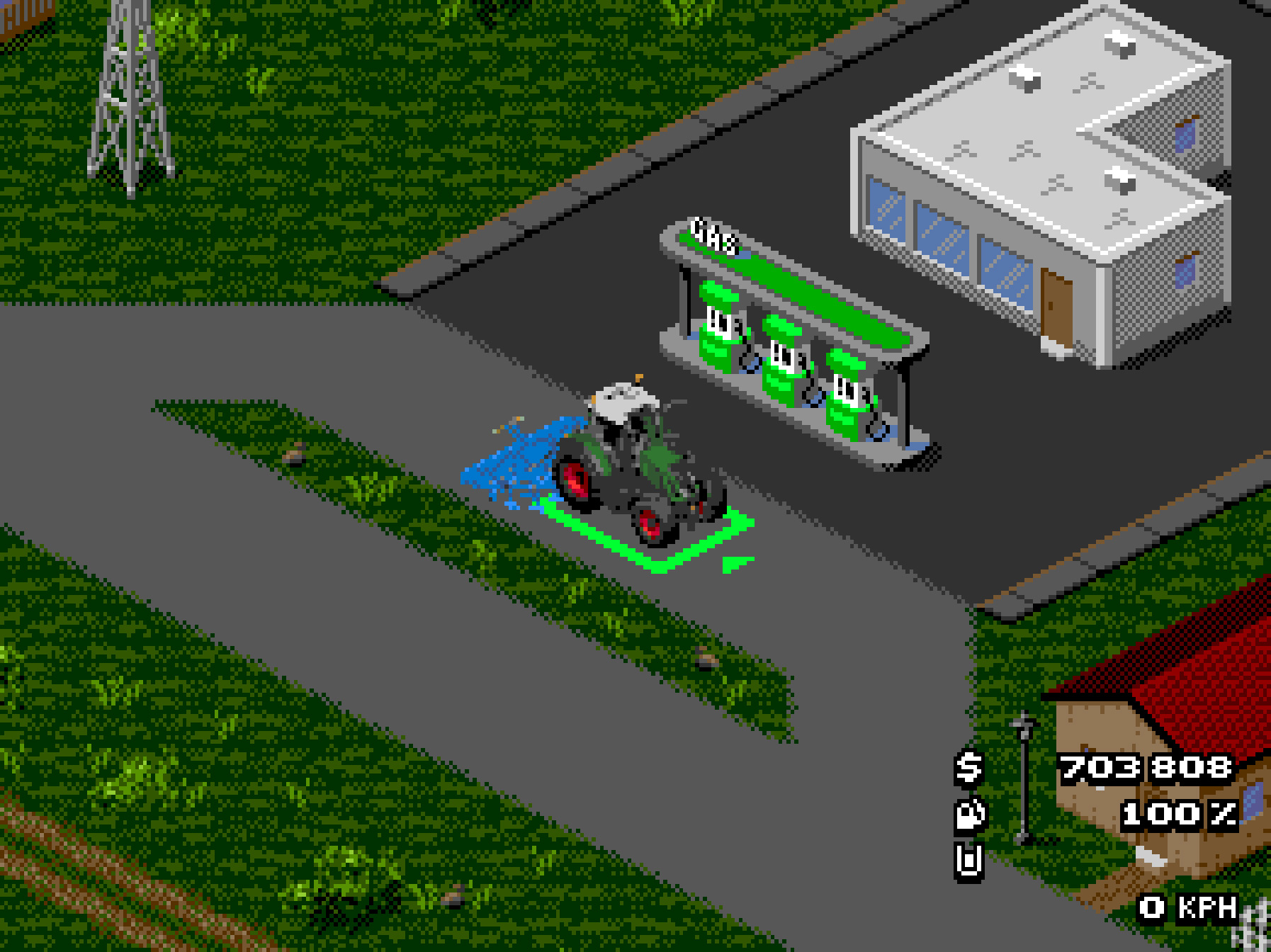
All of the vehicles require gas to operate their machinery, this is shown as a percentage on the bottom right corner. If this runs out, the tools will stop working and the vehicle used will be severely reduced in speed. To refill the tank, the player will need to make their way to the gas station, filling up the equipment. But this costs money and will eat away at the players funds, so effective fuel management is needed to maintain steady profits.

The Seeder has a secondary resource that needs to be monitored when in use. This is the seeds themselves, as there is a limited number that the player can carry at any time. The supply of seeds is shown below the fuel as a decreasing percentage, which must be replenished at the seed shop. Like the fuel, this will also impact the wallet of the player, slowing down progress. Both of these systems can have an impact on the challenge of the game.

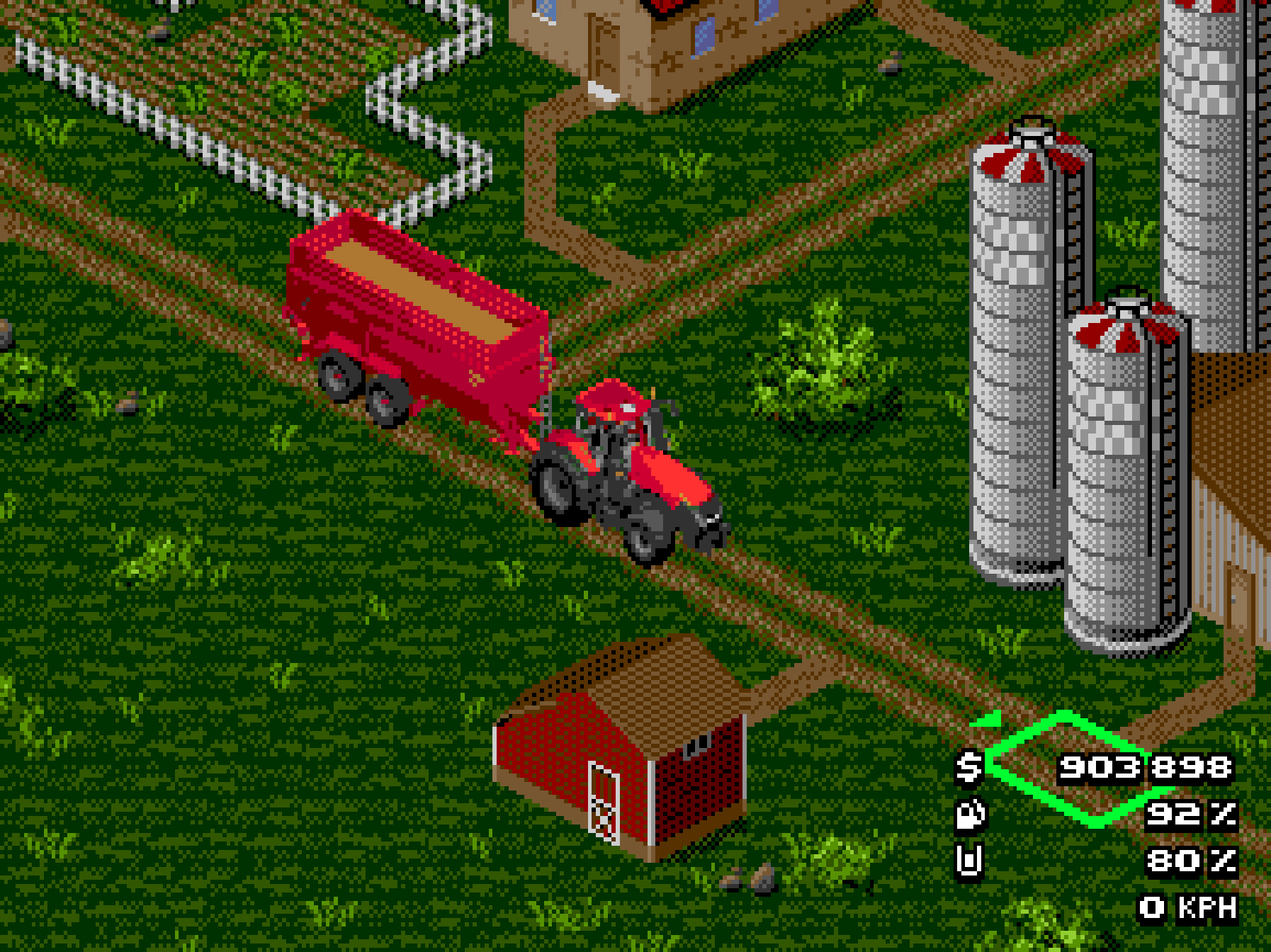
When the harvest is being collected, both the harvester and the trailer have a capacity limit, only being able to carry a set amount. This is shown below the fuel like the other resources. As the tractor and trailer are faster than the harvester, it is recommended to use both of them together for rapid collection and sale. As the harvested crops are taken to the shop for sale, the money pool will increase, allowing for continued operation of the farm.

As the player continues to progress through the game, sowing and reaping, players will need to start improving their equipment. This is where the shop comes into play, allowing the player to buy new machines to enhance their capabilities. The different machines will have different capabilities, like fuel capacity, storage space and top speed. Upgrading these machines is important, as it can really speed up the farming process.

These upgrades are not cheap though, as the top of the line machinery can be a few hundred thousand dollars to purchase. So it may take a few cycles to reach the pinnacle of farming equipment. Any of the equipment that is purchased will be added to the garage, or deployed directly to the fields if there is space. Any of the equipment that isn’t needed can be stored, or sold to recoup some of the expenses from the new purchase.

When the player has earned enough, they will be able to purchase new land to work. These farms offer more land to cultivate, providing the player with additional sources of revenue. When additional maps are unlocked, they can work the fields alongside the others, as crops will grow even when not working those maps. The player will be able to move equipment between farms, using the garage to transport machinery between locations.

Now with the gameplay covered, it is time to discuss the other aspects of this release, starting with the controls.

Controls – as Farming Sim 16-Bit is made for SEGA Mega Drive/Genesis, the game is designed to use a three button controller. In this system, the player moves their vehicle with the D-Pad, with up/down for accelerate and revers, alongside left and right for turning. Then there are the function buttons, with A being used to activate tools, B sets the vehicle to cruise control (locking current speed) and C switches vehicles. This tends to work pretty well.

Difficulty – as mentioned in the gameplay section, there are three difficulty settings to choose from. These options will affect the way that the player is able to progress, either speeding up or slowing down the progress of the game. This makes Farming Sim 16-Bit a relatively stress free experience, as there is no real failure state. Due to the sandbox nature of the game, the player will be able to come up with their own goals, like obtaining all maps and top level equipment.

Presentation – as this is a 16-bit game, the spritework and visuals are authentic to the time period, fully utilizing the capabilities of the SEGA hardware. The maps and rendered sprites for vehicles look great, showing a lot of detail even though they are static in movement. This further enhances the nostalgic feel. Then there is the sound, which is my only issue with the game. During play, there can only be sound effects or music, which can make it feel incomplete.

Final Thoughts – I had not played much of the other Farming Simulator games, with only a little bit here and there. But when this was announced and I was given a chance to play it, I jumped onto it as it is an interesting little oddity. When I got the package for the PC, I gave it a shot and it was an interesting experience. But I had no luck connecting a controller, so I had to use the default Keyboard setting, which was pretty awkward.

After this minor struggle, I used RetroArch to play the Farming Sim 16-Bit for the rest of the time for this review. This is due to the PC package having a rom provided, as the launcher uses the BlastEM emulator. With this rom, I was able to play the game with a comfortable controller, making it more enjoyable. The inclusion of this rom also makes it possible to play the game via flashcart, or on handhelds like the Retroid Pocket, allowing for play on the go.

This is a very good demake of a rather complex game, providing a new and interesting gameplay experience. I had a lot of fun with it and the limitations enhanced it, further adding to the nostalgic feel of the game. I do feel that this is something that everyone can enjoy, regardless of the experience that players have. So it is an easy recommendation, either through the emulated PC version or via the dedicated cartridge.

In the end, I give Farming Simulator 16-Bit Edition a final score of 4.75/5. This is a solid and enjoyable sandbox demake, providing a relaxed gameplay experience that may be lacking in challenge, but is definitely not lacking in satisfaction. If you want to check this game out for yourself, a link to the PC digital version as well as the special physical release are below.

Link to Digital version (HERE)

Link to Special Physical version (HERE)

Lost Gems – Lemmings (Various Platforms)

Hello and welcome to another entry in the Lost Gems series. Here I discuss forgotten classics, hidden gems and titles that have sadly been abandoned, with no official way to obtain these games. In this instalment, I am going to be covering a title that is near and dear to me, the brain teasing puzzler Lemmings. This game was developed by DMA Design and published by Psygnosis, with ports by Sunsoft, Probe Software and more.

Disclaimer: while the game discussed here is no longer officially on sale, there are ways to obtain it. This can either be through the second hand market, or through unofficial digital roms/rips. I do not condone or promote piracy, so there won’t be any links to roms or rips of the games being covered.

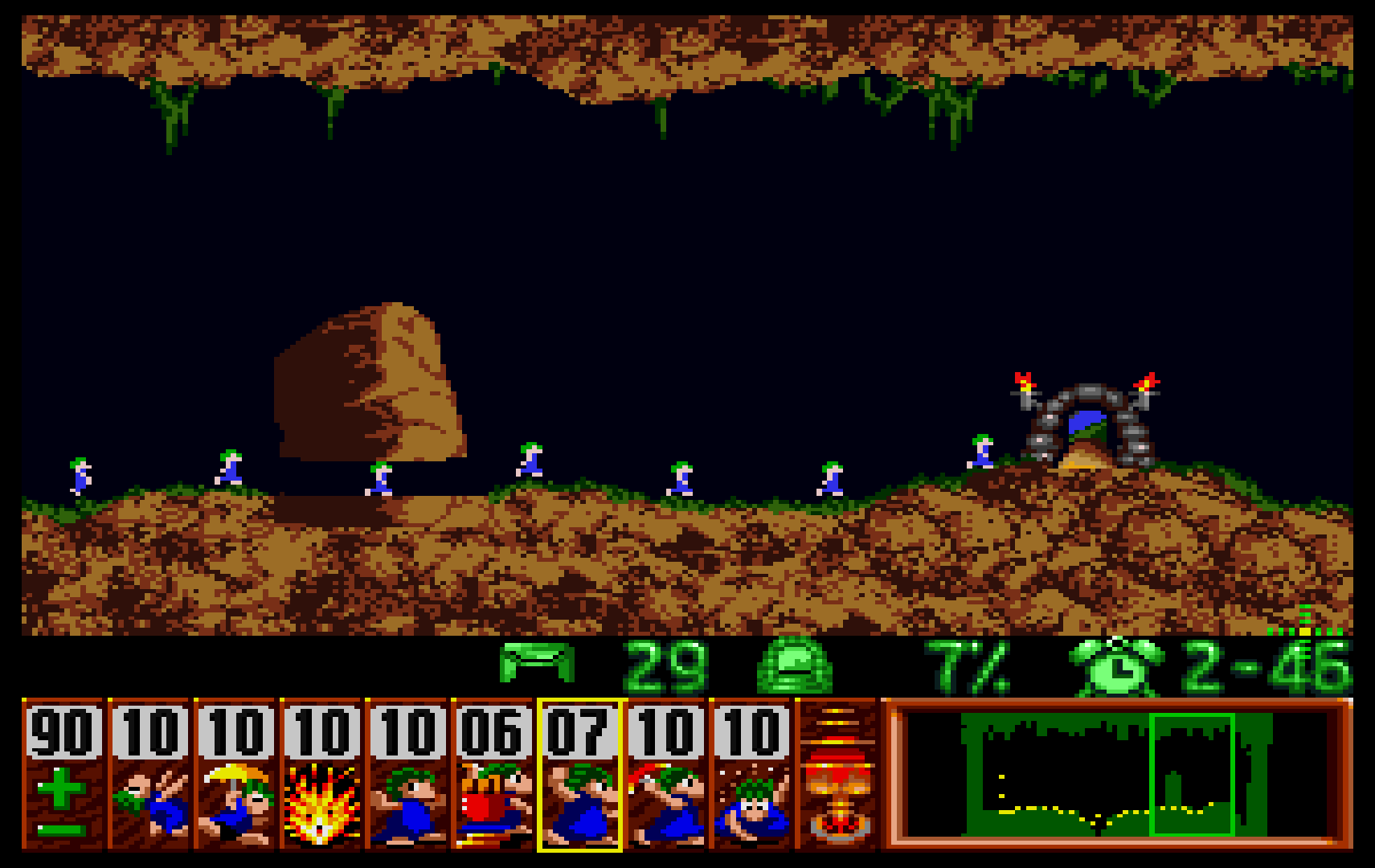
So with the introductions out of the way, let’s get started. I will be starting with the general game experience, then give my personal thoughts on the title. This title was released across a wide range of platforms, so I will be speaking about the game in rather general terms. Images and gameplay demo are taken from Super Famicom, Game Gear and Mega Drive versions of the game.

About the game

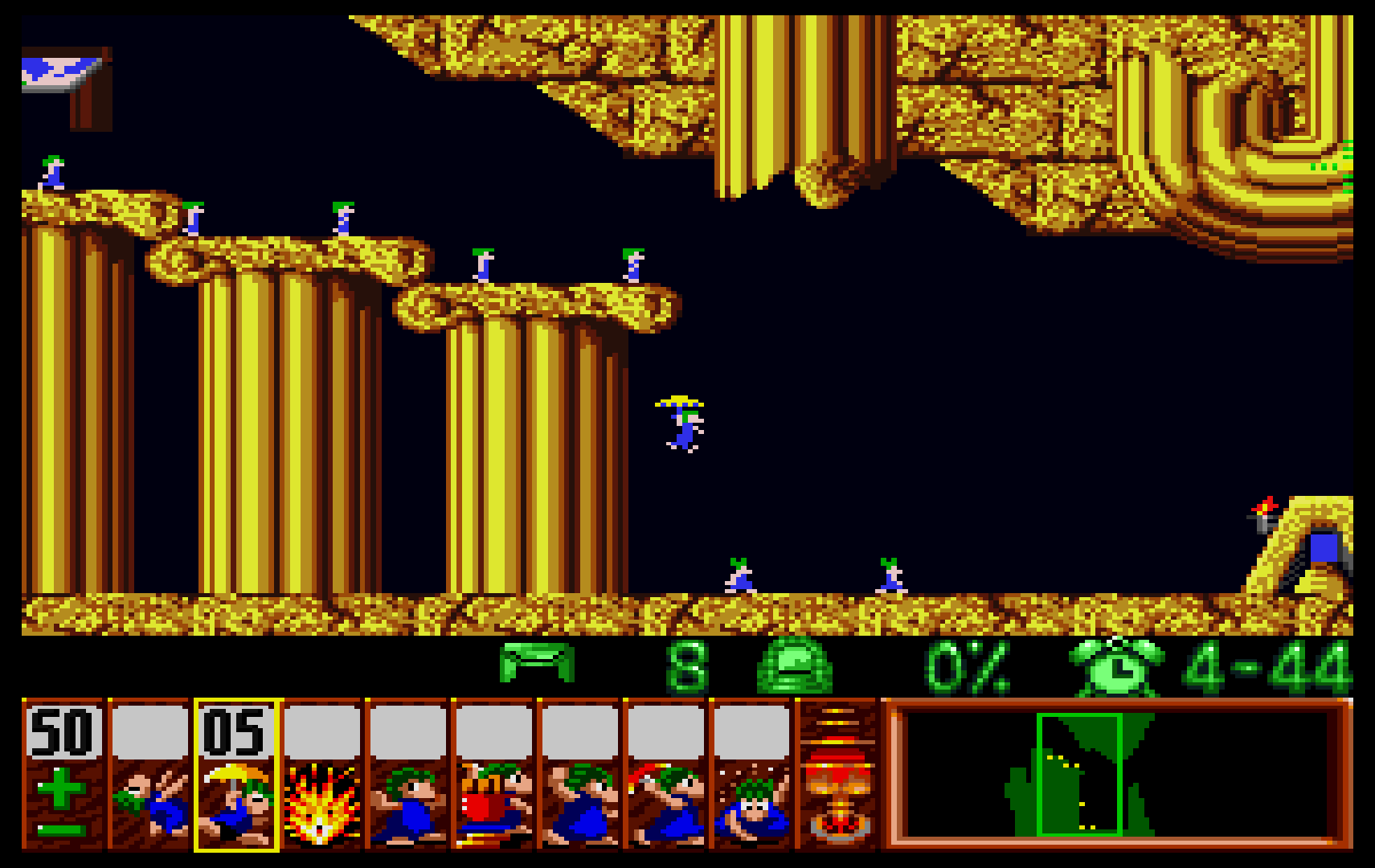
Lemmings is a puzzle strategy game, where the objective is to guide groups of “Lemmings” to the goal, trying to get as many of them to safety as possible. In each of the levels, there will be a target percentage to rescue of the total lemmings in the stage, with the numbers varying from level to level. During a stage, there will be obstacles to overcome, posing great danger to the lemmings that attempt safe passage through.

Across the different stages, there will be traps that will kill the lemmings, like flamethrowers, crushing presses and contraptions that suck them up. But these are not the only risks they face. There are natural hazards like water, pits they can fall down and fire that will incinerate them. If too many lemmings are lost during a stage, the player will be unable to reach the target, to speed things up the player can “nuke” the level blowing the lemmings up.

In order to overcome the dangers that the lemmings face, the player has the ability to assign skills to individual lemmings. These skills have a few different purposes, with the main one to alter the terrain of levels, like the digger, basher and miner. Additionally there are skills that allow the lemmings to traverse more perilous areas, like the climber and floater. Each stage has a limited set of skills, making skill management important.

The original release and many of the ports have four difficulty levels, ranging from Easy to Expert, with the settings called Fun, Tricky, Taxing and Mayhem. However, in a couple of the Sunsoft ports, there are additional stages for players too challenge. This is most notable with the SEGA Mega Drive/Genesis version, which has two additional sets of stages and a special Hebereke themed level. There is even a 2 player mode, with their own stages in some versions.

But in the inverse, there are several versions of the game are wildly different. Some ports are severely limited, with reductions in the scale of stages, presence of traps and more. These limitations make for a vastly different gameplay experience, alongside the need for clever modifications. Some versions have a lock on feature, where the player can immediately target a single lemming, making it a little more manageable.

The limitations of different versions also extend to the number of lemmings that can appear on screen. Some versions like the SEGA Game Gear can only have 20 on screen, while the Game Boy version can only show 14 at a time. There is also slowdown in some games, which occurs when there are a significant amount of lemmings on screen. This can be a little frustrating for some, but it is an unfortunate side effect of hardware from the time.

In most versions of the game, progress is recorded through the use of passwords, which vary from platform to platform. But some of them do have crossover, due to the way the games were programmed. The password system works very well, with passwords being spread across the playground back in the day. Some of the ports do have memory back up, like the PC-Engine Super CDROM version and the Windows release.

Last to mention is the sound, which is a defining feature of the Lemmings experience. There is a use of digitised voice for most of the games, which is a great choice, but is sadly lacking from those with hardware limits. The music does tend to very across the different games, but most of them contain many if not all of the original soundtrack. Then there are the special musical inclusions, with music from games by Psygnosis and Sunsoft, depending on the version.

Personal Thoughts

My earliest memories of Lemmings is from the SEGA Game Gear, sitting on the floor while plugged into the wall, bathed in the glow of that old backlit screen. The enjoyment and wonder I felt gave me a love for puzzles, sticking with me throughout my life. My love for lemmings has never gone away, finding any way to be able to play the game, even putting home brew emulators on my DS as a kid. I even have what little merchandise is available for the game.

There is a simple yet magical charm to watching the little sprites of the lemmings, making their way through each of the perilous journeys that they faced. The sprites are simple yet effective, with all of the animations working to show everything perfectly. Out of all versions of the game, my personal favourite is the SEGA Mega Drive version, as that was one that I was able to play the most. This is closely followed by the Game Gear.

The puzzles are balanced well, with none of them being overly complex to the point it is ridiculous. It is one of those games that needs a little bit of planning at times, but this can be as simple as sketching out the stage on paper. I had a bunch of notebooks for this game as a kid, filled with passwords, stage sketches and notes. Sadly these have been lost to time, but I have made new books since that I still use during play.  

Each of the different versions of the game has a unique charm, offering a fun experience that can be enjoyed by everyone. No matter what system you had at the time, there was a copy of lemmings that you could play. There were releases on home computers, consoles, handhelds and even a Java release. This made it one of the most widely available games of its time, with 28 different official releases during the games lifetime.

I have been trying to collect complete in box versions of the series, while keeping to a relatively tight budget. But this can be a little tricky, due to the ballooning cost of retro games. This is made worse by the limited availability of some, as they are region specific, like the PC-Engine Super CD, Atari Lynx and Panasonic 3DO. The cost of many versions of the game may lock players out, but there are many variations that are accessible.

Sadly the original game hasn’t been released since, due to Sony buying up the original IP owner Psygnosis, who were shut down in 2012. This death of a beloved franchise hurts even more, as the last official Lemmings game was a terrible microtransaction filled mobile release. Like many of the other series that get bought up with companies, Lemmings has been abandoned, so we may never see this game get released again.

I do wish that a new Lemmings game will be released at some point in the future, maybe just a port of the originals or even a release on GOG or Steam. There isn’t much hope for this though as the 30th anniversary has already passed, so if there was going to be something, it would have happened by now. This is just another story of a fantastic game that can be enjoyed by everyone, being forgotten, abandoned and lost to time.

If you have enjoyed this feature, then I suggest you check out the other content on this site. I write in depth reviews about more recent games, alongside coverage of retro games, classic titles and even the weird outliers in gaming. So stick around and see what catches your eye, as there is hopefully a little something for everyone.  

Lair Land Story – Nintendo Switch Review

Overview – developed by CIRCLE Ent, Introy Studio and Arc System Works, with publishing by PQube games, Lair Land Story is a life simulation adventure, with romance and visual novel elements. As Herol, baron of the Lair Land kingdom, you have been tasked with raising Chilia, a mysterious girl with no memory of her past. This title is available for Nintendo Switch and the Steam service, links to each version of the game will be at the bottom of this review.

Disclaimer: before I get into the review, I would like to thank PQube for providing the copy of Lair Land Story that was used for this piece, via the keymailer service. The provision of this software has not influenced the contents of this review, all thoughts and opinions contained within are my own.

Now with the introductions out of the way, let’s get into the review, starting with the story. Please note, there are many intricate elements of the gameplay experience for Lair Land Story, so I will be covering the core mechanics to prevent spoilers.

Story – while his city is being ravaged by war, Herol discovered Chilia, a mysterious girl with magical power who puts an end to the devastation. She has no memory of her past, so Herol takes her in, making a vow to raise her and guide her development. Herol must now help Chilia to realise her future, becoming the best person she can be. But that isn’t all, as Herol has the chance to find his true love, embarking on his own journey of romance.

Gameplay – Lair Land Story is a mix between child raising sim and visual novel, with the player taking the role of Herol. As the baron of the kingdom of Lair Land, the player must guide and raise Chilia, the young girl with amnesia found during a crisis. Over the course of 4 years, the player will need to carefully plan her schedule, shaping the person that she becomes. The options include lessons, work or helping to reconstruct the damaged city.

The four years that Herol and Chilia are together is split into seasons, with three months in each. There are 2 turns per month, where the player can set up three activities for Chilia, playing out over 15 days. The activities that can be selected are Study, Work, Rebuild and Other. When participating in the different activities, they will affect the way that Chilia grows, altering facets of her personality. But they can also take a toll on her wellbeing.

If Chilia goes out to work, she will earn EVE by performing a variety of jobs. These jobs include working in a church, a beauty salon and helping to clean up the city. As Chilia performs these tasks, she will gain money and experience, while also growing as a person. She may be able to gain bonuses if she manages to do a good job, with the rewards growing as she continues with each job. When she reaches a milestone, she will be promoted.

When studying, Chilia can learn many things, including Art, Philosophy and Manners. As she increases her knowledge of the different subjects, she will get the chance to participate in special events. But her education isn’t free, as it will cost EVE to be able to study the different subjects. If the funds are not available, Chilia will spend the remaining days of her study at home. Like with work, when she is experienced enough, she will advance in skill.

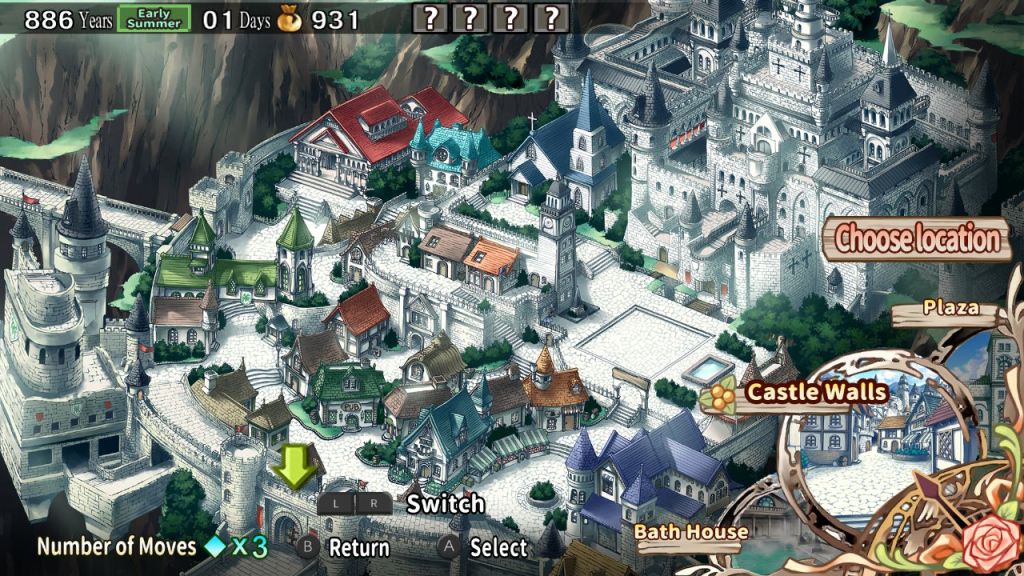
Chilia will also be able to participate in the rebuilding efforts of the city, starting with the castle walls and plaza. But as the different parts of the city are restored to their former glory, new areas will be added, like the church and bath house. The repairs to the different locations will be reflected in story events, as they take place across the different parts of the kingdom. While an area is being rebuilt, Chilia will gain popularity with the people.

During her days, if Chilia is performing an activity she will accumulate exhaustion, alongside losing motivation. Both of these will have an effect on her general growth, as it will negatively affect her performance at the different tasks. To reduce the stress on her body, there are several recuperative options that can be chosen. These include simple rest, visiting the bath house and special travel events, where Chilia and Herol will visit distant lands.

During all activities, Chilia will develop in various ways, improving a variety of stats and possibly reducing some of them. The stats that can be improved cover a wide range of virtues, like humanity, wisdom, morality and sense. The different stats may have an impact on the character that Chilia turns out to be, potentially altering the interactions that she has with characters. To guide her in a desired way, focus on specific stats to raise.  

Between scheduled activities for Chilia, the player can choose to go on an outing with the girl. During this time, the player will be able to see the different parts of the city, like the Church, plaza and city streets. When visiting these different locations, they will be able to interact with the residents, building relationships with them. Special events can also trigger, giving a chance for unique interactions and story events to occur.

There will also be shops and services that can be used in the city. The player can visit shops, buying special clothing for Chilia, as well as accessories for her and decorations for their home. Then there is the beauty salon, where new hairstyles can be selected for Chilia, with some having the chance to affect different aspects of her character. Three activities can be done per outing, but shops can be accessed as non-events, not counting towards activity uses.

As the seasons change, there will be events that occur to mark the passage of time. These have the capability to alter the course of the story, with events possibly affecting both Chilia and Herol. But this is not all that occurs as each season passes. Chilia and Herol will receive visitors, ranging from members of the church, to citizens and even a fan club for the magical girl. These visitors can also give gifts, including money and items for Chilia.

At the start of a new season, the player will get a report on the last one. The report will show the growth of Chilia over the last three months, with blue markers for positive and red for negative. A goal can be chosen at the start of a season, aiming to raise one of her qualities within three months. If the player can successfully improve the stats to the required level, a reward will be provided to the player. A stipend will also be awarded at the start of each season.

In order to ensure that Chilia has the best chance at success, prayers can be made to provide a variety of boosts. These include reduced fatigue, improved motivation and passive boosts to her learning. To make these prayers, the player needs to use MP, which is earned by fulfilling special conditions. There is a limited amount of MP that can be earned during play, so it is important to use it sparingly or it can run out fast.

While Chilia grows as a person, she will become more interested in the world around her. This is where the research lab comes into play. When Chilia uses the lab, she is able to perform research and create items. These items can be auctioned off, or used to provide a variety of bonuses. In order to be able to conduct the research, EVE must be spent and the research takes different numbers of turns to complete. Just hope her lab doesn’t explode.

When all four years have passed, an ending will occur, showing the player the life that Chilia has become destined to live out. There are many hidden variables to the story, which will affect what happens and how things play out. There is also the chance for Chilia and even Herol to be married, which is influenced by these hidden stats. After the story plays out, an evaluation screen will appear giving the player a final score for their playthrough.

The last thing to discuss is the bonuses that occur after achieving an ending. On the main menu screen, there is a bonus shop that can be accessed after getting an ending for the first time. This menu offers a selection of items, all of which can be used during additional runs of the game. Some of these are unlocked as completion awards, whereas others must be purchased from the bonus shop with points. This makes repeat play very rewarding.

Now with the gameplay covered, it is time to discuss the other aspects of this release, starting with the controls.

Controls – There is a mixed control system with the Nintendo Switch version of Lair Land Story, as players can choose to play with button or touch screen controls. Both of these systems makes the game accessible, allowing it to fit various styles of play. For those who like a nice and cosy gameplay experience, the touch screen is a great choice as it can make it feel more personal. But it is just as satisfying to enjoy with a controller.

Difficulty – for this release the only real difficulty comes from the trial and error of the game, as there are many hidden elements to the game. This can make it hard to figure out what to do at times, especially with the limited references and information. If players are trying to get a desired outcome, they may have to try several different options to see what happens. This adds an element of strategy, but could be frustrating for some.

Presentation – the visual style for this release is a treat to see, with beautiful anime style artwork that is present throughout. The designs for Chilia and the characters, alongside event scenes are wonderful to look at. I very much liked the chibi Chilia that appears during activities. All these elements combined with environments and music, which enhance the atmosphere for the story being told. There is some very good voice work that ties the presentation together.

Final Thoughts – when I looked into this game, I was reminded of the Princess Maker series, which I have played and enjoyed, so I jumped at the chance to play this. The combination of Visual Novel and life sim is a good mix, with the VN sections being a great way to tell the story. I played through this game a couple of times, getting different endings based on my choices, which made each story run satisfying. I just wish I understood the hidden variables.

There are some minor issues with the game, as some of the text doesn’t work correctly, which can be a little frustrating. This shows up as duplicated text, the occasional line of missing text and a few typos. However, these flaws don’t detract significantly from the experience, as it is a very enjoyable narrative experience. I am happy to recommend this game to everyone who enjoys visual novels, life sims or those who are looking to try the genres out.

In the end, I give Lair Land Story a final score of 4.5/5. This is a satisfying hybrid of life simulation and visual novel, with characters that are gorgeous to look at, combined with stories and a world that are wonderful to experience. If you want to check this adventure out for yourself, a link to each version of the game will be below.

Link to Nintendo Switch version (HERE)

Link to Steam version (HERE)

Retro Revival – SEGA AGES Virtua Racing (Nintendo Switch)

Hello and welcome back to another instalment of Retro Revival, discussing classic games that have been given a new lease on life through modern platforms. As a refresher, this will be covering HD Remasters, emulated ports and games that are included in collections. So in this entry, I will be covering one of the most influential games in the racing genre. The first “fully 3D” racing game, Virtua Racing, brought back by M2 through the SEGA AGES series.

Disclaimer: the games discussed in this feature have been purchased by me, so the opinions given within are all my own. There has been no sponsorship of the content within this feature. Links to the different versions of the game will be provided at the bottom of this feature where possible.

So with the introductions out of the way, let’s get started. I will be discussing the general gameplay experience for the game, alongside some background on the game then provide some personal thoughts on it.

About the game

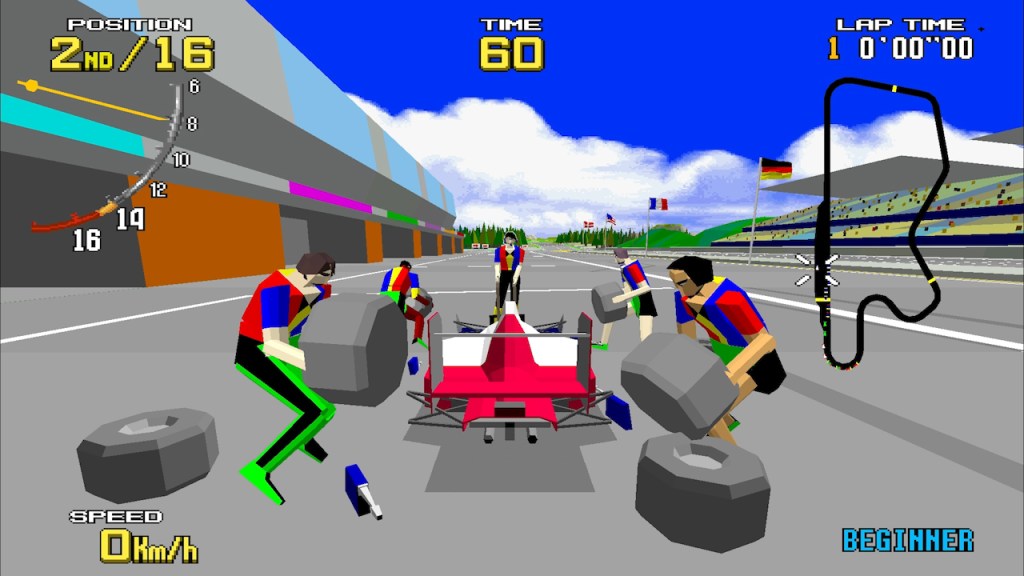
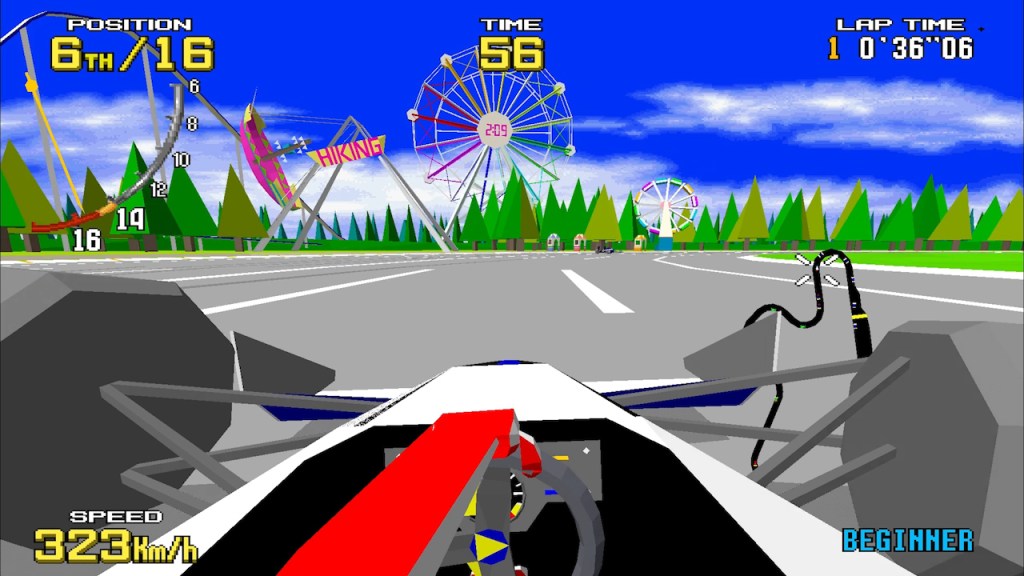
Virtua Racing is a 3D racing game, using a Formula 1 style of car in 16 car races. Take to the circuit across three tracks in fast paced racing action, offering 5 lap standard races and 20 lap grand prix challenges. The three course are split into Beginner, Intermediate and Expert, with their own distinct themes to them. There is the Big Forest that has a Ferris Wheel, Bay Bridge with the titular bridge and Acropolis, which is set by a sailing club.

At the start of a run, the player will be able to select one of the three courses. The player will also be able to select the transmission they want to use, with the option for automatic gear change as standard. But if players want to have more control, they can activate Manual gear shifting, for that little extra challenge. In the standard races, only one car is available, but in grand prix mode, different car colors can be selected via the options menu.

When competing in a race, there is a time limit to complete the race that continuously ticks down. This can be extended by hitting checkpoints along the track. As the player passes each checkpoint and completes laps, the time bonuses will decrease, increasing the time pressure. But the time limit itself isn’t the only tension, as there are 15 other racers on the track, gunning for first place. Any contact with these opposing racers can cause the player to spin out.

If the player is unable to reach the end of the final lap within the time limit, the race will be over and they will go back to the title. When the player finishes a race, they will get to add their best time for the whole race to the game rankings. However, if the player has the skills to reach the front of the pack, placing first, something special happens. A special 3D cutscene will play out, alongside the credits as a reward for achieving victory.

This game has what was a revolutionary feature at the time of the release, the “V.R. View System” which allowed players to select up to 4 different camera perspectives. The use of this feature allows players to experience races in a fun way, offering several ways for races to play out. There is also a dynamic display on screen, showing a map that will move as the player makes their way along the track. This makes for a dynamic racing experience.

As this is a special port of an arcade game, there are additional features that have been added to the game. The first to cover are the multiplayer offerings, where players can play online and on the same screen. When playing in a multiplayer race, the total number of laps is reduced to 4 in a normal race, alongside the total cars on the track. Only the active players will appear in the race, making it a challenging head to head competition.

The online game mode is limited to 2 players, with random matching and room settings. Unfortunately, there are few players around to play online mode with, so if you want to play with another it may be best to check forums for players. In the offline multiplayer, up to 8 players will be able to play together, offering a chaotic experience for game nights. All multiplayer modes also have the time limit, with the lead player controlling the timer.

For those who want to put their skills to the test, there is an online leaderboard, giving players a chance to compete for the best time. In the single player, there is a fastest time and best lap records for each track, adding replay value to the package. This is accompanied by a replay system, which records the best finish for each track and can upload them automatically. The top 50 times for each track may also have replays, showing how times were met.

Personal Thoughts

Virtua Racing was not the first racing game to use 3D polygonal graphics, with games like Winning Run from Namco coming first. However, SEGA utilized their ground breaking technology to push the genre forward, creating the first fully 3D racing experience. Unlike earlier offerings, this release fully utilized 3D polygons, letting players see the whole car with the different camera views. This was unlike other games that had a static cockpit view.

Then there are the effects of car damage, which showed the wings and parts of the car being smashed up by crashes. This was often combined with exaggerated crashes, where the car would fly into the air upon hitting a barrier at high speed. SEGA pushed the boundaries further with full 3D cinematic scenes, showing off the cutting edge visuals of the time. This made Virtua Racing stand out among the other offerings at the time.

I first found this game through the home port on the SEGA Mega Drive way back, no knowing it was an arcade game. I played this a lot back in the day, alongside other SEGA racing options like Outrun, Super Monaco GP and Super Hang-On. This was long after games like Daytona USA, SEGA Rally Championship and Ridge Racer had been released. So I was not aware of the importance and impact at the time, but learned about it as I got older.

I had played the different home ports, like the enhanced version on the SEGA Saturn, alongside early emulations of the game. So when this was released on the Nintendo Switch, I was excited to the arcade version in an official capacity. This was due to the game becoming largely forgotten in the years after release. It may be a simple game, with limited content, but it is a lot of fun to play, especially with others in the same room.

The limited general experience of the game is not a negative, as it makes the game easy to pick up and play at the drop of a hat. The feel of the racing is balanced well, with the ability to take turns at solid speeds and keeping up a good pace. This makes the gameplay rewarding, as good control of the car can shave seconds off a lap and push into first place. It can take a few attempts, but it is a lot of fun to push to the front of the pack.

The most fun that can be had with this game is the multiplayer, with up to 8 players taking to the track for competitive battles. I have played this quite often during game nights, having head to head races that feel distinctly different to many other titles. Then there are the informal time trials, taking it in turns to see who can set the best lap time and total time, expanding the possibility of fun. This makes it perfect for retro game meetups.

SEGA have a bit of an unfortunate track record when it comes to their older games, often having a tendency to only release a few different games. So it was a welcome surprise to see this game get a modern release, as it deserves more attention for how special it is. The quality of the emulation is perfect, thanks to the work of M2, who have created many high quality emulated ports, as well as the other games in the SEGA AGES series.

If you haven’t played Virtua Racing before, only played via unofficial emulation or via the home ports, then I recommend checking this out. This is a modest package at a price that won’t break the bank, which goes on sale quite often for big discounts. The SEGA AGES series was a short lived experiment, but offer fantastic value and a glimpse into the storied past of a legendary company, giving players a chance to experience forgotten classics.

If you have enjoyed this feature, then take a look around the other content and see what catches your eye. There are reviews, occasional news and more features that cover a variety of games. There are the Lost Gems and Gaming Oddities, with a special Co-op feature coming in the future. So please stick around and check out the other offerings.

Link to SEGA AGES Virtua Racing (HERE)

Lost Gems – Sonic the Hedgehog Pocket Adventure (Neo Geo Pocket Color)

Hello, I am back again with the next Lost Gems feature, discussing forgotten classics that are sadly unavailable in an official capacity. In this instalment, I will be covering an unusual collaboration between SEGA and SNK, with a handheld game for the Neo Geo Pocket Color system. So it is time to take a good look at Sonic the Hedgehog Pocket Adventure, developed by SNK under supervision from Sonic Team.

Disclaimer: while the game discussed here is no longer officially on sale, there are ways to obtain the game. This can either be through the second hand market, or through unofficial digital roms/rips. I do not condone or promote piracy, so there won’t be any links to roms or rips of the games being covered.

So with the introductions out of the way, let’s get started. I will be starting with the general game experience, then giving my personal thoughts on the title.

About the game

Released all the way back in 1999, Sonic Pocket Adventure is a rather unique standalone platform adventure, based upon the classic trilogy of games. This title uses colourful 16-Bit sprites, created in such a way to fit the Neo Pocket style, which gives it a distinct unique feel. The game is mostly based on Sonic 2 for the Mega Drive/Genesis, taking stages styles, graphics and enemies. This is contrasted with music that comes from a few different games.

The game itself is made up of 7 zones, alongside a special secret zone 8. All of the zones aside from the final and secret zone are made up of two acts, with the second having a boss battle. The core objective for each of the main zones is to get from the start to the goal, collecting rings and avoiding the hazards of the stage. There are many dangers in the stages, with spikes, deadly pitfalls and numerous robotic Badniks that will try to kill sonic.

During the stages, if Sonic takes damage while holding rings, he will drop all of them, being invincible for a limited time to escape danger. But if Sonic takes a hit with no rings, he will die. In order to survive the different zones, sonic has a few tools that can be used. The main one is the Spin Jump, which is his regular jump skill. Then there is the Spin Attack, by pressing down while moving and the Spin Dash, which can be charged for a powerful burst of speed.

As Sonic makes their way through the stages, there will be Star Posts at different points. These checkpoints make death less painful, especially before the boss battles, which can be pretty challenging. There are many gimmicks for the bosses, which can further push the difficulty up. These include Robotnik bouncing around like a pinball, a battle against knuckles and an appearance of the first Sonic robot, Silver Sonic.   

If Sonic runs out of lives, the player will get a game over and they must either use a continue (detailed further down), or go back to the title screen and use the continue option there. This system lets players quickly get back into the action, returning to the point that they were at when they lost their last life. The inclusion of this system makes failure less painful, giving players a good chance to clear the game without needing to start from the beginning.

Then there are the item monitors, containing additional rings, shields, extra lives and the super speed shoes. These are scattered around the stages, increasing the replay value through exploration on repeat play. If the player manages to reach the end of the first act with 50 rings, a special ring will appear for sonic to jump into. If the player chooses to enter this special ring, they will be transported to the special stage before going to the next act.

The special stages are taken directly from Sonic 2, with Sonic running through a half-pipe, needing to collect rings to match targets, while avoiding bombs. During the special stages, there will be three targets to match, increasing in number as each one is passed. If the target is missed, the stage will end, but if all three are passed, Sonic will get a chaos emerald, with 6 of them to collect in special stages. Players can also collect continues in bonus stages.

If the player is able to collect all 6 chaos emeralds before reaching the final zone, they will collect the 7th final emerald. This will unlock the secret zone and the true ending, but if emeralds are missed, the regular ending will play out. The main single player isn’t the only thing to do with this game, as there are additional bonus modes to take on. These are found in the Room menu from the title screen, below the start game option.

There is a time trial mode, where players are able to replay cleared stages to get the best possible time. The stages will be added to this mode as they are cleared, giving the player a chance to put their skills to the test. There is a ranking system for the time trial, making it a solid challenge mode. Then there is the Puzzle Room, where players can arrange puzzle pieces that are collected during play, with the completion of puzzles unlocking special features.

Last are the Options and Multiplayer options. In the options, the player can set the number of lives that sonic will have, as well as difficulty and the ability to time out. Turning the Time Out option off prevents Sonic from dying if the time limit is reached. Multiplayer occurs in the Duel Room, where two systems are linked together, letting players battle it out as sonic and tails. There are two challenges to play, a race and ring collection objective.

Personal Thoughts

This was a game I played here and there during the time it was available officially, as well as in the years after. I have a soft spot for this game, as it is one of those unusual things that we never thought would happen, like Sonic going to a Nintendo System. But at the time, this was something very special as it was a collaboration between two hardware Juggernauts. If only we knew they would both cease console development in the years after.

When playing Sonic Pocket Adventure, there is this familiarity to it with the classic gameplay style and adaptations of stages from Sonic 2. It feels comfortable and natural to play, with a good sense of momentum and it doesn’t suffer from the dreaded screen crunch. The sprites have been scaled in such a way that most elements can be seen well, which was vastly different from the other Sonic handheld games in the past.

Sonic Pocket Adventure is still a very odd experience, especially for those who know the classic series well. This is due to the unusual mash up of stage elements and music, as the environments are almost entirely from Sonic 2 (aside from scrap brain in the final full zone) and music mostly from Sonic 3. There is this absurd feeling that happens, due to hearing the Angel Island music over an Emerald Hill style stage, but it works really well.

I have a deep love for this game, as it reminds me of a time where collaboration between developers was a rarity, making it feel more special. This was long before the Mario and Sonic games, having guest characters in fighting games and all the licensed characters in Fortnite. There was the Game.Com version of Sonic Jam, but many ignore this as it is an abomination of a game, that barely runs in a playable manner.

This game has not been acknowledged by either SEGA or SNK, becoming a memory to most over the years due to the failure of the Neo Geo Pocket Color. However, there was a new revival of Neo Geo in recent times, with the MVS Mini systems and the ACA series of digital releases. There has also been several releases of Neo Pocket games, with two collections available, giving me some hope that Sonic Pocket Adventure may get a re-release in the future.

With that being said, I do not have high hopes that the game will be available any time soon. There hasn’t been a new Neo Geo Pocket digital release in a long time, so it appears that the only way to buy it is through the second hand market. This is pretty unfortunate, as the prices for the game are very expensive, with the cartridge alone being very pricey through resellers. So maybe, just maybe, we will get a re-release in the future.

If you have enjoyed this feature, please take a look at the other content that is available on the site. There are more entries in this feature, Gaming Oddities and the Retro Revivals, with reviews of new games and a special Co-op feature on its way. So stay tuned for more, take a look around and see what catches your eye.

Gal*Gun 2 – Steam Review

Overview – developed by Inti Creates and published by PQube Games, Gal*Gun 2 is the third entry in the action packed bishojo shooter series, combining on-rails action and dating sim mechanics. The angel Risu has recruited you to help fight demons, as she needs to meet her Demon Busting Quota as part of AR. Co. This title is available for Nintendo Switch, PlayStation and Steam with a link to each version of the game at the bottom of this review.

Disclaimer: before I get into the review, I would like to thank PQube for providing the copy of Gal*Gun 2 that was used for this piece, via the Keymailer service. The provision of this software has not influenced the contents of this review, all thoughts and opinions contained with are my own. Please Note: there is a special VR mode that can be accessed after purchasing DLC, I was unable to experience this content, so that will be omitted from this coverage.

Mature Content Warning: Gal*Gun 2 is intended for mature audiences, featuring sexual content, imagery and innuendo featured throughout the experience. If you are under the recommended age for this release, or find the content mentioned offensive, feel free to check out the other content on the site. Discretion is advised.

Now with the introductions out of the way, let’s get into the review, starting with the story. I have previously covered the Nintendo Switch version of the game, which you can find (HERE). With this revisiting of a previously covered game, I will be providing expanded coverage, adding significantly more details that were omitted from the previous review. I also have Coverage of Gal*Gun Returns (HERE) and Gal*Gun Double Peace (HERE).

Story – at the Sakurazaki Academy, a student is sitting at your desk, talking to their childhood friend when an unusual app is discovered on their phone. This is from a company called AR. Co. which causes a mysterious headset to appear on the desk after opening it. After putting the headset on, the angel Risu appears, informing them they have become the chosen hero, and they have 20 days to save the Academy from being taken over by demons.

Gameplay – Gal*Gun 2 is a rail shooting style action game, where the player must use the special Demon Sweeper and Pheromone Goggles to meet a Demon Busting Quota. This has to be completed in 20 days, or else the demons will succeed in taking over the school. To accomplish this feat, the player must complete missions, with the capability to clear two of them each day. The missions will take place across the campus grounds and areas surrounding it.

The missions are split into three set classifications, with Main, Side and Free designations for the challenge. The Main missions are the core story progression challenges, where players will work towards the completion of the main story. Then there are the Side and Free missions, where players take on bonus objectives, giving extra story details, items and rewards for completion. Many of the cleared missions can be replayed from the mission menu.

During the mission stages, the player will be able to use the Demon Sweeper, along with the Pheromone Goggles to battle the demonic presence at the school. However, the Goggles come with an unintended side effect, they make the player irresistible to almost every female at the school. This is due to an effect called Popul-Aura, which causes the player to be swarmed with admirers, trying to get a piece of this sudden heartthrob.

The action plays out like a relatively traditional Rail Shooter, where the player is stationary as they are swarmed by enemies. While the player is stuck in position, they can still look around with a full 360 degree camera control, while also adjusting the camera higher, lower and shifting left/right. As the player is attacked, they must use their Pheromone shot to subdue them, which can be achieved by rapid fire or a well time weak points shot.

As the player takes down their amorous pursuers, they will gain points for each successful take down. There is a special combo system with this title, known as Ecsasty Shot, which will count up a streak with each successful weak point hit. This will continue until the player is hit by an enemy, resetting the streak to zero. This makes it important to be quick when taking down enemies, as they can attack up close and at a distance.

Then there is the Lovestrike, which will clear away a bunch of enemies at once. This is achieved by zooming in to a girls eyes, filling up a heart shaped mark on screen, which will activate when full and take down multiple enemies. The different skills can be very useful, as enemies will can hit hard and fast, especially with the ranged attacks that need to be shot down. The player can also be knocked down, making them vulnerable to attack.

But be advised that not all enemies can be taken down with the Pheromone shot alone, as some will be possessed by demons, known as Mini Kurona. These demonic parasites will make the target more aggressive, making their attacks more powerful. To exorcise this presence the player must first shoot them off their host, then use the Demon Sweeper to suck them up. This will make the girl vulnerable to being pacified with regular attacks.

The demon sweeper has limited energy which will run down when using it, starting out at 100%. This can be replenished by taking down enemies, hitting Ecstasy Shots and there will be special angels that can be sucked up for a boost. When the Sweeper runs out of energy, it will recharge to 20% automatically. As the game progresses, the Sweeper can be upgraded, unlocking the special Hyper Sweeper skill for some scandalous results.

Within most stages, there will be transition points, where the player will be able to move between different points. These points will usually pop up when all of the enemies in the area are neutralised, letting the player push forward. In a stage, there will be a mix of single transitions alongside branching paths. The addition of multiple paths to take give stages a lot of replay value, making repeat runs of stages more enjoyable.  

There are a few different action types for the stages, with the main one being the elimination stages, where the player needs to reach the goal. Then there are defence missions, where targets must be protected from Mini Kurona demons. The most unique objective is the search, where a set number of items must be located in an area, all while fighting off demons and admirers. These different challenges keep the experience from getting stale.

At set points during the main story and even during the side story events, the player will be pulled into a boss battle. These encounters can be pretty challenging, with the player needing to repeatedly hit the enemy, avoid attacks and clear away items with the Sweeper. The main bosses occur through general play, whereas the side story battles will occur when conditions are met. This makes them optional and can be missed.

When any stage is cleared, the player will get a final score with bonuses provided based on performance. These bonuses are based on the number of Mini Kurona that have been either defeated or captured. When a day ends, the player will return to their room, where they can get additional rewards based on their accumulated Demon Busting score. The higher the total score, the better the rewards that are earned during play.

Returning from the other games in the series is Doki Doki mode, where the player needs to purify a specific character from Demonic possession. These involve targeting set points of the target girl, where they will be shot at until the demons are expelled. As the player removes the evil influence, they will get closer to the target, deepening their bond. If the player is successful with Doki Doki, they will be see the target in their most vulnerable state.

The final element of the gameplay to discuss is the progression system and endings for the game. Unlike the other games, there are no preset character routes, with a general good and bad ending. However, if the player is able to fulfil a set of conditions, they will be able to get one of six special endings. To achieve these special endings, the player may need to build affection, clear missions and complete special events for the love interests.

When an ending has been achieved, the option for new game plus will be included. This feature allows the player to start a fresh game, maintaining their upgrades, items and other unlocks that have been obtained. This allows for players to go for all endings and rewards, making it easier to get 100% completion of the game. Multiple clears of the game will also make all stages available for the bonus Score Attack mode.

Now with the gameplay covered, it is time to discuss the other aspects of this release, starting with the controls.

Controls – there is a pretty easy to use control system for this release, offering players the option for either controller or Mouse and Keyboard. I personally preferred to use the PC style inputs, as they allowed for faster aim, better precision for long shots and generally smoother gameplay. But the controller input worked very well, giving a comfortable and playable experience. All of the inputs can be freely mapped, allowing players to tailor it to their personal tastes.

Difficulty – there is a rather balanced difficulty curve to this release, offering a challenge that will slowly build over time. This allows for players to take it easy, get used to the mechanics and improve their skills during the experience. If the player fails at a stage, they will be able to easily restart the stage. This isn’t an issue, as the player will be able to quickly jump back into the action. The only big challenge, may be trying to achieve all the special endings.

Presentation – from a visual standpoint Gal*Gun 2 is a real pleasure to look at, with an excellent use of color and anime style characters that are highly expressive. The overall quality of the visual experience is good, with no issues when playing the game in terms of lag or stutter. The interaction scenes, special events and risqué artwork are very high quality, improving the fanservice on offer. This was a very smooth experience.

The sound matches the high quality of the visuals, providing a soundtrack and music that enhances the overall atmosphere present. The opening theme and title music are my favorites, as the opening is an energetic J-pop style anthem, which is further complimented by the happy bouncy title music. The rest of the music is just as good, fitting all of the events and scenes. There is full Japanese VO for this game, which ties the whole game together.

Final Thoughts – I enjoyed this game on the Nintendo Switch, so it is easy to say I enjoyed this version of Gal*Gun 2 just as much, if not more. There is a lot of fun on offer in this release, with plenty of action to enjoy and a heck of a lot of fanservice. While the other entries in the Gal*Gun series are more traditional rail shooters, this takes the formula and expands it further. It is a little frantic at times, but the story scenes break it up nicely.

There is very little to complain about with this release, the gameplay may become repetitive to some and the fanservice tasteless. The overall package is so much fun to play, with a pretty solid narrative experience that has plenty of depth. There is an unusual bug that causes hiccups, but can be easily fixed by playing in offline mode (it is unknown why it happens). But, I can happily recommend this game to fans of shooters, dating sims and fanservice in general.

In the end, I give Gal*Gun 2 a final score of 4.75/5. This is an over the top shooter filled with some chaotic action, over the top fanservice, comedy and lots of girls to shoot. For what seems like a surface level shooter, there is a lot of depth and enjoyment to be found. There is also a ton of extra DLC content for players on offer. If you want to check this title out for yourself, a link to each version of the game is below.

Link to Steam version (HERE)

Link to Nintendo Switch version (HERE)

Link to PlayStation version (HERE)

Farming Simulator 16-Bit Edition – Special Physical Release Announcement

Hello, I have some exciting news to share today! The Developer of Farming Simulator, GIANTS Software have partnered with Strictly Limited games to collaborate on a special release. Following the success of the Farming Simulator 25 special collector’s edition, which hit PC shelves back in 2024, the positive response to one of the included bonuses lead to todays announcement.

Inside the Box for the Farming Simulator 25 Collector’s Edition, GIANTS Software included a special retro version of the game. The overwhelmingly positive feedback on this release has caused GIANTS Software to partner with Strictly Limited games. This Partnership has blossomed with the announcement for Farming Simulator 16-Bit Edition. Which will be available as both a Standard Limited Edition and a special Deluxe Edition.

This unique release will be compatible with both Mega Drive and Genesis Systems, alongside dedicated systems that run cartridge games, like the Mega Sg and others. Rebuilt from the ground up, this game will feature full high definition 16-Bit graphics, digital recreations of real world equipment and spirtes that push all 512 colors of the system to the limit.

But this isn’t all, not only will you grow the crops, you can havest them to sell, invest in new equipment and explore a vast world of agricultural action. All while listening to a soundtrack composed by the legendary Chris Huelsbeck. This new experience will push the limits of 16-Bit tech, allowing players to experience the joys of farming like never before.

This Limited edition will be produced with a special green cartridge, produced in a quantity of 500 copies worldwide, whereas the Deluxe edition, will contain special bonus items and a presentation box, also limited to 500 copies. In addition to this special release, a standard retail version will be made available, through selected retailers. This will consist of a black cartridge to distinguish it from the Strictly Limited variations.

Statement from Strictly Limited Games: “A rare opportunity awaits retro gaming enthusiasts and fans of the Farming Simulator series to experience the franchise in a fresh format, reimagined with the authentic feel of classic 16-bit gameplay. Both editions are fully compatible with Mega Drive/Genesis-like retro hardware and reflect Strictly Limited’s ongoing commitment to preserving and celebrating gaming culture through high-quality physical releases.”

If you want to check this out for yourself, you can find more information about the Strictly Limited version of Farming Simulator 16-Bit Edition, on their store page (HERE). You can also follow them on Twitter/X (HERE) and BlueSky (HERE) to keep up to date with all of their releases and projects.

Gaming Oddities – Pepsiman (PlayStation)

I am back again with a fresh entry in the Gaming Oddities special feature, which is currently going to be a monthly release. Here I discuss the titles that were considered weird, odd and straight up ridiculous. In this entry, I will be discussing an unusual superhero game, developed around the Japanese mascot of an American cola company. So join me as I take a look at the misadventures of Pepsiman, the superhero that wants to bring Pepsi to everyone who needs it.

Disclaimer: the games discussed here are often out of circulation, making them difficult to obtain officially. There will likely be unofficial digital rips/roms of the games out there, but there will not be any links to those games. I do not condone or promote piracy, so if you want to experience these titles, please seek them out for yourself or if possible, purchase them on the secondary market.

So with the introductions out of the way, let’s get started. I will be covering the general game experience, then I will be giving my own personal thoughts on the title, alongside other relevant information.
About the game

Pepsiman is a third-person on rails running platformer, developed by KID (Kindle Image Develop) and released on the PlayStation, exclusively in Japan back in 1999. In this adventure, the player takes the role of Pepsiman, the cola powered superhero that delivers Pepsi to those in need. The main objective is relatively easy to follow. The player controls Pepsiman as he makes his to those who need the refreshing taste of Pepsi.

As the player makes their way through each of the four stages, split into segmented scenes. These scenes are split into two distinct types, the main scenes and special scenes. In the main stage scenes, Pepsiman will run through the city streets, going past (and through) houses in a suburb, crossing intersections and even through sewers. After clearing the unnamed cities, the player will find themselves in Pepsi City.

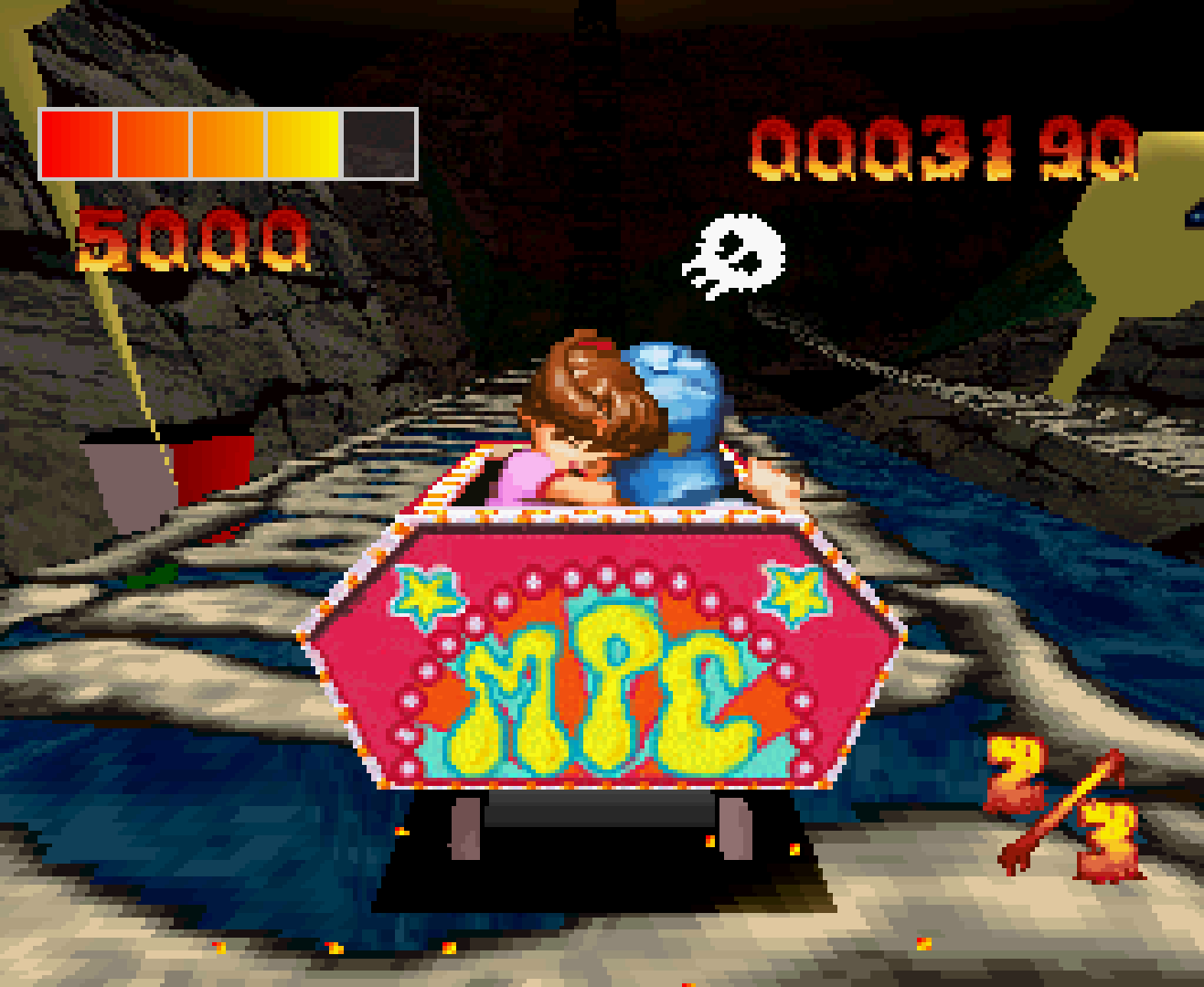
During his adventures, Pepsiman will encounter many hazards and obstacles in his path. These include construction workers that need to be avoided, cars that cross the road and even a moving truck that drops furniture. To avoid the dangers that stand in the way of delivering a refreshing Pepsi, the cola powered superhero has a few different skills. Pepsiman is always running, but he can also jump, dash, slide and brake for a moment.

These skills are very important, as they will help the player reach the goal in time, as there is a time limit to reach the goal. This can put pressure on players, as any mistakes can lead to a lot of time being lost. If the timer does expire, a life will be lost and the player will need to try again. But this is not the only way a life can be lost, with damage being taken reducing Pepsiman’s power, shown as a Pepsi logo on screen. If enough damage is taken, Pepsiman will die.

When Pepsiman takes damage, the logo will shrink, but it can be restored by collecting the many cans of Pepsi that litter the stages. Each of the main stages have 100 Pepsi cans to collect. There are also traps that can instantly kill Pepsiman, like pitfalls that the hero must jump over. There will also be gimmick sections with instant death, like riding a skateboard downhill, with Pepsiman losing a life when being knocked off the board.

Thankfully, there will be checkpoints at key points in the main scenes, which will allow the player to resume where they left off. This is possible as long as the player has lives remaining. But be careful, as remaining time will recorded at checkpoints, possibly softlocking the player. If the player runs out of lives, they will get a game over and must continue from the main menu. This starts them at the stage they died on.

The last scene in a stage is a special challenge, where Pepsiman must run into the screen, trying to outrun a deadly pursuer. This scene has some comedic elements to it, with the first being the best as Pepsiman is chased by a giant Pepsi can. As the player attempts to outrun the object, they must avoid hazards that appear in front of them. If Pepsiman hits any of the obstacles, the object gets closer and if they hit too many, Pepsiman gets run over.

Between the scenes of a stage, there are cutscenes where Pepsiman will talk to those in need, enjoy a refreshing Pepsi, or get involved in comical shenanigans. But these are not the only scenes that players will see, as this game uses full motion video of a man, known by fans as the “Pepsi Guy”. In these live action sequences, the American will drink pepsi, eat snacks and talk to the camera, like advertisements during episodes of TV shows.

All of these elements come together to create a unique and charming platforming experience, which is often referred to as one of the progenitors of the endless runner.

Personal Thoughts

I don’t remember when I first discovered Pepsiman for PlayStation, but it has been something that has stuck with me in the decades since I experienced it. It may not be the longest game experience, which can be cleared in about an hour. However, there is a lot of fun to be had with this game, offering a very solid challenge and replay value for players. The only real negative I can say this game has, is there is a bit of a learning curve to get used to it.

It is a very silly game, with Pepsi branding throughout that makes it more of an advertising game, but it isn’t the first or last to do it. There have been many “advergames” over the years, with games featuring food mascots like McDonalds Treasure Land Adventure, BK Sneak King and Yo! Noid. So this being a playable advertisement doesn’t take away from the experience, as it just enhances how unusual and downright weird Pepsiman is.

The whole package has this strange surreal feel to it, with the game cutting between the in game visuals and the live action video. There is a big focus on comedy, alongside the occasional movie reference like the iconic Indiana Jones boulder chase. These elements further add to the comedic feel of the game, with the ridiculous slapstick style of action. Topped off with the now legendary Pepsiman theme and cheer that is heard throughout the game.  

I am not the best at this game, I can’t beat it without needing to continue multiple times. Even then, I find myself coming back to this game, trying to improve my skills and get that no continue run. When it released in Japan, the only way to get it was through the grey import market, which was not very common in the 90s and early 2000s. So when you told Kids on the playground you had a Pepsi game for PlayStation, they thought you were making it up.

There was talk of it coming to the west, which would have been easy as the entire game is in English, but this fell through and kept Pepsiman exclusive to Japan. But over the years and with the rise of the internet, this game has gained a cult following. There are even dedicated Pepsiman cosplayers, donning bodysuits based on the varieties of drink during his time. The actor who played “Pepsi Guy” was also found and gained a new found fame.

This wasn’t the first time that Pepsiman has made an appearance in a video game. Several years prior, SEGA had an agreement with Pepsi to feature their branding in the game Fighting Vipers. In the arcade release, this was limited to billboards and the skateboard used by fighter Picky. However, when the game reached the SEGA Saturn in Japan, Pepsiman was included as a hidden fighter, made playable after being encountered.

Pepsiman and the Japanese Saturn version of Fighting Vipers has never seen a re-release, which is likely due to licensing issues. This limited availability has caused the cost of the games to fluctuate over the years. Thankfully, Fighting Vipers has remained relatively inexpensive, but the cost of Pepsiman has since skyrocketed, making it a very expensive purchase. The character has been dormant for some time, but I would love to see him return.

If you have enjoyed this look at one of the oddities in gaming, then please stick around, crack open an ice cold Pepsi and take a look at the other content on the site. I have reviews of recent game releases, as well as several features, including the first Gaming Oddities feature (HERE), retro features and one focusing on co-op gaming coming soon. I have plenty more content coming regularly to the site, so take a look and see what catches your eye.

Sports: Renovations – Steam Review

Overview – developed by Goat Gamez and published by Dear Villagers, Sports: Renovations is a title in the relatively popular decorating/renovation genre of games, set around a local basketball court. You have been tasked with renovating and refurbishing the Goats Stadium, a local basketball court that is going to be demolished if it can’t be saved. This title is currently exclusive for the Steam service, with a link to the game at the bottom of this review.

Disclaimer: before I get into the review, I would like to thank the rep for Dear Villagers that provided the copy of Sports: Renovations that was used for this piece, via the Keymailer service. The provision of this software has not influenced the contents of this review, all thoughts and opinions contained within are my own.

Now with the introductions out of the way, let’s get into the review, starting with the story. I will only be covering the basic mechanics of the game, this is for the sake of brevity. Images provided by publisher and may not match final product.

Story – your hometown basketball course is in danger, as a real estate developer wants to demolish it and build a new shopping mall. You receive a call from a friend, who informs you that you have 160 days to renovate, rebuild and build the building to its former glory. Work hard and use your skills to pain, refurbish and restore all of the facilities, between jobs where you help to rebuild other sports facilities to fund your own project.

Gameplay – this is a rather straightforward house flipping style of game, centered around rebuilding the Goats basketball court. In order to do this, you will need to fulfil two core objectives, with the first being to clean up the court, as the player only has 160 days before inspection. But before that can be done, they need to earn some money. In order to do that, you need to earn funds by performing additional renovation jobs.

At the start of the game, the player will be given details on the events that are occurring, telling them about the backstory of the basketball court. Then the player will arrive at their new base of operations for the game, with a workshop, car park and office. In the office, the player will be able to access the computer, where they can accept special jobs moving to other sports facilities. These have their own stories and reasons for being refurbished.

Each of the jobs will be in a different sports facility, including a boxing gym and climbing club. When visiting a location, the player will be given a set of tasks to complete, while also given some story details about the location. The general tasks that players can be given are as follows;

  • Throw out the garbage – Collect all of the trash and waste that has been left behind, including general waste like drinks cups and general trash. There will also be debris and broken furniture that needs to be disposed of. To dispose of the waste, the player must collect smaller trash into a bag, then throw the filled bags in a dumpster. All items must be picked up one at a time and disposed of.
  • Remove the Junk – using a hammer, break down the junk that is scattered around, including shelves, old furniture and even metal barrels. These items must be struck multiple times to break them down, with the items disappearing after dismantling them.
  • Sweep the floor – using a broom, clean up dust and debris from the different areas, making sure to keep going until it is all cleaned up. When enough of the pile has been swept, the rest will disappear.
  • Paint the walls – with your trusty tools, apply a fresh coat of paint to the different surfaces of your renovation jobs, giving the tired décor a new lease on life. When enough of the wall has been painted manually, finish the job with a single click with the bucket tool.
  • Replace and add new furniture – there will be existing furniture that needs to be replaced, with a selection of contemporary pieces to select from. New dedicated furniture can be added, within a budget, further increasing the value of the property. There will be some special items that are provided free of charge, but many furniture items will need to be purchased.

To help with the completion of the tasks, a scan button is available, which will show things that may have been missed. As the player completes the different tasks, there will be bonus objectives available alongside some simple puzzles. The addition of these tasks gives more to do for the player to do, making it more than just a simple decorating game. Before and after each job, the player will need to take a photo to provide to the client.

The renovation jobs aren’t the only thing that this game has for players to do, as they will need to fix up the basketball court itself. This is accomplished by performing the same types of task as the missions, but there is an extra wrinkle to the progression. To unlock new missions and earn funds for the court, the player needs to clean set areas up, like the main court, commentary booth and locker rooms. These are accessed with money earned on jobs.

But simple cleaning and a fresh coat of paint isn’t all that can be done at the court. There is a full selection of furniture that players can add to the different areas of the home base, providing freedom to get creative. There are many options that can be chosen from, like plants, desks, chairs and more, but they can get expensive, so make sure to save up. This can break up the tedium that occurs with the basic renovation tasks.

There is also a levelling system for the various tools that can be used, with upgraded painting tools, new types of brooms and more to unlock. This will cost money to access, with new items being unlocked for purchase as the player makes their way through the game. To access the tools and equipment, players can use a handy tablet, which can has a variety of handy features for players to use during the different jobs.

As the player makes their way through the different jobs and general renovations, there will be calls from Jess. She is the companion for the player, narrating events and giving more detail to the events that are occurring. But she is not the only voice that you will hear, as a radio DJ will often be heard during the game. He will pop up during play, telling stories and information about the sport tied to the facility being renovated.

The last thing to discuss is the investigation system. In this game, players will be able to pick up items and look at them, learning about the item itself or lore pertaining to the game world. This is a nice addition as it makes the world feel inhabited, as it will end up feeling empty and lifeless over time. Sadly the empty world makes for a lonely experience, with the only break from the feeling of isolation being the radio and one sided phone calls.

Now with the gameplay covered, it is time to cover the other aspects of this release, starting with the controls.

Controls – the controls have a rather convoluted feel to them, using a mostly traditional mouse and keyboard layout, with the option for controller support. There is an unfortunate awkwardness to some of the inputs, which can be a frustration when trying to quickly complete tasks. The biggest issue with the controls is the need to consistently move, for painting and washing, but thankfully there is the option to adjust sensitivity.

Difficulty – there is little in terms of difficulty in this release, as there is no real challenge when renovating the different areas of the game. It feels like there is more busy work to be done, rather than any jeopardy to try and overcome. This can work for a game that has a level of satisfaction to the overall experience, but sadly this game tends to lack that fulfilment. But it may have an appeal for those who like these types of simulator.

Presentation – This release looks good if not a little generic, with the some decent environmental designs and locations, alongside a fairly well done intro movie. The overall visual presentation is effective in what it attempts to do, with varying options for quality of texture. The sound for this game is a bit of a mixed bag, the music is pleasant enough when it is playing, but there is something unusual about the voice work, as it feels inhuman at times.

Final Thoughts – Sports Renovations was offered to me as part of a promotion, so I was not sure what to expect when I accepted it. When I got started with it, I found it to be rather enjoyable when working with the introduction. But the further I got into the game experience, the more boring and tedious it started to become. The completion of tasks in the small area was fulfilling, but that quickly wore off when working in bigger areas.

There are flaws to this release, like the inability to pick up more than one item for disposal, or the clunky cleaning mechanics. Then there is the voice work, which can feel stilted at times with the VA saying some words incorrectly. I tried my best to play this game through to the end, but I found it to become increasingly dull to play. So with that being said, I am unsure if I am able to recommend this game. There may be some value for some, but for me it is not a fun experience.

In the end, I give Sports: Renovations a final score of 2/5. This is a fairly well put together renovation simulator, but there are numerous small issues that unfortunately hinder it, causing the gameplay loop and general experience to become tedious quickly. If you want to check it out for yourself, there will be a link to the game below.

Link to Steam version (HERE)