Raiden IV x MIKADO Remix – PlayStation 4 Review

Overview – developed by MOSS and published by NIS America, Raiden IV x MIKADO Remix is an enhanced version of the classic arcade bullet hell shooter. This version of the game features a remixed soundtrack, additional gameplay modes and extra stages, creating the ultimate Raiden IV experience. This version of the game is available for PlayStation 4/5, Xbox platforms and Steam with a link to different versions of the game at the bottom of this review.

Disclaimer: before I get into the review, I would like to thank NIS America for providing the copy of Raiden IV x MIKADO Remix that was used for this piece. The provision of this software has not influenced the contents of this review, all thoughts and opinions contained within are my own.

Now with the introductions out of the way, let’s get into the review. There is little in terms of a narrative for this release, so I will be moving directly into discussing the gameplay of this title. Please note I will be referring to this title as Raiden IV Remix for the sake of brevity.

Gameplay – Raiden IV Remix is a vertical, bullet hell shooter that takes place over several stages, battling enemies that will attack the players with a relentless hail of bullets. The game is split into several modes, each featuring unique features that separate them from the others, alongside special play styles that tailor the experience to the player.

The game modes in Raiden IV Remix are as follows;

  • Arcade – play through the original game in either original or light, with light only having five stages in a single loop. However, original mode is tougher and features two loops of the game with a final stage appearing at the end of the second. In this mode there is a score multiplier system called “Flash Shot”, giving a higher multiplier depending on how quickly the enemies are defeated.
  • Additional Mode – this gameplay mode is functionally identical to the original mode in Arcade, with two gameplay loops, the multiplier system and stage layouts. However, in this mode there are two extra stages, bumping the total number of stages from 11 to 15. The increase in the number of stages expands the gameplay loop, challenging the player further than arcade.
  • Overkill Mode – play through the same stages as Additional Mode, with two special missions that occur during each of the two loops. The score system is also different with this mode, a new mechanic dubbed the “Overkill Meter” is here where players can score bonuses on large enemies by dealing extra damage after defeating them. To make up for the removal of the Flash Shot multiplier, rings are awarded for defeating enemies quickly.
  • Score Attack – take on stages from the different game modes, with the different difficulty modes and features available as they are unlocked during play. This mode is best used for practicing the stages to refine the player skills.
  • Ranking Mode – play a single credit run of each mode, submitting the score against the best players in the world and compete for worldwide fame.
  • Boss Rush – battle against the bosses of the game that have been previously defeated, fighting them in single battles to set a high score. The difficulty can be set like other game modes, letting players practice just like the Score Attack mode.

During stages in all of the standard game modes players can collect power-ups from defeating enemies, with each one collected boosting the strength of each weapon. The weapons vary depending on the ship chosen on the main menu, separated into main, sub and bomb weapons, each with their own distinct icon. The sub-weapons have a powered up state that deals increased damage, available when the player holds off firing for a moment.

The battles can be intense with bullets covering the screen, making it difficult to dodge at times making the bomb weapon very powerful. When in danger, a bomb can be deployed that wipes out all incoming projectiles on screen. However, great care must be taken when fighting enemies and bosses, since being downed by an enemy will cause power-ups to be lost. When the player does get taken down, they will drop some items that can help them get back into the fight and replenish their bombs.

At the end of a standard stage bosses will appear, fighting the player in multi-stage battles. Each boss has their own unique attack pattern, making each battle a unique challenge during the course of the two game loop. When the boss has been defeated, bonuses will be provided based on performance and remaining lives/bombs. The highest score will be added to the top of the screen, with a high score being added to the local leaderboards if the player continues or gives up.

When it comes to continuing, the player will have limited credits during play. These are not shown during play, which means that the player will be unaware of how many they have remaining when using them. This means that it is possible to fail, however each time the player loses, additional credits will be rewarded based on progress. It is possible to unlock unlimited credits for the standard modes, which will be made available when specific requirements are met.

The last parts of the gameplay experience to discuss are the different play styles , which change the player players can enjoy this release. First up is the Solo mode, where players can pick the player 1 or player 2 side, taking on the challenges of the game alone. The choice that the player makes of player 1 or 2 has no impact on the overall gameplay, with the only difference being the color of the ship and the on screen display.

Then we have Dual play, which is the 2 player co-op mode. When working together in this mode, players can strengthen their attacks by lining up one behind the other, attacking in tandem to make powerful combo attacks. This is can be taken further by mixing the different ships together for different weapons. There is also a competitive element to this mode, with players getting a win or loss at the end of the stage, which is determined by the performance of the players.

Finally there is Double play, a very special challenge for only the most dedicated Raiden players. In this unique mode, a single player is able to play as both player 1 and 2 ships with the same controller. This  extreme challenge is a real test of skill and co-ordination, as players must be aware of both ships and a hail of bullets that targets them. It may be possible for two players to play the game with one controller, but that may cause more problems than solve them.

Now with the gameplay covered, it is time to move onto the other aspects of this release, starting with the controls.

Controls – as a vertical arcade shooter, the inputs are very simple featuring a two button system for shooting and bombs. The movement of the ships is controlled by the thumbstick and D-pad, allowing players to use whichever style of play they are comfortable with. All of the inputs can be remapped freely, allowing players to enjoy the game with any controller layout. It is also possible to play the game with an arcade stick, if you have a supported peripheral or adapter.

Difficulty – there is a plethora of difficulty options for Raiden IV Remix, letting players choose an option that is appropriate for their skill level. The different options change how enemies function, ranging from increasing enemy fire rates to being able to shoot enemy bullets. This suite of challenge settings is excellent, making for one of the most accessible bullet hell shooters in recent times. But there is one issue that makes it really tough, the lack of a visible hitbox for the player ship.

Presentation – visually, this title is a perfect replication of the original experience, with some polish to the resolution running natively at 1080p. There are no issues in terms of frame rate, lag or overall performance. There is also the ability to rotate the screen 90 degrees, allowing for players who have suitable screens to play in Tate Mode. This title also features a brand new soundtrack, arranged especially for this release produced by Game Center MIKADO.

Final Thoughts – I am quite fond of Raiden as a series, having reviewed Raiden III x MIKADO MANIAX preciously which can be found (HERE). So I was quite happy to jump into this title and get to grips with it on PS4. I can say that this game is punishing and brutal, taking me half a dozen attempts to beat the game on the lowest difficulty. However, the more I played, the more I adapted to the game managing to reach the original difficulty setting, but sadly that was my skill limit.

The game is extremely challenging, but it is rewarding as the satisfaction of making it a little bit further or getting a new score is worth the effort. Each time I failed there was some frustration, but it is part of the bullet hell cycle, try, die, try again. I am more than happy to recommend this game to all fans of Vertical shooters, bullet hell or otherwise. It may be a little off-putting for some, but the varied difficulty options make it one of the more accessible titles in the genre.

In the end, I give Raiden IV x MIKADO Remix a final score of 4.5/5. This is the definitive version of Raiden IV a brutally challenging bullet hell shooter, with a plethora of modes to enjoy, additional content that wasn’t in the original and a brand new arranged soundtrack. If you want to check this title out for yourself, a link to each version of the game will be below. Please note, a Nintendo Switch version of the game is available, but it is not published by NIS America.

Link to PlayStation version (HERE)

Link to Xbox version (HERE)

Link to Steam version (HERE)

The Texas Chain Saw Massacre – PlayStation 4 Review

Overview – from Sumo Nottingham, Black Tower Studios and Gun Interactive, Texas Chain Saw Massacre is an asymmetrical horror experience based upon the original move. Take the role of the cannibalistic family on the hunt, or the victims as they try to escape their captors. This title is available for the PlayStation 4/5, Xbox family and Steam platform, with a link to each version of the game at the bottom of this review.  

Disclaimer: before I get into the review, I would like to thank the representative at Evolve PR who provided the copy of Texas Chain Saw Massacre, via the Terminals service. The provision of this software has not influenced the contents of this review, all thoughts and opinions contained within are my own.

Now with the introductions out of the way, let’s get into the review, starting off with the story. I will be covering the core mechanics included in the base game, as there has been DLC and additional content released for this title.

Story – during the 1973, a college student named Maria Flores disappeared without a trace near the town of Newt, but with no physical evidence the investigation has stalled. Two weeks later, Maria’s younger sister and her closest friends set out to find her. However, what awaited this group was a nightmare beyond belief, the events surrounding it would be just one of the many bizarre crimes later known as The Texas Chain Saw Massacre.

Gameplay – Texas Chain Saw Massacre is an asymmetrical 3v4 multiplayer horror game, where players are split into two teams, the killers (the family) and victims. Before a game starts, the player can pick a character based on the side they have chosen. The cast of killers include the Hitchhiker, the Cook and iconic Leatherface from the original film, with the victims being a brand new cast exclusive to this title. Teams consist of 3 killers and 4 victims.

The goal of the game is very straightforward for the most part, as the family, they must hunt down their captured prey. To accomplish this, they must use their unique skills to track down their quarry and execute them before they can reach safety. Assisting them in the hunt, they have grandpa the best killer there ever was. In order to get the help of grandpa, the team of killers can give him blood collected from buckets or victims, powering his sense to track the captives.

There are several ways that the family can keep the victims from escaping, these include locking down the exits, laying traps and monitoring the different objectives. The cannibal killers can also attack the victims with their weapons, dealing damage to them and reducing their health. If the killers are able to do enough damage, they will be able to execute the victim, taking them out in gruesome fashion. If all victims die, the family will gain complete victory.

The objective for the victims is to escape, as a team or alone. To complete this objective, players on the victim team have a few different ways to succeed. The main way to escape from the family is to reach the main road, where the victim will be able to run for safety. But this is not the only route to survival that is open to them. There are additional escape routes that can be taken, with exits in different parts of the property, but they can require items to open up.

Great care must be taken during the attempted escape, as opening locked doors, traps and environmental objects can make noise, alerting the family. All of the victims will start in the same area, with players able to work together or alone, but these both come with their own positives and negatives. Each of the victims has their own set of skills, which can be used to aid in their escape with special abilities having cooldown timers between uses.

While moving around the map, players must use stealth to stay hidden and move through the property. There are shadows, tall grass and vehicles that can be used to conceal the presence of a victim, as well as hiding spots like freezers and car trunks. Hiding spots can be used in a pinch when being hunted, but they are not permanent and are only temporary. As time passes during a match, the victims will start to lose blood having been wounded during their initial capture.

If the captive doesn’t escape in time they will bleed out, leaving blood stains on the ground that can be tracked and succumbing to their wounds if they take too long. There is some hope however, as useful items can be found, including healing items, tools to open locks and bone scrap to be used defensively. A victim can carry two items at a time, but collecting them comes with some risks as victims will make noise if they rush. Escape is the only way to survive the nightmare.

A match will end one of two ways, all of the victims have been killed by the family or escape from the property by remaining survivors has been achieved. When this happens, players will be given experience points based on their performance, with different objective rewards for the family and victims. As experience is earned, players will level up in two ways, one is the profile level and the unique character level which is unique for all playable characters.

The profile level will unlock bonuses for the player to view, including behind the scenes content and more for players to enjoy. Then there are character levels which will increase when playing as each victim and family member. As these characters increase in level, they will gain skill points, attribute points and the ability to use the skill tree. Within the skill tree players can unlock new abilities, attribute points and perks, increasing the power of each character.

Each of the playable characters has a unique skill tree, perks and abilities that they have. These can be customized the as the players increase their level. The attribute points can be used to increase weaker areas of the characters, making them stronger and well rounded. When a player is building their skill tree, there will be branches that go only one way, meaning tough decisions will need to be made. As new skills and perks are learned, they can be added to a loadout.

All of the characters have their own special loadout, which will have their perks and skills attached to them. These can be customized to change how the character is used, giving players additional flexibility in how they want to approach matches. The unique abilities of each character can also be modified, improving the capabilities of the killers and survivors. All of the skills can dramatically change the way that matches play out, so it’s best to experiment to find the best fit.  

Players can also earn cosmetic items, which are awarded by completing different objectives in the game. These consist of costumes that can be earned during play, with the survivors having variations that can be obtained by just playing the game. The family lacks any costume variants with the exception of Leatherface, who has three outfits based on his most recognizable looks. Additional costumes for all characters and weapons skins for the family are available as DLC.

The last thing to discuss is the general gameplay experience. This is an online only game, meaning there is no offline or single player, unlike the previous Gun Interactive title, Friday the 13th. Due to this, players will be reliant on others to be able to play and enter matches. When a match is found, players will need to wait until all slots have been filled before a game can begin, potentially leading to long wait times. There is also a private game mode, but I couldn’t use it during my playtime.

Now with the gameplay covered, it is time to move onto the other aspects of this release, starting with the controls.

Controls – the controls for this title are pretty easy to pick up, as the game is a third person action title, the game uses the thumbsticks for character and camera movement. All of the essential inputs are mapped out in a comfortable way, with prompts that appear on screen at interactive points. If players need a refresher of the controls, they can easily find a handy on screen help guide for all of the buttons for the family and survivors.

Difficulty – there is no real difficulty curve to this game, as the challenge is based on the players that found through matchmaking. When starting out, players will likely be matched with opponents way above their skill level, making for what feels like an unfair fight. But as players continue to play, the gap will gradually lessen as players improve their overall abilities. This can be off-putting for new players, especially due to the lack of single player to practice.

Presentation – the visual style tor Texas Chain Saw Massacre has a look that is reminiscent of the film it is based on, with environments and locations taken from the source material. The character models have that distinct 1970s look to them, with the added detail of the Cook, Hitchhiker and Leatherface being modeled on their movie appearances. There is no issue with the performance on the PS4 system, with the game running well throughout play.

The sound is deeply unsettling, with the use of the signature flashbulb from the film being used to great effect. There is a good use of atmospheric sound, with a sparring use of music that adds to the tension that players encounter. There is voice acting for the characters that will occur at times during the course of a match, giving more depth to the presentation. All of the elements come together to create an experience that is authentic to the source.

Final thoughts – having played the Friday the 13th game, I was interested in Texas Chain Saw Massacre as I am a fan of both film franchises and horror games in general. However, the expectation from the previous release led to some disappointment. Due to the lack of single player, the entire experience was frustrating due to it being reliant on matching with other players. When it was possible to get a match going, it was fun but the gaps between weren’t so much.

I am unfortunately unable to recommend this game, as there appears to be a vastly reduced player base from when the game launched, leading to long wait times. The gameplay as both the family and the victims is solid, with well thought out objectives and characters that offer plenty of variety. I could feel the love and passion for the movie that the game is based on, with the attention to detail for Leatherface, the Cook and the Hitchhiker. This experience sadly doesn’t live up to the potential it has.

In the end, I give The Texas Chain Saw Massacre a final score of 3/5. This is a solid and enjoyable asymmetrical horror experience, with loving care and attention paid to the source material the game is based on. However, due to the nature of online only games, the fun isn’t maintained for long due to long downtime between matches. If you do want to check the game out for yourself, a link to the different versions of the game will be below.

Link to PlayStation version (HERE)

Link to Xbox version (HERE)
Link to steam version (HERE)  
Cinnabunny – Kickstarter Announcement

Hello! I have an exciting announcement from our newest friend from Reky Studios, with their newest title Cinnabunny preparing to enter crowdfunding. The single Dev studio behind the positively received Bunhouse, released in 2021 has a brand new project in the works expanding the bunnyverse. This new project is planned to go live on Kickstarter soon, and I have some details about this game to share with you today.

All of the information below has been graciously provided by the developer, with permission to use assets from the steam page and a provided press kit. Check out the details in the announcement below to learn more about this title, along with a link to the Kickstarter at the bottom of this piece.

About the Game

Oh no! Your cute, hoppy bun family is fighting a nasty drought. They’ll be okay for a while, but your mother has tasked you with finding a new place for the family to live. After a long journey, you’ve found it! Welcome to Sugar Creek Burrows, a paradise among buns. Run your new bakery and save up so your family can move here too!

Cinnabunny is a cute couch co-hop game focused on running a bakery and living in a village with fellow buns. Drawing inspiration from games like Animal Crossing and Stardew Valley, Cinnabunny is meant to be a relaxing, cozy experience designed for gamers and non-gamers alike. It can be played locally by one or two players. On this adventure, you will be tasked with building up your own bakery within the village of Sugar Creek Burrows.

As you keep building your new baking business, learn new recipies to make pies, bread and cookies with the ability to add your own flair to them. As a baker, you want only the freshest ingredients and this is accomplished with your own farm, you can even go into the forest for eggs and mine salt in the caves. As you expand your mastery of the bakery, your skills will improve and you can use these new abilities to help foster relationships with the community.

But baking isn’t all that you can do with this adventure. Become the interior decorator with the floppiest ears by adding furniture, decorations and maximize the coziness of your home bakery. While out and about you can learn about the local ecosystem, taking snaps of the local birds and discovering a variety of mushroom species. You can even help out a local scientist, who has been having a little trouble with experiments that have gotten out of hand.

Features

  • Tons of base recipes with the ability to find unique ingredient combos
  • Fun NPCs each with their own unique taste preferences you must discover
  • Decorations to personalize your bakery
  • Birdwatching, mushrooming, deer-riding, and more
  • Couch co-op gameplay for two players splitscreen
  • Keyboard/mouse and controller support
  • Adorable virtual bunnies
  • Platforms: Steam / PC for Windows

Cinnabunny is a passion project developed by Patrick Gauthier aka Reky Studios, a solo indie dev from Michigan (and now South Carolina), USA. For his games, Patrick does all the modeling, animating, game design, programming, original scores, and, well, pretty much everything else.

To help achieve their goal of bringing Cinnabunny to the world, Reky Studios is launching a Kickstarter on March 20th to help fund this title. Following their successful project with Bunhouse, they are looking to bring a whole new experience to those who love Bunnies. They have chosen Kickstarter to be able to bring you their adorable vision, all while keeping their property for themselves so they can remain truly independent.

If you want to save this project and back it when it goes live (I know I will), you can find the link to Kickstarter (HERE) and if you want to follow the developer to see what they are doing, they can be found on X/Twitter (HERE). The Steam page is also live now, with the ability to Wishlist Cinnabunny (HERE).

Ufouria: The Saga 2 – Nintendo Switch Review

Overview – developed by Sunsoft and Tasto Alpha with publishing handled by Red Art Games, Ufouria: the Saga 2 (Hebereke 2) is a brand new sequel to the cult classic NES release form 1991. Take on a brand new adventure set in a felted arts and crafts world, with the penguin Hebe and his friends as they set out to save the world. This title is available on PlayStation 5, Xbox Series, Nintendo Switch and Steam, with a link to each version of the game at the bottom of this review.

Disclaimer: before I get into the review, I would like to thank Red Art Games for providing the copy of Ufouria: the Saga 2 that was used for this piece, via the Keymailer service. The provision of this title has not influenced the contents of this review, all thoughts and opinions contained within are my own.

Now with the introductions out of the way, let’s get into the review, starting with the story. Please note that I will be referring to this game as Hebereke 2 during the review for the sake of brevity, this is the Japanese name for the game. I will also be focusing on the core mechanics of this game, as there are some surprises that I feel players should discover for themselves.

Story – one day Hebe the penguin was sleeping at his house, but he was awoken by a sudden loud noise. Getting up from his bed and heading towards the disturbance, he encounters Utsujin, an alien invader that has crashed on earth. This UFO is armed with a sticky threat called a Bumyon, which has covered the land in their icky presence. However, Hebe and his friends can use their Popoons to counteract these blobs and clean up the planet to thwart Utsujin.

Gameplay – Hebereke 2 is a side scrolling platformer, utilizing aspects of the original title with brand new mechanics to create a fresh and exciting experience. This new version of the game features an interconnected world, using a metroidvania style of gameplay and a procedurally generated stage system. The objective is simple, clear the stages and complete the objectives while pushing the story forward with each area that is explored.

As a side scrolling platformer, the player can jump and slam down on enemies using an attack called a butt bounce. Then there is the Popoon, a colored blob that the player can throw at Bumyons, purple blobs that stick to the environment and some characters. The Popoon can also be thrown at enemies to stun them, allowing for players to butt bounce on them easier. The enemies aren’t the only thing that players need to be aware of in stages.

Throughout the course of the game, players can collect gold coins that are scattered through the world. These coins will be put on platforms, can be dropped by enemies and put in hidden places for players to discover. The coins collected will be added to the bank, which happens when a stage is cleared and the player returns to Hebe’s home by riding Bobodori the bird. The coins collected can be used at vending machines, which provide a range of benefits.

There are two types of vending machine, the first is Hebe’s home vending machine which contains upgrades and power-ups. Then there are the stage vending machines, which will give the player the ability to buy health items, replenishing lost hearts. Speaking of hearts, the player starts off with three hearts and 3 extra lives, with a life lost when all hearts are gone. Total hearts can be upgraded at Hebe’s home, with power-ups related to hearts also available.

When clearing a stage for the first time, players will be encounter bosses that they will engage in battle with. The loop for bosses is pretty easy to get to grips with, the player must hit the boss with a Popoon and then butt bounce on them. When the boss has been hit enough times, they will be defeated and the player can progress. At set points during the story, the boss will be one of Hebe’s friends who will be available to recruit when returning home.

In order to recruit a friend to join in on the adventure, the player must buy them an item from the vending machine at Hebe’s home. These items may be locked, with the player needing to collect Utsu-Cans in order to unlock them. To obtain Utsu-Cans, the player will find them in areas of the stages, with some being harder than others to obtain. There are a set number of cans that will appear in an area, with the chance for a can to appear varying.

Utsu-Cans as well as coins can also be obtained by completing stage challenges, which will give the player an objective to accomplish. These challenges include defeating a set number of enemies, reaching the goal within a time limit and not taking a limited number of hits. The difficulty of a challenge is determined by the number of stars, ranging from 1-3. As the stages are randomized, the challenges and rewards are also random.

Once a character has been added to the party, the player can freely switch between them and use their abilities to progress further. As the game has a metroidvania-lite style to the progression, these characters will be crucial to being able to get further into the game. The skills that characters introduce allow the player to swim, hover across gaps and even have better traction on ice. This makes all of the characters in the team important.

Each of the characters has their own unique special abilities, unlocked by buying them from Hebe’s vending machine if the requirements are met. These special skills can provide the player with a boost through tougher section, expanding their overall toolkit for the adventure, allowing hard to reach areas to be a little easier. When there is at least one more character in the team, they can also give players coins by pressing the prompt that appears on screen.

There is a need for some backtracking and replaying of stages to progress, which serves two purposes. The first is to collect more Utsu-Cans/coins to complete objectives and the second is to reach new areas. As the world is interconnected, the player will need to move through already cleared areas to reach new ones when they are opened. This can be mitigated later when new features and skills are unlocked.

The gameplay loop is fun and doesn’t have the issue that a lot of metroidvania style games have, as there are new layouts which keep it from being tedious. The way that vending machine items alter the stages makes return visits more enjoyable, giving added depth to the game the more time the player spends in the game. All of the different elements of the game come together, creating an experience that is unique and fresh with each play through.

Now with the gameplay covered, it is time to discuss the other aspects of this release, starting with the controls.

Controls – Hebereke 2 is a platformer, so there is a fairly simple system for the inputs, with the face button for jumping, throwing Popoons and interacting. The front shoulders are for switching characters and the back triggers are for quick butt bounces. The movement and inputs are very responsive, with no issues when it comes to lag. There is no trouble when playing the game in handheld or docked modes, with all control types working well.

Difficulty – there is a fairly moderate difficulty curve to the game, with it being easy to pick up and play by everyone. The biggest part of the challenge are the objectives, especially the time and damage missions. In later stages of the game, no damage missions are the most difficult parts of the game, but they can be cleared if the player takes their time. If the player wants a bigger challenge, a harder difficulty can be unlocked during the course of the game.

Presentation – the overall look and feel of the game is adorable, with the world having an arts and crafts feel to it. The playable characters have a stop motion feel to them, enhancing the overall style with iron bead sprites and details which complement the felted look. There is an equally cute vibe that comes from the sound design, with the soundtrack having a happy and bouncy feel to it, taking the original music and remixing it make it fresh.

Final Thoughts – Hebereke is a franchise that I have known of for many years, having played the different games on Super Famicom and Sega Saturn long ago. When I saw this game was available in Japan, I was interested in checking the game out as an import, but then I discovered that Red Art Games were bring it to the west. I can say with no uncertainty that this is one of the best platformers I have played in recent years.

The world that has been crafted for Hebereke 2 is gorgeous, with the whole arts and crafts look of the sewn together landscape and felted characters. This style has been done in a few ways before, but this may be the most adorable variation. I can’t recommend this game enough as both a Hebereke and a Platformer fan, this is perfect everyone regardless of if you have played the first game or not. The whole package is a delight.

I was a little bit sceptical when I saw the words procedurally generated and metroidvania in promotional material, but the implementation of it works to great effect. I had so much fun figuring out the little pluzzles, unlocking new abilities and exploring the world. This is a wonderful experience, with a story that is entertaining and has references to the past, which ties this new game to the original from over 30 years ago.

In the end, I give Ufouria: the Saga 2 a final score of 5/5. This is an adorable platformer, with a story that is engaging and self-aware moments that added to the comedy of the narrative. The random generation of stages, challenges and unlockable content makes this a game that can be enjoyed by everyone. If you want to check this title out for yourself, a link to the game will be available below.

Link to Nintendo Switch review (HERE)

Link to PlayStation 5 version (HERE)
Link to Xbox Series version (HERE)
Link to Steam version (HERE)

Marble Maid 2 & Flambeau DeluXXX – Announcement

Hello, I have exciting news from friends of the site Shady Corner Games, who have announced two new releases that are planned to come very soon. Following the Success of Marble Maid on both steam and the subsequent console release on Nintendo Switch, Marble Maid 2: the Negative Levels, is on its way. But that’s not all, one of the first games created by Shady Corner Games, Flambeau is getting the DeluXXX treatment with new content, improved gameplay and enhanced presentation.

Check out the details below to learn more about these upcoming releases, coming soon to the Steam platform. You can also wish list these games on their official steam pages, which will be linked further down on the page.

Mature Content Warning: please be aware that the games in this announcement contain content that are intended for Adults only, with sexual themes, graphic sexual content, explicit imagery and audio of a sexual nature. If you are under the age of 18 or you are uncomfortable with this, please check out the other content on the site.

Marble Maid 2: The Negative Levels

Following on from the release of Marble Maid, this sequel takes the formula established in the first title and expands on it. Bringing new mechanics, gameplay features and over 60 levels of ball rolling puzzle action. This title will also feature concepts, elements and ideas that were cut from the first, creating the ultimate Marble Maid experience. There will also be a whole host of saucy unlockables for players to obtain, with new images costumes and maybe more?

Set before the events of the first game, players will be able to use the Nega Maid, a malevolent trickster who awakes in the dungeons of an abandoned manor house. This little bundle of mayhem is hell-bent on causing as much chaos as she can, using her powers to collect dust bunnies from the dungeons she finds herself trapped within. Can the Nega Maid succeed and accomplish her task of making a mess of the Manor House above.

This title contains all new levels to challenge, a brand new soundtrack, special elemental abilities and secrets to uncover. New to this release will be the introduction of a brand new Golf Mode, unique boss battles and more for players to sink their teeth into. If you want to check this title out and add it to your wish list, you can find it (HERE)

Flambeau DeluXXX

Flambeau was one of the first games created by Shady Corner Games, originally released back in 2018. Now as we get closer to the 6 year anniversary of the original, the team are gearing up to bring players the definitive Flambeau experience, with updated presentation, code and cut content. This remastered DeluXXX release features redrawn art, enhanced gameplay and a whole heap of content that is unique to this new updated version.

On the outskirts of town, there is a mysterious mansion with a nearby offering free candy to all the adults out for a fun Halloween night. However, all is not as it seems as the owner of the house is Flambeau, a living candle who craves the souls of those who enter her domain in order to satisfy her. With her powers, she takes control of her house, eating up the souls of those who step foot within her halls, while getting her kicks in the process.

This brand new version of the classic Flambeau includes over 40 levels of soul consuming action, including content cut from the original release and brand new modes to unlock. There has also been extensive reworking of the presentation, with enhanced art, remastered soundtrack and a new dub by the original voice cast. The original game will also be included for those who missed it or want to return after playing the new version.

You can wishlist Flambeau DeluXXX on steam (HERE) and you can keep up with all the happenings at Shady Corner games at their official site (HERE) and through X/Twitter (HERE).

UNDER NIGHT IN-BIRTH II Sys:Celes – Nintendo Switch Review

Overview – developed by FRENCH-BREAD in collaboration with Arc System Works, Under Night In-Birth II Sys:Celes is the latest entry in the fast paced anime style fighting game franchise. Engage in fast paced battles with a colorful and diverse cast of 24 characters, including new additions to the series in this numbered sequel. This release is available for Steam, PlayStation 4/5 and the Nintendo Switch, with a link to each version of the game available at the bottom of this review.

Disclaimer: before I get into the review, I would like to thank Arc System Works for providing the copy of Under Night In-Birth II Sys:Celes that was used of this piece, via the keymailer service. The provision of this software has not influenced the contents of this review, all thoughts and opinions contained within are my own.

Now with the introductions out of the way, let’s get into the review, starting off with the review. Please note I will be referring the game as UNI2 during the review, as this is the commonly used way to shorten the title. I will also be talking about the most basic core mechanics of this release, as there are many advanced elements to the game and its systems.

Story – taking place after the defeat of Hilda the Paradox, peace seemed to return to the world, but another threat was lurking within the shadows, Kuon the Eternal Re-Birth. The event called the Hollow Night is upon the chosen few again, with Kuon wishing the pierce the Veil between worlds. If this malevolent force succeeds, the world will be plunged into darkness. Now the chosen rise to battle Kuon, as the fate of the world hangs in the balance.

Gameplay – UNI2 is a mostly traditional 1 on 1 fighter, where battles take place in two out of three round matches by default, with all of the typical mechanics of fighting games. However, this title has several mechanics that are unique to it, as well as features shared with its sister series Melty Blood, also developed by French-Bread. First, the game uses a 4 button input system, going from A-D with light, medium and heavy attack, as well as EXES Action.

All characters have access to an auto combo, which can be activated by tapping the light attack button repeatedly if contact is made. Then there are the more advanced combos which utilize all attack inputs, allowing for more varied and damaging attacks, as well as aerial and crouched strikes to be used. Alongside the standard strikes, there are also command moves allowing for more powerful attacks, with all characters having their own unique special moves.

Next is the EXES action, which serves several functions during a fight. There is the shield that is activated by holding back and pressing the EXES button. If the player presses forward, down forward or up forward the player will perform an evasive maneuver. Alongside the standard attacks, special moves and EXES actions, there are special combo skills used by pressing two or more normal buttons, including throws and character specific skills.

Moving onto the other battle mechanics, there is the EXS System. This bar at the bottom of the screen fills up during a battle, with different effects being available when the bar reaches 100% and 200% respectively. When the bar is at 100% or more, players can use enhanced versions of special attacks. At 200% the player is able to perform special variants of auto combos, culminating in that characters ultimate Infinite Worth move for huge damage.

At any time if the bar is at least half full, the player can activate an effect called Veil OFF. In this mode the player is given more power for their attacks, as well as the ability to use enhanced EXS attacks and Infinite Worth attacks regardless of the energy they have. Please note that the Infinite Worth attacks have two variants, both can be activated in both Veil Off and if the bar is at 200%. However, the ultimate version has special restrictions to use.

Then we have the GRD system, which consists of a bar in the middle of the screen with a timer attached. This feature has a tug of war style system, where actions that players take will affect it during battle either positively or negatively. When the timer in the middle does a full cycle, the player with more energy in the bar will enter a powered up Vorpal State. When this happens the character can add the energy to their EXS bar with the EXES button.

Now onto the game modes that are featured in UNI2. This release has a nice variety of options when it comes to single player, which are available for all characters in the roster. The modes available for solo play are Arcade (story mode), Score attack, Time Attack, Survival and Mission. The Arcade, Score and Time modes all have the same flow, with the player going through a set number of opponents. Survival mode has endless battles and Mission features combo challenges.

Going a little more into the Arcade mode, this mode features narrative segments for all of the characters. These scenes have a visual novel style of presentation, with voiced dialogue for the character interactions. There is also a set of characters that must have their stories played through, with the ability to unlock the final boss when the requirement is met. Please note that the season pass unlocks the boss character immediately, with three new characters coming in the future.

Then we have the in depth tutorial, where players can learn all of the basic mechanics of the game as well as advanced techniques. These lessons feature on screen inputs, as well as explanations of the mechanics and demonstrations for players to see how they look in motion. This gives all players an entry point for the game, regardless of their skill level and makes this an accessible fighter for new players. There is also a free training mode along with the tutorial.

Last to talk about is the online and multiplayer features for UNI2. In this title there are both online and local battles, with players able to battle all over the world or in the same room. The network mode has Casual, Ranked and Player room matches, with leaderboards for multiplayer and challenge modes, alongside replay features. Then there is the offline VS modes where players can battle people in the same room, challenge CPUs and also watch A.I. battles.

Now with the core features of the game covered, it is time to move onto the other aspects of this release, starting with the controls.

Controls – UNI2 uses a rather simple 4 input system, allowing for players to jump straight into the action. The combined input skills and moves can be done by pressing the required buttons, but there are also hot keys that can be used to make it easier to use these inputs. The game plays well with all controller styles, but I personally recommend using a controller with a good D-Pad or a dedicated Arcade stick.

Difficulty – there is an adjustable difficulty setting for the arcade mode and offline VS against the CPU, but there are no options for the other game modes. In general the difficulty that players will face offline is going to be tied to overall skill level, but players will be able to use the training mode to practice. The tutorial is a good way for players to get used to the mechanics, preparing them for the game and this along with the arcade difficulty options make this accessible for all.

Presentation – visually UNI2 looks phenomenal, the sprite work and art used for the characters has that distinct anime look which the UNI and Melty Blood games are known for. This gives the game its trademark style, with the clean character designs that are accompanied by fluid animations and vibrant environments. There are also cinematic attacks that knock it up a notch, with all characters having their own unique special cutscene attack.

The sound is as good as ever, with new and returning music tracks from long-time French-Bread collaborator Raito. The music features a mix of electro, synth and heavy rock with all character themes fitting the look and style of them. In the story mode, there is voiced dialogue entirely in Japanese with the voice work being performed well. Included as an extra feature in the gallery, where players can unlock art, music and voice lines.

Final Thoughts – I have played previous UNI games as well as the Melty Blood series, so there was a lot of anticipation for this release. The new characters, mechanics, expanded move sets and improved balance make this a natural evolution of the series being the first numbered sequel. I had an excellent time with this title, putting a lot of time into the different offline game modes. Unfortunately, I wasn’t able to get a great deal of time with the online multiplayer.

I am happy to recommend this title to everyone, as there is a lot of content for players to sink their teeth into. During play, the action is smooth with little issue in terms of performance when it comes to the Nintendo Switch, with the game playing well in either docked or handheld play. The in-depth tutorial makes this game accessible for players of all skill levels, being a good way for new and returning players to get into the action.

In the end, I give Under Night In-Birth II Sys:Celes a final score of 5/5. This is a perfect follow up to the previous Under Night In-Birth and its updates, with an expanded roster, enhanced move sets and new features that breathe fresh life into the series. All wrapped in the signature French-Bread Style. If you want to check this title out for yourself a link to the different version of the game are below.

Link to Nintendo Switch version (HERE)
Link to PlayStation version (HERE)

Link to Steam version (HERE)

Slot Shots Pinball Ultimate Edition – Steam Review

Overview – developed and published by Pinblend Studios, Slot Shots Pinball Ultimate Edition is the definitive experience for fans of the Slot Shots Pinball game. Enjoy 13 tables of ball flipping action across a range of themes, including the classic tables and brand new additions, all presented with improved sound and visuals. This release is available exclusively for the Steam platform, with a link to the game will be at the bottom of this review.

Disclaimer: before I get into the review, I would like to thank the publisher for providing the copy of Slot Shots pinball that was used for this piece, via the keymailer service. The provision of this software has not influenced the contents of this review, all thoughts and opinions contained within are my own.

Now with the introductions out of the way, let’s get into the review. Since there is no plot or story for this release, I will be going directly into covering the gameplay. Please note that some information used is provided by the publisher on their Steam store page. For this review  I will be calling the game simply Slot Shots Ultimate for brevity.

Gameplay – Slot Shots Ultimate is a relatively Traditional Pinball sim style game, utilizing the traditional 3 ball gameplay mode, along with special features and slots in each of the tables. When starting the game, the player can select one of the 13 available tables, each with their own theming and gimmicks. This is an upgraded version of Slot Shots Pinball Collection, released back in 2022, featuring the original 7 tables along with a set of all new tables.

Here is a rundown of all of the tables featured in Slot Shots Ultimate that players can challenge;

  • Draclua’s Pawn – take on the challenge of count Dracula and his castle, with a gothic style soundtrack, vampire themed targets and voice lines for Dracula.
  • Neon Nights Ultra – an ultra-vibrant cityscape, covered in neon lights and accompanied by a pulsing soundtrack.
  • Ocean Breeze – rack up big points at the beach, with this seaside themed table and score big points by hitting the beach house.
  • Mystic Ballistic – a verdant deep jungle holds many mysteries, with ancient tribal artifacts and ruins that hold secrets to discover.
  • Tomb Keeper Manor – encounter a haunted graveyard and investigate an abandoned house, with this being a revamped version of a previous table.
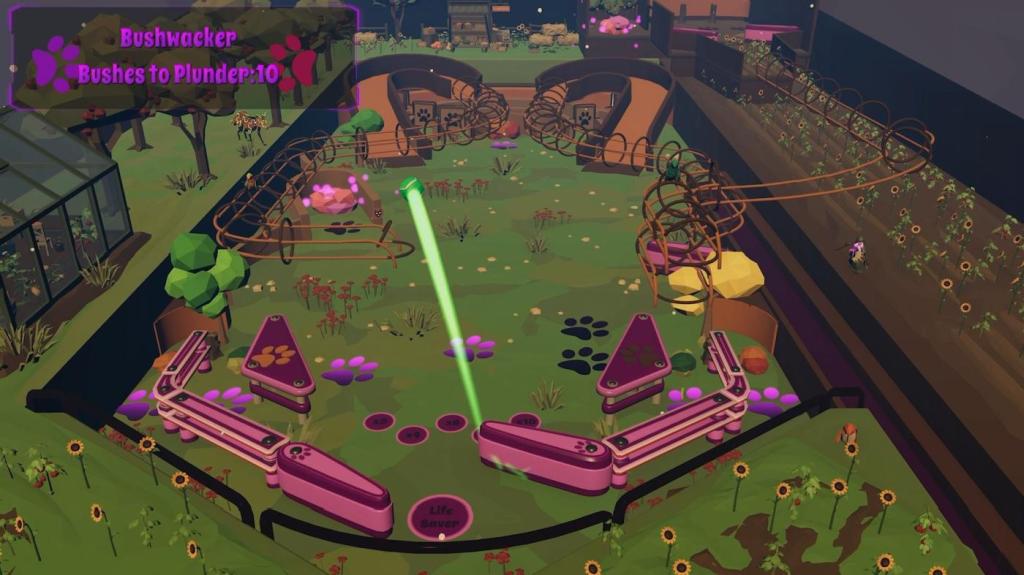
  • Dream World – a bright and colorful table, filled with rainbows, candy and a colorful edible town.
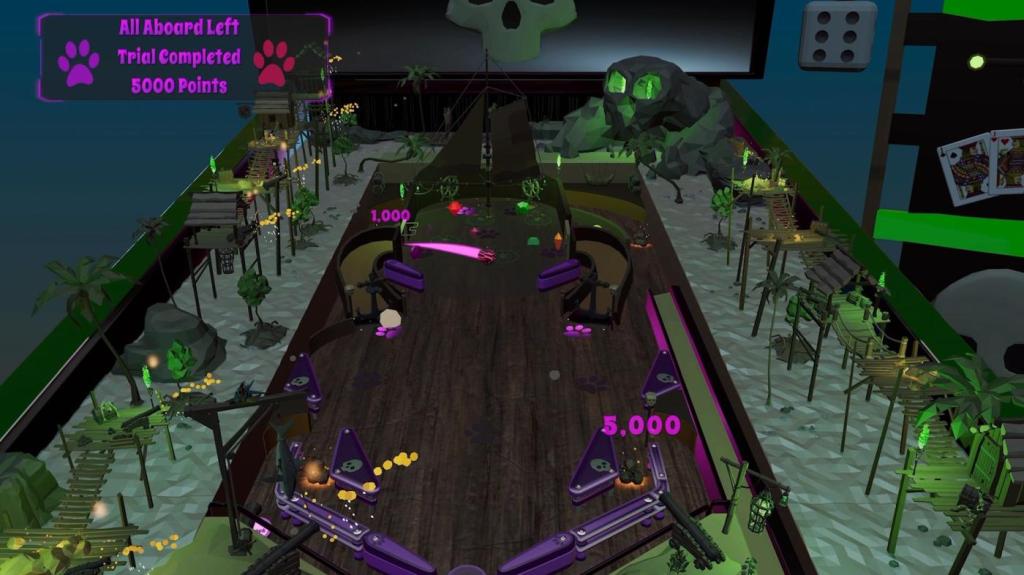
  • The Kraken’s Cove – a pirate themed table, with sunken treasure, a pirate ship and the mythical Kraken which will appear in the center of the board.
  • Super Vixel Land – a retro themed pixel/voxel super wide table that has missions on both the upper playfield and a lower playfield that has a revolving wheel.
  • Slot Shots Casino – a fantasy themed casino playground with card suits and table game themed aspects, there is also the lucky wheel and the special plinko style bonus.
  • Bass Hunter – a fishing themed table where players can try to catch the “legendary” fish, while also collecting bonuses based on Bass fishing.
  • Neon Nights 2 Skylines – a cyberpunk styled purple and blue neon themed table with a pulse pounding synth style soundtrack.
  • Outergalactic Aliens – this galactic themed table features multiple flippers, captured aliens and special skill shot bonuses within this extraterrestrial experience.
  • Neon Nights Original – the first table that was created by Pinblend, featuring vibrant neon details and elements of the city that were expanded in later iterations of this table.

The base goal for each table featured in the game is rather simple, you have to get a high score. With the three balls provided, the objective is to hit targets, achieve skill shots and activate the slots to rack up the highest score possible. There are also bonus missions and table features that will provide the player with big bonuses, really pumping scores up. The tables also have the traditional features of multi-ball and extra ball bonuses.

However, getting a high score can be easier said than done, as there are some minor issues when it comes to the overall table gameplay. The speed of the ball and the table physics can be a little inconsistent at times, this is most noticeable on tables with kickback/side lanes. There are moments where the ball will clip through the smallest gaps, going down the side lanes and causing a lost ball. This can be quite frustrating during play.

There is also the common issue that applies to all pinball games, which is the ball can simply roll down the middle of the table leading to a ball loss. This can be the most frustrating thing that can happen, but players can hit a tilt button to try and stop the ball being lost. Unfortunately, the tilt feature can also be a bit hit and miss, but this is a known problem with pinball games in general. In terms of physics, the ball will be react when hit most times, but sometimes it can seem heavier.

The positives for this release are that there is a wide range of different table features, targets and mechanics that work well. There are unique touches to each of the tables, making them stand out from each other and offering something for everyone. These touches can be grounded in reality, like the Neon Nights and Casino Slots tables, this is in contrast to fantasy based tables like Dream World and Kraken’s Cove, giving a nice variety to gameplay.

The last thing to talk about is the score system. All of the tables have their own leaderboard, where scores can be uploaded to after finishing a game of classic three ball mode. When the score has been uploaded, players can check the online leaderboard to see where they stack up with others. There is also the chance for high scores to be shared in the loading screens, where the developer highlights the best scores for players to honor their achievements.

Now with the gameplay covered, it is time to move onto the other aspects of this release, starting with the controls.

Controls – this game support both keyboard and controllers for the inputs, with the ability to map out all keyboard inputs in a comfortable manner. The controller inputs are shown on screen for players, with the layout being easy to use for players who prefer to use a range of controllers. There is also steam deck support for the game listed on the steam page, offering a portable way to enjoy this release.

Difficulty – there is little in terms of difficulty when it comes to this title, as the challenge comes from a players overall skill with pinball games in general. The biggest challenge for this game is activating slots, which can be quite tricky. There is no way to alter the way that the game works, with the only way to get better scores is to improve general skills. As a rather casual pinball title it is easy for players to get into, with tables that can fit all player tastes.

Presentation – Slot Shots Ultimate looks good for an indie pinball title compared to the other big hitters in the genre. There is a good variety of table designs, with the different fantasy elements working in favor of this release. The performance is solid too as there are settings to allow the game to run on a range of hardware set-up. The sound for the game is pretty good too, with the different table themes featuring complimentary soundtracks. 

Final Thoughts – I do enjoy pinball games, with my favorites being those from the 16 and 32 bit era, but I also like to dive into newer titles from time to time. This title scratched that itch, with the different themed tables being enjoyable to play. Sadly the usual issues that occur with pinball games were there, but they don’t impact the gameplay too much aside from being a frustration when they happened. I also like the online scoreboards and the way they are implemented.

I can make this an easy recommendation for people who enjoy pinball games, especially those who play the expensive titles like Pinball FX and Zen Pinball. This title offers 13 tables all for one price, with something for everyone. Yeah, they may not have licenses or feature tables from times past, but they are fairly unique and are available for a one-time payment. If you have previously owned the other Slot Shots Pinball game, you can also upgrade to this for a small fee.

In the end, I give Slot Shots Pinball Ultimate Edition a final score of 3.5/5. This is a solid pinball title, with a good selection of tables to play all for a single price. What it lacks compared to others in the genre, it more than makes up for with creative table designs, fun gameplay mechanics and all of it is available right off the bat. If you want to check this title out for yourself, a link to the game will be below along with an upgrade for previous versions.

Link to Steam version (HERE)

Link to Upgrade bundle (HERE)

Neptunia: Sisters VS Sisters – Nintendo Switch Review

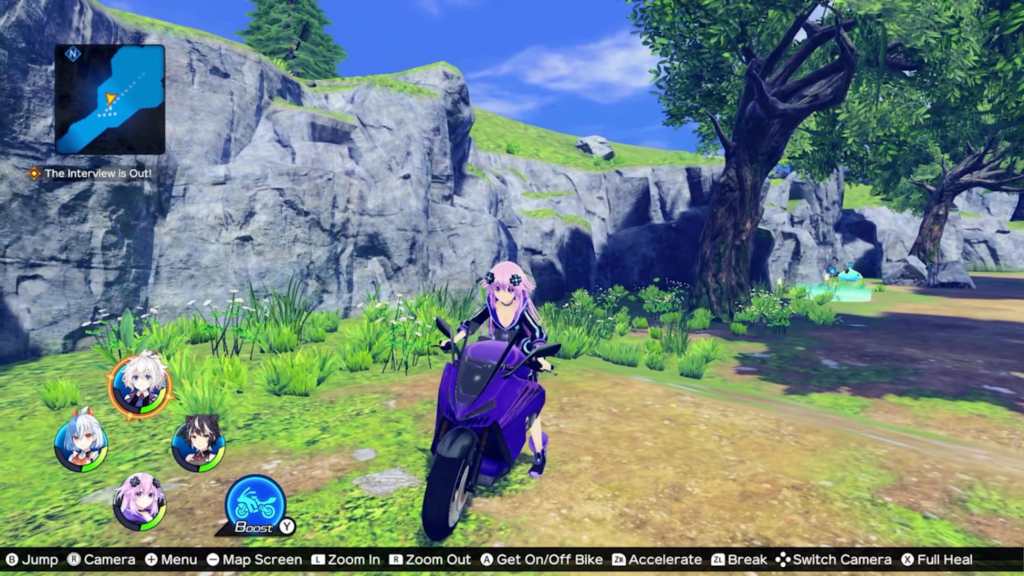
Overview – developed by Compile Heart and Idea Factory with publishing handled by Idea Factory International, Neptunia: Sisters VS Sisters is the latest entry in the long running Neptunia Franchise. In this action RPG hybrid, Nepgear must take the place of her sister Neptune in the wake of her absence, with the fate of the world on her shoulders. This version of the game is available for Nintendo Switch, featuring content exclusive to this release with a link to it at the bottom of this review.

Disclaimer: before I get into the review, I would like to thank Idea Factory International for providing the copy of Neptunia Sisters VS Sisters for this piece, via the keymailer service. The provision of this software has not influenced the contents of this review, all thoughts and opinions contained within are my own.

Now with the introductions out of the way, let’s get into the review, starting off with the story. I previously covered this game for Steam, with the review readable (HERE). Like that review, I will be covering the core elements and mechanics of this title, to prevent spoiling the events of this game. However, I will be covering the content exclusive to this release.

Story – As the Goddesses of Gamindustri were responding to a distress call from the PC continent, the Goddess Candidates were sent on a mission to investigate a monster outbreak. During this assignment, Nepgear and her friends encounter the Ashen Goddess within an abandoned research facility. After this encounter, the mysterious Goddess trapped them in a stasis capsule, placing them in a deep sleep to protect them from danger.

After emerging from their deep slumber, Nepgear and her companions learn that two years have passed, as well as the news that Neptune was missing. In the absence of both the Goddess and Candidate, Planeptune had been ravaged by the mysterious Trendi Phenomenon. Finding that her home and sister are gone, Nepgear faces her greatest challenge, to solve the mystery of the Trendi outbreaks and save Planeptune in the absence of her sister Neptune.

Gameplay – this title is a dungeon crawling JRPG, set in locations across Gamindustri with a visual novel style presentation to story events, told over several chapters. In order to push the narrative forward, players must explore the different environments, fight monsters and complete quest objectives. There are two types of quest objectives for players to take on, with the first being main quests that use a red marker and side quests with a blue marker.

The majority of the game plays out in the dungeon environments, with the player having the option of an active party of up to three characters. The party members will change during the course of the game, but for this release, 4 additional characters will be added to the party after the intro section is cleared. While in a dungeon, players will be able to move freely around the map, uncovering treasures, encountering monsters and overcoming obstacles.

While roaming the dungeons, players will encounter monsters that spawn throughout. These encounters can be avoided or the player can charge into battle. If the player attacks the enemy from behind, the monster is alerted by seeing the party or a preset quest battle is reached, combat will begin. When the player can successfully strike the enemy from behind, the battle will start with the party getting an advantage in the beginning.

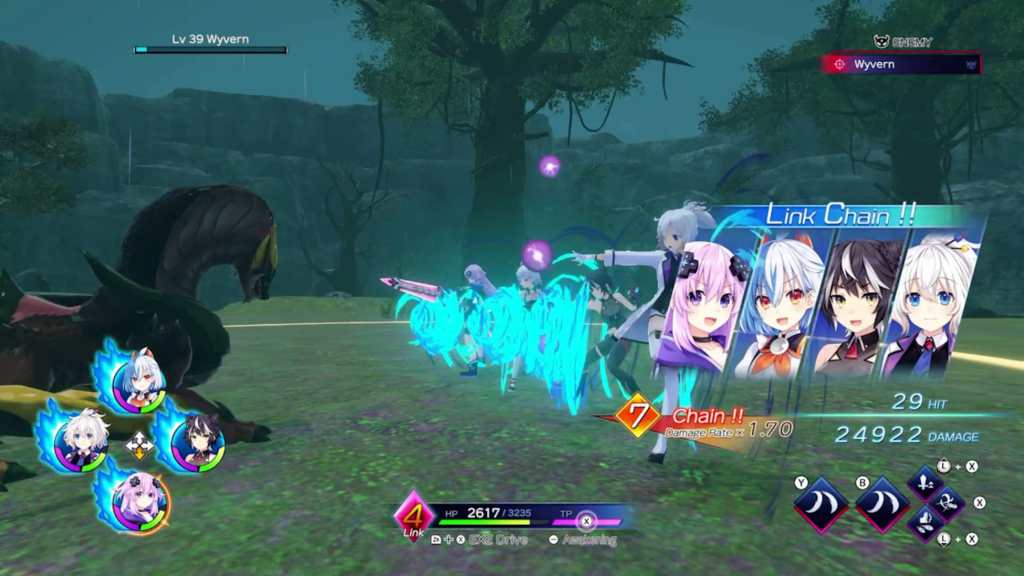
Combat in this title takes place in a circular arena, with the player having control over the leader as the other party members move on their own. The battle system has a real time feel to it, with attacks that can be used in sequence to make stylish combos. But each attack uses a resource called Action Point (AP), with the player being unable to attack if they run out. This adds a tactical element to battles, as players must wait for that characters AP to recharge.

However, the player is able to change the character in the active party leader, allowing for tactics to be switched on the fly and combos to be extended. During attacks, a prompt will appear under the support character icons called chain, quickly switching characters and using an enhanced attack for more damage. This system allows attacks to be chained together, increasing the damage that is dealt with each successful switch during a battle.

As well as the combo and chain attacks, the player can also use special skills that have the potential to deal significant damage to enemies. The special skills that can be used have requirements in order to be used, but the payoff is worth the effort. First, there is the Tactical Skill, which can be used when the TAC bar is filled during battles. All characters will have one skill as standard, with the ability to unlock additional skills as the game progresses.

Then we have the EXE Drive, which is a powerful attack activated by using half of the Goddess Gauge. These attacks are much stronger than the other abilities, but they pale in comparison to the Goddess Transformation. This Ultimate, yet temporary ability can be activated when the Goddess Gauge is fully filled in battle. While active, all stats are boosted, combo attacks don’t consume AP and an enhanced Drive attack can be accessed at the cost of reverting to normal.

The different characters that can be in the party can fit a variety of roles, with some excelling at offense and others as support. The different skill sets for the characters allow for a range of party builds to be put together, adding to the tactical style of combat. It is important for players to have a cohesive party build, as item use in battles is restricted unless the TAC meter is filled, making support skills very useful in the heat of battle.

A combat encounter in this title can end in one of three ways, victory, defeat or escape. The first two are self-explanatory, with escape having a special meter that needs to be filled by staying at the edge of the screen. However, it is important to keep in mind that the player cannot escape from some battles, so make sure to monitor the status of the party often. If the party is defeated in battle, the player will get a game over, but they can retry and load data to continue.

When a battle has been won, the party will gain resource rewards, money and experience points. As the active party members earn EXP, they will level up at set milestones and make them stronger, unlocking new skills when set level requirements are met. Inactive characters wont level up as much, but later additions to the party as the story progresses will be sufficiently leveled, adding some balance to the overall progression of the game.

The final element of dungeon exploration to discuss is the safe zones. These points in the dungeons allow players to recover their party with items, save the game and even leave the dungeon to the world map. These points can also be used to fast travel, teleporting between different the different safe zones making them very useful for backtracking. It is important to use these safe points often, as the player can lose significant progress if they are defeated.

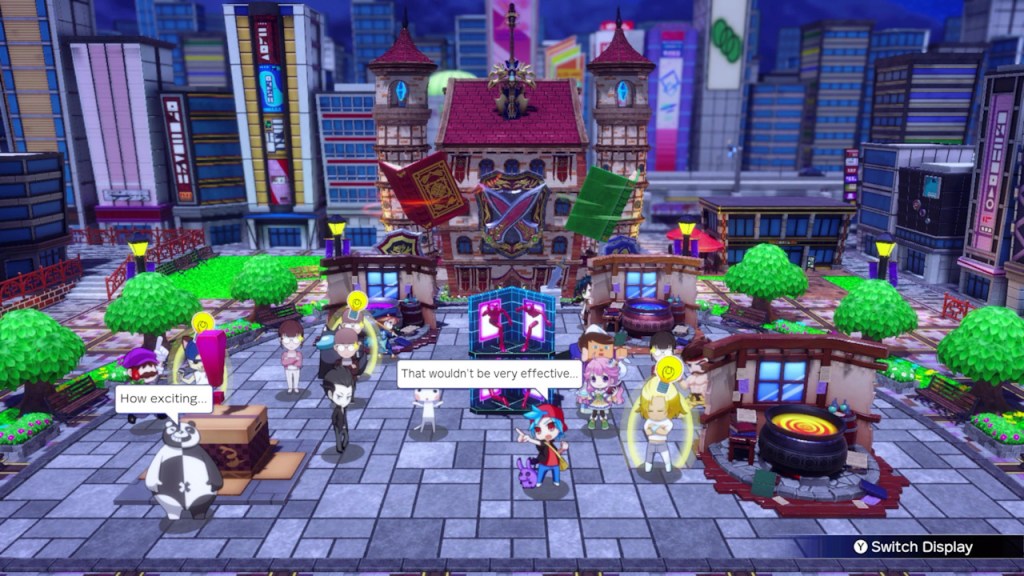
Outside of the main story, there are more locations and features that will open up as the player makes their way through the game. Players are able to move between most of the locations that have been discovered, using these areas to grind experience and resources. There will also be side missions that players can challenge, including requests from NPC characters using the “Chirper” system. These different requests provide rewards for success.

There is also a crafting system in this title called Disc Development, where special equipment items can be crafted that provide a range of bonuses for party members. To create a Disc, the player must combine Genre, Scout and Support resources together at the cost of Coins. All Genres are available immediately, but the Scout and Support items must be collected during play. Each Disc takes time to develop and the results will vary.

The Discs can be added to the different characters within the party, with the ability to assign up to 4 discs to a character. When equipped to characters, they can open up new skill possibilities, passive skills and more for players to experiment with. Discs aren’t the only way to augment party members however, as each character can be given better equipment. This gear includes weapons, armor and accessories that will alter their overall stats.

Then we have the Lily System, which will give the active party members additional bonuses when they are paired with another character. These pairings have the potential to provide up to 3 bonuses for the character, increasing the further the player gets into the adventure. In this version of the game, there are 4 additional characters available immediately, with guests Higurashi and Shanghai Alice, along with exclusive versions of Maho and Anri from the main story.

Last to discuss, we have the SHARE system, which will affect the way that the narrative plays out for this release. Depending on the SHARE level that the player has reached, the ending that is obtained will change. The level of the Goddess shares will change depending on a various factors, positive effects include leveling up party members and completing requests. However, the Share rate can be lowered by events such as the party being defeated in battle.

Now with the gameplay covered, it is time to discuss the other aspects of this release, starting with the controls.

Controls – Neptunia Sisters VS Sisters makes the leap to Nintendo Switch well, with the input layout for the controllers working well. The inputs have zero lag and work well with all control options, regardless of if the player chooses to play handheld or on the big screen. I found that the Joy-Cons didn’t have the usual issue with travel that they have with most games, which made it easy to enjoy the game for long play sessions away from the TV.

Difficulty – I feel that this release has a lower difficulty curve to the other release, given the addition of extra characters in the party at the start of the game. If players choose to use these characters, there is an advantage in the early game as the party would otherwise only have one character active. Sometimes there will be difficulty spikes, but this can be reduced with effective leveling, Disc upgrades and character equipment. Overall, this version does feel more balanced.

Presentation – making the leap to the less powerful Switch hasn’t compromised the visual fidelity of this release. The game has been optimized well for the hybrid system, with the vibrancy of the world and the smooth animations of the Live 2D characters, prominently featured during the VN segments. There is nothing noticeable in terms of Lag or frame stutter during play, but there is a slight increase in loading times, but it doesn’t affect the overall gameplay experience.

The music is wonderful as always, with the opening theme Fight For Victory setting the tone for the experience, accompanied by the gorgeous character art. The music used in game fits the setting and events well, with each composition enhancing the overall feel of the experience. The dialogue for this game is available in English and Japanese, with the EN voice cast featuring the talents of Sarah Williams (Jujustu Kaisen), Carrie Keranen (Madoka Magica) and Lindsay Sheppard (Tribe Nine).

Final Thoughts – Having previously covered this game on steam, I was excited to see what the Nintendo Switch version brought to the table. I can happily say that my experience was a very positive one, with the experience feeling fresh and new with the addition of the exclusive characters. I spent a lot of time with this title in handheld mode, which I find is a more personal experience for these types of adventure given the nature of handheld gaming.

I am more than happy to recommend this game to fans of the Neptunia series, especially those who want to enjoy the games away from the big screen. This title fits the Nintendo Switch perfectly, even with the restrictions of the hardware in general, the game looks and plays amazingly on both the big and small screen. There are some reductions in terms of textures and the like, but the title has been optimized very well for the system and is an excellent handheld JRPG adventure.

In the end, I give Neptunia: Sisters VS Sisters for Nintendo Switch a final score of 5/5. This adventure made the transition to the Nintendo switch flawlessly, with perfectly optimized gameplay and presentation. The addition of bonus content in the form of exclusive characters makes this release feel fresh, with the overall experience being perfect for the big or small screen. If you want check this version of the game out for yourself, a link to it will be below.

Link to Nintendo Switch version (HERE)
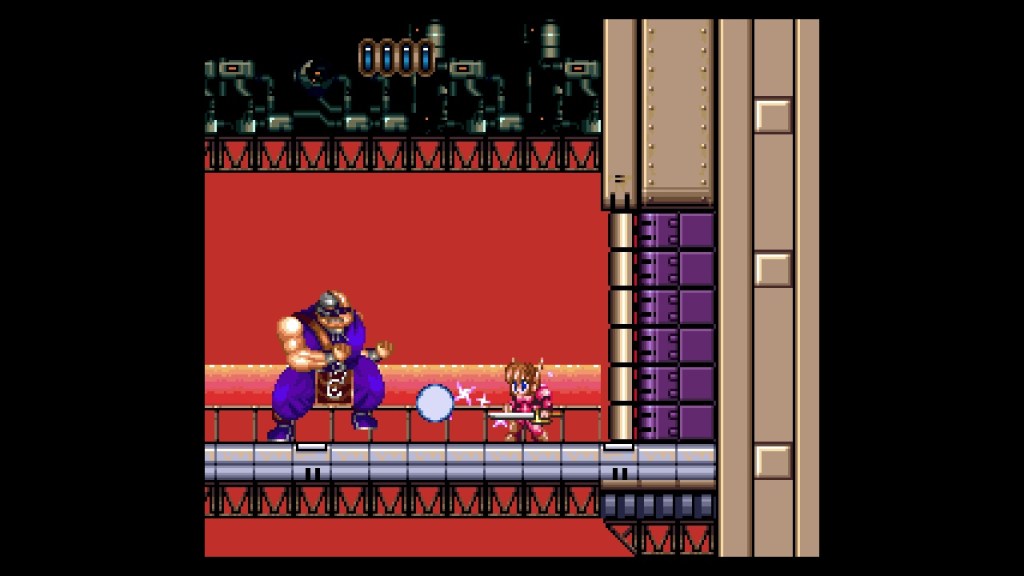
BlazBlue Entropy Effect – Steam Review

Overview – developed and published by 91Act in partnership with Arc System Works, BlazBlue Entropy Effect is an action roguelite style title, with fast paced action and stylish combat systems. Take on a new adventure set in a universe adjacent to the main BlazBlue series, with an all original story and gameplay style, with well-known characters from the franchise. This title is exclusive to the Steam service on PC platforms, with a link to the game at the bottom of this review.

Disclaimer: before I get into the review, I would like to thank 91Act for provision the copy of BlazBlue Entropy Effect that was used for this piece, via the Keymailer service. The provision of this software has not influenced the contents of this review, all thoughts and opinions contained within are my own. (please note images used are from the offical steam page so they may not match the final product)

Now with the introductions out of the way, let’s get into the review, starting with the story. For this review, I will only be covering the base mechanics of the game and its features. This is to prevent spoiling any major plot points, story beats or secrets that the game holds.

Story – In the future where the world has been plunged into chaos, people enter a cyberspace called ACE, seeking their last chance to resolve the crisis. If you are the only person in this world who knows the truth, how will you react? The ending is also the beginning. Your decision will decide humanity’s future. Do you have what it takes to save the world, using the Mind Training system and unlocking the secrets hidden within the cyberspace of ACE.

Gameplay – BlazBlue Entropy Effect is an action roguelite, combining the characters and style of the main fighting games into a side scrolling action brawler. Take control of a virtual representation of one of ten characters from the franchise (more may be added in the future), as you battle your way through vibrant environments to save the world. When first starting the game, the player will go through a simple tutorial, where mechanics are explained to the player.

Once the mechanics tutorial is cleared, the player will be able to explore the world as their ACER, a small robot that can move around and interact with the NPC characters. During the course of the game, players must talk to the various inhabitants of the world, complete objectives and push the narrative forward. This largely occurs between the different combat exercises, where the player will take on challenging battle stages.

These are called Mind Training, where the player will go through a set of challenges fighting enemies unique to this release as well as bosses made of enemies from the main series. During each run, the player battles through 5 stages, with the sub levels for the first 4 being randomized with a boss at the end of each. The final stage is a labyrinthine maze, where players will encounter multiple boss rooms, alongside the final boss of the run.

However, before the player can even take on mind training. The player must unlock a Prototype, from the available roster, with the ability to unlock only one character at the start. This makes for an interesting flow to the gameplay, due to players being able to unlock more of the roster the more they play. The resource used to unlock a prototype is called a Prototype Analyzer, which are rewards for story progression and can also be purchased in game.

Each of the prototypes have their own unique mechanics and play styles, which have translated quite well from the mainline fighting game series. The basic tool kit for all characters is a standard combo attack, special attack and dash attacks. Along with the standard tools for characters, are the unique “gimmicks” that make each of them stand out from the others. There are characters that will fit a range of playstyles, offering something for everyone.

While taking on mind training, the player will engage in combat with a variety of enemies, while also navigating some traps and platforming challenges. When a sub-stage is cleared (called a space), the player will be given a selection of options to choose from. The first space reward is always potential, which will provide the player with a new attack, ability or upgrade a current skill. These rewards will also be provided upon defeating a stage boss.

There are additional space types that players can select from, usually with multiple options but sometimes there will only be one. Here is a quick breakdown of the different space types that players can encounter;

  • Tactic – Gain a range of special abilities, usually a passive one that will augment the player and provide an additional effect that can be used in combat. These can be improved through a mechanic called ascension, which will empower them further.
  • Max HP/MP – these spaces will allow grant the player a bonus to either their max HP or MP, with these bonuses stacking up with additional bonuses.
  • Exchange – enter the shop and use exchange points that have been collected by defeating enemies to purchase bonuses, allowing useful effects and bonuses to be obtained.
  • Event – activate the event space for a selection of effects that can provide bonuses for mind training, but these come with some risks as some may bestow negative effects on the player.
  • Rest – use this space to recover a percentage of health that has been lost in battle.
  • Sortito – here players can spin the wheel of the Sortito, with the chance to win some big bonuses ranging from HP boosts, exchange points and more.

At the end of a stage, the player will engage with a boss in a challenging combat encounter. These battles will be one of two boss battles in the standard stage, with three battles that can occur in the final Omega Space stage. When the bosses have been defeated, the player may gain a Potential, as well as a Fragmented Mind resource. These are awarded the first time a prototype defeats each boss. Bosses can also award a special item called Phenomena, but I won’t spoil that.

As the player will likely take damage during a run, there are special items that can be used to keep the player alive. The first is the HP mixture, which will recover a portion of the players health when a set of inputs are pressed. These can be interrupted, so it is important to get some distance before using them. The other is a revival item that is used when all HP is depleted, reviving the player and restoring a portion of health for players to keep going.

During the mind training, a run will end in one of two ways, if the player clears all of the stages and beats the final boss or are defeated after using all revives. When a session of Mind Training is complete, the player will be given a choice of tactics that have been obtained during the run. These tactics will be added to a version of the prototype called an Evotype, which can later be used to augment a prototype in a future run using a system called Legacy.

When the player starts a new session of mind training, if they have at least one other Prototype character unlocked, they can use some skills for that character. This is the Legacy system that was mentioned previously, where tactics and special skills can be given to the current Prototype. Up to two character Evotype Legacies can be applied, with one per character allowed, meaning characters are advised to use their best Evotypes.

There are a limited number of Evotypes that can be saved, with the option to dispose of unwanted characters for resource rewards. This allows players to make the most out of the weaker Evotypes that have been generated, collecting useful resource points that can be used in different areas. The resource that is earned is called AP, which can also be collected by defeating enemies in Mind Training, as well as completing other objectives.

AP is mostly used to improve the characters overall power. In the main hub world, the player can speak to NEO after a set point, allowing the player to unlock Mind Upgrades. These mind upgrades will increase the overall base stats for all Prototypes, along with unlocking the ability to implant Mind Crystals for a variety of bonus effects. Mind Crystals can be purchased with Fragmented Minds earned during play and can be powered up with AP.

As well as NEO, the player can encounter DOR, who will let the player purchase Prototype Analyzers to unlock characters, Fragmented Minds and AP by trading resources. DOR will also provide the ability to check objectives, see the tactics that have been unlocked and see how they evolve. There is also B.C. (the Beauty Creator) who will allow players to change the look of their Avatar, in exchange for AP, there is also DLC that provides skins that can be used immediately.

Then we have the ACE Mind Challenge, a special mode where players can take on various bosses in battle using Evotypes that have been created during Mind Training. When a boss has been defeated, the next will opponent will be available to challenge. These battles can be fought by any registered Evotype, however, win or lose, an Evotype can only be used once in Mind Challenge. If the player succeeds in battle, the player will be rewarded with AP.

The last thing to discuss is the multiplayer mode called Battlefield of Entropy. This special mode is a unique PvPvE mode, where players across the world will battle each other and CPU enemies to complete objectives. Up to 12 players can engage in these battles, leading to the potential for chaos to ensue. Unfortunately, during my time playing the game, I was unable to test this mode out as I could not connect to other players to be able to test this mode out.

Now with the gameplay covered, it is time to discuss the other aspects of this release, starting with the controls.

Controls – as a PC release, there is both keyboard and controller options for players to use. The keyboard mappings work well for those who prefer to use that style, but I would recommend a controller for this title as it is way more comfortable. There are onscreen inputs for most input styles, which are very useful for players getting used to the game. All inputs can be modified, allowing players to modify controls to fit each play style.

Difficulty – as a roguelite, there difficulty curve to the gameplay experience. When starting out, it can be tough to make progress and players may fall before reaching the final boss. This can get easier the more time players put in, as the Evotype and legacy system can help offset the challenge. For those looking for a greater challenge can utilize the Entropy system, which allows players to add modifiers to Mind Training, increasing the overall difficulty.

Presentation – visually, BlazBlue Entropy Effect looks gorgeous, with vibrant environments and sprite work that brings the world of ACE alive. The animations and action flows very well, with the gameplay style of the main series translating to this style of gameplay well. There is no issue with lag and the game works well with a variety of hardware, allowing for players to be able to enjoy this game on medium-low end systems, as well as high power rigs.

 The sound for this title works well with the setting, featuring a good range of compositions for the stages and bosses in Mind Training. These music tracks contrast well with the ominous and rather empty soundscape of ACE. There is a choice of voice acting for the various characters that exist within ACE where used, offering Japanese, Chinese and English, which is implemented very well. The playable characters also have their voice lines present, but only in Japanese.

Final Thoughts – as a fan of the BlazBlue franchise, I was intrigued by the concept of a roguelite featuring characters that are tied so close to the fighting genre. I will say that this transition from straight fighting to side scrolling action went well, with the characters and their unique fighting styles crossing genres smoothly. It may be a little jarring for some as most of the action is simplified, but the more that you play the game, the more natural the action will feel.

I am very happy to recommend this title to everyone that is a fan of the BlazBlue series, side scrolling action and roguelite titles. There is a lot of content on offer, alongside almost endless replay value on offer with the Legacy/Evotype systems, I just wish I could have been able to play the online multiplayer. There are also updates planned, with more content to come in the future. The only issue I can see is the time needed to get good at the game, which may put some players off.

In the end, I give BlazBlue Entropy Effect a final score of 4.5/5. This title takes the characters established in the mainline BlazBlue series, transitioning them and their unique play styles into the roguelite genre perfectly. There is almost endless replay value on offer, with more updates coming in the future to expand the game further. If you want to check this title out for yourself, a link to the game will be below.

Link to Steam version (HERE)

Dreamcutter – Nintendo Switch Review

Overview – developed by Ten Pennyfingers and Shady Corner games, with porting and publishing handled by Eastasiasoft, Dreamcutter is an action platformer set in a dreamscape filled with nightmares. As Haley, wield the power of the Dreamcutter, a powerful otherworldly scythe that can cleave through the nightmares that cloud her mind. This version of the game is available exclusively for the Nintendo Switch, with a link to it and the original steam release at the bottom of this review.

Disclaimer: before I get into the review, I would like to thank Eastasiasoft for providing this version of Dreamcutter. The provision of this software has not influenced the contents of this review, all thoughts and opinions contained within are my own. Please note, I was involved with some post release development of the PC version, with my name in the credits of that release.

Mature Content Disclaimer: this title is intended for adults only, featuring strong language and content of a sexual nature with some explicit imagery included. If you are under the age of 18 or are uncomfortable with sexual content, please click off this review and check out the other coverage presented on this site.

Now with the introductions out of the way, let’s get into the review, starting with the story of Dreamcutter. Note, I previously covered the steam release of Dreamcutter, with a link to that review (HERE).

Story – College student Haley has been struggling to sleep, plagued by nightmares of monsters and strange places. While in class, she falls asleep and becomes trapped in a dreamscape, unable to escape the nightmare that is unfolding around her. As she seeks to escape, she finds a mysterious weapon, the Dreamcutter, a scythe that is capable of destroying the nightmares. With this new power in her hands, Haley sets out on a quest to defeat her inner demons and gain freedom.

Gameplay – Dreamcutter is an action platformer, with challenging platforming and combo focused combat, wrapped in a visual novel style narrative. The player controls Haley, the college girl who wields the Dreamcutter, granting her the power to fight the monsters in her dreams. When starting the game, the player is given the option of Story Mode or Arcade. The Story mode is the standard gameplay mode, with cutscenes and boss reward events (discussed further below).

During story mode, the player will encounter narrative scenes of characters talking which is presented like a visual novel. These scenes convey the story well, with instances where players are able to select between dialogue options. The dialogue choices that players can make will give different outcomes, but have little influence on the ending of the story. Then we have Arcade mode, where the action plays out the same, however, the only events that occur are the reward scenes.

During the introductory segment of the game, the player will be given a tutorial where all of the core mechanics and moves are detailed for the player. once this opening has been cleared, the player will be sent to the hub world called Sanctuary, where the player can access the 5 worlds of Haley’s mind. The 5 worlds are made up of a set of stages and a boss battle, with the challenge increasing as the player progresses through the dreamscape.

Within the stages, the player must cleave their way through the nightmare creatures, while also using the Dreamcutter to help traverse the terrain of stages. The Dreamcutter serves many uses, as not only can the player swing it to damage enemies, but Haley can throw the scythe, dealing damage as well as using it to launch her upwards when stuck in walls. There are also terrain elements that can be hit by the player, allowing gaps and pitfalls to be covered with ease.

The last part of the Dreamcutter toolkit is the spin glide, which allows the player to spin the scythe and slow their descent or ride air currents. All of these tools will allow the player to pass all of the hazards as well as explore the stages, uncovering the many secrets that are hidden through the game. These skills will also be useful for those who want to try and beat the game as fast as possible, especially as the Arcade mode comes with a timer built in.

While battling the monsters in stages, a combo will occur with a rank from D to A, increasing the more hits that the player adds to the chain. However, there is a meter that will go down over time if hits haven’t been landed on enemies, ending the combo when it is empty. When the combo ends, the player will be given a coin bonus based on their performance, which is added to the total along with the coins that are on the stage and are dropped by enemies.

At the end of the stage, the player will encounter a Nightmare orb that must be destroyed at the end of each level. When the player attacks the orb, waves of enemies will be spawned endlessly, with the player needing to hit the orb until it breaks, clearing the level. When all of the main stages have been cleared, the boss stage will be opened up for the player to challenge, with each of them having their own unique challenges that will push players to their limits.

When the boss battle is cleared, the player will be rewarded with a special intimacy scene, depicting characters in sexual situations. These scenes have been altered from the original, with creative modifications made to the artwork in order to fit the allowed content standards. But these aren’t the only saucy rewards that players can unlock. In the main hub of Sanctuary, there is a shop that players can access, using coins earned in stages.

The coins that players collect can be used to buy upgrades for Haley, increasing her health, damage and more that will come in handy during the adventure. Alongside the upgrades, there are also bonus challenges that the player can unlock, with special rewards for completing the objectives. All of these challenge rewards and the intimate event scenes are added to the gallery. The bonus images are provided by a range of artists. The shop and its contents add more replay value to the game, giving players a reason to return to stages and earn coins.

Now with the gameplay covered, it is time to cover the other aspects of this game, starting with the controls.

Controls – the control method for this release fits the Nintendo Switch controller well, with all of the key inputs matched to the face buttons. During the tutorials and at set points of the adventure, there are button inputs that will pop up on screen showing the player what they need to do. All of the inputs have low input lag, making the transition to the Switch quite well. The game plays comfortably in both handheld and docked, regardless of the controller that is being used.

Difficulty – there is a fairly moderate difficulty curve to this title, where the challenge will build the further the player gets. This is noticeable during the later parts of the game, with new hazards and stronger enemies that appear as a roadblock for players. To offset some of the challenge, there are checkpoints that will let the player resume if they are defeated. The player can also spend time gaining coins to buy new upgrades, increasing the chances of success.

Presentation – visually, the game has a classic pixel platformer look to it, consisting of vibrant sprite work, rendered backgrounds and gorgeous CG arts. The sound for this release is excellent, with a range of compositions that complement the environments that they are featured in, alongside some voice work by HaruLunaVO. These elements come together to create an experience that feels familiar and fresh. There are some performance issues, with frame stutters but there have been patches to deal with this.

Final Thoughts – having played, performed QA testing and reviewed the steam release of this game, I was very excited to get this on the Nintendo Switch. Unfortunately I do have to say that it is a bit of a mixed bag, due to the performance issues that occurred. These problems aren’t present in the Steam version and appear to be a byproduct of the porting process. There has been a patch, but it is unknown if there will be more patches in the future.

Now aside from the issues, the game feels right on the Nintendo Switch with the fast paced action, challenging platforming and the capability for speedrunning. There is a lot of fun to be had with this release, but there are improvements that can be made by the porting team. I am unable to give this a recommendation currently, but once the game is more stable, then this will be a definite purchase for fans of action platform titles.

In the end, I am not sure if I can give Dreamcutter a score due to my involvement with the PC release. I will say that this is an excellent game, but is unfortunately marred by some technical issues. Overall the game is still fun to play, but the stuttering can be frustrating for players and potentially spoil the experience. If you do want to check this game out for yourself, a link to both the Steam and Switch version of the game is below.

Link to Nintendo Switch version (HERE)
Link to Steam version (HERE)