Wings of Bluestar – Nintendo Switch Review

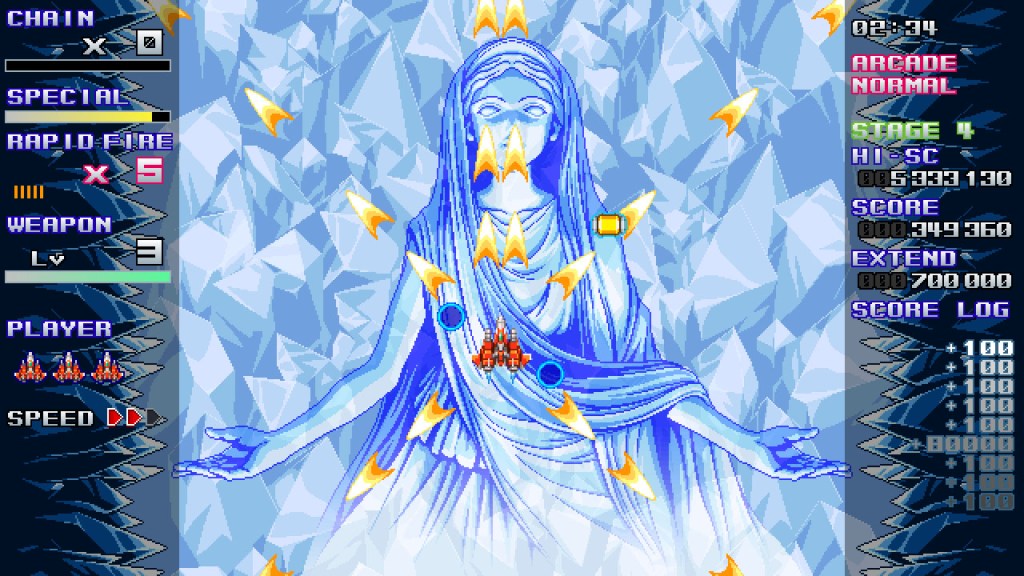
Overview – developed by Shinu Real Arts and published by Eastasiasoft, Wings of Bluestar is an anime styled bullet hell scrolling shooter. Take on the challenge with two distinct playable characters, chaotic action and visual novel storytelling with multiple endings to unlock. This title is available on all platforms, with a link to each version of the game available at the bottom of this review.

Disclaimer: before I get into the review, I would like to thank Eastasiasoft for providing the copy of Wings of Bluestar that was used for this piece. The provision of this software has not influenced the contents of this review, all thoughts and opinions contained within are my own.

Now with the introductions out of the way, let’s get into the review. I will be skipping the story segment as this game has a visual novel narrative, with multiple plot threads and branches. So I will be going straight into the gameplay section.

Gameplay – Wings of Bluestar is a scrolling bullet hell shooter with intense action, challenging enemy patterns and large scale bosses to fight. The game takes place over 8 stages, with two different protagonists that the player is able to use. There are several modes that the player can select from in this release. Here is a breakdown of the different modes that are included in Wings of Bluestar;

  • Story –play through the narrative of the two playable characters. These stories play out over the 8 stages for the game, with visual novel style sections between the stages. There are dialogue choices that can affect the way the story unfolds, leading to different endings.
  • Arcade – play through the stages without the story segments, challenge yourself to get through the tough stages and set the highest score you can with limited credits. If the player runs out of credits, the game ends.
  • Two Player – play through the 8 stages of arcade mode with two players at the same time. The game plays the same way as the standard arcade mode with a shared pool of credits. Once all credits are used up, the game is over.
  • Bonus Mode – this is a special menu, where players can use risk points earned through play. These points can unlock Boss Rush where the player fights the bosses under a timer, a sound test and the risk shop where additional unlocks like extra credits can be purchased (the game starts with only 3).

The action of the game itself is very similar to that of other bullet hell shooters, but there is a catch with this title. When starting the game, the player is limited to only having 3 credits to make it through the game. This can lead to the player getting game overs repeatedly, leading grinding being needed to earn risk points for extra credits to be purchased. This can become a repeating cycle of frustration, as the player needs to grind over and over to keep earning credits.

This frustration can also be extended to the story mode, as when the player gets a game over they must play through the story chapter for that stage again. There is also no way to skip the story effectively, meaning that there is increased downtime from the game over to getting back into the action. This issue wouldn’t be as severe if there was a skip option for the narrative segments.

The game can feel like a war of attrition as the difficulty level is very high in this title, with a hail of bullets on screen consistently, as well as enemies that can appear behind the player. This can be mitigated to a point with the power-ups that the player can collect. These are weapon power increases, a shield that can be deployed as an ultimate attack and turrets that can be moved to attack in different directions.

There is a high level of challenge that the stages throws at the player. This is due to the enemy patterns, the bullets that fill the screen and the bosses/sub-bosses that appear to kill the player. The enemies and attacks follow preset patterns, which means players can learn how to get through the stages. However, this can take a long time as a lot of practice is needed for players to learn the route for each stage in the game.

The arcade challenge can possibly be eased by playing the game in the two player mode, but there is an additional downside to this. There is the limited pool of credits that the players share, which can lead to quicker game overs if players are unprepared. In both single and multiplayer modes, when a player ship is destroyed, power-ups will be dropped for them to be recollected by players when respawning.

There is a lot of content in this title, with several endings that the player can unlock during play and extra modes/gallery images that can be purchased in the Risk Shop. The player can also challenge themselves to obtain the pieces of an image in the stages, with a risk point bonus for collecting all pieces. Image pieces can be in difficult to reach places, making it tougher for players to get these picture pieces, but it is rewarding to get all of them.

So with the gameplay covered, it is time to move onto the other aspects of this game, starting with the controls.

Controls – the controls for this title have a very arcade-like feel to them, with a simple lay out that can easily be picked up. These inputs are comfortable to use, with functions mapped to the face/triggers and movement on the d-pad/thumbstick, as well as the turrets being controllable with the right thumbstick. The game is best played with a d-pad as it provides better precision, but the game is easy to play with all different controllers, including an arcade stick.

Difficulty – this is a very tough title, with no settings to modulate the level of challenge that the player can take on. The limited credits increase the difficulty, with the only way to ease this being to grind out points to purchase additional credits. There is a need to practice the different stages in this game, which can be off-putting to players who want a game they can just jump into. Which can be frustrating as there is a lot of time needed to learn all the different stage patterns.

Presentation – Wings of Bluestar is very pleasing in from a visual standpoint, with animated cutscenes, anime style pixel art for the visual novel segments and slick sprite work for the gameplay. The game runs smoothly, but there is a lot of slowdown when there is a lot of bullets on screen at once, which can cause some potential lag. The sound for this title is solid, with a soundtrack that works very well, fitting the stages of the game and limited voice samples that are featured.

Final Thoughts – I do enjoy scrolling shooters of both the traditional and bullet hell variety, so I was excited to get to grips with this title. However, I found this title to be a little disappointing, due in part to the way that the games credit systems work. The limited number of credits can lead to repeated defeat, which is not just a source of frustration buts means that players need to grind in order to unlock more in the Risk Shop.

I can only recommend this release to fans of bullet hell games specifically, as I don’t know if general players will get much enjoyment out of this release. This is unfortunate as the game does something that isn’t often seen in the scrolling shooter genre. The visual novel story segments and branching narratives are really good, but if the player doesn’t enjoy the gameplay portion then they are likely not to struggle through for the story.
In the end, I give Wings of Bluestar a final score of 3.5/5. This is a tough as nails bullet hell shooter, with branching narratives, visual novel storytelling and frantic action gameplay. Unfortunately, the need to grind points to unlock additional credits, gameplay modes and gallery content hampers the overall experience. If you want to check this game out for yourself, a link to each version of the game is below.

Link to Nintendo Switch version (HERE)

Link to PlayStation version (HERE)

Link to Xbox version (HERE)

OSHIIRO – Nintendo Switch Review

Overview – developed by Tadasumen and published by Regista, OSHIIRO is a first person horror game with a unique premise. Taking place in a haunted performance venue, the player must investigate the mysteries that the facility contains. This title is available exclusively on the Nintendo Switch console, with a link to the game at the bottom of this review.

Disclaimer: before I get into the review, I would like to thank Regista for providing the copy of OSHIIRO that was used for this piece. The provision of this software has no influenced the contents of this review, all thoughts and opinions contained within are my own.

Now with the introductions out of the way, let’s get into the review. I will be skipping the story as I feel the narrative must be experienced first-hand with this unique experience, but I will need to provide a few minor plot details in the review.

Gameplay – the premise of OSHIIRO is a very unique one. The player is sent to the haunted Chiba Legend Arena, where a Virtual Idol performance was set to take place. While inside the facility, the player encounters spirits within the arena and must investigate the mysteries surrounding them. To accomplish this, the player must explore the different areas of the arena and exorcise the spirits they encounter.

The game is split into maze like areas, with the player using a special glowstick to combat the ghosts that appear. These spirits will appear with one of three colors attached to them, charging the player when they are within visible range of them. The player must shake the glowstick to defeat and exorcise the spirits, matching the visible colors as they are in the players range of attack.

However, these colors can switch and if the player fails to match too many times, or the spirit makes contact with the player, the game will be over. The exorcism of the spirits isn’t the only objective for the maps that the player must explore. Within each area of the game, there are color coded stickers of three Idols in Red, Blue and Green that must be located and destroyed with the glowstick.

When all of the Idol stickers have been found and destroyed, the player will clear that level and move onto the next stage of the game. After clearing the introduction stage, the player will be able to select the level they want to challenge next, approaching the game in whatever way they want to. This allows for a relatively free flowing experience before the finale of the story.

The core story mode is not the only option that players have to enjoy with this release. There is a second gameplay mode called Another Mode, where the player can take on the game while earning points for destroying stickers and defeating spirits. This challenge mode makes for an extra level of replay value after clearing the story, giving more for players to enjoy.

There is also a set of bonus mini games, where the player can play a selection of weird and wacky experiences. These include an odd obstacle course controlling a buff man with the power of his pecs, a sushi collecting challenge and a maze where the player is hunted by a smiley face monster. The extras add an extra layer of weird to the package, making for an entertaining showcase of the bizarre games the developer has created.

Now with the gameplay covered, it is time to move onto the other aspects of this release, starting with the controls.

Controls – the controls for this release are laid out nicely, with all of the important inputs mapped out in a comfortable way. The movement and camera uses a twin stick layout, which is common for first person titles and they are very responsive during play. The attack and color change buttons are on the right shoulders, with a refined aim button on the left and an interact button on the face. All of these inputs are comfortable to use, working well with all controller styles.
Difficulty – there are three difficulty settings for OSHIIRO, allowing players to select an option that suits their skill level and offer a greater challenge at higher levels. The challenge in general is well balanced, with a difficulty curve that can fluctuate a little depending on the approach that the player takes with the game. This is due to the non-linear approach to stages in the game, as well as the way that players tackle the obstacles of this game.

Presentation – this is a very atmospheric and dark game, with only the light of the glowstick guiding the player through the darkness of the facility. This works well with the designs used for the spirits, as their jerky animations add a horrific touch to the way the experience works. The Idols themselves have an anime style which is a nice contrast to the horror of the game.

The sound consists of atmospheric sounds, static and jarring screams of the dead that permeate the entire experience. The soundtrack is simple consisting of the main theme for Virtual Idol group featured in the game, this plays when the spirits attack before getting cut by static. There is some good use of voice work in this, with fully narrated story dialogue and Idol voices.

Final Thoughts – I had a good time with this title, as the premise is very unique and the challenge was a lot of fun. This isn’t the longest game and may only take a couple of hours to clear, but there is a lot of replay value on offer as well as the extra content for players to dive into. I very much like the presentation of the game, with the cute Idols and their song that plays during the game.

There are some flaws with this title however. During play, I was able to escape the boundaries of the map and fell for an infinite time, leading me to have to restart the level I was on. There were also moments where enemies fell under my attack and sprung up and killed me, but it didn’t ruin the experience. If you want a unique horror experience, with some weird and wacky Japanese fun on top, I can definitely recommend this game.

In the end, I give OSHIIRO a final score of 4/5. This horror experience is new and unique, with a premise that I haven’t seen used in a game before. The gameplay has a good amount of challenge to it, with a dark atmospheric design that is contrasted well by the Virtual Idol theme it uses. The rather bizarre bonus games add that little more to the experience too. If you want to check this game out for yourself, a link to the game will be below, with discounts for the game.

Link to US Nintendo Switch version (HERE)

Link to EU Nintendo Switch version (HERE)

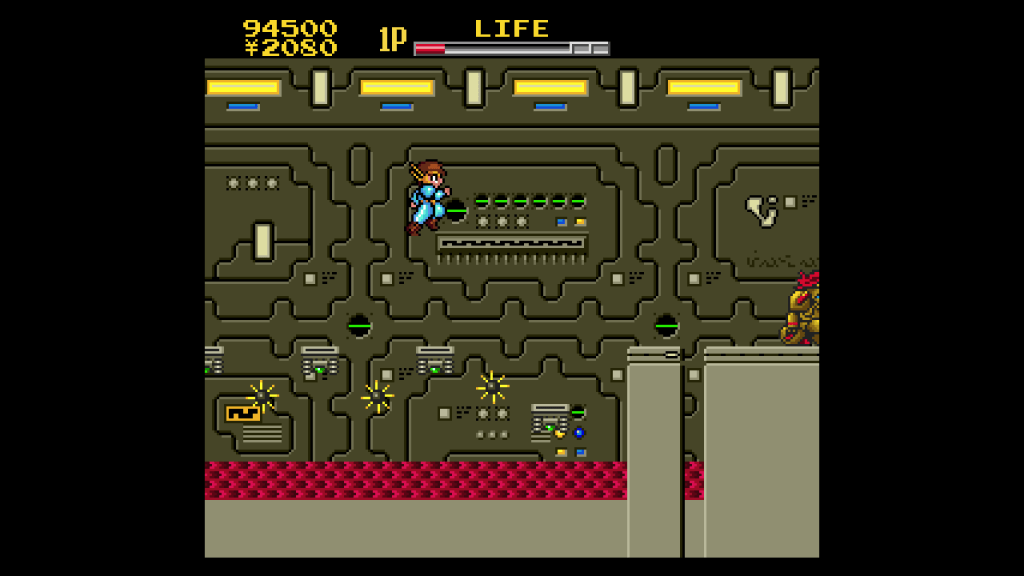
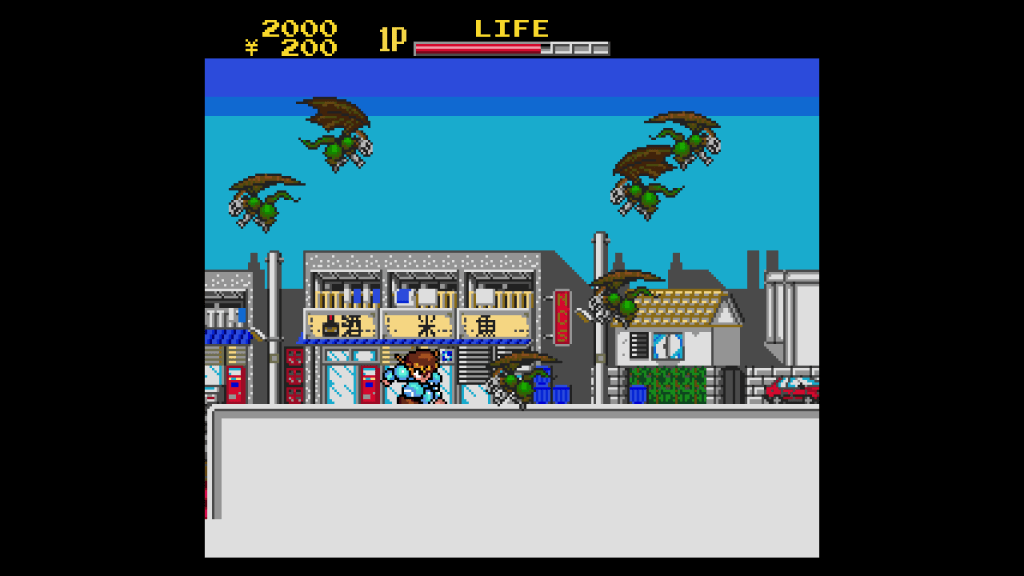
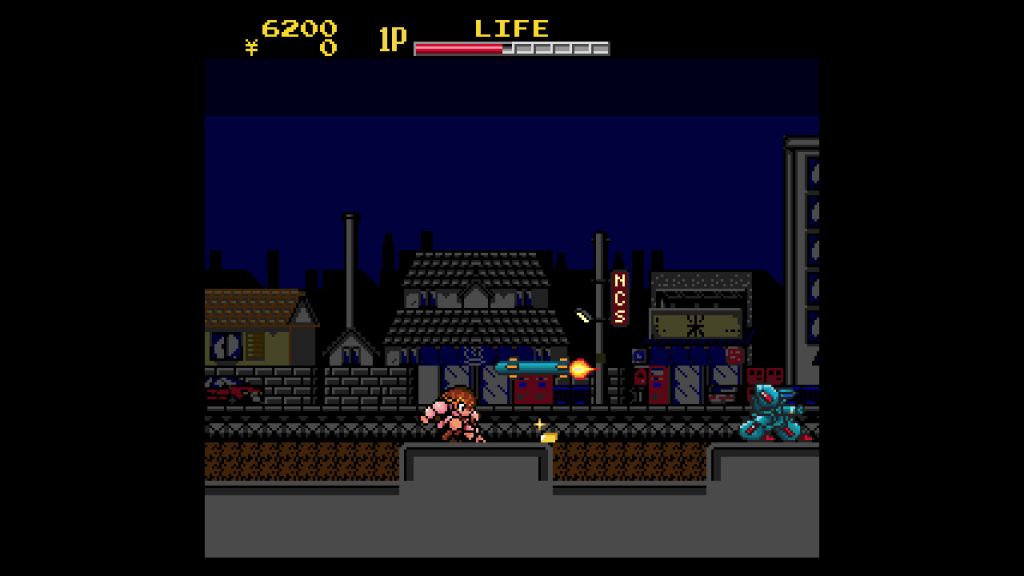
Wonder Boy Anniversary Collection – Nintendo Switch Review

Overview – developed by Ratalaika Games and published by ININ Games in collaboration with Bliss Brain, Wonder Boy Anniversary Collection is the ultimate celebration of the iconic franchise from SEGA and Westone. This package contains multiple versions of each of the games in the series, with quality of life additions and special bonus features. This release is available on Nintendo Switch and PlayStation platforms, with a link to each version of the game at the bottom of this review.

Disclaimer: before I get into the review, I would like to thank PR Hound for providing the copy of Wonder Boy Anniversary Collection that was used for this piece. The provision of this software has not influenced the contents of this review, all thoughts and opinions contained within are my own.

Now with the introductions out of the way, it is time to get into the review. As this is a compilation, I will be approaching this a little differently to my regular reviews. I will be providing some details about each game, a basic outline of the gameplay and then discuss the package as a whole. This is because I want players to be able to experience these games first hand if they are new to them.

So let’s get started with the first game in the collection, Wonder Boy.

Wonder Boy – 1986

Story – in Wonder Boy, take on the role of Tom Tom as he attempts to save his girlfriend Tina from the Evil King. Guide the hero through the different areas, avoid the hazards that are in his way and battle the enemies that lie in wait on your quest. Using the items that can be picked up during the adventure, face the Evil King head on and help Wonder Boy save Tina from the clutches of doom.

Gameplay – Wonder Boy is an action platformer that takes place over 28 stages, split into 7 areas that are made up of 4 rounds each. The core objective of the game is to reach the end of the stage, all while avoiding the hazards that appear, enemies that block the way and defeating the bosses at the end of areas. There are items that appear during the stages, including the axe and skateboard, as well as fruits that keep the timer bar active, since the player will die if the bar on screen depletes.

Most versions of the game play relatively identical to each other, with little in terms of content changed. However, the SG-1000 version which is the earliest port of Wonder Boy is VERY different. The level designs have been altered, with shorter areas, different enemy patterns and branching paths. This makes for an interesting and fun change to the established formula. Also, all versions of Wonder Boy have the option for original and enhanced controls that players can switch between.

Wonder Boy in Monster Land – 1987

Story – over a decade has passed since the Evil King was defeated by Tom Tom and he was bestowed the title of “Wonder Boy”, but sadly that peace was not to last. The MEKA Dragon appeared, descending upon the land alongside its minions and conquering it with its forces. The Wonder Land has been turned into Monster Land, with the people calling for their hero Wonder Boy to return, save the world and destroy the MEKA Dragon.

Gameplay – this is an action adventure that takes place over 12 levels in a linear fashion, with the main objective being to beat the bosses of each stage and reach the goal. To accomplish the mission of saving the world, the player must fight the monsters that roam the land, collect treasure and upgrade their equipment to become stronger. This is all done under a time limit where damage will be taken if too much time is taken.

The different ports and versions of this release are very similar, with the only real difference between the arcade and home versions being the graphics and sound. The RPG systems and action is very easy to pick up, with very little difference between the two versions of the game. The home ports aren’t arcade perfect, but are extremely close.

Wonder Boy III: Monster Lair – 1988

Story – long ago, a courageous lad named Book defended the Monster Land from evil invaders, with his heroic deeds being passed down through the generations. Many years after the events of the legend, Leo and Princess Purapril hear of the deeds of Book. Determined to prove that they too can be heroes, they set out on an adventure to battle the same enemy that the legendary figure defeated all that time ago.

Gameplay – Monster Lair is an unconventional hybrid of side scrolling Run ‘n’ Gun platforming and side scrolling shooter, with stages split into two distinct game play styles. During the first part of the stages, there is a life/timer system like that of Wonder Boy where fruit must be collected to fill the health bar. There are also weapons that can be collected to power the player character for a short time. The vitality bar doesn’t deplete over time in the shooting sections, but is taken away by enemy damage.

The two versions of the game are identical from a gameplay perspective, with the only difference between the two games being the downgrade in graphics and sound. This is due to the hardware being used as it was ported to the Mega Drive/Genesis. The home version of the game has limited credits and lives, making for a more challenging experience for the player to take on.

Wonder Boy: The Dragon’s Trap – 1989

Story – taking place at the end of Wonder Boy in Monster Land, the hero, Wonder Boy has defeated and in turn been cursed by the MEKA Dragon. Turned into a Lizard Man, Wonder Boy sets out on a quest to break the curse, travelling the land as he searches for the only item that can break the curse. Will Wonder Boy be able to overcome these challenges, or will he be cursed for the rest of his days?

Gameplay – This is the first non-linear adventure in the series, taking the RPG style adventure established in Monster Land and expanding on it. Players can gradually open up new areas of the map, unlock new items and spells, all while fighting monsters and bosses. There are some cryptic elements and back tracking required to progress through the game, but the implementation of the Map system for this game (and all other games in the collection) make it easier to navigate.

There is no real difference between the different versions of this title aside from language. The camera is zoomed in on the game gear version of the game, making it a little harder to see when enemies are coming up and when hazards are going to reach the player.

Wonder Boy in Monster World – 1991

Story – Monster World was a peaceful land, where people lived together in harmony. However, peace was shattered one day by an invading army of monsters from an unknown source. The Fairy Queen Eleanora went to Purapril to seek aid after her town was attacked, but to her shock the princess was missing with the other towns under attack too. Eleanora prayed to the gods for a hero to help, with these prayers reaching a young man called Shion, who sets out to bring peace to Monster World again.

Gameplay – following on from “Dragon’s Trap”, the gameplay for this release has evolved once again. Taking the non-linear approach and expanding it further, introducing assistant characters that can join the player during their adventure within specific zones. There are also puzzles that can be solved by getting clues from others in the towns, and villages. The equipment system has also been improved, introducing more weapons, armor and magic that can be obtained.

This has more of an action RPG system to it than the platform action of the older games, as there is a focus on dungeons, back tracking and moving between towns in order to progress. There is a 16-Bit and 8-Bit version of this release, with the main difference being the visuals and sound. There are enhancements for the 8-Bit Master System version, making the sprites look closer to the Mega Drive/Genesis version.

Monster World IV (Asha in Monster World) – 1994

Story – in the land of Monster World, a young girl named Asha hears the whispers of spirits on the wind, pleading for help from someone. After this, the young Asha embarks on a journey from her home, seeking to find these spirits in need and provide them with help. During this quest, she becomes the master of a powerful journey and makes friends with a mysterious creature called Pepelogoo.

Gameplay – Asha in Monster World is the final title in the original Monster World series, introducing more complex dungeons to explore, puzzles to solve and enemies to fight. There is also a more simplified but responsive combat system, along with the addition of Pepelogoo as a side kick during the game. The gameplay in this entry is more linear, as the dungeons that the player can explore are accessed directly from a main hub town.

To make up for this return to linearity, the dungeons have been expanded and hidden collectables have been added for players to find. These are the “Blue Tears”, a special item that will provide the player with an additional heart for every 10 tears that are collected. This makes for a game that has an increased focus on exploration. Now, there is only one standard version of the game in this collection, with an English and Japanese version available.

Now with all of the games covered, I want to move onto the other aspects of this package. I will be starting off with the extra features for this collection.

Controls – the controls for this game have been altered and enhanced, allowing for players to modify the layouts of each game to fit the controller of their choice. There are also special enhancement options for players to use, changing the way that inputs function. This can allow newer players to have a more streamlined experience, while offering a more traditional feel for players who want to play the games the way they were.

Extra Content – since this is a celebration of the Wonder Boy series, there is a plethora of additional bonus content included in this package. All boxes, manuals and artwork from the home releases in this collection, along with arcade flyers and other assorted materials. There is also an extensive gallery of bonus images, interactive maps that show the layouts of every part in the games and behind the scenes documentation.

Presentation – while the games in this pack maintain their original visuals and sound, there are settings that allow the presentation of titles to be enhanced. There are options for players to adjust the screen size, aspect ratio and add a scaling filter. There is also the ability to add a CRT filter to the different titles, providing a more retro look for those who want it that way.

Final Thoughts – This is an excellent collection and the ultimate celebration for the Wonder Boy franchise. The games in this collection are emulated perfectly, with work on the emulators provided by Ratalaika Games. All of the games are fun, with a variety of playstyles for players to dive into. The fact that there is 21 total games in this collection is pretty mind blowing, as the developer could have just put one version of each game in this pack and called it a day.

I have absolutely no issue recommending the Wonder Boy Anniversary collection to everyone, regardless of if you are a fan of the series or checking it out for the first time. The amount of extra content is an even bigger bonus, showcasing the history of the series through the art gallery. If you already have the Wonder Boy Collection (reviewed HERE), then I still recommend picking this up for more of that Wonder Boy goodness.

In the end, I give the Wonder Boy Anniversary Collection a final score of 5/5. This is the ultimate celebration of the Wonder Boy franchise. Featuring 21 games for players to enjoy, alongside quality of life improvements, enhancements and additional gallery content for players to sink their teeth into. If you want to check this release out for yourself, a link to each version of the game will be below.
Link to Nintendo Switch version (HERE)

Link to PlayStation 4 version (HERE)

Link to PlayStation 5 version (HERE)

OSHIIRO – Release Announcement
Hello, I have some more exciting news for you to check out regarding an upcoming title coming soon from our friends at Regista Co. Check out the news below to learn more about the digital release of the new title OSHIIRO releasing very soon on Nintendo Switch, currently available to pre-purchase.

On Thursday, January 26th, Regista Co., Ltd announced “OSHIIRO” for the Nintendo Switch as an upcoming downloadable title. The game is available now for pre-purchase on the eShop, with a planned release date of February 2nd 2023. There is also a 27% discount for the game until February 15(NA)/ February 24(EU).

Swing your glowstick and exorcise! A new kind of horror game!

Horror X Virtual Idol

Investigate the haunted Chiba Legend Arena! Exorcise the spirits by swinging a glowstick of the same color. Clear the stage by finding the hidden idol symbol and swinging a glowstick of the same color.

Story

The protagonist has been sent to investigate a haunted facility, the “Chiba Legend Arena”. While investigating, they find a strange glowstick. Now they must use this mysterious item to exorcise the demonic spirits…

Additional Content!

There are a few extra minigames you can play that appear unrelated to the main story. These games are about a PIEN, Buff Guys and Sushi?!

Product Details

Title:OSHIIRO
Genre:ACTION
Release Date: February 2, 2023
Regular Price: $10.99
Sale Price: 7.99
Compatible Devices: Nintendo Switch / Nintendo Switch Lite
Available Languages: English, Japanese
Copyright ýTadasumen/Regista

Neptunia: Sisters VS Sisters – Steam Review

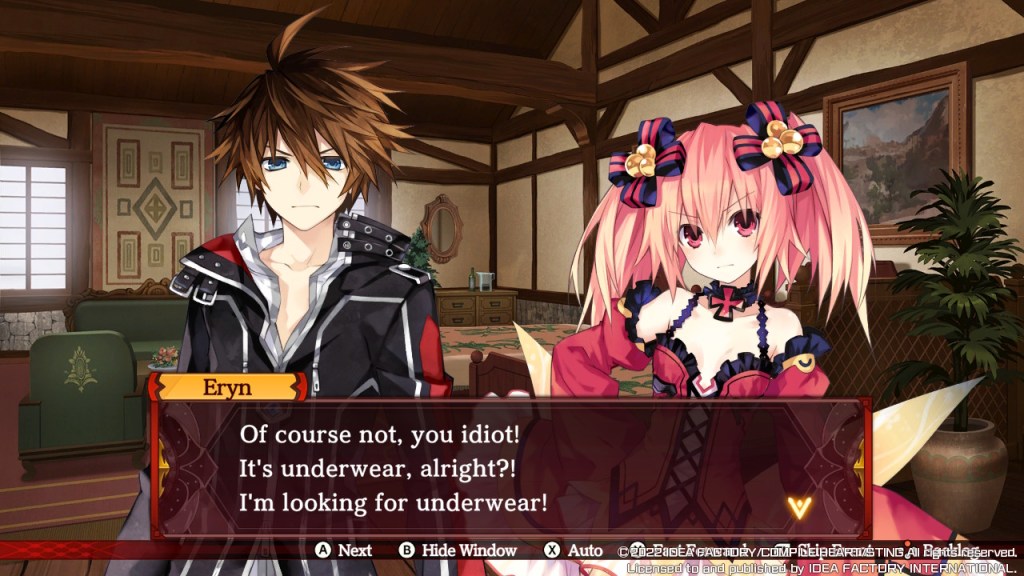
Overview – developed by Compile Heart and Idea Factory with publishing handled by Idea Factory International, Neptunia: Sisters VS Sisters is the latest entry in the long running Neptunia Franchise. In this action RPG hybrid, players take the role of Nepgear as she is tasked with saving Planeptune in the absence of her sister Neptune. This title is available on PlayStation and Steam, with a link to each version of the game at the bottom of this review.

Disclaimer: before I get into the review, I would like to thank Idea Factory International for providing the copy of Neptunia Sisters VS Sisters for this piece. The provision of this software has not influenced the contents of this review, all thoughts and opinions contained within are my own.

Now with the introductions out of the way, let’s get into the review, starting off with the story. Please note I will be covering the core aspects of the gameplay experience for this review, this is to prevent spoiling the surprises that this game has to offer. Extra note, when referring to the game title, I will be using Neptunia: SVS for brevity.

Story – While the Goddesses were out responding to a distress call from the faraway PC Continent, Nepgear and the other Candidates were dispatched to an abandoned research facility in order to investigate a monster outbreak. It was there that they encountered the Ashen Goddess, who trapped them in a capsule and placed them in a deep sleep. By the time they awoke, they were astonished to discover that 2 years had passed.

After they emerge from slumber, they learn that Neptune has been missing since her mission to the PC Continent 2 years ago, and in the absence of its Goddess and Candidate, Planeptune was ravaged by a series of strange outbreaks, collectively referred to as the Trendi Phenomenon. Suddenly finding herself robbed of home and family, Nepgear is met with the greatest challenge she’s ever faced. This is a story about finding hope in the midst of despair, and the rebirth of a Goddess in the wake of destruction.

Gameplay – Neptunia: Sisters VS Sisters is a dungeon crawling action RPG, set in the world of Gamindustri where the narrative plays out over several chapters. The chapters progress through completing main story quests (red [!] markers), exploring dungeons and defeating bosses, all of them accompanied by traditional Visual Novel storytelling. There is also additional side story content (blue [!] markers), expanding the narrative and providing extra depth to the story that unfolds.

The majority of the gameplay takes place through dungeon crawling action, where the player can take an active party of up to three characters (party members will change during the story) into the different dungeon zones. Inside the dungeons the player can roam freely through these areas, passing obstacles and finding hidden treasures. There are also destructible objects that may contain items, as well as alternate routes that can be opened up as the story progresses.

At set locations within the dungeons, players can find safe zones where the game can be saved. These points can also be used for fast travelling between the different safe spaces, using items to keep the party healthy and leaving the dungeons entirely. It is important to use these safe points as much as possible, ensuring that no progress is lost due to circumstances out of the players control (windows forced an update during play that made me lose almost an hour of playtime grinding).

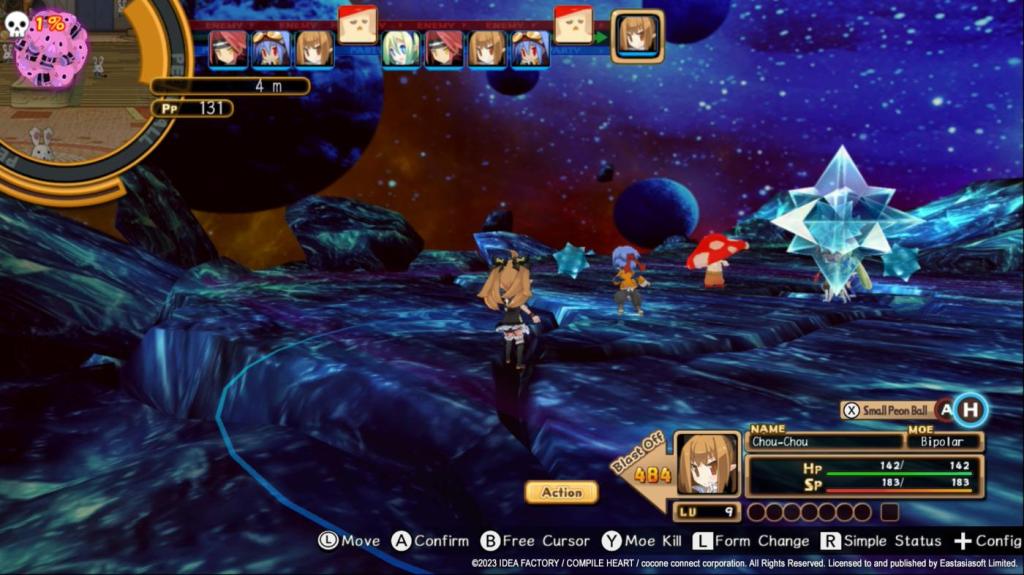
During exploration, the player will encounter monsters that wander around the various spaces which can be avoided or faced head on. When encountering an enemy, if the player is within the line of sight then the enemy will charge them to attack and initiate combat. However, if the player is able to approach from behind and attack the enemy, combat will start with an advantage on the player side.

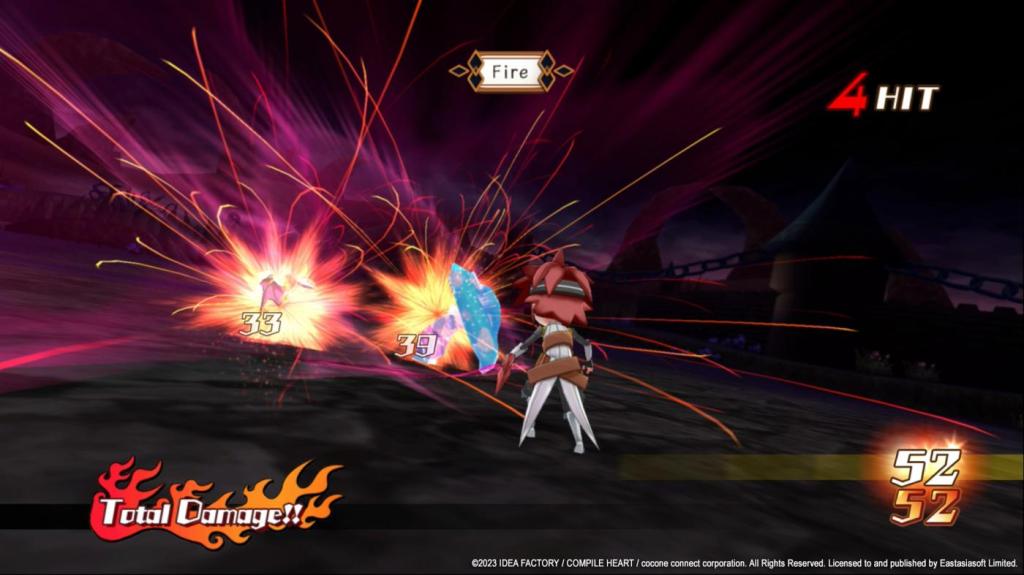
When battles start, the party and enemies are put into a circular arena where the player has full control of the party leader, with the other members acting independently. The combat itself plays out in real time, with attacks that can be linked together into action combos (which can be customized as the game goes on). All attacks use up different amounts of Action Points (abbreviated to AP), which replenish over time making combat more tactical as the player cannot attack without AP.

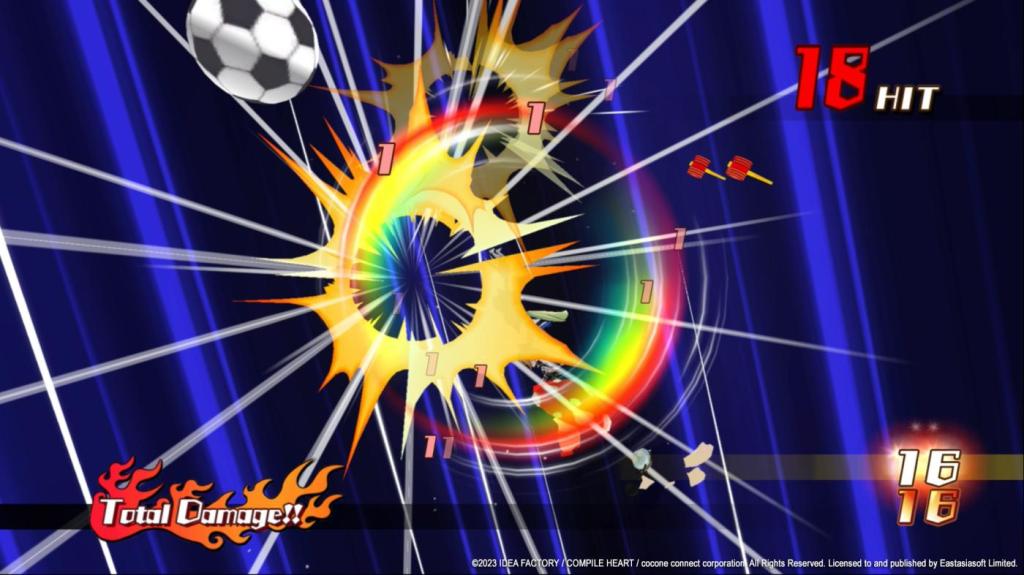
To mitigate this issue, the player is able to switch between the other party members, allowing control to be maintained during battle. During attack combos a prompt will appear, urging the player to switch to the other members of the team. When this happens, the character will use a more powerful version of an attack and deal additional damage to an enemy. These switches can be chained together, increasing the damage dealt with each successful use during a battle.

Alongside the standard and chain attacks, the player has access to special actions that can quickly turn the tide of battle. These actions have conditions that need to be met first in order to be used. The first action is Tactical Skill, a special action that can be used when the T-Skill bar is full, with all characters starting with one and more being unlocked later. Next we have the EXE Drive, a powerful attack that can be used at the cost of half of the Goddess Gauge, dealing massive damage.

Last is the Goddess Transformation, an ultimate ability that allows the player to become an all-powerful version of their active character when the goddess Gauge is full. When this mode is active, all standard attacks can be used without consuming AP, while also boosting their stats for a short time. The EXE Drive can also be used while in Goddess mode, providing an even more powerful special attack but at the cost of depleting the Goddess Gauge and reverting to normal.

All characters have their own strengths and weaknesses in combat, with unique skills that can work well with other members of a team. These can be ranged support attacks, control effects like freezing enemies and even healing allies. So it is important to keep those skills in mind as item use is limited in battle, requiring the T-Skill meter to be filled before an item can be used. Now onto the last element of battles to discuss.

Battles can end in one of three ways. Here is a breakdown of the conditions to end a battle;

  • Victory – the most common way of ending a battle is by defeating all of the enemies in combat. When all foes are taken down, players will be given rewards of money, disc coins (explained further below) items and experience points. The EXP points earned will level the characters in the party up at preset points, making them stronger and unlocking new skills over time.
  • Escape – if the player doesn’t believe that victory is possible or they don’t want to fight, they can attempt to escape the battle. To achieve this, the player must run against the edge of the battlefield without engaging in combat until the escape meter is filled. Please note it is not possible to escape from all battles, so it is important to keep that in mind before progressing.
  • Defeat – if all party members are taken out by the enemy, the player will get a game over screen and have four options to select from. These are retry, prepare and retry, load saved data and return to title screen. There is no penalty for retrying, so don’t give up if defeat occurs.

Aside from the main story, there is more to do within the large world map that becomes populated with more places to explore as the game progresses. The player can freely move between most locations, allowing for the ability to grind experience points and other resources. There is also a special system called “Chirper” where requests can be obtained from various NPC characters. These side missions have various objectives to complete, with success providing different rewards.

One of the rewards that can be obtained is a scout, which can be used to develop “discs” for players to generate and equip, providing additional skill boosts in battle. These discs are generated by combining a genre of game (action, FPS, RPG, etc), a scout character and a support item (found in the dungeons) with a timer ticking down after combining. However, one more resource is needed called DC (Disc Coin) to synthesize discs, with the chance for special events at a higher cost and greater yields.

Discs aren’t the only item that can be equipped though. Each character has access to a weapon type unique to themselves and armor that is universal. Items can be purchased from in game merchants that sell a variety of gear for players to purchase, including weapons, armor and cosmetic accessories. Equipping combat items can alter the stats of the different characters, making it important to ensure the right gear is added at the right time for the best results.

Since the party is split into primary and sub characters, players can pair the reserve members with active ones. This provides additional skill boosts, buffs and allows for deeper strategy in combat, letting players augment their party further. Combining the best equipment, party support abilities and the most cohesive combo attacks can grant the player a greater edge in battle, especially when it comes to the boss battles that occur during the story.

The last thing to discuss from a core gameplay perspective is the SHARE system. During the course of the game, a bar called the SHARE meter will change, increasing or decreasing depending on the choices that the player makes. The status of the SHARE meter can also affect the way that the narrative plays out, potentially changing the story in a drastic way, so keeping an eye on the ratio is just as important as anything else.

Now with the gameplay covered, it is time to move onto the other aspects of this release, starting with the controls.

Controls – as Neptunia: SVS is on PC the game supports mouse and keyboard inputs, which work well for the most part. However, I found that the controller option made for a much smoother experience, especially during the moment to moment action while in combat. That being said, both control methods are equally effective during play, meaning that it is a case of preference when choosing to use one or the other, as there are no issues with latency or lag with either method.

Difficulty – this title has a moderate difficulty curve, with a challenge that will gradually increase over time. There are moments where the difficulty will spike or seem unbalanced, due to the way that certain enemies can be spawned, but this can be lessened by grinding enemies to level up. The challenge can also be augmented by effective use of equipment, disc production and party management. It is also important to effectively manage consumables and heal the party regularly.

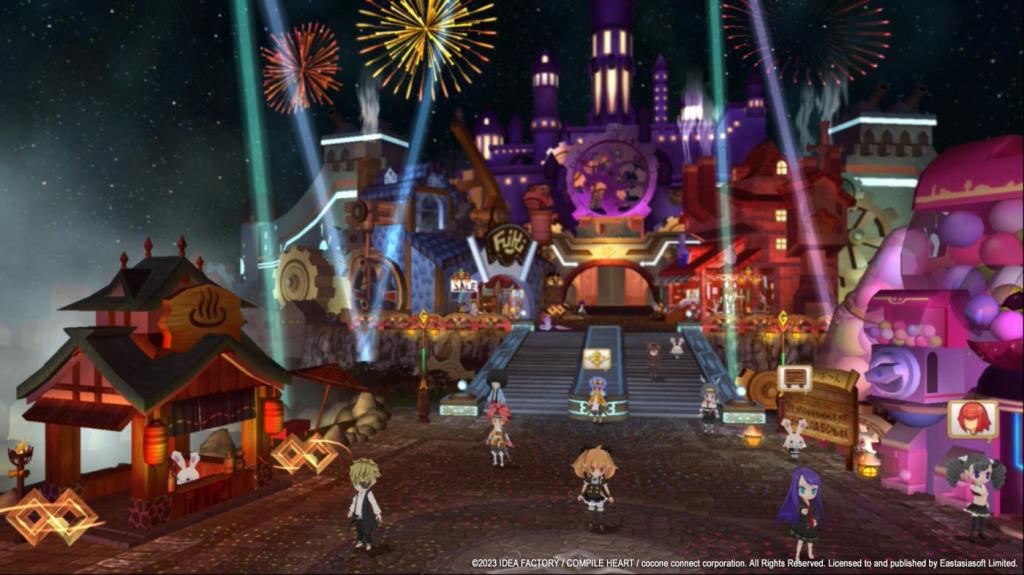
Presentation – visually Neptunia: SVS is very pleasing to the eye, with the art style and character designs that the franchise is known for. The artwork that is used for environments and characters during the VN scenes is excellent, along with the utilization of LIVE 2D for the animations breathes more life into them. The dungeon environments look and feel open and vast, with a lot of thematic details in each area but can look a little sparse at times, but it doesn’t detract from the experience.

In terms of sound, this is another showcase of the stellar quality that can be expected of an Idea Factory release. The opening theme and animation fits the game perfectly, with a soundtrack that is balanced very well and utilizes various musical genres. The game is available with both Japanese and English voice lines, with the localized voice cast containing many recognizable voices from Anime and gaming, with all of them playing their roles perfectly.

Final Thoughts – This is my first PC Neptunia title and I have to say I had a great time playing it (even if my PC just about met the minimum specs). The story resonated with me as it used recent world events in a way that was relatable while not being heavy handed. This is something that can ride a fine line of good and bad taste, which is often missed when narratives or settings attempt to use real world settings, events and/or people.

Another aspect of this title that I enjoyed was the continued use of references to gaming, anime and popular media, which is another trademark of the Neptunia franchise. The lines and parodies that are nods to recent trends is an excellent touch, with references to Pokémon Go, Demon Slayer, Gacha games and VTubers knocking it up another notch. I also really liked the special guest characters that were introduced, but I won’t spoil those since I want layers to discover those for themselves.

I have no issue recommending this title to fans of the Neptunia series, JRPGS and Dungeon Crawlers in general. The action can be frantic but it is balanced well, with the Action Point and combo/chain system making for a tactical battle experience. The disc and equipment system adds further depth to the combat, as well as an accessory system that is fun to experiment with. I did have minor hiccups with performance during play, but this is likely due to my PC set up.

In the end, I give Neptunia: Sisters VS Sisters a final score of 5/5. This is another excellent Idea Factory release, with a narrative that was engaging and relevant while not being heavy handed in tone. The balance between core game, narrative and optional content is done well, with a lot of content to dive into and explore. If you want to check this title out for yourself, a link to each version of the game is below.

Link to PlayStation 4 version (HERE)

Link to Playstation 5 version (HERE)

Link to Steam version (HERE)

Trenches – Nintendo Switch Review

Overview – developed by Steelkrill Studio and published by Ratalaika Games, Trenches is a first person psychological horror experience set during World War 1. As the soldier James R. Johnson, you must complete objectives while avoiding the horrors that follow in the fog. This Title is available on all major platforms, with a link to each version of the game available at the bottom of this review.

Disclaimer: before I get into the review, I would like to thank PR Hound for providing the copy of Trenches that was used for this piece. The provision of this software has not influenced the contents of this review, all thoughts and opinions contained within are my own.

Now with the introductions out of the way, let’s get into the review, starting with the story.

Story – in 1917, soldier James R. Johnson is behind enemy lines on a mission with his platoon. However, this mission is a disaster, leaving Johnson alone in the enemy trenches… at least that is how it appears at first. Hearing voices, footsteps and other noises within the claustrophobic corridors of the trenches, it appears there is something out there, something horrific that approaches ever closer as Johnson seeks to escape the nightmare he is now in.

Gameplay – Trenches is a first person horror experience, where the player must complete objectives in order to escape the horror they are in. The trenches that the player is trapped in are a complex maze of claustrophobic corridors, disorienting twists and turns, along with a fog that obscures most of the map from view. This combines with the haunting sound design, utilizing thunder and atmospheric sounds to build tension within this environment.

To accomplish the objectives in order to escape, the player must collect different clues while searching the maze, interacting with objects and discovering bloody messages on the walls. To find the locations of these clues, the player must listen for sound cues that will guide them to the objective or alert them of the threats nearby. The sound cues consist of the cries of babies to guide the player, along with non-human vocal sounds and footsteps in the distance.

It is important to be wary of sounds around the player as well as the noises the player makes themselves, since every step the player makes has the potential to alert the enemy in the darkness. The player has a trench whistle that can be blown to activate the sound cues for the baby cries, but it will also draw the monster closer when sounded. Bottles can be located when searching around, being used as a sound distraction by throwing them into the darkness and running away.

The player is able to crouch and sprint which have their own positives when used, but they also bring negatives along with them. As the player walks the boards of the trenches, their footsteps will make sounds with crouching reducing the sound, whereas running will increase it in volume. This makes it important to plan out an approach that will not lead to disaster when choosing to sneak, walk or run through the shrouded corridors.

During each run of the game, the player is entirely defenceless for the most part with the only way to escape death is to run and hide. This is because the monster hunting the player is invincible, even when the player uses the pistol that can be found. The weapon has the potential to stun the monster for a short time, but the pursuit will resume almost immediately, making it practically useless when compared to the distraction a bottle can provide.

But the monster isn’t the only terror that can be encountered when trying to navigate the trenches. During each run of the game, shadows can show up in the distance, disfigured faces and photos can appear out of nowhere, as well as jump scares that are designed to instil panic in the player. These work together with the tension of the sound design to make each play more intense, causing more and more fear for players to experience.

The horror of these narrow passages and the labyrinthine map is intensified when the monster comes into view, as it will pursue the player until either escape or catching them. If the monster does kill the player, they will be reset to their only save point and must complete the objectives again. This can be a significant set-back as the location of objectives will be randomised each time the player starts over.

There is a “no jump scare” mode available which will reduce the number of random scares for the player, but doesn’t eliminate them entirely. This mode can increase the tension and fear that players experience, as the fewer scares will leave the player with just the sounds of the crying babies, the monster and their own breath. Making for a horror experience where the things you think you see are more terrifying than what is actually there.

Now with the gameplay covered, it is time to move onto the other aspects of this release, starting with the controls.

Controls – this game plays very well in both handheld and docked play, with inputs that are laid out in a comfortable manner. During play, I found there were no issues with inputs or lag and the whole experience was smooth from a control perspective. When playing the game with pro controller, Joy-Cons or a third party offering, everything plays comfortably with no issues during the tense gameplay moments. The only issue is the lack of a controls screen in the in game pause menu.

Difficulty – there isn’t a difficulty curve to Trenches, but the challenge can be more difficult depending on the nerves of the person playing it. The tension can make the game tougher as the anxiety, fear and even adrenaline rush that terror can impact decisions that are made during play. To ease some of these issues that the player may face during the experience, the no jump scare mode can reduce some of the anxiety that players could face.

Presentation – the visuals of Trenches are dark and oppressive, with almost nothing but the wooden panels, mud and rain that can be seen during play. The design of the monster and other elements is relatively simple, but very effective at instilling dread into the player. The use of historical images further adds to the horror of this experience, giving more detail to the setting that this experience takes place in.

In the sound department, there is very little music as the focus is on sound cues and atmospheric noise. This works extremely well as the unnerving baby sounds, guttural groans and sudden loud noises can instil panic into someone quickly. The thunder/lightning, explosion sounds and unknown footsteps that can be heard in the distance increase the tension, reminding the player that something is in the fog.

Final Thoughts – when I heard about this game I was intrigued as this is a setting that doesn’t often appear in horror titles. So I was excited to get my hands on it, but sadly that excitement turned to panic and anxiety very quickly. The game sets out to scare the player and it excels at this. The implementation of atmospheric sound, shadows moving through the fog and images flashing on screen all cause a sense of foreboding during play.

The fact that this release was created by a single developer, with all of the details, psychological tricks and historical touches is astounding. The whole experience has been crafted very well, albeit with a few blemishes involving texture loading and spelling, but this doesn’t affect the overall experience. This is a tense and at times terrifying title and I have no issue recommending it to fans of the horror genre, since it works equally well in both docked and handheld on the switch.

In the end, I give Trenches a final score of 4.5/5. This is a well-crafted single dev horror experience, utilizing a setting that is extremely rare within the context of the genre. The atmosphere, sound and overall gameplay experience is one that will stay with players long after they have played it. If you want to check this out for yourself, a link to each version of the game will be below.

Link to Nintendo Switch version (HERE)

Link to PlayStation version (HERE)

Link to Xbox version (HERE)

Bot Gaiden – Nintendo Switch Review

Overview – developed by SwordSwipe studios and published by Eastasiasoft, Bot Gaiden is an action platformer with an emphasis on speed and time. As two robot ninja, the player must take down the minions of the mysterious Giorqio, battling wave after wave of enemies and large scale bosses. This title is available on all major platforms, with a link to each version of the game at the bottom of this review.

Disclaimer: before I get into the review, I would like to thank Eastasiasoft for providing the copy of Bot Gaiden that was used for this piece. The provision of this software has not influenced the contents of this review, all thoughts and opinions contained within are my own.

Now with the introductions out of the way, let’s get into the review, starting with the story of Bot Gaiden.

Story – the mysterious Giorqio and his band of hench-bots have acquired the golden skulls. These are relics that have immeasurable power and the potential to rule the world. Now the ninjabots Robyu and Bytron has been sent on a mission to recover the skulls, taking down the minions of Giorqio and recovering them to stop his plans. However, time is not on the ninjabots side and they must make haste to complete their objective.

Gameplay – Bot Gaiden is a throwback action platformer, inspired by the classics of the genre which include Mega Man and Ninja Gaiden. The core objective is to clear each of the different stages and defeat the end boss of each stage as quickly as possible. The stages can be tackled in any order, with players picking and choosing the approach that they want to take to the action. But keep in mind, time is an important aspect when it comes to this release.

The stages themselves have three time sensitive targets, with rewards that are provided depending on the completion time at the end. The rewards that are provided are split into three tiers with Gold, Silver and Bronze. These rewards are permanent player upgrades increase in power with each tier, with Gold/Silver being ability upgrades and Bronze being extra Lives.

On the subject of abilities, during the stages special gears will appear on screen for players to collect. These gears will provide different abilities depending on which ones have been collected. The abilities that players can obtain include Jump Jet (double jump) and Sling Star (a projectile), which can make combat a little easier for players. As they augment the core move set of the Ninjabots.

Both of the playable bots have the same toolkits, consisting of a jump/wall jump, basic slash attack, a crouch attack that extends the players reach and two evasive maneuvers. The movement skills are a glider that lets the player cross wide gaps and a dodge that can be used for a limited amount of time. If the dodge is held for too long, the player will self-destruct and kill them immediately.

The glider and dodge are most useful as recovery skills, as they can cancel out knockback when taking damage. This is due to the risk of falling off screen into death pits when taking damage. When damage is taken or the player is defeated, they can lose the gears that they had built up (this varies depending on difficulty). But the loss of ability gears isn’t a major issue as they are scattered throughout the stages.

The vast majority of enemies can be defeated with a single strike, with others requiring a couple of hits to be defeated. The bosses on the other hand are an entirely different thing. Depending on the time that is taken to reach the boss, their strength will be lower the faster that the player reaches them, making for an easier battle. If the player takes too long, bosses will be at full power making them more challenging.

When a stage is cleared, they can be replayed to improve the rating or just to set a personal best time. Once all main stages have been cleared, the final boss stage will be unlocked, offering very special rewards for beating this final boss stage. These special rewards add even more replay value to the player, offering new ways to play, approach the game and set new personal best times.

There is also a co-op mode in Bot Gaiden, letting two players take on the challenges together. In the multiplayer mode, the gameplay is changed very slightly to make it more exciting for two players. The changes include a teleport system to help players that lag behind, shared power-ups and special team attacks to take down enemies in style. The co-op mode can also help those who struggle with action games.

Now with the gameplay covered, it is time to cover the other aspects of this release, starting with the controls.

Controls – the controls for this release are laid out in a way that mirrors that of its inspirations, with movement on the left side of the controller and actions on the face buttons/shoulders. There are some flaws with the way that the game handles, with no diagonal movement and occasional failed inputs during play. However, the game is comfortable for the most part with any controller in both docked and handheld play.

Difficulty – this is a very challenging game, with a lot of beginners traps, unfair enemy placement and instant death pits. This can be off-putting to most players, as the challenges may require practice and persistence to overcome. However, there are 4 different difficulty settings that alter the way the game plays out. These range from casual to ludicrous, with the lowest difficulty reducing damage/ability loss and the highest having instant death upon taking damage.

Presentation – visually this is a stunning looking game, with an artstyle that mixes the design of its inspirations and slick digital sprite work. The animations are mostly fluid with the occasional hiccup, but the game runs very smoothly on Nintendo Switch. The sound for this game has a very 90s rock feel t it with heavy use of guitar solos and pounding drums, with all of the music fitting the stages and cutscenes during play. There is no voice acting for this release.

Final Thoughts – from the outset, this looks like a simple clone of the games that inspired it. However, there is so much more to this release, with the focus on speed and timer that is tied to the rewards for clearing stages. The challenge is punishing, especially for those who aren’t the best at action platform games which will make getting the gold rewards difficult. This is something that may dissuade players from picking this up.

The overall title is solid, but does have some flaws to it. During the game, inputs can be missed, some mechanics aren’t explained properly and some boss weak points are obscured making it tough to beat them. But there are some things that salvage the true potential that is here. The multiple difficulty options can make some of the challenge easier to get through, as well as the co-op and unlockable bonuses that expand the experience.

In the end I give Bot Gaiden a final score of 3.5/5. This is a solid but frustrating action platformer, with some flaws to it but the potential for have a lot of fun and replay value, especially with the timer as it promotes players to learn how to speed run the game. If you want to check this title out for yourself, a link to each version of the game will be below.

Link to Nintendo Switch version (HERE)

Link to PlayStation version (HERE)

Link to Xbox version (HERE)

Tinykin – Nintendo Switch Review

Overview – developed by Splashteam and Splashteam S.A.S. with publishing handled by Tinybuild, Tinykin is a 3D puzzle platformer with a style of play similar to that of Pikmin. An archaeologist from an alien planet travels to earth, discovering they have shrunk to a tiny size in huge house populated by an alien society. This title is available on all major platforms, with a link to each version of the game available at the bottom of this review.

Disclaimer: before I get into the review, I would like to thank Tinybuild for providing the copy of Tinykin that was used for this piece. The provision of this software has not influenced the contents of this review, all thoughts and opinions contained within are my own.

Now with the introductions out of the way, let’s get into the review, starting off with the story. I will also be covering the core aspects of this release to prevent spoiling some of the surprises for players.

Story – On the planet of Aegis, Milodane is an archaeologist and researcher in the most prestigious university on the planet. After studying the various artifacts, relics and fossils that have been discovered, he has come to a conclusion that humans originate from somewhere else. During his research, Milo discovered an ancient signal from a nearby galaxy that is human in origin. Milo explored all of the nearby planets before finding the source, setting out to discover the secrets of Humanity’s origins.

Gameplay – Tinykin is a 3D puzzle platforming adventure, with the player exploring a huge house as the tiny astronaut Milodane. The core gameplay loop of this title is exploring the areas of the house, completing missions and collecting power-ups/special items. As the story progresses, the player will discover different locations and insect societies while guided by the moth Ridmi, who will provide narrative details to the player.

The main objective for this release is to collect the parts of a device that are located around the house. To achieve this goal, the player must complete different quests for the residents of each area, with each new piece opening up a new area to explore. The quests often have multiple steps that need to be completed in order to continue, like collecting required items, overcoming platforming challenges or gaining access to locked spaces.

The way that the majority of these quests are completed is by using the titular Tinykin, an alien life form that has found its way into the house. The Tinykin each have their own unique skills determined by color, with red being explosive and pink being able to move objects to name a few. To obtain them, the player can break open boxes or open Tinykin eggs to add them to the army. The Tinykin are tied to the area they are discovered, allowing players to return without being unprepared.

However, the Tinykin don’t last forever, as some of them can be destroyed when used. For example, the explosive kin will disappear when thrown at a breakable object, making their powers a single use ability. This makes it important to bear their use in mind, as the various destructible objects have a specific number of kin needed to break them. But opening pathways isn’t the only way that these little aliens can help, as they can be used to solve puzzles and access other areas.

Alongside the tiny alien creatures, the player can also use gear that can be used during play. The equipment includes a soap board that lets the player grind silk rails and a bubble that lets players glide. The different equipment allows players to experiment during exploration, with some of it being upgradable which allows previously unreachable areas to be accessed. All of these pieces come together with the Tinykin to make for a satisfying exploration system.

The objectives to obtain the parts of the devices are the main attraction, but there is more to the game than just the main quest. During the course of the game, the player can take on special race challenges that provide medals and unique bonuses as a reward for success. These races focus on speed, so skillful use of the soap board and silk rails is the key to success. There is also Nectar and other collectables scattered through the house, providing an extra challenge for completionists.

The last thing to discuss is the house itself. The different locations have their own unique hazards, such as water and extreme drops that can instantly kill the player. But do not fret, as there are no game overs in this release, with each “death” simply resetting the player to a previous state right before they pop. This checkpoint system makes the game accessible and drastically reduces the difficulty of the game, allowing all players a fair chance to reach the end.

Now with the gameplay covered, it is time to move onto the other aspects of this release, starting with the controls.

Controls – the control scheme for Tinykin is laid out very well, with all of the buttons placed in a way that makes it easy for players to simply pick the game up and play. When playing in handheld mode using Joy-Cons, the movement is much more precise with the direction buttons, as the thumbstick doesn’t have the travel of other controllers. The pro controller is the best way to play the game when in tabletop or docked mode, but the overall experience is very comfortable from a control perspective.

Presentation – the visual style for this release is a mix of 3D environments with flat 2D sprites, which really gives this game a unique graphical charm. The sprites are expressive, with the way that they are drawn bringing life to the characters. The game runs buttery smooth with zero dips in performance or frame rate no matter where it is set. The sound is very good also, with music that fits the different locations, some light narration during cutscene animation and simple sound effects to NPC voices.

Final Thoughts – at first glance, Tinykin may appear to be a Pikmin clone, but it has enough depth and unique charm to stand out on its own. The house the game takes place looks like a time capsule of the 90s, with a large stereo high-fi, an old school CRT television and vinyl records to name a few details. This visual design gives a hint of nostalgia to the experience, making for interesting exploration/platforming challenges to take on like going inside a TV to find a jewel.

I am happy to recommend this release to everyone, as Tinykin has a lot of fun to offer players along with an accessible and easy to pick up mechanics. There are some areas of the game that can be challenging, such as the optional races that can be unlocked. These make it a rewarding title for completionist players, providing a little more for completionist players and the extra objectives knock it up a notch. Overall this is a great game, however, the main game may be a little short for some players.

In the end, I give Tinykin a final score of 4.5/5. This is a fun and charming adventure, taking the concepts that were established by others and uses them to create a unique experience, especially with the unique setting and presentation. Tinykin is a fun experience that can be enjoyed by everyone, with a low barrier of entry and a lot of depth to the game itself. If you want to check this release out for yourself, a link to each version of the game will be below.

Link to Nintendo switch version (HERE)

Link to PlayStation version (HERE)

Link to Xbox version (HERE)

Link to Steam version (HERE)

Link to GOG version (HERE)

Super Woden GP – Nintendo Switch Review

Overview – developed by VIJUDA and published by Eastasiasoft, Super Woden GP is an isometric racing game inspired by the arcade games from the 90s. Take over 70 cars from 6 manufacturers across the world in championships and tournaments to determine the best driver. This title is available on all major console platforms, with a link to each version of the game at the bottom of this review.

Disclaimer: before I get into the review, I would like to thank Eastasiasoft for providing the copy of Super Woden GP that was used for this piece. The provision of this software has no influenced the contents of this review, all thoughts and opinions contained within are my own.

Now with the introductions out of the way, let’s get into the review. I will be skipping the story segment as there is little in terms of plot for this release.

Gameplay – the gameplay loop for Super Woden GP is similar to that of the traditional motorsport games on the market. The player must use a provided amount of credits to purchase their starting vehicle from one of 6 manufacturers, with the cars featured being based on the manufacturers region. The cars available include those from Japan, the United Kingdom and Italy with many recognisable albeit copyright friendly designs.

Once the player has chosen their first car, they will be able to enter races in order to earn credits for additional cars, as well as new tracks and races to participate in. The races are separated into championships, with single track and multi-track contests for the player to challenge. There is also a free race mode, which allows for multiplayer split screen, practice races and solo time trials with fastest times posted to a worldwide leader board.

In the championship modes, the races will take place on a variety of tracks, which include traditional circuit layouts and rally style stages. The circuit tracks feature multiple laps, whereas the rally stages have a start point and end point with no connection. Championships can also have restrictions attached to them, requiring the player to have a car below a specific power level, a specific model and more.

The racing itself differs from that of the traditional motorsport title, with an isometric camera that the game uses as its main selling point. However, this is the biggest hindrance to the overall game experience. This is due to poor track visibility cause by the environment, turn indicators that provide little if any guidance and the fact that controls can feel inverted when driving counter clockwise. These issues can negatively impact the flow of gameplay significantly for players.

There are other unfortunate flaws that hamper the overall racing experience for this title. The most common problem that players will encounter during the early stages of the game is difficulty with vehicle handling. When taking turns, the cars can become unwieldy as they swing from side to side, making it very difficult for players to maintain a steady speed around corners.

The overall handling and driving experience is also made worse by the off-road collision, which can cause vehicles to slow to a crawl. When this happens attempting to manoeuvre back onto the track can feel like trying to sail a yacht through concrete. Together these issues permeate the game to its core and sadly spoil the potential that is present, which has the chance to disappoint those who expect a snappy arcade style racer.

There is a wide variety of cars that are present and there are many tracks to race on, but the rewards system for this title make it feel like a grind. Unless the player spends a lot of time learning to handle each corner and turn of a track, the progression of the game can become a frustrating time sink. This is due to the low pay-outs (if any) that players will receive when placing any lower than 3rd place in a race, making the unlocking of new cars tedious at times.

The progression of the career modes compound the slow advancement that players can face, with new tracks being locked behind a star requirement. This means that players must place first in most races in order to unlock the rest of the championships, which artificially inflates the gameplay length making it take longer for players to progress. The overall progress that players will see is likely to be very slow, with the difficulty handling vehicles and the camera issues as the root cause.

Outside of the championships, there are some additional touches to the game, including a garage where players can select cars, a stats page and a music player. These extra features add little if anything to the overall gameplay experience, but are nice touches to give players more to do outside of the race gameplay. The multiplayer and world leaderboards give some extra depth to the game, however in the areas that it matters most the experience is lacking.

Now with the gameplay covered, it is time to discuss the other aspects of this release, starting with the controls.

Controls – the control method for this release is relatively easy to understand, but can be very difficult to learn. The cars are difficult to handle at speed, with the potential for the lightest touch to make the car swing wildly on the track. This is made worse by the inverted feeling that the reverse tracks will give the player, causing confusion and frustration during play. The overall feel of the controls is comfortable, but is not the most intuitive during gameplay.

Difficulty – this is a difficult game to get to grips with, where most of the challenge stems from the flaws of navigating the track. There is an easy mode which modifies the speed of AI drivers and “enhances” the handling of cars, but it makes little difference to the gameplay itself. The game is hard to play in general, which can be incredibly frustrating for all players who expect an arcade style game and not a motorsport sim style title.

Presentation – the visuals for this game are relatively solid, with some nicely detailed track and interface elements that work well. The cars for the most part have little in terms of detail at a distance, making them look like rolling boxes when the camera is zoomed out. The game runs at a good pace, with no performance drops in either handheld or docked mode. The music for this game has a good variety to it, with electronic and chip tune tracks that match the game well.

Final Thoughts – I wanted to enjoy Super Woden GP, due to the impression that this was an arcade racing game from the promotional materials that were shown. However, this is no Neo-Drift Out or Over Top. This is more akin to motorsport simulation games like those based upon the F1 and WRC licenses, with difficult to handle cars and a relatively steep learning curve. Unfortunately, I cannot recommend this title, as I feel it isn’t the accessible racing game that the trailers portray.

The whole game can feel like a grind, as the slow progression and pitiful payouts from races artificially extend the length of play. There are some redeeming qualities, with the abundance of unlockable cars, tracks to race on and the multiplayer/online features, but they are not enough to save what is (in my opinion) a frustrating experience. It had a lot of potential, but the poorly balanced gameplay loop has spoiled what might have been. However, if you are a fan of motorsport sims, you may get more mileage out of this release.

In the end, I give Super Woden GP a final score of 2.5/5. This title presents itself as a throwback to classic isometric arcade racers of the past, but sadly falls short of the potential that it has. The long grind to unlock vehicles, the visibility issues of upcoming turns and the difficulties faced with the controls as a whole mars what could have been an excellent arcade racer. If you do want to check this game out for yourself a link to each version is below.

Link to Nintendo Switch version (HERE)

Link to PlayStation version (HERE)

Link to Xbox version (HERE)

Super Chicken Jumper – Nintendo Switch Review

Overview – developed by Sewer Cat and published by Eastasiasoft, Super Chicken Jumper is an auto scrolling platformer with run n’ gun action. As the super spy, Chicken, you must travel the world, take down monsters and stop the evil organisation that is trying to take over the world. This title is available on all major platforms, with a link to each version of the game available at the bottom of this review.

Disclaimer: before I get into the review, I would like to thank Eastasiasoft for providing the copy of Super Chicken Jumper that was used for this piece. The provision of this software has not influenced the contents of this review, all thoughts and opinions contained within are my own.

So with the introductons out of the way, let’s get into the review, starting with the story.

Story – the world is in danger, as evil forces from the past have resurfaced to destroy the world. The only individual that Mrs President can trust to save our lives is the super sectrect agent, Spy-chicken. Armed with a variety of weapons and accessories, Chicken must travel the world, assisted by the different agents that are stationed in the different locations. To save the world Chicken must battle monsters and take down the evil organisation on his adventure.

Gameplay – Super chicken Jumper is an action runner game, with the core objective being to get to the end of each set of stages and defeat the boss. The screen scrolls automatically, with the player having to move and jump over obstacles, while also having the ability to destroy hazards on screen with a variety of different weapons.

Each of the games worlds are broken up into stages, with each of the standard stages having a predetermined distance that needs to be covered in order to reach the goal. At the end of each world, there is a boss battle that pits the player against a giant enemy that is themed to that zone. Between the different stages, story scenes will play out through dialogue Mrs President and the anime girl agents of those zones.

At set points during the game, new items will be awarded to the player. These items are separated into weapons and accessories. The weapons include a knife, boomerang and a gun, with each of the weapons having their own damage amounts and attack speed. On the flip side is the accessories that can be collected, which are made up of items that provide bonuses for the player, like increased jump height and hovering.

The different items can be swapped freely when unlocked, making for a flexible experience where the player can mix things up to alter the difficulty on offer. If a stage is more challenging, then a different item may make it a little easier to get through, or an easier stage may be made harder by changing the items equipped.

Aside from the main story mode, there is additional content that can be unlocked. There is an optional challenge mode, with missions that are tied to a zone that has been cleared. Alongside the challenges is the endless mode, a special competitive mode where players have one life to get as far as possible. The highest distance score for each of the zones is submitted to the leaderboard, allowing players to compete for the top spot.

Now with the gameplay covered, it is time to discuss the other aspects of this release, starting with the controls.

Controls – the control method for this release is very simple, with only two buttons and the control sticks being used for most of the game. The inputs for jumping and attacks are on the face and triggers, giving players easy access to fit their play style. The rest of the inputs are for accessing menus and restarting a level if the player dies. The only hiccup with the controls is that the aim for certain weapons is on the right stick which can make aiming tough during frantic sections.

Difficulty – the challenge for this title has a lot of peaks and valleys during play, with easy stages then sudden spikes in difficulty. This can be jarring, but the short length of stages and the infinite retry system that the game has can help. It can take a few attamepts to get through a stage as the elements and hazards are randomised, which are sometimes frustrating for players. But the challenges of this game can be overcome with enough time taken.

Presentation – the visual style for Super Chicken Jumper is pleasing to the eye, with old school style pixel art that has a lot of detail to it. The game runs at a solid frame rate throughout, with vibrant and bold sprite work that works in this games favour. There is no voice acting for this title, however, the game makes up for this with some very good music and solid sound effects. This makes for a good overall package.

Final Thoughts – overall I had a good time with Super Chicken Jumper, as the gameplay has a simple loop but is very challenging throughout. The sudden difficulty spikes can be frustrating, but with enough time and patience all of the stages can be overcome. There is also a lot of replay value for the low asking price, as the additional modes provide more for players to enjoy outside the story mode.  I can easily recommend this game, as it is simple and fun with a lot of charm to it.

In the end, I give Super Chicken Jumper a final score of 4/5. This is a fun and charming game, but can have frustrating difficulty spikes with the random generation of stages. However, there is a lot of content on offer for players and the replay value with extra modes is a nice bonus. If you want to check this title out for yourself, a link to each version of the game will be below.

Link to Nintendo Switch version (HERE)

Link to PlayStation version (HERE)

Link to Xbox version (HERE)