Retro Revival – Arcade Archives 2: Ridge Racer (Nintendo Switch 2)

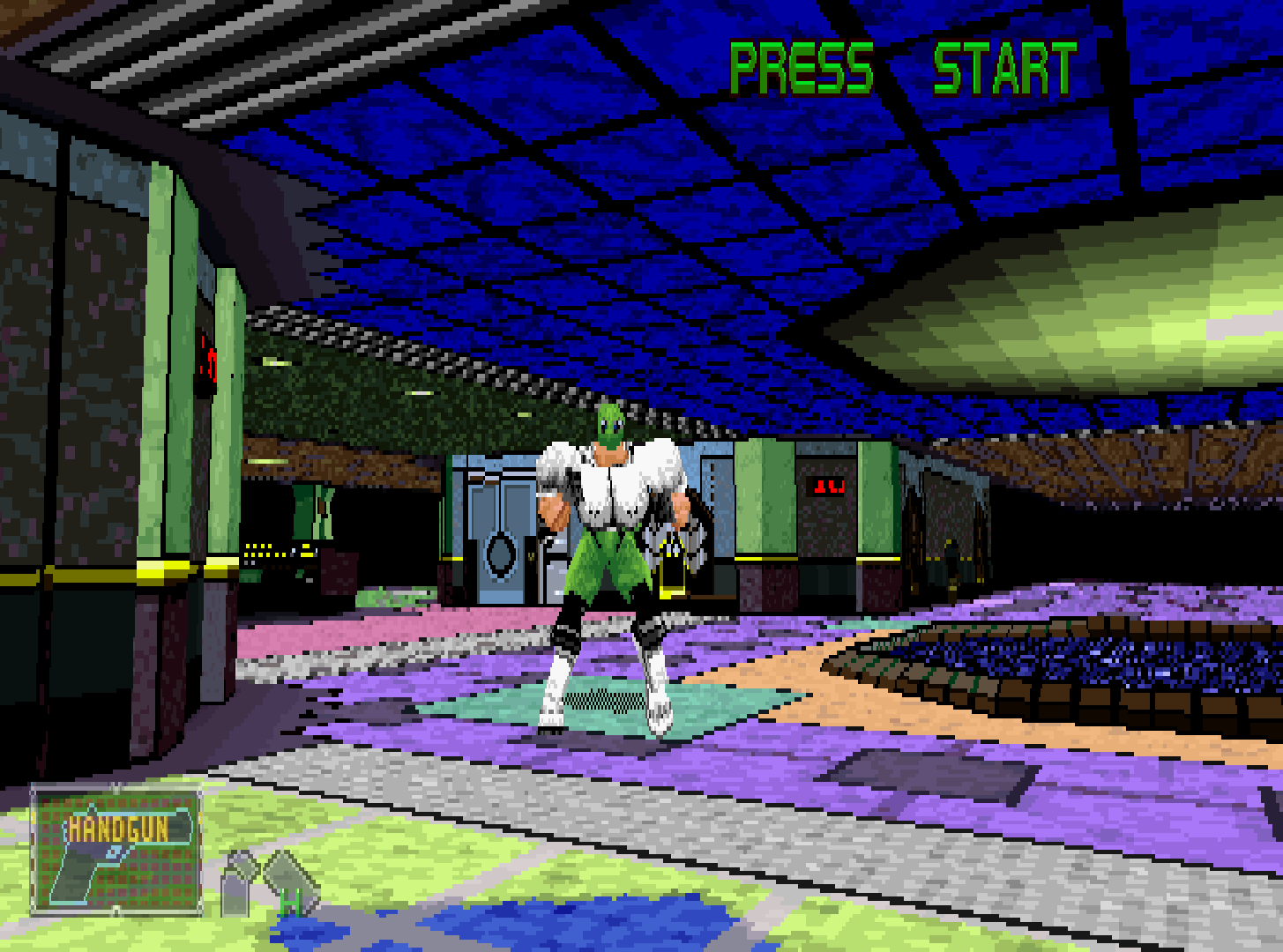
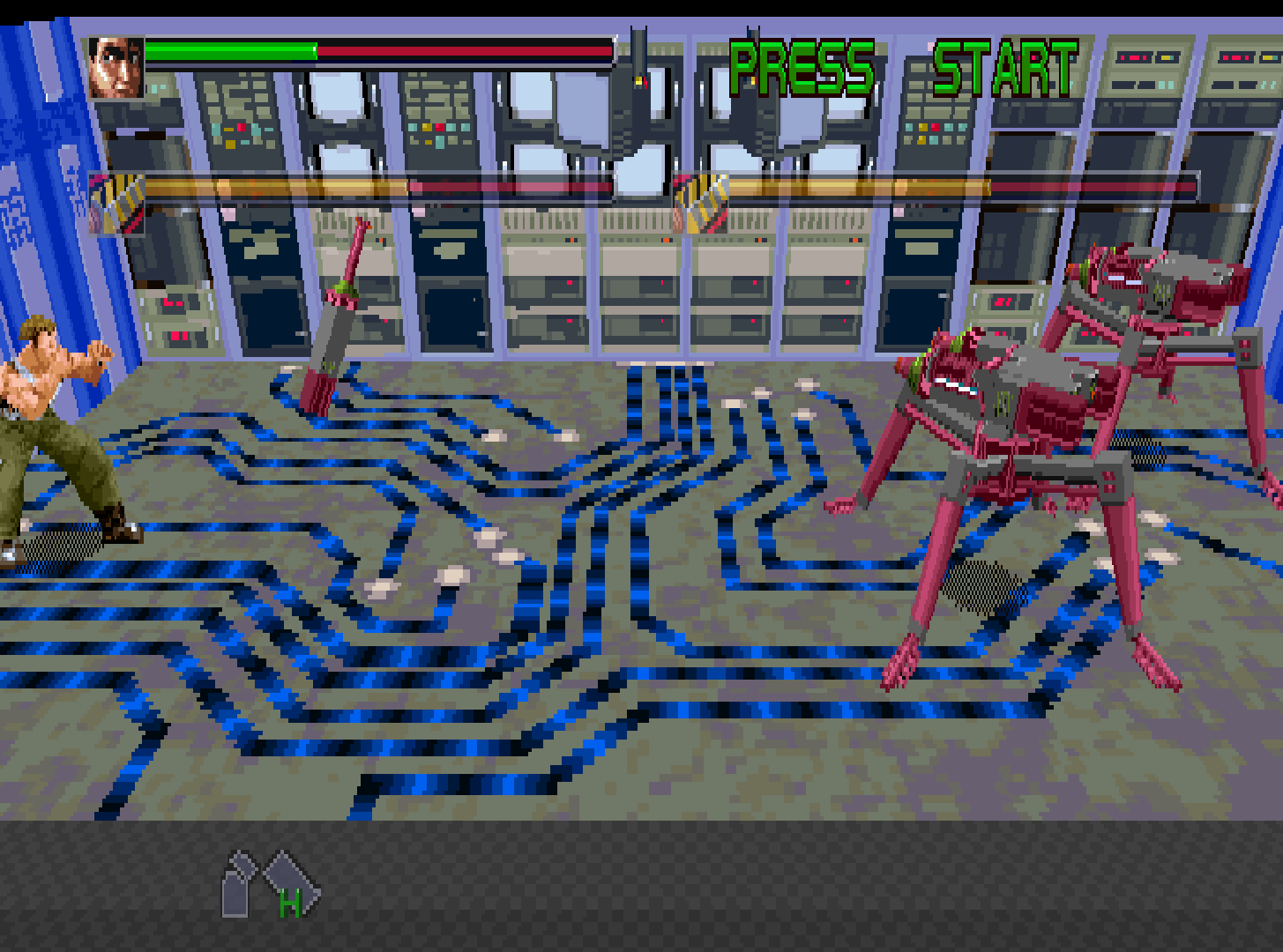
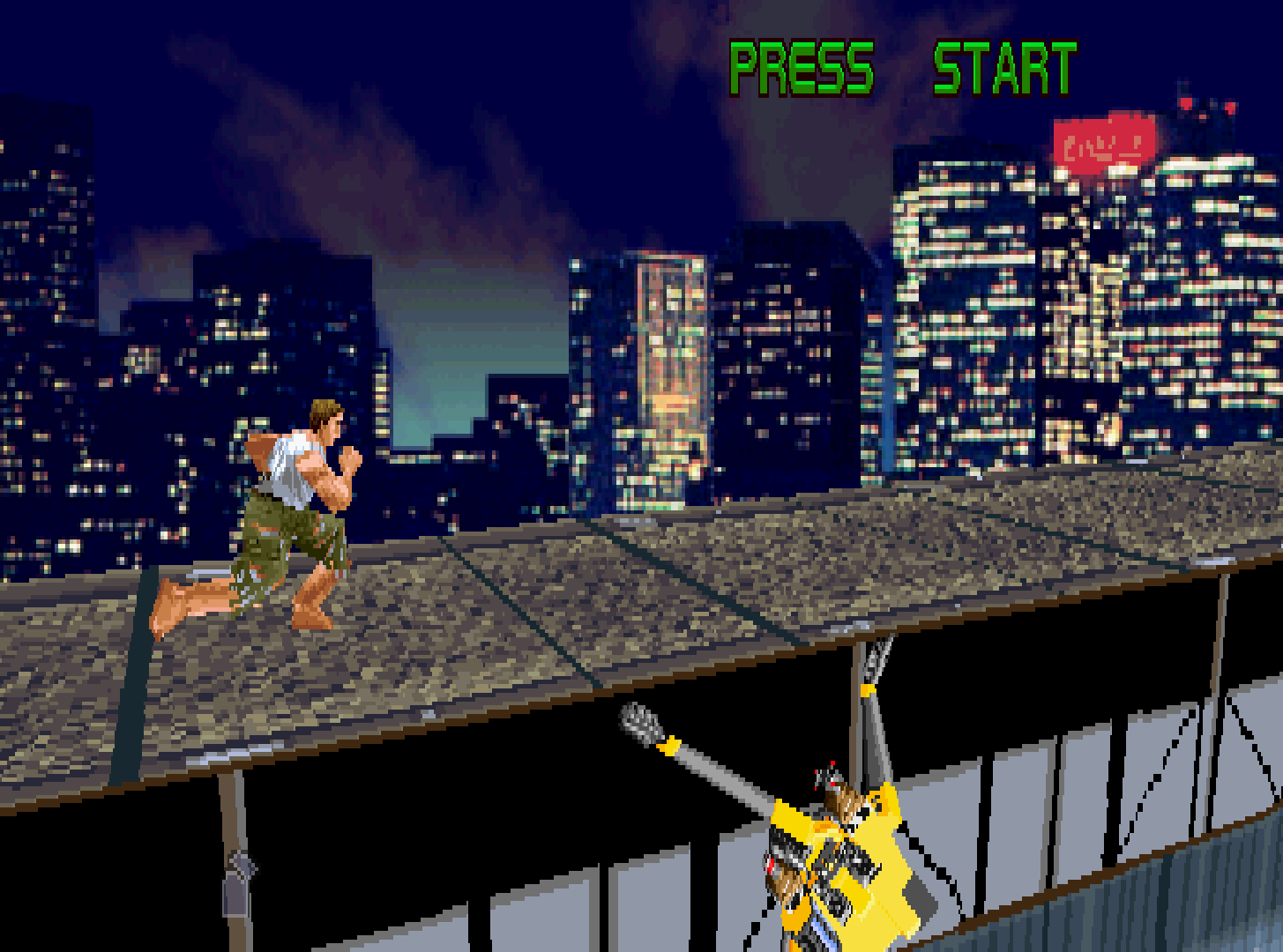
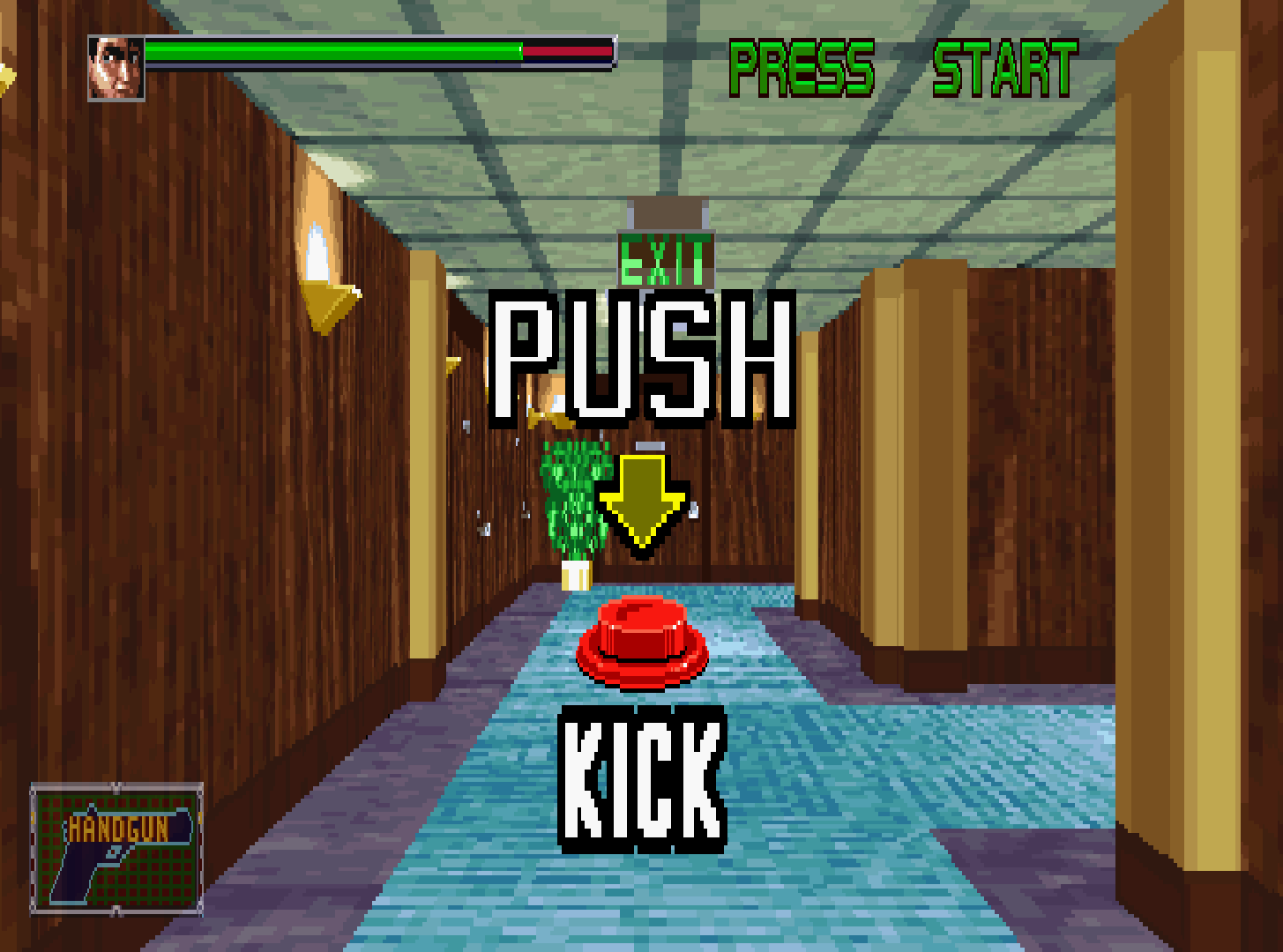
Hello there, it is time again for the next instalment of Retro Revival, discussing classic games that have been brought back to life, via modern platforms. These can be HD Remasters, emulated ports and games that are included in collections. For this entry, I will be covering the legendary arcade racing game Ridge Racer, developed by Namco and released on the System 22 hardware in 1993. Now available through Hamster’s Arcade Archives and Arcade Archives 2 series.

Disclaimer: the games discussed in this feature have been purchased by me, so the opinions presented within are my own. There has been no sponsorship of the content within this feature. Links to the different versions available will be provided at the bottom of this feature, where possible.

So with the introductions out of the way, let’s get started. I will be discussing the general gameplay experience for the game, alongside some details about the game and personal thoughts in it. Please note, I will be discussing the Nintendo Switch 2 version of the game for this feature, but there is also an Arcade Archives 1 version of the game available.

About the game

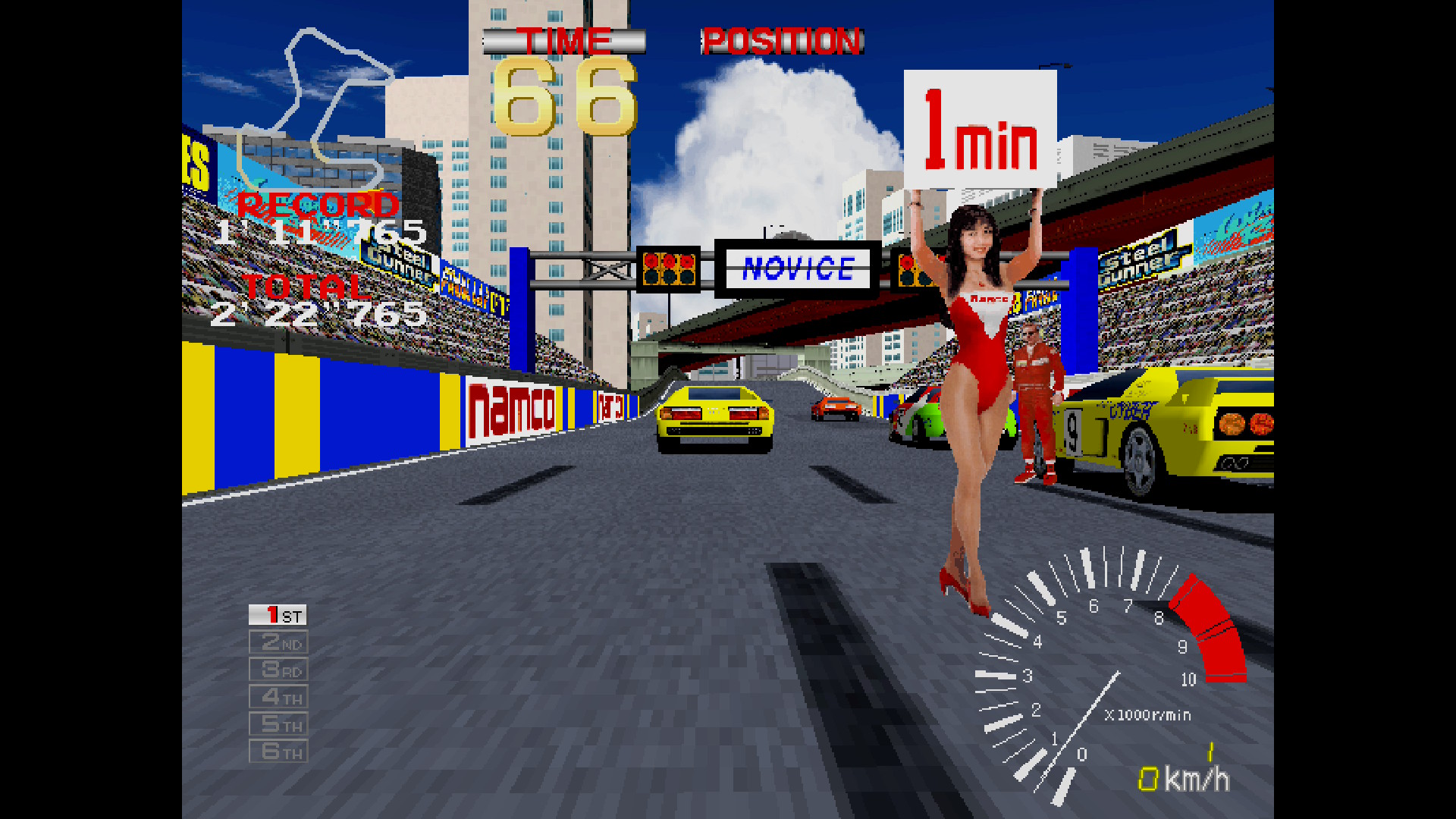
Ridge Racer is a full 3d racing game, based upon the popular Japanese style of high speed mountain racing, with a focus on drifting. Take on the Ridge Racer street course across a vibrant cityscape, battling it out with other cars in thrilling high speed races. In this title, there is only one course, with four different variations tied to the difficulty of the racing. The difficulty settings are Novice, Intermediate, Advanced and Time Trial (shown as T.T.).

At default settings, the Novice race has two laps with a maximum speed of 160KMH (100MPH) for the player car. In the Intermediate and Advanced races, the maximum speed for the car will be 200KMH (125MPH) across three laps. In the T.T. Time Trial, the player can reach a maximum speed of 220KMH (137MPH), racing three laps against a single opponent car. The first three races feature 12 opponents that must be overtaken to reach that 1st place position.

The course that players race on has two set layouts, with the Novice and Intermediate races taking place across the shorter track. Then there are Advanced and Time Trial, which use the longer more challenging track layout. Over the course of a race, there will also be transition points, which will change the look of areas, adding night time scenes and mist to the mountain side. This can change if the player alters the number of laps in the game settings.

Before jumping into the race, the player will be able to select their transmission offering both Manual and Automatic gear shifting. The Automatic gear shift is recommended for those who want to jump straight into the action, but for those looking for a challenge Manual transmission is recommended. If the SD version of Ridge Racer has been chosen, the gears will be simple up and down, but in the DX version, there is a more realistic gear switch system.

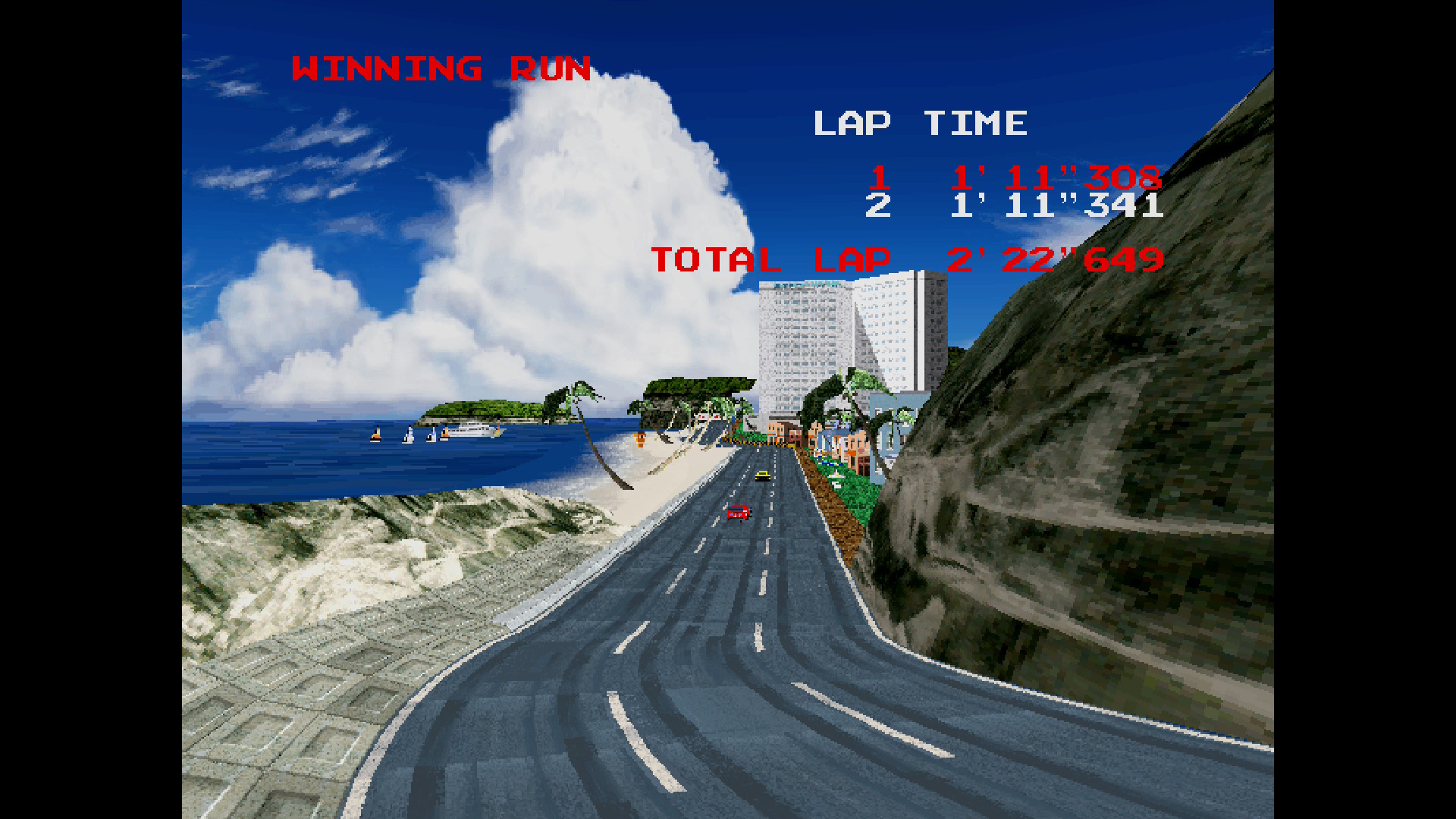
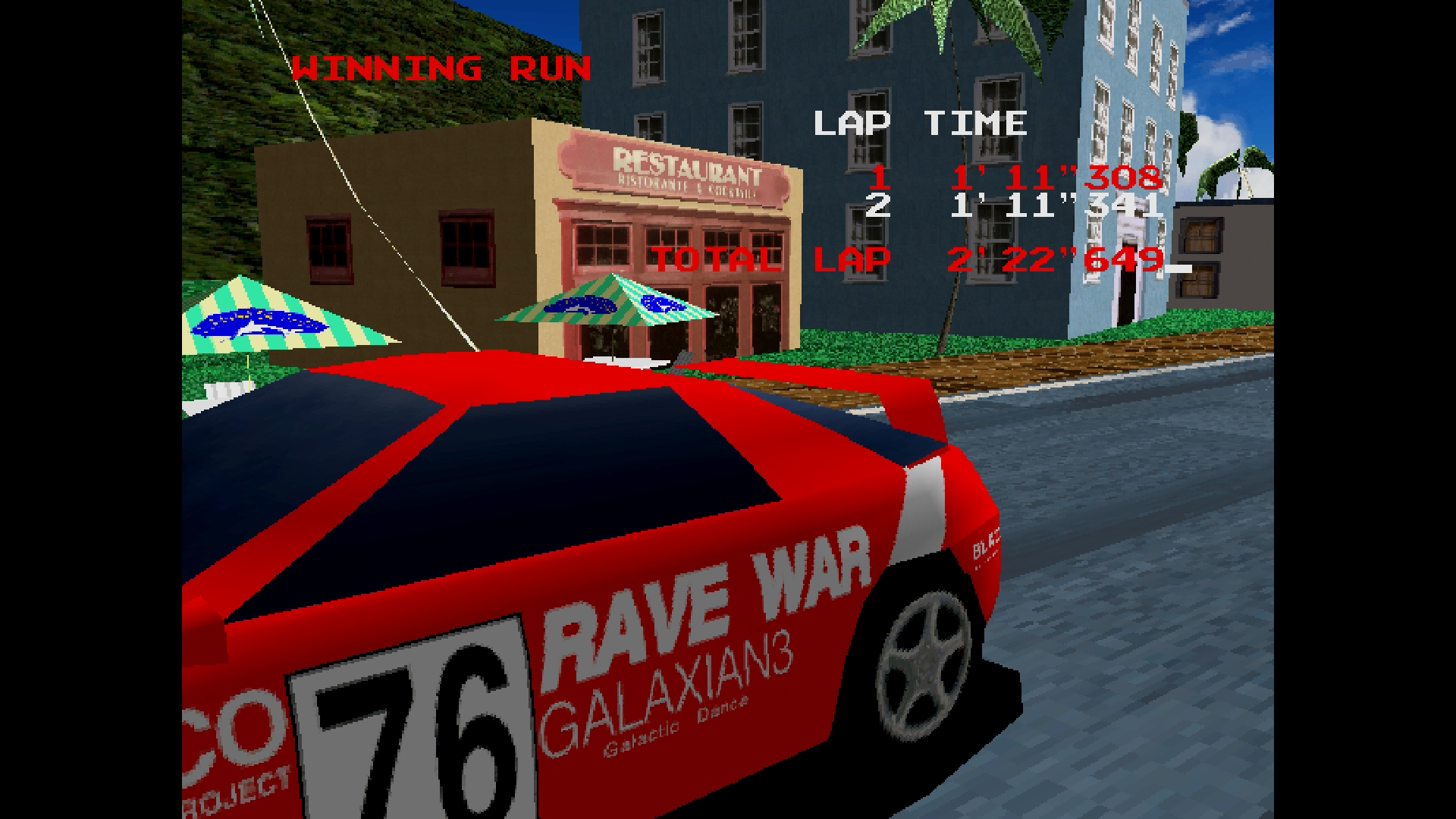
During a race the player will need to keep an eye on the time, as there is a timer which will tick down during a race. The only way to increase this is by passing the checkpoints, but be careful as mistakes will make it harder to get to the goal before the time expires. As an additional challenge, the player can attempt to beat the preset records for fastest lap, as well as fastest total time across all laps. If the player finishes first, a special scene will play out for the “Winning Run”.

As this is an Arcade Archives release, there are special bonuses that have been added for players. These consist of full control over the dip switches for the game, allowing the player to change the number of laps for the races and timer difficulty. If the player changes the number of laps, the number of opponent racers will increase to make up for it. These settings give players a chance to get more out of their gameplay experience.

Away from the standard arcade experience, there are extra online challenge modes available, letting players challenge players across the world. These modes are Caravan, High Score and exclusive to the Arcade Archives 2 line is Time Attack. In Caravan, players have 5 minutes to cover as much ground as possible, accumulating Milage points. In High Score, players must the best time they can for their chosen difficulty setting.

Finally there is the new mode, Time Attack, which is a brand new endurance challenge that will push player skills to the limit. In this mode, the player must clear all four races as fast as possible, going through each of them back to back. The player will get a time for each race successfully passed, recording their best times on a personal time split. If the player is able to get to the end of all races, or they time out, the time will be recorded in the rankings.

All three of these modes have online rankings, allowing players to compete for dominance across the globe. Last to cover is the quality of life improvements to the game, including the ability to save/load the game freely and rewind to fix mistakes. Then there are the screen filter settings, which can apply various CRT style effects, emulating the look of the old CRT monitors. All of these additions make this the definitive way to experience Ridge Racer on modern platforms.

Personal Thoughts

Ridge Racer came a year after the breakout title from SEGA, Virtua Racing, creating a game that was on par if not better than its competitor. Utilizing the System 22 arcade hardware, Ridge Racer featured advanced texture mapping for graphics, advanced view distance and special shading. This made it stand out among other titles in arcades, with both standard cabinets alongside highly detailed Deluxe machines that had a full seat and gear shift.

Then in 1994 Ridge Racer was one of the Launch titles for the Sony PlayStation, ushering a new era of arcade and 3D games in the home market, alongside SEGA. The success of Ridge Racer in arcades and on the PlayStation, resulted in several sequels across numerous platforms over the following years. The PlayStation was where I first experienced Ridge Racer, with it becoming part of the reason I loved that little grey box.

The soundtrack, effects and general presentation of the game are something that makes it feel special and unique. Then there is the gameplay itself, which is just pedal to the metal, high speed fun that is as satisfying as it is fun. I have a deep appreciation for this release, as it was one of the reasons I love arcade style racing games as much as I do. The sense of speed, the music and the overall feel just take me back to the 90s every time I booted it up.

Now, it has been over 30 years since Ridge Racer was released as a launch title, with Hamster and their Arcade Archives series doing it all again. When the Nintendo Switch 2 launched, that same day, Ridge Racer came back to modern platforms and I was there to get it. I had not played the original arcade release, so I was excited to get into it and I was not disappointed with my experience. Both on the big screen and in handheld mode, this is an amazing experience.

I was convinced that Namco had forgotten the original Ridge Racer, and to be frank I was convinced that the series had been abandoned entirely. This is just a little step forward, hoping that the series may get more titles in the future. If this is through additional Arcade Archives releases, or a whole new game, I just hope that this game and series get more love. With Hamster going into the 3D space with Arcade Archives, there are so many games we could see in the future.

If you have enjoyed this feature, then please stick around and see what else catches your eye. I cover a wide range of games in reviews, get special previews and put out regular features. I have Lost Gems covering forgotten games, more Retro Revival features and the occasional Gaming Oddities piece, where I cover weird and wacky titles. So stay a while and have a look around. Links to the game are below.

Link to Nintendo Switch 2 version (HERE)

Link to Nintendo Switch version (HERE)

Link to PlayStation 4 version (HERE)

Link to PlayStation 5 version (HERE)

Link to Xbox version (HERE)

Lost Gems – Tiny Toon Adventures: Buster’s Hidden Treasure (Mega Drive/Genesis)

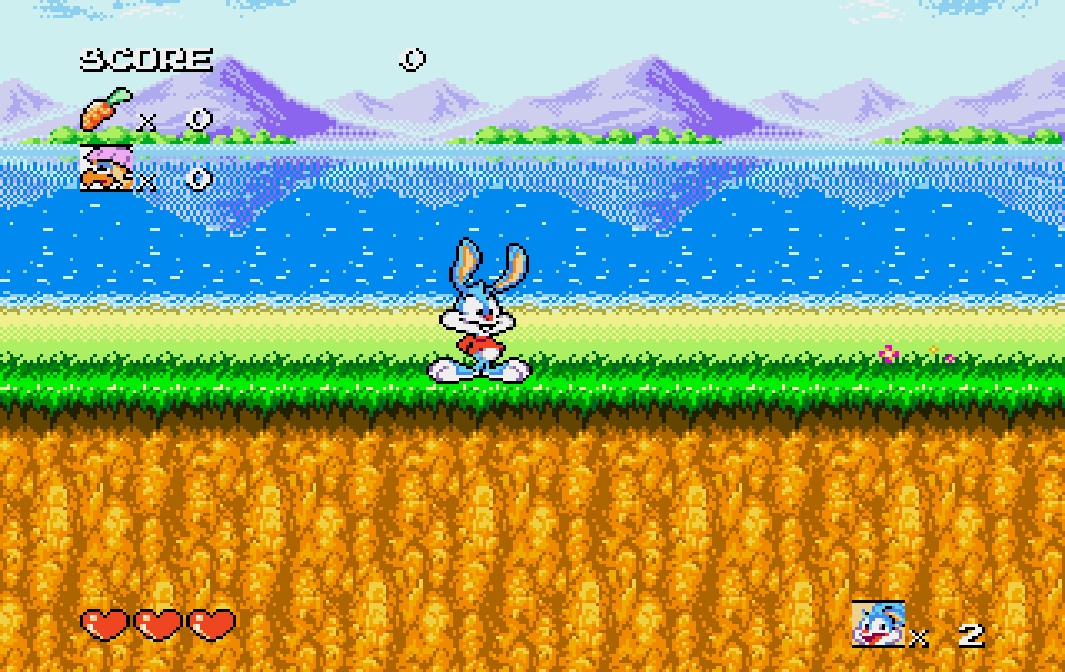
Hello, it is time again for another instalment of Lost Gems, covering games that are no longer officially on sale. This week, I will be covering a classic title that was an exclusive for the SEGA Mega Drive/Genesis. The side scrolling platformer Tiny Toon Adventures: Buster’s Hidden Treasure, developed and published by Konami in 1993. So let us take a look at the solo platformer in the Tiny Toon series for SEGA’s 16-Bit system.

Disclaimer: while the game discussed here is no longer officially on sale, there are ways to obtain the game. This can be either through the second hand market, or through unofficial digital roms/rips. I do not condone or promote piracy, so there won’t be any links to roms or rips of the game being covered.

So with the introductions out of the way, let’s get started. I will be discussing the general game experience, then give my personal thoughts on the title.

About the game

Tiny Toon Adventures: Buster’s Hidden Treasure, is a 16-Bit platforming adventure taking place in the Tiny Toon universe. In this adventure, Buster Bunny finds a treasure map, which is stolen by Montana Max as he wants the treasure for himself. To achieve his goal, he hires Dr. Gene Splicer, who brainwashes several of Buster’s friends. Elmyra Duff also captures others, leading Buster to set off on an adventure to get to the treasure first and save his friends.

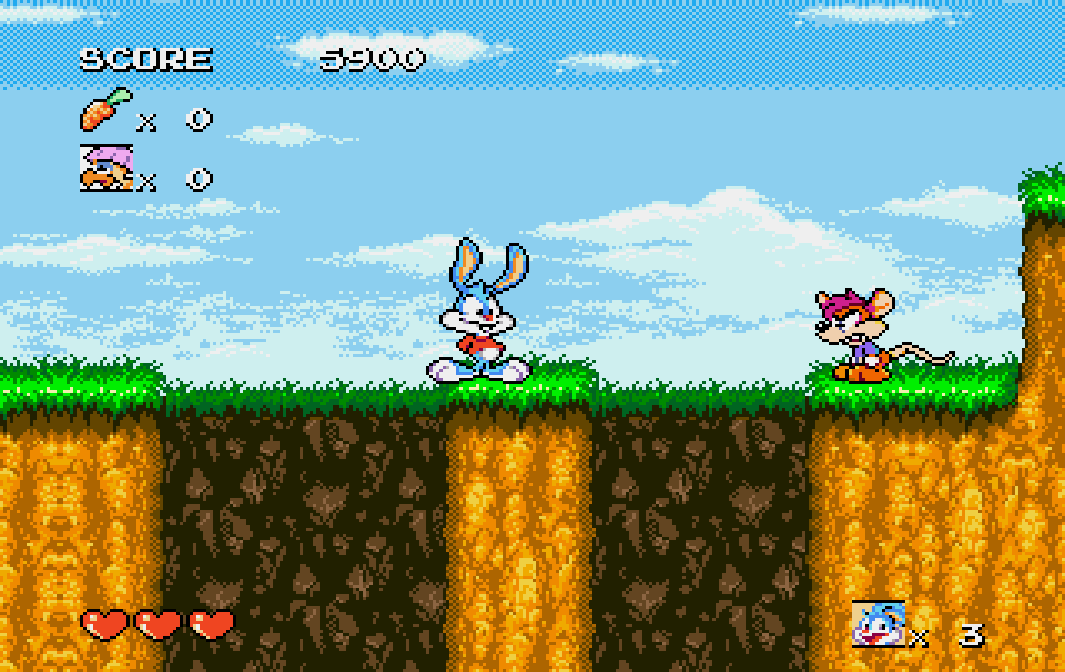
The game is made up of over 30 levels, split between standard platforming stages, boss battles and special stages. The core of the gameplay experience takes place across the platforming stages, where the objective is to reach Gogo Dodo at the end of each stage. Buster has a very simple move set, where he can move left to right and jump, with the height being tied to how long the button is held down. This gives a good amount of control for platforming.

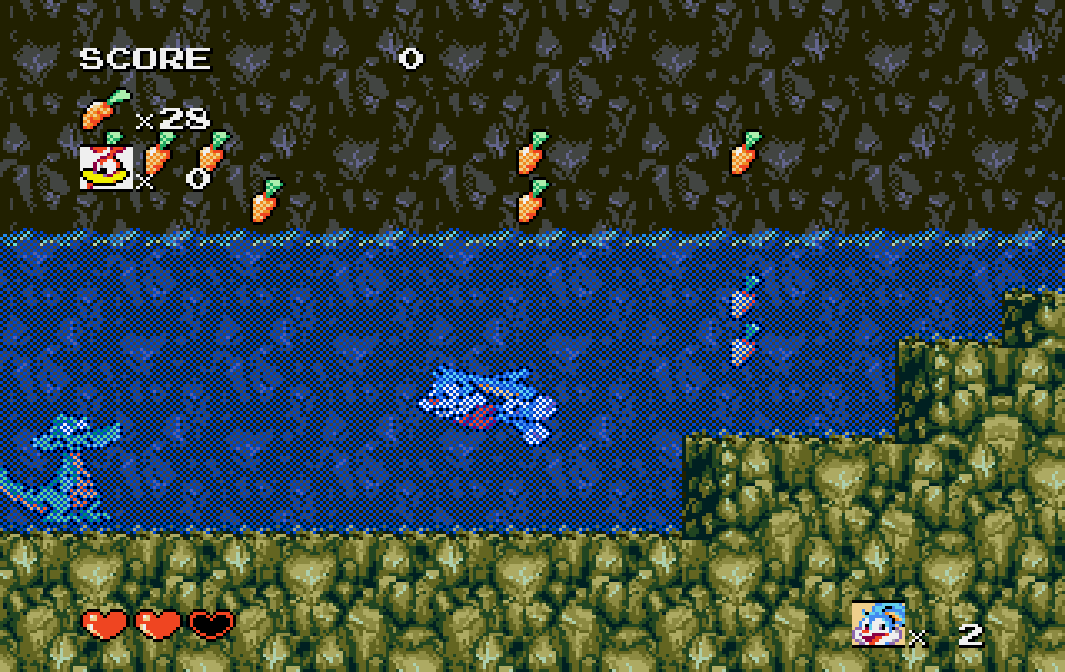
There will be gimmicks like moving platforms, pits, spikes and even lava that appear. Many of the hazards that appear in stages will quickly kill Buster, sending him right back to the start of the stage. Learning the different layouts can prevent the player from losing lives and getting a game over. The player starts with a set number of lives, with the ability to earn more by finding items, or by hitting set score milestones during play.

Buster can also jump on most enemies to kill them, like many traditional platformers, with the ability to chain jumps to defeat multiple enemies. But jumping isn’t the only way to take out enemies, as Buster can use a special slide attack. As he moves through the stages, he will pick up speed and entering a full sprint, allowing him to us his slide attack. This can take down multiple enemies at once with the slide, but there are some risks to relying on the slide.

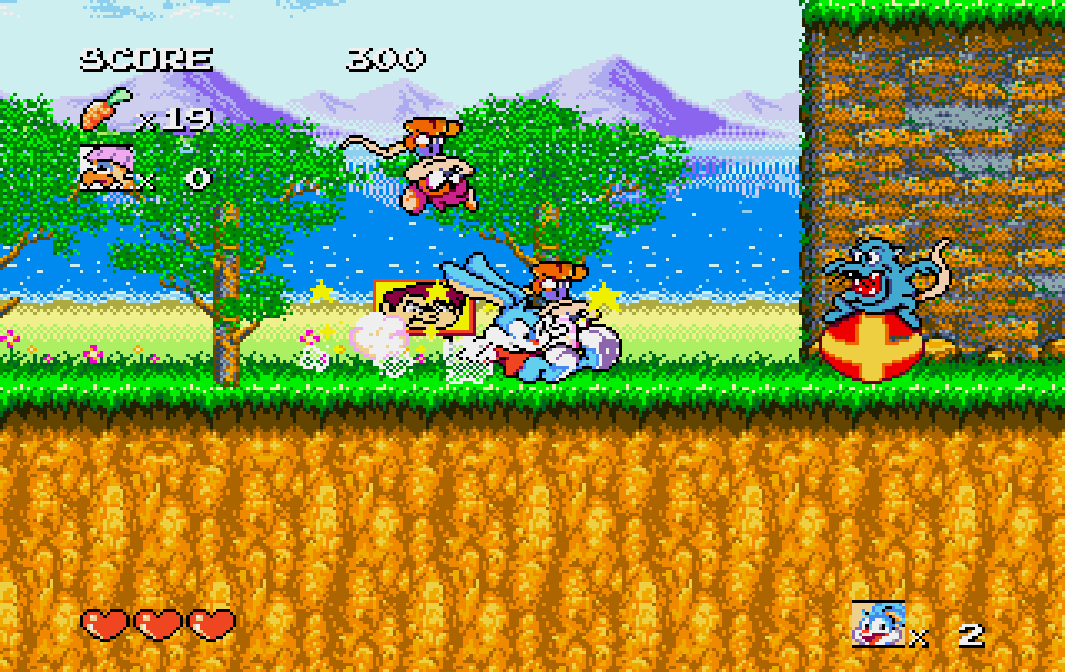
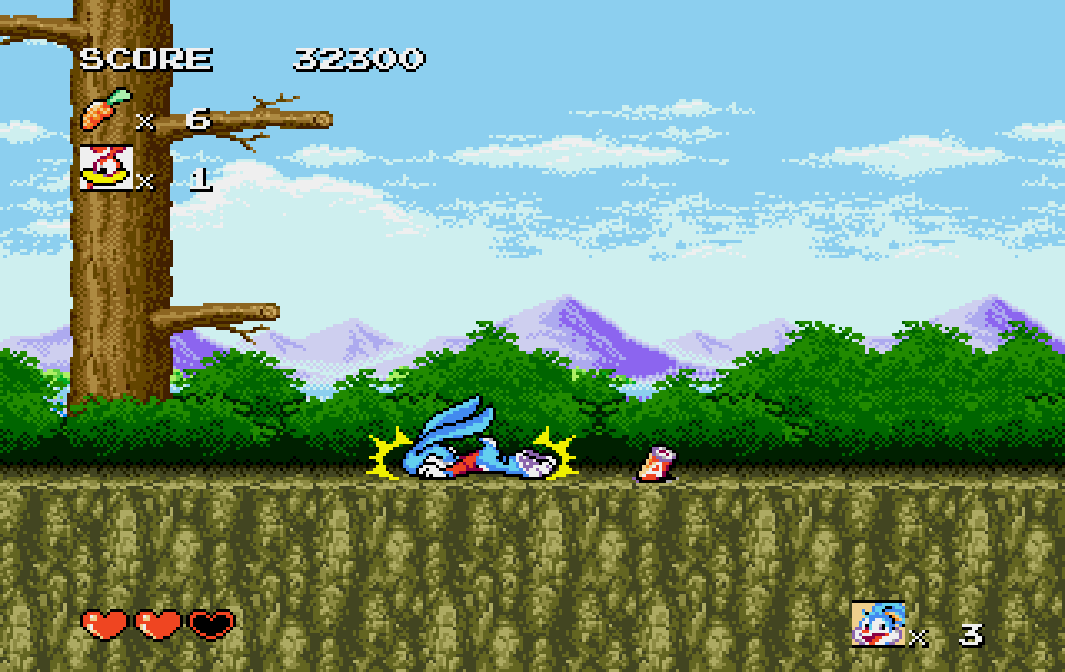
Throughout the different stages, there will be trip hazards that buster can get caught out by. If Buster is walking they will trip for a moment, but if the player is going at full speed, he will fall flat on his face. This can lead to getting hit by enemies, as the player will be unable to move for a moment. Buster can take three hits (shown as hearts) without dying, which can be increased to five if the player picks up bells during the game.

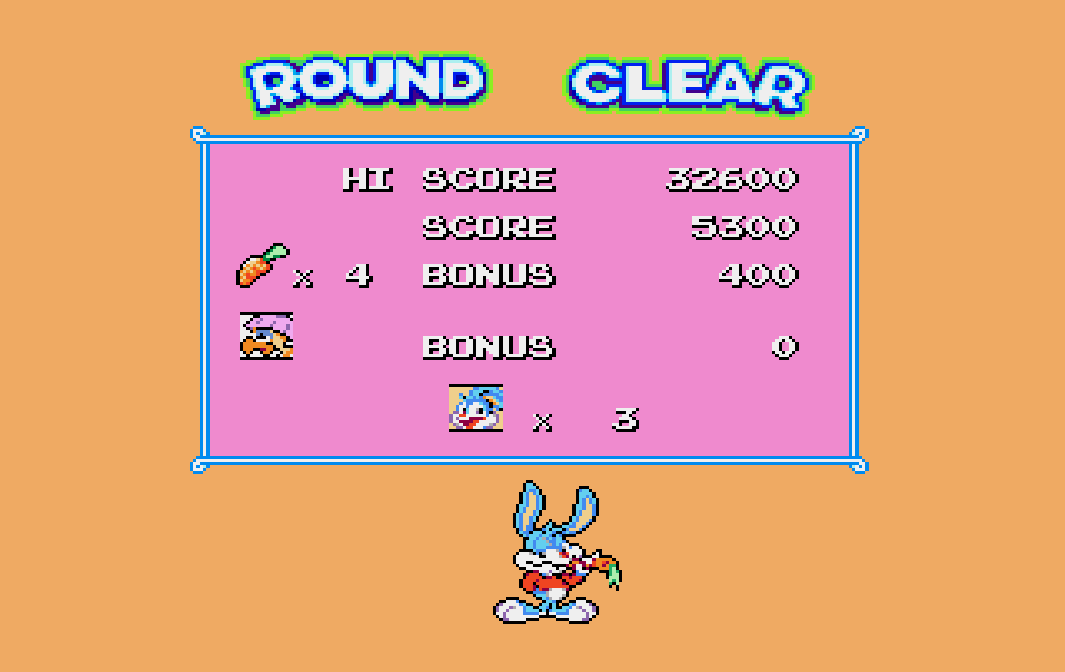
While travelling through a level, Buster can collect carrots that have been scattered throughout. If 50 of these are picked up during that stage, a special item will be added that Buster can use. These items can be used when in a pinch, clearing the screen of enemies to protect Buster from the dangers on screen. If the player can clear the stage holding any of these assist items, a bonus will be awarded on the completion screen.

If the player explores the stages, they will be able to find hidden items and special extras. The items that can be found include extra lives, supporter items and hearts to restore damage taken in stages. If the player is lucky, they will be able to find invincibility items, which will allow them to avoid damage for a short time. By exploring the stages, not only will players find items, there is a chance that a rainbow gate will appear, leading to a super special bonus stage.

Hidden in some of the stages are secret exits, which will send the player to alternate levels. This is reminiscent of Super Mario World, as there is also a fairly large overworld map. On this map, the player will be able to move between stages, with the ability to replay cleared stages, separated into yellow for action and red for boss stages. All of the action stages can be cleared, but the boss stages cannot be challenged again.

Speaking of the boss stages, these follow a rather unique mechanic, as they differ from the traditional style of platformer boss fights. In most of the battles, the player will need to avoid hazards, then jump onto the main boss to defeat them. The hazards include Buster’s brainwashed friends, which will use attacks to try and stop Buster. These unique gimmicks make the boss battles distinct from other platformers of the time.

Last to cover is way that progression is saved during gameplay. There is no battery save with the cartridge, so the player will need to use passwords to record progress. These will show up at the game over screen, with each password made up of twenty characters. They are easy to use and note down, as they only use the standard alphabet with no special characters. A password can be generated at any time, allowing the player to jump right back in at any time.

Personal Thoughts

I have fond memories of the Tiny Toon Adventures franchise, including Buster’s Hidden Treasure which I owned on Mega Drive as a kid. I was never able to clear the game when I was young, but I did return to it several times as I got older, managing to get through it to the end. I remember playing the game early in the morning at weekends, with nothing but the TV and myself while everything was quiet, alongside other games like Sonic 2.

The sprite work has the vibrant colors and cartoony charm, which made the TV series and specials so enjoyable. Konami did a great job with this, much like their other games based on licensed properties, like Teenage Mutant Ninja Turtles. The platforming and general feel is responsive and fun, the only minor downside is that it can take a moment to get to full running speed. But it can be easily adapted to while playing the game.

This game has a lot of the traits that made platformers of the time, but with the special mechanics like the running and slide. This can be a little off putting for some, but if given a little time, there is a lot of satisfaction to be had, running through stages and using the slide to take out multiple enemies. This is combined with the collectibles and alternate paths, where players can try different paths to see what rewards are available.

The only negative to the game that people may have is the sound, as the music can be a little bit shrill to some. However, the music is composed well, with a good use of the Tiny Toon Adventures theme. The effects are done well too, providing a well balanced experience for players to enjoy. All of the different elements of the presentation work together, making it feel like an interactive cartoon.

It is fairly expansive for an early 16 bit platformer, offering over 30 stages to play, with plenty of replay value. This is due to the secret exits, bonus stages and hidden objects that will have players coming back for more. Buster’s Hidden Treasure is a bit of hidden gem on the System, as the Super Nintendo release Buster Busts Loose gets more attention. This relative obscurity thankfully hasn’t resulted in super high prices on the secondary market.

I have a deep appreciation for this release, through both fond memories and a little bit of nostalgia. So I hope that the Tiny Toon Adventures games get a re-release in the future, but sadly as is the nature of licensed games, it is highly possible these will stay vaulted. We have passed several anniversaries and even a reboot of the series, but there has been nothing on the game front, so we may never see these games get a re-release.

If you have enjoyed this feature, then please stick around and see what else catches your eye. I cover a wide range of games in reviews, get special previews and put out regular features. I have Lost Gems, Retro Revival where I discuss re-releases and the occasional Gaming Oddities piece, where I cover weird and wacky titles. So stay a while and have a look around.

Moe Waifu H Box-Push – Nintendo Switch Review

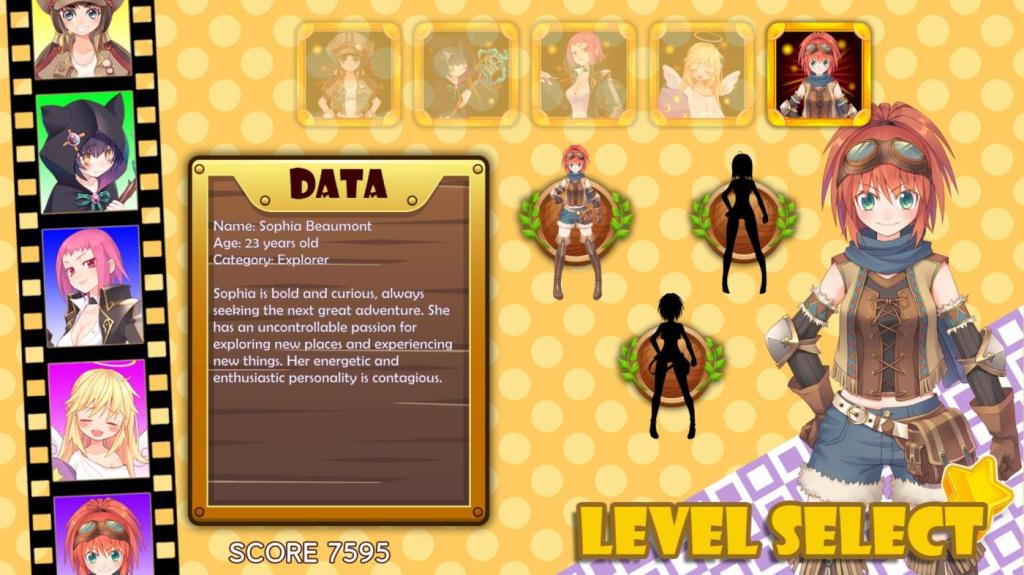
Overview – developed by Yume Game Studio and published by Eastasiasoft, Moe Waifu H Push-Box is a block push puzzler, where the player must solve puzzle to unlock outfits for the five companions. Take on 15 spread across the five girls, trying to earn the higest score possible across the stages. This title is available on PlayStation, Steam and Nintendo Switch (only in Asia and Japan), with a link to each version of the game at the bottom of this review.

Disclaimer: before I get into the review, I would like to thank Eastasiasoft for providing the copy of Moe Waifu H Push-Box that was used for this piece. The provision of this software has not influenced the contents of this review, all thoughts and opinions contained within are my own.

Now with the introductions out of the way, let’s get into the review. There is no real plot for this release, so I will be moving straight into discussing the gameplay. For the sake of brevity, I will be referring to this game as simply Moe Push-Box

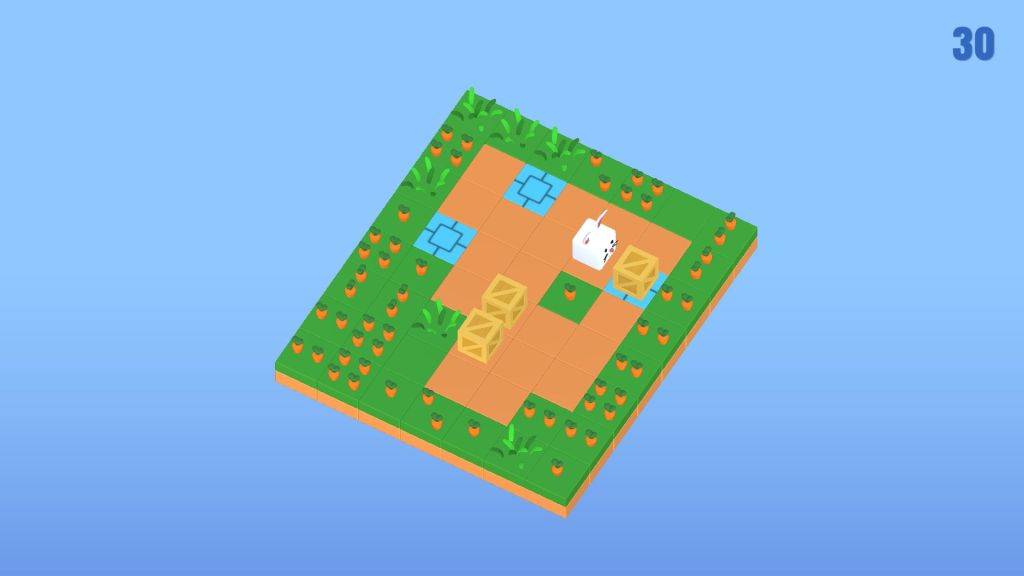
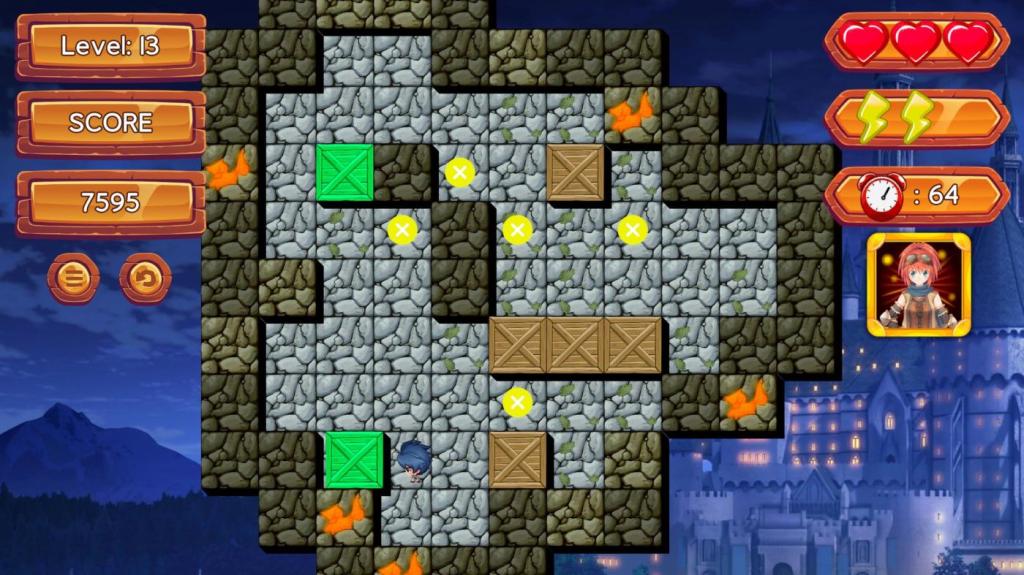
Gameplay – Moe Push-Box is a box pushing puzzle game, where the objective is to solve the brainteasers of each stage, pushing boxes onto markers. There are a total of 15 stages, split into sets of three for each of the companion girls that appear. In each of the puzzle stages, the player must push the boxes around, trying to get all of them onto their designated marker. This must be done within a time limit, or else a life is lost.

But be careful, as the boxes can only go one way and if they get stuck against a wall, they will not be able to get them free. When this happens, the player must reset the stage, using one of the three limited reset items. If the player runs out, they will be unable to get anymore, until they get a game over. This reset system is rendered pointless however, as the player can easily return to stage select, not needing the lightning reset.

When a stage for a girl is cleared, they will unlock the next outfit for them, becoming slightly more revealing. After clearing all three of the stages for a girl, the next set will be unlocked allowing the player to progress. Each of the different stages has their own look and theme, which does give them a little more variety. Sadly there is little variety with the stages, as once all 15 of the stages have been cleared, that will be the whole game.

Away from the main gameplay, there is a gallery that players can view. Here all of the different girls and their outfits will show up, but this is rather basic. Then there is a Jukebox, which lets players listen to the different musical themes of the girls. The content for this gallery feature is unlocked slowly as the player works through the game. Sadly, this doesn’t add much more to the experience, which in general is rather short.

Now with the gameplay covered, it is time to discuss the other aspects of this release, starting with the controls.

Controls – the controls for Moe Box-Push is incredibly simple to get to grips with, as there are no action buttons that players need to use. During stages, the player uses the direction buttons/thumbstick to move the character, with two buttons for restart and go to the menu. In the menus the L/R buttons are used to switch between girls, then the A button is for going forward in and B is for going back.

Difficulty – Moe Box-Push lacks any real difficulty aside from the possible pressure of the timer, but this can be skirted by pausing the game. The game is pretty basic in terms of challenge, with the complexity of the stages being mildly complex as the player gets further. It is possible to make this game challenging, by trying to speedrun through the stages, or by trying to clear each stage in as few moves as possible.

Presentation – there is a rather pleasing anime style to the character portraits, but the stages themselves are similar to that of a flash or browser game. This further adds to the rudimentary feel of the experience, with the simplified stage elements. The backgrounds do look nice, but there is no way to view them in their entirety. Then there is the sound, which comprises of simple music that does work with the game and some simple effects.

Final Thoughts – I do enjoy puzzle games, with box push style puzzles usually offering a challenging experience, but sadly this experience lacks that complexity. The whole game was cleared in less than an hour, which is extremely short, especially for a puzzle game. However, the price for this game does partially make up for the relative lack of content. The puzzles are simple but competent, with little replay value, but it can be a good pick up for those looking to pad game completions.

In the end, I give Moe Waifu H Push-Box a final score of 2.5/5. This is a short but competent puzzle game, offering a gameplay experience that is easy to get to grips with, alongside some fairly pleasant anime artwork. All of this for a rather low cost of entry. If you want to experience this game for yourself, a link to each version of the game will be below. Please note, the Nintendo Switch version is only available in the Asia/Japan region.

Link to Nintendo Switch version (HERE)

Link to PlayStation version (HERE)

Link to Steam version (HERE)

Scar-Lead Salvation – Review

Overview – developed by Compile Heart, Idea Factory and Neilo, with publishing handled by Idea Factory Internationsal, Scar-Lead Salvation is a sci-fi third person shooter with roguelike elements. As the amnesiac Willow, fight through a deserted military facility, battling robots to try and uncover her past and find a way to escape alive. This game is currently available for Steam and PlayStation, with a link to each version of the game at the bottom of this review.

Disclaimer: before I got into the review, I would like to thank Idea Factory International for providing the copy of Scar-Lead Salvation that was used for this piece, via email and the Keymailer service. The provision of this software has not influenced the contents of this review, all thoughts and opinions contained within are my own.

Now with the introductions out of the way, let’s get into the review, starting with the story. I will be covering the core gameplay systems, as to prevent spoiling any of the secrets and surprises the game holds.

Story – Willow Martin awaken in an unknown space, with no memory of how she got there or who she is. She attempts to find a way out of the facility, but is surrounded by robots and everything fades to black. Waking up again, she encounters a military AI that becomes her only companion, aiding her during her journey. But unknown to Willow, she has become trapped in a loop where every time she dies, she will find herself back at the start.

Gameplay – Scar-Lead Salvation is a third person roguelike, where the player needs to move through multiple sections, made up of rooms connected via special portals. The objective of the game is to move through the different areas, battling robots and collecting loot. The different sections are set into Floors, with multiple making up each floor of the facility. There are two types of room that can be commonly found, split into combat and safe rooms.

Willow will have armor when she spawns into the facility, which will absorb some damage from enemies. This is shown as a twin cape, which will break in sections when too much damage is taken. If the armor is completely destroyed, the player will only be able to fully restore it at set points. After losing all her armor, Willow’s clothing will start to deteriorate as health is lost. This will be restored slightly when health is recovered during a run.

The main way to take out the different threats of the facility is through firearms, with the player starting each attempt of the game with a full auto rifle. Then as the player makes their way through the game, they will come across a range of weaponry. This arsenal starts off with weapons like a handgun and shotgun, then expanding into laser blasters and rocket launchers. Each of the weapons have their own unique stats, giving players plenty of options.

During encounters in the combat rooms, the player will be able to lock onto an enemy that is within the onscreen crosshair. This allows some flexibility when it comes to movement, as there are bullet hell elements to enemy attacks. To help with managing this, the player can use two special skills to mitigate as much damage as possible. The first is the Mirage Shift, which is a short range dash with brief invincibility, allowing willow to pass through attacks.

Alongside the dash, there is the Striker, a melee attack that can “parry” enemy fire clearing the bullets away. But there are some enemy attacks like Lasers, which cannot be stopped with the striker. If the player can get close, they will be able to hit enemies with the striker, dealing massive damage to the target. Each time an enemy is defeated, they will drop money called ELM that can be collected, which is added to the players total for the run.

Scattered throughout the floors of the facility are boxes, containing items that the player can pick up. There are several types of items that can be found, with the most common being weapons and ability buffs. Weapons that are found will often increase in level the further the player gets, allowing the player to strengthen their firearms. The ability items can increase health, defense, damage and more with duplicates increasing how effective they are.

The item boxes aren’t the only thing that players can find throughout the facility, there are special teleportation points that the player can find. Using these will send Willow to special rooms, separated from the main floor. Inside these spaces, the player will be able to access special shops, where elm can be exchanged for weapons, items and even one time use revival items. There is even a special challenge stage offering great rewards.

As the player defeats enemies, they will gain Exo Force filling up a meter at the bottom of the screen. This meter is segmented, and attached to the ability system. When the meter is filled up, Willow can enter a special state called Onslaught. In this powered up state, Willow is invincible and can deal more damage to enemies until the energy expires. If the player takes any damage, a segment of the meter will be depleted.

When the player reaches the end of a floor, they will find the teleporter to the next and a special power up box. Using this box, Willow will be able to increase the power of their armaments, spending ELM to add levels to the active weapon. This makes it important to collect as much ELM as possible early on, so players can strengthen their gear early on. Special one use upgrade stations can also be found in special rooms accessed from warps.

After clearing a set amount of floors within each section, a connection room will be reached. In these areas, there will be powerful boss opponents that Willow must face in deadly combat. During the boss encounters, the player will be bombarded with a variety of attacks, with the player needing to make full use of their skills. To take down the boss, the player will need to deplete enemy health, with multiple phases to these battles.

After defeating a boss for the first time, Willow will be granted a special power up increasing the number of abilities that they can hold. As the player gets deeper into the facility, new ability items and weapons will appear expanding the available options. The new ability items are tied to levels, with the respective items only appearing after set stages are reached. So level 1 items appear in the first section and then level 2 and so on.

As this is a roguelike, the player has only one life for the duration of a run, with the only way to survive fatal injury is by having a revival item. If the player dies, they will be returned to the starting point of the facility. From here, the player must go back into the facility to try again. Any ability items will be carried between runs, alongside permanent upgrades. Inside the starting area, the player will be able to recover lost health and armor.

If the player successfully clears the first and second section of the facility, they will be unlock warps to the other sections and be able to immediately go to them. This can be very helpful, as the pre boss room will have a teleporter to return to the start area. By using this, the player will be able to quickly return and restore their health and armor. The only downside to this is that it causes the player to backtrack, needing to travel to a boss again.

Due to the roguelike systems of this game, the layouts of the floors of each section will change. There is a pool of room layouts that can appear, but the order and placement of them will change with each attempt. When challenging the dangers of the facility, the player doesn’t always need to defeat all foes in a room. If the player chooses to, they can rush through rooms and avoid danger, but there will be the chance to miss warps and ELM.

Throughout the experience, as each section is reached, the enemies that appear will increase in power. This will elevate the dangers that players will face. There will also be deadly traps that can be appear, like laser grids that will have rewards behind them. The more runs that players make, the more players will learn the different rooms that appear. This practice will allow for players to get further during each attempt to escape the facility.

The last thing to mention is the library system, where the player will add new information during play. This system can be viewed in game and at the main menu, providing a refresher for players as well as providing exposition on the story. This is very useful as there is also the ability to view conversations between Willow and the AI, making it easy to catch up after taking a break from the game. Each time new information is collected it will be added to the library.

Now with the gameplay covered, it is time to cover the other aspects of this release, starting with the controls.

Controls – as Scar-Lead Salvation is available on both PC and Console, there will be controller support and mouse/keyboard on PC. The input layout for controllers is very easy to use, allowing for players to quickly and easily get into the action. Then there is the mouse/keyboard, which is a little awkward, but it can be more comfortable in terms of camera and movement. Both control methods can be remapped, providing the option to adjust inputs to fit unique play styles.

Difficulty – there is a fairly fluid difficulty curve for this release, as there are some areas that will be more challenging than others. This is combined with the random nature of weapon and ability drops, as well as the trap sections. It is possible to loop some areas, boosting weapons and abilities for later areas. The toughest part of the game is the boss battles, as they can easily kill the player if they are under levelled, or under prepared.

Presentation – Visually the game looks great, with a mix of sci-fi and anime aesthetics to them. The environments for each section are distinct, with plenty of variety to them. There is a limited use of color, which helps to build the atmosphere and add to the tension. All of the elements work well together, alongside cutscenes that give the events more depth when they occur. Sadly, there are some flaws with the overall presentation on PS4.

There is some unfortunate lag that occurred when playing through a base PlayStation 4, which caused lag and stuttering. This affected the gameplay significantly, making it almost impossible to play at times. The sound and music is good, with atmospheric instrumentals that improve the general experience. Last is the voice over, available in both English and Japanese, with both options performed very well and enhancing the narrative.

Final Thoughts – as an enjoyer of third person action games, anime style storytelling and challenging gameplay, Scar-Lead Salvation caught my attention. The premise is interesting, the narrative was engaging and the gameplay was a lot of fun. I had a great time for the majority of the experience, as the fast paced gun play, challenging action and boss battles all working together. The only downside to the experience were the performance issues on PS4.

It is a shame that the console version I played had these issues, as this is an excellent game that is a lot of fun to play. I do hope that the issues are addressed with an optimisation patch, which will improve these issues. The PC version worked flawlessly, which was tested on two different hardware builds. It is a little hard to recommend this game on base PS4 now, but on PC and the PS5 which are more powerful options, then I can say to check this out.

In the end, I give Scar-Lead Salvation a final score of 4/5. This is a challenging and enjoyable roguelike third person action game, offering a fun and enjoyable experience with a narrative that keeps players engaged, but sadly the base PS4 release is marred by some flaws. If you want to check this release out for yourself, a link to each version of the game will be below.

Link to PlayStation version (HERE)

Link to Steam version (HERE)

Lost Gems – Clockwork Knight 2 (SEGA Saturn)

Hello there! It is that time of the week again, where I bring you a classic game that is sadly no longer officially available. So in Lost Gems this week, I will be covering the sequel to a game I have previously covered. The second part of the Pepperouchau’s Adventure with Clockwork Knight 2, released in 1995 in Japan and Europe, with a release in North America the year after. Now let us take a look at the second part of SEGA’s sadly abandoned series.

Disclaimer: while the game discussed here is no longer officially on sale, there are ways to obtain the game. This can be either through the second hand market, or through unofficial digital roms/rips. I do not condone or promote piracy, so there won’t be any links to roms or rips of the game being covered.

So with the introductions out of the way, let’s get started. I will be discussing the general game experience, then giving my personal thoughts on the title. Please not, the version of the game I am covering here is the European release, so it may be different from other regions. I also covered the first game which you can find (HERE).

About the game

Clockwork Knight 2 is a 2.5D platformer, like its predecessor this game uses a mix of pre-rendered sprites and polygons, combined with stages to give a sense of depth. But it takes that concept further, with use of both foreground and background layers to a greater extent. This is combined with full video cutscenes, which occur throughout the game, starting off with a musical number at the start. This makes gets the player ready for a wonderful adventure.

Following on from the previous game, the player is thrown straight into a shortened version of the final boss stage. After this relatively quick battle, the princess Chelsea is saved, but the peace is short-lived as she is recaptured. Pepperouchau (Pepper) sets off in hot pursuit, going on another adventure through the house to save the princess. Now the player must overcome four new rooms to rescue the princess, with new dangers and challenges to overcome.

Just like the previous game, the gameplay loop follows the same core mechanics. The player controls Pepperouchou, the Clockwork Knight moving through the house again. They must battle the evil toys and living items, with each world having two stages and a boss. When all the other rooms have been cleared, the player will encounter the final boss to save the princess. Following the first game, there are special gimmicks attached to each room to make them unique.

The action of Clockwork Knight 2 is nearly identical to the first, with the player able to move left and right, jump gaps and attack enemies with Pepper’s Keyblade. Pepper can also stun enemies, allowing the player to pick them up and throw them, stunned enemies will defeat enemies that hit. If timed correctly, a chain reaction can occur killing multiple enemies. Pepper can also pick up and throw stage elements including eggs, which contain items to collect.

As this is a platformer, there will be hazards like spikes, waves from a bathtub and bottomless pits. This means there is danger present throughout most of the adventure. Pepper has three health gears when starting the game, losing one when damage is taken unless it is a death pit. Lost health can be restored by collecting keys, with Bronze and Silver only restoring health, whereas Gold increases health by one up to a max of five, but death resets them to 3.

Each of the different stages has their own theme, which come with their own distinct mechanics. The Kid’s Room has high elevation areas, with cranked platforms and mechanical gates. This is followed by the Study, which has exploding rockets and books that will fall own and open. The bathroom features a tidal wave that will try to sweep everything away, last is the Clock Tower containing swinging pendulums and slippery platforms.

These different gimmicks keep the action exciting, maintaining the fun throughout the experience. Unlike the first game, there are auto scrolling stages where Pepper rides his trusty bottle horse. In these stages, the player will ride along a track with enemies and hazards appearing. Pepper uses his sword to launch his trusty steed’s head at enemies, using it as a weapon. Just make sure not to fall into the gaps of the track or get crushed.

The focus on exploration is here again, with the boxes that transport the player to different sub-screens. These will take the player to extra challenges, which can yield extra bonus for the player. Throughout the stages there are four playing cards, which are activated by going through them at a high speed. If the player is able to get all four cards, they will be rewarded with a gold key, but in the event the player gets all 32 of them, a secret will be uncovered.

At the end of a stage, there will be a bonus challenge where Pepper must land on the letter missing from Clockwork Knight. These letters scroll across a grid at the end of the stage, and if the player is able to land on the correct letter an extra life will be earned. This is a good way to be able to get extra lives if the player can do it successfully. Extra lives can also be earned by hitting set score milestones during the course of the game.

Moving on, there is a boss battle at the end of each room. These encounters have been expanded from the previous game, with more challenging bosses to fight. There are multiple phases to these boss stages, with challenging patterns that players need to figure out. While the bosses were relatively simple in the first game, they have been significantly expanded here. The stand-out for this is the Study boss, made of a living book page that transforms into three animals.

When one of the first three bosses has been cleared, the player will enter the bonus game. In the Soltian Roulette, the player will be able to wager bottle caps collected in stages, with denominations of 5, 10 and 15 that can be offered. Then the spinning box challenge occurs, where the box must be followed, with caps and lives to win. If the player gets either of the items, they can try to double it or take it, but if they get a clown face, they win nothing.

The roulette is a big risk/reward bonus, as the caps are also used to continue if all lives are lost. The player needs to have 20 bottle caps to continue, jumping right back into the stage they died on. This makes it important to collect as many of them as possible, as players may need to continue later in the adventure. To ensure all that a continue isn’t used, be sure to get as many extra lives as possible, and at the end of the game any remaining lives are turned into points.

The score system from the previous game carries over, with bonuses at the end of each stage for time and health remaining. This is where the replay value for the game comes in, as the highest scores come from clearing stages as fast as possible, while avoiding damage. To get the best score, take advantage of the items that can be thrown, farm extra lives where possible and collect all of the clocks for the time bonus. And make the most of invincibility orbs.

Personal Thoughts

Just like the first game, I have fond memories of Clockwork Knight 2, with my first experience being through the special Bootleg Sampler demo SEGA released. It was after this that I got the full game, which became one of my favorites to play when I wasn’t at school. Like the first game, it can feel pretty short as there are only 13 stages , but it completes the story in a satisfying way. There is plenty of replay value too, searching for the cards and the hidden true ending.

I very much enjoyed the musical number at the beginning, which I tend to find myself humming while performing tasks around the house. Then there is the new soundtrack, which retains that mix of Jazz, Lounge and Big Band music, with the first boss having an exciting rockabilly style theme. The animated cutscenes return, with the same quality and fun charm to them that the first game had. All of these make it such an enjoyable experience.

The gameplay loop has the same enjoyable platforming, puzzle solving and exploration, while adding a few new wrinkles to it. I really like the card system as it rewards you for looking around, with a secret for getting them all. The horse riding stages are a lot of fun too, with the different background elements adding to it, like the topping toys in the Kid’s Room. Then there are the canons and rockets in the Study, which make good use of the 3D space.

One of the real tricky parts of the game, but still just as enjoyable are the boss battles. While the first game was pretty simple, having two pairs are similar bosses and the final one, this game is much more diverse. There is the wood block snake that thinks it is Elvis and the bathtub octopus, where Pepper needs to jump between soap bars to avoid the tentacles. Each of the boss battles are really tough, but with a few attempts they can be figured out.

As I said in the first feature covering the first Clockwork Knight, I have a deep love for this game as I do the original. The platforming is a lot of fun, which is simple but effective and makes it easy to play by everyone. Like the first game, as well as many other games from the SEGA Saturn library, these games are trapped on the sadly dead hardware. I just hope that at some point, SEGA will partner with City Connection to use the Zebra Engine to revive these games.

There are many properties that are in limbo from SEGA, like Die Hard Arcade (Dynamite Cop), Sonic R and Fighters Megamix (all on the Lost Gems List), with no sign of a revival. This is a real shame as Clockwork Knight and many other games from the SEGA Saturn deserve to be played. Thanfully, for those looking to collect, Clockwork Knight 2 is not that expensive to buy, managing to stay pretty affordable with the Japanese version being the cheapest.

If you have enjoyed this feature, then please stick around and see what else catches your eye. I cover a wide range of games in reviews, get special previews and put out regular features. I have Lost Gems, Retro Revival where I discuss re-releases and the occasional Gaming Oddities piece, where I cover weird and wacky titles. So stay a while and have a look around.

Gal Guardians: Servants of the Dark – PlayStation 4 Review

Overview – developed and published by Inti Creates in collaboration with PQube Games, Gal Guardians: Servants of the Dark is the latest entry in the dark fantasy adventure series. Take on the armies of the underworld as demon maid sisters Kirika and Masha, who are on a quest to revive their beloved Demon Lord, in full metroidvania action. This title is available on all platforms (xbox delayed until june), with a link to each version of the game available at the bottom of this review.

Disclaimer: before I get into the review, I would like to thank PQube for providing the copy of Gal Guardians: Servants of the Dark that was used for this piece, via the keymailer service. The provision of this software has not influenced the contents of this review, all thoughts and opinions contained within are my own.

Now with the introductions out of the way, let’s get into the review, starting with the story. I will be focusing on the core of the gameplay experience, as to not spoil any of the surprises that the game has in store for players. For the sake of brevity, I will be referring to the game as Gal Guardians 2 during the review. Assets used are from provided press kit.

Story – the Demon Realm is engulfed in endless conflict, with battles between the strongest beings called Demon Lords, fighting for control over the realm. The demon maid sisters Kirika and Masha, return from a trip to find the castle of their master Maxim in ruins. Rushing inside, they encounter Lyzenorg, who defeats their master and reduces him to a shell of his former glory. Now they set out on a mission of revenge to fully restore their master.

Gameplay – Gal Guardians 2 is a full on Metroidvania adventure, expanding on the existing concepts and gameplay of the previous title Gal Guardians: Demon Purge. In this adventure, the player now has a large interconnected map to explore, with multiple regions and locations within the Demon Realm. As the demon maid sisters Kirika and Masha, the player must battle powerful foes as they seek to restore their master, the Demon Lord Maxim.

In order to achieve this goal, the player must collect the bones of the defeated Demon Lord, as they have been scattered across the realm. As they make their way through the different territories, the player will face numerous dangers. To overcome the hazards present, the player must use the powers of the demon sisters, combating dangerous foes and navigating hazards. The two sisters have distinct combat styles that compliment each other.

In single player, the sisters can be switched freely during the action, with the player only controlling one of them at a time. However, there is the option for local and online co-op, allowing two players to work together to take down the demonic forces. This system is good for those who want to go it alone, or to have a companion working alongside them. Two player co-op is also fairly rare within the metroidvania genre of adventure games.

The older sister Kirika is armed with demonic firearms, allowing for long range strikes at the cost of power. There are two types of shot, the rapid fire sub machine gun and shorter range shotgun blast. To use Kirika’s attacks, ammo is needed with the rapid fire using single rounds, whereas the powerful blast uses several rounds at once. The ammunition for the guns is infinite, but it does require frequent reloading to keep the attacks going.

Masha is equipped with a powerful thorn whip, which deals higher damage up close allowing three attacks to be chained together. These attacks are at a shorter range, but will deal significant damage to any enemy within range. While in the air or on the ground, the whip attacks cannot be chained together. The whip isn’t Masha’s only form of attack, as she can also use Demonic Seeds to unleash devastating attacks, these are limited and must be collected as loot drops.

Throughout the adventure, the player will be able to collect loot from enemies that have been defeated. These drops often consist of recovery items, money and sub-weapons. Speaking of sub-weapons, the two sisters have two slots that can have items assigned to them for use during the adventure. These special items provide a variety of offensive tools for the sisters to use, with both shared and specialist weapons they can use.

During the adventure, the player can find items like Kunai knives, heavy swords, bombs and even summonable familiars. The shared items are all the same color, with a purple shade to them, whereas the ones specifically for Kirika are pink, and the ones for Masha are green in hue. Both the specialist and shared items can have additional buffs on them, like increased health, weapon damage and resistances to status effects.

The sub weapons will require the player to use Demon Power, shortened to DP on screen. These are limited and must be replenished when they have been depleted. To recharge the DP, mana jars must be collected from dropped enemies and destroyed items. If the player has no DP, they will be unable to utilize the sub weapon they have chosen. The resource pool of DP is shared between the two sisters, so efficient use is critical to success.

Then there are the movement skills that players have access to, allowing for the various platforming challenges to be overcome. The players start with a standard jump and dash, which will help get around most of the areas. But when playing with a companion, players will be able to perform some tricks that they may otherwise not. These include using each other to boost, bypass some hazards and use the special co-op transform skill for interesting shenanigans.

Due to the dangers of the demon realms, there are persistent risks that the player will face. This means that damage will often happen to the sisters, taking away their health at varying degrees based on the difficulty. If one of the sisters is defeated, they will be reduced to bones, but they can be revived if the player can stuff their soul back in fast enough. If both sisters are defeated, they will be sent back to a discovered save point.  

The save points are tea tables, where the player can recover lost health and depleted Demon Power. These function as checkpoints, where the player will be sent back upon death. While at the tea table, the player will be able to use it as a warp point for fast travel. The player can warp to the castle and throne room from the tea table (discussed further below), with the ability to warp back from the tables located in these two areas.

Throughout the Demon Realms, the player will encounter fearsome bosses. When a boss appears, the player will be locked into a deadly battle with them in a closed arena. Each of the bosses will have their own special attacks, gimmicks and attack patterns that players need to overcome. Upon defeating the bosses, the player will often receive a reward for overcoming the danger. These rewards can often be key to progressing the story.

One of the most important rewards that can be obtained is the Bones of Maxim, which have been scattered throughout the realms. These Bones are very powerful, as they are integral to restoring the power of the Demon Lord. As the player collects bones, they need to return them to Maxim’s throne, where the sisters will level up as bones are deposited. At set amounts, a level will be gained and this is integral to the progress of the sisters in their quest.

As the two sisters level up, they will gain new powers, like the ability to double jump and dash in the air. With these new abilities, the areas that may have otherwise been unreachable, can now be explored and further expand the options for players. Defeating powerful enemies isn’t the only way to obtain the Bones of Maxim, as there will be chests and enemies that can contain them. There are a set number of bones per region to collect.

When the player levels up their sisters, they will increase their health, damage and DP with each level gained. The Maxim Bones aren’t the only way to improve the powers of the sisters and Maxim, as there are special upgrades just for the Demon Lord. These special emblems will provide special bonuses, like additional attack power and defense. But be careful, as there are some that will come at a cost, adding a risk reward element to play.

Throughout the realms, the spirits of Maxim’s servants have been scattered. These spirits can be collected and returned to the bones of servants in the castle. As they are returned, new upgrades and features will be added to the Castle, expanding the options for players. The new facilities that can be found include storage, a blacksmith to upgrade items and even a chef. Restoring the castle will provide much needed upgrades for the sisters.

The last thing to discuss are the Karon ferry service. These special demons allow the player to quickly move between ferry points, but the player must have activated them first. The Karon require coin for the player to gain passage, much like the underworld ferryman they are based on. Like the tea tables, the player can use these to go to the castle. But the tea tables can only move between the Throne Room, Castle and the last use table.

There are many more secrets that players can uncover, but I don’t want to spoil those for players. So with the gameplay covered, it is time to cover the other aspects of this release, starting with the controls.

Controls – Gal Guardians 2 has a pretty easy to use control system, with the movement on the thumbstick, actions on the face buttons and special functions on the shoulders. All of these inputs work well, but if players choose to, they can fully remap the inputs to something more preferable. The overall feel of the gameplay is smooth and responsive, with the inputs working well. I recommend remapping movement to D-Pad, as it fits the style much better.

Difficulty – there are three difficulty settings in Gal Guardians 2. These are Casual, Veteran and Challenger. The Casual difficulty gives an extra 200 health, recoverable at save points making it the best for those taking it easy. Veteran is the standard difficulty, providing a balanced challenge for players. Challenger is the ultimate challenge, with stricter death rules, more damage and higher drop rates. All three of these options are fairly well balanced, working well.

Presentation – the visual style for Gal Guardians 2 has that old-school feel to it, with a retro style to the pixel art sprites. This combines well with the environments that are highly detailed, have a fantastical vibrancy to them. The animations of sprites are smooth and fluid, which looks beautiful in motion. Then there are the anime style portraits and CG images, which round out the gameplay visuals with a nice bow. There is also plenty of fanservice present.

Then there is the opening, which works well setting the tone for the experience, se to the backdrop of the theme for the game. The music is a great touch for the game, with the different musical themes working well for each setting. There is also a use of musical cues for different key sections, where the home base music plays when in a safe area. The dialogue is entirely in Japanese, with a voice cast that plays their roles very well.

Final Thoughts – I had not played the first Gal Guardians game, having missed out on it when it was released, but when I was given the chance to play this, I did not hesitate to take it on. There is a rather deep and enjoyable metroidvania on offer, with plenty of content for players to sink their teeth into. This is all wrapped in a narrative that is fun and engaging, with characters that are charming and endearing, making it easy to play for extended periods.

There are a couple of minor hiccups, with repeated backtracking and some clunky action at times, but this doesn’t have a significant impact on play. The addition of local co-op is a lot of fun, with the potential for some interesting sequence breaking. I am unsure how the online system functions, as I was unable to try it out during play. In general, I am very happy to recommend Gal Guardians 2 to everyone, as both a well-rounded metroidvania and fun 2 player adventure.

In the end, I give Gal Guardians: Servants of the Dark a final score of 4.75/5. This is a fun and well balanced metroidvania adventure, offering something that is pretty unique, with a solid challenging gameplay, chaotically fun 2-player co-op and plenty of fanservice. If you want to check out this release for yourself, a link to each version of the game will be below.

Link to PlayStation version (HERE)

Link to Nintendo Switch version (HERE)

Link to Steam version (HERE)

UPDATE – Link to Xbox version (HERE)

Retro Revival – Puzzle Bobble 2X/Puzzle Bobble 3 S-Tribute (Various)

Hello there, it has been a while, but I am back with a new entry in the Retro Revival feature, talking about old games that have a new lease on life. Here I will be exploring HD Remasters, emulated ports and compilations, in part or as a whole. Today I will be covering a special double pack of puzzle games, originally released on the SEGA Saturn. Puzzle Bobble 2X and 3X (Bust-A-Move), brought to new systems via the Zebra Engine under the S-Tribute Banner.  

Disclaimer: the games discussed in this feature have been purchased by me, so the opinions given within are all my own. There has been no sponsorship of the content within this feature. Links to the different versions of the game will be provided at the bottom of this feature where possible.

So with the introductions out of the way, let’s get started. I will be discussing the general gameplay experience for the game, alongside some background details and personal thoughts. As this is a double pack I will talk about the games separately, then the package as a whole.

About the game

Puzzle Bobble 2X (also known as Bust-A-Move 2 Arcade Edition) is a bubble popping puzzle game, where players must match three colored bubbles on screen to pop them. There is the option to play the original Puzzle Bobble 2, the enhanced Puzzle Bobble 2X and access the Edit Mode. When playing either Puzzle Bobble 2 or 2X, the player will be able to access three game modes, there is the Puzzle Mode, VS CPU and VS Human.

In the Puzzle Mode, the player challenges sets of 5 stages across a variety of settings. During a puzzle stage, the player must clear away all of the bubbles on screen to win. However, there is a constant pressure that will keep players on their toes, as the ceiling will drop after a set number of bubble shots. Each time this happens, the bubbles will be closer to the bottom and if they pass, the stage will be failed and the player must use a credit to continue.

When the player has cleared a set of stages, the next one must be chosen from the main map. The player will start with the choice of A and B, then branch off to additional lettered sets, with the last “letter” curiously being the question mark. To make it to the end of the Puzzle Mode adventure, the player must clear all 30 stages. At the end of the game, the player will be given a code to access “Another World”, providing a whole new 30 stage challenge.

If players select the Puzzle Bobble 2X version of the game, the puzzle mode will provide players with three options to select from. There is Practice, which gives players a 5 stage sampling of the Puzzle mode. Then there is the Normal and Hard challenges, these have their own set of stages, increasing the total number of playable stages. “Another World” is also present here, giving even more playable stages for the player to challenge.

Next are the VS modes, in CPU challenge, the player will get the option of Practice, Normal and Hard. In Practice, only be 3 stages can be challenged, as a sample of Versus mode. The Normal option has the player challenge 12 stages as Story mode. Battle it out against opponents, including classic Bubble Bobble foes to get their opponent to fail first, attacking by clearing large bubble groups. The Hard mode has the same, but the difficulty is increased.

The Player VS Player option is the competitive element of Puzzle Bobble, where two players can battle it out head to head. In the options menu, players can set the number of rounds in VS Player mode, offering 1, 3 and 5 round options. Players can battle it out freely as much as they like in this mode, with the option for a second player to jump in during single player. When this happens, the players will battle it out with the winner taking over the game.  

Last for Puzzle Bobble 2X is the Edit Mode. In this mode the player will be able to make their own stages, offering either standard or wide stages. The player is able to make a total of 30 stages, alongside the option to play the creations. If all 30 slots are filled up, they can be played like an extra challenge mode. There is even a special credits screen for players who play their creations, which can be achieved by creating and clearing 30 stages.

Onto Puzzle Bobble 3 (Bust-A-Move 3), which just like Puzzle Bobble 2X, offers the same bubble popping puzzle action as its predecessor. This game differs to the previous release, as there is only one version of the main game to play, but there is still plenty to get stuck into to. The big selling point for this version of Puzzle Bobble is the colourful cast of characters. At the main menu, players are able to select from Arcade, Challenge and Collection modes.

In the Arcade Mode, the player can select the same game options as Puzzle Bobble 2, offering a Puzzle Mode, VS Computer and VS Human option. The Arcade mode is mostly the same as the partner game, with three options to choose from. This time they are Practice with 5 sample rounds, Normal which is the standard game and 2.5, which provides a selection of stages from Puzzle Bobble 2. There is also the “Another World” option available again.

During the Normal and 2.5 modes, players must make their way through the sets of stages, going through the different letters from A to a question mark again. What makes this version special, there are special endurance stages, where the player needs to build up a meter on the left side of the screen. this is achieved by clearing the screen multiple times. If the player is able to clear the screen entirely, they will get a bonus of 100,000 points.

These special challenge stages are the only ones that appear for that letter, which will be shown by Bubble Bobble enemies surrounding them on the map. There are 5 of these endurance stages, which can be passed if the player doesn’t wish to challenge them. Just like Puzzle Bobble 2, if the player is able to make it to the end, they will get an ending after clearing all 30 stages. The “Another World” stages add even more challenges for players to take on.  

The VS Computer mode plays out in a manner similar to Puzzle Bobble 2, with the player challenging a selection of opponents in head to head battles. In this version, players can select their character, with each of them having a special attack. There are 10 opponents this time, with most of them referencing other video games and arcade attractions. This mode has the options of Easy, with three battles and the Normal/Hard having all opponents.

Player VS Player in this game has the players select one of the playable characters, battling in head to head competition in round based matches. Like the companion release, the rounds can be set to best of 1, 3 and 5 in the options menu. A second player can also interrupt an on-going single player game, challenging the player at any time. When this happens, the winner will be able to take over the single player game and continue playing.

Away from the Arcade Mode, there is a special challenge mode for players to test their skills. Here, the player will be able to select their character and move through 5 challenge stage sets. These challenges include an endurance stage, a speed challenge and an accuracy challenge. If the player fails a stage, they will just move onto the next. Depending on the performance of the player, a rating will be awarded with a letter grade attached to it.

At the end of the Challenge mode levels, the player will be given a grade. The lowest possible grade that can be earned is 1 and the highest is 20. The player will earn points based on the ratings that they have earned, with E giving no points up to 4 points for the A rating. Last is the Collection mode, which is a special celebration mode. In this mode, there is more than 1000 stages to challenge, created by fans across Japan, greatly expanding the content on offer.

Now, as this is an emulated collection of games, there are many quality of life additions and features added to this pack. The main one is the addition of special in-game features, allowing for access to secrets that would otherwise be unavailable. These include easy access to the “Another World” stages, the ability to play as any character and more. There is even a secret character that looks like a mix between Sonic the Hedgehog and a rabbit.

There is also a selection of visual settings that players can use to adjust their experience. The visual features available include screen size, scanlines, anti-aliasing and more. This is a good addition for those who are looking for a specific style of look to their game. Finally there is a rewind feature, and quick save/load, which gives a greater control over the experience. The rewind can help those who are struggling, or to fix some errors made during play.

Personal Thoughts

I am a big fan of the Puzzle Bobble series, having played it in many forms over the years, including the SEGA Saturn versions. So when this game was released, it made me happy to be able to experience this version again. I have a deep affinity with the SEGA Saturn, due to the experiences I had as a kid that stuck with me for the longest time. Due to this I have been enjoying the different S-Tribute releases from City Connection.

Puzzle Bobble was a series that had consistent releases throughout the 90s and 2000’s, starting to slow down during the 2010’s. The releases for this series have slowed down, becoming more sporadic compared to the glory days. This makes the re-release of the Saturn version of Puzzle Bobble 2X and 3 refreshing, as they risked being lost to time. Thankfully, to be able to play this, it costs a lot less than a Saturn console and Discs.

Puzzle Bobble has been responsible for creating many different clones of the match 3 bubble popping puzzlers. These games have been often imitated, but never beaten as Taito perfected the formula quickly. There is a tremendous amount of content, with over 2000 stages across the two games in the single player modes alone. Then there is the two player mode, offering a lot of fun for game nights with friends and family.

Then we have the quality of life improvements for the games, offering the definitive way to experience these games on modern systems. The extra characters for Puzzle Bobble 2X, quick access to the “Another World” stages in both games, give players more bang for their buck. All of this powered through the Zebra Engine, which has the potential to revive more games, so there may be hope for other classics to get a second chance.  

This is an excellent multi-pack of games, providing a fantastic puzzle game experience across all current gaming platforms. If you have a PlayStation, Xbox, Nintendo Switch or PC you can pick this package up and have a great time. Especially the Nintendo Switch version, as this is one of those games that is great for gaming on the go. It may even be supported on the Steam Deck, giving more ways to experience the best bubble popping puzzlers.

If you have played and enjoyed the clones of this, like Bubble Witch Saga and Bubble shooter for mobile, then you should definitely pick this up. There is so much that can be enjoyed with this release, all for a pretty modest price point. The S-Tribute series offers a pretty diverse selection of games, with this being just one excellent example of the work that City Connection have done. So check it out if you want to experience what may be puzzle perfection.

If you have enjoyed this feature, then take a look at the other content available and see what catches your eye. There are reviews, sometimes news and features that cover a variety of games. There is the lost gems series, special Gaming Oddities and more coming in the future. So stick around for a while and check out the other content.

Link to Nintendo Switch Version (HERE)

Link to PlayStation version (HERE)

Link to Xbox version (HERE)

Link to Steam version (HERE)

Lost Gems – Unirally (Super Nintendo)

Hello and welcome to another entry in my Lost Gems feature, it is that time again to discuss games that have become largely forgotten by the general gaming sphere. In this instalment, I will be covering a game that became pretty notable for the lawsuit it was involved in, leading to distribution being pulled. So today I will be covering Unirally/Uniracers, a 2D racing game for the Super Nintendo from DMA Design, all about sentient unicycles from 94/95.

Disclaimer: while the game discussed here is no longer officially on sale, there are still ways to obtain it. This can be through the second hand market, or through the unofficial digital roms/rips. I do not condone or promote piracy, so there won’t be any links to roms or rips of the game being covered.

So with the introductions out of the way, let’s get started. I will be discussing the general game experience, then providing my own personal thoughts on the title and background details. I will be referring to the game as the PAL name of Unirally, as that is the version I own.

About the game

Unirally is a rather unique 2D racing game, where the player controls sentient unicycles. The objective of the game is to obtain medals, completing events separated into Tours. Each Tour has 5 events, with two single lap races, two multi lap circuits and one stunt challenge. When starting the game, there are four Tours that players can access, with humorous names like crawler and shuffler. These different names have animals tied to them, like snails and frogs.

Before jumping into a Tour, the player will need to select their racer from one of 16 unicycles, made up of a wide range of colours. Each of these racers have their own progress, which act as 16 individual save files. The 16 racers have their own names, but these can be altered in the options menus, giving players the ability to customise their experience to an extent. There is an 8 character limit for adding names, but that is enough to get creative.

When taking on a Tour, the player must beat each event to obtain a medal. In the races, the player needs to get first place in a head to head race to the goal. During a race, the player (and opponent) can perform tricks to gain speed, with a boost for each successful stunt. This can help get ahead on the track, but speed will be lost if the player wipes out. There will also be gimmicks on tracks, like slime, spirals and loops that can affect the racers.

Then there are the stunt events, where the player needs to perform tricks to beat a target score. These stages are contained stunt tracks, where players must use the stage to get big air to perform their tricks. The stunts that can be performed consist of flips, twists and even head bouncing to gain high scores. As the player performs tricks, there are double, triple and even mega versions of the flips/twists, resulting in bigger and better scores.

The various tracks that players will take on are colourful and vibrant, made up of colourful bars that provide hints for the player. These elements combine with the backgrounds, made up of patterns that contrast with the action on screen. This simple yet effective stage design helps the action stand out, making what is happening on the screen the core focus. There is a beauty in the simplicity and use of colour, preventing it from getting visually noisy in motion.

If the player is able to beat all 5 events for the first time, they will get a bronze medal for that event. After getting a bronze medal, the player will be able to challenge them again for a silver medal, then finally the gold medal. With each medal level increase, the difficulty will go up, making it a solid challenge to obtain all medals. As the player unlocks medals, the player will unlock new Tours to take on, with something special if the player can get all gold medals.

Away from the single player part of the game, there are two multiplayer modes that can be enjoyed. These are 2P VS and League, in the 2P mode all of the stages that have been unlocked can be used, including the stunt stages. Then we have the League mode, where up to eight players can compete in a tournament style competition. These additional gameplay modes make it a great choice for game nights, party play and even remote play through emulation.

Personal thoughts

Unirally is one of those unique games, which was able to stand out among the other 16-Bit racers of the time. The core gameplay loop for the game is one of those things that took me a while to get used to, needing to learn the different tricks to succeed. Sadly I didn’t have a manual when I first played this game, having only a loose cart at the time, so I had to figure it out. That was all part of the fun for me, as I enjoy being left to just figure things out in older games.

Over the years, I have played through this game several times, and it is one of the most challenging racing games I have played. The game can be easy to pick up and play, but it can be hard to master the later stages of the game. This is most present with trying to get the some of the Silver medals, along with all of the Gold medals, as they are extremely tough. But with each success and victory, there is a strong sense of satisfaction.

One of the most striking things about the game is the visual style, as the simplicity of it adds to the overall experience. Then we have the soundtrack, which is limited to the number of instrumentals, yet each of them is a good rocking time. My favourite piece of music in the game is the celebration music, which plays when a medal is earned for completing a Tour. Sometimes, I just get that piece of music up and listen to it for that hit of nostalgia.

This is one of those games that everyone can just pick up and have a good time. It may have a bit of a learning curve, but if you want to add something a little different to game night, this is a great choice. Sitting down with a friend, family member or partner and booting this up can be a great time, as it is good fun in general. Just be prepared for some arguments when deciding on which colour unicycle to use, as that can be serious business.

There is a rather interesting Legacy surrounding Unirally, which prevents the game from ever being re-released on any platform. After the original release of the game, a lawsuit arose between DMA Design and Pixar. The developer was taken to court alleging copyright infringement, as they claimed that the unicycle design used in Unirally was copied from one of their shorts. Unfortunately as a result of this, the game ceased distribution after the initial cartridge run.

There is an estimated 300,000 copies of Unirally/Uniracers out into the wild, making the game a little rarer than others from the time. However, this hasn’t led to a dramatic rise in price, with the game still being relatively affordable in both loose and boxed formats. While it would be nice to see this game be re-released, there is little if any chance of it happening. So the best way to experience Unirally will be through a used cart, or through other “unofficial” means.

 If you have enjoyed this feature, then please stick around and see what else catches your eye. I cover a wide range of games in reviews, get special previews and put out regular features. I have Lost Gems, Retro Revival where I discuss re-releases and the occasional Gaming Oddities piece, where I cover weird and wacky titles. So stay a while and have a look around.

Neptunia X SENRAN KAGURA: Ninja Wars – PlayStation 4 Review

Overview – developed by Compile Heart in collaboration with Tamsoft, with publishing handled by Idea Factory International, Neptunia X SENRAN KAGURA: Ninja Wars is a crossover JRPG hack and slash adventure. The 4 CPU Goddesses of the Neptunia series become ninja, joining forces with some of the girls from Senran Kagura in this action JRPG. This title is available on Nintendo Switch, Steam and PlayStation 4, with a link to each version of the game at the bottom of this review.

Disclaimer: before I get into the review, I would like to thank Idea Factory International for providing the copy of Neptunia X SENRAN KAGURA: Ninja Wars that was used for this piece, via the Keymailer service. The provision of this software has not influenced the contents of this review, all thoughts and opinions contained within are my own.

Now with the introductions out of the way, let’s get into the review, starting with the story. Please note, I have previously covered the Nintendo Switch version of the game, which you can find (HERE). The details in this re-review will be similar to the Switch version, with some comparison between the two versions towards the end of the coverage. I will be referring to the game as Naptunia x Senran for the sake of brevity.

Story – In Gamindustri, a battle for dominance has arisen between the Heartland Nation, who use the Compa Style and the Marveland Nation, with their Honeypa Style. These two have been locked in battle for a long time. During one of their clashes, an army of Mechanical Ninja led by Yoh Gamer appeared to interrupt the battle. This new enemy is the head of the Headshot Style, proclaiming it the strongest of all styles and declaring the start of the “Super NINJA War”.

Gameplay – Neptunia x Senran is a dungeon crawling hack and slash JRPG, where the gameplay loop revolves around completing objectives set in each location. In order to complete the missions and tasks during the story, the player can deploy a team of two ninja into the dungeons. At the start of the game, the player can only use the Compa Ninja, but as the game progresses, new characters will join the playable roster, with a total of 10 characters to use.

The two Ninja system gives the gameplay a lot of depth, as the player can freely switch between the two. In the team there is a Leader and Partner, which are selected from the roster of playable characters. Each of the characters have their own action style, strengths and weaknesses, so finding the right pair is important for continued success with missions. Characters can also be equipped with different gear that is unlocked during play.

During the dungeon exploration, the player will encounter various enemies, including Yokai and enemy Mechanical Ninja. When these enemies appear, the player must use their ninja combat skills to cut them down. The different characters possess a standard combo and jump attack, alongside special ninja weapons like Kunai and Shuriken that can be used to extend combos. Players can lock onto enemies to focus attacks, or attack freely in a more chaotic manner.

Then there are the Ninja Arts, which are special powers that the Ninja girls can employ. These skills use the Stamina meter, with the different skills taking up varying amounts of the bar. The Ninja Arts also have a special chain system tied to their use, allowing several of them to be chained together with the “Trigger” meter. Four Ninja Art skills can be chained together, causing massive damage and if used in the right sequence, special effects can occur.

Alongside the Ninja Arts is the Fuurinkazan Drive, which will imbue the active character with elemental power for a brief time. These powers are based on the four elements of Earth, Wind, Fire and Water, providing benefits based on their element. The benefits include faster stamina regeneration and more power at the cost of increased damage taken. These are limited per dungeon, so make sure to use them wisely.   

When battling enemies, attacking isn’t the only thing that players can do, as there are several defensive options to deploy. Players can use a dodge skill, giving them a window of invincibility when used, with the ability to dash when holding it down. The dodge and dash skills use the stamina meter, like the Ninja Arts. Stamina will recover gradually, but it can be sped up by perfectly timing the guard button or by dealing damage to enemies.

As the player takes/deals damage, they will gain energy in the EX gauge, which surrounds the active character portrait. When this meter is full, the player will be able to unleash their ultimate attack called Shinobi Extreme. These special attacks will deal massive damage to all enemies within range of the strike, making a good too to employ during desperate situations. These attacks are tied to the active character of the duo, allowing them to be saved for later.

Throughout the dungeons, players will be able to use a selection of items to aid them in their missions. These include healing items, special temporary power-ups and revival items. These items can be bought from the shop in the home base, collected from defeated enemies and even obtained from chests. There will even be special chests scattered through the different locations, needing keys to open them that can be gained as rewards.

As players cut down their foes, the active duo will gain experience, levelling them up when set milestones are reached. When this occurs, the character will fully recover any health that has been lost, but if one of the deployed team is knocked out, they will not gain experience. This makes switching characters regularly very important, as the player will get a game over if both characters are defeated in the dungeon.

While exploring the dungeon, there will be barriers that stop the player from progressing, split into two different designations. The yellow barriers require a sub objective to be cleared, like opening switches and killing enemies. On the other hand, the red barriers can’t be opened, but they change depending on the mission. These make returning to the different locations more rewarding, increasing the replay value and possibilities for exploration.

At key points in each story mission, the player will come across event markers which will trigger when the area they are in is touched. These can often result in battles against powerful bosses or multi wave battles. The wave battles are pretty simple, needing to defeat all enemies before being able to move on. But the boss battles can be significantly more challenging, as they have a special gimmick to make them tougher to defeat.

In a boss fight, the opponent will often have multiple devastating attacks that cannot be blocked, as well as multiple health bars that need to be depleted. These powerful foes will also have a break meter, which will need to be reduced to perform a stun, weakening them for a limited time. While they are in a weakened state, the player will be able to deal significantly more damage to the boss. This is where a stored Shinobi Extreme attack can be very useful.

When not exploring the different environments, the player will be able to access multiple facilities at the home base. They will be able to talk to the different NPC characters through NinChat, adding to the world building and there are special events that can occur. In Market street, the player will be able to buy and sell items, including weapons, consumables and special spirit gems. The store will change as the player makes their way through the game.

Speaking of spirit gems, the spirit board can be accessed in the Shinobi Base, allowing players to give special benefits to the different playable characters. These gems can be link together in special patterns to give even more powerful boosted abilities. While in the base, players can also change their active team, equip them with better gear and even alter the Ninja Art attacks they can use. Ninja Arts are unlocked through levelling up.

At the Kumotsu Shrine, the player will be able to access special request missions, which are side content separate from the main story. If the player accepts a request, they will be immediately deployed to the challenge area from the shrine. The successful completion of this side content provides plenty of treasures for players to obtain. There is also a gallery containing story CG art, character details and more to view.

The last part of the base is the Peaches and Cream Meditation, a special mini game that can provide a boost to the player for a limited time. This requires the player to balance their selected character on a peach, filling the on-screen meter over time. There are three levels of challenge to select, with a fee required to access them. To control the balance, the player must use the gyro control of the DualShock 4 which is highly responsive.

From the home base, the player can access the world map, showing all of the locations that the player can visit. There is a training area where players can test off new skills, alongside all of the zones that have been previously cleared. When not in a dungeon, the player will be able to save and load freely, but there will be an auto save to prevent loss of progress. There is also a guide with tutorials and settings to modify the game experience.

Now with the gameplay covered, it is time to cover the other aspects of this release, starting with the controls.

Controls – the control scheme for this release is pretty easy to pick up and play, offering an accessible hack and slash gameplay experience. All of the key functions are set up to allow for fast, yet satisfying combat by using the face buttons, with the special functions set to Triggers/shoulders. The D-Pad is for item use, target switching when locked-on and tagging between partners. All of these inputs are comfortable and feel reactive, especially during intense sections.

Difficulty – there are three options for players to select from when it comes to the difficulty, with Easy, Normal and Hard being available in the options menu. These setting alter the gameplay in a variety of ways, with the most noticeable being the damage dealt and taken during combat. The general gameplay experience is balanced well, with the challenge being pretty forgiving for the most part, especially before boss battles with healing points often before the encounters.

Presentation – Visually the game is gorgeous to look at, offering a smooth experience that is pretty easy on the eye. The world and environments use 2D art for non-action, and full 3D for dungeons and action in general. The 2D art is beautiful with the signature look and fanservice that both series are known for. The music is excellent offering a mix of traditional Japanese instrumentation and modern rock style tracks, as well as Japanese only voice over that is performed well.

The textures, environments and 3d assets appear to be more fluid in motion compared to the Nintendo Switch, as the game is running at a higher frame rate. This makes it feel more consistent during play. The slowdown that was present in that version is not here, due to the higher power of the system. This doesn’t make the Nintendo Switch version inferior, as there are significant differences in the hardware, but it does generally feel like a smoother experience.

Final Thoughts – I had originally covered Neptunia X Senran a few years ago, so when I was given the chance to return to it on a new system, I was eager to take it on. In the time between the original play through and this, I had done a couple more runs through. With this experience, I quickly and easily picked this up and quickly got into the action. I had a great time with this and it was a tremendous amount of fun to play through it again.

I will say that the general experience of the PS4 version of Neptunia X Senran felt smoother, which is likely due to the higher resolution and framerate. But I do not think the Nintendo Switch version is worse than this, both versions of the game are just as good. The story has that silliness that Neptunia is known for, offering something that is as engaging as it is fun. Then there is the free flowing combat, which is something I would love to see again in the future.

The collaboration between Tamsoft and Compile Heart/Idea Factory, have created something real special. I would like to see another collaboration between these two, as they are both renowned for their distinct style, humor and fanservice. The artwork is gorgeous, the music fantastic and you can just jump straight into it and start playing. So with that being said, this is an easy recommendation for me to make for anyone looking for an action JRPG.

In the end, I give my revisit of Neptunia X SENRAN KAGURA: Ninja Wars a final score of 5/5. This is an excellent action JRPG, which successfully combines the elements of both franchises that make them unique, the flow of combat, the elements of fanservice and humor work together so well. I do hope to see more in the future. If you want to check it out for yourself, a link to each version of the game will be below.

Link to PlayStation version (HERE)

Link to Nintendo Switch version (HERE)

Link to Steam version (HERE)

Bubble Ghost Remake – Steam Review

Overview – developed by Nakama Game Studio and published by Selecta Play, Bubble Ghost Remake is a brand new iteration of the classic puzzle game from the late 80s. As the ghost of Heinrich Von Schinker, guide a bubble through a series of levels, dodging hazards and obstacles while trying to keep the bubble from popping. This title is available for Nintendo Switch, PlayStation 5 and Steam with a link to each version at the bottom of this review.

Disclaimer: before I get into the review, I would like to thank the rep at Selecta Play for providing the copy of Bubble Ghost Remake used for this piece, via the Keymailer Service. The provision of this software has not influenced the contents of this review, all thoughts and opinions contained within are my own.

Now with the introductions out of the way, let’s get into the review, starting with the story.

Story – Heinrich Von Schinker, a renowned inventor is living a happy life with his love Sofia, residing in his castle with their menagerie of pets. However, this peace didn’t last as a global conflict arose, causing Heinrich to leave his love to go to war. Some time later, Heinrich returns as a ghost, looking for his love Sofia and finding only a bubble in the empty hall. Now Heinrich has one goal, protect the bubble as he makes his way through his old home.

Gameplay – Bubble ghost is a unique puzzle adventure, where the player takes the role of the titular Bubble Ghost. In each of the main stages, the player must guide the bubble, avoiding hazards and obstacles that could pop the precious bubble. Taking place across 5 sections of the castle, the player must use their ghost power to push the bubble and interact with the environment. Each of the areas of the castle is split into segments, with their own themes.

During each section of the castle, the player must move through each room, guiding their bubble to safety. In the different areas there will be the regular hazards like thorns, spike rails and open flames. But there will be more dangerous obstacles to overcome, including spiders that drop suddenly, electrical arc bolts and moving crushers. If the bubble is popped by a hazard or contact with the environment, the player will be sent back to a checkpoint.

While navigating the different stages, the player will be able to interact with some elements of the stage. This can be as simple as blowing out a candle, or by blowing broken powerlines to connect them and make a circuit. To aid the player with these puzzle solving challenges, the Bubble Ghost can pass through the stage, moving freely throughout the environment. But if they leave the bubble off screen for too long, it will pop and fail the stage.

The intangible nature of being a ghost works well for players to explore stages, as there are many hidden collectables scattered through the stages. These will give extra story details, expanding the narrative in a way that increases the replay value on offer. There are also special rings that can be collected, but these will fade if the player takes too long to reach it with the bubble. There will also be special stages offering an incredibly tough optional challenge.

While this game is based on a relatively simple puzzle game, the gameplay has been expanded significantly. This is through the inclusion of special gimmick stages, which increase the tension that players will face. There will be chase sections where the player must rush to the end of the stage, trying not to be caught in the end. Then there are the themed hazard segments, with clock tower gears, ice blocks and a large empress moth that will steal the bubble.

The biggest new addition to this game is Boss stages, where the player will face very dangerous opponent. These are the most challenging of the stages, as the boss fights can be very tough, especially when trying to control the bubble. There are a few boss battles that occur, with the majority of them taking place in an enclosed space. These are an interesting new wrinkle to the gameplay, but can be frustrating at times.

In this game there are many secrets to uncover and if depending on various factors, there is the potential for more than one ending to be achieved at the end of the game. There is also an option for those who want to go the completionist route, as players can replay previously cleared stages, to find items that they have missed. This stage select feature can also be used to practice tougher sections, or to try and find more challenging routes.

Away from the main game, there are two bonus modes for players to challenge. The first is Speedrun mode, where players can take on speed challenges to place a ranking on the global leaderboard. Then there is the Classic mode, which is the original game for the Gameboy and early home computers, with all of the stages revamped with the new art style. These extra bonuses further increase the replay value on offer for players.

Now with the gameplay covered, it is time to discuss the other aspects of this release, starting with the controls.

Controls – sadly the controls for this game, while simple are the biggest stumbling block for me as a player, with Mouse/Keyboard and standard controller options. Movement is pretty smooth, but the rotation feels awkward and choppy, as a button press is needed to adjust the angle of the ghost. There is an assist feature, which makes rotation automatic, but it sadly doesn’t make it any less awkward and frustrating to handle, especially during tense sections.

Difficulty – Bubble Ghost Remake is pretty challenging in general, as the movement of the bubble itself can be a little tough to control. This is likely to cause some frustrations to players, as they try to learn how to effectively play the game. To help with some of the issues players may face, there are three difficulty options, with an easy, medium and hard setting to choose. These affect the way the game plays out, altering enemies checkpoints and more.

Presentation – in general there is a rather pleasing art style for this game, offering a colourful yet dark atmosphere that is soft yet spooky. The 2D visuals work well, maintaining the spirit of the original. There are also cutscenes and story book style sections, telling the story of the game in a charming and easy to digest manner. The sound ties all of the visual elements together very well, with music that is fitting to the new expanded version.

Final Thoughts – as a kid I had Bubble Ghost on the Game Boy, so when I heard about the remake I had some anticipation for it, due to my love of the original. So when I was given the chance to cover the game, I decided to take it on and give it a try. Sadly, my experience was not the greatest with this remake, due to some awkwardness with the gameplay and controls. This was most present when trying to quickly rotate and move the bubble during tense segments.

The game is fun, with a lot of secrets to discover and challenges to overcome, but it is hampered by the choppy rotation and bubble physics. These factors led to a rough journey to the end of the game for me. There is a very high chance that players will be frustrated with the difficulty, which can be increased with the way movement works. Thankfully there is an assist feature that can lessen this issue, but it feels like a band-aid on a bullet wound at times.

I do appreciate the work that has been put into this game, with all of the new assets, artwork and story that have been added. The inclusion of the original game with a full graphical overhaul, as well as the speedrun modes are a great inclusion, increasing the value of the package for the player. I want to recommend this game to fans of the original, as well as those who are looking for a fun puzzle adventure, I just have to say it is a rough ride.

In the end, I give Bubble Ghost Remake a final score of 3.5/5. This is a mostly fun puzzle adventure, taking the spirit of the original (alongside an updated version of the original included) and expanding it into a whole new experience, but it is sadly hindered by some awkward controls, choppy movement and spikes in difficulty. If you want to check this title out for yourself, a link to each version of the game will be below.

Link to Steam version (HERE)

Link to Nintendo Switch version (HERE)
Link to PlayStation version (HERE)